Introduction to
Data-Oriented Design
@YaroslavBunyak	

Senior Software Engineer, SoftServe
Programming, M**********r	

Do you speak it?
Story
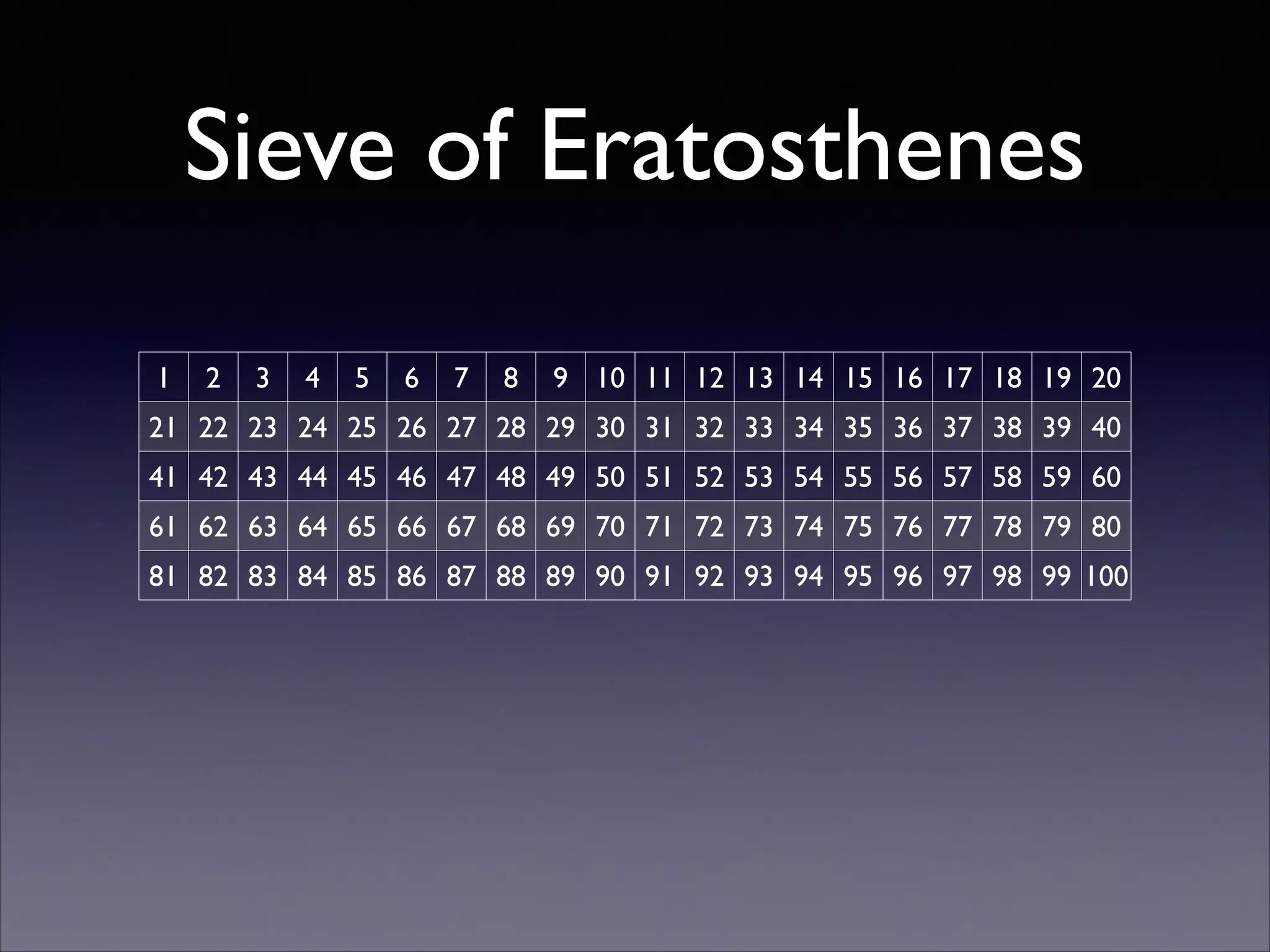
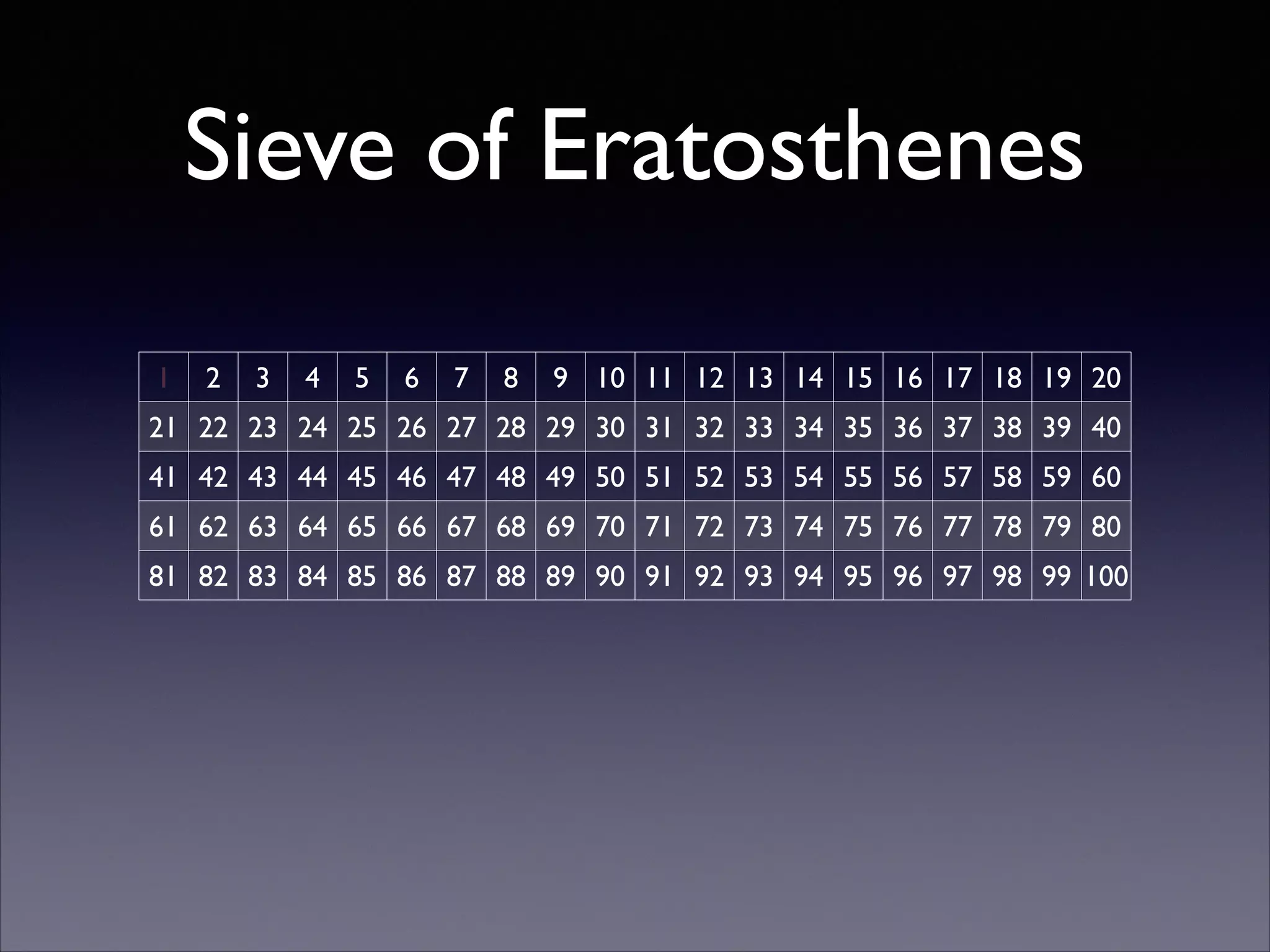
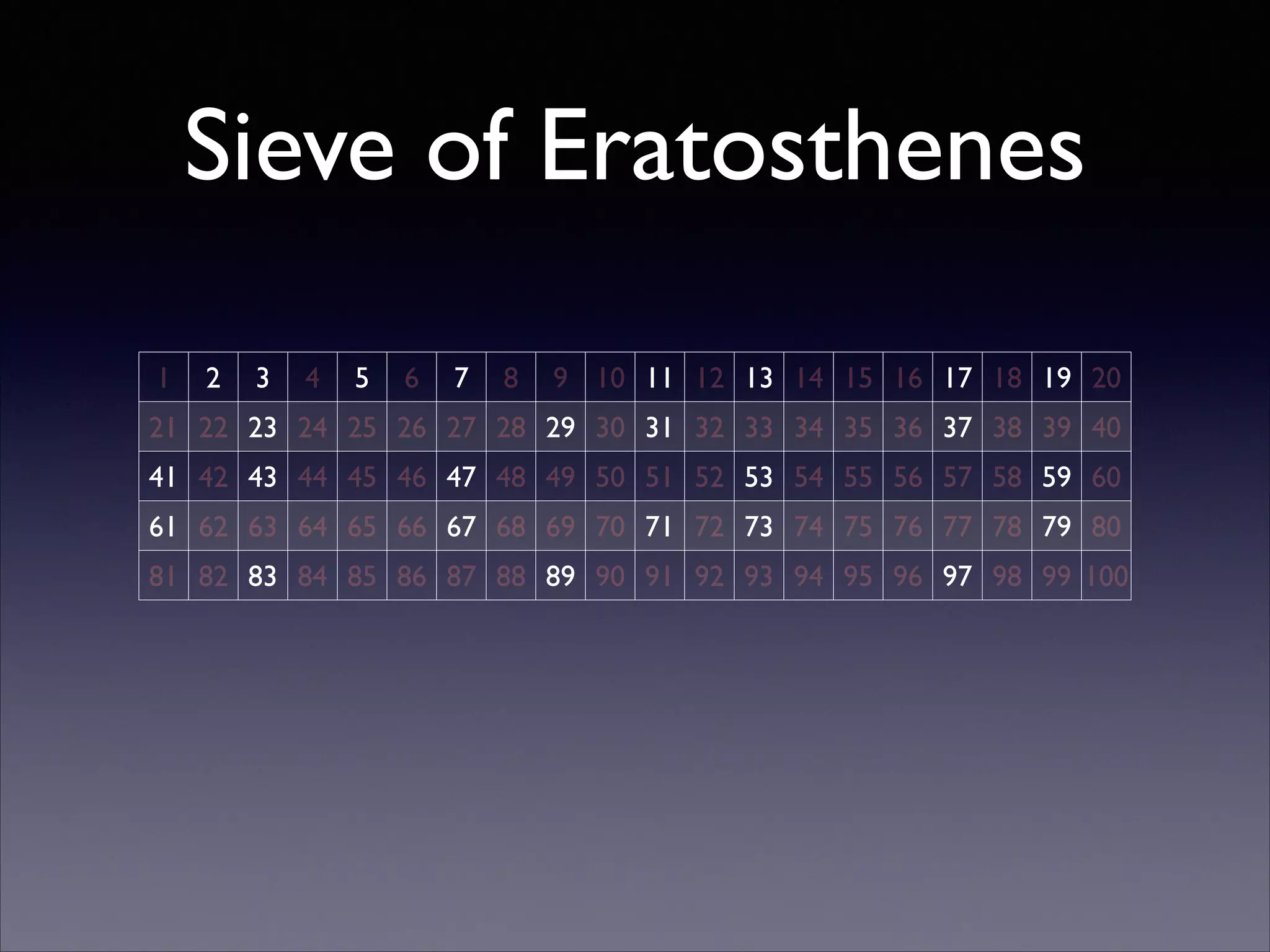
Sieve of Eratosthenes
1

2

3

4

5

6

7

8

9 10 11 12 13 14 15 16 17 18 19 20

21 22 23 24 25 26 27 28 29 30 31 32 33 34 35 36 37 38 39 40
41 42 43 44 45 46 47 48 49 50 51 52 53 54 55 56 57 58 59 60
61 62 63 64 65 66 67 68 69 70 71 72 73 74 75 76 77 78 79 80
81 82 83 84 85 86 87 88 89 90 91 92 93 94 95 96 97 98 99 100
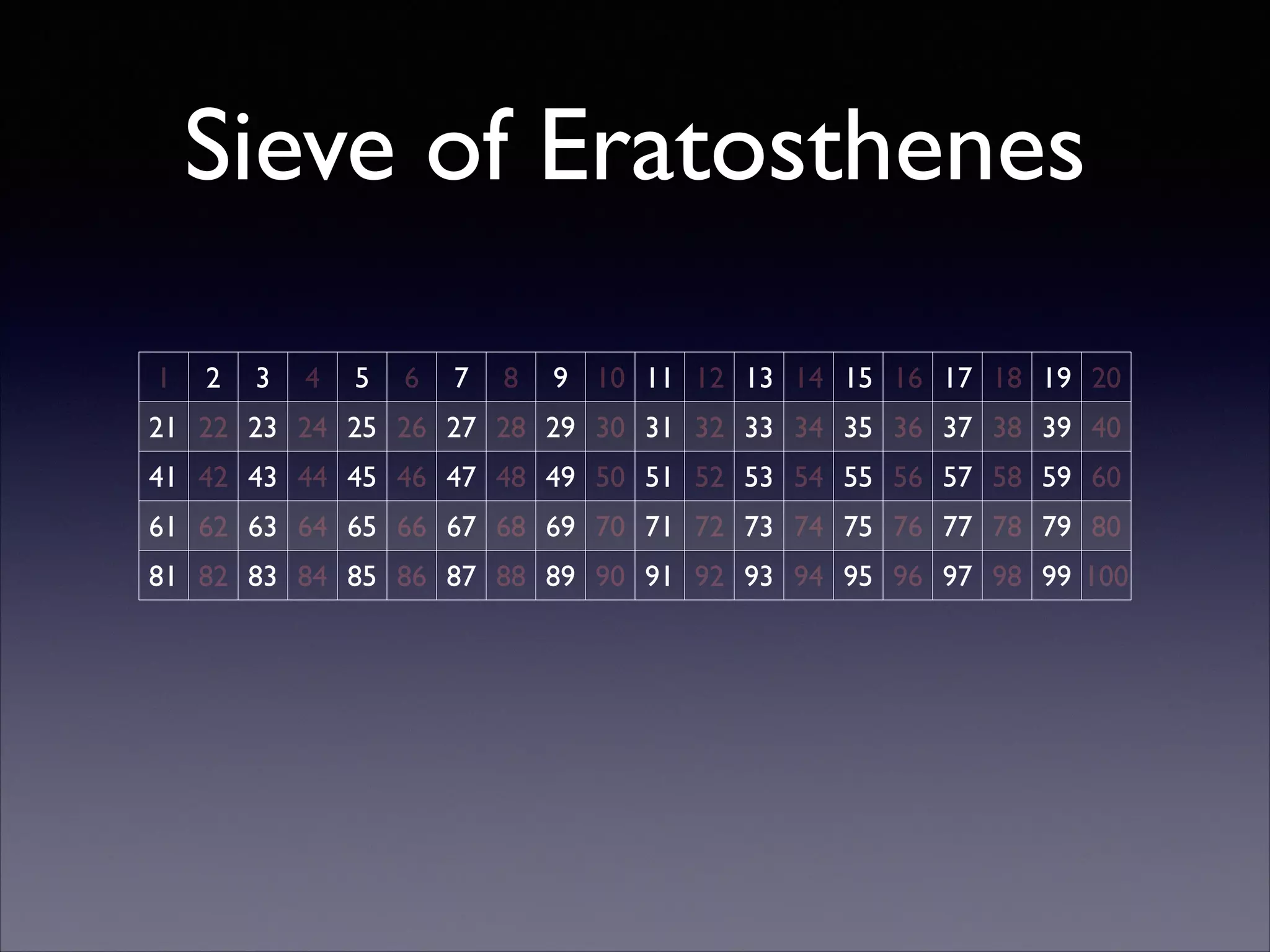
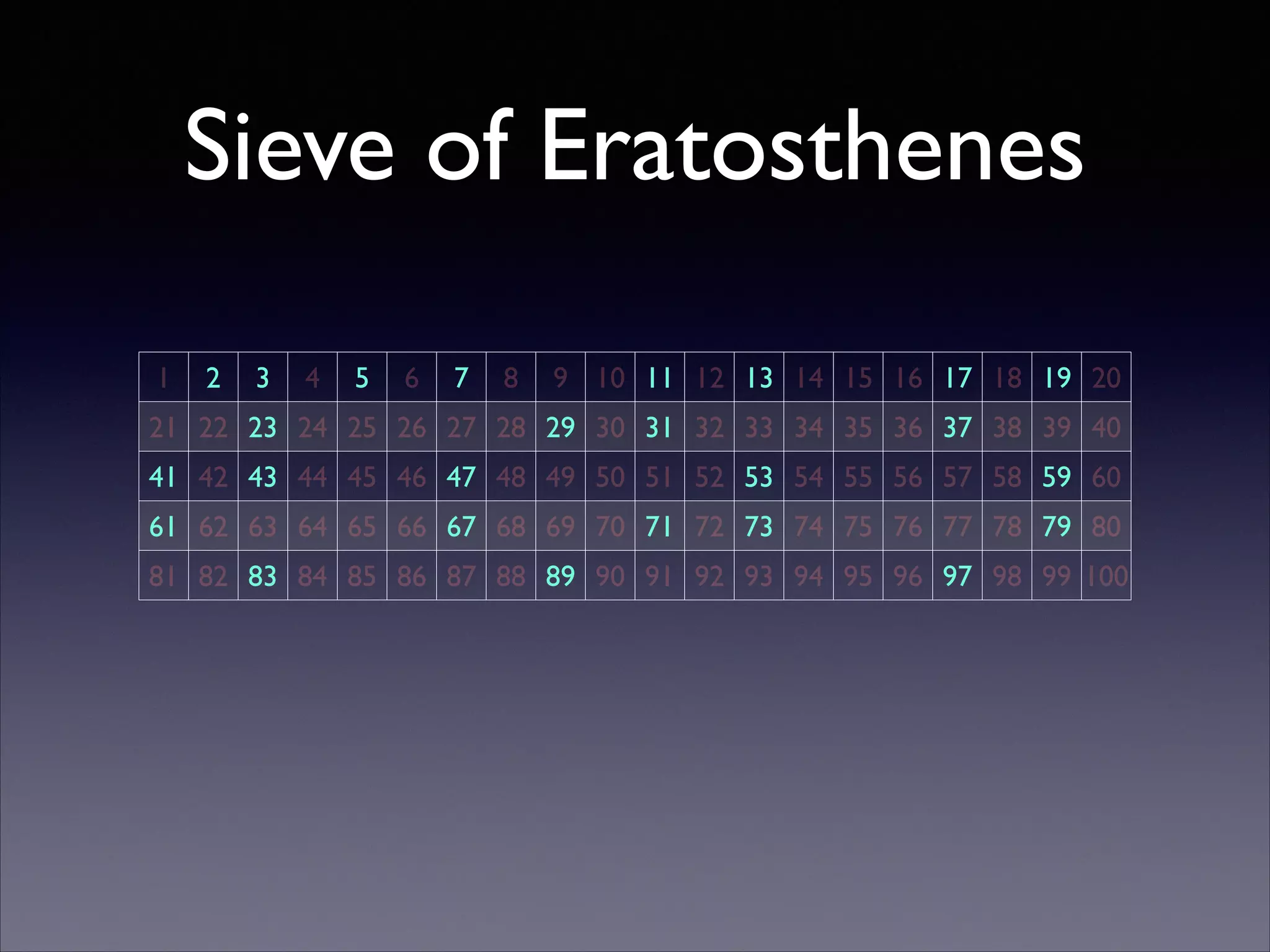
Sieve of Eratosthenes
1

2

3

4

5

6

7

8

9 10 11 12 13 14 15 16 17 18 19 20

21 22 23 24 25 26 27 28 29 30 31 32 33 34 35 36 37 38 39 40
41 42 43 44 45 46 47 48 49 50 51 52 53 54 55 56 57 58 59 60
61 62 63 64 65 66 67 68 69 70 71 72 73 74 75 76 77 78 79 80
81 82 83 84 85 86 87 88 89 90 91 92 93 94 95 96 97 98 99 100
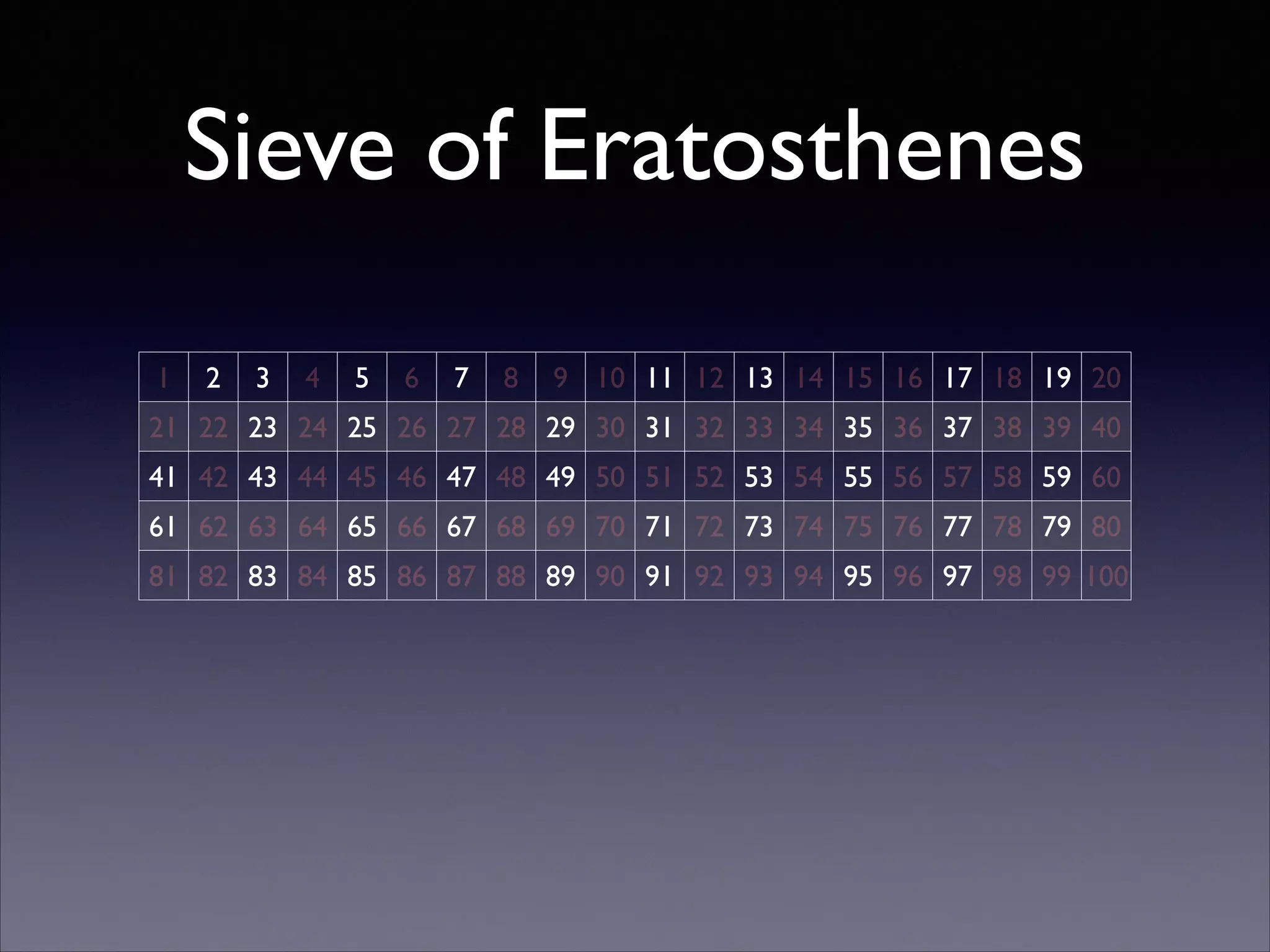
Sieve of Eratosthenes
1

2

3

4

5

6

7

8

9 10 11 12 13 14 15 16 17 18 19 20

21 22 23 24 25 26 27 28 29 30 31 32 33 34 35 36 37 38 39 40
41 42 43 44 45 46 47 48 49 50 51 52 53 54 55 56 57 58 59 60
61 62 63 64 65 66 67 68 69 70 71 72 73 74 75 76 77 78 79 80
81 82 83 84 85 86 87 88 89 90 91 92 93 94 95 96 97 98 99 100
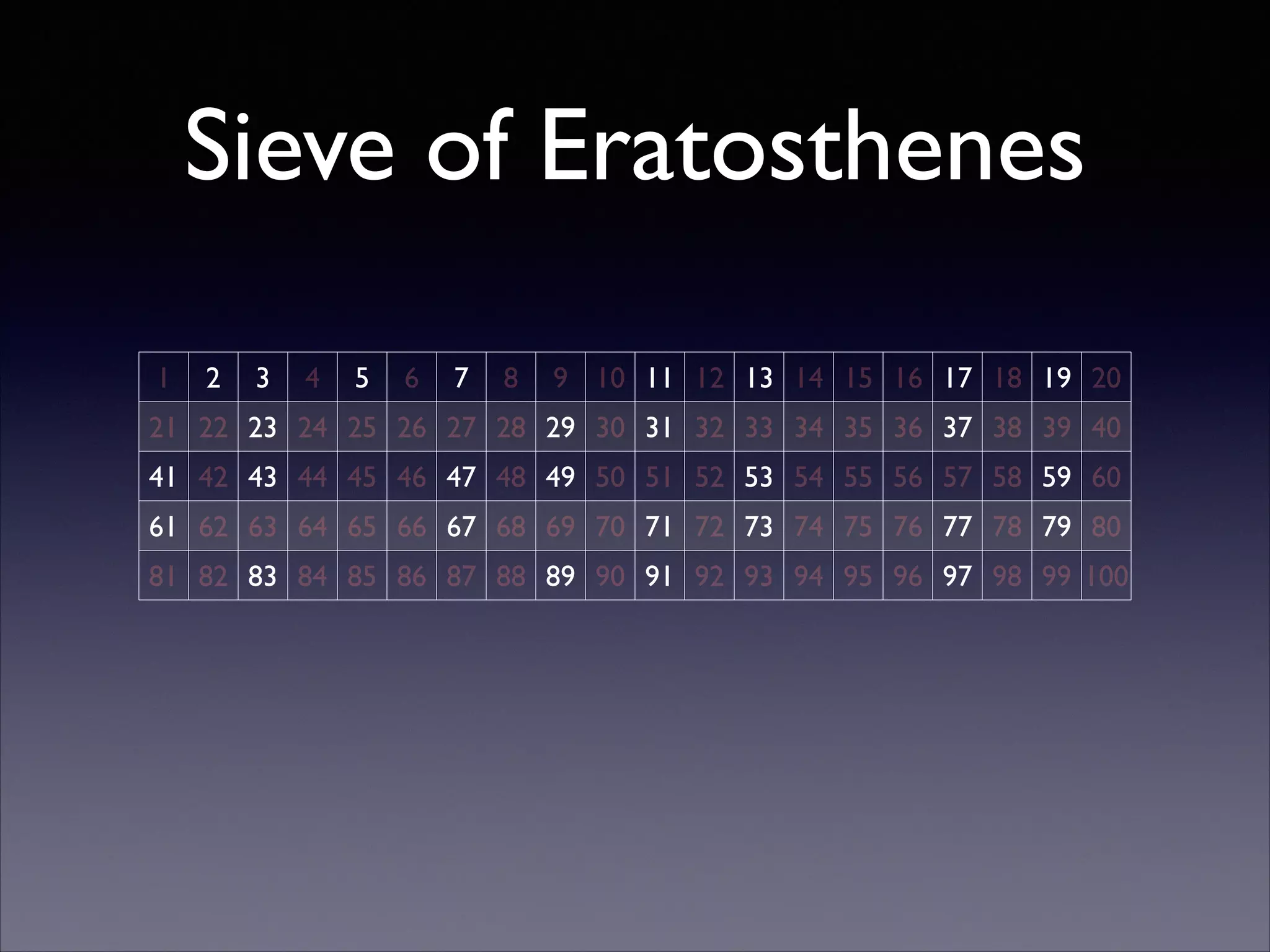
Sieve of Eratosthenes
1

2

3

4

5

6

7

8

9 10 11 12 13 14 15 16 17 18 19 20

21 22 23 24 25 26 27 28 29 30 31 32 33 34 35 36 37 38 39 40
41 42 43 44 45 46 47 48 49 50 51 52 53 54 55 56 57 58 59 60
61 62 63 64 65 66 67 68 69 70 71 72 73 74 75 76 77 78 79 80
81 82 83 84 85 86 87 88 89 90 91 92 93 94 95 96 97 98 99 100
Sieve of Eratosthenes
1

2

3

4

5

6

7

8

9 10 11 12 13 14 15 16 17 18 19 20

21 22 23 24 25 26 27 28 29 30 31 32 33 34 35 36 37 38 39 40
41 42 43 44 45 46 47 48 49 50 51 52 53 54 55 56 57 58 59 60
61 62 63 64 65 66 67 68 69 70 71 72 73 74 75 76 77 78 79 80
81 82 83 84 85 86 87 88 89 90 91 92 93 94 95 96 97 98 99 100
Sieve of Eratosthenes
1

2

3

4

5

6

7

8

9 10 11 12 13 14 15 16 17 18 19 20

21 22 23 24 25 26 27 28 29 30 31 32 33 34 35 36 37 38 39 40
41 42 43 44 45 46 47 48 49 50 51 52 53 54 55 56 57 58 59 60
61 62 63 64 65 66 67 68 69 70 71 72 73 74 75 76 77 78 79 80
81 82 83 84 85 86 87 88 89 90 91 92 93 94 95 96 97 98 99 100
Sieve of Eratosthenes
1

2

3

4

5

6

7

8

9 10 11 12 13 14 15 16 17 18 19 20

21 22 23 24 25 26 27 28 29 30 31 32 33 34 35 36 37 38 39 40
41 42 43 44 45 46 47 48 49 50 51 52 53 54 55 56 57 58 59 60
61 62 63 64 65 66 67 68 69 70 71 72 73 74 75 76 77 78 79 80
81 82 83 84 85 86 87 88 89 90 91 92 93 94 95 96 97 98 99 100
Sieve of Eratosthenes

Simple algorithm	

Easy to implement
Sieve of Eratosthenes
int array[SIZE];	

array[i] = 1;	

if (array[i]) ...	

!

int bits[SIZE / 32];	

bits[i / 32] |= 1 << (i % 32);	

if (bits[i / 32] & (1 << (i % 32))) ...
Sieve of Eratosthenes
Simple algorithm	

Easy to implement	

But...	

unexpected results
Sieve of Eratosthenes
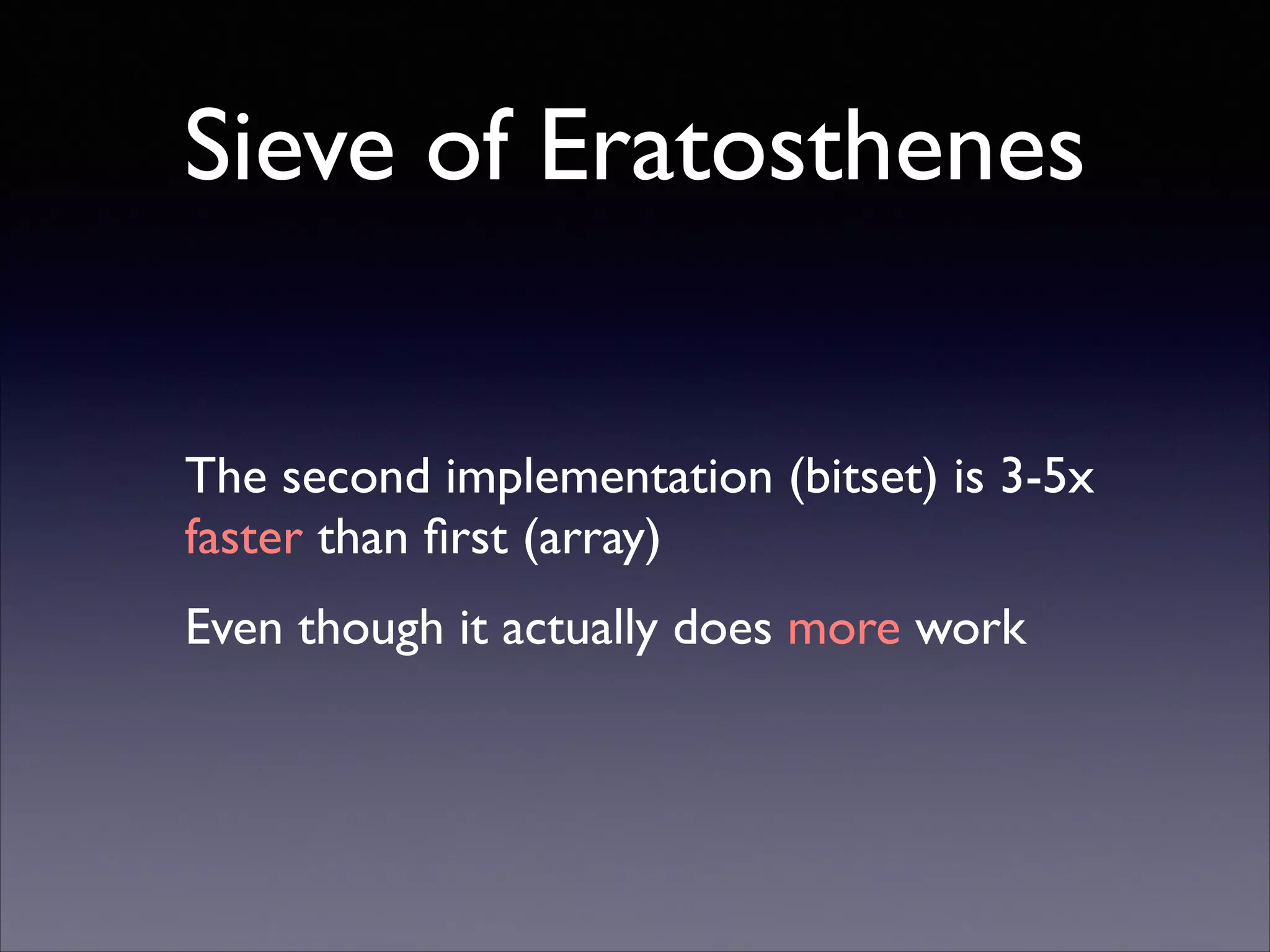
The second implementation (bitset) is 3-5x
faster than first (array)	

Even though it actually does more work
Why?!.
Fast Forward
...
• Years have passed	

• I become a software engineer	

• And one day...
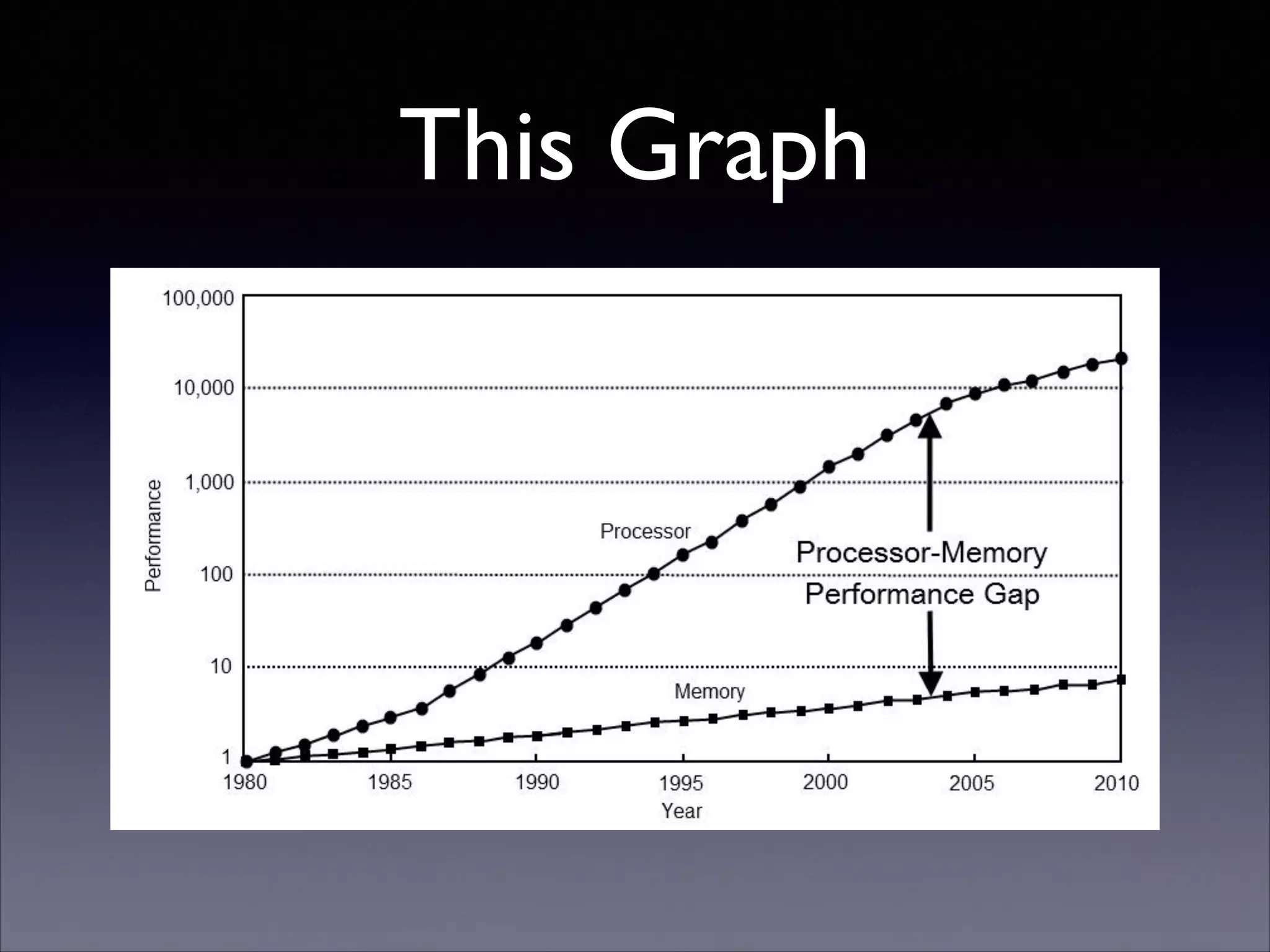
This Graph

CPU/Memory performance

Slide 17

Computer architecture: a quantitative approach
By John L. Hennessy, David A. Patterson, Andrea C. Arpaci-Dusseau
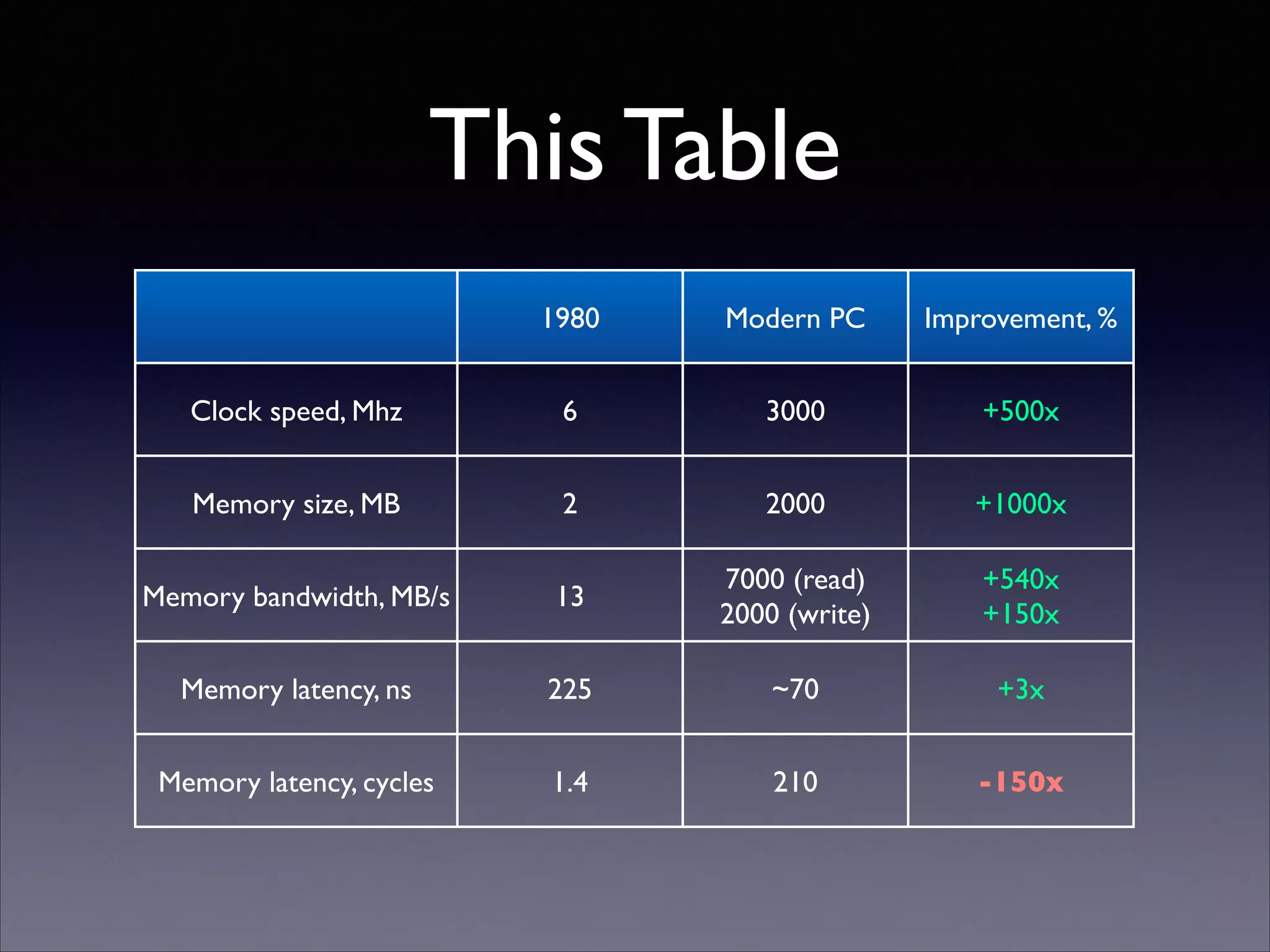
This Table
1980

Modern PC

Improvement, %

Clock speed, Mhz

6

3000

+500x

Memory size, MB

2

2000

+1000x

Memory bandwidth, MB/s

13

7000 (read)	

2000 (write)

+540x	

+150x

Memory latency, ns

225

~70

+3x

Memory latency, cycles

1.4

210

-150x
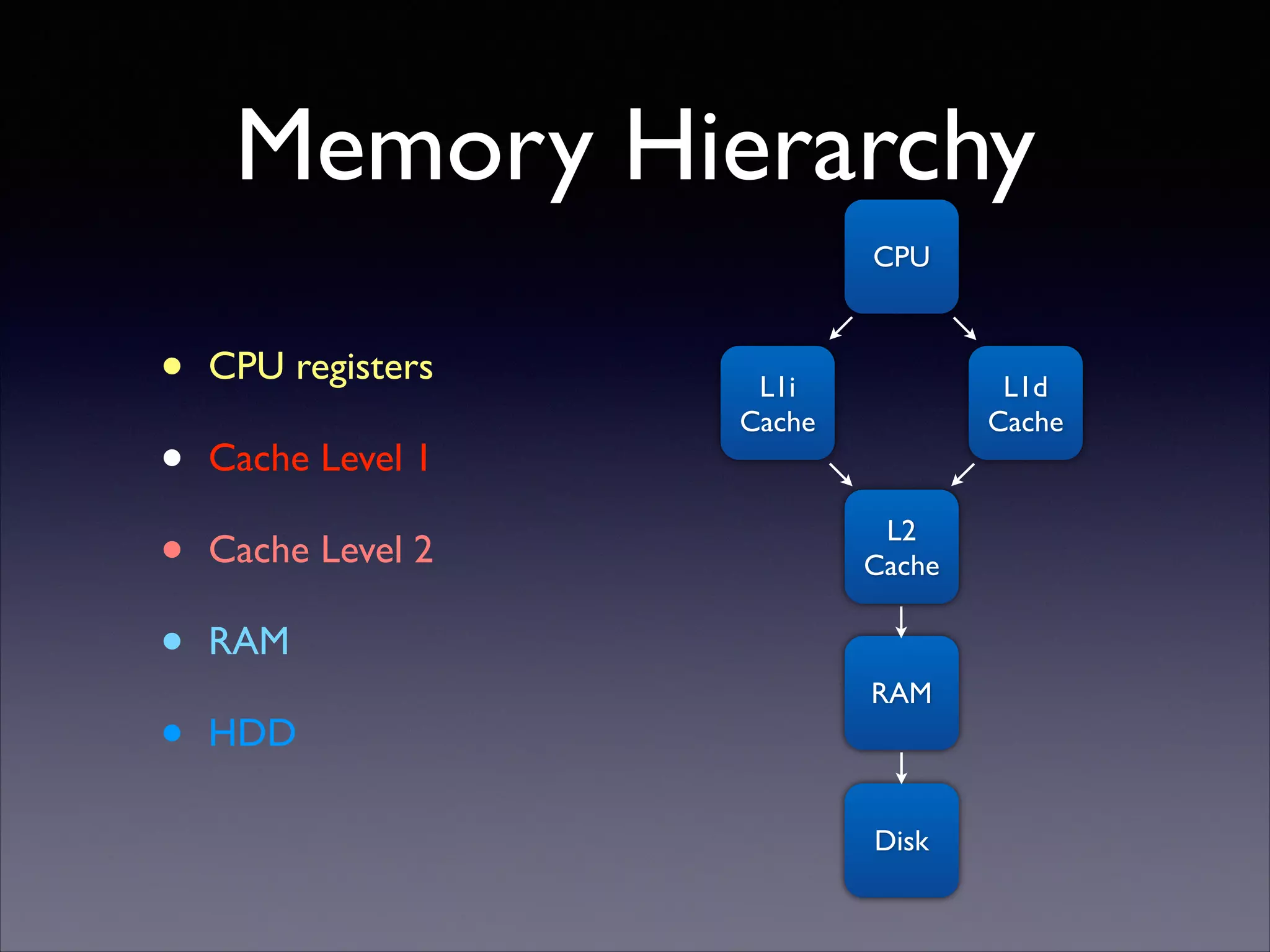
Memory Hierarchy
CPU

•
•
•
•
•

CPU registers	

Cache Level 1	

Cache Level 2	


L1i	

Cache

L1d	

Cache

L2	

Cache

RAM	

HDD

RAM

Disk
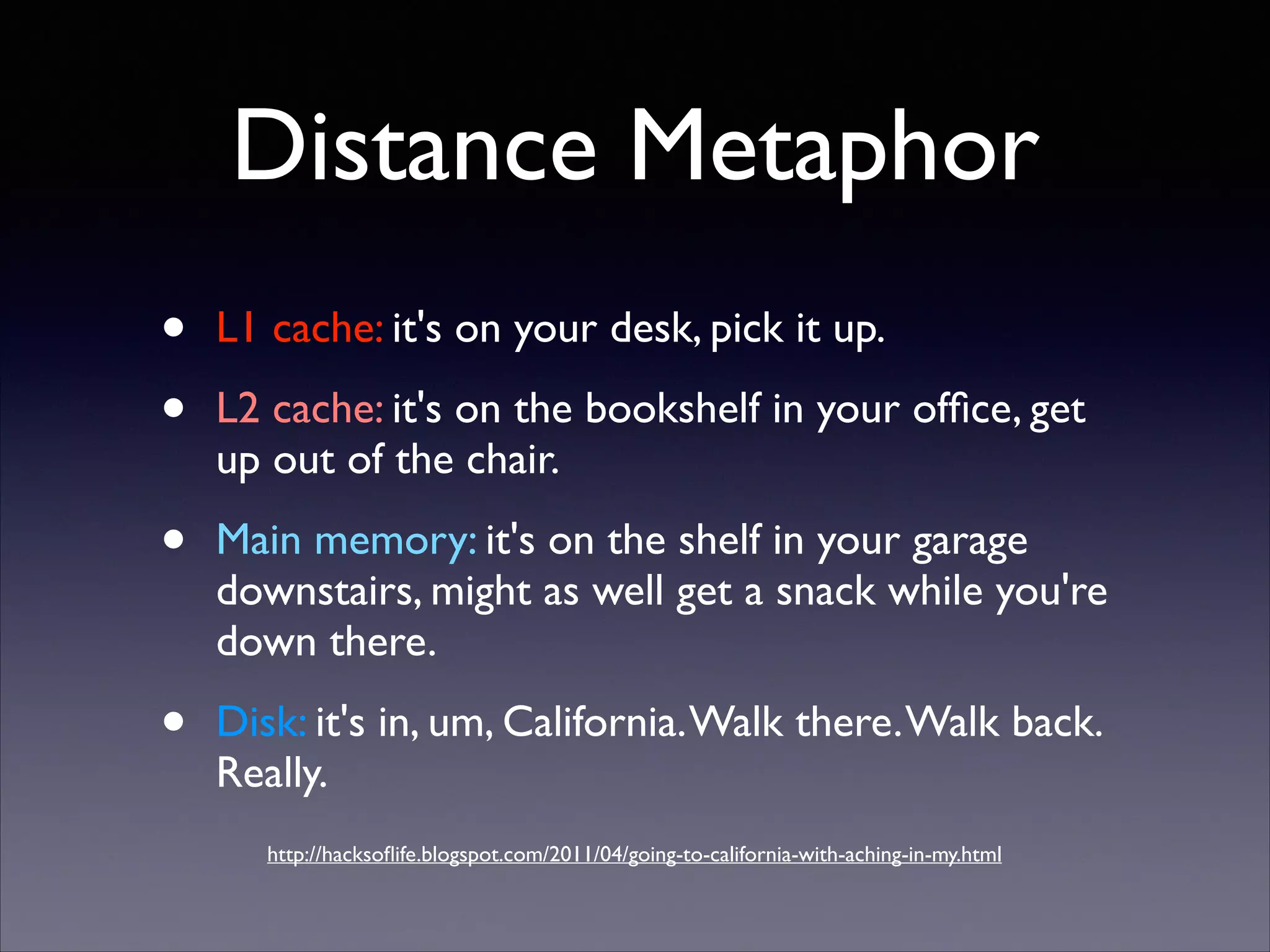
Distance Metaphor
•
•

L1 cache: it's on your desk, pick it up.	


•

Main memory: it's on the shelf in your garage
downstairs, might as well get a snack while you're
down there.	


•

Disk: it's in, um, California. Walk there. Walk back.
Really.

L2 cache: it's on the bookshelf in your office, get
up out of the chair.	


http://hacksoflife.blogspot.com/2011/04/going-to-california-with-aching-in-my.html
Fact
• Memory access is expensive	

• CPU cycles are cheap
Modern Programming
• High-level languages and abstractions	

• OOP	

• everywhere!	

• objects scattered throughout the
address space	


• memory access patterns are
unpredictable
Meet
Data-Oriented Design
Ideas
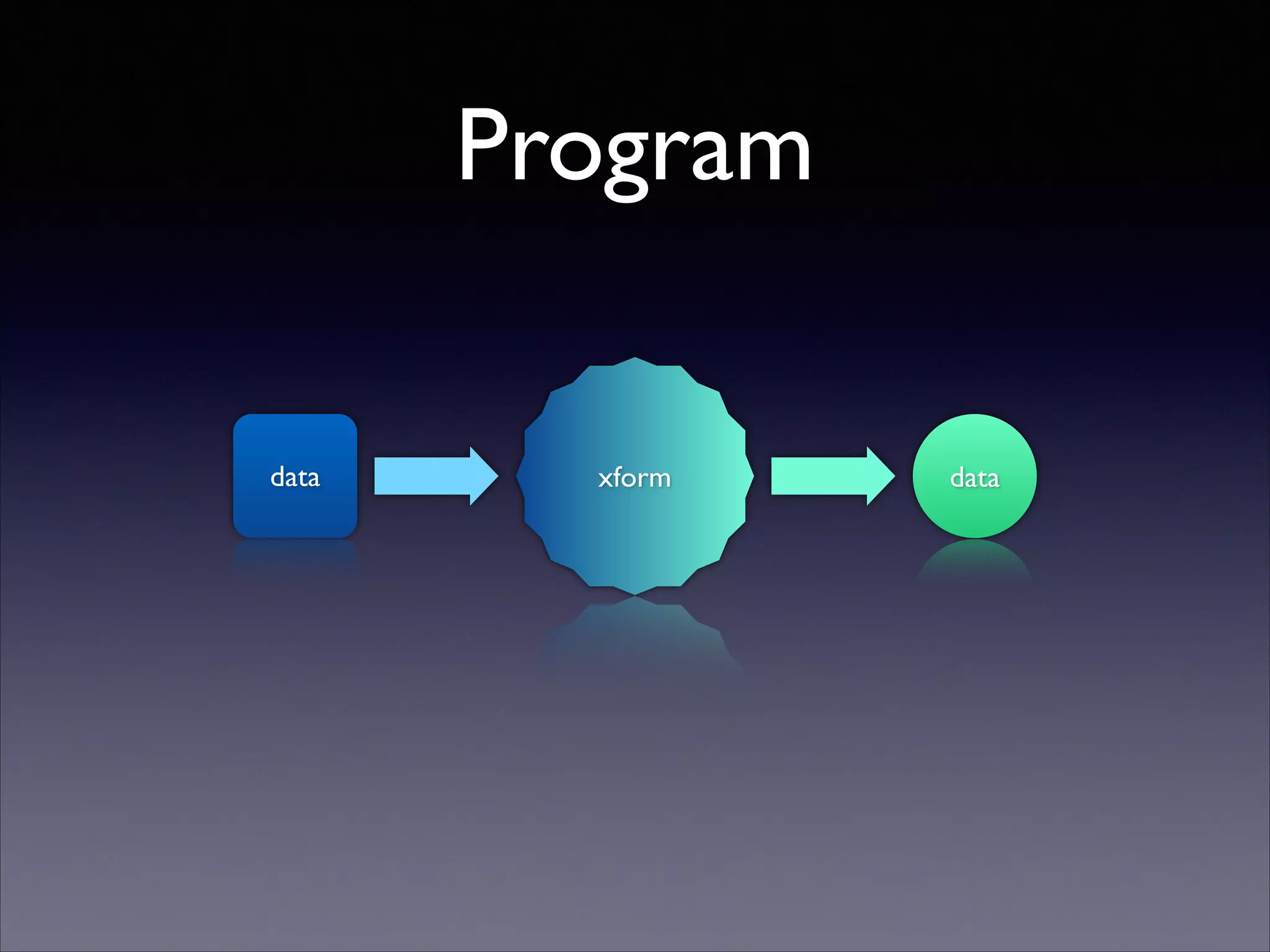
• code transforms data	

• data >> code	

• hardware is not a black box
Program
data

xform

data
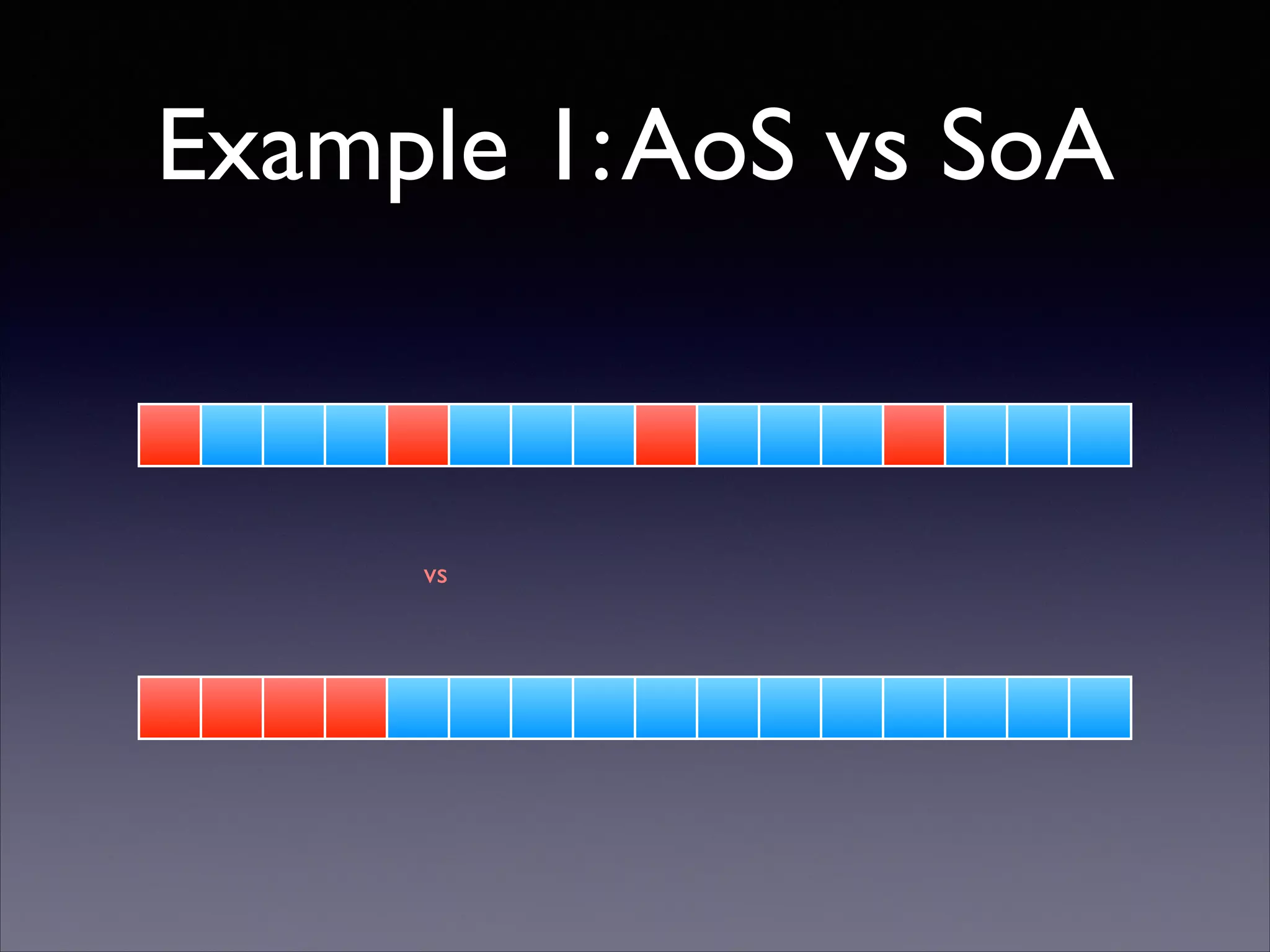
Example 1: AoS vs SoA
struct Tile	

{	

bool ready;	

Data pixels; // big chunk of data	

};	

Tile tiles[SIZE];	

vs	

struct Image	

{	

bool ready[SIZE];

// hot data	


Data pixels[SIZE]; // cold data	

};
Example 1: AoS vs SoA
for (int i = 0; i < SIZE; ++i)	

{	

if (tiles[i].ready)	

draw(tiles[i].pixels);	

}	


!
vs	

for (int i = 0; i < SIZE; ++i)	

{	

if (image.ready[i])	

draw(image.pixels[i]);	

}
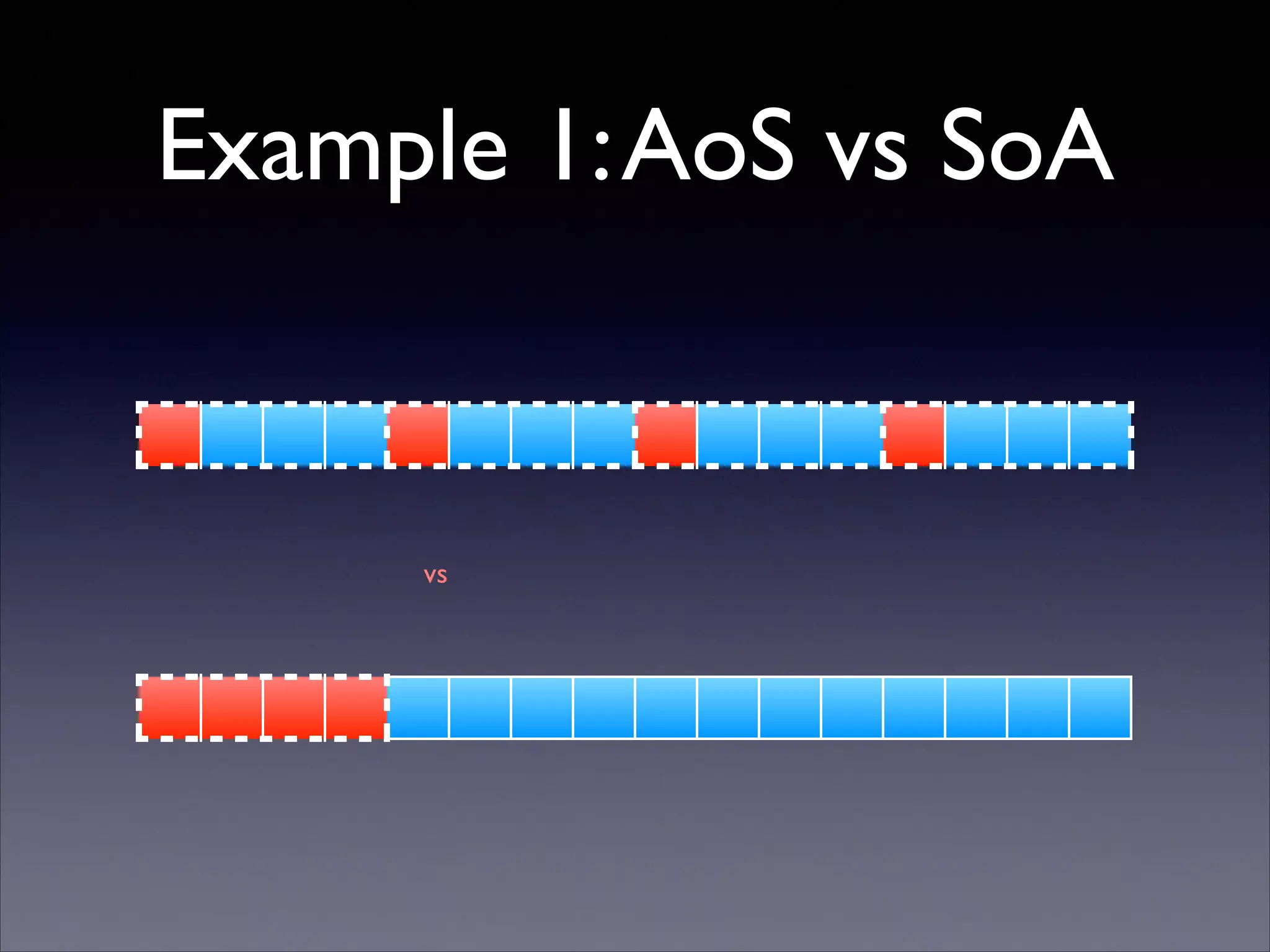
Example 1: AoS vs SoA
!
!
!
!
!
!
vs	


!
!
!
!
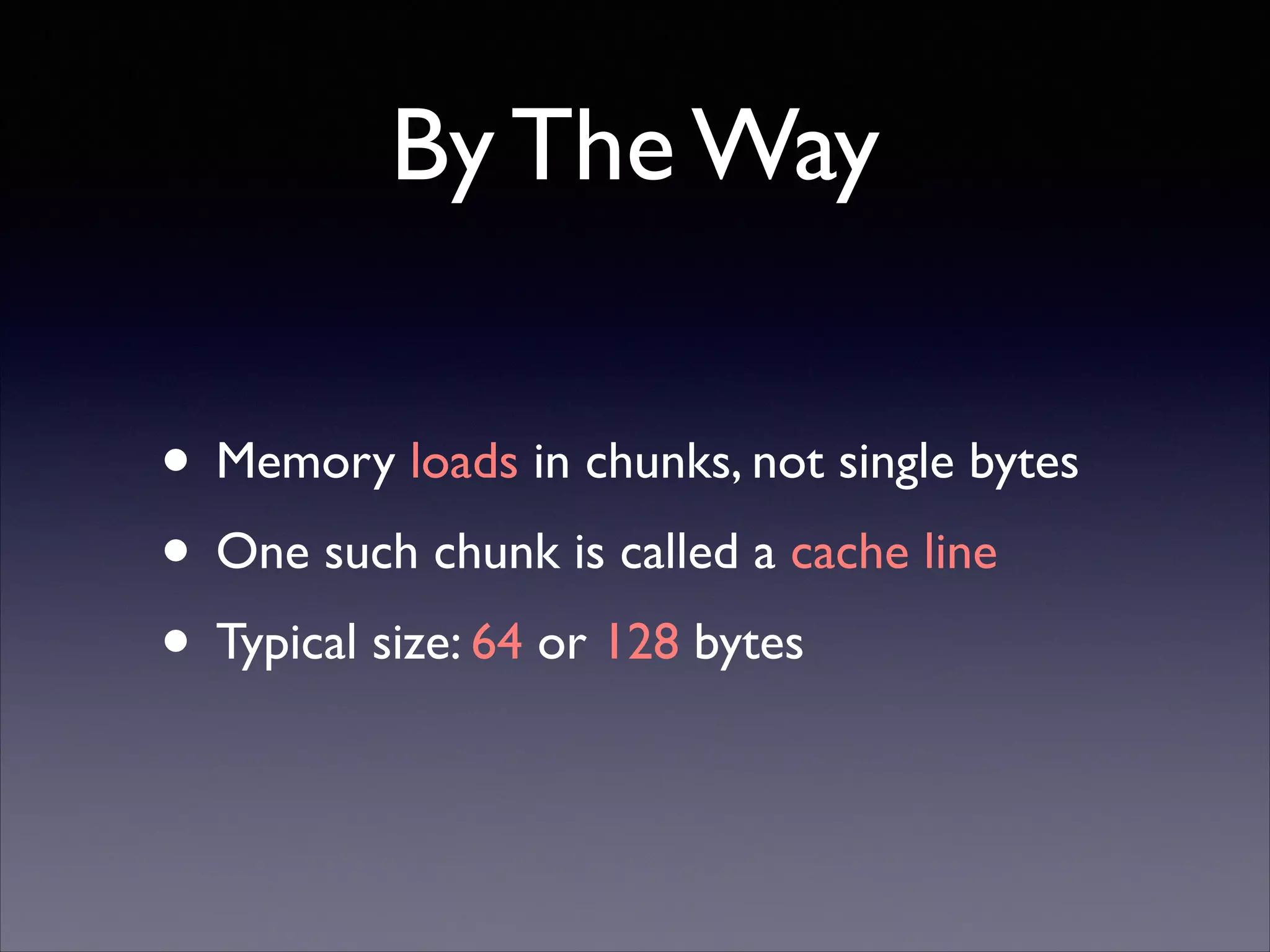
By The Way
• Memory loads in chunks, not single bytes	

• One such chunk is called a cache line	

• Typical size: 64 or 128 bytes
Example 1: AoS vs SoA
!
!
!
!
!
!
vs	


!
!
!
!
Example 2: Existence
struct Image	

{	

bool ready[SIZE];	

Data pixels[SIZE];	

};	

Image image;	

vs	

Data ready_pixels[N];	

// N ≤ SIZE	


!
Example 2: Existence
for (int i = 0; i < SIZE; ++i)	

{	

if (image.ready[i])	

draw(image.pixels[i]);	

}	


!
vs	

for (int i = 0; i < N; ++i)	

{	

draw(ready_pixels[i];	

}
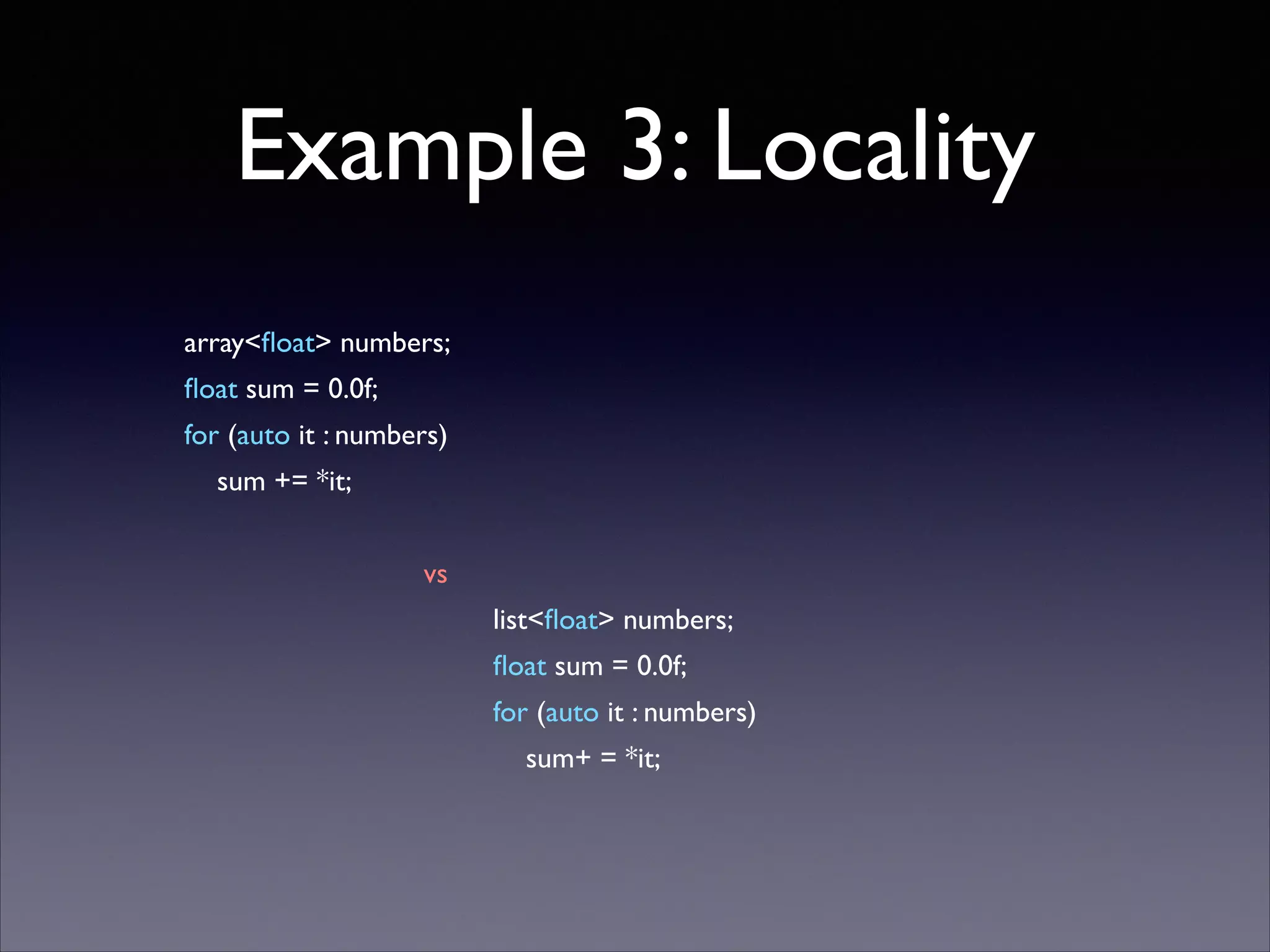
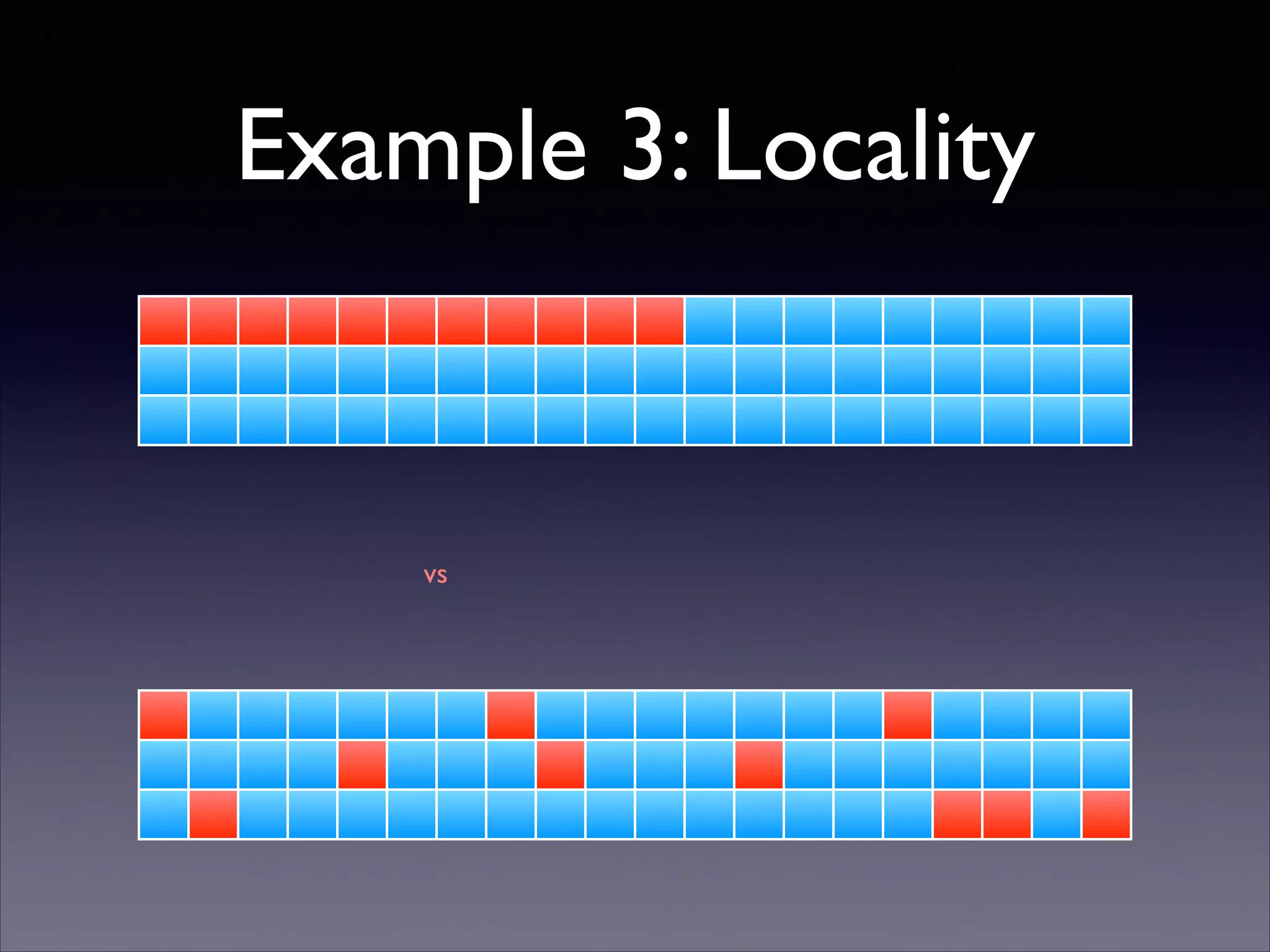
Example 3: Locality
!
array<float> numbers;	

float sum = 0.0f;	

for (auto it : numbers)	

sum += *it;	


!
vs	

list<float> numbers;	

float sum = 0.0f;	

for (auto it : numbers)	

sum+ = *it;
Example 3: Locality
!
!
!
!
!
!
vs	


!
!
!
!
Advice
• Keep your data closer to registers and
cache (hot data)	


• Don’t touch what you don’t have to (cold
data)	


• Predictable access patterns (e.g. linear
arrays) - good	


• What’s good for memory - good for you
DOD Patterns
• A to B transform	

• In-place transform	

• Existence based processing	

• Data normalization	

• DB design says hello!	

• Task, gather, dispatch, and more...
DOD Benefits
• Maximum performance	

• CPU doesn’t wait & starve	

• Easy to parallelize	

• data is grouped, transforms separated	

• ready for Parallel Processing, OOP doesn’t	

• Simpler code	

• surprise!
References: Memory
• Ulrich Drepper “What Every Computer

Programmer Should Know About Memory”	


• Крис Касперски “Техника оптимизации
програм. Еффективное использование
памяти”	


• Christer Ericson “Memory Optimization”	

• Igor Ostrovsky “Gallery of Processor Cache
Effects”
References: DOD
• Noel Llopis “Data-Oriented Design”, Game Developer
Magazine, September 2009	


• Richard Fabian “Data-Oriented Desing”, book draft
http://www.dataorienteddesign.com/dodmain/	


• Tony Albrecht “Pitfalls of Object-Oriented Programming”	

• Niklas Frykholm “Practical Examples of Data Oriented
Design”, also everything on http://bitsquid.blogspot.com/	


• Mike Acton “Typical C++ Bullshit”	

• Data Oriented Design @ Google+
Bonus: Object or not?
Q: What is a table?	

A: Flat top and 4 legs.	

Q: Object? (OOP)	

A:Yes.	

Q: If we remove one leg. Is it still an object?	

A: …	

DOD: There is no table :)
Bonus: Object or not?
Q:You are modelling a pile of sand. Is it an object?	

A:Yes.	

Q: What is the border line number of particles N after
which just a bunch of sand particles start forming a pile? 10?
1000? 1000000?	

(i.e. can we say that N particles are just a bunch of particles,
but N+1 particles become a pile of sand?)	

A: …	

DOD: Sand particles are data.
Thank You!
Q?

Introduction to Data-Oriented Design

  • 1.
  • 2.
  • 3.
  • 4.
    Sieve of Eratosthenes 1 2 3 4 5 6 7 8 910 11 12 13 14 15 16 17 18 19 20 21 22 23 24 25 26 27 28 29 30 31 32 33 34 35 36 37 38 39 40 41 42 43 44 45 46 47 48 49 50 51 52 53 54 55 56 57 58 59 60 61 62 63 64 65 66 67 68 69 70 71 72 73 74 75 76 77 78 79 80 81 82 83 84 85 86 87 88 89 90 91 92 93 94 95 96 97 98 99 100
  • 5.
    Sieve of Eratosthenes 1 2 3 4 5 6 7 8 910 11 12 13 14 15 16 17 18 19 20 21 22 23 24 25 26 27 28 29 30 31 32 33 34 35 36 37 38 39 40 41 42 43 44 45 46 47 48 49 50 51 52 53 54 55 56 57 58 59 60 61 62 63 64 65 66 67 68 69 70 71 72 73 74 75 76 77 78 79 80 81 82 83 84 85 86 87 88 89 90 91 92 93 94 95 96 97 98 99 100
  • 6.
    Sieve of Eratosthenes 1 2 3 4 5 6 7 8 910 11 12 13 14 15 16 17 18 19 20 21 22 23 24 25 26 27 28 29 30 31 32 33 34 35 36 37 38 39 40 41 42 43 44 45 46 47 48 49 50 51 52 53 54 55 56 57 58 59 60 61 62 63 64 65 66 67 68 69 70 71 72 73 74 75 76 77 78 79 80 81 82 83 84 85 86 87 88 89 90 91 92 93 94 95 96 97 98 99 100
  • 7.
    Sieve of Eratosthenes 1 2 3 4 5 6 7 8 910 11 12 13 14 15 16 17 18 19 20 21 22 23 24 25 26 27 28 29 30 31 32 33 34 35 36 37 38 39 40 41 42 43 44 45 46 47 48 49 50 51 52 53 54 55 56 57 58 59 60 61 62 63 64 65 66 67 68 69 70 71 72 73 74 75 76 77 78 79 80 81 82 83 84 85 86 87 88 89 90 91 92 93 94 95 96 97 98 99 100
  • 8.
    Sieve of Eratosthenes 1 2 3 4 5 6 7 8 910 11 12 13 14 15 16 17 18 19 20 21 22 23 24 25 26 27 28 29 30 31 32 33 34 35 36 37 38 39 40 41 42 43 44 45 46 47 48 49 50 51 52 53 54 55 56 57 58 59 60 61 62 63 64 65 66 67 68 69 70 71 72 73 74 75 76 77 78 79 80 81 82 83 84 85 86 87 88 89 90 91 92 93 94 95 96 97 98 99 100
  • 9.
    Sieve of Eratosthenes 1 2 3 4 5 6 7 8 910 11 12 13 14 15 16 17 18 19 20 21 22 23 24 25 26 27 28 29 30 31 32 33 34 35 36 37 38 39 40 41 42 43 44 45 46 47 48 49 50 51 52 53 54 55 56 57 58 59 60 61 62 63 64 65 66 67 68 69 70 71 72 73 74 75 76 77 78 79 80 81 82 83 84 85 86 87 88 89 90 91 92 93 94 95 96 97 98 99 100
  • 10.
    Sieve of Eratosthenes 1 2 3 4 5 6 7 8 910 11 12 13 14 15 16 17 18 19 20 21 22 23 24 25 26 27 28 29 30 31 32 33 34 35 36 37 38 39 40 41 42 43 44 45 46 47 48 49 50 51 52 53 54 55 56 57 58 59 60 61 62 63 64 65 66 67 68 69 70 71 72 73 74 75 76 77 78 79 80 81 82 83 84 85 86 87 88 89 90 91 92 93 94 95 96 97 98 99 100
  • 11.
    Sieve of Eratosthenes Simplealgorithm Easy to implement
  • 12.
    Sieve of Eratosthenes intarray[SIZE]; array[i] = 1; if (array[i]) ... ! int bits[SIZE / 32]; bits[i / 32] |= 1 << (i % 32); if (bits[i / 32] & (1 << (i % 32))) ...
  • 13.
    Sieve of Eratosthenes Simplealgorithm Easy to implement But... unexpected results
  • 14.
    Sieve of Eratosthenes Thesecond implementation (bitset) is 3-5x faster than first (array) Even though it actually does more work
  • 15.
  • 16.
  • 17.
    ... • Years havepassed • I become a software engineer • And one day...
  • 18.
    This Graph CPU/Memory performance Slide17 Computer architecture: a quantitative approach By John L. Hennessy, David A. Patterson, Andrea C. Arpaci-Dusseau
  • 19.
    This Table 1980 Modern PC Improvement,% Clock speed, Mhz 6 3000 +500x Memory size, MB 2 2000 +1000x Memory bandwidth, MB/s 13 7000 (read) 2000 (write) +540x +150x Memory latency, ns 225 ~70 +3x Memory latency, cycles 1.4 210 -150x
  • 20.
    Memory Hierarchy CPU • • • • • CPU registers CacheLevel 1 Cache Level 2 L1i Cache L1d Cache L2 Cache RAM HDD RAM Disk
  • 21.
    Distance Metaphor • • L1 cache:it's on your desk, pick it up. • Main memory: it's on the shelf in your garage downstairs, might as well get a snack while you're down there. • Disk: it's in, um, California. Walk there. Walk back. Really. L2 cache: it's on the bookshelf in your office, get up out of the chair. http://hacksoflife.blogspot.com/2011/04/going-to-california-with-aching-in-my.html
  • 22.
    Fact • Memory accessis expensive • CPU cycles are cheap
  • 23.
    Modern Programming • High-levellanguages and abstractions • OOP • everywhere! • objects scattered throughout the address space • memory access patterns are unpredictable
  • 24.
  • 25.
    Ideas • code transformsdata • data >> code • hardware is not a black box
  • 26.
  • 27.
    Example 1: AoSvs SoA struct Tile { bool ready; Data pixels; // big chunk of data }; Tile tiles[SIZE]; vs struct Image { bool ready[SIZE]; // hot data Data pixels[SIZE]; // cold data };
  • 28.
    Example 1: AoSvs SoA for (int i = 0; i < SIZE; ++i) { if (tiles[i].ready) draw(tiles[i].pixels); } ! vs for (int i = 0; i < SIZE; ++i) { if (image.ready[i]) draw(image.pixels[i]); }
  • 29.
    Example 1: AoSvs SoA ! ! ! ! ! ! vs ! ! ! !
  • 30.
    By The Way •Memory loads in chunks, not single bytes • One such chunk is called a cache line • Typical size: 64 or 128 bytes
  • 31.
    Example 1: AoSvs SoA ! ! ! ! ! ! vs ! ! ! !
  • 32.
    Example 2: Existence structImage { bool ready[SIZE]; Data pixels[SIZE]; }; Image image; vs Data ready_pixels[N]; // N ≤ SIZE !
  • 33.
    Example 2: Existence for(int i = 0; i < SIZE; ++i) { if (image.ready[i]) draw(image.pixels[i]); } ! vs for (int i = 0; i < N; ++i) { draw(ready_pixels[i]; }
  • 34.
    Example 3: Locality ! array<float>numbers; float sum = 0.0f; for (auto it : numbers) sum += *it; ! vs list<float> numbers; float sum = 0.0f; for (auto it : numbers) sum+ = *it;
  • 35.
  • 36.
    Advice • Keep yourdata closer to registers and cache (hot data) • Don’t touch what you don’t have to (cold data) • Predictable access patterns (e.g. linear arrays) - good • What’s good for memory - good for you
  • 37.
    DOD Patterns • Ato B transform • In-place transform • Existence based processing • Data normalization • DB design says hello! • Task, gather, dispatch, and more...
  • 38.
    DOD Benefits • Maximumperformance • CPU doesn’t wait & starve • Easy to parallelize • data is grouped, transforms separated • ready for Parallel Processing, OOP doesn’t • Simpler code • surprise!
  • 39.
    References: Memory • UlrichDrepper “What Every Computer Programmer Should Know About Memory” • Крис Касперски “Техника оптимизации програм. Еффективное использование памяти” • Christer Ericson “Memory Optimization” • Igor Ostrovsky “Gallery of Processor Cache Effects”
  • 40.
    References: DOD • NoelLlopis “Data-Oriented Design”, Game Developer Magazine, September 2009 • Richard Fabian “Data-Oriented Desing”, book draft http://www.dataorienteddesign.com/dodmain/ • Tony Albrecht “Pitfalls of Object-Oriented Programming” • Niklas Frykholm “Practical Examples of Data Oriented Design”, also everything on http://bitsquid.blogspot.com/ • Mike Acton “Typical C++ Bullshit” • Data Oriented Design @ Google+
  • 41.
    Bonus: Object ornot? Q: What is a table? A: Flat top and 4 legs. Q: Object? (OOP) A:Yes. Q: If we remove one leg. Is it still an object? A: … DOD: There is no table :)
  • 42.
    Bonus: Object ornot? Q:You are modelling a pile of sand. Is it an object? A:Yes. Q: What is the border line number of particles N after which just a bunch of sand particles start forming a pile? 10? 1000? 1000000? (i.e. can we say that N particles are just a bunch of particles, but N+1 particles become a pile of sand?) A: … DOD: Sand particles are data.
  • 43.
  • 44.