● Presented by: Sawera Rasheed (24)
Sehrish (25)
● Topic: DNA and it's role in inheritance
DNA
● The macromolecule that stores all of an organism’s genetic
information.
● DNA is a type of nucleic acid.
● Important property of DNA is that it can replicate or make
copies of itself.
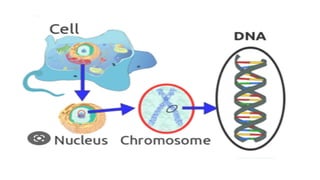
● Chromosome is a long, coiled piece of DNA.
● Gene is segment of DNA that codes for speci c trait or
protein.
● DNA is important for not only humans but also for
other organisms.
● Every cell in person's body has same DNA.
● Structure of DNA was established by Watson and Crick
in 1953.
● Complete set of DNA is called genome. It contain 3
billion bases, 20,000 genes, 23 pairs of chromosomes.
● Inheritance is transmission of information from one
generation to another.
Types of DNA
Nuclear DNA
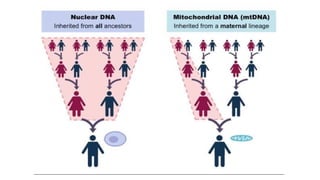
● Most DNA is located in
cell nucleus, called
nuclear DNA.
● It is combination of
both your ancestor's
DNA.
Mitochondrial DNA
● Small amount of DNA
can also be found in
mitochondria, called
mitochondrial DNA.
● Which you can only get
from your mother.
How genes are inherited?
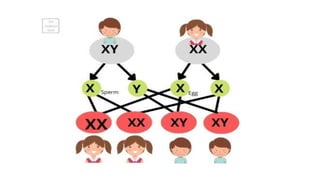
● One copy is inherited from mother (via eggs) and other
from father (via sperm).
● Sperm and egg each contain one set of 23 chromosomes
● When sperm fertilizes egg 2 copies of each chromosome are
present ( and therefore 2 copies of gene ) and so an embryo
forms.
What role does DNA play in inheritance?
● It packs in all the genetic information and passes it onto the
next generation.
● DNA make gene, gene make chromosomes.
DNA and it's role in inheritance
● DNA contain tons of information and is actually very long. If
you took all the DNA out of one of your cell and stretched it out,
it would be about 5 feet long. This is why DNA condenses into
chromosome to t inside the cell.
● The information in DNA is stored as a code made up of four
chemical bases.
1. Adenine (A). 2. Cytosine (C)
3. Thyamine(T). 4. Guanine(G)
● These four bases control everything about an organism
from hair color to number of legs.
● Human DNA consist of 3 billion bases connected together.
● More than 99% of these bases are same in all people.
● They are all sorted in just 23 pairs of chromosomes.
● The order or sequence of these bases determine the
information available for building and maintaining an
organism.
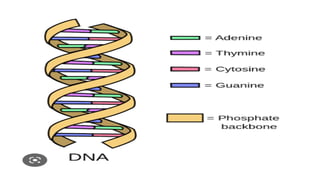
● DNA bases pair up with eachother, A with T, C with G to
form units called base pairs.
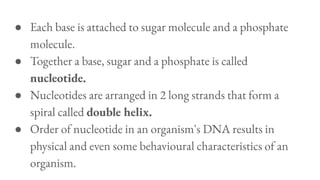
● Each base is attached to sugar molecule and a phosphate
molecule.
● Together a base, sugar and a phosphate is called
nucleotide.
● Nucleotides are arranged in 2 long strands that form a
spiral called double helix.
● Order of nucleotide in an organism's DNA results in
physical and even some behavioural characteristics of an
organism.
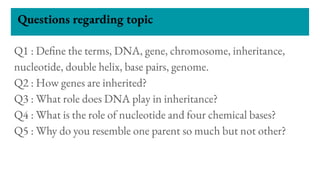
Questions regarding topic
Q1 : De ne the terms, DNA, gene, chromosome, inheritance,
nucleotide, double helix, base pairs, genome.
Q2 : How genes are inherited?
Q3 : What role does DNA play in inheritance?
Q4 : What is the role of nucleotide and four chemical bases?
Q5 : Why do you resemble one parent so much but not other?

DNA and it's role in inheritance pptx.pdf

  • 1.
    ● Presented by:Sawera Rasheed (24) Sehrish (25) ● Topic: DNA and it's role in inheritance
  • 2.
    DNA ● The macromoleculethat stores all of an organism’s genetic information. ● DNA is a type of nucleic acid. ● Important property of DNA is that it can replicate or make copies of itself. ● Chromosome is a long, coiled piece of DNA. ● Gene is segment of DNA that codes for speci c trait or protein.
  • 3.
    ● DNA isimportant for not only humans but also for other organisms. ● Every cell in person's body has same DNA. ● Structure of DNA was established by Watson and Crick in 1953. ● Complete set of DNA is called genome. It contain 3 billion bases, 20,000 genes, 23 pairs of chromosomes. ● Inheritance is transmission of information from one generation to another.
  • 5.
    Types of DNA NuclearDNA ● Most DNA is located in cell nucleus, called nuclear DNA. ● It is combination of both your ancestor's DNA. Mitochondrial DNA ● Small amount of DNA can also be found in mitochondria, called mitochondrial DNA. ● Which you can only get from your mother.
  • 7.
    How genes areinherited? ● One copy is inherited from mother (via eggs) and other from father (via sperm). ● Sperm and egg each contain one set of 23 chromosomes ● When sperm fertilizes egg 2 copies of each chromosome are present ( and therefore 2 copies of gene ) and so an embryo forms.
  • 9.
    What role doesDNA play in inheritance? ● It packs in all the genetic information and passes it onto the next generation. ● DNA make gene, gene make chromosomes.
  • 10.
    DNA and it'srole in inheritance ● DNA contain tons of information and is actually very long. If you took all the DNA out of one of your cell and stretched it out, it would be about 5 feet long. This is why DNA condenses into chromosome to t inside the cell. ● The information in DNA is stored as a code made up of four chemical bases. 1. Adenine (A). 2. Cytosine (C) 3. Thyamine(T). 4. Guanine(G)
  • 12.
    ● These fourbases control everything about an organism from hair color to number of legs. ● Human DNA consist of 3 billion bases connected together. ● More than 99% of these bases are same in all people. ● They are all sorted in just 23 pairs of chromosomes. ● The order or sequence of these bases determine the information available for building and maintaining an organism. ● DNA bases pair up with eachother, A with T, C with G to form units called base pairs.
  • 13.
    ● Each baseis attached to sugar molecule and a phosphate molecule. ● Together a base, sugar and a phosphate is called nucleotide. ● Nucleotides are arranged in 2 long strands that form a spiral called double helix. ● Order of nucleotide in an organism's DNA results in physical and even some behavioural characteristics of an organism.
  • 14.
    Questions regarding topic Q1: De ne the terms, DNA, gene, chromosome, inheritance, nucleotide, double helix, base pairs, genome. Q2 : How genes are inherited? Q3 : What role does DNA play in inheritance? Q4 : What is the role of nucleotide and four chemical bases? Q5 : Why do you resemble one parent so much but not other?