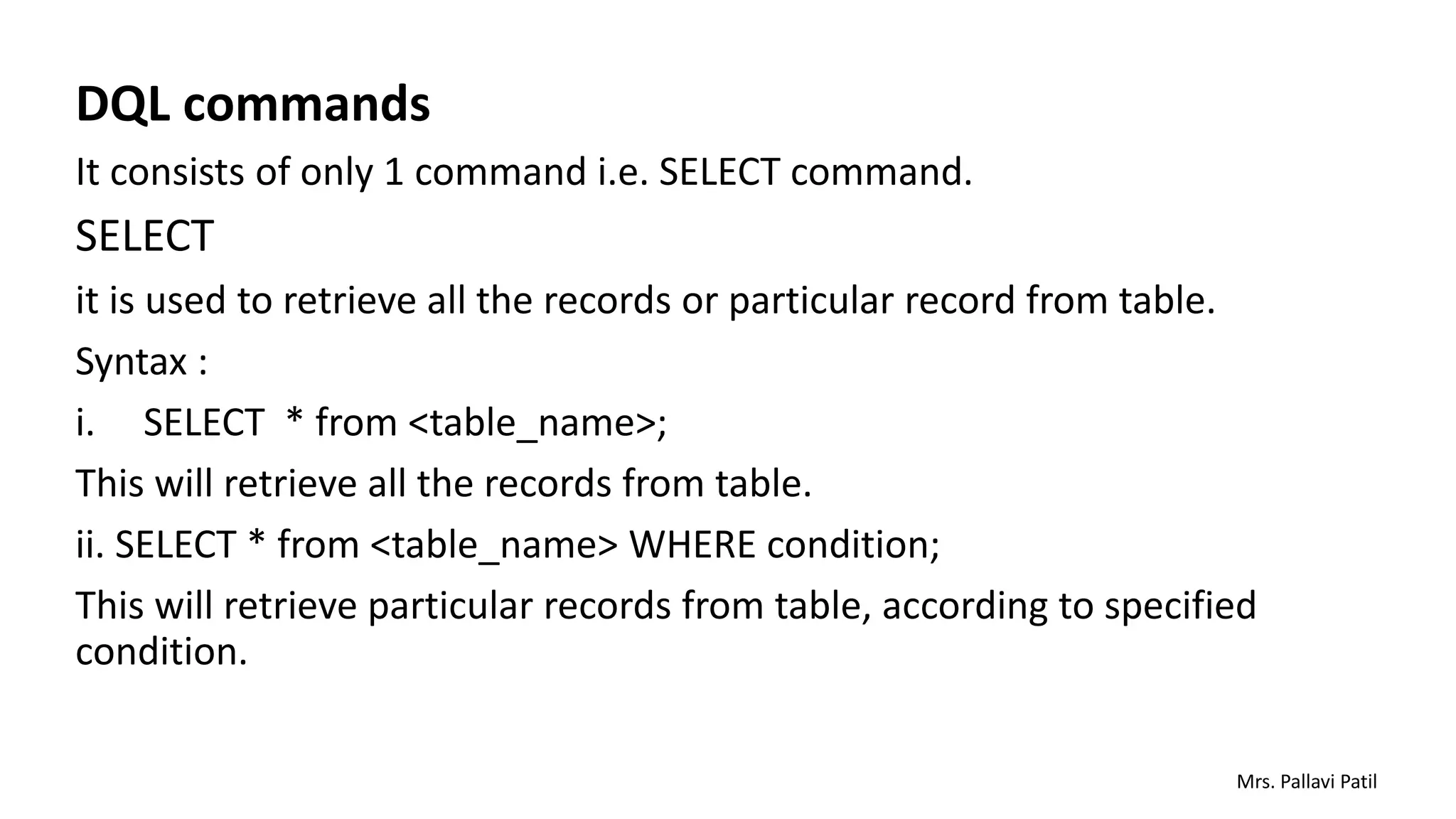
DQL commands
It consists of only 1 command i.e. SELECT command.
SELECT
it is used to retrieve all the records or particular record from table.
Syntax :
i. SELECT * from <table_name>;
This will retrieve all the records from table.
ii. SELECT * from <table_name> WHERE condition;
This will retrieve particular records from table, according to specified
condition.
Mrs. Pallavi Patil
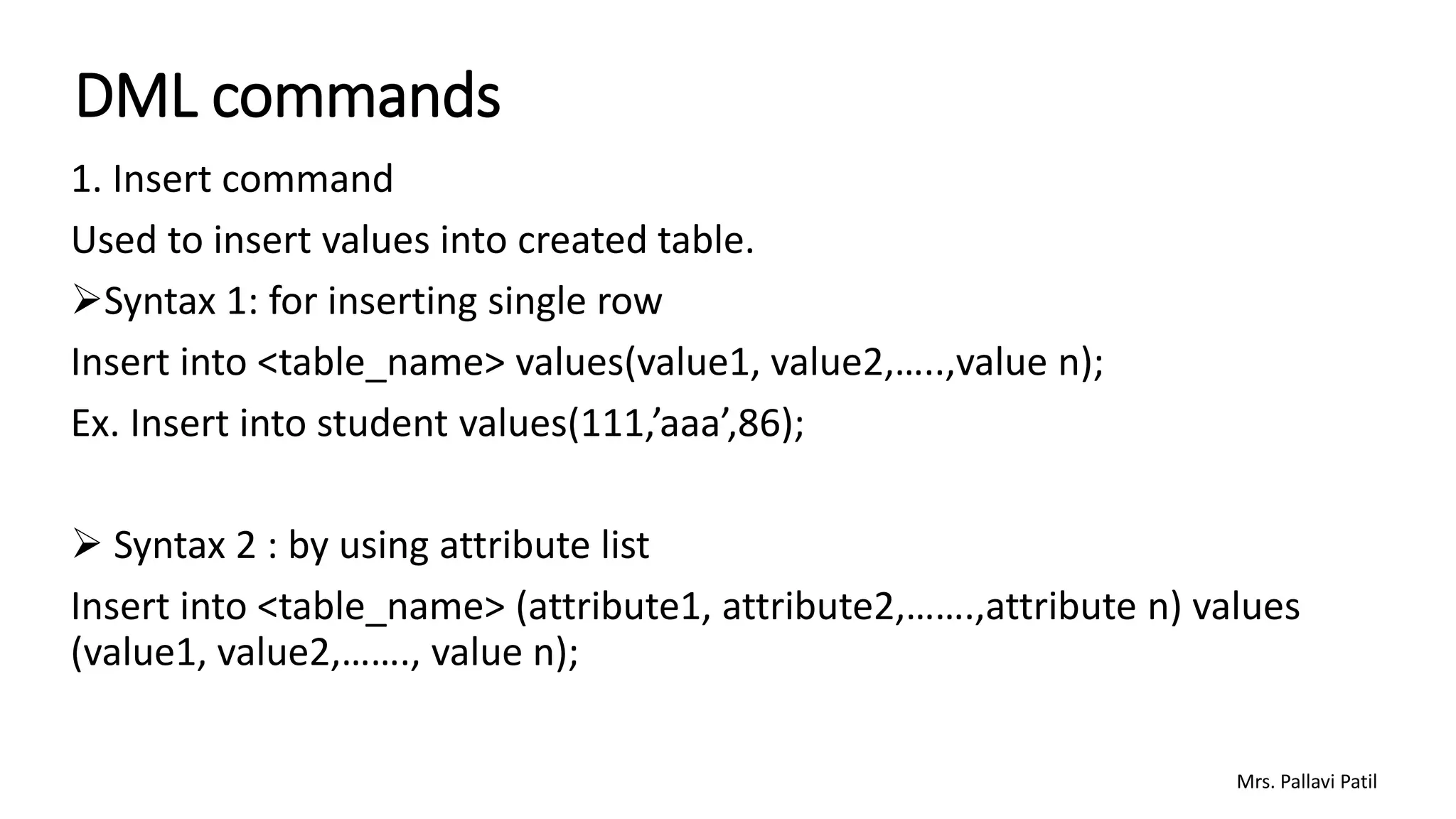
DML commands
1. Insert command
Used to insert values into created table.
Syntax 1: for inserting single row
Insert into <table_name> values(value1, value2,…..,value n);
Ex. Insert into student values(111,’aaa’,86);
 Syntax 2 : by using attribute list
Insert into <table_name> (attribute1, attribute2,…….,attribute n) values
(value1, value2,……., value n);
Mrs. Pallavi Patil
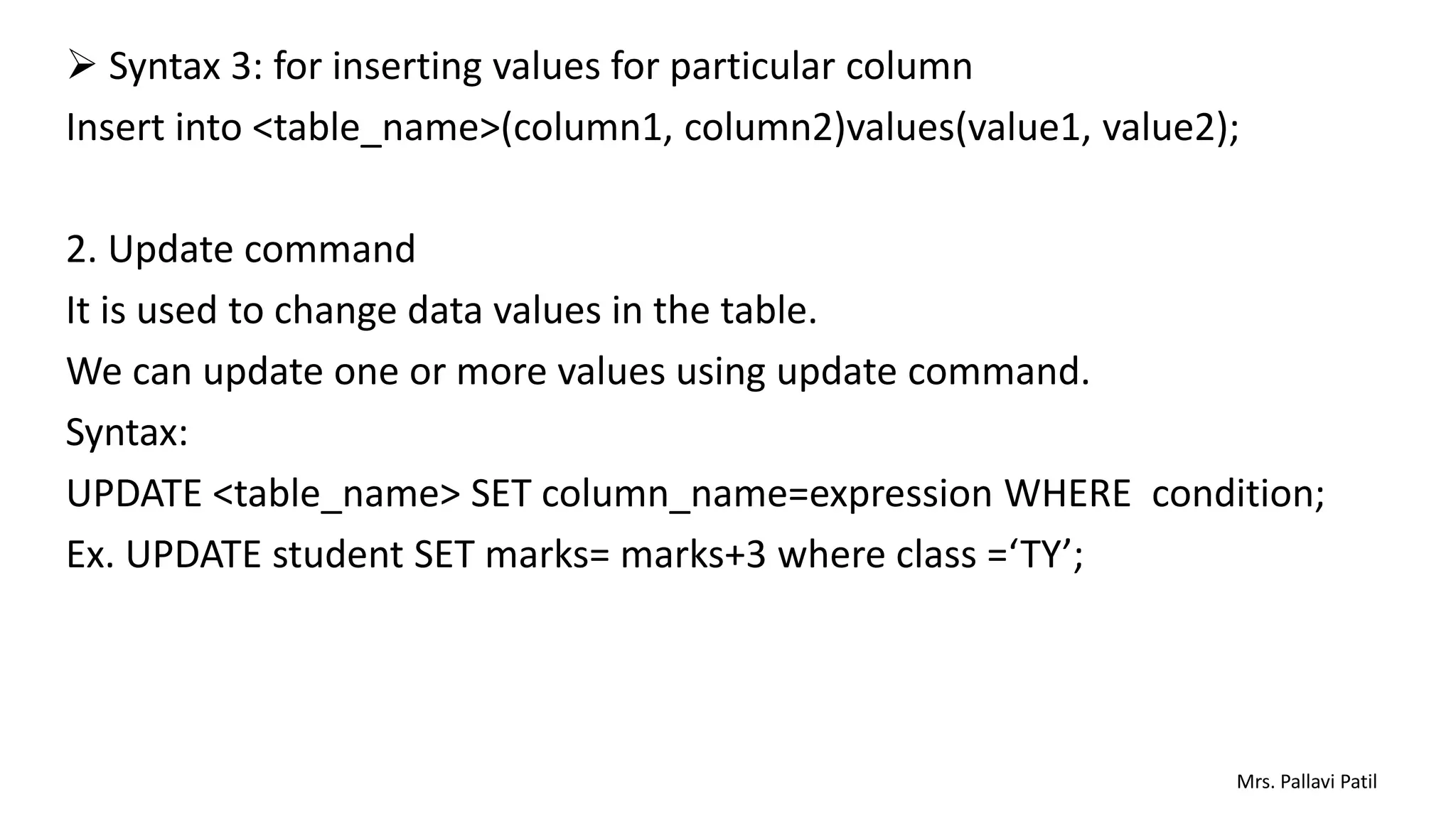
 Syntax 3: for inserting values for particular column
Insert into <table_name>(column1, column2)values(value1, value2);
2. Update command
It is used to change data values in the table.
We can update one or more values using update command.
Syntax:
UPDATE <table_name> SET column_name=expression WHERE condition;
Ex. UPDATE student SET marks= marks+3 where class =‘TY’;
Mrs. Pallavi Patil
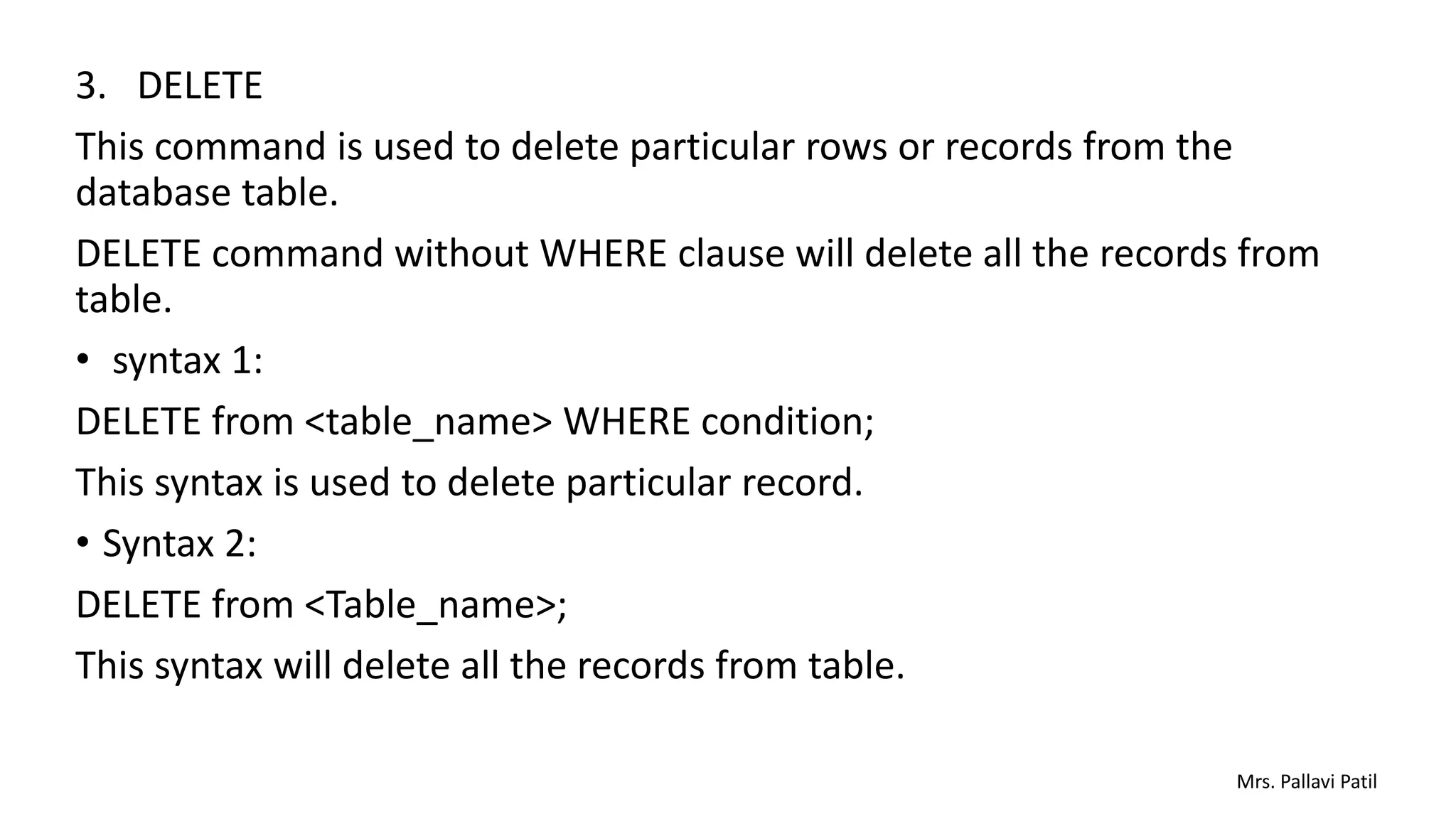
3. DELETE
This command is used to delete particular rows or records from the
database table.
DELETE command without WHERE clause will delete all the records from
table.
• syntax 1:
DELETE from <table_name> WHERE condition;
This syntax is used to delete particular record.
• Syntax 2:
DELETE from <Table_name>;
This syntax will delete all the records from table.
Mrs. Pallavi Patil
DCL commands
• Used to control various user actions like insert, update, delete or viewing
data.
• DCL commands also perform task of assigning privileges. So user can
access certain objects in database.
Mrs. Pallavi Patil
 Create user
• The database administrator can create users of database by using this
command.
Syntax:
Create user <username> identified by <password>;
Ex.
Create user admin1 identified by ad123;
GRANT
• Grant command allows user to do certain operations on other user’s table.
• The different types of previleges can be granted to users such as alter,
insert, delete, update, select, etc.
Mrs. Pallavi Patil
Syntax:
Grant <privilege list> on <TableName> to <username>;
Ex.
Grant insert , update on student_info to admin1;
REVOKE
• It is used to cancel or to take back the granted privileges from the
specific user.
Syntax
Revoke <privileges list> on table_name from <user_name>;
Ex. Revoke insert on student_info from admin1;
Mrs. Pallavi Patil
TCL Commands
COMMIT command
• It is used to make changes permanent in the database. This command is
used to end the transaction.
Syntax:
COMMIT;
Mrs. Pallavi Patil
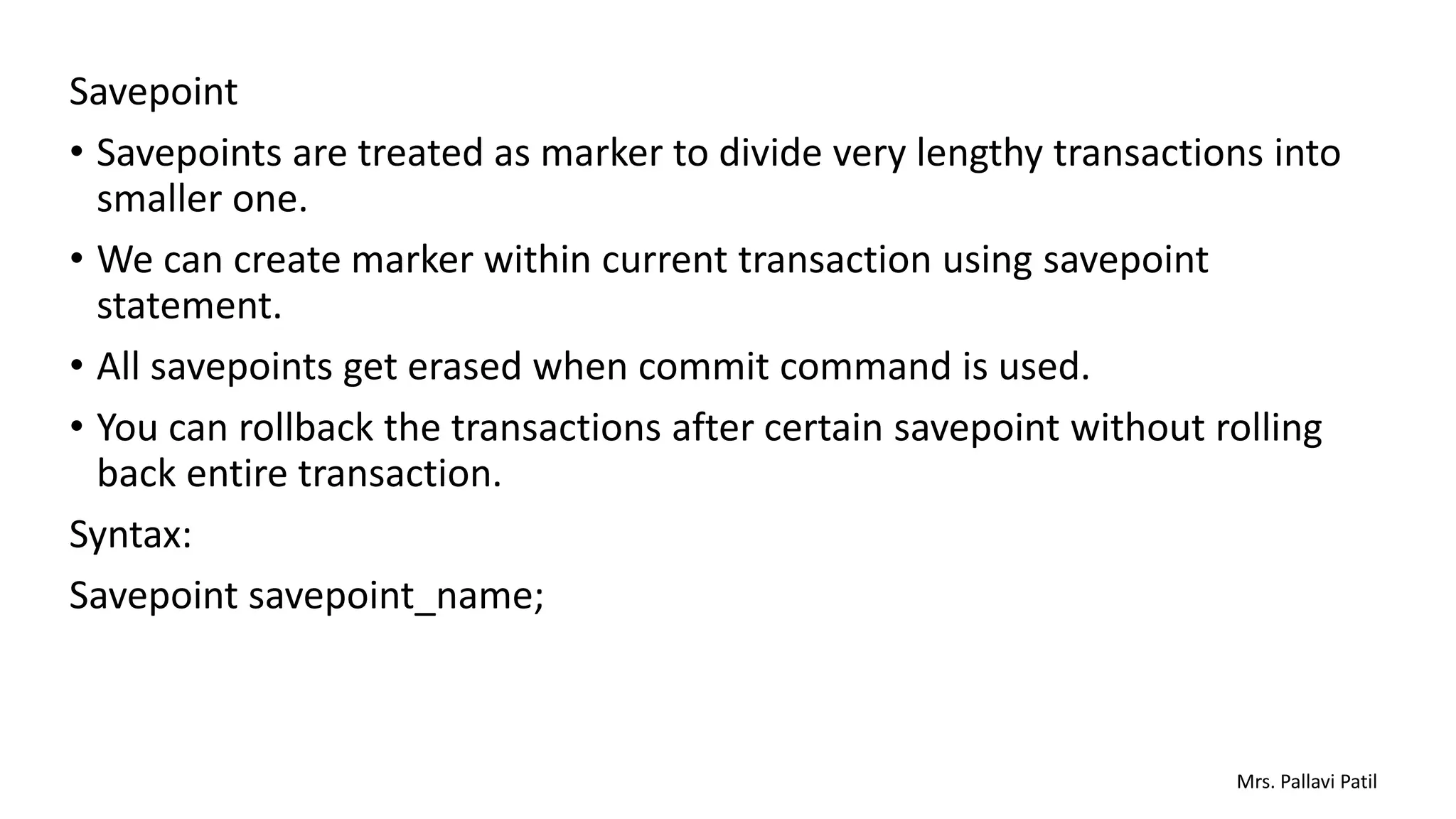
Savepoint
• Savepoints are treated as marker to divide very lengthy transactions into
smaller one.
• We can create marker within current transaction using savepoint
statement.
• All savepoints get erased when commit command is used.
• You can rollback the transactions after certain savepoint without rolling
back entire transaction.
Syntax:
Savepoint savepoint_name;
Mrs. Pallavi Patil
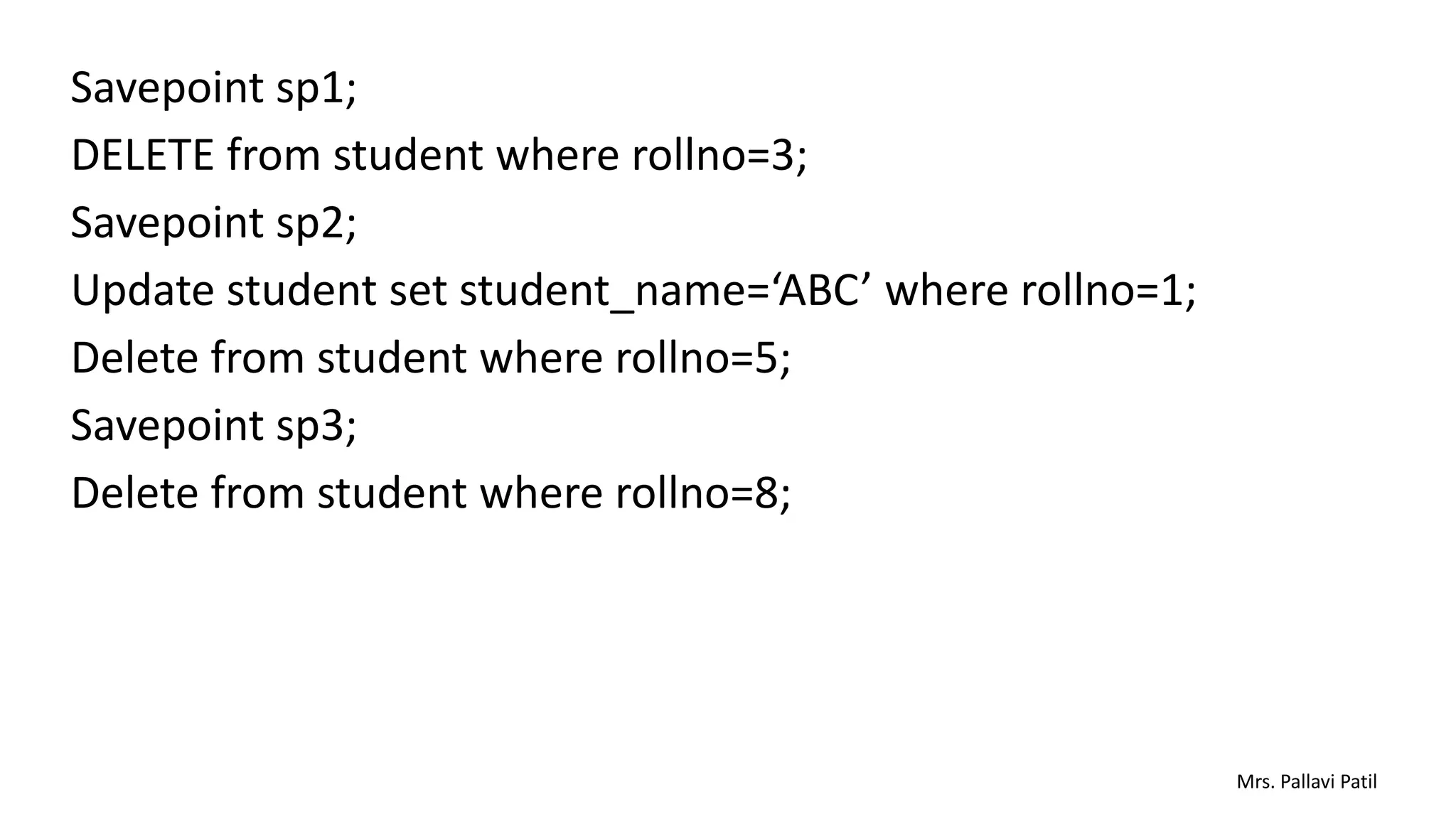
Savepoint sp1;
DELETE from student where rollno=3;
Savepoint sp2;
Update student set student_name=‘ABC’ where rollno=1;
Delete from student where rollno=5;
Savepoint sp3;
Delete from student where rollno=8;
Mrs. Pallavi Patil
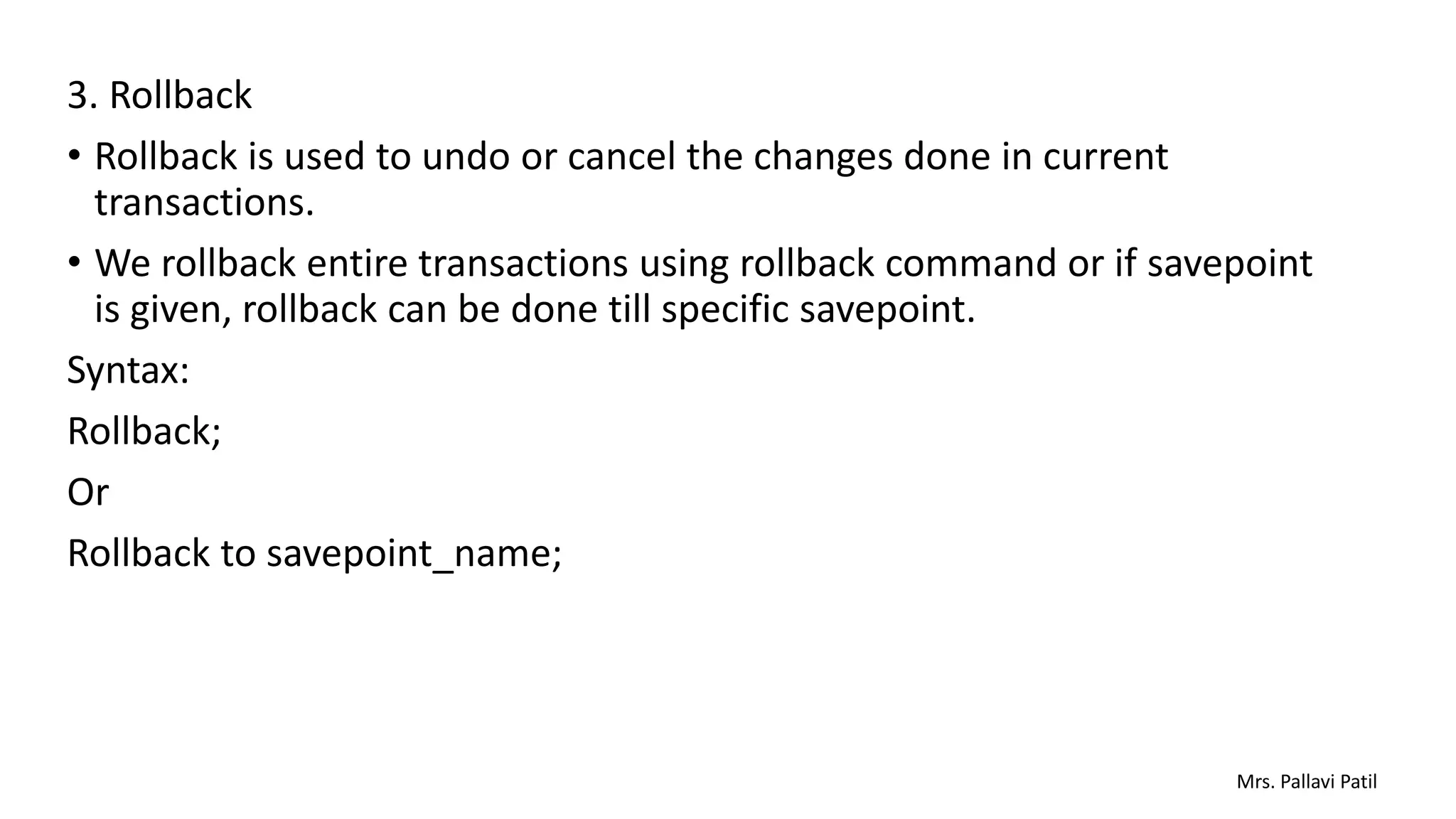
3. Rollback
• Rollback is used to undo or cancel the changes done in current
transactions.
• We rollback entire transactions using rollback command or if savepoint
is given, rollback can be done till specific savepoint.
Syntax:
Rollback;
Or
Rollback to savepoint_name;
Mrs. Pallavi Patil

DML, DCL and TCL commands in SQL database.pptx

  • 1.
    DQL commands It consistsof only 1 command i.e. SELECT command. SELECT it is used to retrieve all the records or particular record from table. Syntax : i. SELECT * from <table_name>; This will retrieve all the records from table. ii. SELECT * from <table_name> WHERE condition; This will retrieve particular records from table, according to specified condition. Mrs. Pallavi Patil
  • 2.
    DML commands 1. Insertcommand Used to insert values into created table. Syntax 1: for inserting single row Insert into <table_name> values(value1, value2,…..,value n); Ex. Insert into student values(111,’aaa’,86);  Syntax 2 : by using attribute list Insert into <table_name> (attribute1, attribute2,…….,attribute n) values (value1, value2,……., value n); Mrs. Pallavi Patil
  • 3.
     Syntax 3:for inserting values for particular column Insert into <table_name>(column1, column2)values(value1, value2); 2. Update command It is used to change data values in the table. We can update one or more values using update command. Syntax: UPDATE <table_name> SET column_name=expression WHERE condition; Ex. UPDATE student SET marks= marks+3 where class =‘TY’; Mrs. Pallavi Patil
  • 4.
    3. DELETE This commandis used to delete particular rows or records from the database table. DELETE command without WHERE clause will delete all the records from table. • syntax 1: DELETE from <table_name> WHERE condition; This syntax is used to delete particular record. • Syntax 2: DELETE from <Table_name>; This syntax will delete all the records from table. Mrs. Pallavi Patil
  • 5.
    DCL commands • Usedto control various user actions like insert, update, delete or viewing data. • DCL commands also perform task of assigning privileges. So user can access certain objects in database. Mrs. Pallavi Patil
  • 6.
     Create user •The database administrator can create users of database by using this command. Syntax: Create user <username> identified by <password>; Ex. Create user admin1 identified by ad123; GRANT • Grant command allows user to do certain operations on other user’s table. • The different types of previleges can be granted to users such as alter, insert, delete, update, select, etc. Mrs. Pallavi Patil
  • 7.
    Syntax: Grant <privilege list>on <TableName> to <username>; Ex. Grant insert , update on student_info to admin1; REVOKE • It is used to cancel or to take back the granted privileges from the specific user. Syntax Revoke <privileges list> on table_name from <user_name>; Ex. Revoke insert on student_info from admin1; Mrs. Pallavi Patil
  • 8.
    TCL Commands COMMIT command •It is used to make changes permanent in the database. This command is used to end the transaction. Syntax: COMMIT; Mrs. Pallavi Patil
  • 9.
    Savepoint • Savepoints aretreated as marker to divide very lengthy transactions into smaller one. • We can create marker within current transaction using savepoint statement. • All savepoints get erased when commit command is used. • You can rollback the transactions after certain savepoint without rolling back entire transaction. Syntax: Savepoint savepoint_name; Mrs. Pallavi Patil
  • 10.
    Savepoint sp1; DELETE fromstudent where rollno=3; Savepoint sp2; Update student set student_name=‘ABC’ where rollno=1; Delete from student where rollno=5; Savepoint sp3; Delete from student where rollno=8; Mrs. Pallavi Patil
  • 11.
    3. Rollback • Rollbackis used to undo or cancel the changes done in current transactions. • We rollback entire transactions using rollback command or if savepoint is given, rollback can be done till specific savepoint. Syntax: Rollback; Or Rollback to savepoint_name; Mrs. Pallavi Patil