DISULFIRAM ETHANOL
REACTION
www.nursingspark.blogspot.com
DISULFIRAM ETHANOL REACTION (DER)
is the classic manifestation of patients with
disulfiram toxicity.
This reaction occurs after the ingestion of even
small amounts of ethanol with concomitant use
of disulfiram or disulfiram like agents.
www.nursingspark.blogspot.com
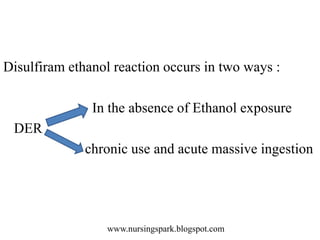
Disulfiram ethanol reaction occurs in two ways :
In the absence of Ethanol exposure
DER
chronic use and acute massive ingestion
www.nursingspark.blogspot.com
BLOOD LEVELS TO CAUSE
REACTION
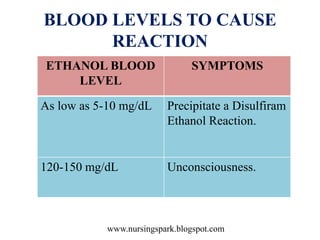
ETHANOL BLOOD
LEVEL
SYMPTOMS
As low as 5-10 mg/dL Precipitate a Disulfiram
Ethanol Reaction.
120-150 mg/dL Unconsciousness.
www.nursingspark.blogspot.com
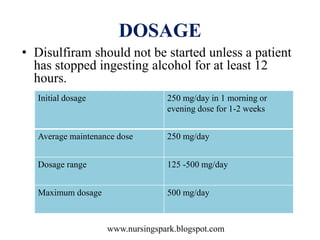
DOSAGE
• Disulfiram should not be started unless a patient
has stopped ingesting alcohol for at least 12
hours.
Initial dosage 250 mg/day in 1 morning or
evening dose for 1-2 weeks
Average maintenance dose 250 mg/day
Dosage range 125 -500 mg/day
Maximum dosage 500 mg/day
www.nursingspark.blogspot.com
Additional dosage information includes the following:
• Instruct patients who experience sedation with
disulfiram to take it at bedtime. If daytime sedation
persists, adjust the dosage downward.
• If a patient can drink alcohol without problems when
compliant with the routine starting dose (which is rare),
increase the dosage (dosage may be increased up to 500
mg/day with careful monitoring). Never exceed 500
mg/day.
• Instruct patients who miss a dose to take it as soon as
they remember. However, if it is almost time for the
next dose, they should skip the missed dose.
• Tell patients never to take a double dose of disulfiram.
www.nursingspark.blogspot.com
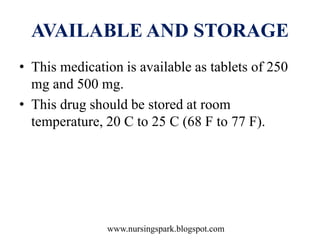
AVAILABLE AND STORAGE
• This medication is available as tablets of 250
mg and 500 mg.
• This drug should be stored at room
temperature, 20 C to 25 C (68 F to 77 F).
www.nursingspark.blogspot.com
CONTRAINDICATION
• Hypersensitivity
• Psychosis
• Severe myocardial disease
• Coronary occlusion
• Pregnancy
www.nursingspark.blogspot.com
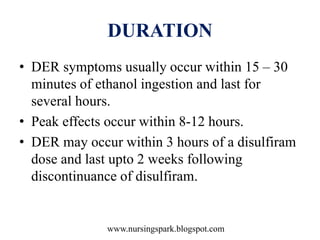
DURATION
• DER symptoms usually occur within 15 – 30
minutes of ethanol ingestion and last for
several hours.
• Peak effects occur within 8-12 hours.
• DER may occur within 3 hours of a disulfiram
dose and last upto 2 weeks following
discontinuance of disulfiram.
www.nursingspark.blogspot.com
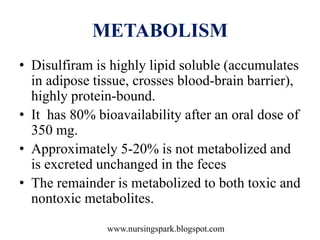
METABOLISM
• Disulfiram is highly lipid soluble (accumulates
in adipose tissue, crosses blood-brain barrier),
highly protein-bound.
• It has 80% bioavailability after an oral dose of
350 mg.
• Approximately 5-20% is not metabolized and
is excreted unchanged in the feces
• The remainder is metabolized to both toxic and
nontoxic metabolites.
www.nursingspark.blogspot.com
DURATION OF ELIMINATION OF
DISULFIRAM
• The elimination of disulfiram and its numerous
metabolites is a very slow process.
• Approximately 20% of the drug remains in the
body for 1-2 weeks postingestion.
• Most of these metabolites are then eliminated
through the gastrointestinal (GI), renal, and
respiratory routes.
• The prolonged effects of disulfiram occur not
only because the drug is slowly eliminated from
the body but also because it irreversibly inhibits
aldehyde dehydrogenase.
www.nursingspark.blogspot.com
EFFECTS OF DISULFIRAM
METABOLITES
Disulfiram metabolites cause clinically important effects
in the body :
• DDC chelates copper, thus impairing the activity of
dopamine beta-hydroxylase, an enzyme that catalyzes
the metabolism of dopamine to norepinephrine.
• In this way, DDC causes depletion of presynaptic
norepinephrine and accumulation of dopamine.
• Although hypotension from the disulfiram-ethanol
reaction is mainly attributable to the effects of
acetaldehyde, depletion of the potent vasoconstrictor
norepinephrine may also be a contributing factor.
www.nursingspark.blogspot.com
PATHOPHYSIOLOGY
• Alcohol is converted in the body into
acetaldehyde by an enzyme called alcohol
dehydrogenase.
• Another enzyme called acetaldehyde
dehydrogenase then converts acetaldehyde into
acetic acid.
• Disulfiram prevents acetaldehyde dehydrogenase
from converting acetaldehyde into acetic acid,
leading to a buildup of acetaldehyde levels in the
blood
www.nursingspark.blogspot.com
MODE OF ACTION
www.nursingspark.blogspot.com
PATHOPHYSIOLOGY
The disulfiram-ethanol reaction (DER) is due to increased
serum acetaldehyde concentrations generated by the
metabolism of ethanol by alcohol dehydrogenase in the
liver.
Normally, this acetaldehyde is cleared rapidly by its
metabolism to acetate via aldehyde dehydrogenase.
Disulfiram blocks this enzyme, irreversibly inhibiting the
oxidation of acetaldehyde and causing a marked increase in
acetaldehyde concentrations after ethanol consumption.
The discomfort associated with this syndrome is intended to
serve as a negative stimulus, but the reaction may be severe
enough to cause hypotension and death.
www.nursingspark.blogspot.com
Signs and symptoms of acute
disulfiram overdose
• Hypotension, tachycardia, and dyspnea
• Abdominal pain, nausea, vomiting, and sulfur or
garlic odor on breath
• Agitation, dysarthria, chorea, hallucinations, and
lethargy
• Coma and seizures
• Parkinson like syndrome (eg, dystonia, spastic
tetraparesis)
• Polyneuropathy
• Hypersensitive hepatitis and hepatic failure
• Loss of developmental milestones
www.nursingspark.blogspot.com
SIDE EFFECTS
Possible serious side effects include:
• Polyneuritis
• Hepatitis
• Peripheral neuropathy
• Optic neuritis
• Psychotic disorder
• Acneiform eruptions
www.nursingspark.blogspot.com
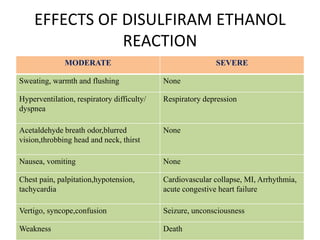
EFFECTS OF DISULFIRAM ETHANOL
REACTION
MODERATE SEVERE
Sweating, warmth and flushing None
Hyperventilation, respiratory difficulty/
dyspnea
Respiratory depression
Acetaldehyde breath odor,blurred
vision,throbbing head and neck, thirst
None
Nausea, vomiting None
Chest pain, palpitation,hypotension,
tachycardia
Cardiovascular collapse, MI, Arrhythmia,
acute congestive heart failure
Vertigo, syncope,confusion Seizure, unconsciousness
Weakness Death
www.nursingspark.blogspot.com
Common side effects of include:
• Drowsiness
• Tiredness
• Headache
• Acne
• Metallic or garlic-like taste in the mouth
• Skin rash
• Impotence
• Swollen or sore tongue
www.nursingspark.blogspot.com
Antabuse BLACK BOX WARNING
and side effects
When alcohol is consumed by a patient taking
disulfiram, effects include:
• Flushing
• Nausea
• Vomiting
• Sweating
• Thirst
• Throbbing headache
• Fainting
• Dizziness
www.nursingspark.blogspot.com
• Blurred vision
• Shortness of breath
• Confusion
• Abnormal heartbeats
• Heart attack
• Liver failure
www.nursingspark.blogspot.com
DISULFIRAM TOXICITY
In considering disulfiram toxicity, a distinction
must be made between the clinical
manifestations of a disulfiram-ethanol reaction
(DER) and the toxic effects of disulfiram itself.
Direct disulfiram toxicity may be further divided
into acute poisoning versus chronic poisoning.
www.nursingspark.blogspot.com
The directly toxic effects of disulfiram include
neurologic, cutaneous, and hepatotoxic
sequelae in addition to the disulfiram-ethanol
reaction.
www.nursingspark.blogspot.com
NEUROTOXIC EFFECTS
Neurotoxic effects associated with disulfiram
include:
• Extrapyramidal symptoms
• Lesions of the basal ganglia
Potential mechanisms for disulfiram-associated
neurotoxicity include:
• Abnormal CNS metal accumulation from the
chelation of copper by DDC, leading to free
radical formation and neuronal oxidative stress.
www.nursingspark.blogspot.com
Carbon disulfide (CS2), another disulfiram metabolite
from DDC metabolism, has neurotoxic effects when
administered directly.
Acute exposure to CS2 causes:
• rapid onset of headache
• confusion,
• Nausea
• hallucinations
• delirium
• seizures,
• Coma
• potentially death.
www.nursingspark.blogspot.com
SYMPTOMS OF NEUROLOGIC
TOXICITY
Neurologic toxicity increases with dose and duration of
therapy and includes the following:
• Central and peripheral sensory motor neuropathy [7]
• Diffuse toxic axonopathy
• Psychosis - Limbic system stimulation by dopamine
• Choreoathetosis - Basal ganglia stimulation by
dopamine
• Parkinsonism - Caused by low-density lesions in the
basal ganglia
www.nursingspark.blogspot.com
• Catatonia - Occurs more often with chronic
toxicity than with acute toxicity
• Movement disorders - From dopamine excess,
an enhanced excitotoxic effect of glutamate
and calcium-mediated cell death
• Dermatologic manifestations peaks at about 2
weeks of treatment and include acneiform
eruptions and allergic dermatitis
www.nursingspark.blogspot.com
Gastrointestinal symptoms include the following:
• Rotten-egg odor on breath (sulfide metabolites),
garliclike or metallic aftertaste in mouth
• Hypersensitive or toxic hepatitis - Peaks at about 2
months of therapy and has a fatality rate of
approximately 1 in 25,000 cases
• Cholestatic jaundice
• Ophthalmologic toxicity - Optic neuritis (atrophy)
• Hematologic toxicity - Agranulocytosis, eosinophilia,
thrombocytopenia, and methemoglobinemia
www.nursingspark.blogspot.com
Acetaldehyde syndrome may present with the following
findings :
• Head, neck, and chest flushing - Histamine-induced
vasodilation
• Throbbing headaches
• Nausea, vomiting (may be refractory), diarrhea, and
abdominal pain
• Weakness, dizziness, confusion, and anxiety
• Vertigo and ataxia
• Orthostatic hypotension - Hypotensive flushing reaction
with warm extremities
• Diaphoresis, Pruritus
• Palpitations and dysrhythmias
• Refractory cyanosis (eg, methemoglobinemia)
www.nursingspark.blogspot.com
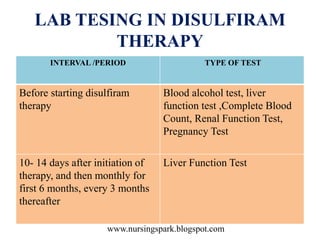
LAB TESING IN DISULFIRAM
THERAPY
INTERVAL /PERIOD TYPE OF TEST
Before starting disulfiram
therapy
Blood alcohol test, liver
function test ,Complete Blood
Count, Renal Function Test,
Pregnancy Test
10- 14 days after initiation of
therapy, and then monthly for
first 6 months, every 3 months
thereafter
Liver Function Test
www.nursingspark.blogspot.com
MANAGEMENT
Prehospital Care :
For patients with possible disulfiram-ethanol reaction
(DER):
• provide supplemental oxygen
• obtain intravenous access
• place all patients on a monitor.
• Administer thiamine, glucose, and naloxone to patients
with altered mental status, as needed.
• Intravenous fluids should be instituted if hypotension,
tachycardia, or severe vomiting is present.
www.nursingspark.blogspot.com
• Patients with coma or a severely altered mental
status should be intubated for airway
protection. The frequent occurrence of
vomiting secondary to DER places these
patients at high risk for aspiration.
www.nursingspark.blogspot.com
PRECAUTIONS
• Antabuse should never be given to a patient who
is intoxicated, or without his or her full
knowledge.
• Relatives of patients should be advised about this
warning also.
Patients should be fully informed about the
Antabuse-alcohol reaction and must be strongly
warned about drinking while taking Antabuse.
• Patients should avoid alcohol in all forms,
including alcohol in sauces, vinegars,cough
mixtures.
www.nursingspark.blogspot.com
• Antabuse should be used cautiously in patient
with diabetes, hypothyroidism, epilepsy,
cerebral damage, nephritis, and hepatic
impairment.
• Antabuse should not be given to people with
severe heart disease, people allergic to
Antabuse and people with psychosis.
www.nursingspark.blogspot.com
PRODUCTS CONTAINING
ETHANOL
• FACIAL CLEANING PRODUCTS
• Mouth wash
• Flavoured extracts
• Rubbing alcohol
• Perfumes, deodarant sprays
• Wind shield wiper fluid
• Nail polish remover
• Bug sprays
• Astringents for skin care
www.nursingspark.blogspot.com
• Body wash
• Tooth paste
• Ripe fruit
• Inhalers
• Fermented soda drink
• Insect repellent
• Hand sanitizer
• Bleach
• Dish wash soap
• Air freshners
• Sugarless gums
• Honey buns
www.nursingspark.blogspot.com
Medications containing Ethanol concentration
more than 5 % :
• Adult Tylenol liquid
• Benadryl Elixir
• Comtrex
• Codeine Elixir
• Formula 44 cough mixture
• Geritol liquid
www.nursingspark.blogspot.com
Emergency Department Care :
• Emergency department treatment of disulfiram-
ethanol reaction (DER) is primarily supportive.
• Fomepizole has the theoretical benefit of blocking
ethanol metabolism to acetaldehyde and may be a
useful therapy in patients presenting with DER.
• Patients with a severely altered mental status or
coma should be intubated for airway protection.
www.nursingspark.blogspot.com
• Mild sedation with benzodiazepines may be
useful in the agitated patient, and benzodiazepines
may be used to treat seizures.
• Sedation of patients with intractable vomiting
increases the risk of aspiration should be
approached with caution.
• In cases of intractable vomiting, phenothiazine
use must be considered cautiously because their
alpha-blockade effect may worsen or induce
hypotension.
www.nursingspark.blogspot.com
• Metoclopramide, ondansetron, or granisetron are
considered the antiemetics of choice in these
cases.
• Intravenous fluids should be given to patients
experiencing a DER to replace volume losses
from emesis and third spacing of intravascular
fluid.
• Intravenous fluids and vasopressors are indicated
to support blood pressure and treat patients who
are in shock.
www.nursingspark.blogspot.com
COMPLICATION
• Consider gastric emptying only in the hospital
setting .
• Inducing emesis with ipecac syrup is not
recommended. Ipecac syrup contains ethanol,
which could precipitate DER.
• Emesis may delay administration of activated
charcoal, worsen the nausea and vomiting
associated with disulfiram toxicity, and increase
the likelihood of pulmonary aspiration if seizures
and coma suddenly occur.
www.nursingspark.blogspot.com
• In acute disulfiram overdose, consider the use
of activated charcoal, if available.
• if the patient is alert and able to drink it safely.
Use of multiple- dose activated charcoal
(MDAC) may be beneficial, as it can increase
the rate of elimination of disulfiram and its
metabolites that undergo enterohepatic
recirculation.
www.nursingspark.blogspot.com
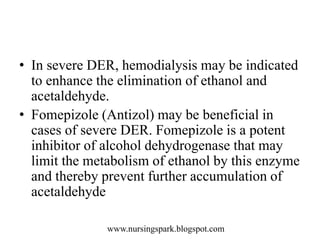
• In severe DER, hemodialysis may be indicated
to enhance the elimination of ethanol and
acetaldehyde.
• Fomepizole (Antizol) may be beneficial in
cases of severe DER. Fomepizole is a potent
inhibitor of alcohol dehydrogenase that may
limit the metabolism of ethanol by this enzyme
and thereby prevent further accumulation of
acetaldehyde
www.nursingspark.blogspot.com
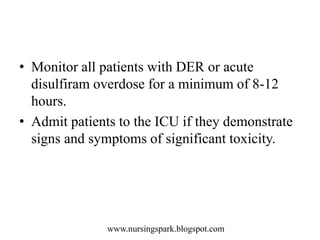
• Monitor all patients with DER or acute
disulfiram overdose for a minimum of 8-12
hours.
• Admit patients to the ICU if they demonstrate
signs and symptoms of significant toxicity.
www.nursingspark.blogspot.com
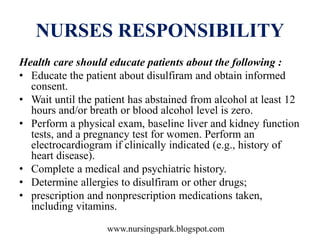
NURSES RESPONSIBILITY
Health care should educate patients about the following :
• Educate the patient about disulfiram and obtain informed
consent.
• Wait until the patient has abstained from alcohol at least 12
hours and/or breath or blood alcohol level is zero.
• Perform a physical exam, baseline liver and kidney function
tests, and a pregnancy test for women. Perform an
electrocardiogram if clinically indicated (e.g., history of
heart disease).
• Complete a medical and psychiatric history.
• Determine allergies to disulfiram or other drugs;
• prescription and nonprescription medications taken,
including vitamins.
www.nursingspark.blogspot.com
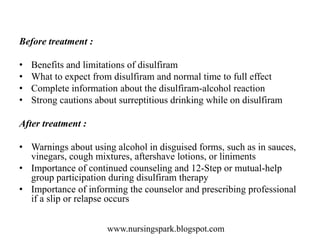
Before treatment :
• Benefits and limitations of disulfiram
• What to expect from disulfiram and normal time to full effect
• Complete information about the disulfiram-alcohol reaction
• Strong cautions about surreptitious drinking while on disulfiram
After treatment :
• Warnings about using alcohol in disguised forms, such as in sauces,
vinegars, cough mixtures, aftershave lotions, or liniments
• Importance of continued counseling and 12-Step or mutual-help
group participation during disulfiram therapy
• Importance of informing the counselor and prescribing professional
if a slip or relapse occurs
www.nursingspark.blogspot.com
• Importance of telling physicians or dentists that the
patient is taking disulfiram when he or she is scheduled
for surgery, including dental surgery
• Importance of carrying a safety identification card
indicating that the patient is taking disulfiram,
symptoms of possible disulfiram-alcohol reactions, and
the physician or institution to contact in an emergency
• Symptoms of potential neurologic injury to report
immediately to the physician
• Symptoms of potential liver injury to report
immediately to the physician.
www.nursingspark.blogspot.com

Disulfiram ethanol reaction

  • 1.
  • 2.
  • 3.
    www.nursingspark.blogspot.com DISULFIRAM ETHANOL REACTION(DER) is the classic manifestation of patients with disulfiram toxicity. This reaction occurs after the ingestion of even small amounts of ethanol with concomitant use of disulfiram or disulfiram like agents.
  • 4.
    www.nursingspark.blogspot.com Disulfiram ethanol reactionoccurs in two ways : In the absence of Ethanol exposure DER chronic use and acute massive ingestion
  • 5.
    www.nursingspark.blogspot.com BLOOD LEVELS TOCAUSE REACTION ETHANOL BLOOD LEVEL SYMPTOMS As low as 5-10 mg/dL Precipitate a Disulfiram Ethanol Reaction. 120-150 mg/dL Unconsciousness.
  • 6.
  • 7.
    www.nursingspark.blogspot.com DOSAGE • Disulfiram shouldnot be started unless a patient has stopped ingesting alcohol for at least 12 hours. Initial dosage 250 mg/day in 1 morning or evening dose for 1-2 weeks Average maintenance dose 250 mg/day Dosage range 125 -500 mg/day Maximum dosage 500 mg/day
  • 8.
    www.nursingspark.blogspot.com Additional dosage informationincludes the following: • Instruct patients who experience sedation with disulfiram to take it at bedtime. If daytime sedation persists, adjust the dosage downward. • If a patient can drink alcohol without problems when compliant with the routine starting dose (which is rare), increase the dosage (dosage may be increased up to 500 mg/day with careful monitoring). Never exceed 500 mg/day. • Instruct patients who miss a dose to take it as soon as they remember. However, if it is almost time for the next dose, they should skip the missed dose. • Tell patients never to take a double dose of disulfiram.
  • 9.
    www.nursingspark.blogspot.com AVAILABLE AND STORAGE •This medication is available as tablets of 250 mg and 500 mg. • This drug should be stored at room temperature, 20 C to 25 C (68 F to 77 F).
  • 10.
    www.nursingspark.blogspot.com CONTRAINDICATION • Hypersensitivity • Psychosis •Severe myocardial disease • Coronary occlusion • Pregnancy
  • 11.
    www.nursingspark.blogspot.com DURATION • DER symptomsusually occur within 15 – 30 minutes of ethanol ingestion and last for several hours. • Peak effects occur within 8-12 hours. • DER may occur within 3 hours of a disulfiram dose and last upto 2 weeks following discontinuance of disulfiram.
  • 12.
    www.nursingspark.blogspot.com METABOLISM • Disulfiram ishighly lipid soluble (accumulates in adipose tissue, crosses blood-brain barrier), highly protein-bound. • It has 80% bioavailability after an oral dose of 350 mg. • Approximately 5-20% is not metabolized and is excreted unchanged in the feces • The remainder is metabolized to both toxic and nontoxic metabolites.
  • 13.
    www.nursingspark.blogspot.com DURATION OF ELIMINATIONOF DISULFIRAM • The elimination of disulfiram and its numerous metabolites is a very slow process. • Approximately 20% of the drug remains in the body for 1-2 weeks postingestion. • Most of these metabolites are then eliminated through the gastrointestinal (GI), renal, and respiratory routes. • The prolonged effects of disulfiram occur not only because the drug is slowly eliminated from the body but also because it irreversibly inhibits aldehyde dehydrogenase.
  • 14.
    www.nursingspark.blogspot.com EFFECTS OF DISULFIRAM METABOLITES Disulfirammetabolites cause clinically important effects in the body : • DDC chelates copper, thus impairing the activity of dopamine beta-hydroxylase, an enzyme that catalyzes the metabolism of dopamine to norepinephrine. • In this way, DDC causes depletion of presynaptic norepinephrine and accumulation of dopamine. • Although hypotension from the disulfiram-ethanol reaction is mainly attributable to the effects of acetaldehyde, depletion of the potent vasoconstrictor norepinephrine may also be a contributing factor.
  • 15.
    www.nursingspark.blogspot.com PATHOPHYSIOLOGY • Alcohol isconverted in the body into acetaldehyde by an enzyme called alcohol dehydrogenase. • Another enzyme called acetaldehyde dehydrogenase then converts acetaldehyde into acetic acid. • Disulfiram prevents acetaldehyde dehydrogenase from converting acetaldehyde into acetic acid, leading to a buildup of acetaldehyde levels in the blood
  • 16.
  • 17.
    www.nursingspark.blogspot.com PATHOPHYSIOLOGY The disulfiram-ethanol reaction(DER) is due to increased serum acetaldehyde concentrations generated by the metabolism of ethanol by alcohol dehydrogenase in the liver. Normally, this acetaldehyde is cleared rapidly by its metabolism to acetate via aldehyde dehydrogenase. Disulfiram blocks this enzyme, irreversibly inhibiting the oxidation of acetaldehyde and causing a marked increase in acetaldehyde concentrations after ethanol consumption. The discomfort associated with this syndrome is intended to serve as a negative stimulus, but the reaction may be severe enough to cause hypotension and death.
  • 18.
    www.nursingspark.blogspot.com Signs and symptomsof acute disulfiram overdose • Hypotension, tachycardia, and dyspnea • Abdominal pain, nausea, vomiting, and sulfur or garlic odor on breath • Agitation, dysarthria, chorea, hallucinations, and lethargy • Coma and seizures • Parkinson like syndrome (eg, dystonia, spastic tetraparesis) • Polyneuropathy • Hypersensitive hepatitis and hepatic failure • Loss of developmental milestones
  • 19.
    www.nursingspark.blogspot.com SIDE EFFECTS Possible seriousside effects include: • Polyneuritis • Hepatitis • Peripheral neuropathy • Optic neuritis • Psychotic disorder • Acneiform eruptions
  • 20.
    www.nursingspark.blogspot.com EFFECTS OF DISULFIRAMETHANOL REACTION MODERATE SEVERE Sweating, warmth and flushing None Hyperventilation, respiratory difficulty/ dyspnea Respiratory depression Acetaldehyde breath odor,blurred vision,throbbing head and neck, thirst None Nausea, vomiting None Chest pain, palpitation,hypotension, tachycardia Cardiovascular collapse, MI, Arrhythmia, acute congestive heart failure Vertigo, syncope,confusion Seizure, unconsciousness Weakness Death
  • 21.
    www.nursingspark.blogspot.com Common side effectsof include: • Drowsiness • Tiredness • Headache • Acne • Metallic or garlic-like taste in the mouth • Skin rash • Impotence • Swollen or sore tongue
  • 22.
    www.nursingspark.blogspot.com Antabuse BLACK BOXWARNING and side effects When alcohol is consumed by a patient taking disulfiram, effects include: • Flushing • Nausea • Vomiting • Sweating • Thirst • Throbbing headache • Fainting • Dizziness
  • 23.
    www.nursingspark.blogspot.com • Blurred vision •Shortness of breath • Confusion • Abnormal heartbeats • Heart attack • Liver failure
  • 24.
    www.nursingspark.blogspot.com DISULFIRAM TOXICITY In consideringdisulfiram toxicity, a distinction must be made between the clinical manifestations of a disulfiram-ethanol reaction (DER) and the toxic effects of disulfiram itself. Direct disulfiram toxicity may be further divided into acute poisoning versus chronic poisoning.
  • 25.
    www.nursingspark.blogspot.com The directly toxiceffects of disulfiram include neurologic, cutaneous, and hepatotoxic sequelae in addition to the disulfiram-ethanol reaction.
  • 26.
    www.nursingspark.blogspot.com NEUROTOXIC EFFECTS Neurotoxic effectsassociated with disulfiram include: • Extrapyramidal symptoms • Lesions of the basal ganglia Potential mechanisms for disulfiram-associated neurotoxicity include: • Abnormal CNS metal accumulation from the chelation of copper by DDC, leading to free radical formation and neuronal oxidative stress.
  • 27.
    www.nursingspark.blogspot.com Carbon disulfide (CS2),another disulfiram metabolite from DDC metabolism, has neurotoxic effects when administered directly. Acute exposure to CS2 causes: • rapid onset of headache • confusion, • Nausea • hallucinations • delirium • seizures, • Coma • potentially death.
  • 28.
    www.nursingspark.blogspot.com SYMPTOMS OF NEUROLOGIC TOXICITY Neurologictoxicity increases with dose and duration of therapy and includes the following: • Central and peripheral sensory motor neuropathy [7] • Diffuse toxic axonopathy • Psychosis - Limbic system stimulation by dopamine • Choreoathetosis - Basal ganglia stimulation by dopamine • Parkinsonism - Caused by low-density lesions in the basal ganglia
  • 29.
    www.nursingspark.blogspot.com • Catatonia -Occurs more often with chronic toxicity than with acute toxicity • Movement disorders - From dopamine excess, an enhanced excitotoxic effect of glutamate and calcium-mediated cell death • Dermatologic manifestations peaks at about 2 weeks of treatment and include acneiform eruptions and allergic dermatitis
  • 30.
    www.nursingspark.blogspot.com Gastrointestinal symptoms includethe following: • Rotten-egg odor on breath (sulfide metabolites), garliclike or metallic aftertaste in mouth • Hypersensitive or toxic hepatitis - Peaks at about 2 months of therapy and has a fatality rate of approximately 1 in 25,000 cases • Cholestatic jaundice • Ophthalmologic toxicity - Optic neuritis (atrophy) • Hematologic toxicity - Agranulocytosis, eosinophilia, thrombocytopenia, and methemoglobinemia
  • 31.
    www.nursingspark.blogspot.com Acetaldehyde syndrome maypresent with the following findings : • Head, neck, and chest flushing - Histamine-induced vasodilation • Throbbing headaches • Nausea, vomiting (may be refractory), diarrhea, and abdominal pain • Weakness, dizziness, confusion, and anxiety • Vertigo and ataxia • Orthostatic hypotension - Hypotensive flushing reaction with warm extremities • Diaphoresis, Pruritus • Palpitations and dysrhythmias • Refractory cyanosis (eg, methemoglobinemia)
  • 32.
    www.nursingspark.blogspot.com LAB TESING INDISULFIRAM THERAPY INTERVAL /PERIOD TYPE OF TEST Before starting disulfiram therapy Blood alcohol test, liver function test ,Complete Blood Count, Renal Function Test, Pregnancy Test 10- 14 days after initiation of therapy, and then monthly for first 6 months, every 3 months thereafter Liver Function Test
  • 33.
    www.nursingspark.blogspot.com MANAGEMENT Prehospital Care : Forpatients with possible disulfiram-ethanol reaction (DER): • provide supplemental oxygen • obtain intravenous access • place all patients on a monitor. • Administer thiamine, glucose, and naloxone to patients with altered mental status, as needed. • Intravenous fluids should be instituted if hypotension, tachycardia, or severe vomiting is present.
  • 34.
    www.nursingspark.blogspot.com • Patients withcoma or a severely altered mental status should be intubated for airway protection. The frequent occurrence of vomiting secondary to DER places these patients at high risk for aspiration.
  • 35.
    www.nursingspark.blogspot.com PRECAUTIONS • Antabuse shouldnever be given to a patient who is intoxicated, or without his or her full knowledge. • Relatives of patients should be advised about this warning also. Patients should be fully informed about the Antabuse-alcohol reaction and must be strongly warned about drinking while taking Antabuse. • Patients should avoid alcohol in all forms, including alcohol in sauces, vinegars,cough mixtures.
  • 36.
    www.nursingspark.blogspot.com • Antabuse shouldbe used cautiously in patient with diabetes, hypothyroidism, epilepsy, cerebral damage, nephritis, and hepatic impairment. • Antabuse should not be given to people with severe heart disease, people allergic to Antabuse and people with psychosis.
  • 37.
    www.nursingspark.blogspot.com PRODUCTS CONTAINING ETHANOL • FACIALCLEANING PRODUCTS • Mouth wash • Flavoured extracts • Rubbing alcohol • Perfumes, deodarant sprays • Wind shield wiper fluid • Nail polish remover • Bug sprays • Astringents for skin care
  • 38.
    www.nursingspark.blogspot.com • Body wash •Tooth paste • Ripe fruit • Inhalers • Fermented soda drink • Insect repellent • Hand sanitizer • Bleach • Dish wash soap • Air freshners • Sugarless gums • Honey buns
  • 39.
    www.nursingspark.blogspot.com Medications containing Ethanolconcentration more than 5 % : • Adult Tylenol liquid • Benadryl Elixir • Comtrex • Codeine Elixir • Formula 44 cough mixture • Geritol liquid
  • 40.
    www.nursingspark.blogspot.com Emergency Department Care: • Emergency department treatment of disulfiram- ethanol reaction (DER) is primarily supportive. • Fomepizole has the theoretical benefit of blocking ethanol metabolism to acetaldehyde and may be a useful therapy in patients presenting with DER. • Patients with a severely altered mental status or coma should be intubated for airway protection.
  • 41.
    www.nursingspark.blogspot.com • Mild sedationwith benzodiazepines may be useful in the agitated patient, and benzodiazepines may be used to treat seizures. • Sedation of patients with intractable vomiting increases the risk of aspiration should be approached with caution. • In cases of intractable vomiting, phenothiazine use must be considered cautiously because their alpha-blockade effect may worsen or induce hypotension.
  • 42.
    www.nursingspark.blogspot.com • Metoclopramide, ondansetron,or granisetron are considered the antiemetics of choice in these cases. • Intravenous fluids should be given to patients experiencing a DER to replace volume losses from emesis and third spacing of intravascular fluid. • Intravenous fluids and vasopressors are indicated to support blood pressure and treat patients who are in shock.
  • 43.
    www.nursingspark.blogspot.com COMPLICATION • Consider gastricemptying only in the hospital setting . • Inducing emesis with ipecac syrup is not recommended. Ipecac syrup contains ethanol, which could precipitate DER. • Emesis may delay administration of activated charcoal, worsen the nausea and vomiting associated with disulfiram toxicity, and increase the likelihood of pulmonary aspiration if seizures and coma suddenly occur.
  • 44.
    www.nursingspark.blogspot.com • In acutedisulfiram overdose, consider the use of activated charcoal, if available. • if the patient is alert and able to drink it safely. Use of multiple- dose activated charcoal (MDAC) may be beneficial, as it can increase the rate of elimination of disulfiram and its metabolites that undergo enterohepatic recirculation.
  • 45.
    www.nursingspark.blogspot.com • In severeDER, hemodialysis may be indicated to enhance the elimination of ethanol and acetaldehyde. • Fomepizole (Antizol) may be beneficial in cases of severe DER. Fomepizole is a potent inhibitor of alcohol dehydrogenase that may limit the metabolism of ethanol by this enzyme and thereby prevent further accumulation of acetaldehyde
  • 46.
    www.nursingspark.blogspot.com • Monitor allpatients with DER or acute disulfiram overdose for a minimum of 8-12 hours. • Admit patients to the ICU if they demonstrate signs and symptoms of significant toxicity.
  • 47.
    www.nursingspark.blogspot.com NURSES RESPONSIBILITY Health careshould educate patients about the following : • Educate the patient about disulfiram and obtain informed consent. • Wait until the patient has abstained from alcohol at least 12 hours and/or breath or blood alcohol level is zero. • Perform a physical exam, baseline liver and kidney function tests, and a pregnancy test for women. Perform an electrocardiogram if clinically indicated (e.g., history of heart disease). • Complete a medical and psychiatric history. • Determine allergies to disulfiram or other drugs; • prescription and nonprescription medications taken, including vitamins.
  • 48.
    www.nursingspark.blogspot.com Before treatment : •Benefits and limitations of disulfiram • What to expect from disulfiram and normal time to full effect • Complete information about the disulfiram-alcohol reaction • Strong cautions about surreptitious drinking while on disulfiram After treatment : • Warnings about using alcohol in disguised forms, such as in sauces, vinegars, cough mixtures, aftershave lotions, or liniments • Importance of continued counseling and 12-Step or mutual-help group participation during disulfiram therapy • Importance of informing the counselor and prescribing professional if a slip or relapse occurs
  • 49.
    www.nursingspark.blogspot.com • Importance oftelling physicians or dentists that the patient is taking disulfiram when he or she is scheduled for surgery, including dental surgery • Importance of carrying a safety identification card indicating that the patient is taking disulfiram, symptoms of possible disulfiram-alcohol reactions, and the physician or institution to contact in an emergency • Symptoms of potential neurologic injury to report immediately to the physician • Symptoms of potential liver injury to report immediately to the physician.
  • 50.