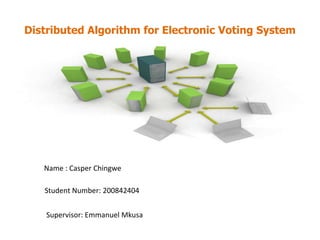
Distributed Algorithm for Electronic Voting System


   Name : Casper Chingwe

   Student Number: 200842404


    Supervisor: Emmanuel Mkusa
Outline
1. Introduction
2. Aims
3. Problem Statement
4. Related work
5. Requirement specification
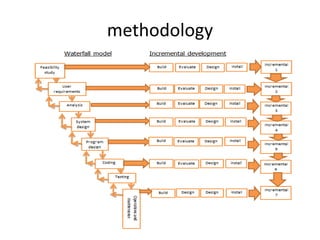
6. Methodology
         1. methodology used to develop a system.
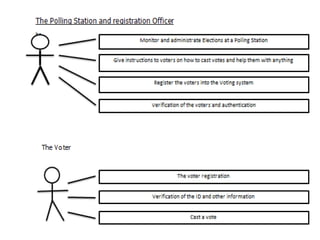
         2. Proposed user-case design diagrams for N. Administrator,
            P.Administrator , Polling and Registration Officers and the voter
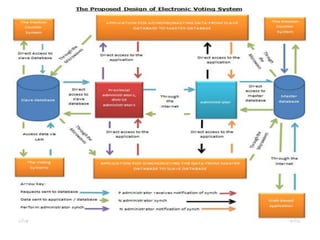
         3.Overview of the system
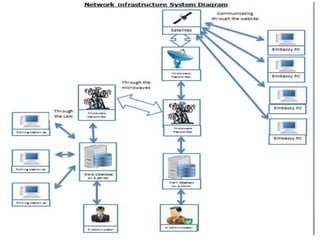
         4.Network Infrastructure Diagram
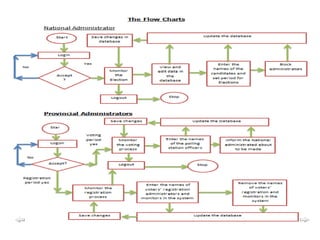
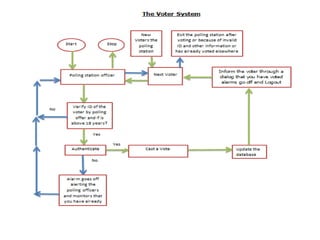
         5.Flow Charts
Outline Continues………
        6. Critical Path Method Chart
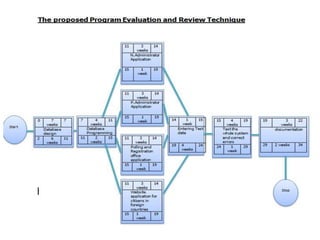
         7. Program Evaluation and Review Technique
         8.The Proposed Schedule
7. Project Instrumentation/ requirements
8.
Aims
The main aim of the project are to develop a
distributed algorithm for Electronic Voting :
1. Reduce the size of the queues during voting.
2. Allow people to vote where ever there are so
  long there is a Polling station.
3.Allow people living in foreign countries to vote
  from the Embassy.
Introduction
Electronic voting is a way of casting votes
through electronic means. In order to provide
free and fair Elections for the people, The
Electoral Commission of Zambia needs to
develop a new way of providing Electoral
services to the people that is safe, easy to use
and learn , fault-tolerant, less time consuming
and robust system. The Research in Electronic
Voting is very important for the progress of
democracy.
Specification Requirements
1. System that allows citizens in foreign countries to
   vote so long there is an Embassy. And Monitors
   and Administrators should aid the process of
   voting in all countries.
2. All registered voters should only vote once.
3. The Identification cards have to be verified by a
   monitor and administrator.
4. The voter has to authentication him/her to the
   system in order to vote.
5. No one can link a cast vote to any of the voters.
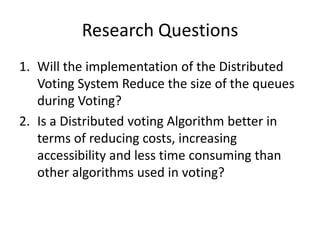
Research Questions
1. Will the implementation of the Distributed
   Voting System Reduce the size of the queues
   during Voting?
2. Is a Distributed voting Algorithm better in
   terms of reducing costs, increasing
   accessibility and less time consuming than
   other algorithms used in voting?
Related Work
1. A system similar was used in the recent
   Elections in Kenya.
2. The United States of America ,India
   , Pakistan, United Arab Emirates and china.
3. It is also been developed in Namibia and
   Zambia.
methodology
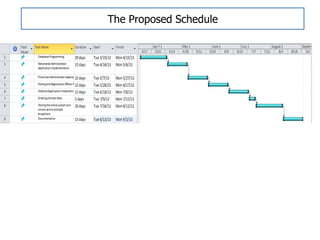
The Proposed Schedule
Questions
, comments, recommendation and
         Contributions

Distributed algorithm for electronic voting system

  • 1.
    Distributed Algorithm forElectronic Voting System Name : Casper Chingwe Student Number: 200842404 Supervisor: Emmanuel Mkusa
  • 2.
    Outline 1. Introduction 2. Aims 3.Problem Statement 4. Related work 5. Requirement specification 6. Methodology 1. methodology used to develop a system. 2. Proposed user-case design diagrams for N. Administrator, P.Administrator , Polling and Registration Officers and the voter 3.Overview of the system 4.Network Infrastructure Diagram 5.Flow Charts
  • 3.
    Outline Continues……… 6. Critical Path Method Chart 7. Program Evaluation and Review Technique 8.The Proposed Schedule 7. Project Instrumentation/ requirements 8.
  • 4.
    Aims The main aimof the project are to develop a distributed algorithm for Electronic Voting : 1. Reduce the size of the queues during voting. 2. Allow people to vote where ever there are so long there is a Polling station. 3.Allow people living in foreign countries to vote from the Embassy.
  • 5.
    Introduction Electronic voting isa way of casting votes through electronic means. In order to provide free and fair Elections for the people, The Electoral Commission of Zambia needs to develop a new way of providing Electoral services to the people that is safe, easy to use and learn , fault-tolerant, less time consuming and robust system. The Research in Electronic Voting is very important for the progress of democracy.
  • 6.
    Specification Requirements 1. Systemthat allows citizens in foreign countries to vote so long there is an Embassy. And Monitors and Administrators should aid the process of voting in all countries. 2. All registered voters should only vote once. 3. The Identification cards have to be verified by a monitor and administrator. 4. The voter has to authentication him/her to the system in order to vote. 5. No one can link a cast vote to any of the voters.
  • 7.
    Research Questions 1. Willthe implementation of the Distributed Voting System Reduce the size of the queues during Voting? 2. Is a Distributed voting Algorithm better in terms of reducing costs, increasing accessibility and less time consuming than other algorithms used in voting?
  • 8.
    Related Work 1. Asystem similar was used in the recent Elections in Kenya. 2. The United States of America ,India , Pakistan, United Arab Emirates and china. 3. It is also been developed in Namibia and Zambia.
  • 9.
  • 20.
  • 21.