Discovering Literature as a Tool to
Assert One’s Identity and to Better
Understand People
What is Literature?
Literature, broadly is any written work.
Etymologically, the term derives from Latin
word, litaritura/litteratura which means
―writing formed with letters, although some
definitions include spoken or sung texts.
Categories of Literature
Non- Fiction
Fiction
Non- fiction
Non Fiction refers to literature
based in fact. It is the broadest
category of literature.
Non- fiction
These are books and videos in many categories
biography,
business,
cooking,
health and fitness,
pets,
crafts,
home decorating,
Non- fiction
languages,
travel,
home improvement,
religion,
art and music,
history, self-help,
true crime,
science
Fiction
While fiction refers to
literature created from the
imagination.
Fiction
mysteries,
science fiction,
romance,
fantasy,
crime thrillers
ADJECTIVES
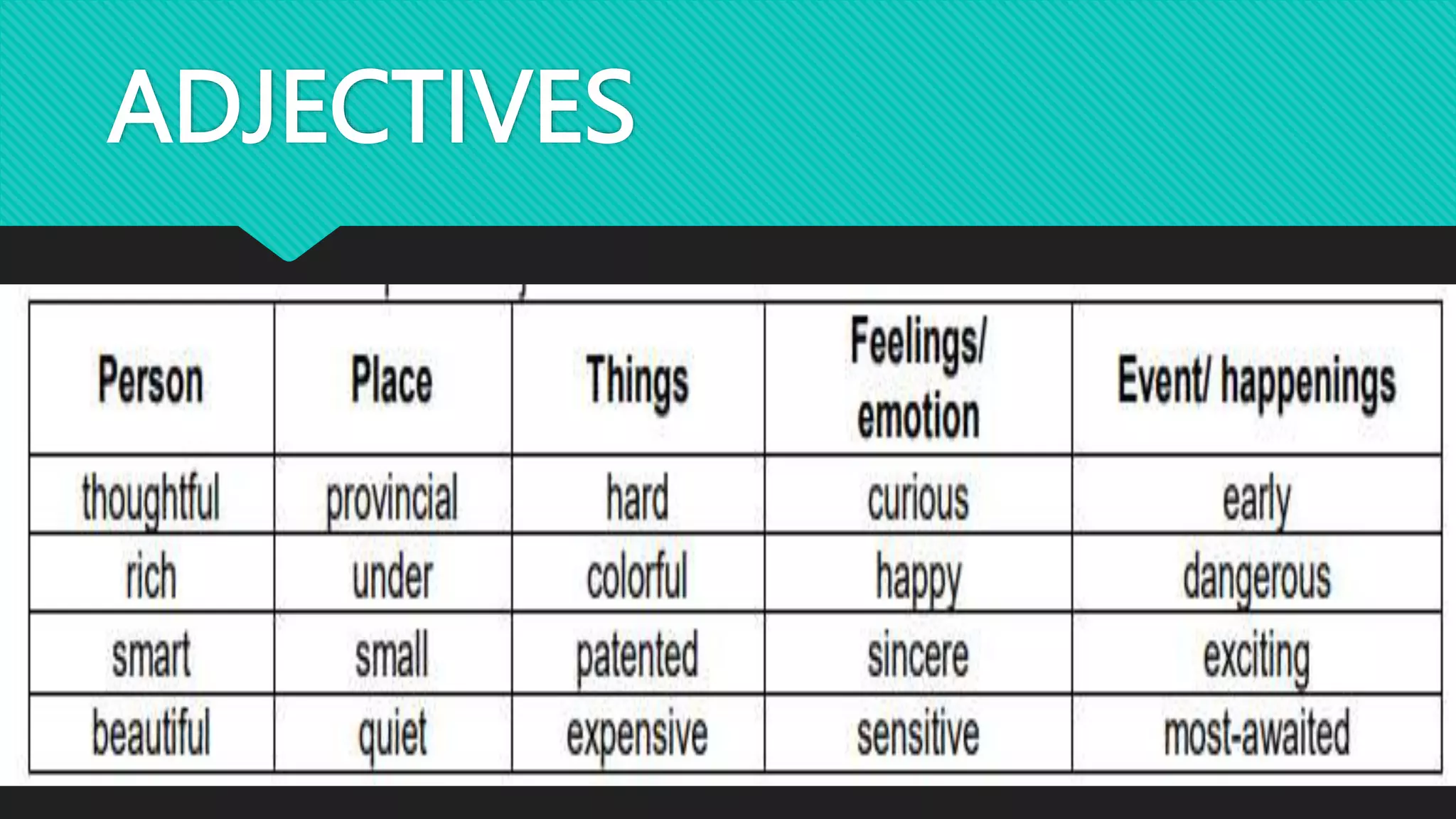
Adjectives are words that describe or modify
other words, making your writing and speaking
much more specific, and more interesting. Because
adjectives are used to identify or quantify
individual people and unique things, they are
usually positioned before the noun or pronoun
that they modify.
ADJECTIVES
LESSON 2: Elements of a Story
Characters
Setting
Plot
Conflict
Resolution
Five Essential Elements of a Story
1. CHARACTERS
The characters are the individuals
that the story is about. The author should
introduce the characters in the story with
enough information that the reader can
visualize each person.
1. CHARACTERS
Main character determines the way the plot
will develop and is usually who will solve the
problem the story centers upon.
Other characters they supply additional
details, explanations, or actions.
1. CHARACTERS
A protagonist is clearly central to the
story with all the major events having
some importance to this character. The
one against the protagonist in the
antagonist or the bad guy.
2. SETTING
The setting is the location of the
action. An author should describe the
environment or surroundings of the story
in such detail that the reader feels that he
or she can picture the scene.
3. PLOT
The plot is the actual story around which the
entire book is based. A plot should have a very
clear beginning, middle, and end—with all the
necessary descriptions and suspense, called
exposition—so that the reader can make sense of
the action and follow along from start to finish.
4. CONFLICT
Every story has a conflict to solve. The plot
is centered on this conflict and the ways in
which the characters attempt to resolve the
problem. When the story‘s action becomes
most exciting, right before the resolution, it is
called the climax.
4. CONFLICT
 External Conflict –One character in conflict with
another character/s; one character in conflict with a
group or a whole society: one character in conflict
with something in nature.
Internal Conflict- may involve a character‘s struggle
to make a decision or to overcome some feelings
such as fear, suspicion, hostility or sadness
5. RESOLUTION
The solution to the
problem is the way the
action is resolved.

Discovering Literature as a Tool to Assert One’s.pptx

  • 1.
    Discovering Literature asa Tool to Assert One’s Identity and to Better Understand People
  • 2.
    What is Literature? Literature,broadly is any written work. Etymologically, the term derives from Latin word, litaritura/litteratura which means ―writing formed with letters, although some definitions include spoken or sung texts.
  • 3.
  • 4.
    Non- fiction Non Fictionrefers to literature based in fact. It is the broadest category of literature.
  • 5.
    Non- fiction These arebooks and videos in many categories biography, business, cooking, health and fitness, pets, crafts, home decorating,
  • 6.
    Non- fiction languages, travel, home improvement, religion, artand music, history, self-help, true crime, science
  • 7.
    Fiction While fiction refersto literature created from the imagination.
  • 8.
  • 10.
    ADJECTIVES Adjectives are wordsthat describe or modify other words, making your writing and speaking much more specific, and more interesting. Because adjectives are used to identify or quantify individual people and unique things, they are usually positioned before the noun or pronoun that they modify.
  • 11.
  • 12.
    LESSON 2: Elementsof a Story Characters Setting Plot Conflict Resolution
  • 13.
  • 14.
    1. CHARACTERS The charactersare the individuals that the story is about. The author should introduce the characters in the story with enough information that the reader can visualize each person.
  • 15.
    1. CHARACTERS Main characterdetermines the way the plot will develop and is usually who will solve the problem the story centers upon. Other characters they supply additional details, explanations, or actions.
  • 16.
    1. CHARACTERS A protagonistis clearly central to the story with all the major events having some importance to this character. The one against the protagonist in the antagonist or the bad guy.
  • 17.
    2. SETTING The settingis the location of the action. An author should describe the environment or surroundings of the story in such detail that the reader feels that he or she can picture the scene.
  • 18.
    3. PLOT The plotis the actual story around which the entire book is based. A plot should have a very clear beginning, middle, and end—with all the necessary descriptions and suspense, called exposition—so that the reader can make sense of the action and follow along from start to finish.
  • 19.
    4. CONFLICT Every storyhas a conflict to solve. The plot is centered on this conflict and the ways in which the characters attempt to resolve the problem. When the story‘s action becomes most exciting, right before the resolution, it is called the climax.
  • 20.
    4. CONFLICT  ExternalConflict –One character in conflict with another character/s; one character in conflict with a group or a whole society: one character in conflict with something in nature. Internal Conflict- may involve a character‘s struggle to make a decision or to overcome some feelings such as fear, suspicion, hostility or sadness
  • 21.
    5. RESOLUTION The solutionto the problem is the way the action is resolved.