http://unihub.mdx.ac.uk/your-study/library-and-it-support
CCE2060 Direct Entry
Oct 2015
Better than Google
In this workshop we will look at..
• Range of resources
• Search strategy
• Finding information
• Evaluating
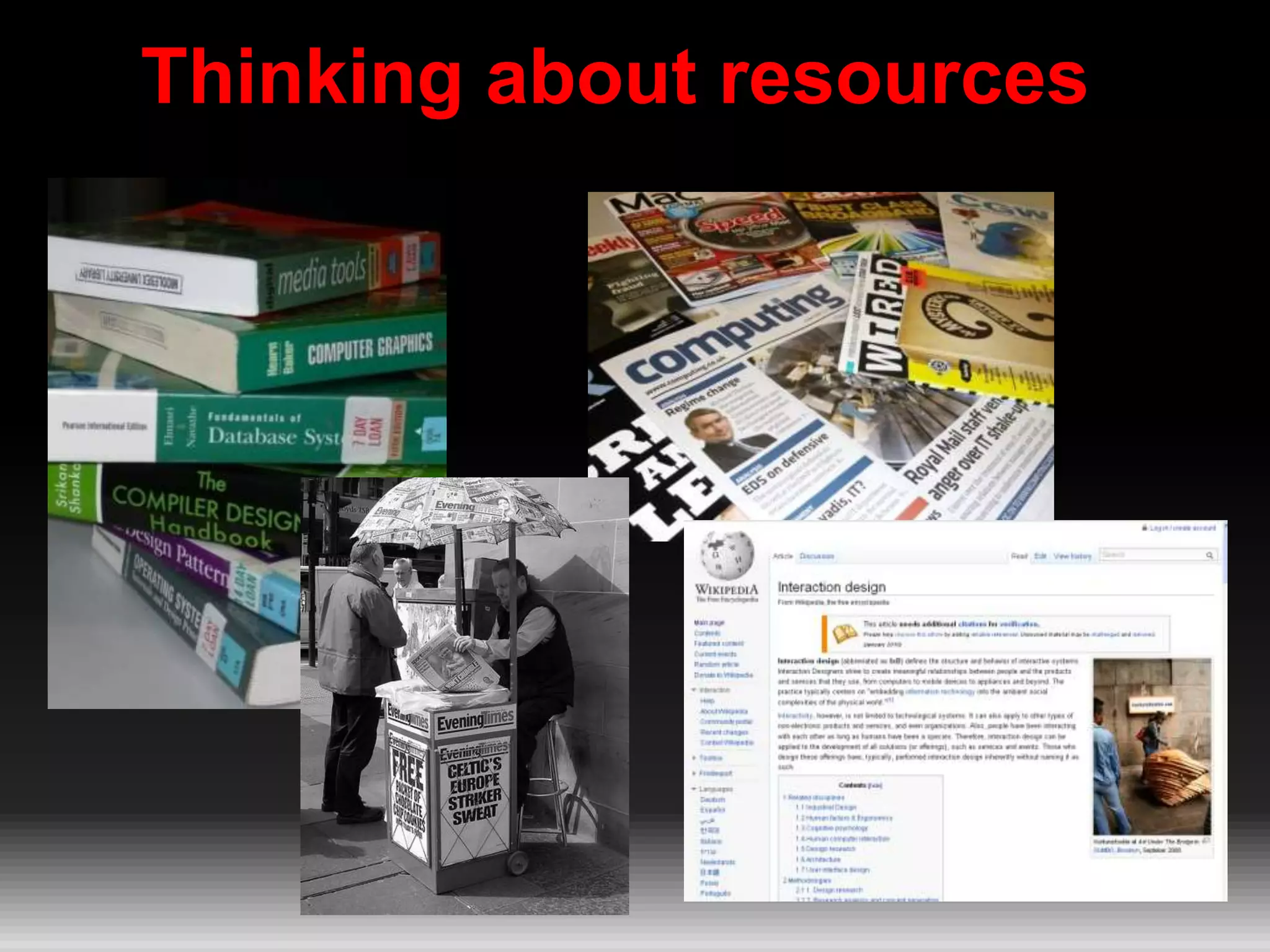
Thinking about resources
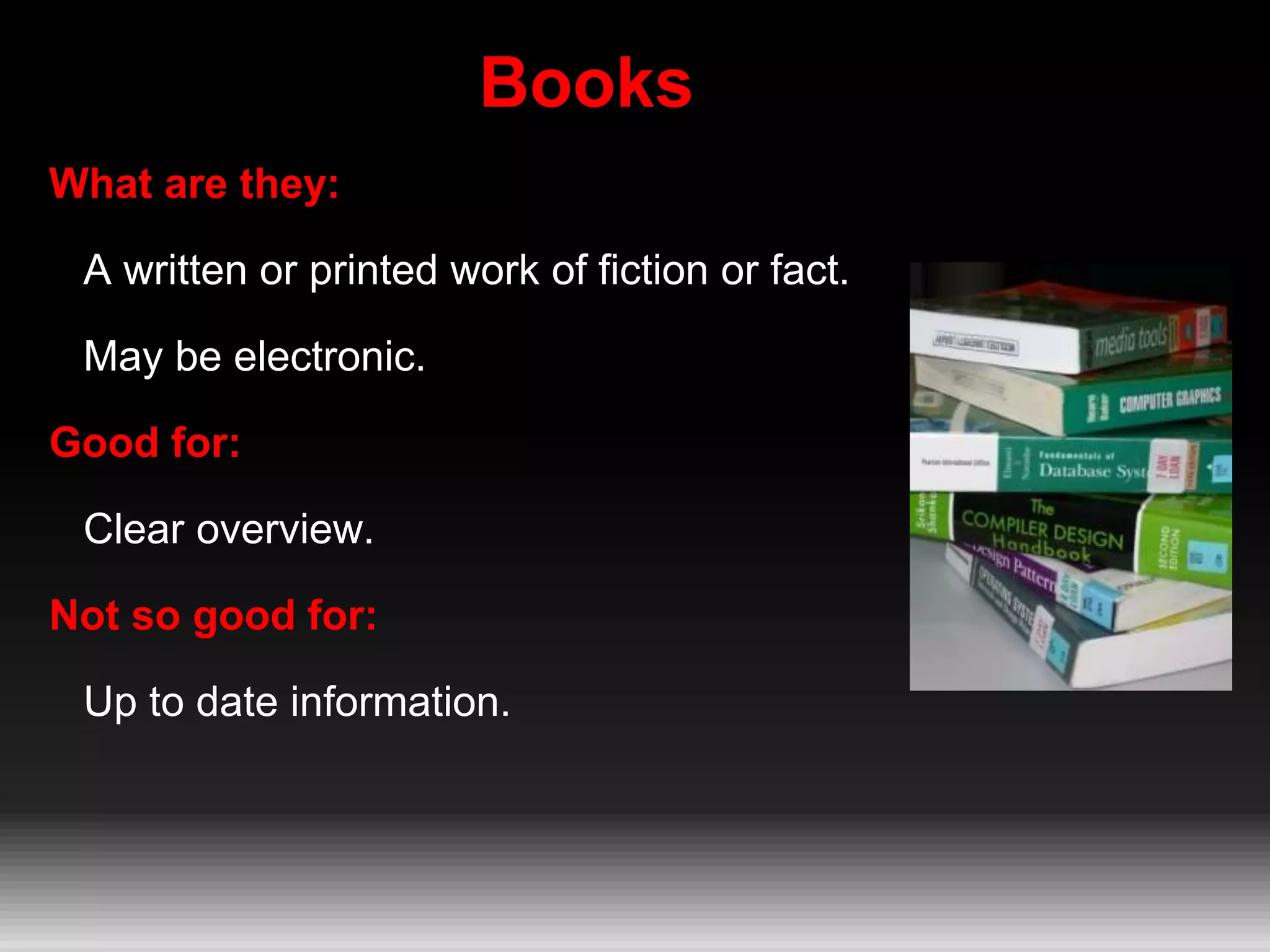
Books
What are they:
A written or printed work of fiction or fact.
May be electronic.
Good for:
Clear overview.
Not so good for:
Up to date information.
Web page
What are they:
An information resource which can be easily created by
anyone on any topic.
Electronic.
Good for:
Very up to date information.
Not so good for:
Accurate and reliable information.
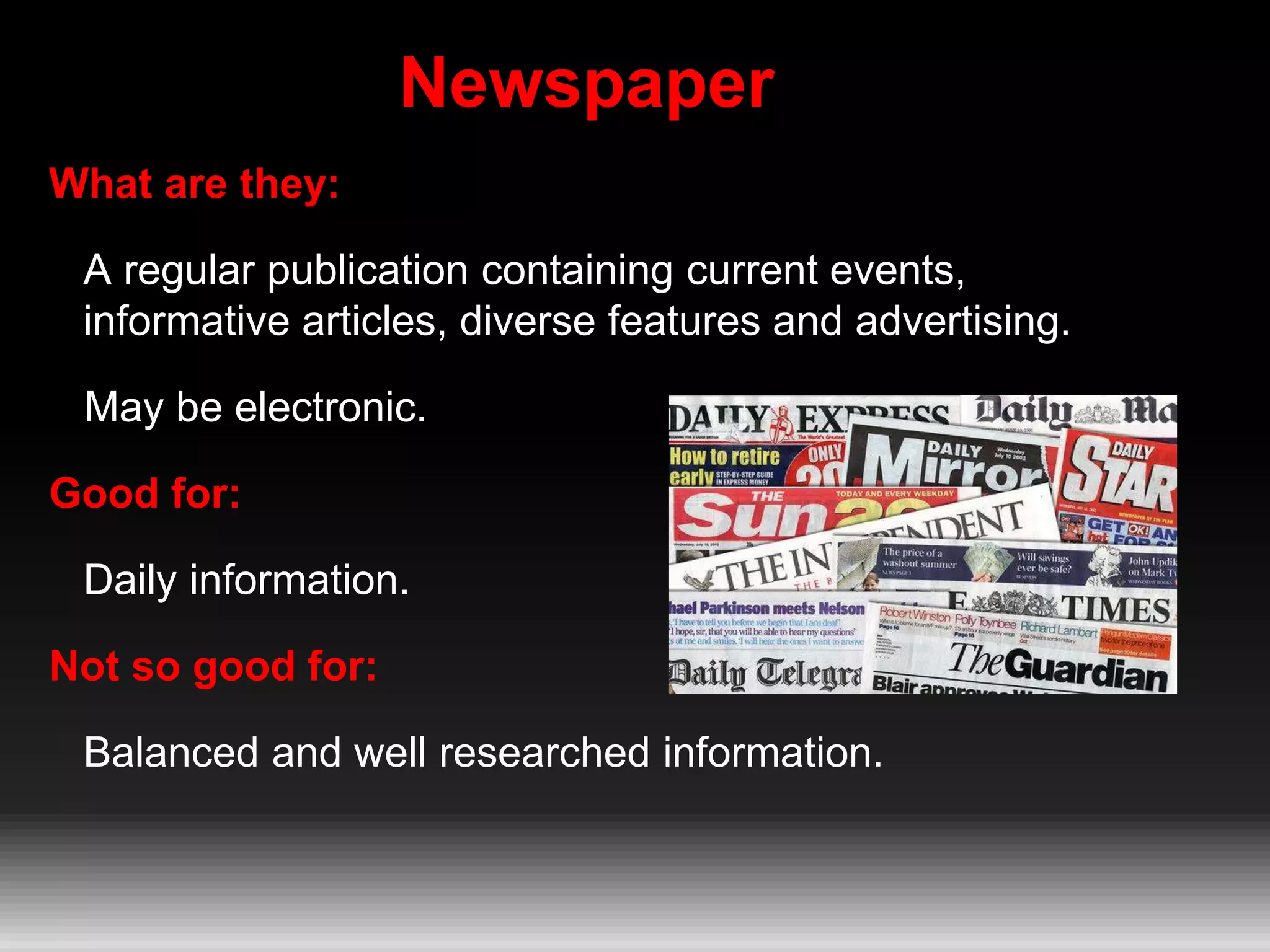
Newspaper
What are they:
A regular publication containing current events,
informative articles, diverse features and advertising.
May be electronic.
Good for:
Daily information.
Not so good for:
Balanced and well researched information.
Journal
What are they:
A regular publication containing articles on a particular
academic subject.
Presents new research.
Good for:
Latest research, critically reviewed by experts.
Not so good for:
Broad overview of a subject.
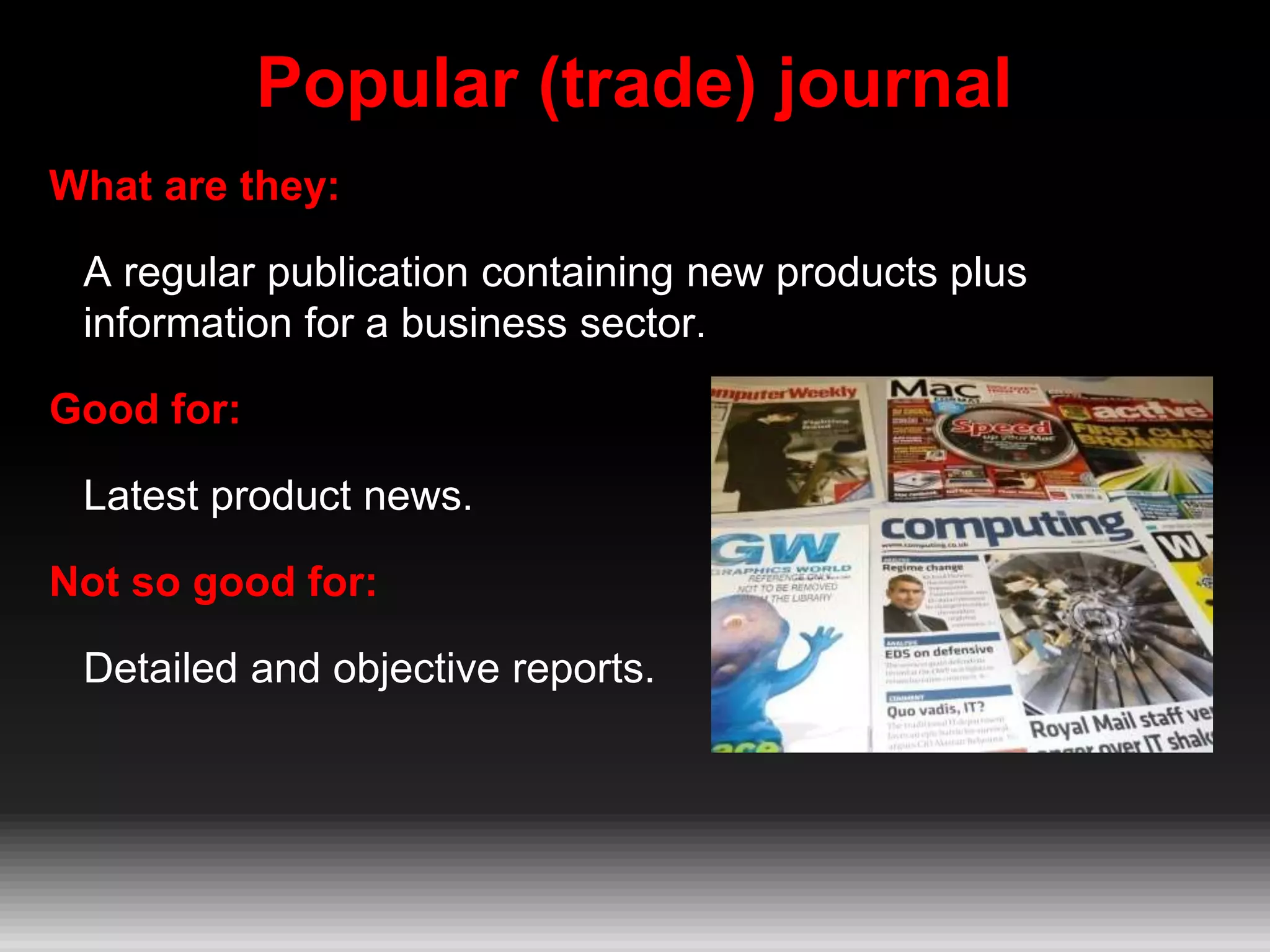
Popular (trade) journal
What are they:
A regular publication containing new products plus
information for a business sector.
Good for:
Latest product news.
Not so good for:
Detailed and objective reports.
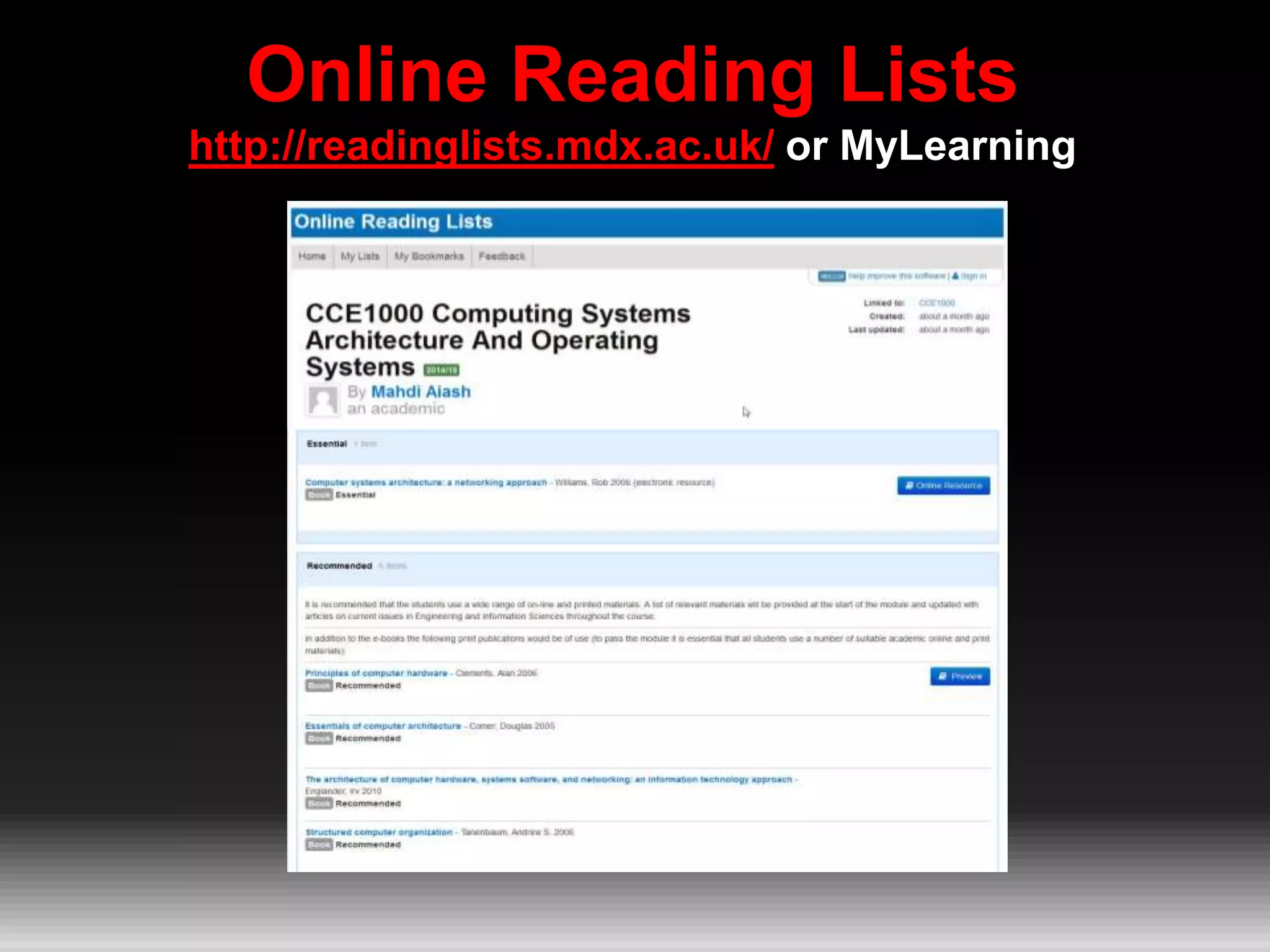
Online Reading Lists
http://readinglists.mdx.ac.uk/ or MyLearning
Find out more
MyUniHub > MyStudy > MyLibrary > My Subject > Science & Technology
http://libguides.mdx.ac.uk/computing
Thinking about keywords
http://www.flickr.com/photos/rossjamesparker/89414788/
The real thing:
Bitcoin: How can we prevent this world currency
becoming a fraudster’s gold mine?
•Keywords
•Alternative keywords
•More specific keywords
•Related subjects
[Insert
relevant
picture here]
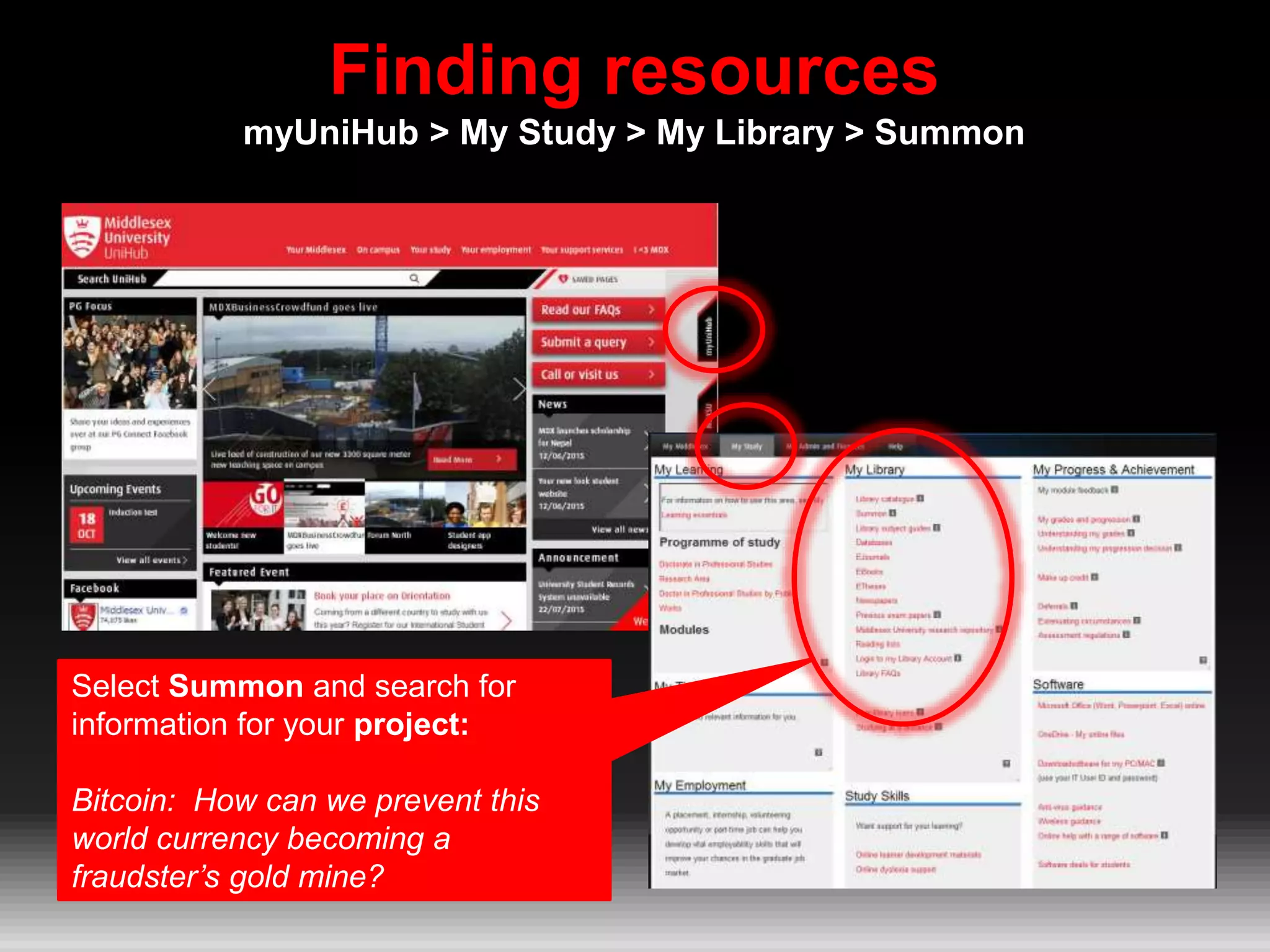
Finding resources
myUniHub > My Study > My Library > Summon
Select Summon and search for
information for your project:
Bitcoin: How can we prevent this
world currency becoming a
fraudster’s gold mine?
Refining your search
Not everything is online!
http://www.slideshare.net/EISLibrarian/library-catalogue-how-to-request-a-book-general
Google vs Summon
http://www.flickr.com/photos/ennuiislife/3450743002/
Google
• Familiar and easy to use
• Finds too much information
• Fast results
• Access from any computer
• Access to some books and journals
• Designed to sell you things
• Search results sponsored
• Searches for info from any source
• Pay for academic information
Summon
• Easy to use
• Finds lots of academic info
• Fast results
• Access from any computer
• Access to lots of books and journals
• Designed to find you information
• Search results by relevance
• Searches quality resources
• Free access to full text
Get online help using resources
My Study > MyLibrary > My Subject > Science & Technology > Computing
http://libguides.mdx.ac.uk/computing
Evaluating information
Imagine you are writing an essay on ‘Network Security’.
Have a look at the 4 items that you have been given and
consider the following:
• Which items are the most relevant to your essay?
• Which items would be no use?
• Which item has the most academic authority?
• Which items might have bias?
• Which item is the most current?
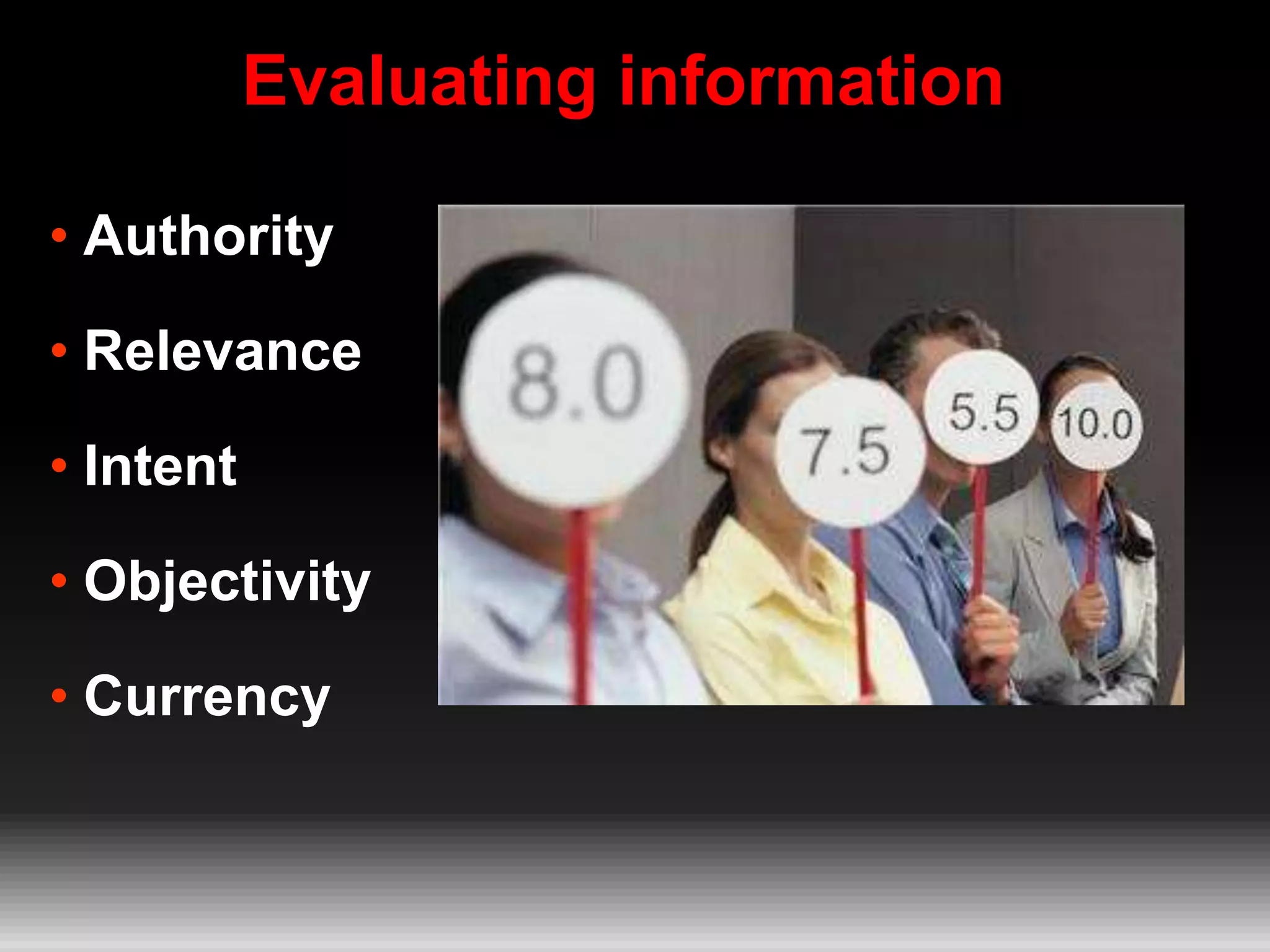
• Authority
• Relevance
• Intent
• Objectivity
• Currency
Evaluating information
Need further help?
Your Librarian is:
Vanessa Hill v.hill@mdx.ac.uk

Direct Entry CCE2060 Oct 2015

  • 1.
  • 2.
    In this workshopwe will look at.. • Range of resources • Search strategy • Finding information • Evaluating
  • 3.
  • 4.
    Books What are they: Awritten or printed work of fiction or fact. May be electronic. Good for: Clear overview. Not so good for: Up to date information.
  • 5.
    Web page What arethey: An information resource which can be easily created by anyone on any topic. Electronic. Good for: Very up to date information. Not so good for: Accurate and reliable information.
  • 6.
    Newspaper What are they: Aregular publication containing current events, informative articles, diverse features and advertising. May be electronic. Good for: Daily information. Not so good for: Balanced and well researched information.
  • 7.
    Journal What are they: Aregular publication containing articles on a particular academic subject. Presents new research. Good for: Latest research, critically reviewed by experts. Not so good for: Broad overview of a subject.
  • 8.
    Popular (trade) journal Whatare they: A regular publication containing new products plus information for a business sector. Good for: Latest product news. Not so good for: Detailed and objective reports.
  • 9.
  • 10.
    Find out more MyUniHub> MyStudy > MyLibrary > My Subject > Science & Technology http://libguides.mdx.ac.uk/computing
  • 11.
  • 12.
    The real thing: Bitcoin:How can we prevent this world currency becoming a fraudster’s gold mine? •Keywords •Alternative keywords •More specific keywords •Related subjects [Insert relevant picture here]
  • 13.
    Finding resources myUniHub >My Study > My Library > Summon Select Summon and search for information for your project: Bitcoin: How can we prevent this world currency becoming a fraudster’s gold mine?
  • 14.
  • 15.
    Not everything isonline! http://www.slideshare.net/EISLibrarian/library-catalogue-how-to-request-a-book-general
  • 16.
    Google vs Summon http://www.flickr.com/photos/ennuiislife/3450743002/ Google •Familiar and easy to use • Finds too much information • Fast results • Access from any computer • Access to some books and journals • Designed to sell you things • Search results sponsored • Searches for info from any source • Pay for academic information Summon • Easy to use • Finds lots of academic info • Fast results • Access from any computer • Access to lots of books and journals • Designed to find you information • Search results by relevance • Searches quality resources • Free access to full text
  • 17.
    Get online helpusing resources My Study > MyLibrary > My Subject > Science & Technology > Computing http://libguides.mdx.ac.uk/computing
  • 18.
  • 19.
    Evaluating information Imagine youare writing an essay on ‘Network Security’. Have a look at the 4 items that you have been given and consider the following: • Which items are the most relevant to your essay? • Which items would be no use? • Which item has the most academic authority? • Which items might have bias? • Which item is the most current?
  • 20.
    • Authority • Relevance •Intent • Objectivity • Currency Evaluating information
  • 21.
    Need further help? YourLibrarian is: Vanessa Hill v.hill@mdx.ac.uk

Editor's Notes

  • #3  The range of resources we provide The value of resources in an academic context How to select the appropriate resources Develop an effective search strategy eg. Identify keywords, refining your search How to find and access books, journals and information for your projects using the Library Catalogue, and other resources, as well as finding books in the library and from other sources. Evaluating the information for quality and relevance
  • #4 Hand out exercise Thinking about resources. Groups 10 mins Feedback (see next slides)
  • #5 Good for: broad/general overview of subject Edited for quality and accuracy Not so good for: May not be specific enough Can be out of date
  • #6 Good for: Easy to use/search All subjects covered Can be very up-to-date Mobile Not so good for: No editorial control Unreliable sources Can be created by anyone Material can lack provenance Can be out-of-date Not everyone has access
  • #7 Good for: Up-to-date Edited Readily available (latest copies especially) Not so good for: Can be bias Can be unbalanced Can be sensationalist Hard to get hold of/access (back issues)
  • #8 Good for: Up-to-date Specialist/focussed Present latest research Edited for accuracy/quality (peer reviewed) Lots of references Not so good for: Can be hard to locate/access Expensive May be too specific May be at wrong level
  • #9 Good for: Latest information Current events Concise info Product news Often available online with RSS/Twitter etc Not so good for: Detail Objective information ie. can be bias, adverts, preferential products etc Often hard to find old issues Back issues/archive
  • #10 Contain: Essential and recommended texts for your module E-resources where available Access from MyLearning or from this URL
  • #11 More information about the range of resources available on the Library Subject Guide plus lots of useful online guides eg. how to search for information for your project.
  • #12 Whole group: What can you see in the picture? ie. fruit If you type ‘fruit’ into database will get millions of hits, how can you break it down ie. search for something more specific to get more manageable results Can you be more specific ie. Type of fruit: apples, oranges, bananas etc Location: Stall, market, outdoor market, fruit market, Britain Detail: boxes, signs, astroturf, prices, colour of fruit, lights, pound £ signs, special offer etc People in background: old, young, male, female > stall holder, customers, browsers etc Think of related subjects eg. retail, commercial, financial, point-of-sale Shopping, shops, fish/meat/clothes market, shopping centres, high street Town, city, centre, British town Nutrition: vits and mins Also which fruits have a double meaning (technical/computer sense)?: Orange, Apple, Blackberry, Raspberry. Use refining tools on databases or search tips to exclude what you don’t want. Thinking beyond the obvious, looking for the detail that might make a difference.
  • #13 Imaginary project title. Hand out worksheet. 5 mins. Feedback. Bitcoin: Payment system, peer to peer electronic cash system, currency, money, unit, cryptocurrency, virtual currency, digital currency, financial transactions. Fraudsters: Criminals, cybercriminals, illegal activity, malware, mining botnets, virus, ransomeware, forgery. Prevention: protection, financial regulations, protocols, security.
  • #14 Need to carry out a literature review: Finding the information available on a subject Finding information to inform, underpin and shape your research Finding what has already been written on a subject Analyzing, evaluating and making judgements about the info found Identifying the main trends Finding appropriate information: the information needs to be suitable for your need ie. right level, current if important, sufficient breadth or detail etc Explain to students what Summon is. Go to UniHub > Login in to MyUniHub > My Study > My Library > Summon Ask students to search for information for their project. Remember to use some of the keywords that we have discussed.
  • #15 Show the students how to refine their search using: FT Content type Subject terms Publication date Language etc Have another go.
  • #17 Google Familiar and easy to use Finds too much information Fast results Access from any computer Access to some books and journals Designed to sell you things eg. shoes Search results sponsored…no accident that Wikipedia, Amazon etc at top of search results Searches for info from any source Pay for academic information Summon Easy to use Finds lots of academic info Fast results Access from any computer Access to lots of books and journals Designed to find you information: up-to-date, focussed/specific Search results by relevance Searches quality resources eg. Peer reviewed journal articles, conference proceedings , research etc Free access to full text ie. Information not freely available elsewhere
  • #18 Lots of useful online guides eg. How to find books How to find information for your project Accessing journal databases etc
  • #19 Introduce the importance of evaluating information for quality What do you think about this quote by Abraham Lincoln?
  • #20 Divide class into group Hand out worksheet and 4x items. Discuss. No right or wrong answers. All items found by doing a search on Network Security. Which items are most relevant: Academic journal and Wiki most relevant. Newspaper article is sensationalist and trade journal is a review of software. Which items would be no use: Newspaper article useless, and trade journal probably not unless needed to know about software packages. Which item has the most academic authority: Academic journal. It has biography of authors, references, in-text citations and uses academic language. Article has been peer reviewed. Wikipedia has refs, but don’t know who has added information. Are any of the items bias: Newspaper Trade journal is reviewing software and may be swayed by advertisers. Which item is the most current: Wikipedia Academic journal is very out-of-date 2004 Would not use any of them and would continue search. Discuss the importance of evaluating the information that you find.
  • #21 Authority : Who is the author? What is their knowledge base/qualifications? How have they carried out their research? Relevance : Is this what I need? Will it answer my question? Is it at the right level? Intent : What is the purpose of information e.g. financial gain, propaganda, academic etc? Objectivity : Balanced view? Opposing views represented? Links to supporting information? Currency: How old is this information? When was it last updated and by whom?