Download as PDF, PPTX


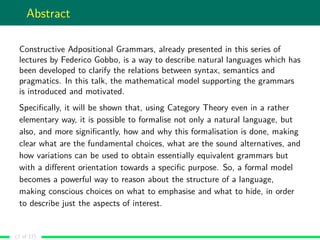
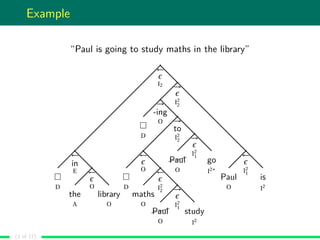
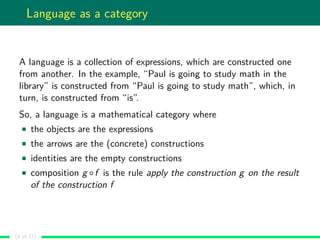
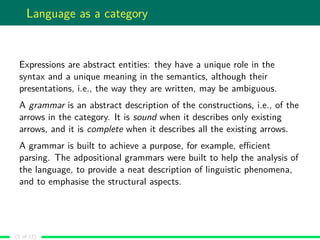
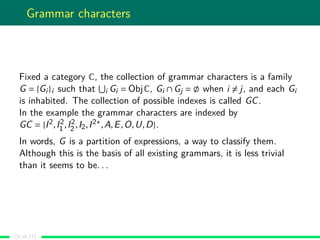
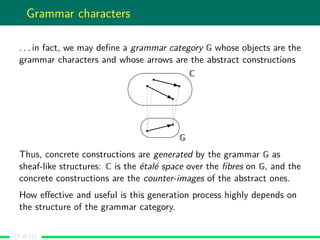
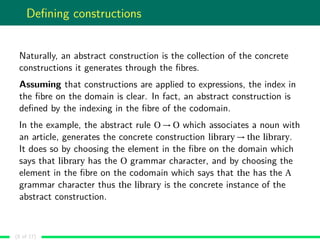
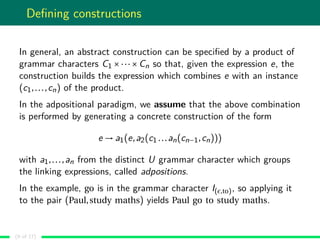
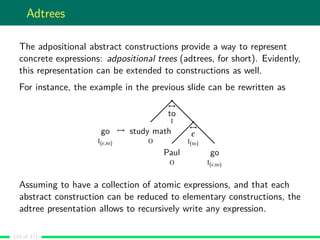
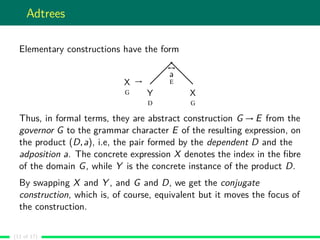
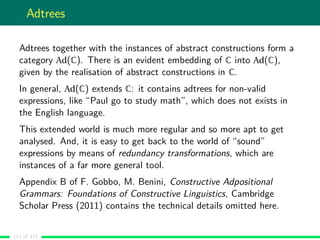
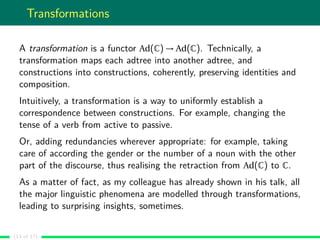
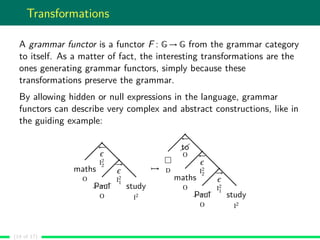


The document discusses constructive adpositional grammars, a framework developed to elucidate the relationships among syntax, semantics, and pragmatics in natural languages using category theory. It introduces mathematical models that formalize the construction of language and the abstract rules governing it, emphasizing the design choices and alternatives that lead to effective linguistic analysis. The conclusions draw attention to the potential for understanding grammars as sheaves, proposing a logical system that intertwines abstract constructions and transformations.


![Polymer [ बहुलक ] Chemistry Notes PDF - Irfanullah Mehar - JJ Sir Chemistry.pdf](https://cdn.slidesharecdn.com/ss_thumbnails/polymerchemistrynotespdf-irfanullahmehar-jjsirchemistry-260210172118-3f9b37f7-thumbnail.jpg?width=640&height=640&fit=bounds)
