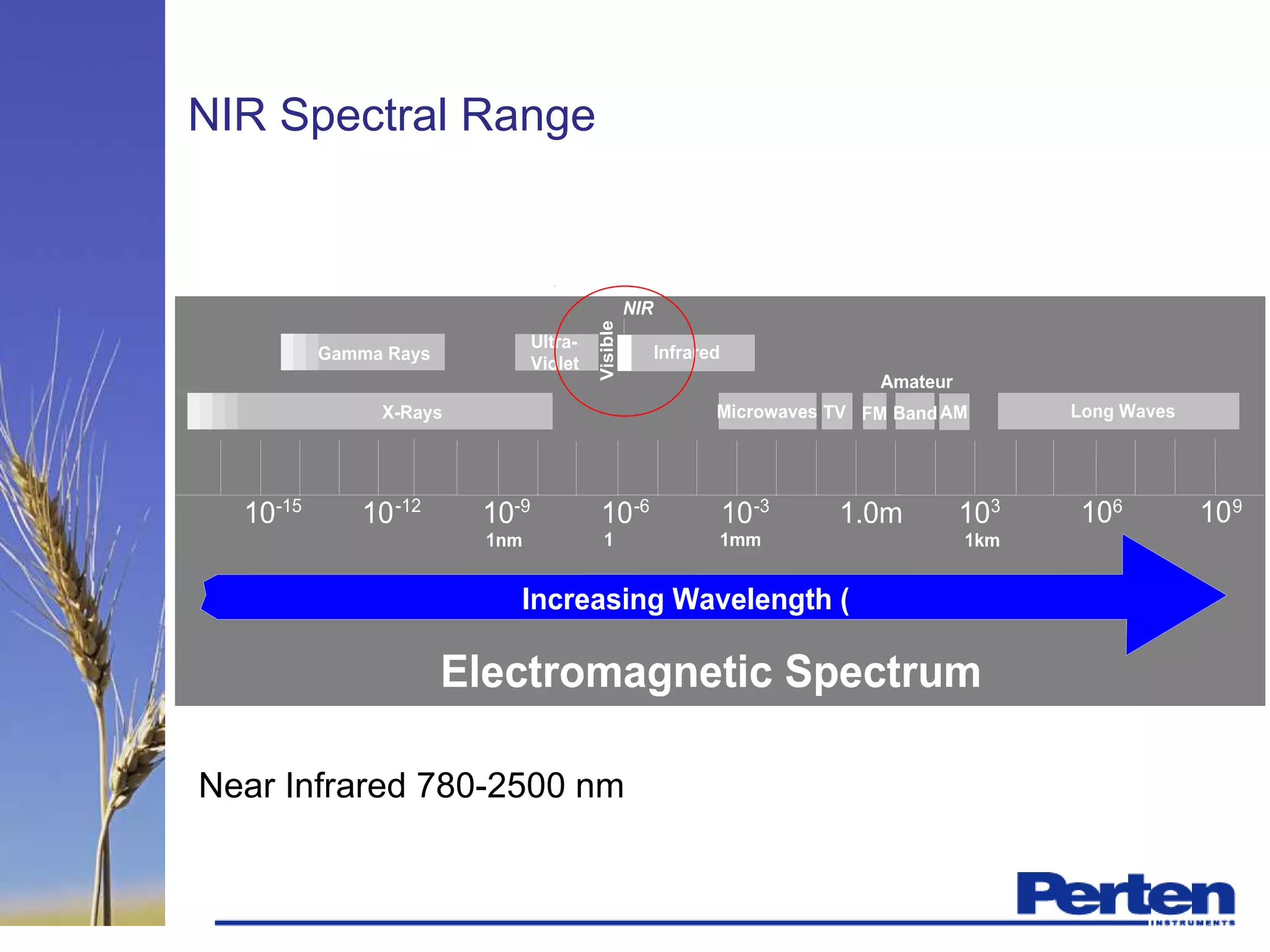
NIR Spectral Range
Near Infrared 780-2500 nm
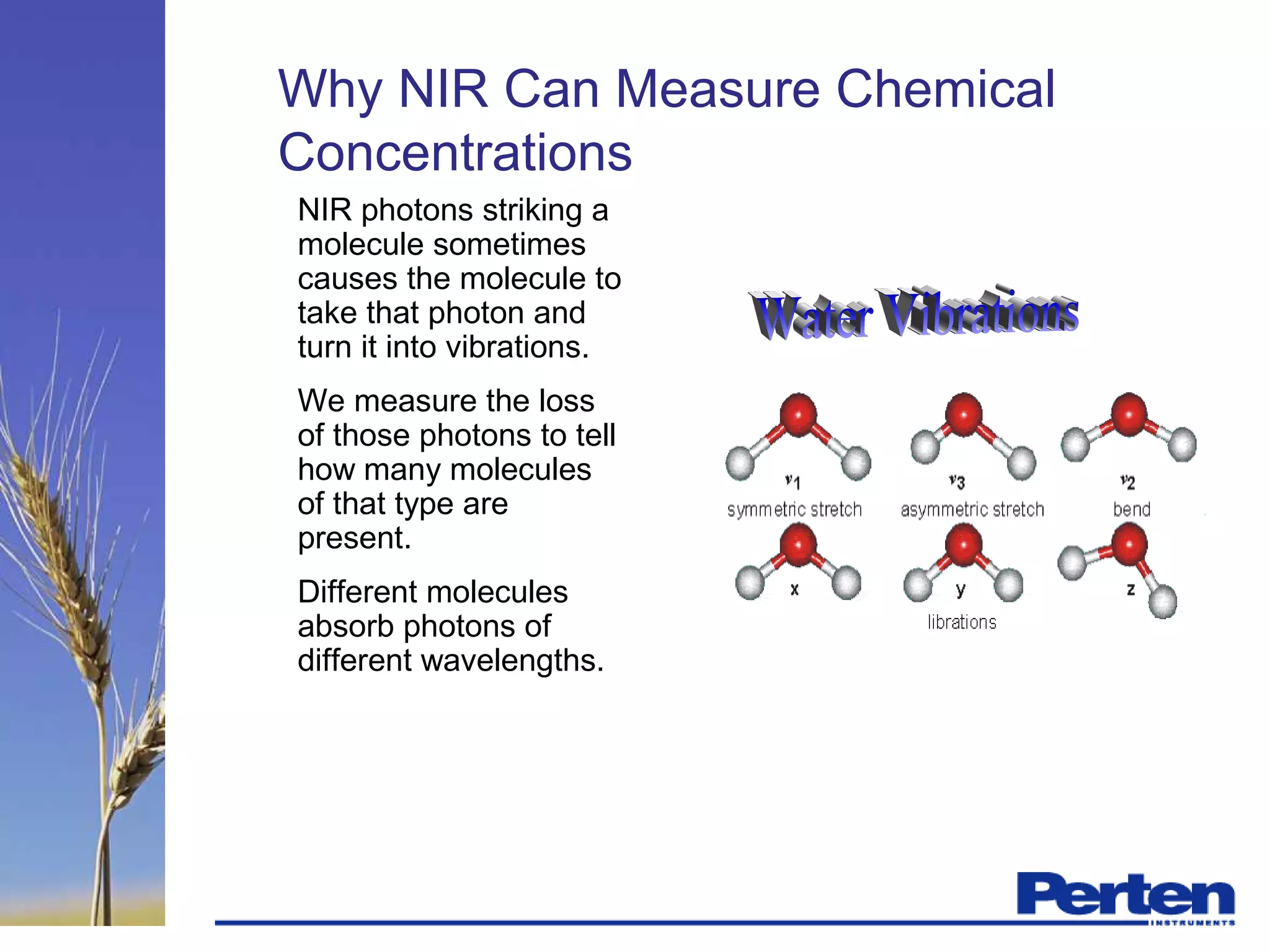
Why NIR Can Measure Chemical
Concentrations
NIR photons striking a
molecule sometimes
causes the molecule to
take that photon and
turn it into vibrations.
We measure the loss
of those photons to tell
how many molecules
of that type are
present.
Different molecules
absorb photons of
different wavelengths.
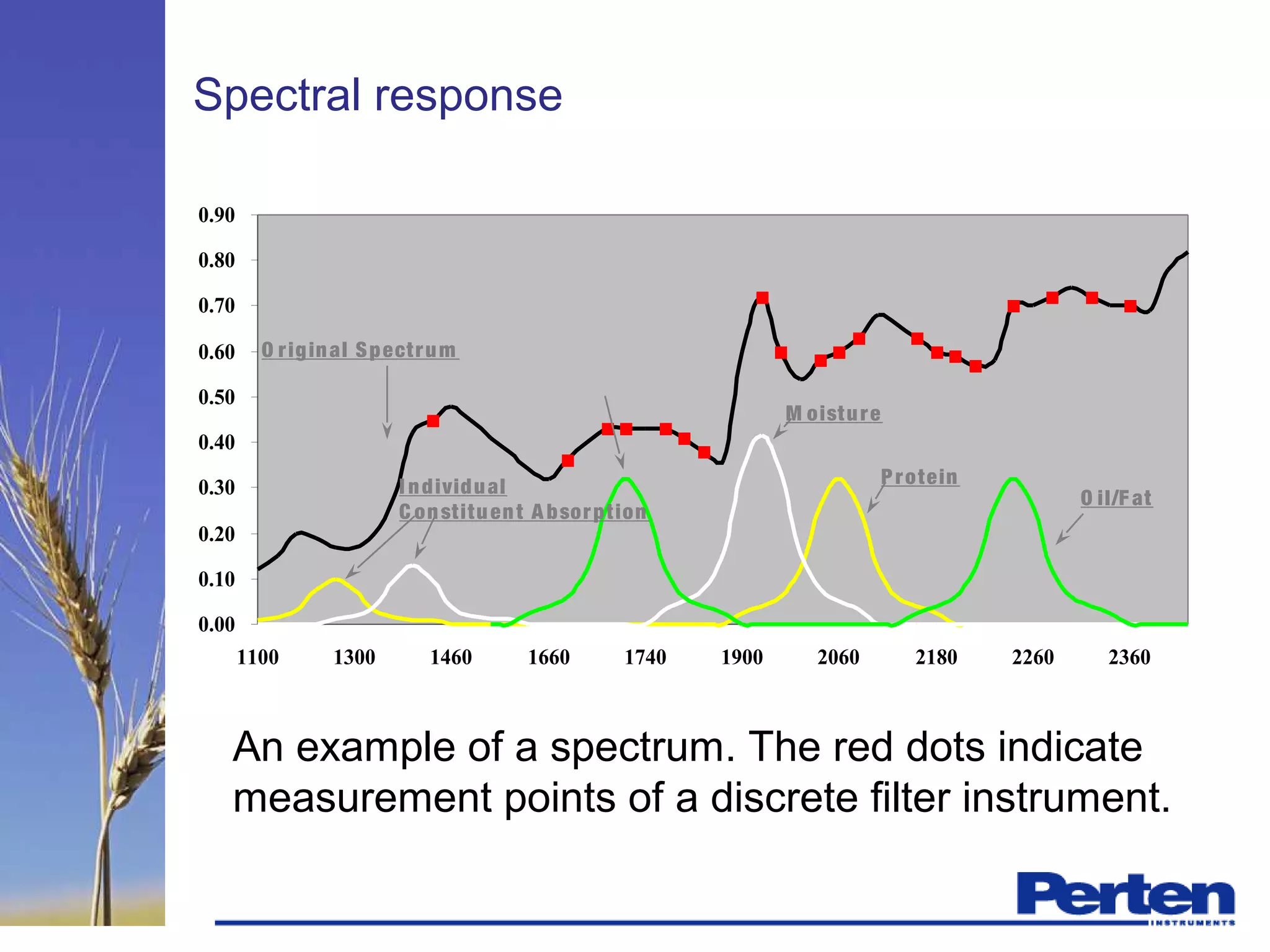
An example of a spectrum. The red dots indicate
measurement points of a discrete filter instrument.
0.00
0.10
0.20
0.30
0.40
0.50
0.60
0.70
0.80
0.90
1100 1300 1460 1660 1740 1900 2060 2180 2260 2360
M oisture
Protein
O il/F at
O riginal Spectrum
I ndividual
C onstituent A bsorption
Spectral response
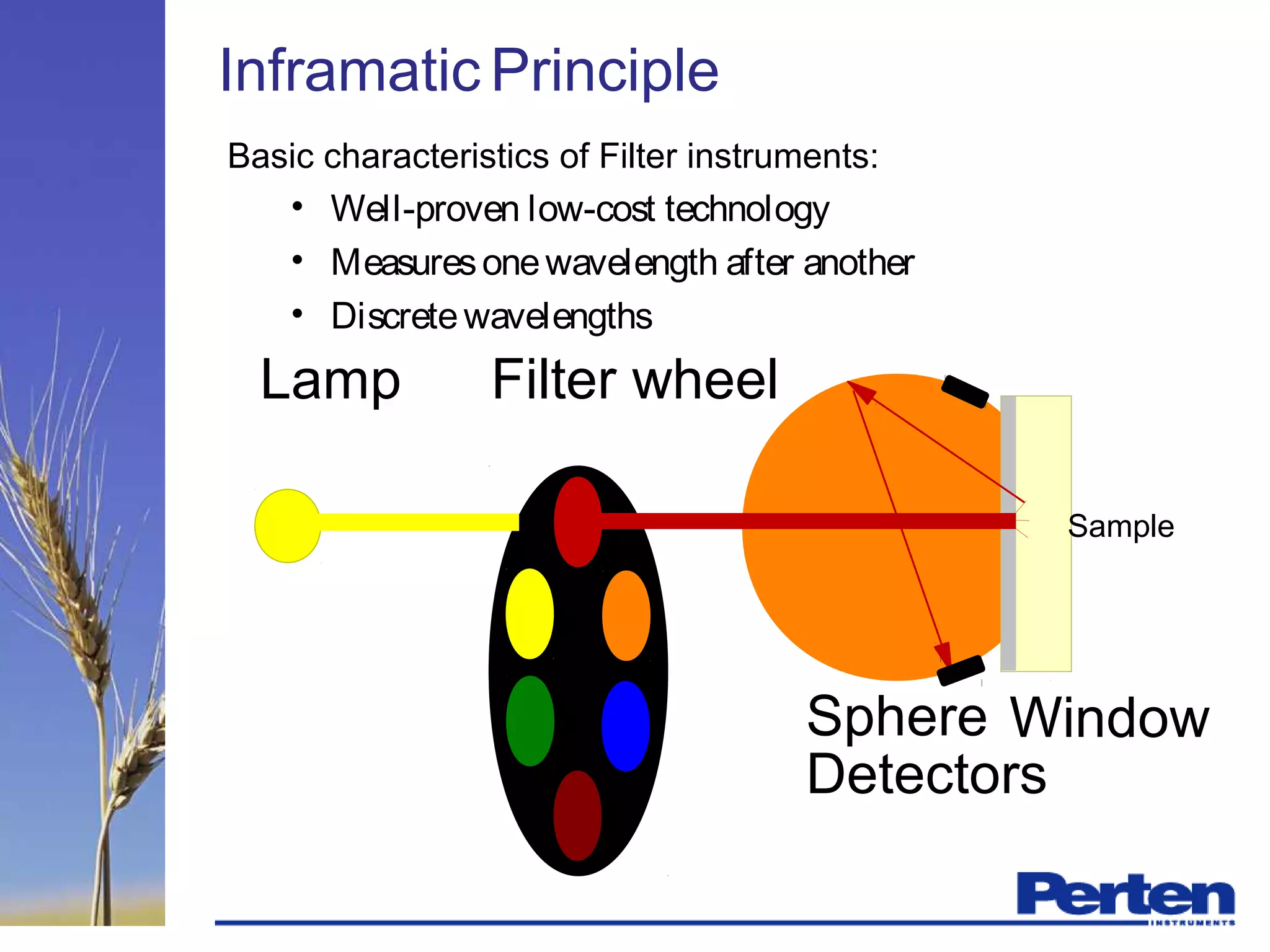
Inframatic Principle
Lamp Filter wheel
Sphere
Detectors
Window
Sample
Basic characteristics of Filter instruments:
• Well-proven low-cost technology
• Measuresonewavelength after another
• Discretewavelengths
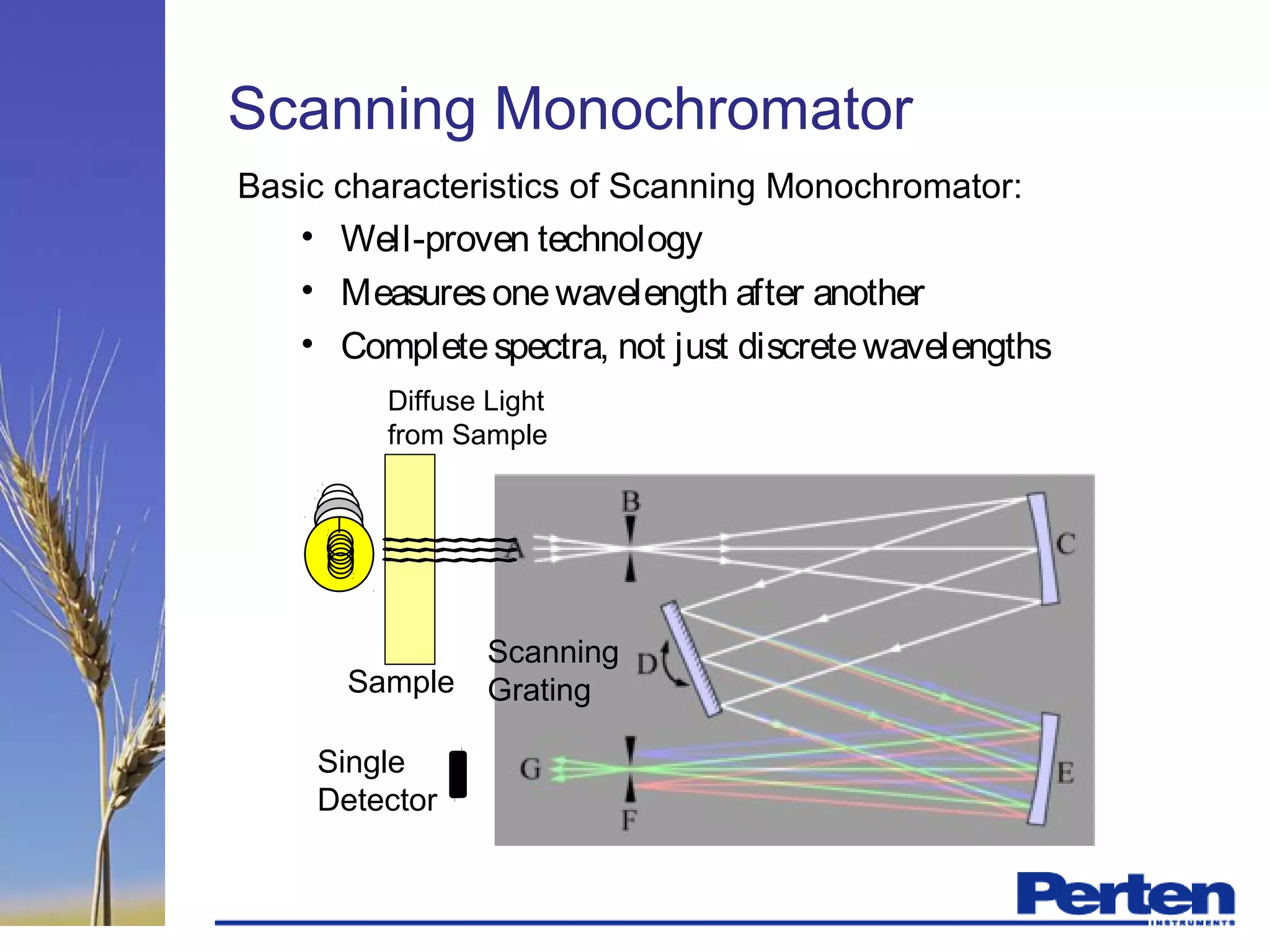
Scanning Monochromator
Sample
Scanning
Grating
Single
Detector
Diffuse Light
from Sample
Basic characteristics of Scanning Monochromator:
• Well-proven technology
• Measuresonewavelength after another
• Completespectra, not just discretewavelengths
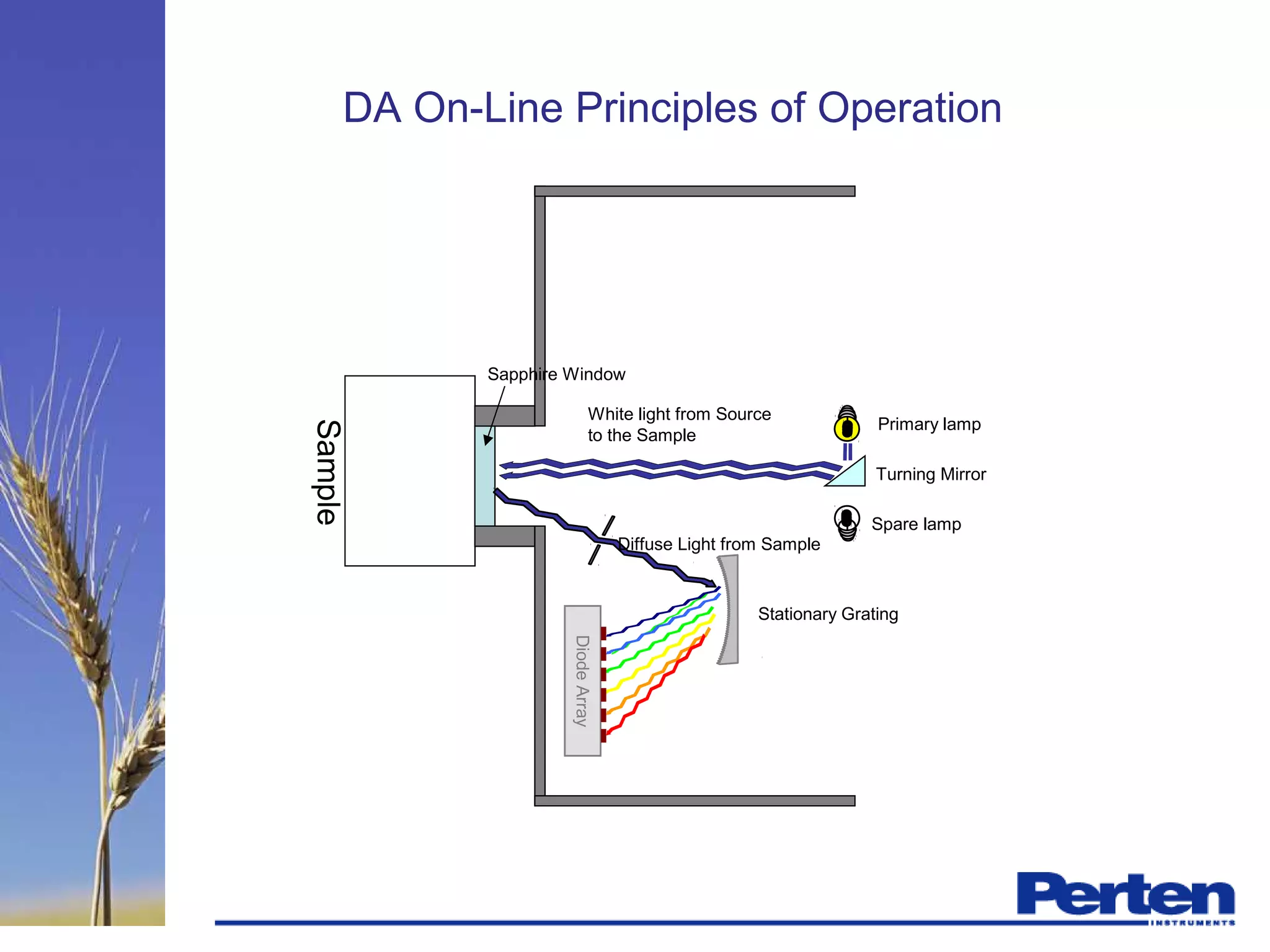
DA On-Line Principles of Operation
DiodeArray
Sample
Diffuse Light from Sample
Stationary Grating
White light from Source
to the Sample
Turning Mirror
Primary lamp
Spare lamp
Sapphire Window
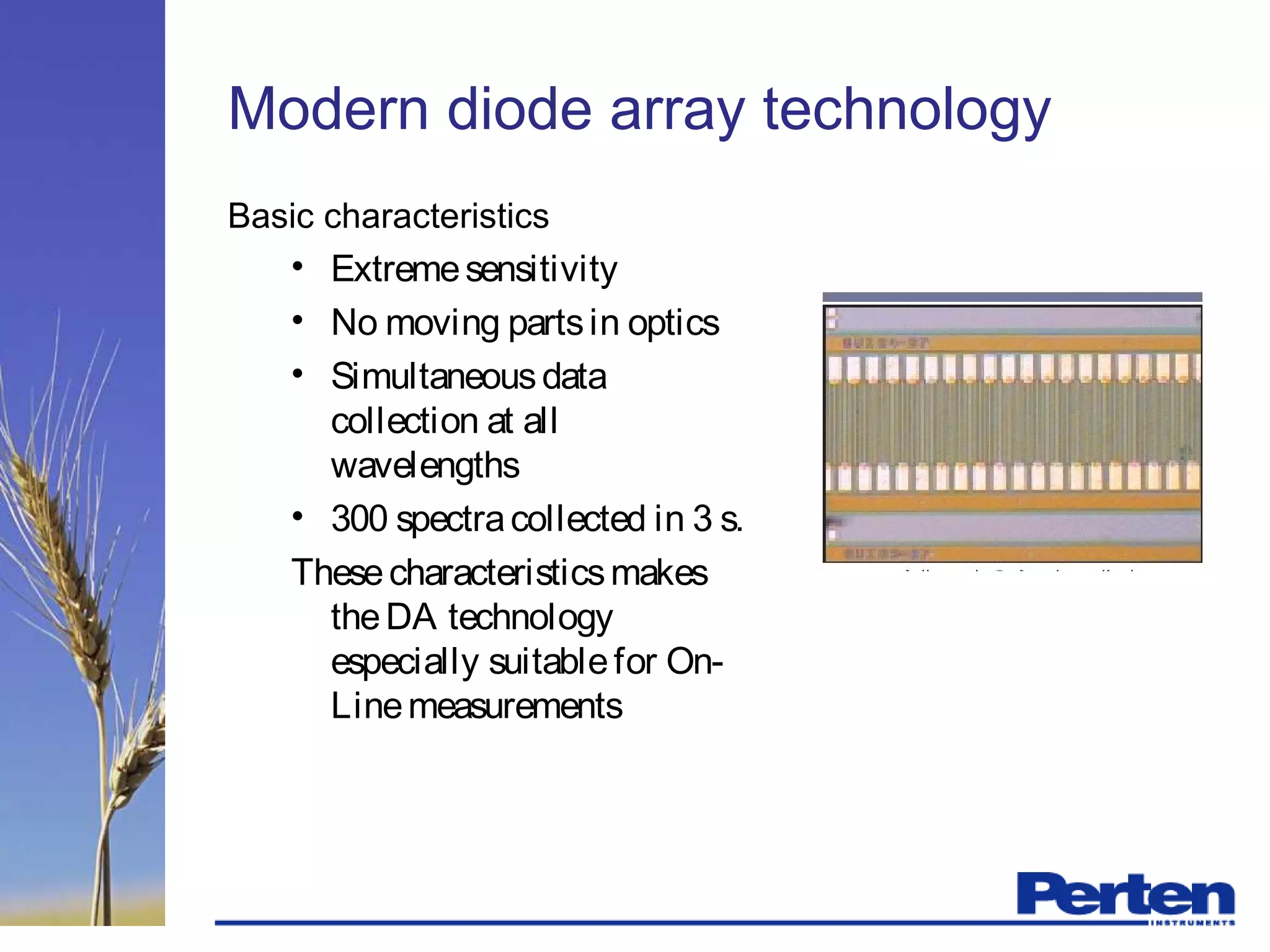
Modern diode array technology
Basic characteristics
• Extremesensitivity
• No moving partsin optics
• Simultaneousdata
collection at all
wavelengths
• 300 spectracollected in 3 s.
Thesecharacteristicsmakes
theDA technology
especially suitablefor On-
Linemeasurements
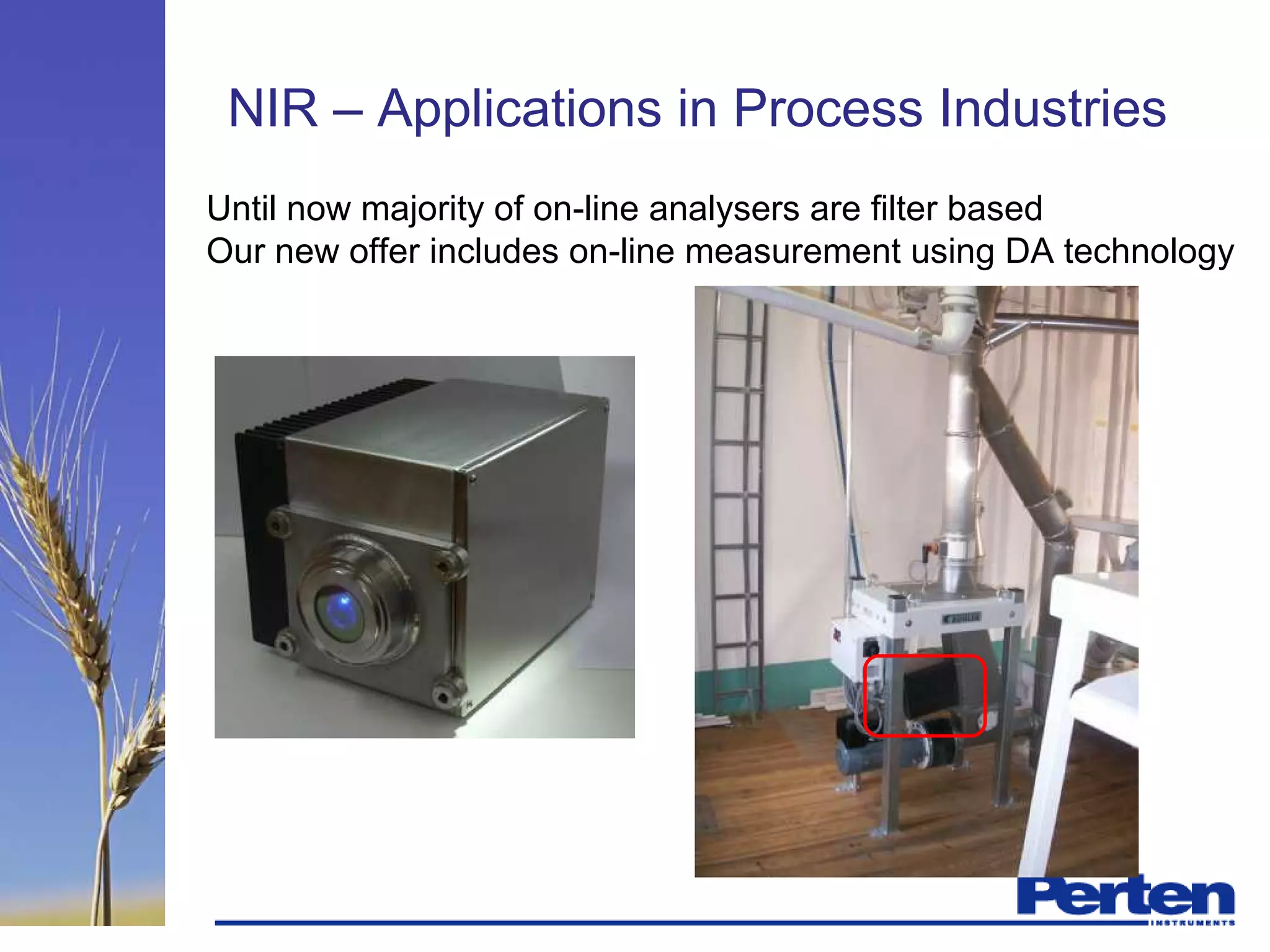
NIR – Applications in Process Industries
Until now majority of on-line analysers are filter based
Our new offer includes on-line measurement using DA technology
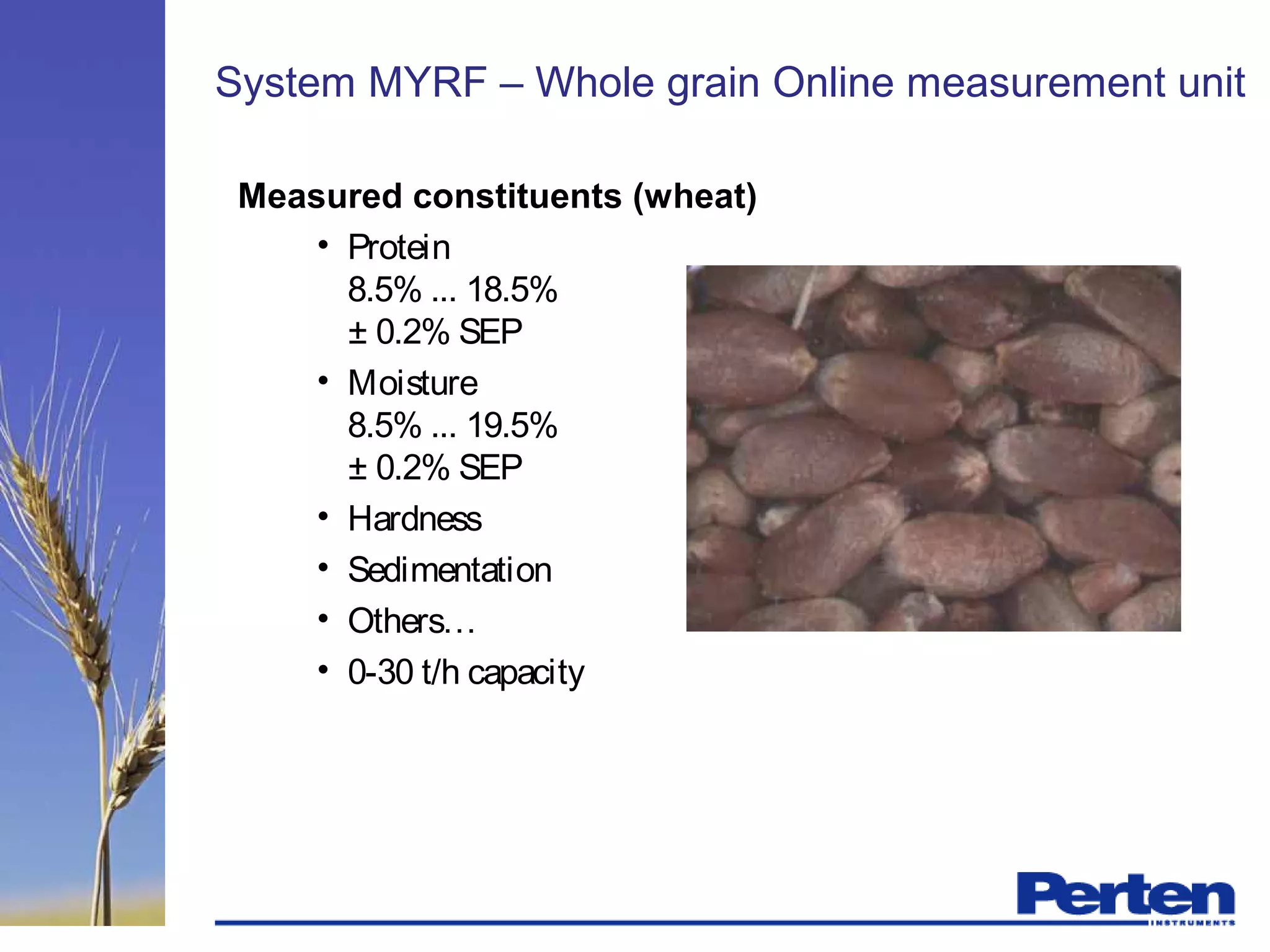
System MYRF – Whole grain Online measurement unit
Measured constituents (wheat)
• Protein
8.5% ... 18.5%
± 0.2% SEP
• Moisture
8.5% ... 19.5%
± 0.2% SEP
• Hardness
• Sedimentation
• Others…
• 0-30 t/h capacity
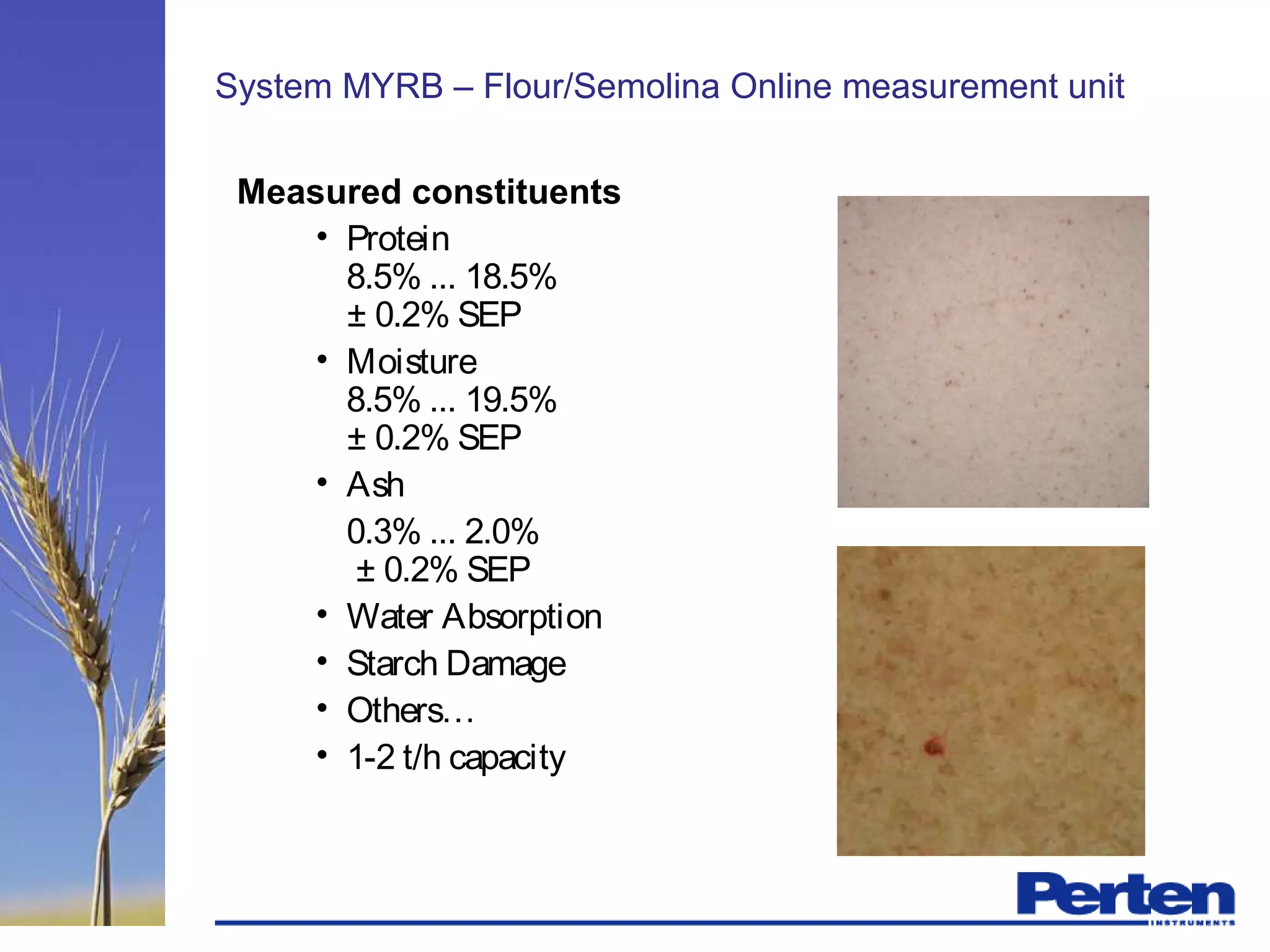
System MYRB – Flour/Semolina Online measurement unit
Measured constituents
• Protein
8.5% ... 18.5%
± 0.2% SEP
• Moisture
8.5% ... 19.5%
± 0.2% SEP
• Ash
0.3% ... 2.0%
± 0.2% SEP
• Water Absorption
• Starch Damage
• Others…
• 1-2 t/h capacity
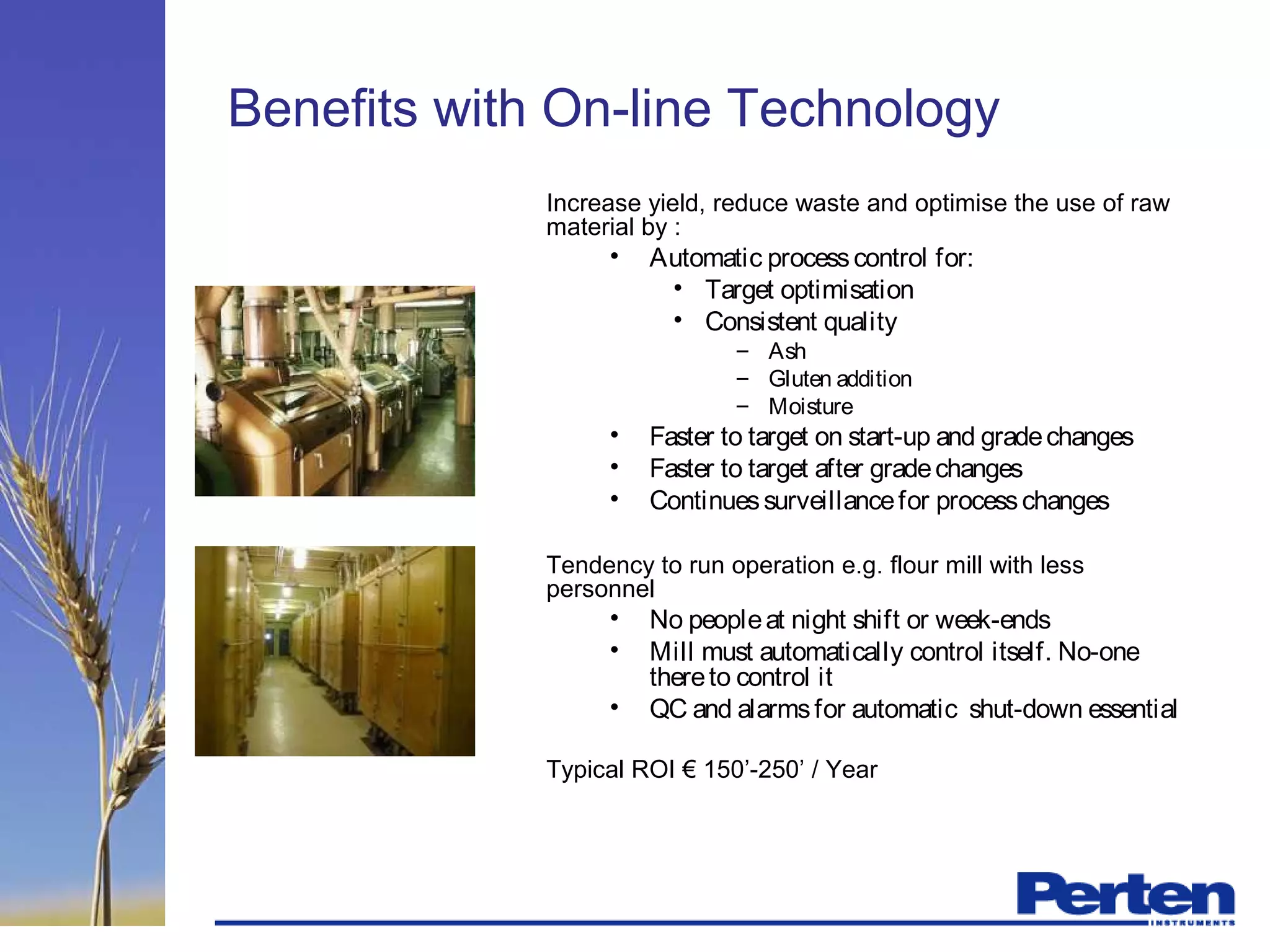
Benefits with On-line Technology
Increase yield, reduce waste and optimise the use of raw
material by :
• Automatic processcontrol for:
• Target optimisation
• Consistent quality
– Ash
– Gluten addition
– Moisture
• Faster to target on start-up and gradechanges
• Faster to target after gradechanges
• Continuessurveillancefor processchanges
Tendency to run operation e.g. flour mill with less
personnel
• No peopleat night shift or week-ends
• Mill must automatically control itself. No-one
thereto control it
• QC and alarmsfor automatic shut-down essential
Typical ROI € 150’-250’ / Year
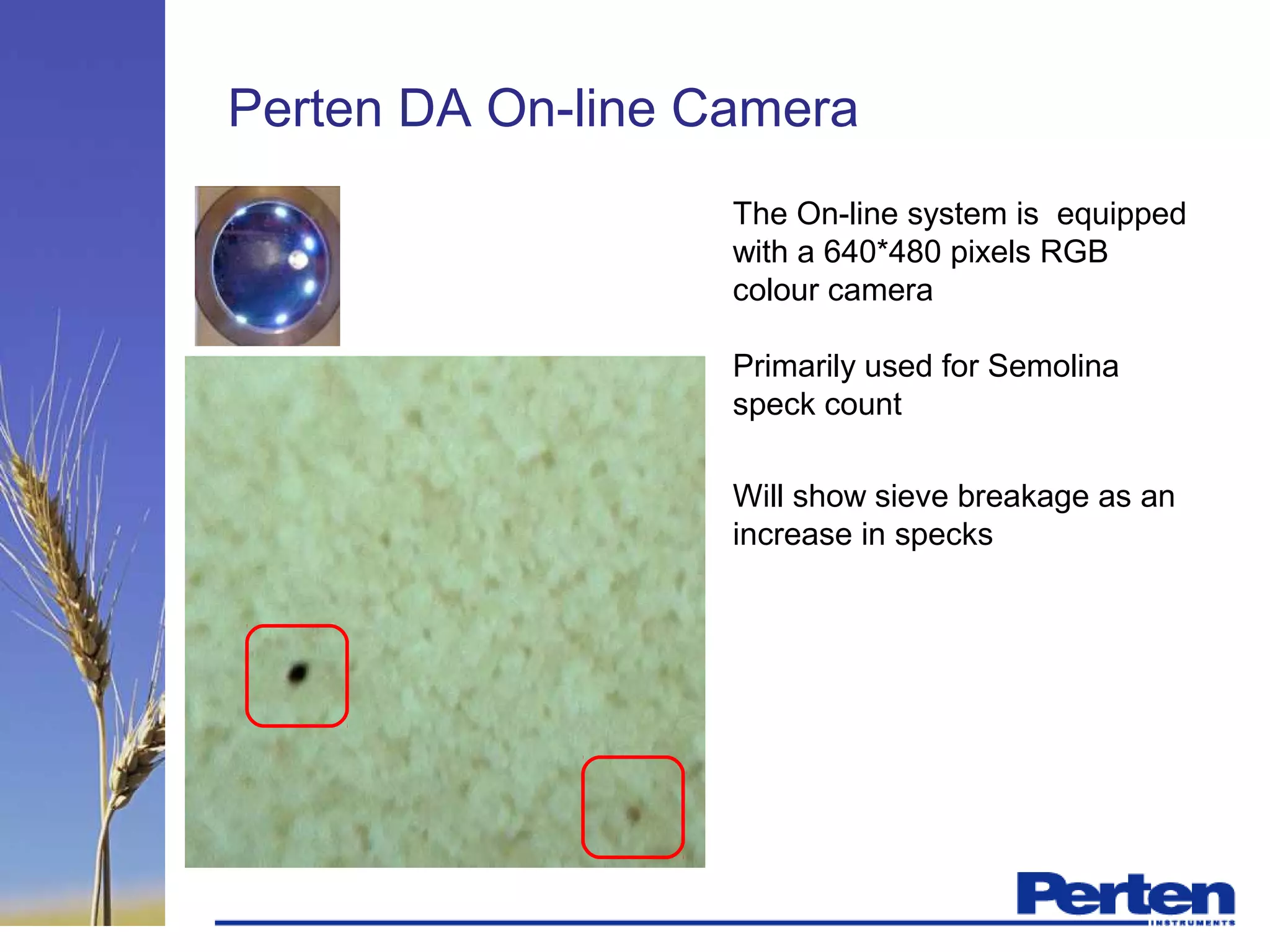
Perten DA On-line Camera
The On-line system is equipped
with a 640*480 pixels RGB
colour camera
Primarily used for Semolina
speck count
Will show sieve breakage as an
increase in specks
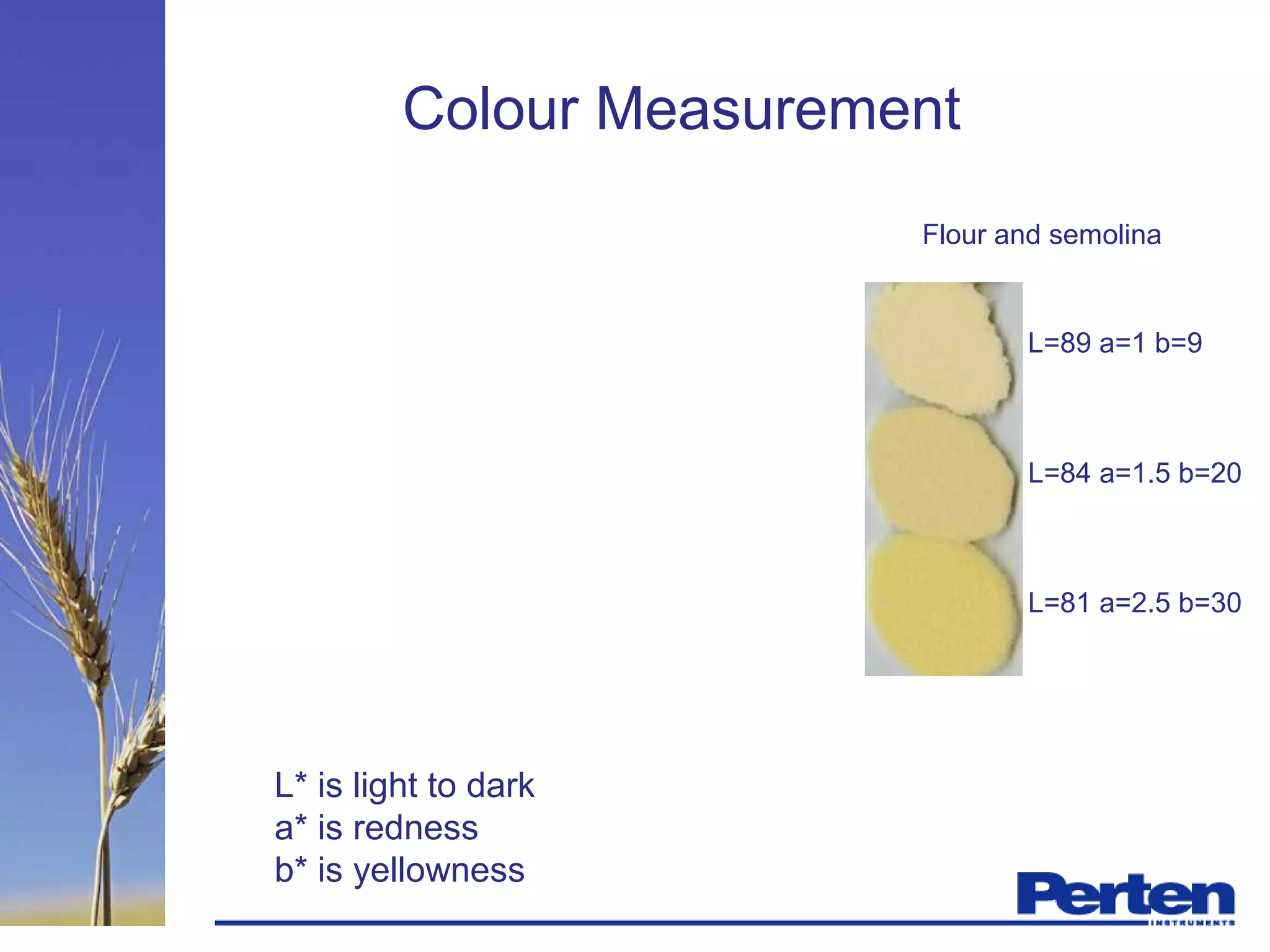
Colour Measurement
L=89 a=1 b=9
L=84 a=1.5 b=20
L=81 a=2.5 b=30
L* is light to dark
a* is redness
b* is yellowness
Flour and semolina
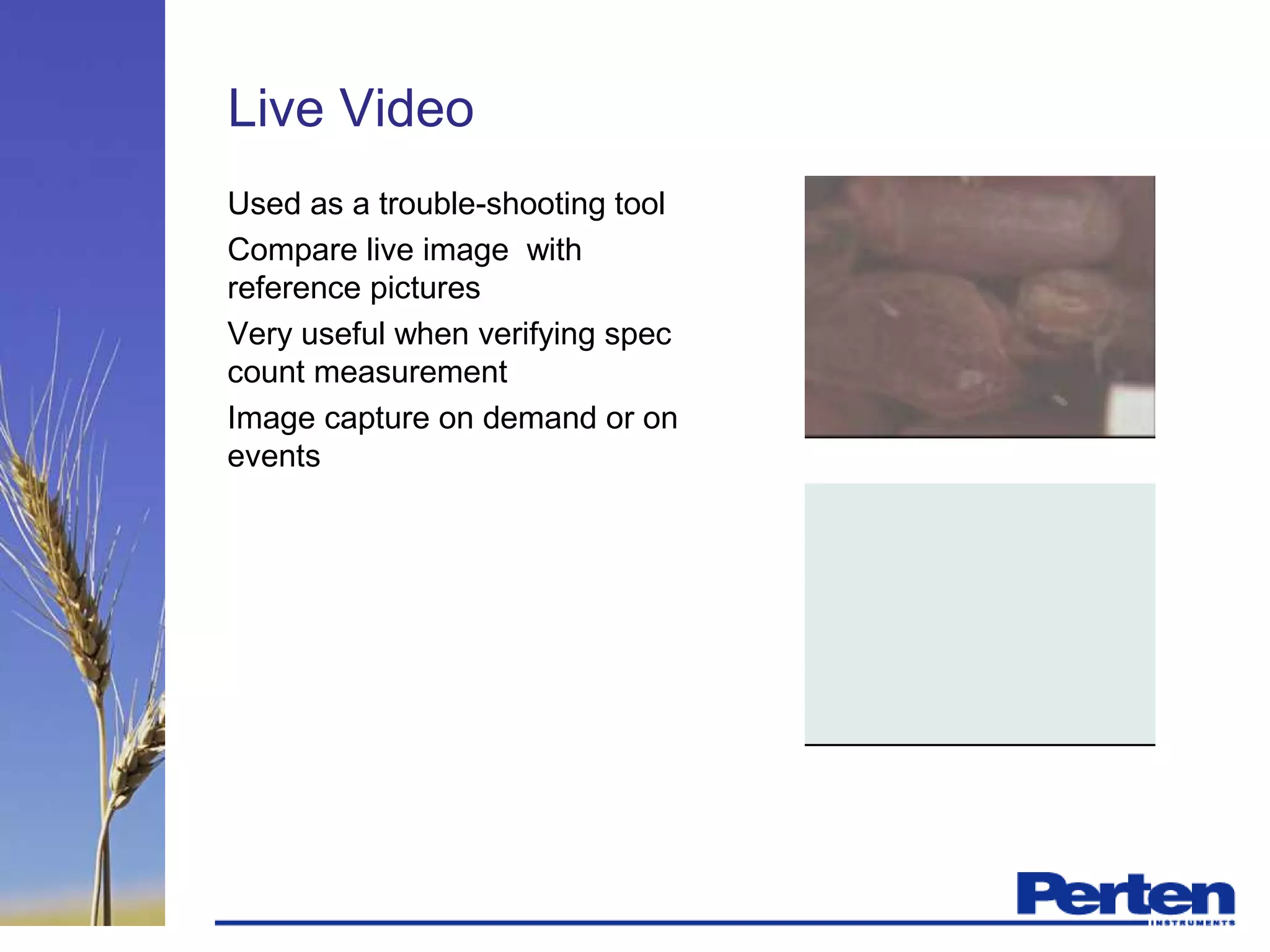
Live Video
Used as a trouble-shooting tool
Compare live image with
reference pictures
Very useful when verifying spec
count measurement
Image capture on demand or on
events
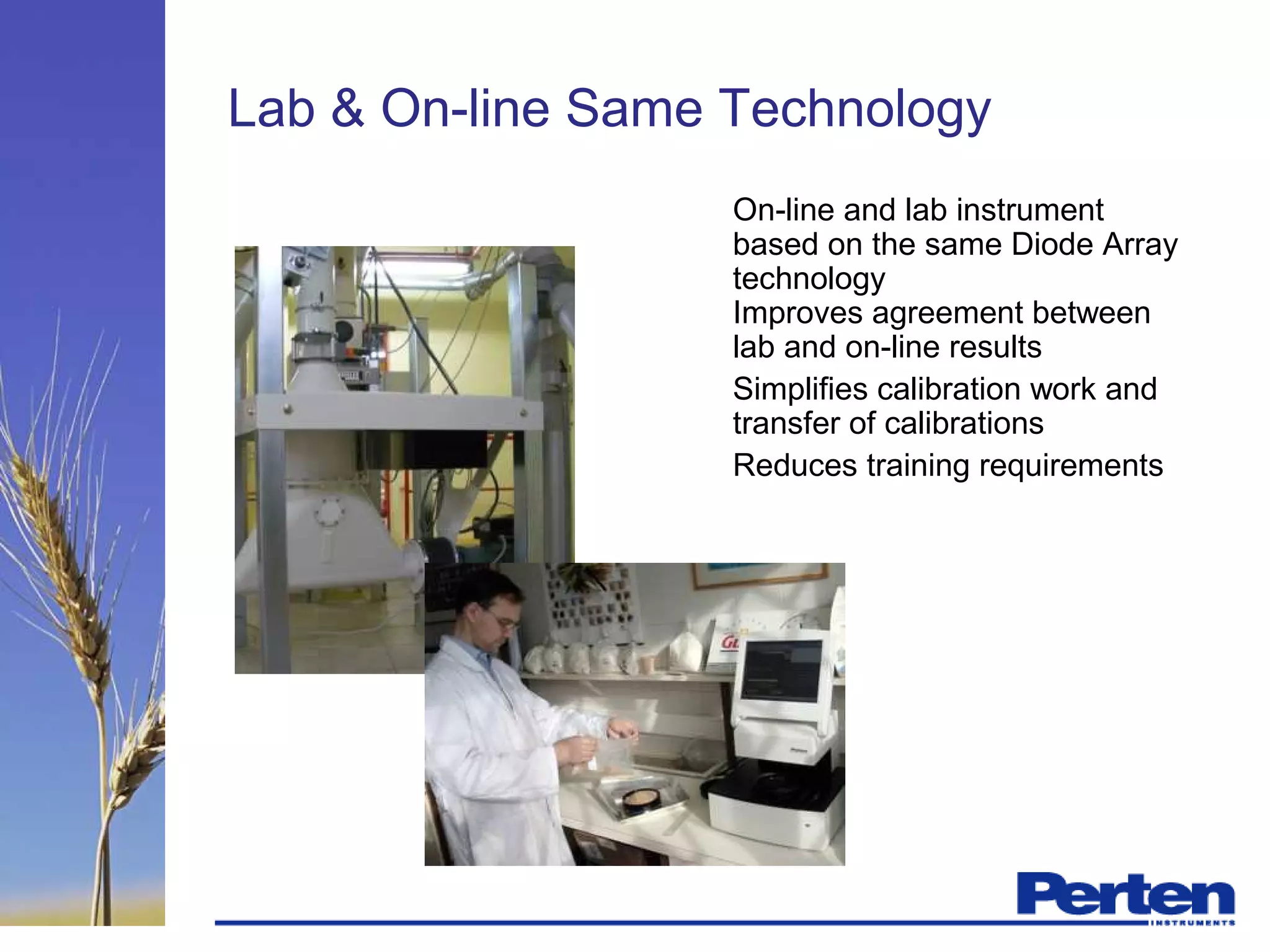
Lab & On-line Same Technology
On-line and lab instrument
based on the same Diode Array
technology
Improves agreement between
lab and on-line results
Simplifies calibration work and
transfer of calibrations
Reduces training requirements

Diode array on line

  • 1.
    NIR Spectral Range NearInfrared 780-2500 nm
  • 2.
    Why NIR CanMeasure Chemical Concentrations NIR photons striking a molecule sometimes causes the molecule to take that photon and turn it into vibrations. We measure the loss of those photons to tell how many molecules of that type are present. Different molecules absorb photons of different wavelengths.
  • 3.
    An example ofa spectrum. The red dots indicate measurement points of a discrete filter instrument. 0.00 0.10 0.20 0.30 0.40 0.50 0.60 0.70 0.80 0.90 1100 1300 1460 1660 1740 1900 2060 2180 2260 2360 M oisture Protein O il/F at O riginal Spectrum I ndividual C onstituent A bsorption Spectral response
  • 4.
    Inframatic Principle Lamp Filterwheel Sphere Detectors Window Sample Basic characteristics of Filter instruments: • Well-proven low-cost technology • Measuresonewavelength after another • Discretewavelengths
  • 5.
    Scanning Monochromator Sample Scanning Grating Single Detector Diffuse Light fromSample Basic characteristics of Scanning Monochromator: • Well-proven technology • Measuresonewavelength after another • Completespectra, not just discretewavelengths
  • 6.
    DA On-Line Principlesof Operation DiodeArray Sample Diffuse Light from Sample Stationary Grating White light from Source to the Sample Turning Mirror Primary lamp Spare lamp Sapphire Window
  • 7.
    Modern diode arraytechnology Basic characteristics • Extremesensitivity • No moving partsin optics • Simultaneousdata collection at all wavelengths • 300 spectracollected in 3 s. Thesecharacteristicsmakes theDA technology especially suitablefor On- Linemeasurements
  • 8.
    NIR – Applicationsin Process Industries Until now majority of on-line analysers are filter based Our new offer includes on-line measurement using DA technology
  • 9.
    System MYRF –Whole grain Online measurement unit Measured constituents (wheat) • Protein 8.5% ... 18.5% ± 0.2% SEP • Moisture 8.5% ... 19.5% ± 0.2% SEP • Hardness • Sedimentation • Others… • 0-30 t/h capacity
  • 10.
    System MYRB –Flour/Semolina Online measurement unit Measured constituents • Protein 8.5% ... 18.5% ± 0.2% SEP • Moisture 8.5% ... 19.5% ± 0.2% SEP • Ash 0.3% ... 2.0% ± 0.2% SEP • Water Absorption • Starch Damage • Others… • 1-2 t/h capacity
  • 11.
    Benefits with On-lineTechnology Increase yield, reduce waste and optimise the use of raw material by : • Automatic processcontrol for: • Target optimisation • Consistent quality – Ash – Gluten addition – Moisture • Faster to target on start-up and gradechanges • Faster to target after gradechanges • Continuessurveillancefor processchanges Tendency to run operation e.g. flour mill with less personnel • No peopleat night shift or week-ends • Mill must automatically control itself. No-one thereto control it • QC and alarmsfor automatic shut-down essential Typical ROI € 150’-250’ / Year
  • 12.
    Perten DA On-lineCamera The On-line system is equipped with a 640*480 pixels RGB colour camera Primarily used for Semolina speck count Will show sieve breakage as an increase in specks
  • 13.
    Colour Measurement L=89 a=1b=9 L=84 a=1.5 b=20 L=81 a=2.5 b=30 L* is light to dark a* is redness b* is yellowness Flour and semolina
  • 14.
    Live Video Used asa trouble-shooting tool Compare live image with reference pictures Very useful when verifying spec count measurement Image capture on demand or on events
  • 15.
    Lab & On-lineSame Technology On-line and lab instrument based on the same Diode Array technology Improves agreement between lab and on-line results Simplifies calibration work and transfer of calibrations Reduces training requirements

Editor's Notes

  • #5 As a summary of the DA7000 systemI would like to highlight some important features and benefits…answers to challenges in your daily analysis work, as NIR user. (see above)