DINING ETIQUETTE
Attention should be focused on people,
not on food.
How to make restaurant reservations?
• Restaurant reservations are like any other
appointment.
• If you make a reservation, stick to it.
• Call ahead if you’re going to be more than
15 minutes late.
• Cancel as far in advance as possible.
Getting seated….
• Never take your seat before being invited
to do so by your host.
• The gentleman should always help the
lady be seated.
• Do not ever run around trying to help the
ladies not sitting directly next to you .
• Always take your seat from the left side of
the chair.
How to use napkins?
• The meal begins when the host or hostess
unfolds his or her napkin.
• This is your signal to do the same.
• Pick up your napkin by a corner and let it
fall open.
• Do not shake it open.
• Don't clean the cutlery or wipe your face or
nose with the napkin.
Using Napkins Cont….
• The napkin rests on the lap till the end of
the meal.
• If you excuse yourself from the table,
loosely fold the napkin and place it to the
left or right of your plate.
• Never place your napkin on your chair.
• The host will signal the end of the meal by
placing his or her napkin on the table.
• At the end of the meal, leave the napkin
semi-folded at the left side of the place
setting.
Using Napkins Cont….
When to start eating?
• Wait until all are served at your table
before beginning to eat.
• When your host or hostess picks up their
fork to eat, then you may eat.
Table setting….
• Eat to your left, drink to your right.
• At formal dinners, the food is served from
the left and the dishes are removed from
the right.
• Start with the knife, fork, or spoon that is
farthest from your plate.
Table setting
How to use the utensils?
• Hold knife in the right
hand and fork in the
left hand.
• Eat food with fork still
in left hand.
• Difference between
American and
Continental styles.
Cont….
• Hold the knife and
fork in your hand with
the tines pointed
down throughout the
entire eating process.
• If you want to take a
drink put down both
the utensils on the
plate.
• Always rest forks,
knives, and spoons
on the side of your
plate or in the bowl.
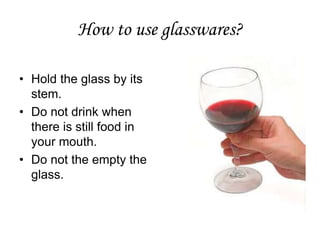
How to use glasswares?
• Hold the glass by its
stem.
• Do not drink when
there is still food in
your mouth.
• Do not the empty the
glass.
Drinking soup….
• Dip the spoon into the
soup, until it is about
two-thirds full, then
sip the liquid from the
side of the spoon.
• Do not slurp the soup
or insert the whole
spoon into the mouth.
• Do not blow on the
soup to cool it off.
Cont….
• Do not put in big
pieces of bread into
your soup.
• Break the bread into
small pieces by hand.
• It is perfectly fine to
tilt the bowl slightly to
get the last spoonful
or two of soup.
Cont….
• Tip the bowl away
from you, not toward
you.
• Place the spoon in
the bowl when you
want to rest.
• When you are
finished, leave the
spoon on the plate
beneath the bowl.
How to eat bread?
• Use your fingers to
remove bread from
the serving
plate/bread basket.
• Pass the basket/any
food always to your
right.
• If bread is handed out
by a waiter, allow the
waiter to use bread
tongs to place it on
the plate.
Cont….
• Break apart the bread
into small pieces
using your fingers.
• Do not cut or bite.
• Add butter to each
small piece of bread
in your bread & butter
plate.
• Place the butter knife
horizontally on bread
plate.
Cont….
• Take enough butter
from the butter dish
and place it on your
dish using the butter
knife.
• Do not “double dip”
into the butter dish.
• Carefully and neatly
spread the butter and
eat the small broken
piece.
How to eat sandwiches?
• Small sandwiches
may be picked up and
eaten with your
fingers.
• Large sandwiches
should be cut with
your knife before
lifting and eating.
• Any hot sandwich
served with a gravy
requires a knife and
fork.
Eating the main course….
• DO NOT talk with
food in your mouth!
• Always taste your
food before
seasoning it.
• If asked for the salt or
pepper, pass both
together.
• Always use serving
utensils to serve
yourself, not your
personal silverware.
Cont….
• Don't blow on your food to cool it off.
• Cut only enough food for the next
mouthful.
• Do eat a little of everything on your plate.
• It is acceptable to leave some food on
your plate if you are full or unable to eat.
• Do not "play with" your food or utensils.
• Do not hold food on the fork or spoon
while talking.
• Do not wave your silverware in the air or
point with it.
• Try to pace your eating so that you don’t
finish before others are halfway through.
• Once used, your utensils, including the
handles, must not touch the table again.
Cont….
Cont….
• Always rest forks, knives, and spoons on
the side of your plate or in the bowl.
• It is never acceptable to ask a person why
they have not eaten all the food.
• Don't make an issue if you don't like
something or can't eat it - keep silence.
• Do not request food other than which is
being served.
Eating desserts….
• Dessert is a course that
typically comes at the end
of a meal.
• It usually consists of
sweet food.
• Common desserts
include cakes, cookies,
fruits, pastries, ice cream,
and candies.
• Always use the dessert
spoon and the dessert
knife.
Drinking wine….
• Never turn a wine
glass upside down to
decline wine.
• It is more polite to let
the wine be poured
and not draw
attention.
• Otherwise, hold your
hand over the wine
glass to signal that
you don't want any
wine.
Placing knife, fork and spoon after
completing food….
Using arms and legs….
• Rest your arms in your lap when you aren't
eating.
• If you gesture with your hands during a
meal conversation, you may rest only your
forearms on the table.
• Keep the arms still when in your lap, and
avoid the urge to fidget.
Cont….
• Don't rest your elbows on the table while
you dine.
• Never stretch your arms at the table. It
signifies boredom.
• If you feel the urge to stretch or fidget
while dining, excuse yourself from the
table and take a break.
Simple, Good Manners….
• Always respond to an invitation within a
week of receiving it.
• Dress properly as per the occasion.
NEVER attempt to "out dress" the host!
 Be punctual - never more than 10 minutes
late.
• If you wish to bring a guest as your
partner, you should always check with the
host first.
Cont….
• Never carry any gifts for the host or the
hostess.
• Avoid loud eating noises such as slurping
and burping as they are considered very
impolite.
• Don't stretch across the table crossing
other guests to reach food or to pass the
food.
• Picking teeth or licking fingers are very
unattractive!
Cont….
• Drinking too much wine can be very
embarrassing!
• If you drop a piece of food on the table,
don't panic.
• Don't correct others if they aren't using
proper etiquette.
Cont….
• Don't forget to make polite conversation
with those guests around you.
• Pick a role model and compare your
behavior with them if you are not sure.
T H A N K Y O U

Diningetiquette 100216061830-phpapp01

  • 1.
    DINING ETIQUETTE Attention shouldbe focused on people, not on food.
  • 2.
    How to makerestaurant reservations? • Restaurant reservations are like any other appointment. • If you make a reservation, stick to it. • Call ahead if you’re going to be more than 15 minutes late. • Cancel as far in advance as possible.
  • 3.
    Getting seated…. • Nevertake your seat before being invited to do so by your host. • The gentleman should always help the lady be seated. • Do not ever run around trying to help the ladies not sitting directly next to you . • Always take your seat from the left side of the chair.
  • 4.
    How to usenapkins? • The meal begins when the host or hostess unfolds his or her napkin. • This is your signal to do the same. • Pick up your napkin by a corner and let it fall open. • Do not shake it open. • Don't clean the cutlery or wipe your face or nose with the napkin.
  • 5.
    Using Napkins Cont…. •The napkin rests on the lap till the end of the meal. • If you excuse yourself from the table, loosely fold the napkin and place it to the left or right of your plate. • Never place your napkin on your chair.
  • 6.
    • The hostwill signal the end of the meal by placing his or her napkin on the table. • At the end of the meal, leave the napkin semi-folded at the left side of the place setting. Using Napkins Cont….
  • 7.
    When to starteating? • Wait until all are served at your table before beginning to eat. • When your host or hostess picks up their fork to eat, then you may eat.
  • 8.
    Table setting…. • Eatto your left, drink to your right. • At formal dinners, the food is served from the left and the dishes are removed from the right. • Start with the knife, fork, or spoon that is farthest from your plate.
  • 9.
  • 10.
    How to usethe utensils? • Hold knife in the right hand and fork in the left hand. • Eat food with fork still in left hand. • Difference between American and Continental styles.
  • 11.
    Cont…. • Hold theknife and fork in your hand with the tines pointed down throughout the entire eating process. • If you want to take a drink put down both the utensils on the plate. • Always rest forks, knives, and spoons on the side of your plate or in the bowl.
  • 12.
    How to useglasswares? • Hold the glass by its stem. • Do not drink when there is still food in your mouth. • Do not the empty the glass.
  • 13.
    Drinking soup…. • Dipthe spoon into the soup, until it is about two-thirds full, then sip the liquid from the side of the spoon. • Do not slurp the soup or insert the whole spoon into the mouth. • Do not blow on the soup to cool it off.
  • 14.
    Cont…. • Do notput in big pieces of bread into your soup. • Break the bread into small pieces by hand. • It is perfectly fine to tilt the bowl slightly to get the last spoonful or two of soup.
  • 15.
    Cont…. • Tip thebowl away from you, not toward you. • Place the spoon in the bowl when you want to rest. • When you are finished, leave the spoon on the plate beneath the bowl.
  • 16.
    How to eatbread? • Use your fingers to remove bread from the serving plate/bread basket. • Pass the basket/any food always to your right. • If bread is handed out by a waiter, allow the waiter to use bread tongs to place it on the plate.
  • 17.
    Cont…. • Break apartthe bread into small pieces using your fingers. • Do not cut or bite. • Add butter to each small piece of bread in your bread & butter plate. • Place the butter knife horizontally on bread plate.
  • 18.
    Cont…. • Take enoughbutter from the butter dish and place it on your dish using the butter knife. • Do not “double dip” into the butter dish. • Carefully and neatly spread the butter and eat the small broken piece.
  • 19.
    How to eatsandwiches? • Small sandwiches may be picked up and eaten with your fingers. • Large sandwiches should be cut with your knife before lifting and eating. • Any hot sandwich served with a gravy requires a knife and fork.
  • 20.
    Eating the maincourse…. • DO NOT talk with food in your mouth! • Always taste your food before seasoning it. • If asked for the salt or pepper, pass both together. • Always use serving utensils to serve yourself, not your personal silverware.
  • 21.
    Cont…. • Don't blowon your food to cool it off. • Cut only enough food for the next mouthful. • Do eat a little of everything on your plate. • It is acceptable to leave some food on your plate if you are full or unable to eat. • Do not "play with" your food or utensils.
  • 22.
    • Do nothold food on the fork or spoon while talking. • Do not wave your silverware in the air or point with it. • Try to pace your eating so that you don’t finish before others are halfway through. • Once used, your utensils, including the handles, must not touch the table again. Cont….
  • 23.
    Cont…. • Always restforks, knives, and spoons on the side of your plate or in the bowl. • It is never acceptable to ask a person why they have not eaten all the food. • Don't make an issue if you don't like something or can't eat it - keep silence. • Do not request food other than which is being served.
  • 24.
    Eating desserts…. • Dessertis a course that typically comes at the end of a meal. • It usually consists of sweet food. • Common desserts include cakes, cookies, fruits, pastries, ice cream, and candies. • Always use the dessert spoon and the dessert knife.
  • 25.
    Drinking wine…. • Neverturn a wine glass upside down to decline wine. • It is more polite to let the wine be poured and not draw attention. • Otherwise, hold your hand over the wine glass to signal that you don't want any wine.
  • 26.
    Placing knife, forkand spoon after completing food….
  • 27.
    Using arms andlegs…. • Rest your arms in your lap when you aren't eating. • If you gesture with your hands during a meal conversation, you may rest only your forearms on the table. • Keep the arms still when in your lap, and avoid the urge to fidget.
  • 28.
    Cont…. • Don't restyour elbows on the table while you dine. • Never stretch your arms at the table. It signifies boredom. • If you feel the urge to stretch or fidget while dining, excuse yourself from the table and take a break.
  • 29.
    Simple, Good Manners…. •Always respond to an invitation within a week of receiving it. • Dress properly as per the occasion. NEVER attempt to "out dress" the host!  Be punctual - never more than 10 minutes late. • If you wish to bring a guest as your partner, you should always check with the host first.
  • 30.
    Cont…. • Never carryany gifts for the host or the hostess. • Avoid loud eating noises such as slurping and burping as they are considered very impolite. • Don't stretch across the table crossing other guests to reach food or to pass the food. • Picking teeth or licking fingers are very unattractive!
  • 31.
    Cont…. • Drinking toomuch wine can be very embarrassing! • If you drop a piece of food on the table, don't panic. • Don't correct others if they aren't using proper etiquette.
  • 32.
    Cont…. • Don't forgetto make polite conversation with those guests around you. • Pick a role model and compare your behavior with them if you are not sure.
  • 33.
    T H AN K Y O U