Final Project
Natalia Blanco Obando
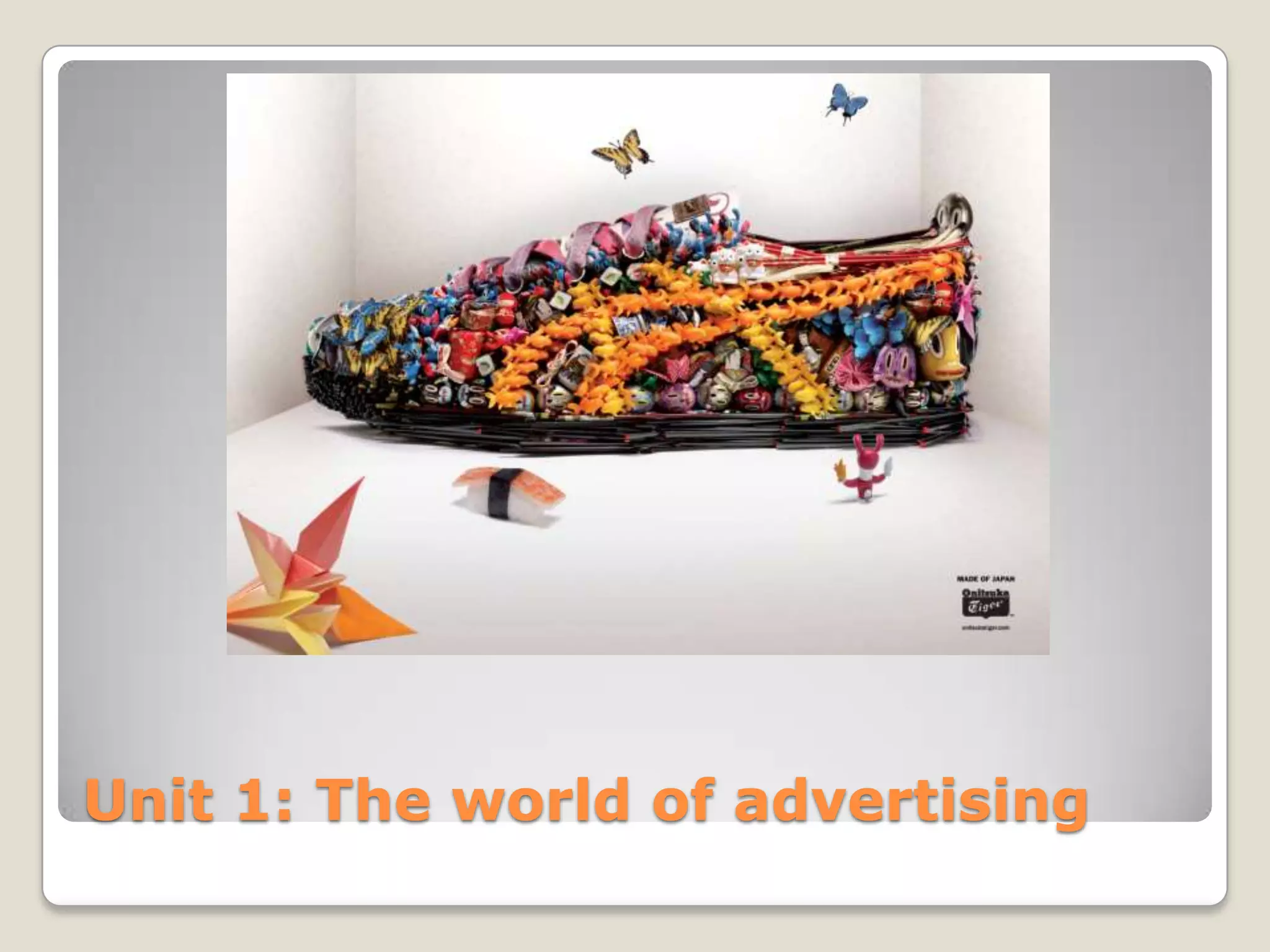
Unit 1: The world of advertising
Vocabulary
 Campaign: A series of actions that are intended to achieve
a result, especially business or politics.
 Competition: People or groups that are competing against
you.
 Convince: To persuade someone to do something.
 Fail: To be unsuccessful in doing something.
 Firm: Business or small company.
 Global: Related to the whole world.
 Goal: Something that you hope to achieve in the future.
 Market: Particular country or area where a company sells
its goods.
 Message: The main idea in a movie, book, speech, etc.
 Succeed: To do what you have tried to do.
Grammar
Simple present Present progressive
Used to describe what
sometimes happens,
what usually happens or
what always happens.
Is used to describe
actions that are
happening at the
present time.
Unit two: Fraud
Vocabulary
 Motive: reason to do or feel something
 Impersonate: pretend to be someone
 Deception: the act of deceiving or the state
of being deceived
 Con man or woman: Someone who tries to
trick you by gaining your trust.
 Impress: The act of impressing
 Suspicious: Someone who acts strange.
 Fake: Not real, false.
 Honesty: Someone telling the truth
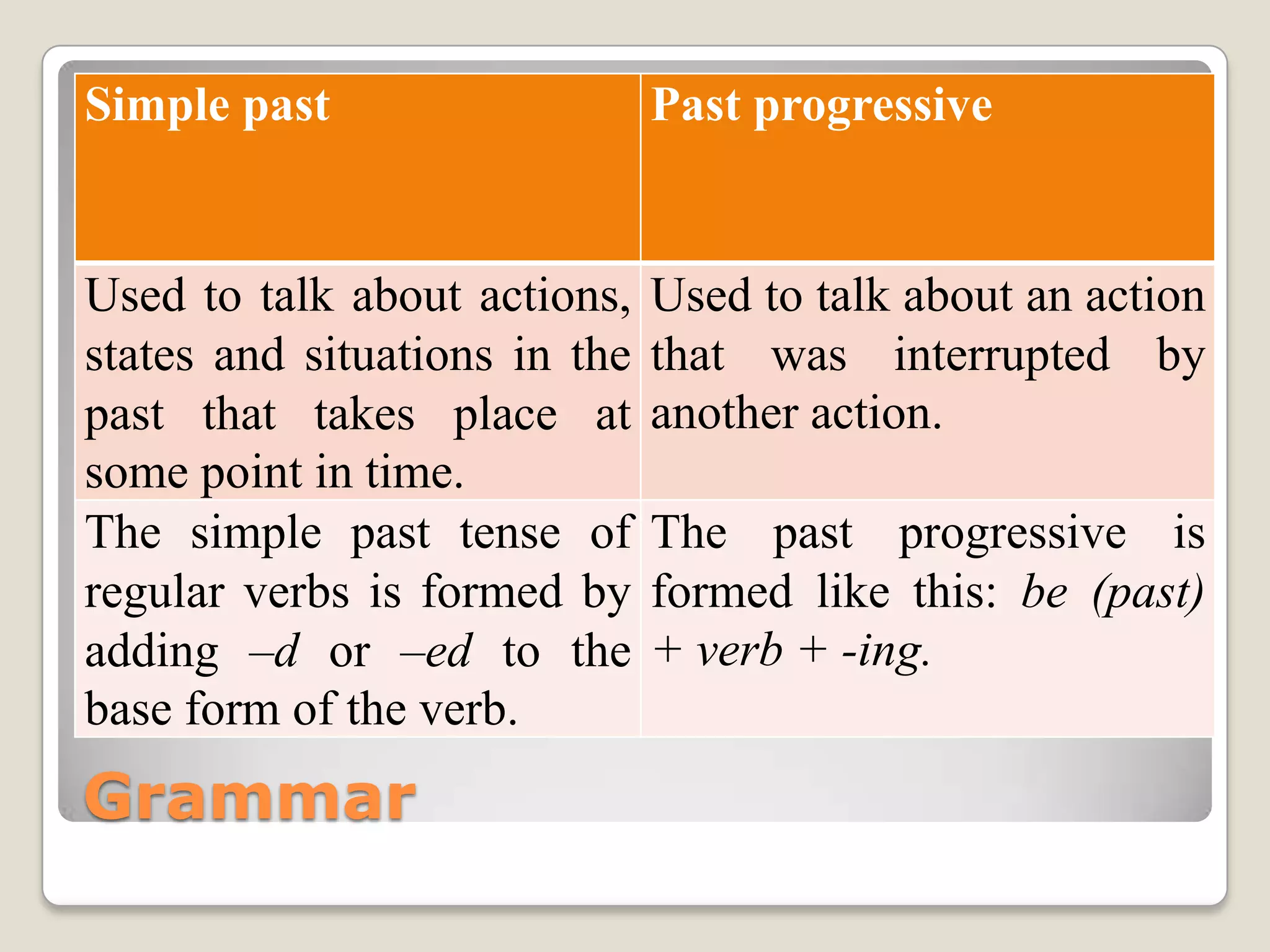
Grammar
Simple past Past progressive
Used to talk about actions,
states and situations in the
past that takes place at
some point in time.
Used to talk about an action
that was interrupted by
another action.
The simple past tense of
regular verbs is formed by
adding –d or –ed to the
base form of the verb.
The past progressive is
formed like this: be (past)
+ verb + -ing.
Unit 3: Extreme sports
Vocabulary
 Style: The way something is done.
 Intense: Stronger
 Focused: To give all your attention to something.
 Got hooked on: To become unable to stop doing
something.
 Escape: A way to forget about problems.
 Achieve: To succeed in doing something.
 Perfect: To make something as good as it can be.
 Energy: The physical and mental strength that makes you
able to be active
 Made it: To be successful in a particular activity.
 Controversy: A strong disagreement
 Awesome: Terrific
 Benefit: An advantage
Grammar
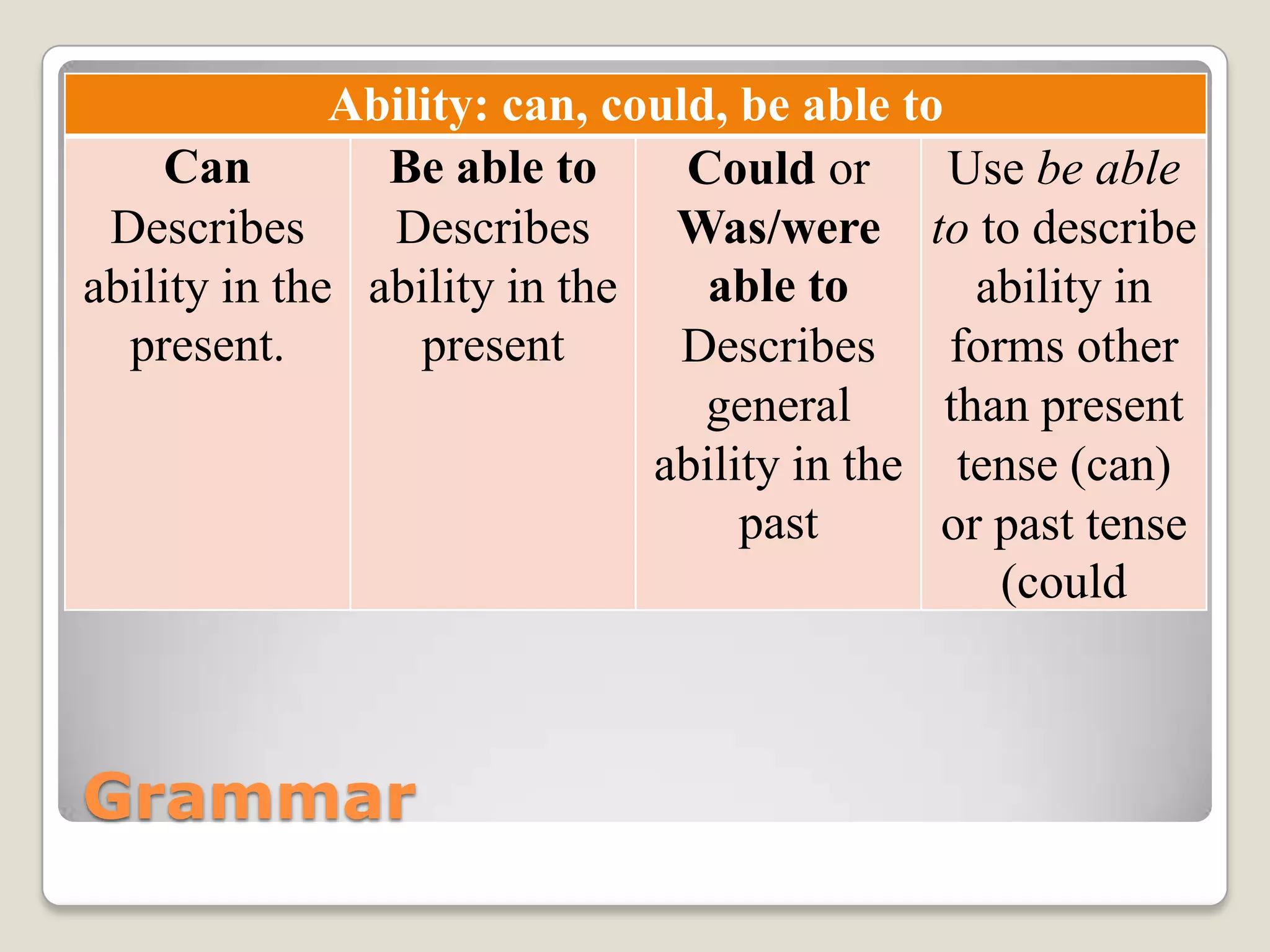
Ability: can, could, be able to
Can
Describes
ability in the
present.
Be able to
Describes
ability in the
present
Could or
Was/were
able to
Describes
general
ability in the
past
Use be able
to to describe
ability in
forms other
than present
tense (can)
or past tense
(could
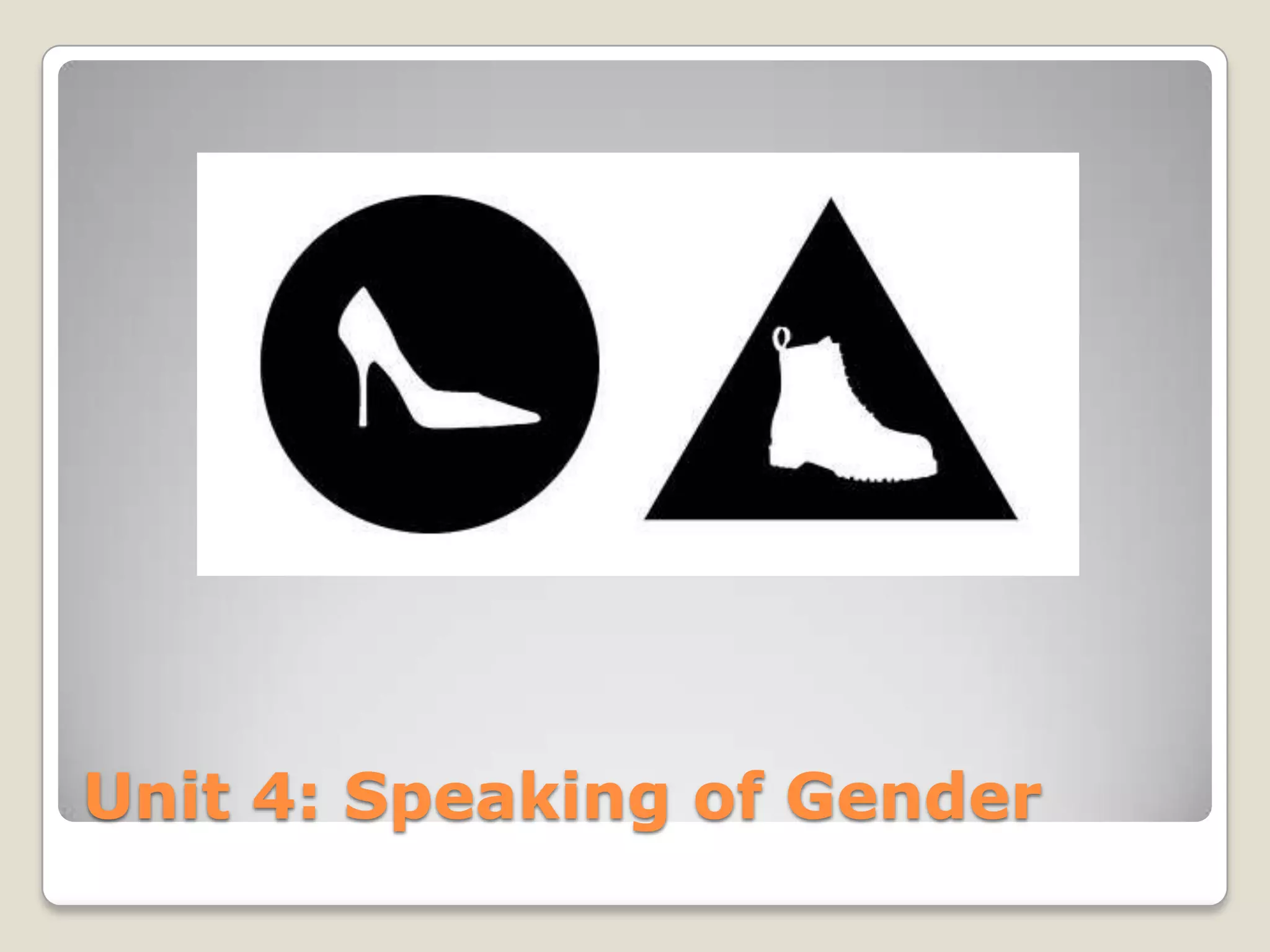
Unit 4: Speaking of Gender
Vocabulary
 Identity: Sense of self.
 Fairly: Equally
 Influenced: Guided or changed
 Reflect: To show something clearly
 Masculine: male; manly.
 Feminine: Female, womanly
 Emphasize: To show that something is special
or important
 Compete: To try to be better than others
 Status: Level or position
Grammar
 Comparative adverbs are used
to compare the action expressed
by verbs.
 Actions can be compared by
using: as… as, not as… as,
more… than, and less… than.
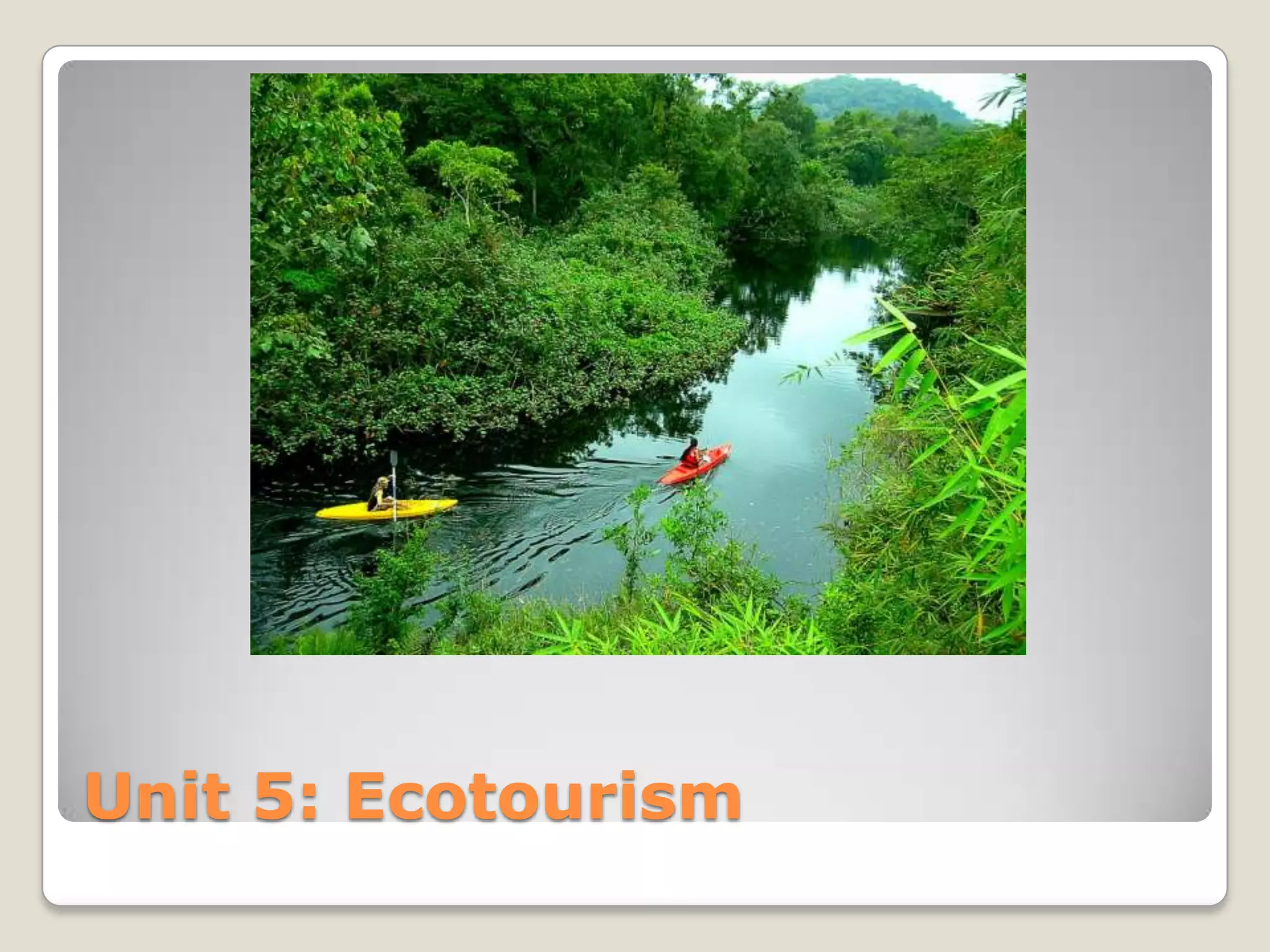
Unit 5: Ecotourism
Vocabulary
 Coastal: In the ocean or on the land near the coast
 Consequences: Things that happen as a result of a
particular action or situation
 Fragile: Easily broken, damaged, or ruined
 Harsh: Difficult to live in and very uncomfortable
 Inhabit: To live in an area or a place
 Landscape: The way an area of land looks
 Preserve: To save something or someone from being
harmed of destroyed
 Remote: Far away from towns and cities
 Tourist: Someone who is traveling or visiting a place
for pleasure
 Vast: Extremely large
Grammar
Because and even though:
Because gives reasons.
Even though explains an
unexpected result.
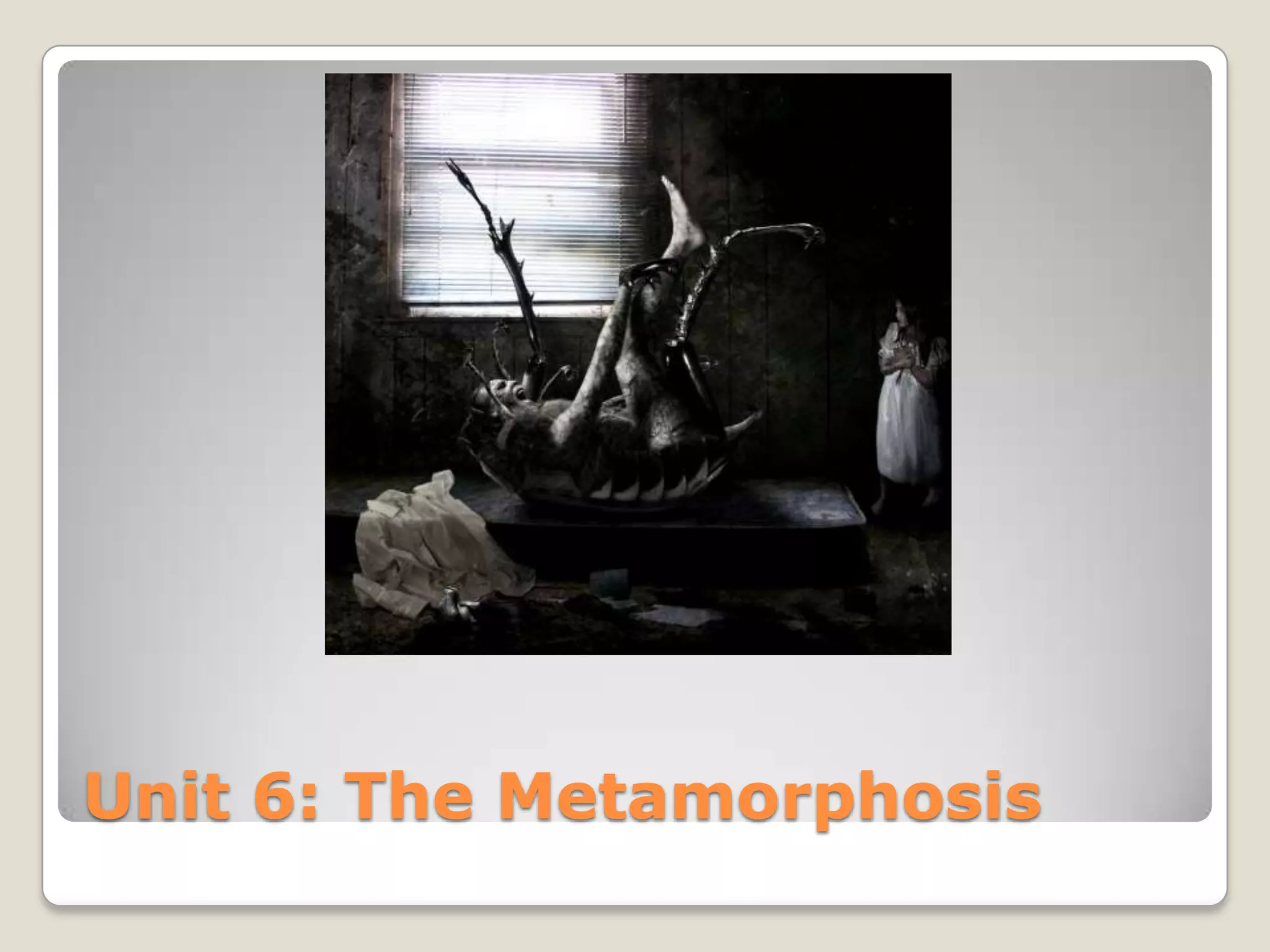
Unit 6: The Metamorphosis
Vocabulary
 Brave: not afraid of danger
 Beat up: to hit repeatedly
 Terrified: very afraid
 Grab: to take something quickly and roughly
 Manage to: to succeed in doing something difficult
 Disgusting: strongly disliked
 Smelly: having a bad odor
 Substance: anything one can touch
 Soothe: to relieve
 Faint: to lose consciousness, as if you were asleep
 Useless: not working well or of no use
 Realize: to start to know something you had not
noticed before
Grammar
Infinitives (to + verb) that
are used to explain the
purpose of an action are
called infinitives with
purpose. They answer the
question “why?”
Gregor worked to
support his family.
His sister whispered to
him to ask if the was all
right.
You can also use the longer
form in order to + verb.
Gregor Worked in order to
support his family.
His sister whispered to him
in order to ask if he was
all right.
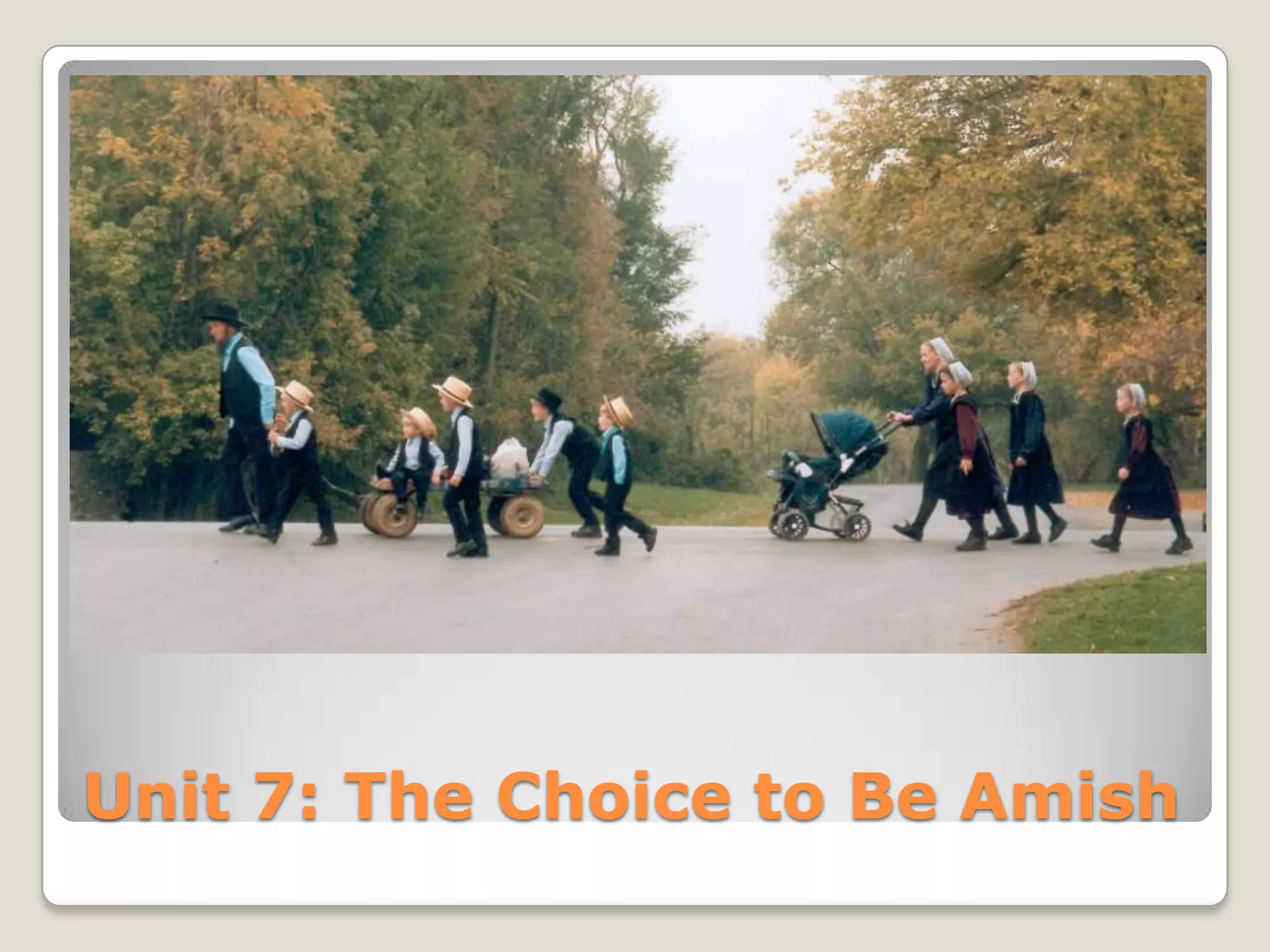
Unit 7: The Choice to Be Amish
Vocabulary
 Establish: to begin something
 Pious: having a strong religious beliefs
 Persecution: cruel or harsh treatment as a result of one’s
beliefs
 Allowed: given permission to do something or have
something
 Settle down: to become part of a community or region
 Maintain: to keep or continue
 Socialize: to spend time talking with and getting to know
other people
 Conveniences: thing that make life easier and more
comfortable
 Bond: feeling of closeness
 Decline: to decrease
Unit 8: Finding a Spouse
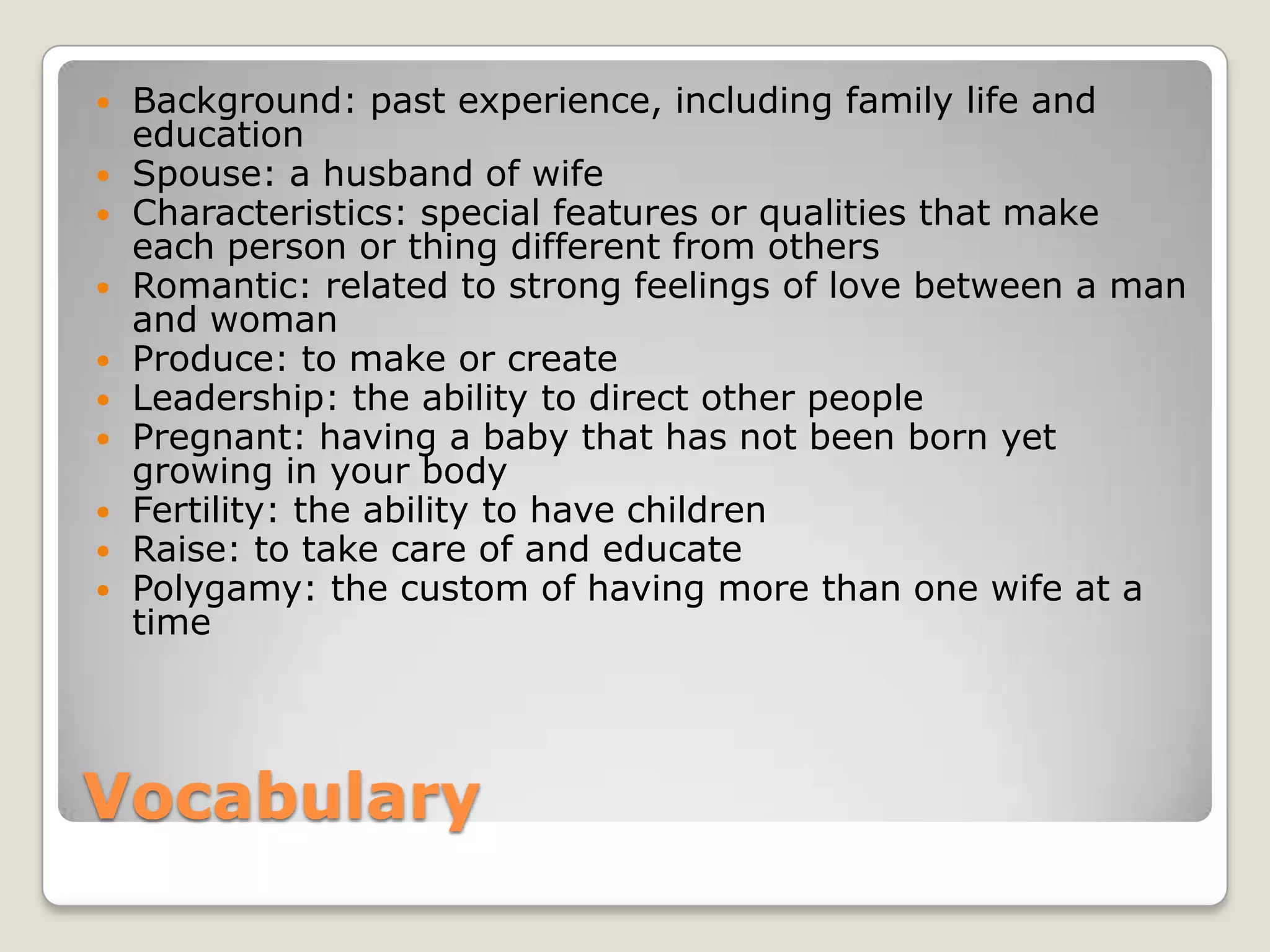
Vocabulary
 Background: past experience, including family life and
education
 Spouse: a husband of wife
 Characteristics: special features or qualities that make
each person or thing different from others
 Romantic: related to strong feelings of love between a man
and woman
 Produce: to make or create
 Leadership: the ability to direct other people
 Pregnant: having a baby that has not been born yet
growing in your body
 Fertility: the ability to have children
 Raise: to take care of and educate
 Polygamy: the custom of having more than one wife at a
time
Grammar
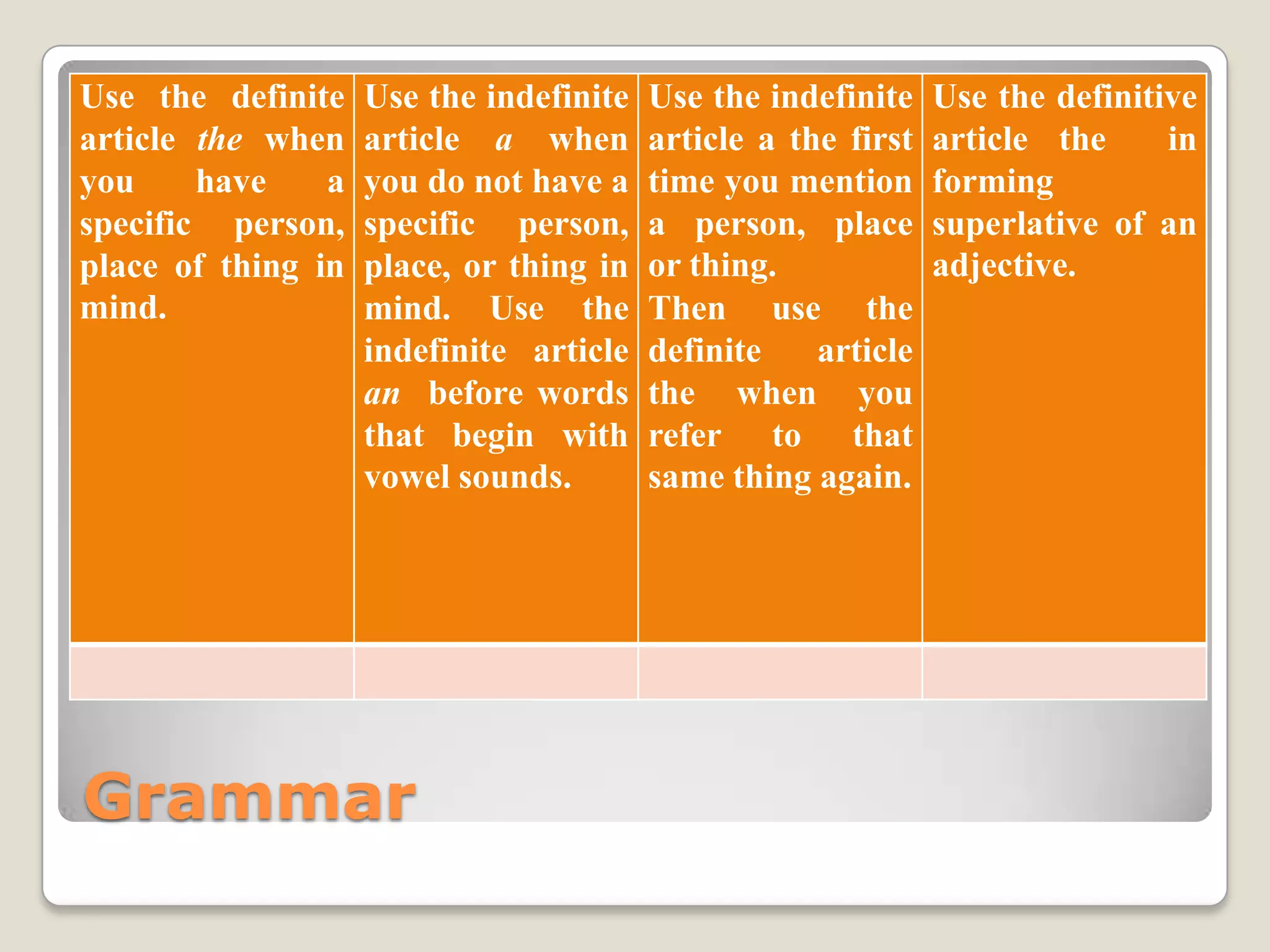
Use the definite
article the when
you have a
specific person,
place of thing in
mind.
Use the indefinite
article a when
you do not have a
specific person,
place, or thing in
mind. Use the
indefinite article
an before words
that begin with
vowel sounds.
Use the indefinite
article a the first
time you mention
a person, place
or thing.
Then use the
definite article
the when you
refer to that
same thing again.
Use the definitive
article the in
forming
superlative of an
adjective.
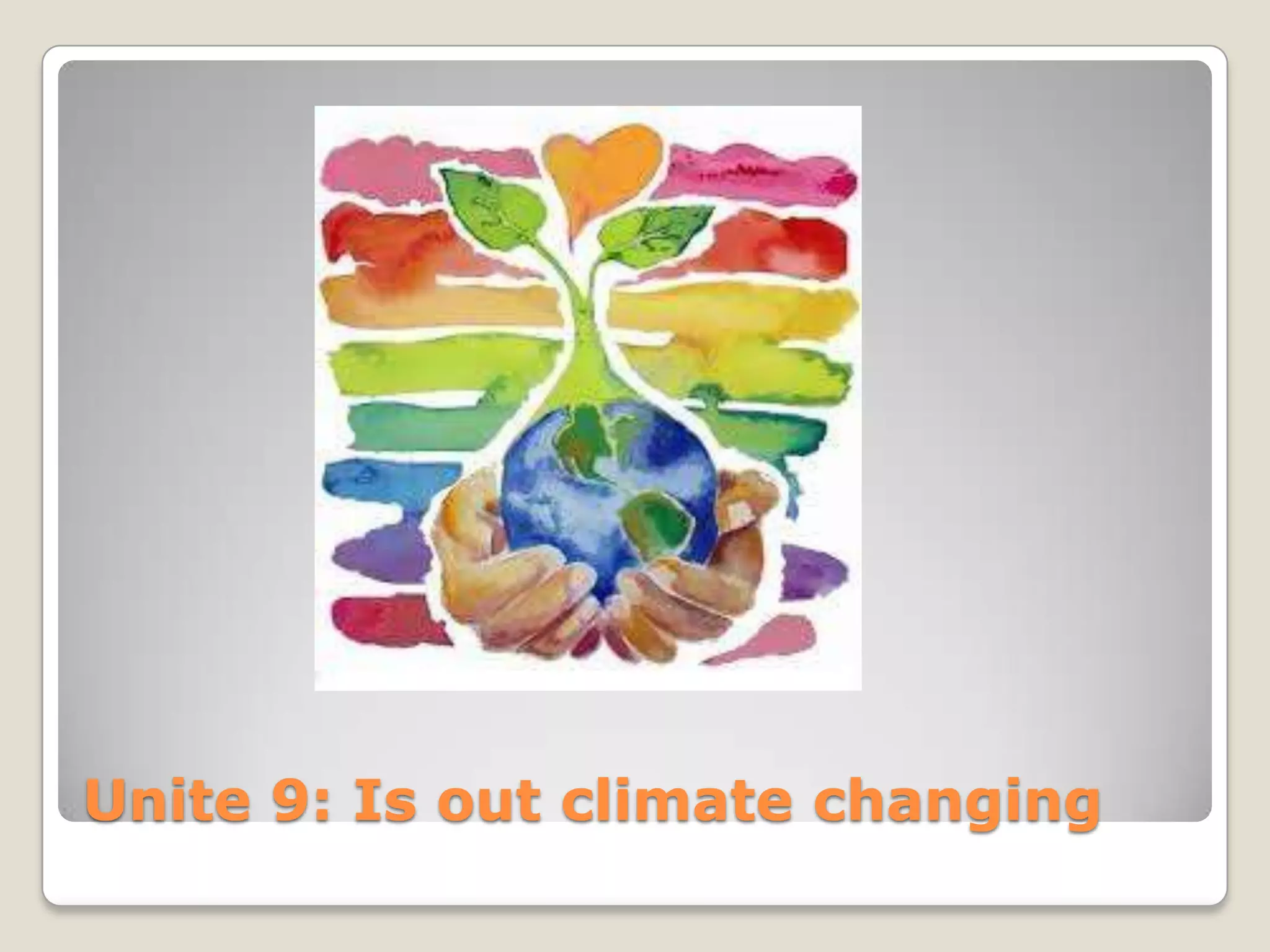
Unite 9: Is out climate changing
Vocabulary
 Escape: to get out
 Atmosphere: mixture of gases that surround the Earth
 Fossil fuels: substances that are buried in the ground and
can be burned for power
 Carbon dioxide: colorless gas breathed out by people and
animals
 Gases: air-like substance
 Emissions: sending out something
 Link: connection holding two things together
 Evidence: information that proves something
 Sign: an idea that something is happening or will happen in
the future
 Energetic: powerful
 Adapt: to change something to be more useful
Use may, might and could to talk about
future possibility
Use may not and might not to express the
possibility that something will not happen.
Use couldn’t to express the idea that
something is impossible.
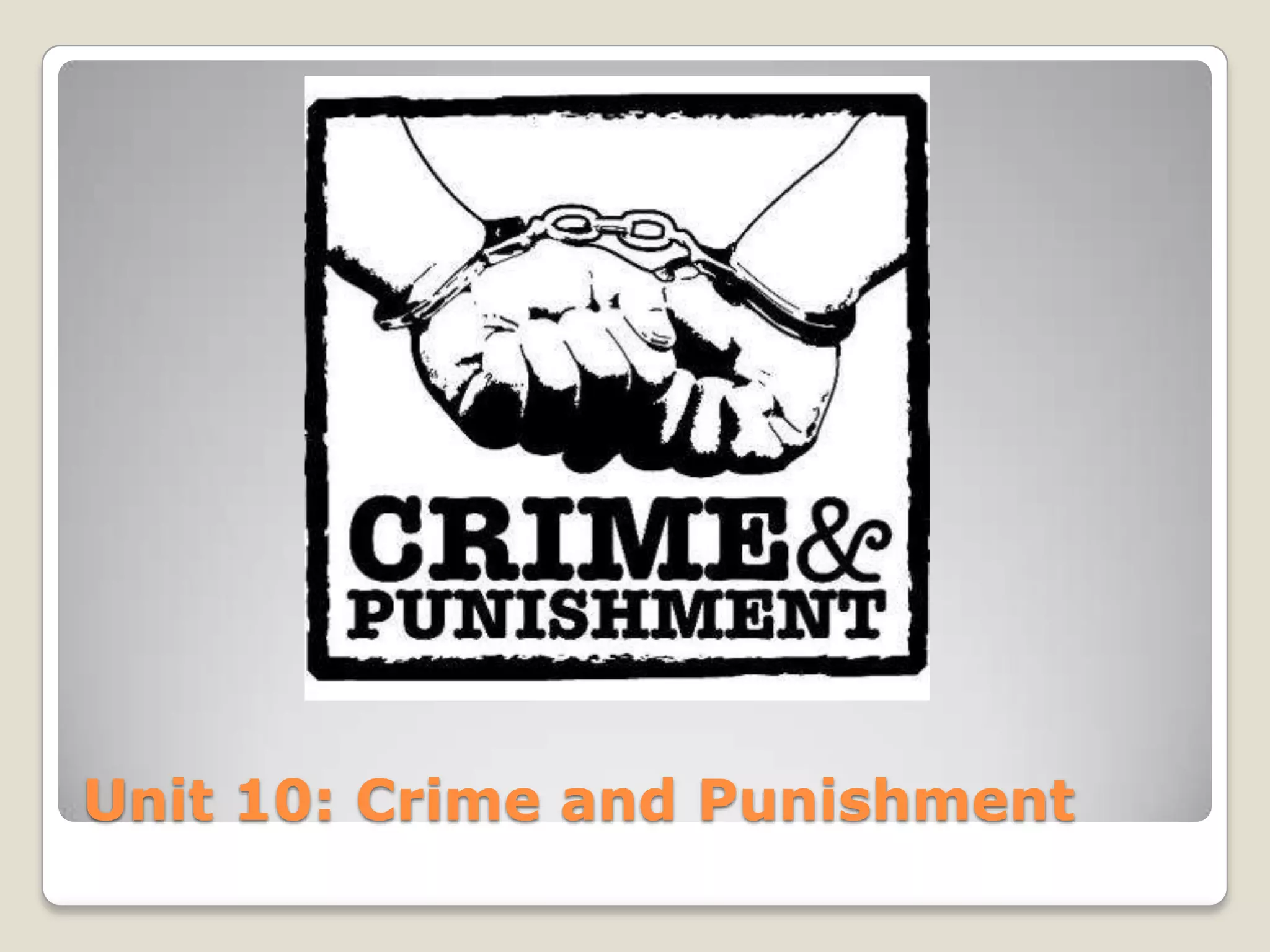
Unit 10: Crime and Punishment
Vocabulary
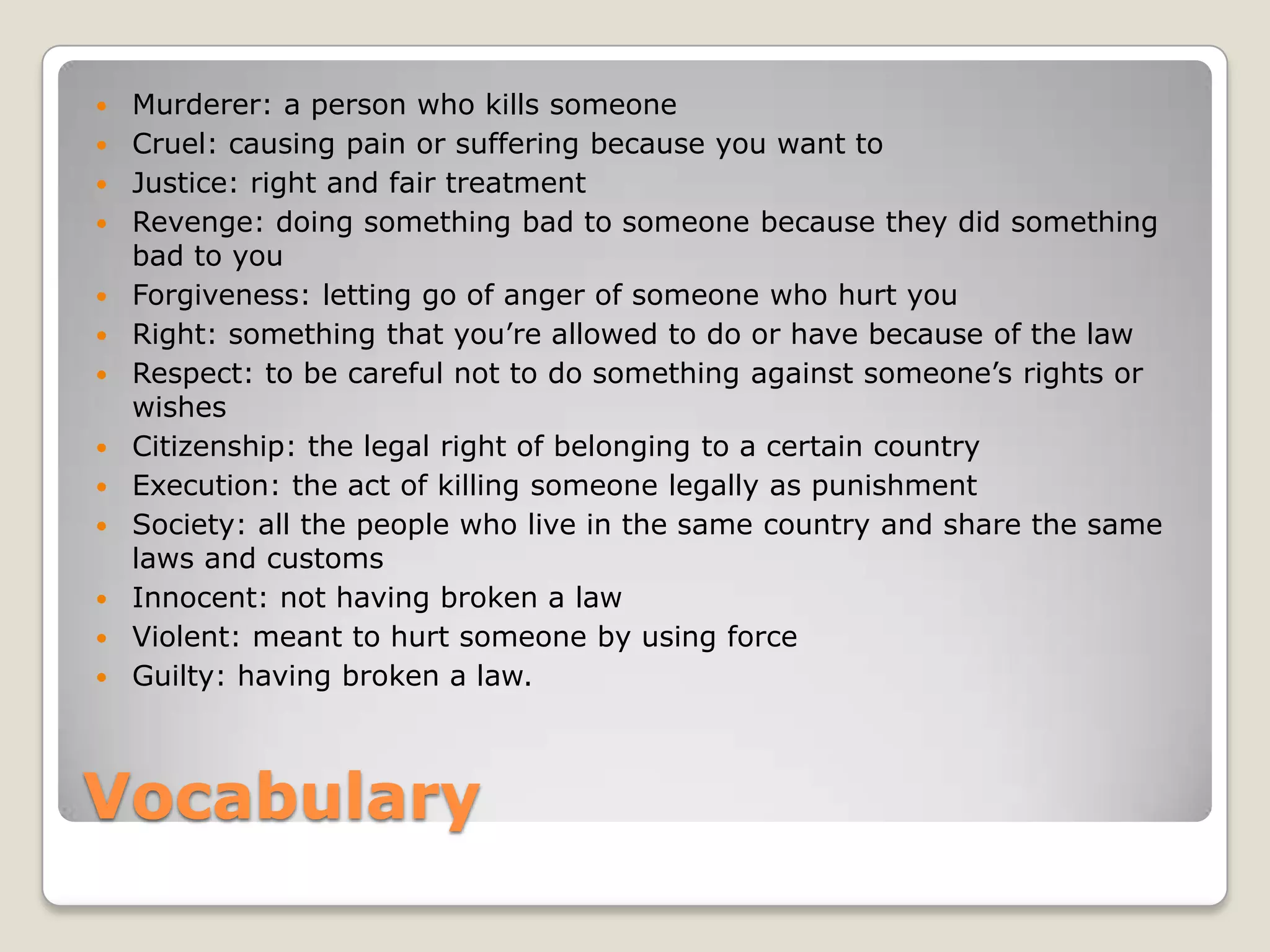
 Murderer: a person who kills someone
 Cruel: causing pain or suffering because you want to
 Justice: right and fair treatment
 Revenge: doing something bad to someone because they did something
bad to you
 Forgiveness: letting go of anger of someone who hurt you
 Right: something that you’re allowed to do or have because of the law
 Respect: to be careful not to do something against someone’s rights or
wishes
 Citizenship: the legal right of belonging to a certain country
 Execution: the act of killing someone legally as punishment
 Society: all the people who live in the same country and share the same
laws and customs
 Innocent: not having broken a law
 Violent: meant to hurt someone by using force
 Guilty: having broken a law.
Grammar
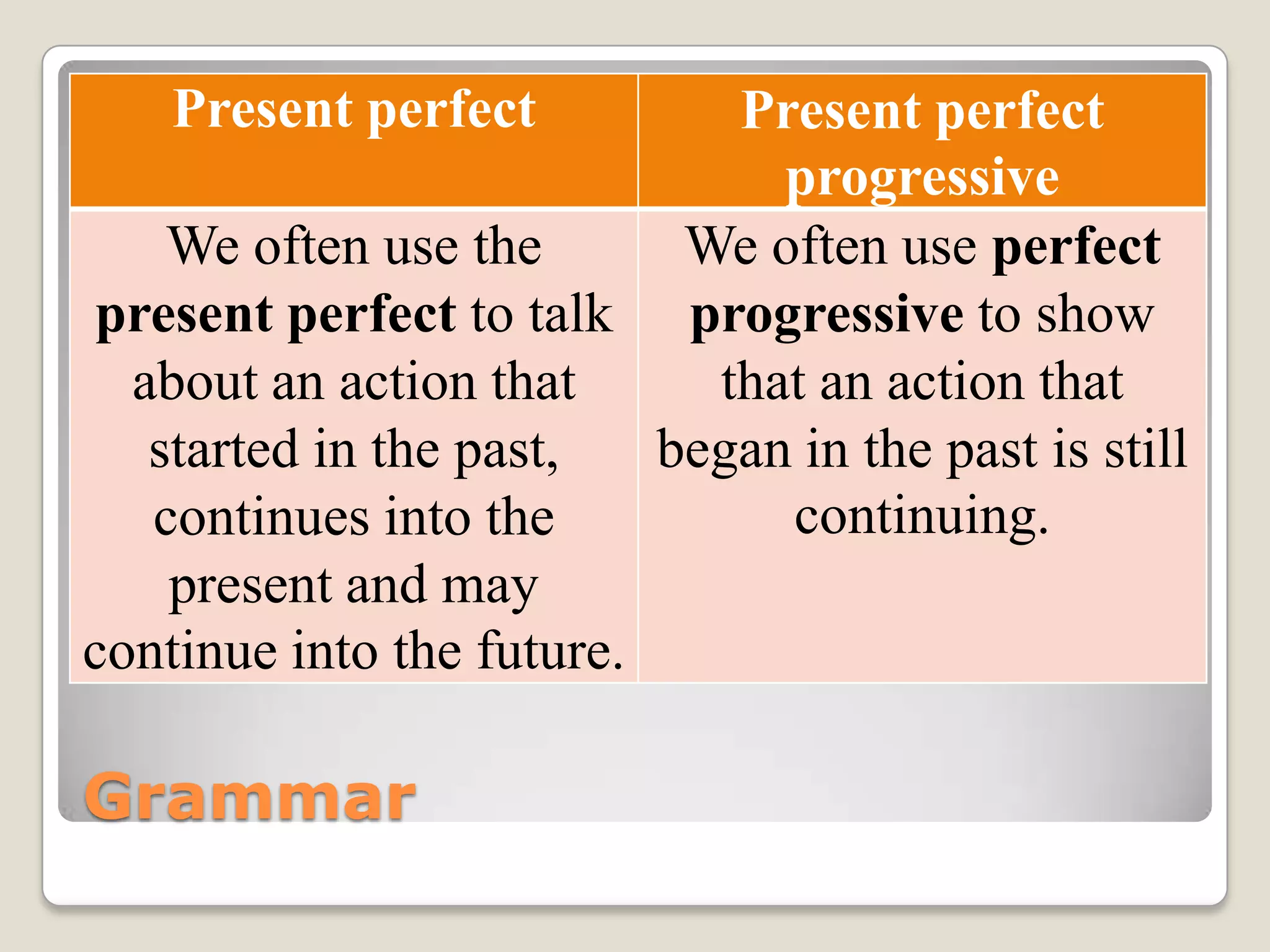
Present perfect Present perfect
progressive
We often use the
present perfect to talk
about an action that
started in the past,
continues into the
present and may
continue into the future.
We often use perfect
progressive to show
that an action that
began in the past is still
continuing.

Final project

  • 1.
  • 2.
    Unit 1: Theworld of advertising
  • 3.
    Vocabulary  Campaign: Aseries of actions that are intended to achieve a result, especially business or politics.  Competition: People or groups that are competing against you.  Convince: To persuade someone to do something.  Fail: To be unsuccessful in doing something.  Firm: Business or small company.  Global: Related to the whole world.  Goal: Something that you hope to achieve in the future.  Market: Particular country or area where a company sells its goods.  Message: The main idea in a movie, book, speech, etc.  Succeed: To do what you have tried to do.
  • 4.
    Grammar Simple present Presentprogressive Used to describe what sometimes happens, what usually happens or what always happens. Is used to describe actions that are happening at the present time.
  • 5.
  • 6.
    Vocabulary  Motive: reasonto do or feel something  Impersonate: pretend to be someone  Deception: the act of deceiving or the state of being deceived  Con man or woman: Someone who tries to trick you by gaining your trust.  Impress: The act of impressing  Suspicious: Someone who acts strange.  Fake: Not real, false.  Honesty: Someone telling the truth
  • 7.
    Grammar Simple past Pastprogressive Used to talk about actions, states and situations in the past that takes place at some point in time. Used to talk about an action that was interrupted by another action. The simple past tense of regular verbs is formed by adding –d or –ed to the base form of the verb. The past progressive is formed like this: be (past) + verb + -ing.
  • 8.
  • 9.
    Vocabulary  Style: Theway something is done.  Intense: Stronger  Focused: To give all your attention to something.  Got hooked on: To become unable to stop doing something.  Escape: A way to forget about problems.  Achieve: To succeed in doing something.  Perfect: To make something as good as it can be.  Energy: The physical and mental strength that makes you able to be active  Made it: To be successful in a particular activity.  Controversy: A strong disagreement  Awesome: Terrific  Benefit: An advantage
  • 10.
    Grammar Ability: can, could,be able to Can Describes ability in the present. Be able to Describes ability in the present Could or Was/were able to Describes general ability in the past Use be able to to describe ability in forms other than present tense (can) or past tense (could
  • 11.
  • 12.
    Vocabulary  Identity: Senseof self.  Fairly: Equally  Influenced: Guided or changed  Reflect: To show something clearly  Masculine: male; manly.  Feminine: Female, womanly  Emphasize: To show that something is special or important  Compete: To try to be better than others  Status: Level or position
  • 13.
    Grammar  Comparative adverbsare used to compare the action expressed by verbs.  Actions can be compared by using: as… as, not as… as, more… than, and less… than.
  • 14.
  • 15.
    Vocabulary  Coastal: Inthe ocean or on the land near the coast  Consequences: Things that happen as a result of a particular action or situation  Fragile: Easily broken, damaged, or ruined  Harsh: Difficult to live in and very uncomfortable  Inhabit: To live in an area or a place  Landscape: The way an area of land looks  Preserve: To save something or someone from being harmed of destroyed  Remote: Far away from towns and cities  Tourist: Someone who is traveling or visiting a place for pleasure  Vast: Extremely large
  • 16.
    Grammar Because and eventhough: Because gives reasons. Even though explains an unexpected result.
  • 17.
    Unit 6: TheMetamorphosis
  • 18.
    Vocabulary  Brave: notafraid of danger  Beat up: to hit repeatedly  Terrified: very afraid  Grab: to take something quickly and roughly  Manage to: to succeed in doing something difficult  Disgusting: strongly disliked  Smelly: having a bad odor  Substance: anything one can touch  Soothe: to relieve  Faint: to lose consciousness, as if you were asleep  Useless: not working well or of no use  Realize: to start to know something you had not noticed before
  • 19.
    Grammar Infinitives (to +verb) that are used to explain the purpose of an action are called infinitives with purpose. They answer the question “why?” Gregor worked to support his family. His sister whispered to him to ask if the was all right. You can also use the longer form in order to + verb. Gregor Worked in order to support his family. His sister whispered to him in order to ask if he was all right.
  • 20.
    Unit 7: TheChoice to Be Amish
  • 21.
    Vocabulary  Establish: tobegin something  Pious: having a strong religious beliefs  Persecution: cruel or harsh treatment as a result of one’s beliefs  Allowed: given permission to do something or have something  Settle down: to become part of a community or region  Maintain: to keep or continue  Socialize: to spend time talking with and getting to know other people  Conveniences: thing that make life easier and more comfortable  Bond: feeling of closeness  Decline: to decrease
  • 22.
  • 23.
    Vocabulary  Background: pastexperience, including family life and education  Spouse: a husband of wife  Characteristics: special features or qualities that make each person or thing different from others  Romantic: related to strong feelings of love between a man and woman  Produce: to make or create  Leadership: the ability to direct other people  Pregnant: having a baby that has not been born yet growing in your body  Fertility: the ability to have children  Raise: to take care of and educate  Polygamy: the custom of having more than one wife at a time
  • 24.
    Grammar Use the definite articlethe when you have a specific person, place of thing in mind. Use the indefinite article a when you do not have a specific person, place, or thing in mind. Use the indefinite article an before words that begin with vowel sounds. Use the indefinite article a the first time you mention a person, place or thing. Then use the definite article the when you refer to that same thing again. Use the definitive article the in forming superlative of an adjective.
  • 25.
    Unite 9: Isout climate changing
  • 26.
    Vocabulary  Escape: toget out  Atmosphere: mixture of gases that surround the Earth  Fossil fuels: substances that are buried in the ground and can be burned for power  Carbon dioxide: colorless gas breathed out by people and animals  Gases: air-like substance  Emissions: sending out something  Link: connection holding two things together  Evidence: information that proves something  Sign: an idea that something is happening or will happen in the future  Energetic: powerful  Adapt: to change something to be more useful
  • 27.
    Use may, mightand could to talk about future possibility Use may not and might not to express the possibility that something will not happen. Use couldn’t to express the idea that something is impossible.
  • 28.
    Unit 10: Crimeand Punishment
  • 29.
    Vocabulary  Murderer: aperson who kills someone  Cruel: causing pain or suffering because you want to  Justice: right and fair treatment  Revenge: doing something bad to someone because they did something bad to you  Forgiveness: letting go of anger of someone who hurt you  Right: something that you’re allowed to do or have because of the law  Respect: to be careful not to do something against someone’s rights or wishes  Citizenship: the legal right of belonging to a certain country  Execution: the act of killing someone legally as punishment  Society: all the people who live in the same country and share the same laws and customs  Innocent: not having broken a law  Violent: meant to hurt someone by using force  Guilty: having broken a law.
  • 30.
    Grammar Present perfect Presentperfect progressive We often use the present perfect to talk about an action that started in the past, continues into the present and may continue into the future. We often use perfect progressive to show that an action that began in the past is still continuing.