TABLE MANNERS
AND
DINING ETIQUETTES
PRESENTED BY: - RAJEEV MAHARJAN
OBJECTIVES
At the end of this Presentation….
 Student will be able to identify basic cutleries, crockery's and Glassware
 Will be able know basic table manners and dining etiquettes.
 Will be able know the proper table layout of cutleries, crockery’s and
Glassware.
 Will be able to use cutleries properly and have an idea about service
sequence
Will know about Do and Don’t manners.
 Will help students to built up confidence level.
BASIC INFORMATION
IDENTIFY
BASIC
CUTLERIES, CHINAWARE & GLASSWARE
CUTLERIES
Bread and Butter Knife Appetizer Fork and Knife
Main Course Fork and Knife Steak Knife
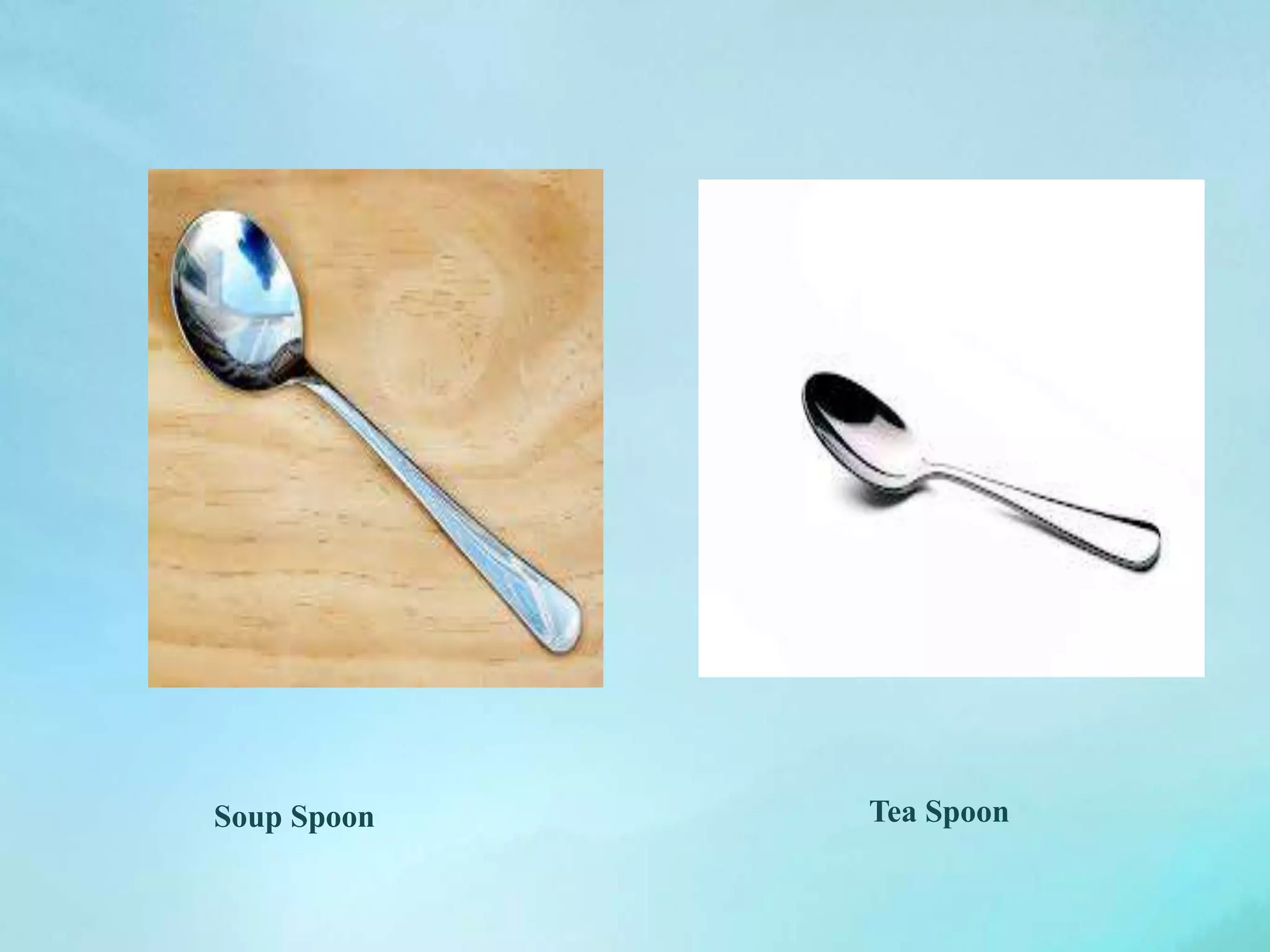
Soup Spoon Tea Spoon
China Ware
Bread and Butter Plate Salad Plate
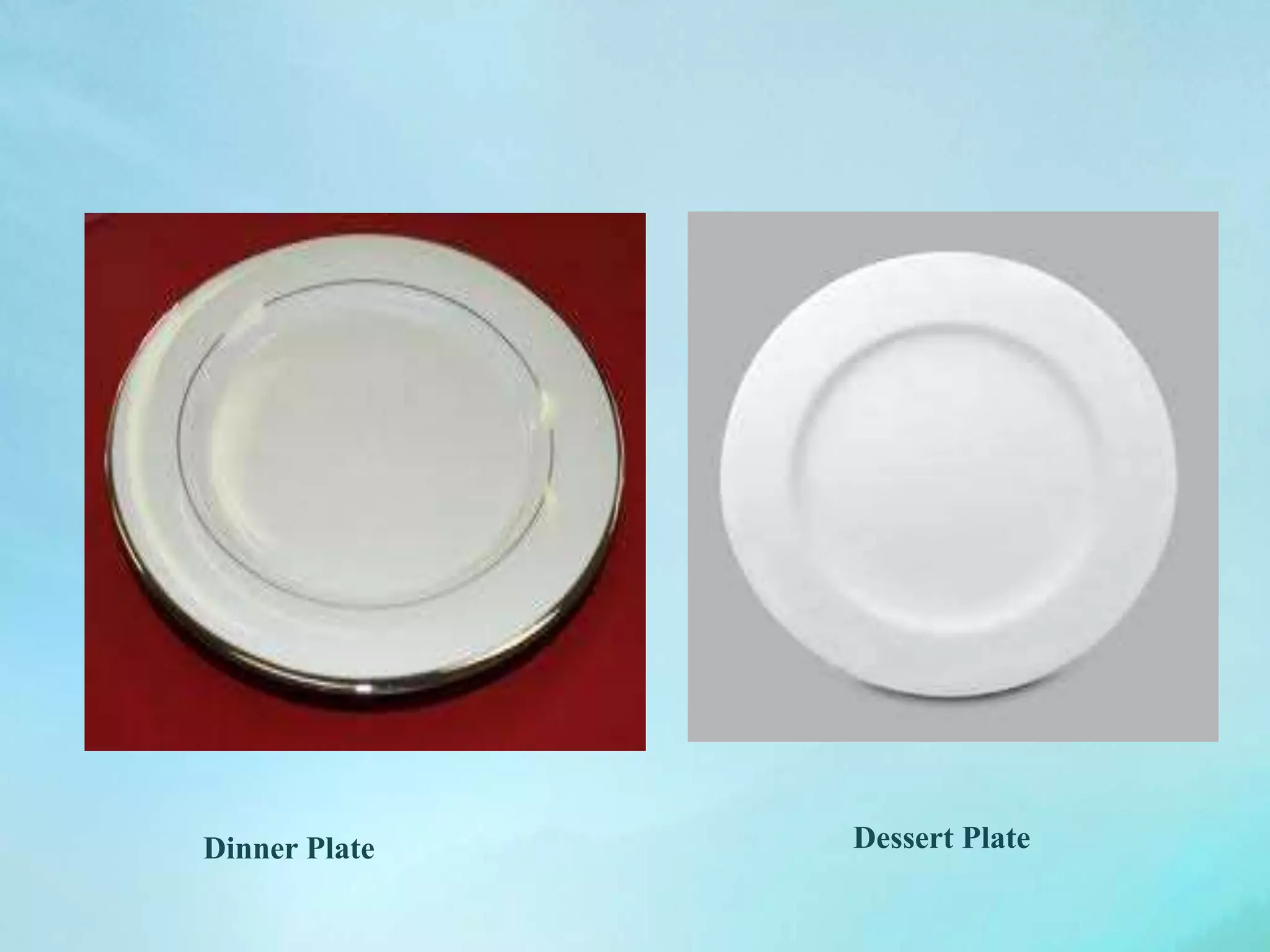
Dinner Plate Dessert Plate
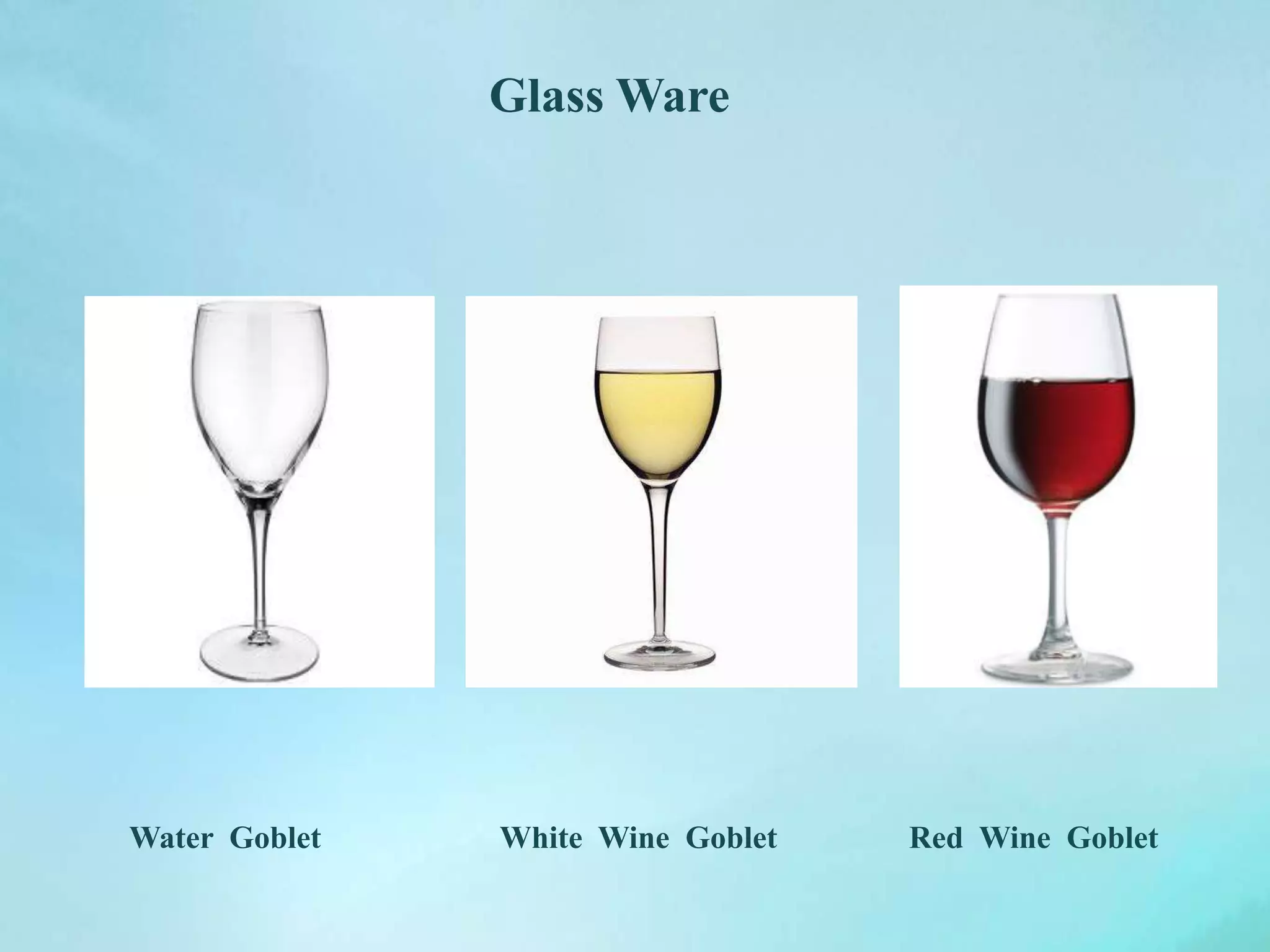
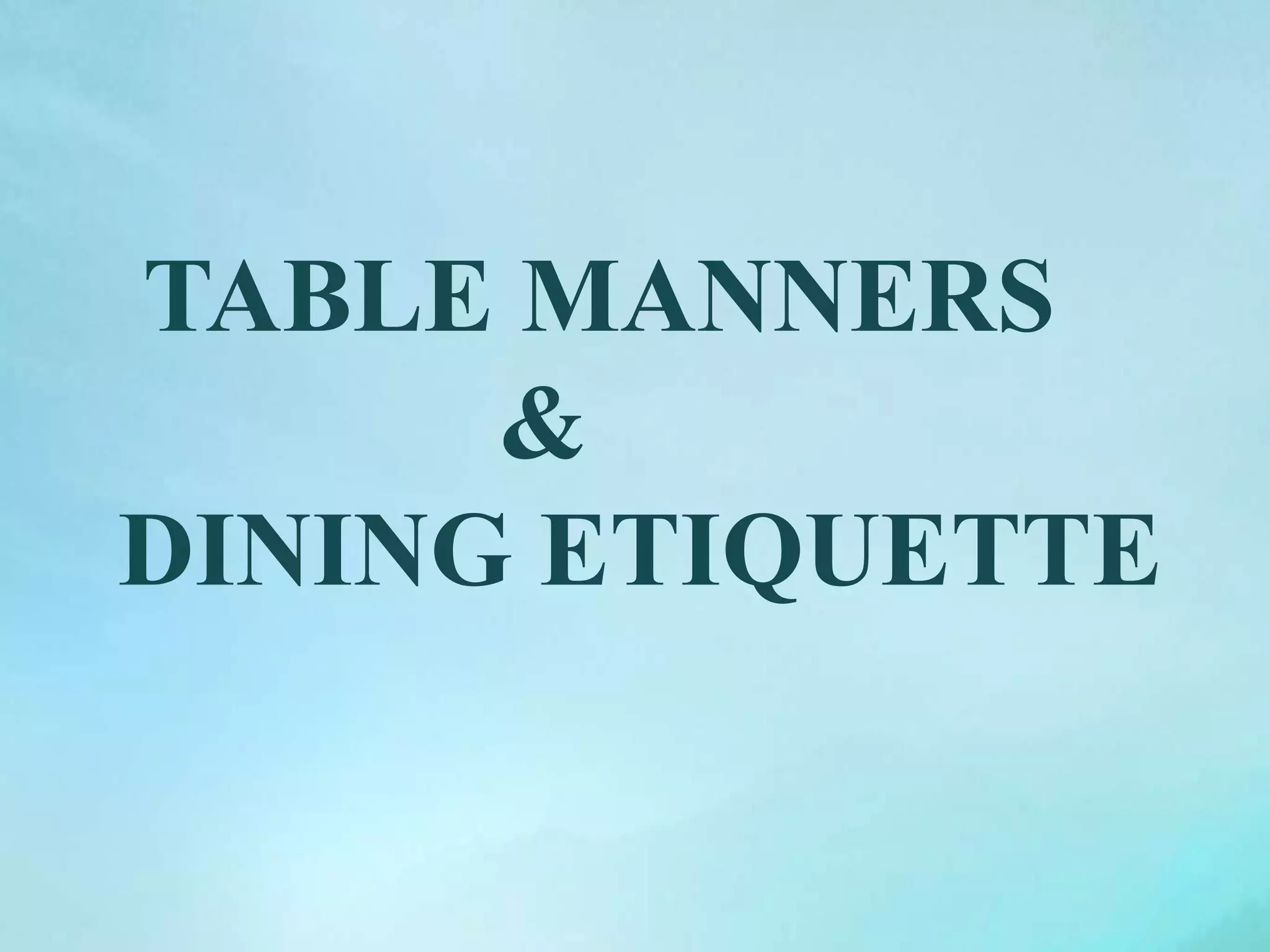
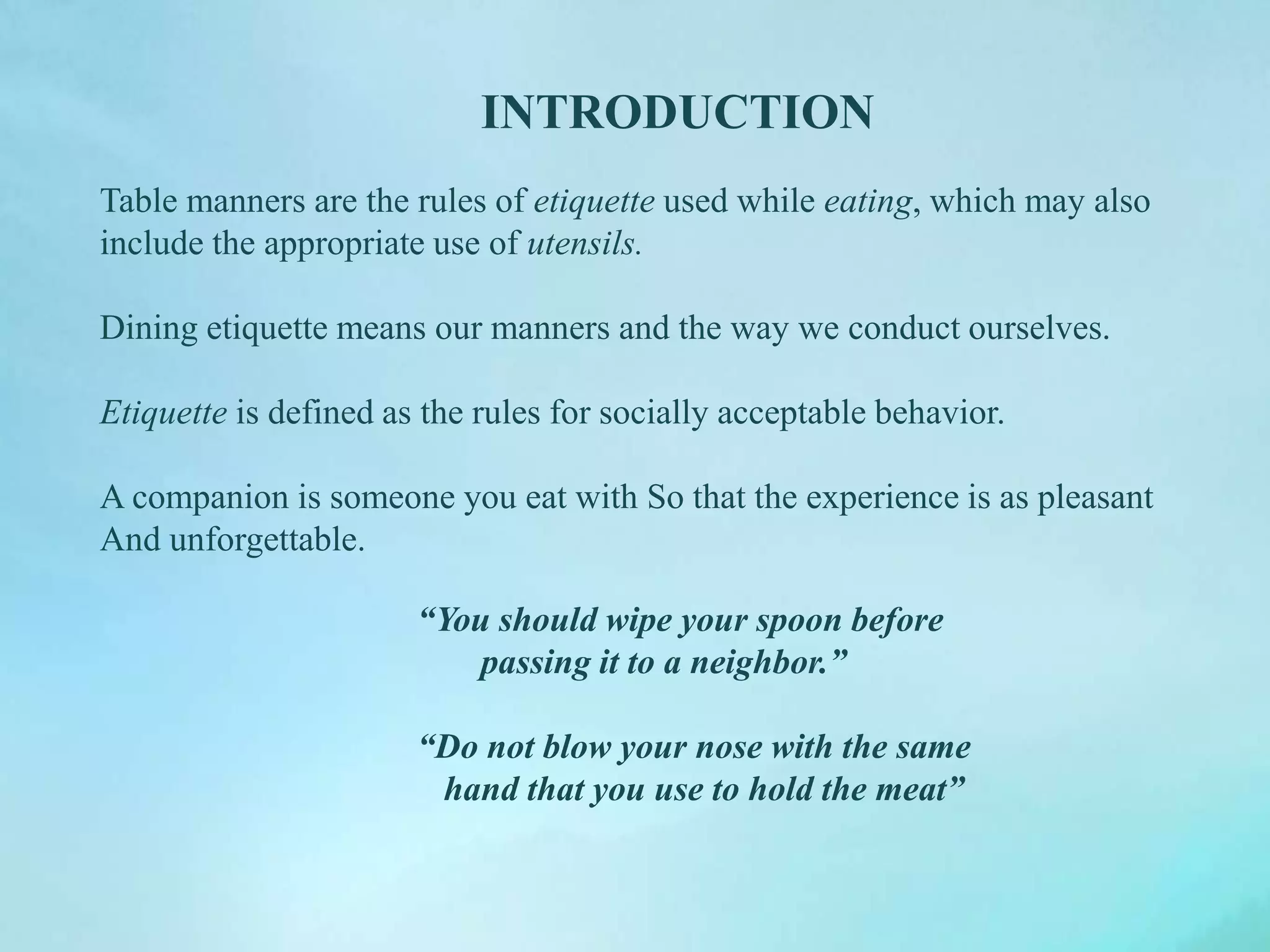
Glass Ware
Water Goblet White Wine Goblet Red Wine Goblet
TABLE MANNERS
&
DINING ETIQUETTE
INTRODUCTION
Table manners are the rules of etiquette used while eating, which may also
include the appropriate use of utensils.
Dining etiquette means our manners and the way we conduct ourselves.
Etiquette is defined as the rules for socially acceptable behavior.
A companion is someone you eat with So that the experience is as pleasant
And unforgettable.
“You should wipe your spoon before
passing it to a neighbor.”
“Do not blow your nose with the same
hand that you use to hold the meat”
TABLE RULES
Diners should wait to be seated until directed to
do so by their host or by their waiter if in a
restaurant.
Ladies should follow the waiter first with men
following.
It is proper for a gentleman to seat the lady on his
right and, if applicable, the lady on his left.
FLOW OF SEQUENCE
As soon as you are seated, unfold your napkin and place it on your lap. The
napkin remains on your lap (except for use) until the end of the meal.
ORDERING YOUR MEAL
• Never order an expensive entrée unless you are
encouraged to do so by your host.
• Likewise, ordering the cheapest item on the menu is
not recommended either.
• Consider any dining difficulties a particular food might
present.
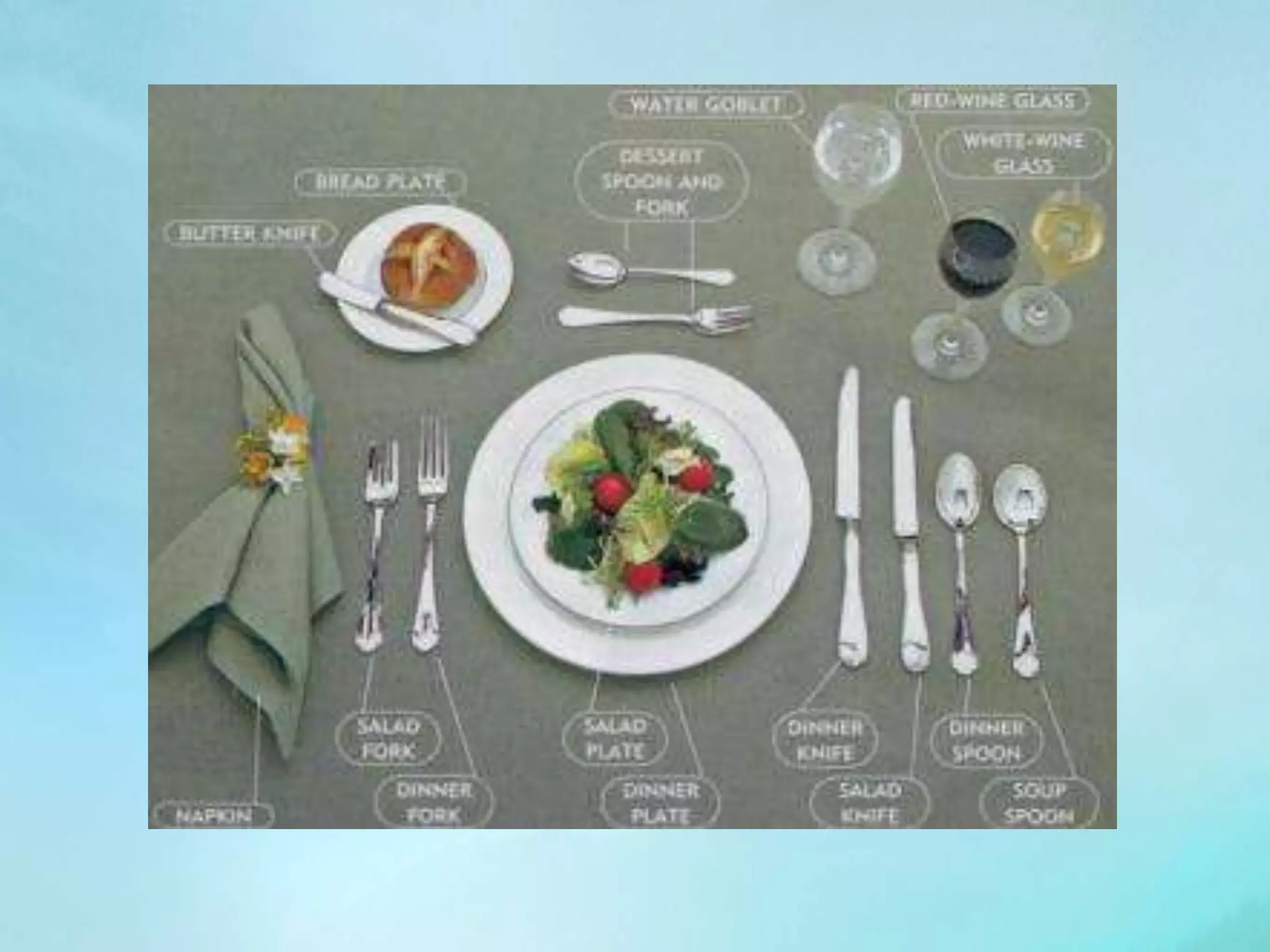
Which is my water, bread plate, napkin???
If you remember: liquids on the right, solids on the left, you’ll never eat someone
else’s bread again!
Appetizer (Starter)
• If you see a small fork on the far left of your plate,
– fish (likely shrimp cocktail) will be the first course.
• If you see a spoon on the far right of your plate,
– soup will be the first course.
• If you see a medium-sized fork on the far left of
your plate,
– salad will be the first course.
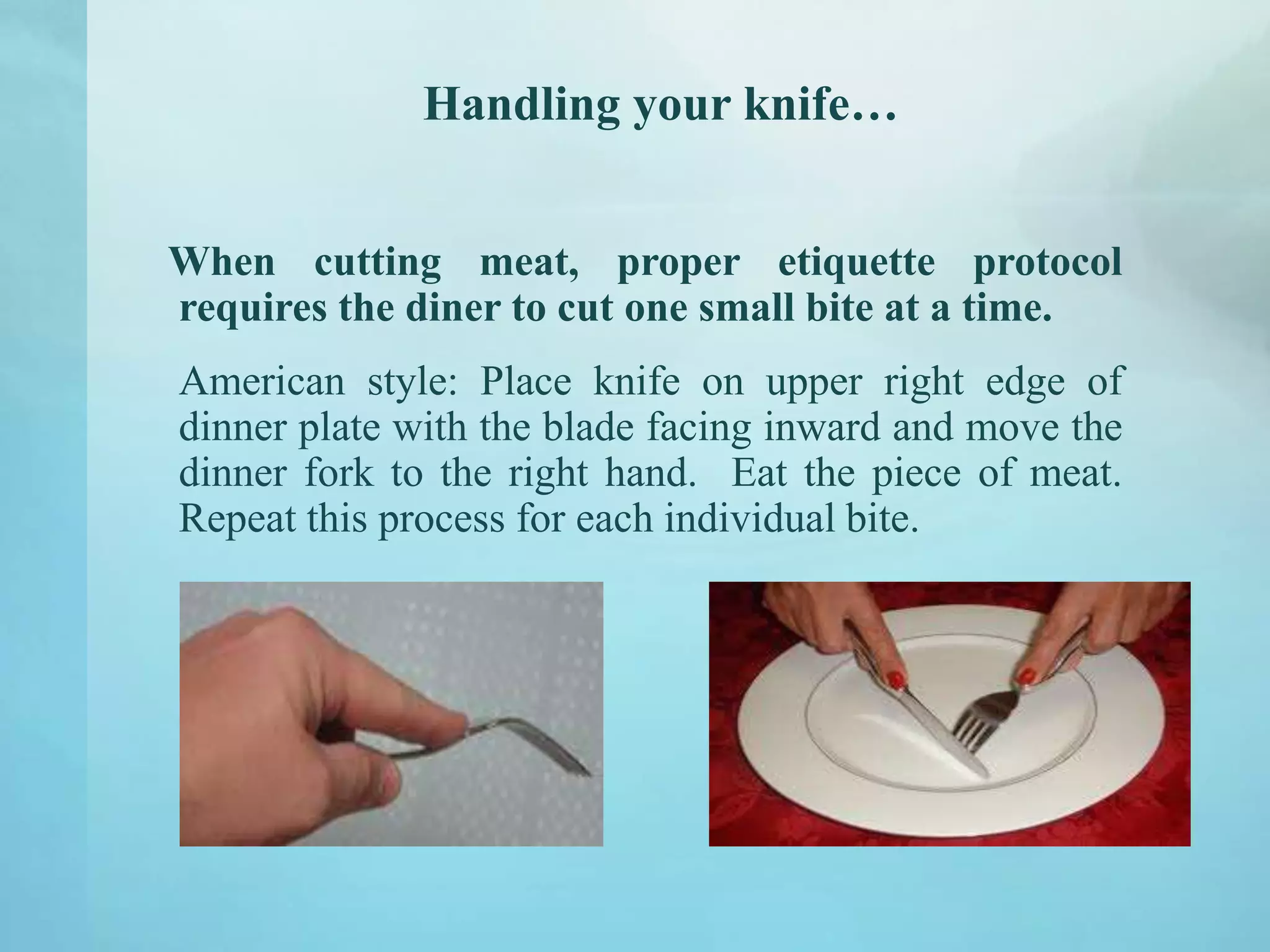
How to use a knife???
American style requires the diner to place the knife
in the right hand and fork in the left hand. Hold
the knife loosely in the palm of your hand with the
three outside fingers gently cradling it. Extend and
place your index finger along the top edge of the
blade to provide stability and strength. The thumb
should wrap below the knife and slightly encircle
the three outside fingers.
Handling your knife…
When cutting meat, proper etiquette protocol
requires the diner to cut one small bite at a time.
American style: Place knife on upper right edge of
dinner plate with the blade facing inward and move the
dinner fork to the right hand. Eat the piece of meat.
Repeat this process for each individual bite.
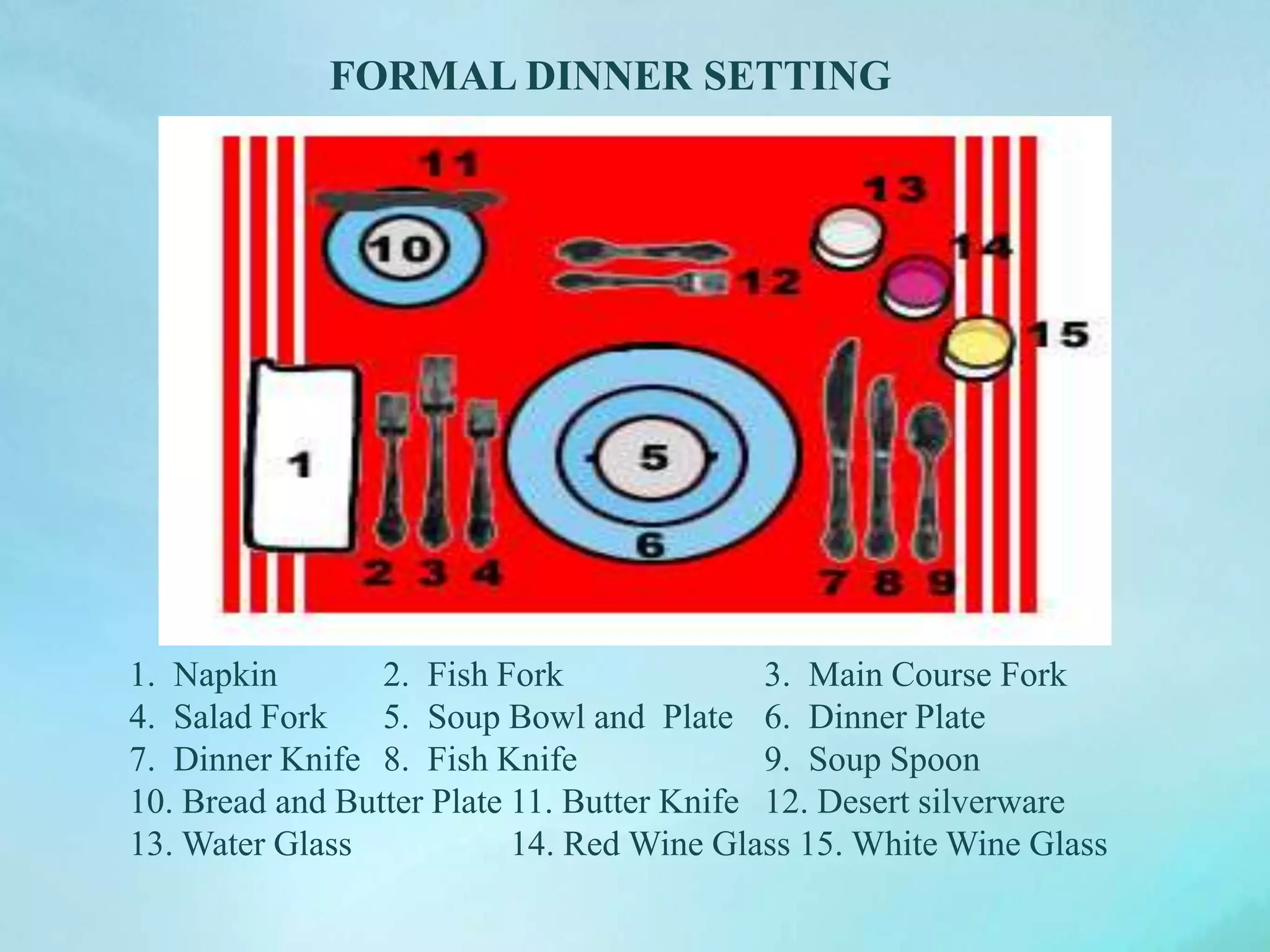
FORMAL DINNER SETTING
1. Napkin 2. Fish Fork 3. Main Course Fork
4. Salad Fork 5. Soup Bowl and Plate 6. Dinner Plate
7. Dinner Knife 8. Fish Knife 9. Soup Spoon
10. Bread and Butter Plate 11. Butter Knife 12. Desert silverware
13. Water Glass 14. Red Wine Glass 15. White Wine Glass
BASIC RULES
 No Oars! Once silverware is picked up from the table it NEVER touches the
table again.
When to Start – in gatherings of six or less people, begin eating only after
everyone is served.
 Bread and rolls Never use a knife to cut the bread, nor butter a whole slice
at once!
Dishes are passed from left to right.
Salt and pepper are always passed together,
Hold a stemmed glass by the stem!
Continue…
• In the words of your
mother, “Don’t talk
with food in your
mouth.”
• Keep your mouth
closed while chewing
food.
• Never sip a beverage
while food is still in
your mouth.
DOs & DON’Ts
* Blow on your soup
to make it cool
quickly.
* Use your cell phone
to keep in touch with
friends.
* Thank the waiter
each time you are
served.
* Tear your bread
before you butter
it.
* Discuss your food
preferences.
* Leave the table
with a quiet, “Excuse
me.”
DOs & DON’Ts
* Take liquid in your
mouth with food to
wash it down.
* Push your plate away
when you finish eating.
* When dining with a large
group, begin eating after
three or four people are
served.
* Sit up straight in your
chair.
* Place a piece of
silverware directly on the
table
* Use the proper utensils
with each course.
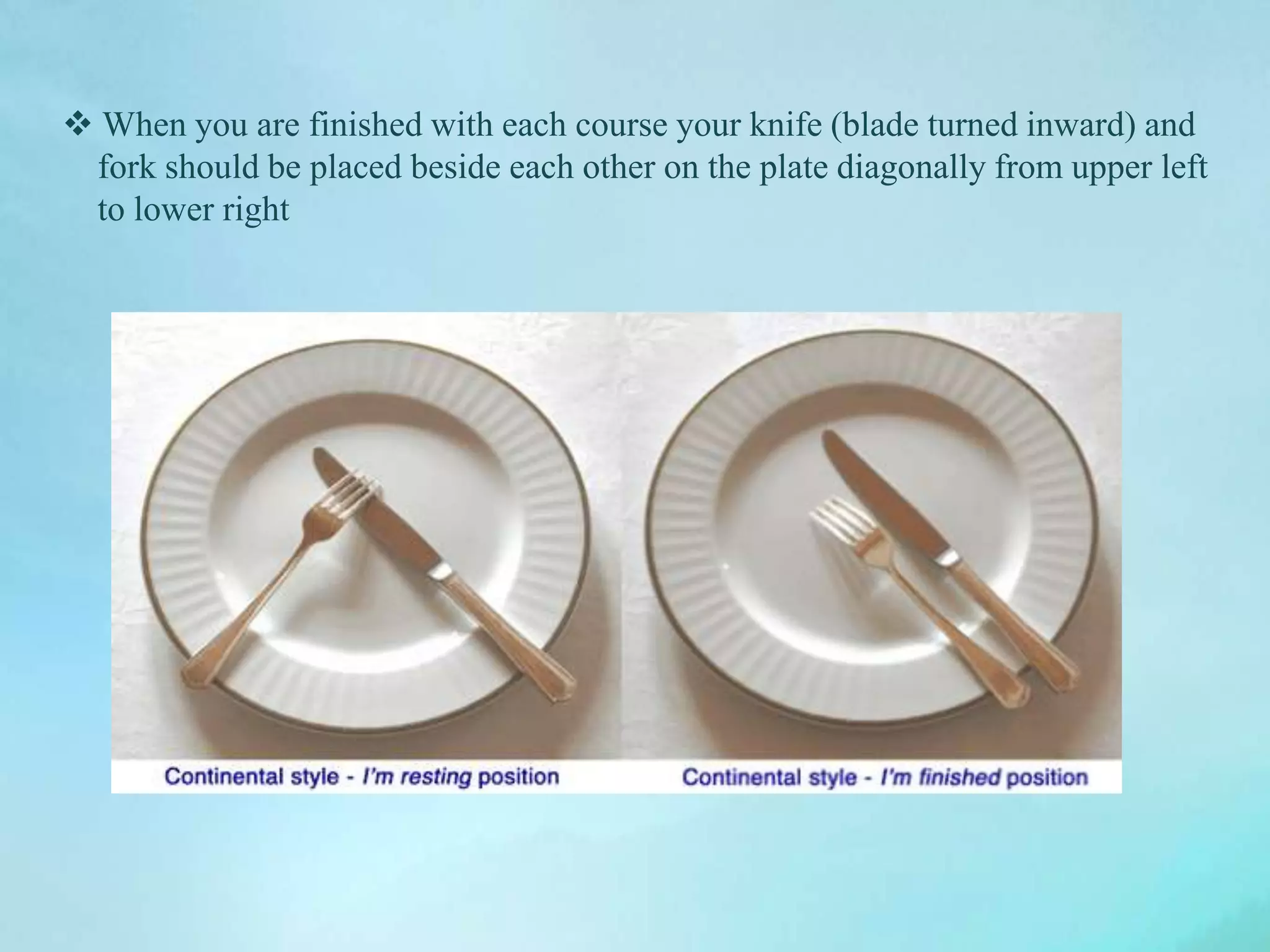
 When you are finished with each course your knife (blade turned inward) and
fork should be placed beside each other on the plate diagonally from upper left
to lower right
Tips for Conversation
When you are dinning with a new people. Then always start your
conversation with a word “HELP”
H - Hobbies
E - Entertainment (Music, Movie, Games), Events
L - Leisure, Literature and Law
P - Photography, Professionalism
At last…
• Learned it…
• Practiced it…
• Experienced it…
“Manners will carry you where shoes
won’t.” !!! 
THANK YOU!!!

TABLE MANNERS AND DINING ETIQUETTES

  • 1.
  • 2.
    OBJECTIVES At the endof this Presentation….  Student will be able to identify basic cutleries, crockery's and Glassware  Will be able know basic table manners and dining etiquettes.  Will be able know the proper table layout of cutleries, crockery’s and Glassware.  Will be able to use cutleries properly and have an idea about service sequence Will know about Do and Don’t manners.  Will help students to built up confidence level.
  • 3.
  • 4.
  • 5.
    CUTLERIES Bread and ButterKnife Appetizer Fork and Knife
  • 6.
    Main Course Forkand Knife Steak Knife
  • 7.
  • 8.
    China Ware Bread andButter Plate Salad Plate
  • 9.
  • 10.
    Glass Ware Water GobletWhite Wine Goblet Red Wine Goblet
  • 11.
  • 12.
    INTRODUCTION Table manners arethe rules of etiquette used while eating, which may also include the appropriate use of utensils. Dining etiquette means our manners and the way we conduct ourselves. Etiquette is defined as the rules for socially acceptable behavior. A companion is someone you eat with So that the experience is as pleasant And unforgettable. “You should wipe your spoon before passing it to a neighbor.” “Do not blow your nose with the same hand that you use to hold the meat”
  • 13.
    TABLE RULES Diners shouldwait to be seated until directed to do so by their host or by their waiter if in a restaurant. Ladies should follow the waiter first with men following. It is proper for a gentleman to seat the lady on his right and, if applicable, the lady on his left.
  • 14.
    FLOW OF SEQUENCE Assoon as you are seated, unfold your napkin and place it on your lap. The napkin remains on your lap (except for use) until the end of the meal.
  • 15.
    ORDERING YOUR MEAL •Never order an expensive entrée unless you are encouraged to do so by your host. • Likewise, ordering the cheapest item on the menu is not recommended either. • Consider any dining difficulties a particular food might present.
  • 16.
    Which is mywater, bread plate, napkin??? If you remember: liquids on the right, solids on the left, you’ll never eat someone else’s bread again!
  • 17.
    Appetizer (Starter) • Ifyou see a small fork on the far left of your plate, – fish (likely shrimp cocktail) will be the first course. • If you see a spoon on the far right of your plate, – soup will be the first course. • If you see a medium-sized fork on the far left of your plate, – salad will be the first course.
  • 18.
    How to usea knife??? American style requires the diner to place the knife in the right hand and fork in the left hand. Hold the knife loosely in the palm of your hand with the three outside fingers gently cradling it. Extend and place your index finger along the top edge of the blade to provide stability and strength. The thumb should wrap below the knife and slightly encircle the three outside fingers.
  • 19.
    Handling your knife… Whencutting meat, proper etiquette protocol requires the diner to cut one small bite at a time. American style: Place knife on upper right edge of dinner plate with the blade facing inward and move the dinner fork to the right hand. Eat the piece of meat. Repeat this process for each individual bite.
  • 20.
    FORMAL DINNER SETTING 1.Napkin 2. Fish Fork 3. Main Course Fork 4. Salad Fork 5. Soup Bowl and Plate 6. Dinner Plate 7. Dinner Knife 8. Fish Knife 9. Soup Spoon 10. Bread and Butter Plate 11. Butter Knife 12. Desert silverware 13. Water Glass 14. Red Wine Glass 15. White Wine Glass
  • 22.
    BASIC RULES  NoOars! Once silverware is picked up from the table it NEVER touches the table again. When to Start – in gatherings of six or less people, begin eating only after everyone is served.  Bread and rolls Never use a knife to cut the bread, nor butter a whole slice at once! Dishes are passed from left to right. Salt and pepper are always passed together, Hold a stemmed glass by the stem!
  • 24.
    Continue… • In thewords of your mother, “Don’t talk with food in your mouth.” • Keep your mouth closed while chewing food. • Never sip a beverage while food is still in your mouth.
  • 25.
    DOs & DON’Ts *Blow on your soup to make it cool quickly. * Use your cell phone to keep in touch with friends. * Thank the waiter each time you are served. * Tear your bread before you butter it. * Discuss your food preferences. * Leave the table with a quiet, “Excuse me.”
  • 26.
    DOs & DON’Ts *Take liquid in your mouth with food to wash it down. * Push your plate away when you finish eating. * When dining with a large group, begin eating after three or four people are served. * Sit up straight in your chair. * Place a piece of silverware directly on the table * Use the proper utensils with each course.
  • 27.
     When youare finished with each course your knife (blade turned inward) and fork should be placed beside each other on the plate diagonally from upper left to lower right
  • 28.
    Tips for Conversation Whenyou are dinning with a new people. Then always start your conversation with a word “HELP” H - Hobbies E - Entertainment (Music, Movie, Games), Events L - Leisure, Literature and Law P - Photography, Professionalism
  • 29.
    At last… • Learnedit… • Practiced it… • Experienced it… “Manners will carry you where shoes won’t.” !!! 
  • 30.