
Putting
People First
Supply Chain Workforce of the Future 2021
Building the future supply chain
workforce
Supply chains are powering revenue growth
and creating new customer experiences in
ways we haven’t seen before. But as
companies work to create truly intelligent
supply networks, many are forgetting about
the most important thing. Their people.
2
A new era for businesses
and their supply chains
Humans and intelligent machines are collaborating for
insights and business outcomes that have never been
possible. Technologies such as digital twins, artificial
intelligence (AI), the internet of things (IoT) and the cloud,
allow companies to predict and monitor the impact of
almost every action.
Copyright © 2021 Accenture. All rights reserved. 3
The result? A new level of visibility that
fundamentally changes the way companies
engineer, plan, source, manufacture, supply,
service and reclaim/recycle goods.
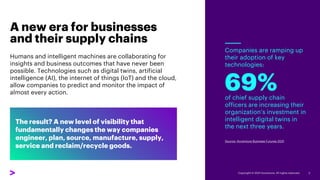
Companies are ramping up
their adoption of key
technologies:
69%
of chief supply chain
officers are increasing their
organization’s investment in
intelligent digital twins in
the next three years.
Source: Accenture Business Futures 2021
A massive impact on
the supply chain and
its workforce
The accelerating use of intelligent technologies will
dramatically affect the supply chain workforce. People
will need to develop new skills as existing roles
change and evolve.
4
New skills and roles
on the horizon
With increasing digitization and automation, new
skills will be needed. Digitally fluent organizations
are winning with their customers and workers and
are leaders in innovation and operational efficiency.
Copyright © 2021 Accenture. All rights reserved. 5
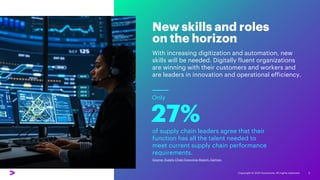
of supply chain leaders agree that their
function has all the talent needed to
meet current supply chain performance
requirements.
Source: Supply Chain Executive Report, Gartner.
27%
Only
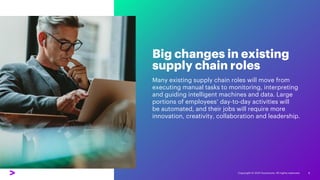
Big changes in existing
supply chain roles
Many existing supply chain roles will move from
executing manual tasks to monitoring, interpreting
and guiding intelligent machines and data. Large
portions of employees’ day-to-day activities will
be automated, and their jobs will require more
innovation, creativity, collaboration and leadership.
Copyright © 2021 Accenture. All rights reserved. 6
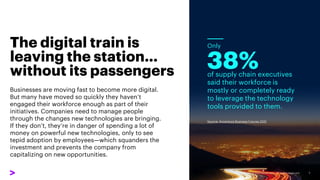
The digital train is
leaving the station…
without its passengers
Businesses are moving fast to become more digital.
But many have moved so quickly they haven’t
engaged their workforce enough as part of their
initiatives. Companies need to manage people
through the changes new technologies are bringing.
If they don’t, they’re in danger of spending a lot of
money on powerful new technologies, only to see
tepid adoption by employees—which squanders the
investment and prevents the company from
capitalizing on new opportunities.
7
of supply chain executives
said their workforce is
mostly or completely ready
to leverage the technology
tools provided to them.
Source: Accenture Business Futures 2021
Only
38%
7
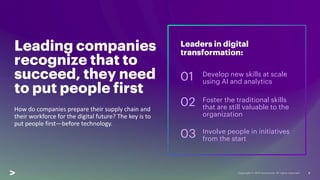
How do companies prepare their supply chain and
their workforce for the digital future? The key is to
put people first—before technology.
Leading companies
recognize that to
succeed, they need
to put people first
8
Leaders in digital
transformation:
Develop new skills at scale
using AI and analytics
Foster the traditional skills
that are still valuable to the
organization
Involve people in initiatives
from the start
01
02
03
9
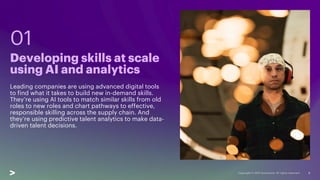
Leading companies are using advanced digital tools
to find what it takes to build new in-demand skills.
They’re using AI tools to match similar skills from old
roles to new roles and chart pathways to effective,
responsible skilling across the supply chain. And
they’re using predictive talent analytics to make data-
driven talent decisions.
Developing skills at scale
using AI and analytics
01
10
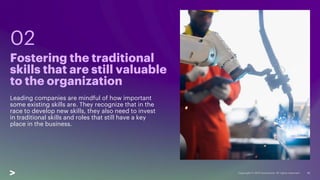
Leading companies are mindful of how important
some existing skills are. They recognize that in the
race to develop new skills, they also need to invest
in traditional skills and roles that still have a key
place in the business.
Fostering the traditional
skills that are still valuable
to the organization
02
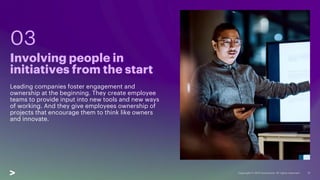
Leading companies foster engagement and
ownership at the beginning. They create employee
teams to provide input into new tools and new ways
of working. And they give employees ownership of
projects that encourage them to think like owners
and innovate.
Involving people in
initiatives from the start
11
03
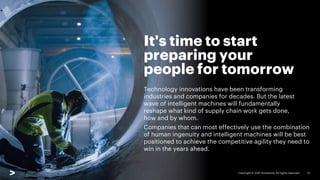
Technology innovations have been transforming
industries and companies for decades. But the latest
wave of intelligent machines will fundamentally
reshape what kind of supply chain work gets done,
how and by whom.
Companies that can most effectively use the combination
of human ingenuity and intelligent machines will be best
positioned to achieve the competitive agility they need to
win in the years ahead.
It's time to start
preparing your
people for tomorrow
Copyright © 2021 Accenture. All rights reserved. 12

Digital Supply Chain Workforce Future | Accenture

  • 1.
    Putting People First Supply ChainWorkforce of the Future 2021 Building the future supply chain workforce
  • 2.
    Supply chains arepowering revenue growth and creating new customer experiences in ways we haven’t seen before. But as companies work to create truly intelligent supply networks, many are forgetting about the most important thing. Their people. 2
  • 3.
    A new erafor businesses and their supply chains Humans and intelligent machines are collaborating for insights and business outcomes that have never been possible. Technologies such as digital twins, artificial intelligence (AI), the internet of things (IoT) and the cloud, allow companies to predict and monitor the impact of almost every action. Copyright © 2021 Accenture. All rights reserved. 3 The result? A new level of visibility that fundamentally changes the way companies engineer, plan, source, manufacture, supply, service and reclaim/recycle goods. Companies are ramping up their adoption of key technologies: 69% of chief supply chain officers are increasing their organization’s investment in intelligent digital twins in the next three years. Source: Accenture Business Futures 2021
  • 4.
    A massive impacton the supply chain and its workforce The accelerating use of intelligent technologies will dramatically affect the supply chain workforce. People will need to develop new skills as existing roles change and evolve. 4
  • 5.
    New skills androles on the horizon With increasing digitization and automation, new skills will be needed. Digitally fluent organizations are winning with their customers and workers and are leaders in innovation and operational efficiency. Copyright © 2021 Accenture. All rights reserved. 5 of supply chain leaders agree that their function has all the talent needed to meet current supply chain performance requirements. Source: Supply Chain Executive Report, Gartner. 27% Only
  • 6.
    Big changes inexisting supply chain roles Many existing supply chain roles will move from executing manual tasks to monitoring, interpreting and guiding intelligent machines and data. Large portions of employees’ day-to-day activities will be automated, and their jobs will require more innovation, creativity, collaboration and leadership. Copyright © 2021 Accenture. All rights reserved. 6
  • 7.
    The digital trainis leaving the station… without its passengers Businesses are moving fast to become more digital. But many have moved so quickly they haven’t engaged their workforce enough as part of their initiatives. Companies need to manage people through the changes new technologies are bringing. If they don’t, they’re in danger of spending a lot of money on powerful new technologies, only to see tepid adoption by employees—which squanders the investment and prevents the company from capitalizing on new opportunities. 7 of supply chain executives said their workforce is mostly or completely ready to leverage the technology tools provided to them. Source: Accenture Business Futures 2021 Only 38% 7
  • 8.
    How do companiesprepare their supply chain and their workforce for the digital future? The key is to put people first—before technology. Leading companies recognize that to succeed, they need to put people first 8 Leaders in digital transformation: Develop new skills at scale using AI and analytics Foster the traditional skills that are still valuable to the organization Involve people in initiatives from the start 01 02 03
  • 9.
    9 Leading companies areusing advanced digital tools to find what it takes to build new in-demand skills. They’re using AI tools to match similar skills from old roles to new roles and chart pathways to effective, responsible skilling across the supply chain. And they’re using predictive talent analytics to make data- driven talent decisions. Developing skills at scale using AI and analytics 01
  • 10.
    10 Leading companies aremindful of how important some existing skills are. They recognize that in the race to develop new skills, they also need to invest in traditional skills and roles that still have a key place in the business. Fostering the traditional skills that are still valuable to the organization 02
  • 11.
    Leading companies fosterengagement and ownership at the beginning. They create employee teams to provide input into new tools and new ways of working. And they give employees ownership of projects that encourage them to think like owners and innovate. Involving people in initiatives from the start 11 03
  • 12.
    Technology innovations havebeen transforming industries and companies for decades. But the latest wave of intelligent machines will fundamentally reshape what kind of supply chain work gets done, how and by whom. Companies that can most effectively use the combination of human ingenuity and intelligent machines will be best positioned to achieve the competitive agility they need to win in the years ahead. It's time to start preparing your people for tomorrow Copyright © 2021 Accenture. All rights reserved. 12