Trends and predictions for 2018
Rasmus Kleis Nielsen, Director of Research
rasmus.nielsen@politics.ox.ac.uk / @rasmus_kleis
Digital Media Strategies, New York, November 14, 2017
@risj_oxford | #DNR17 | digitalnewsreport.org
Distributed news and what
people think of it
World’s biggest news survey
70,000
respondents
36
Markets
Methodology
RISJ Digital News Report 2017 3
Country Sample Size
Internet
penetration
USA 2,269 89%
UK 2,112 94%
Germany 2,062 89%
France 2,000 84%
Italy 2,011 63%
Spain 2,006 78%
Portugal 2,007 64%
Ireland 2,002 77%
Norway 2,056 98%
Sweden 2,021 93%
Finland 2,007 93%
Denmark 2,011 98%
Country Sample Size
Internet
penetration
Belgium 2,009 88%
Netherlands 2,006 95%
Switzerland 2,005 89%
Austria 2,000 82%
Hungary 2,004 80%
Slovakia 2,002 82%
Czech Republic 2,003 88%
Poland 2,013 73%
Romania 2,029 52%
Croatia 2,005 70%
Greece 2,002 66%
Turkey 2,005 58%
Country Sample Size
Internet
penetration
Japan 2,000 91%
Korea, South 2,002 92%
Taiwan 1,017 84%
Hong Kong 2,015 80%
Malaysia 2,108 68%
Singapore 2,000 81%
Australia 2,004 92%
Canada 2,000 93%
Urban Brazil 2,003 68%
Argentina 2,001 79%
Chile 2,005 80%
Mexico 2,003 53%
Polling by
Supported by
RESEARCH CONDUCTED ONLINE IN JANUARY/EARLY FEBRUARY 2017
Three keys to understanding the year ahead
• Distributed discovery increasingly important, and social and search
expose people to more sources of news, but brand recognition is low
• Confidence in both social media and news media is low and people’s
sense of what constitutes “fake news” is not what you think it is
• The role of platforms is evolving as social media remains critical for
news but we see a shift to more ‘private’ messaging apps (is voice
next?)
Distributed discovery
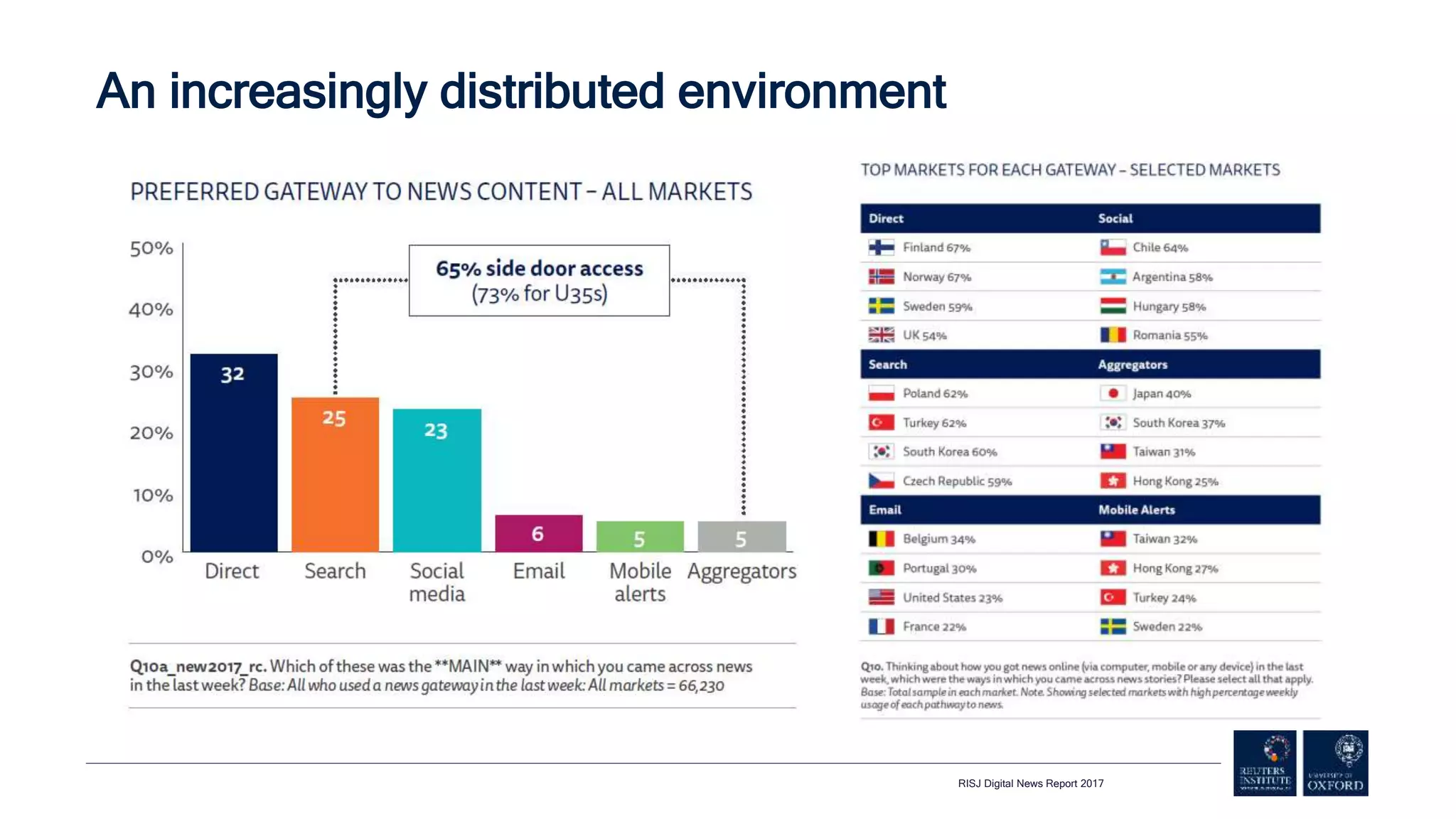
An increasingly distributed environment
RISJ Digital News Report 2017
Far from creating echo chambers, distributed discovery
often exposes people to more sources
RISJ Digital News Report 2017 7
People use search and social
media (and news aggregators)
tend to use more sources of news
and greater diversity of sources
than those that don’t
The effect of incidental exposure
to news on social media is
particularly clear for the young
and those least interested in news
8
“IT’S THEIR JOB … TO
REPORT THE FACTS”
Q2. You recently viewed a story with the headline X. On which of the following news websites did you read this story? If you read it on more than one, please
select all that apply. Showing share of correct brand attributions. Base: Direct 1,098/ Search 1,022/ Social 1,008 (Facebook 795, Twitter 194)
2X difference
But brand attribution is a problem …
Fewer than half can remember the news brand that produced a story when
coming from social media or search
Audience perspectives
on “fake news”
In the era of “fake news”
only …
RISJ Digital News Report 2017 10
24%
agree social media
does a good job in
separating fact
from fiction
“PEOPLE SHARE
WITHOUT
READING THE
INFORMATION
IN THE
ARTICLE”
Female (21), USA
RISJ Digital News Report 2017 11
40%
agree the news media
does a good job in
separating fact
from fiction
“IT’S THEIR JOB TO
REPORT THE
FACTS”
“IT’S THEIR JOB … TO
REPORT THE FACTS”
In the era of “fake news”
only …
Trust varies across countries
RISJ Digital News Report 2017 12
43
38
UK
Trust down 7
percentage
points
USA
Well below 36
country average
% THAT AGREE THEY TRUST MEDIA MOST OF THE TIME
Even trust in “my news” is low
RISJ Digital News Report 2017 13
43
38
% THAT AGREE THEY TRUST MEDIA MOST OF THE TIME, AND % THAT TRUST “THE MEDIA I USE” MOST
OF THE TIME
Audience perspectives
RISJ Digital News Report 2017
The evolving role of
platforms
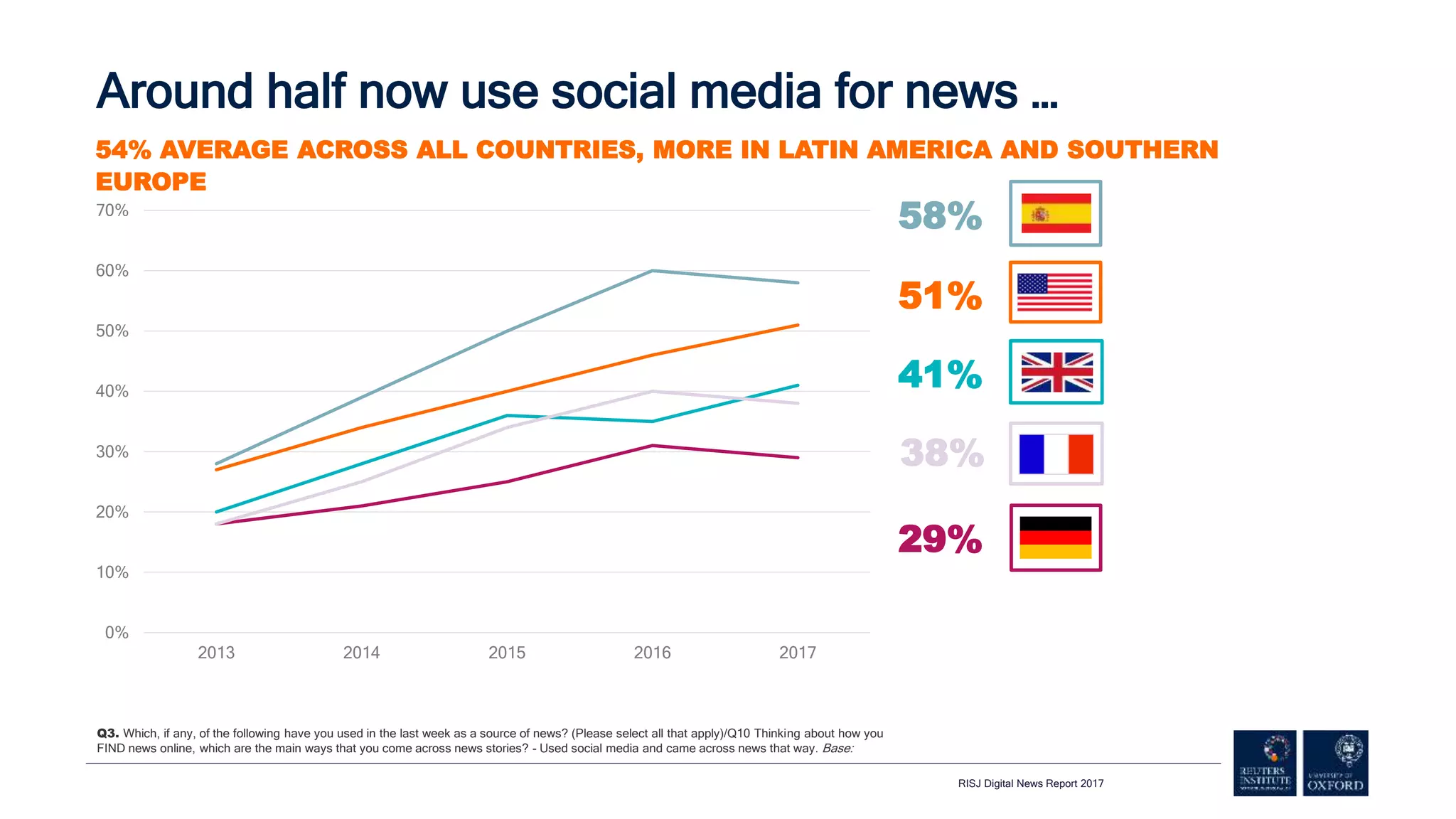
Around half now use social media for news …
RISJ Digital News Report 2017
Q3. Which, if any, of the following have you used in the last week as a source of news? (Please select all that apply)/Q10 Thinking about how you
FIND news online, which are the main ways that you come across news stories? - Used social media and came across news that way. Base:
0%
10%
20%
30%
40%
50%
60%
70%
2013 2014 2015 2016 2017
51%
54% AVERAGE ACROSS ALL COUNTRIES, MORE IN LATIN AMERICA AND SOUTHERN
EUROPE
58%
41%
38%
29%
Social networks and the rise of messaging apps
TOP SOCIAL NETWORKS OR MESSAGING APPS (ALL MARKETS)
RISJ Digital News Report 2017 17
80% USE A FACEBOOK PRODUCT WEEKLY FOR ANY PURPOSE
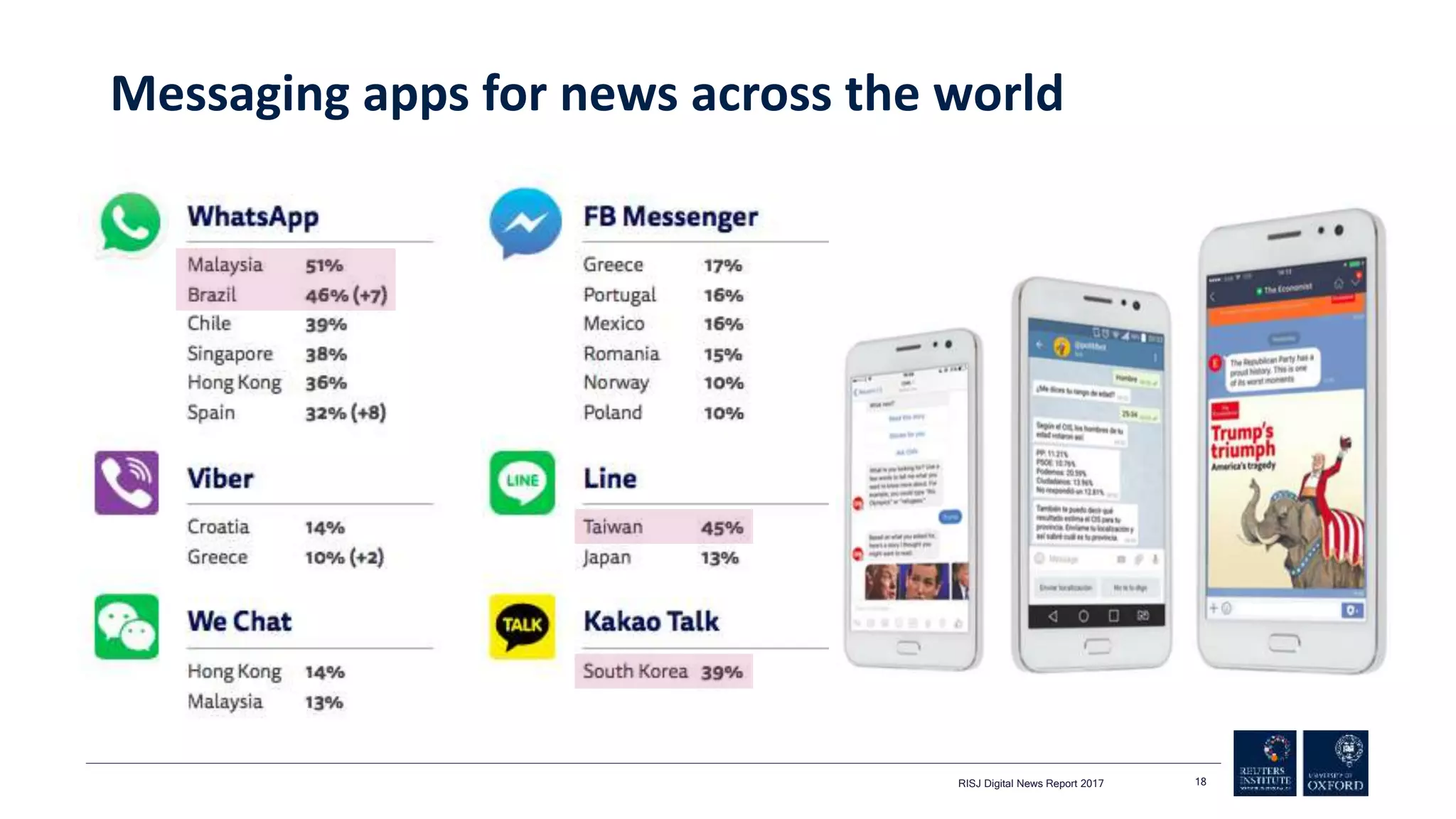
Messaging apps for news across the world
RISJ Digital News Report 2017 18
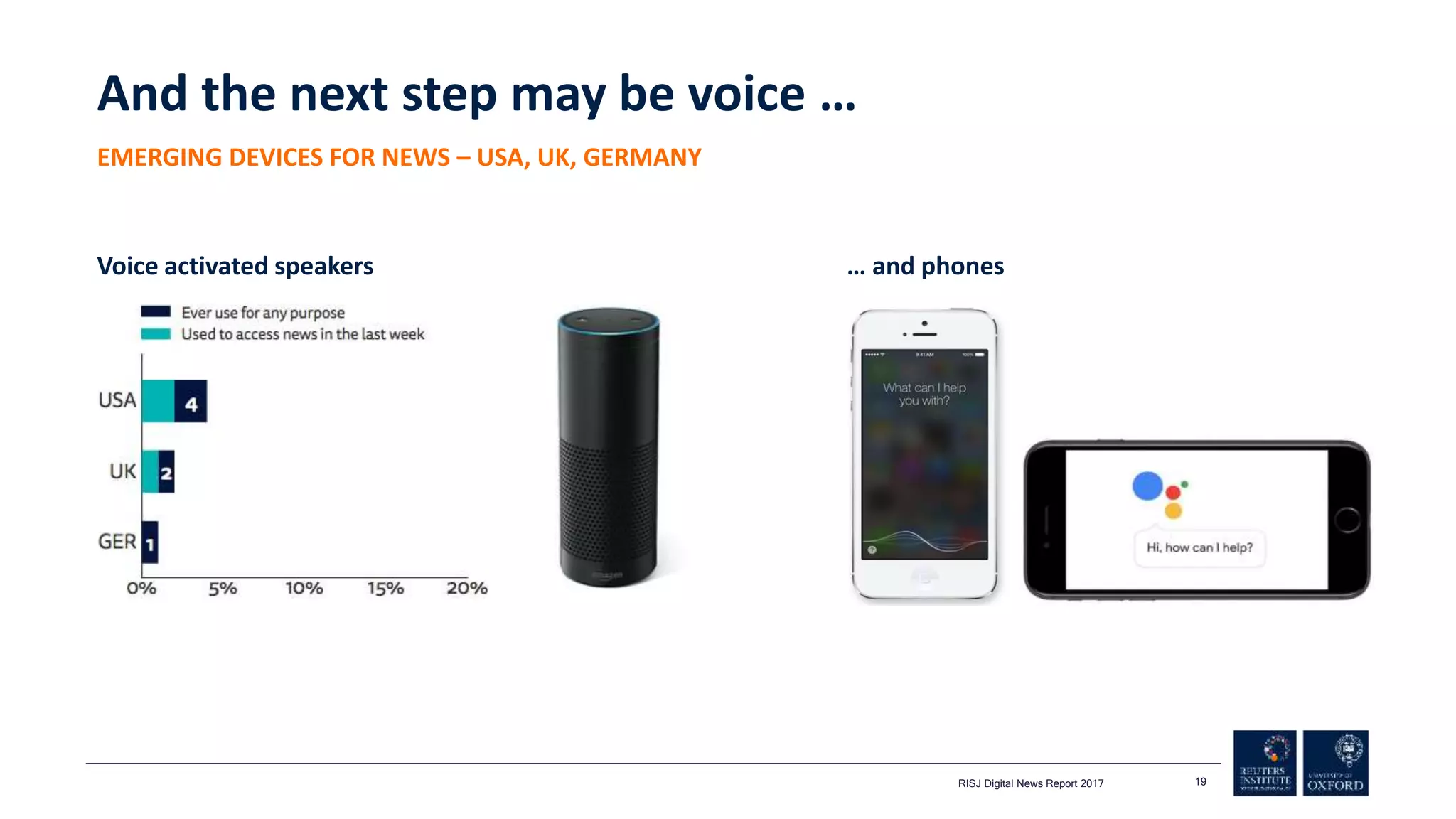
And the next step may be voice …
RISJ Digital News Report 2017 19
EMERGING DEVICES FOR NEWS – USA, UK, GERMANY
Voice activated speakers … and phones
Three take-aways
• Distributed discovery continues to drive reach, but platforms and
publishers need to pay more attention to brand recognition
• Crisis of confidence in both social media and news media – who can
seize the chance and stand out as trusted sources?
• The challenges of navigating news in distributed environments are
only going to grow more pronounced as we move to messaging and
voice
Trends and predictions for 2018
Rasmus Kleis Nielsen, Director of Research
rasmus.nielsen@politics.ox.ac.uk / @rasmus_kleis
Digital Media Strategies, New York, November 14, 2017
@risj_oxford | #DNR17 | digitalnewsreport.org
Distributed news and what
people think of it

Digital Media Strategies US

  • 1.
    Trends and predictionsfor 2018 Rasmus Kleis Nielsen, Director of Research rasmus.nielsen@politics.ox.ac.uk / @rasmus_kleis Digital Media Strategies, New York, November 14, 2017 @risj_oxford | #DNR17 | digitalnewsreport.org Distributed news and what people think of it
  • 2.
    World’s biggest newssurvey 70,000 respondents 36 Markets
  • 3.
    Methodology RISJ Digital NewsReport 2017 3 Country Sample Size Internet penetration USA 2,269 89% UK 2,112 94% Germany 2,062 89% France 2,000 84% Italy 2,011 63% Spain 2,006 78% Portugal 2,007 64% Ireland 2,002 77% Norway 2,056 98% Sweden 2,021 93% Finland 2,007 93% Denmark 2,011 98% Country Sample Size Internet penetration Belgium 2,009 88% Netherlands 2,006 95% Switzerland 2,005 89% Austria 2,000 82% Hungary 2,004 80% Slovakia 2,002 82% Czech Republic 2,003 88% Poland 2,013 73% Romania 2,029 52% Croatia 2,005 70% Greece 2,002 66% Turkey 2,005 58% Country Sample Size Internet penetration Japan 2,000 91% Korea, South 2,002 92% Taiwan 1,017 84% Hong Kong 2,015 80% Malaysia 2,108 68% Singapore 2,000 81% Australia 2,004 92% Canada 2,000 93% Urban Brazil 2,003 68% Argentina 2,001 79% Chile 2,005 80% Mexico 2,003 53% Polling by Supported by RESEARCH CONDUCTED ONLINE IN JANUARY/EARLY FEBRUARY 2017
  • 4.
    Three keys tounderstanding the year ahead • Distributed discovery increasingly important, and social and search expose people to more sources of news, but brand recognition is low • Confidence in both social media and news media is low and people’s sense of what constitutes “fake news” is not what you think it is • The role of platforms is evolving as social media remains critical for news but we see a shift to more ‘private’ messaging apps (is voice next?)
  • 5.
  • 6.
    An increasingly distributedenvironment RISJ Digital News Report 2017
  • 7.
    Far from creatingecho chambers, distributed discovery often exposes people to more sources RISJ Digital News Report 2017 7 People use search and social media (and news aggregators) tend to use more sources of news and greater diversity of sources than those that don’t The effect of incidental exposure to news on social media is particularly clear for the young and those least interested in news
  • 8.
    8 “IT’S THEIR JOB… TO REPORT THE FACTS” Q2. You recently viewed a story with the headline X. On which of the following news websites did you read this story? If you read it on more than one, please select all that apply. Showing share of correct brand attributions. Base: Direct 1,098/ Search 1,022/ Social 1,008 (Facebook 795, Twitter 194) 2X difference But brand attribution is a problem … Fewer than half can remember the news brand that produced a story when coming from social media or search
  • 9.
  • 10.
    In the eraof “fake news” only … RISJ Digital News Report 2017 10 24% agree social media does a good job in separating fact from fiction “PEOPLE SHARE WITHOUT READING THE INFORMATION IN THE ARTICLE” Female (21), USA
  • 11.
    RISJ Digital NewsReport 2017 11 40% agree the news media does a good job in separating fact from fiction “IT’S THEIR JOB TO REPORT THE FACTS” “IT’S THEIR JOB … TO REPORT THE FACTS” In the era of “fake news” only …
  • 12.
    Trust varies acrosscountries RISJ Digital News Report 2017 12 43 38 UK Trust down 7 percentage points USA Well below 36 country average % THAT AGREE THEY TRUST MEDIA MOST OF THE TIME
  • 13.
    Even trust in“my news” is low RISJ Digital News Report 2017 13 43 38 % THAT AGREE THEY TRUST MEDIA MOST OF THE TIME, AND % THAT TRUST “THE MEDIA I USE” MOST OF THE TIME
  • 14.
  • 15.
    The evolving roleof platforms
  • 16.
    Around half nowuse social media for news … RISJ Digital News Report 2017 Q3. Which, if any, of the following have you used in the last week as a source of news? (Please select all that apply)/Q10 Thinking about how you FIND news online, which are the main ways that you come across news stories? - Used social media and came across news that way. Base: 0% 10% 20% 30% 40% 50% 60% 70% 2013 2014 2015 2016 2017 51% 54% AVERAGE ACROSS ALL COUNTRIES, MORE IN LATIN AMERICA AND SOUTHERN EUROPE 58% 41% 38% 29%
  • 17.
    Social networks andthe rise of messaging apps TOP SOCIAL NETWORKS OR MESSAGING APPS (ALL MARKETS) RISJ Digital News Report 2017 17 80% USE A FACEBOOK PRODUCT WEEKLY FOR ANY PURPOSE
  • 18.
    Messaging apps fornews across the world RISJ Digital News Report 2017 18
  • 19.
    And the nextstep may be voice … RISJ Digital News Report 2017 19 EMERGING DEVICES FOR NEWS – USA, UK, GERMANY Voice activated speakers … and phones
  • 20.
    Three take-aways • Distributeddiscovery continues to drive reach, but platforms and publishers need to pay more attention to brand recognition • Crisis of confidence in both social media and news media – who can seize the chance and stand out as trusted sources? • The challenges of navigating news in distributed environments are only going to grow more pronounced as we move to messaging and voice
  • 21.
    Trends and predictionsfor 2018 Rasmus Kleis Nielsen, Director of Research rasmus.nielsen@politics.ox.ac.uk / @rasmus_kleis Digital Media Strategies, New York, November 14, 2017 @risj_oxford | #DNR17 | digitalnewsreport.org Distributed news and what people think of it

Editor's Notes

  • #2 Delighte to present this year’s report
  • #5 We don’t have much time so I’m going to focus on five themes coming out of our research.   Firstly I’ll talk about the increasing importance of platforms (and social media in particular) for news discovery and consumption Secondly the rise of the smartphone – which we increasingly see as the defining device of digital age and is particularly important in Switzerland I’ll talk about online video, how fast growing and why the type of online video that works is very different from TV Generational splits in behaviour – particularly the very different behaviour we see with younger groups bit also in attitudes to brands I’ll talk about trust in news, news organisations and journalists which of course is being impacted by all the above  
  • #21 We don’t have much time so I’m going to focus on five themes coming out of our research.   Firstly I’ll talk about the increasing importance of platforms (and social media in particular) for news discovery and consumption Secondly the rise of the smartphone – which we increasingly see as the defining device of digital age and is particularly important in Switzerland I’ll talk about online video, how fast growing and why the type of online video that works is very different from TV Generational splits in behaviour – particularly the very different behaviour we see with younger groups bit also in attitudes to brands I’ll talk about trust in news, news organisations and journalists which of course is being impacted by all the above  
  • #22 Delighte to present this year’s report