Digital Marketing 101 
November 5th, 2014
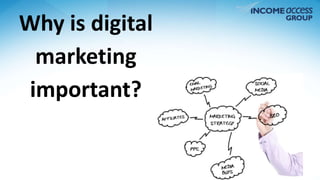
Why is digital 
marketing 
important?
 Supports an integrated approach 
 Reinforces branding and differentiation 
 Expands reach to prospective customer base 
 Adapts to trends in user behaviour and preferences 
 Enables targeting and segmentation 
 Provides complete tracking and reporting transparency
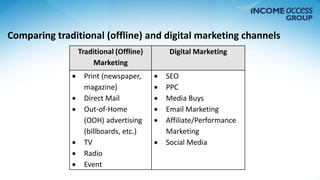
Comparing traditional (offline) and digital marketing channels 
Traditional (Offline) 
Marketing 
Digital Marketing 
 Print (newspaper, 
magazine) 
 Direct Mail 
 Out-of-Home 
(OOH) advertising 
(billboards, etc.) 
 TV 
 Radio 
 Event 
 SEO 
 PPC 
 Media Buys 
 Email Marketing 
 Affiliate/Performance 
Marketing 
 Social Media
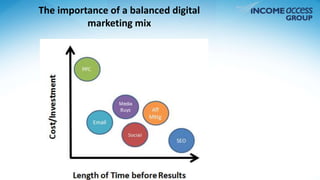
The importance of a balanced digital 
marketing mix
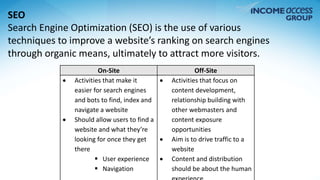
SEO 
Search Engine Optimization (SEO) is the use of various 
techniques to improve a website’s ranking on search engines 
through organic means, ultimately to attract more visitors. 
On-Site Off-Site 
 Activities that make it 
easier for search engines 
and bots to find, index and 
navigate a website 
 Should allow users to find a 
website and what they’re 
looking for once they get 
there 
 User experience 
 Navigation 
 Activities that focus on 
content development, 
relationship building with 
other webmasters and 
content exposure 
opportunities 
 Aim is to drive traffic to a 
website 
 Content and distribution 
should be about the human 
experience
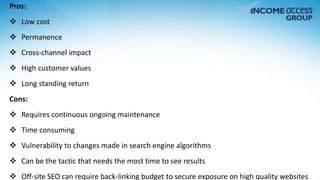
Pros: 
 Low cost 
 Permanence 
 Cross-channel impact 
 High customer values 
 Long standing return 
Cons: 
 Requires continuous ongoing maintenance 
 Time consuming 
 Vulnerability to changes made in search engine algorithms 
 Can be the tactic that needs the most time to see results 
 Off-site SEO can require back-linking budget to secure exposure on high quality websites
PPC 
Pay per click (PPC) is an advertising model, or online campaign, wherein a 
website pays a set amount (bid price) whenever someone clicks on their ad. 
Pros: 
 Speed 
 Reach 
 High customer values 
 Back-fills SEO vulnerability 
Cons: 
 Temporary benefit 
 Can be very costly
Media Buys 
Media buys in this context are the purchase of digital advertising space; traditionally, 
media buying is the purchase of advertising space across newspaper, TV, billboard, 
radio. 
Pros: 
 Targeting 
 High volume traffic 
 Brand building 
Cons: 
 Lack of transparency on media placement 
 Risk of low value traffic 
 Ad blocking
Email Marketing 
Email marketing involves sending your affiliates a direct (via email), personalized 
communication, with their specific needs in mind. Emails can be sent to owned or 
outsourced (paid for) databases. 
Pros: 
 Simple 
 Quick results 
 Low Cost 
Cons: 
 Can be marked as SPAM which risks blacklisting if not properly operated; this can 
have a negative impact on subscribe rates and the ability to use a database for 
marketing in the future 
 Risk in working with third party databases
Affiliate/Performance Marketing 
Involves working with third party marketers (affiliates) on a 
performance-based model for referred traffic. 
Pros: 
 Shares the risk and cost of acquiring 
customers 
 Helps fill in gaps and blind spots 
 Offers access to large pools of, ideally, 
relevant traffic 
 Creates “buzz” through impressions 
 Acts as a third party endorsement 
Cons: 
 Long term tactic that requires time and 
effort to grow results 
 Affiliate management requires ongoing 
support 
 Requires the provision of transparency 
to partners 
 Requires reliable tracking and reporting
Social Media 
Involves using social networking websites/platforms 
as a marketing tools with the goal of engaging 
communicates and encouraging social sharing. 
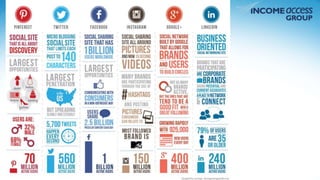
A look at social media consumption and user 
trends…
Pros: 
 Provides global reach to 1 billion people + 
 Access to peer groups through social sharing and can result in referral marketing 
 Highly effective at communicating a brand story and creating a positive brand 
experience 
 Contributes to improved customer retention and brand loyalty through increased 
accessibility to a brand 
 Encourages user-generated content in engaging content mediums, and 
contributes positively to SEO ranking 
 Social media consumption means you’re reaching users when and where they 
choose to engage with content, and is very conducive to a mobile user experience 
 Improved customer insight through social “listening”
Cons: 
 Brand reputation vulnerability 
 Demands on time investment 
 A poor social media brand presence can impact more 
negatively than none at all – there are arguably more 
brands that do social media poorly than those who do it 
well
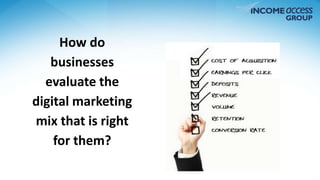
How do 
businesses 
evaluate the 
digital marketing 
mix that is right 
for them?
Digital trends to watch 
 A platform agnostic experience 
 Data, data, data! 
 Predictive and adaptive marketing 
 Native advertising 
 Real time marketing 
 Evolving ad formats 
 Shift to mobile as primary platform/device

Digital marketing 101

  • 1.
    Digital Marketing 101 November 5th, 2014
  • 2.
    Why is digital marketing important?
  • 3.
     Supports anintegrated approach  Reinforces branding and differentiation  Expands reach to prospective customer base  Adapts to trends in user behaviour and preferences  Enables targeting and segmentation  Provides complete tracking and reporting transparency
  • 4.
    Comparing traditional (offline)and digital marketing channels Traditional (Offline) Marketing Digital Marketing  Print (newspaper, magazine)  Direct Mail  Out-of-Home (OOH) advertising (billboards, etc.)  TV  Radio  Event  SEO  PPC  Media Buys  Email Marketing  Affiliate/Performance Marketing  Social Media
  • 5.
    The importance ofa balanced digital marketing mix
  • 6.
    SEO Search EngineOptimization (SEO) is the use of various techniques to improve a website’s ranking on search engines through organic means, ultimately to attract more visitors. On-Site Off-Site  Activities that make it easier for search engines and bots to find, index and navigate a website  Should allow users to find a website and what they’re looking for once they get there  User experience  Navigation  Activities that focus on content development, relationship building with other webmasters and content exposure opportunities  Aim is to drive traffic to a website  Content and distribution should be about the human experience
  • 7.
    Pros:  Lowcost  Permanence  Cross-channel impact  High customer values  Long standing return Cons:  Requires continuous ongoing maintenance  Time consuming  Vulnerability to changes made in search engine algorithms  Can be the tactic that needs the most time to see results  Off-site SEO can require back-linking budget to secure exposure on high quality websites
  • 8.
    PPC Pay perclick (PPC) is an advertising model, or online campaign, wherein a website pays a set amount (bid price) whenever someone clicks on their ad. Pros:  Speed  Reach  High customer values  Back-fills SEO vulnerability Cons:  Temporary benefit  Can be very costly
  • 9.
    Media Buys Mediabuys in this context are the purchase of digital advertising space; traditionally, media buying is the purchase of advertising space across newspaper, TV, billboard, radio. Pros:  Targeting  High volume traffic  Brand building Cons:  Lack of transparency on media placement  Risk of low value traffic  Ad blocking
  • 10.
    Email Marketing Emailmarketing involves sending your affiliates a direct (via email), personalized communication, with their specific needs in mind. Emails can be sent to owned or outsourced (paid for) databases. Pros:  Simple  Quick results  Low Cost Cons:  Can be marked as SPAM which risks blacklisting if not properly operated; this can have a negative impact on subscribe rates and the ability to use a database for marketing in the future  Risk in working with third party databases
  • 11.
    Affiliate/Performance Marketing Involvesworking with third party marketers (affiliates) on a performance-based model for referred traffic. Pros:  Shares the risk and cost of acquiring customers  Helps fill in gaps and blind spots  Offers access to large pools of, ideally, relevant traffic  Creates “buzz” through impressions  Acts as a third party endorsement Cons:  Long term tactic that requires time and effort to grow results  Affiliate management requires ongoing support  Requires the provision of transparency to partners  Requires reliable tracking and reporting
  • 12.
    Social Media Involvesusing social networking websites/platforms as a marketing tools with the goal of engaging communicates and encouraging social sharing. A look at social media consumption and user trends…
  • 14.
    Pros:  Providesglobal reach to 1 billion people +  Access to peer groups through social sharing and can result in referral marketing  Highly effective at communicating a brand story and creating a positive brand experience  Contributes to improved customer retention and brand loyalty through increased accessibility to a brand  Encourages user-generated content in engaging content mediums, and contributes positively to SEO ranking  Social media consumption means you’re reaching users when and where they choose to engage with content, and is very conducive to a mobile user experience  Improved customer insight through social “listening”
  • 15.
    Cons:  Brandreputation vulnerability  Demands on time investment  A poor social media brand presence can impact more negatively than none at all – there are arguably more brands that do social media poorly than those who do it well
  • 16.
    How do businesses evaluate the digital marketing mix that is right for them?
  • 18.
    Digital trends towatch  A platform agnostic experience  Data, data, data!  Predictive and adaptive marketing  Native advertising  Real time marketing  Evolving ad formats  Shift to mobile as primary platform/device