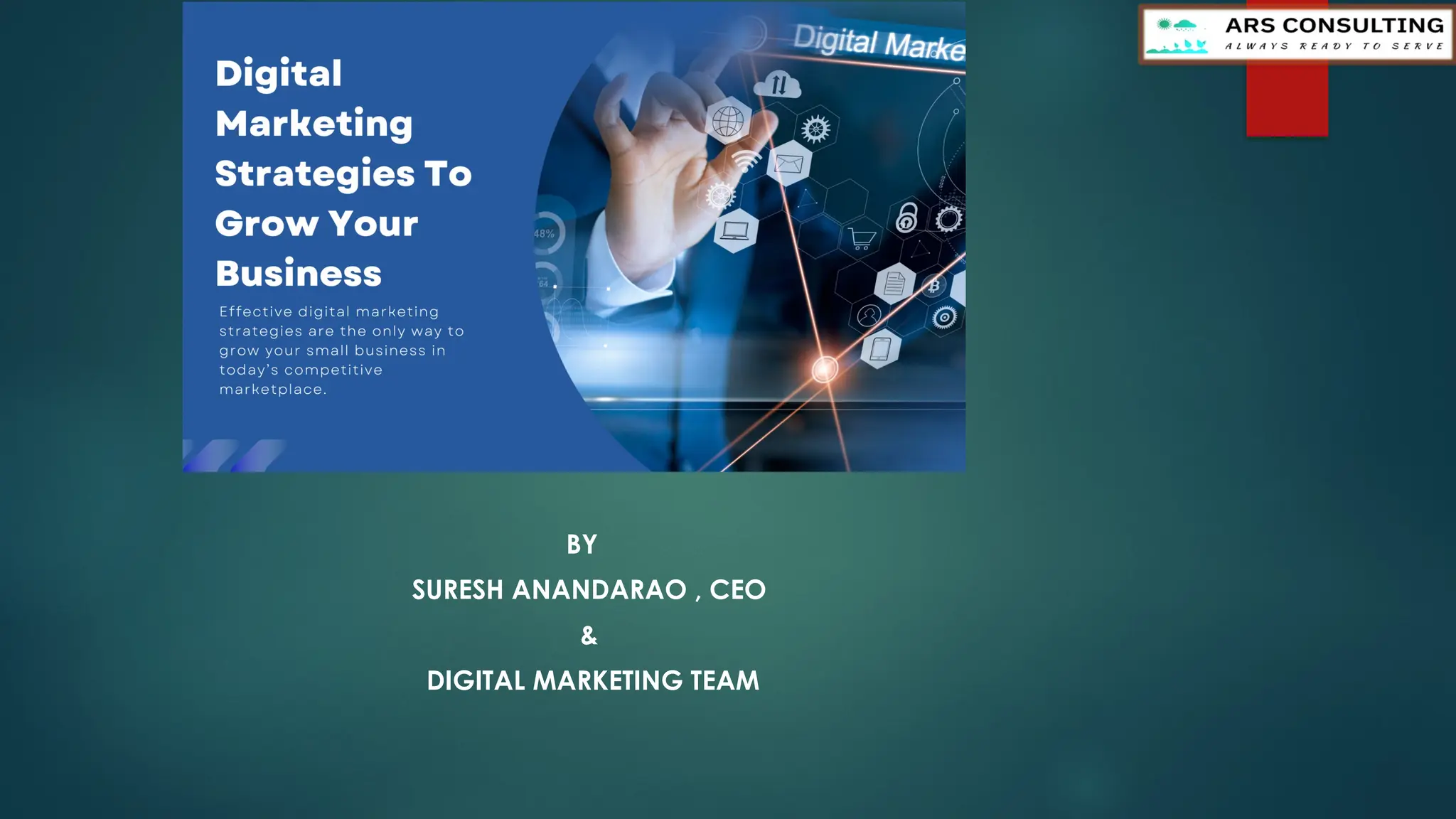
BY
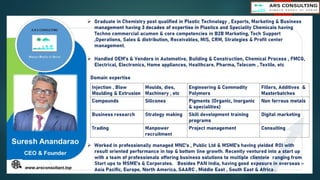
SURESH ANANDARAO , CEO
&
DIGITAL MARKETING TEAM
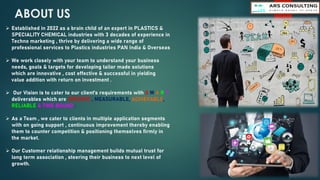
ABOUT US
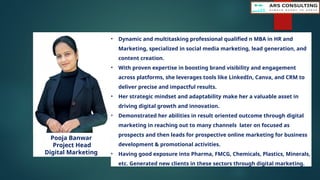
• Dynamic and multitasking professional qualified n MBA in HR and
Marketing, specialized in social media marketing, lead generation, and
content creation.
• With proven expertise in boosting brand visibility and engagement
across platforms, she leverages tools like LinkedIn, Canva, and CRM to
deliver precise and impactful results.
• Her strategic mindset and adaptability make her a valuable asset in
driving digital growth and innovation.
• Demonstrated her abilities in result oriented outcome through digital
marketing in reaching out to many channels later on focused as
prospects and then leads for prospective online marketing for business
development & promotional activities.
• Having good exposure into Pharma, FMCG, Chemicals, Plastics, Minerals,
etc. Generated new clients in these sectors through digital marketing.
Pooja Banwar
Project Head
Digital Marketing
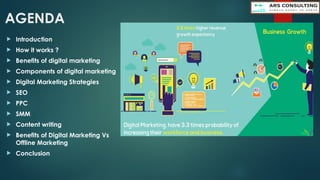
AGENDA
 Introduction
 How it works ?
 Benefits of digital marketing
 Components of digital marketing
 Digital Marketing Strategies
 SEO
 PPC
 SMM
 Content writing
 Benefits of Digital Marketing Vs
Offline Marketing
 Conclusion
INTRODUCTION
 Digital marketing is an umbrella term for the marketing of products or
services using digital technologies, mainly on the Internet, but also
including mobile phones, display advertising, and any other digital
medium.
 It encompasses the use of technologies and channels to promote
products, services, and brands it is a powerful tool that allows
businesses to reach and engage with their target audience more
effectively in the modern tech-driven world.
 It allows you to identify and target a highly-specific audience with
personalized and high-converting marketing messages. For instance, you
might use social media targeting to show ads to a certain audience based
on variables like age, gender, location, interests, networks, or behaviors
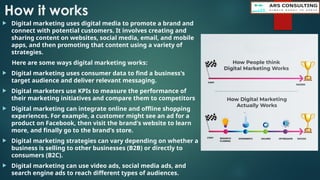
How it works
 Digital marketing uses digital media to promote a brand and
connect with potential customers. It involves creating and
sharing content on websites, social media, email, and mobile
apps, and then promoting that content using a variety of
strategies.
Here are some ways digital marketing works:
 Digital marketing uses consumer data to find a business's
target audience and deliver relevant messaging.
 Digital marketers use KPIs to measure the performance of
their marketing initiatives and compare them to competitors
 Digital marketing can integrate online and offline shopping
experiences. For example, a customer might see an ad for a
product on Facebook, then visit the brand's website to learn
more, and finally go to the brand's store.
 Digital marketing strategies can vary depending on whether a
business is selling to other businesses (B2B) or directly to
consumers (B2C).
 Digital marketing can use video ads, social media ads, and
search engine ads to reach different types of audiences.
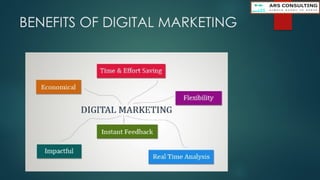
BENEFITS OF DIGITAL MARKETING
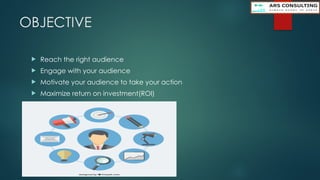
OBJECTIVE
 Reach the right audience
 Engage with your audience
 Motivate your audience to take your action
 Maximize return on investment(ROI)
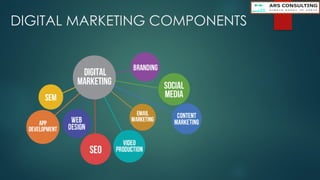
DIGITAL MARKETING COMPONENTS
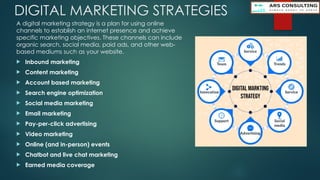
DIGITAL MARKETING STRATEGIES
A digital marketing strategy is a plan for using online
channels to establish an internet presence and achieve
specific marketing objectives. These channels can include
organic search, social media, paid ads, and other web-
based mediums such as your website.
 Inbound marketing
 Content marketing
 Account based marketing
 Search engine optimization
 Social media marketing
 Email marketing
 Pay-per-click advertising
 Video marketing
 Online (and in-person) events
 Chatbot and live chat marketing
 Earned media coverage
WHAT IS SEO
 Whenever you enter a query in a search engine and hit 'enter' you
get a list of web results that contain that query term. Users normally
tend to visit websites that are at the top of this list as they perceive
those to be more relevant to the query. If you have ever wondered
why some of these websites rank better than the others then you
must know that it is because of a powerful web marketing
technique called Search Engine Optimization (SEO).
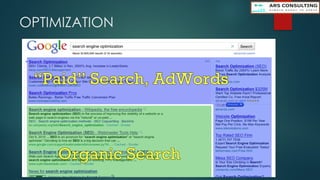
OPTIMIZATION
PPC(PAY PER CLICK)
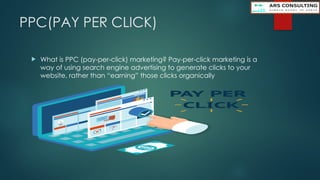
 What is PPC (pay-per-click) marketing? Pay-per-click marketing is a
way of using search engine advertising to generate clicks to your
website, rather than “earning” those clicks organically
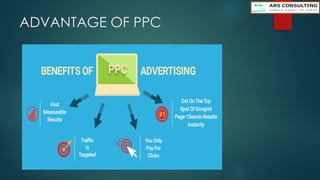
ADVANTAGE OF PPC
WHAT IS SMM
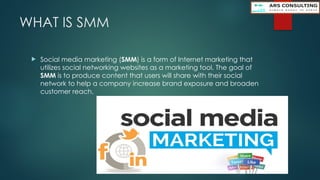
 Social media marketing (SMM) is a form of Internet marketing that
utilizes social networking websites as a marketing tool. The goal of
SMM is to produce content that users will share with their social
network to help a company increase brand exposure and broaden
customer reach.
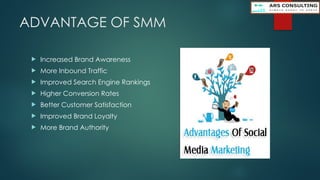
ADVANTAGE OF SMM
 Increased Brand Awareness
 More Inbound Traffic
 Improved Search Engine Rankings
 Higher Conversion Rates
 Better Customer Satisfaction
 Improved Brand Loyalty
 More Brand Authority
CONTENT WRITING
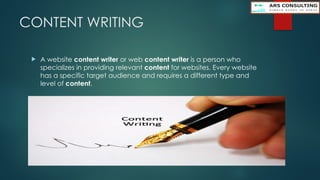
 A website content writer or web content writer is a person who
specializes in providing relevant content for websites. Every website
has a specific target audience and requires a different type and
level of content.
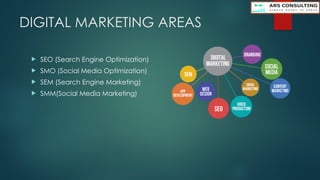
DIGITAL MARKETING AREAS
 SEO (Search Engine Optimization)
 SMO (Social Media Optimization)
 SEM (Search Engine Marketing)
 SMM(Social Media Marketing)
Benefits of Digital Marketing Vs
Offline Marketing
 High return on investment (ROI) through Online Marketing.
 Target only most interesting audience, pay only
 You can start without spending with small amount.
 Advertising your products on specific hours, time or day bases.
 Fully Controlled as per your location, budget and time.
Why our clients choose us
 Industry Expertise: Specialized knowledge of the client's industry (e.g., plastic industry),
ensuring tailored strategies.
 End-to-End Solutions: Comprehensive services from strategy to execution for seamless
integration
 Data-Driven Approach: Advanced analytics and insights to maximize ROI and refine
campaigns.
 Brand-Building Focus: Expertise in enhancing brand identity alongside driving conversions.
 Customized Strategies: Personalized campaigns aligned with the client’s unique goals and
target audience.
 Proven Track Record: Demonstrated success through case studies, testimonials, and
metrics.
CONCLUSION
 This presentation is being given to analyse the different aspects &
issues related to the digital marketing.
 It reveals the fact that the digital marketing process is the most
important aspect to connect with the users.
 The ladder of engagement has shown the approaches to attach with
the customers & also revealed that in order to utilise the digital
marketing in an effective way, the companies are required to design
an effective platform.
 The current trends in the digital marketing have been discussed in
brief in this presentation.
Contact us

ARS CONSULTING digital marketing ppt.ppsx

  • 1.
    BY SURESH ANANDARAO ,CEO & DIGITAL MARKETING TEAM
  • 2.
  • 4.
    • Dynamic andmultitasking professional qualified n MBA in HR and Marketing, specialized in social media marketing, lead generation, and content creation. • With proven expertise in boosting brand visibility and engagement across platforms, she leverages tools like LinkedIn, Canva, and CRM to deliver precise and impactful results. • Her strategic mindset and adaptability make her a valuable asset in driving digital growth and innovation. • Demonstrated her abilities in result oriented outcome through digital marketing in reaching out to many channels later on focused as prospects and then leads for prospective online marketing for business development & promotional activities. • Having good exposure into Pharma, FMCG, Chemicals, Plastics, Minerals, etc. Generated new clients in these sectors through digital marketing. Pooja Banwar Project Head Digital Marketing
  • 5.
    AGENDA  Introduction  Howit works ?  Benefits of digital marketing  Components of digital marketing  Digital Marketing Strategies  SEO  PPC  SMM  Content writing  Benefits of Digital Marketing Vs Offline Marketing  Conclusion
  • 6.
    INTRODUCTION  Digital marketingis an umbrella term for the marketing of products or services using digital technologies, mainly on the Internet, but also including mobile phones, display advertising, and any other digital medium.  It encompasses the use of technologies and channels to promote products, services, and brands it is a powerful tool that allows businesses to reach and engage with their target audience more effectively in the modern tech-driven world.  It allows you to identify and target a highly-specific audience with personalized and high-converting marketing messages. For instance, you might use social media targeting to show ads to a certain audience based on variables like age, gender, location, interests, networks, or behaviors
  • 7.
    How it works Digital marketing uses digital media to promote a brand and connect with potential customers. It involves creating and sharing content on websites, social media, email, and mobile apps, and then promoting that content using a variety of strategies. Here are some ways digital marketing works:  Digital marketing uses consumer data to find a business's target audience and deliver relevant messaging.  Digital marketers use KPIs to measure the performance of their marketing initiatives and compare them to competitors  Digital marketing can integrate online and offline shopping experiences. For example, a customer might see an ad for a product on Facebook, then visit the brand's website to learn more, and finally go to the brand's store.  Digital marketing strategies can vary depending on whether a business is selling to other businesses (B2B) or directly to consumers (B2C).  Digital marketing can use video ads, social media ads, and search engine ads to reach different types of audiences.
  • 8.
  • 9.
    OBJECTIVE  Reach theright audience  Engage with your audience  Motivate your audience to take your action  Maximize return on investment(ROI)
  • 10.
  • 11.
    DIGITAL MARKETING STRATEGIES Adigital marketing strategy is a plan for using online channels to establish an internet presence and achieve specific marketing objectives. These channels can include organic search, social media, paid ads, and other web- based mediums such as your website.  Inbound marketing  Content marketing  Account based marketing  Search engine optimization  Social media marketing  Email marketing  Pay-per-click advertising  Video marketing  Online (and in-person) events  Chatbot and live chat marketing  Earned media coverage
  • 12.
    WHAT IS SEO Whenever you enter a query in a search engine and hit 'enter' you get a list of web results that contain that query term. Users normally tend to visit websites that are at the top of this list as they perceive those to be more relevant to the query. If you have ever wondered why some of these websites rank better than the others then you must know that it is because of a powerful web marketing technique called Search Engine Optimization (SEO).
  • 13.
  • 14.
    PPC(PAY PER CLICK) What is PPC (pay-per-click) marketing? Pay-per-click marketing is a way of using search engine advertising to generate clicks to your website, rather than “earning” those clicks organically
  • 15.
  • 16.
    WHAT IS SMM Social media marketing (SMM) is a form of Internet marketing that utilizes social networking websites as a marketing tool. The goal of SMM is to produce content that users will share with their social network to help a company increase brand exposure and broaden customer reach.
  • 17.
    ADVANTAGE OF SMM Increased Brand Awareness  More Inbound Traffic  Improved Search Engine Rankings  Higher Conversion Rates  Better Customer Satisfaction  Improved Brand Loyalty  More Brand Authority
  • 18.
    CONTENT WRITING  Awebsite content writer or web content writer is a person who specializes in providing relevant content for websites. Every website has a specific target audience and requires a different type and level of content.
  • 19.
    DIGITAL MARKETING AREAS SEO (Search Engine Optimization)  SMO (Social Media Optimization)  SEM (Search Engine Marketing)  SMM(Social Media Marketing)
  • 20.
    Benefits of DigitalMarketing Vs Offline Marketing  High return on investment (ROI) through Online Marketing.  Target only most interesting audience, pay only  You can start without spending with small amount.  Advertising your products on specific hours, time or day bases.  Fully Controlled as per your location, budget and time.
  • 21.
    Why our clientschoose us  Industry Expertise: Specialized knowledge of the client's industry (e.g., plastic industry), ensuring tailored strategies.  End-to-End Solutions: Comprehensive services from strategy to execution for seamless integration  Data-Driven Approach: Advanced analytics and insights to maximize ROI and refine campaigns.  Brand-Building Focus: Expertise in enhancing brand identity alongside driving conversions.  Customized Strategies: Personalized campaigns aligned with the client’s unique goals and target audience.  Proven Track Record: Demonstrated success through case studies, testimonials, and metrics.
  • 22.
    CONCLUSION  This presentationis being given to analyse the different aspects & issues related to the digital marketing.  It reveals the fact that the digital marketing process is the most important aspect to connect with the users.  The ladder of engagement has shown the approaches to attach with the customers & also revealed that in order to utilise the digital marketing in an effective way, the companies are required to design an effective platform.  The current trends in the digital marketing have been discussed in brief in this presentation.
  • 23.