A million dollar challenge to map
Indonesian peatlands –
A Digital Soil Mapping Approach
BUDIMAN MINASNY,
RUDIYANTO, BUDI INDRA SETYAWAN
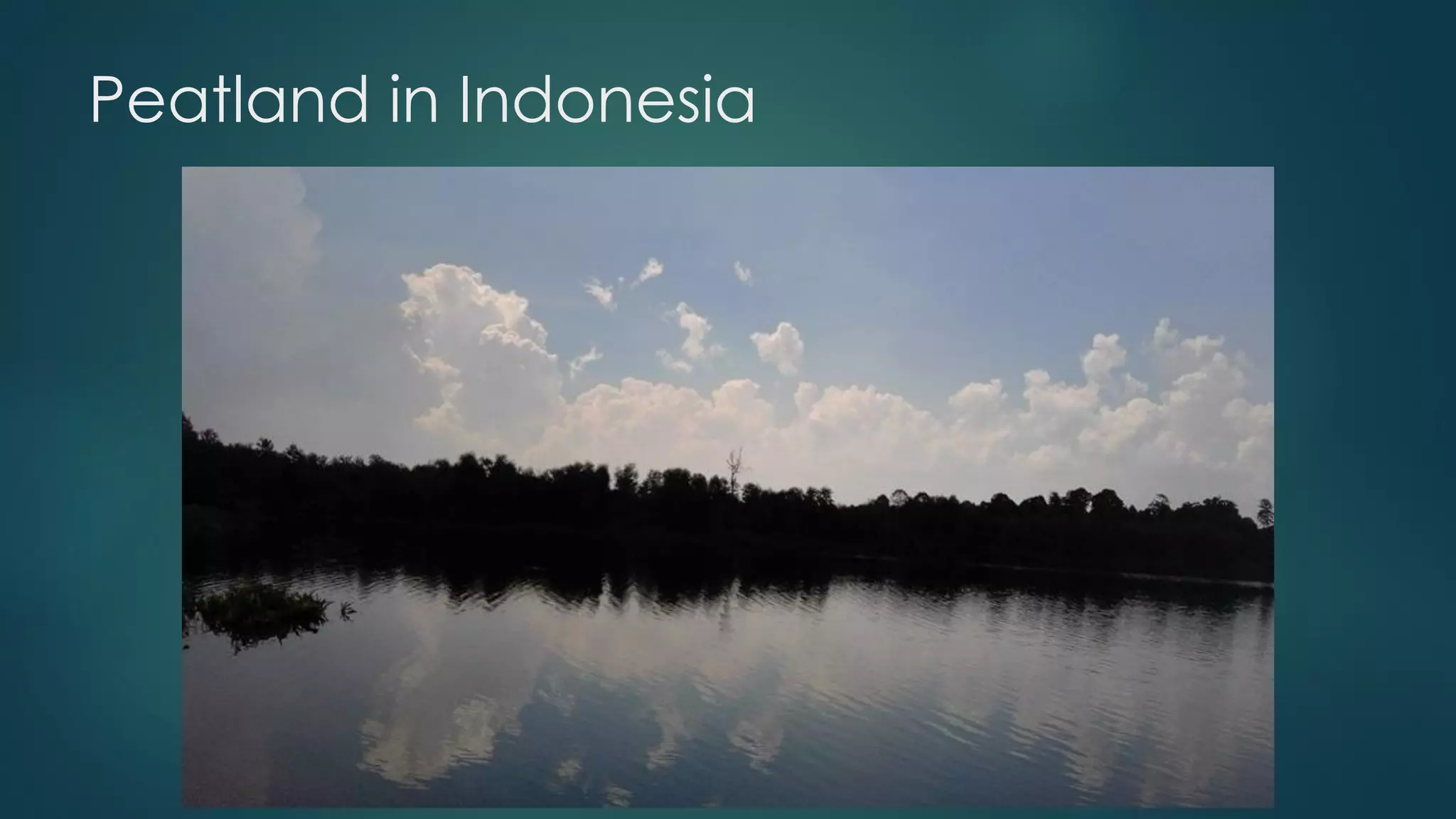
Peatland in Indonesia
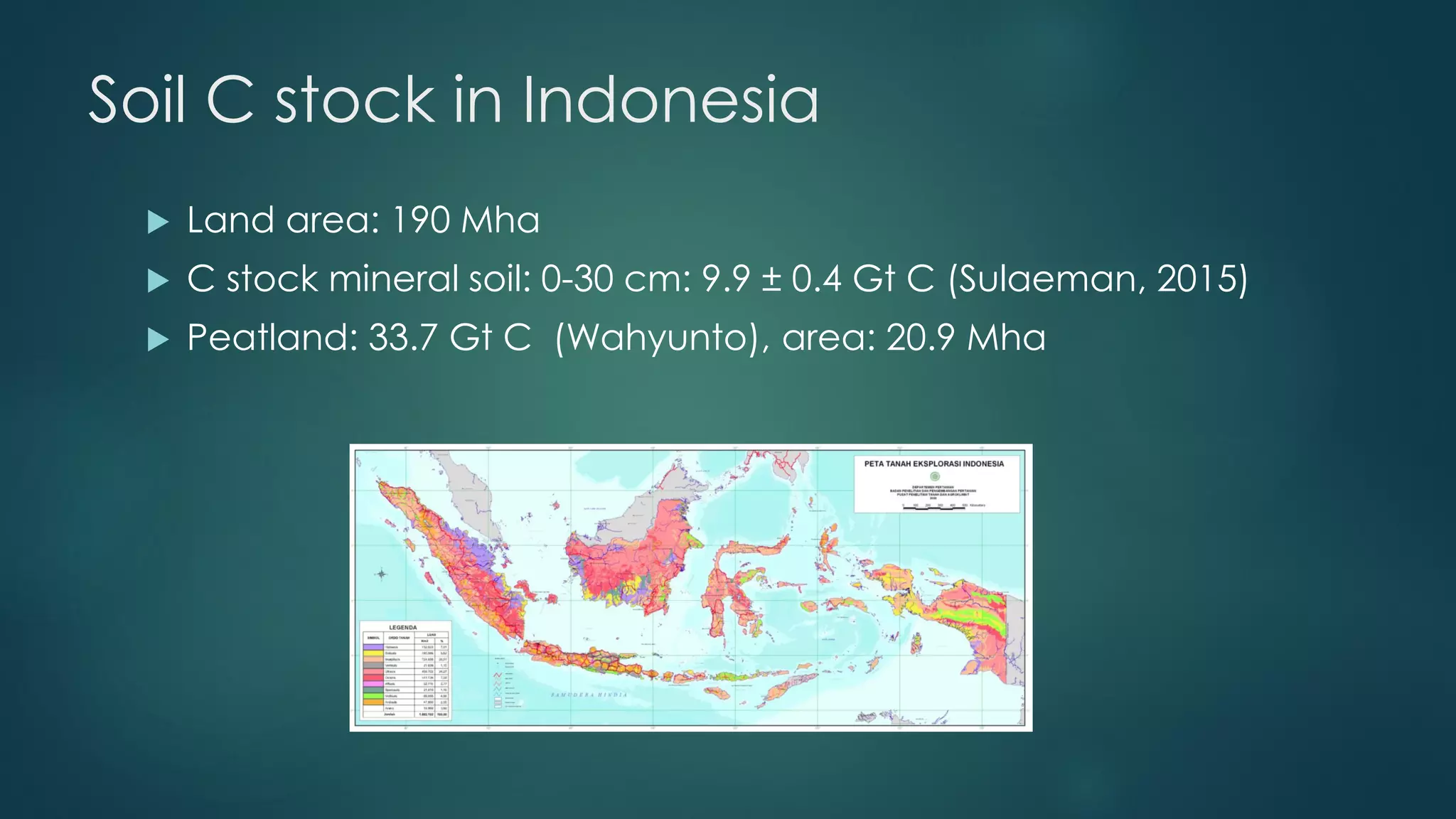
Soil C stock in Indonesia
 Land area: 190 Mha
 C stock mineral soil: 0-30 cm: 9.9 ± 0.4 Gt C (Sulaeman, 2015)
 Peatland: 33.7 Gt C (Wahyunto), area: 20.9 Mha
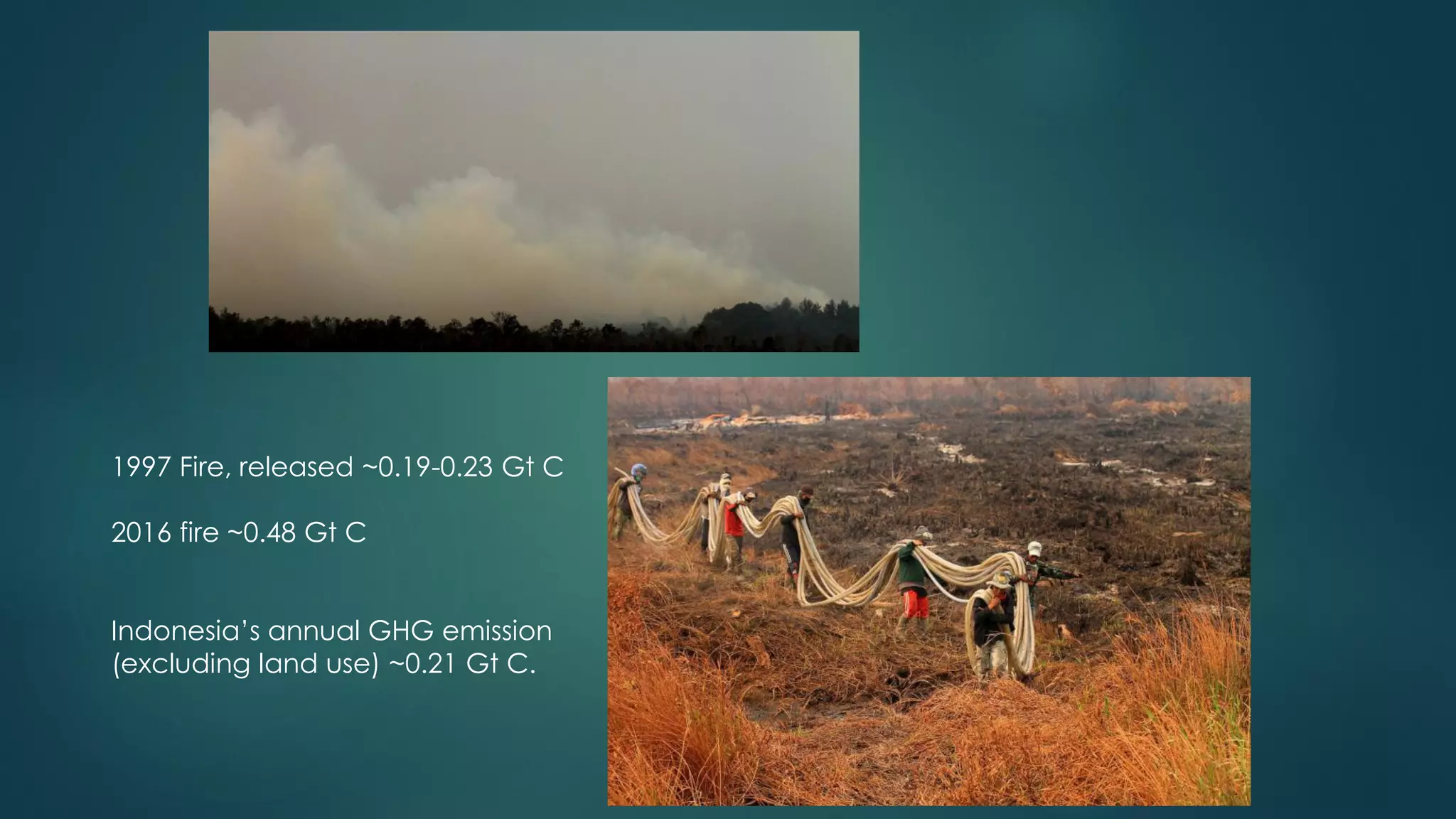
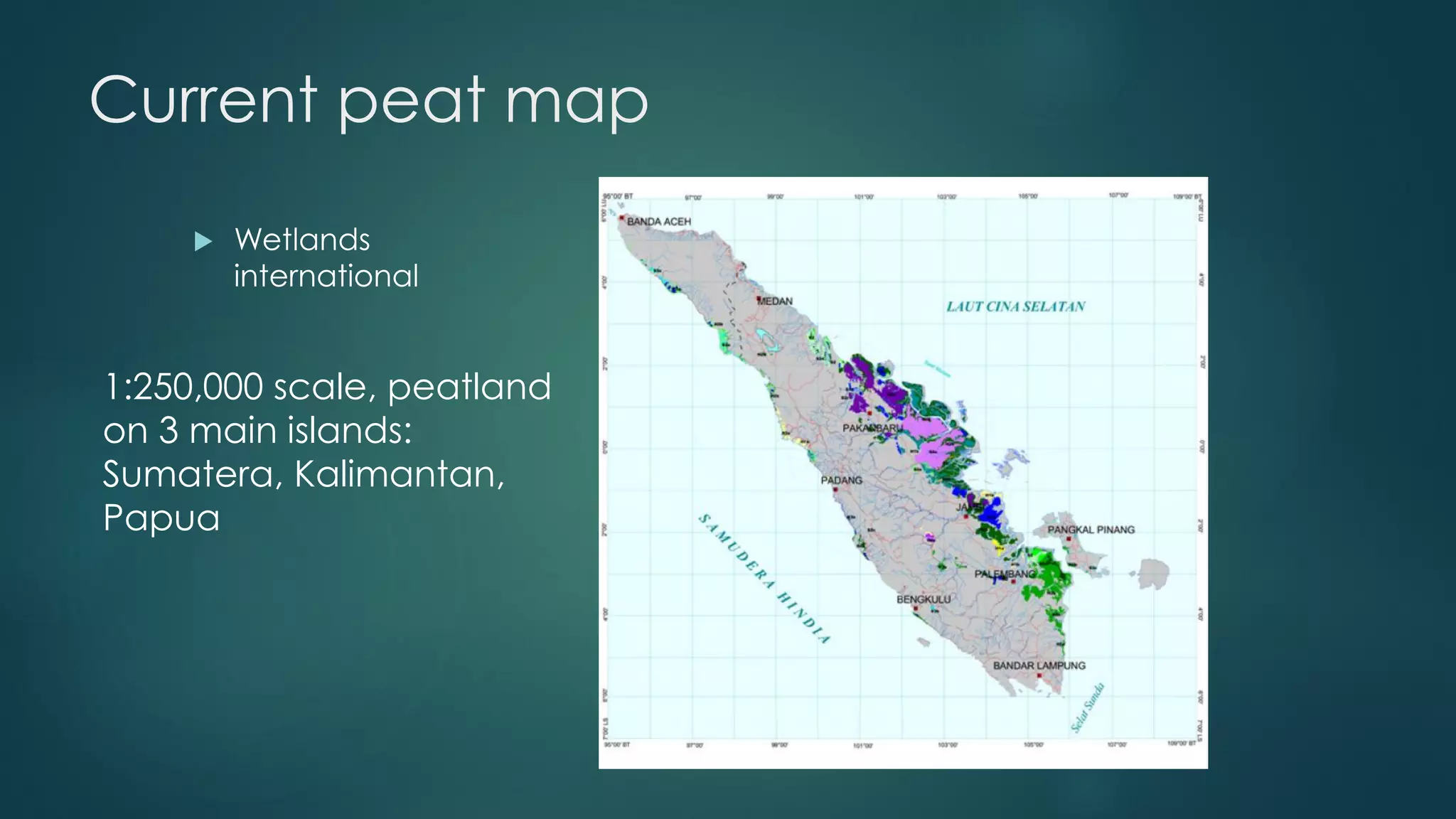
1997 Fire, released ~0.19-0.23 Gt C
2016 fire ~0.48 Gt C
Indonesia’s annual GHG emission
(excluding land use) ~0.21 Gt C.
A million dollar prize
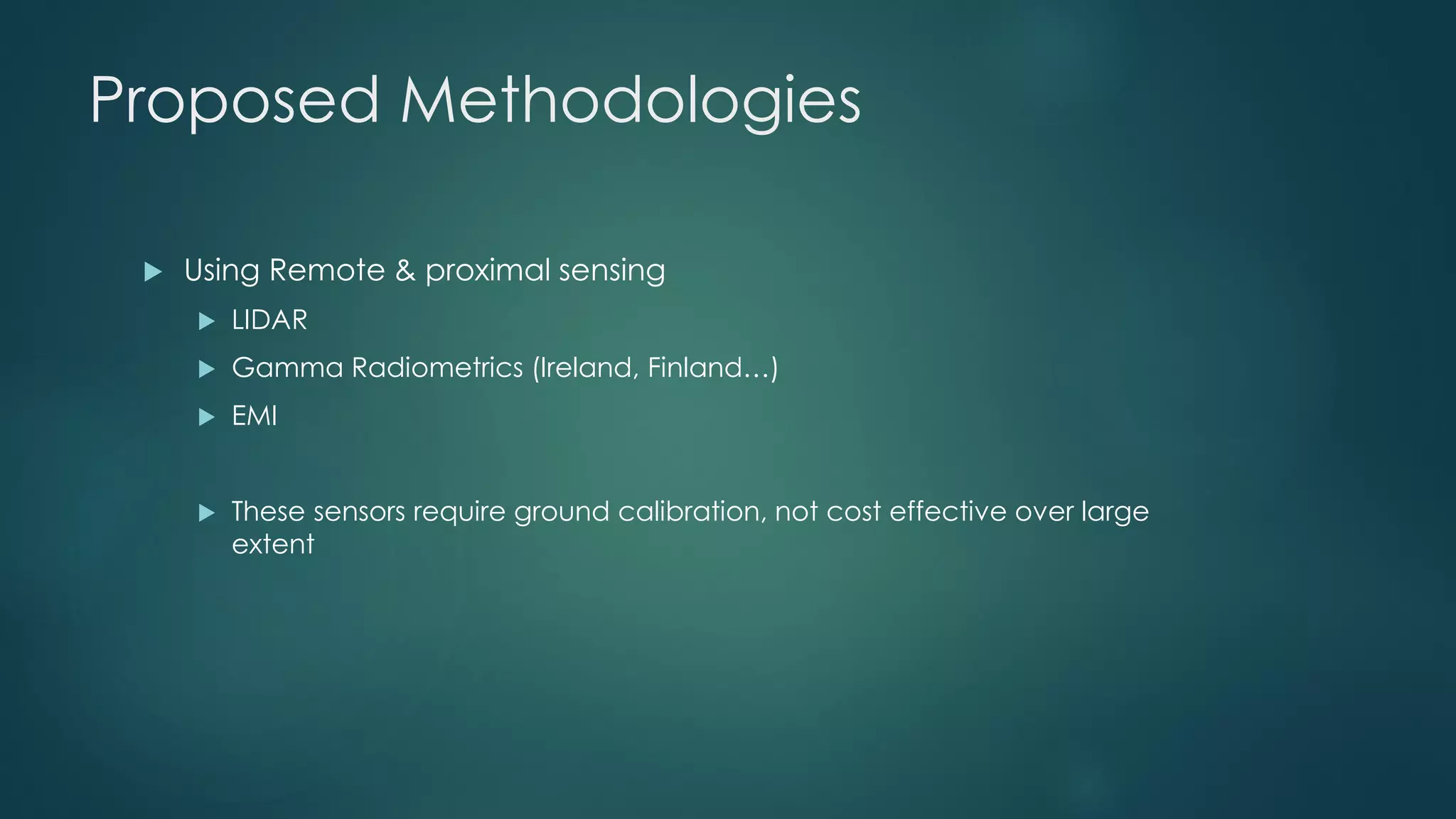
Current peat map
 Wetlands
international
1:250,000 scale, peatland
on 3 main islands:
Sumatera, Kalimantan,
Papua
Proposed Methodologies
 Using Remote & proximal sensing
 LIDAR
 Gamma Radiometrics (Ireland, Finland…)
 EMI
 These sensors require ground calibration, not cost effective over large
extent
Digital Soil Mapping to the rescue
 S = f(s,c,o,r,p,a,n) (McBratney et al. 2003)
 s: soil, other properties of the soil at a point;
 c: climate;
 o: organisms, vegetation or human activity;
 r: topography, landscape attributes;
 p: parent material, lithology;
 a: age, the time factor;
 n: space, spatial position.
 Peat extent/ depth : P = f(o,r,n)
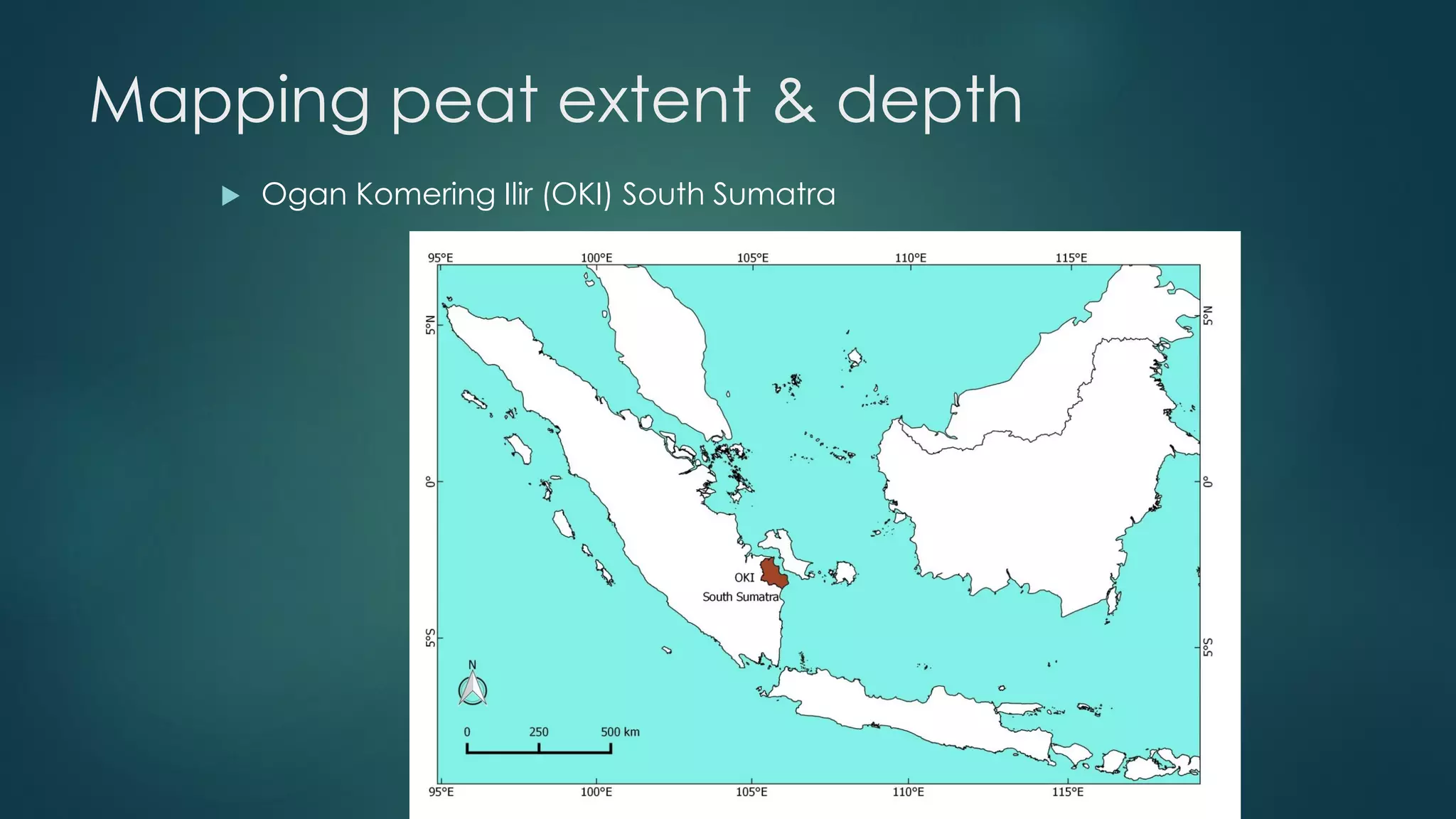
Mapping peat extent & depth
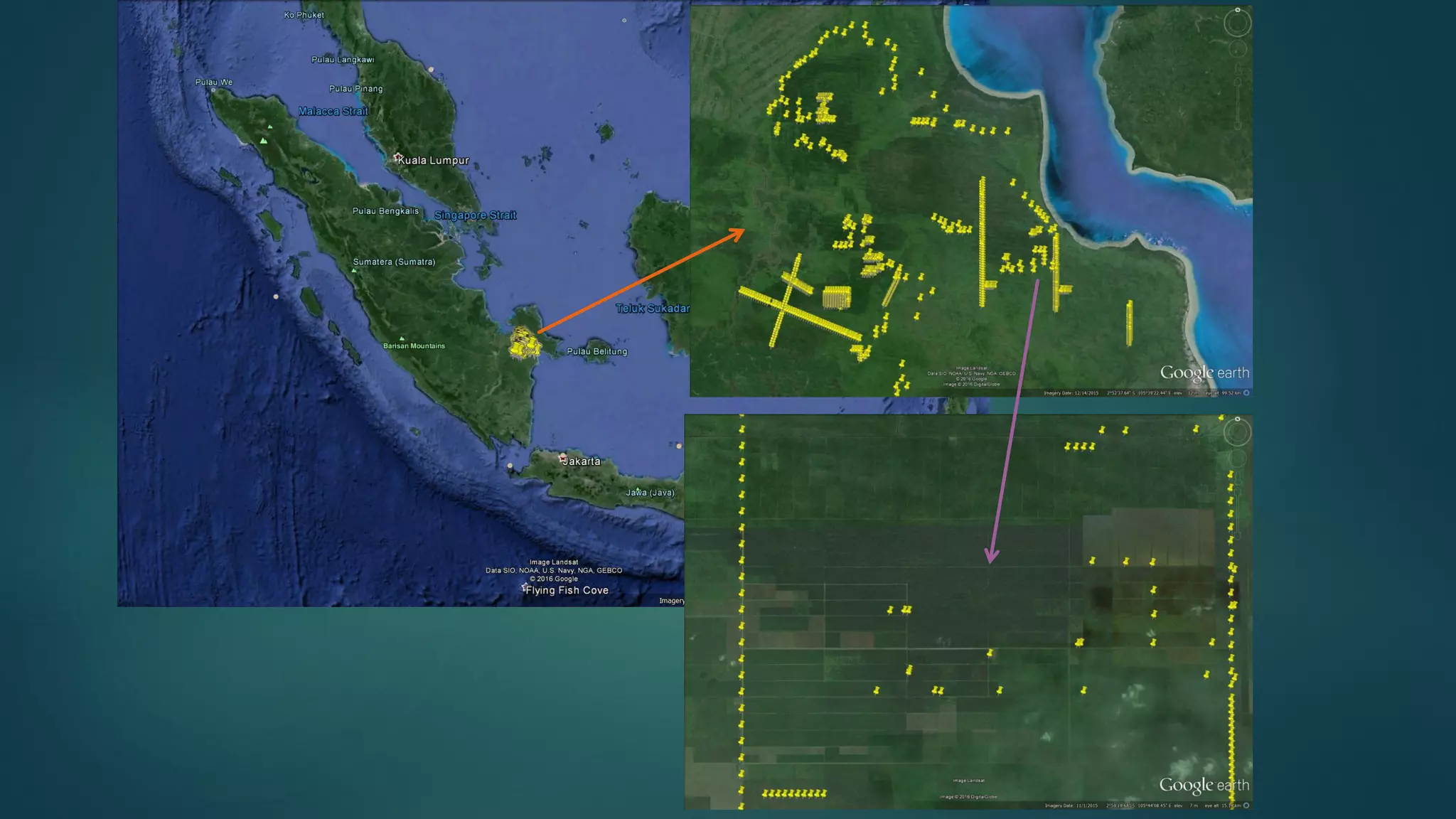
 Ogan Komering Ilir (OKI) South Sumatra
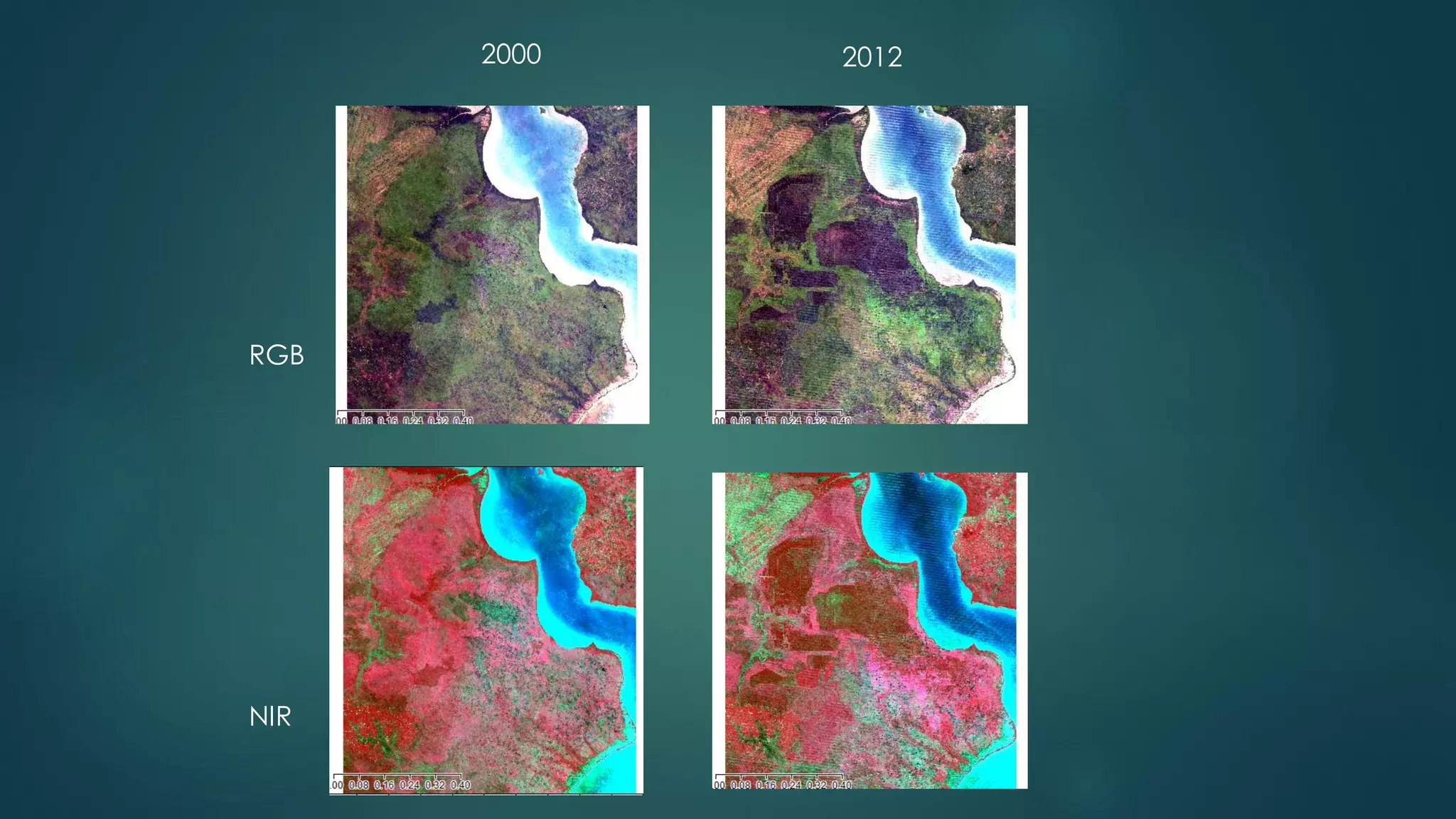
2000 2012
RGB
NIR
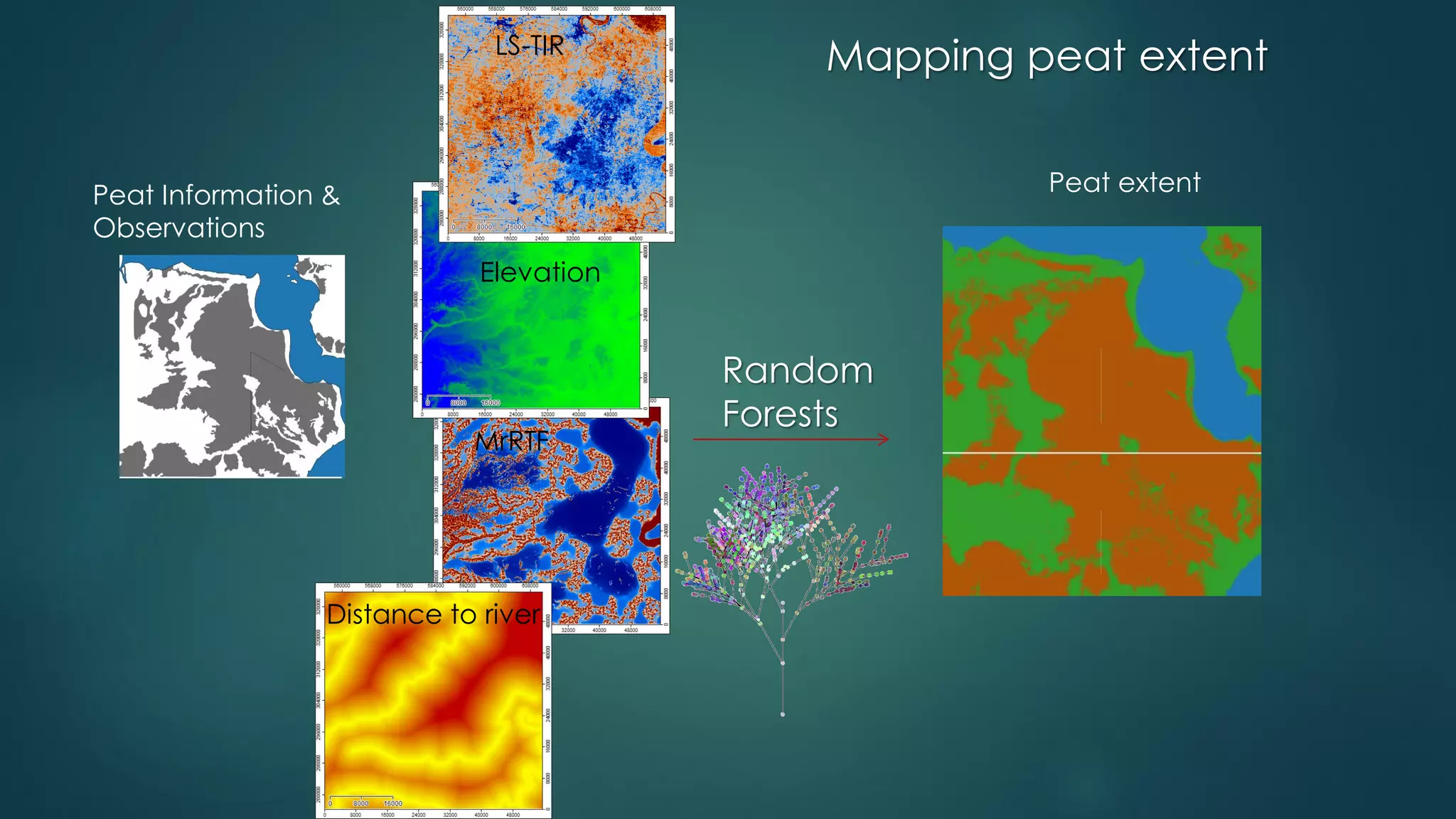
LS-TIR
Elevation
MrRTF
Distance to river
Random
Forests
Peat extentPeat Information &
Observations
Mapping peat extent
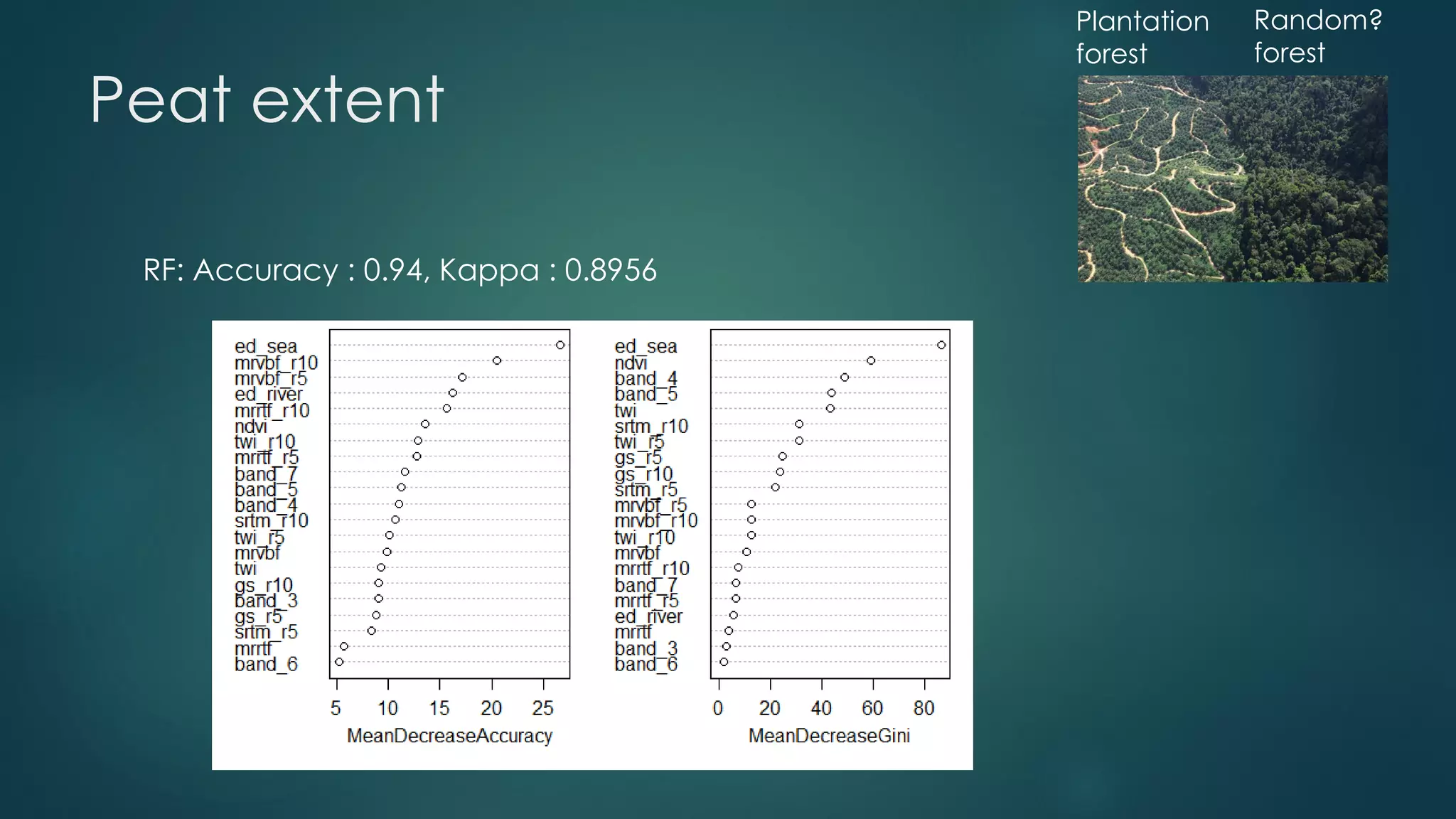
Peat extent
RF: Accuracy : 0.94, Kappa : 0.8956
Plantation
forest
Random?
forest
Mapping peat depth
Minasny, Budiman, Budi Indra Setiawan, Chusnul Arif, Satyanto Krido Saptomo, and Yudi Chadirin. "Digital mapping for cost-
effective and accurate prediction of the depth and carbon stocks in Indonesian peatlands." Geoderma 272 (2016): 20-31.
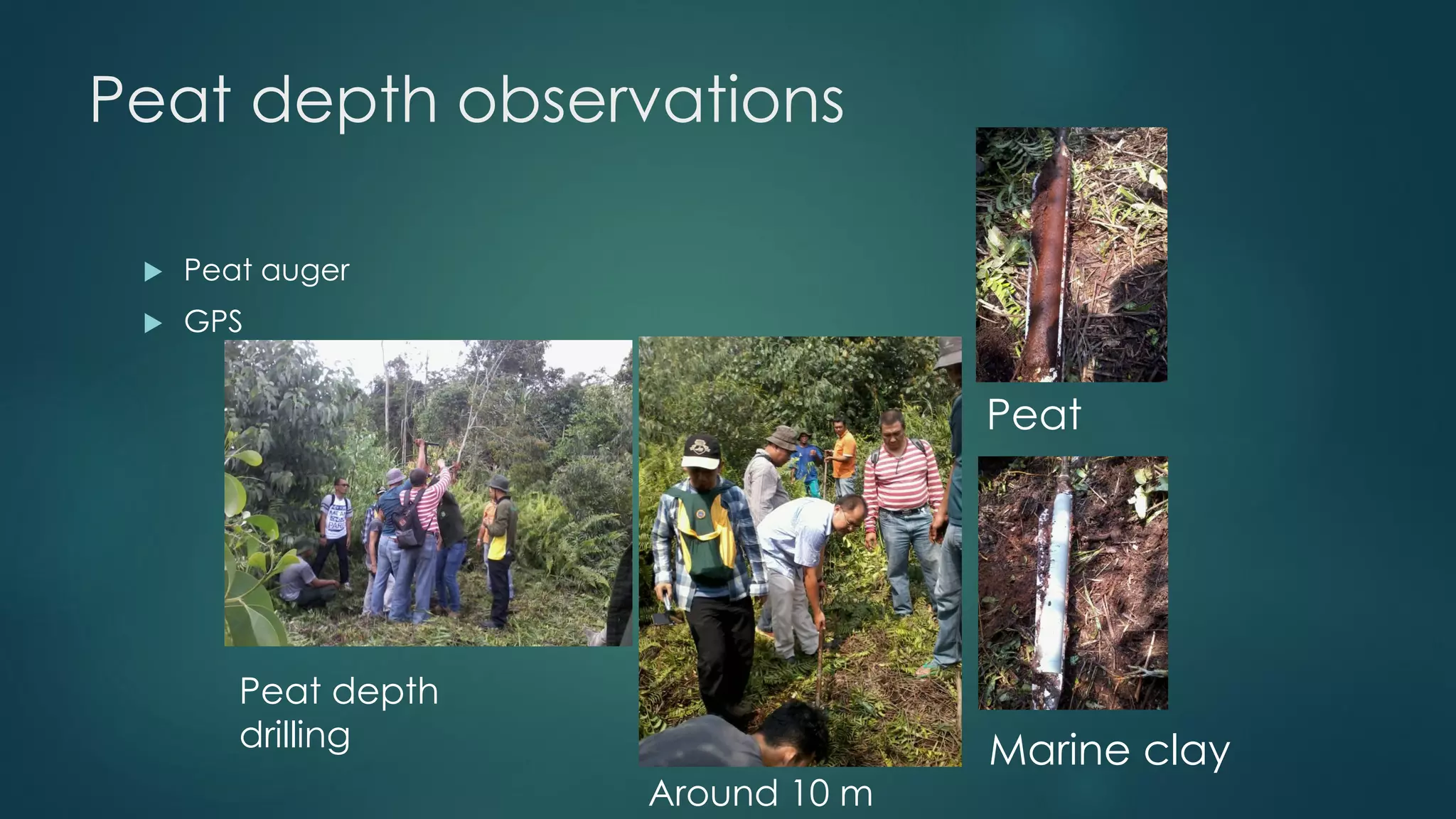
Peat depth observations
 Peat auger
 GPS
Peat
Marine clay
Around 10 m
Peat depth
drilling
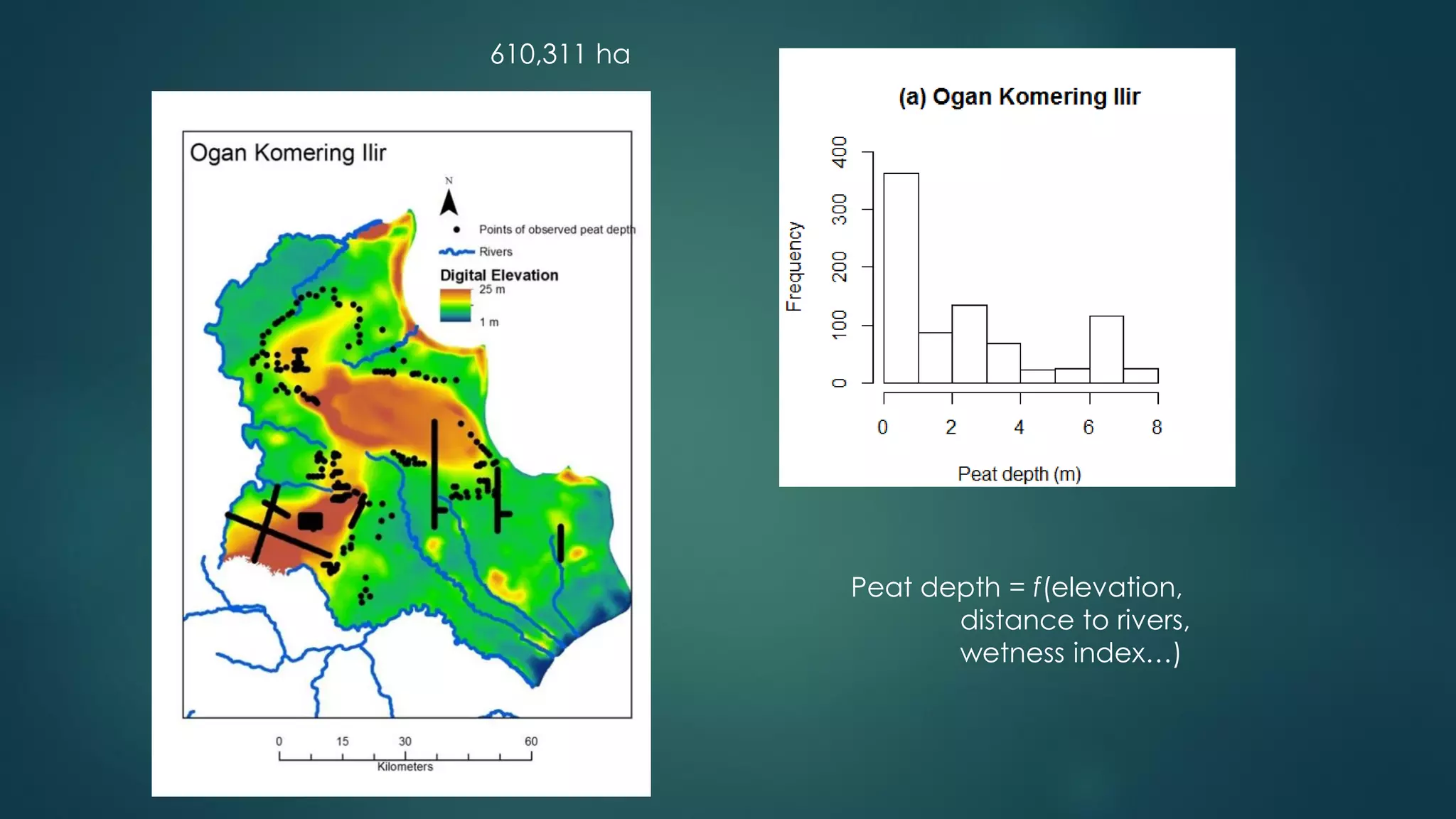
Peat depth = f(elevation,
distance to rivers,
wetness index…)
610,311 ha
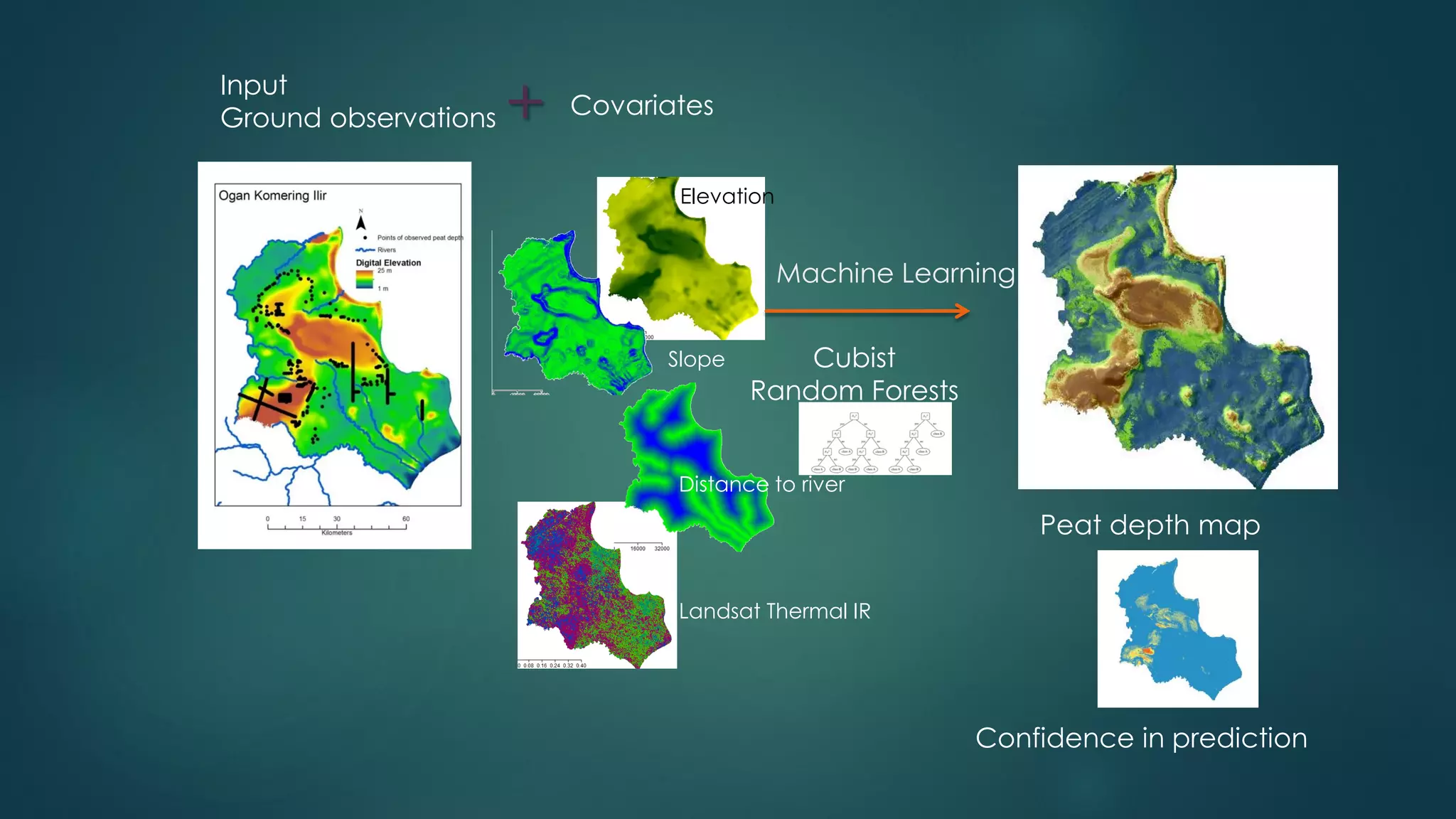
Input
Ground observations Covariates
Elevation
Slope
Distance to river
Landsat Thermal IR
Cubist
Random Forests
Peat depth map
+
Mean5th Percentile
RF
Cubist
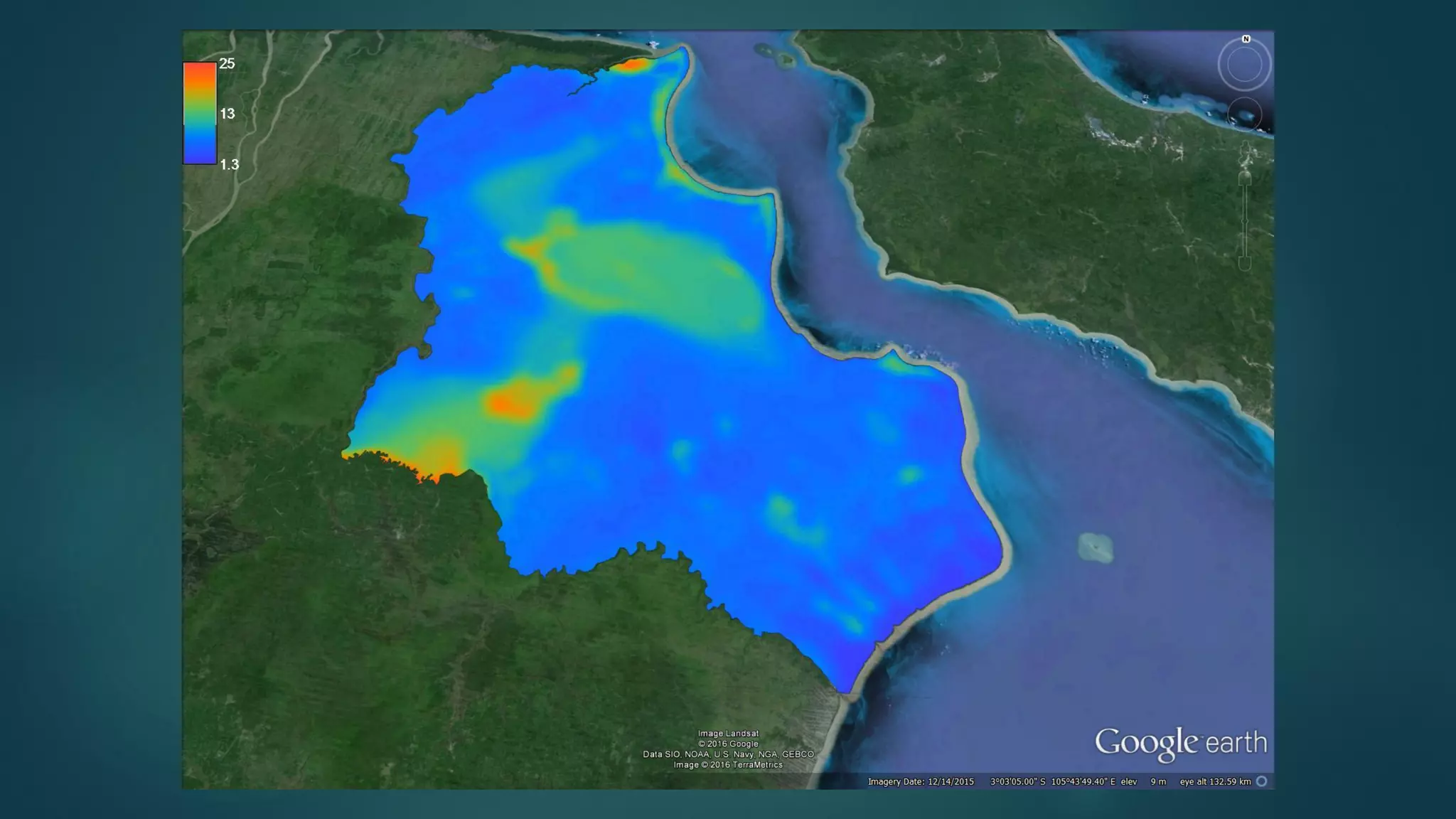
Confidence in prediction
Machine Learning
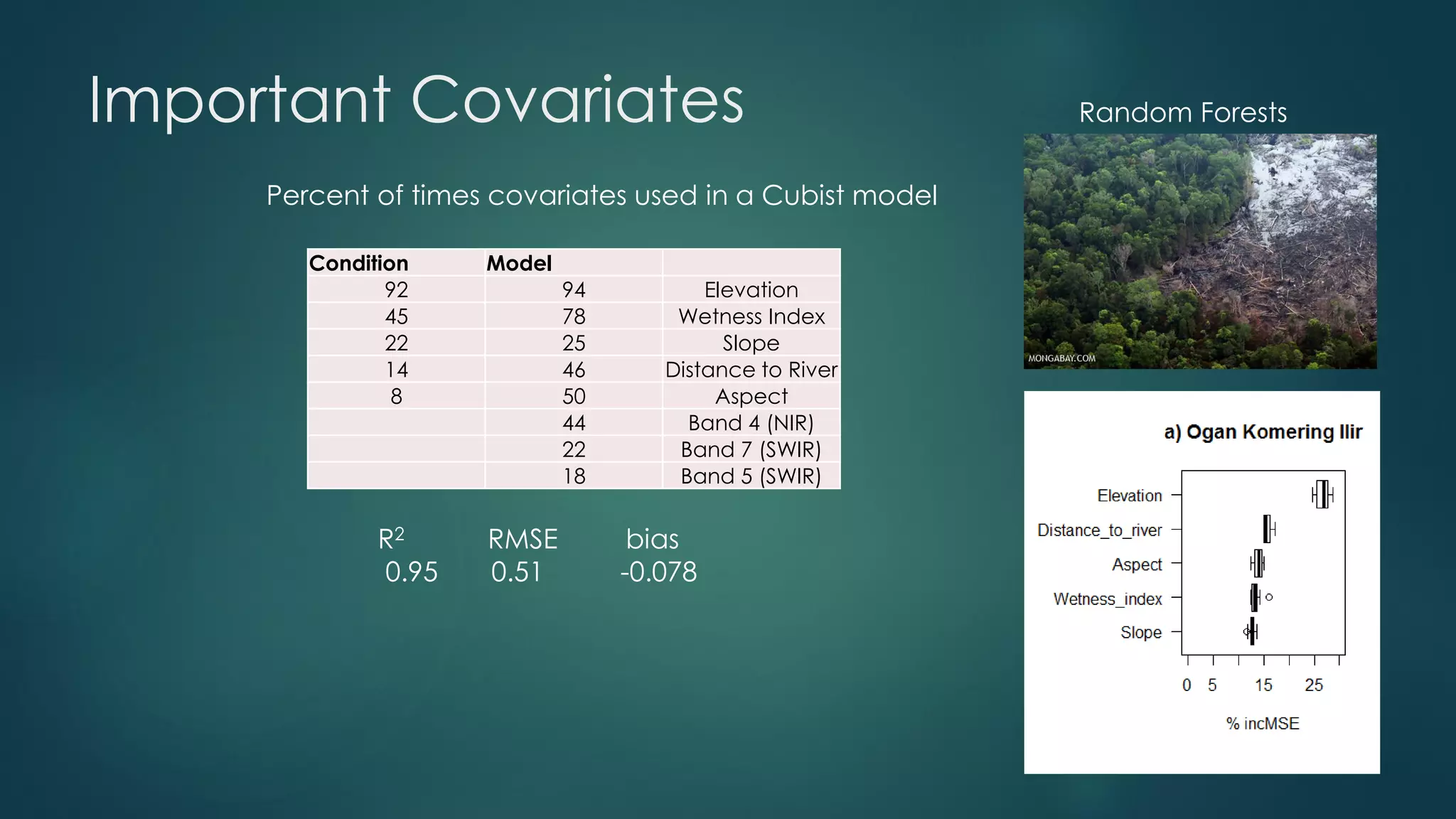
Condition Model
92 94 Elevation
45 78 Wetness Index
22 25 Slope
14 46 Distance to River
8 50 Aspect
44 Band 4 (NIR)
22 Band 7 (SWIR)
18 Band 5 (SWIR)
R2 RMSE bias
0.95 0.51 -0.078
Important Covariates
Percent of times covariates used in a Cubist model
Random Forests
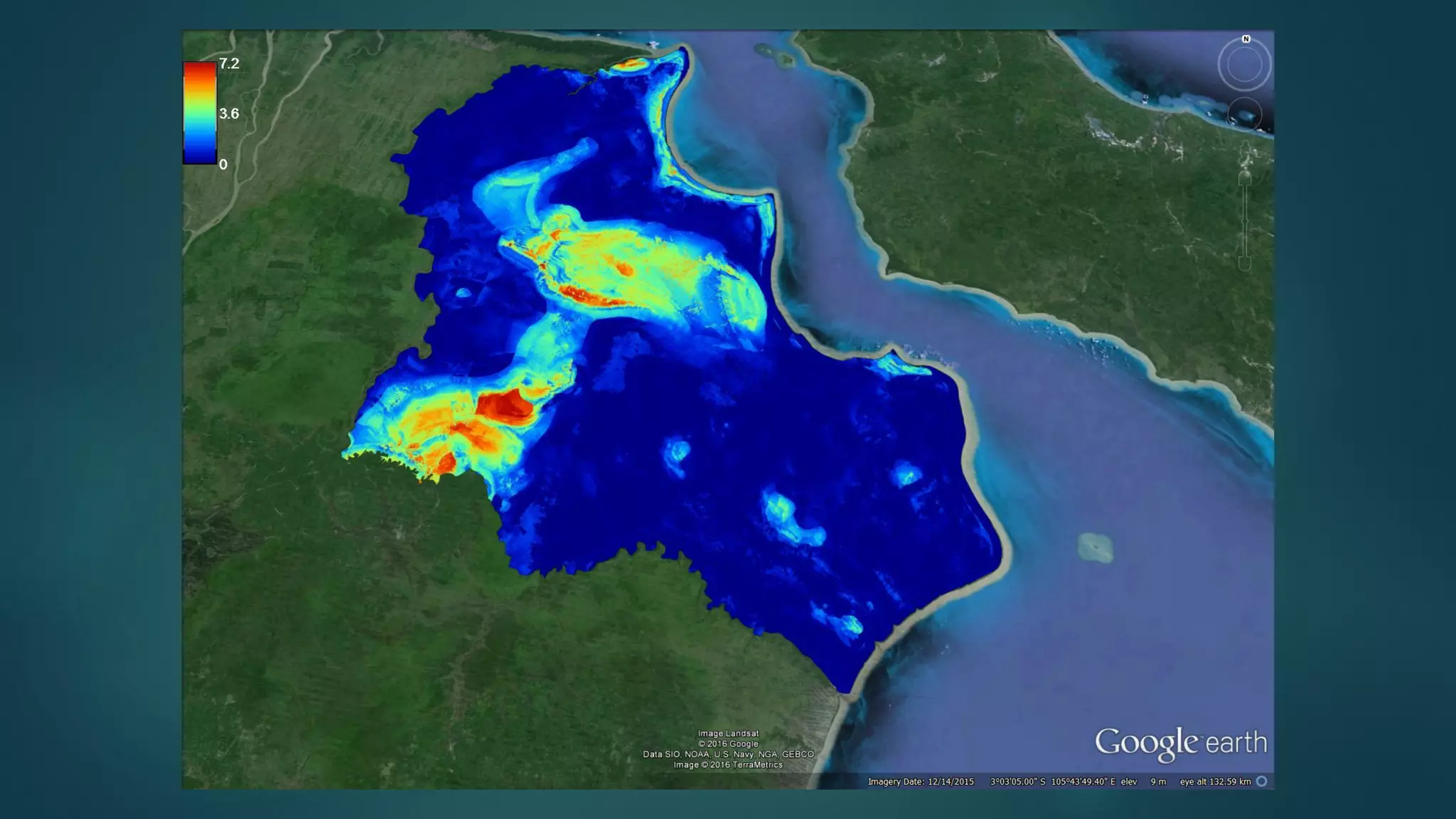
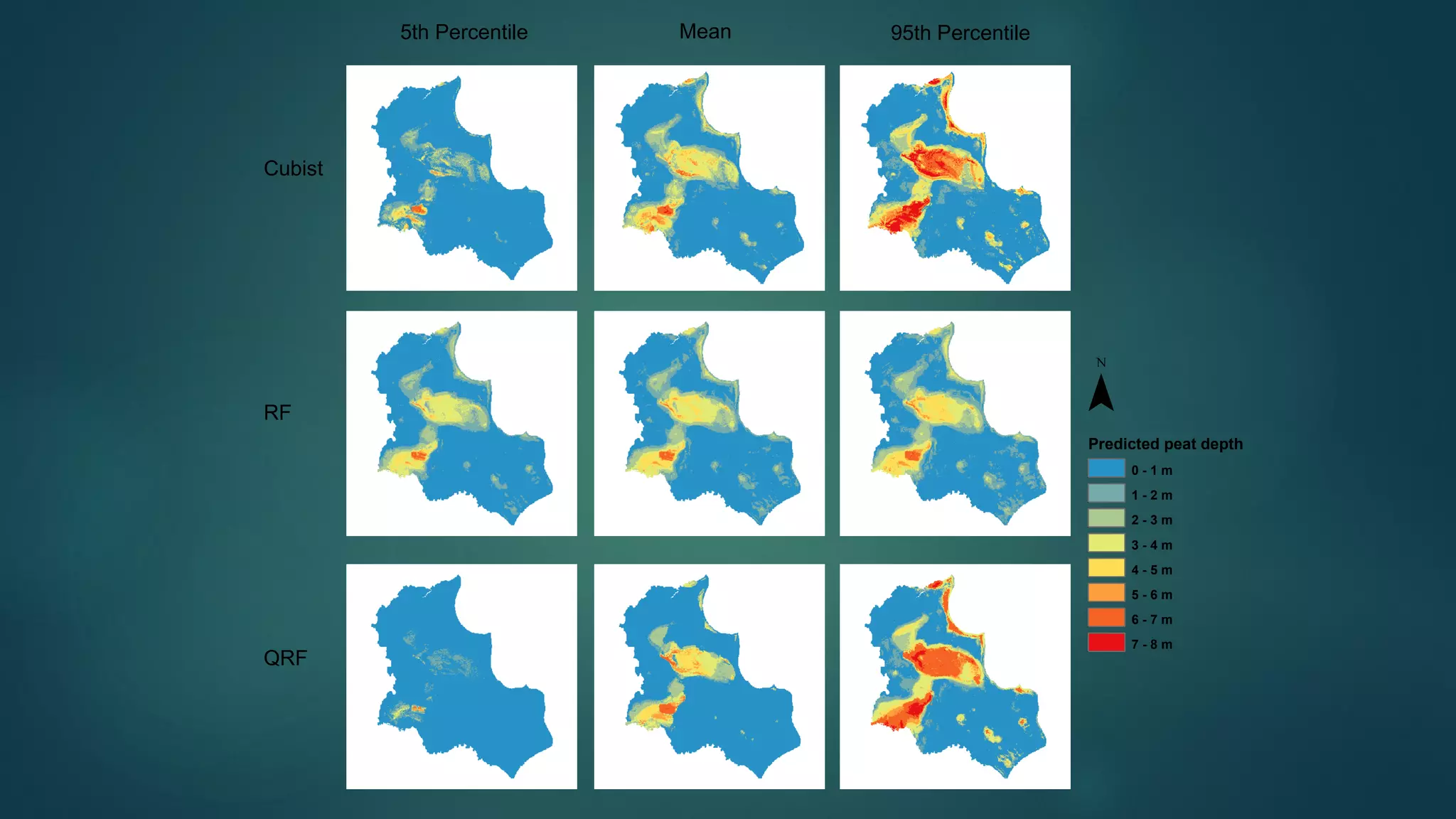
¯Predicted peat depth
0 - 1 m
1 - 2 m
2 - 3 m
3 - 4 m
4 - 5 m
5 - 6 m
6 - 7 m
7 - 8 m
Mean 95th Percentile5th Percentile
QRF
RF
Cubist
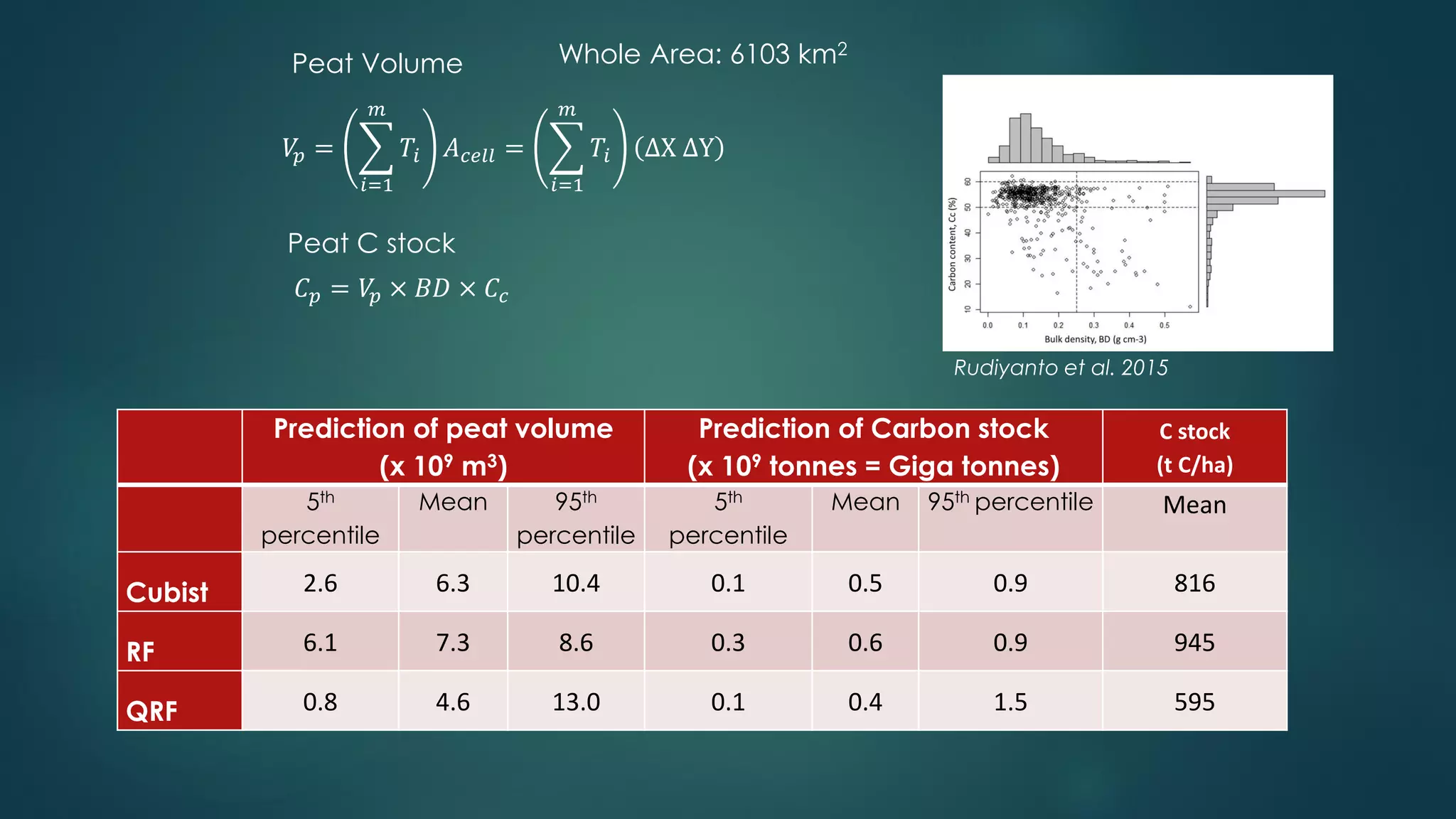
𝑉𝑝 =
𝑖=1
𝑚
𝑇𝑖 𝐴 𝑐𝑒𝑙𝑙 =
𝑖=1
𝑚
𝑇𝑖 ΔX ΔY
𝐶 𝑝 = 𝑉𝑝 × 𝐵𝐷 × 𝐶𝑐
Peat Volume
Peat C stock
Prediction of peat volume
(x 109 m3)
Prediction of Carbon stock
(x 109 tonnes = Giga tonnes)
C stock
(t C/ha)
5th
percentile
Mean 95th
percentile
5th
percentile
Mean 95th percentile Mean
Cubist 2.6 6.3 10.4 0.1 0.5 0.9 816
RF 6.1 7.3 8.6 0.3 0.6 0.9 945
QRF 0.8 4.6 13.0 0.1 0.4 1.5 595
Whole Area: 6103 km2
Rudiyanto et al. 2015
Conclusions
 DSM can facilitate the delivery of fine resolution peat maps
accurately and cost-effectively.
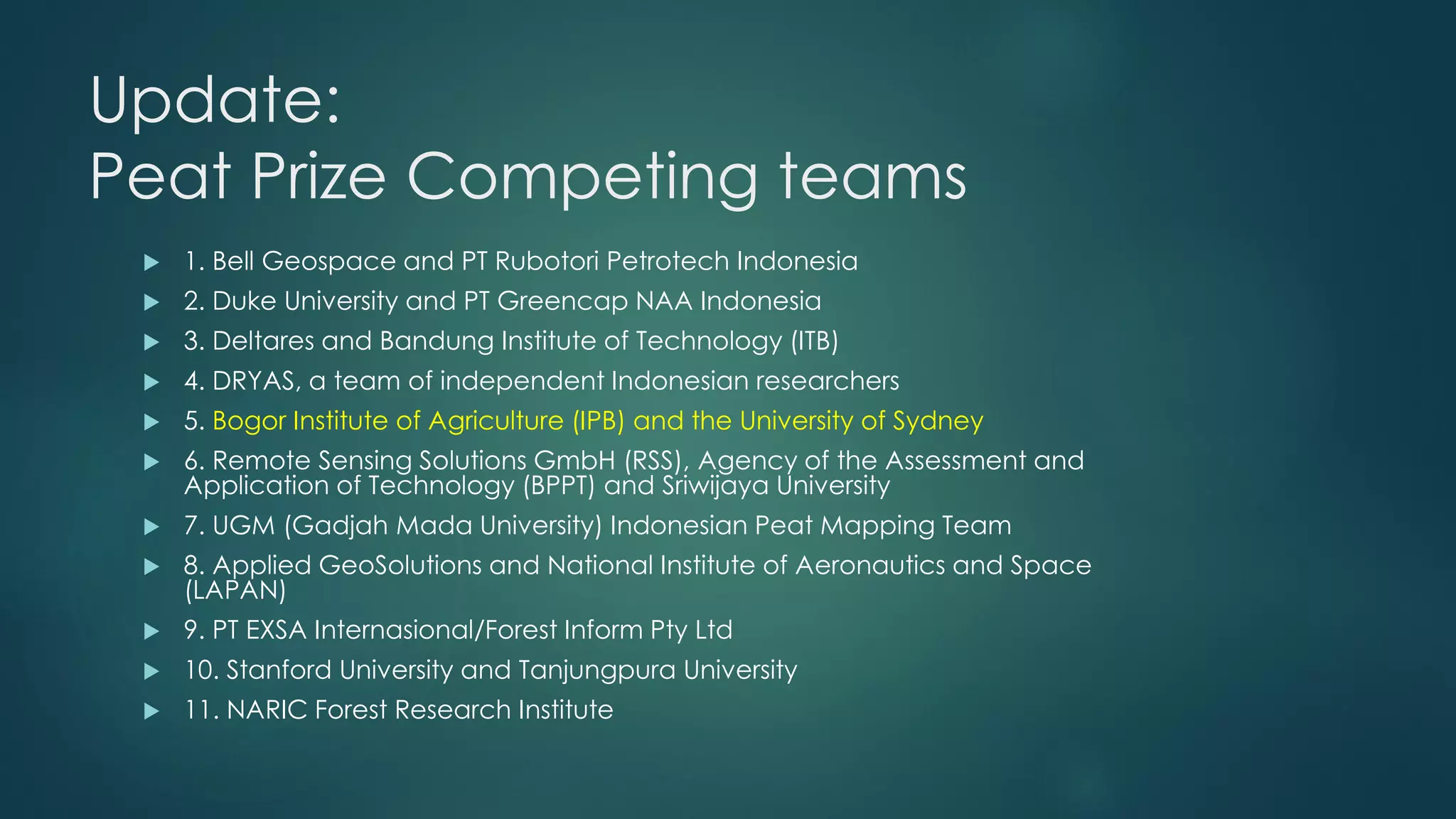
Update:
Peat Prize Competing teams
 1. Bell Geospace and PT Rubotori Petrotech Indonesia
 2. Duke University and PT Greencap NAA Indonesia
 3. Deltares and Bandung Institute of Technology (ITB)
 4. DRYAS, a team of independent Indonesian researchers
 5. Bogor Institute of Agriculture (IPB) and the University of Sydney
 6. Remote Sensing Solutions GmbH (RSS), Agency of the Assessment and
Application of Technology (BPPT) and Sriwijaya University
 7. UGM (Gadjah Mada University) Indonesian Peat Mapping Team
 8. Applied GeoSolutions and National Institute of Aeronautics and Space
(LAPAN)
 9. PT EXSA Internasional/Forest Inform Pty Ltd
 10. Stanford University and Tanjungpura University
 11. NARIC Forest Research Institute

Digital Mapping of Peat soils in Indonesia

  • 1.
    A million dollarchallenge to map Indonesian peatlands – A Digital Soil Mapping Approach BUDIMAN MINASNY, RUDIYANTO, BUDI INDRA SETYAWAN
  • 2.
  • 4.
    Soil C stockin Indonesia  Land area: 190 Mha  C stock mineral soil: 0-30 cm: 9.9 ± 0.4 Gt C (Sulaeman, 2015)  Peatland: 33.7 Gt C (Wahyunto), area: 20.9 Mha
  • 5.
    1997 Fire, released~0.19-0.23 Gt C 2016 fire ~0.48 Gt C Indonesia’s annual GHG emission (excluding land use) ~0.21 Gt C.
  • 6.
  • 7.
    Current peat map Wetlands international 1:250,000 scale, peatland on 3 main islands: Sumatera, Kalimantan, Papua
  • 8.
    Proposed Methodologies  UsingRemote & proximal sensing  LIDAR  Gamma Radiometrics (Ireland, Finland…)  EMI  These sensors require ground calibration, not cost effective over large extent
  • 9.
    Digital Soil Mappingto the rescue  S = f(s,c,o,r,p,a,n) (McBratney et al. 2003)  s: soil, other properties of the soil at a point;  c: climate;  o: organisms, vegetation or human activity;  r: topography, landscape attributes;  p: parent material, lithology;  a: age, the time factor;  n: space, spatial position.  Peat extent/ depth : P = f(o,r,n)
  • 10.
    Mapping peat extent& depth  Ogan Komering Ilir (OKI) South Sumatra
  • 11.
  • 12.
    LS-TIR Elevation MrRTF Distance to river Random Forests PeatextentPeat Information & Observations Mapping peat extent
  • 13.
    Peat extent RF: Accuracy: 0.94, Kappa : 0.8956 Plantation forest Random? forest
  • 14.
    Mapping peat depth Minasny,Budiman, Budi Indra Setiawan, Chusnul Arif, Satyanto Krido Saptomo, and Yudi Chadirin. "Digital mapping for cost- effective and accurate prediction of the depth and carbon stocks in Indonesian peatlands." Geoderma 272 (2016): 20-31.
  • 15.
    Peat depth observations Peat auger  GPS Peat Marine clay Around 10 m Peat depth drilling
  • 17.
    Peat depth =f(elevation, distance to rivers, wetness index…) 610,311 ha
  • 18.
    Input Ground observations Covariates Elevation Slope Distanceto river Landsat Thermal IR Cubist Random Forests Peat depth map + Mean5th Percentile RF Cubist Confidence in prediction Machine Learning
  • 21.
    Condition Model 92 94Elevation 45 78 Wetness Index 22 25 Slope 14 46 Distance to River 8 50 Aspect 44 Band 4 (NIR) 22 Band 7 (SWIR) 18 Band 5 (SWIR) R2 RMSE bias 0.95 0.51 -0.078 Important Covariates Percent of times covariates used in a Cubist model Random Forests
  • 22.
    ¯Predicted peat depth 0- 1 m 1 - 2 m 2 - 3 m 3 - 4 m 4 - 5 m 5 - 6 m 6 - 7 m 7 - 8 m Mean 95th Percentile5th Percentile QRF RF Cubist
  • 23.
    𝑉𝑝 = 𝑖=1 𝑚 𝑇𝑖 𝐴𝑐𝑒𝑙𝑙 = 𝑖=1 𝑚 𝑇𝑖 ΔX ΔY 𝐶 𝑝 = 𝑉𝑝 × 𝐵𝐷 × 𝐶𝑐 Peat Volume Peat C stock Prediction of peat volume (x 109 m3) Prediction of Carbon stock (x 109 tonnes = Giga tonnes) C stock (t C/ha) 5th percentile Mean 95th percentile 5th percentile Mean 95th percentile Mean Cubist 2.6 6.3 10.4 0.1 0.5 0.9 816 RF 6.1 7.3 8.6 0.3 0.6 0.9 945 QRF 0.8 4.6 13.0 0.1 0.4 1.5 595 Whole Area: 6103 km2 Rudiyanto et al. 2015
  • 24.
    Conclusions  DSM canfacilitate the delivery of fine resolution peat maps accurately and cost-effectively.
  • 25.
    Update: Peat Prize Competingteams  1. Bell Geospace and PT Rubotori Petrotech Indonesia  2. Duke University and PT Greencap NAA Indonesia  3. Deltares and Bandung Institute of Technology (ITB)  4. DRYAS, a team of independent Indonesian researchers  5. Bogor Institute of Agriculture (IPB) and the University of Sydney  6. Remote Sensing Solutions GmbH (RSS), Agency of the Assessment and Application of Technology (BPPT) and Sriwijaya University  7. UGM (Gadjah Mada University) Indonesian Peat Mapping Team  8. Applied GeoSolutions and National Institute of Aeronautics and Space (LAPAN)  9. PT EXSA Internasional/Forest Inform Pty Ltd  10. Stanford University and Tanjungpura University  11. NARIC Forest Research Institute