Parent breakfast – Sept. 2011Digital footprints:Technology ethics  & safetyDigital FootprintsFacebook Privacy SettingsCell Phones and TextingChallenges for ParentsNDP’s AUP
Security and privacy	Each social networking site has security and privacy settings. May have an presence and not know it. Tagged in photos or videosWhat is posted, stays there foreverSocial embarrassmentCollege acceptance
PRIVACY FACEBOOK – at minimum, you and your daughter should go to the following site while she is logged into Facebookhttps://www.facebook.com/help/privacy
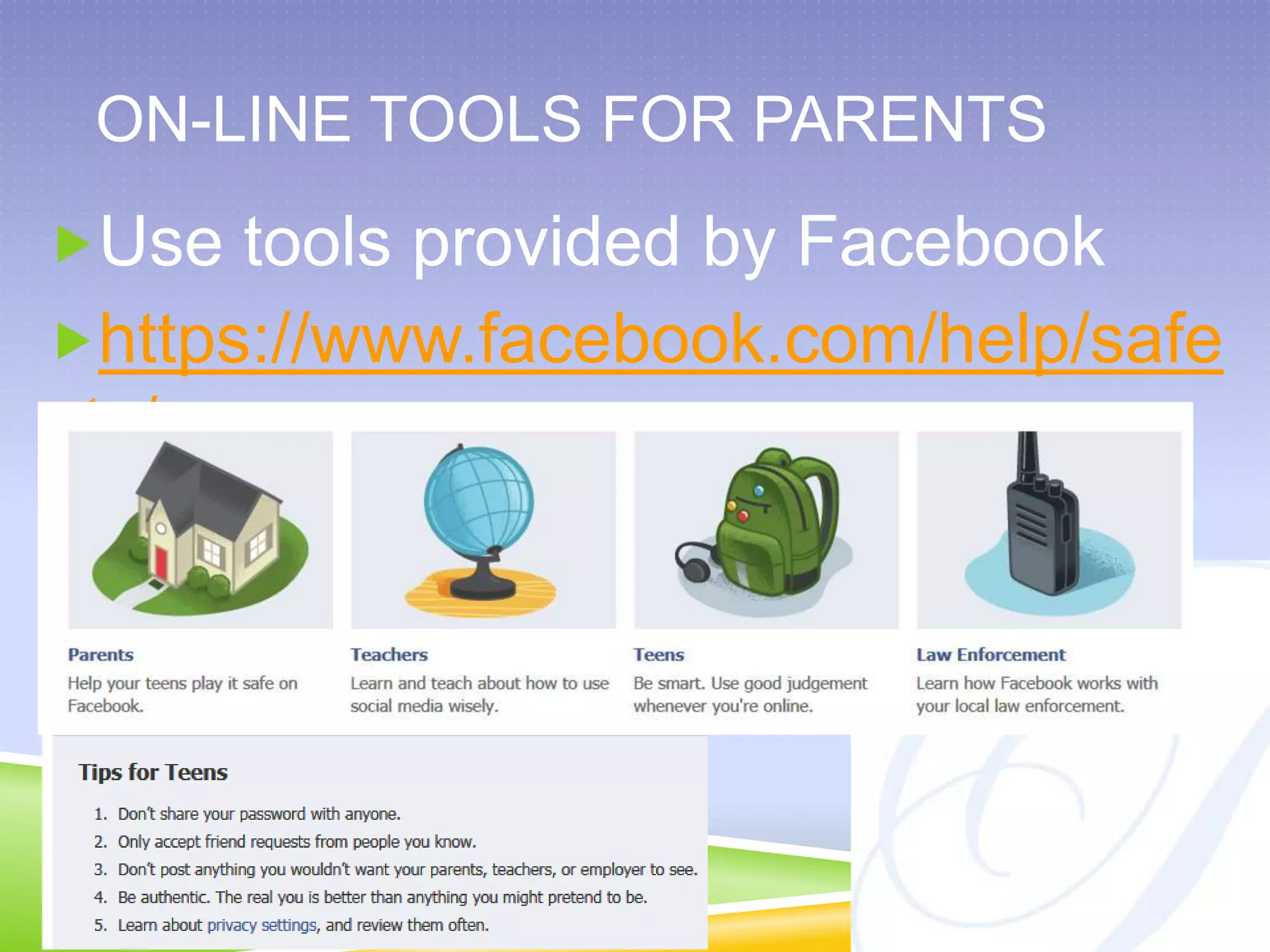
On-line tools for parentsUse tools provided by Facebookhttps://www.facebook.com/help/safety/
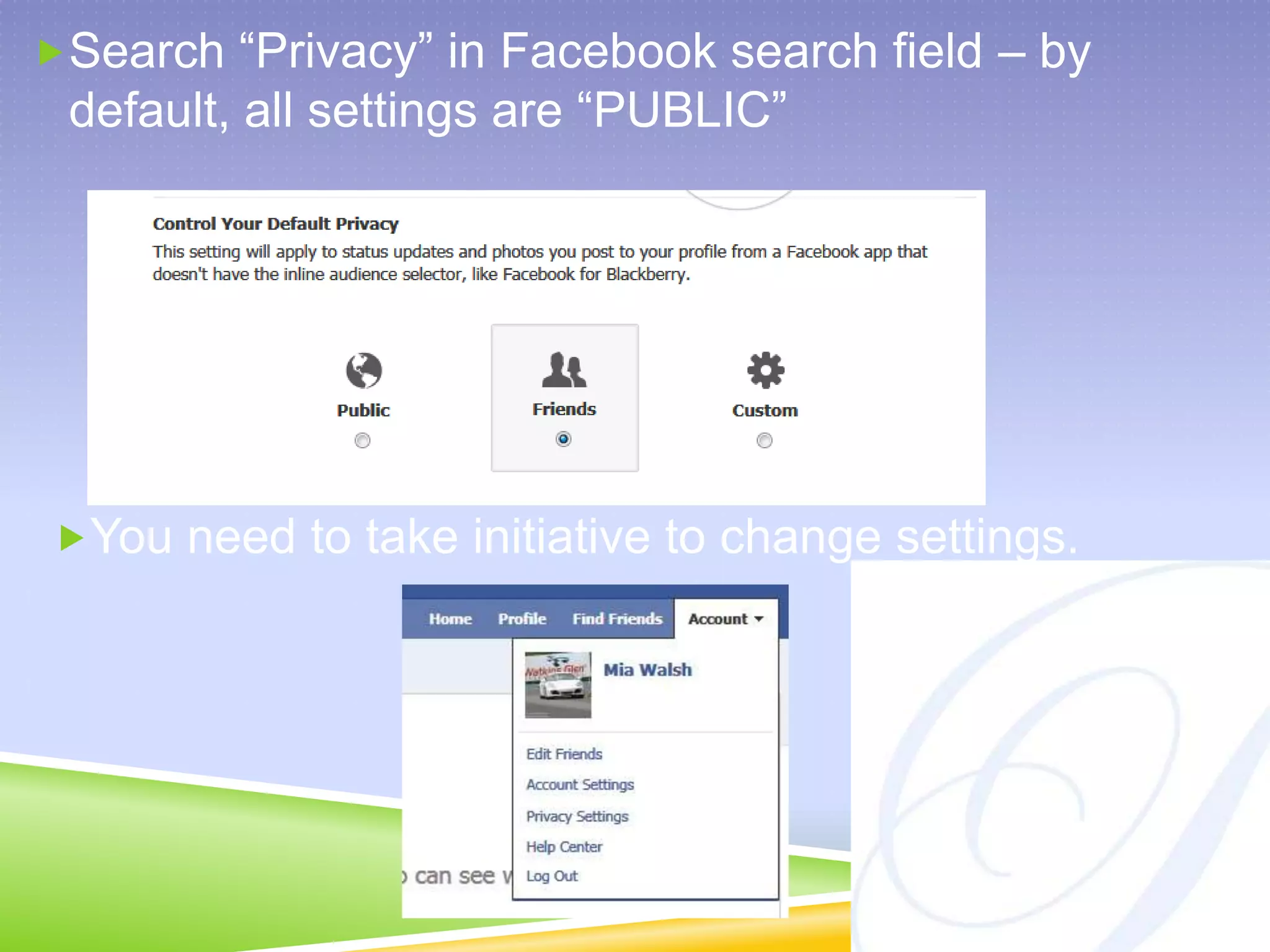
Search “Privacy” in Facebook search field – by default, all settings are “PUBLIC”You need to take initiative to change settings.
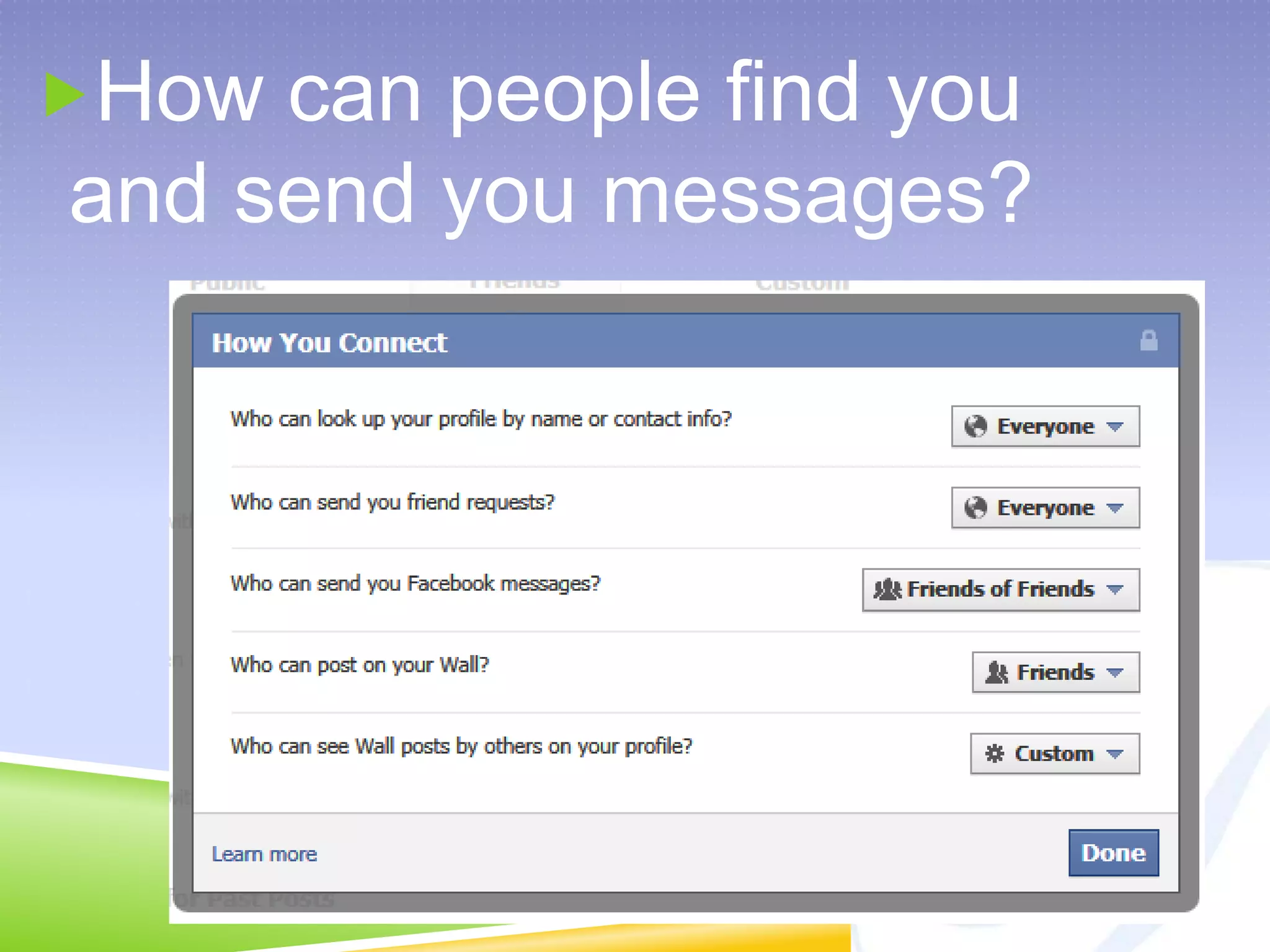
How can people find you and send you messages?
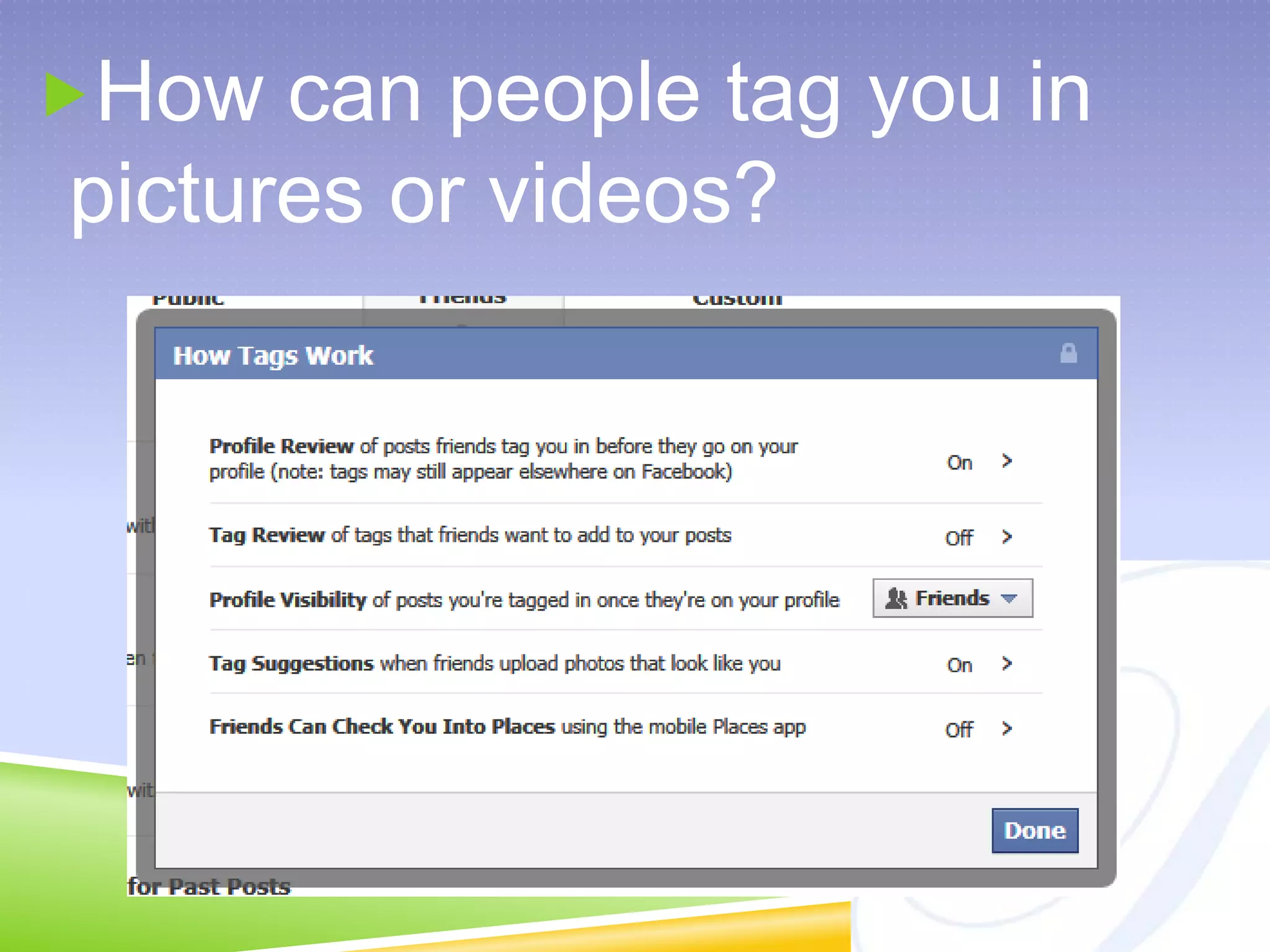
How can people tag you in pictures or videos?
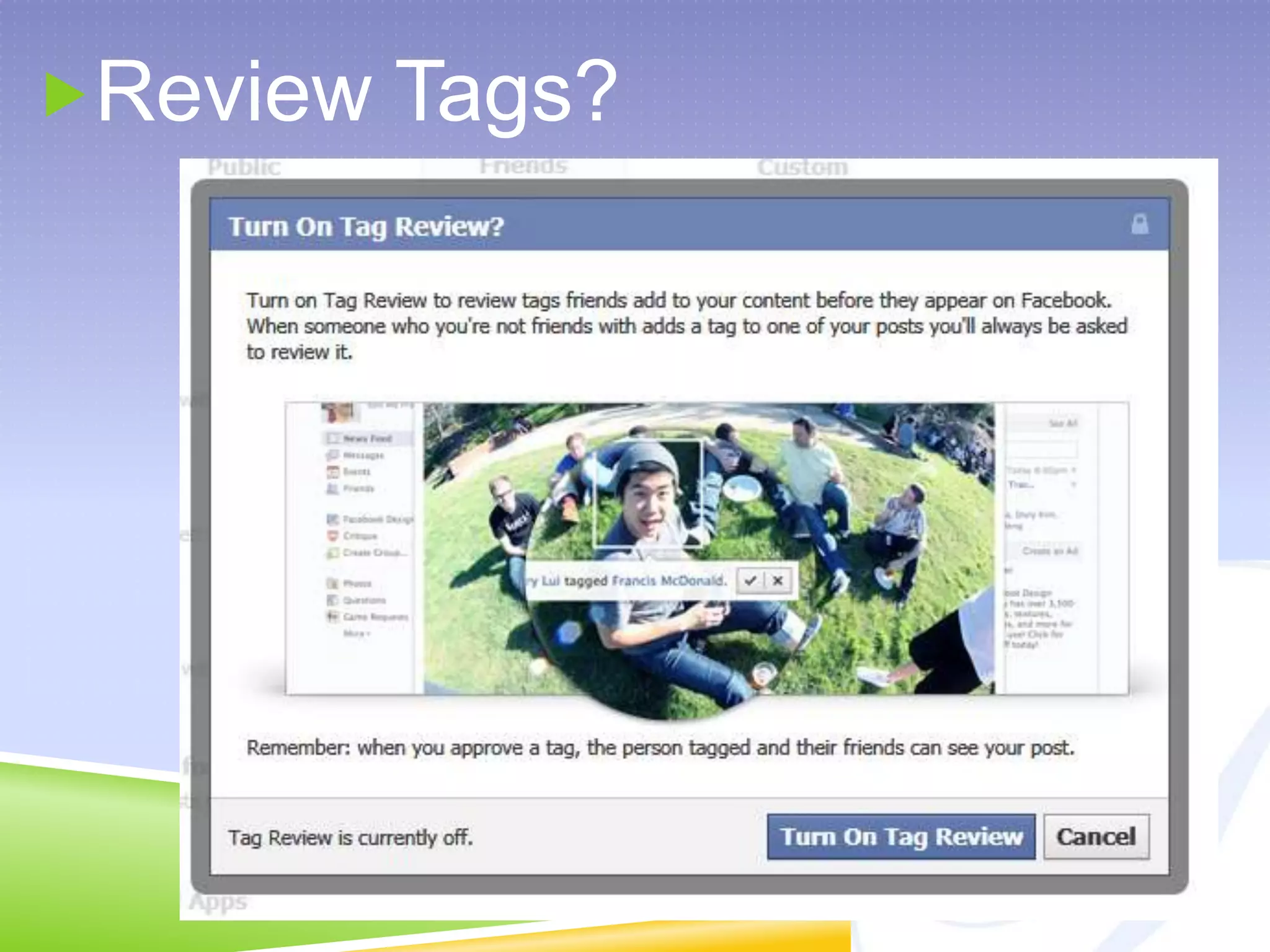
Review Tags?
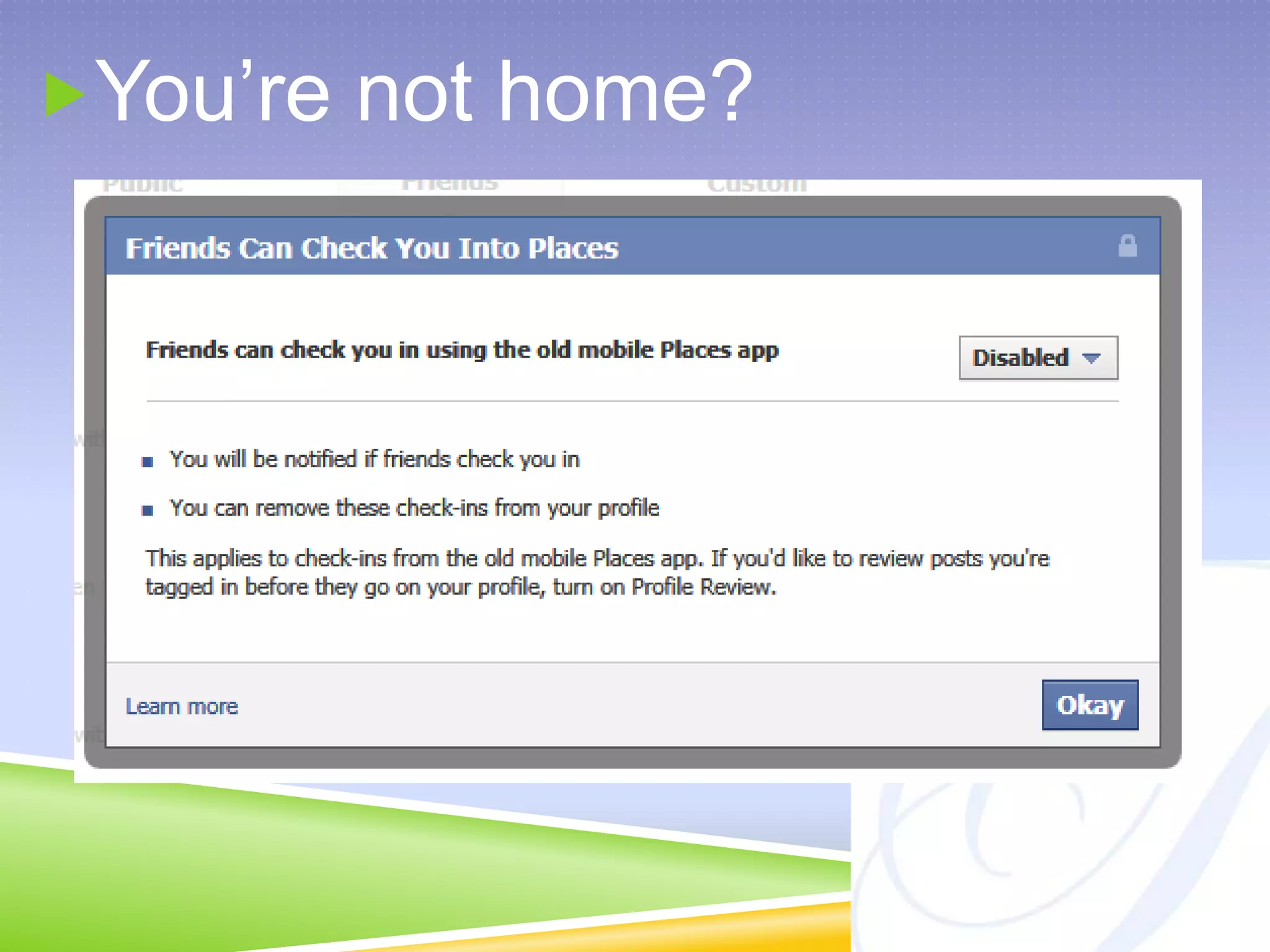
You’re not home?
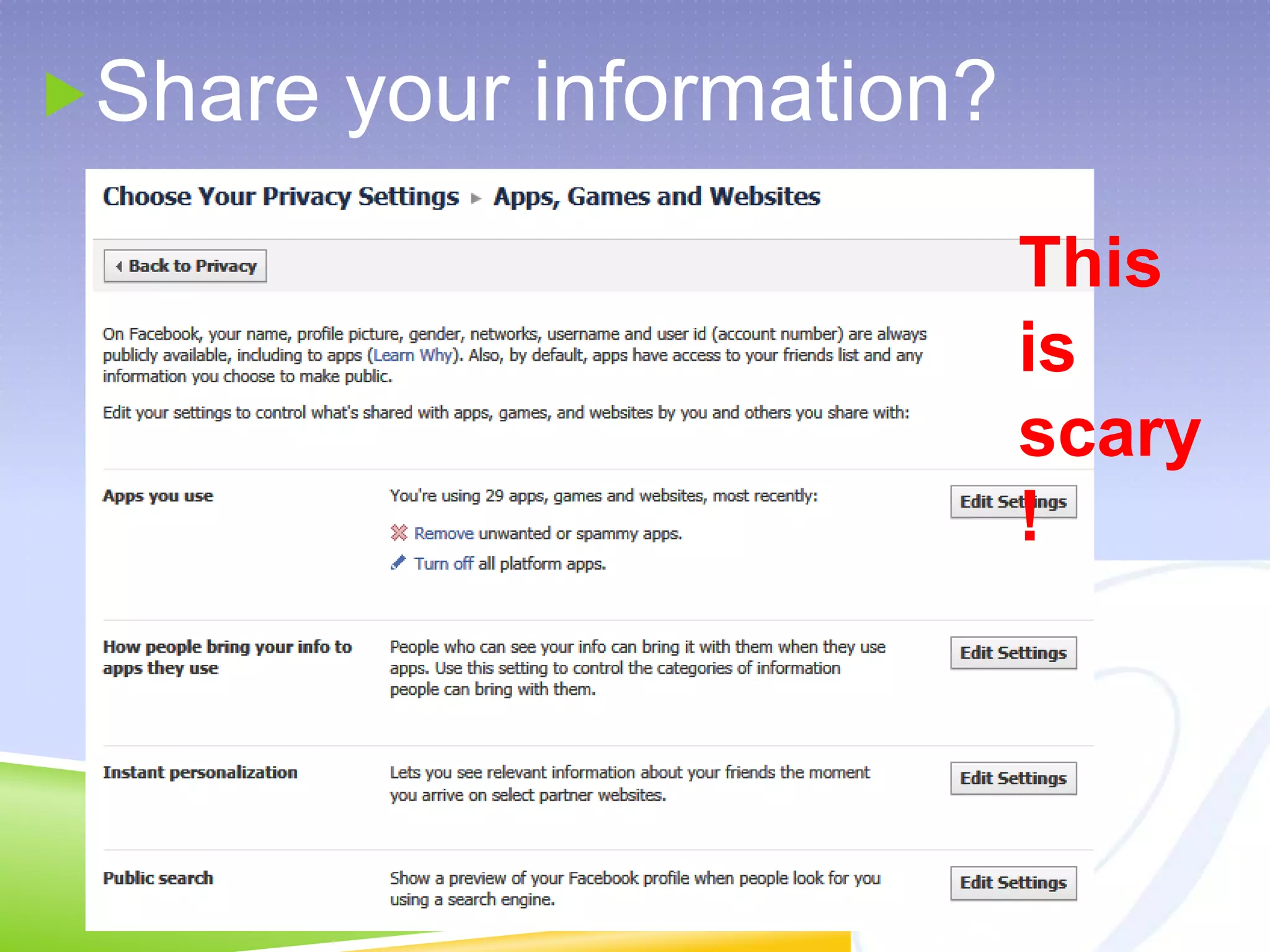
Share your information?This is scary!
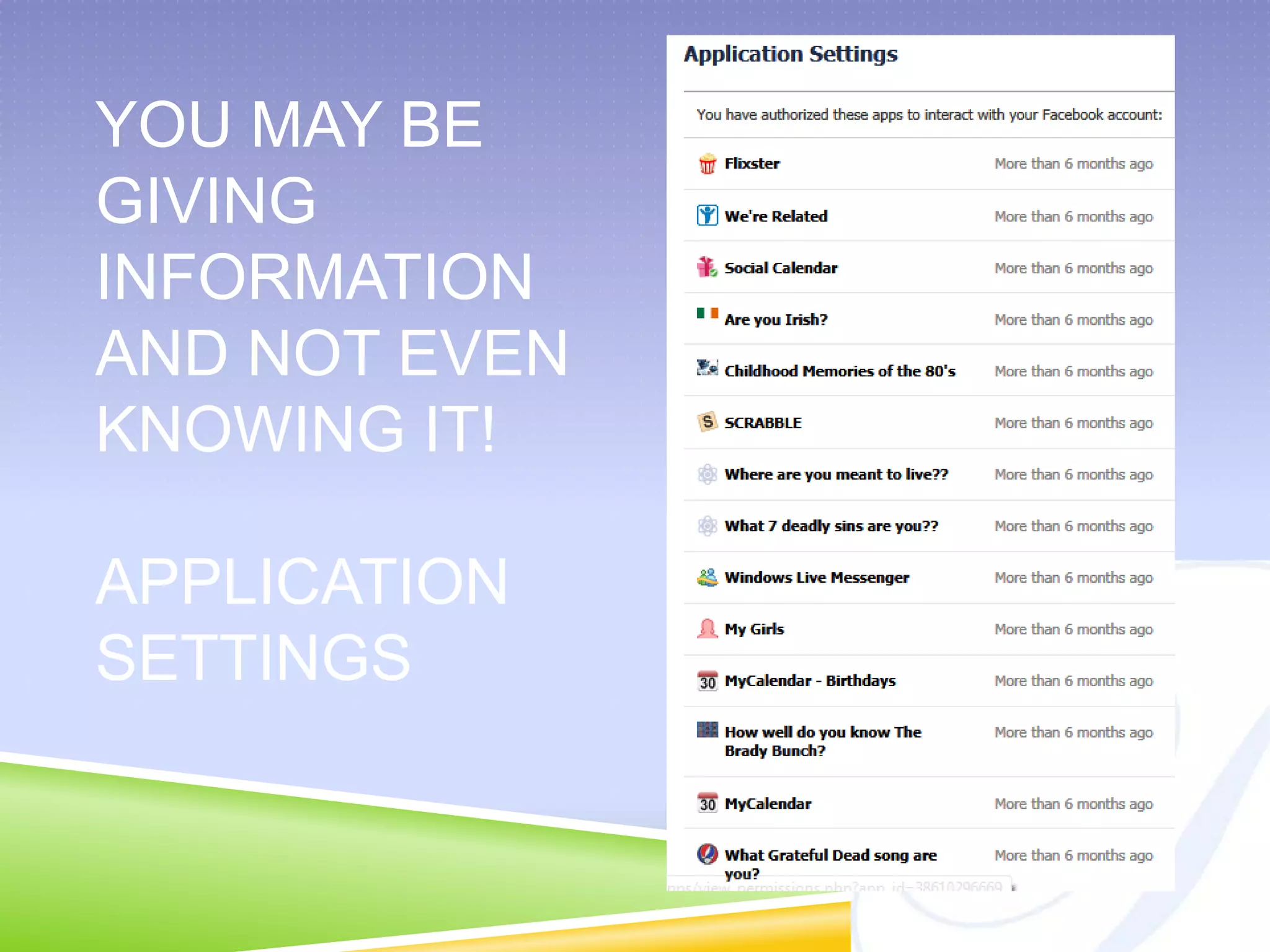
You may be giving information and not even knowing it!Application settings
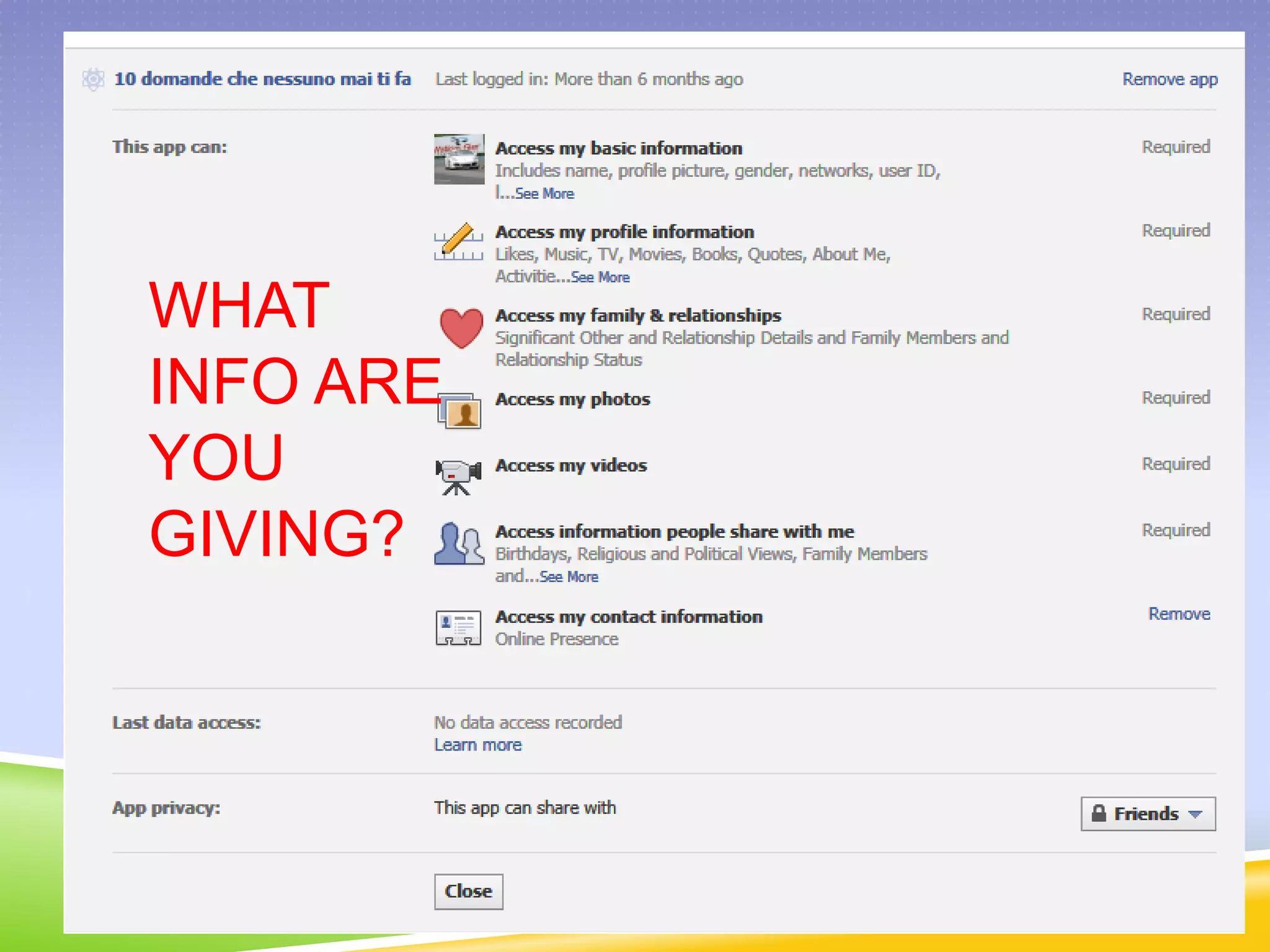
What info are you giving?
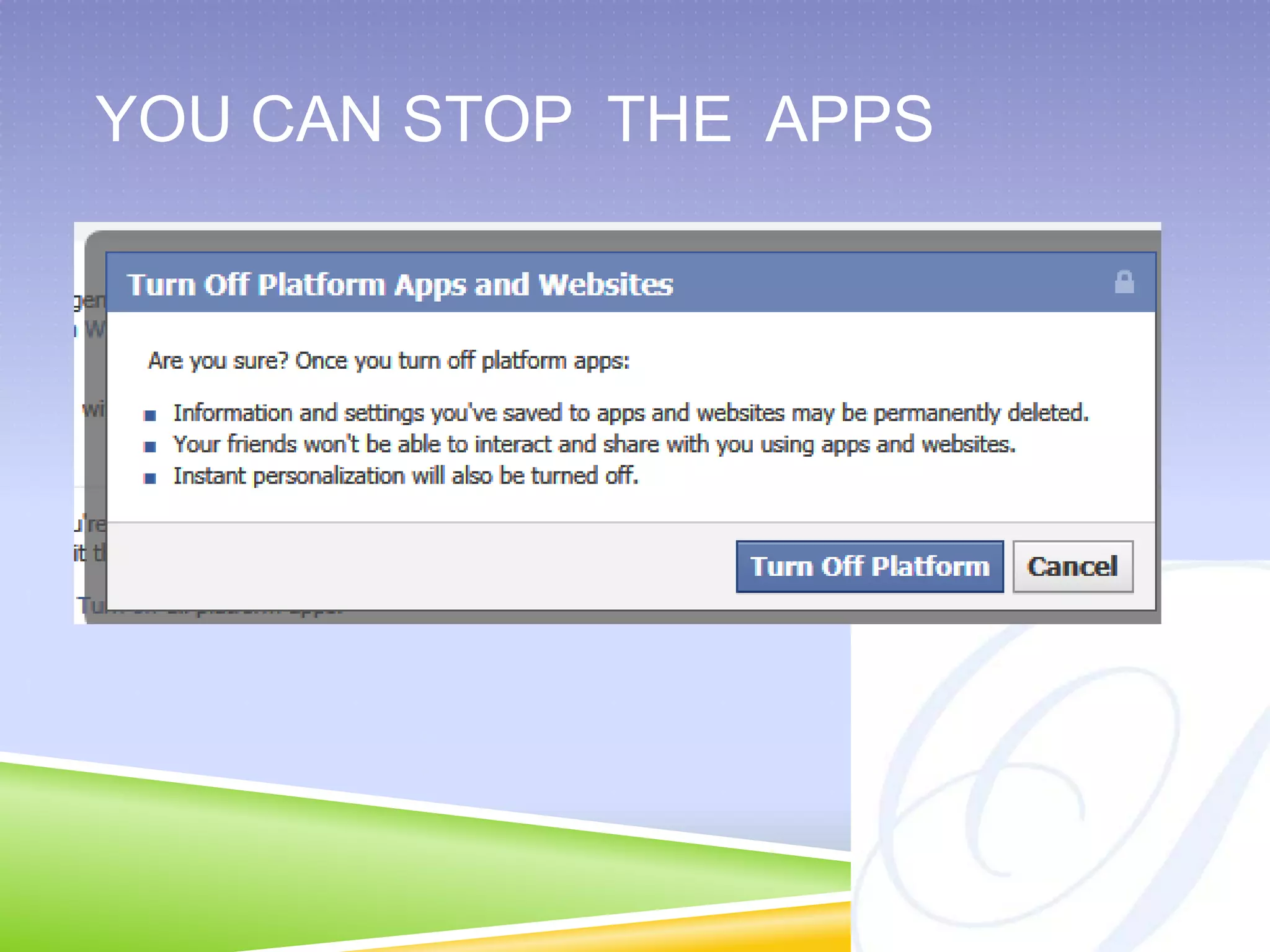
You can stop  the  apps
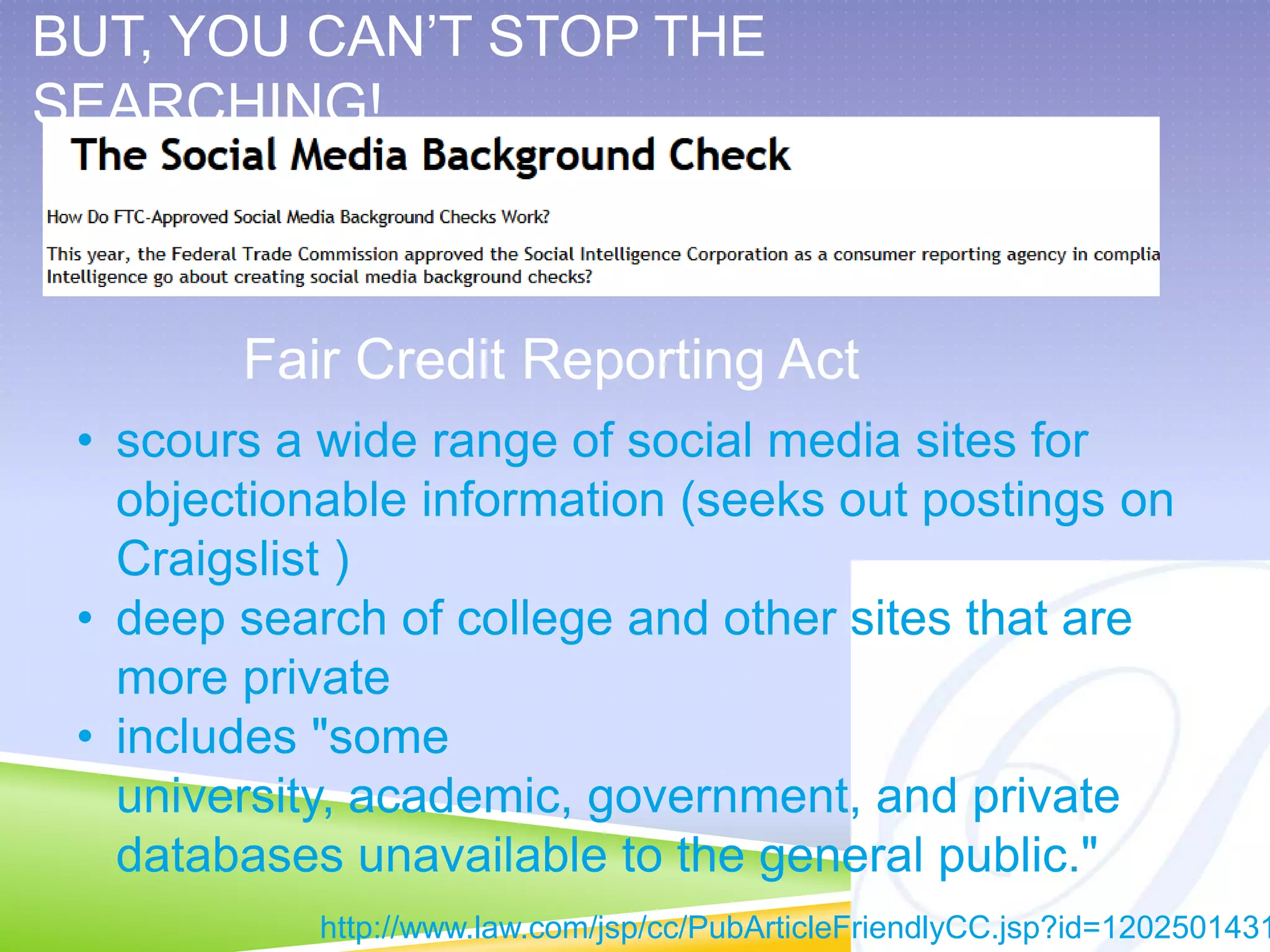
But, you can’t stop the searching!Fair Credit Reporting Actscours a wide range of social media sites for objectionable information (seeks out postings on Craigslist )
deep search of college and other sites that are more private
includes "some university, academic, government, and private databases unavailable to the general public."http://www.law.com/jsp/cc/PubArticleFriendlyCC.jsp?id=1202501431464
But, you can’t stop the searching!Offensive T-Shirt
Written word taken out of context
Sarcasm verse literal?
Angry status update postsMake sure there aren't any forgotten profiles floating about.http://www.law.com/jsp/cc/PubArticleFriendlyCC.jsp?id=1202501431464
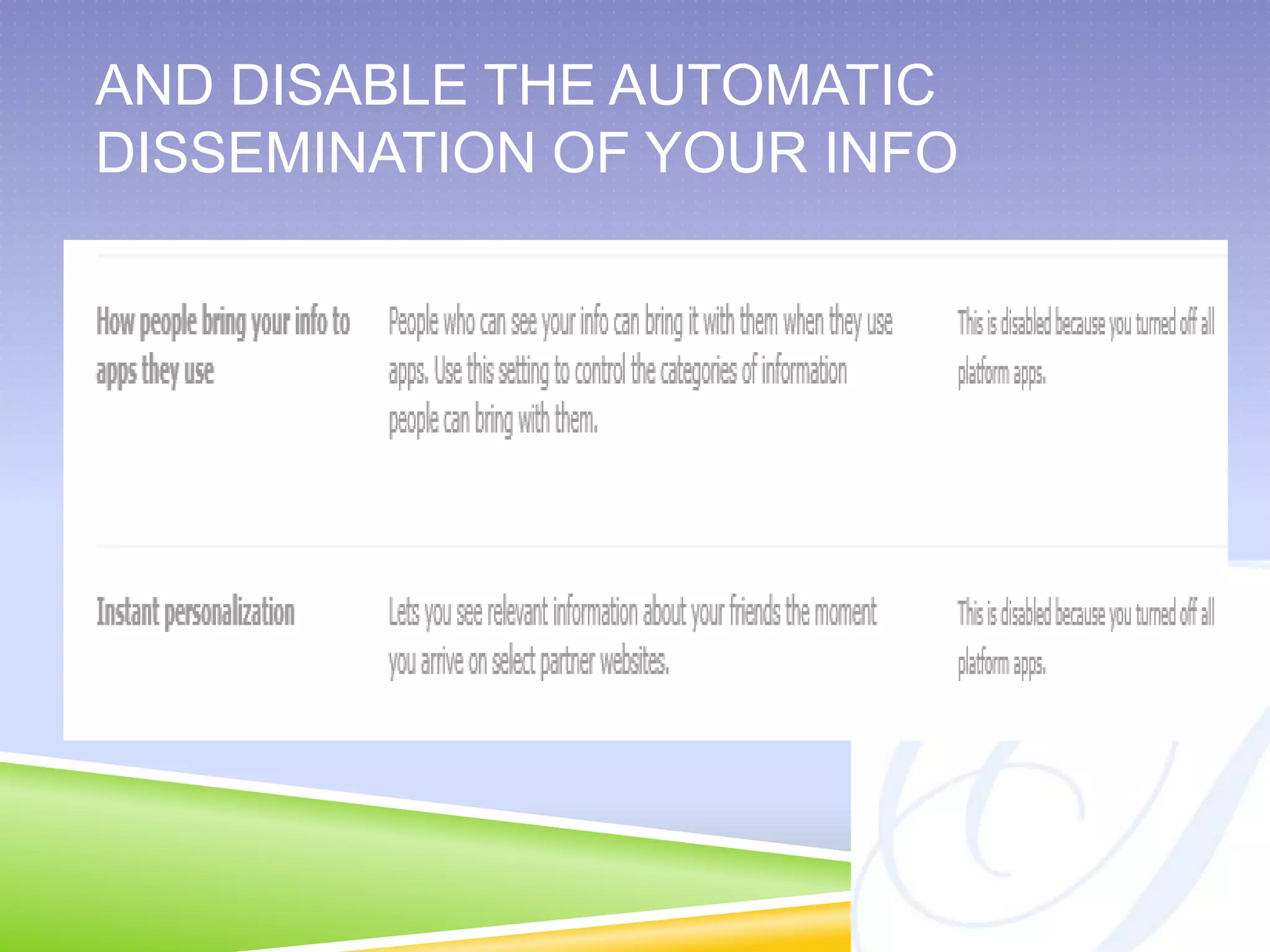
And disable the automatic dissemination of your info
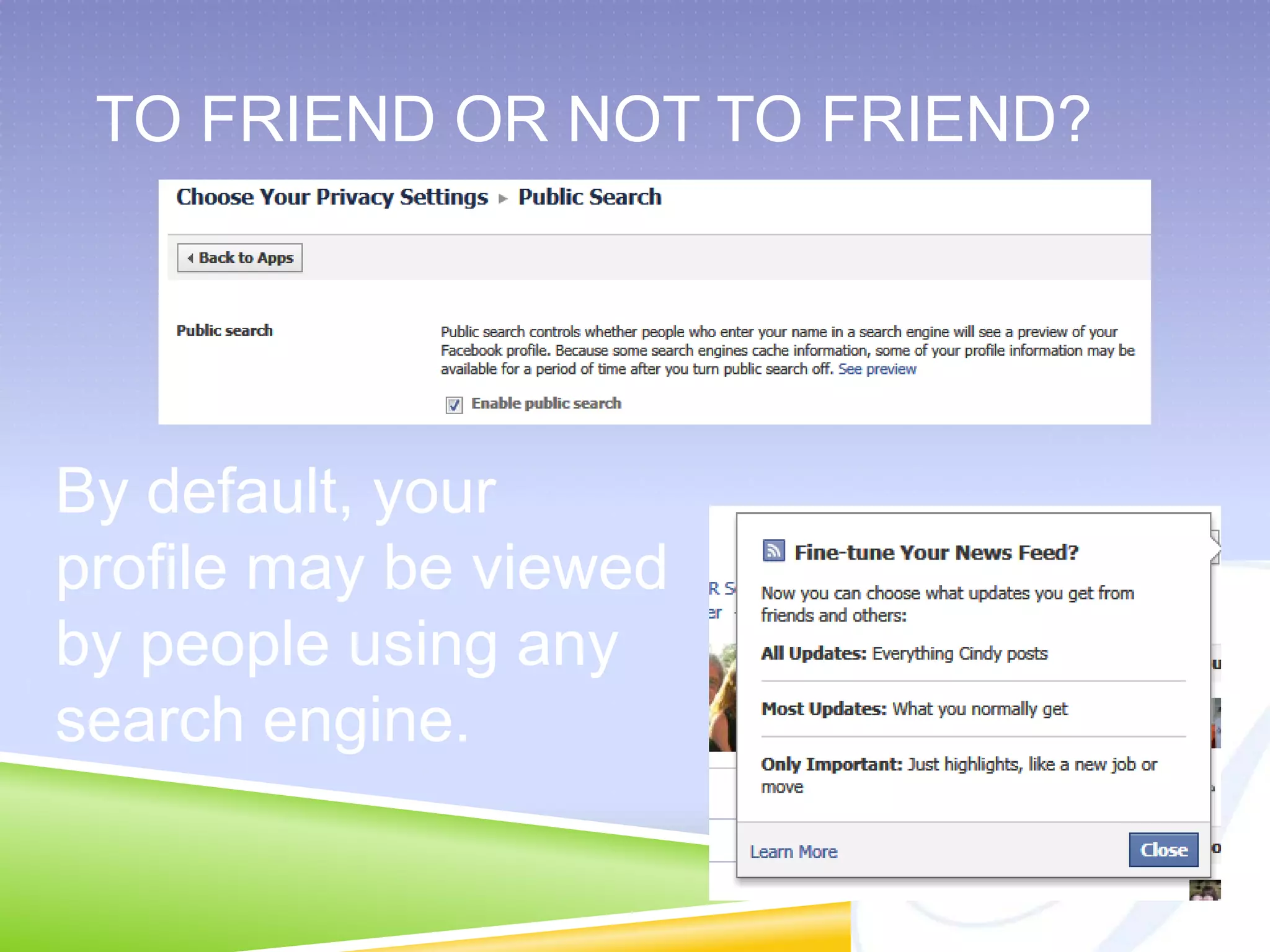
To friend or not to friend?By default, your profile may be viewed by people using any search engine.
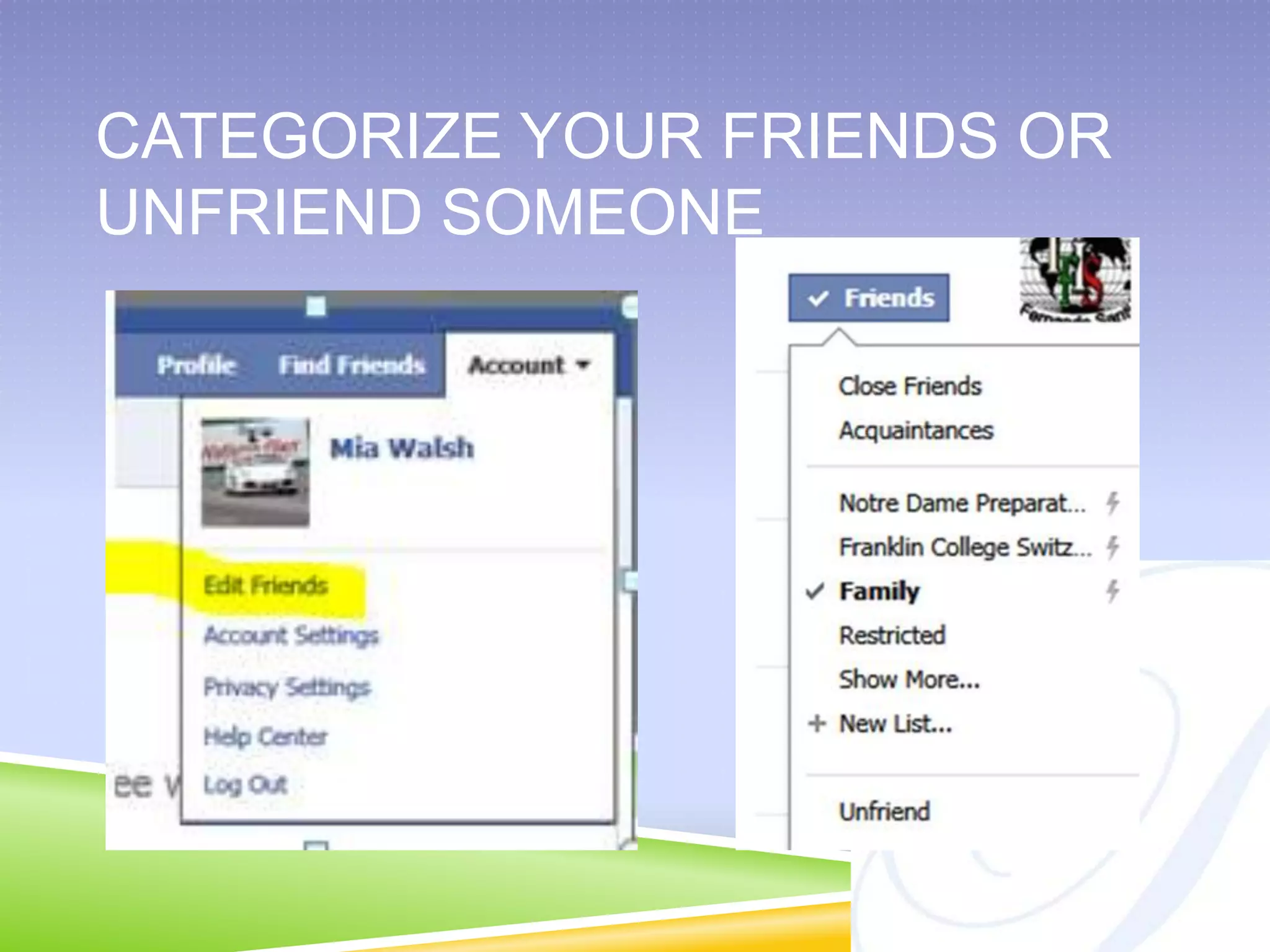
Categorize your friends or unfriend someone
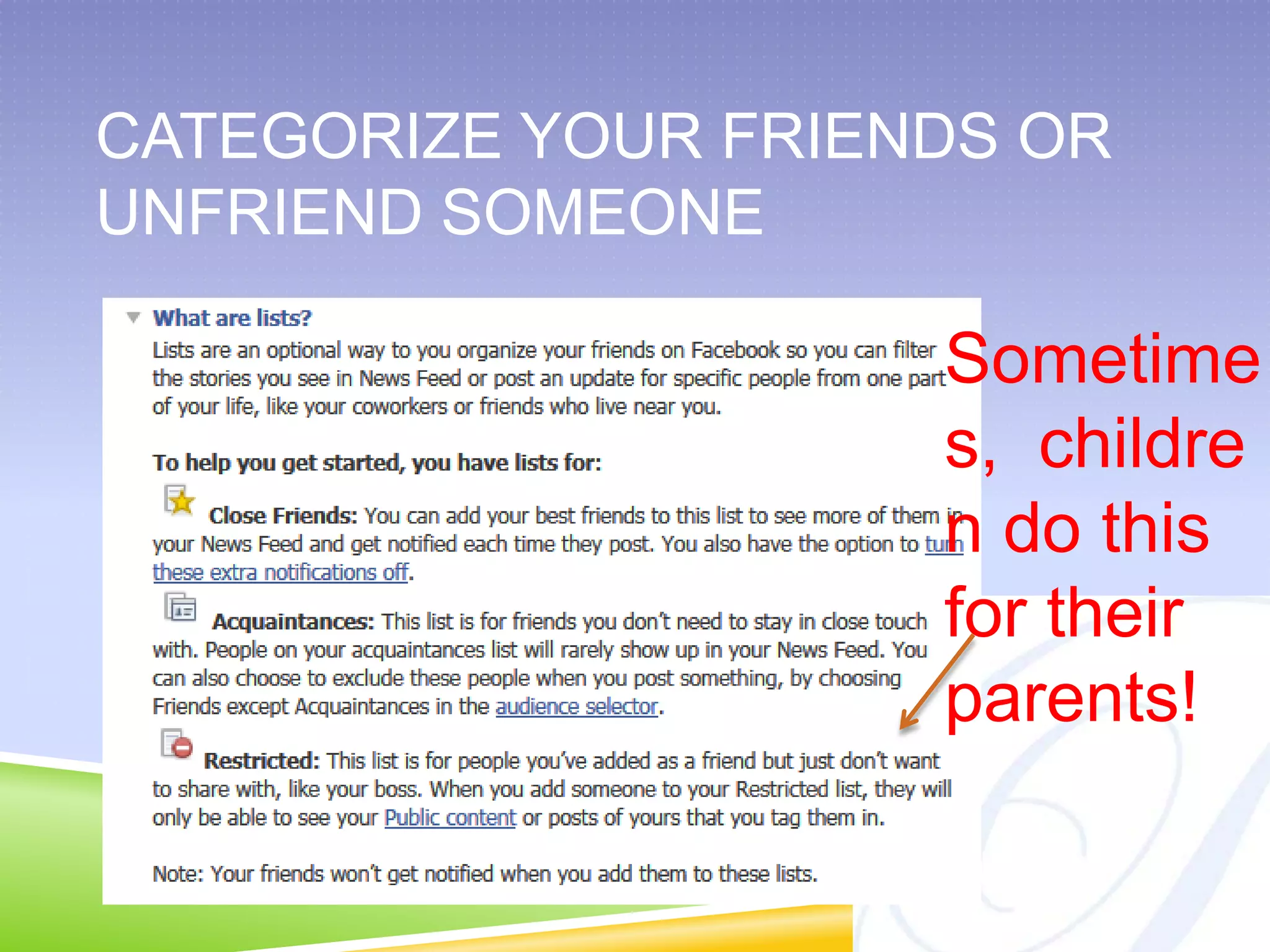
Categorize your friends or unfriend someoneSometimes,  children do this for their parents!
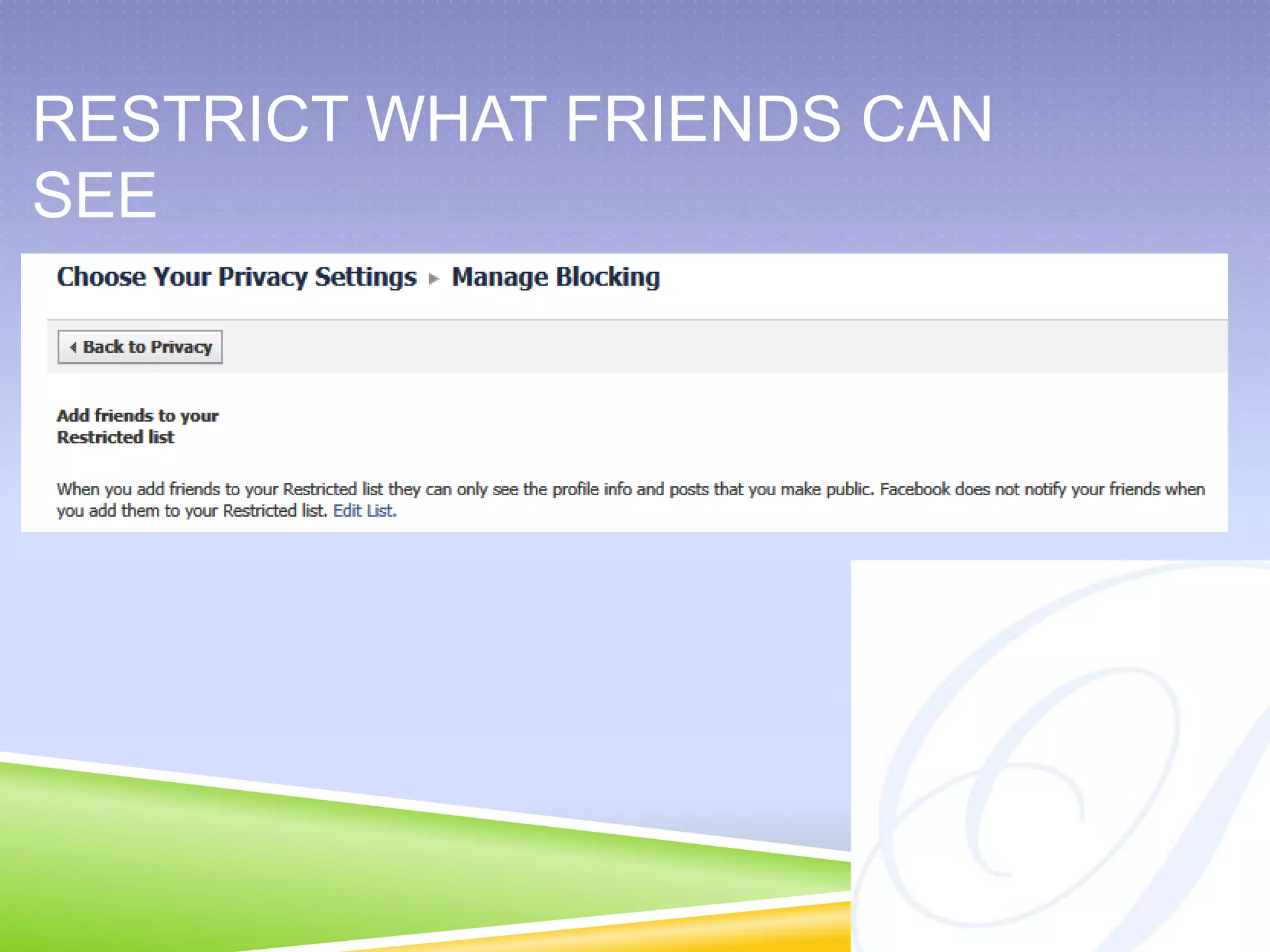
Restrict what friends can see
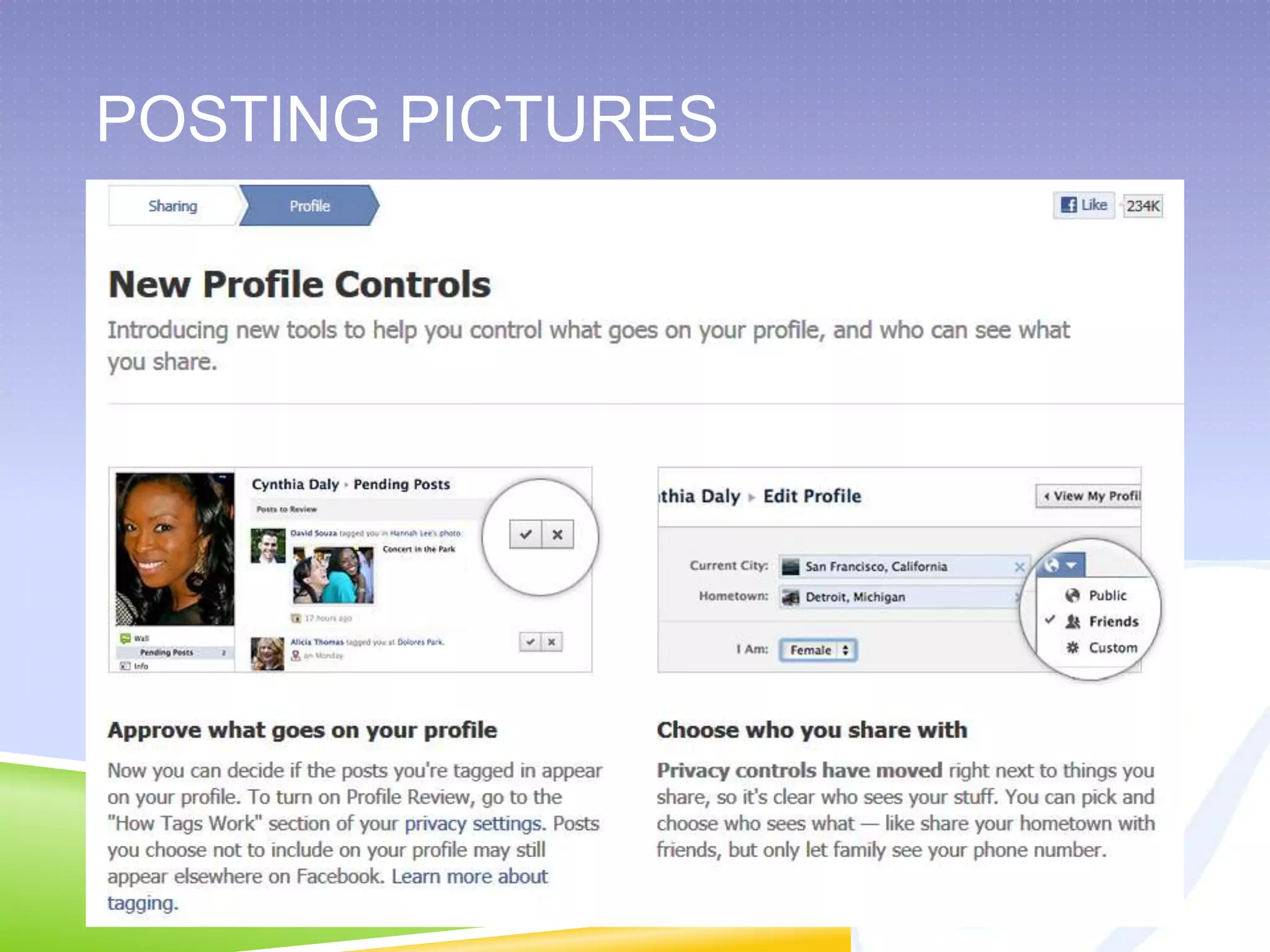
Posting pictures
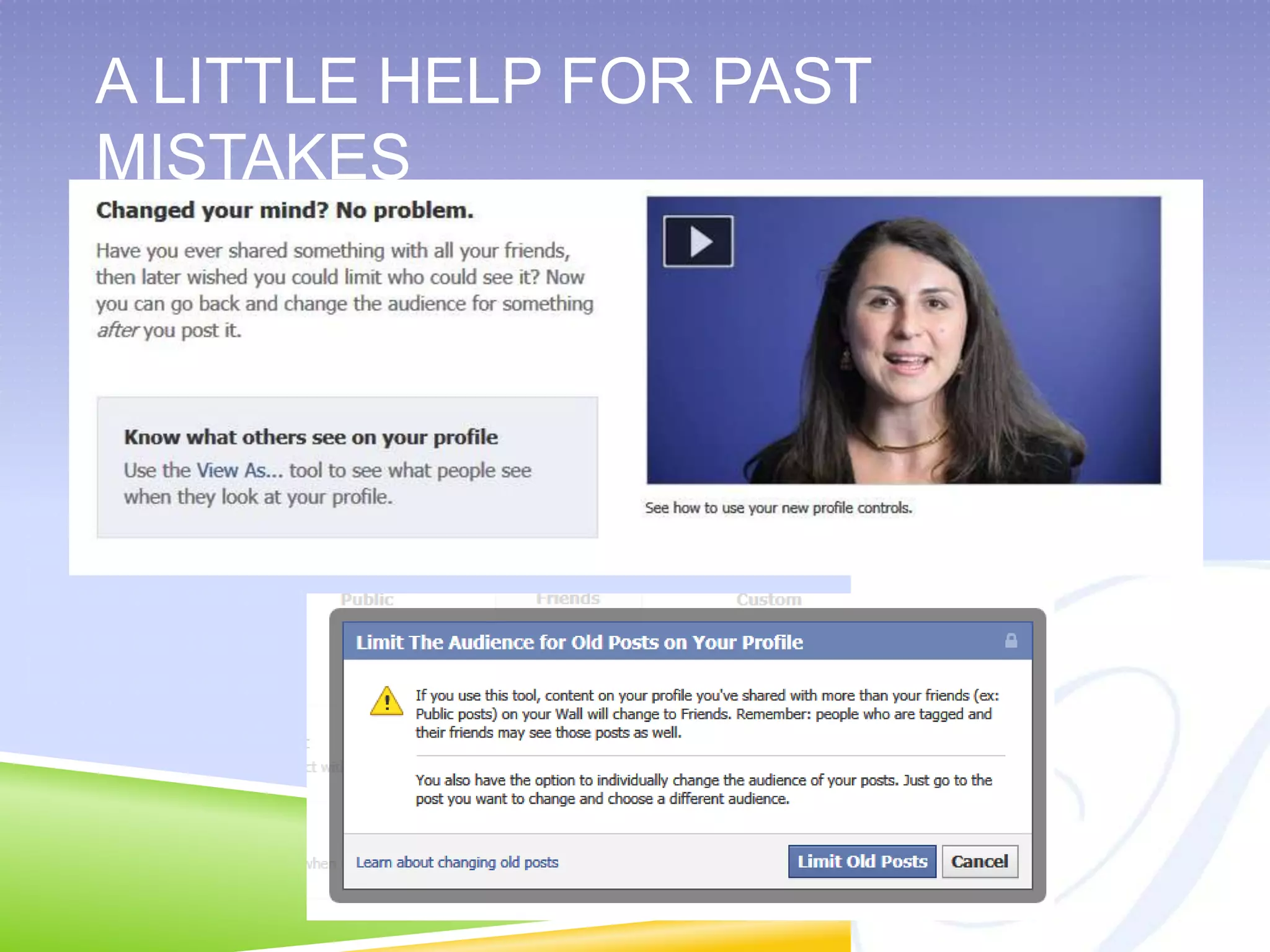
A little help for past mistakes
Linking all of your media tools?
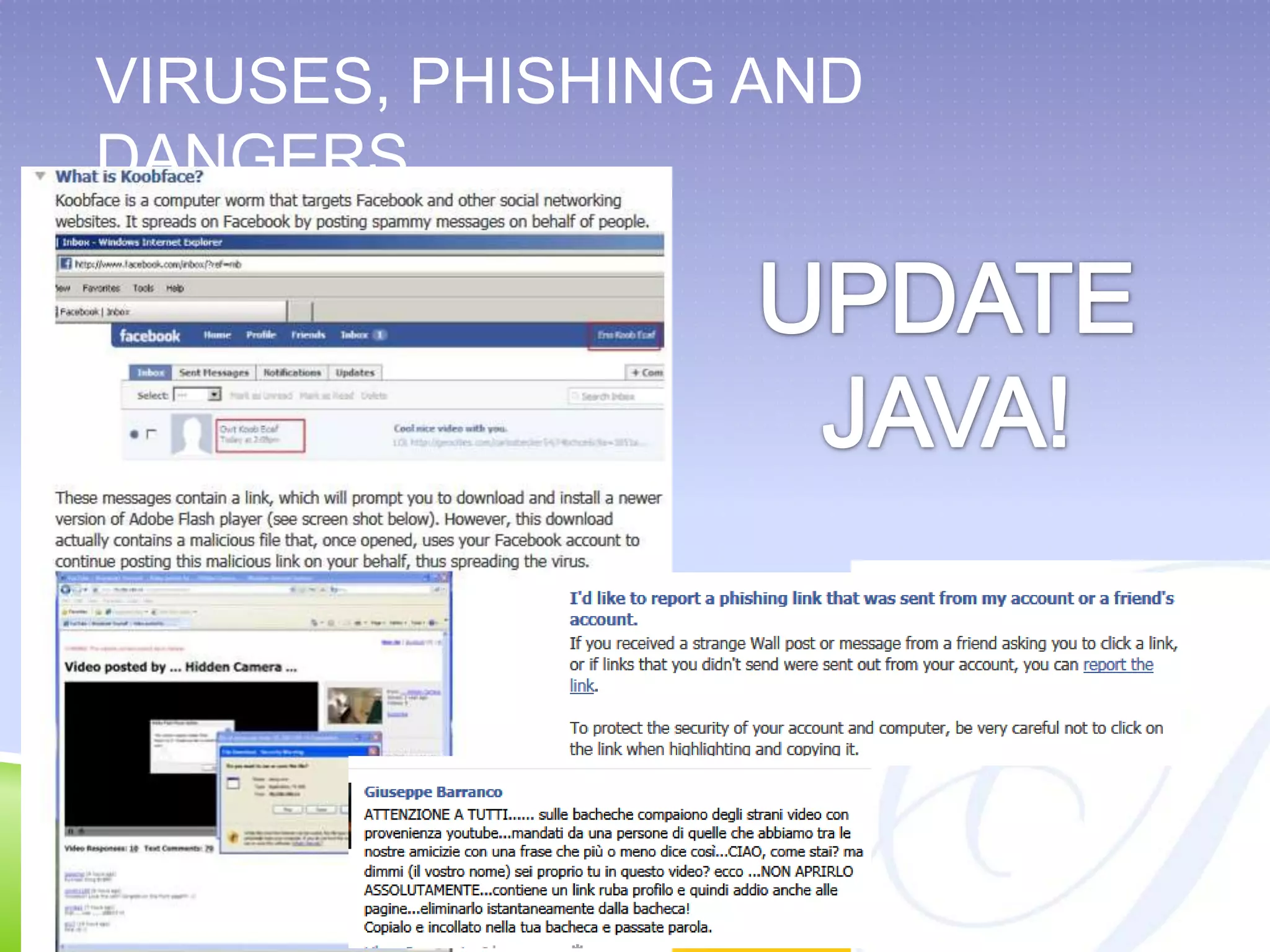
Viruses, phishing and dangersUPDATEJAVA!
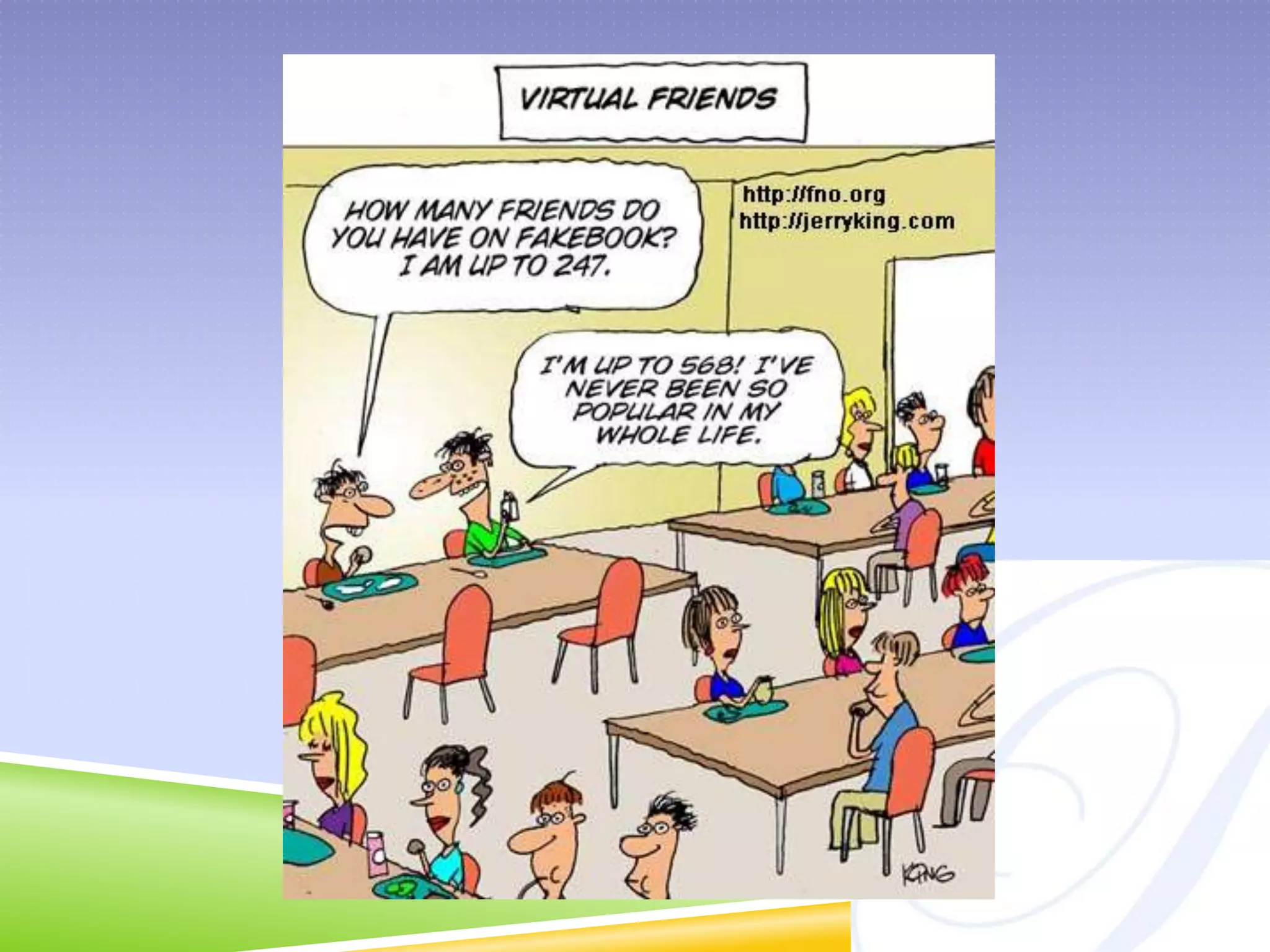
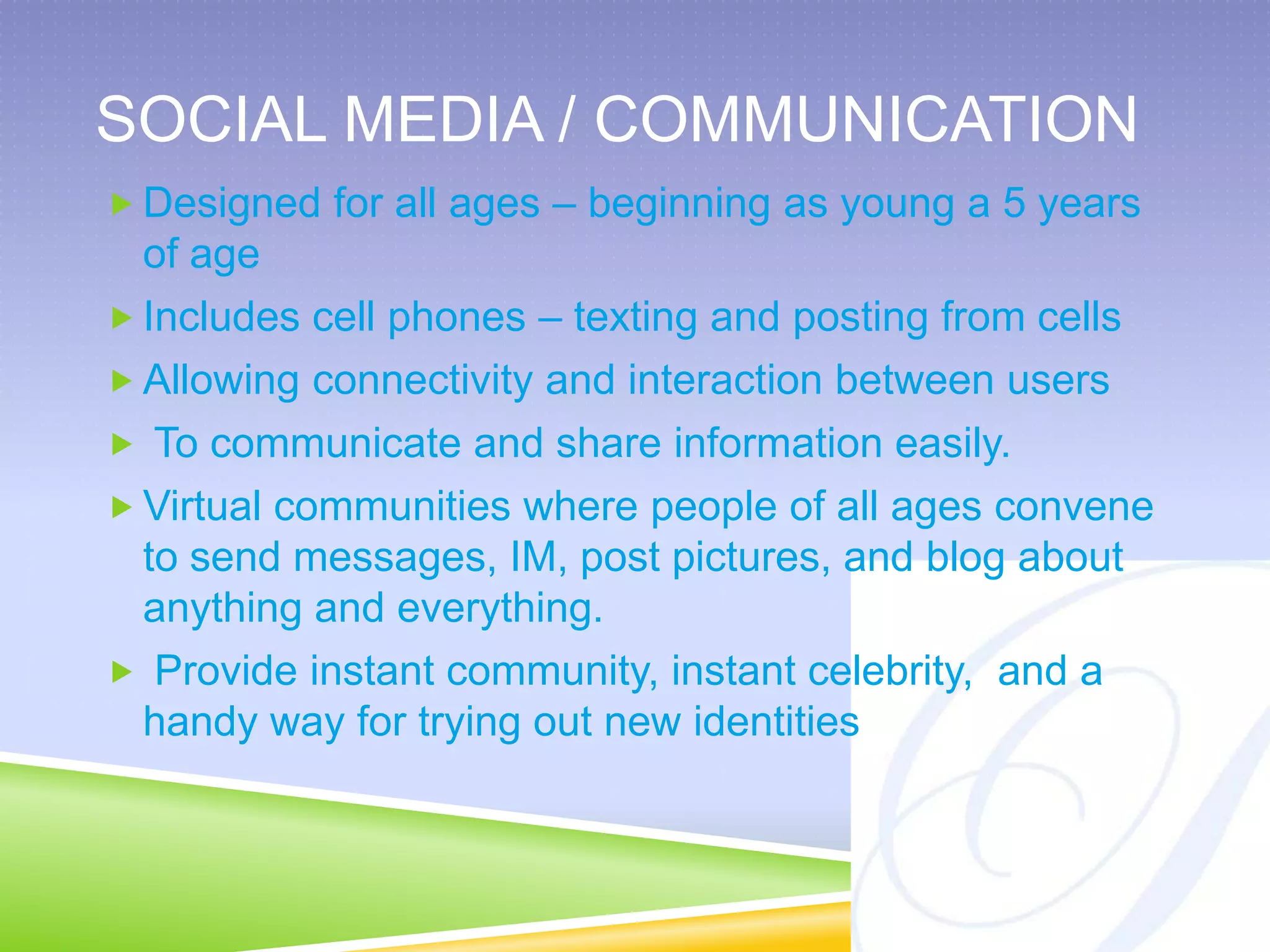
Social media / communicationDesigned for all ages – beginning as young a 5 years of ageIncludes cell phones – texting and posting from cellsAllowing connectivity and interaction between users To communicate and share information easily.Virtual communities where people of all ages convene to send messages, IM, post pictures, and blog about anything and everything.  Provide instant community, instant celebrity,  and a handy way for trying out new identities
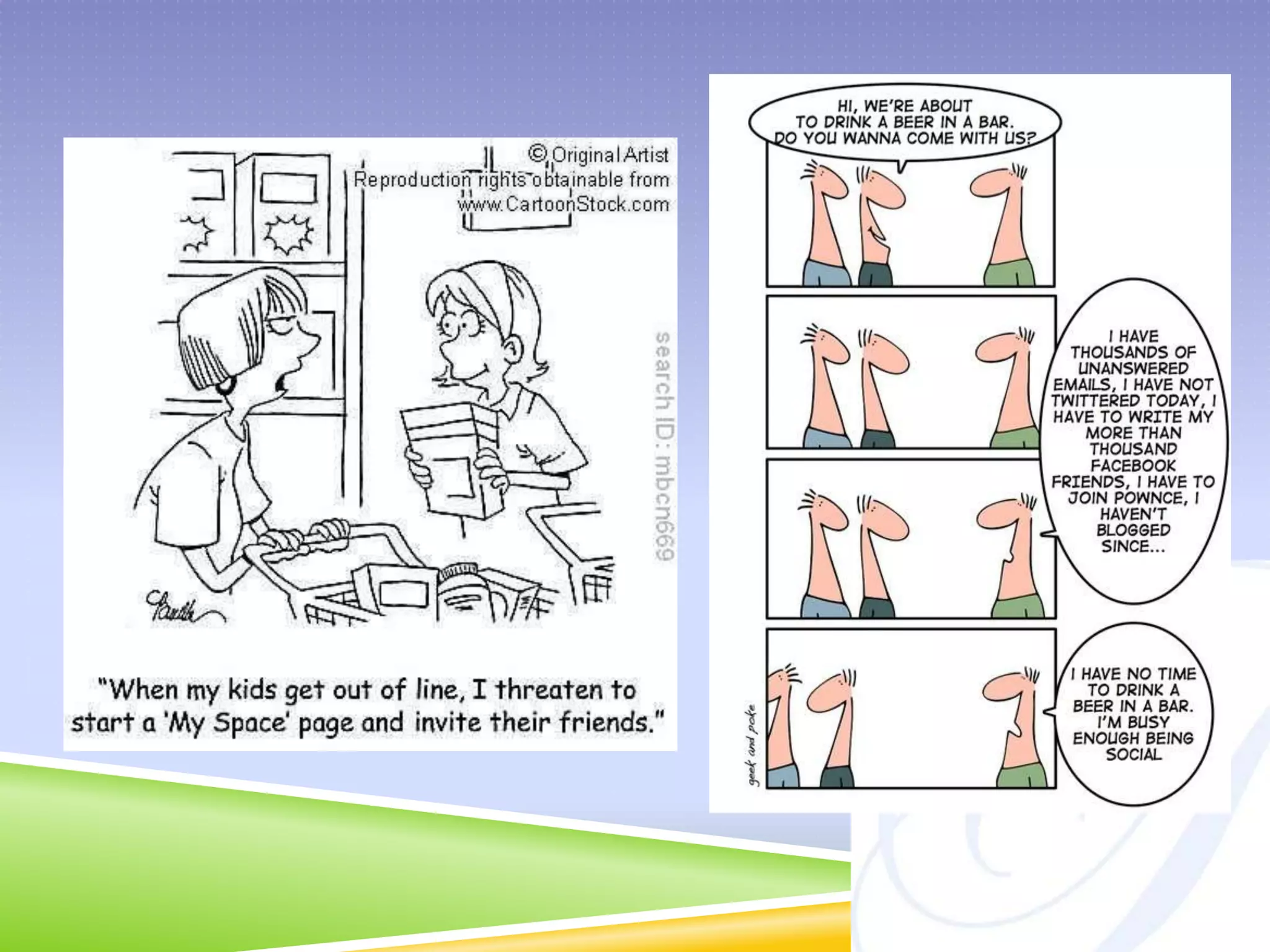
Examples
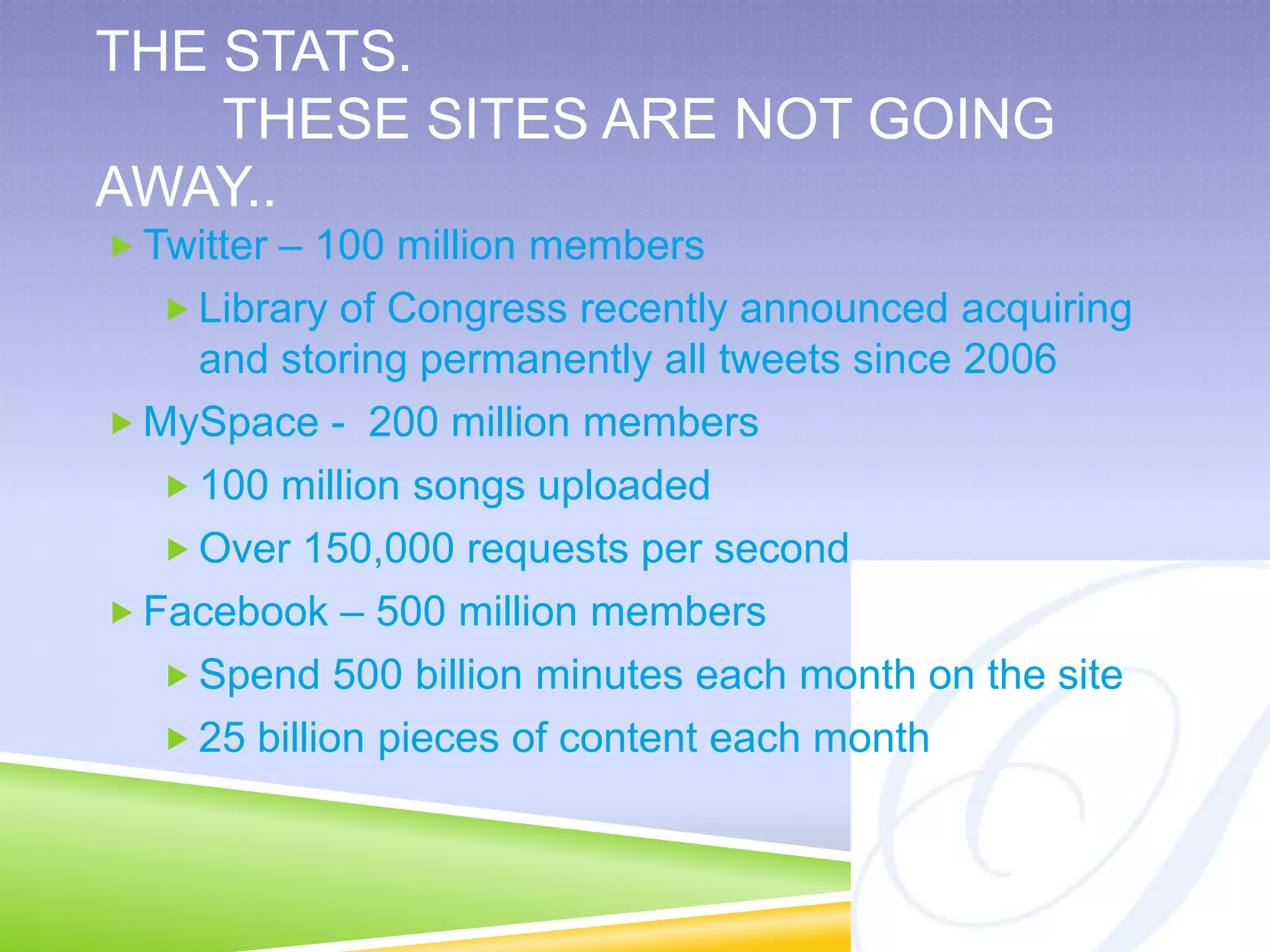
The Stats. 	These sites are not going away..Twitter – 100 million membersLibrary of Congress recently announced acquiring and storing permanently all tweets since 2006MySpace -  200 million members100 million songs uploadedOver 150,000 requests per secondFacebook – 500 million membersSpend 500 billion minutes each month on the site25 billion pieces of content each month
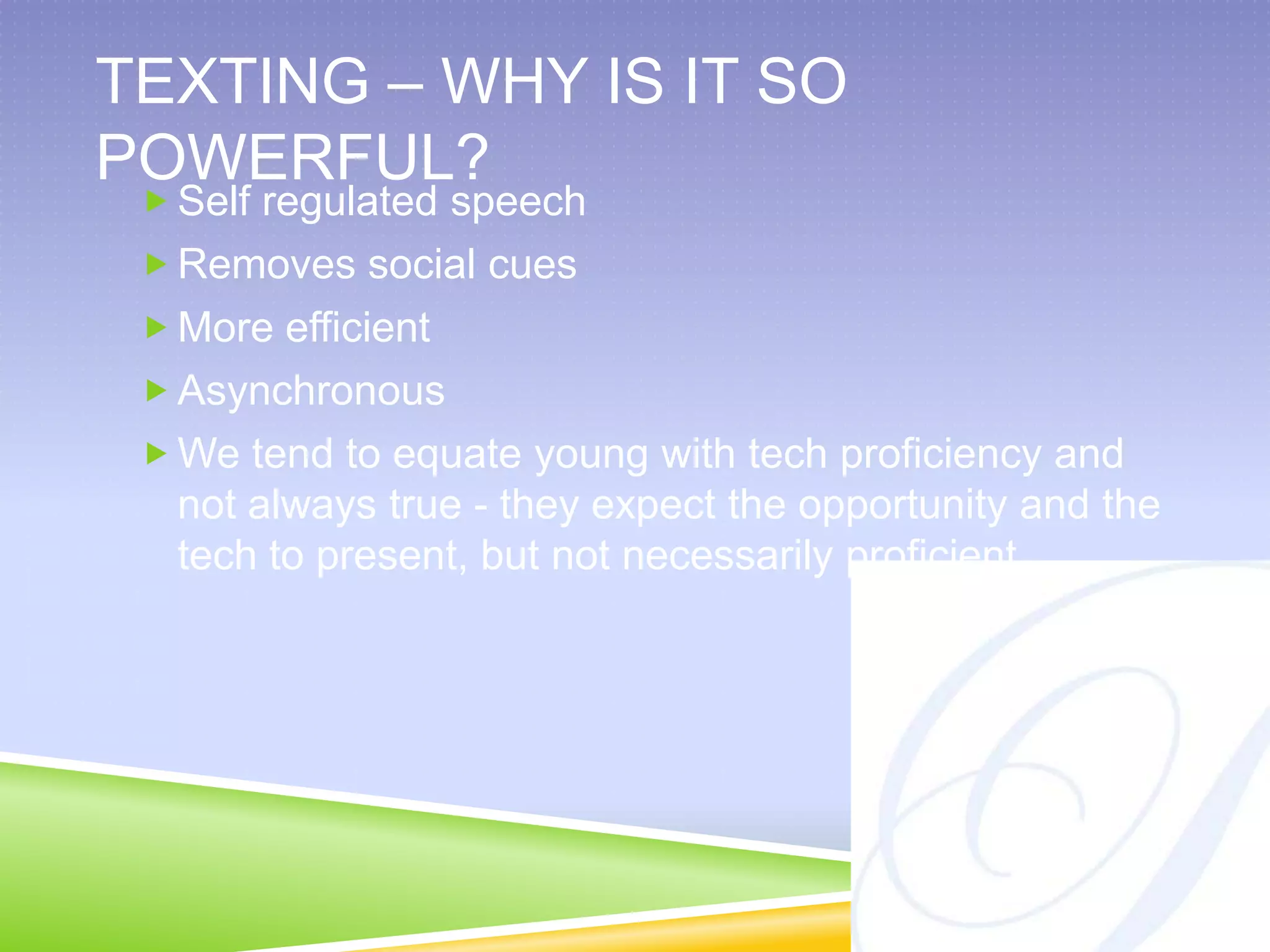
TEXTING – Why is it so powerful?Self regulated speechRemoves social cuesMore efficient Asynchronous We tend to equate young with tech proficiency and not always true - they expect the opportunity and the tech to present, but not necessarily proficient
CELL PHONE SOCIALIZINGPowerful tool - in very small handsCan get into a lot of troubleNo guidelines are providedNo modeling is usually providedWhen we ask them what were YOU thinking - think more along the lines of what were WE thinkingGive them a powerful tool and then we're surprised they are sextingStakes are high!  Children are getting charged with authoring, possessing, distributing, and transporting across state lines child pornographySextingvs Sexual abuse - being clear about difference
What does NDP Do? 	Educate them at an age-appropriate level. Technology ClassAdvisoryDigital Citizenship, Cyberbullying, Netiquette, CyberSafetySeries of videos and activitiesStudents sign the AUP and Honor CodeBottom Line - They don’t get to 6th grade having never heard of these sites.  We need to work together to teach them how to behave.
Digital Footprints - NDP

  • 1.
    Parent breakfast –Sept. 2011Digital footprints:Technology ethics & safetyDigital FootprintsFacebook Privacy SettingsCell Phones and TextingChallenges for ParentsNDP’s AUP
  • 2.
    Security and privacy Eachsocial networking site has security and privacy settings. May have an presence and not know it. Tagged in photos or videosWhat is posted, stays there foreverSocial embarrassmentCollege acceptance
  • 3.
    PRIVACY FACEBOOK –at minimum, you and your daughter should go to the following site while she is logged into Facebookhttps://www.facebook.com/help/privacy
  • 4.
    On-line tools forparentsUse tools provided by Facebookhttps://www.facebook.com/help/safety/
  • 5.
    Search “Privacy” inFacebook search field – by default, all settings are “PUBLIC”You need to take initiative to change settings.
  • 6.
    How can peoplefind you and send you messages?
  • 7.
    How can peopletag you in pictures or videos?
  • 8.
  • 9.
  • 10.
  • 11.
    You may begiving information and not even knowing it!Application settings
  • 12.
    What info areyou giving?
  • 13.
    You can stop the apps
  • 14.
    But, you can’tstop the searching!Fair Credit Reporting Actscours a wide range of social media sites for objectionable information (seeks out postings on Craigslist )
  • 15.
    deep search ofcollege and other sites that are more private
  • 16.
    includes "some university,academic, government, and private databases unavailable to the general public."http://www.law.com/jsp/cc/PubArticleFriendlyCC.jsp?id=1202501431464
  • 17.
    But, you can’tstop the searching!Offensive T-Shirt
  • 18.
    Written word takenout of context
  • 19.
  • 20.
    Angry status updatepostsMake sure there aren't any forgotten profiles floating about.http://www.law.com/jsp/cc/PubArticleFriendlyCC.jsp?id=1202501431464
  • 21.
    And disable theautomatic dissemination of your info
  • 23.
    To friend ornot to friend?By default, your profile may be viewed by people using any search engine.
  • 24.
    Categorize your friendsor unfriend someone
  • 25.
    Categorize your friendsor unfriend someoneSometimes, children do this for their parents!
  • 26.
  • 27.
  • 28.
    A little helpfor past mistakes
  • 29.
    Linking all ofyour media tools?
  • 30.
    Viruses, phishing anddangersUPDATEJAVA!
  • 32.
    Social media /communicationDesigned for all ages – beginning as young a 5 years of ageIncludes cell phones – texting and posting from cellsAllowing connectivity and interaction between users To communicate and share information easily.Virtual communities where people of all ages convene to send messages, IM, post pictures, and blog about anything and everything. Provide instant community, instant celebrity, and a handy way for trying out new identities
  • 33.
  • 34.
    The Stats. Thesesites are not going away..Twitter – 100 million membersLibrary of Congress recently announced acquiring and storing permanently all tweets since 2006MySpace - 200 million members100 million songs uploadedOver 150,000 requests per secondFacebook – 500 million membersSpend 500 billion minutes each month on the site25 billion pieces of content each month
  • 35.
    TEXTING – Whyis it so powerful?Self regulated speechRemoves social cuesMore efficient Asynchronous We tend to equate young with tech proficiency and not always true - they expect the opportunity and the tech to present, but not necessarily proficient
  • 36.
    CELL PHONE SOCIALIZINGPowerfultool - in very small handsCan get into a lot of troubleNo guidelines are providedNo modeling is usually providedWhen we ask them what were YOU thinking - think more along the lines of what were WE thinkingGive them a powerful tool and then we're surprised they are sextingStakes are high! Children are getting charged with authoring, possessing, distributing, and transporting across state lines child pornographySextingvs Sexual abuse - being clear about difference
  • 37.
    What does NDPDo? Educate them at an age-appropriate level. Technology ClassAdvisoryDigital Citizenship, Cyberbullying, Netiquette, CyberSafetySeries of videos and activitiesStudents sign the AUP and Honor CodeBottom Line - They don’t get to 6th grade having never heard of these sites. We need to work together to teach them how to behave.
  • 38.
    School’s concerns1st Amendmentspeech Does it protect children’s right to say what they like? When is it slander?Legal responsibility Police involvementIs safety a concern?Does it affect the school day? Acceptable Use Policy…..
  • 39.
    Challenges for ParentsKeepingup is hard to doInternet continues to be more portable – Itouch, cell phones,..who knows?!New sites become “hot” overnight – chasing gameKids go online without usMajority of kids report their parents have NO rules about the Internet.Our kids know way more than we do. Immigrants vs. NativesGet around filters, blocks, and history settingsIt’s a user-generated content world.Those using the Internet are also creating the content – post whatever you want.We interfere into our kids’ lives at a time when, developmentally, they want independence.
  • 40.
    STUDENT concerns Social IsolationCellphone useTexting/SextingPosting to accountsIpod Touch – IpadDS HandheldsImpersonating OthersDamaging their reputation or someone else’sPermanency of Information‘Electronic’ Bullying– lasts forever and follows them homeTracking people’s movements – Four Square, LoopingAllows the social uncomfortable participate in the social scene with the socially comfortable
  • 41.
    Opportunity vs. consequencesPencilvs. Technology – If students write abusive things we don't take away their pencils, but if they text it or email it, we take away their technology. MODEL effective practiceModeling good status updatesWe need to be their Frontal Cortex - help them see consequences - give them the opportunity
  • 42.

Editor's Notes

  • #29 How many of you have accounts on a social networking site?How often do you check in? Daily, weekly, monthly?These are targeting and marketing children from 5 years on up.
  • #31 hy Texting is so Powerful.Self regulated speech - helps to text and not have to worry about did her best friend roll her eye, or is she looking at me strangely or is my fly open - takes some pain and anxiety of adolescentsRemoves social cuesMore efficient - strip out niceties and extraneous stuffAsyncrhonous - can send it and not have to be present at the same time to communicate (same with email.)Digital Native/Immigrant Debate - if your baby pic is digital =NativeWe tend to equate young with tech proficiency and not always true - they expect the opportunity and the tech to present, but not necessarily proficient
  • #35 It’s only right and natural for kids to demand privacy, try on different personalities, and push the edge of acceptability – all of which the Internet encourages. Part of growing up - but they are more equipped to do this – though in HIGH SCHOOL – not MIDDLE SCHOOL. How do we make them listen when they don’t want to hear?
  • #36 Adults aren’t making good decisions…. Brett Farve Student at RutgersHow do we expect our students to make good decisions using the technology?