COMMISSION EDUCATION ET CULTURE
PRESENTATIONDESGROUPES DETRAVAIL
EducationandCultureCommittee -CommissionEducationetCulture
ClaudeVIVIERLEGOT,Chair
KarlDONERTandJulianneLAGADEC,Vice-Chairs
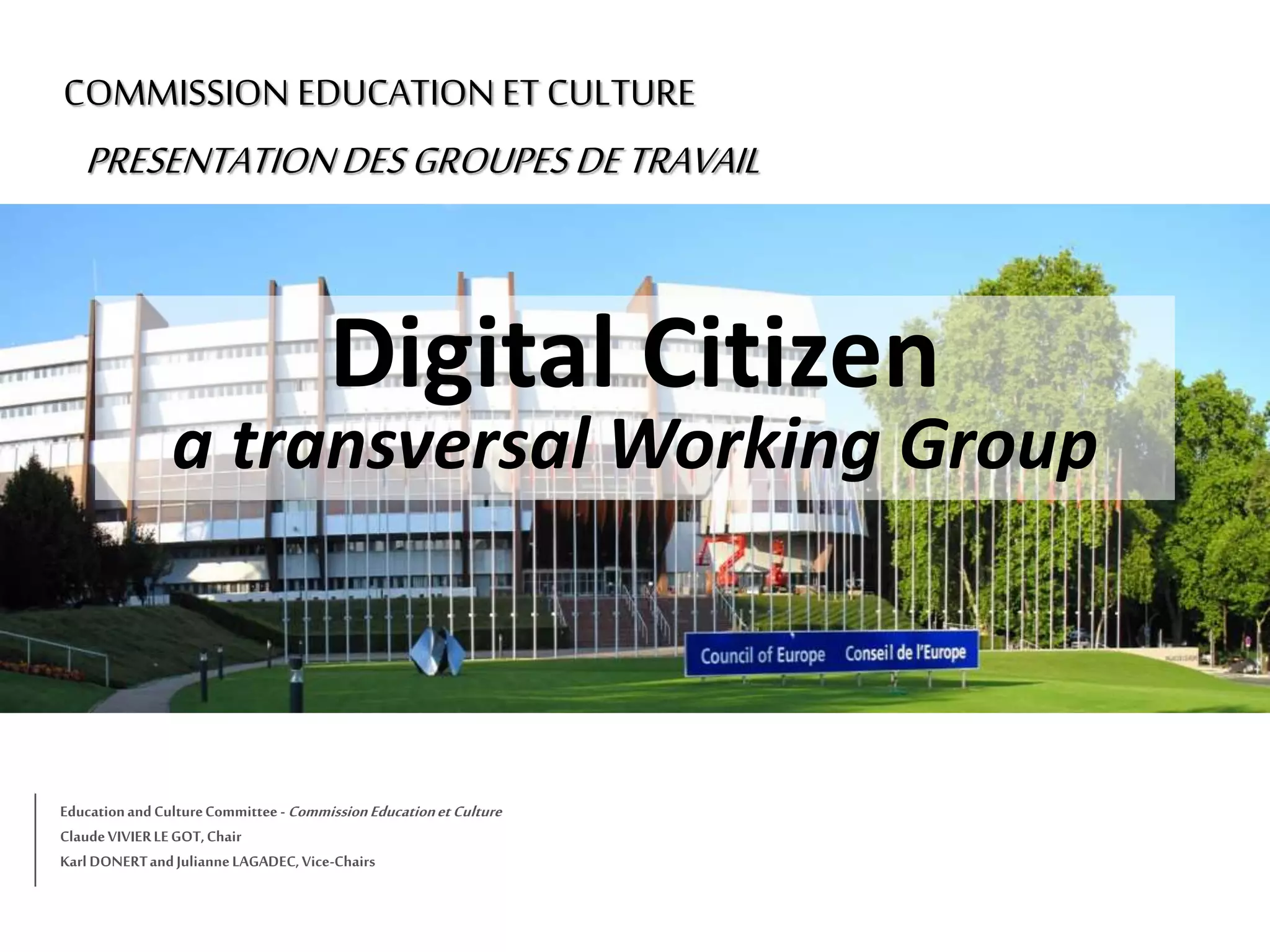
Digital Citizen
a transversal Working Group
Purpose of the session
• Defining the digital context
• What are the main issues? - Activity
• Digital Citizen (or Digital Citizenship)? -
Discussion
• An introduction to ‘Futures’
• Roadmap – work plan for the working group
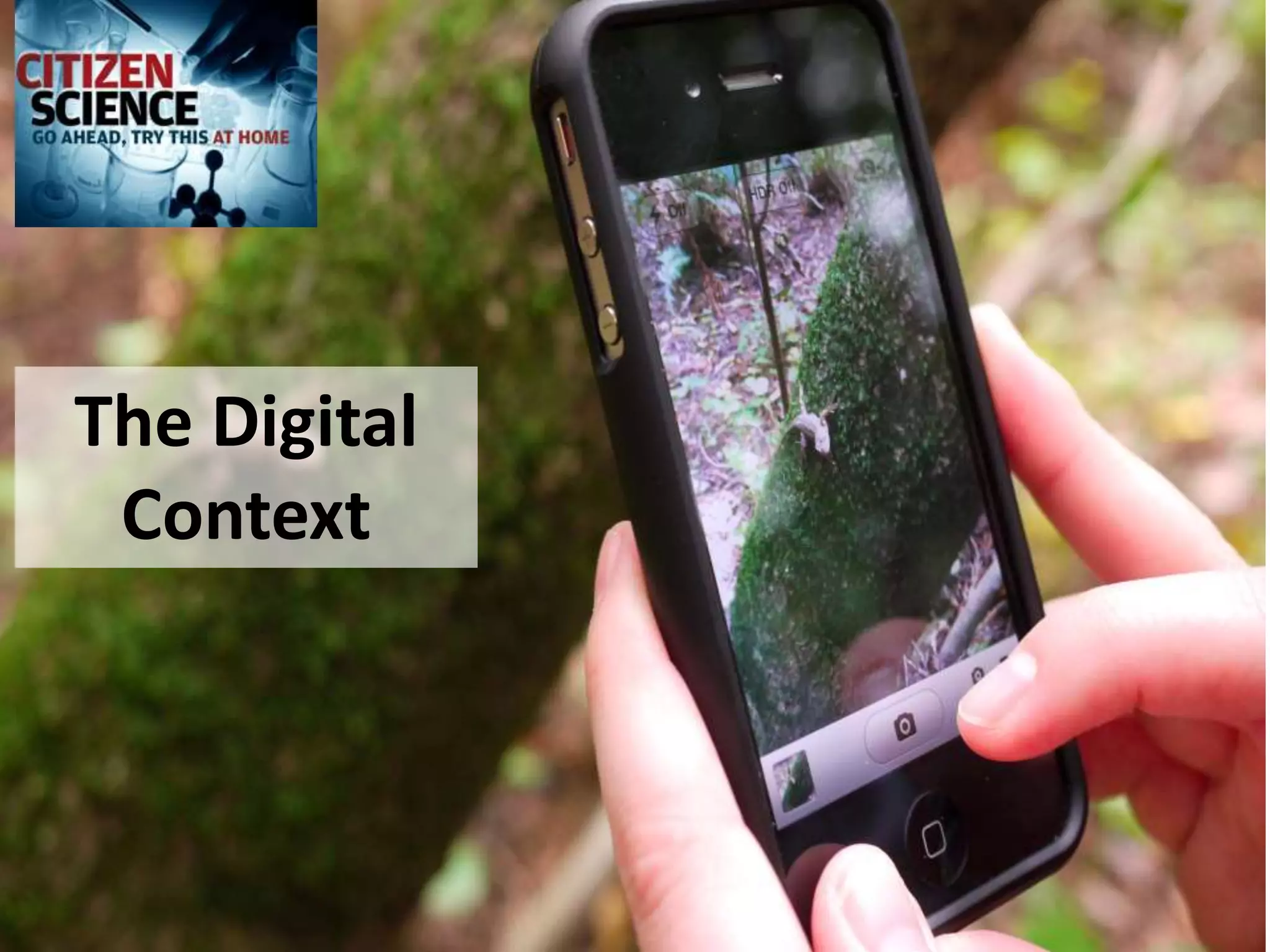
The Digital
Context
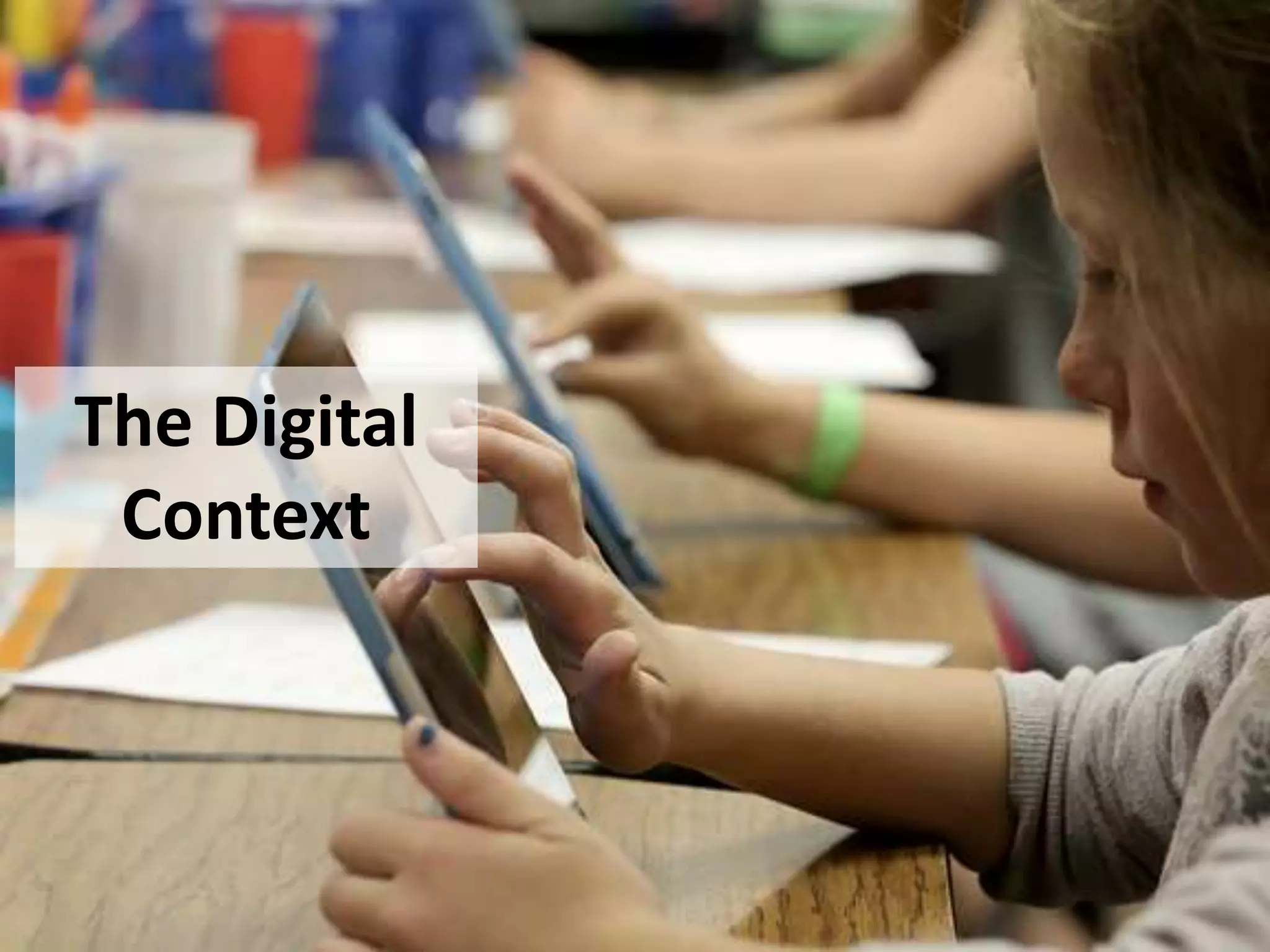
The Digital
Context
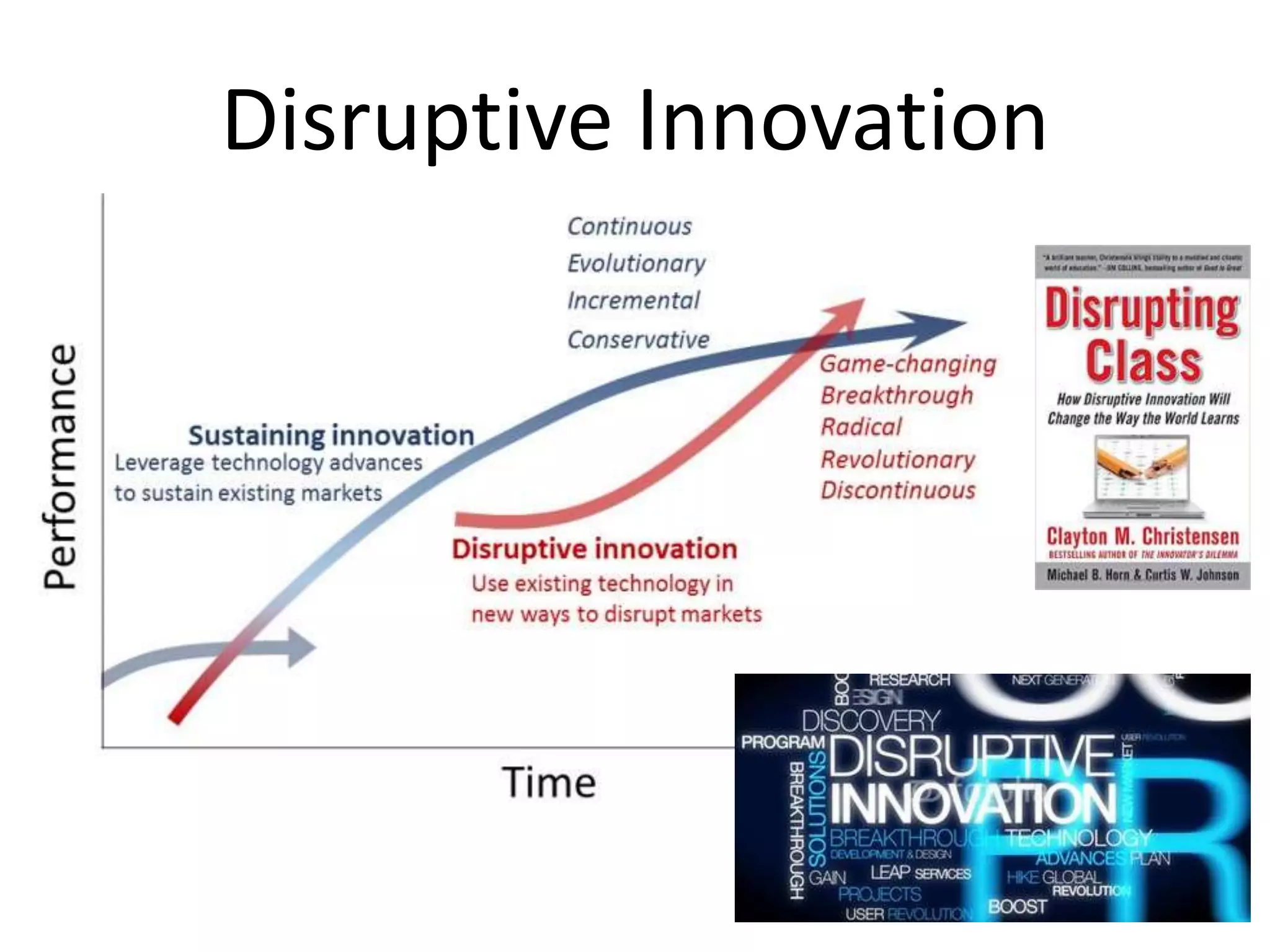
Disruptive Innovation
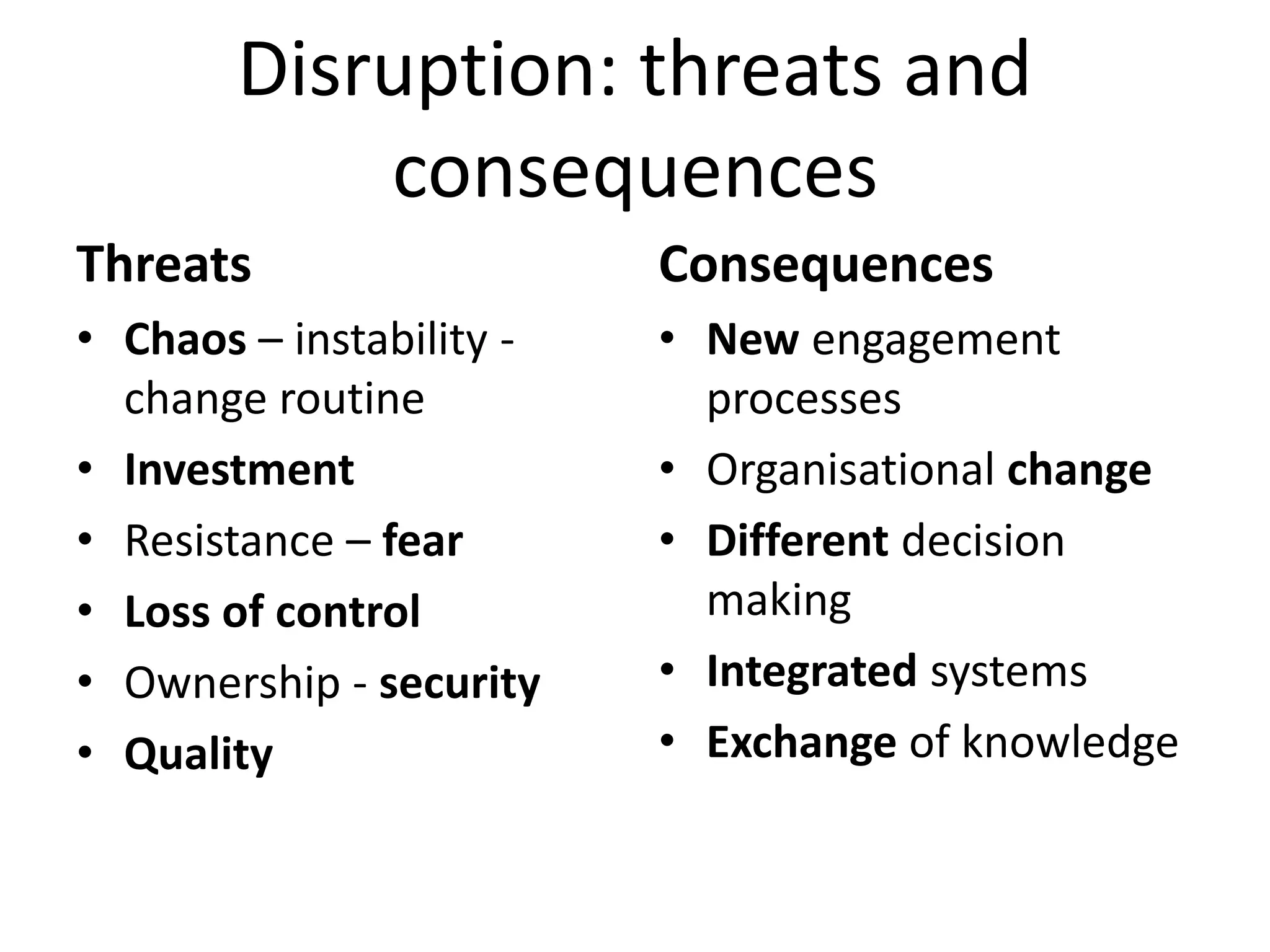
Disruption: threats and
consequences
Threats
• Chaos – instability -
change routine
• Investment
• Resistance – fear
• Loss of control
• Ownership - security
• Quality
Consequences
• New engagement
processes
• Organisational change
• Different decision
making
• Integrated systems
• Exchange of knowledge
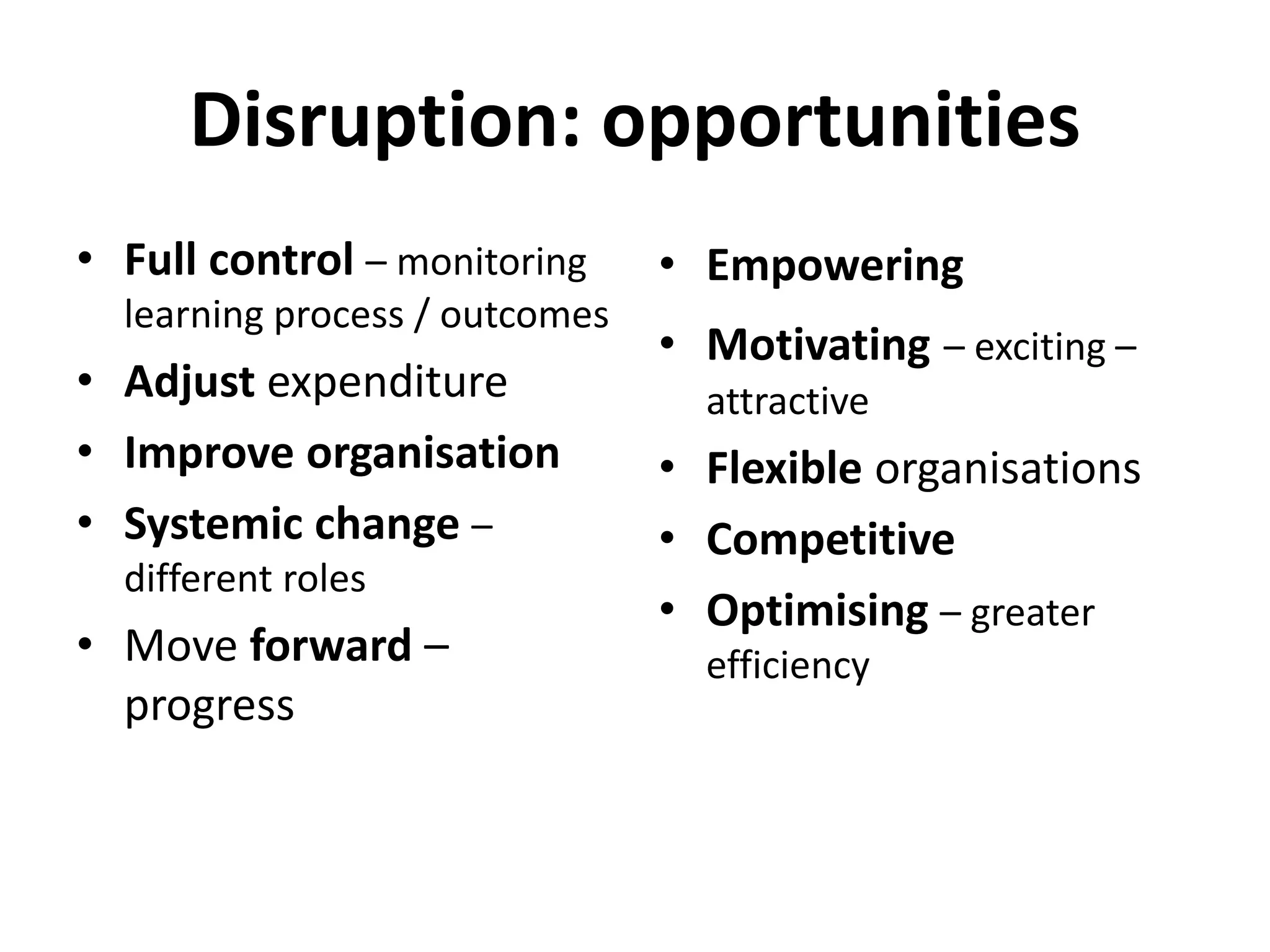
Disruption: opportunities
• Full control – monitoring
learning process / outcomes
• Adjust expenditure
• Improve organisation
• Systemic change –
different roles
• Move forward –
progress
• Empowering
• Motivating – exciting –
attractive
• Flexible organisations
• Competitive
• Optimising – greater
efficiency
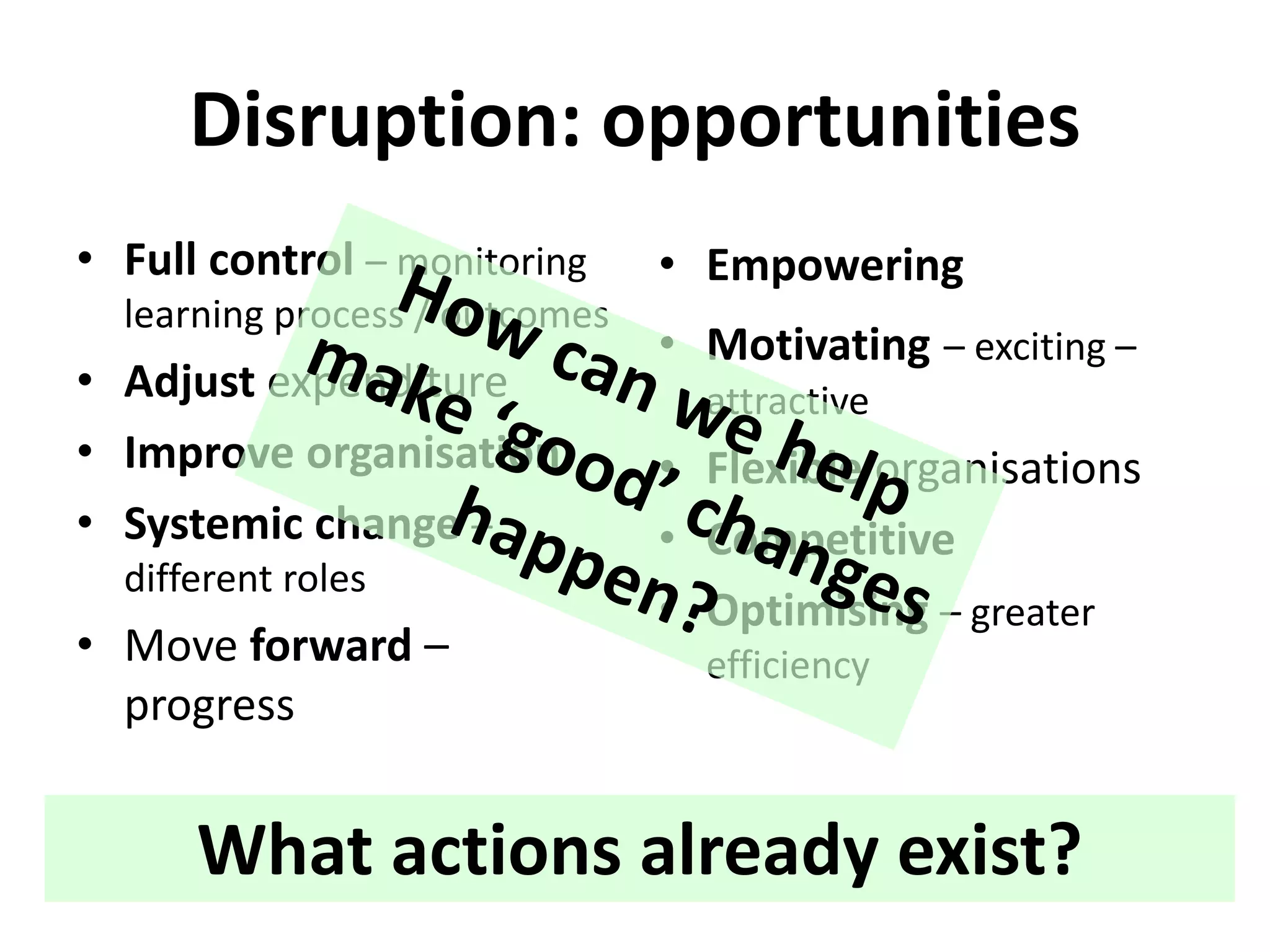
Disruption: opportunities
• Full control – monitoring
learning process / outcomes
• Adjust expenditure
• Improve organisation
• Systemic change –
different roles
• Move forward –
progress
• Empowering
• Motivating – exciting –
attractive
• Flexible organisations
• Competitive
• Optimising – greater
efficiency
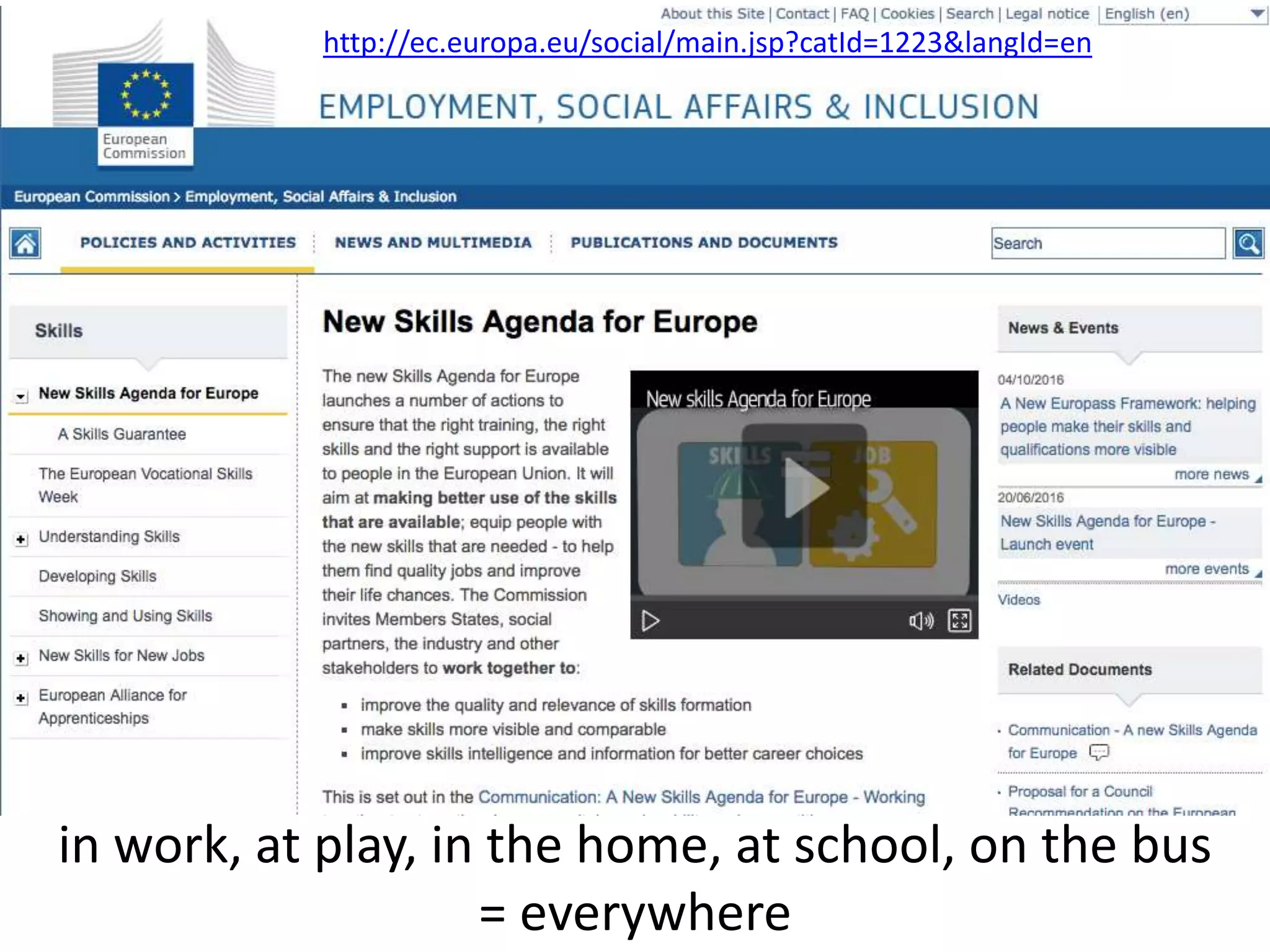
What actions already exist?
http://ec.europa.eu/social/main.jsp?catId=1223&langId=en
in work, at play, in the home, at school, on the bus
= everywhere
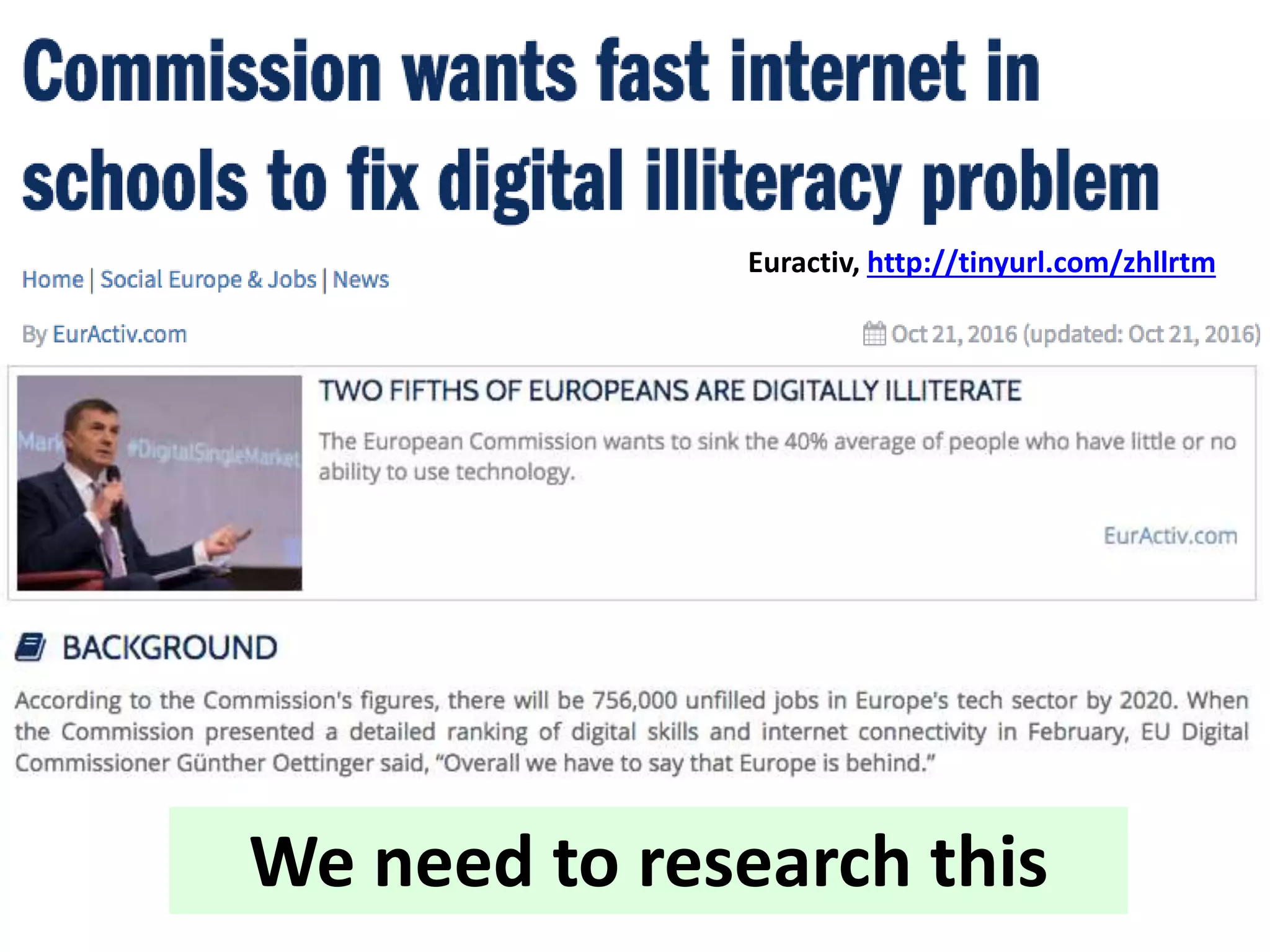
Euractiv, http://tinyurl.com/zhllrtm
We need to research this
Digital Citizen WG: contexts
• A transversal group implies different contexts
• This means we need to establish / agree clear
priorities
• Should avoid repetition of what has already
been done
• Firstly, let’s think about the different contexts
within which this group will work
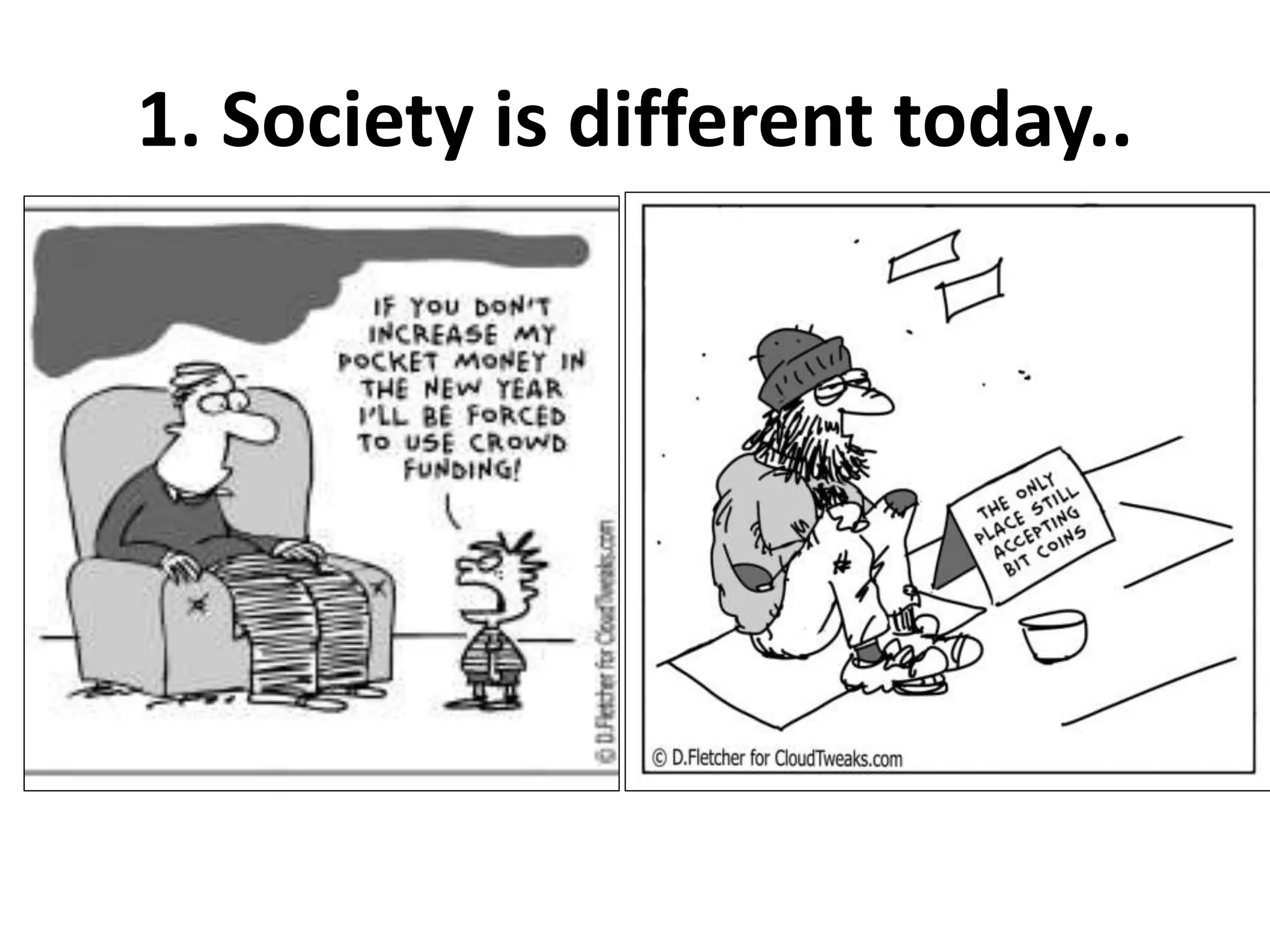
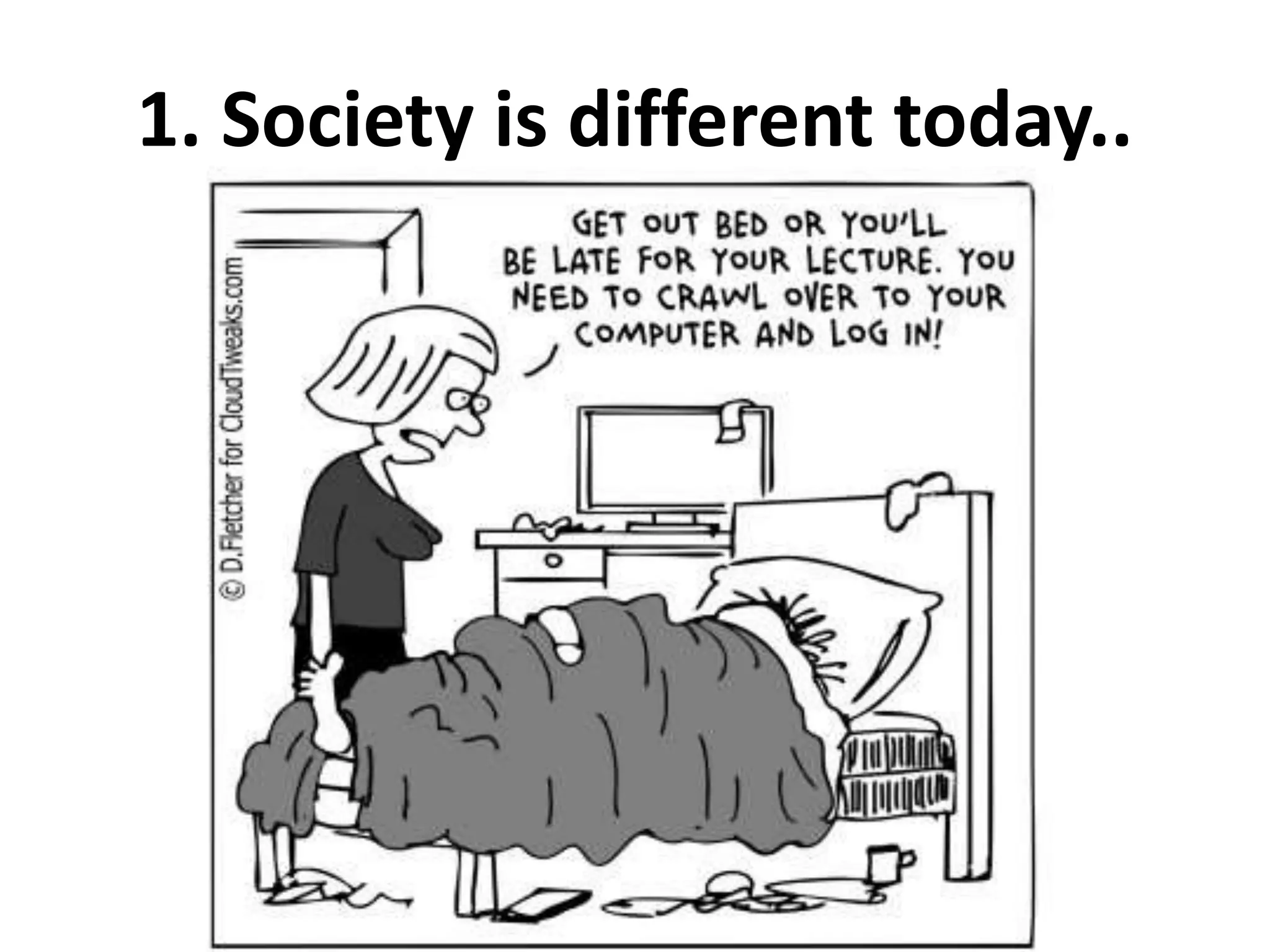
1. Society is different today..
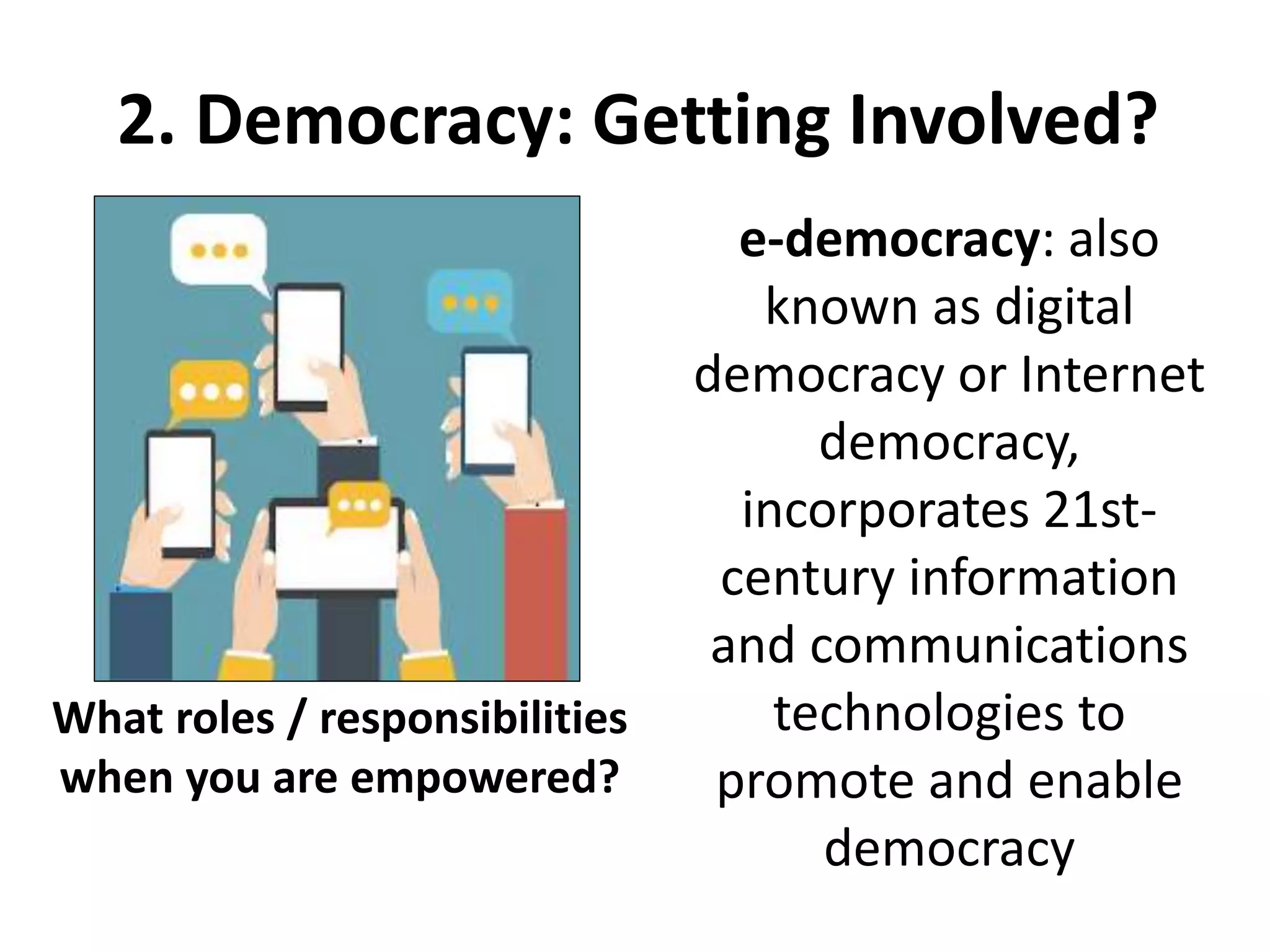
2. Democracy: Getting Involved?
What roles / responsibilities
when you are empowered?
e-democracy: also
known as digital
democracy or Internet
democracy,
incorporates 21st-
century information
and communications
technologies to
promote and enable
democracy
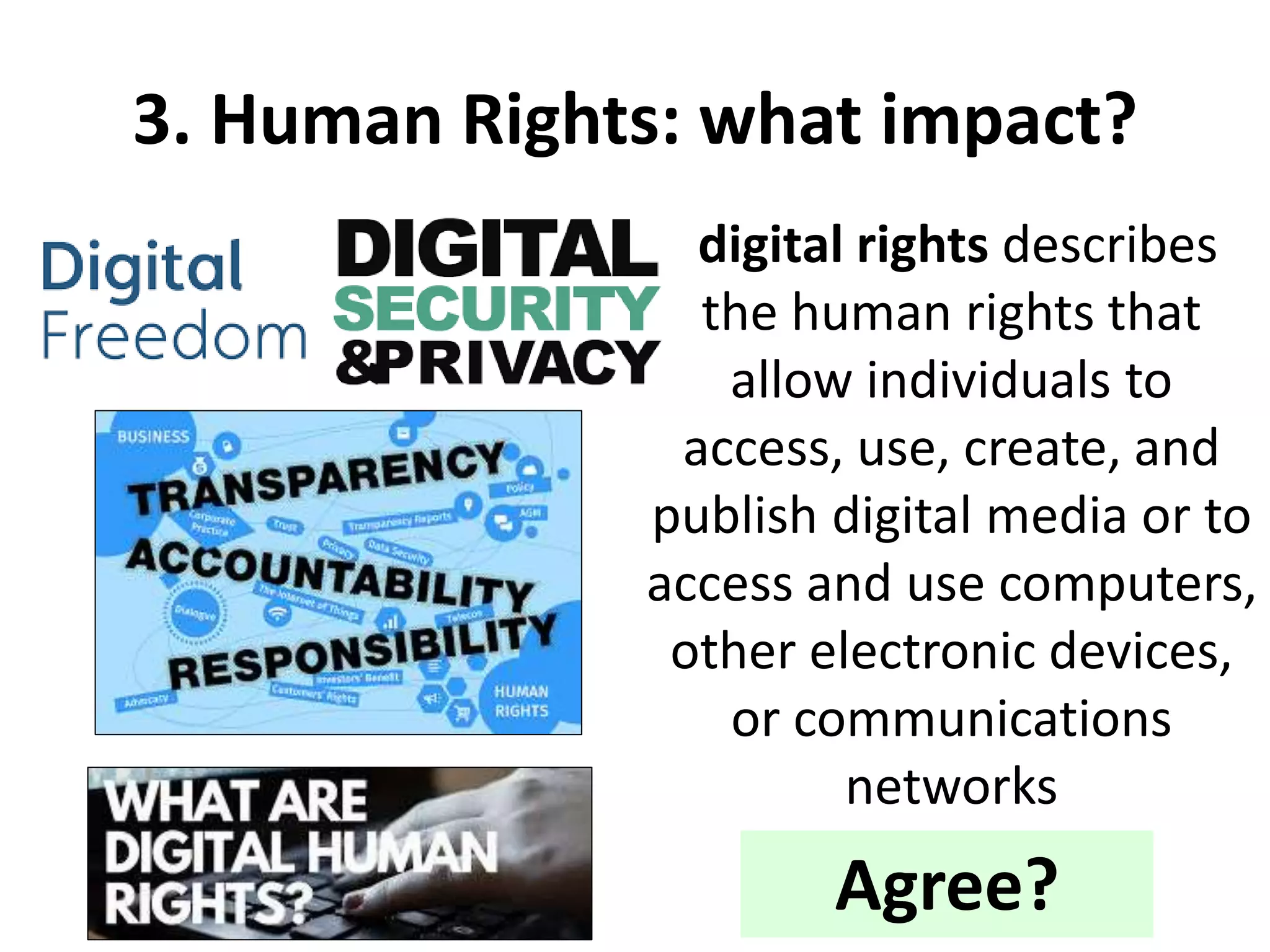
3. Human Rights: what impact?
digital rights describes
the human rights that
allow individuals to
access, use, create, and
publish digital media or to
access and use computers,
other electronic devices,
or communications
networks
Agree?
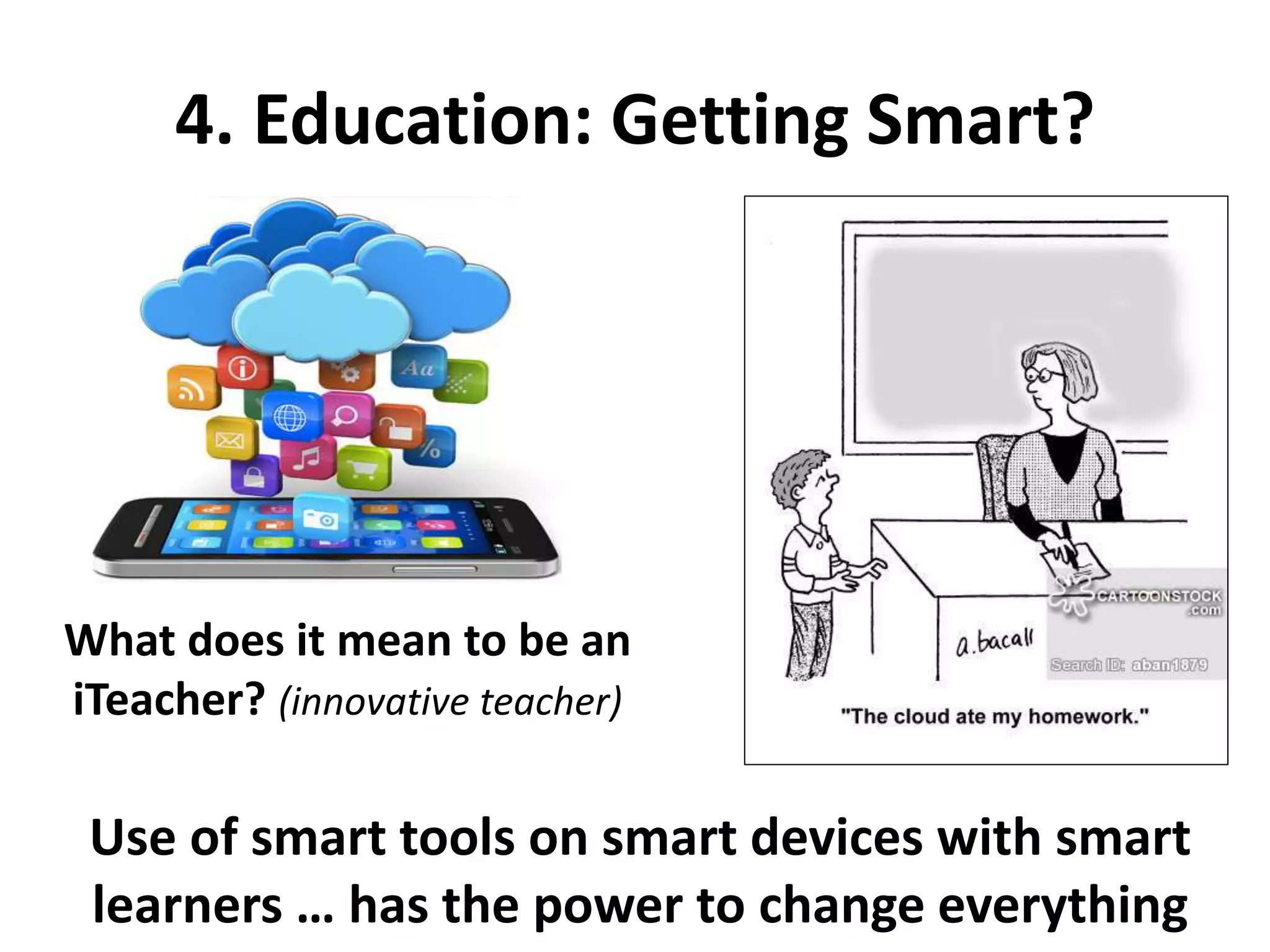
4. Education: Getting Smart?
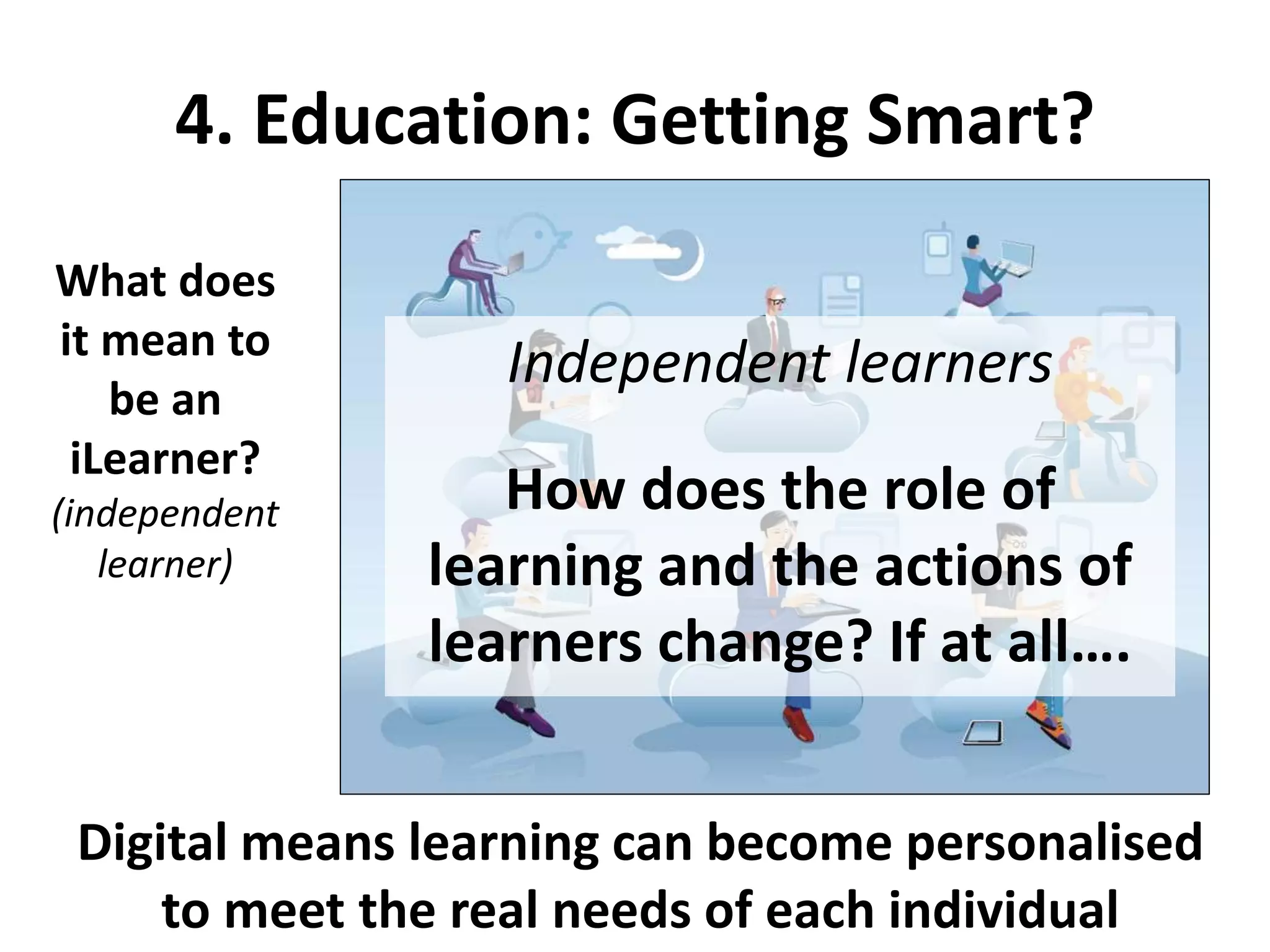
What does it mean to be an
iTeacher? (innovative teacher)
Use of smart tools on smart devices with smart
learners … has the power to change everything
4. Education: Getting Smart?
What does
it mean to
be an
iLearner?
(independent
learner)
Digital means learning can become personalised
to meet the real needs of each individual
Independent learners
How does the role of
learning and the actions of
learners change? If at all….
5. Policy: inspirational leadership?
What does it mean to be an iLeader?
(inspirational leader)
We need inspirational leadership to
embrace the challenges of innovative
technology and the growing demand
for access to information
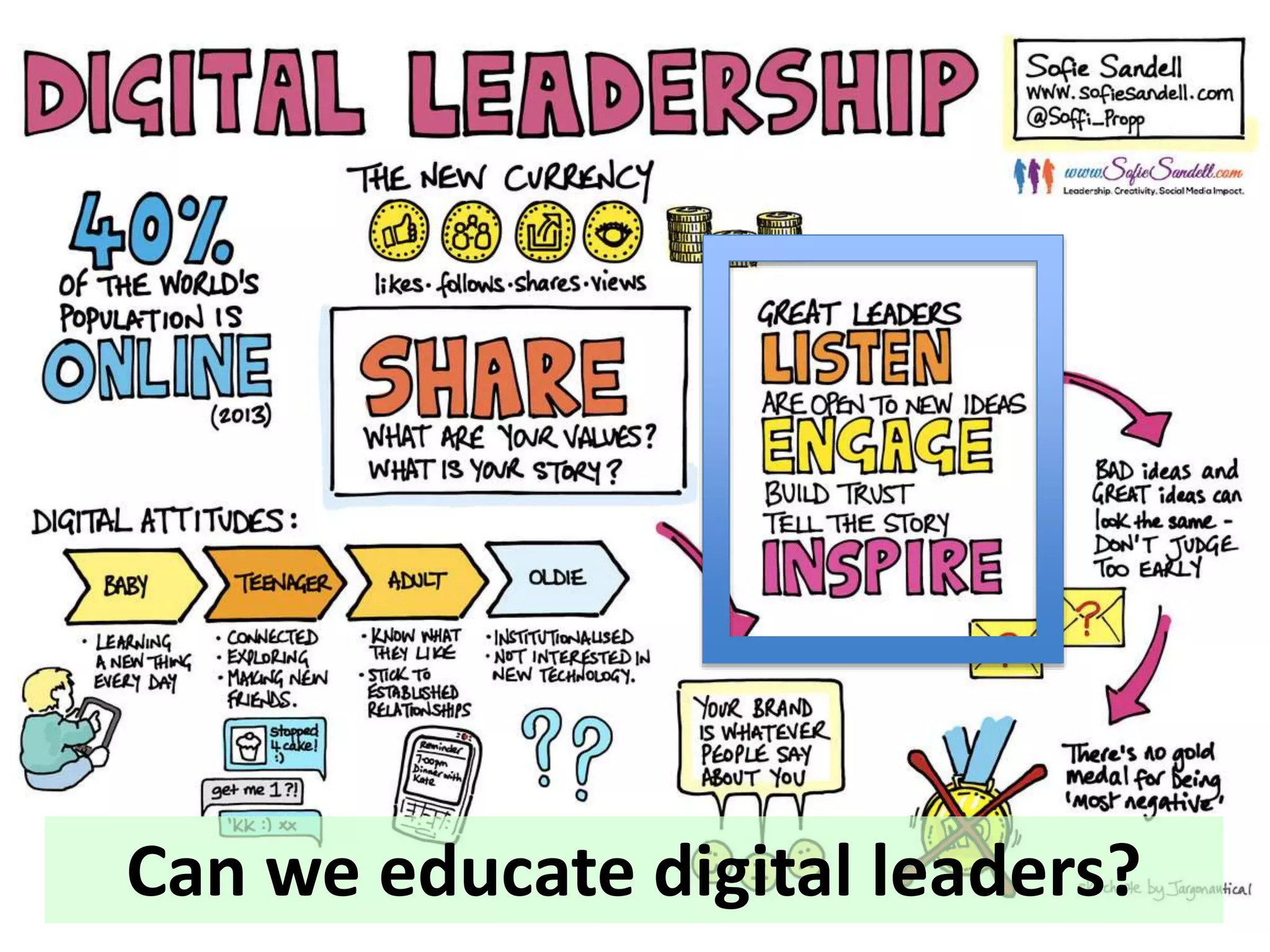
5. Policy: inspirational leadership?
Can we educate digital leaders?
Digital Citizen Working Group: Purpose
• Address digital issues from the citizen’s
perspective = in terms of Education (&
Culture), Human Rights, Democracy
• Establish a pro-active, forward looking
approach – not a reactive approach as in the
past
• Consider: What is the future we want for the
digital citizen?
• What measures can we initiate / put in place
to support this vision?
What do you think are
the main issues this WG
needs to address?
An activity 15-20 minutes
Work in pairs or in groups
http://bit.ly/2EMPXHl
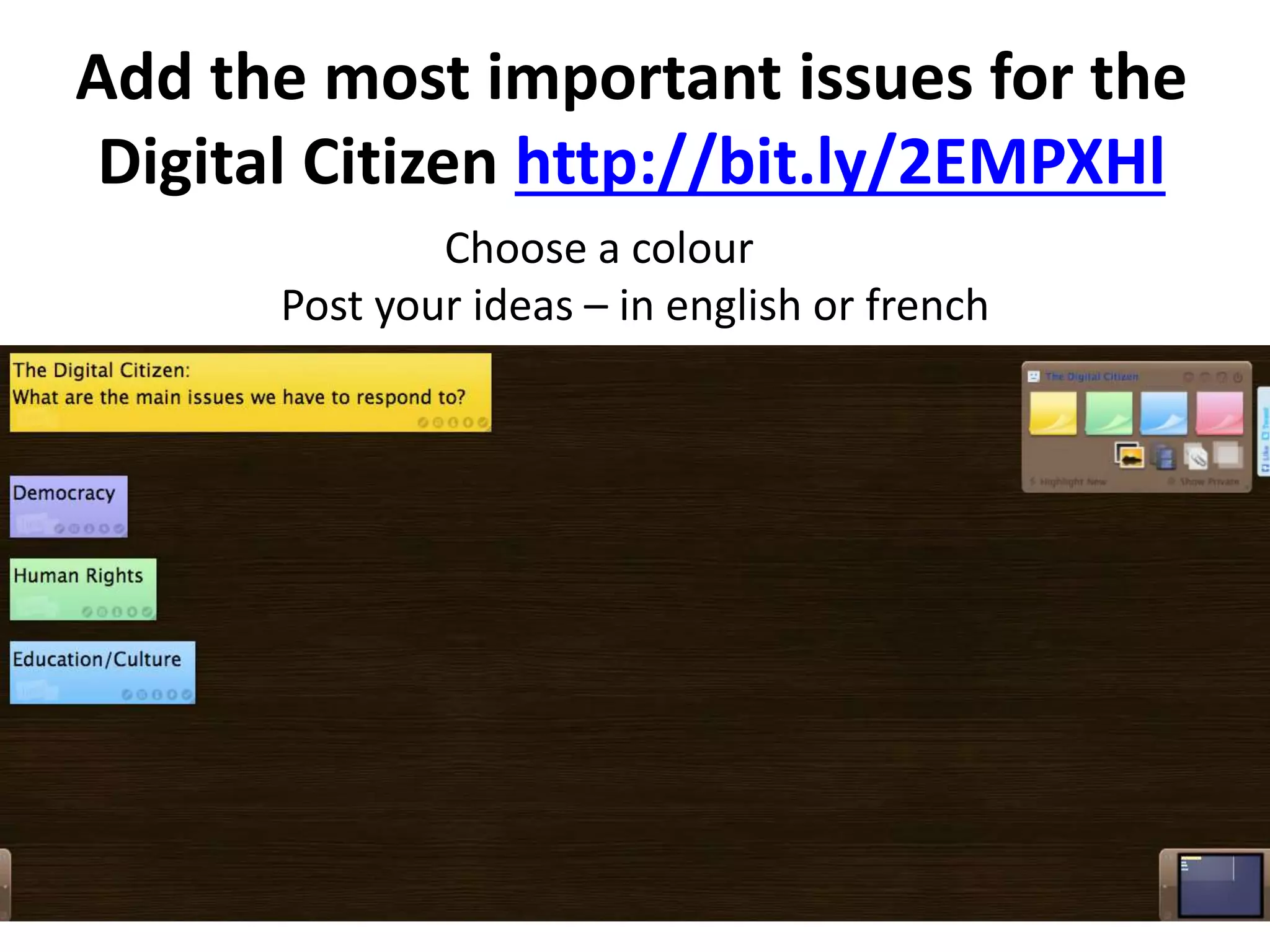
Add the most important issues for the
Digital Citizen http://bit.ly/2EMPXHl
Choose a colour
Post your ideas – in english or french
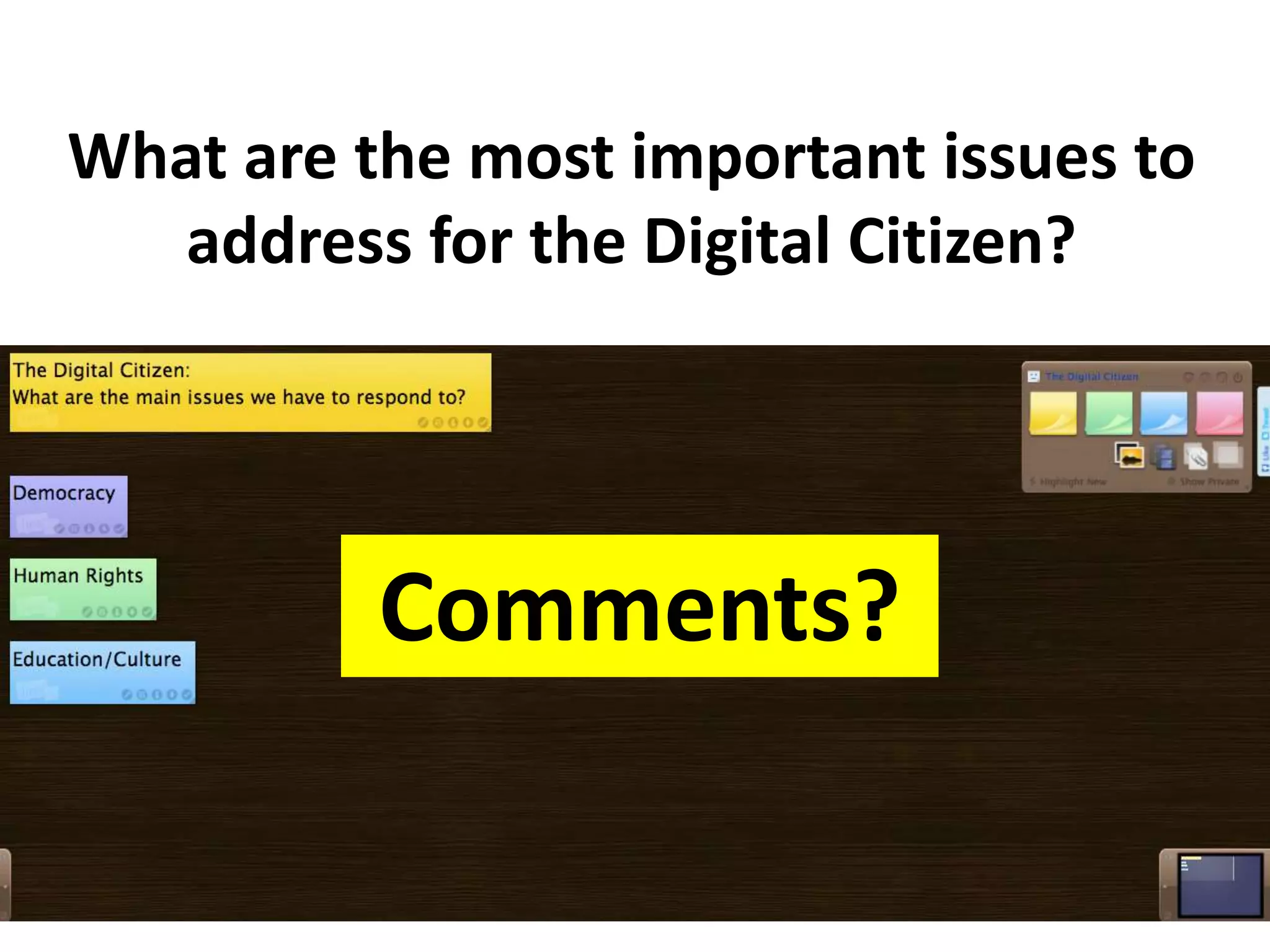
What are the most important issues to
address for the Digital Citizen?
Comments?
The Digital Citizen &
Digital Citizenship
A series of slides on the distinction
between these topics
Definitions?
• A digital citizen refers to a person utilizing
information technology (IT) in order to engage in
society, politics, and government.
• Mossberger, et al. said digital citizens “use the
Internet regularly and effectively”
(Wikipedia)
Is this a suitable definition or do we need to make
our own?
• What ideas exist about digital citizens and
citizenship?
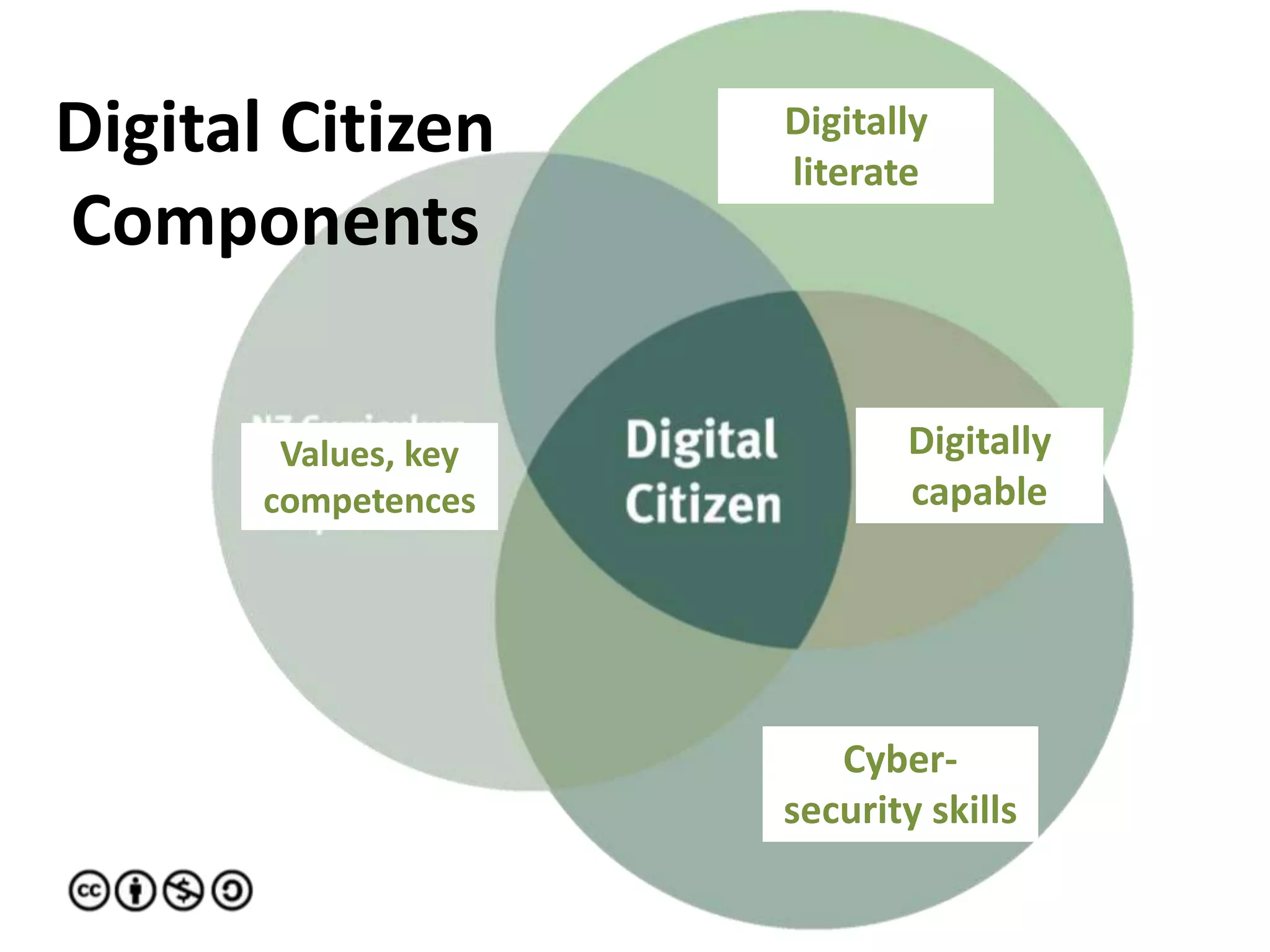
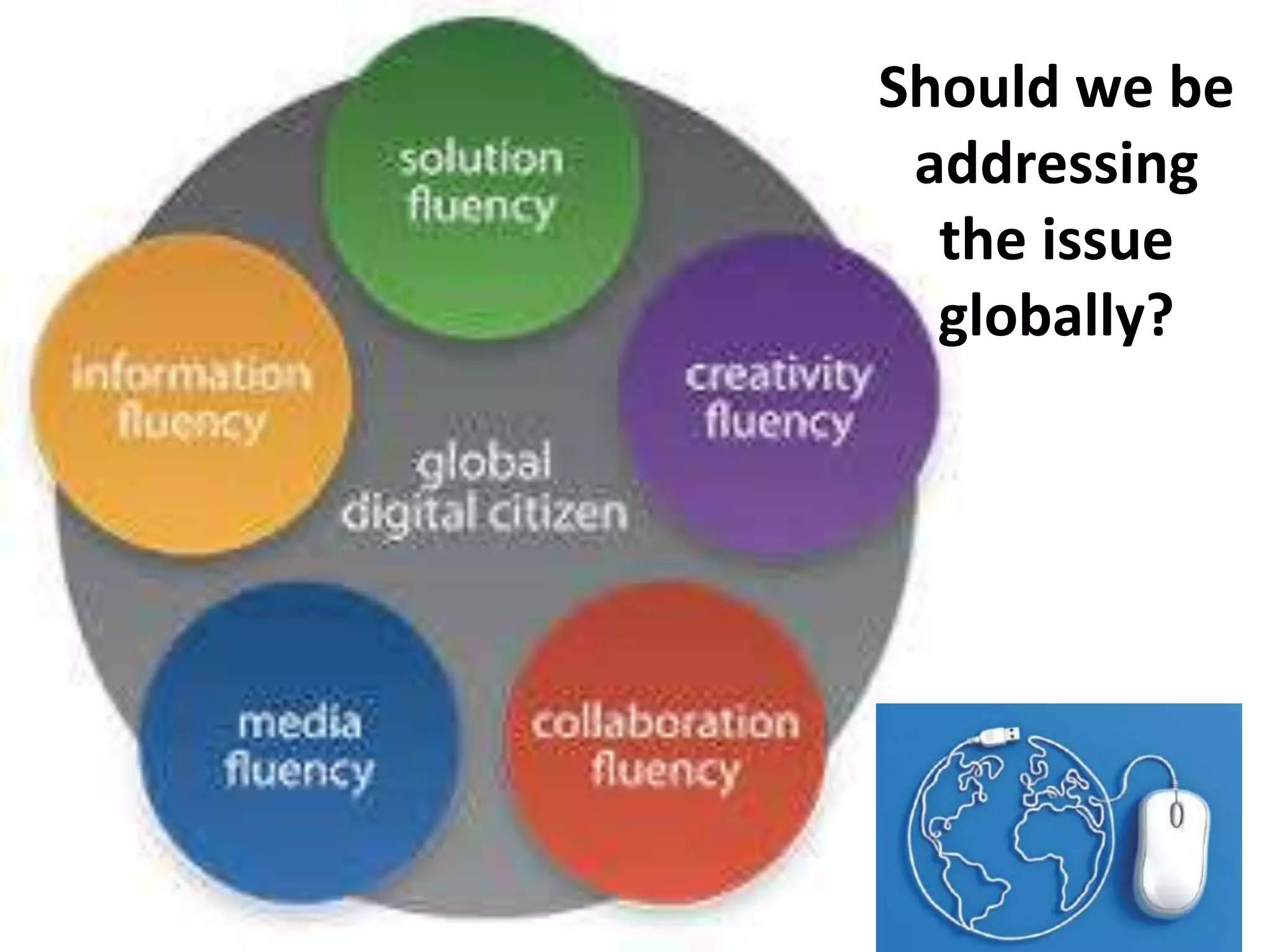
Values, key
competences
Cyber-
security skills
Digitally
capable
Digitally
literate
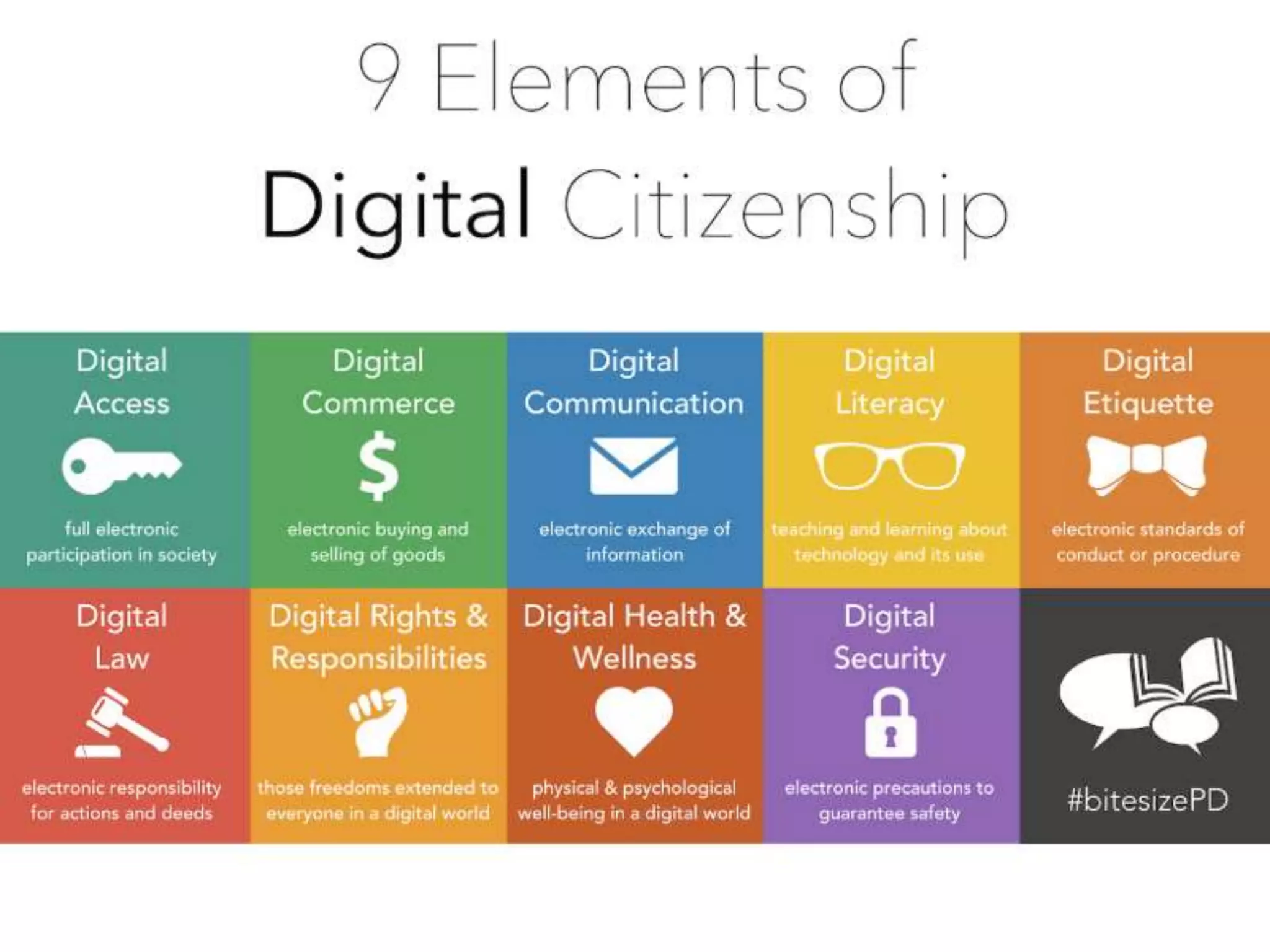
Digital Citizen
Components
Should we be
addressing
the issue
globally?
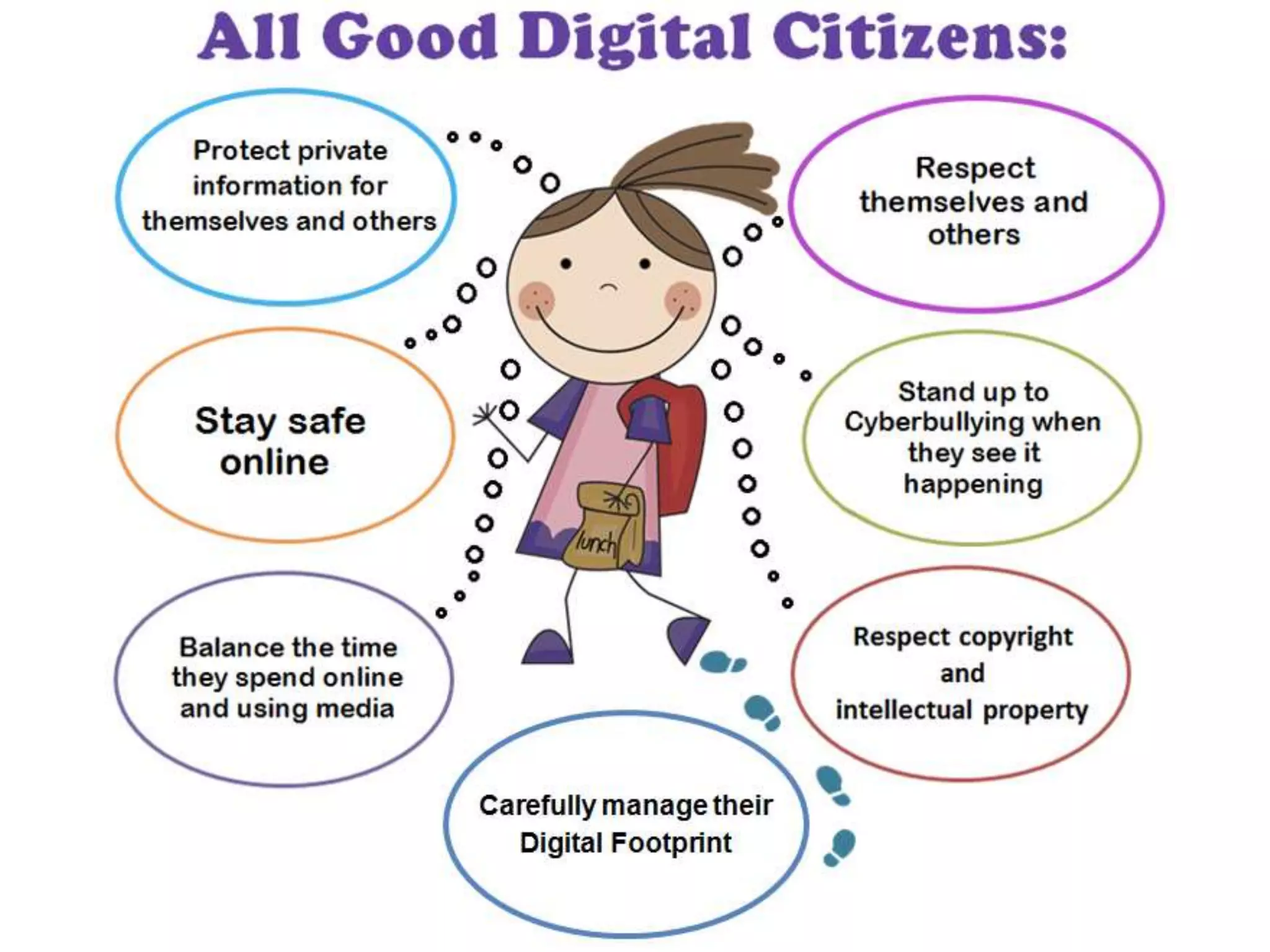
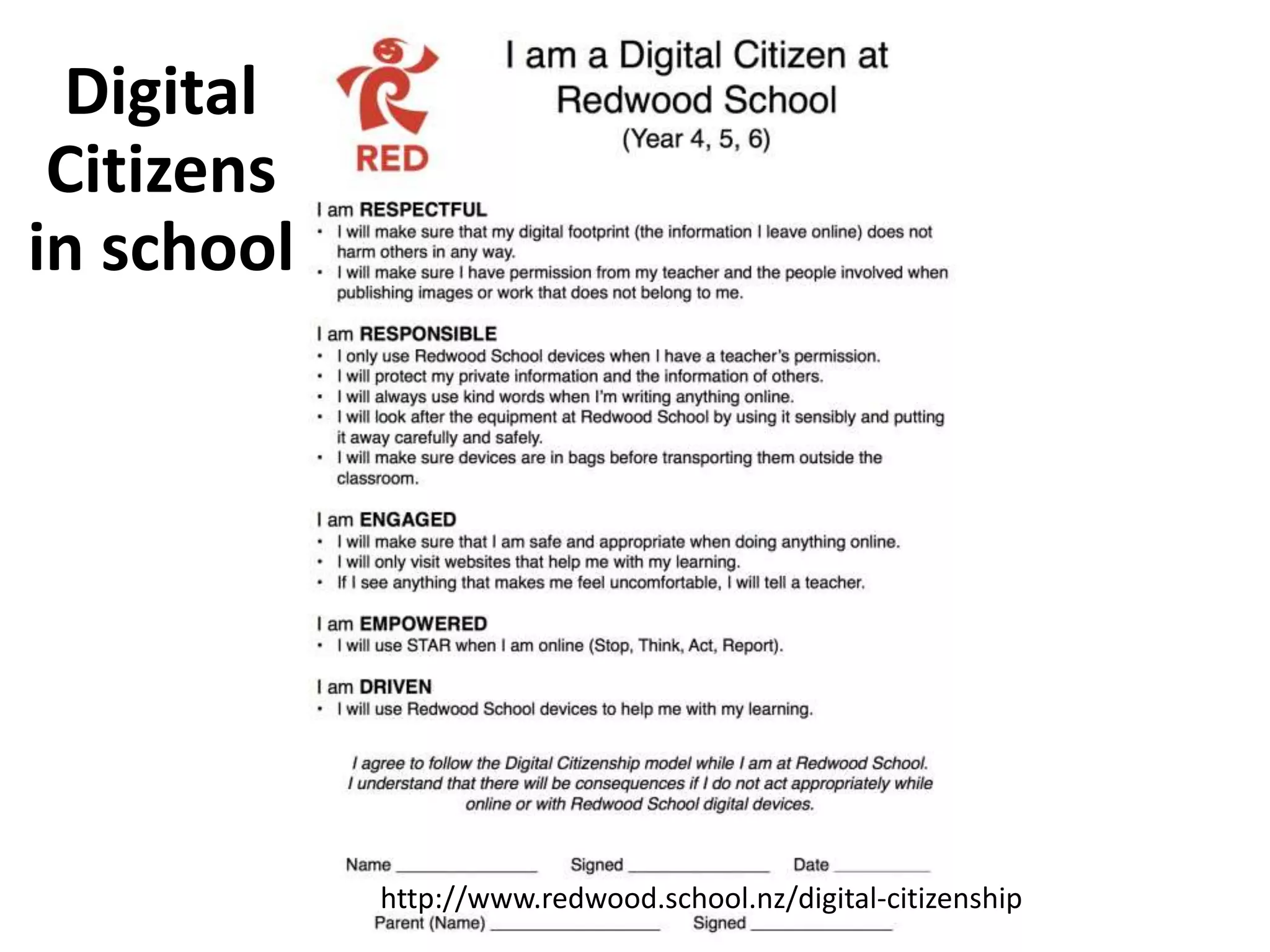
http://www.redwood.school.nz/digital-citizenship
Digital
Citizens
in school
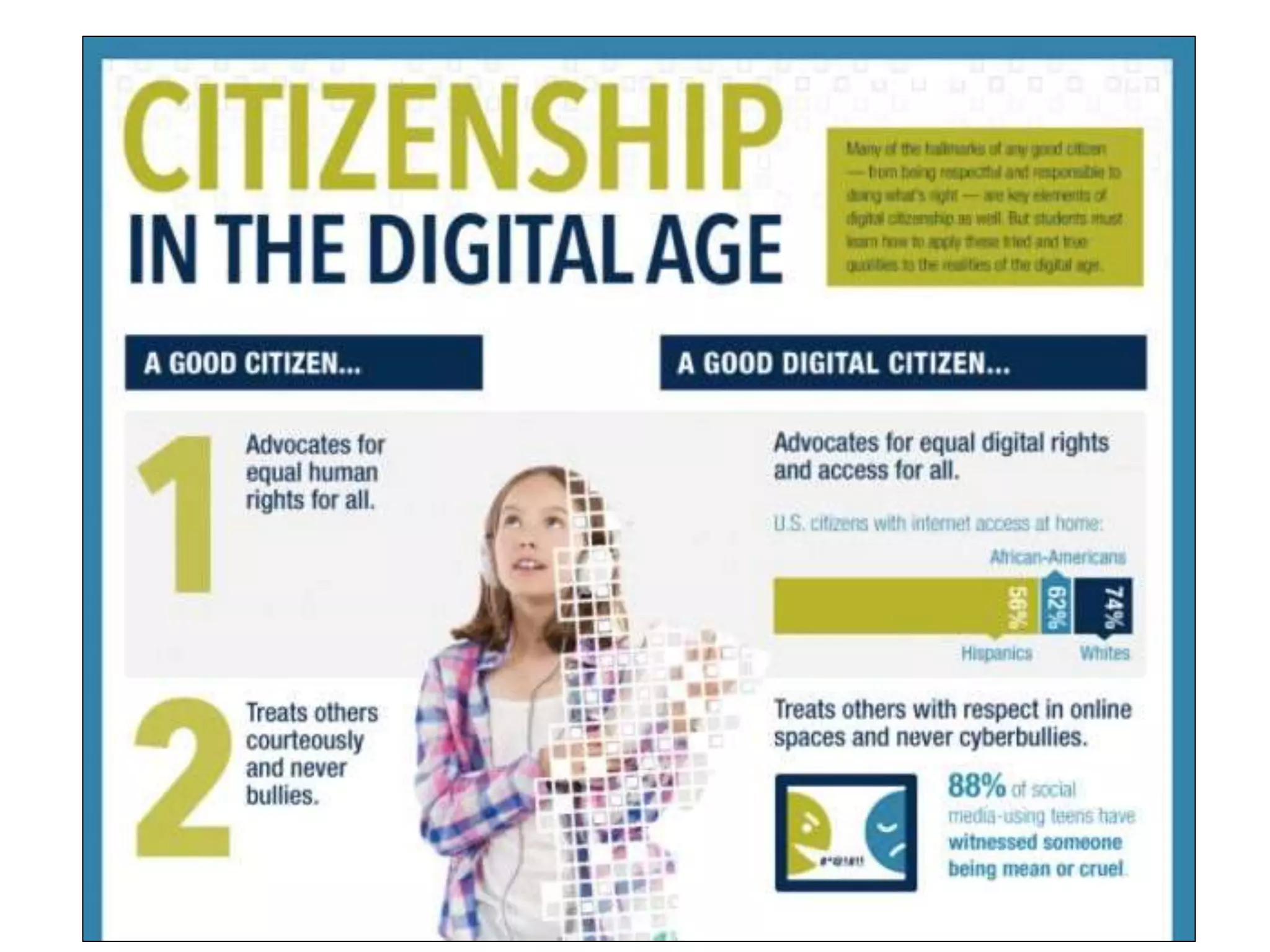
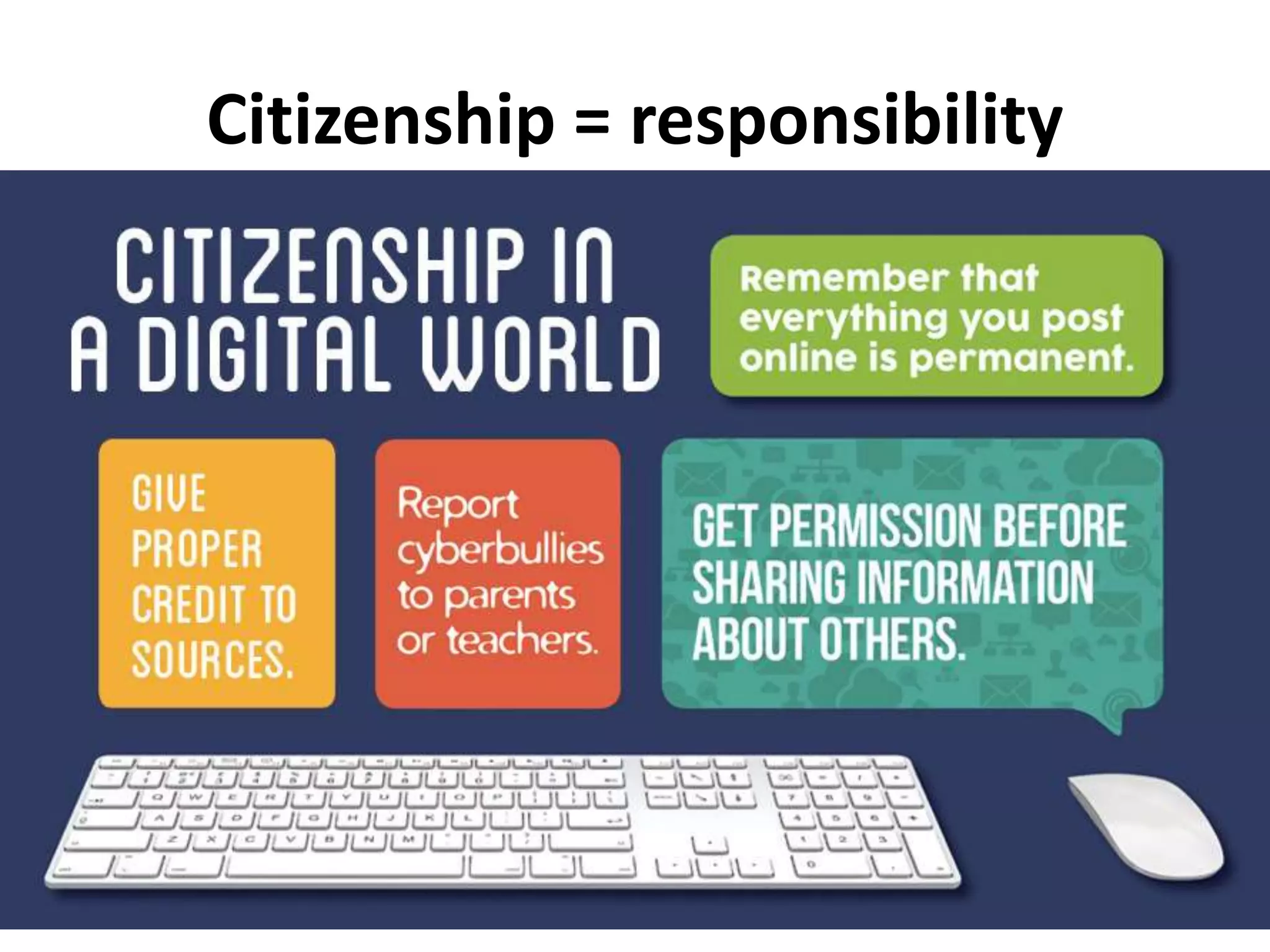
Citizenship = responsibility
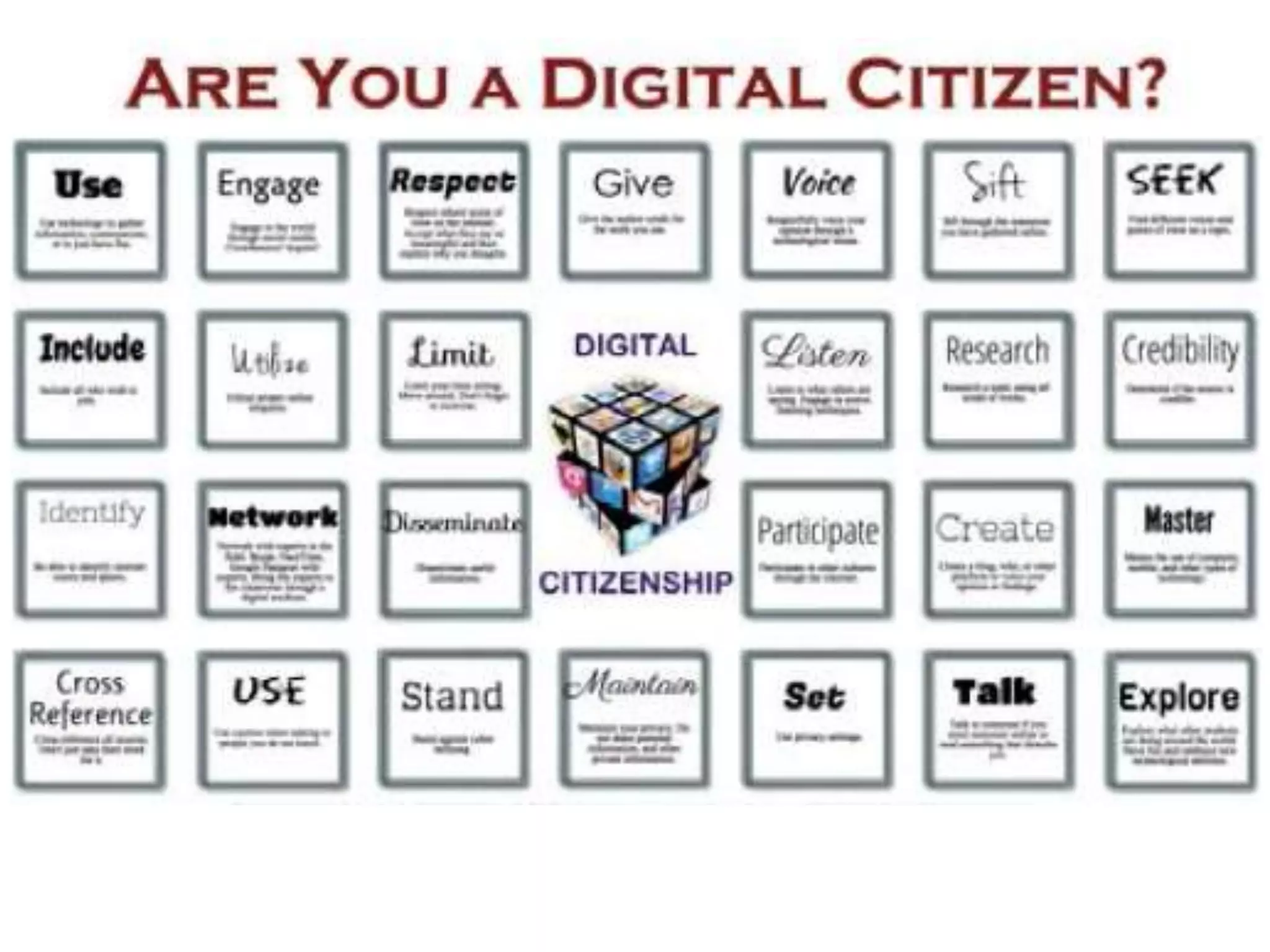
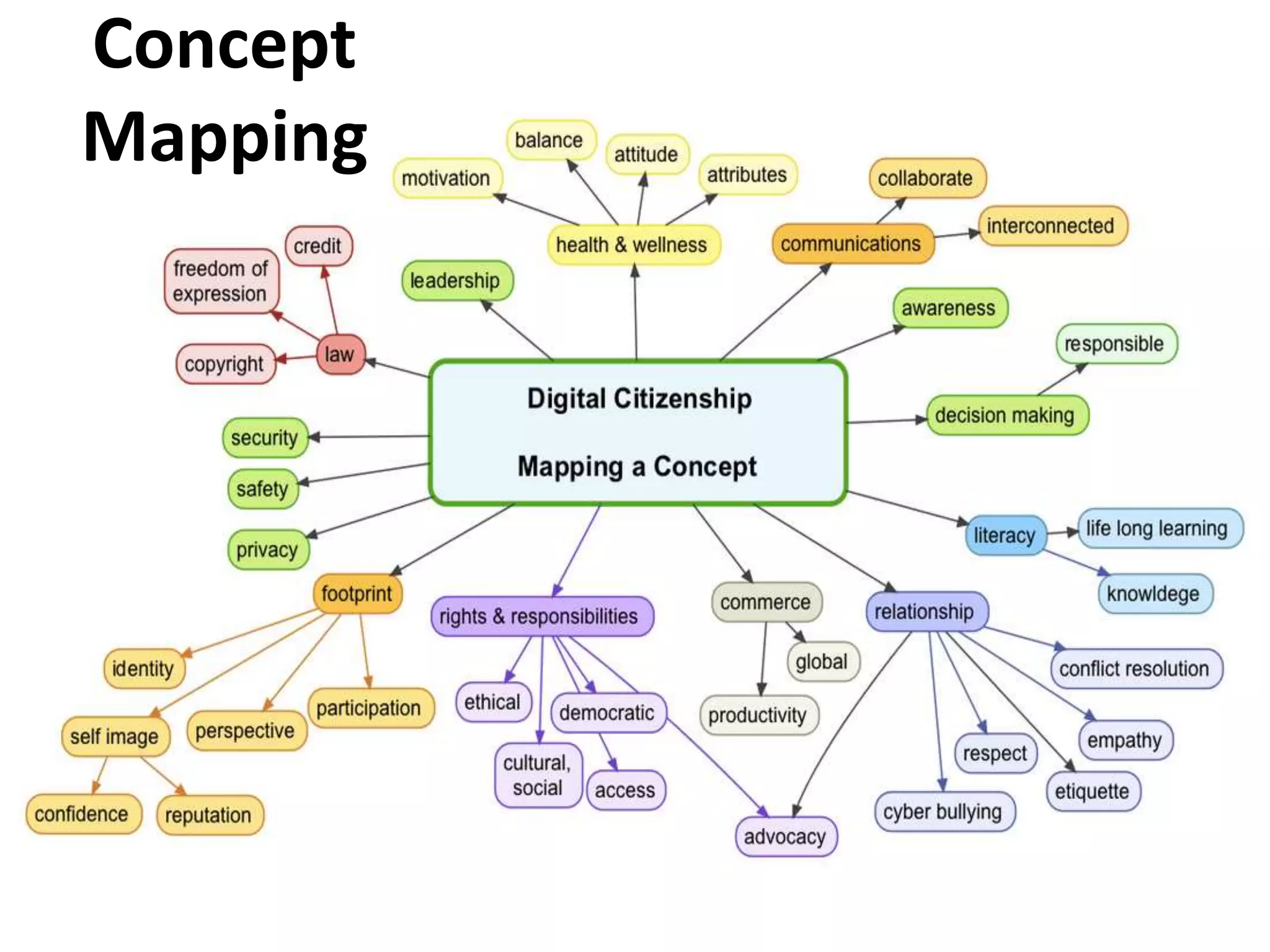
Concept
Mapping
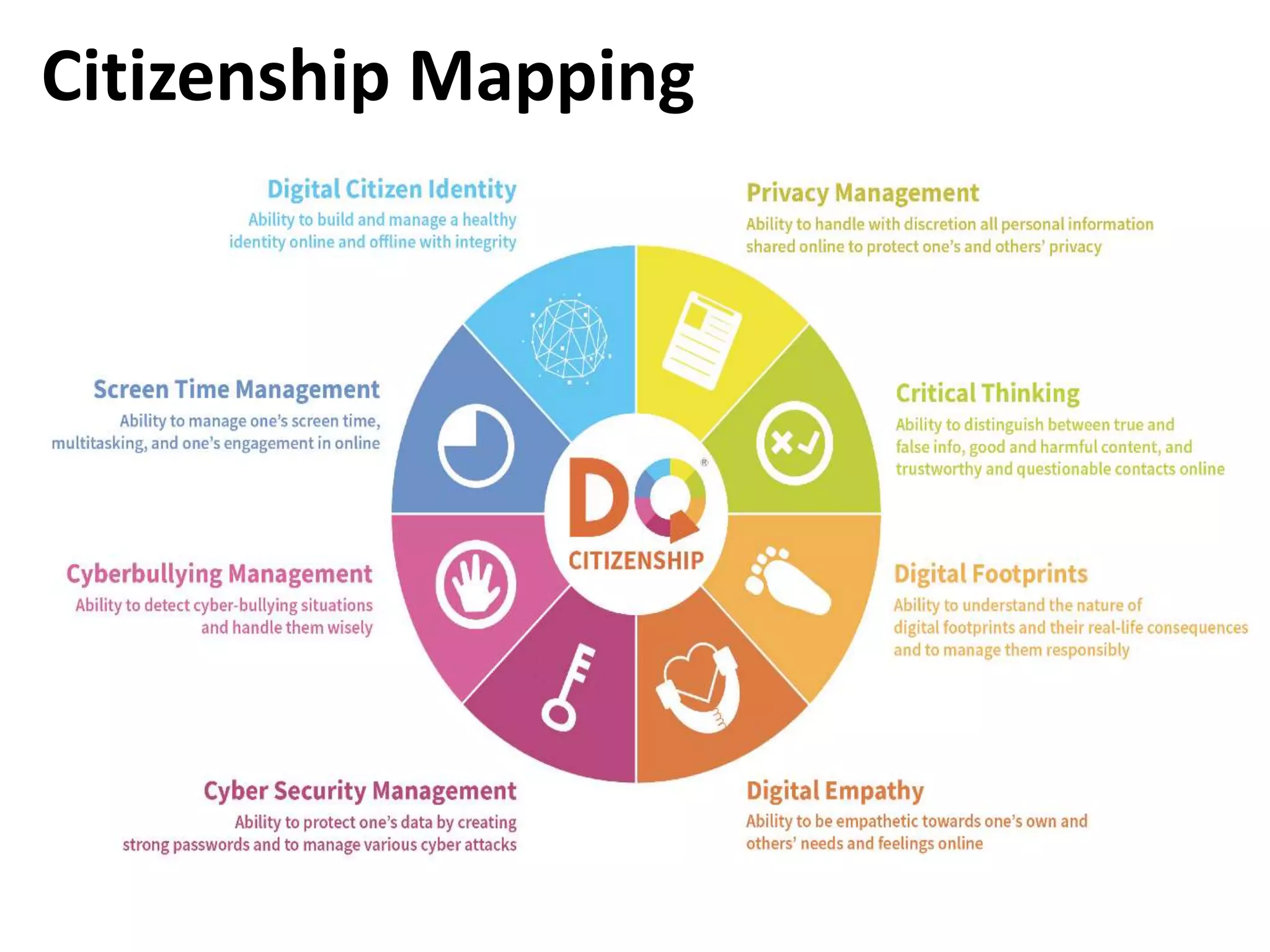
Citizenship Mapping
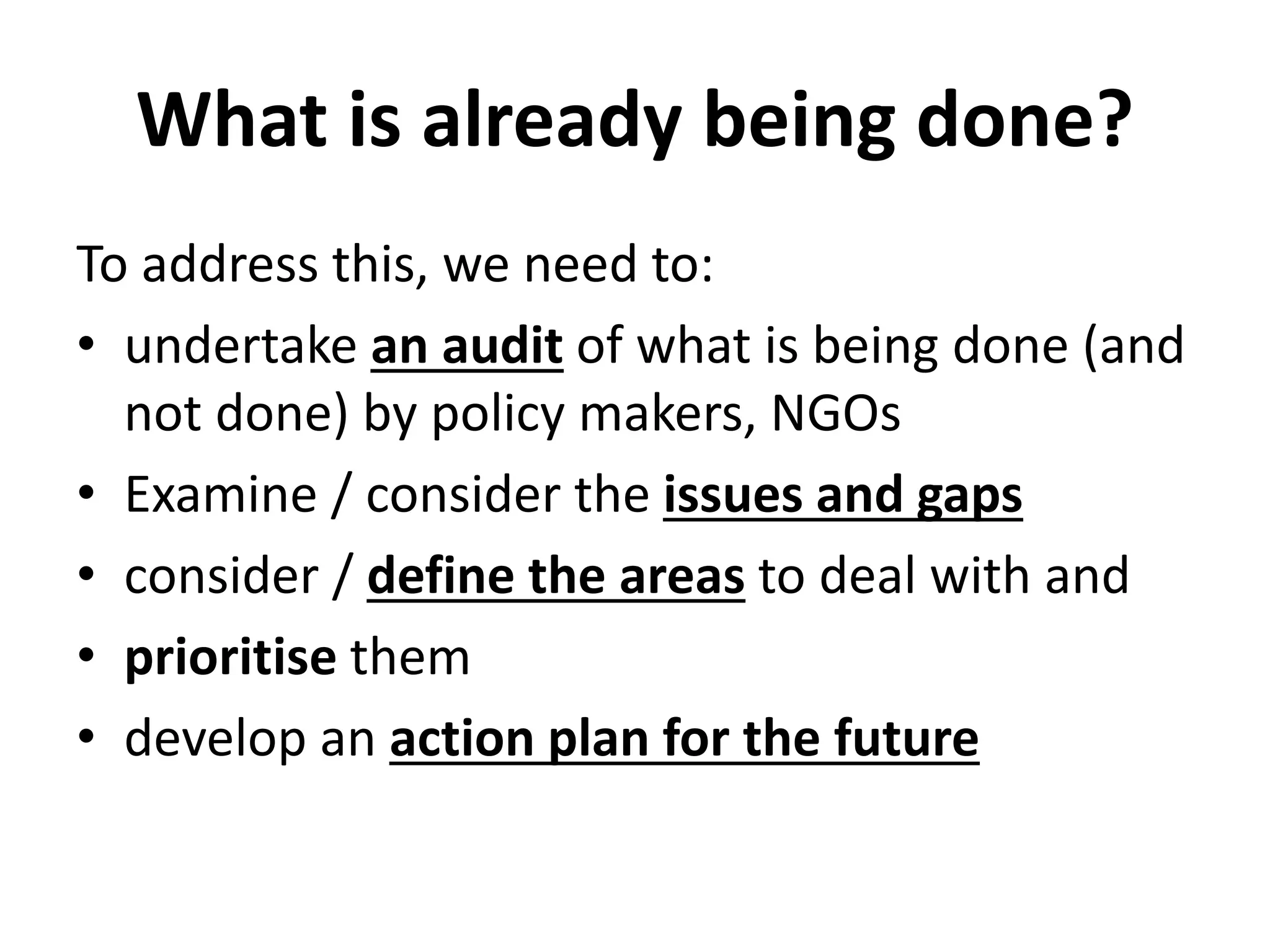
What is already being done?
To address this, we need to:
• undertake an audit of what is being done (and
not done) by policy makers, NGOs
• Examine / consider the issues and gaps
• consider / define the areas to deal with and
• prioritise them
• develop an action plan for the future
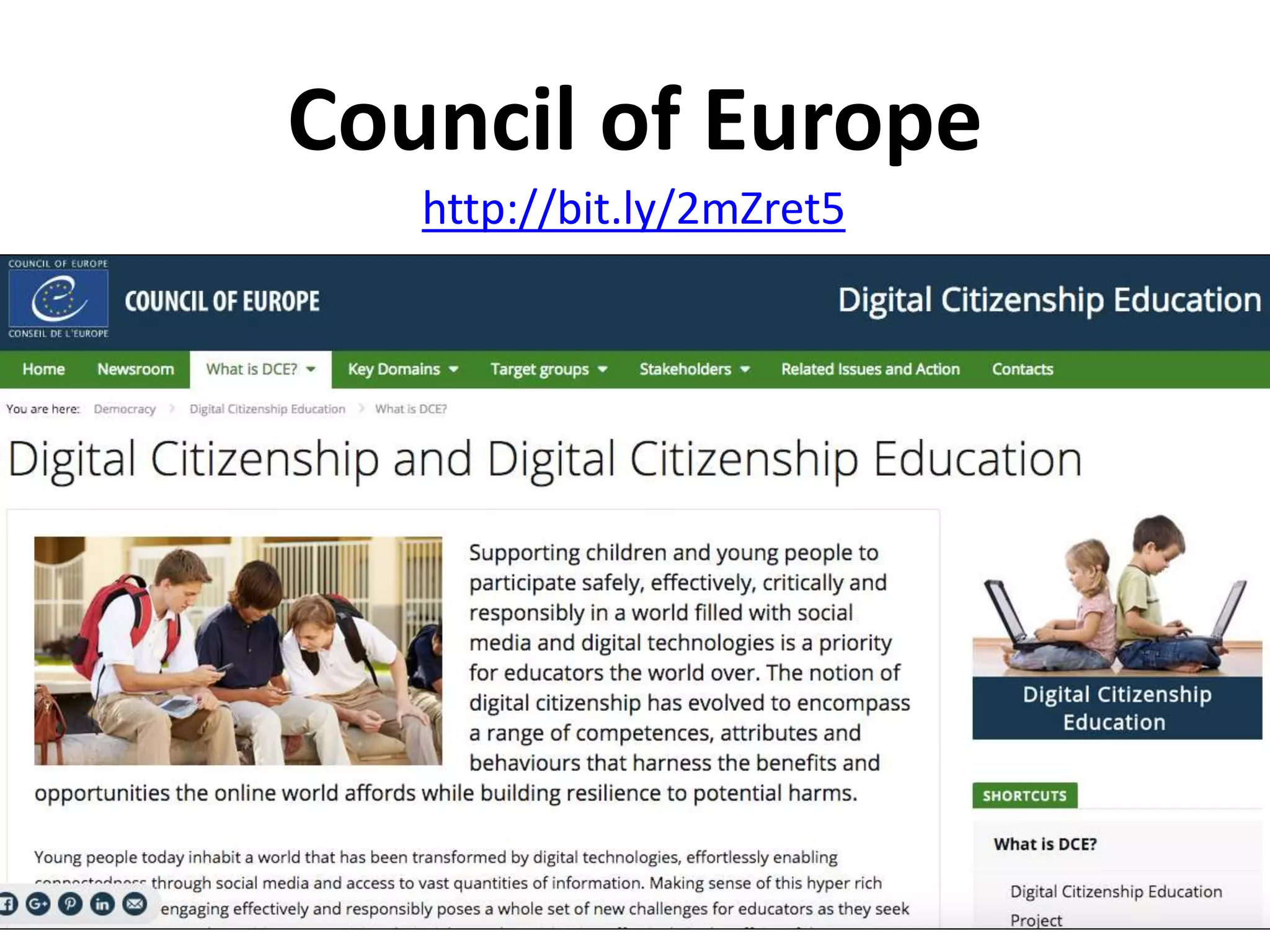
Council of Europe
http://bit.ly/2mZret5
Council of Europe
http://bit.ly/2mXCVzu
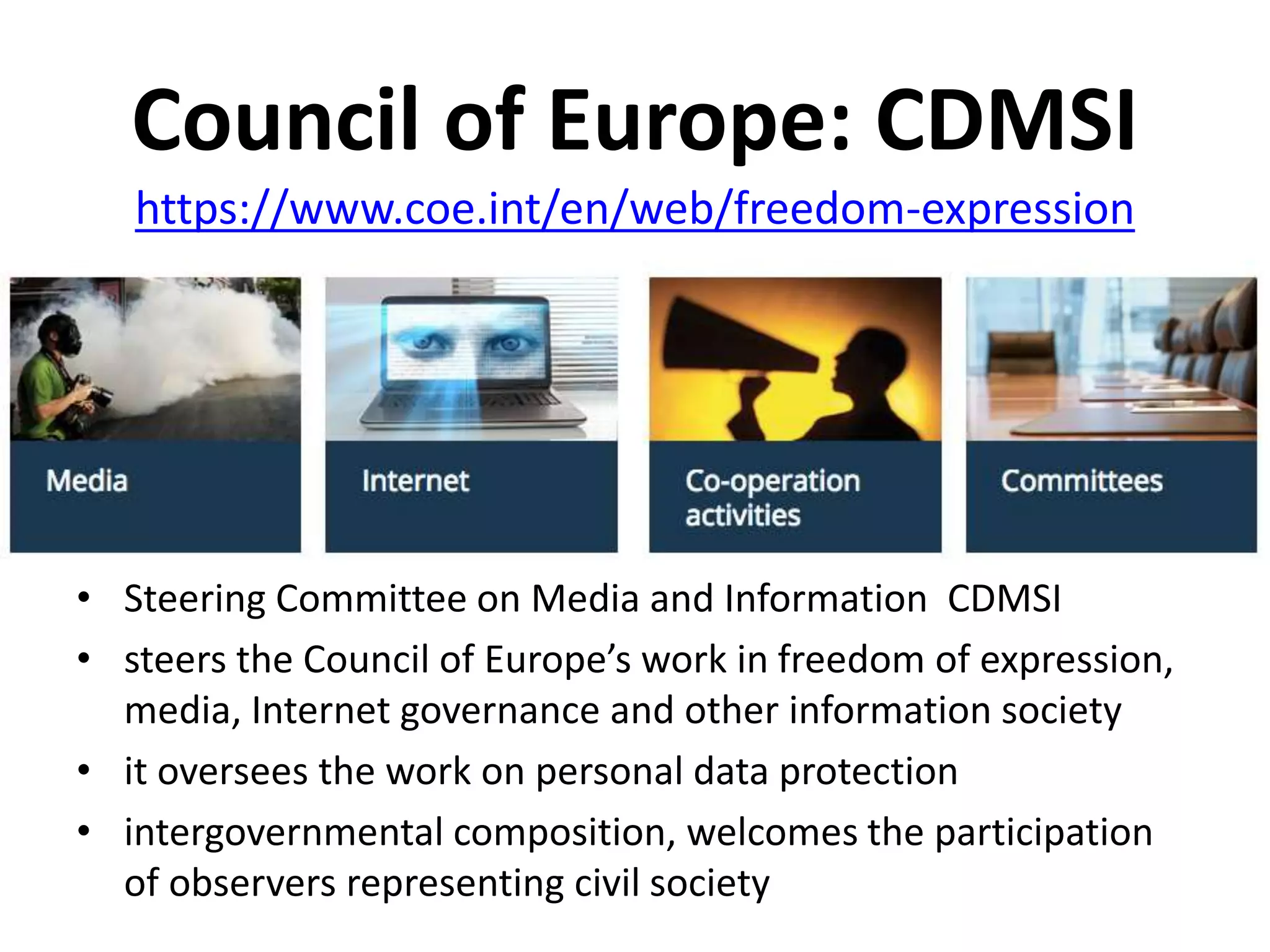
Council of Europe: CDMSI
• Steering Committee on Media and Information CDMSI
• steers the Council of Europe’s work in freedom of expression,
media, Internet governance and other information society
• it oversees the work on personal data protection
• intergovernmental composition, welcomes the participation
of observers representing civil society
https://www.coe.int/en/web/freedom-expression
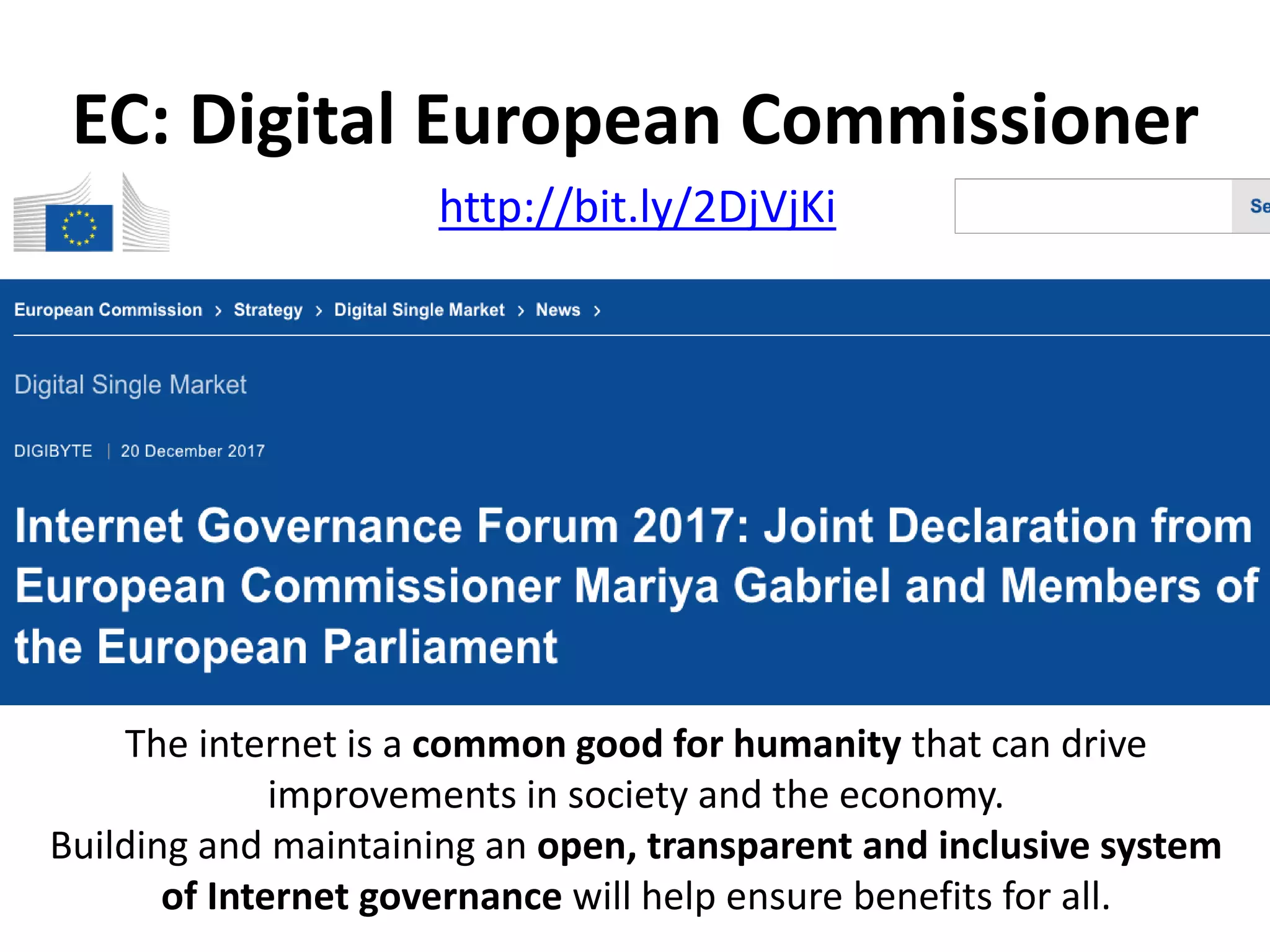
The internet is a common good for humanity that can drive
improvements in society and the economy.
Building and maintaining an open, transparent and inclusive system
of Internet governance will help ensure benefits for all.
http://bit.ly/2DjVjKi
EC: Digital European Commissioner
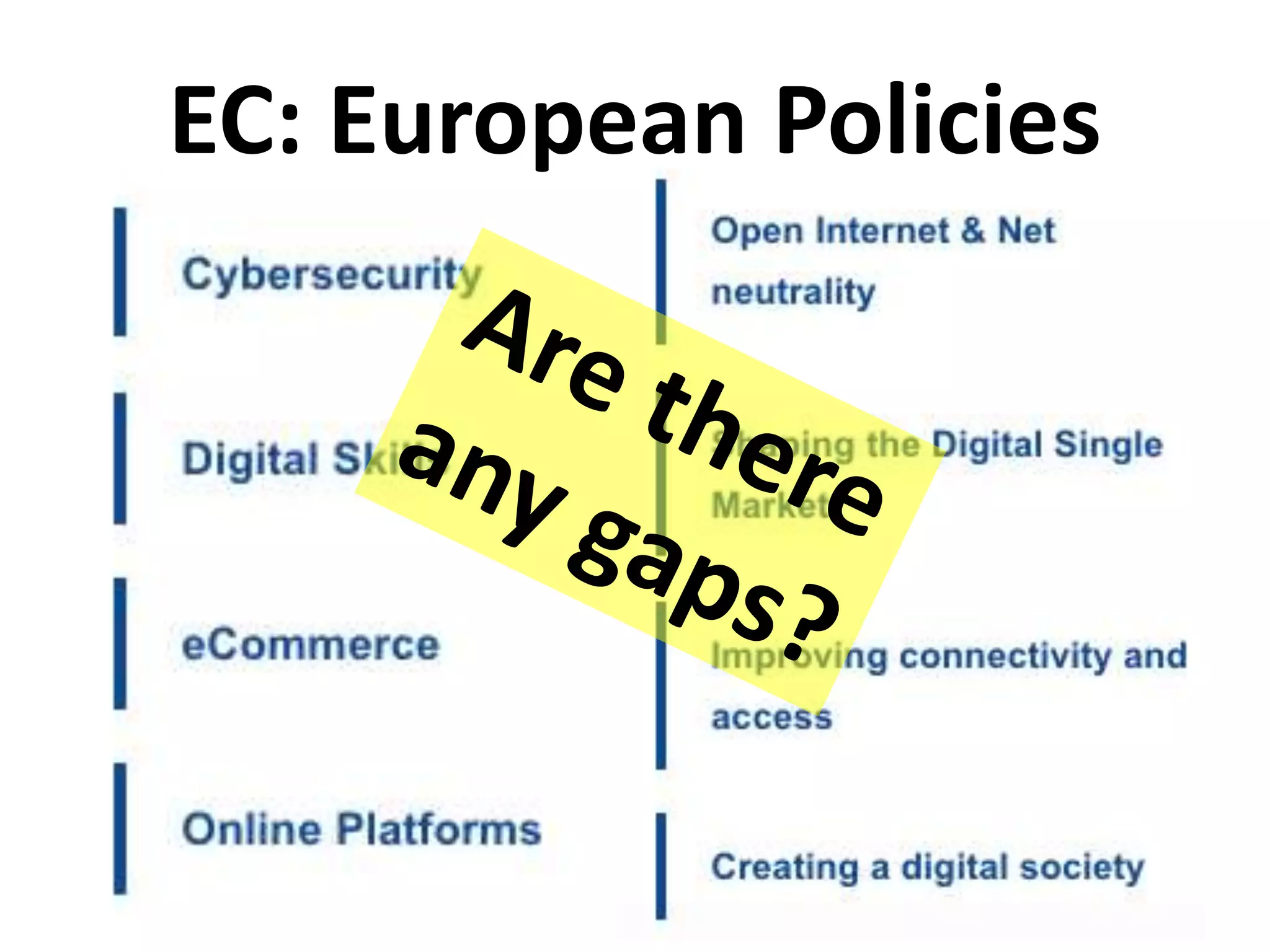
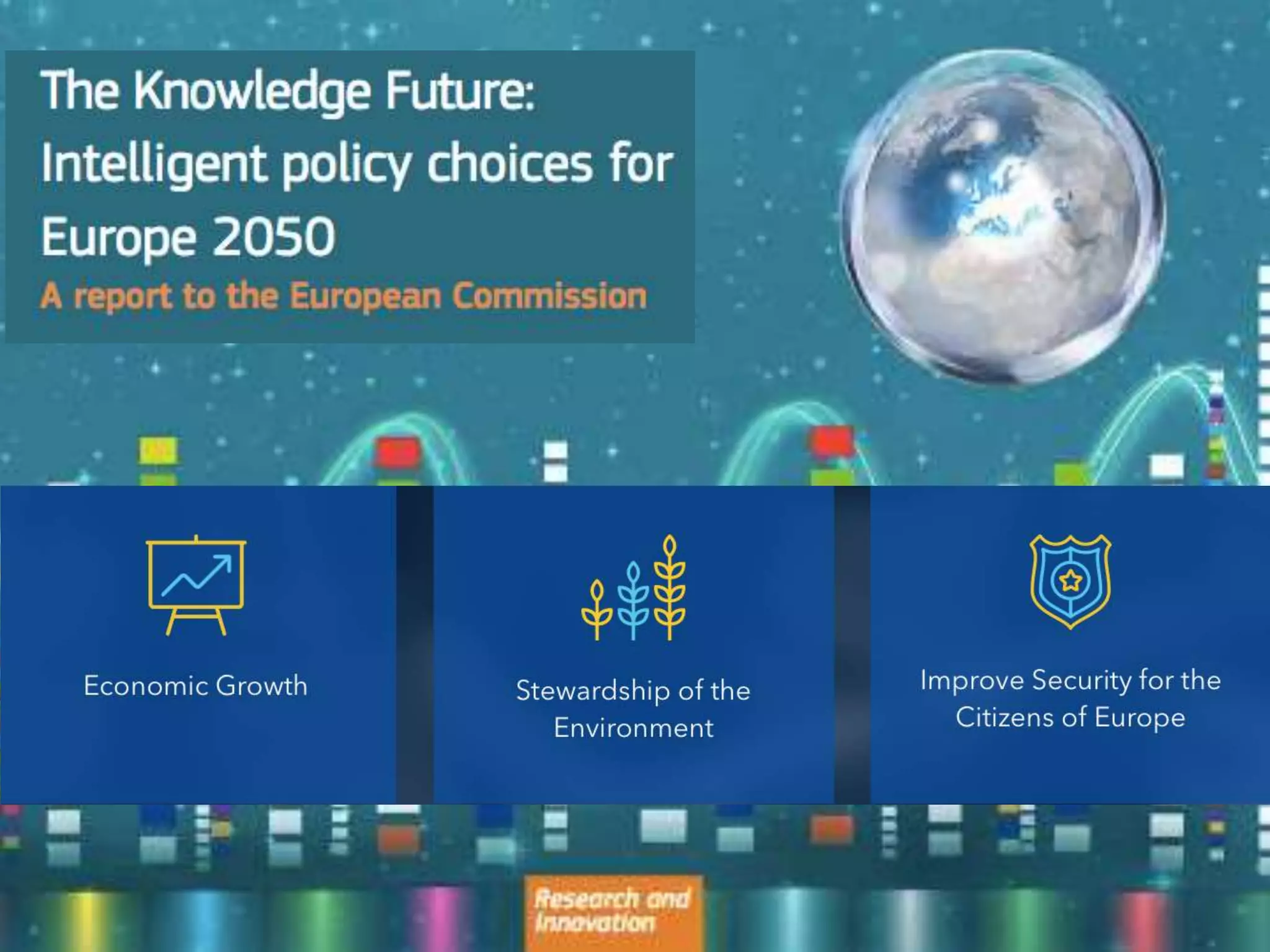
EC: European Policies
Discussion points
• What can we learn from these initiatives and
approaches?
• What (other) ideas do you/we have?
• Discussion
– what influence can we have in terms of policy?
– what should we seek to do?
Conclusions: Futures
• What sort of future do we want for the digital
citizen?
• Foresight Activity at the Summer meeting
Digital Futures
• Innovative approach = anticipatory
thinking
• Designed to reflect on future policy needs
3 components:
• Foresight – generate visions of the future
• Impacts, expectations
• Participatory policy development
(evidence-based)
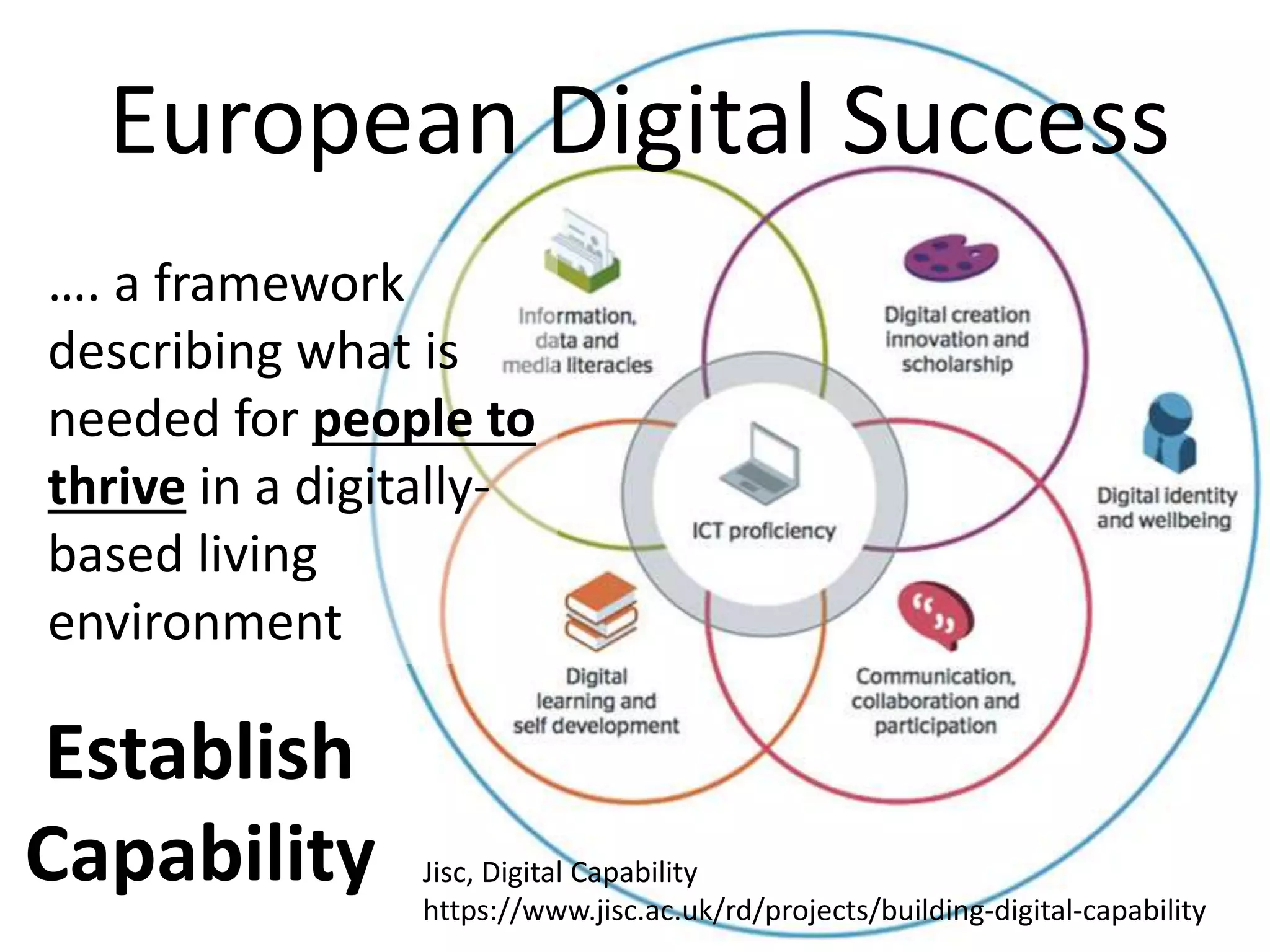
Establish
Capability
…. a framework
describing what is
needed for people to
thrive in a digitally-
based living
environment
Jisc, Digital Capability
https://www.jisc.ac.uk/rd/projects/building-digital-capability
European Digital Success
• universities are thriving in strong
partnerships with regional institutions.
• education is ‘in’ … to use technology to help
address global problems
• automation and data-intensive scientific
progress
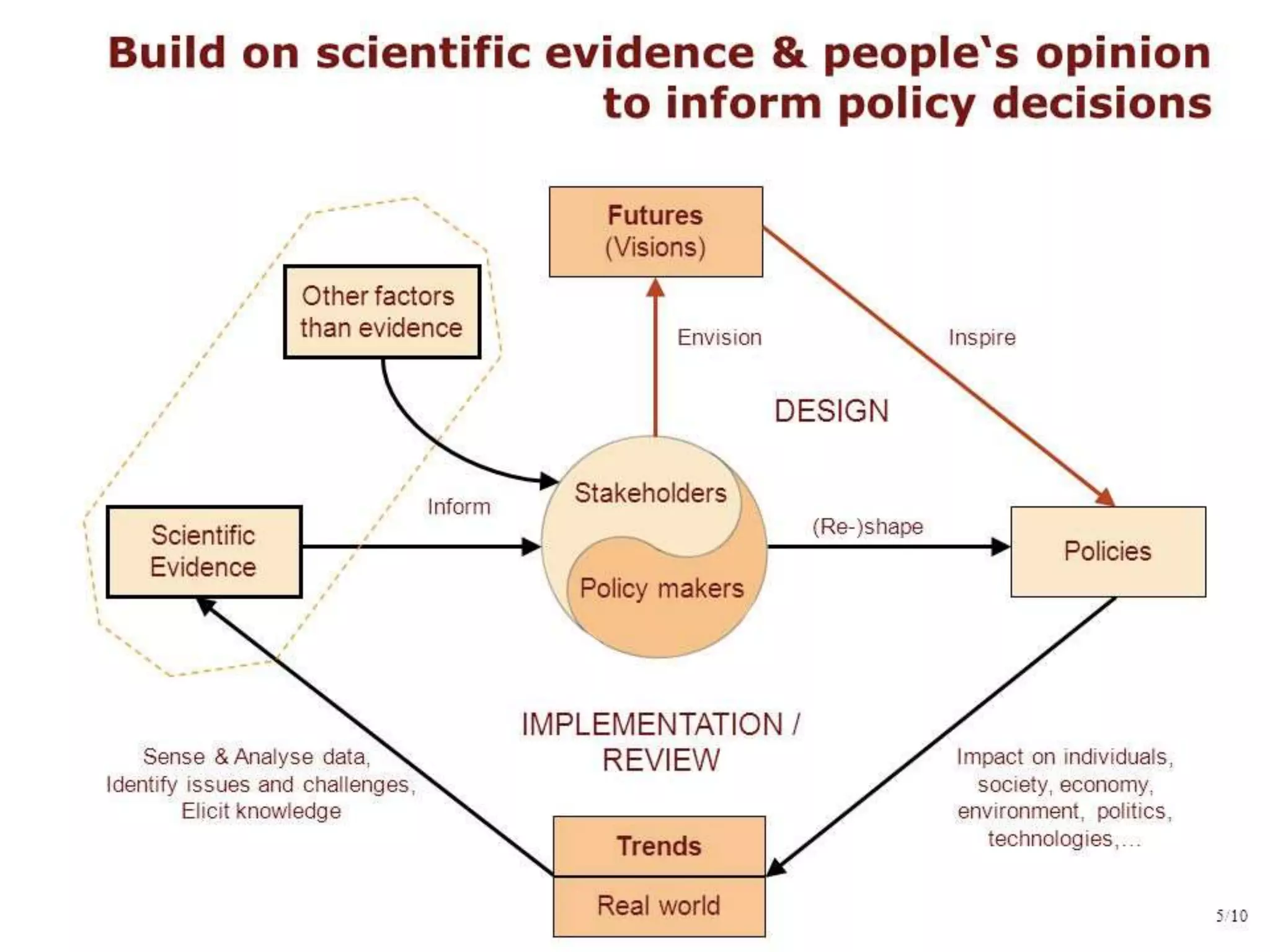
• from closed policy to evidence-based policy
and monitoring (including smart cities)
• cities become laboratories of democracy
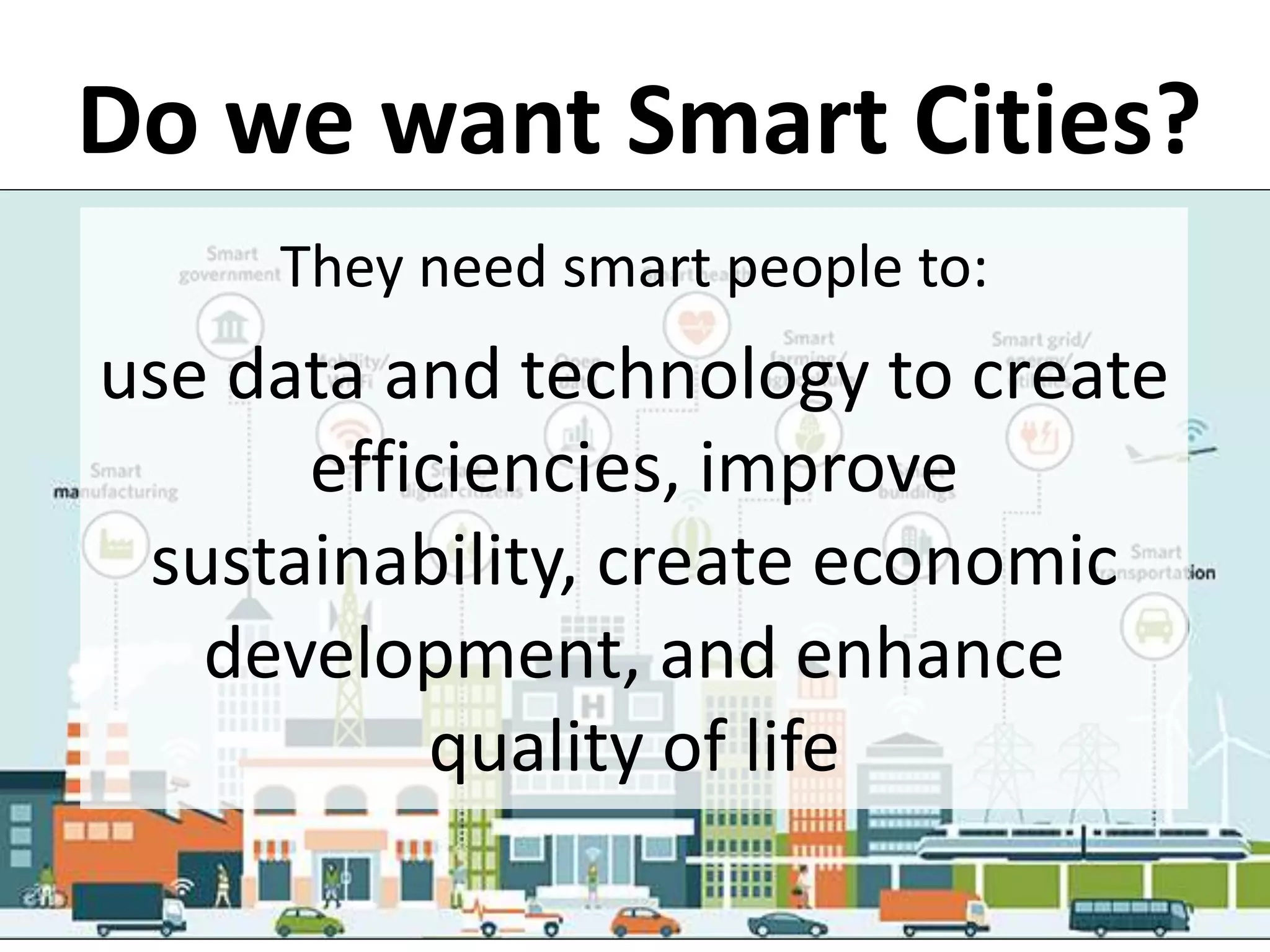
Do we want Smart Cities?
They need smart people to:
use data and technology to create
efficiencies, improve
sustainability, create economic
development, and enhance
quality of life
Digital Citizen Roadmap
• Define issues and context we will work in – January
2018
• Examine futures – addressing the issues – what is
the future we want for digital citizens? – June 2018
• Decide on measures / activities – position
statements, white paper, campaign, side event
• Connect with policy groups and groups inside the
Council of Europe and EC and ….
• Develop outputs – for instance a publication on a
“future we want” for the digital citizen
Further comments?
Preparation work before the next meeting
a) Research from your perspective the policies
in lace for the digital citizen … for example in
security, rights and education
b) What is the ideal situation for a digital
citizen?
c) What gaps need to be filled? Which are not
being covered.

Digital citizen Working roup

  • 1.
    COMMISSION EDUCATION ETCULTURE PRESENTATIONDESGROUPES DETRAVAIL EducationandCultureCommittee -CommissionEducationetCulture ClaudeVIVIERLEGOT,Chair KarlDONERTandJulianneLAGADEC,Vice-Chairs Digital Citizen a transversal Working Group
  • 2.
    Purpose of thesession • Defining the digital context • What are the main issues? - Activity • Digital Citizen (or Digital Citizenship)? - Discussion • An introduction to ‘Futures’ • Roadmap – work plan for the working group
  • 3.
  • 4.
  • 5.
  • 6.
    Disruption: threats and consequences Threats •Chaos – instability - change routine • Investment • Resistance – fear • Loss of control • Ownership - security • Quality Consequences • New engagement processes • Organisational change • Different decision making • Integrated systems • Exchange of knowledge
  • 7.
    Disruption: opportunities • Fullcontrol – monitoring learning process / outcomes • Adjust expenditure • Improve organisation • Systemic change – different roles • Move forward – progress • Empowering • Motivating – exciting – attractive • Flexible organisations • Competitive • Optimising – greater efficiency
  • 8.
    Disruption: opportunities • Fullcontrol – monitoring learning process / outcomes • Adjust expenditure • Improve organisation • Systemic change – different roles • Move forward – progress • Empowering • Motivating – exciting – attractive • Flexible organisations • Competitive • Optimising – greater efficiency What actions already exist?
  • 9.
    http://ec.europa.eu/social/main.jsp?catId=1223&langId=en in work, atplay, in the home, at school, on the bus = everywhere
  • 10.
  • 11.
    Digital Citizen WG:contexts • A transversal group implies different contexts • This means we need to establish / agree clear priorities • Should avoid repetition of what has already been done • Firstly, let’s think about the different contexts within which this group will work
  • 12.
    1. Society isdifferent today..
  • 13.
    1. Society isdifferent today..
  • 14.
    2. Democracy: GettingInvolved? What roles / responsibilities when you are empowered? e-democracy: also known as digital democracy or Internet democracy, incorporates 21st- century information and communications technologies to promote and enable democracy
  • 15.
    3. Human Rights:what impact? digital rights describes the human rights that allow individuals to access, use, create, and publish digital media or to access and use computers, other electronic devices, or communications networks Agree?
  • 16.
    4. Education: GettingSmart? What does it mean to be an iTeacher? (innovative teacher) Use of smart tools on smart devices with smart learners … has the power to change everything
  • 17.
    4. Education: GettingSmart? What does it mean to be an iLearner? (independent learner) Digital means learning can become personalised to meet the real needs of each individual Independent learners How does the role of learning and the actions of learners change? If at all….
  • 18.
    5. Policy: inspirationalleadership? What does it mean to be an iLeader? (inspirational leader) We need inspirational leadership to embrace the challenges of innovative technology and the growing demand for access to information
  • 19.
    5. Policy: inspirationalleadership? Can we educate digital leaders?
  • 20.
    Digital Citizen WorkingGroup: Purpose • Address digital issues from the citizen’s perspective = in terms of Education (& Culture), Human Rights, Democracy • Establish a pro-active, forward looking approach – not a reactive approach as in the past • Consider: What is the future we want for the digital citizen? • What measures can we initiate / put in place to support this vision?
  • 21.
    What do youthink are the main issues this WG needs to address? An activity 15-20 minutes Work in pairs or in groups http://bit.ly/2EMPXHl
  • 22.
    Add the mostimportant issues for the Digital Citizen http://bit.ly/2EMPXHl Choose a colour Post your ideas – in english or french
  • 23.
    What are themost important issues to address for the Digital Citizen? Comments?
  • 24.
    The Digital Citizen& Digital Citizenship A series of slides on the distinction between these topics
  • 25.
    Definitions? • A digitalcitizen refers to a person utilizing information technology (IT) in order to engage in society, politics, and government. • Mossberger, et al. said digital citizens “use the Internet regularly and effectively” (Wikipedia) Is this a suitable definition or do we need to make our own? • What ideas exist about digital citizens and citizenship?
  • 26.
  • 29.
  • 30.
  • 32.
  • 34.
  • 35.
  • 36.
    What is alreadybeing done? To address this, we need to: • undertake an audit of what is being done (and not done) by policy makers, NGOs • Examine / consider the issues and gaps • consider / define the areas to deal with and • prioritise them • develop an action plan for the future
  • 37.
  • 38.
  • 39.
    Council of Europe:CDMSI • Steering Committee on Media and Information CDMSI • steers the Council of Europe’s work in freedom of expression, media, Internet governance and other information society • it oversees the work on personal data protection • intergovernmental composition, welcomes the participation of observers representing civil society https://www.coe.int/en/web/freedom-expression
  • 40.
    The internet isa common good for humanity that can drive improvements in society and the economy. Building and maintaining an open, transparent and inclusive system of Internet governance will help ensure benefits for all. http://bit.ly/2DjVjKi EC: Digital European Commissioner
  • 41.
  • 42.
    Discussion points • Whatcan we learn from these initiatives and approaches? • What (other) ideas do you/we have? • Discussion – what influence can we have in terms of policy? – what should we seek to do?
  • 43.
    Conclusions: Futures • Whatsort of future do we want for the digital citizen? • Foresight Activity at the Summer meeting
  • 44.
    Digital Futures • Innovativeapproach = anticipatory thinking • Designed to reflect on future policy needs 3 components: • Foresight – generate visions of the future • Impacts, expectations • Participatory policy development (evidence-based)
  • 47.
    Establish Capability …. a framework describingwhat is needed for people to thrive in a digitally- based living environment Jisc, Digital Capability https://www.jisc.ac.uk/rd/projects/building-digital-capability European Digital Success
  • 48.
    European Digital Success •universities are thriving in strong partnerships with regional institutions. • education is ‘in’ … to use technology to help address global problems • automation and data-intensive scientific progress • from closed policy to evidence-based policy and monitoring (including smart cities) • cities become laboratories of democracy
  • 49.
    Do we wantSmart Cities? They need smart people to: use data and technology to create efficiencies, improve sustainability, create economic development, and enhance quality of life
  • 50.
    Digital Citizen Roadmap •Define issues and context we will work in – January 2018 • Examine futures – addressing the issues – what is the future we want for digital citizens? – June 2018 • Decide on measures / activities – position statements, white paper, campaign, side event • Connect with policy groups and groups inside the Council of Europe and EC and …. • Develop outputs – for instance a publication on a “future we want” for the digital citizen
  • 51.
    Further comments? Preparation workbefore the next meeting a) Research from your perspective the policies in lace for the digital citizen … for example in security, rights and education b) What is the ideal situation for a digital citizen? c) What gaps need to be filled? Which are not being covered.