INTRODUCTION
• Heart failureremains a major cause of mortality and morbidity in industrial countries
• The course of this disease is characterized by repeated hospital admissions at relatively short
intervals and a limited prognosis for survival
• Despite advances in HF treatment, HF remains a disabling disorder that severely affects
patients’ prognosis and quality of life
• It is responsible for 1% to 2% of direct health costs in the Western industrialized nations
5.
5
• Cardiac glycosideshave been used for the treatment of chronic HF for centuries.
• Current (ESC) HF guidelines suggest treatment with cardiac glycosides as an option in
patients with persistent symptoms despite optimal pharmacological.
• Prescription rates of cardiac glycosides of currently 20–25% in European and ≈10% in
U.S.
10
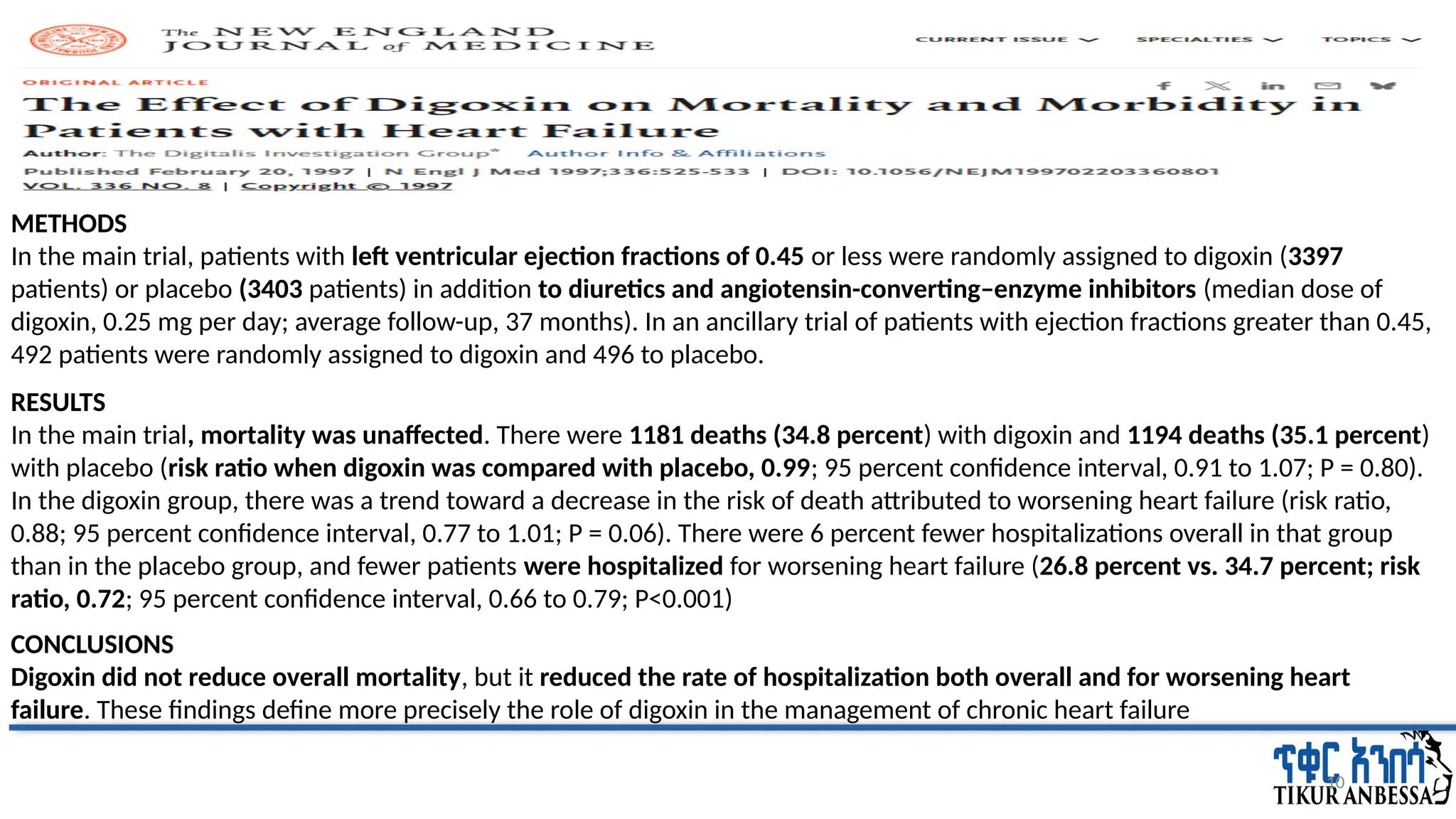
METHODS
In the maintrial, patients with left ventricular ejection fractions of 0.45 or less were randomly assigned to digoxin (3397
patients) or placebo (3403 patients) in addition to diuretics and angiotensin-converting–enzyme inhibitors (median dose of
digoxin, 0.25 mg per day; average follow-up, 37 months). In an ancillary trial of patients with ejection fractions greater than 0.45,
492 patients were randomly assigned to digoxin and 496 to placebo.
RESULTS
In the main trial, mortality was unaffected. There were 1181 deaths (34.8 percent) with digoxin and 1194 deaths (35.1 percent)
with placebo (risk ratio when digoxin was compared with placebo, 0.99; 95 percent confidence interval, 0.91 to 1.07; P = 0.80).
In the digoxin group, there was a trend toward a decrease in the risk of death attributed to worsening heart failure (risk ratio,
0.88; 95 percent confidence interval, 0.77 to 1.01; P = 0.06). There were 6 percent fewer hospitalizations overall in that group
than in the placebo group, and fewer patients were hospitalized for worsening heart failure (26.8 percent vs. 34.7 percent; risk
ratio, 0.72; 95 percent confidence interval, 0.66 to 0.79; P<0.001)
CONCLUSIONS
Digoxin did not reduce overall mortality, but it reduced the rate of hospitalization both overall and for worsening heart
failure. These findings define more precisely the role of digoxin in the management of chronic heart failure
11.
AIM OF THESTUDY
• To demonstrate that digitoxin preferably ranging at serum concentrations of 8–18 ng/mL on top
of standard of care reduces the composite endpoint of all-cause mortality or first hospital
admission for worsening HF
12.
STUDY DESIGN
Trial Design:
•Pragmatic, multicenter, randomized, double-blind, parallel-group, placebo-
controlled, phase IV trial
• Study was conducted between May 2015 to December 2024 across 65
German ,Austria and Serbia study site.
ENDPOINTS
Primary Endpoint:
Composite endpointof time to all-cause mortality or hospital admission for worsening
heart failure (whatever occurs first)
• Admission for worsening heart failure is defined by presence of the following points together:
1.) Worsening of heart failure based on clinical judgment by the treating physician.
2.) hospital stay overnight
3.) i.v.-treatment with diuretics or vasoactive substances or inotropes .
17.
Secondary Endpoints:
• Keysecondary endpoints:
1) Time to all-cause mortality
2) Recurrent hospital admission for worsening heart failure and terminal event of all-cause
mortality
ENDPOINTS
18.
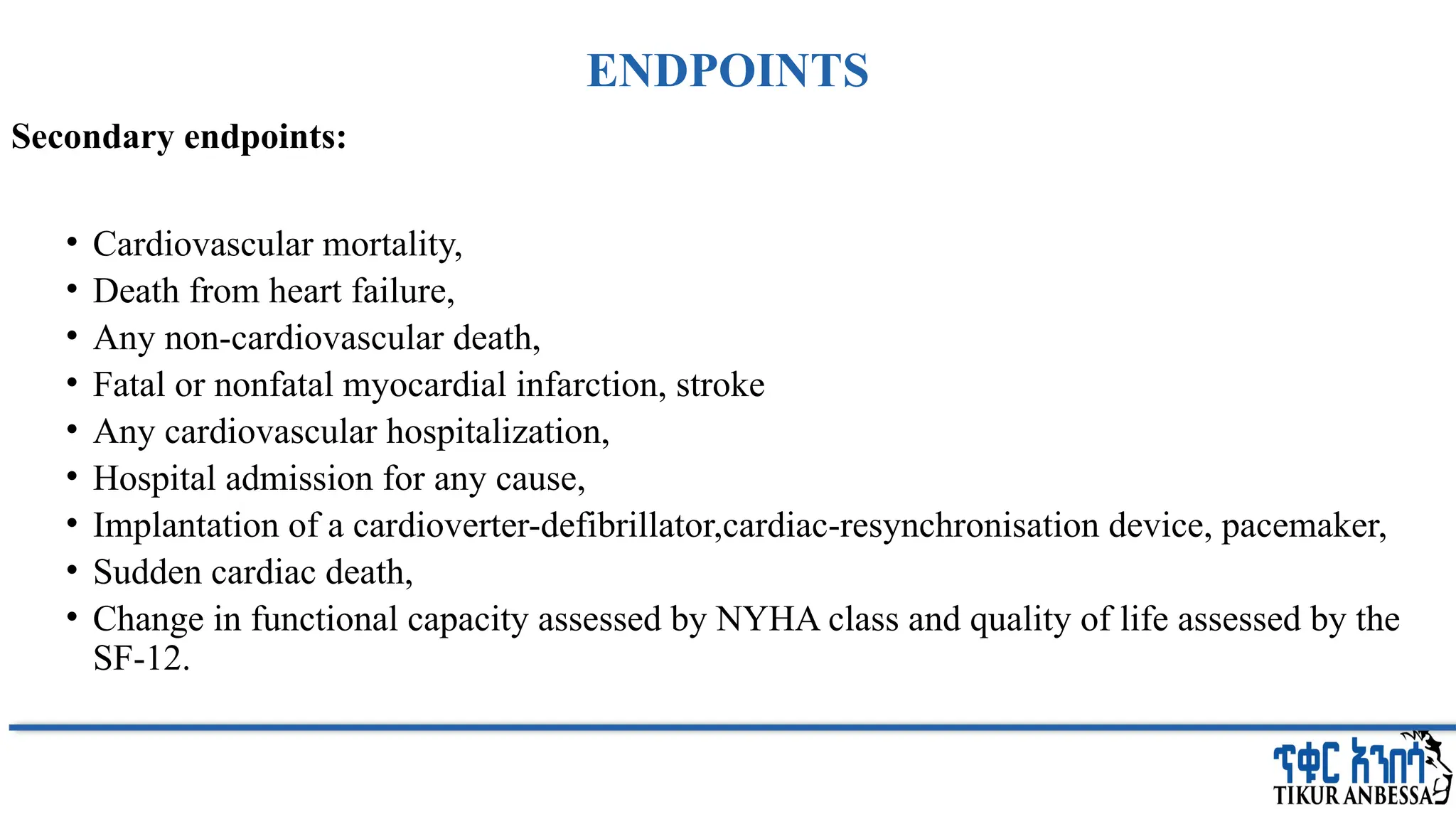
Secondary endpoints:
• Cardiovascularmortality,
• Death from heart failure,
• Any non-cardiovascular death,
• Fatal or nonfatal myocardial infarction, stroke
• Any cardiovascular hospitalization,
• Hospital admission for any cause,
• Implantation of a cardioverter-defibrillator,cardiac-resynchronisation device, pacemaker,
• Sudden cardiac death,
• Change in functional capacity assessed by NYHA class and quality of life assessed by the
SF-12.
ENDPOINTS
19.
SAFTEY OUTCOMES:
Adverse Events:
•Adverse events (AEs), serious adverse events (SAEs) and laboratory abnormalities will be
compared between the treatment groups.
ENDPOINTS
20.
ETHICAL CONSIDERATIONS
• Thetrial was conducted and is reported according to the principles of the Declaration of Helsinki
and the guidelines for Good Clinical Practice.
• The study was conducted in compliance with the German Drug Law (AMG), the German GCP
ordinance, ICH GCP guidelines, and other applicable ethical and regulatory requirement
• The protocol was approved by the national competent authority (NCA)Authority Germany
• All the patients provided written informed consent
• The study is supported by the Federal Ministry of Education and Research (BMBF) under grant
number: 01KG1303.
21.
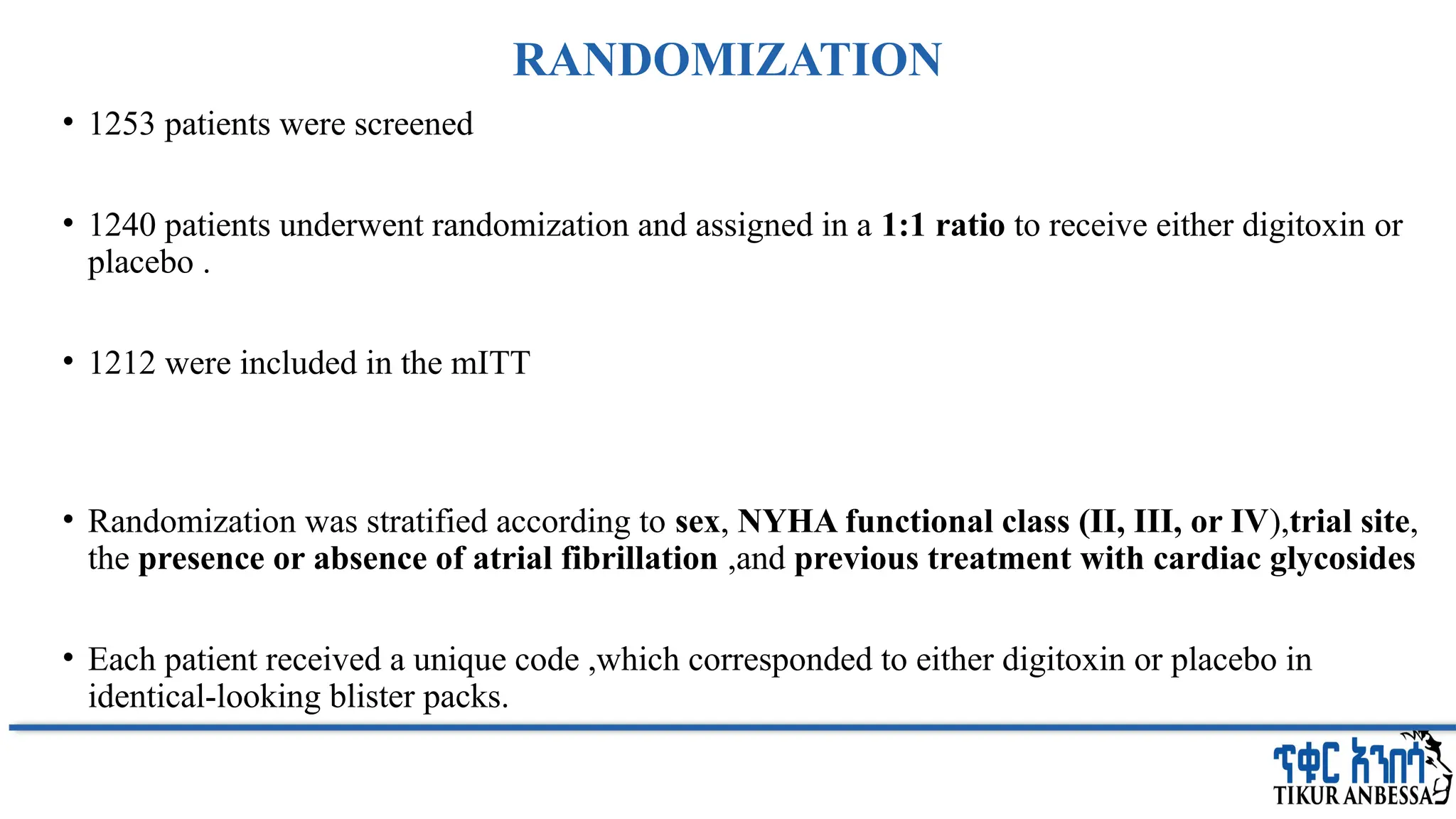
• 1253 patientswere screened
• 1240 patients underwent randomization and assigned in a 1:1 ratio to receive either digitoxin or
placebo .
• 1212 were included in the mITT
• Randomization was stratified according to sex, NYHA functional class (II, III, or IV),trial site,
the presence or absence of atrial fibrillation ,and previous treatment with cardiac glycosides
• Each patient received a unique code ,which corresponded to either digitoxin or placebo in
identical-looking blister packs.
RANDOMIZATION
STATISTICALANALYSIS
• The samplesize was calculated to provide 80% power to detect a hazard ratio (HR) of 0.811 for the
primary endpoint assuming an event rate occur in 26% patient in digitoxin and 31 % placebo (734
events)within 24 months with RR of 20%.
• A two-sided Type I error rate of 0.05 was used .
• The target sample size was initially set at 2190 patients to account for potential loss of patients in
the per-protocol analysis.
• All randomized patients were included in the primary analysis, regardless of whether they adhered
to the treatment regimen. (mITT)
• Efficacy analyses were performed in a modified intention-to-treat population
25.
Primary Endpoint Analysis:
•Time-to-first Event Analysis
• The primary endpoint (death from any cause or hospitalization for worsening heart failure)
was analyzed using Cox proportional hazards models.
• superiority was demonstrated if the lower boundary of the 95% CI for the HR was less
than than <1 .
Secondary endpoint Analyses:
• the superiority of digitoxin to placebo with respect to the total number of deaths from any
cause and hospitalizations for worsening heart failure was analyzed in a negative binomial
model
STATISTICALANALYSIS
RESULTS: PRIMARY ENDPOINT
• The rate of events in the digitoxin group was
12.8 events per 100 patient-years, while the
rate in the placebo group was 15.7 events per
100 patient-years.
• Hazard ratio for death or first hospital
admission for worsening heart failure, 0.82;
95% confidence interval [CI], 0.69 to 0.98; P
= 0.03)
• Absolute risk reduction 4.6%
• Number needed to treat:-22
RESULTS: SECONDARY OUTCOMES
•Death from any cause occurred in 167 patients
(27.2%; 7.8 deaths per 100 patient-years) in the
digitoxin group and 177 (29.5%; 8.9 deaths per 100
patient-years) in the placebo group
• hazard ratio, 0.86; 95% CI, 0.69to 1.07; threshold
for noninferiority, 1.303; P<0.001
32.
• A firsthospitalization for worsening heart
failure occurred in 172 patients (28.1%; 9.1
events per 100 patient years) in the digitoxin
group and 182 patients (30.4%; 10.8 events
per 100 patient-years) in the placebo group
• hazard ratio, 0.85;( 95% CI, 0.69 to 1.05)
RESULTS: SECONDARY OUTCOMES
34.
Serious adverse eventoccurred in 29 patients (4.7%) in the digitoxin group and 17 patients
(2.8%) in the placebo group
• these events included cardiac disorders in 21 patients (3.4%) and 11 patients
(1.8%),respectively
• Adverse events led to discontinuation of digitoxin or placebo in 56 patients (9.1%) and 61
patients (10.2%),
RESULTS: SAFETY OUTCOMES
35.
• Among patientswith chronic heart failure and reduced ejection fraction, the incidence of a
primary-outcome event was significantly lower with digitoxin than with placebo.
• The treatment effect of digitoxin on the primary outcome appeared to be consistent among
prespecified subgroups.
• A post hoc analysis of the DIG trial indicated a beneficial effect of digoxin at low
concentrations in serum with respect to death from any cause or hospitalization for worsening
heart failure. This effect appears to be similar to the this trial
DISCUSSION
36.
• The findingsuggest that digitoxin remain clinically relevant in the modern era of HFrEF
therapy ,on top of ACEi/ARNI, B-blocker, MRA ,and SGLT2 inhibitor
• The absence of mortality benefit is similar to DIG trial, where digoxin didn’t reduced overall
survival
• Digitoxin may have role as an adjunctive therapy ,especially in patient with low blood pressure
and in those with higher resting HR
DISCUSSION
37.
• Strengths :
1.Randomized, double-blind ,placebo-controlled trial design
2. Longer median follow up(3 years)
3. Contemporary background therapy
4. Represent a common HFrEF population
5. Consistent effect direction
6. Not sponsored by Pharmaceutical
DISCUSSION
38.
Limitations:
1,Underpowered particularly forsecondary outcome
2,Lack generalizability
2, Protocol Amendments
3,Composite endpoint driven more by hospitalization
4,Digitoxin availability
DISCUSSION
40
YES CAN’T
TELL
NO Remark
Didthe trial address a clearly focused issue?
Was the assignment of patients to treatment
randomized?
Were all of the patients who entered the trial
properly accounted for at its conclusion?
Were patients, health care workers and study
personnel ‘blind’ to treatment?
Were the groups similar at the start of the trial?
Aside from the experimental intervention, were the
groups treated equally?
Are the results statistically and clinically significant? For primary out come
Can the results be applied to the local population?
Are the benefits worth the harms and costs?
CRITICAL APPRAISAL
#4 -Due to demographical changes and promoted by current medical progress – i.e. lower mortality rates from ischaemic events – HF incidence and prevalence are expected to increase further
-Despite treatment progress has markedly improved, heart failure remains a disabling disorder that severely affects patients´ quality of life; and the prognosis of patients suffering from heart failure remains poor
-
#5 -Current (ESC) HF guidelines suggest treatment with cardiac glycosides as an option in patients with persistent symptoms despite optimal pharmacological therapy including ACEi/ (ARB), beta-blocker,MRA,ARNI, as well as CRT and ivabradine, if indicated.
-However, prospective trials investigating the impact of randomized initiation or withdrawal of cardiac glycoside therapy on all-cause mortality or morbidity in patients with HF and HFrEF respectively, failed to provide sufficient evidence and were exclusively performed using digoxin
#6 Digitoxin shares the pharmacodynamic effects as digoxin, but has a more stable pharmacokinetic profile. Compared to digoxin, stable digitoxin serum levels are better maintained during treatment and the drug does not accumulate in patients with impaired renal function. This applies even in the elderly, in whom digitoxin dosage often has to be reduced because of a reduced skeletal muscle mass taking into account the high protein binding and main distribution of digitoxin in this compartment
-Furthermore, we observed effects of digitoxin but not digoxin in endothelial cells26, which might improve endothelial dysfunction in heart failure patients and thereby impact prognosis27
#8 -43 centers in the United States and Canada.
- treated for at least three months with digoxin, diuretics, and a converting-enzyme inhibitor.
- Patients could not participate in the study if they had uncorrected primary valvular disease, active myocarditis, or an obstructive, hypertrophic, or restrictive cardiomyopathy. Patients were also excluded if they were less than 18 years old or if they had any of the following conditions: systolic blood pressure ≥ 160 mm Hg or <90 mm Hg or diastolic blood pressure >95 mm Hg; exercise limited by angina, lung disease, or claudication; angina requiring continuous treatment; myocardial infarction within the past 3 months or stroke within the past 12 months; or severe primary pulmonary, renal, or hepatic disease
#9 The cause of heart failure was coronary artery disease in 107 patients, idiopathic cardiomyopathy in 67, and surgically corrected valvular disease in 4; 130 patients had class II symptoms, and 48 patients had class III symptoms. The mean left ventricular ejection fraction was 27 percent. The mean daily dose of digoxin was 0.38 mg (range, 0.125 to 0.50), which produced a mean serum digoxin concentration of 1.2 ng per milliliter (range, 0.5 to 2.2); the mean daily doses of captopril and enalapril were 74 mg and 15 mg, respectively.
#10 --302 clinical centers in the United States and Canada
--Patients who were using digoxin before entry into the study were randomly assigned to receive either digoxin or placebo without a washout period. All the patients returned for follow-up visits 4 weeks and 16 weeks after randomization and every 4 months thereafter.
-The primary outcome studied in the main trial was mortality.
-The secondary outcomes were mortality from cardiovascular causes, death from worsening heart failure, hospitalization for worsening heart failure, and hospitalization for other causes, in particular suspected digoxin toxicity.
In the ancillary trial, the occurrence of death or hospitalization due to worsening heart failure was studied as a combined primary outcome
Subgroup analysis:- the benefit of digoxin appeared to be greater among patients at high risk — that is, those with lower ejection fractions or enlarged hearts and those in NYHA functional class III or IV
At one month, 88.3 percent of the patients in the digoxin group had serum digoxin levels within the therapeutic range of 0.5 to 2.0 ng per milliliter (0.6 to 2.6 nmol per liter).
Although there were more patients with suspected digoxin toxicity in the digoxin group (11.9 percent, as compared with 7.9 percent in the placebo group), the proportion of patients actually hospitalized was low (2.0 percent vs. 0.9 percent over a period of 3.5 years)
in conclusion, digoxin had no effect on overall mortality in patients receiving diuretics and angiotensin-converting–enzyme inhibitors, but it did reduce the overall number of hospitalizations and the combined outcome of death or hospitalization attributable to worsening heart failure
-In the post hoc analysis of the DIG trial, digoxin treatment, at serum concentrations in the lower therapeutic range, was accompanied with a reduction in mortality but also in hospitalization for heart failure of ~20-25% and ~40% in patients with chronic systolic heart failure (NYHA class II-IV), respectively. This is even expected to be exceeded by digitoxin treatment because of its higher pharmacological stability
#11 -it’s a superiority trial
-8–18 ng/mL (10.5–23.6 nmol/L)
-Our own studies demonstrated that treatment of endothelial cells with digitoxin at concentrations of 10–30 nM (7.65–22.95 ng/mL) effectively inhibited cytokine-induced pro-inflammatory processes (e.g. expression of monocyte chemoattractant protein-1, vascular cell adhesion molecule-1, monocyte adhesion), production of reactive oxygen species and apoptosis, but increased the expression and activation of the endothelial nitric oxide synthase.
- Based on these studies, concentrations of digitoxin ≥8 ng/mL seem to be necessary for improving myocardial function, endothelial dysfunction and ultimately prognosis in patients with advanced chronic HFrEF. Therefore, digitoxin target serum concentrations of 8–18 ng/mL (10.5–23.6 nmol/L) were chosen for the DIGIT-HF trial.
#12 -The study is double-blind. Randomization is stratified by centre, sex, NYHA functional class (II, III, or IV), atrial fibrillation, and pre-treatment with cardiac glycosides at baseline
-Patients are followed until 734 adjudicated primary events have been recorded. At 367 (50%) events an interim analysis is planned, and the study may be terminated for proven efficacy, but not for futility
#16 1.) Worsening of heart failure based on clinical judgment (presence of heart failure symptoms) by the treating physician.
2.) hospital stay overnight (= date change)
3.) i.v.-treatment with diuretics or vasoactive substances (e. g. nitroglycerine) or inotropes (e. g. dobutamine).
#20 All the patients provided written informed consent
#21 -Patients were eligible for enrollment if they were at least 18 years old, had symptomatic chronic heart failure (specified as a left ventricular ejection fraction of ≤40% and an NYHA functional class of III or IV, or a left ventricular ejection fraction of ≤30% and an NYHA functional class of II),and had received evidence-based therapy for heart failure for a period of at least 6 months
--and previous treatment with cardiac glycosides (yes or no; because of the small number of patients who had previous treatment with cardiac
glycosides, this variable was not included in analyses).
#22 -in the initial protocol it was planed to recruit about 2190 patients to detect a 20 % relative risk reduction in the composite primary endpoint with power of 90 % power and accounting for expected event and dropout
reason:-slow recruitment
:-competing studies and therapies
:-strict inclusion/exclusion criteria
:-covid-19 pandemic impact
=Patient should take between 50-110% of IMP to be compliant.
-The median follow-up period was 36 months (range, 0 to 110), and the median duration of treatment was 18 months (range, 0 to 107).
-Outpatient follow-up is scheduled every 6 months. The course of the disease including severity, signs and symptoms of HF, and medication are documented in detail.
Quality of life is assessed at baseline and after 12 months by means of the 12-item Short-Form Health Survey.
-All patients will be followed until the end of the study and will have an end of treatment visit
#23 -the median follow-up period was 36 months per patient
-all patients were followed for as long as the trial continued or until they experienced the primary endpoint
- In the digitoxin group, dose adjustment employs a pre-defined algorithm
-dose adjustment:-above target…..0.1 to 0.05, 0.07 to 0.05 ,0.05 to hold till serum level is in the therapeutic range
:-below target…..add 0.05
-If digitoxin serum concentrations are >25 ng/mL (>33 nmol/L) after 6 weeks, treatment will be paused for 6 weeks and re-started with a dose of 0.05 mg taken every second day.
-If digitoxin serum levels determined 12 weeks or 12 months after randomization exceed 25 ng/mL (33 nmol/L), patients should not continue active treatment for safety reasons
-Patients will be advised to take the IMP tablets unchewed once a day with sufficient liquid after a meal. If a dose is missed, the subject should take the dose as soon as possible, but only if there are 12 or more hours remaining before the next dose is due. If the next dose is due in less than 12 hours, the subject should skip the missed dose and take the next dose as scheduled. If vomiting occurs after taking digitoxin, the subject should not take a replacement dose on that day
#24 -alpha value……probability of false positive
-p-value< alpha………statistically significant
--p-value>= alpha………not statistically significant
---------FIXED SAMPLE ,TIME BASED TRIAL NOT EVENT DRIVEN TRIAL…..the sample size calculation is event based but the trial execution was time based
The sample size was calculated on the basis of the assumption that a primary-outcome event would occur in 26% of patients in the digitoxin
group and 31% of those in the placebo group within 24 months after randomization (exponential model; hazard ratio for death from any
cause or first hospitalization for worsening heart failure, 0.811), with an overall two-sided type I error rate of 0.05 (of which 0.01 would be spent
in one interim analysis conducted according to an O’Brien–Fleming design17), a recruitment period of 36 months, and a maximum of 48 months
of follow-up. We calculated that a sample of 2190 patients and 734 events would provide the trial with 80% power to show superiority of
digitoxin to placebo with respect to the primary outcome.
#25 Death from any cause was assessed in a noninferiority analysis to exclude a detriment from digitoxin with respect to survival.
Assuming the worst-case scenario in which digitoxin would have no effect on the incidence of death from any cause (such that the hazard ratio for
death would be 1), estimating a 2-year mortality of 17% in both groups, and taking into account the aforementioned timing with regard to recruitment
and follow-up, the sample of 2190 patients calculated for the primary outcome would provide the trial with 80% power to exclude a detriment
from digitoxin, with noninferiority defined by a hazard ratio of no more than 1.303.
The noninferiority of digitoxin to placebo with respect to death from any cause was analyzed in a Cox regression model, and the superiority of
digitoxin to placebo with respect to the total number of deaths from any cause and hospitalizations for worsening heart failure was analyzed
in a negative binomial model with the logarithm of the observation time per patient as an offset variable.
Both key secondary analyses included the same independent variables as the primary analysis.
Superiority of digitoxin over placebo regarding the composite endpoint can be concluded if the median time to event is longer in the digitoxin-treated group and the corresponding P-value of the treatment effect estimated from the Cox regression model is less than the pre-specified two-sided significance level of 1% at interim or 4.5% in the final analysis.
#26 -The mean age of the patients was 66 years,
-20.4% were women.
-The majority of the patients had NYHA class III or IV heart failure.
-The mean left ventricular ejection fraction was 29%,
-AF in 27.2%
-The mean GFR was 65 ml per minute per 1.73 m2 of body-surface
Data are shown for the modified intention-to-treat population, which included all the patients who underwent randomization and received at least one dose of digitoxin or placebo.
Data on bodymass index were missing for 1 patient in each group, data on heart rate were missing for 2 patients in the digitoxin
group, and data on the estimated glomerular filtration rate (eGFR) were missing for 1 patient in the digitoxin group.Percentages may not total 100 because of rounding.
#27 -At enrollment, at least 93% of the patients were receiving treatment with a beta-blocker and -an inhibitor of the renin-angiotensin system,
-76.2% of the patients were taking a mineralocorticoid receptor antagonist,
-19.3% were taking a sodium–glucose cotransporter 2 inhibitor.
-A total of 779 patients (64.3%) were treated with an implantable cardioverter–defibrillator,
-306 patients (25.2%) received cardiac-resynchronization therapy.
-exclusion of amiodarone, which is known to reduce hepatic digitoxin metabolism by inducing enzyme inhibition resulting in significantly increased digitoxin levels,seem to be effective measures to avoid serious side effects so far
#28 -interpretation:-digitoxin therapy on top of standard treatment notably reduced the risk of death or first HF hospitalization by 18%
-A primary-outcome event occurred in
242 patients (39.5%; 12.8 events per 100 patient-years) in the digitoxin group and
264 (44.1%; 15.7 events per 100 patient-years) in the placebo group
-(hazard ratio for death or first hospital admission for worsening heart failure, 0.82; 95% confidence interval [CI], 0.69 to 0.98; P = 0.03)
#31 -Death from any cause occurred in 167 patients (27.2%; 7.8 deaths per 100 patient-years) in the digitoxin group and 177
(29.5%; 8.9 deaths per 100 patient-years) in the placebo group (hazard ratio, 0.86; 95% CI, 0.69to 1.07; threshold for noninferiority, 1.303; P<0.001)
-A first hospitalization for worsening heart failure occurred in 172 patients (28.1%; 9.1 events per 100 patientyears) in the digitoxin group and 182 patients
(30.4%; 10.8 events per 100 patient-years) in the
placebo group (hazard ratio, 0.85; 95% CI, 0.69
to 1.05) (Table 2 and Fig. 1C).
#34 At least one serious adverse event occurred in 29 patients (4.7%) in the digitoxin group and 17 patients (2.8%) in the
placebo group; these events included cardiac disorders in 21 patients (3.4%) and 11 patients (1.8%),respectively (Tables S13 and S14).
Adverse events led to discontinuation of digitoxin or placebo in 56 patients (9.1%) and 61 patients (10.2%),respectively.
#35 -and the effects appeared to be applicable to female and male patients in both trials
#37 o represent a common HFrEF population with a substantial proportion of atrial fibrillation, which is confirmed by current baseline characteristics with about 25% of patients having atrial fibrillation recruited to DIGIT-HF
#40 Statistically significant;-shows reliability of the study result not by chance
Clinically significant;-its impact on clinical practice








![RESULTS: PRIMARY END POINT
• The rate of events in the digitoxin group was
12.8 events per 100 patient-years, while the
rate in the placebo group was 15.7 events per
100 patient-years.
• Hazard ratio for death or first hospital
admission for worsening heart failure, 0.82;
95% confidence interval [CI], 0.69 to 0.98; P
= 0.03)
• Absolute risk reduction 4.6%
• Number needed to treat:-22](https://image.slidesharecdn.com/finaldigit-hf-250927110001-13eabcd8/75/Digit-HF-trial-review-presentation-by-a-resident-28-2048.jpg)


![Approach to palpitation [autosaved]](https://cdn.slidesharecdn.com/ss_thumbnails/approachtopalpitationautosaved-170805225202-thumbnail.jpg?width=640&height=640&fit=bounds)


