Digital Imaging
Unit 8: Enhancing Specific Selections & Adjusting Colors
Module 3: Making Color Corrections
Making Color Corrections
One of the most common
applications for image editing
software is color correcting.
Using color knowledge
(complimentary colors,
highlights, shadows, midtones)
and some of the filters
previously discussed, we will
demonstrate how to color
correct an image.
Digital Imaging
Unit 8: Enhancing Specific Selections & Adjusting Colors
Module 3: Making Color Corrections
Making Color Corrections
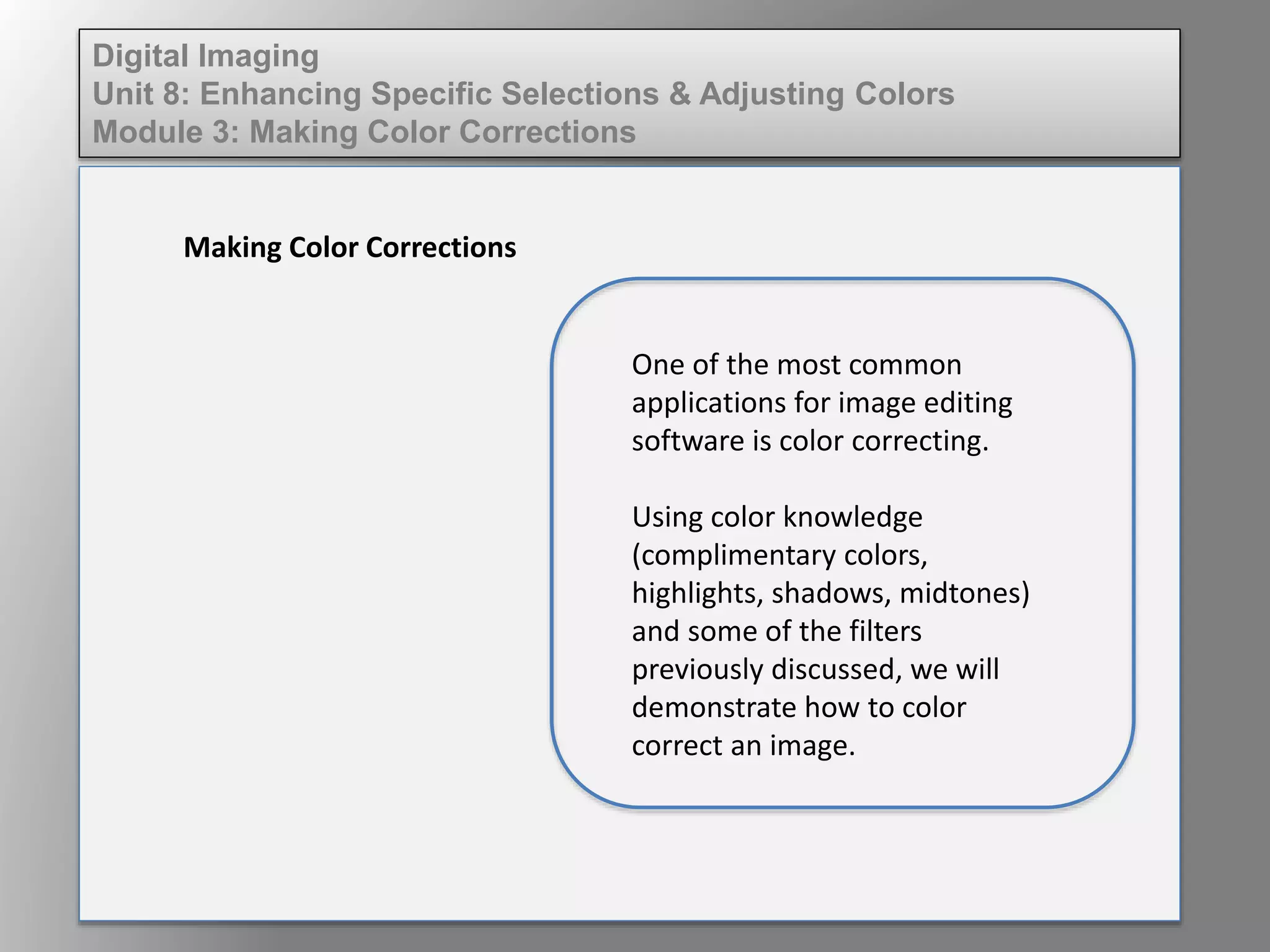
Color corrections can be done
directly to an image. If you
wish to experiment with color
corrections and then apply
them to the image, you can
create an adjustment layer (as
previously discussed).
Which color correction tool you
go to first is a matter of
preference.
Digital Imaging
Unit 8: Enhancing Specific Selections & Adjusting Colors
Module 3: Making Color Corrections
Levels
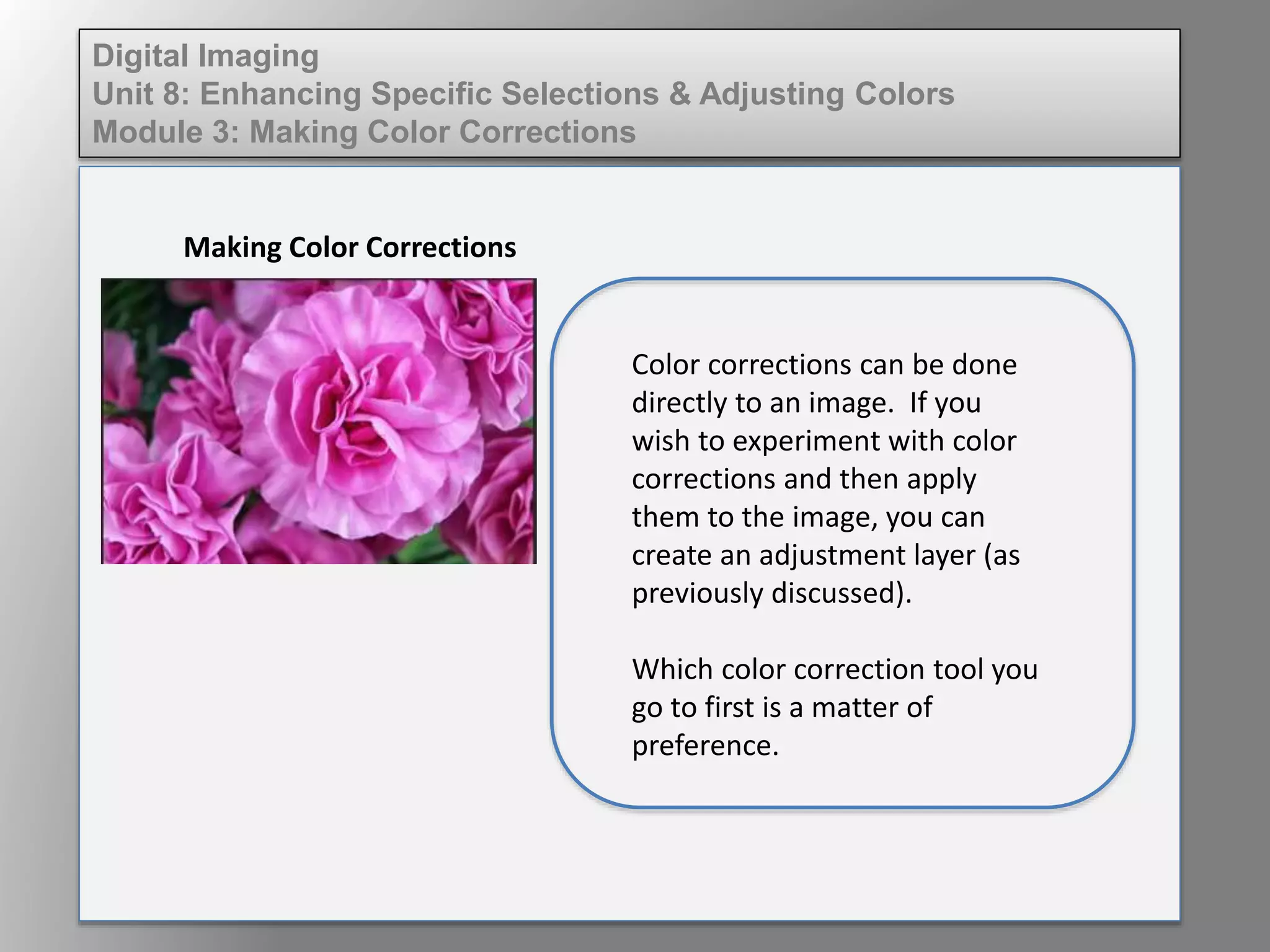
Levels has three main sliders.
Moving the sliders left or right
adjusts the amount of
highlight, shadow or midtone in
an image.
Often, slight movement of all
three sliders is required to
improve the image color.
Digital Imaging
Unit 8: Enhancing Specific Selections & Adjusting Colors
Module 3: Making Color Corrections
Color Balance
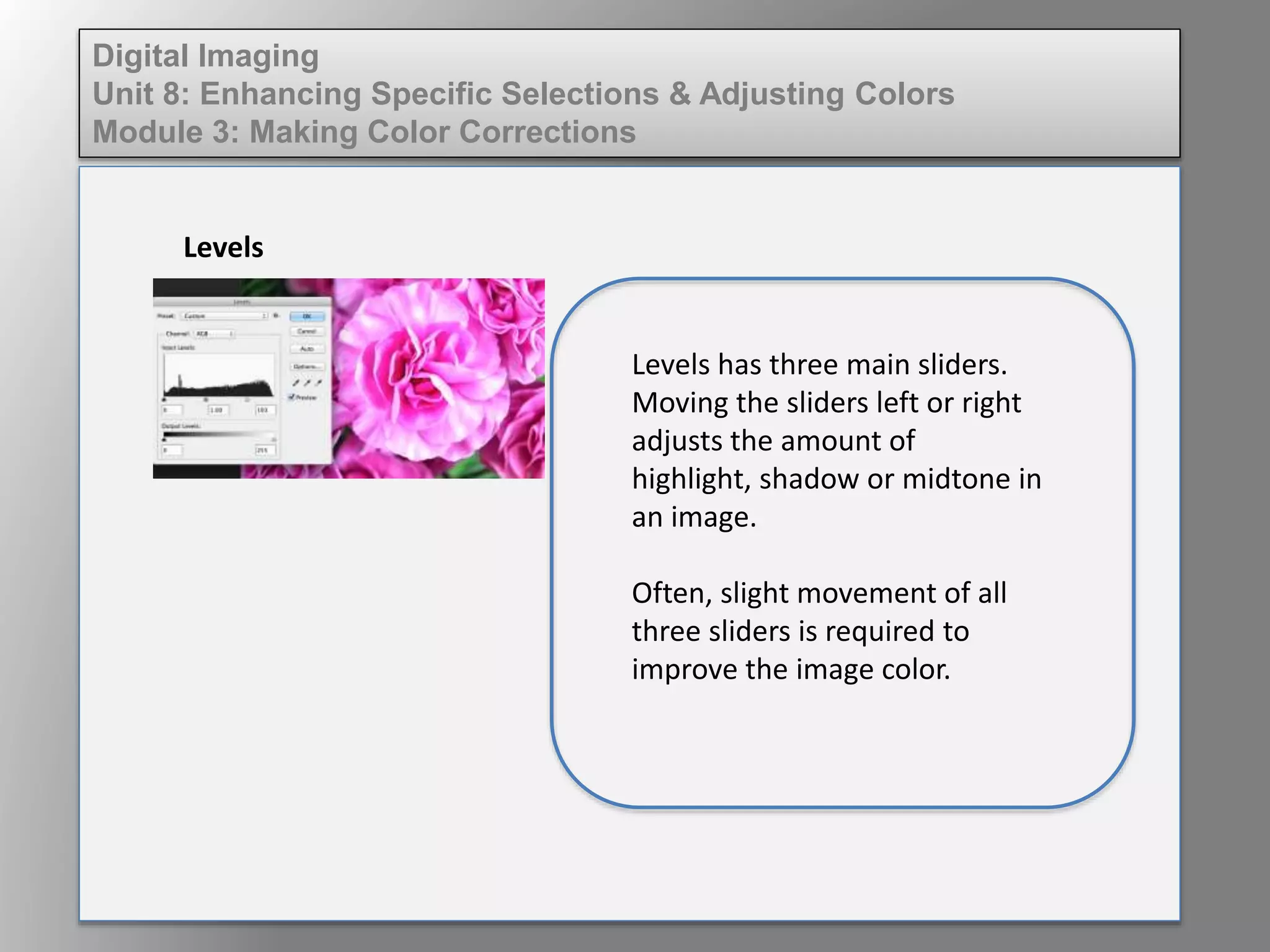
Color balance lets you adjust areas of the image that have too
much of a color.
Digital Imaging
Unit 8: Enhancing Specific Selections & Adjusting Colors
Module 3: Making Color Corrections
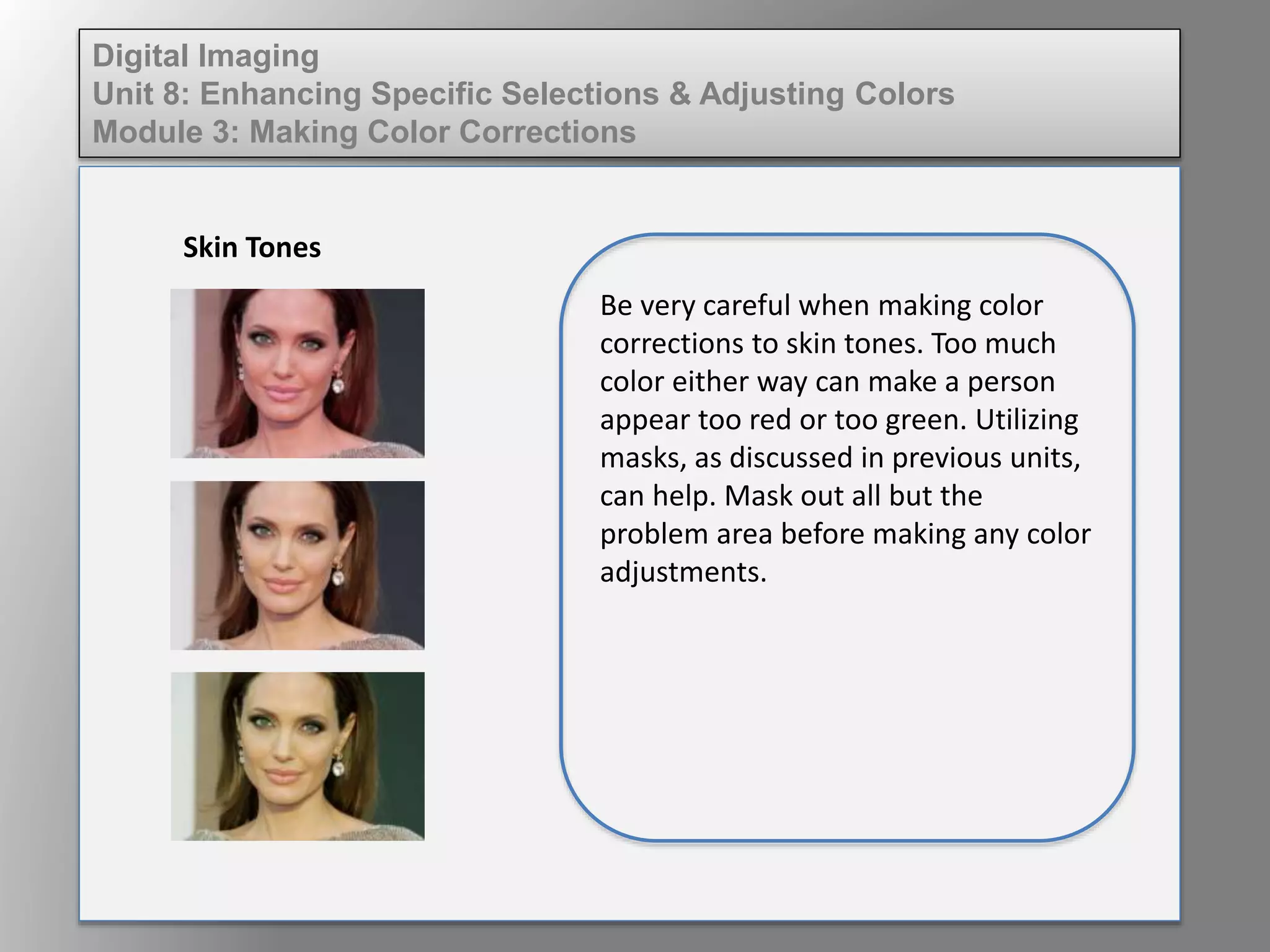
Skin Tones
Be very careful when making color
corrections to skin tones. Too much
color either way can make a person
appear too red or too green. Utilizing
masks, as discussed in previous units,
can help. Mask out all but the
problem area before making any color
adjustments.

Dig imag unit 8 module 3 making color corrections

  • 1.
    Digital Imaging Unit 8:Enhancing Specific Selections & Adjusting Colors Module 3: Making Color Corrections Making Color Corrections One of the most common applications for image editing software is color correcting. Using color knowledge (complimentary colors, highlights, shadows, midtones) and some of the filters previously discussed, we will demonstrate how to color correct an image.
  • 2.
    Digital Imaging Unit 8:Enhancing Specific Selections & Adjusting Colors Module 3: Making Color Corrections Making Color Corrections Color corrections can be done directly to an image. If you wish to experiment with color corrections and then apply them to the image, you can create an adjustment layer (as previously discussed). Which color correction tool you go to first is a matter of preference.
  • 3.
    Digital Imaging Unit 8:Enhancing Specific Selections & Adjusting Colors Module 3: Making Color Corrections Levels Levels has three main sliders. Moving the sliders left or right adjusts the amount of highlight, shadow or midtone in an image. Often, slight movement of all three sliders is required to improve the image color.
  • 4.
    Digital Imaging Unit 8:Enhancing Specific Selections & Adjusting Colors Module 3: Making Color Corrections Color Balance Color balance lets you adjust areas of the image that have too much of a color.
  • 5.
    Digital Imaging Unit 8:Enhancing Specific Selections & Adjusting Colors Module 3: Making Color Corrections Skin Tones Be very careful when making color corrections to skin tones. Too much color either way can make a person appear too red or too green. Utilizing masks, as discussed in previous units, can help. Mask out all but the problem area before making any color adjustments.