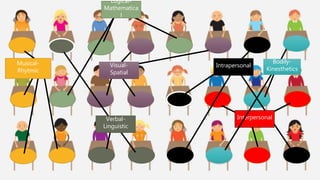
Musical-
Rhytmic
Logical-
Mathematica
l
Verbal-
Linguistic
Visual-
Spatial
Intrapersonal
Interpersonal
Bodily-
Kinesthetics
DIFFERENTIATED TEACHING STRATEGIES.
These refer to the
approaches or tactical procedure
used to reach a goal involving a
wide variety of texts, tasks,
processes and products suited to
the various learning needs of
diverse range of students.
LEARNERS’ GENDER
This refers to the social attributes
and opportunities associated with
being male and female and the
relationships between women and men
and girls and boys, as well as the
relationships between women and
those between men. These attributes,
opportunities, and relationships are
socially constructed and learned
through socialization processes
LEARNERS’ NEED.
These are observable gaps
between a learner’s present
knowledge or competence
and the curriculum standards
identified as necessary for the
grade level.
LEARNERS’ STRENGTHS
These are pre-existing
knowledge or competence
that helps a learner meet
required standards.
LEARNERS’ INTERESTS
These are learners’
personal preferences,
likes or dislikes, which
must be considered in
the teaching-learning
process.
LEARNERS’ EXPERIENCES.
These refer to skill or
knowledge that a learner
gets from doing
something.
“HARDWORKING TEACHERS HAVE
ALWAYS RECOGNIZED THE
DIVERSE NEEDS OF STUDENTS
AND ADJUSTED THEIR
INSTRUCTION TO ACCOUNT FOR
THEM.”
HISTORY OF DIFFERENTIATED INSTRUCTION
• As the educational system transitioned to grading schools, it was assumed
that children of the same age learned similarly.
• In 1912, achievement tests were introduced, and the scores revealed the
gaps in student’s abilities within grade levels.
• In 1975, Congress passed the Individuals with Disabilities Education Act
(IDEA). To reach this student population, many educators used differentiated
instruction strategies.

• Research by educator Leslie Owen Wilson supports differentiating instruction
within the classroom, finding that lecture is the least effective instructional
strategy, with only 5 to 10 percent retention after 24 hours. Engaging in a

discussion, practicing after exposure to content, and teaching others are
much more effective ways to ensure learning retention.

PRINCIPLE OF DIFFERENTIATED
CLASSROOM
Providing choice, respectful tasks, a shared
responsibility for learning and flexible learning
groups. Differentiated instruction is a cyclical
process of finding out about the learner and
responding by differentiating.
DIFFERENTIATED INSTRUCTION IS
TAKING MULTIPLE APPROACHES TO
CONTENT, PROCESS, AND PRODUCT.
•In all classrooms, teachers deal with at least
three curricular elements:
(1) content—input, what students learn;
(2) process—how students go about making
sense of ideas and information; and
(3) product—output, or how students
demonstrate what they have learned.
(1) Content—what the student needs to learn or
how the student will get access to the
information;
(2) Process—activities in which the student
engages in order to make sense of or master
the content;
(3)Product—culminating projects that ask the
student to rehearse, apply, and extend what he
or she has learned in a unit;
THE BEST DIFFERENTIATED
INSTRUCTION STRATEGIES
PROS AND CONS OF
DIFFERENTIATED INSTRUCTION
Pros
• Differentiation effective for both high-ability students and those with a
disability
• Children take on more of the responsibility for learning
• Engagement in learning tends to be stronger because it addresses the
children as equal individuals
Cons
• Requires much more lesson-planning time for teachers
• May require more resources for a school or school district to
• Many schools lack the professional development resources to properly
train faculty
Differentiated Instruction to address diverse learners.

Differentiated Instruction to address diverse learners.

  • 5.
  • 7.
    DIFFERENTIATED TEACHING STRATEGIES. Theserefer to the approaches or tactical procedure used to reach a goal involving a wide variety of texts, tasks, processes and products suited to the various learning needs of diverse range of students.
  • 8.
    LEARNERS’ GENDER This refersto the social attributes and opportunities associated with being male and female and the relationships between women and men and girls and boys, as well as the relationships between women and those between men. These attributes, opportunities, and relationships are socially constructed and learned through socialization processes
  • 9.
    LEARNERS’ NEED. These areobservable gaps between a learner’s present knowledge or competence and the curriculum standards identified as necessary for the grade level.
  • 10.
    LEARNERS’ STRENGTHS These arepre-existing knowledge or competence that helps a learner meet required standards.
  • 11.
    LEARNERS’ INTERESTS These arelearners’ personal preferences, likes or dislikes, which must be considered in the teaching-learning process.
  • 12.
    LEARNERS’ EXPERIENCES. These referto skill or knowledge that a learner gets from doing something.
  • 13.
    “HARDWORKING TEACHERS HAVE ALWAYSRECOGNIZED THE DIVERSE NEEDS OF STUDENTS AND ADJUSTED THEIR INSTRUCTION TO ACCOUNT FOR THEM.”
  • 14.
    HISTORY OF DIFFERENTIATEDINSTRUCTION • As the educational system transitioned to grading schools, it was assumed that children of the same age learned similarly. • In 1912, achievement tests were introduced, and the scores revealed the gaps in student’s abilities within grade levels. • In 1975, Congress passed the Individuals with Disabilities Education Act (IDEA). To reach this student population, many educators used differentiated instruction strategies. • Research by educator Leslie Owen Wilson supports differentiating instruction within the classroom, finding that lecture is the least effective instructional strategy, with only 5 to 10 percent retention after 24 hours. Engaging in a discussion, practicing after exposure to content, and teaching others are much more effective ways to ensure learning retention.
  • 15.
    PRINCIPLE OF DIFFERENTIATED CLASSROOM Providingchoice, respectful tasks, a shared responsibility for learning and flexible learning groups. Differentiated instruction is a cyclical process of finding out about the learner and responding by differentiating.
  • 16.
    DIFFERENTIATED INSTRUCTION IS TAKINGMULTIPLE APPROACHES TO CONTENT, PROCESS, AND PRODUCT. •In all classrooms, teachers deal with at least three curricular elements: (1) content—input, what students learn; (2) process—how students go about making sense of ideas and information; and (3) product—output, or how students demonstrate what they have learned.
  • 17.
    (1) Content—what thestudent needs to learn or how the student will get access to the information; (2) Process—activities in which the student engages in order to make sense of or master the content; (3)Product—culminating projects that ask the student to rehearse, apply, and extend what he or she has learned in a unit;
  • 18.
  • 43.
    PROS AND CONSOF DIFFERENTIATED INSTRUCTION Pros • Differentiation effective for both high-ability students and those with a disability • Children take on more of the responsibility for learning • Engagement in learning tends to be stronger because it addresses the children as equal individuals Cons • Requires much more lesson-planning time for teachers • May require more resources for a school or school district to • Many schools lack the professional development resources to properly train faculty