Different Types of Process Involved in
the Information Content Product Model
1
14th IEEE International Symposium on Applied
Computational Intelligent Systems and
Informatics(SISY 2016)
Yatish Bathla, PhD candidate
Doctoral School of Applied Informatics and Applied
Mathematics, Óbuda University, Budapest, Hungary
2
OUTLINE
PLM SYSTEMS
INFORMATION CONTENT
PROPOSED WORK: PROCESS PLANE
EXPLANATION OF PROCESS PLANE
EXAMPLE: RFLP STRUCTURE
ADVANTAGE
CONCLUSION & FUTURE WORK
3
INTRODUCTION: PLM
Product Lifecycle Management (PLM) is the
business activity of managing a company’s
products
Increase product revenues and reduce product-
related cost
Number of PLM Software Products are available in
the Market: CATIA, Teamcenter, VisionFlow,
Accolade, Arena PLM, Centric PLM and many more
4
PRODUCT MODEL
Industries are using STEP (Standard for the
Exchange of Product Model Data, ISO 10303)
product model standard
Product types (electronic, electromechanical,
mechanical, sheet metal, fiber composites, ships,
robots) covering the entire life-cycle of a product
It consists of two sets of entities, called
objects and connections
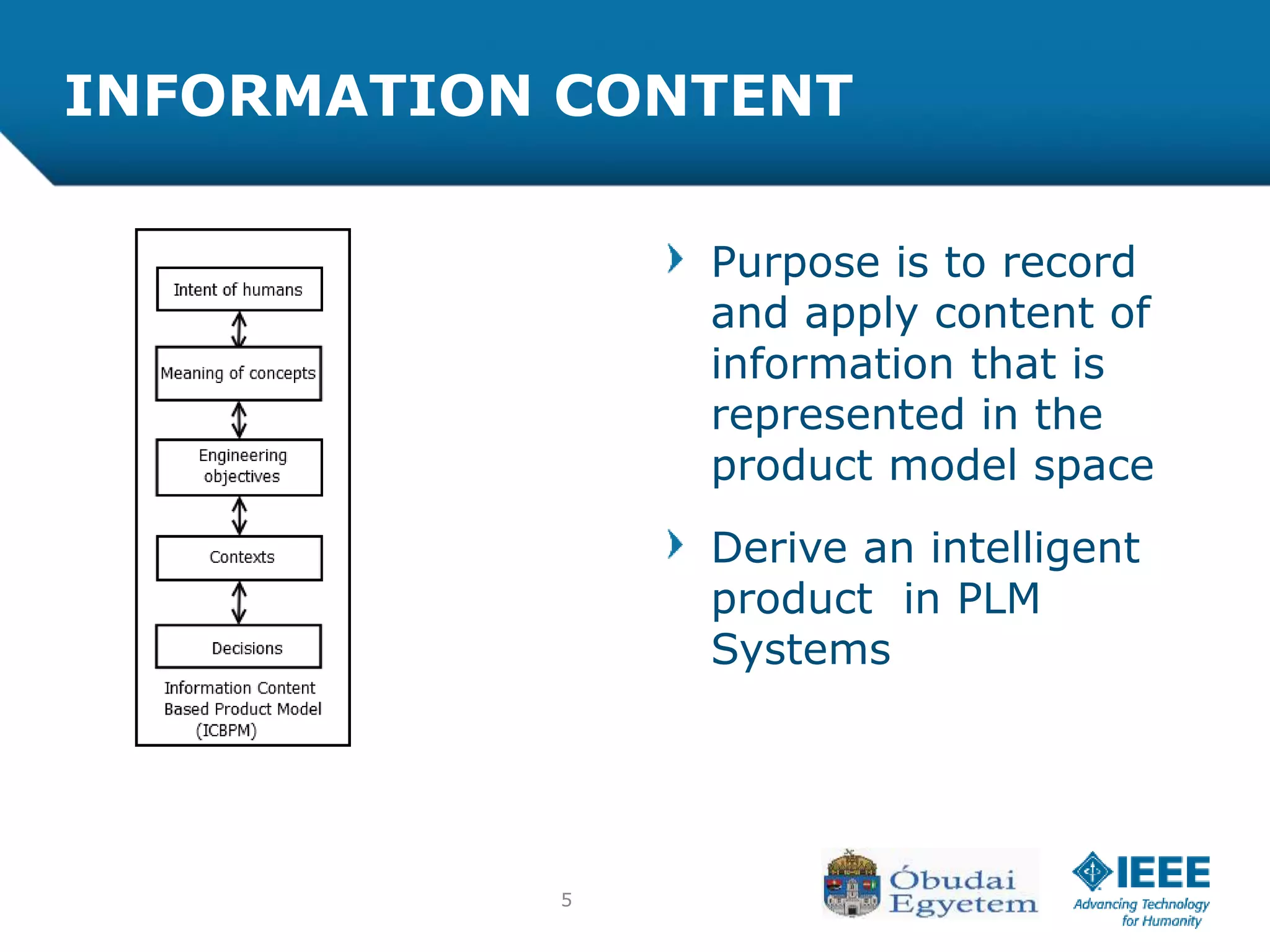
Purpose is to record
and apply content of
information that is
represented in the
product model space
Derive an intelligent
product in PLM
Systems
INFORMATION CONTENT
5
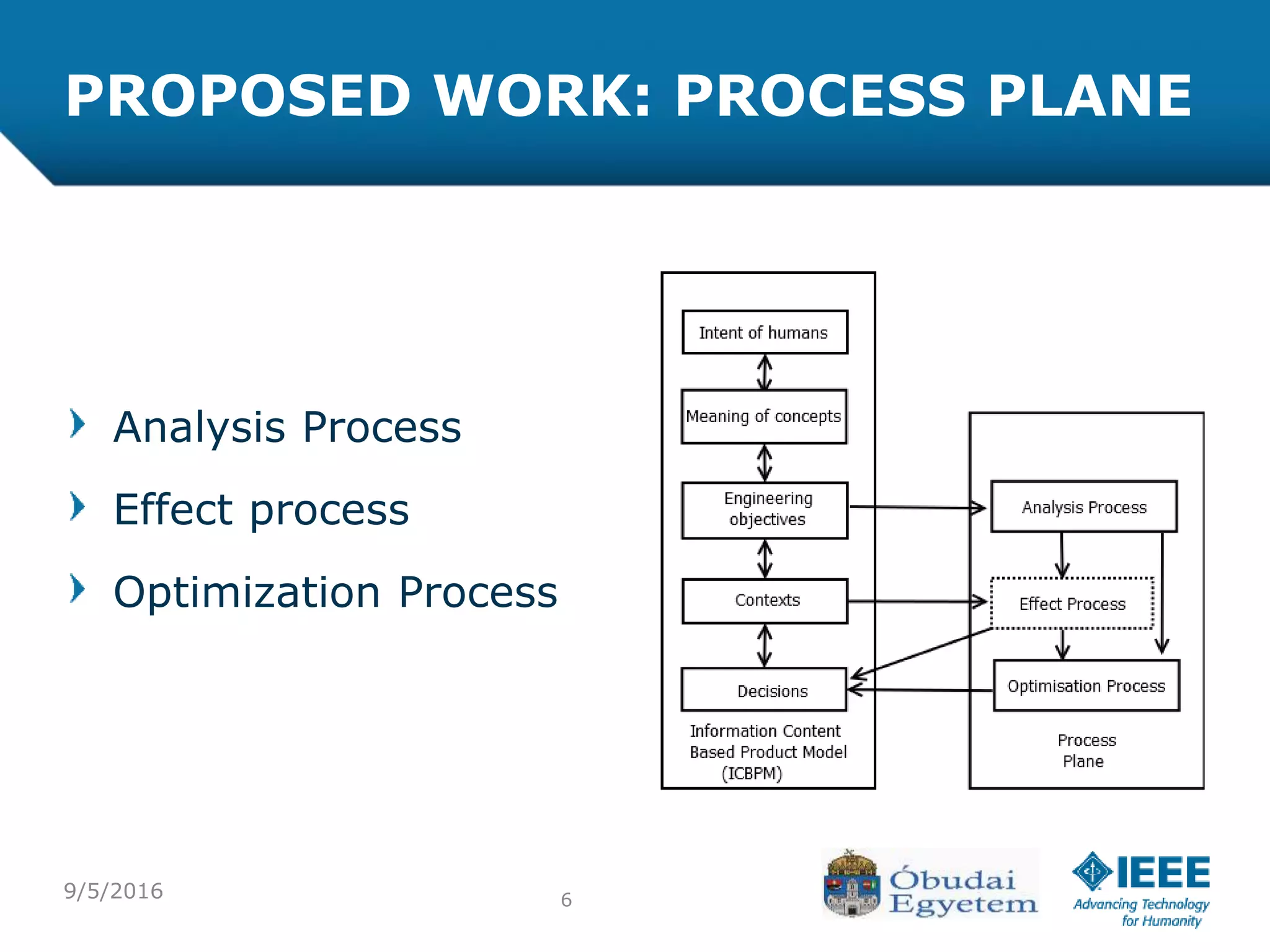
Analysis Process
Effect process
Optimization Process
PROPOSED WORK: PROCESS PLANE
69/5/2016
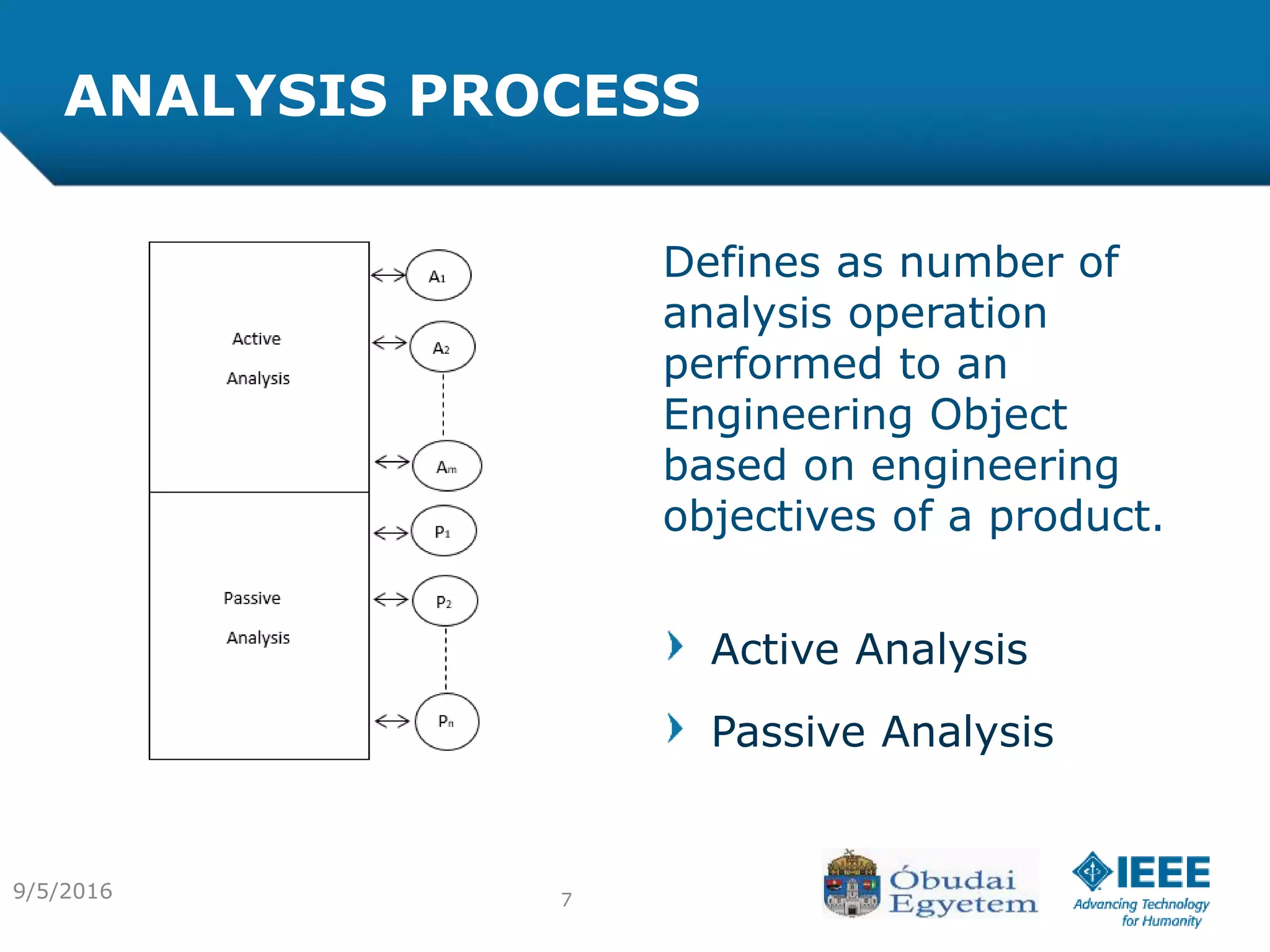
Defines as number of
analysis operation
performed to an
Engineering Object
based on engineering
objectives of a product.
Active Analysis
Passive Analysis
ANALYSIS PROCESS
79/5/2016
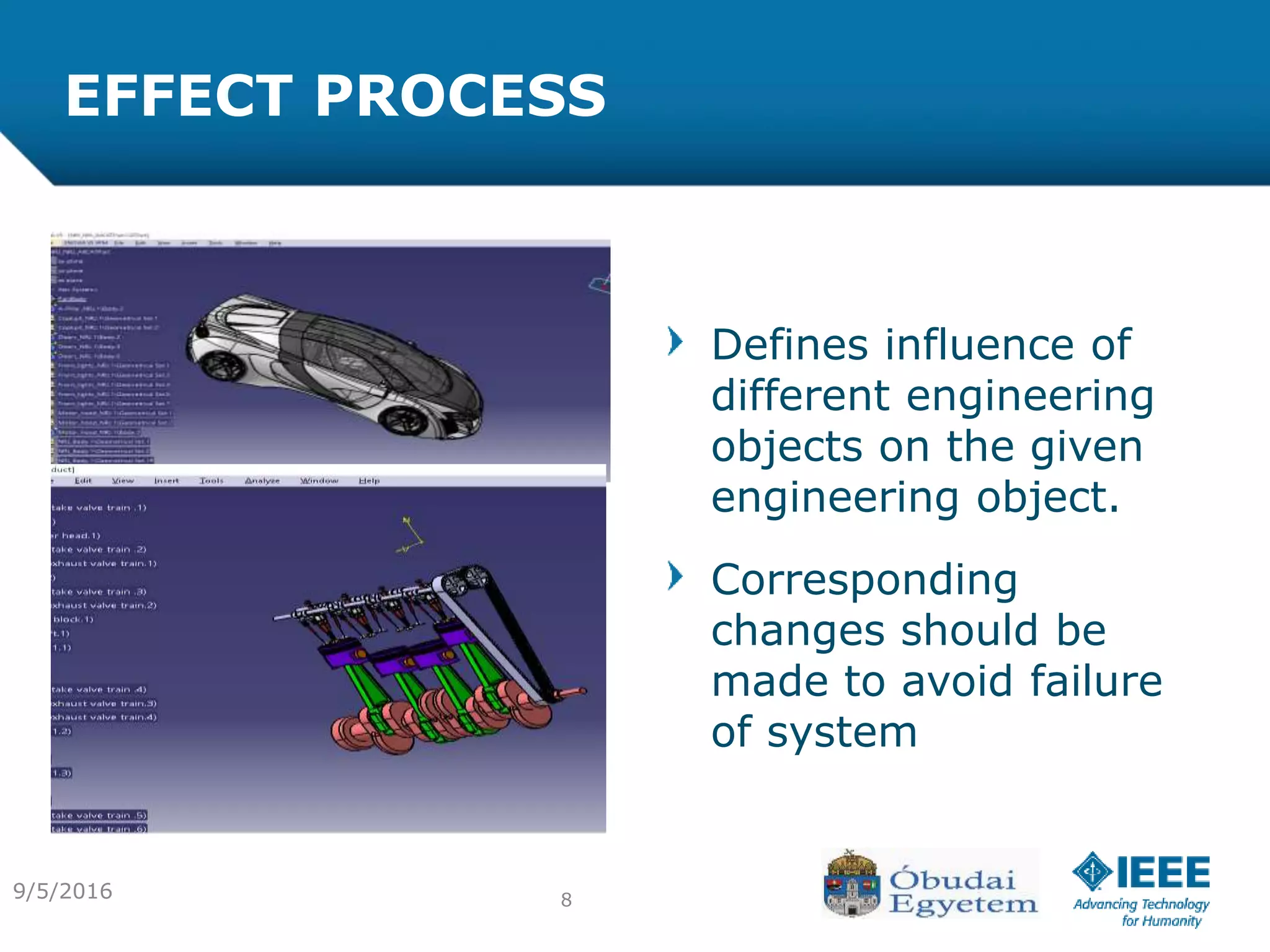
Defines influence of
different engineering
objects on the given
engineering object.
Corresponding
changes should be
made to avoid failure
of system
EFFECT PROCESS
89/5/2016
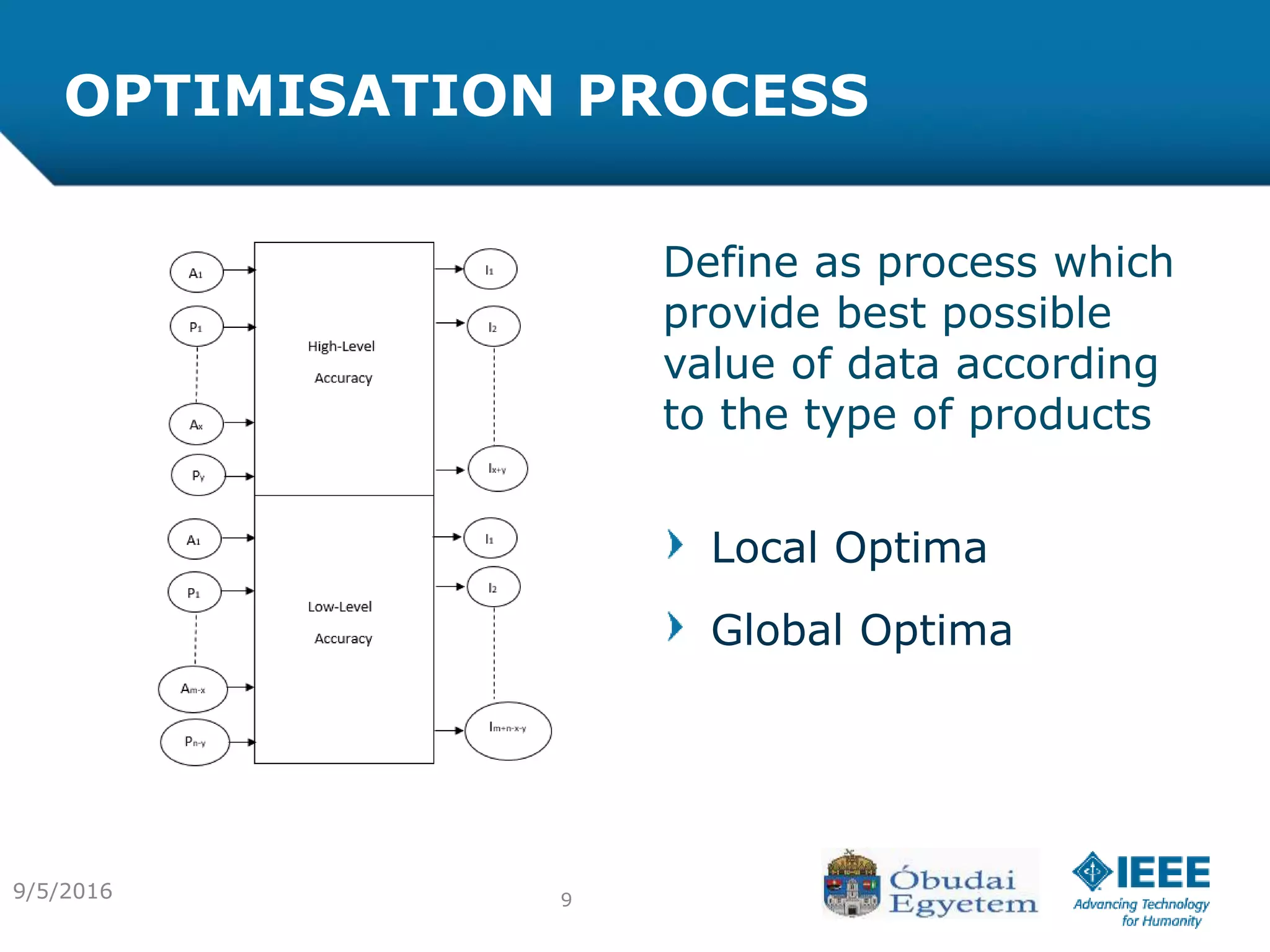
Define as process which
provide best possible
value of data according
to the type of products
Local Optima
Global Optima
OPTIMISATION PROCESS
99/5/2016
RFLP STRUCTURE
RFLP is a new product definition method which
applies four levels of abstraction
Completes the physical (P) level of conventional
product model by requirements (R), product
function definitions (F), and logical connections
(L) on appropriate levels of the model
Allows handling of product as a system
109/5/2016
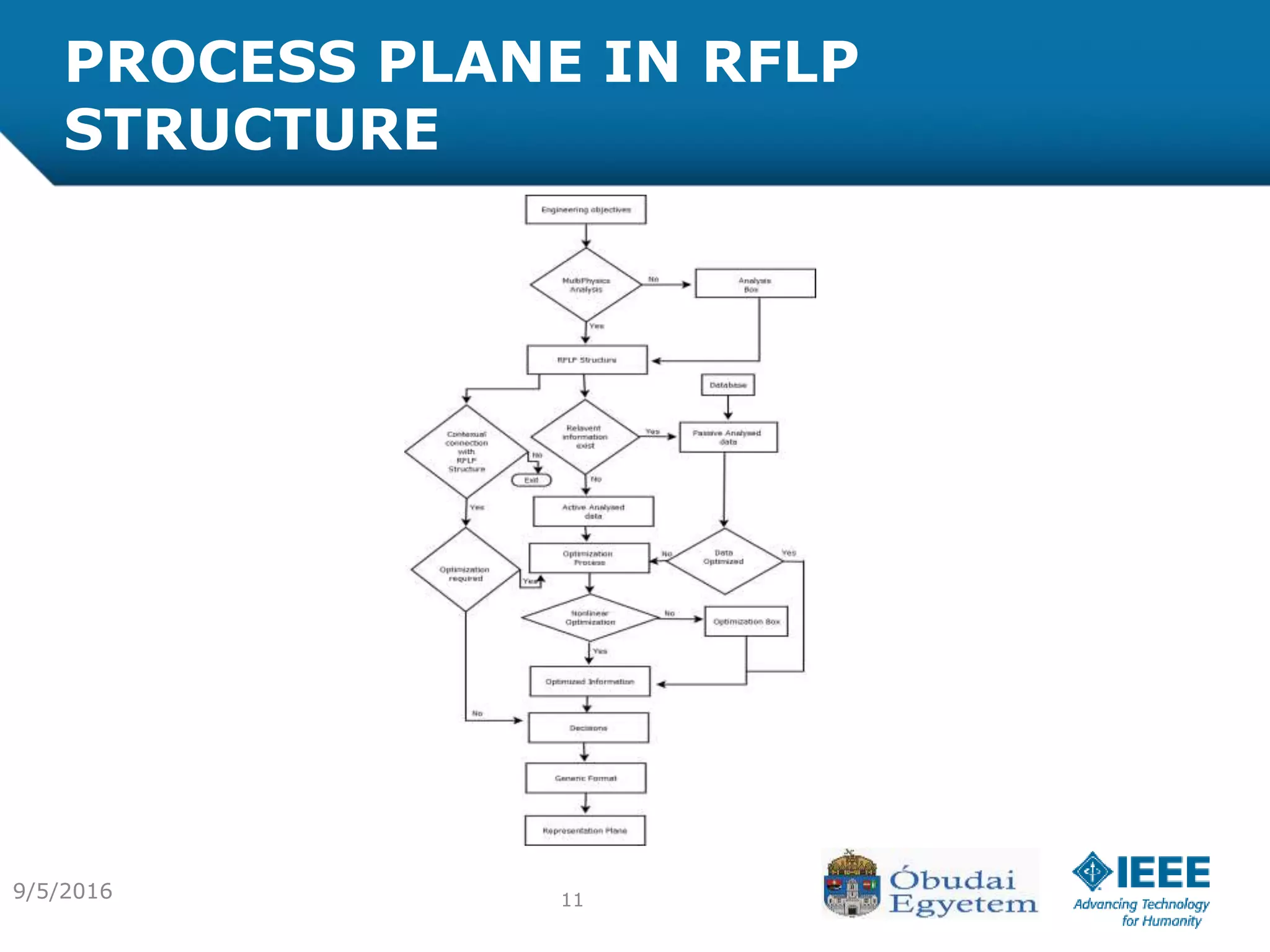
PROCESS PLANE IN RFLP
STRUCTURE
119/5/2016
ADVANTAGE
Broaden the scope of Information Content
Capable to store precise information according to
the requirement of customer
Engineer of any discipline can store and access
any type of information related with product
129/5/2016
9/5/2016 13
CONCLUSION
Different types of process involved in the
information content of PLM system by introducing
the process plane
Three types of process are proposed
namely Analysis process, Effect process and
Optimisation process
Information can be regenerated in the
representation plane such that engineer of any
discipline can easily understand every aspect of
product.
9/5/2016 14
FUTURE WORK
Theoretical level but should be extended to
Practical Level
Generic format of the optimised Information for
different products
Introduction of Fuzzy Concepts for the decision
level
15
Thank You
9/5/2016

Different Types of Process Involved in the Information Content Product Model

  • 1.
    Different Types ofProcess Involved in the Information Content Product Model 1 14th IEEE International Symposium on Applied Computational Intelligent Systems and Informatics(SISY 2016) Yatish Bathla, PhD candidate Doctoral School of Applied Informatics and Applied Mathematics, Óbuda University, Budapest, Hungary
  • 2.
    2 OUTLINE PLM SYSTEMS INFORMATION CONTENT PROPOSEDWORK: PROCESS PLANE EXPLANATION OF PROCESS PLANE EXAMPLE: RFLP STRUCTURE ADVANTAGE CONCLUSION & FUTURE WORK
  • 3.
    3 INTRODUCTION: PLM Product LifecycleManagement (PLM) is the business activity of managing a company’s products Increase product revenues and reduce product- related cost Number of PLM Software Products are available in the Market: CATIA, Teamcenter, VisionFlow, Accolade, Arena PLM, Centric PLM and many more
  • 4.
    4 PRODUCT MODEL Industries areusing STEP (Standard for the Exchange of Product Model Data, ISO 10303) product model standard Product types (electronic, electromechanical, mechanical, sheet metal, fiber composites, ships, robots) covering the entire life-cycle of a product It consists of two sets of entities, called objects and connections
  • 5.
    Purpose is torecord and apply content of information that is represented in the product model space Derive an intelligent product in PLM Systems INFORMATION CONTENT 5
  • 6.
    Analysis Process Effect process OptimizationProcess PROPOSED WORK: PROCESS PLANE 69/5/2016
  • 7.
    Defines as numberof analysis operation performed to an Engineering Object based on engineering objectives of a product. Active Analysis Passive Analysis ANALYSIS PROCESS 79/5/2016
  • 8.
    Defines influence of differentengineering objects on the given engineering object. Corresponding changes should be made to avoid failure of system EFFECT PROCESS 89/5/2016
  • 9.
    Define as processwhich provide best possible value of data according to the type of products Local Optima Global Optima OPTIMISATION PROCESS 99/5/2016
  • 10.
    RFLP STRUCTURE RFLP isa new product definition method which applies four levels of abstraction Completes the physical (P) level of conventional product model by requirements (R), product function definitions (F), and logical connections (L) on appropriate levels of the model Allows handling of product as a system 109/5/2016
  • 11.
    PROCESS PLANE INRFLP STRUCTURE 119/5/2016
  • 12.
    ADVANTAGE Broaden the scopeof Information Content Capable to store precise information according to the requirement of customer Engineer of any discipline can store and access any type of information related with product 129/5/2016
  • 13.
    9/5/2016 13 CONCLUSION Different typesof process involved in the information content of PLM system by introducing the process plane Three types of process are proposed namely Analysis process, Effect process and Optimisation process Information can be regenerated in the representation plane such that engineer of any discipline can easily understand every aspect of product.
  • 14.
    9/5/2016 14 FUTURE WORK Theoreticallevel but should be extended to Practical Level Generic format of the optimised Information for different products Introduction of Fuzzy Concepts for the decision level
  • 15.