1
Aluminium Doors& Windows
Doors
 Broad classification as exterior or interior
 Wood, metal, plastic, glass, or a combination of
these materials are used to manufacture doors
 Considerations for selection of door include:
 Fire resistance
 Cost
 Protection/Privacy
 Esthetics/Architectural Style
Terms Associated with Doors
 Door Frames:
 Jamb –sides pieces
 Head – overhead piece
 Sill – on exterior doors (covered by threshold)
 Door Stop- strip against which door closes
 Panel Doors:
 Stiles – vertical members
 Rails – horizontal members
 Muntins – may be vertical or horizontal; divide door
into panels
 Right-Hand or Left-Hand – used to describe swinging
doors- depends on which side is hinged
Metal Doors
 Most hollow core metal doors are made of
carbon steel
 Most are filled with standard fireproof, rot
proof, and sound-deadening material
 Insulated doors are filled with glass fiber or
plastic foam insulation [R-values range from
8-15]
 Grades range from 1: standard; 2: heavy
duty; 3: extra heavy duty [grades used
depends on type of building and locations in
building]
Door Operation
 Swinging – hinged on one side or may have
pivot hardware to allow for swinging in both
directions
 Sliding – overhead tracks with rollers (Pocket
doors - slide into wall cavity)
 Folding – hung on overhead tracks with rollers;
may be bi- or multi- fold in nature
Weather Stripping
 Applied to door frames to prevent
air leakage
 Common types include:
 Foam rubber
 Felt
 Rolled vinyl
 Spring metal (V-strip)
 Interlocking metal
Door Hardware -- Locks
 May be either standard, handicapped access,
automatic, or security type.
 Lock types:
 Key-in-knob
 Key-in-lever
 Mortise
 Interconnected
 Auxiliary (dead bolts)
 Security (electromagnetic)
 Padlock
Door Hardware --Hinges
 There are many types of hinges available but common
ones include: butt, piano (invisible), offset, spring, pivot,
and decorative.
 Materials from which hinges are made include: coated
steel, polished plated steel, chromium-plated metals,
brass, bronze, and aluminum.
 Placement and number required varies according to
door material and size:
 All door >7’ in height should be hung with at least 3
hinges.
 doors < 7’ in height need only 2 hinges
SPECIAL DOORS
 Revolving – prevent passage of
cold and warm air and noise while
always being open/closed
 Typical materials include stainless
steel, aluminum, and copper
alloys.
 Most doors are 6 - 8 feet in
diameter, but may be larger for
special applications (Nursing
homes)
Windows
 Related terms include: rail, stile, sill, sash,
panes or lights (glass), muntin (divides the
lights), mullion
 Common materials include: aluminum, steel
(including stainless), wood, or clad materials
[Styrofoam core with wood cladding]
 Wide range of sizes from 2’ to 10’ – not
including custom orders
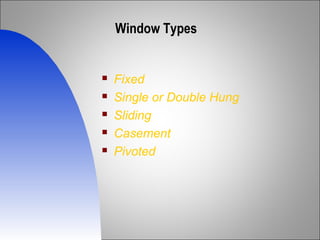
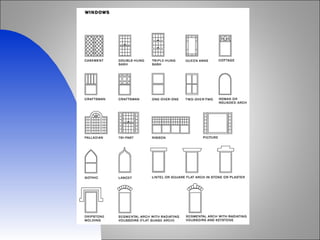
Window Types
 Fixed
 Single or Double Hung
 Sliding
 Casement
 Pivoted
Window Hardware - Locks
 Some basic types of locking devices for windows
include:
 Friction type – includes a pin which screws into a
receptacle
 Pin type – a keyed device; bolt slips into a hole
drilled into the upper frame
 Wedge type – spreads upper and lower sash apart
 Stop type – uses a knob or other protrusion to
prevent window from opening very far
 Key operated cam latch – may be a fire hazard;
works similar to a pin type

1. doors and windows

  • 1.
  • 2.
    Doors  Broad classificationas exterior or interior  Wood, metal, plastic, glass, or a combination of these materials are used to manufacture doors  Considerations for selection of door include:  Fire resistance  Cost  Protection/Privacy  Esthetics/Architectural Style
  • 3.
    Terms Associated withDoors  Door Frames:  Jamb –sides pieces  Head – overhead piece  Sill – on exterior doors (covered by threshold)  Door Stop- strip against which door closes  Panel Doors:  Stiles – vertical members  Rails – horizontal members  Muntins – may be vertical or horizontal; divide door into panels  Right-Hand or Left-Hand – used to describe swinging doors- depends on which side is hinged
  • 4.
    Metal Doors  Mosthollow core metal doors are made of carbon steel  Most are filled with standard fireproof, rot proof, and sound-deadening material  Insulated doors are filled with glass fiber or plastic foam insulation [R-values range from 8-15]  Grades range from 1: standard; 2: heavy duty; 3: extra heavy duty [grades used depends on type of building and locations in building]
  • 5.
    Door Operation  Swinging– hinged on one side or may have pivot hardware to allow for swinging in both directions  Sliding – overhead tracks with rollers (Pocket doors - slide into wall cavity)  Folding – hung on overhead tracks with rollers; may be bi- or multi- fold in nature
  • 6.
    Weather Stripping  Appliedto door frames to prevent air leakage  Common types include:  Foam rubber  Felt  Rolled vinyl  Spring metal (V-strip)  Interlocking metal
  • 7.
    Door Hardware --Locks  May be either standard, handicapped access, automatic, or security type.  Lock types:  Key-in-knob  Key-in-lever  Mortise  Interconnected  Auxiliary (dead bolts)  Security (electromagnetic)  Padlock
  • 8.
    Door Hardware --Hinges There are many types of hinges available but common ones include: butt, piano (invisible), offset, spring, pivot, and decorative.  Materials from which hinges are made include: coated steel, polished plated steel, chromium-plated metals, brass, bronze, and aluminum.  Placement and number required varies according to door material and size:  All door >7’ in height should be hung with at least 3 hinges.  doors < 7’ in height need only 2 hinges
  • 9.
    SPECIAL DOORS  Revolving– prevent passage of cold and warm air and noise while always being open/closed  Typical materials include stainless steel, aluminum, and copper alloys.  Most doors are 6 - 8 feet in diameter, but may be larger for special applications (Nursing homes)
  • 10.
    Windows  Related termsinclude: rail, stile, sill, sash, panes or lights (glass), muntin (divides the lights), mullion  Common materials include: aluminum, steel (including stainless), wood, or clad materials [Styrofoam core with wood cladding]  Wide range of sizes from 2’ to 10’ – not including custom orders
  • 11.
    Window Types  Fixed Single or Double Hung  Sliding  Casement  Pivoted
  • 13.
    Window Hardware -Locks  Some basic types of locking devices for windows include:  Friction type – includes a pin which screws into a receptacle  Pin type – a keyed device; bolt slips into a hole drilled into the upper frame  Wedge type – spreads upper and lower sash apart  Stop type – uses a knob or other protrusion to prevent window from opening very far  Key operated cam latch – may be a fire hazard; works similar to a pin type