DIFFERENCE BETWEEN REAL
AND VIRTUAL IMAGE
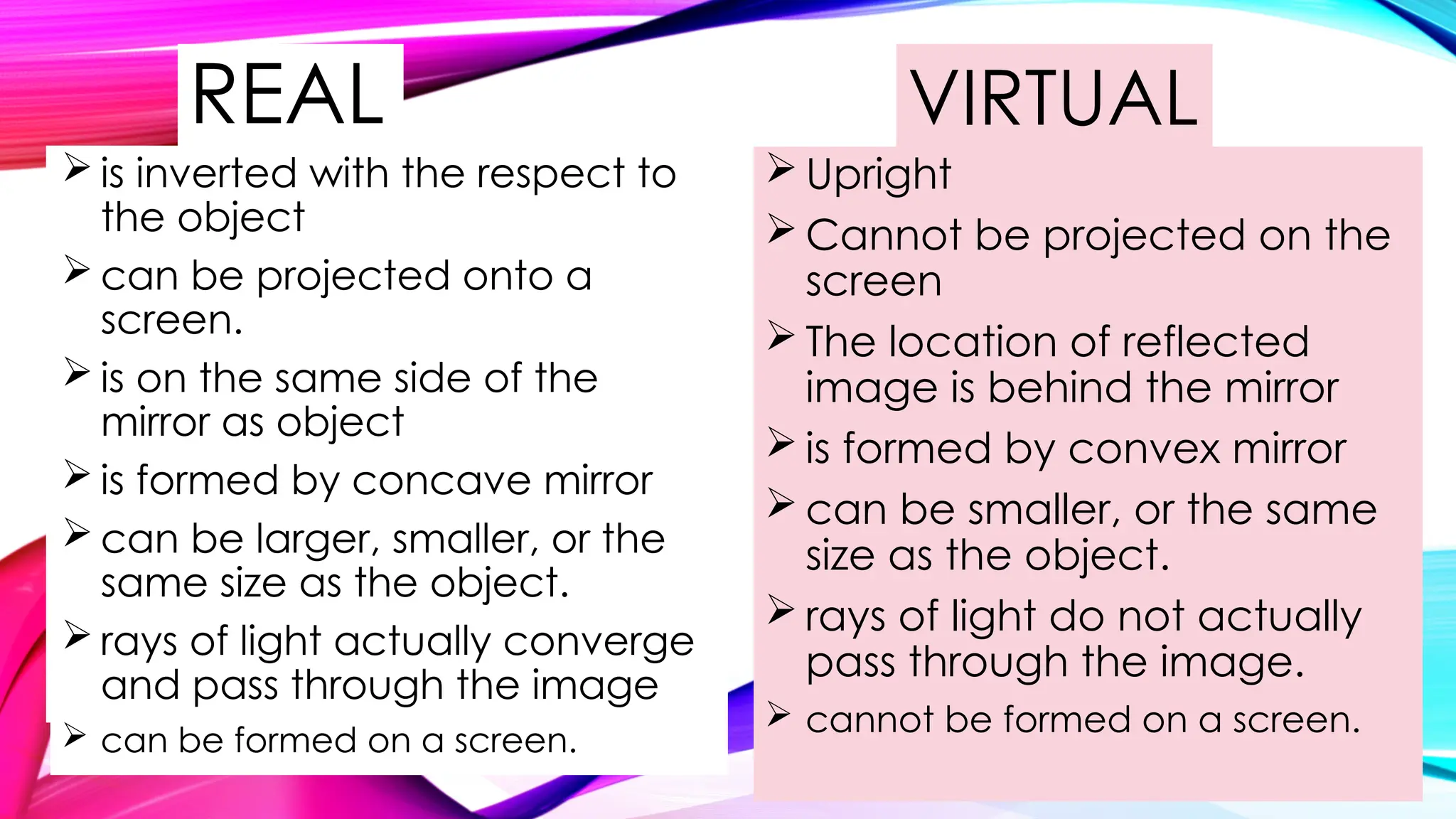
REAL
 inverted.
 can be projected onto a
screen.
 is inverted with the respect to
the object
 is on the same side of the
mirror as object
 can be larger, smaller, or the
same size as the object.
 rays of light actually converge
and pass through the image
VIRTUAL
 Upright
 Cannot be projected on the
screen
 The location of reflected
image is behind the mirror
 is formed by convex mirror
 can be smaller, or the same
size as the object.
 rays of light do not actually
pass through the image.
 cannot be formed on a screen.
 is inverted with the respect to
the object
 can be projected onto a
screen.
 is on the same side of the
mirror as object
 is formed by concave mirror
 can be larger, smaller, or the
same size as the object.
 rays of light actually converge
and pass through the image
 can be formed on a screen.
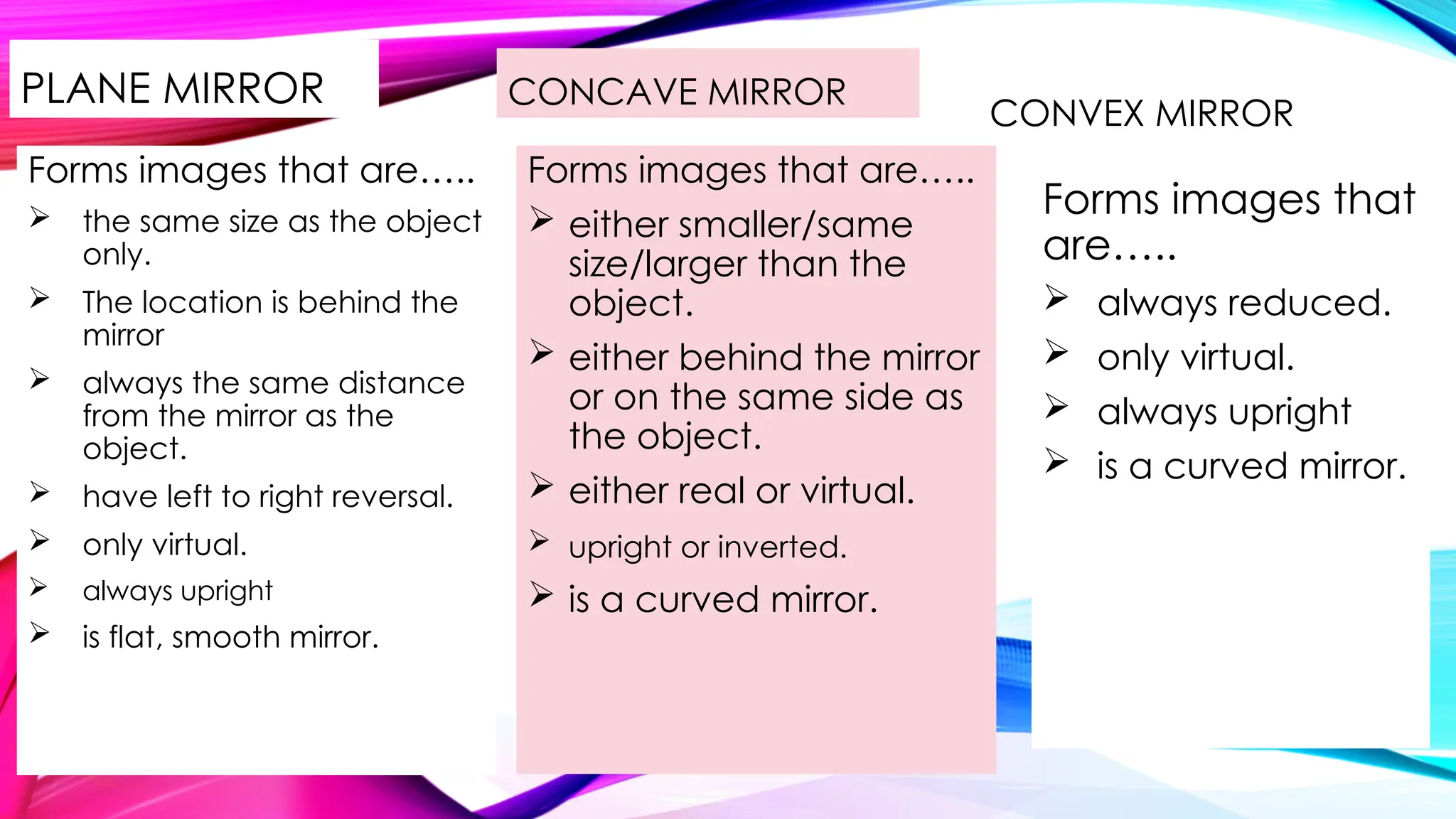
PLANE MIRROR
Forms images that are…..
 the same size as the object
only.
 The location is behind the
mirror
 always the same distance
from the mirror as the
object.
 have left to right reversal.
 only virtual.
 always upright
 is flat, smooth mirror.
CONCAVE MIRROR
Forms images that are…..
 either smaller/same
size/larger than the
object.
 either behind the mirror
or on the same side as
the object.
 either real or virtual.
 upright or inverted.
 is a curved mirror.
Forms images that
are…..
 always reduced.
 only virtual.
 always upright
 is a curved mirror.
CONVEX MIRROR
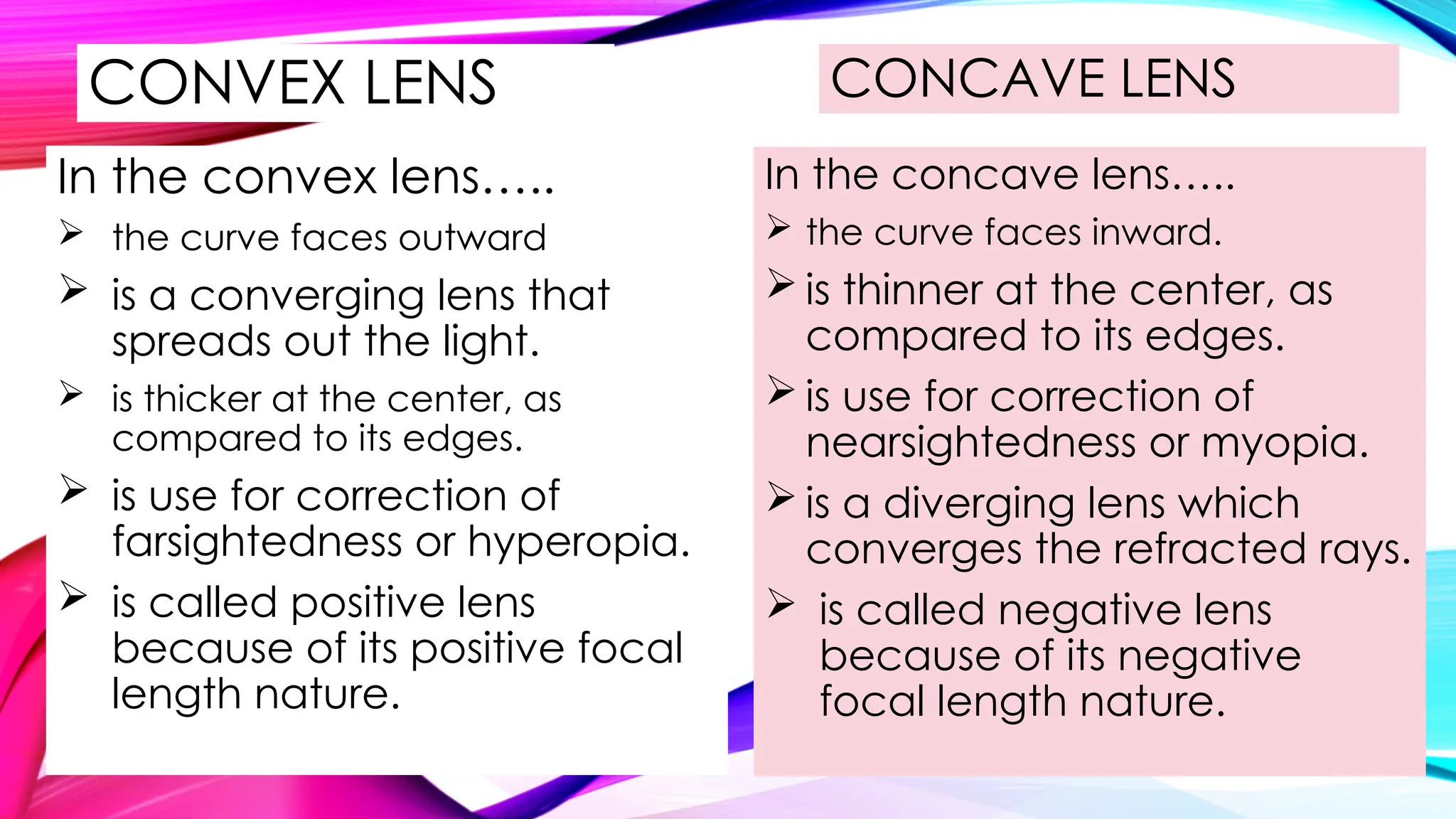
CONVEX LENS
In the convex lens…..
 the curve faces outward
 is a converging lens that
spreads out the light.
 is thicker at the center, as
compared to its edges.
 is use for correction of
farsightedness or hyperopia.
 is called positive lens
because of its positive focal
length nature.
CONCAVE LENS
In the concave lens…..
 the curve faces inward.
 is thinner at the center, as
compared to its edges.
 is use for correction of
nearsightedness or myopia.
 is a diverging lens which
converges the refracted rays.
 is called negative lens
because of its negative
focal length nature.

Difference between real and virtual image.pptx

  • 1.
  • 2.
    REAL  inverted.  canbe projected onto a screen.  is inverted with the respect to the object  is on the same side of the mirror as object  can be larger, smaller, or the same size as the object.  rays of light actually converge and pass through the image VIRTUAL  Upright  Cannot be projected on the screen  The location of reflected image is behind the mirror  is formed by convex mirror  can be smaller, or the same size as the object.  rays of light do not actually pass through the image.  cannot be formed on a screen.  is inverted with the respect to the object  can be projected onto a screen.  is on the same side of the mirror as object  is formed by concave mirror  can be larger, smaller, or the same size as the object.  rays of light actually converge and pass through the image  can be formed on a screen.
  • 3.
    PLANE MIRROR Forms imagesthat are…..  the same size as the object only.  The location is behind the mirror  always the same distance from the mirror as the object.  have left to right reversal.  only virtual.  always upright  is flat, smooth mirror. CONCAVE MIRROR Forms images that are…..  either smaller/same size/larger than the object.  either behind the mirror or on the same side as the object.  either real or virtual.  upright or inverted.  is a curved mirror. Forms images that are…..  always reduced.  only virtual.  always upright  is a curved mirror. CONVEX MIRROR
  • 4.
    CONVEX LENS In theconvex lens…..  the curve faces outward  is a converging lens that spreads out the light.  is thicker at the center, as compared to its edges.  is use for correction of farsightedness or hyperopia.  is called positive lens because of its positive focal length nature. CONCAVE LENS In the concave lens…..  the curve faces inward.  is thinner at the center, as compared to its edges.  is use for correction of nearsightedness or myopia.  is a diverging lens which converges the refracted rays.  is called negative lens because of its negative focal length nature.