MODULE 2:
MULTI- VITAMIN/MINERALS (MVM)
KEY OBJECTIVES
 Define multi-vitamin/mineral (MVM) supplement
 Assess current intake of nutrients by food in adults and children
 Identify nutrients of concern in adults and children based on
current food intake
 Understand how to interpret the label on a multi-vitamin/mineral
supplement based on the Daily Values
 Determine if MVM's cover the gaps in nutrient deficiencies in
adults and children
 Review the evidence surrounding MVM use and health benefits
DEFINITION OF MULTI-
VITAMIN/MINERAL
The term MVM refers to any supplement containing three or more
vitamins and minerals but no herbs, hormones, or drugs, with each
component at a dose less than the tolerable upper level determined
by the Food and Nutrition Board—the maximum daily intake likely to
pose no risk for adverse health effects.
NIH State-of-the-Science Conference Statement on
Multivitamin/Mineral Supplements and Chronic Disease
Prevention. Ann Intern Med. 2006; 145:364–371.
HISTORY OF MVM
 The word vitamine was coined in 1912, as an abbreviated term
meant to capture the notion of important factors in the diet, or
“vital amines.”
 In 1913, the first vitamin was isolated: thiamin, the deficiency of
which caused beriberi. Thirteen vitamins and 15 essential
minerals have now been identified as important to human
nutrition.
 Multivitamin/multimineral products providing more than vitamins A
and D became available in pharmacies and grocery stores in the
mid-1930s. In the early 1940s, the first MVM tablet was
introduced.
NIH State-of-the-Science Conference Statement
on Multivitamin/Mineral Supplements and Chronic
Disease Prevention. Ann Intern Med. 2006;
145:364–371.
MULTI VITAMINS AND MINERALS
 Americans have been taking multivitamin/mineral (MVM)
supplements since the early 1940s, when the first such products
became available. Use of multivitamins/minerals (MVMs) has grown
rapidly over the past several decades and is the major category of
supplements.
 MVMs account for almost one-sixth of all purchases of dietary
supplements and 40% of all sales of vitamin and mineral
supplements.
 Research has shown that more than one-third of Americans take
MVMs. About one in four young children takes an MVM, but
adolescents are least likely to take them. Use increases with age
during adulthood so that by age 71 years, more than 40% take an
MVM.
 Sales of all dietary supplements in the United States totaled an
estimated $36.7 billion in 2014. This amount included $14.3 billion for
all vitamin- and mineral-containing supplements, of which $5.7 billion
was for MVMs.
https://ods.od.nih.gov/factsheets/MVMS-HealthProfessional/
MOST COMMON MVM
 Among the most common MVMs are basic, once-daily products
containing all or most vitamins and minerals, with the majority in
amounts that are close to recommended amounts. Higher-potency
MVMs often come in packs of two or more pills to take each day.
 Manufacturers promote other MVMs for special purposes, such as
better performance or energy, weight control, or improved immunity.
These products usually contain herbal and other ingredients (such as
echinacea and glucosamine) in addition to vitamins and minerals.
Source: ODS
CONCERNS WITH MVM USE
 Despite the widespread use of MVMs, we still have insufficient
knowledge about the actual amount of total nutrients that
Americans consume from diet and supplements.
 This is at least in part due to the fortification of foods with these
nutrients, which adds to the effects of MVMs or single-vitamin or
single-mineral supplements.
 Historically, fortification of foods has led to the remediation of
vitamin and mineral deficits, but the cumulative effects of
supplementation and fortification have also raised safety concerns
about exceeding upper levels.
NIH State-of-the-Science Conference Statement on
Multivitamin/Mineral Supplements and Chronic
Disease Prevention. Ann Intern Med. 2006;
145:364–371.
CONCERNS WITH MVM USE
Taking an MVM increases nutrient intakes and helps people get the
recommended amounts of vitamins and minerals when they cannot
or do not meet these needs from food alone. But taking an MVM can
also raise the chances of getting too much of some nutrients, like
iron, vitamin A, zinc, niacin, and folic acid, especially when a person
uses more than a basic, once-daily product
NIH State-of-the-Science Conference Statement on
Multivitamin/Mineral Supplements and Chronic Disease
Prevention. Ann Intern Med. 2006; 145:364–371.
CONCERNS WITH MVM
The current level of public assurance of the safety and quality of
MVMs is inadequate, given the fact that manufacturers of these
products are not required to report adverse events and the FDA has
no regulatory authority to require labeling changes or to help inform
the public of these issues and concerns.
NIH State-of-the-Science Conference Statement on
Multivitamin/Mineral Supplements and Chronic Disease
Prevention. Ann Intern Med. 2006; 145:364–371.
DIETARY GAPS
 Many Americans do not consume the amount and types of foods
necessary to meet recommended micronutrient intakes.
Adherence to the USDA Dietary Guidelines is low; only about 3%
to 4% of Americans follow all of the guidelines.
 As a result of low intakes of nutrient-rich foods and sedentary
lifestyles, many Americans may be meeting or exceeding their
energy requirements while falling short of vitamin and mineral
recommendations.
 In assessing the diets of population groups, the proportion with
intakes less than recommended amounts are interpreted as
estimates of the prevalence of inadequacy.
doi: 10.1016/j.jada.2009.10.020
CURRENT FOOD INTAKE
BASED ON CURRENT INTAKE OF
ADULTS AND CHILDREN
 Nutrients of public health concern
 Potassium
 Fiber
 Calcium
 Vitamin D
 Iron (for women of childbearing age)
2015 USDA Dietary Guidelines
OPTIMAL NUTRIENT
RECOMMENDATIONS
 Optimal nutrient intakes are those that promote health and reduce
risk for chronic disease while minimizing risk of excess. The Institute
of Medicine’s (IOM’s) Dietary Reference Intakes (DRIs) are the best
available evidence-based nutrient standards for estimating optimal
intakes.
Dietary Reference Intake include:
 Estimated Average Requirements (EARs)
 Recommended Dietary Allowances (RDAs)
 Adequate Intakes(AIs)
 Tolerable Upper Intake Levels (ULs)
 Acceptable Macronutrient Distribution Ranges (AMDR)
Grodner M. Nutritional Foundations and Clinical Applications, 6th Edition
DIETARY REFERENCE INTAKES
TERMS
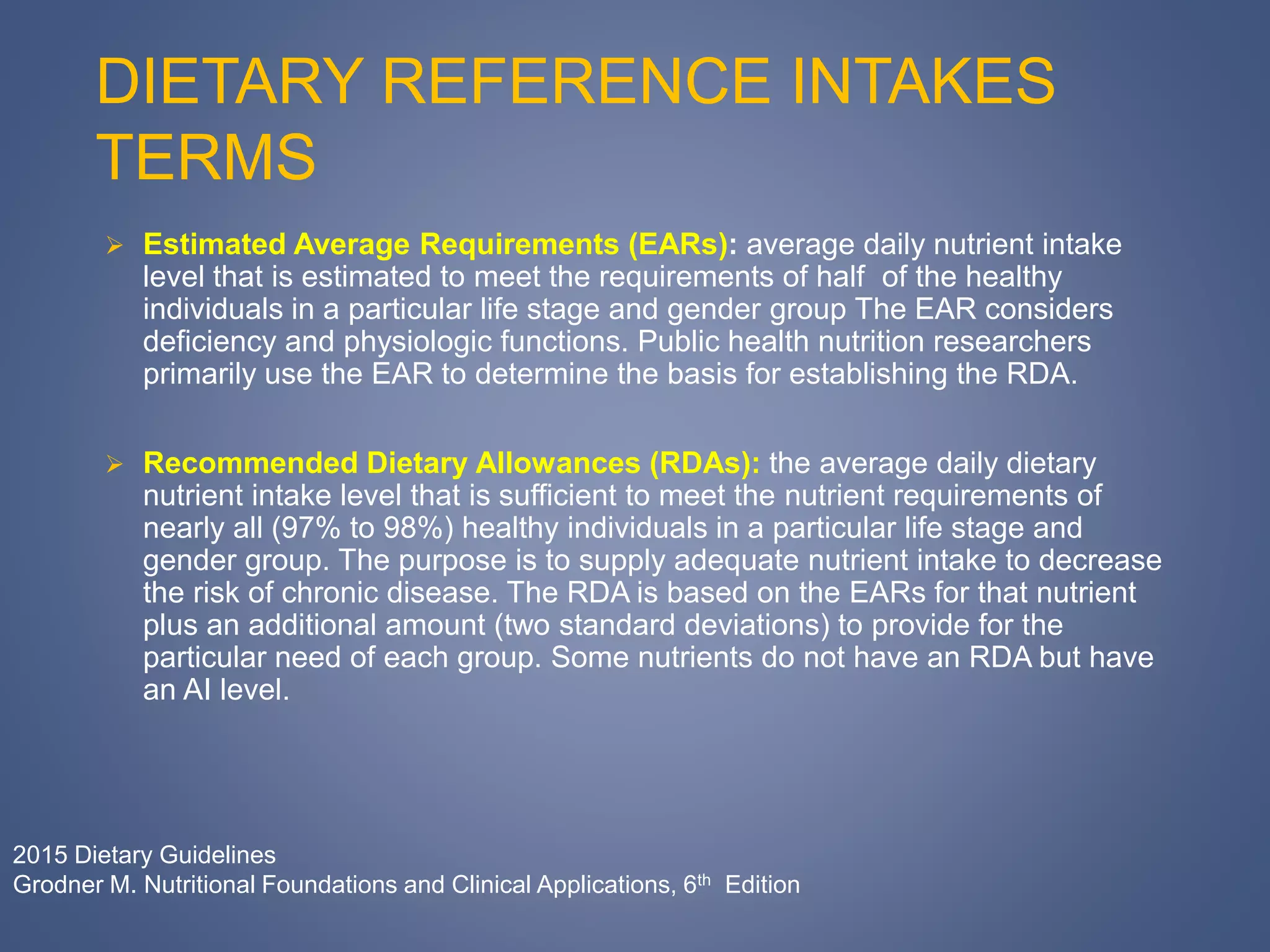
 Estimated Average Requirements (EARs): average daily nutrient intake
level that is estimated to meet the requirements of half of the healthy
individuals in a particular life stage and gender group The EAR considers
deficiency and physiologic functions. Public health nutrition researchers
primarily use the EAR to determine the basis for establishing the RDA.
 Recommended Dietary Allowances (RDAs): the average daily dietary
nutrient intake level that is sufficient to meet the nutrient requirements of
nearly all (97% to 98%) healthy individuals in a particular life stage and
gender group. The purpose is to supply adequate nutrient intake to decrease
the risk of chronic disease. The RDA is based on the EARs for that nutrient
plus an additional amount (two standard deviations) to provide for the
particular need of each group. Some nutrients do not have an RDA but have
an AI level.
2015 Dietary Guidelines
Grodner M. Nutritional Foundations and Clinical Applications, 6th Edition
DIETARY REFERENCE INTAKES
TERMS
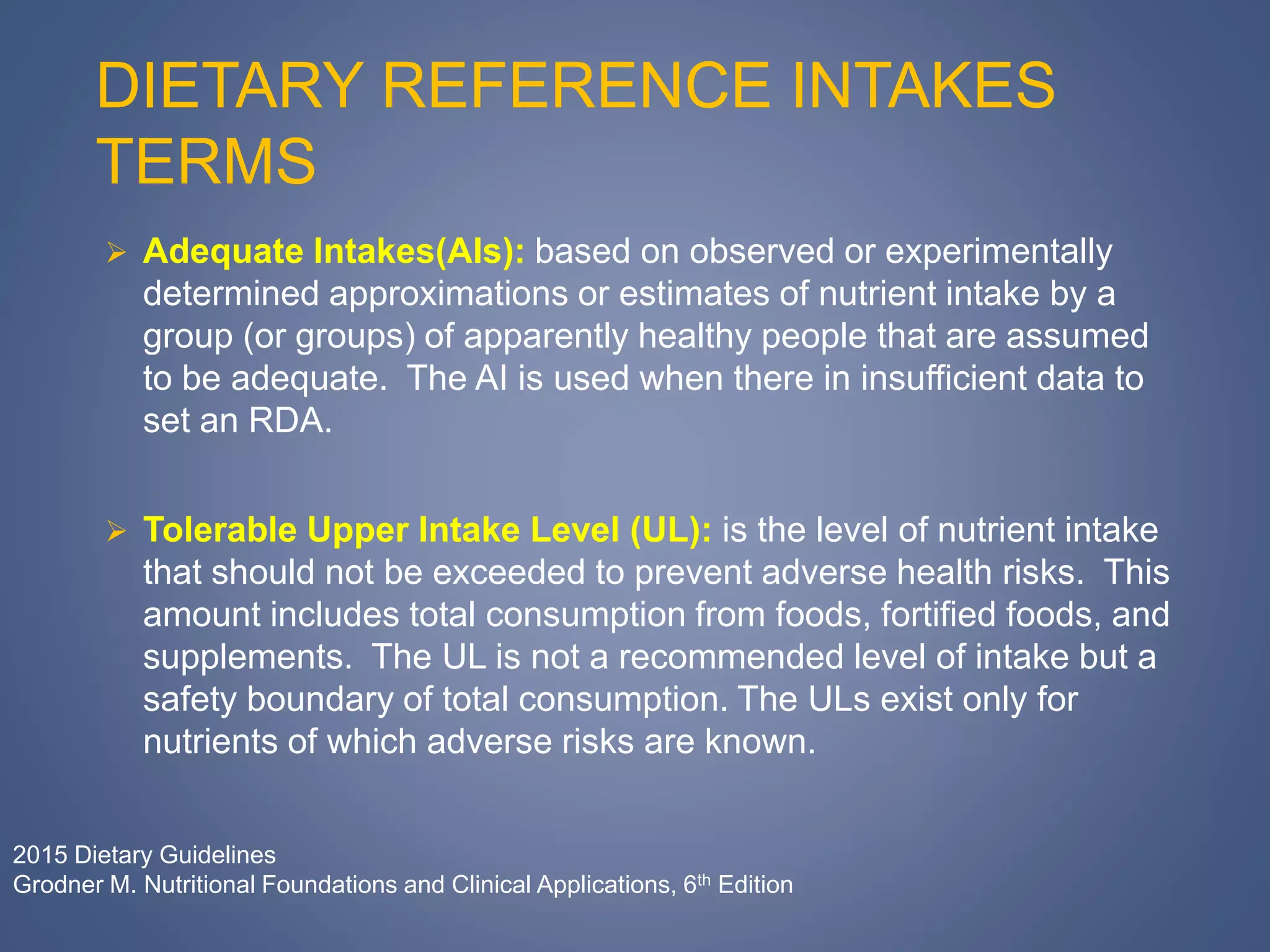
 Adequate Intakes(AIs): based on observed or experimentally
determined approximations or estimates of nutrient intake by a
group (or groups) of apparently healthy people that are assumed
to be adequate. The AI is used when there in insufficient data to
set an RDA.
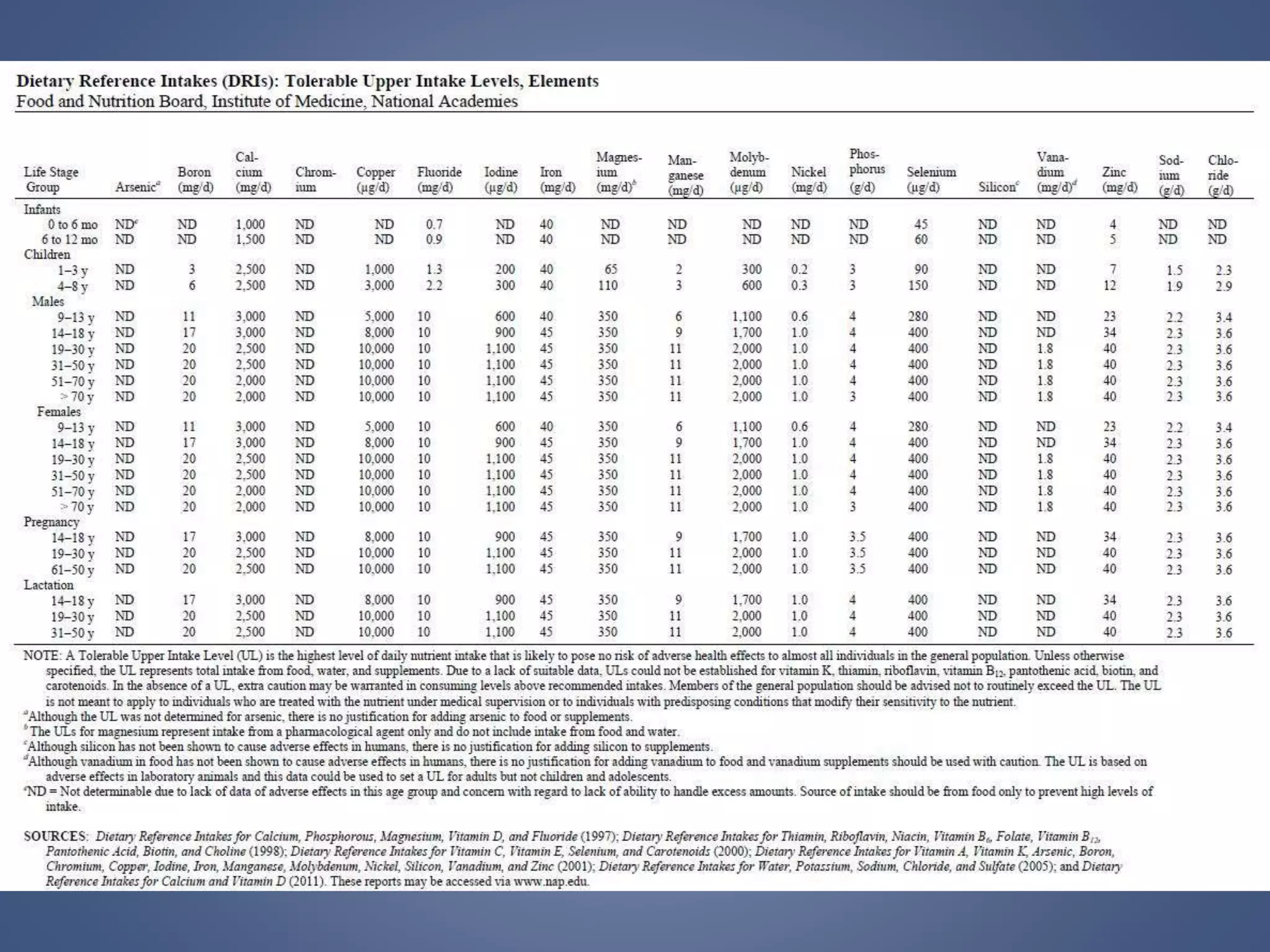
 Tolerable Upper Intake Level (UL): is the level of nutrient intake
that should not be exceeded to prevent adverse health risks. This
amount includes total consumption from foods, fortified foods, and
supplements. The UL is not a recommended level of intake but a
safety boundary of total consumption. The ULs exist only for
nutrients of which adverse risks are known.
2015 Dietary Guidelines
Grodner M. Nutritional Foundations and Clinical Applications, 6th Edition
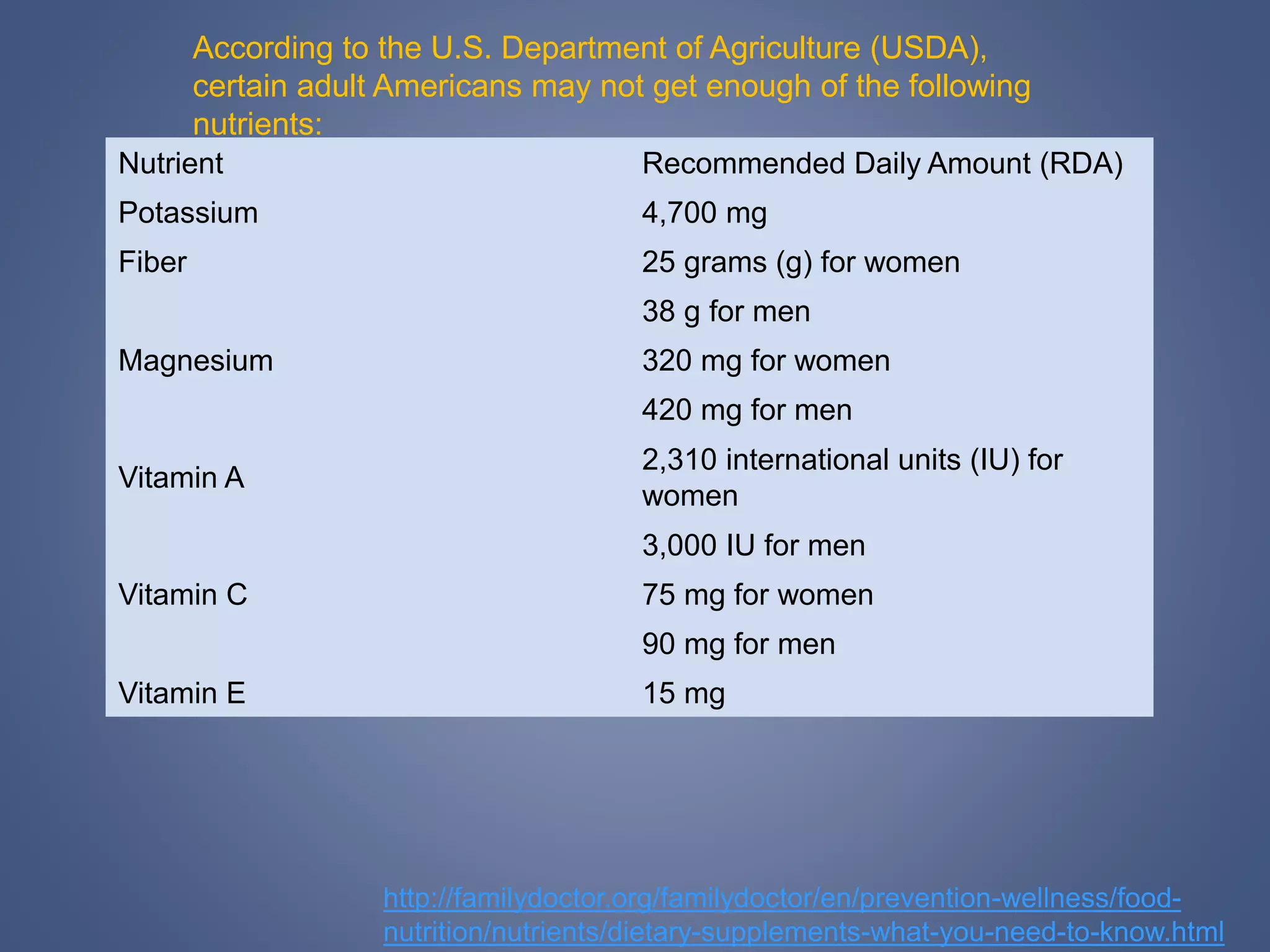
Nutrient Recommended Daily Amount (RDA)
Potassium 4,700 mg
Fiber 25 grams (g) for women
38 g for men
Magnesium 320 mg for women
420 mg for men
Vitamin A
2,310 international units (IU) for
women
3,000 IU for men
Vitamin C 75 mg for women
90 mg for men
Vitamin E 15 mg
According to the U.S. Department of Agriculture (USDA),
certain adult Americans may not get enough of the following
nutrients:
http://familydoctor.org/familydoctor/en/prevention-wellness/food-
nutrition/nutrients/dietary-supplements-what-you-need-to-know.html
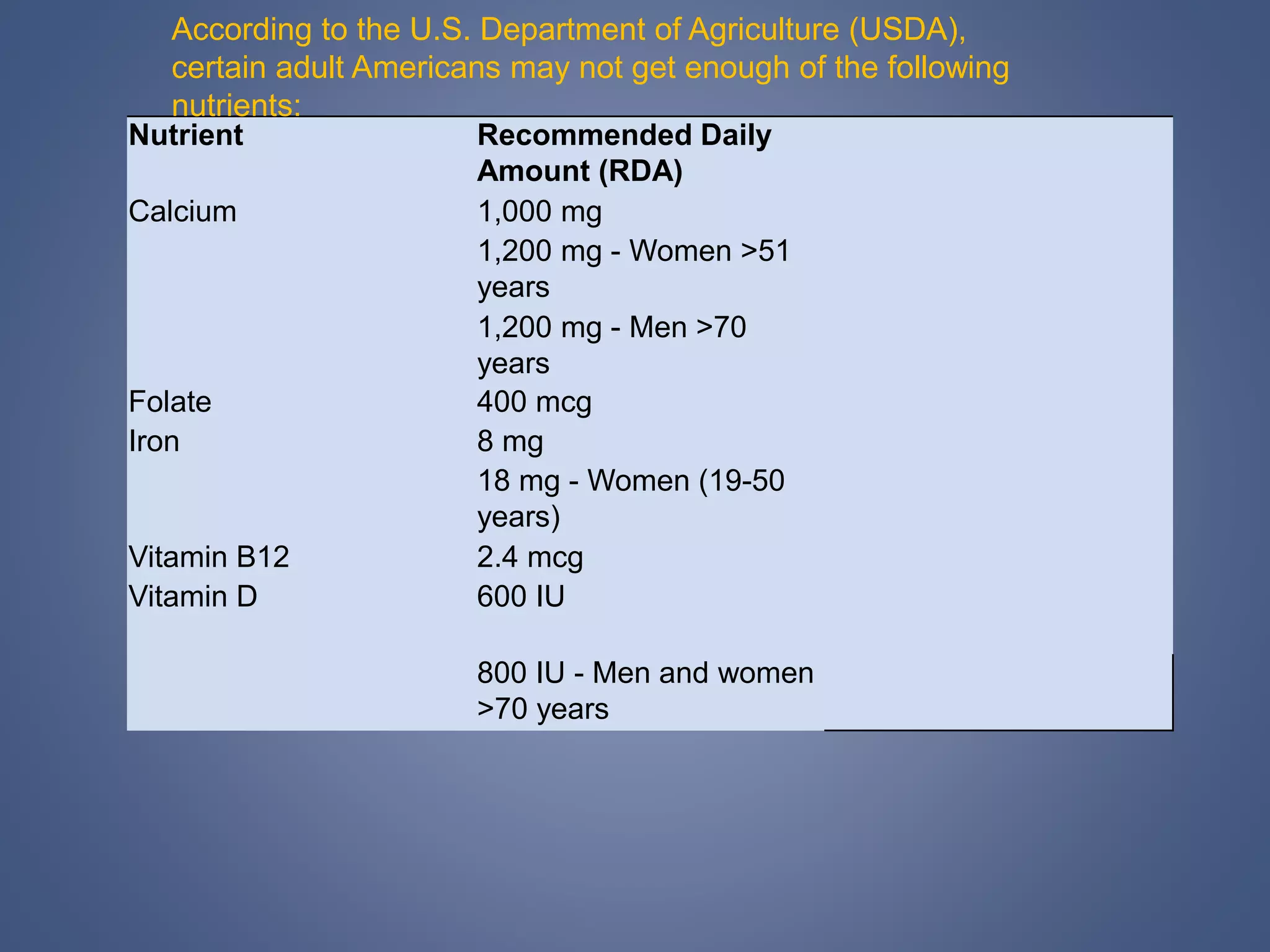
Nutrient Recommended Daily
Amount (RDA)
Calcium 1,000 mg
1,200 mg - Women >51
years
1,200 mg - Men >70
years
Folate 400 mcg
Iron 8 mg
18 mg - Women (19-50
years)
Vitamin B12 2.4 mcg
Vitamin D 600 IU
800 IU - Men and women
>70 years
According to the U.S. Department of Agriculture (USDA),
certain adult Americans may not get enough of the following
nutrients:
DIETARY REFERENCE INTAKES
TERMS
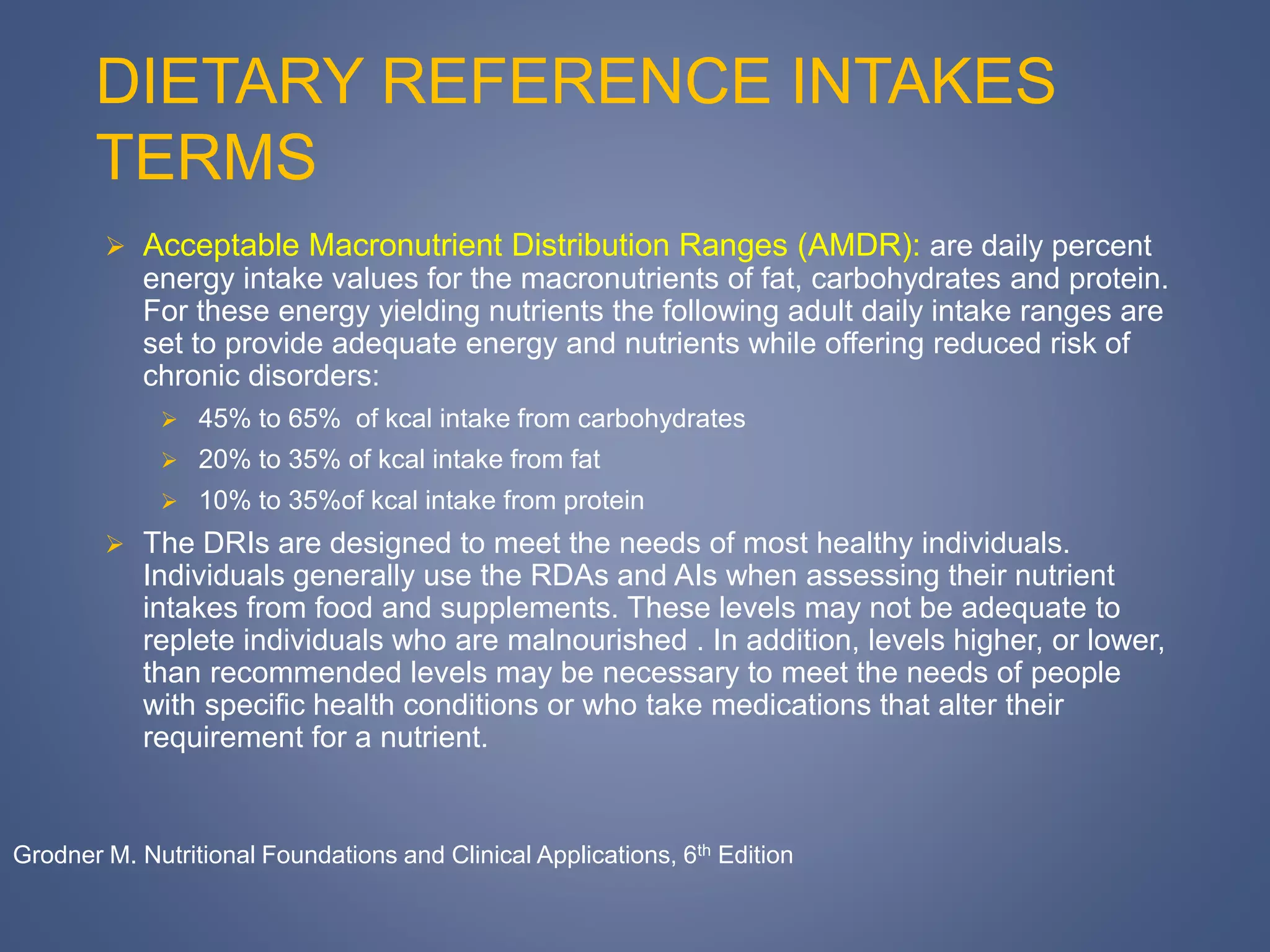
 Acceptable Macronutrient Distribution Ranges (AMDR): are daily percent
energy intake values for the macronutrients of fat, carbohydrates and protein.
For these energy yielding nutrients the following adult daily intake ranges are
set to provide adequate energy and nutrients while offering reduced risk of
chronic disorders:
 45% to 65% of kcal intake from carbohydrates
 20% to 35% of kcal intake from fat
 10% to 35%of kcal intake from protein
 The DRIs are designed to meet the needs of most healthy individuals.
Individuals generally use the RDAs and AIs when assessing their nutrient
intakes from food and supplements. These levels may not be adequate to
replete individuals who are malnourished . In addition, levels higher, or lower,
than recommended levels may be necessary to meet the needs of people
with specific health conditions or who take medications that alter their
requirement for a nutrient.
Grodner M. Nutritional Foundations and Clinical Applications, 6th Edition
DAILY VALUES (DV)
 Daily Values (DVs): Daily Values is a system for food and supplement labeling
comprised of two sets of reference values for reporting nutrients in nutrition
labels—the Daily Reference Values (DRVs) and the Reference Daily Intakes
(RDIs). To limit consumer confusion, the single term “Daily Value” is used to
designate both the DRVs and RDIs. The DVs are used to calculate the % Daily
Values that consumers see on the Nutrition and Supplement Facts labels. The %
of DVs information can be based on a 2000 or 2500 calorie diet, is intended to
show consumers how much of a day’s ideal intake of a particular nutrient they are
eating.
 The % Daily Value helps consumers understand how the amount of a nutrient that
is present in a serving of a food fits into their total daily diet, and allows them to
compare the nutritional value of food products.
 The FDA has established four sets of Daily Values (DVs) for labeling of foods and
dietary supplements: adults and children 4 years and older, children 1 through 3
years, infants 1 through 12 months, and pregnant and lactating women. In
establishing these DVs, the FDA selects the highest RDA value established by the
National Academies of Sciences, Engineering and Medicine's Food and Nutrition
Board (FNB) within each of these four age and condition groups.
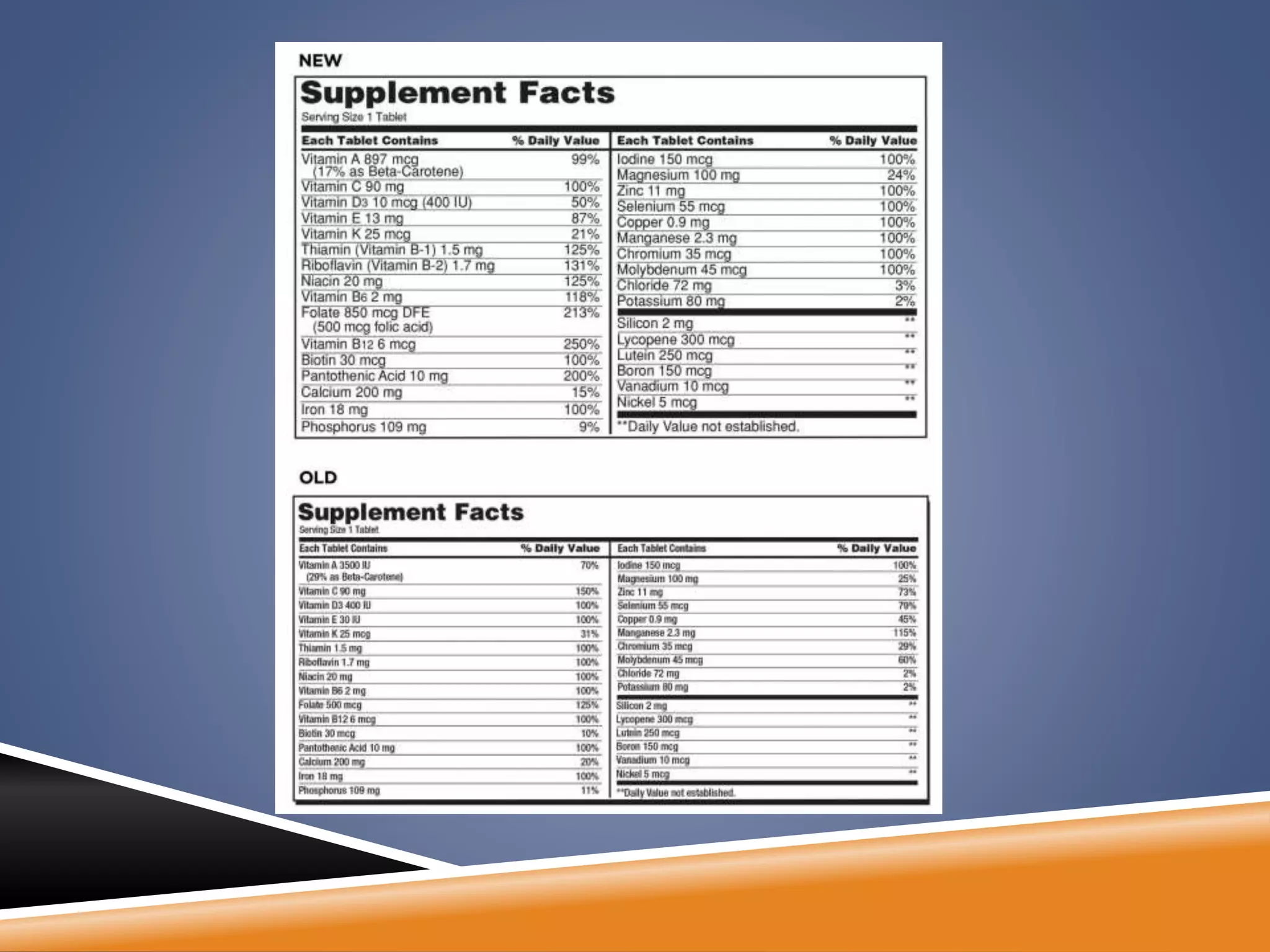
LABEL CHANGES TO THE
SUPPLEMENTS FACTS PANEL
 On May 20, 2016, the FDA announced the new Nutrition Facts
label and changes to the Supplements Facts Panel to reflect new
scientific information, including the link between diet and chronic
diseases such as obesity and heart disease. The new label will
make it easier for consumers to make more informed choices.
 Manufacturers still have time to begin using the new and
improved Nutrition Facts label, so you will see both label versions
for a while. Manufacturers with $10 million or more in annual food
sales have until 2020 before the new label is required, and
manufacturers with less than $10 million in annual food sales will
have until 2021.
https://www.fda.gov/food/food-labeling-nutrition/nutrition-
education-resources-materials
https://www.watso
n-
inc.com/education
-library/nutrition-
facts-label-
changes/
DAILY VALUES AND CHANGES TO THE
SUPPLEMENTS LABEL
 Updated Reference Values Used to Determine % DV
The final rule also updates reference values used to determine DVs for
several vitamins, minerals, and macronutrients. Since the
implementation of the original food label in 1993, several changes in
nutrient recommendations have been released; these had not been
reflected on the label, so the new label provides an update of these
recommendations.
 The old DVs were based on Adults and Children ≥ 4 years old. The
FDA’s final rule also set DVs specifically for foods and supplements
marketed to infants through 12 months, children aged 1 to 3, and
pregnant and lactating women. This means that the food or supplement
label marketed specifically to children aged 1 to 3, for example, will
have % DVs specific to these age groups
 The table on the text slide includes changes related to reference values
for labeling nutrients. Of note, the DV has increased for potassium from
3,500 mg to 4,700 mg. Also, some reference values related to certain
voluntary nutrients also were changed. For example, the DV for Vitamin
K increased from 80 mcg to 120 mcg for adults and children aged 4
and older.
http://www.fda.gov/Food/GuidanceRegulation/GuidanceDocumentsRegulatoryInformation/La
belingNutrition/ucm064930.htm
Table of Daily Value Changes
https://www.watson-
inc.com/education-
library/nutrition-facts-label-
changes/
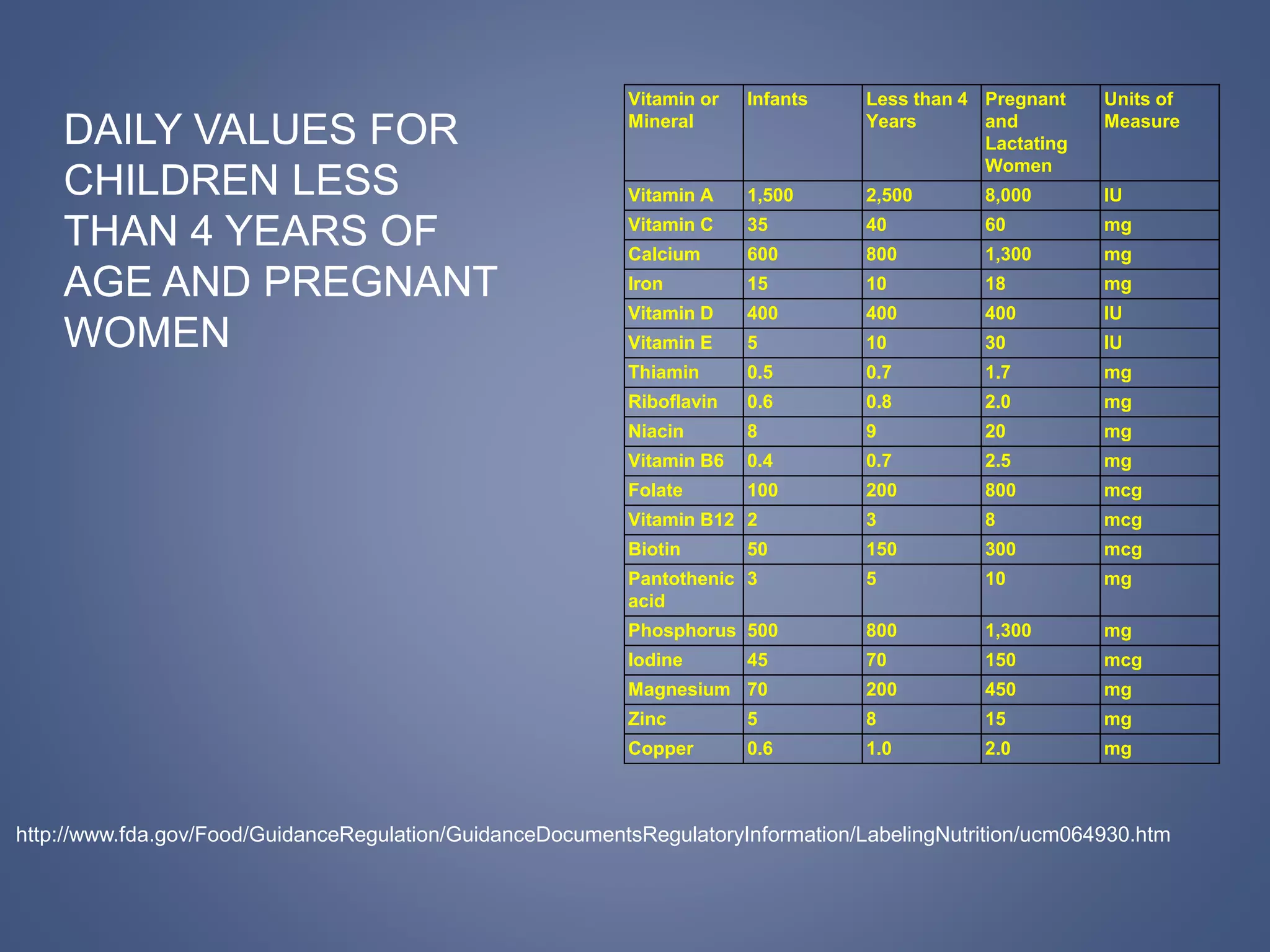
Vitamin or
Mineral
Infants Less than 4
Years
Pregnant
and
Lactating
Women
Units of
Measure
Vitamin A 1,500 2,500 8,000 IU
Vitamin C 35 40 60 mg
Calcium 600 800 1,300 mg
Iron 15 10 18 mg
Vitamin D 400 400 400 IU
Vitamin E 5 10 30 IU
Thiamin 0.5 0.7 1.7 mg
Riboflavin 0.6 0.8 2.0 mg
Niacin 8 9 20 mg
Vitamin B6 0.4 0.7 2.5 mg
Folate 100 200 800 mcg
Vitamin B12 2 3 8 mcg
Biotin 50 150 300 mcg
Pantothenic
acid
3 5 10 mg
Phosphorus 500 800 1,300 mg
Iodine 45 70 150 mcg
Magnesium 70 200 450 mg
Zinc 5 8 15 mg
Copper 0.6 1.0 2.0 mg
DAILY VALUES FOR
CHILDREN LESS
THAN 4 YEARS OF
AGE AND PREGNANT
WOMEN
http://www.fda.gov/Food/GuidanceRegulation/GuidanceDocumentsRegulatoryInformation/LabelingNutrition/ucm064930.htm
TYPES OF MVM’S
MVM Categories:
 Many are once-daily MVMs that contain all or most of the recognized vitamins and
minerals, generally at levels close to the Daily Values (DVs) or Recommended Dietary
Allowances (RDAs) or Adequate Intakes (AIs) for these nutrients.1 Formulations for
children, adults, men, women, pregnant women, and seniors typically provide different
amounts of the same vitamins and minerals based on the specific needs of these
populations.
 Some MVMs contain levels of certain vitamins and minerals that are substantially
higher than the DV, RDA, AI, and even, in some cases, the established tolerable upper
intake level (UL).These MVMs might also include other nutritional and herbal
ingredients. Manufacturers sometimes offer these MVMs in packages or packs of two
or more pills that users are supposed to take each day.
 Specialized MVMs—such as those for enhanced performance or energy, weight
control, improved immune function, or management of menopause symptoms—often
include vitamins and minerals in combination with herbal and specialty ingredients,
such as sterols, coenzyme Q10, probiotics, and glucosamine. A few nutrients might be
present at levels substantially above the DV, RDA, AI and, in some cases, the UL.
Diet & Nutrition Supplement PaperArticlesArticlesMultivitamin-mineral Supplements — Health Professional Fact Sheet.mht
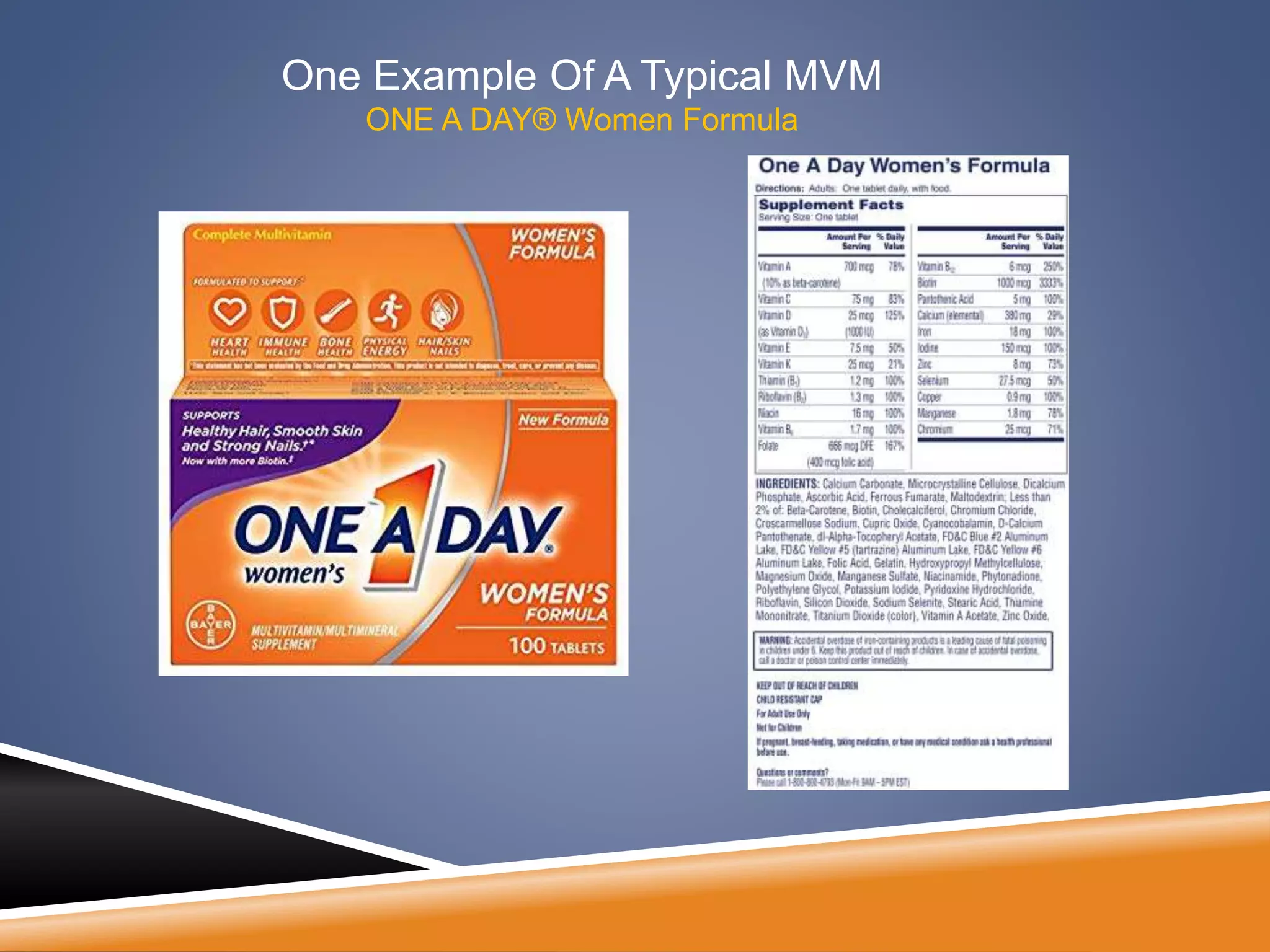
One Example Of A Typical MVM
ONE A DAY® Women Formula
COVERING DIETARY GAPS
 When taken regularly, MVMs can be an effective way to increase
nutrient intakes to meet recommended levels of multiple nutrients.
The extent to which a MVM can improve nutrient adequacy is
impacted by the nutrient profile of the supplement taken.
 Of the nutrients previously identified as being low enough in diets
to be of concern, MVM supplements have been shown to
decrease the prevalence of nutrient inadequacy most notably for
vitamin E, vitamin A, zinc, and vitamin B-6.
doi: 10.1016/j.jada.2009.10.020
COVERING DIETARY GAPS
 MVMs are less likely to substantially increase intakes of key
nutrients such as calcium, magnesium, and potassium. Increasing
consumption of foods rich in these nutrients will still be necessary
to meet recommended amounts.
 In some cases such as with calcium, an additional supplement
may be considered to help meet recommended intakes,
particularly in at risk groups (eg, older adults) where
supplementation has been shown to have positive outcomes.
doi: 10.1016/j.jada.2009.10.020
EXCEEDING ULS
 Although MVMs can improve the intake adequacy of various
nutrients, they can also increase the likelihood that users will have
intakes of other nutrients at levels that are higher than ULs.
Results from several studies exemplify both the issues of
nutritional insurance for some individuals and the concern of
excessive intakes for others.
 There is potential for supplement users to exceed the ULs of
some nutrients when they take high dose supplements or multiple
products with the same ingredients, and even when MVMs are
taken along with a diet rich in fortified foods. As daily intakes
exceed the UL, risk of adverse health effects increase.
doi: 10.1016/j.jada.2009.10.020
SUMMARY OF EVIDENCE IN COVERING
THE GAPS IN CHILDREN
 National survey of infants and children younger than 4 years,
found that usual nutrient intakes from food alone were adequate
for most of the infants and children. However, the results showed
inadequate intakes of iron and zinc in a small subset of older
infants and for vitamin E and potassium in a sizeable proportion of
young children.
 Although supplements would help reduce the prevalence of these
inadequacies, use of supplements tended to push intakes of
some nutrients— particularly vitamin A, folic acid, and (for the
older preschool children) zinc—over the UL.
 The investigators advised parents not to give young children
dietary supplements or fortified foods containing high levels
of vitamin A and zinc.
http://ods.od.nih.gov/factsheets/MVMS-HealthProfessional/
SUMMARY OF EVIDENCE IN COVERING
THE GAPS IN ADULTS
 In the Hawaii Los Angeles Multiethnic Cohort 1999-2001, the
nutrients identified as those most likely to exceed the ULs were: iron,
zinc, vitamin A, and niacin.
 Approximately three-quarters of participants had adequate intakes
from food alone, but use of multivitamins increased the prevalence of
adequacy by an average of eight percentage points for both men and
women. The greatest improvements in intake were for vitamin E,
vitamin A, and zinc.
 However, the prevalence of potentially excessive intakes among the
MVM users was 10%–15% for vitamin A, iron, and zinc and 48%–
61% for niacin.
 The investigators concluded that MVMs "could be better
formulated to target public health concerns."
http://ods.od.nih.gov/factsheets/MVMS-HealthProfessional/
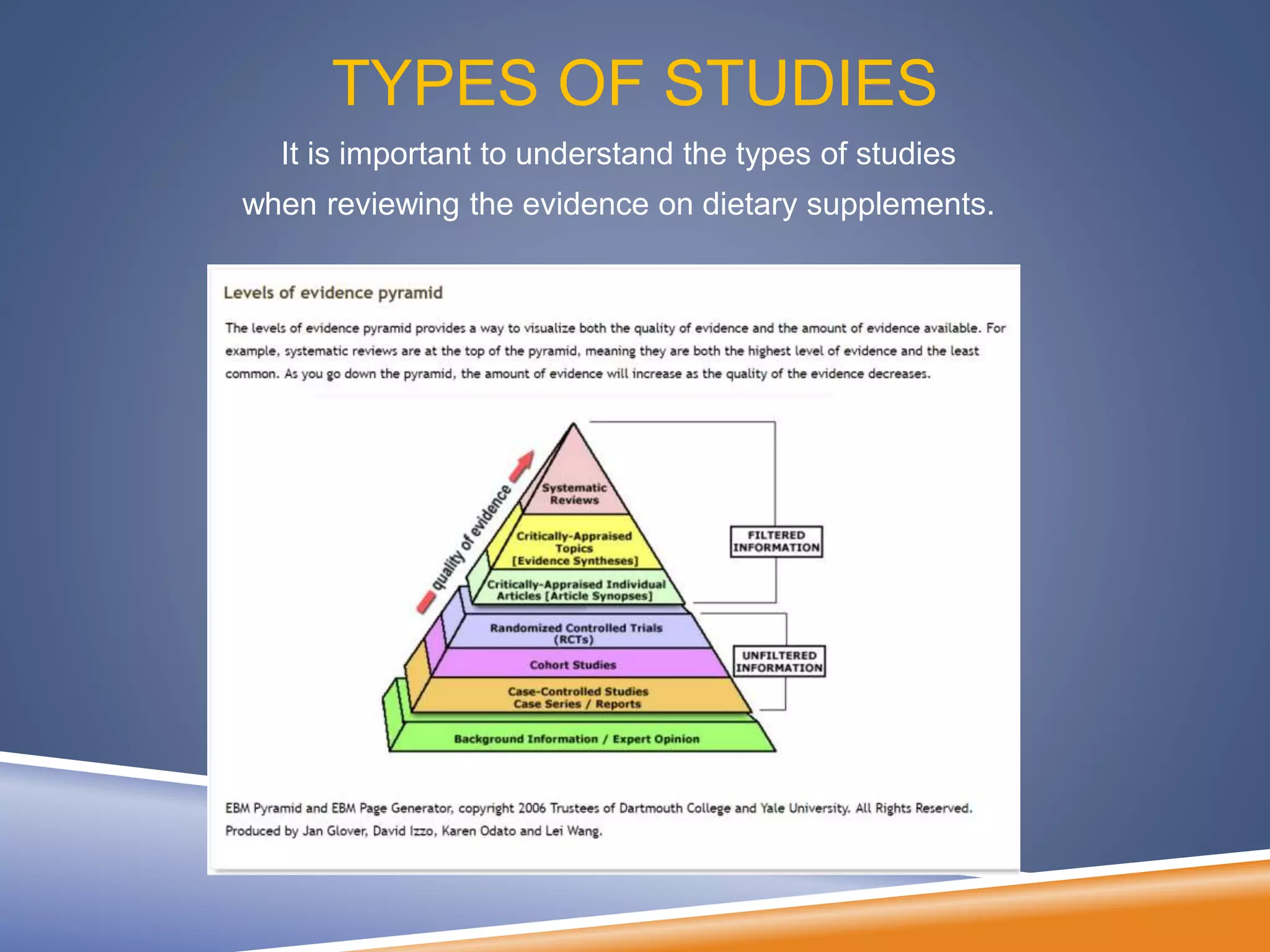
TYPES OF STUDIES
It is important to understand the types of studies
when reviewing the evidence on dietary supplements.
RESEARCH REVIEWS
 Systematic Reviews: A systematic review is a high-level overview of
primary research on a particular research question that
systematically identifies, selects, evaluates, and synthesizes all high
quality research evidence relevant to that question in order to answer
it. In other words, it provides an exhaustive summary of scholarly
literature related to a particular research topic or question.
 Meta-Analysis: Systematic reviews often use statistical techniques
to combine data from the examined individual research studies, and
use the pooled data to come to new statistical conclusions. This is
called meta-analysis, and it represents a specialized subset of
systematic reviews. Not all systematic reviews include meta-analysis,
but all meta-analyses are found in systematic reviews. Simply put, a
systematic review refers to the entire process of selecting,
evaluating, and synthesizing all available evidence, while the term
meta-analysis refers to the statistical approach to combining the data
derived from a systematic-review.
EXPERIMENTAL STUDIES
Randomized Controlled Trial (RCT)
Individuals meeting eligibility requirements are randomly assigned
into an experimental group or a control group. The experimental
intervention (protocol, method or treatment) and its alternative(s) are
clearly defined and their implementation is closely managed by the
researcher.
OBSERVATIONAL RESEARCH
Cohort Study:
 A study that involves the identification of a group (cohort) of
individuals with specific characteristics in common and follows
them over time to gather data about exposure to factors and the
development of the outcome of interest. Comparison groups can
be defined at the beginning or created later using data from the
study (e.g., age group, smokers/nonsmokers, amount of a specific
food group consumed).
 Prospective cohort studies enroll individuals and then collect data at many
intervals.
 Retrospective cohort studies use an existing longitudinal data set to look
back for a temporal relationship between exposure factors and outcome
development. In the medical field, many studies labeled a “population based
clinical study” could be classified as retrospective cohort studies.
SUMMARY OF EVIDENCE
BASED ON REPORTS OF U.S.
AGENCIES
ON HEALTH BENEFITS OF MVMSAlthough MVM supplementation can be effective in helping meet recommended levels of some
nutrients, the evidence has been mixed and insufficient in preventing chronic disease such as
CVD and Cancer.
 A 2013 systematic review by the US Preventive Services Task Force assessed MVM use in the
prevention of CVD in nutrient-sufficient adults and concluded that limited evidence supports any
benefit from MVMs for the prevention of cancer and CVD in general, but some evidence does
suggest a small benefit in cancer prevention in men (of the individual trials analyzed, two found
lower overall cancer incidence in men). The review included four trials and one cohort analysis
examining MVM use's effect on CVD, cancer, and mortality outcomes and harms. While study
authors found no evidence of an effect of nutritional doses of vitamins or minerals on CVD,
cancer, or mortality in healthy people without known nutrient deficiencies, they also noted that
in most cases data were insufficient to draw any conclusions.
 In 2007, a comprehensive evaluation of research by the World Cancer Research Fund and the
American Institute for Cancer Research recommended against the use of dietary supplements
for cancer prevention by the public because of the unpredictability of potential benefits and
risks, as well as the possibility of unexpected adverse events.
 In 2006, a National Institutes of Health State of- the-Science Panel reviewed evidence,
including an evidence-based review of literature that was limited to randomized controlled
studies, on the health benefits and risks of MVM supplements. The panel concluded that
evidence, at the time, was insufficient to determine whether or not taking MVM supplements
was beneficial in preventing chronic disease in generally healthy people.
doi: 10.1016/j.jada.2009.10.020
https://www.todaysdietitian.com/newarchives/1018p32.shtml
SUMMARY OF EVIDENCE:
SYSTEMATIC REVIEWS ON MVM AND
CVD The most recent data suggests that MVMs don't significantly improve CVD outcomes specifically.
A 2018 systematic review and meta-analysis of existing systematic reviews and meta-analyses
and single randomized controlled trials conducted between January 2012 and October 2017
found no consistent benefit between MVM use and the prevention of CVD, myocardial infarction,
stroke, or all-cause mortality during the study period.
 However, the researchers noted that long-term studies may be required to detect reductions in
CVD risk since chronic disease takes longer to develop compared with typical study follow-up
periods, and that the impact of any risk reduction in these diseases may be too low to be reflected
in all-cause mortality. The study authors concluded that "In the absence of further studies, the
current data on supplement use reinforce advice to focus on healthy dietary patterns, with an
increased proportion of plant foods in which many of these required vitamins and minerals can be
found.“
 Another 2018 systematic review and meta-analysis assessed associations between MVMs and
CVD outcomes and found no association between MVMs and CVD mortality, coronary heart
disease mortality, or stroke incidence. The analysis included 18 studies with an average
participant age of 57.8 years. Only five of the studies reported the type and ingredients used in
the MVMs, and only 11 of the 18 studies were from the United States, with an average follow-up
period of 11.6 years. Interestingly, the analysis found that MVMs were associated with lower risk
of coronary heart disease incidence in the studies outside the United States, but no benefit was
found among studies inside the United States. This could be due to the varying lifestyle habits
and dietary patterns of Americans compared with those from other countries included in the
analysis. Study authors also noted that most of the studies used questionnaires to assess MVM
use, which couldn't accurately analyze frequency, dosage, and compliance.
https://www.todaysdietitian.com/newarchives/1018p32.shtml
EVIDENCE ON HEALTH BENEFITS OF
MVMS: OBSERVATIONAL COHORT
STUDY The most recent cohort study was published in 2019 based on the NHANES (National
Health and Nutrition Examination Survey) data from 1999 to 2010, linked to National
Death Index mortality data. Participants consisted of 30 899 U.S. adults aged 20 years or
older who answered questions on dietary supplement use. Outcomes included mortality
from all causes, cardiovascular disease (CVD), and cancer.
 The study found that dietary supplement use was not associated with mortality
benefits in a nationally representative sample of U.S. adults.
 The study initially found that any supplement use, MVM supplement use, and
supplemental use of individual nutrients were each associated with lower risk for all cause
death after adjustment for age, sex, and race/ ethnicity. However, most of the
associations became statistically insignificant after additional adjustment for education
and lifestyle factors. These results suggest that supplement use itself does not have direct
health benefits. The apparent association between supplement use and lower mortality
may reflect confounding by higher socioeconomic status and healthy lifestyle factors that
are known to reduce mortality.
 The study results and those of others suggest that supplement users have higher levels of
education and income and a healthier lifestyle overall (for example, better diet, higher
levels of physical activity, no smoking or alcohol intake, and healthy weight) than
nonusers. In addition, this study and others found that supplement users had higher levels
of nutrient intake from foods alone than nonusers. Thus, supplement users may have
already had lower prevalence of nutrient inadequacy that contributed to lower mortality.
Chen F, Du M, Blumberg JB, Ho Chui KK, Ruan M, Rogers G, et al. Association Among Dietary Supplement Use, Nutrient
Intake, and Mortality Among U.S. Adults: A Cohort Study. Ann Intern Med. 2019;170:604–613. doi: 10.7326/M18-2478
EVIDENCE ON HEALTH BENEFITS OF
MVMS: OBSERVATIONAL STUDIES
 Most of the studies of the potential value of MVMs to enhance health and
prevent disease have been observational, which can only suggest an
association but do not prove a cause-effect relationship. Some have
suggested potential benefits or adverse effects, while others have found
none.
 One of the largest of the prospective observational studies included 161,808
postmenopausal women aged 50–79 years who were participating in the
Women's Health Initiative to study health and risks for cancer, heart disease,
and osteoporosis. Approximately 41.5% of the women took an MVM, but over
the median of 8 years of observation, the investigators found no association
between use of these products and the risk of any common cancer or total
cancers, cardiovascular disease, or total mortality.
 Similar results were reported by investigators who followed 182,099 men
and women aged 45–75 years living in Hawaii and California over an average
11 years of follow-up. Among this cohort of mostly African Americans, Native
Hawaiians, Japanese Americans, Latinos, and non-Hispanic whites,
approximately 48% of the men and 52% of the women reported taking a
multivitamin with or without minerals .
http://ods.od.nih.gov/factsheets/MVMS-
HealthProfessional/
EVIDENCE ON HEALTH BENEFITS OF
MVMS: RANDOMIZED CONTROLLED
TRIALS
 Randomized controlled trials are a superior study design to
investigate whether MVMs might affect disease risk, but few have
been conducted.
 The Physicians Health Study II (2015) was the longest clinical trial
to investigate whether MVMs might help prevent chronic disease.
The study randomly assigned 14,641 male physicians in the
United States aged 50 and older to take a daily MVM (Centrum
Silver®) or placebo and followed participants for a median of 11.2
years.
 Participants taking the MVM did not have fewer major
cardiovascular events, myocardial infarctions, strokes, or
cardiovascular-related deaths. However, MVM supplementation
modestly but significantly reduced their risk of developing cancer
by 8%, although it did not reduce the risk of prostate cancer or
overall cancer mortality.
http://ods.od.nih.gov/factsheets/MVMS-
HealthProfessional/
EVIDENCE ON HEALTH BENEFITS OF
MVMS (RANDOMIZED CONTROLLED
TRIALS)
 In the Age-Related Eye Disease Study, investigators randomly
assigned individuals with varying degrees of age-related macular
degeneration to receive a placebo or a daily supplement
containing high doses of vitamin C (500 mg), vitamin E (400
international units [IU]), beta-carotene (15 mg), zinc (80 mg), and
copper (2 mg). (These nutrients are present in most basic MVMs
but usually in substantially smaller amounts.)
 Over an average follow-up period of 6.3 years, the supplements
significantly reduced the risk of developing advanced-age–related
macular degeneration and reduced loss of visual acuity.
http://ods.od.nih.gov/factsheets/MVMS-
HealthProfessional/
EVIDENCE ON HEALTH BENEFITS OF
MVMS (RANDOMIZED CONTROLLED
TRIALS)
 A small randomized controlled trial in Sri Lankan adults with
diabetes found that using a specially prepared MVM with zinc for
4 months led to a significant reduction in fasting blood sugar and
glycosylated hemoglobin compared to individuals who received
either a placebo or the MVM without zinc.
 The MVM contained moderate amounts of various vitamins and
minerals, including 22 mg zinc. However, a large prospective
study, observational in nature, found no association between
MVM use among adults aged 50–71 years and risk of developing
diabetes.
http://ods.od.nih.gov/factsheets/MVMS-
HealthProfessional
SUMMARY OF EVIDENCE
 Because people with healthier diets and lifestyles are more likely
to use dietary supplements, attributing potential health benefits
that are distinct from the proven and predictable benefits of
health-promoting behaviors to the use of supplements is difficult.
 Furthermore, whether studies find any benefits (or risks) depends
on the combinations and amounts of nutrients in the MVMs used
as well as the populations studied and duration of follow-up, and
these results are not generalizable to the enormous variety of
MVMs available in the marketplace.
http://ods.od.nih.gov/factsheets/MVMS-
HealthProfessional
SPECIAL CONSIDERATIONS FOR
CERTAIN POPULATION GROUPS
 Although MVMs do not appear to reduce overall chronic disease
risk, MVMs might benefit certain population groups.
 Women of childbearing age who might become pregnant should obtain 400
mcg/day of synthetic folic acid from fortified foods or dietary supplements
(prenatal vitamins). Taking sufficient amounts of folic acid in the first month of
pregnancy (a time when many women do not yet know that they are
pregnant) reduces the risk of neural tube defects in newborns .
 According to the American Academy of Pediatrics, children at nutritional risk
who might benefit from supplementation include those who have anorexia or
an inadequate appetite, follow fad diets, have chronic disease, come from
deprived families or suffer parental neglect or abuse, consume a vegetarian
diet without adequate dairy products, and have failure to thrive.
http://ods.od.nih.gov/factsheets/MVMS-
HealthProfessional
POTENTIAL BENEFITS OF DIETARY
SUPPLEMENTS FOR CERTAIN
POPULATION GROUPS
 Vitamin B12 for people older than 50 years of age due to impaired
absorption
 Vitamin B12 for strict vegans who eat no animal products
 Calcium for people who have a low intake of dairy products or
other calcium fortified products
 Vitamin D for breast fed infants, dark skinned individuals and for
people who do not consume fortified products and have little
exposure to sunlight
 Iron and folate for pregnant women
SAFETY ISSUES
 Taking a basic MVM that provides nutrients approximating
recommended intakes should pose no safety risks to healthy
people. However, individuals who take MVMs and other
supplements and who eat fortified foods and beverages might
consume some nutrients at levels exceeding the UL, increasing
the possibility of adverse effects.
 This can also be a concern for people taking MVMs that contain
some vitamins or minerals at doses approaching or exceeding the
UL.
http://ods.od.nih.gov/factsheets/MVMS-
HealthProfessional
SAFETY ISSUES
 Smokers and, possibly, former smokers should avoid MVM products
providing large amounts of beta-carotene or vitamin A because two studies
have linked these nutrients to an increased risk of lung cancer in smokers.
 Taking excess vitamin A (as preformed retinol but not beta-carotene) during
pregnancy can increase the risk of birth defects in infants. The vitamin A UL
during pregnancy is 9,240 IU/day for adolescents and 10,000 IU/day for adult
women.
 Unless a physician diagnoses iron deficiency or inadequacy, adult males
should avoid taking MVMs containing the DV for iron. At 18 mg, this amount
is more than twice their RDA of 8 mg/day. Postmenopausal women, for whom
the RDA for iron is also 8 mg/day, should also avoid MVMs containing the DV
for iron unless a physician recommends otherwise.
 Iron supplements are a leading cause of poisoning in children until age 6
years, so parents and guardians should keep iron-containing supplements
out of children's reach.
http://ods.od.nih.gov/factsheets/MVMS-
INTERACTIONS WITH MEDICATIONS
 MVMs providing nutrients at recommended intake levels do not
ordinarily interact with medications, with one important exception.
People who take medicines to reduce blood clotting, such as
warfarin (Coumadin®), should talk with their health care providers
before taking any MVM or dietary supplement containing vitamin
K.
 Vitamin K is involved in blood clotting and decreases the
effectiveness of warfarin and similar drugs. The dose of
medication is determined in part by the amount of vitamin K
routinely consumed.
http://ods.od.nih.gov/factsheets/MVMS-HealthProfessional
GUIDELINES FOR SELECTING AN MVM
 When choosing an MVM product, people should try to find one
tailored to their age, gender, and other characteristics (e.g.,
pregnancy). MVMs for men often contain little or no iron, for example,
whereas those for seniors typically provide more calcium and
vitamins D and B12 than MVMs for younger adults.
 MVMs come in a variety of nutrient levels. Due to possible excess in
nutrients, review the content of all nutrients in an MVM and be
cautious of taking any MVM that exceeds 200% of the DV% of any
nutrient that has a UL.
 An in-depth assessment of food intake and laboratory levels of
nutrients should be conducted before prescribing any dietary
supplements.
 In many cases, prescribing single nutrient supplements may be more
appropriate than prescribing an MVM to due the risk of exceeding the
UL for certain nutrients.
SUMMARY GUIDELINES
 No U.S. government health agency, private health group, or health
professional organization promotes regular use of an MVM or
individual nutrients without considering first the quality of a person's
diet.
 However, individuals with poor nutrient intakes from diet alone, who
consume low-calorie diets, or who avoid certain foods (such as strict
vegetarians and vegans) might benefit from taking MVMs or single
nutrient supplements.
 Health care providers sometimes prescribe MVMs for people with
medical conditions and diseases that impair digestion, absorption, or
use of nutrients.
 In general, supplements may help people who do not eat a nutritious
variety of foods to obtain adequate amounts of essential nutrients.
However, supplements cannot take the place of the variety of foods
that are important to a healthy diet.

Dietary supplement module 2.rev.2019

  • 1.
  • 2.
    KEY OBJECTIVES  Definemulti-vitamin/mineral (MVM) supplement  Assess current intake of nutrients by food in adults and children  Identify nutrients of concern in adults and children based on current food intake  Understand how to interpret the label on a multi-vitamin/mineral supplement based on the Daily Values  Determine if MVM's cover the gaps in nutrient deficiencies in adults and children  Review the evidence surrounding MVM use and health benefits
  • 3.
    DEFINITION OF MULTI- VITAMIN/MINERAL Theterm MVM refers to any supplement containing three or more vitamins and minerals but no herbs, hormones, or drugs, with each component at a dose less than the tolerable upper level determined by the Food and Nutrition Board—the maximum daily intake likely to pose no risk for adverse health effects. NIH State-of-the-Science Conference Statement on Multivitamin/Mineral Supplements and Chronic Disease Prevention. Ann Intern Med. 2006; 145:364–371.
  • 4.
    HISTORY OF MVM The word vitamine was coined in 1912, as an abbreviated term meant to capture the notion of important factors in the diet, or “vital amines.”  In 1913, the first vitamin was isolated: thiamin, the deficiency of which caused beriberi. Thirteen vitamins and 15 essential minerals have now been identified as important to human nutrition.  Multivitamin/multimineral products providing more than vitamins A and D became available in pharmacies and grocery stores in the mid-1930s. In the early 1940s, the first MVM tablet was introduced. NIH State-of-the-Science Conference Statement on Multivitamin/Mineral Supplements and Chronic Disease Prevention. Ann Intern Med. 2006; 145:364–371.
  • 5.
    MULTI VITAMINS ANDMINERALS  Americans have been taking multivitamin/mineral (MVM) supplements since the early 1940s, when the first such products became available. Use of multivitamins/minerals (MVMs) has grown rapidly over the past several decades and is the major category of supplements.  MVMs account for almost one-sixth of all purchases of dietary supplements and 40% of all sales of vitamin and mineral supplements.  Research has shown that more than one-third of Americans take MVMs. About one in four young children takes an MVM, but adolescents are least likely to take them. Use increases with age during adulthood so that by age 71 years, more than 40% take an MVM.  Sales of all dietary supplements in the United States totaled an estimated $36.7 billion in 2014. This amount included $14.3 billion for all vitamin- and mineral-containing supplements, of which $5.7 billion was for MVMs. https://ods.od.nih.gov/factsheets/MVMS-HealthProfessional/
  • 6.
    MOST COMMON MVM Among the most common MVMs are basic, once-daily products containing all or most vitamins and minerals, with the majority in amounts that are close to recommended amounts. Higher-potency MVMs often come in packs of two or more pills to take each day.  Manufacturers promote other MVMs for special purposes, such as better performance or energy, weight control, or improved immunity. These products usually contain herbal and other ingredients (such as echinacea and glucosamine) in addition to vitamins and minerals. Source: ODS
  • 7.
    CONCERNS WITH MVMUSE  Despite the widespread use of MVMs, we still have insufficient knowledge about the actual amount of total nutrients that Americans consume from diet and supplements.  This is at least in part due to the fortification of foods with these nutrients, which adds to the effects of MVMs or single-vitamin or single-mineral supplements.  Historically, fortification of foods has led to the remediation of vitamin and mineral deficits, but the cumulative effects of supplementation and fortification have also raised safety concerns about exceeding upper levels. NIH State-of-the-Science Conference Statement on Multivitamin/Mineral Supplements and Chronic Disease Prevention. Ann Intern Med. 2006; 145:364–371.
  • 8.
    CONCERNS WITH MVMUSE Taking an MVM increases nutrient intakes and helps people get the recommended amounts of vitamins and minerals when they cannot or do not meet these needs from food alone. But taking an MVM can also raise the chances of getting too much of some nutrients, like iron, vitamin A, zinc, niacin, and folic acid, especially when a person uses more than a basic, once-daily product NIH State-of-the-Science Conference Statement on Multivitamin/Mineral Supplements and Chronic Disease Prevention. Ann Intern Med. 2006; 145:364–371.
  • 9.
    CONCERNS WITH MVM Thecurrent level of public assurance of the safety and quality of MVMs is inadequate, given the fact that manufacturers of these products are not required to report adverse events and the FDA has no regulatory authority to require labeling changes or to help inform the public of these issues and concerns. NIH State-of-the-Science Conference Statement on Multivitamin/Mineral Supplements and Chronic Disease Prevention. Ann Intern Med. 2006; 145:364–371.
  • 10.
    DIETARY GAPS  ManyAmericans do not consume the amount and types of foods necessary to meet recommended micronutrient intakes. Adherence to the USDA Dietary Guidelines is low; only about 3% to 4% of Americans follow all of the guidelines.  As a result of low intakes of nutrient-rich foods and sedentary lifestyles, many Americans may be meeting or exceeding their energy requirements while falling short of vitamin and mineral recommendations.  In assessing the diets of population groups, the proportion with intakes less than recommended amounts are interpreted as estimates of the prevalence of inadequacy. doi: 10.1016/j.jada.2009.10.020
  • 11.
  • 12.
    BASED ON CURRENTINTAKE OF ADULTS AND CHILDREN  Nutrients of public health concern  Potassium  Fiber  Calcium  Vitamin D  Iron (for women of childbearing age) 2015 USDA Dietary Guidelines
  • 13.
    OPTIMAL NUTRIENT RECOMMENDATIONS  Optimalnutrient intakes are those that promote health and reduce risk for chronic disease while minimizing risk of excess. The Institute of Medicine’s (IOM’s) Dietary Reference Intakes (DRIs) are the best available evidence-based nutrient standards for estimating optimal intakes. Dietary Reference Intake include:  Estimated Average Requirements (EARs)  Recommended Dietary Allowances (RDAs)  Adequate Intakes(AIs)  Tolerable Upper Intake Levels (ULs)  Acceptable Macronutrient Distribution Ranges (AMDR) Grodner M. Nutritional Foundations and Clinical Applications, 6th Edition
  • 14.
    DIETARY REFERENCE INTAKES TERMS Estimated Average Requirements (EARs): average daily nutrient intake level that is estimated to meet the requirements of half of the healthy individuals in a particular life stage and gender group The EAR considers deficiency and physiologic functions. Public health nutrition researchers primarily use the EAR to determine the basis for establishing the RDA.  Recommended Dietary Allowances (RDAs): the average daily dietary nutrient intake level that is sufficient to meet the nutrient requirements of nearly all (97% to 98%) healthy individuals in a particular life stage and gender group. The purpose is to supply adequate nutrient intake to decrease the risk of chronic disease. The RDA is based on the EARs for that nutrient plus an additional amount (two standard deviations) to provide for the particular need of each group. Some nutrients do not have an RDA but have an AI level. 2015 Dietary Guidelines Grodner M. Nutritional Foundations and Clinical Applications, 6th Edition
  • 15.
    DIETARY REFERENCE INTAKES TERMS Adequate Intakes(AIs): based on observed or experimentally determined approximations or estimates of nutrient intake by a group (or groups) of apparently healthy people that are assumed to be adequate. The AI is used when there in insufficient data to set an RDA.  Tolerable Upper Intake Level (UL): is the level of nutrient intake that should not be exceeded to prevent adverse health risks. This amount includes total consumption from foods, fortified foods, and supplements. The UL is not a recommended level of intake but a safety boundary of total consumption. The ULs exist only for nutrients of which adverse risks are known. 2015 Dietary Guidelines Grodner M. Nutritional Foundations and Clinical Applications, 6th Edition
  • 16.
    Nutrient Recommended DailyAmount (RDA) Potassium 4,700 mg Fiber 25 grams (g) for women 38 g for men Magnesium 320 mg for women 420 mg for men Vitamin A 2,310 international units (IU) for women 3,000 IU for men Vitamin C 75 mg for women 90 mg for men Vitamin E 15 mg According to the U.S. Department of Agriculture (USDA), certain adult Americans may not get enough of the following nutrients: http://familydoctor.org/familydoctor/en/prevention-wellness/food- nutrition/nutrients/dietary-supplements-what-you-need-to-know.html
  • 17.
    Nutrient Recommended Daily Amount(RDA) Calcium 1,000 mg 1,200 mg - Women >51 years 1,200 mg - Men >70 years Folate 400 mcg Iron 8 mg 18 mg - Women (19-50 years) Vitamin B12 2.4 mcg Vitamin D 600 IU 800 IU - Men and women >70 years According to the U.S. Department of Agriculture (USDA), certain adult Americans may not get enough of the following nutrients:
  • 22.
    DIETARY REFERENCE INTAKES TERMS Acceptable Macronutrient Distribution Ranges (AMDR): are daily percent energy intake values for the macronutrients of fat, carbohydrates and protein. For these energy yielding nutrients the following adult daily intake ranges are set to provide adequate energy and nutrients while offering reduced risk of chronic disorders:  45% to 65% of kcal intake from carbohydrates  20% to 35% of kcal intake from fat  10% to 35%of kcal intake from protein  The DRIs are designed to meet the needs of most healthy individuals. Individuals generally use the RDAs and AIs when assessing their nutrient intakes from food and supplements. These levels may not be adequate to replete individuals who are malnourished . In addition, levels higher, or lower, than recommended levels may be necessary to meet the needs of people with specific health conditions or who take medications that alter their requirement for a nutrient. Grodner M. Nutritional Foundations and Clinical Applications, 6th Edition
  • 23.
    DAILY VALUES (DV) Daily Values (DVs): Daily Values is a system for food and supplement labeling comprised of two sets of reference values for reporting nutrients in nutrition labels—the Daily Reference Values (DRVs) and the Reference Daily Intakes (RDIs). To limit consumer confusion, the single term “Daily Value” is used to designate both the DRVs and RDIs. The DVs are used to calculate the % Daily Values that consumers see on the Nutrition and Supplement Facts labels. The % of DVs information can be based on a 2000 or 2500 calorie diet, is intended to show consumers how much of a day’s ideal intake of a particular nutrient they are eating.  The % Daily Value helps consumers understand how the amount of a nutrient that is present in a serving of a food fits into their total daily diet, and allows them to compare the nutritional value of food products.  The FDA has established four sets of Daily Values (DVs) for labeling of foods and dietary supplements: adults and children 4 years and older, children 1 through 3 years, infants 1 through 12 months, and pregnant and lactating women. In establishing these DVs, the FDA selects the highest RDA value established by the National Academies of Sciences, Engineering and Medicine's Food and Nutrition Board (FNB) within each of these four age and condition groups.
  • 24.
    LABEL CHANGES TOTHE SUPPLEMENTS FACTS PANEL  On May 20, 2016, the FDA announced the new Nutrition Facts label and changes to the Supplements Facts Panel to reflect new scientific information, including the link between diet and chronic diseases such as obesity and heart disease. The new label will make it easier for consumers to make more informed choices.  Manufacturers still have time to begin using the new and improved Nutrition Facts label, so you will see both label versions for a while. Manufacturers with $10 million or more in annual food sales have until 2020 before the new label is required, and manufacturers with less than $10 million in annual food sales will have until 2021. https://www.fda.gov/food/food-labeling-nutrition/nutrition- education-resources-materials
  • 25.
  • 26.
    DAILY VALUES ANDCHANGES TO THE SUPPLEMENTS LABEL  Updated Reference Values Used to Determine % DV The final rule also updates reference values used to determine DVs for several vitamins, minerals, and macronutrients. Since the implementation of the original food label in 1993, several changes in nutrient recommendations have been released; these had not been reflected on the label, so the new label provides an update of these recommendations.  The old DVs were based on Adults and Children ≥ 4 years old. The FDA’s final rule also set DVs specifically for foods and supplements marketed to infants through 12 months, children aged 1 to 3, and pregnant and lactating women. This means that the food or supplement label marketed specifically to children aged 1 to 3, for example, will have % DVs specific to these age groups  The table on the text slide includes changes related to reference values for labeling nutrients. Of note, the DV has increased for potassium from 3,500 mg to 4,700 mg. Also, some reference values related to certain voluntary nutrients also were changed. For example, the DV for Vitamin K increased from 80 mcg to 120 mcg for adults and children aged 4 and older. http://www.fda.gov/Food/GuidanceRegulation/GuidanceDocumentsRegulatoryInformation/La belingNutrition/ucm064930.htm
  • 27.
    Table of DailyValue Changes https://www.watson- inc.com/education- library/nutrition-facts-label- changes/
  • 29.
    Vitamin or Mineral Infants Lessthan 4 Years Pregnant and Lactating Women Units of Measure Vitamin A 1,500 2,500 8,000 IU Vitamin C 35 40 60 mg Calcium 600 800 1,300 mg Iron 15 10 18 mg Vitamin D 400 400 400 IU Vitamin E 5 10 30 IU Thiamin 0.5 0.7 1.7 mg Riboflavin 0.6 0.8 2.0 mg Niacin 8 9 20 mg Vitamin B6 0.4 0.7 2.5 mg Folate 100 200 800 mcg Vitamin B12 2 3 8 mcg Biotin 50 150 300 mcg Pantothenic acid 3 5 10 mg Phosphorus 500 800 1,300 mg Iodine 45 70 150 mcg Magnesium 70 200 450 mg Zinc 5 8 15 mg Copper 0.6 1.0 2.0 mg DAILY VALUES FOR CHILDREN LESS THAN 4 YEARS OF AGE AND PREGNANT WOMEN http://www.fda.gov/Food/GuidanceRegulation/GuidanceDocumentsRegulatoryInformation/LabelingNutrition/ucm064930.htm
  • 31.
    TYPES OF MVM’S MVMCategories:  Many are once-daily MVMs that contain all or most of the recognized vitamins and minerals, generally at levels close to the Daily Values (DVs) or Recommended Dietary Allowances (RDAs) or Adequate Intakes (AIs) for these nutrients.1 Formulations for children, adults, men, women, pregnant women, and seniors typically provide different amounts of the same vitamins and minerals based on the specific needs of these populations.  Some MVMs contain levels of certain vitamins and minerals that are substantially higher than the DV, RDA, AI, and even, in some cases, the established tolerable upper intake level (UL).These MVMs might also include other nutritional and herbal ingredients. Manufacturers sometimes offer these MVMs in packages or packs of two or more pills that users are supposed to take each day.  Specialized MVMs—such as those for enhanced performance or energy, weight control, improved immune function, or management of menopause symptoms—often include vitamins and minerals in combination with herbal and specialty ingredients, such as sterols, coenzyme Q10, probiotics, and glucosamine. A few nutrients might be present at levels substantially above the DV, RDA, AI and, in some cases, the UL. Diet & Nutrition Supplement PaperArticlesArticlesMultivitamin-mineral Supplements — Health Professional Fact Sheet.mht
  • 32.
    One Example OfA Typical MVM ONE A DAY® Women Formula
  • 33.
    COVERING DIETARY GAPS When taken regularly, MVMs can be an effective way to increase nutrient intakes to meet recommended levels of multiple nutrients. The extent to which a MVM can improve nutrient adequacy is impacted by the nutrient profile of the supplement taken.  Of the nutrients previously identified as being low enough in diets to be of concern, MVM supplements have been shown to decrease the prevalence of nutrient inadequacy most notably for vitamin E, vitamin A, zinc, and vitamin B-6. doi: 10.1016/j.jada.2009.10.020
  • 34.
    COVERING DIETARY GAPS MVMs are less likely to substantially increase intakes of key nutrients such as calcium, magnesium, and potassium. Increasing consumption of foods rich in these nutrients will still be necessary to meet recommended amounts.  In some cases such as with calcium, an additional supplement may be considered to help meet recommended intakes, particularly in at risk groups (eg, older adults) where supplementation has been shown to have positive outcomes. doi: 10.1016/j.jada.2009.10.020
  • 35.
    EXCEEDING ULS  AlthoughMVMs can improve the intake adequacy of various nutrients, they can also increase the likelihood that users will have intakes of other nutrients at levels that are higher than ULs. Results from several studies exemplify both the issues of nutritional insurance for some individuals and the concern of excessive intakes for others.  There is potential for supplement users to exceed the ULs of some nutrients when they take high dose supplements or multiple products with the same ingredients, and even when MVMs are taken along with a diet rich in fortified foods. As daily intakes exceed the UL, risk of adverse health effects increase. doi: 10.1016/j.jada.2009.10.020
  • 36.
    SUMMARY OF EVIDENCEIN COVERING THE GAPS IN CHILDREN  National survey of infants and children younger than 4 years, found that usual nutrient intakes from food alone were adequate for most of the infants and children. However, the results showed inadequate intakes of iron and zinc in a small subset of older infants and for vitamin E and potassium in a sizeable proportion of young children.  Although supplements would help reduce the prevalence of these inadequacies, use of supplements tended to push intakes of some nutrients— particularly vitamin A, folic acid, and (for the older preschool children) zinc—over the UL.  The investigators advised parents not to give young children dietary supplements or fortified foods containing high levels of vitamin A and zinc. http://ods.od.nih.gov/factsheets/MVMS-HealthProfessional/
  • 37.
    SUMMARY OF EVIDENCEIN COVERING THE GAPS IN ADULTS  In the Hawaii Los Angeles Multiethnic Cohort 1999-2001, the nutrients identified as those most likely to exceed the ULs were: iron, zinc, vitamin A, and niacin.  Approximately three-quarters of participants had adequate intakes from food alone, but use of multivitamins increased the prevalence of adequacy by an average of eight percentage points for both men and women. The greatest improvements in intake were for vitamin E, vitamin A, and zinc.  However, the prevalence of potentially excessive intakes among the MVM users was 10%–15% for vitamin A, iron, and zinc and 48%– 61% for niacin.  The investigators concluded that MVMs "could be better formulated to target public health concerns." http://ods.od.nih.gov/factsheets/MVMS-HealthProfessional/
  • 38.
    TYPES OF STUDIES Itis important to understand the types of studies when reviewing the evidence on dietary supplements.
  • 40.
    RESEARCH REVIEWS  SystematicReviews: A systematic review is a high-level overview of primary research on a particular research question that systematically identifies, selects, evaluates, and synthesizes all high quality research evidence relevant to that question in order to answer it. In other words, it provides an exhaustive summary of scholarly literature related to a particular research topic or question.  Meta-Analysis: Systematic reviews often use statistical techniques to combine data from the examined individual research studies, and use the pooled data to come to new statistical conclusions. This is called meta-analysis, and it represents a specialized subset of systematic reviews. Not all systematic reviews include meta-analysis, but all meta-analyses are found in systematic reviews. Simply put, a systematic review refers to the entire process of selecting, evaluating, and synthesizing all available evidence, while the term meta-analysis refers to the statistical approach to combining the data derived from a systematic-review.
  • 41.
    EXPERIMENTAL STUDIES Randomized ControlledTrial (RCT) Individuals meeting eligibility requirements are randomly assigned into an experimental group or a control group. The experimental intervention (protocol, method or treatment) and its alternative(s) are clearly defined and their implementation is closely managed by the researcher.
  • 42.
    OBSERVATIONAL RESEARCH Cohort Study: A study that involves the identification of a group (cohort) of individuals with specific characteristics in common and follows them over time to gather data about exposure to factors and the development of the outcome of interest. Comparison groups can be defined at the beginning or created later using data from the study (e.g., age group, smokers/nonsmokers, amount of a specific food group consumed).  Prospective cohort studies enroll individuals and then collect data at many intervals.  Retrospective cohort studies use an existing longitudinal data set to look back for a temporal relationship between exposure factors and outcome development. In the medical field, many studies labeled a “population based clinical study” could be classified as retrospective cohort studies.
  • 43.
    SUMMARY OF EVIDENCE BASEDON REPORTS OF U.S. AGENCIES ON HEALTH BENEFITS OF MVMSAlthough MVM supplementation can be effective in helping meet recommended levels of some nutrients, the evidence has been mixed and insufficient in preventing chronic disease such as CVD and Cancer.  A 2013 systematic review by the US Preventive Services Task Force assessed MVM use in the prevention of CVD in nutrient-sufficient adults and concluded that limited evidence supports any benefit from MVMs for the prevention of cancer and CVD in general, but some evidence does suggest a small benefit in cancer prevention in men (of the individual trials analyzed, two found lower overall cancer incidence in men). The review included four trials and one cohort analysis examining MVM use's effect on CVD, cancer, and mortality outcomes and harms. While study authors found no evidence of an effect of nutritional doses of vitamins or minerals on CVD, cancer, or mortality in healthy people without known nutrient deficiencies, they also noted that in most cases data were insufficient to draw any conclusions.  In 2007, a comprehensive evaluation of research by the World Cancer Research Fund and the American Institute for Cancer Research recommended against the use of dietary supplements for cancer prevention by the public because of the unpredictability of potential benefits and risks, as well as the possibility of unexpected adverse events.  In 2006, a National Institutes of Health State of- the-Science Panel reviewed evidence, including an evidence-based review of literature that was limited to randomized controlled studies, on the health benefits and risks of MVM supplements. The panel concluded that evidence, at the time, was insufficient to determine whether or not taking MVM supplements was beneficial in preventing chronic disease in generally healthy people. doi: 10.1016/j.jada.2009.10.020 https://www.todaysdietitian.com/newarchives/1018p32.shtml
  • 44.
    SUMMARY OF EVIDENCE: SYSTEMATICREVIEWS ON MVM AND CVD The most recent data suggests that MVMs don't significantly improve CVD outcomes specifically. A 2018 systematic review and meta-analysis of existing systematic reviews and meta-analyses and single randomized controlled trials conducted between January 2012 and October 2017 found no consistent benefit between MVM use and the prevention of CVD, myocardial infarction, stroke, or all-cause mortality during the study period.  However, the researchers noted that long-term studies may be required to detect reductions in CVD risk since chronic disease takes longer to develop compared with typical study follow-up periods, and that the impact of any risk reduction in these diseases may be too low to be reflected in all-cause mortality. The study authors concluded that "In the absence of further studies, the current data on supplement use reinforce advice to focus on healthy dietary patterns, with an increased proportion of plant foods in which many of these required vitamins and minerals can be found.“  Another 2018 systematic review and meta-analysis assessed associations between MVMs and CVD outcomes and found no association between MVMs and CVD mortality, coronary heart disease mortality, or stroke incidence. The analysis included 18 studies with an average participant age of 57.8 years. Only five of the studies reported the type and ingredients used in the MVMs, and only 11 of the 18 studies were from the United States, with an average follow-up period of 11.6 years. Interestingly, the analysis found that MVMs were associated with lower risk of coronary heart disease incidence in the studies outside the United States, but no benefit was found among studies inside the United States. This could be due to the varying lifestyle habits and dietary patterns of Americans compared with those from other countries included in the analysis. Study authors also noted that most of the studies used questionnaires to assess MVM use, which couldn't accurately analyze frequency, dosage, and compliance. https://www.todaysdietitian.com/newarchives/1018p32.shtml
  • 45.
    EVIDENCE ON HEALTHBENEFITS OF MVMS: OBSERVATIONAL COHORT STUDY The most recent cohort study was published in 2019 based on the NHANES (National Health and Nutrition Examination Survey) data from 1999 to 2010, linked to National Death Index mortality data. Participants consisted of 30 899 U.S. adults aged 20 years or older who answered questions on dietary supplement use. Outcomes included mortality from all causes, cardiovascular disease (CVD), and cancer.  The study found that dietary supplement use was not associated with mortality benefits in a nationally representative sample of U.S. adults.  The study initially found that any supplement use, MVM supplement use, and supplemental use of individual nutrients were each associated with lower risk for all cause death after adjustment for age, sex, and race/ ethnicity. However, most of the associations became statistically insignificant after additional adjustment for education and lifestyle factors. These results suggest that supplement use itself does not have direct health benefits. The apparent association between supplement use and lower mortality may reflect confounding by higher socioeconomic status and healthy lifestyle factors that are known to reduce mortality.  The study results and those of others suggest that supplement users have higher levels of education and income and a healthier lifestyle overall (for example, better diet, higher levels of physical activity, no smoking or alcohol intake, and healthy weight) than nonusers. In addition, this study and others found that supplement users had higher levels of nutrient intake from foods alone than nonusers. Thus, supplement users may have already had lower prevalence of nutrient inadequacy that contributed to lower mortality. Chen F, Du M, Blumberg JB, Ho Chui KK, Ruan M, Rogers G, et al. Association Among Dietary Supplement Use, Nutrient Intake, and Mortality Among U.S. Adults: A Cohort Study. Ann Intern Med. 2019;170:604–613. doi: 10.7326/M18-2478
  • 46.
    EVIDENCE ON HEALTHBENEFITS OF MVMS: OBSERVATIONAL STUDIES  Most of the studies of the potential value of MVMs to enhance health and prevent disease have been observational, which can only suggest an association but do not prove a cause-effect relationship. Some have suggested potential benefits or adverse effects, while others have found none.  One of the largest of the prospective observational studies included 161,808 postmenopausal women aged 50–79 years who were participating in the Women's Health Initiative to study health and risks for cancer, heart disease, and osteoporosis. Approximately 41.5% of the women took an MVM, but over the median of 8 years of observation, the investigators found no association between use of these products and the risk of any common cancer or total cancers, cardiovascular disease, or total mortality.  Similar results were reported by investigators who followed 182,099 men and women aged 45–75 years living in Hawaii and California over an average 11 years of follow-up. Among this cohort of mostly African Americans, Native Hawaiians, Japanese Americans, Latinos, and non-Hispanic whites, approximately 48% of the men and 52% of the women reported taking a multivitamin with or without minerals . http://ods.od.nih.gov/factsheets/MVMS- HealthProfessional/
  • 47.
    EVIDENCE ON HEALTHBENEFITS OF MVMS: RANDOMIZED CONTROLLED TRIALS  Randomized controlled trials are a superior study design to investigate whether MVMs might affect disease risk, but few have been conducted.  The Physicians Health Study II (2015) was the longest clinical trial to investigate whether MVMs might help prevent chronic disease. The study randomly assigned 14,641 male physicians in the United States aged 50 and older to take a daily MVM (Centrum Silver®) or placebo and followed participants for a median of 11.2 years.  Participants taking the MVM did not have fewer major cardiovascular events, myocardial infarctions, strokes, or cardiovascular-related deaths. However, MVM supplementation modestly but significantly reduced their risk of developing cancer by 8%, although it did not reduce the risk of prostate cancer or overall cancer mortality. http://ods.od.nih.gov/factsheets/MVMS- HealthProfessional/
  • 48.
    EVIDENCE ON HEALTHBENEFITS OF MVMS (RANDOMIZED CONTROLLED TRIALS)  In the Age-Related Eye Disease Study, investigators randomly assigned individuals with varying degrees of age-related macular degeneration to receive a placebo or a daily supplement containing high doses of vitamin C (500 mg), vitamin E (400 international units [IU]), beta-carotene (15 mg), zinc (80 mg), and copper (2 mg). (These nutrients are present in most basic MVMs but usually in substantially smaller amounts.)  Over an average follow-up period of 6.3 years, the supplements significantly reduced the risk of developing advanced-age–related macular degeneration and reduced loss of visual acuity. http://ods.od.nih.gov/factsheets/MVMS- HealthProfessional/
  • 49.
    EVIDENCE ON HEALTHBENEFITS OF MVMS (RANDOMIZED CONTROLLED TRIALS)  A small randomized controlled trial in Sri Lankan adults with diabetes found that using a specially prepared MVM with zinc for 4 months led to a significant reduction in fasting blood sugar and glycosylated hemoglobin compared to individuals who received either a placebo or the MVM without zinc.  The MVM contained moderate amounts of various vitamins and minerals, including 22 mg zinc. However, a large prospective study, observational in nature, found no association between MVM use among adults aged 50–71 years and risk of developing diabetes. http://ods.od.nih.gov/factsheets/MVMS- HealthProfessional
  • 50.
    SUMMARY OF EVIDENCE Because people with healthier diets and lifestyles are more likely to use dietary supplements, attributing potential health benefits that are distinct from the proven and predictable benefits of health-promoting behaviors to the use of supplements is difficult.  Furthermore, whether studies find any benefits (or risks) depends on the combinations and amounts of nutrients in the MVMs used as well as the populations studied and duration of follow-up, and these results are not generalizable to the enormous variety of MVMs available in the marketplace. http://ods.od.nih.gov/factsheets/MVMS- HealthProfessional
  • 51.
    SPECIAL CONSIDERATIONS FOR CERTAINPOPULATION GROUPS  Although MVMs do not appear to reduce overall chronic disease risk, MVMs might benefit certain population groups.  Women of childbearing age who might become pregnant should obtain 400 mcg/day of synthetic folic acid from fortified foods or dietary supplements (prenatal vitamins). Taking sufficient amounts of folic acid in the first month of pregnancy (a time when many women do not yet know that they are pregnant) reduces the risk of neural tube defects in newborns .  According to the American Academy of Pediatrics, children at nutritional risk who might benefit from supplementation include those who have anorexia or an inadequate appetite, follow fad diets, have chronic disease, come from deprived families or suffer parental neglect or abuse, consume a vegetarian diet without adequate dairy products, and have failure to thrive. http://ods.od.nih.gov/factsheets/MVMS- HealthProfessional
  • 52.
    POTENTIAL BENEFITS OFDIETARY SUPPLEMENTS FOR CERTAIN POPULATION GROUPS  Vitamin B12 for people older than 50 years of age due to impaired absorption  Vitamin B12 for strict vegans who eat no animal products  Calcium for people who have a low intake of dairy products or other calcium fortified products  Vitamin D for breast fed infants, dark skinned individuals and for people who do not consume fortified products and have little exposure to sunlight  Iron and folate for pregnant women
  • 53.
    SAFETY ISSUES  Takinga basic MVM that provides nutrients approximating recommended intakes should pose no safety risks to healthy people. However, individuals who take MVMs and other supplements and who eat fortified foods and beverages might consume some nutrients at levels exceeding the UL, increasing the possibility of adverse effects.  This can also be a concern for people taking MVMs that contain some vitamins or minerals at doses approaching or exceeding the UL. http://ods.od.nih.gov/factsheets/MVMS- HealthProfessional
  • 54.
    SAFETY ISSUES  Smokersand, possibly, former smokers should avoid MVM products providing large amounts of beta-carotene or vitamin A because two studies have linked these nutrients to an increased risk of lung cancer in smokers.  Taking excess vitamin A (as preformed retinol but not beta-carotene) during pregnancy can increase the risk of birth defects in infants. The vitamin A UL during pregnancy is 9,240 IU/day for adolescents and 10,000 IU/day for adult women.  Unless a physician diagnoses iron deficiency or inadequacy, adult males should avoid taking MVMs containing the DV for iron. At 18 mg, this amount is more than twice their RDA of 8 mg/day. Postmenopausal women, for whom the RDA for iron is also 8 mg/day, should also avoid MVMs containing the DV for iron unless a physician recommends otherwise.  Iron supplements are a leading cause of poisoning in children until age 6 years, so parents and guardians should keep iron-containing supplements out of children's reach. http://ods.od.nih.gov/factsheets/MVMS-
  • 55.
    INTERACTIONS WITH MEDICATIONS MVMs providing nutrients at recommended intake levels do not ordinarily interact with medications, with one important exception. People who take medicines to reduce blood clotting, such as warfarin (Coumadin®), should talk with their health care providers before taking any MVM or dietary supplement containing vitamin K.  Vitamin K is involved in blood clotting and decreases the effectiveness of warfarin and similar drugs. The dose of medication is determined in part by the amount of vitamin K routinely consumed. http://ods.od.nih.gov/factsheets/MVMS-HealthProfessional
  • 56.
    GUIDELINES FOR SELECTINGAN MVM  When choosing an MVM product, people should try to find one tailored to their age, gender, and other characteristics (e.g., pregnancy). MVMs for men often contain little or no iron, for example, whereas those for seniors typically provide more calcium and vitamins D and B12 than MVMs for younger adults.  MVMs come in a variety of nutrient levels. Due to possible excess in nutrients, review the content of all nutrients in an MVM and be cautious of taking any MVM that exceeds 200% of the DV% of any nutrient that has a UL.  An in-depth assessment of food intake and laboratory levels of nutrients should be conducted before prescribing any dietary supplements.  In many cases, prescribing single nutrient supplements may be more appropriate than prescribing an MVM to due the risk of exceeding the UL for certain nutrients.
  • 57.
    SUMMARY GUIDELINES  NoU.S. government health agency, private health group, or health professional organization promotes regular use of an MVM or individual nutrients without considering first the quality of a person's diet.  However, individuals with poor nutrient intakes from diet alone, who consume low-calorie diets, or who avoid certain foods (such as strict vegetarians and vegans) might benefit from taking MVMs or single nutrient supplements.  Health care providers sometimes prescribe MVMs for people with medical conditions and diseases that impair digestion, absorption, or use of nutrients.  In general, supplements may help people who do not eat a nutritious variety of foods to obtain adequate amounts of essential nutrients. However, supplements cannot take the place of the variety of foods that are important to a healthy diet.

Editor's Notes

  • #12 This chart shows how the average American diet compares to recommendations found in the 2010 Dietary Guidelines. Whole grains, vegetables, fruits, dairy products, seafood, and oils are consumed below recommended amounts. Nutrients of concern are fiber, potassium, calcium, and vitamin D. Note that the intake shown for vitamin D only includes food sources, not supplements or vitamin D manufactured in response to sun exposure. The excessive amounts consumed of solid fats and added sugars, refined grains, and sodium are clearly shown in comparison to recommended limits.
  • #13 To improve their diets, Americans need to eat more the following food groups in nutrient-dense forms: vegetables; fruits; whole grains; and milk. The total amount of Protein Foods Americans eat is adequate on average; but within that food group, seafood should be consumed in greater amounts, and meat and poultry in smaller amounts. Oils should be used to replace solid fats when possible. Also discussed in this chapter are the four nutrients the DGAC concluded were of public health concern: potassium, dietary fiber, calcium, and vitamin D. The designation of vitamin D as a nutrient of public health concern is based on the DGAC Report, not on the Institute of Medicine’s conclusions in the new Dietary Reference Intakes report. The new Recommended Dietary Allowances for vitamin D are included in an appendix of the DGAs, 2010. They were set under the assumption of minimal sun exposure.