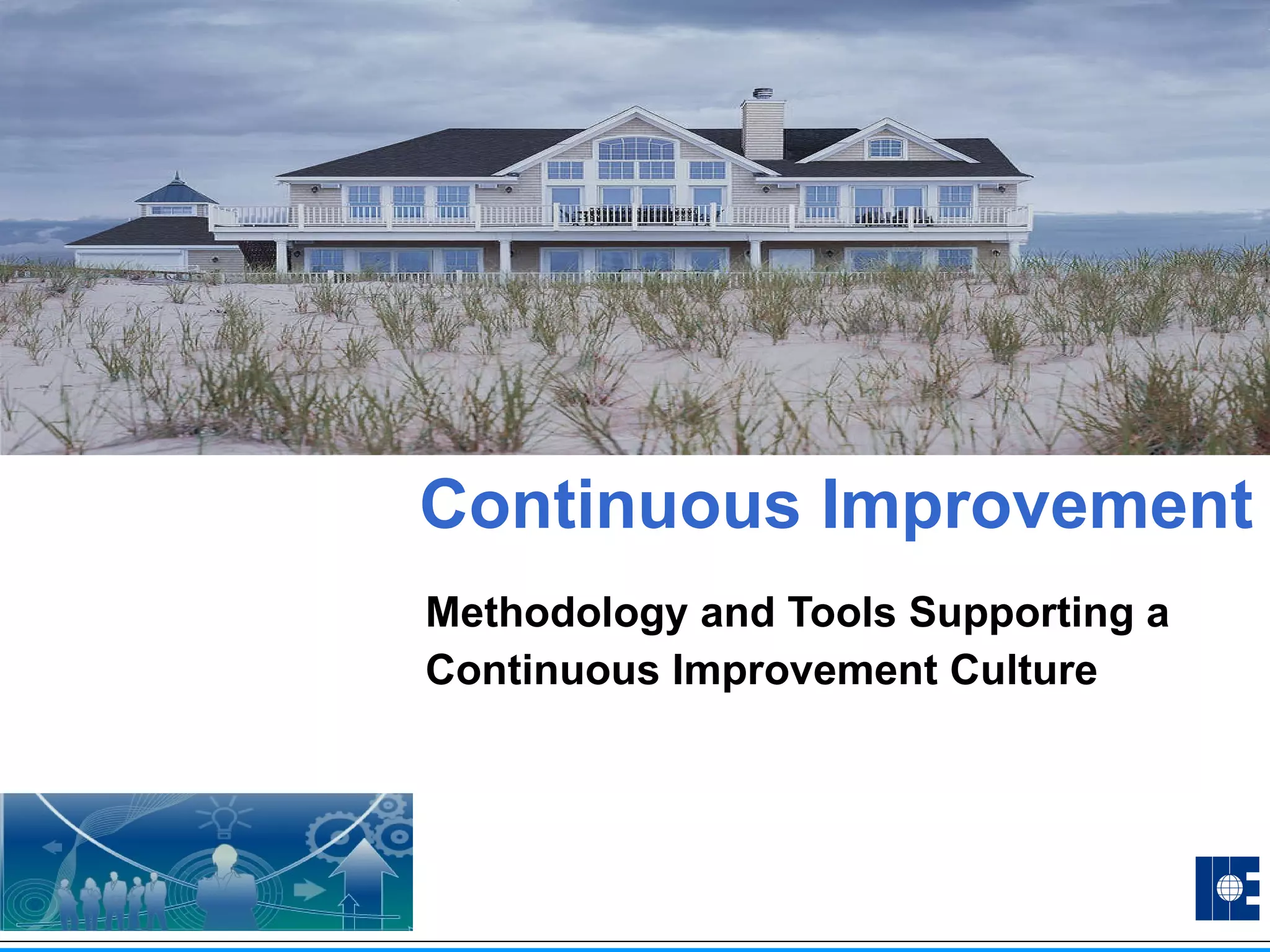

Continuous Improvement Methodology and Tools Supporting a  Continuous Improvement Culture
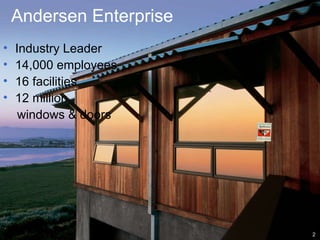
2 Andersen Enterprise Industry Leader 14,000 employees 16 facilities 12 million windows & doors
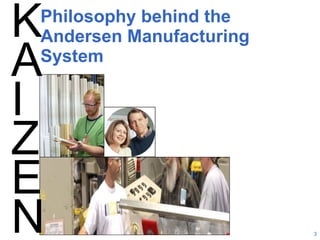
Philosophy behind the  Andersen Manufacturing System KA I ZEN
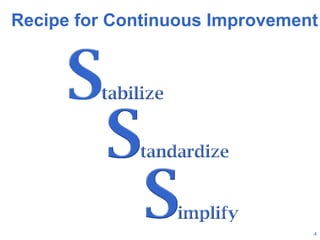
Recipe for Continuous Improvement
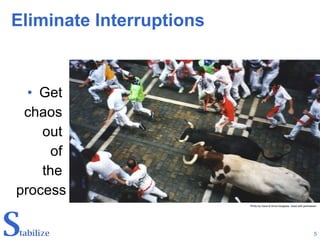
Eliminate Interruptions Get  chaos  out  of  the  process Photo by Dave & Anna Douglass. Used with permission.
3 Types of Interruptions Abnormalities Process Design Interruptions Product Design Differences
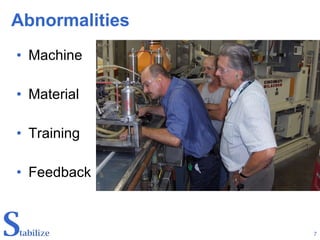
Abnormalities Machine Material Training  Feedback
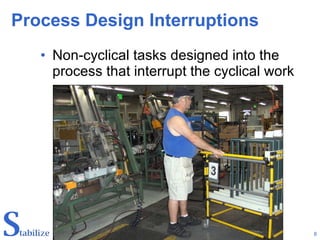
Process Design Interruptions Non-cyclical tasks designed into the process that interrupt the cyclical work
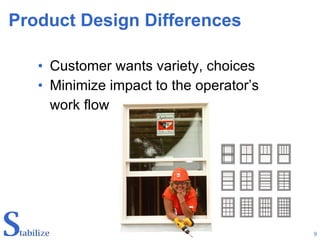
Product Design Differences Customer wants variety, choices Minimize impact to the operator’s  work flow
What is Standardized Work? An agreed upon set of tasks  resulting in the best sequence  of human motion and machine  achieving the best quality output in the  safest manner with the least labor, space, inventory and equipment  that is continually improved
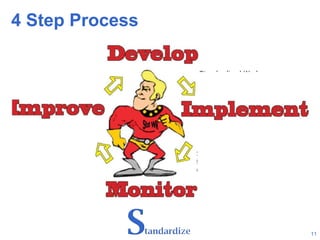
4 Step Process
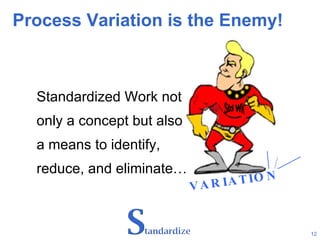
Process Variation is the Enemy! Standardized Work not  only a concept but also  a means to identify,  reduce, and eliminate… Std Wk VARIATION
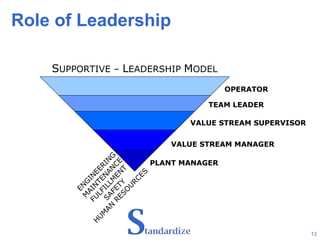
Role of Leadership S UPPORTIVE –  L EADERSHIP  M ODEL OPERATOR TEAM LEADER VALUE STREAM SUPERVISOR PLANT MANAGER ENGINEERING MAINTENANCE FULFILLMENT SAFETY HUMAN RESOURCES VALUE STREAM MANAGER
Never be satisfied “ Any improvement must be made in accordance with the scientific method, under the guidance of a teacher, at the lowest possible level in the organization.” Steven Spear & H. Kent Bowen
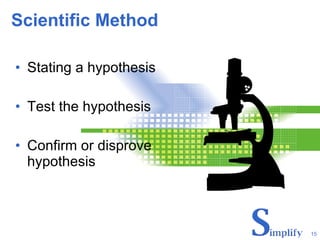
Scientific Method Stating a hypothesis Test the hypothesis Confirm or disprove hypothesis
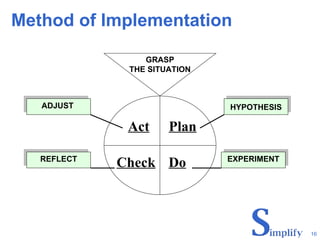
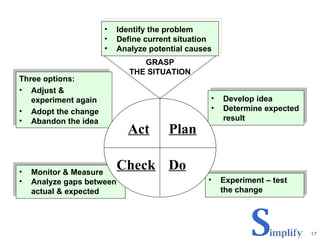
Method of Implementation REFLECT Act Plan Check Do GRASP THE SITUATION HYPOTHESIS EXPERIMENT ADJUST
Three options: Adjust & experiment again Adopt the change Abandon the idea Experiment – test the change Develop idea Determine expected result Monitor & Measure Analyze gaps between actual & expected Identify the problem Define current situation Analyze potential causes Act Plan Check Do GRASP THE SITUATION
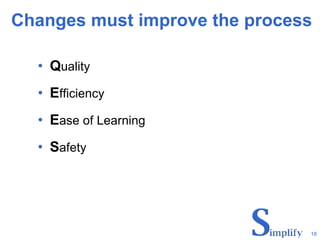
Changes must improve the process Q uality E fficiency E ase of Learning S afety
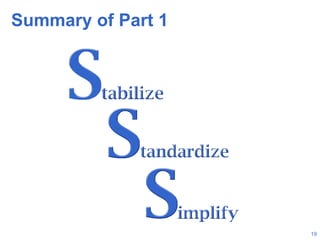
Summary of Part 1
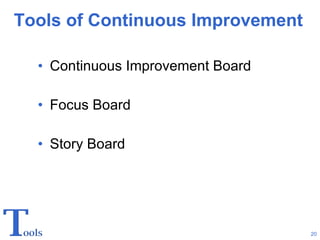
Tools of Continuous Improvement Continuous Improvement Board Focus Board Story Board
 
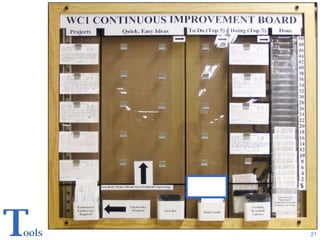
Continuous Improvement Board Purpose:  Employee involvement in process improvement. Captures quick and easy ideas that can be implemented by the employees. Process:  Use of a card on the Board that follows PDCA methodology and visually shows the progress of the idea.
Focus Board
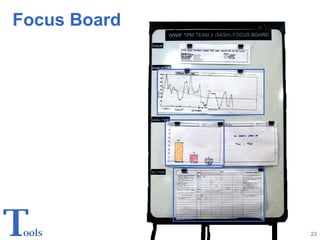
Focus Board Purpose:  Focus on a specific issue that may involve multiple   stations. Process:  Team problem solving approach. Grasp the situation through run charting and Pareto analysis. Test several hypotheses and look at the impact.
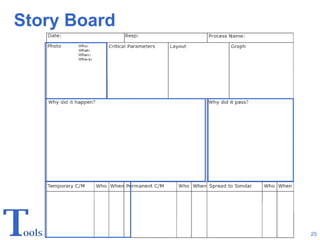
Story Board
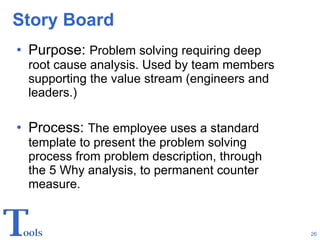
Story Board Purpose:  Problem solving requiring deep root cause analysis. Used by team members supporting the value stream (engineers and leaders.) Process:  The employee uses a standard template to present the problem solving process from problem description, through the 5 Why analysis, to permanent counter measure.
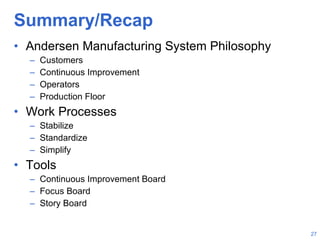
Summary/Recap Andersen Manufacturing System Philosophy Customers Continuous Improvement Operators Production Floor Work Processes Stabilize Standardize Simplify Tools Continuous Improvement Board Focus Board Story Board
Questions?

IIE 2008 Minneapolis Conference

  • 1.
    Continuous Improvement Methodologyand Tools Supporting a Continuous Improvement Culture
  • 2.
    2 Andersen EnterpriseIndustry Leader 14,000 employees 16 facilities 12 million windows & doors
  • 3.
    Philosophy behind the Andersen Manufacturing System KA I ZEN
  • 4.
  • 5.
    Eliminate Interruptions Get chaos out of the process Photo by Dave & Anna Douglass. Used with permission.
  • 6.
    3 Types ofInterruptions Abnormalities Process Design Interruptions Product Design Differences
  • 7.
  • 8.
    Process Design InterruptionsNon-cyclical tasks designed into the process that interrupt the cyclical work
  • 9.
    Product Design DifferencesCustomer wants variety, choices Minimize impact to the operator’s work flow
  • 10.
    What is StandardizedWork? An agreed upon set of tasks resulting in the best sequence of human motion and machine achieving the best quality output in the safest manner with the least labor, space, inventory and equipment that is continually improved
  • 11.
  • 12.
    Process Variation isthe Enemy! Standardized Work not only a concept but also a means to identify, reduce, and eliminate… Std Wk VARIATION
  • 13.
    Role of LeadershipS UPPORTIVE – L EADERSHIP M ODEL OPERATOR TEAM LEADER VALUE STREAM SUPERVISOR PLANT MANAGER ENGINEERING MAINTENANCE FULFILLMENT SAFETY HUMAN RESOURCES VALUE STREAM MANAGER
  • 14.
    Never be satisfied“ Any improvement must be made in accordance with the scientific method, under the guidance of a teacher, at the lowest possible level in the organization.” Steven Spear & H. Kent Bowen
  • 15.
    Scientific Method Statinga hypothesis Test the hypothesis Confirm or disprove hypothesis
  • 16.
    Method of ImplementationREFLECT Act Plan Check Do GRASP THE SITUATION HYPOTHESIS EXPERIMENT ADJUST
  • 17.
    Three options: Adjust& experiment again Adopt the change Abandon the idea Experiment – test the change Develop idea Determine expected result Monitor & Measure Analyze gaps between actual & expected Identify the problem Define current situation Analyze potential causes Act Plan Check Do GRASP THE SITUATION
  • 18.
    Changes must improvethe process Q uality E fficiency E ase of Learning S afety
  • 19.
  • 20.
    Tools of ContinuousImprovement Continuous Improvement Board Focus Board Story Board
  • 21.
  • 22.
    Continuous Improvement BoardPurpose: Employee involvement in process improvement. Captures quick and easy ideas that can be implemented by the employees. Process: Use of a card on the Board that follows PDCA methodology and visually shows the progress of the idea.
  • 23.
  • 24.
    Focus Board Purpose: Focus on a specific issue that may involve multiple stations. Process: Team problem solving approach. Grasp the situation through run charting and Pareto analysis. Test several hypotheses and look at the impact.
  • 25.
  • 26.
    Story Board Purpose: Problem solving requiring deep root cause analysis. Used by team members supporting the value stream (engineers and leaders.) Process: The employee uses a standard template to present the problem solving process from problem description, through the 5 Why analysis, to permanent counter measure.
  • 27.
    Summary/Recap Andersen ManufacturingSystem Philosophy Customers Continuous Improvement Operators Production Floor Work Processes Stabilize Standardize Simplify Tools Continuous Improvement Board Focus Board Story Board
  • 28.