Continuous Improvement
“Systemism”
Failure Mode Analysis of Continuous Improvement Systems
Nick Ruhmann
Agenda
•

The Common “Continuous Improvement Programs”

•

Failure Modes of These Programs

•

Effects of Failure

•

Causes of Failure

•

Countermeasures for the Causes
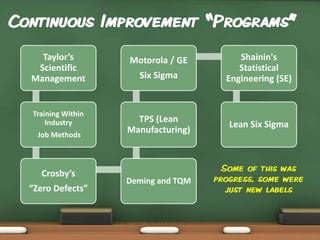
Continuous Improvement “Programs”
Taylor’s
Scientific
Management

Training Within
Industry

Job Methods

Crosby’s
“Zero Defects”

Motorola / GE
Six Sigma

Shainin's
Statistical
Engineering (SE)

TPS (Lean
Manufacturing)

Lean Six Sigma

Deming and TQM

Some of this was
progress, some were
just new labels
Most Common Today...

6 Sigma

Lean

Lean Six
Sigma
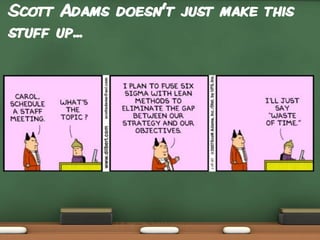
Scott Adams doesn’t just make this
stuff up...
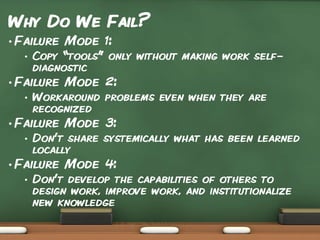
Why Do We Fail?
• Failure
•

Copy “tools” only without making work selfdiagnostic

• Failure
•

Mode 3:

Don’t share systemically what has been learned
locally

• Failure
•

Mode 2:

Workaround problems even when they are
recognized

• Failure
•

Mode 1:

Mode 4:

Don’t develop the capabilities of others to
design work, improve work, and institutionalize
new knowledge
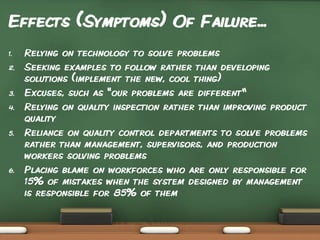
Effects (Symptoms) Of Failure...
1.
2.

3.
4.

5.

6.

Relying on technology to solve problems
Seeking examples to follow rather than developing
solutions (implement the new, cool thing)
Excuses, such as "our problems are different“
Relying on quality inspection rather than improving product
quality
Reliance on quality control departments to solve problems
rather than management, supervisors, and production
workers solving problems
Placing blame on workforces who are only responsible for
15% of mistakes when the system designed by management
is responsible for 85% of them
Causes...
•

Failure Mode 1:
•

•

Copy “tools” only without making work self-diagnostic

Causes:
•

We look only with our eyes...so we only see what is visible

"I think that people here expect
miracles. American management
thinks that they can just copy
from Japan—but they don't know
what to copy!“
-W. Edwards Demming
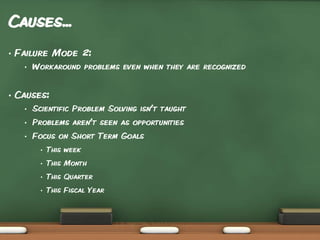
Causes...
•

Failure Mode 2:
•

•

Workaround problems even when they are recognized

Causes:
•

Scientific Problem Solving isn’t taught

•

Problems aren’t seen as opportunities

•

Focus on Short Term Goals
•

This week

•

This Month

•

This Quarter

•

This Fiscal Year
Causes...
•

Failure Mode 3:
•

•

Don’t share systemically what has been learned locally

Causes:
•

No predefined method of sharing

•

No way of knowing when sharing has not occurred

•

Running an organization with functional “Silos”
Causes...
•

Failure Mode 4:
•

•

Don’t develop the capabilities of others to design work, improve
work, and institutionalize new knowledge

Causes:
•

Problem Solving is thought of as a specialist role, rather than a
core capability of every worker to be developed

•

Problem Solving and the ability to develop problem solving in others
is not a key requirement of managers everywhere

•

Ignoring the importance of mentor / student ratio’s on the plant
floor.
Countermeasures
•

Forget whatever “Cool” name you’ve given your CI
Program – the name matters not

•

Stop measuring CI by short term Goals – focus on
customer satisfaction, profits will come

•

Move away from functional silo’s of disciplinary “experts”
– move towards organization built around products

•

Give every employee a capable mentor – expect that every
employee continue learning
Countermeasures (what to teach)
How to Design Work to see
problems

1.
•

Make All work highly specified as to
content, sequence, timing, and
outcome

Insist on swarming problems

2.
•

Problems must be immediately
addressed, both to contain their
effects from propagating, and to
trigger problem solving
Countermeasures (what to teach)
Problem Solving Using the
Scientific Method

3.
•

Any improvement must be made in
accordance with the scientific method,
under guidance of a teacher, at the
lowest possible level within the
organization

Leaders Must be Teachers

4.
•

The most senior management level
has to own the capability development
process – it must cascade downhill
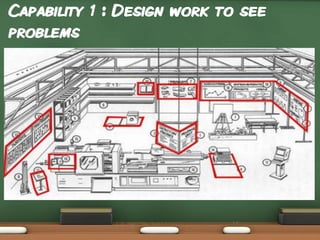
Capability 1 : Design work to see
problems

15
The FOUR Levels of Process Design
1.

Defining objectives/outputs for the system

2.

Creating pathways by assigning
responsibilities

3.

Connecting adjacent nodes on the pathway

4.

Designing individual work activities

16
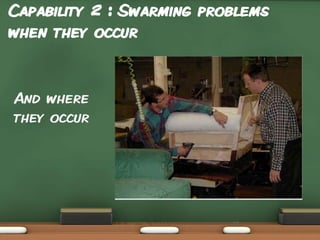
Capability 2 : Swarming problems
when they occur

And where
they occur

17
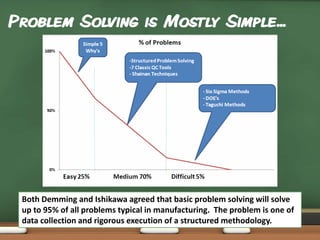
Problem Solving is Mostly Simple...

Both Demming and Ishikawa agreed that basic problem solving will solve
up to 95% of all problems typical in manufacturing. The problem is one of
data collection and rigorous execution of a structured methodology.
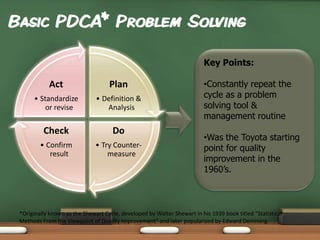
Basic PDCA* Problem Solving
Key Points:

Act

Plan

• Standardize
or revise

• Definition &
Analysis

Check

Do

• Confirm
result

• Try Countermeasure

•Constantly repeat the
cycle as a problem
solving tool &
management routine
•Was the Toyota starting
point for quality
improvement in the
1960’s.

*Originally known as the Shewart Cycle, developed by Walter Shewart in his 1939 book titled “Statistical
Methods From the Viewpoint of Quality Improvement” and later popularized by Edward Demming.
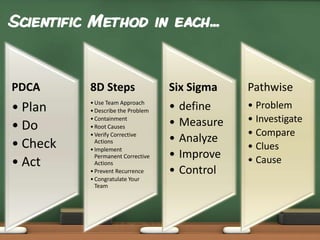
Scientific Method in each...

PDCA

8D Steps

Six Sigma

Pathwise

• Plan
• Do
• Check
• Act

• Use Team Approach
• Describe the Problem
• Containment
• Root Causes
• Verify Corrective
Actions
• Implement
Permanent Corrective
Actions
• Prevent Recurrence
• Congratulate Your
Team

•
•
•
•
•

• Problem
• Investigate
• Compare
• Clues
• Cause

define
Measure
Analyze
Improve
Control
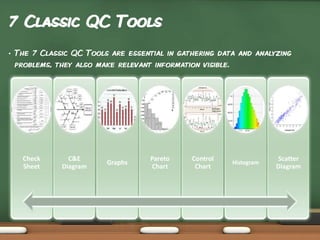
7 Classic QC Tools
•

The 7 Classic QC Tools are essential in gathering data and analyzing
problems, they also make relevant information visible.

Check
Sheet

C&E
Diagram

Graphs

Pareto
Chart

Control
Chart

Histogram

Scatter
Diagram
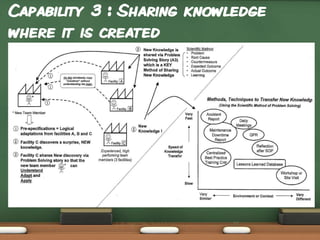
Capability 3 : Sharing knowledge
where it is created

22
Capability 3 : Sharing knowledge
where it is created

23
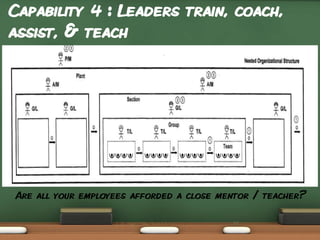
Capability 4 : Leaders train, coach,
assist, & teach

24
Capability 4 : Leaders train, coach,
assist, & teach

Are all your employees afforded a close mentor / teacher?
25
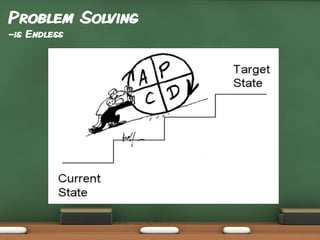
Problem Solving
-is Endless
QUESTIONS?

Continuous Improvement "System-ism"

  • 1.
    Continuous Improvement “Systemism” Failure ModeAnalysis of Continuous Improvement Systems Nick Ruhmann
  • 2.
    Agenda • The Common “ContinuousImprovement Programs” • Failure Modes of These Programs • Effects of Failure • Causes of Failure • Countermeasures for the Causes
  • 3.
    Continuous Improvement “Programs” Taylor’s Scientific Management TrainingWithin Industry Job Methods Crosby’s “Zero Defects” Motorola / GE Six Sigma Shainin's Statistical Engineering (SE) TPS (Lean Manufacturing) Lean Six Sigma Deming and TQM Some of this was progress, some were just new labels
  • 4.
    Most Common Today... 6Sigma Lean Lean Six Sigma
  • 5.
    Scott Adams doesn’tjust make this stuff up...
  • 6.
    Why Do WeFail? • Failure • Copy “tools” only without making work selfdiagnostic • Failure • Mode 3: Don’t share systemically what has been learned locally • Failure • Mode 2: Workaround problems even when they are recognized • Failure • Mode 1: Mode 4: Don’t develop the capabilities of others to design work, improve work, and institutionalize new knowledge
  • 7.
    Effects (Symptoms) OfFailure... 1. 2. 3. 4. 5. 6. Relying on technology to solve problems Seeking examples to follow rather than developing solutions (implement the new, cool thing) Excuses, such as "our problems are different“ Relying on quality inspection rather than improving product quality Reliance on quality control departments to solve problems rather than management, supervisors, and production workers solving problems Placing blame on workforces who are only responsible for 15% of mistakes when the system designed by management is responsible for 85% of them
  • 8.
    Causes... • Failure Mode 1: • • Copy“tools” only without making work self-diagnostic Causes: • We look only with our eyes...so we only see what is visible "I think that people here expect miracles. American management thinks that they can just copy from Japan—but they don't know what to copy!“ -W. Edwards Demming
  • 9.
    Causes... • Failure Mode 2: • • Workaroundproblems even when they are recognized Causes: • Scientific Problem Solving isn’t taught • Problems aren’t seen as opportunities • Focus on Short Term Goals • This week • This Month • This Quarter • This Fiscal Year
  • 10.
    Causes... • Failure Mode 3: • • Don’tshare systemically what has been learned locally Causes: • No predefined method of sharing • No way of knowing when sharing has not occurred • Running an organization with functional “Silos”
  • 11.
    Causes... • Failure Mode 4: • • Don’tdevelop the capabilities of others to design work, improve work, and institutionalize new knowledge Causes: • Problem Solving is thought of as a specialist role, rather than a core capability of every worker to be developed • Problem Solving and the ability to develop problem solving in others is not a key requirement of managers everywhere • Ignoring the importance of mentor / student ratio’s on the plant floor.
  • 12.
    Countermeasures • Forget whatever “Cool”name you’ve given your CI Program – the name matters not • Stop measuring CI by short term Goals – focus on customer satisfaction, profits will come • Move away from functional silo’s of disciplinary “experts” – move towards organization built around products • Give every employee a capable mentor – expect that every employee continue learning
  • 13.
    Countermeasures (what toteach) How to Design Work to see problems 1. • Make All work highly specified as to content, sequence, timing, and outcome Insist on swarming problems 2. • Problems must be immediately addressed, both to contain their effects from propagating, and to trigger problem solving
  • 14.
    Countermeasures (what toteach) Problem Solving Using the Scientific Method 3. • Any improvement must be made in accordance with the scientific method, under guidance of a teacher, at the lowest possible level within the organization Leaders Must be Teachers 4. • The most senior management level has to own the capability development process – it must cascade downhill
  • 15.
    Capability 1 :Design work to see problems 15
  • 16.
    The FOUR Levelsof Process Design 1. Defining objectives/outputs for the system 2. Creating pathways by assigning responsibilities 3. Connecting adjacent nodes on the pathway 4. Designing individual work activities 16
  • 17.
    Capability 2 :Swarming problems when they occur And where they occur 17
  • 18.
    Problem Solving isMostly Simple... Both Demming and Ishikawa agreed that basic problem solving will solve up to 95% of all problems typical in manufacturing. The problem is one of data collection and rigorous execution of a structured methodology.
  • 19.
    Basic PDCA* ProblemSolving Key Points: Act Plan • Standardize or revise • Definition & Analysis Check Do • Confirm result • Try Countermeasure •Constantly repeat the cycle as a problem solving tool & management routine •Was the Toyota starting point for quality improvement in the 1960’s. *Originally known as the Shewart Cycle, developed by Walter Shewart in his 1939 book titled “Statistical Methods From the Viewpoint of Quality Improvement” and later popularized by Edward Demming.
  • 20.
    Scientific Method ineach... PDCA 8D Steps Six Sigma Pathwise • Plan • Do • Check • Act • Use Team Approach • Describe the Problem • Containment • Root Causes • Verify Corrective Actions • Implement Permanent Corrective Actions • Prevent Recurrence • Congratulate Your Team • • • • • • Problem • Investigate • Compare • Clues • Cause define Measure Analyze Improve Control
  • 21.
    7 Classic QCTools • The 7 Classic QC Tools are essential in gathering data and analyzing problems, they also make relevant information visible. Check Sheet C&E Diagram Graphs Pareto Chart Control Chart Histogram Scatter Diagram
  • 22.
    Capability 3 :Sharing knowledge where it is created 22
  • 23.
    Capability 3 :Sharing knowledge where it is created 23
  • 24.
    Capability 4 :Leaders train, coach, assist, & teach 24
  • 25.
    Capability 4 :Leaders train, coach, assist, & teach Are all your employees afforded a close mentor / teacher? 25
  • 26.
  • 27.

Editor's Notes

  • #27 Every year Toyota produces more products per employee. The company works in many different ways to achieve high productivity.One reason why the company’s productivity remains so high, aside from its investment in new equipment, is that its production procedures and organizational methods are constantly being improved. These factors, combined with the dedication and creativity of all of our team members, are crucial for maintaining this high productivity.