Presented by: H.M.Abdullah    07 Imtiaz Hussain 14 Nafees Asmat 31 Kamran Mukhtiar 17 Aftan Ali 24 M.Arshad 26
A diagram is a spatial representation of argument. In our diagram of arguments, we adopt the convention of placing the conclusion of each argument below its premiss or premisses, we use an arrow as our diagrammatic conclusion-indicator.
Step 1:  Identify (circle, underline, etc.) all  premise and / or conclusion indicators . Step 2:  Number the statements consecutively as they appear in the argument. Step 3:  Arrange the numbers on a page with the premises placed above the conclusion(s) they claim to support. Step 4:  Omit any logically irrelevant statements. Step 5:  Use arrows to mean ‘is offered as evidence for’ to show relationship of argument support.
A premise provides  independent support  for a conclusion when the amount of support it provides would not be weakened or destroyed by the removal of any other premise in the argument.
(1)[ Contrary to what many people think, a positive test for HIV is not necessarily a death sentences.] for one thing,(2)[the time from the development of antibodies to clinical symptoms averages nearly ten years.] For another, (3)[many report suggesting that a significant number of people who test positive may never clinical AIDS.]
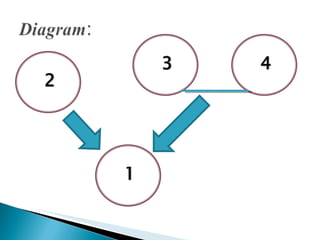
A premise provides  linked support  when it works conjointly with another premise to support the conclusion:
(1)[if an action promotes the best interest of everyone concerned, and violates no ones rights, then that action is morally acceptable.] (2)[ in at least some cases, active euthanasia promotes the best interests of everyone concerned and violates no one's rights.]  Therefore,  (3)[in at least some cases active euthanasia is morally acceptable .]
1 . In an argument containing three or more premisses, one or more may provide independent support for the conclusion while two or more of the premisses provide support only in combination.  Example: (1)[Desert mountaintops portion of the atmosphere, enabling a star’s light to reach a telescope without having to swim through the entire depth of the atmosphere.](3)[Being dry, the desert is also relatively cloud-free.] (4)[ The merest veil of haze or cloud can render a sky useless for many astronomical measures.] make good sites for astronomy] (2)[Being high, they sit above a
 
2 .  in an argument one of whose proposition s is not explicitly stated because it is obvious or taken for granted in the context, that proposition may be represented in the argument’s diagram by a number in a  broken  circle . Passage Containing More Than One Argument Passage contain two or more distinct arguments are contained in a single passage , with their premisses and conclusions intertwined.
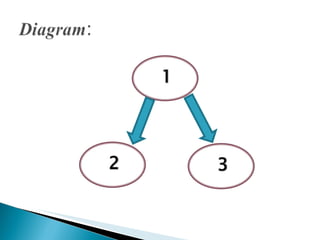
(1)[it is not necessary or convenient that the legislative (branch of government) should be always in being]; (2)[ it is absolutely necessary that the executives power should be always in being]; (3)[ there is not always need of new laws to be made]; (4)[ there is always need of execution of the laws that are made.]
The number of arguments in a passage is determined by the number of conclusions it contains. SO a passage in which two distinct conclusions are inferred from the same premisses counts as containing two argument. Example: Outside the state there can be neither individuals nor groups(political parties, association, syndicates, or classes). Therefore fascism is opposed to that Socialism which views the movement of history as the process of class struggle, and analogously it is opposed to class syndicalism.
 
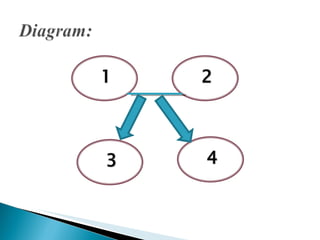
A passage contain two arguments in which each conclusion is inferred from the same  pair  of premisses. Example: (1)[To hasten the social revolution in England is the most important object of the International Workingmen’s Association.](2)[ The sole means of hastening it is to make Ireland independent.] Hence (3)[ the task of the “International” is everywhere to put the conflict between England and Ireland in the foreground,] and (4)[everywhere to side openly with Ireland]
 
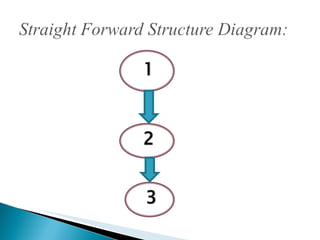
The arrangement of two or more arguments in the same passage occur when the conclusion of one argument is also the premisses of another. Example: Because  (1)[the greatest mitochondrial variations occurred in African people,] scientist  conclude that  (2)[ they had the longest evolutionary history,]  indicating  (3)[ a probable African origin for Modern human]
 
(1)[The very success of  jukus  (cram course for Japanese elementary student ) in training youngster to pass exams has made the competition worse]; (2)[  jukus  help more students pas exams,]  So  (3)[ the exams have to be made more difficult to screen out the student] Diagram:
Find the  main conclusion  first Pay close attention to  premise and conclusion indicators . Remember: sentences containing the word ‘ and’  often contain two or more separate statements. Treat  conditional statements  ( if-then ) and  disjunctive statements  ( either-or ) as single statements. Don’t number / diagram any sentence that is not a statement. Don’t diagram  irrelevant statements .  Don’t diagram  redundant statements .
 

Diagramming Arguments

  • 1.
  • 2.
    Presented by: H.M.Abdullah 07 Imtiaz Hussain 14 Nafees Asmat 31 Kamran Mukhtiar 17 Aftan Ali 24 M.Arshad 26
  • 3.
    A diagram isa spatial representation of argument. In our diagram of arguments, we adopt the convention of placing the conclusion of each argument below its premiss or premisses, we use an arrow as our diagrammatic conclusion-indicator.
  • 4.
    Step 1: Identify (circle, underline, etc.) all premise and / or conclusion indicators . Step 2: Number the statements consecutively as they appear in the argument. Step 3: Arrange the numbers on a page with the premises placed above the conclusion(s) they claim to support. Step 4: Omit any logically irrelevant statements. Step 5: Use arrows to mean ‘is offered as evidence for’ to show relationship of argument support.
  • 5.
    A premise provides independent support for a conclusion when the amount of support it provides would not be weakened or destroyed by the removal of any other premise in the argument.
  • 6.
    (1)[ Contrary towhat many people think, a positive test for HIV is not necessarily a death sentences.] for one thing,(2)[the time from the development of antibodies to clinical symptoms averages nearly ten years.] For another, (3)[many report suggesting that a significant number of people who test positive may never clinical AIDS.]
  • 7.
    A premise provides linked support when it works conjointly with another premise to support the conclusion:
  • 8.
    (1)[if an actionpromotes the best interest of everyone concerned, and violates no ones rights, then that action is morally acceptable.] (2)[ in at least some cases, active euthanasia promotes the best interests of everyone concerned and violates no one's rights.] Therefore, (3)[in at least some cases active euthanasia is morally acceptable .]
  • 9.
    1 . Inan argument containing three or more premisses, one or more may provide independent support for the conclusion while two or more of the premisses provide support only in combination. Example: (1)[Desert mountaintops portion of the atmosphere, enabling a star’s light to reach a telescope without having to swim through the entire depth of the atmosphere.](3)[Being dry, the desert is also relatively cloud-free.] (4)[ The merest veil of haze or cloud can render a sky useless for many astronomical measures.] make good sites for astronomy] (2)[Being high, they sit above a
  • 10.
  • 11.
    2 . in an argument one of whose proposition s is not explicitly stated because it is obvious or taken for granted in the context, that proposition may be represented in the argument’s diagram by a number in a broken circle . Passage Containing More Than One Argument Passage contain two or more distinct arguments are contained in a single passage , with their premisses and conclusions intertwined.
  • 12.
    (1)[it is notnecessary or convenient that the legislative (branch of government) should be always in being]; (2)[ it is absolutely necessary that the executives power should be always in being]; (3)[ there is not always need of new laws to be made]; (4)[ there is always need of execution of the laws that are made.]
  • 13.
    The number ofarguments in a passage is determined by the number of conclusions it contains. SO a passage in which two distinct conclusions are inferred from the same premisses counts as containing two argument. Example: Outside the state there can be neither individuals nor groups(political parties, association, syndicates, or classes). Therefore fascism is opposed to that Socialism which views the movement of history as the process of class struggle, and analogously it is opposed to class syndicalism.
  • 14.
  • 15.
    A passage containtwo arguments in which each conclusion is inferred from the same pair of premisses. Example: (1)[To hasten the social revolution in England is the most important object of the International Workingmen’s Association.](2)[ The sole means of hastening it is to make Ireland independent.] Hence (3)[ the task of the “International” is everywhere to put the conflict between England and Ireland in the foreground,] and (4)[everywhere to side openly with Ireland]
  • 16.
  • 17.
    The arrangement oftwo or more arguments in the same passage occur when the conclusion of one argument is also the premisses of another. Example: Because (1)[the greatest mitochondrial variations occurred in African people,] scientist conclude that (2)[ they had the longest evolutionary history,] indicating (3)[ a probable African origin for Modern human]
  • 18.
  • 19.
    (1)[The very successof jukus (cram course for Japanese elementary student ) in training youngster to pass exams has made the competition worse]; (2)[ jukus help more students pas exams,] So (3)[ the exams have to be made more difficult to screen out the student] Diagram:
  • 20.
    Find the main conclusion first Pay close attention to premise and conclusion indicators . Remember: sentences containing the word ‘ and’ often contain two or more separate statements. Treat conditional statements ( if-then ) and disjunctive statements ( either-or ) as single statements. Don’t number / diagram any sentence that is not a statement. Don’t diagram irrelevant statements . Don’t diagram redundant statements .
  • 21.