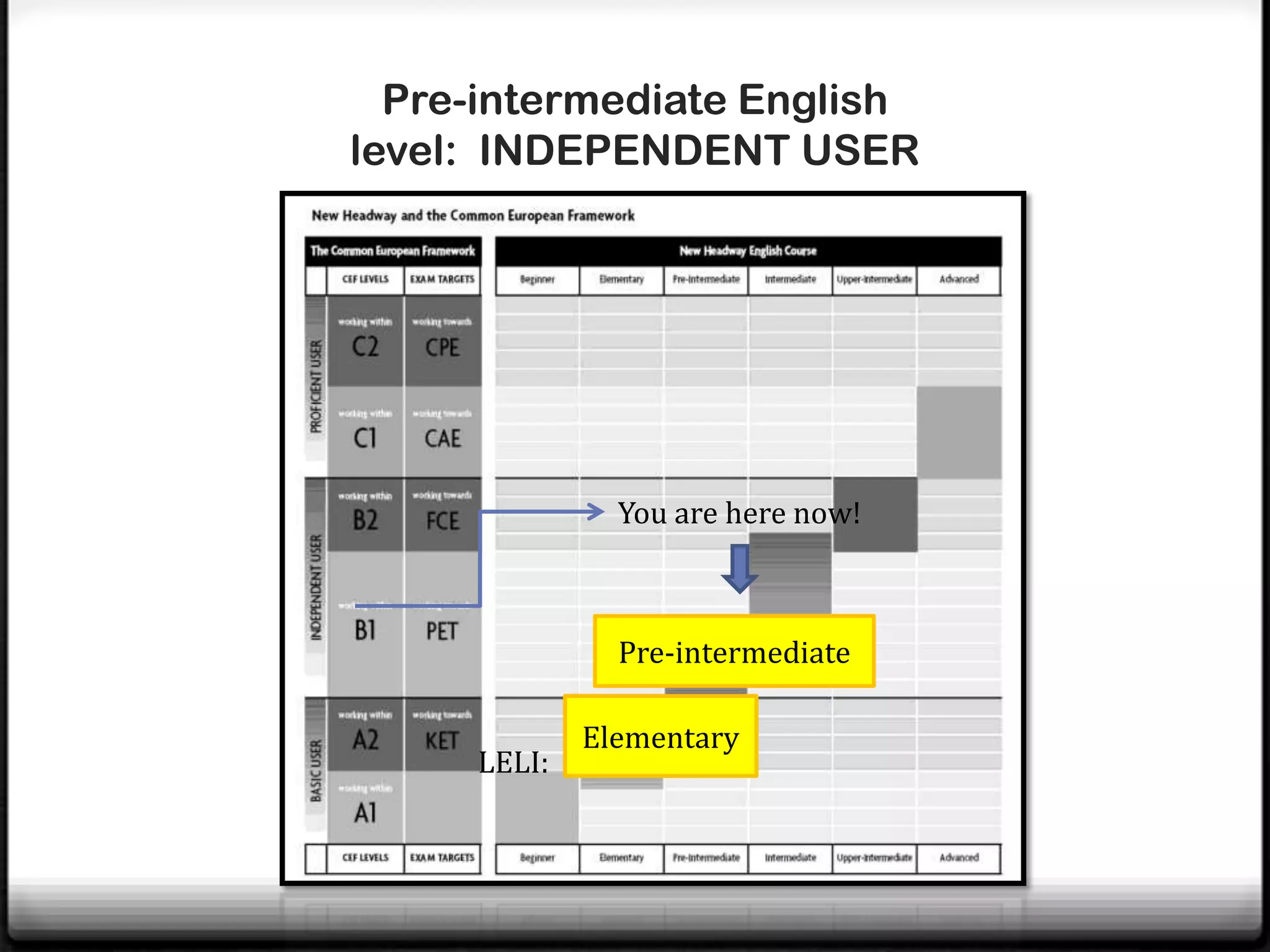
Pre-intermediate English
level: INDEPENDENT USER


               You are here now!


               Pre-intermediate

             Elementary
     LELI:
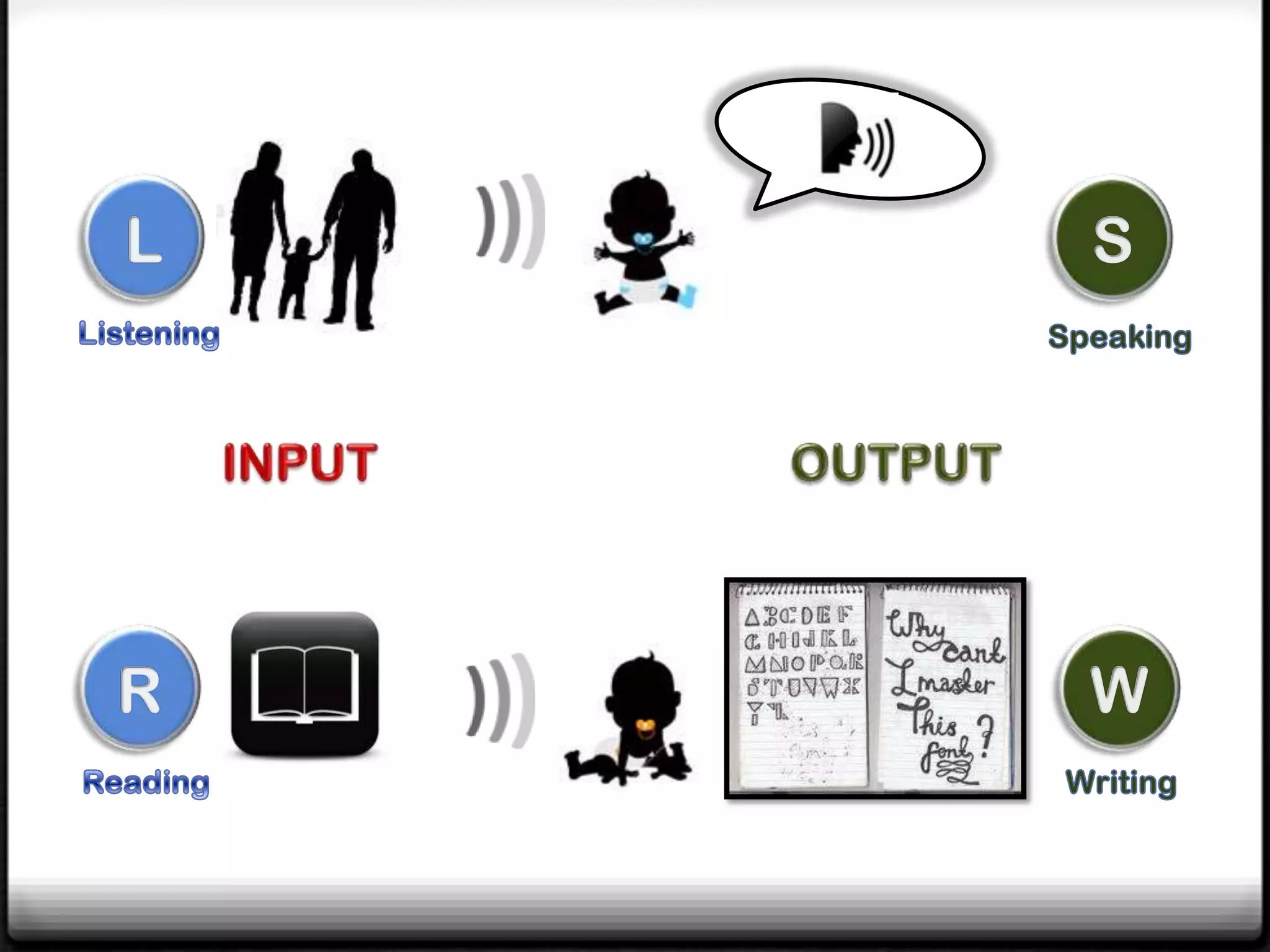
How do we learn a
0How did you learn spanish?
      language?
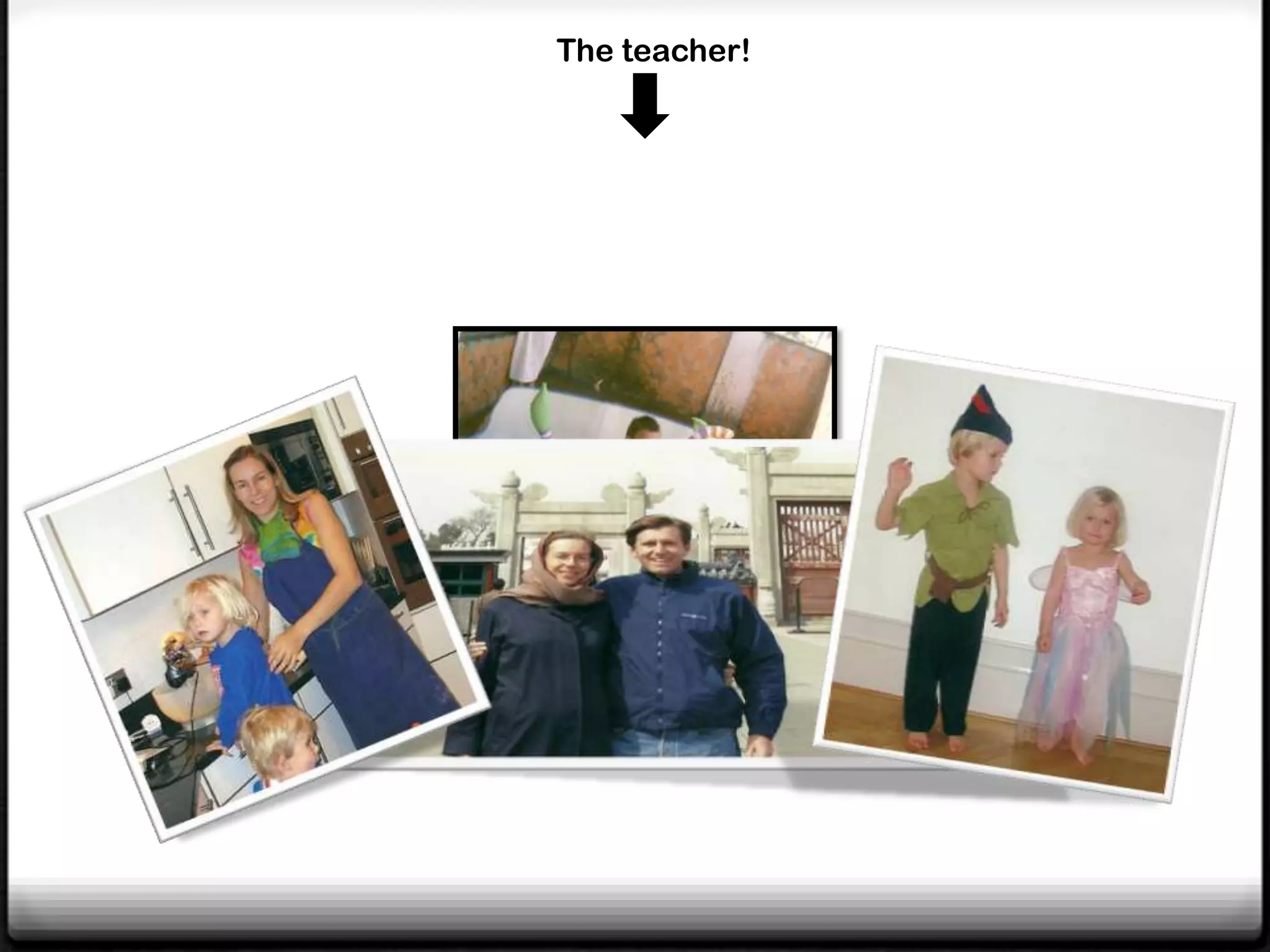
The teacher!
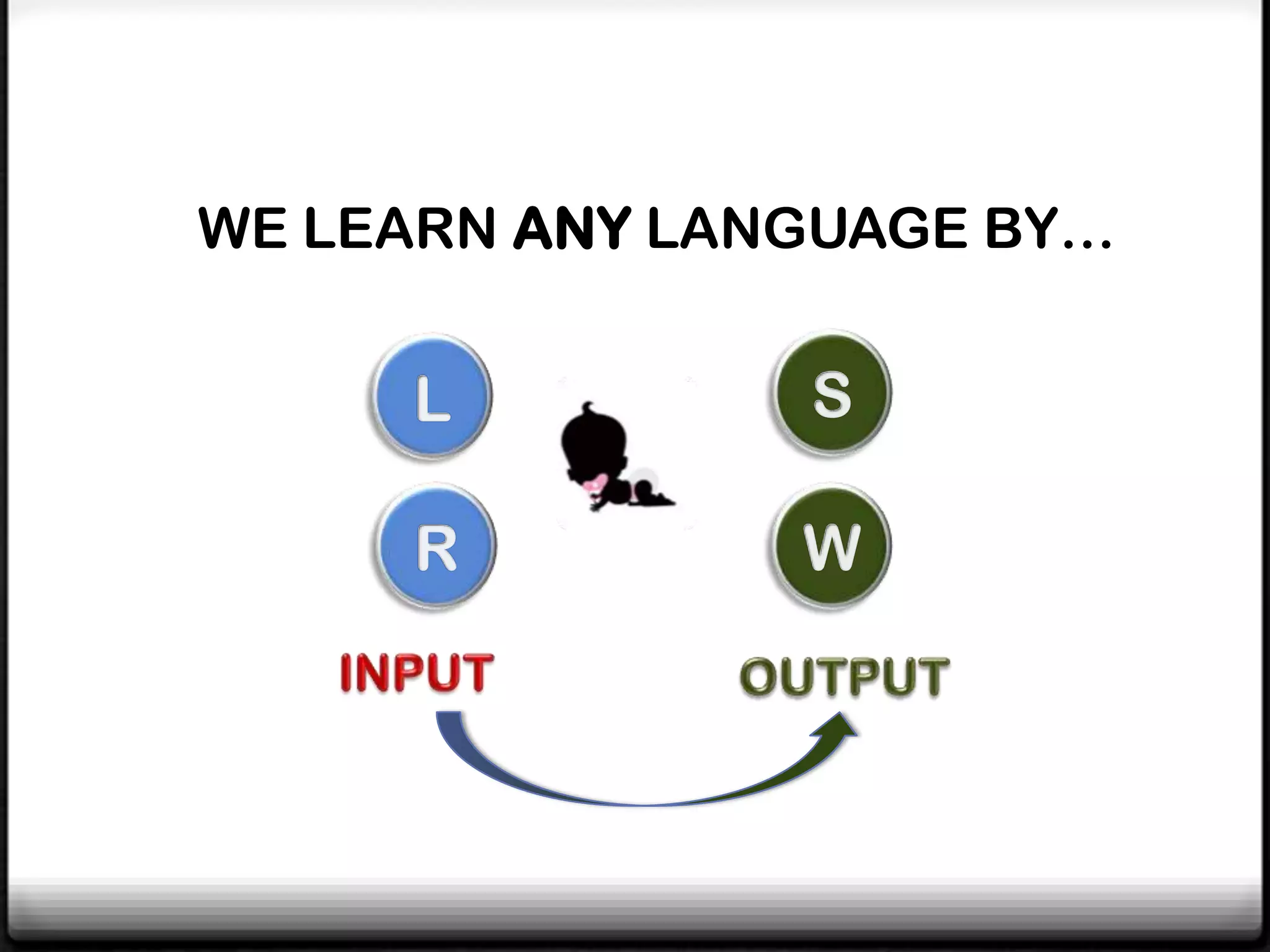
WE LEARN ANY LANGUAGE BY…
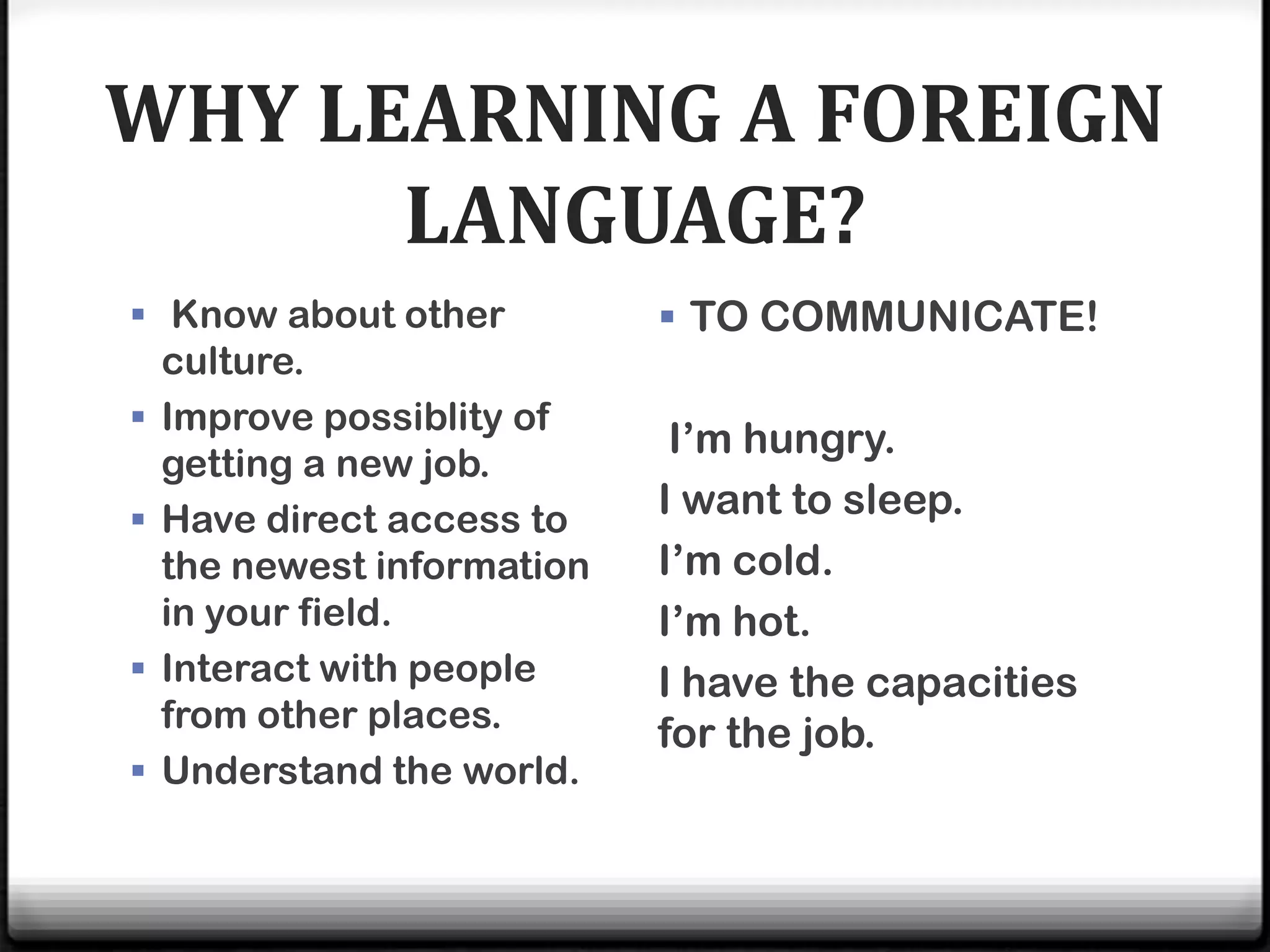
WHY LEARNING A FOREIGN
      LANGUAGE?
 Know about other            TO COMMUNICATE!
    culture.
   Improve possiblity of
                              I’m hungry.
    getting a new job.
   Have direct access to    I want to sleep.
    the newest information   I’m cold.
    in your field.           I’m hot.
   Interact with people     I have the capacities
    from other places.
                             for the job.
   Understand the world.
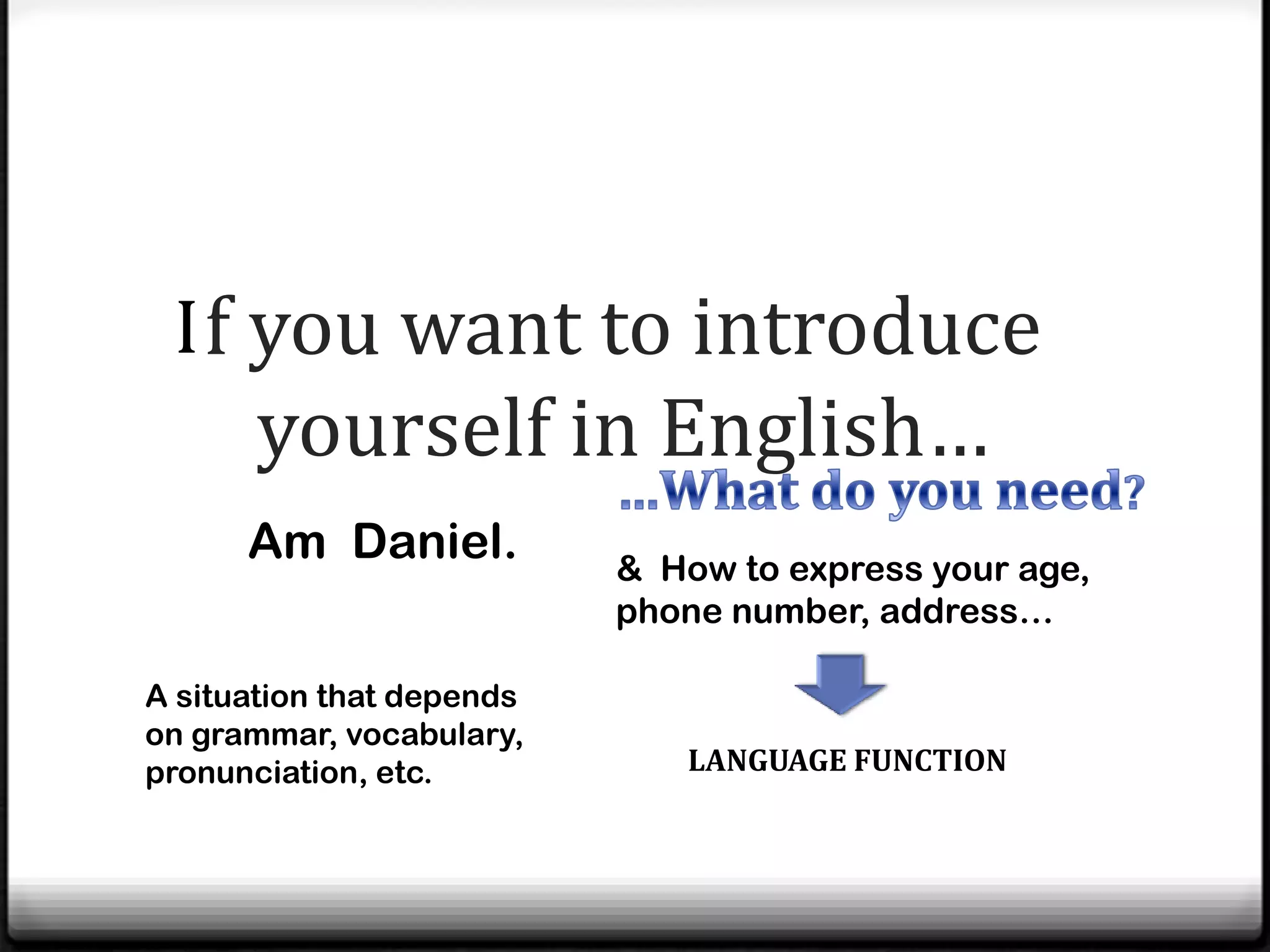
I f you want to introduce
       yourself in English…
      Am Daniel.           & How to express your age,
                           phone number, address…

A situation that depends
on grammar, vocabulary,
pronunciation, etc.           LANGUAGE FUNCTION
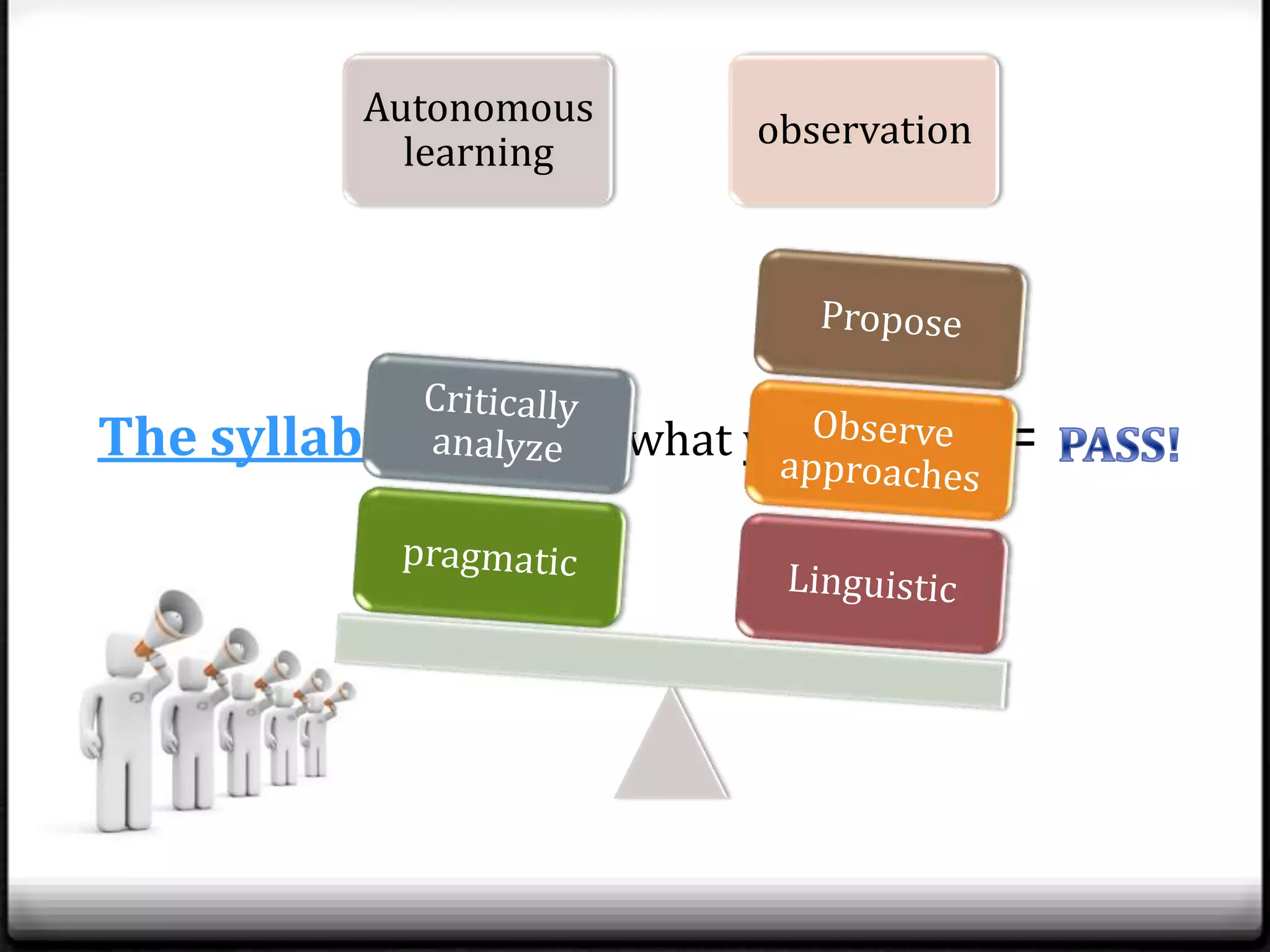
Autonomous
                           observation
             learning


The syllabus + Using what you learned =
• Identify and reproduce English phonemes, word
Stress, and intonation.


     -Request and give directions for completing
     a task.


 -Perform accurately some speech acts such as
 Expressing opinions and feelings and discussing
  plans, activities and life experiences.
Understand the main ideas of propositionally and
linguistically complex speech on contextualized topics
delivered in a standard dialect.


Effectively employ a variety of strategies,
(e.g. predicting, listening for gist, listening for details,
 inferring, using contextual clues, etc.) to extract
Messages from live or broadcast oral input received in
 standard dialect.
Recognize different types of written texts such as narrations,
descriptions, academic expositions etc. according to their styles
and purposes.


Apply reading comprehension strategies such as
skimming, scanning, analyzing paragraph structure,
predicting and inferring to effectively extract messages
from written texts.

  Identify and describe, by means of outlines
  and/or organizational the content and organization
   of information in written texts.
Write grammatically correct sentences and join them to
  construct paragraphs, effectively using
  linking words to mark relationships between ideas.


      • Write affirmations and questions and construct simple,
        complex and compound sentences


Use writing to narrate events, give descriptions and
express viewpoints.


   Construct mind maps as a planning strategy to write different
   types of texts.
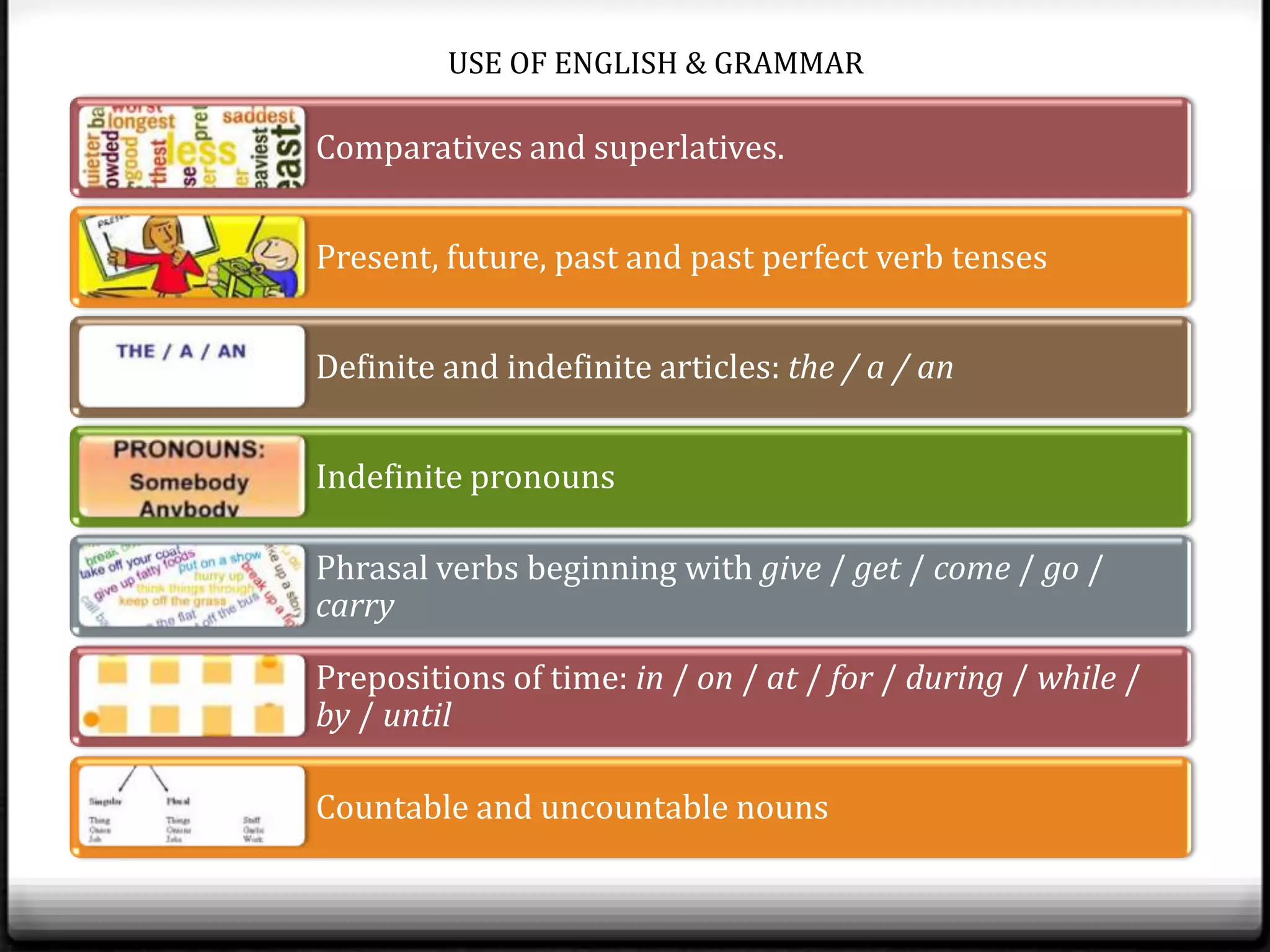
USE OF ENGLISH & GRAMMAR

Comparatives and superlatives.


Present, future, past and past perfect verb tenses


Definite and indefinite articles: the / a / an


Indefinite pronouns

Phrasal verbs beginning with give / get / come / go /
carry

Prepositions of time: in / on / at / for / during / while /
by / until

Countable and uncountable nouns
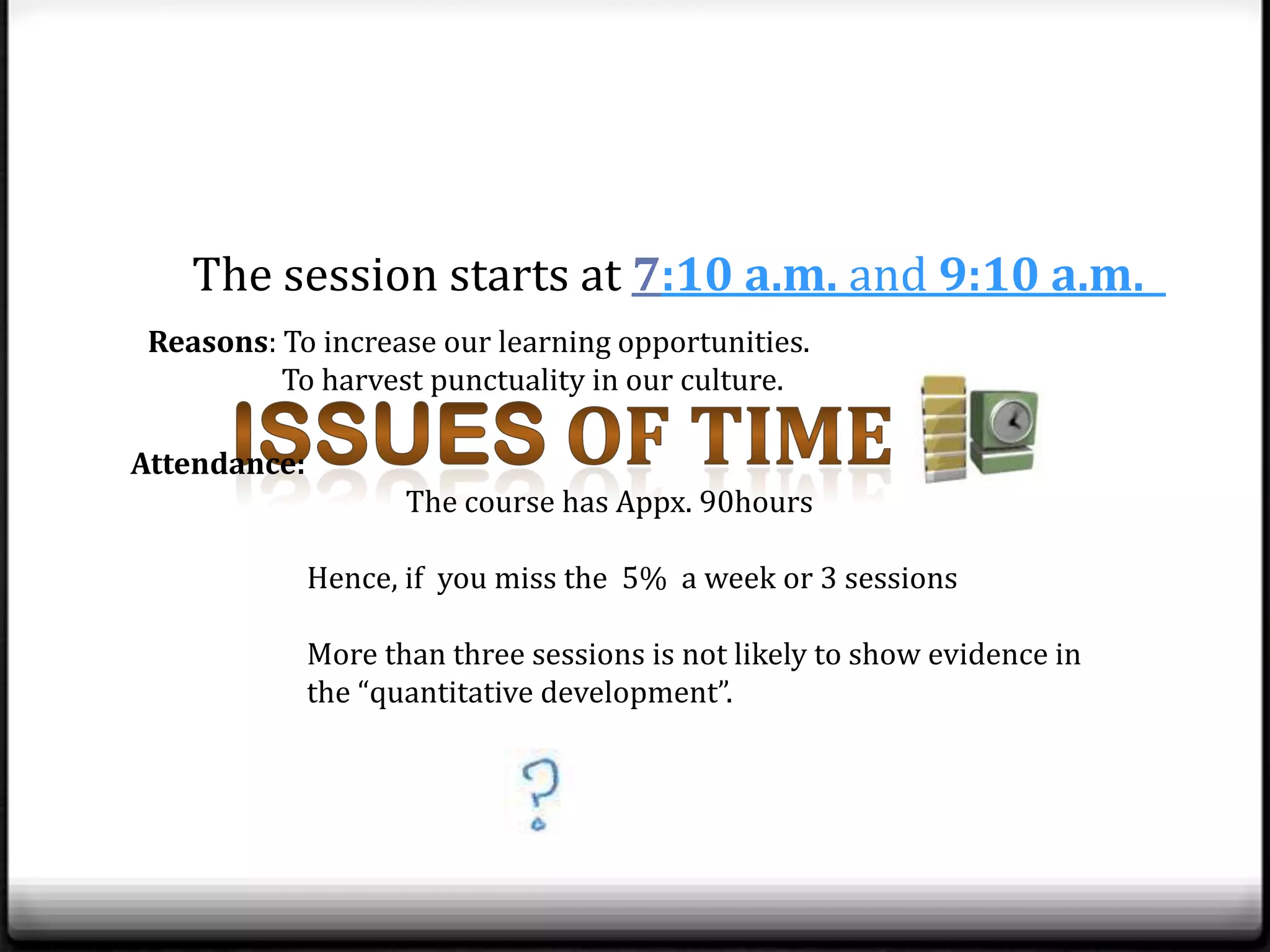
The session starts at 7:10 a.m. and 9:10 a.m.
 Reasons: To increase our learning opportunities.
          To harvest punctuality in our culture.

Attendance:
                     The course has Appx. 90hours

              Hence, if you miss the 5% a week or 3 sessions

              More than three sessions is not likely to show evidence in
              the “quantitative development”.
Resources

Upstream Pre-Intermediate (B1) Dooley
and Evans
Diagnostic session Pre-intermediate English

Diagnostic session Pre-intermediate English

  • 2.
    Pre-intermediate English level: INDEPENDENTUSER You are here now! Pre-intermediate Elementary LELI:
  • 3.
    How do welearn a 0How did you learn spanish? language?
  • 4.
  • 6.
    WE LEARN ANYLANGUAGE BY…
  • 7.
    WHY LEARNING AFOREIGN LANGUAGE?  Know about other  TO COMMUNICATE! culture.  Improve possiblity of I’m hungry. getting a new job.  Have direct access to I want to sleep. the newest information I’m cold. in your field. I’m hot.  Interact with people I have the capacities from other places. for the job.  Understand the world.
  • 8.
    I f youwant to introduce yourself in English… Am Daniel. & How to express your age, phone number, address… A situation that depends on grammar, vocabulary, pronunciation, etc. LANGUAGE FUNCTION
  • 9.
    Autonomous observation learning The syllabus + Using what you learned =
  • 10.
    • Identify andreproduce English phonemes, word Stress, and intonation. -Request and give directions for completing a task. -Perform accurately some speech acts such as Expressing opinions and feelings and discussing plans, activities and life experiences.
  • 11.
    Understand the mainideas of propositionally and linguistically complex speech on contextualized topics delivered in a standard dialect. Effectively employ a variety of strategies, (e.g. predicting, listening for gist, listening for details, inferring, using contextual clues, etc.) to extract Messages from live or broadcast oral input received in standard dialect.
  • 12.
    Recognize different typesof written texts such as narrations, descriptions, academic expositions etc. according to their styles and purposes. Apply reading comprehension strategies such as skimming, scanning, analyzing paragraph structure, predicting and inferring to effectively extract messages from written texts. Identify and describe, by means of outlines and/or organizational the content and organization of information in written texts.
  • 13.
    Write grammatically correctsentences and join them to construct paragraphs, effectively using linking words to mark relationships between ideas. • Write affirmations and questions and construct simple, complex and compound sentences Use writing to narrate events, give descriptions and express viewpoints. Construct mind maps as a planning strategy to write different types of texts.
  • 14.
    USE OF ENGLISH& GRAMMAR Comparatives and superlatives. Present, future, past and past perfect verb tenses Definite and indefinite articles: the / a / an Indefinite pronouns Phrasal verbs beginning with give / get / come / go / carry Prepositions of time: in / on / at / for / during / while / by / until Countable and uncountable nouns
  • 16.
    The session startsat 7:10 a.m. and 9:10 a.m. Reasons: To increase our learning opportunities. To harvest punctuality in our culture. Attendance: The course has Appx. 90hours Hence, if you miss the 5% a week or 3 sessions More than three sessions is not likely to show evidence in the “quantitative development”.
  • 18.