Hoang Cuong MD
HaNoi Medical
University
DIABETIC
KETOACIDOSIS
INTRODUCTION
- Diabetic Ketoacidosis is an acute metabolic complication of diabetes
characterized by hyperglycemia, hyperketonemia, and metabolic
acidosis.
- Hyperglycemia causes an osmotic diuresis with significant fluid and
electrolyte loss.
- DKA occurs mostly in type 1 diabetes mellitus (DM).
- It causes nausea, vomiting, and abdominal pain and can progress to
cerebral edema, coma, and death.
- DKA is diagnosed by detection of hyperglycemia.
- Treatment involves volume expansion, insulin replacement, and
prevention of hypokalemia.
DEFINITION
- Diabetic Ketoacidosis is a state of absolute or relative
insulin deficiency aggravated by ensuring hyperglycaemia,
dehydration and acidosis producing derangements in
intermediary metabolism.
- They are both associated with:
• Insulin deficiency (absolute in T1DM and relative in
T2DM) and hyperglycemia.
• Acid-base abnormalities (ketoacidosis)
• Severe volume depletion.
Other hyperglycemic states
Diabetes mellitus
Hyperosmolar hyperglycemic state
Impaired glucose tolerance
Stress hyperglycemia
Other metabolic acidosis states
Lactic acidosis
Hyperchloremic acidosis
Salicylism
Uremic acidosis
Drug-induced acidosis
Other ketotic states
Ketotic hypoglycemia
Alcoholic ketosis
Starvation ketosis
ROLE OF INSULIN
ROLE OF INSULIN
CAUSES CAN TRIGGER DKA:
- New diagnosis of diabetes.
- Drugs:
• Antipsychotic agents
• Others: Corticosteroids, sympathomimetic agents, thiazide diuretics…
- Infection: Pneumonia, sepsis, urinary tract infection (UTI)
- Lack of insulin—Most common cause of DKA.
• Insulin pump failure.
• Nonadherence to insulin treatment plans: body image issues, financial
problems, psychological factors.
• Unrecognized symptoms of new-onset diabetes mellitus.
- Other physiologic stressors: MI, Stroke, Pancreatitis, Trauma.
PATHOPHYSIOLOGY
PATHOPHYSIOLOGY
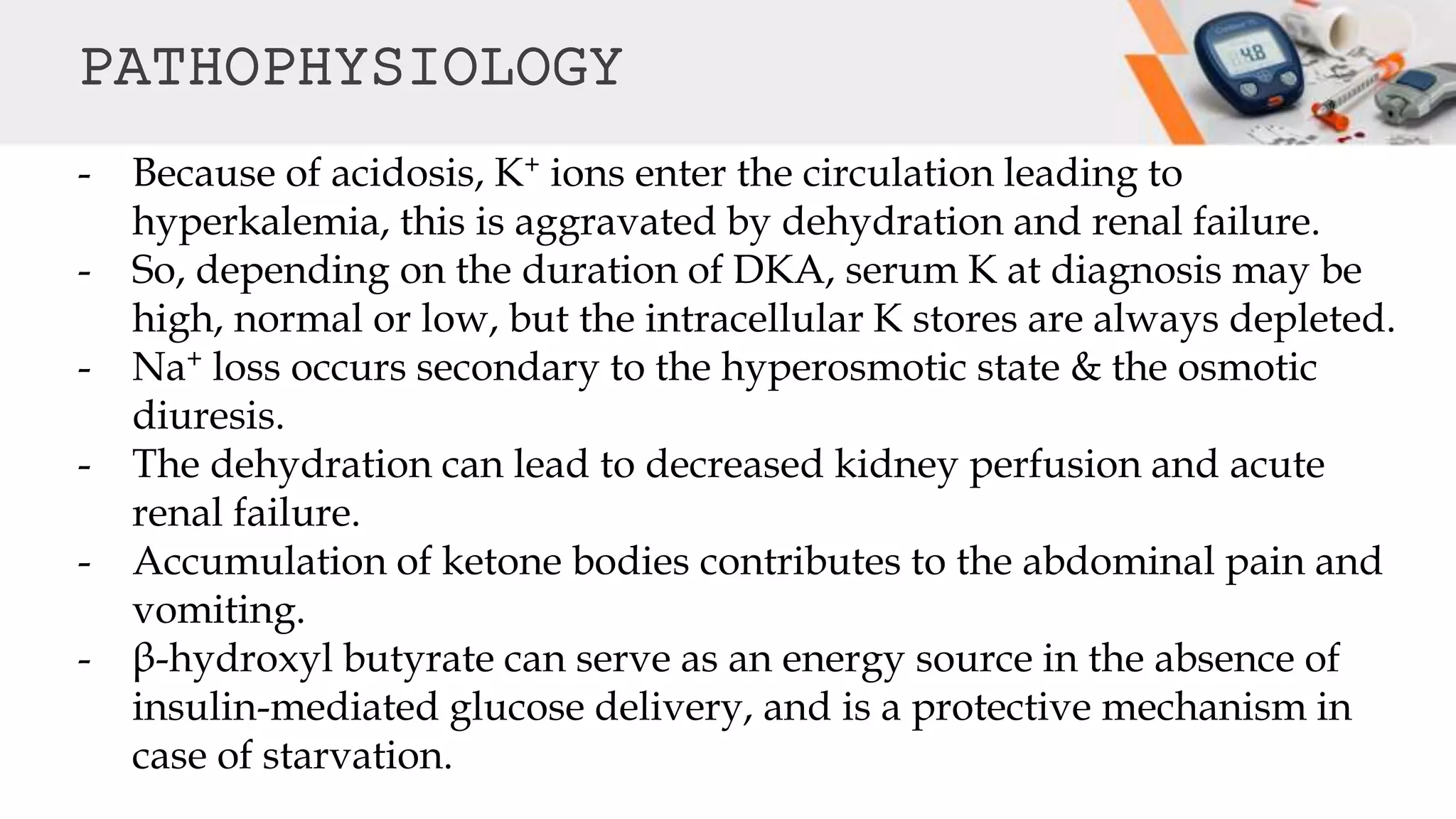
Acetoacetate β-hydroxyl butyrate
D-β-hydroxyl butyrate
dehydrogenase
• Acetone isn’t an acid.
• In DKA, the dominant ketoacid is β-hydroxylbutyric acid, especially in cases
of poor tissue perfusion/lactic acidosis .
• During recovery, the balance shifts to acetoacetic acid.
PATHOPHYSIOLOGY
- Secondary to insulin deficiency, and the action of counter-regulatory
hormones, blood glucose increases leading to hyperglycemia and
glucosuria. Glucosuria causes an osmotic diuresis, leading to water &
solutes loss.
- In the absence of insulin activity the body fails to utilize glucose as fuel
and uses fats instead →ketosis (acetoacetate & β-hydroxyl butyrate)
- The excess of ketone bodies will cause metabolic acidosis, the later is
also aggravated by lactic acidosis caused by dehydration & poor tissue
perfusion.
- Vomiting due to an ileus, plus increased insensible water losses due to
tachypnea will worsen the state of dehydration.
- Electrolyte abnormalities are secondary to their loss in urine and trans-
membrane alterations following acidosis & osmotic diuresis.
PATHOPHYSIOLOGY
- Because of acidosis, K+ ions enter the circulation leading to
hyperkalemia, this is aggravated by dehydration and renal failure.
- So, depending on the duration of DKA, serum K at diagnosis may be
high, normal or low, but the intracellular K stores are always depleted.
- Na+ loss occurs secondary to the hyperosmotic state & the osmotic
diuresis.
- The dehydration can lead to decreased kidney perfusion and acute
renal failure.
- Accumulation of ketone bodies contributes to the abdominal pain and
vomiting.
- β-hydroxyl butyrate can serve as an energy source in the absence of
insulin-mediated glucose delivery, and is a protective mechanism in
case of starvation.
PATHOPHYSIOLOGY
- Dehydration: 6 liters or more, 15-20% of their weight.
• Osmotic Diuresis: Blood glucose exceeds the renal threshold (160-180mg/dL)
• Vomiting
• Hyperventilation.
• Impaired consciousness- Decreased intake.
- Metabolic acidosis: Initially due to the excess ketones. Compensatory mechanisms:
• Respiratory compensation.
• Intracellular buffering- excess H+ goes into cells in exchange for potassium.
• Bicarbonate buffering system.
- Ionic changes:
• A general loss of electrolytes due to osmotic diuresis.
• Potassium: intracellular buffering mechanism shifts potassium out of cells so even if there
decreased total potassium in the body, serum potassium may initially be normal or even high.
This potassium is further lost through the kidneys.
- Paradoxes of DKA
- Hyperglycemia despite decreased intake
- Polyuria despite dehydration
- Catabolic state despite hyperglycemia
New onset diabetes
- Recent history of:
• Polyuria, polydipsia, polyphagia,
weight loss
- Pass medical history
• Family history of diabetes
- History/Duration of symptoms
• Headache
• Blurry vision
• Nausea/Vomiting/Abdominal pain.
• Difficulty in breathing
• Changes in behavior
- Precipitating factor:
• Concurrent illness or infection
THOROUGH HISTORY is imperative!
Preexisting diabetes
- History of diabetes and duration:
• Last meal/Carbohydrate intake
• Current and routine blood glucose
levels
- Standard insulin regimen
• Last insulin dose
• Type of insulin and route
- Past hospitalization history
- Duration of symptoms
• Nausea/vomiting/abdominal pain
- Precipitating factors:
• Physical exertion
• Change in eating habits/diets
• Stress, missed insulin dose, illness
- DKA usually develops slowly. But when vomiting occurs, this life-threatening
condition can develop in a few hours.
- Early symptoms include the following:
• Thirst or a very dry mouth.
• Frequent urinary
• High blood glucose level.
• High levels of ketones in the urine.
- Then, other symptoms appear:
• Constantly feeling tired.
• Dry or flushed skin.
• Nausea, vomiting, or abdominal pain.
• Difficulty breathing.
• Fruity odor on breath.
• Confusion
THE WARNING SIGNS
- Assess for dehydration
• Vital signs, mucous membranes, capillary refill,
skin (color, temperature and turgor)
- Assess for acidosis
• Fruity breath odor
• Deep, rapid breathing → Kussmaul’s
respirations
- Assess for mental status
• GCS, PGCS, AVPU
- Assess for sign/symptoms of possible infection
PHYSICAL ASSESSMENT
- Initial Labs:
• Blood glucose
• Urine ketones
• Venous blood gas
• Basic blood chemistry: Electrolytes, BUN, creatinine,
Magnesium, Calcium, Phosphorus.
- Additional labs:
• CBC
• Osmolality
• Serum β-hydroxyl butyrate (β-OH)
• Hemoglobin A1C (HbA1C)
• Pancreatic antibodies.
• Additional testing as indicated: CXR, non-contrast head
CT, cultures (blood, urine, throat)
LABORATORY EVALUATION
- Blood Gases:
• ABG ─ artery blood sample or VBG ─ Venous blood sample are both
adequate to determine blood pH.
• VBG is sufficient who are hemodynamically stable and without
respiratory failure.
 Metabolic acidosis is defined as a low pH and decreased HCO3
−
 Metabolic alkalosis is defined as a high pH and increased HCO3
−
LABORATORY EVALUATION
Calculations for the Evaluation of Diabetic Ketoacidosis
LABORATORY EVALUATION
Value Purpose Formula Normal value
Anion gap
Essential for evaluation of
acid base disorders
Na−(Cl+HCO3)
7 to 13 mEq per L
(7 to 13 mmol per L)
Osmolar gap
Difference between
measured osmolality and
calculated osmolality
- <10 mmol/L
Serum
osmolality
Measure of particles in a
fluid compartment
2(Na + K) +(Glu/18)+ (BUN/2.8)
285 to 295 mOsm/kg
(285 to 295 mmol/kg)
of water
Serum
sodium
correction
Hyperglycemia causes
pseudohyponatremia
Na +0.016.(glucose-100)
135 to 140 mEq/L
(135 to 140 mmol/L)
Osmolality
(measured)
Osmolality
(calculated)
ADA Diagnostic Criteria for DKA
DIAGNOSIS
DKA
Parameter
Mild Moderate Severe
Plasma glucose, mg/dL >250 >250 >250
Arterial pH 7.25-7.3 7.0-7.24 <7.0
Serum bicarbonate (mmol/L) 15-18 10 to <15 <10
Serum ketones Positive Positive Positive
Urine ketones Positive Positive Positive
Effective serum osmolality(mOsm/kg) Variable Variable Variable
Alteration in sensoria or mental
obtundation
Alert Alert/Drowsy Stupor/Coma
MANAGEMENT
- Initial Hospital Management:
• Fluid Replacement
• Potassium Replacement
• IV insulin therapy
• Bicarbonate and Metabolic Acidosis
• Phosphate Depletion
• Close Monitoring
• Watch for complications
- Once Resolved:
• Convert to home insulin regimen
• Prevent recurrence
IV FLUID ADMINISTRATION
The goal of the first hour of treatment:
• Fluid resuscitation
• Confirmation of DKA by laboratory studies
The goal of the second and succeeding hours:
• Slow correction of hyperglycemia, metabolic acidosis and ketosis
• Continued volume replacement
• This usually required several hours and meticulous attention to the
patient’s response to therapy
• Mainstay of initial therapy
• All patients with DKA require supplemental fluids
• Expand the intravascular volume & improve renal blood flow
• Average fluid loss for DKA: 3-6 Liters.
Corrected Serum Na+= Na+ + 0.016.(Glucose-100)
• Rate of isotonic saline infusion is dependent
upon the clinical state of the patient
• Isotonic saline should be infused as quickly
as possible with hypovolemic shock.
• In hypovolemic patients without shock (and
no HF)→ in the first couple hours,
infused at a rate of 15-20mL/kg/hour (
approx. 1L/hour), with maximum of <50
mL/kg in first four hours.
• After the second or third hour, optimal
fluid replacement depends upon the
state of hydration, serum electrolyte
levels, and the urine output.
• Add dextrose to the saline solution when
the serum glucose reaches 200mg/dL
(11.1 mmol/L) in DKA.
POTASSIUM SUPPLEMENT
• If initial K high, should not need more
therapy than insulin, which will drive K
into the cells.
• Potassium replacement is initiated
immediately if K<5.3 mEq/L.
• Despite the total body potassium deficit,
the serum potassium concentration is
usually normal or elevated at presentation.
• Potassium replacement must be done
cautiously if renal function remains
depressed and/or urine out put not
>50mL/hour.
• Add i.v potassium to each liter of fluid
administered unless contraindicated
INSULIN ADMINISTRATION
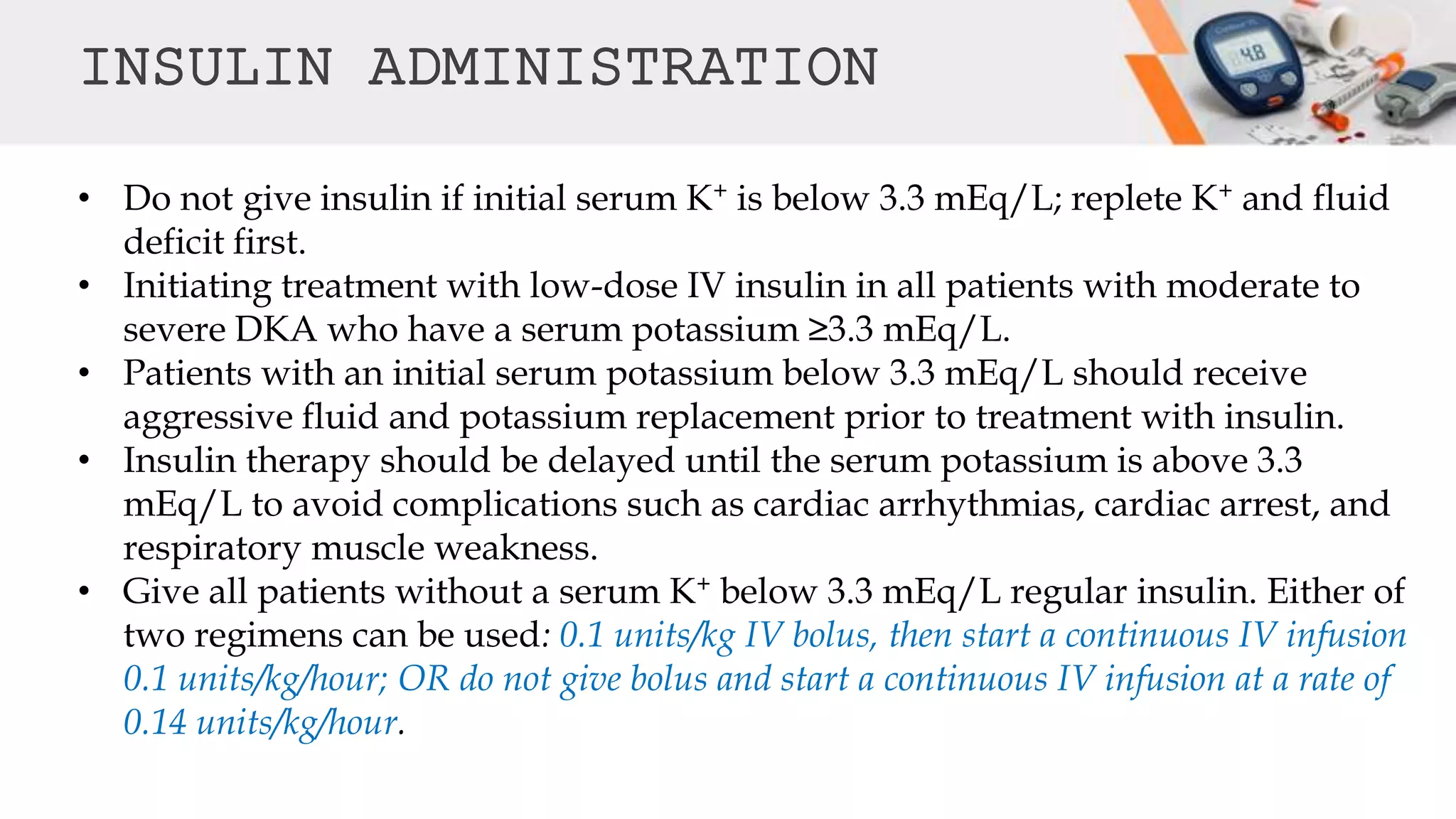
• Do not give insulin if initial serum K+ is below 3.3 mEq/L; replete K+ and fluid
deficit first.
• Initiating treatment with low-dose IV insulin in all patients with moderate to
severe DKA who have a serum potassium ≥3.3 mEq/L.
• Patients with an initial serum potassium below 3.3 mEq/L should receive
aggressive fluid and potassium replacement prior to treatment with insulin.
• Insulin therapy should be delayed until the serum potassium is above 3.3
mEq/L to avoid complications such as cardiac arrhythmias, cardiac arrest, and
respiratory muscle weakness.
• Give all patients without a serum K+ below 3.3 mEq/L regular insulin. Either of
two regimens can be used: 0.1 units/kg IV bolus, then start a continuous IV infusion
0.1 units/kg/hour; OR do not give bolus and start a continuous IV infusion at a rate of
0.14 units/kg/hour.
INSULIN ADMINISTRATION
• If serum glucose does not fall by at least 50 to
70 mg/dL (2.8 to 3.9 mmol/L) in first hour,
double the rate of insulin infusion.
• When the serum glucose reaches 200 mg/dL
(11.1 mmol/L), it may be possible to decrease
the infusion rate to 0.02 to 0.05 units/kg/hour.
• Continue insulin infusion until ketoacidosis is
resolved, serum glucose is below 200 mg/dL
(11.1 mmol/L), and subcutaneous insulin is
begun.
BICARBONATE THERAPY
- Concerns with use:
• Rapid rise in pH with shift the O2 dissociation
curve to the left. This results in decrease tissue
oxygenation. The rise in pCO2 results in an
increase in lactate and acidosis.
• The rise in lactate may lead to fall in cerebral pH
contributing to edema.
- Consider use with:
• pH<7.0, especially if decreased cardiac function
• Life-threatening hyperkalemia
- Use: pH<6.9, give 100mEq of sodium bicarbonate
plus 20 mEq of potassium chlorite in 400 ml
sterile water over two hours
BICARBONATE THERAPY
- Bicarbonate administration is also controversial.
Several potential harmful effects:
• If bicarbonate infusion successfully increases the blood bicarbonate concentration, this can reduce the hyperventilatory
drive, which will raise the blood pCO2 . Increase blood CO2 tension is more quickly reflected across the blood brain
barrier than the increased arterial bicarbonate. This may cause a paradoxical fall in cerebral pH. Although neurologic
deterioration has been attributed to this mechanism, it remains a very controversial effect and, if it occurs, is rare.
• The administration of alkali may slow the rate of recovery of the ketosis
• Alkali administration can lead to a posttreatment metabolic alkalosis since metabolism of ketoacid anions with insulin
results in the generation of bicarbonate and spontaneous correction of most of the metabolic acidosis.
Source: Uptodate.com
Benefit from cautious alkali therapy:
• Patients with an arterial pH 6.9 in whom decreased cardiac contractility and vasodilatation can impair tissue perfusion.
At an arterial pH above 7.00, most experts agree that bicarbonate therapy is not necessary, since therapy with insulin
and volume expansion will largely reverse the metabolic acidosis.
• Patients with potentially life-threatening hyperkalemia, since bicarbonate administration in academic patients may
drive potassium into cells, thereby lowering the serum potassium concentration.
Source: Uptodate.com

Diabetic ketoacidosis (DKA) MedicalBooksVN.wordpress.com/

  • 1.
    Hoang Cuong MD HaNoiMedical University DIABETIC KETOACIDOSIS
  • 2.
    INTRODUCTION - Diabetic Ketoacidosisis an acute metabolic complication of diabetes characterized by hyperglycemia, hyperketonemia, and metabolic acidosis. - Hyperglycemia causes an osmotic diuresis with significant fluid and electrolyte loss. - DKA occurs mostly in type 1 diabetes mellitus (DM). - It causes nausea, vomiting, and abdominal pain and can progress to cerebral edema, coma, and death. - DKA is diagnosed by detection of hyperglycemia. - Treatment involves volume expansion, insulin replacement, and prevention of hypokalemia.
  • 3.
    DEFINITION - Diabetic Ketoacidosisis a state of absolute or relative insulin deficiency aggravated by ensuring hyperglycaemia, dehydration and acidosis producing derangements in intermediary metabolism. - They are both associated with: • Insulin deficiency (absolute in T1DM and relative in T2DM) and hyperglycemia. • Acid-base abnormalities (ketoacidosis) • Severe volume depletion.
  • 4.
    Other hyperglycemic states Diabetesmellitus Hyperosmolar hyperglycemic state Impaired glucose tolerance Stress hyperglycemia Other metabolic acidosis states Lactic acidosis Hyperchloremic acidosis Salicylism Uremic acidosis Drug-induced acidosis Other ketotic states Ketotic hypoglycemia Alcoholic ketosis Starvation ketosis
  • 5.
  • 6.
  • 7.
    CAUSES CAN TRIGGERDKA: - New diagnosis of diabetes. - Drugs: • Antipsychotic agents • Others: Corticosteroids, sympathomimetic agents, thiazide diuretics… - Infection: Pneumonia, sepsis, urinary tract infection (UTI) - Lack of insulin—Most common cause of DKA. • Insulin pump failure. • Nonadherence to insulin treatment plans: body image issues, financial problems, psychological factors. • Unrecognized symptoms of new-onset diabetes mellitus. - Other physiologic stressors: MI, Stroke, Pancreatitis, Trauma.
  • 8.
  • 9.
    PATHOPHYSIOLOGY Acetoacetate β-hydroxyl butyrate D-β-hydroxylbutyrate dehydrogenase • Acetone isn’t an acid. • In DKA, the dominant ketoacid is β-hydroxylbutyric acid, especially in cases of poor tissue perfusion/lactic acidosis . • During recovery, the balance shifts to acetoacetic acid.
  • 10.
    PATHOPHYSIOLOGY - Secondary toinsulin deficiency, and the action of counter-regulatory hormones, blood glucose increases leading to hyperglycemia and glucosuria. Glucosuria causes an osmotic diuresis, leading to water & solutes loss. - In the absence of insulin activity the body fails to utilize glucose as fuel and uses fats instead →ketosis (acetoacetate & β-hydroxyl butyrate) - The excess of ketone bodies will cause metabolic acidosis, the later is also aggravated by lactic acidosis caused by dehydration & poor tissue perfusion. - Vomiting due to an ileus, plus increased insensible water losses due to tachypnea will worsen the state of dehydration. - Electrolyte abnormalities are secondary to their loss in urine and trans- membrane alterations following acidosis & osmotic diuresis.
  • 11.
    PATHOPHYSIOLOGY - Because ofacidosis, K+ ions enter the circulation leading to hyperkalemia, this is aggravated by dehydration and renal failure. - So, depending on the duration of DKA, serum K at diagnosis may be high, normal or low, but the intracellular K stores are always depleted. - Na+ loss occurs secondary to the hyperosmotic state & the osmotic diuresis. - The dehydration can lead to decreased kidney perfusion and acute renal failure. - Accumulation of ketone bodies contributes to the abdominal pain and vomiting. - β-hydroxyl butyrate can serve as an energy source in the absence of insulin-mediated glucose delivery, and is a protective mechanism in case of starvation.
  • 12.
    PATHOPHYSIOLOGY - Dehydration: 6liters or more, 15-20% of their weight. • Osmotic Diuresis: Blood glucose exceeds the renal threshold (160-180mg/dL) • Vomiting • Hyperventilation. • Impaired consciousness- Decreased intake. - Metabolic acidosis: Initially due to the excess ketones. Compensatory mechanisms: • Respiratory compensation. • Intracellular buffering- excess H+ goes into cells in exchange for potassium. • Bicarbonate buffering system. - Ionic changes: • A general loss of electrolytes due to osmotic diuresis. • Potassium: intracellular buffering mechanism shifts potassium out of cells so even if there decreased total potassium in the body, serum potassium may initially be normal or even high. This potassium is further lost through the kidneys. - Paradoxes of DKA - Hyperglycemia despite decreased intake - Polyuria despite dehydration - Catabolic state despite hyperglycemia
  • 13.
    New onset diabetes -Recent history of: • Polyuria, polydipsia, polyphagia, weight loss - Pass medical history • Family history of diabetes - History/Duration of symptoms • Headache • Blurry vision • Nausea/Vomiting/Abdominal pain. • Difficulty in breathing • Changes in behavior - Precipitating factor: • Concurrent illness or infection THOROUGH HISTORY is imperative! Preexisting diabetes - History of diabetes and duration: • Last meal/Carbohydrate intake • Current and routine blood glucose levels - Standard insulin regimen • Last insulin dose • Type of insulin and route - Past hospitalization history - Duration of symptoms • Nausea/vomiting/abdominal pain - Precipitating factors: • Physical exertion • Change in eating habits/diets • Stress, missed insulin dose, illness
  • 14.
    - DKA usuallydevelops slowly. But when vomiting occurs, this life-threatening condition can develop in a few hours. - Early symptoms include the following: • Thirst or a very dry mouth. • Frequent urinary • High blood glucose level. • High levels of ketones in the urine. - Then, other symptoms appear: • Constantly feeling tired. • Dry or flushed skin. • Nausea, vomiting, or abdominal pain. • Difficulty breathing. • Fruity odor on breath. • Confusion THE WARNING SIGNS
  • 15.
    - Assess fordehydration • Vital signs, mucous membranes, capillary refill, skin (color, temperature and turgor) - Assess for acidosis • Fruity breath odor • Deep, rapid breathing → Kussmaul’s respirations - Assess for mental status • GCS, PGCS, AVPU - Assess for sign/symptoms of possible infection PHYSICAL ASSESSMENT
  • 16.
    - Initial Labs: •Blood glucose • Urine ketones • Venous blood gas • Basic blood chemistry: Electrolytes, BUN, creatinine, Magnesium, Calcium, Phosphorus. - Additional labs: • CBC • Osmolality • Serum β-hydroxyl butyrate (β-OH) • Hemoglobin A1C (HbA1C) • Pancreatic antibodies. • Additional testing as indicated: CXR, non-contrast head CT, cultures (blood, urine, throat) LABORATORY EVALUATION
  • 17.
    - Blood Gases: •ABG ─ artery blood sample or VBG ─ Venous blood sample are both adequate to determine blood pH. • VBG is sufficient who are hemodynamically stable and without respiratory failure.  Metabolic acidosis is defined as a low pH and decreased HCO3 −  Metabolic alkalosis is defined as a high pH and increased HCO3 − LABORATORY EVALUATION
  • 18.
    Calculations for theEvaluation of Diabetic Ketoacidosis LABORATORY EVALUATION Value Purpose Formula Normal value Anion gap Essential for evaluation of acid base disorders Na−(Cl+HCO3) 7 to 13 mEq per L (7 to 13 mmol per L) Osmolar gap Difference between measured osmolality and calculated osmolality - <10 mmol/L Serum osmolality Measure of particles in a fluid compartment 2(Na + K) +(Glu/18)+ (BUN/2.8) 285 to 295 mOsm/kg (285 to 295 mmol/kg) of water Serum sodium correction Hyperglycemia causes pseudohyponatremia Na +0.016.(glucose-100) 135 to 140 mEq/L (135 to 140 mmol/L) Osmolality (measured) Osmolality (calculated)
  • 19.
    ADA Diagnostic Criteriafor DKA DIAGNOSIS DKA Parameter Mild Moderate Severe Plasma glucose, mg/dL >250 >250 >250 Arterial pH 7.25-7.3 7.0-7.24 <7.0 Serum bicarbonate (mmol/L) 15-18 10 to <15 <10 Serum ketones Positive Positive Positive Urine ketones Positive Positive Positive Effective serum osmolality(mOsm/kg) Variable Variable Variable Alteration in sensoria or mental obtundation Alert Alert/Drowsy Stupor/Coma
  • 20.
    MANAGEMENT - Initial HospitalManagement: • Fluid Replacement • Potassium Replacement • IV insulin therapy • Bicarbonate and Metabolic Acidosis • Phosphate Depletion • Close Monitoring • Watch for complications - Once Resolved: • Convert to home insulin regimen • Prevent recurrence
  • 21.
    IV FLUID ADMINISTRATION Thegoal of the first hour of treatment: • Fluid resuscitation • Confirmation of DKA by laboratory studies The goal of the second and succeeding hours: • Slow correction of hyperglycemia, metabolic acidosis and ketosis • Continued volume replacement • This usually required several hours and meticulous attention to the patient’s response to therapy • Mainstay of initial therapy • All patients with DKA require supplemental fluids • Expand the intravascular volume & improve renal blood flow • Average fluid loss for DKA: 3-6 Liters.
  • 22.
    Corrected Serum Na+=Na+ + 0.016.(Glucose-100) • Rate of isotonic saline infusion is dependent upon the clinical state of the patient • Isotonic saline should be infused as quickly as possible with hypovolemic shock. • In hypovolemic patients without shock (and no HF)→ in the first couple hours, infused at a rate of 15-20mL/kg/hour ( approx. 1L/hour), with maximum of <50 mL/kg in first four hours. • After the second or third hour, optimal fluid replacement depends upon the state of hydration, serum electrolyte levels, and the urine output. • Add dextrose to the saline solution when the serum glucose reaches 200mg/dL (11.1 mmol/L) in DKA.
  • 23.
    POTASSIUM SUPPLEMENT • Ifinitial K high, should not need more therapy than insulin, which will drive K into the cells. • Potassium replacement is initiated immediately if K<5.3 mEq/L. • Despite the total body potassium deficit, the serum potassium concentration is usually normal or elevated at presentation. • Potassium replacement must be done cautiously if renal function remains depressed and/or urine out put not >50mL/hour. • Add i.v potassium to each liter of fluid administered unless contraindicated
  • 24.
    INSULIN ADMINISTRATION • Donot give insulin if initial serum K+ is below 3.3 mEq/L; replete K+ and fluid deficit first. • Initiating treatment with low-dose IV insulin in all patients with moderate to severe DKA who have a serum potassium ≥3.3 mEq/L. • Patients with an initial serum potassium below 3.3 mEq/L should receive aggressive fluid and potassium replacement prior to treatment with insulin. • Insulin therapy should be delayed until the serum potassium is above 3.3 mEq/L to avoid complications such as cardiac arrhythmias, cardiac arrest, and respiratory muscle weakness. • Give all patients without a serum K+ below 3.3 mEq/L regular insulin. Either of two regimens can be used: 0.1 units/kg IV bolus, then start a continuous IV infusion 0.1 units/kg/hour; OR do not give bolus and start a continuous IV infusion at a rate of 0.14 units/kg/hour.
  • 25.
    INSULIN ADMINISTRATION • Ifserum glucose does not fall by at least 50 to 70 mg/dL (2.8 to 3.9 mmol/L) in first hour, double the rate of insulin infusion. • When the serum glucose reaches 200 mg/dL (11.1 mmol/L), it may be possible to decrease the infusion rate to 0.02 to 0.05 units/kg/hour. • Continue insulin infusion until ketoacidosis is resolved, serum glucose is below 200 mg/dL (11.1 mmol/L), and subcutaneous insulin is begun.
  • 26.
    BICARBONATE THERAPY - Concernswith use: • Rapid rise in pH with shift the O2 dissociation curve to the left. This results in decrease tissue oxygenation. The rise in pCO2 results in an increase in lactate and acidosis. • The rise in lactate may lead to fall in cerebral pH contributing to edema. - Consider use with: • pH<7.0, especially if decreased cardiac function • Life-threatening hyperkalemia - Use: pH<6.9, give 100mEq of sodium bicarbonate plus 20 mEq of potassium chlorite in 400 ml sterile water over two hours
  • 27.
    BICARBONATE THERAPY - Bicarbonateadministration is also controversial. Several potential harmful effects: • If bicarbonate infusion successfully increases the blood bicarbonate concentration, this can reduce the hyperventilatory drive, which will raise the blood pCO2 . Increase blood CO2 tension is more quickly reflected across the blood brain barrier than the increased arterial bicarbonate. This may cause a paradoxical fall in cerebral pH. Although neurologic deterioration has been attributed to this mechanism, it remains a very controversial effect and, if it occurs, is rare. • The administration of alkali may slow the rate of recovery of the ketosis • Alkali administration can lead to a posttreatment metabolic alkalosis since metabolism of ketoacid anions with insulin results in the generation of bicarbonate and spontaneous correction of most of the metabolic acidosis. Source: Uptodate.com Benefit from cautious alkali therapy: • Patients with an arterial pH 6.9 in whom decreased cardiac contractility and vasodilatation can impair tissue perfusion. At an arterial pH above 7.00, most experts agree that bicarbonate therapy is not necessary, since therapy with insulin and volume expansion will largely reverse the metabolic acidosis. • Patients with potentially life-threatening hyperkalemia, since bicarbonate administration in academic patients may drive potassium into cells, thereby lowering the serum potassium concentration. Source: Uptodate.com