Presented by Ambrish Mishra
Of class IX-D
What is Diabetes
Diabetes is a chronic (lifelong) disease
marked by high levels of sugar in the
blood.e Types of Diabetes
There are two Types of diabetes…..
One is Type 1 Diabetes
The other is Type 2 Diabetes
What is Type 1 Diabetes?
 Type 1 diabetes is a chronic (lifelong) disease
that occurs when the pancreas does not
produce enough insulin to properly control
blood sugar levels.ype 1 Diabetes
 The body's own immune system attacks and
destroys beta cells in the pancreas that are
responsible for creating the hormone insulin.
What is Type 2 Diabetes Type 2 diabetes formerly called non-insulin-
dependent diabetes is a disorder that is
characterized by high blood glucose in the
context of insulin resistance and relative insulin
deficiency.
What Causes Type 2 Diabetes
 Type 2 diabetes occurs when the pancreas doesn't
make enough insulin or the cells of the body
become resistant to insulin.
What is Hypoglycemia?
Hypoglycemia, also called
low blood glucose or low
blood sugar, occurs when
blood glucose drops
below normal levels.
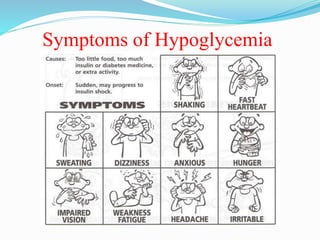
Symptoms of Hypoglycemia
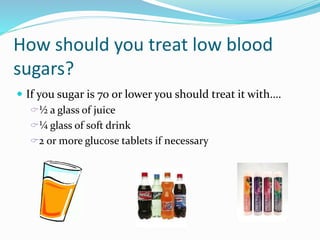
How should you treat low blood
sugars?
 If you sugar is 70 or lower you should treat it with….
½ a glass of juice
¼ glass of soft drink
2 or more glucose tablets if necessary
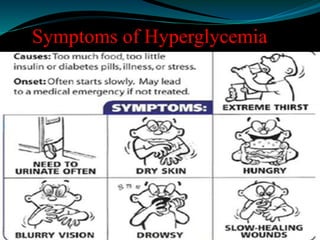
What is Hyperglycemia?
Hyperglycemia is a condition
in which an excessive
amount of glucose
circulates in the blood
plasma.
Symptoms of Hyperglycemia
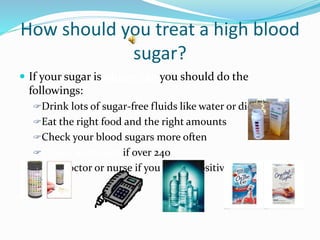
How should you treat a high blood
sugar?
 If your sugar is above 240 you should do the
followings:
Drink lots of sugar-free fluids like water or diet drinks
Eat the right food and the right amounts
Check your blood sugars more often
Check keytones if over 240
Call doctor or nurse if you have a positive keytones
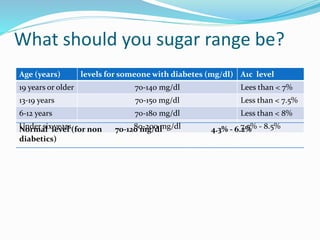
What should you sugar range be?
Age (years) levels for someone with diabetes (mg/dl) A1c level
19 years or older 70-140 mg/dl Lees than < 7%
13-19 years 70-150 mg/dl Less than < 7.5%
6-12 years 70-180 mg/dl Less than < 8%
Under six years 80-200 mg/dl 7.5% - 8.5%Normal level (for non
diabetics)
70-120 mg/dl 4.3% - 6.2%
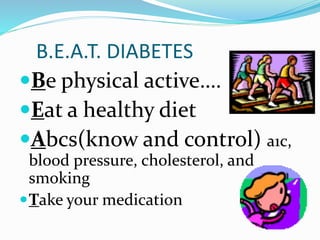
B.E.A.T. DIABETES
Be physical active….
Eat a healthy diet
Abcs(know and control) a1c,
blood pressure, cholesterol, and
smoking
Take your medication
Diabetesppt 120326200000-phpapp02

Diabetesppt 120326200000-phpapp02

  • 1.
    Presented by AmbrishMishra Of class IX-D
  • 2.
    What is Diabetes Diabetesis a chronic (lifelong) disease marked by high levels of sugar in the blood.e Types of Diabetes There are two Types of diabetes….. One is Type 1 Diabetes The other is Type 2 Diabetes
  • 3.
    What is Type1 Diabetes?  Type 1 diabetes is a chronic (lifelong) disease that occurs when the pancreas does not produce enough insulin to properly control blood sugar levels.ype 1 Diabetes  The body's own immune system attacks and destroys beta cells in the pancreas that are responsible for creating the hormone insulin.
  • 4.
    What is Type2 Diabetes Type 2 diabetes formerly called non-insulin- dependent diabetes is a disorder that is characterized by high blood glucose in the context of insulin resistance and relative insulin deficiency. What Causes Type 2 Diabetes  Type 2 diabetes occurs when the pancreas doesn't make enough insulin or the cells of the body become resistant to insulin.
  • 5.
    What is Hypoglycemia? Hypoglycemia,also called low blood glucose or low blood sugar, occurs when blood glucose drops below normal levels.
  • 6.
  • 7.
    How should youtreat low blood sugars?  If you sugar is 70 or lower you should treat it with…. ½ a glass of juice ¼ glass of soft drink 2 or more glucose tablets if necessary
  • 8.
    What is Hyperglycemia? Hyperglycemiais a condition in which an excessive amount of glucose circulates in the blood plasma.
  • 9.
  • 10.
    How should youtreat a high blood sugar?  If your sugar is above 240 you should do the followings: Drink lots of sugar-free fluids like water or diet drinks Eat the right food and the right amounts Check your blood sugars more often Check keytones if over 240 Call doctor or nurse if you have a positive keytones
  • 11.
    What should yousugar range be? Age (years) levels for someone with diabetes (mg/dl) A1c level 19 years or older 70-140 mg/dl Lees than < 7% 13-19 years 70-150 mg/dl Less than < 7.5% 6-12 years 70-180 mg/dl Less than < 8% Under six years 80-200 mg/dl 7.5% - 8.5%Normal level (for non diabetics) 70-120 mg/dl 4.3% - 6.2%
  • 12.
    B.E.A.T. DIABETES Be physicalactive…. Eat a healthy diet Abcs(know and control) a1c, blood pressure, cholesterol, and smoking Take your medication