Diabetes Mellitus
Definition:-Diabetes mellitus is a chronic systemic disease characterized by either a deficiency of insulin or a decrease ability of the body to use insulin.
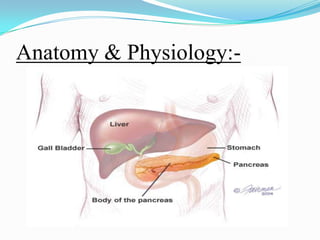
Anatomy & Physiology:-
Classification of D.M.:-
Type-I Diabetes mellitus:-In this form of diabetes mellitus the Beta cells of pancreas that normally produce insulin which are destroy by an auto-immune response. As a result insulin injection are needed to control the elevated blood sugar level.
Causes:-1) Genetic factors.(HLA)2) Immunological factors.3) Environmental factors.
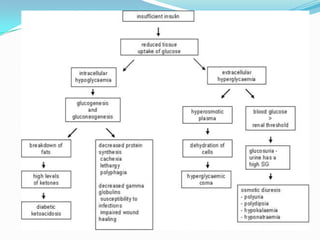
Patho-physiology:-
Type-2 Diabetes mellitus:-It refers from decreased sensitivity to insulin or decrease production of insulin.This type of patient firstly treated by diet and exercise and secondary by oral hypoglycemic drug.
Causes:-1) Age- > 65yrs.2) Obesity3) Family history.
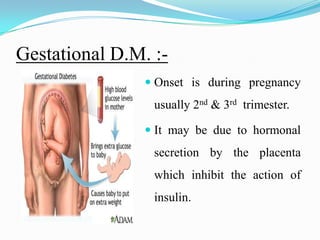
Gestational D.M. :-Onset is during pregnancy usually 2nd & 3rd  trimester.It may be due to hormonal secretion by the placenta which inhibit the action of insulin.
4) Associated with other conditions:-It is a form of non- insulin dependent diabetes mellitus, in which the disease is associated with other disease, hormonal abnormalities, drugs such as gluco-corticoids and oestrogen containing preparation.
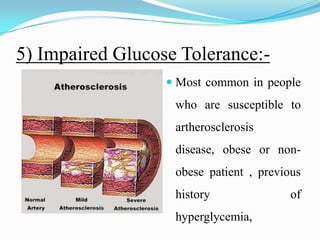
5) Impaired Glucose Tolerance:-Most common in people who are susceptible to artherosclerosis disease, obese or non-obese patient , previous history of hyperglycemia,
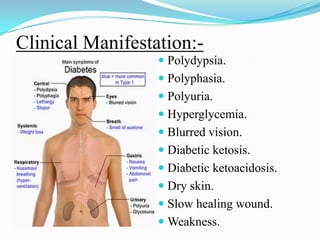
Clinical Manifestation:-Polydypsia.Polyphasia.Polyuria.Hyperglycemia.Blurred vision.Diabetic ketosis.Diabetic ketoacidosis.Dry skin.Slow healing wound.Weakness.
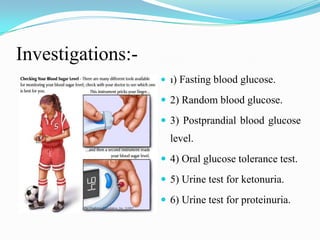
Investigations:-1) Fasting blood glucose.2) Random blood glucose.3) Postprandial blood glucose level.4) Oral glucose tolerance test.5) Urine test for ketonuria.6) Urine test for proteinuria.
Complications:-1) Chronic complications:-     -Macrovascular complication.          (coronary artery d/s,    cerebrovascular d/s, 	Hypertension etc.)     -Microvascular complications.          (Retinopathy, nephropathy)     -Neuropathic complications:-           (Sensorimotor neuropathy, autonomic 	neuropathy)     -Mixed:-            (Foot ulcer)
Acute Complications:--Hypoglycemia.          -Hyperglycemia.          -Diabetic ketoacidosis.          -Diabetic retinopathy.          -Diabetic nephropathy.          -Diabetic neuropathy.
Management:-The main management or goal is to normalise insulin activity and blood glucose level to reduce the vascular and nephropathic complications.5 main components of management of diabetes mellitus patient’s are:-
Cont..1) Diet2) Exercise3) Monitoring4) Education5) Medication
Pharmacological t/t:-  (A) Insulin therapy:-Insulin may be grouped into several categories based on the onset, peak and duration of action……. 1) Rapid acting:-Eg. Lispro, Aspart                 onset- 10-15min.                 duration- 8hrs.2) Short acting:-Eg. Humalog R, Novolin R                 onset- ½-1hr                 duration- 4-6 hrs
3) Intermediate acting :-Eg. ProtamineHagedorn, Novolin L                          onset- 2-4 hrs                          duration- 16-24hrs.4) Long acting :-Eg. Ultralenate                           onset-6-8 hrs.                            duration-20-30hrs.5) Very long acting:-Eg. Glargine                            onset- 1hr.                            duration- 24hrs
(B) Oral diabetic agent:-      -Sulfonylureas        (stimulate pancreas to stimulate insulin)     -Biguanides-         (helps to decrease the glucose level)     -Alpha glucosidase inhibitors         (delaying absorption of glucose)     -Thiazolidinediones         (promote insulin action)     -Meglitinides-         ( decrease glucose level)Surgical Management:-Pancreas transplantation
Nursing Management:-Assessment:-   - Assess the general condition of the patient.  - Assess the past and medical history of the patient.  - Assess for the etiological factors responsible in client.  - Assess for signs and symptoms in the client.  - Assess for the type of diabetes and type of insulin 	used foe the patient.   -Assess for the investigation for the patient.
Nursing Diagnosis:-Risk for fluid volume deficit related to polyuria and dehydration.Imbalance nutrition related to imbalance of insulin, food and physical activity.Deficient knowledge about diabetes self care skills/ information.Potential self-care deficit related to physical impairments or social factors.Anxiety related to loss of control, fear of inability to manage diabetes, misinformation related to diabetes, fear of diabetes complications.
Intervention:-1) Maintaining fluid and electrolyte balanceIntake and output are measured.I/V fluids and electrolytes are administered as prescribed.Oral intake is encouraged when it is permitted.Vital signs are monitored hourly for signs of dehydration.2) Improving nutritional intake…Meal planning is implemented, with the control of glucose as the primary goal.An appropriate caloric intake allows the patient to achieve and maintain desired body weight.
3) Reducing anxiety..Provide emotional support and sets aside time to talk with the patient.Any misconception the or family may have regarding diabetes are dispelled.Positive reinforcement is given for the self care behaviours.4) Improving self care..
Assignment:-M.M-10              Time-10mins1) Define diabetes mellitus.2) Enlist the types of diabetes mellitus.3) Write down the clinical manifestations of diabetes mellitus.(Write your name and roll no. on the top of the answer sheet.)
Diabetes mellitus

Diabetes mellitus

  • 2.
  • 3.
    Definition:-Diabetes mellitus isa chronic systemic disease characterized by either a deficiency of insulin or a decrease ability of the body to use insulin.
  • 4.
  • 5.
  • 6.
    Type-I Diabetes mellitus:-Inthis form of diabetes mellitus the Beta cells of pancreas that normally produce insulin which are destroy by an auto-immune response. As a result insulin injection are needed to control the elevated blood sugar level.
  • 7.
    Causes:-1) Genetic factors.(HLA)2)Immunological factors.3) Environmental factors.
  • 8.
  • 10.
    Type-2 Diabetes mellitus:-Itrefers from decreased sensitivity to insulin or decrease production of insulin.This type of patient firstly treated by diet and exercise and secondary by oral hypoglycemic drug.
  • 11.
    Causes:-1) Age- >65yrs.2) Obesity3) Family history.
  • 12.
    Gestational D.M. :-Onsetis during pregnancy usually 2nd & 3rd trimester.It may be due to hormonal secretion by the placenta which inhibit the action of insulin.
  • 13.
    4) Associated withother conditions:-It is a form of non- insulin dependent diabetes mellitus, in which the disease is associated with other disease, hormonal abnormalities, drugs such as gluco-corticoids and oestrogen containing preparation.
  • 14.
    5) Impaired GlucoseTolerance:-Most common in people who are susceptible to artherosclerosis disease, obese or non-obese patient , previous history of hyperglycemia,
  • 15.
    Clinical Manifestation:-Polydypsia.Polyphasia.Polyuria.Hyperglycemia.Blurred vision.Diabeticketosis.Diabetic ketoacidosis.Dry skin.Slow healing wound.Weakness.
  • 16.
    Investigations:-1) Fasting bloodglucose.2) Random blood glucose.3) Postprandial blood glucose level.4) Oral glucose tolerance test.5) Urine test for ketonuria.6) Urine test for proteinuria.
  • 17.
    Complications:-1) Chronic complications:- -Macrovascular complication. (coronary artery d/s, cerebrovascular d/s, Hypertension etc.) -Microvascular complications. (Retinopathy, nephropathy) -Neuropathic complications:- (Sensorimotor neuropathy, autonomic neuropathy) -Mixed:- (Foot ulcer)
  • 18.
    Acute Complications:--Hypoglycemia. -Hyperglycemia. -Diabetic ketoacidosis. -Diabetic retinopathy. -Diabetic nephropathy. -Diabetic neuropathy.
  • 19.
    Management:-The main managementor goal is to normalise insulin activity and blood glucose level to reduce the vascular and nephropathic complications.5 main components of management of diabetes mellitus patient’s are:-
  • 20.
    Cont..1) Diet2) Exercise3)Monitoring4) Education5) Medication
  • 21.
    Pharmacological t/t:- (A) Insulin therapy:-Insulin may be grouped into several categories based on the onset, peak and duration of action……. 1) Rapid acting:-Eg. Lispro, Aspart onset- 10-15min. duration- 8hrs.2) Short acting:-Eg. Humalog R, Novolin R onset- ½-1hr duration- 4-6 hrs
  • 22.
    3) Intermediate acting:-Eg. ProtamineHagedorn, Novolin L onset- 2-4 hrs duration- 16-24hrs.4) Long acting :-Eg. Ultralenate onset-6-8 hrs. duration-20-30hrs.5) Very long acting:-Eg. Glargine onset- 1hr. duration- 24hrs
  • 23.
    (B) Oral diabeticagent:- -Sulfonylureas (stimulate pancreas to stimulate insulin) -Biguanides- (helps to decrease the glucose level) -Alpha glucosidase inhibitors (delaying absorption of glucose) -Thiazolidinediones (promote insulin action) -Meglitinides- ( decrease glucose level)Surgical Management:-Pancreas transplantation
  • 24.
    Nursing Management:-Assessment:- - Assess the general condition of the patient. - Assess the past and medical history of the patient. - Assess for the etiological factors responsible in client. - Assess for signs and symptoms in the client. - Assess for the type of diabetes and type of insulin used foe the patient. -Assess for the investigation for the patient.
  • 25.
    Nursing Diagnosis:-Risk forfluid volume deficit related to polyuria and dehydration.Imbalance nutrition related to imbalance of insulin, food and physical activity.Deficient knowledge about diabetes self care skills/ information.Potential self-care deficit related to physical impairments or social factors.Anxiety related to loss of control, fear of inability to manage diabetes, misinformation related to diabetes, fear of diabetes complications.
  • 26.
    Intervention:-1) Maintaining fluidand electrolyte balanceIntake and output are measured.I/V fluids and electrolytes are administered as prescribed.Oral intake is encouraged when it is permitted.Vital signs are monitored hourly for signs of dehydration.2) Improving nutritional intake…Meal planning is implemented, with the control of glucose as the primary goal.An appropriate caloric intake allows the patient to achieve and maintain desired body weight.
  • 27.
    3) Reducing anxiety..Provideemotional support and sets aside time to talk with the patient.Any misconception the or family may have regarding diabetes are dispelled.Positive reinforcement is given for the self care behaviours.4) Improving self care..
  • 28.
    Assignment:-M.M-10 Time-10mins1) Define diabetes mellitus.2) Enlist the types of diabetes mellitus.3) Write down the clinical manifestations of diabetes mellitus.(Write your name and roll no. on the top of the answer sheet.)