El Día de los Muertos
  By: Penelope Martin, Jazmin
    Martin, and Ivana Elson
Food
•   The type of food most
    commonly made is what the
    spirit loved in life. You would
    make their favorite dishes.
•   For a child, candy is most
    commonly used.
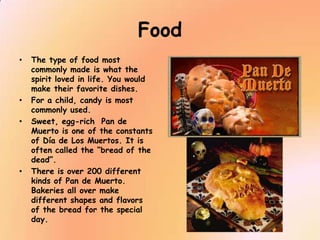
•   Sweet, egg-rich Pan de
    Muerto is one of the constants
    of Día de Los Muertos. It is
    often called the “bread of the
    dead”.
•   There is over 200 different
    kinds of Pan de Muerto.
    Bakeries all over make
    different shapes and flavors
    of the bread for the special
    day.
History
•   More than 500 years ago,
    when the Spanish
    Conquistadors landed in what is
    now Mexico, they encountered
    natives practicing a ritual that
    seemed to mock death.
•   It was a ritual the people had
    been practicing at least 3,000
    years.
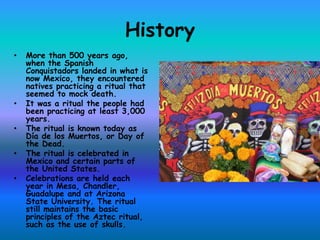
•   The ritual is known today as
    Día de los Muertos, or Day of
    the Dead.
•   The ritual is celebrated in
    Mexico and certain parts of
    the United States.
•   Celebrations are held each
    year in Mesa, Chandler,
    Guadalupe and at Arizona
    State University. The ritual
    still maintains the basic
    principles of the Aztec ritual,
    such as the use of skulls.
Activities
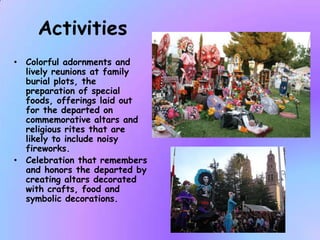
• Colorful adornments and
  lively reunions at family
  burial plots, the
  preparation of special
  foods, offerings laid out
  for the departed on
  commemorative altars and
  religious rites that are
  likely to include noisy
  fireworks.
• Celebration that remembers
  and honors the departed by
  creating altars decorated
  with crafts, food and
  symbolic decorations.
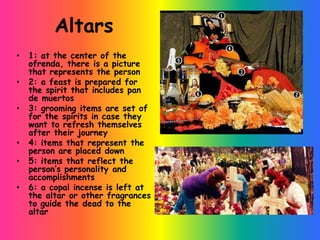
Altars
•   1: at the center of the
    ofrenda, there is a picture
    that represents the person
•   2: a feast is prepared for
    the spirit that includes pan
    de muertos
•   3: grooming items are set of
    for the spirits in case they
    want to refresh themselves
    after their journey
•   4: items that represent the
    person are placed down
•   5: items that reflect the
    person’s personality and
    accomplishments
•   6: a copal incense is left at
    the altar or other fragrances
    to guide the dead to the
    altar
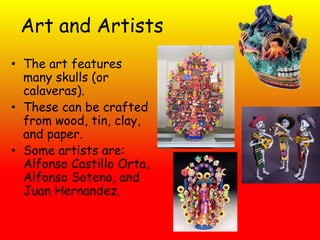
Art and Artists
• The art features
  many skulls (or
  calaveras).
• These can be crafted
  from wood, tin, clay,
  and paper.
• Some artists are:
  Alfonso Castillo Orta,
  Alfonso Soteno, and
  Juan Hernandez.

Dia de los muertosfff

  • 1.
    El Día delos Muertos By: Penelope Martin, Jazmin Martin, and Ivana Elson
  • 2.
    Food • The type of food most commonly made is what the spirit loved in life. You would make their favorite dishes. • For a child, candy is most commonly used. • Sweet, egg-rich Pan de Muerto is one of the constants of Día de Los Muertos. It is often called the “bread of the dead”. • There is over 200 different kinds of Pan de Muerto. Bakeries all over make different shapes and flavors of the bread for the special day.
  • 3.
    History • More than 500 years ago, when the Spanish Conquistadors landed in what is now Mexico, they encountered natives practicing a ritual that seemed to mock death. • It was a ritual the people had been practicing at least 3,000 years. • The ritual is known today as Día de los Muertos, or Day of the Dead. • The ritual is celebrated in Mexico and certain parts of the United States. • Celebrations are held each year in Mesa, Chandler, Guadalupe and at Arizona State University. The ritual still maintains the basic principles of the Aztec ritual, such as the use of skulls.
  • 4.
    Activities • Colorful adornmentsand lively reunions at family burial plots, the preparation of special foods, offerings laid out for the departed on commemorative altars and religious rites that are likely to include noisy fireworks. • Celebration that remembers and honors the departed by creating altars decorated with crafts, food and symbolic decorations.
  • 5.
    Altars • 1: at the center of the ofrenda, there is a picture that represents the person • 2: a feast is prepared for the spirit that includes pan de muertos • 3: grooming items are set of for the spirits in case they want to refresh themselves after their journey • 4: items that represent the person are placed down • 5: items that reflect the person’s personality and accomplishments • 6: a copal incense is left at the altar or other fragrances to guide the dead to the altar
  • 6.
    Art and Artists •The art features many skulls (or calaveras). • These can be crafted from wood, tin, clay, and paper. • Some artists are: Alfonso Castillo Orta, Alfonso Soteno, and Juan Hernandez.