Día de los MuertosDía de los Muertos
??????????
 What is it?What is it?
 Los Dias de los Muertos, the Day of the Dead, is a traditional MexicoLos Dias de los Muertos, the Day of the Dead, is a traditional Mexico
holiday honoring the dead. Los Dias de los Muertos is not a sad time, butholiday honoring the dead. Los Dias de los Muertos is not a sad time, but
instead a time of remembering and rejoicing.instead a time of remembering and rejoicing.
 When is it?When is it?
 It is celebrated every year at the same time as Halloween and theIt is celebrated every year at the same time as Halloween and the
Christian holy days of All Saints Day and All Souls Day (November 1stChristian holy days of All Saints Day and All Souls Day (November 1st
and 2nd).and 2nd).
 Where is it celebrated?Where is it celebrated?
 It is celebrated in Mexico, Ecuador, Guatemala, and other areas inIt is celebrated in Mexico, Ecuador, Guatemala, and other areas in
Central and South America populated with the Latino ethnic background.Central and South America populated with the Latino ethnic background.
The Day of the Dead is also celebrated in areas of the United States, suchThe Day of the Dead is also celebrated in areas of the United States, such
as California, Texas, and many others, in which the Mexican/Americanas California, Texas, and many others, in which the Mexican/American
heritage exists.heritage exists.
Traditions- AltarsTraditions- Altars
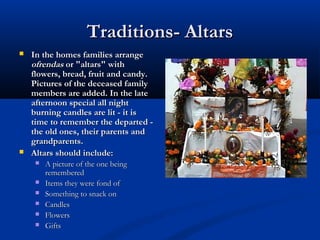
 In the homes families arrangeIn the homes families arrange
ofrendasofrendas or "altars" withor "altars" with
flowers, bread, fruit and candy.flowers, bread, fruit and candy.
Pictures of the deceased familyPictures of the deceased family
members are added. In the latemembers are added. In the late
afternoon special all nightafternoon special all night
burning candles are lit - it isburning candles are lit - it is
time to remember the departed -time to remember the departed -
the old ones, their parents andthe old ones, their parents and
grandparents.grandparents.
 Altars should include:Altars should include:
 A picture of the one being A picture of the one being 
rememberedremembered
 Items they were fond ofItems they were fond of
 Something to snack onSomething to snack on
 CandlesCandles
 FlowersFlowers
 GiftsGifts
Traditions: FoodTraditions: Food
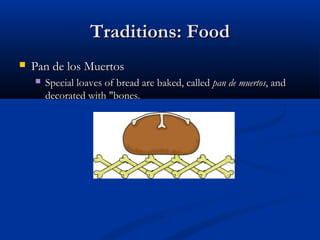
 Pan de los MuertosPan de los Muertos
 Special loaves of bread are baked, calledSpecial loaves of bread are baked, called pan de muertospan de muertos, and, and
decorated with "bones.decorated with "bones.
Traditions: FlowersTraditions: Flowers
 During los Dias de los Muertos the yellow marigoldDuring los Dias de los Muertos the yellow marigold
symbolizes the short duration of life.symbolizes the short duration of life.
 Other flowers commonly seen during this celebration includeOther flowers commonly seen during this celebration include
the white amaryllis, wild orchids, baby's breath and rubythe white amaryllis, wild orchids, baby's breath and ruby
coxcombs are offered as adornment and enticement for thecoxcombs are offered as adornment and enticement for the
returning spirits.returning spirits.
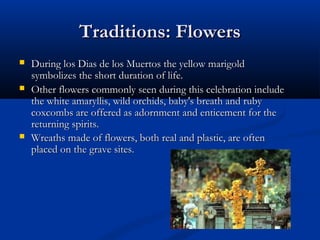
 Wreaths made of flowers, both real and plastic, are oftenWreaths made of flowers, both real and plastic, are often
placed on the grave sites.placed on the grave sites.
Traditions: Papel PicadoTraditions: Papel Picado
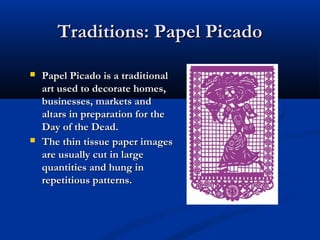
 Papel Picado is a traditionalPapel Picado is a traditional
art used to decorate homes,art used to decorate homes,
businesses, markets andbusinesses, markets and
altars in preparation for thealtars in preparation for the
Day of the Dead.Day of the Dead.
 The thin tissue paper imagesThe thin tissue paper images
are usually cut in largeare usually cut in large
quantities and hung inquantities and hung in
repetitious patterns.repetitious patterns.
Traditions: SkeletonsTraditions: Skeletons
 Skeletons and skulls are found everywhere. ChocolateSkeletons and skulls are found everywhere. Chocolate
skulls, marzipan coffins, and white chocolate skeletons.skulls, marzipan coffins, and white chocolate skeletons.
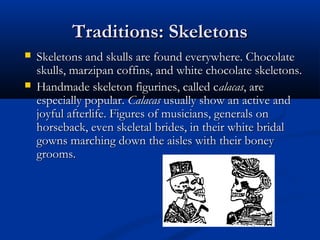
 Handmade skeleton figurines, called cHandmade skeleton figurines, called calacasalacas, are, are
especially popular.especially popular. CalacasCalacas usually show an active andusually show an active and
joyful afterlife. Figures of musicians, generals onjoyful afterlife. Figures of musicians, generals on
horseback, even skeletal brides, in their white bridalhorseback, even skeletal brides, in their white bridal
gowns marching down the aisles with their boneygowns marching down the aisles with their boney
grooms.grooms.
LinksLinks
 Día de los Muertos: For Teachers and StudentsDía de los Muertos: For Teachers and Students
 http://www.azcentral.com/ent/dead/teachers/http://www.azcentral.com/ent/dead/teachers/
 Common misconceptions about the Day of theCommon misconceptions about the Day of the
DeadDead
 http://www.inside-mexico.com/noes.htmhttp://www.inside-mexico.com/noes.htm
 History, Traditions, and SignificanceHistory, Traditions, and Significance
 http://www.nacnet.org/assunta/dead.htmhttp://www.nacnet.org/assunta/dead.htm

Dia de los_muertos

  • 1.
    Día de losMuertosDía de los Muertos
  • 2.
    ??????????  What isit?What is it?  Los Dias de los Muertos, the Day of the Dead, is a traditional MexicoLos Dias de los Muertos, the Day of the Dead, is a traditional Mexico holiday honoring the dead. Los Dias de los Muertos is not a sad time, butholiday honoring the dead. Los Dias de los Muertos is not a sad time, but instead a time of remembering and rejoicing.instead a time of remembering and rejoicing.  When is it?When is it?  It is celebrated every year at the same time as Halloween and theIt is celebrated every year at the same time as Halloween and the Christian holy days of All Saints Day and All Souls Day (November 1stChristian holy days of All Saints Day and All Souls Day (November 1st and 2nd).and 2nd).  Where is it celebrated?Where is it celebrated?  It is celebrated in Mexico, Ecuador, Guatemala, and other areas inIt is celebrated in Mexico, Ecuador, Guatemala, and other areas in Central and South America populated with the Latino ethnic background.Central and South America populated with the Latino ethnic background. The Day of the Dead is also celebrated in areas of the United States, suchThe Day of the Dead is also celebrated in areas of the United States, such as California, Texas, and many others, in which the Mexican/Americanas California, Texas, and many others, in which the Mexican/American heritage exists.heritage exists.
  • 3.
    Traditions- AltarsTraditions- Altars In the homes families arrangeIn the homes families arrange ofrendasofrendas or "altars" withor "altars" with flowers, bread, fruit and candy.flowers, bread, fruit and candy. Pictures of the deceased familyPictures of the deceased family members are added. In the latemembers are added. In the late afternoon special all nightafternoon special all night burning candles are lit - it isburning candles are lit - it is time to remember the departed -time to remember the departed - the old ones, their parents andthe old ones, their parents and grandparents.grandparents.  Altars should include:Altars should include:  A picture of the one being A picture of the one being  rememberedremembered  Items they were fond ofItems they were fond of  Something to snack onSomething to snack on  CandlesCandles  FlowersFlowers  GiftsGifts
  • 4.
    Traditions: FoodTraditions: Food Pan de los MuertosPan de los Muertos  Special loaves of bread are baked, calledSpecial loaves of bread are baked, called pan de muertospan de muertos, and, and decorated with "bones.decorated with "bones.
  • 5.
    Traditions: FlowersTraditions: Flowers During los Dias de los Muertos the yellow marigoldDuring los Dias de los Muertos the yellow marigold symbolizes the short duration of life.symbolizes the short duration of life.  Other flowers commonly seen during this celebration includeOther flowers commonly seen during this celebration include the white amaryllis, wild orchids, baby's breath and rubythe white amaryllis, wild orchids, baby's breath and ruby coxcombs are offered as adornment and enticement for thecoxcombs are offered as adornment and enticement for the returning spirits.returning spirits.  Wreaths made of flowers, both real and plastic, are oftenWreaths made of flowers, both real and plastic, are often placed on the grave sites.placed on the grave sites.
  • 6.
    Traditions: Papel PicadoTraditions:Papel Picado  Papel Picado is a traditionalPapel Picado is a traditional art used to decorate homes,art used to decorate homes, businesses, markets andbusinesses, markets and altars in preparation for thealtars in preparation for the Day of the Dead.Day of the Dead.  The thin tissue paper imagesThe thin tissue paper images are usually cut in largeare usually cut in large quantities and hung inquantities and hung in repetitious patterns.repetitious patterns.
  • 7.
    Traditions: SkeletonsTraditions: Skeletons Skeletons and skulls are found everywhere. ChocolateSkeletons and skulls are found everywhere. Chocolate skulls, marzipan coffins, and white chocolate skeletons.skulls, marzipan coffins, and white chocolate skeletons.  Handmade skeleton figurines, called cHandmade skeleton figurines, called calacasalacas, are, are especially popular.especially popular. CalacasCalacas usually show an active andusually show an active and joyful afterlife. Figures of musicians, generals onjoyful afterlife. Figures of musicians, generals on horseback, even skeletal brides, in their white bridalhorseback, even skeletal brides, in their white bridal gowns marching down the aisles with their boneygowns marching down the aisles with their boney grooms.grooms.
  • 8.
    LinksLinks  Día delos Muertos: For Teachers and StudentsDía de los Muertos: For Teachers and Students  http://www.azcentral.com/ent/dead/teachers/http://www.azcentral.com/ent/dead/teachers/  Common misconceptions about the Day of theCommon misconceptions about the Day of the DeadDead  http://www.inside-mexico.com/noes.htmhttp://www.inside-mexico.com/noes.htm  History, Traditions, and SignificanceHistory, Traditions, and Significance  http://www.nacnet.org/assunta/dead.htmhttp://www.nacnet.org/assunta/dead.htm