Download to read offline

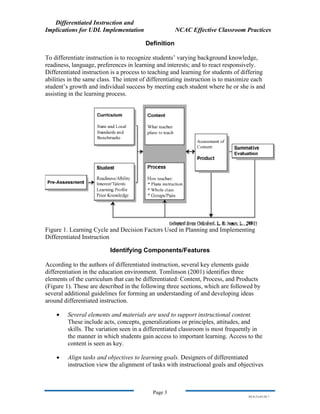
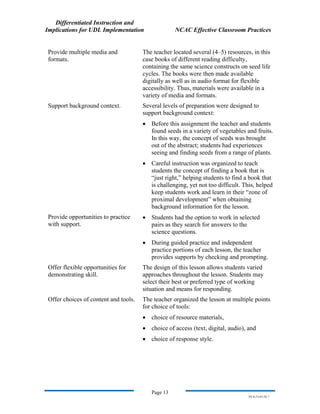
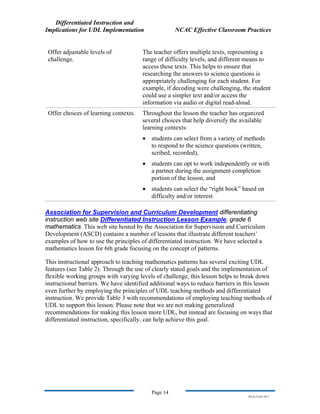
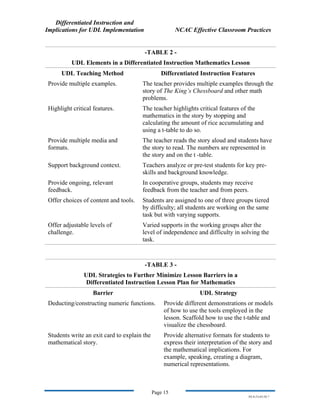
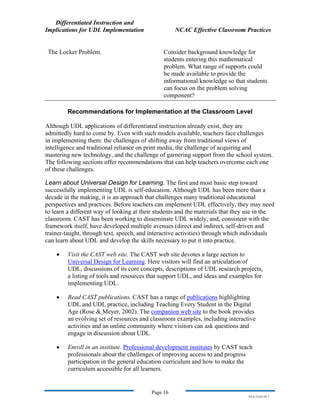
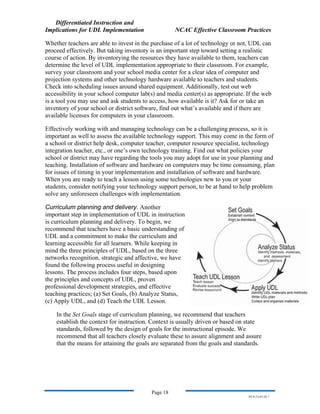

This document discusses differentiated instruction and its implications for implementing Universal Design for Learning (UDL). It begins by defining differentiated instruction and identifying its key components, including differentiating content, process, and products. It also discusses evidence that differentiated instruction can be an effective classroom practice. The document then introduces UDL and discusses how its principles align with differentiated instruction. It provides examples of how UDL and differentiated instruction can be combined in lessons using digital materials to increase flexibility and accessibility for all students.


