Dangerous Goods Classification
Overview of the 9 Classes, Technical
Meanings, Risks, and Handling in
Logistics & Supply Chain
Management
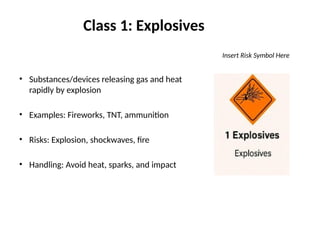
Class 1: Explosives
Insert Risk Symbol Here
• Substances/devices releasing gas and heat
rapidly by explosion
• Examples: Fireworks, TNT, ammunition
• Risks: Explosion, shockwaves, fire
• Handling: Avoid heat, sparks, and impact
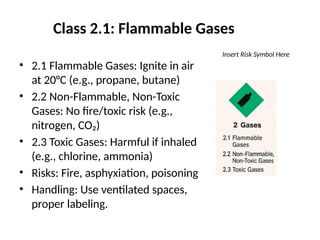
Class 2.1: Flammable Gases
Insert Risk Symbol Here
• 2.1 Flammable Gases: Ignite in air
at 20°C (e.g., propane, butane)
• 2.2 Non-Flammable, Non-Toxic
Gases: No fire/toxic risk (e.g.,
nitrogen, CO₂)
• 2.3 Toxic Gases: Harmful if inhaled
(e.g., chlorine, ammonia)
• Risks: Fire, asphyxiation, poisoning
• Handling: Use ventilated spaces,
proper labeling.
Class 2.2: Non-Flammable, Non-Toxic Gases
Example: Nitrogen
Insert Risk Symbol Here
Class 2.3: Toxic Gases
Example: Chlorine
Insert Risk Symbol Here
Class 3: Flammable Liquids
Example: Gasoline
Insert Risk Symbol Here
Class 4: Flammable Solids
Example: Matches
Insert Risk Symbol Here
Class 5: Oxidizing Substances
Example: Hydrogen Peroxide
Insert Risk Symbol Here
Class 6: Toxic Substances
Example: Pesticides
Insert Risk Symbol Here
Class 7: Radioactive Material
Example: Uranium
Insert Risk Symbol Here
Class 8: Corrosive Substances
Example: Battery Acid
Insert Risk Symbol Here
Class 9: Miscellaneous Dangerous Goods
Example: Dry Ice
Insert Risk Symbol Here

DG-Classification - Logistics & SCM.pptx

  • 1.
    Dangerous Goods Classification Overviewof the 9 Classes, Technical Meanings, Risks, and Handling in Logistics & Supply Chain Management
  • 2.
    Class 1: Explosives InsertRisk Symbol Here • Substances/devices releasing gas and heat rapidly by explosion • Examples: Fireworks, TNT, ammunition • Risks: Explosion, shockwaves, fire • Handling: Avoid heat, sparks, and impact
  • 3.
    Class 2.1: FlammableGases Insert Risk Symbol Here • 2.1 Flammable Gases: Ignite in air at 20°C (e.g., propane, butane) • 2.2 Non-Flammable, Non-Toxic Gases: No fire/toxic risk (e.g., nitrogen, CO₂) • 2.3 Toxic Gases: Harmful if inhaled (e.g., chlorine, ammonia) • Risks: Fire, asphyxiation, poisoning • Handling: Use ventilated spaces, proper labeling.
  • 4.
    Class 2.2: Non-Flammable,Non-Toxic Gases Example: Nitrogen Insert Risk Symbol Here
  • 5.
    Class 2.3: ToxicGases Example: Chlorine Insert Risk Symbol Here
  • 6.
    Class 3: FlammableLiquids Example: Gasoline Insert Risk Symbol Here
  • 7.
    Class 4: FlammableSolids Example: Matches Insert Risk Symbol Here
  • 8.
    Class 5: OxidizingSubstances Example: Hydrogen Peroxide Insert Risk Symbol Here
  • 9.
    Class 6: ToxicSubstances Example: Pesticides Insert Risk Symbol Here
  • 10.
    Class 7: RadioactiveMaterial Example: Uranium Insert Risk Symbol Here
  • 11.
    Class 8: CorrosiveSubstances Example: Battery Acid Insert Risk Symbol Here
  • 12.
    Class 9: MiscellaneousDangerous Goods Example: Dry Ice Insert Risk Symbol Here