Private Sector Development in the 
Australian Aid Program 
Common Goals: Partnering Business, Government and 
Community, ANZBA Corporate Social Responsibility 
Conference, Vientiane, 24 November 2014 
John Williams, Australian Ambassador to the Lao PDR
Finance flows to developing countries 
US$890 billion – private capital flows 
US$400 billion – remittances 
US$134 billion – ODA 
US$70 billion – philanthropic aid 
• 52% of global FDI flows in 2012 were absorbed by 
developing economies 
• 30% is the contribution of value added trade to the 
GDP of developing economies (cf 18%) 
• 85% of employment opportunities in developing 
countries are created by SMEs
Engaging the Private Sector 
All new investments will explore innovative ways to 
promote private sector growth, or engage the private 
sector in achieving development outcomes 
The target includes engaging the private sector in: 
• the design or delivery of investments 
• innovative approaches to project financing 
• public-private partnerships 
• improving the regulatory environment for private 
sector participants 
• addressing other constraints to economic growth
Australia’s Economic Diplomacy Agenda 
Trade – Pursue trade liberalisation through bilateral, regional and 
global trade agreements that open up new markets for Australian 
exporters and sustain a strong, rules-based architecture for 
global trade. 
Growth – Support global growth, including by using Australia’s 
aid program and other measures to promote economic reform 
and infrastructure, and through regional and global economic 
cooperation fora. 
Investment – Promote investment into Australia and Australian 
investment internationally. 
Business – Advance the interests of Australian business 
overseas, the development of a stronger private sector in our 
region, and promote Australian tourism.
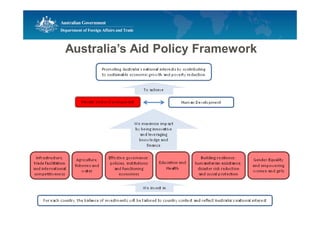
Australia’s Aid Policy Framework
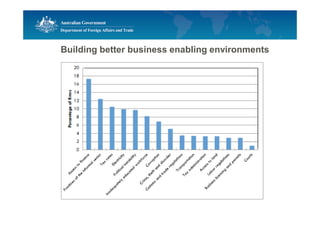
Building better business enabling environments
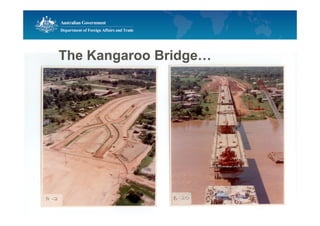
The Kangaroo Bridge…
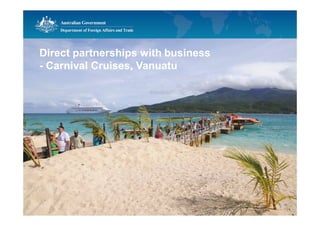
Direct partnerships with business 
- Carnival Cruises, Vanuatu
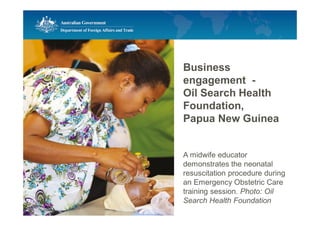
Business 
engagement - 
Oil Search Health 
Foundation, 
Papua New Guinea 
A midwife educator 
demonstrates the neonatal 
resuscitation procedure during 
an Emergency Obstetric Care 
training session. Photo: Oil 
Search Health Foundation
Private Sector Development in the Australian Aid Program   Dfat   williams

Private Sector Development in the Australian Aid Program Dfat williams

  • 1.
    Private Sector Developmentin the Australian Aid Program Common Goals: Partnering Business, Government and Community, ANZBA Corporate Social Responsibility Conference, Vientiane, 24 November 2014 John Williams, Australian Ambassador to the Lao PDR
  • 2.
    Finance flows todeveloping countries US$890 billion – private capital flows US$400 billion – remittances US$134 billion – ODA US$70 billion – philanthropic aid • 52% of global FDI flows in 2012 were absorbed by developing economies • 30% is the contribution of value added trade to the GDP of developing economies (cf 18%) • 85% of employment opportunities in developing countries are created by SMEs
  • 3.
    Engaging the PrivateSector All new investments will explore innovative ways to promote private sector growth, or engage the private sector in achieving development outcomes The target includes engaging the private sector in: • the design or delivery of investments • innovative approaches to project financing • public-private partnerships • improving the regulatory environment for private sector participants • addressing other constraints to economic growth
  • 4.
    Australia’s Economic DiplomacyAgenda Trade – Pursue trade liberalisation through bilateral, regional and global trade agreements that open up new markets for Australian exporters and sustain a strong, rules-based architecture for global trade. Growth – Support global growth, including by using Australia’s aid program and other measures to promote economic reform and infrastructure, and through regional and global economic cooperation fora. Investment – Promote investment into Australia and Australian investment internationally. Business – Advance the interests of Australian business overseas, the development of a stronger private sector in our region, and promote Australian tourism.
  • 5.
  • 6.
    Building better businessenabling environments
  • 7.
  • 9.
    Direct partnerships withbusiness - Carnival Cruises, Vanuatu
  • 10.
    Business engagement - Oil Search Health Foundation, Papua New Guinea A midwife educator demonstrates the neonatal resuscitation procedure during an Emergency Obstetric Care training session. Photo: Oil Search Health Foundation