








Dewey Decimal ClassificationSession 2June 15, 2010Emily Dust NimsakontPowerPoint by Devra Dragos; Revised by Emily Dust Nimsakont
TopicsSession 1Dewey Decimal ClassificationNotesSubjects/DisciplinesManual entriesWebDeweySession 2Subjects/DisciplinesNumber building: Table 1Session 3Number building: Tables 1, 2, 3, &4
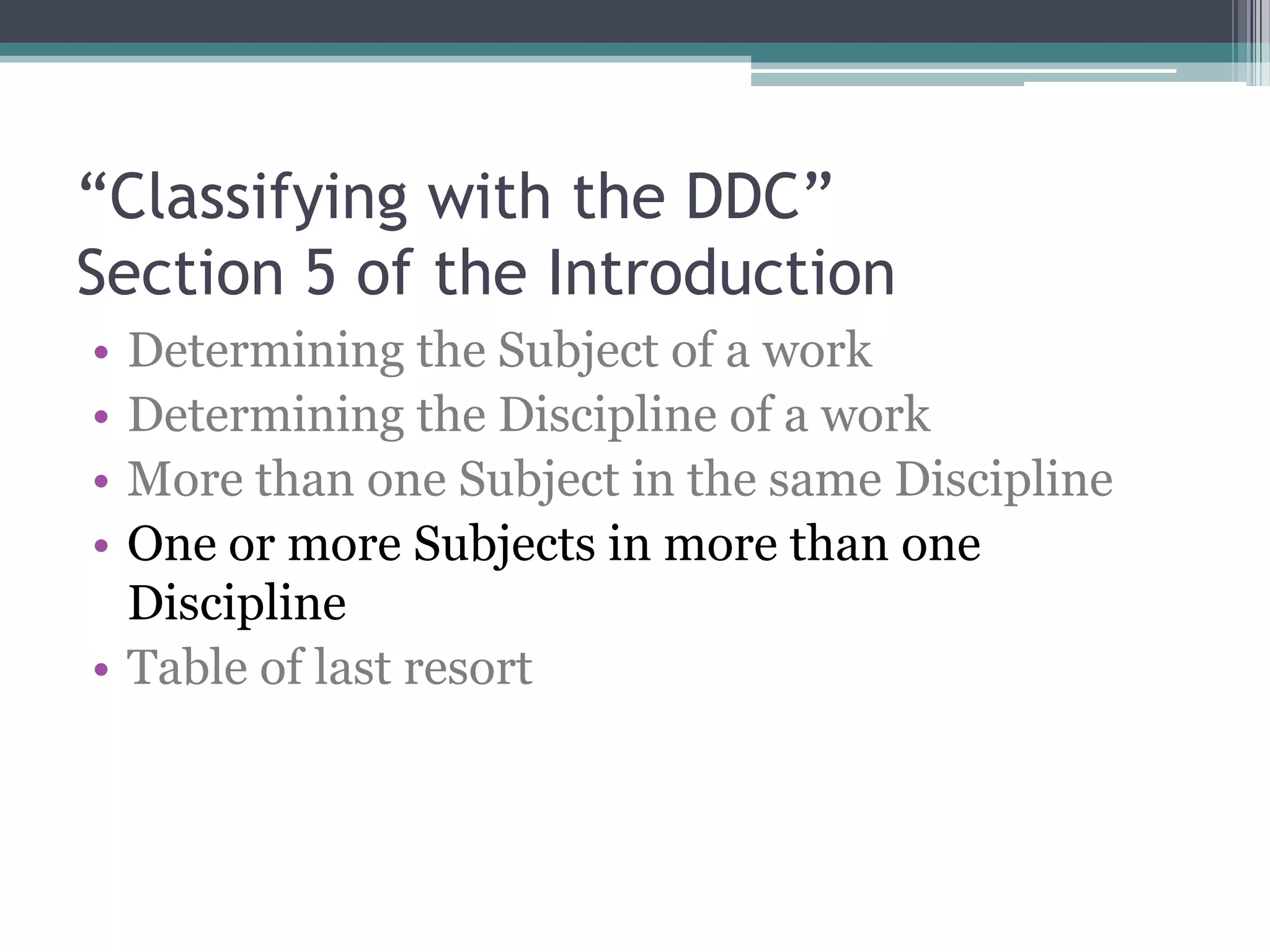
“Classifying with the DDC”Section 5 of the IntroductionDetermining the Subject of a workDetermining the Discipline of a workMore than one Subject in the same DisciplineOne or more Subjects in more than one DisciplineTable of last resort
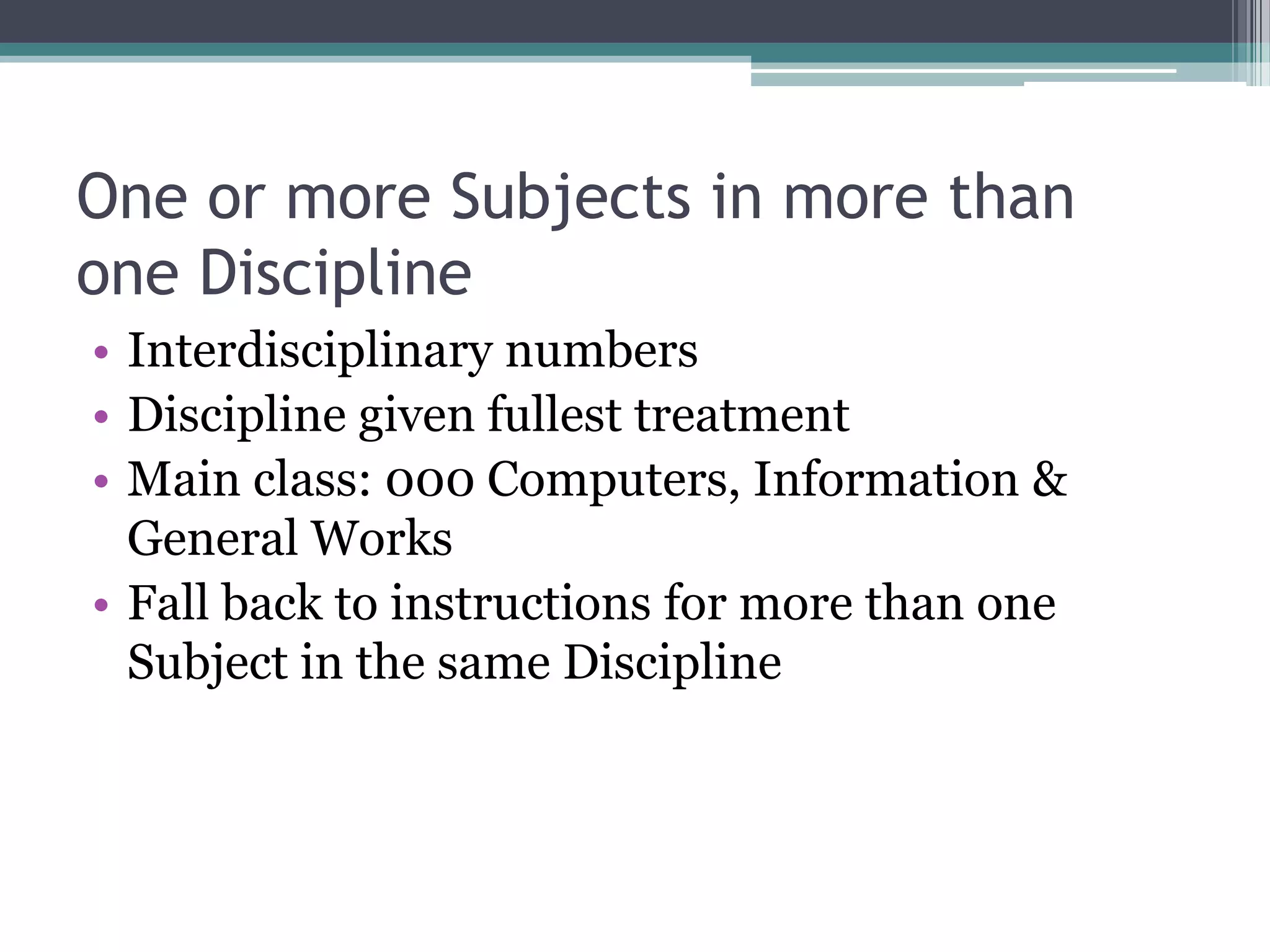
One or more Subjects in more than one DisciplineInterdisciplinary numbersDiscipline given fullest treatmentMain class: 000 Computers, Information & General WorksFall back to instructions for more than one Subject in the same Discipline
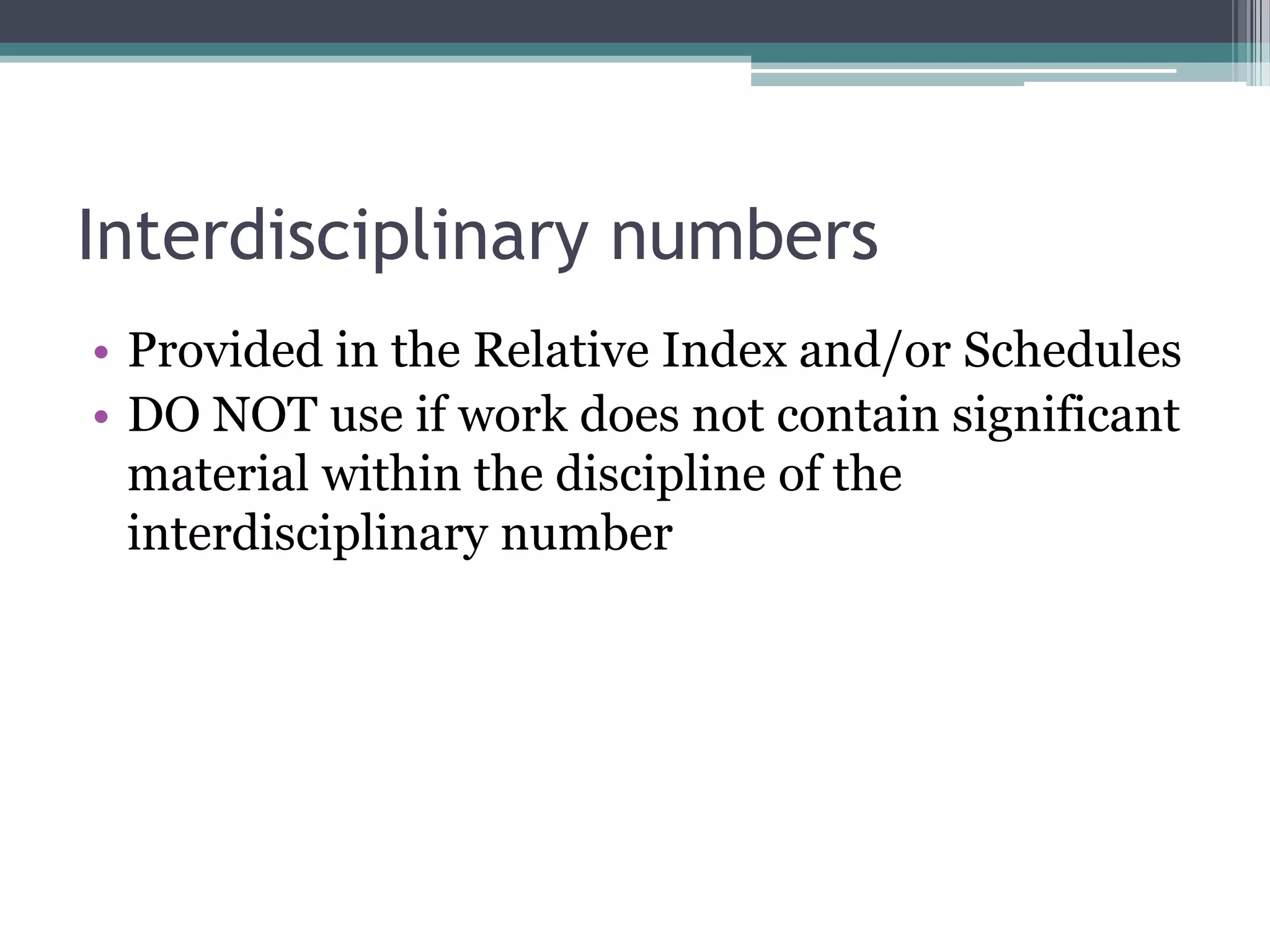
Interdisciplinary numbersProvided in the Relative Index and/or SchedulesDO NOT use if work does not contain significant material within the discipline of the interdisciplinary number
Classify book…Raising the Bar: Improving Competition Success for Professional Weight Lifters through Weight Training for FitnessIncludes material on competitions as well as becoming fit for competitions
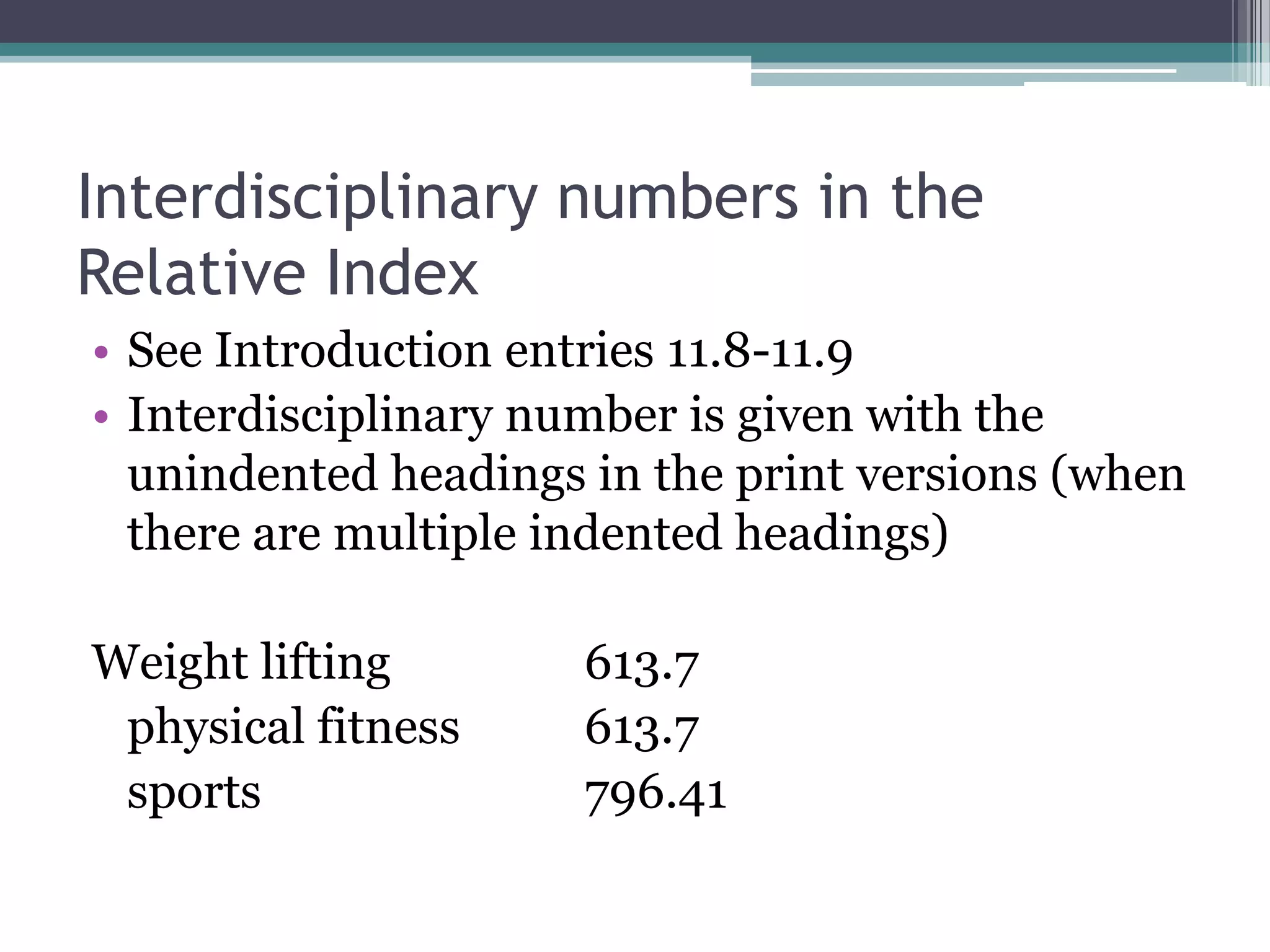
Interdisciplinary numbers in the Relative IndexSee Introduction entries 11.8-11.9Interdisciplinary number is given with the unindented headings in the print versions (when there are multiple indented headings)Weight lifting		613.7physical fitness	613.7sports			796.41
Classify book…Raising the Bar: Improving Competition Success for Professional Weight Lifters through Weight Training for FitnessIncludes material on competitions as well as becoming fit for competitionsClassify with physical fitness: 613.7
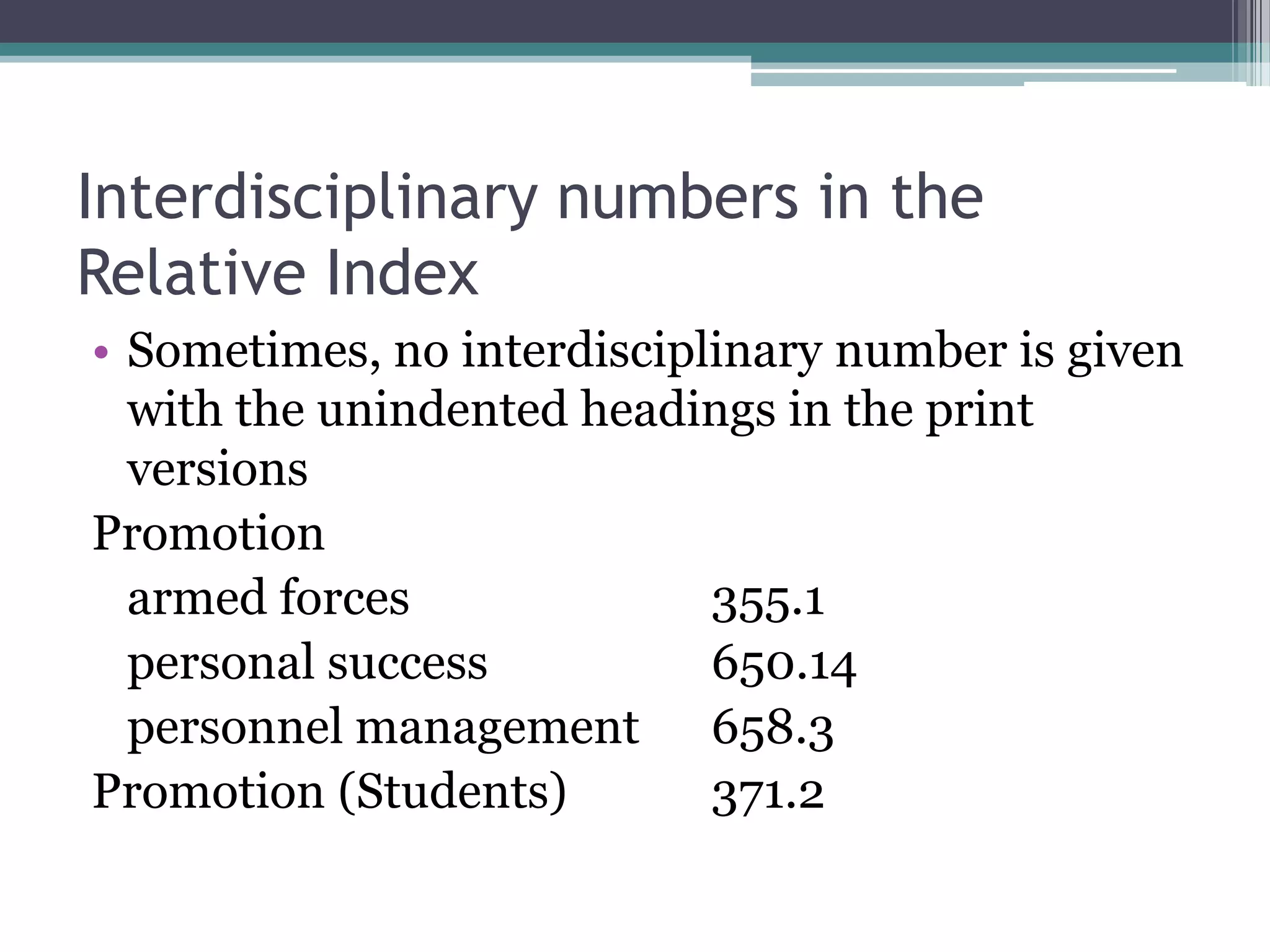
Interdisciplinary numbers in the Relative IndexSometimes, no interdisciplinary number is given with the unindented headings in the print versionsPromotionarmed forces			355.1personal success		650.14personnel management	658.3Promotion (Students)		371.2
Interdisciplinary numbers in the SchedulesClass here interdisciplinary works on …Including … interdisciplinary works on …Class interdisciplinary works on … in …
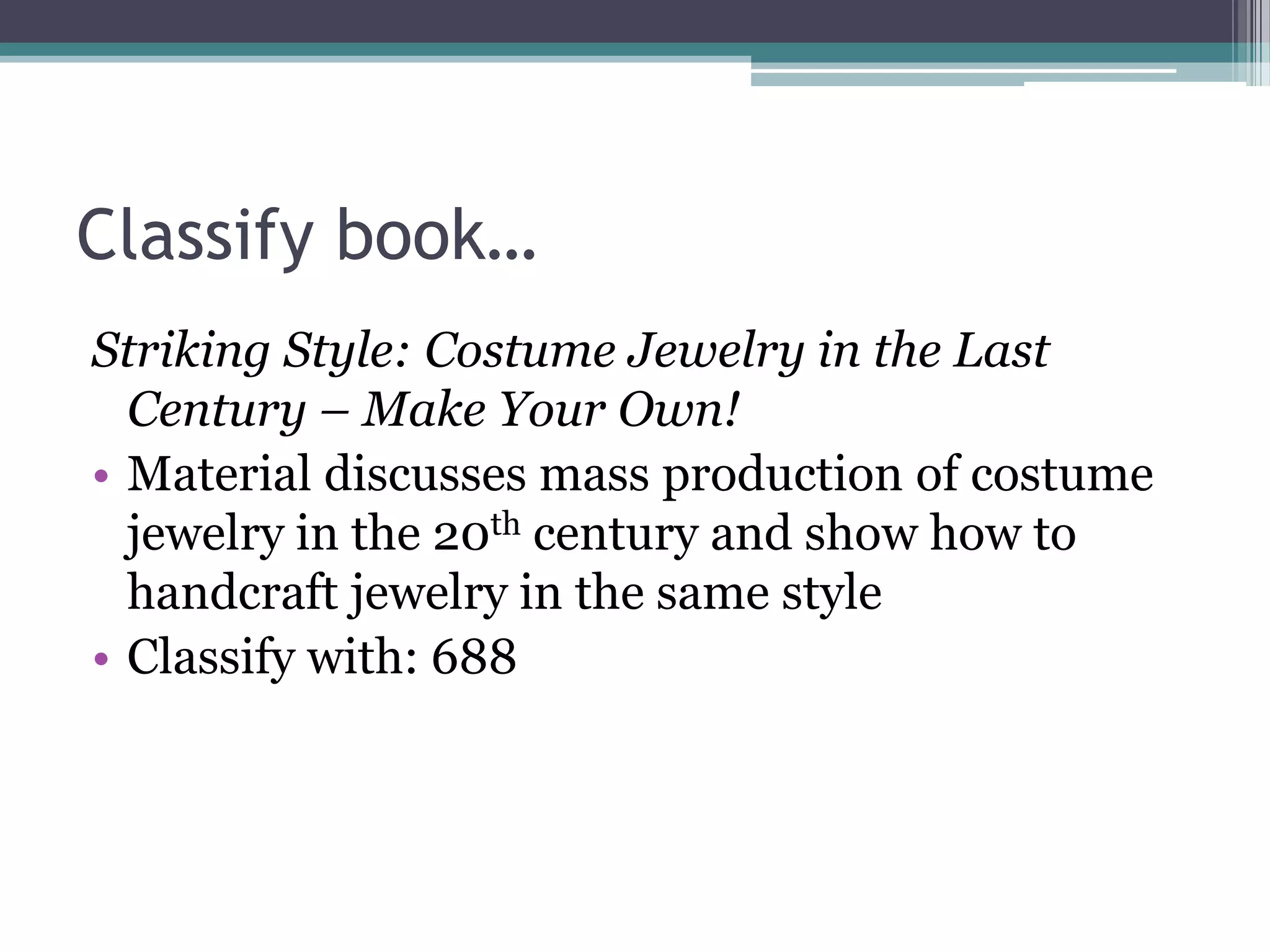
Classify book…Striking Style: Costume Jewelry in the Last Century – Make Your Own!Material discusses mass production of costume jewelry in the 20th century and show how to handcraft jewelry in the same style
Classify book…Striking Style: Costume Jewelry in the Last Century – Make Your Own!Material discusses mass production of costume jewelry in the 20th century and show how to handcraft jewelry in the same styleClassify with: 688
Interdisciplinary numbersProvided in the Relative Index and/or SchedulesDO NOT use if work does not contain significant material within the discipline of the interdisciplinary number
One or more Subjects in more than one DisciplineInterdisciplinary numbersDiscipline given fullest treatmentMain class: 000 Computers, Information & General WorksFall back to instructions for more than one Subject in the same Discipline
Discipline given the fullest treatmentSometimes, no interdisciplinary number exists in Relative Index or Schedules
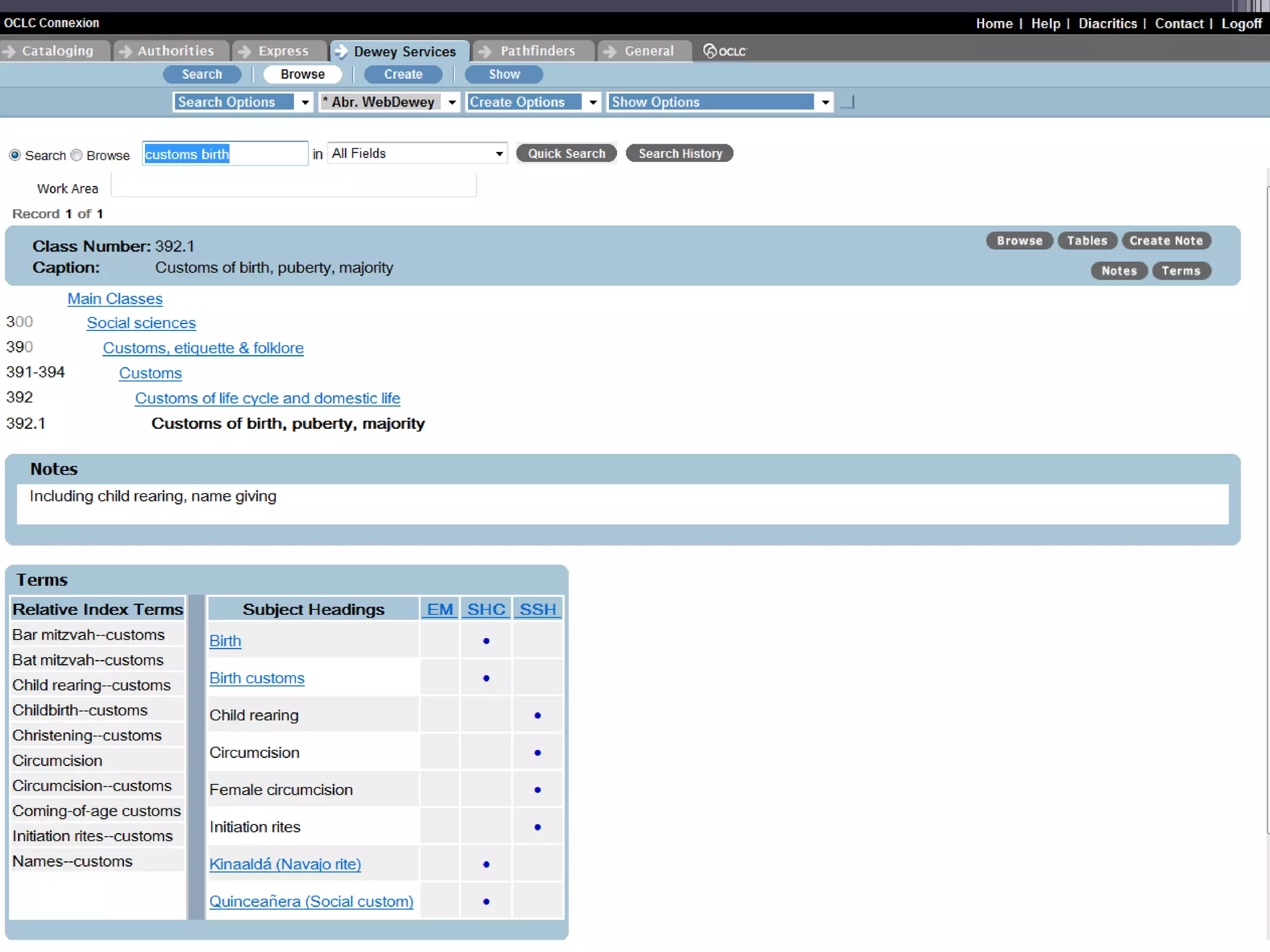
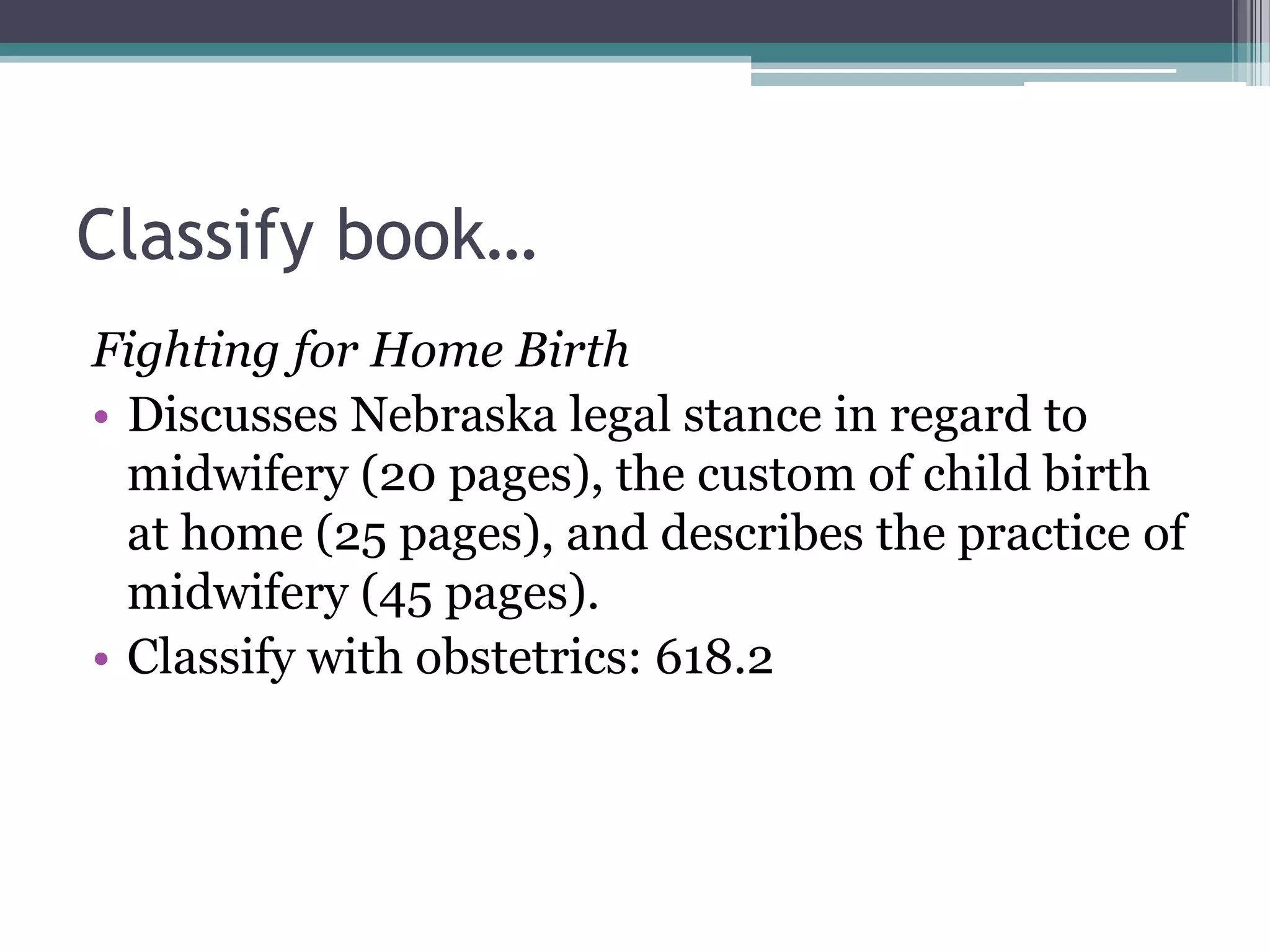
Classify book…Fighting for Home BirthDiscusses Nebraska legal stance in regard to midwifery (20 pages), the custom of child birth at home (25 pages), and describes the practice of midwifery (45 pages).
Classify book…Fighting for Home BirthDiscusses Nebraska legal stance in regard to midwifery (20 pages), the custom of child birth at home (25 pages), and describes the practice of midwifery (45 pages).Classify with obstetrics: 618.2
One or more Subjects in more than one DisciplineInterdisciplinary numbersDiscipline given fullest treatmentMain class: 000 Computers, Information & General WorksFall back to instructions for more than one Subject in the same Discipline
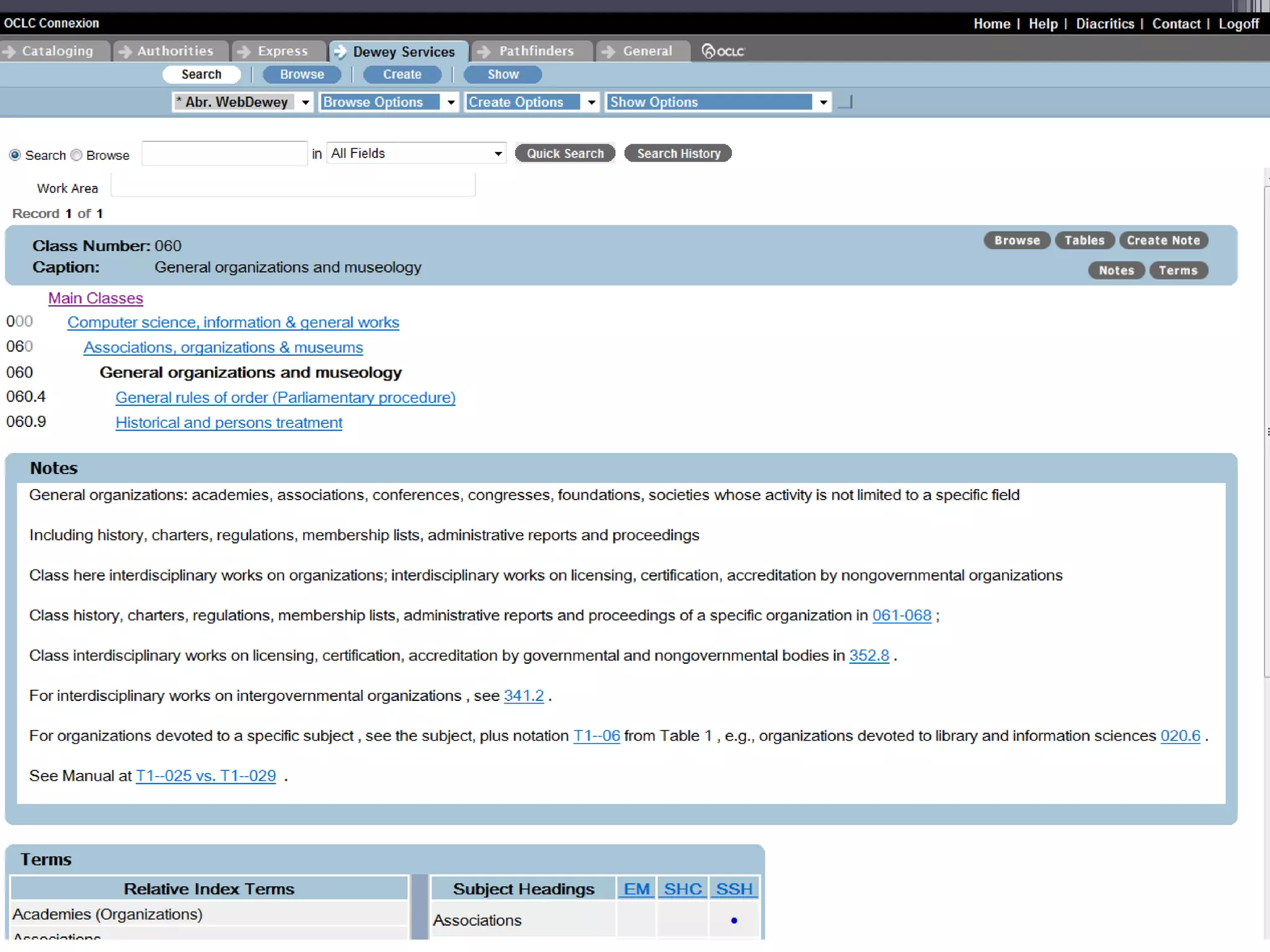
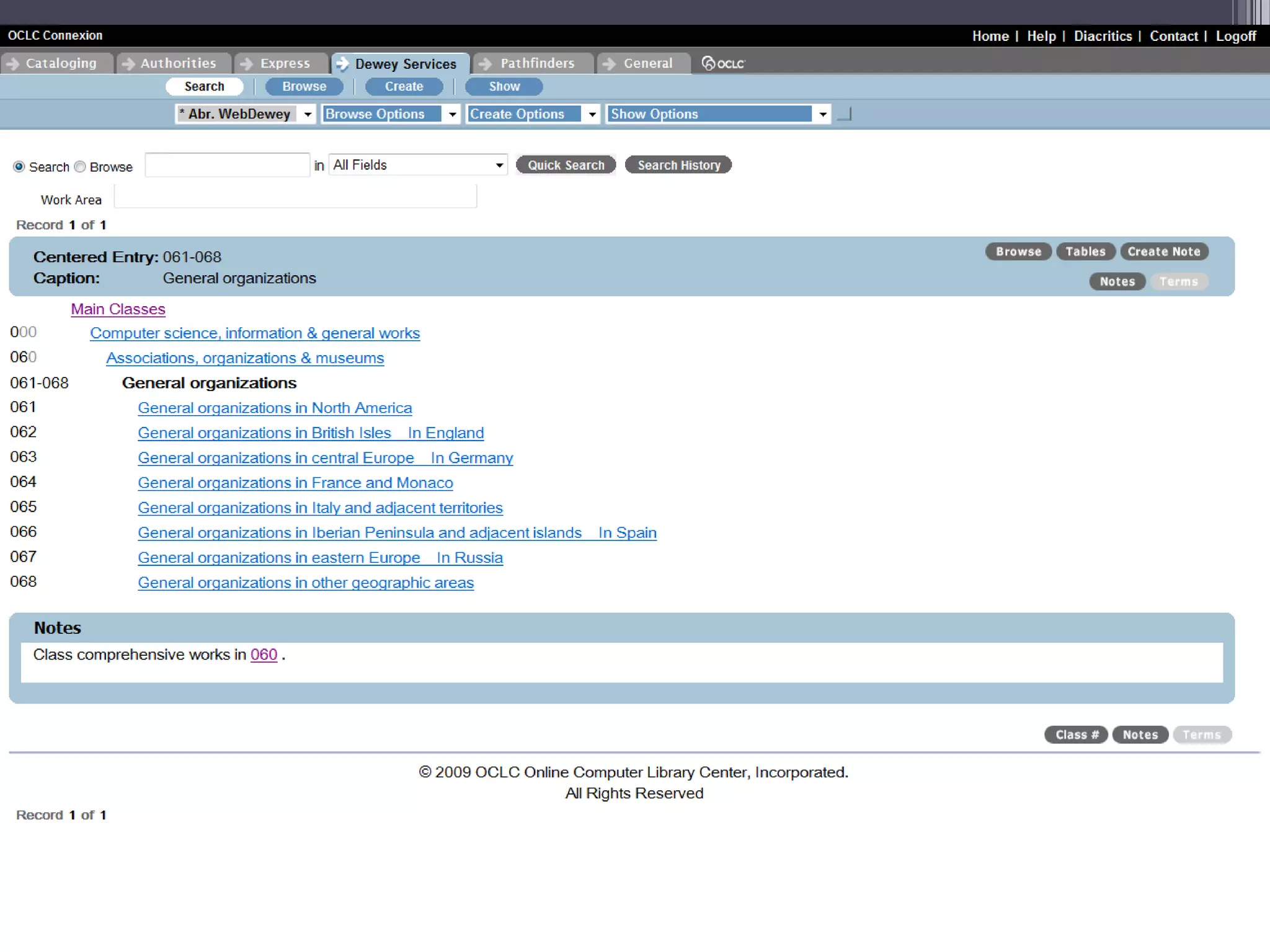
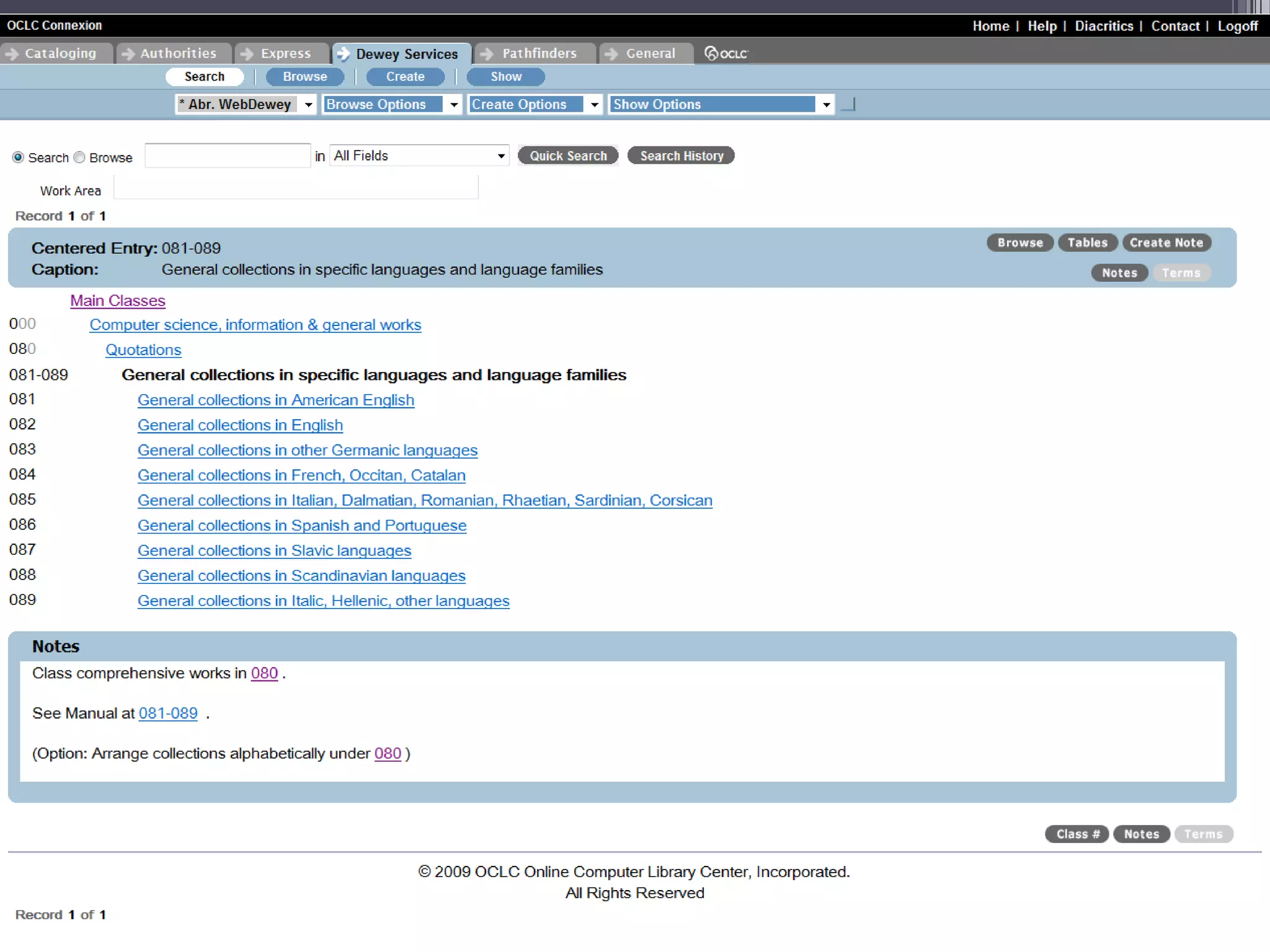
Main Class: 000 Computers, information & general worksPossibilities in divisions such as:060  General organizations and museology080  Collections
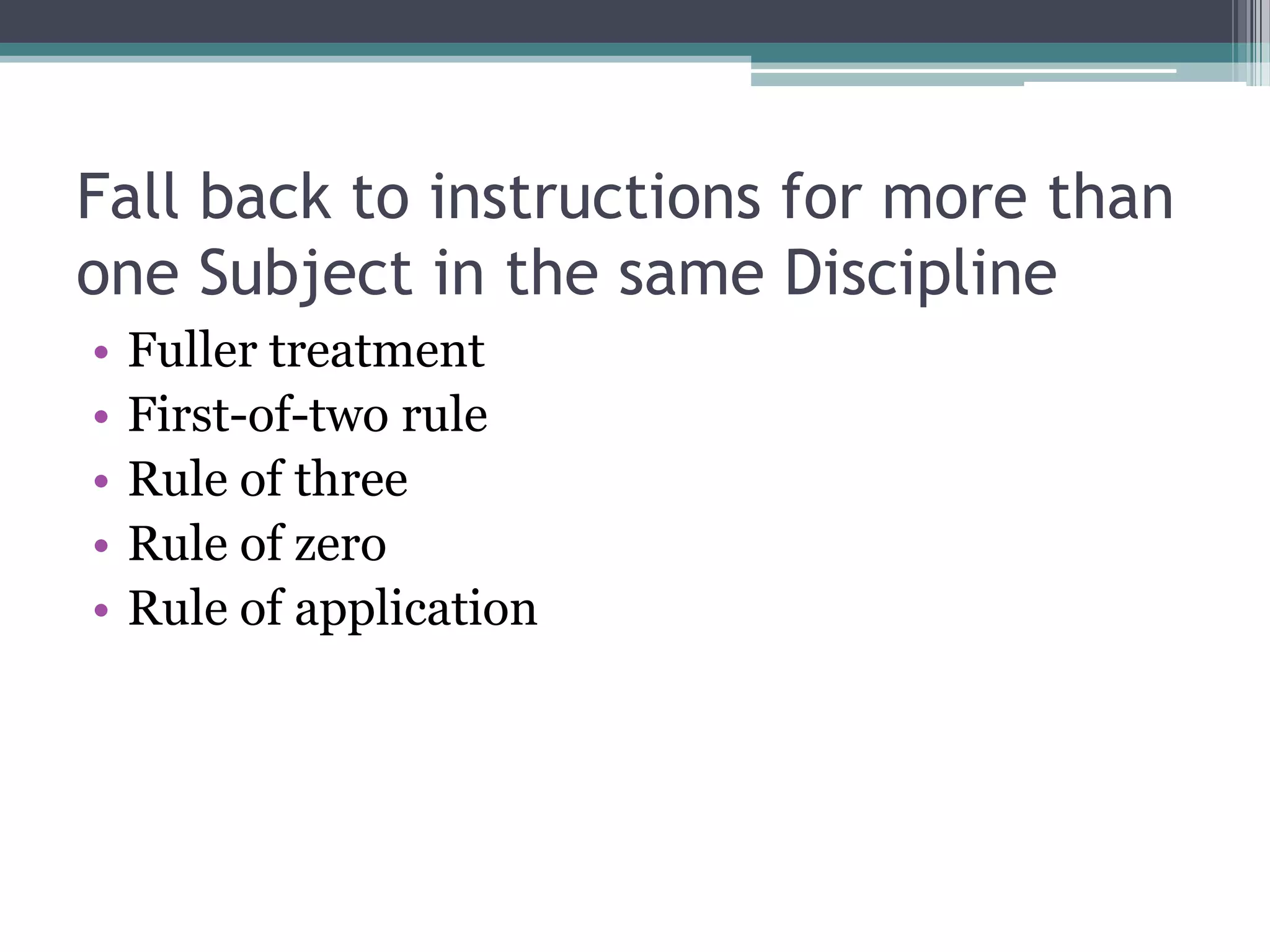
Fall back to instructions for more than one Subject in the same DisciplineFuller treatmentFirst-of-two ruleRule of threeRule of zeroRule of application
“Classifying with the DDC”Section 5 of the IntroductionDetermining the Subject of a workDetermining the Discipline of a workMore than one Subject in the same DisciplineOne or more Subjects in more than one DisciplineTable of last resort
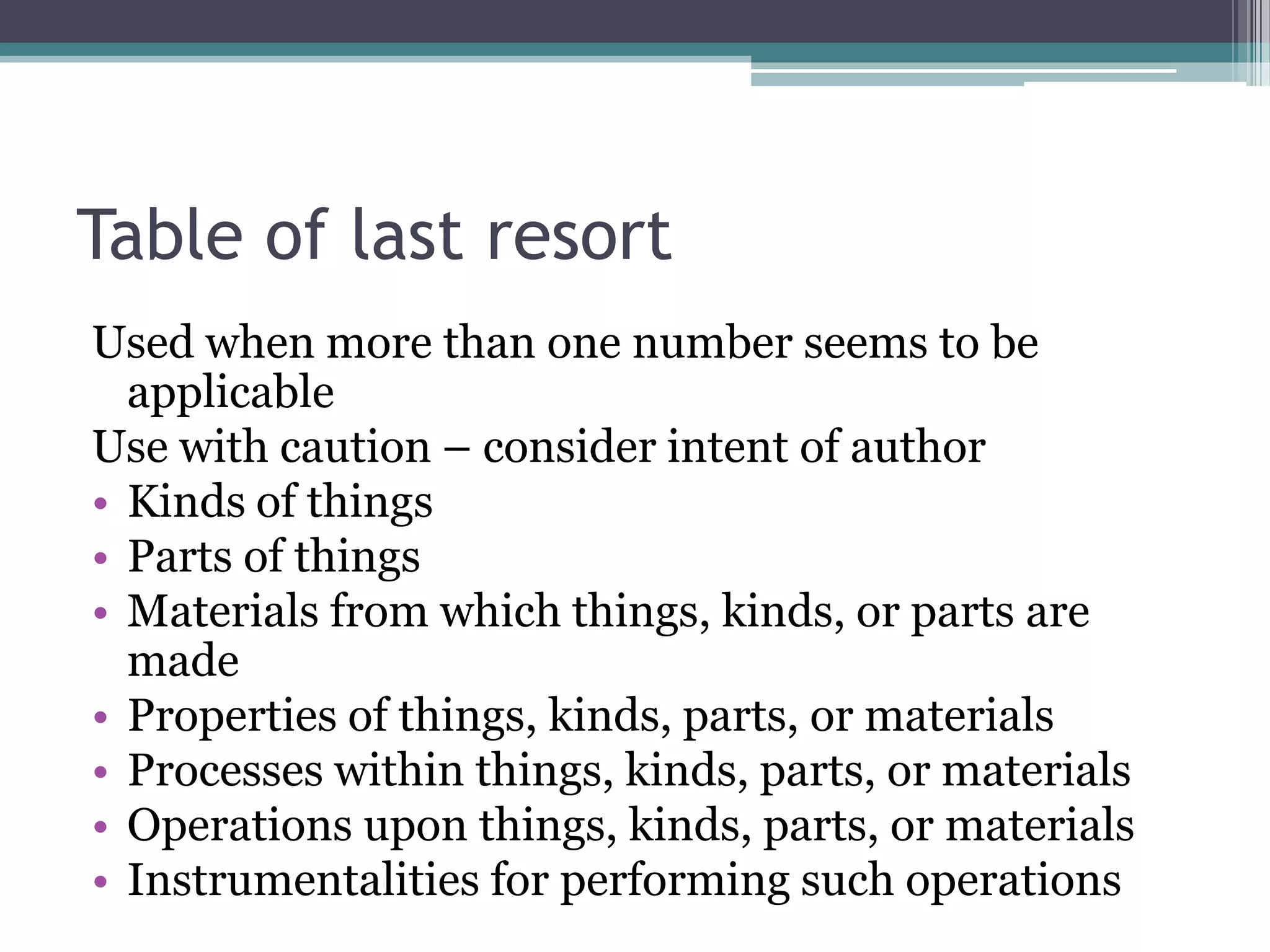
Table of last resortUsed when more than one number seems to be applicableUse with caution – consider intent of authorKinds of thingsParts of thingsMaterials from which things, kinds, or parts are madeProperties of things, kinds, parts, or materialsProcesses within things, kinds, parts, or materialsOperations upon things, kinds, parts, or materialsInstrumentalities for performing such operations
“Classifying with the DDC”Section 5 of the IntroductionDetermining the Subject of a workDetermining the Discipline of a workMore than one Subject in the same DisciplineOne or more Subjects in more than one DisciplineTable of last resort
Number Building/SubdivisionsUsed to further group like with likeHelp organize large number of items within a topicDefine more facets of an item
Number Building/SubdivisionsAs instructed, may sometimes add numbers from another class or division before adding subdivision
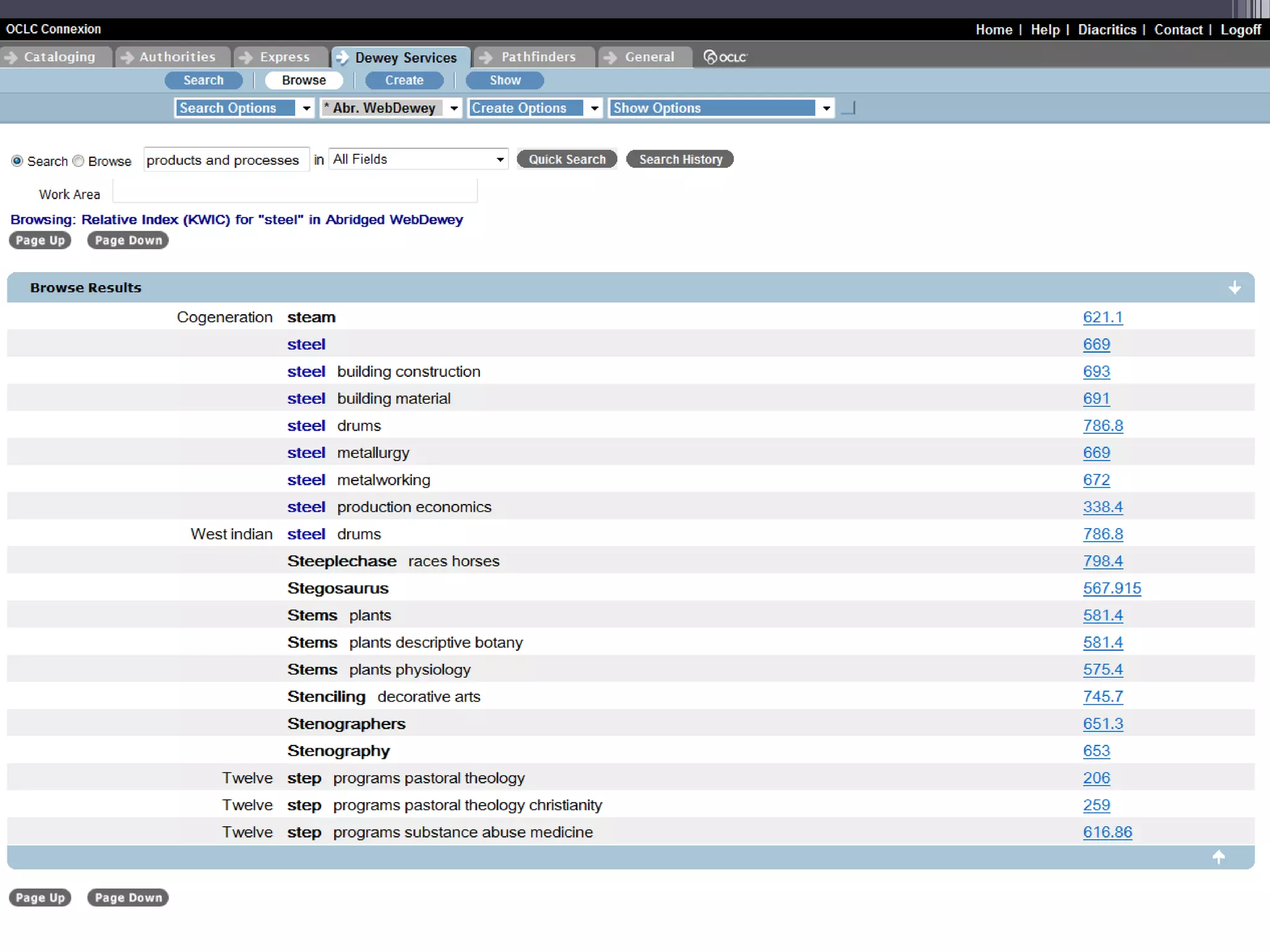
Classify book…Handbook for Casting Steel
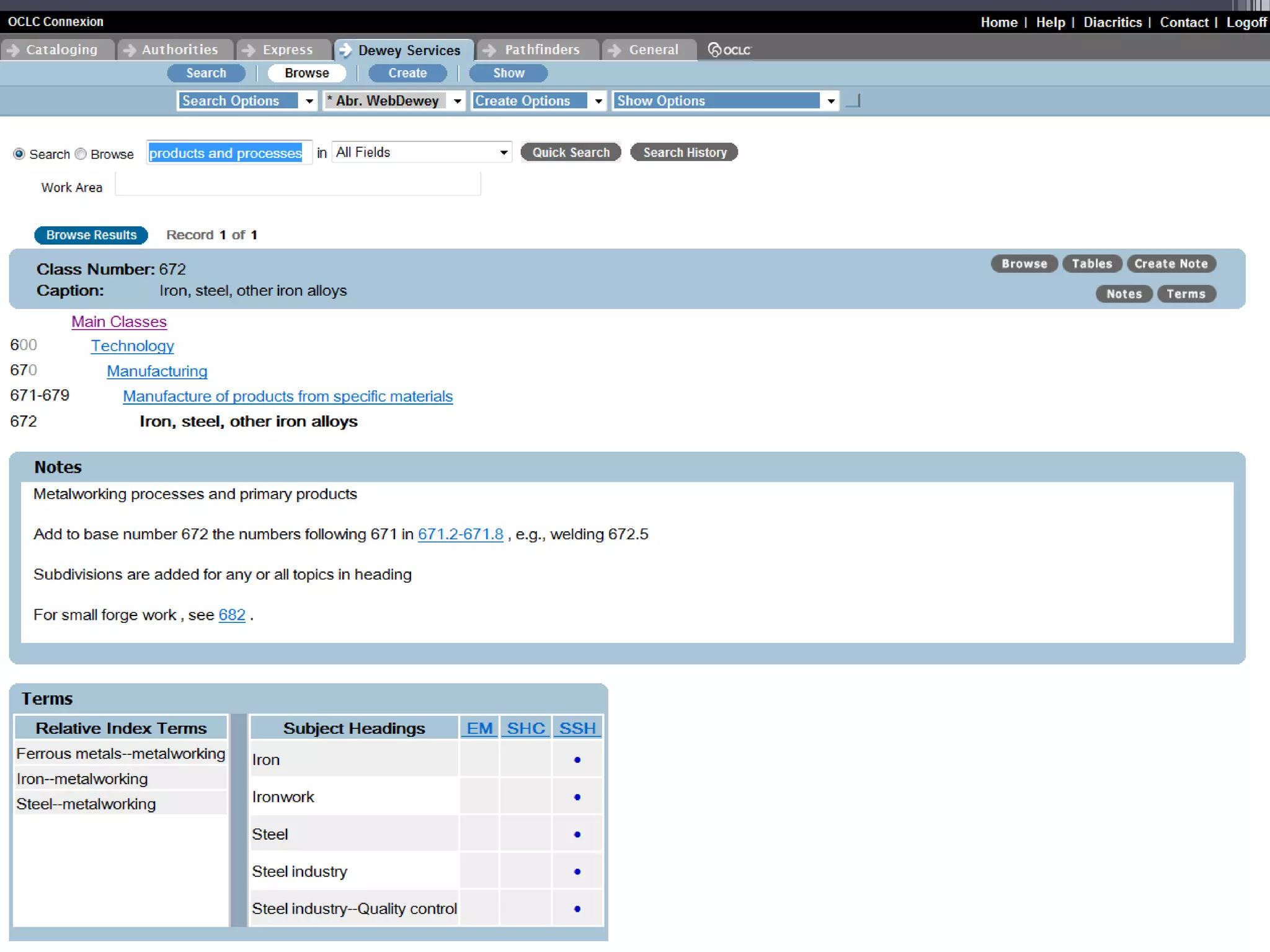
Classify book…Handbook for Casting SteelClassify with Iron, steel…: 672
Classify book…Handbook for Casting SteelClassify with Iron, steel…: 672.2
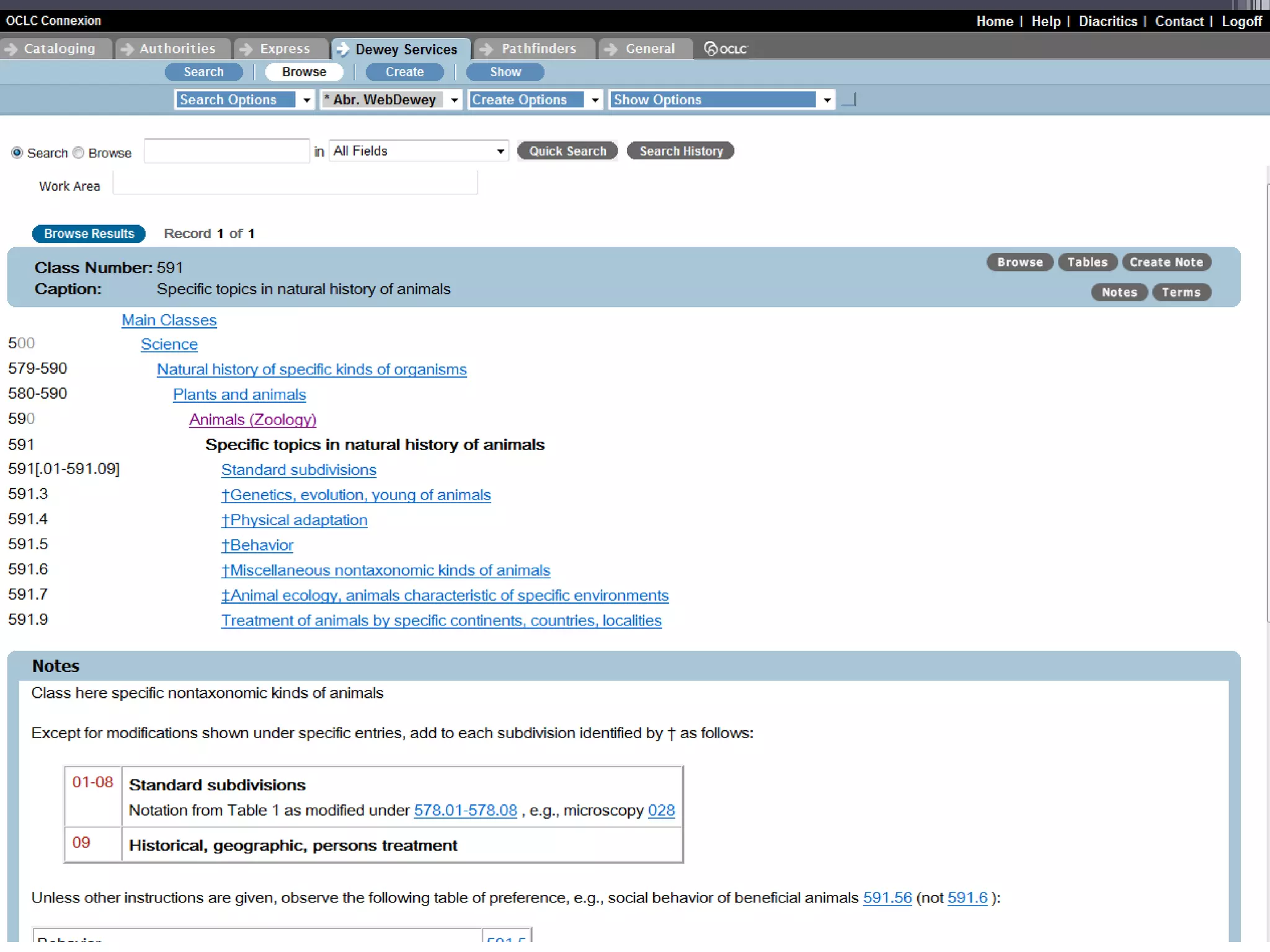
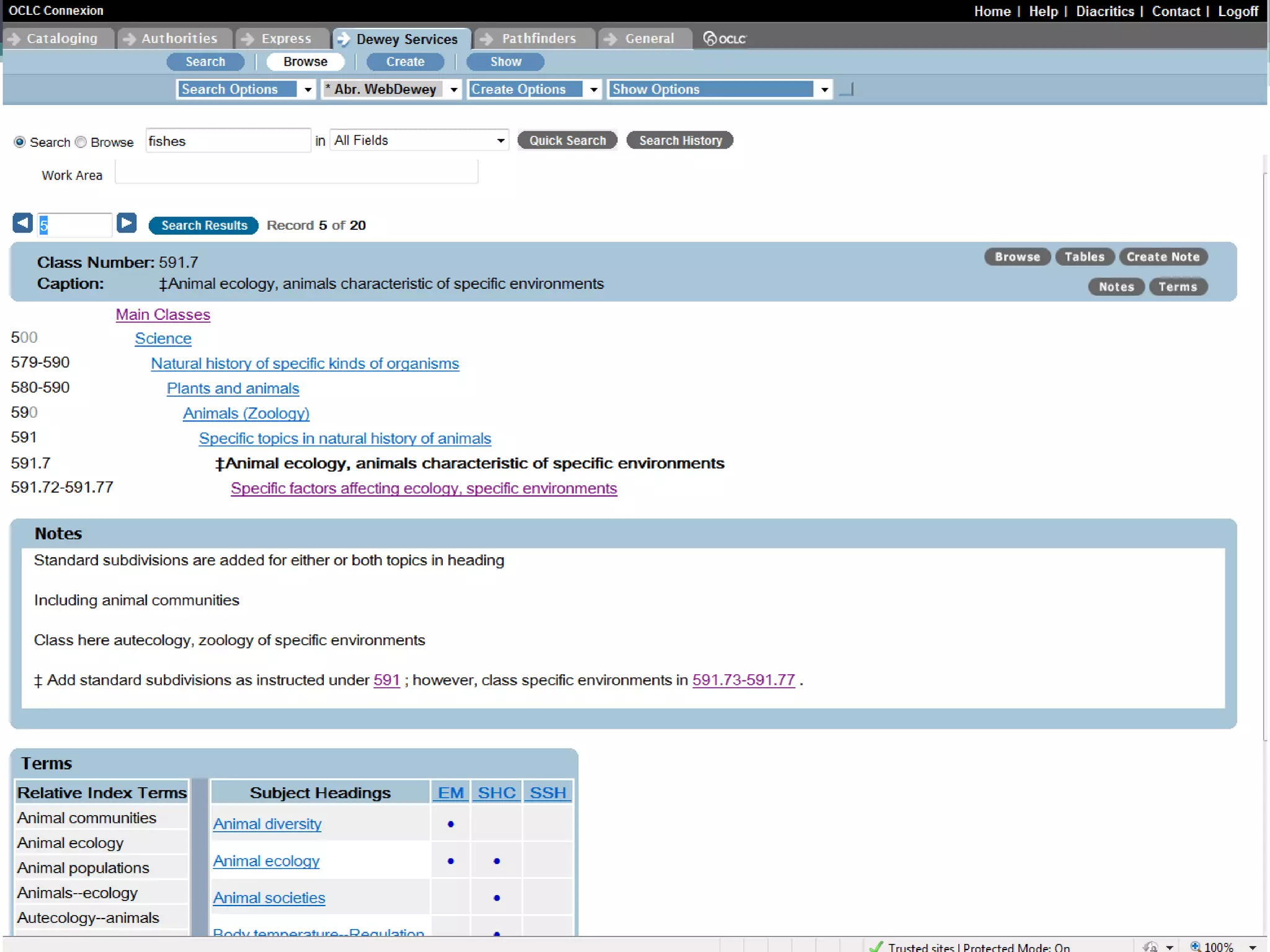
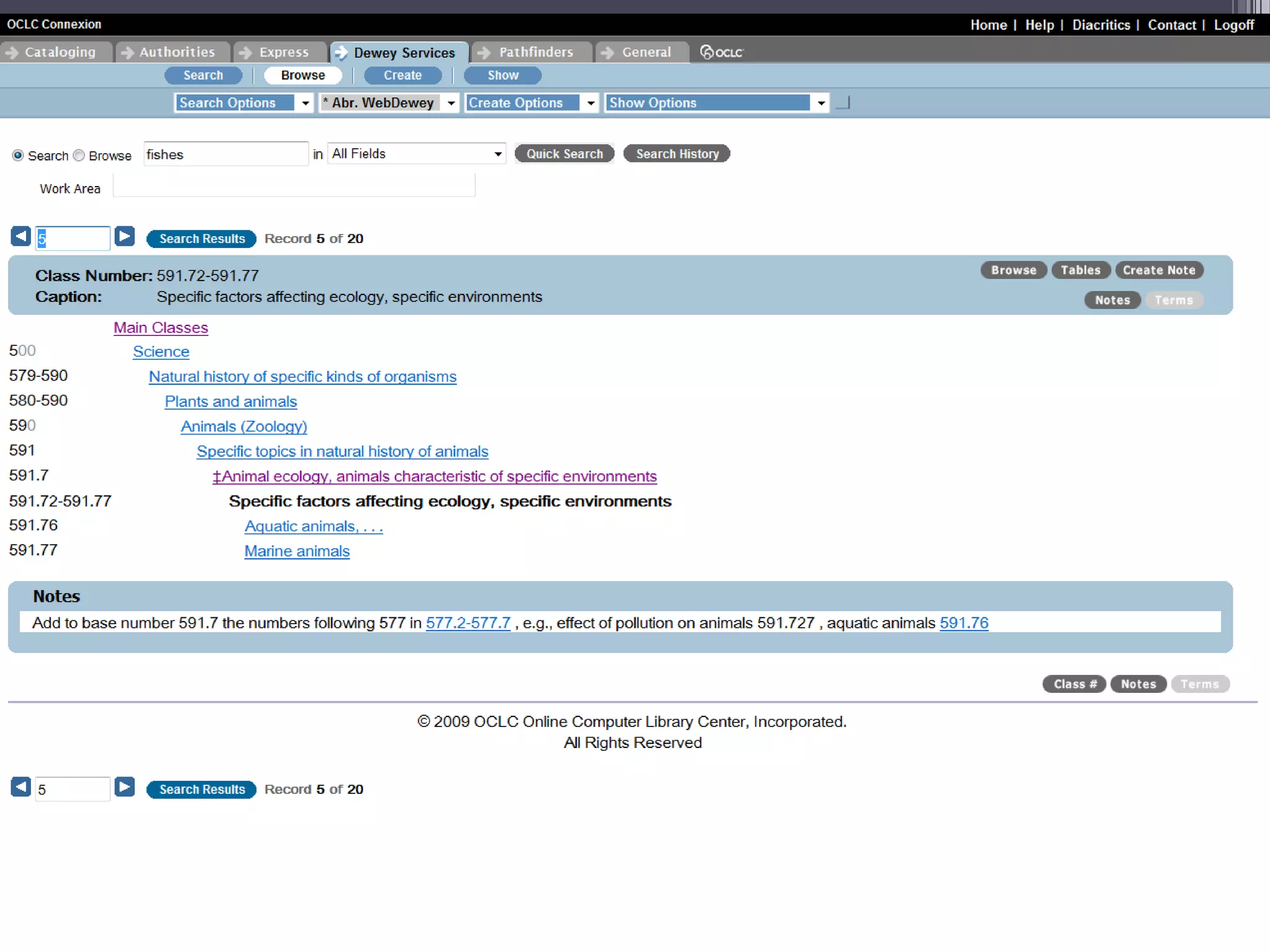
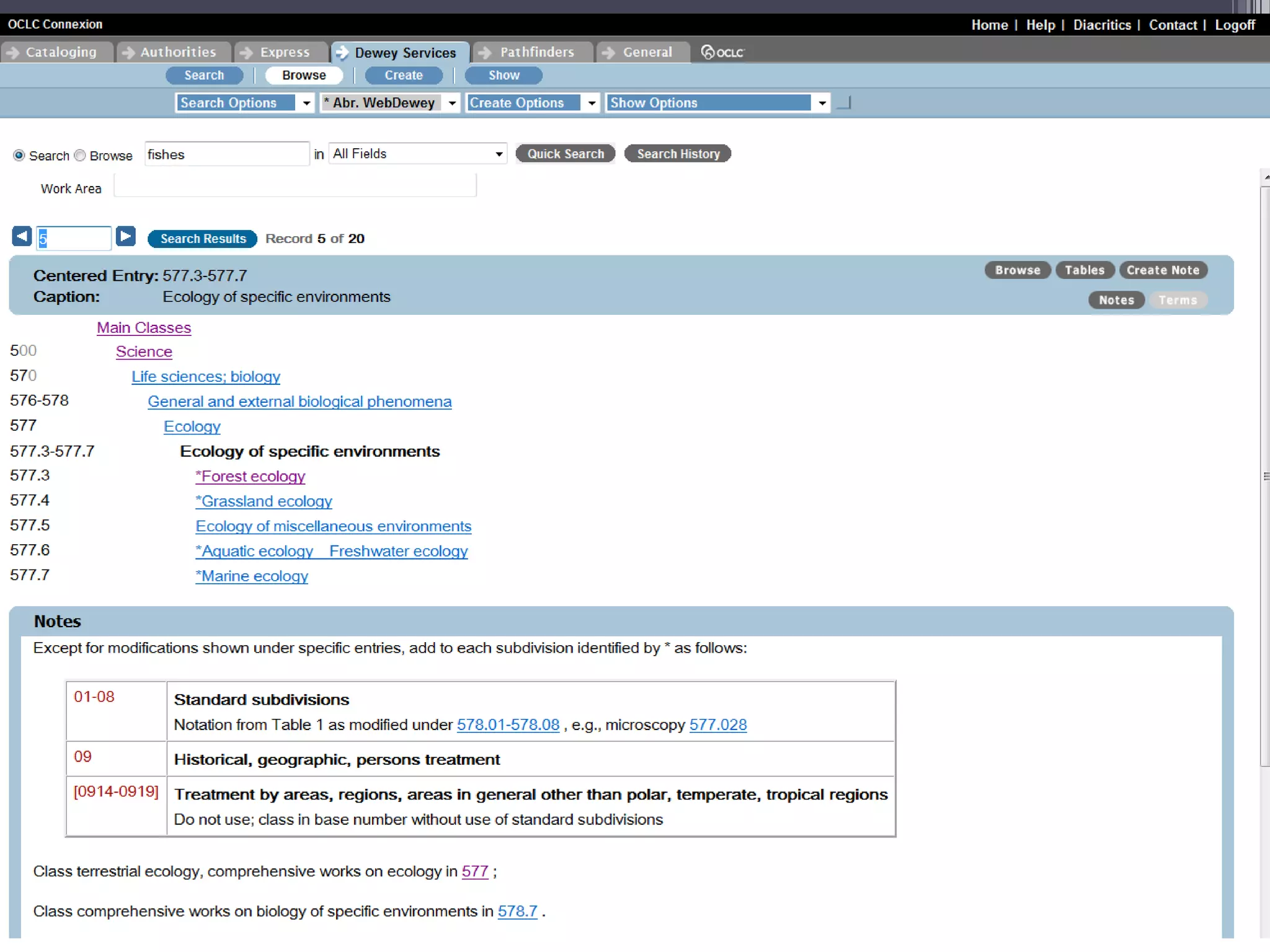
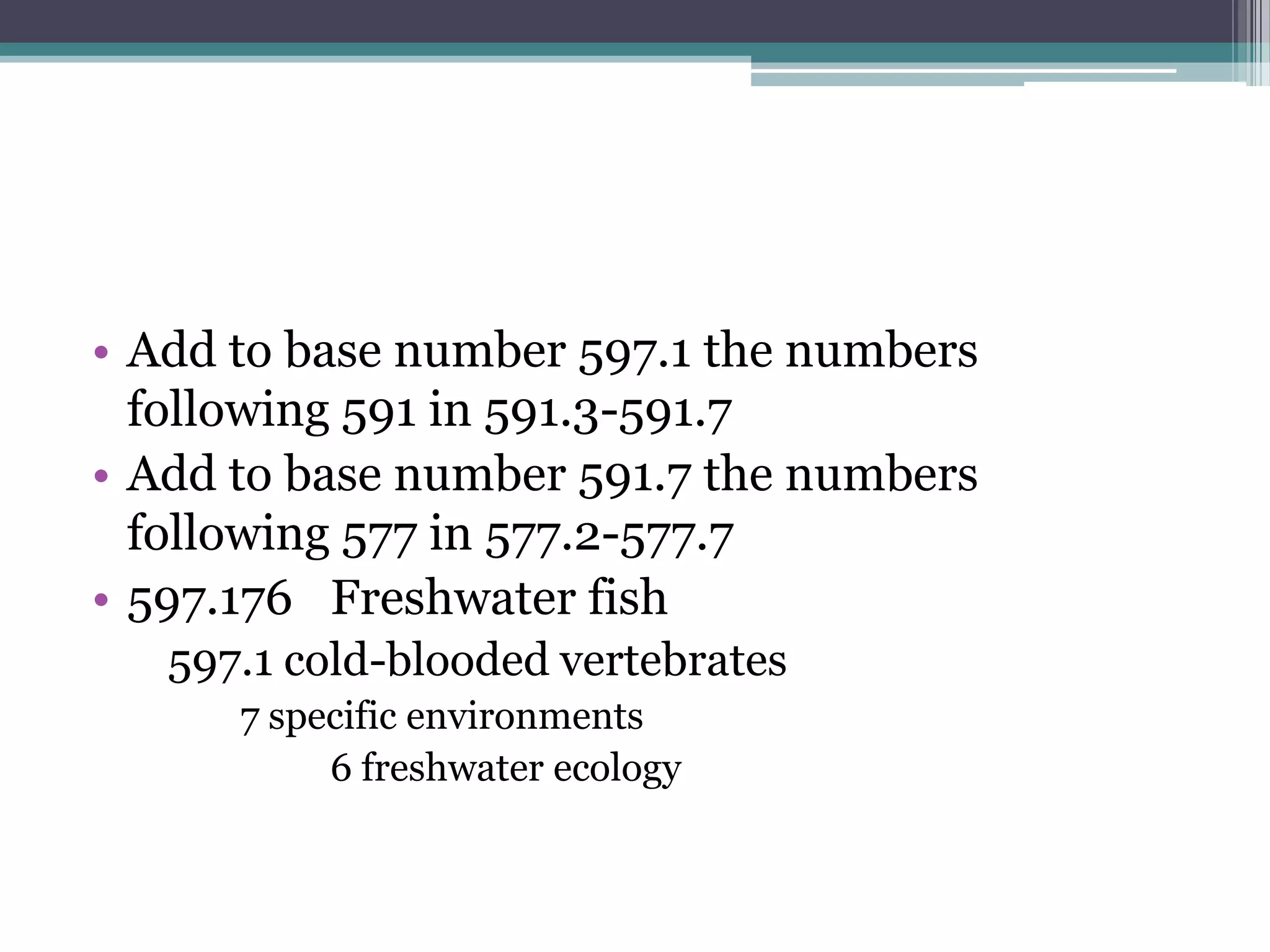
Add to base number 597.1 the numbers following 591 in 591.3-591.7Add to base number 591.7 the numbers following 577 in 577.2-577.7597.176	Freshwater fish597.1 cold-blooded vertebrates	7 specific environments		6 freshwater ecology
Standard SubdivisionsOptionalRecommended for a large number of items within a specific topic
Facets defined by Subdivisions listed in TablesFormat (e.g. dictionary, serial, catalog)Approach/Viewpoint of author (e.g. history, philosophy, criticism of a work)People (e.g. women, gifted persons)Location (e.g. torrid zone, Greater London)Literary form (e.g. poetry, drama)Use of language (e.g. grammar, etymology)
Source of Subdivisions/Instructions for adding SubdivisionsTablesIn Abridged DDC, four tables are used (as opposed to six tables in the full DDC)SchedulesIntroduction 8.1-8.18Manual
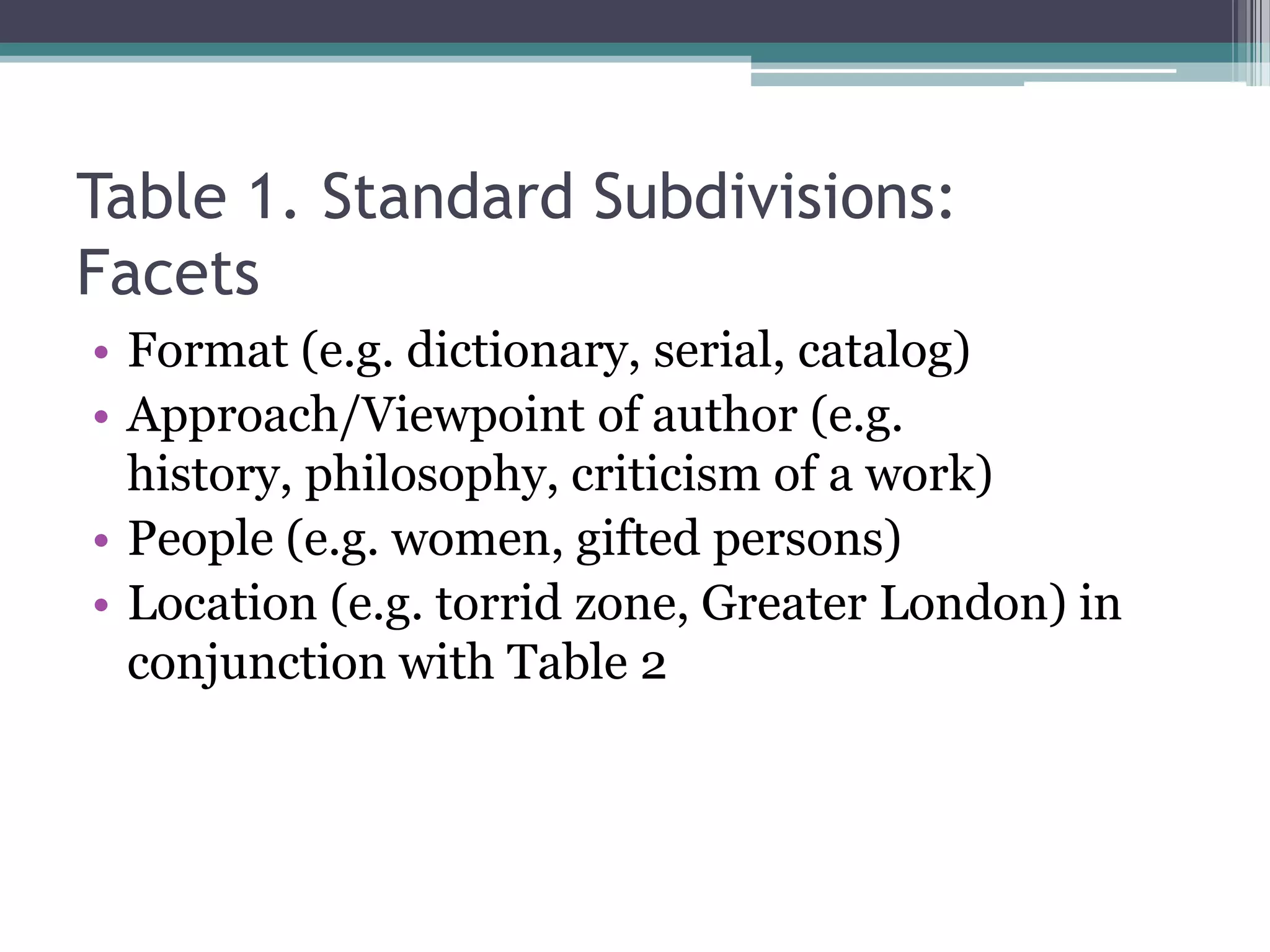
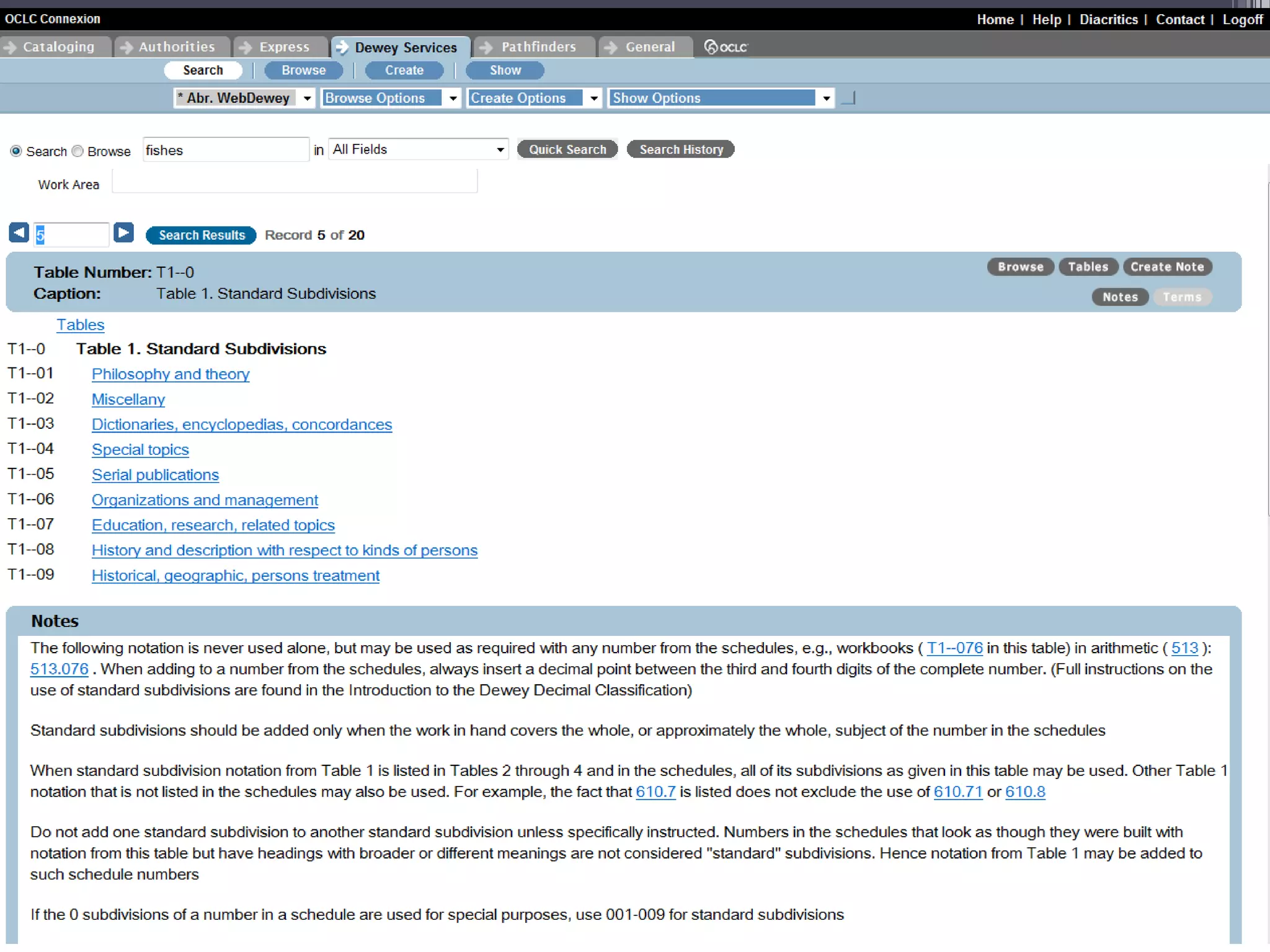
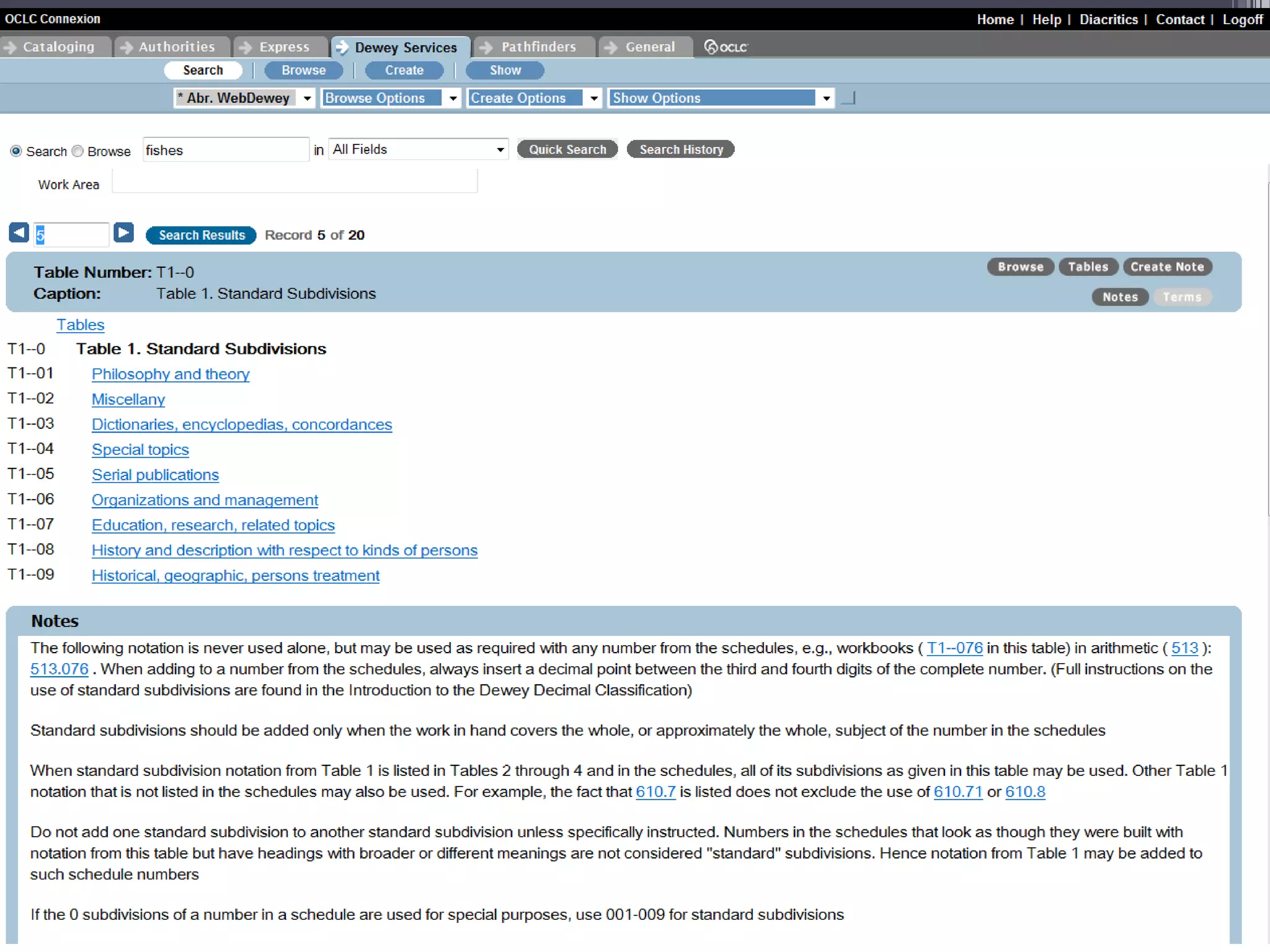
Table 1. Standard Subdivisions:FacetsFormat (e.g. dictionary, serial, catalog)Approach/Viewpoint of author (e.g. history, philosophy, criticism of a work)People (e.g. women, gifted persons)Location (e.g. torrid zone, Greater London) in conjunction with Table 2
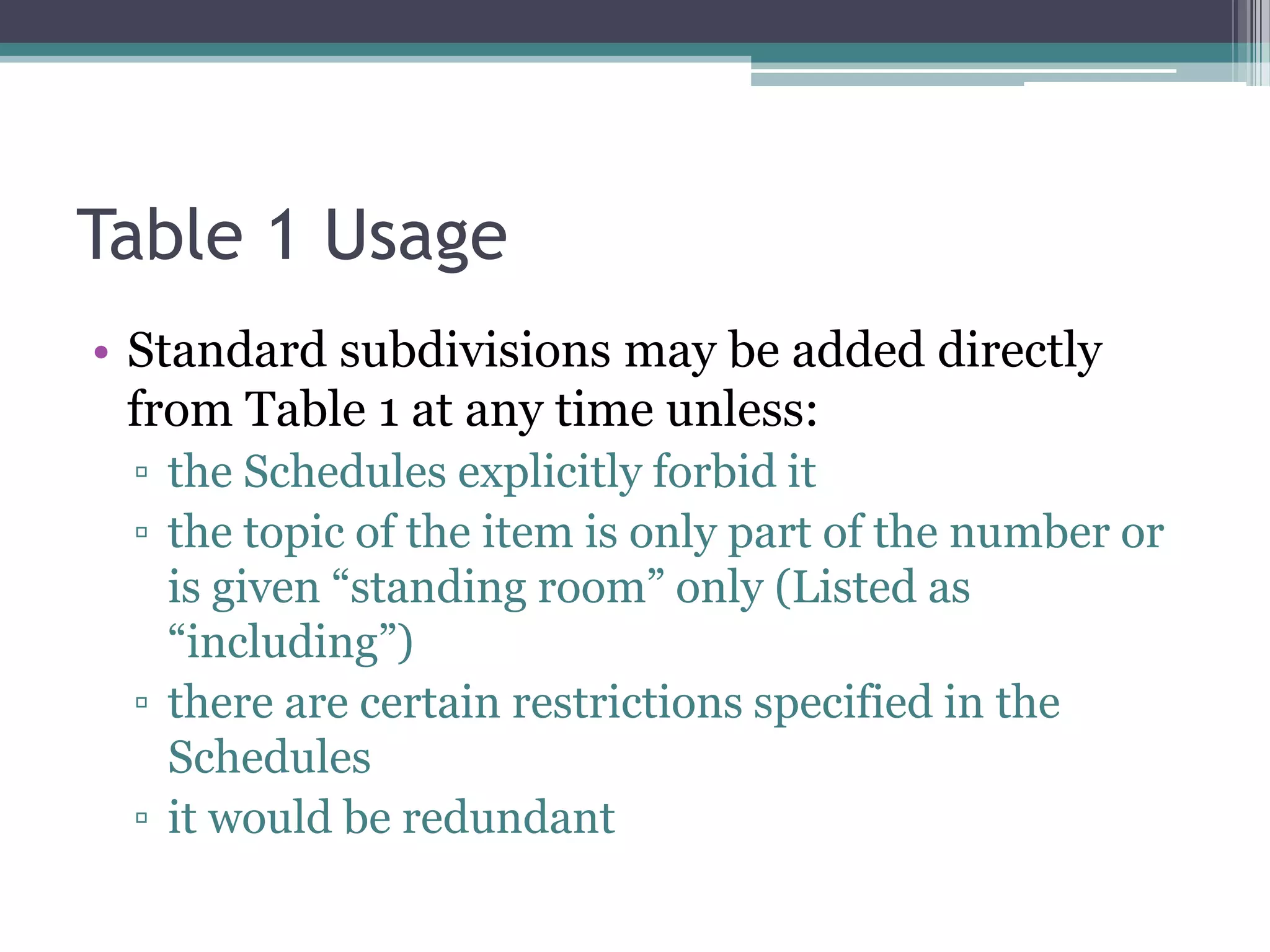
Table 1 UsageStandard subdivisions may be added directly from Table 1 at any time unless:the Schedules explicitly forbid itthe topic of the item is only part of the number or is given “standing room” only (Listed as “including”)there are certain restrictions specified in the Schedulesit would be redundant
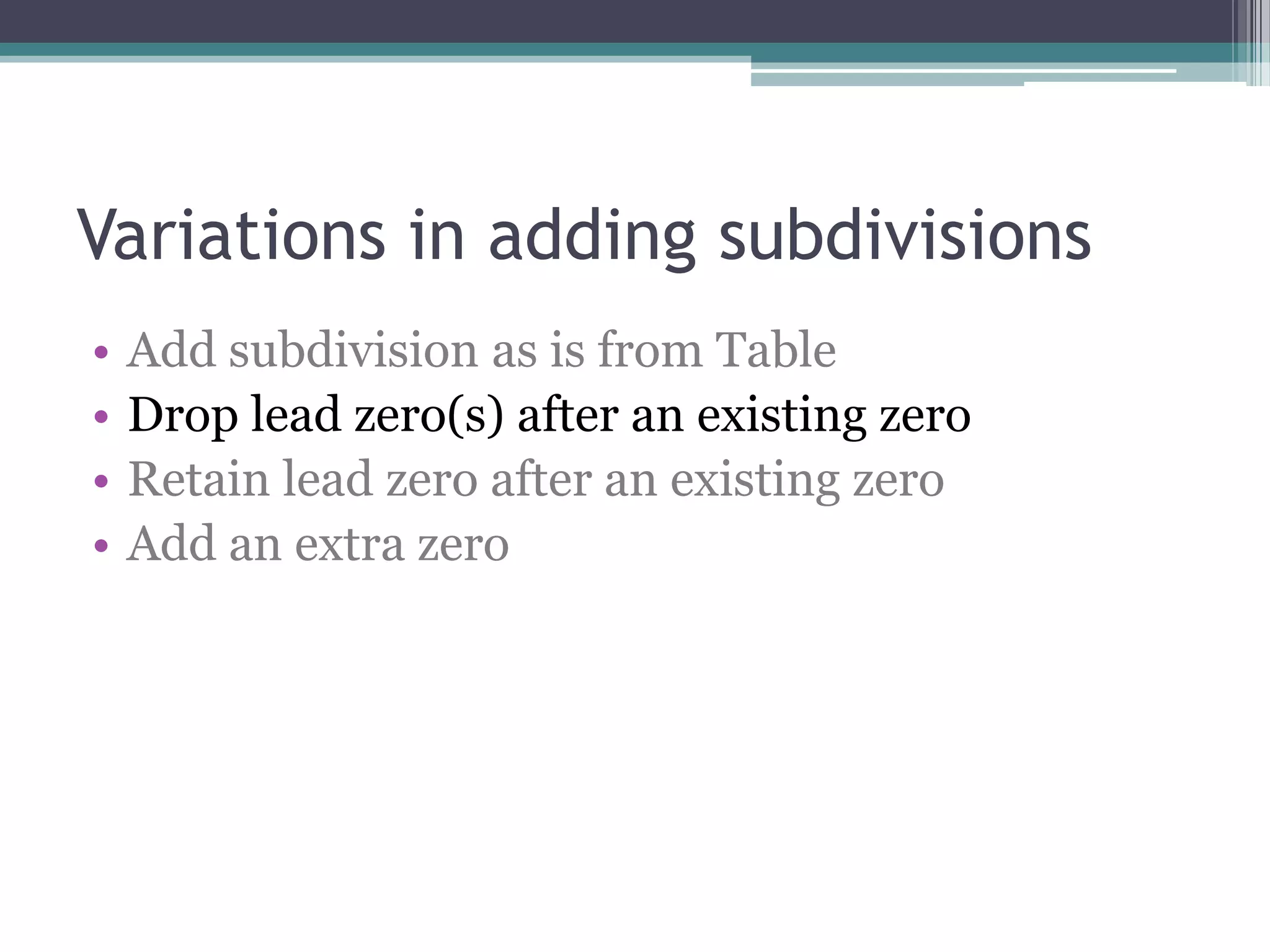
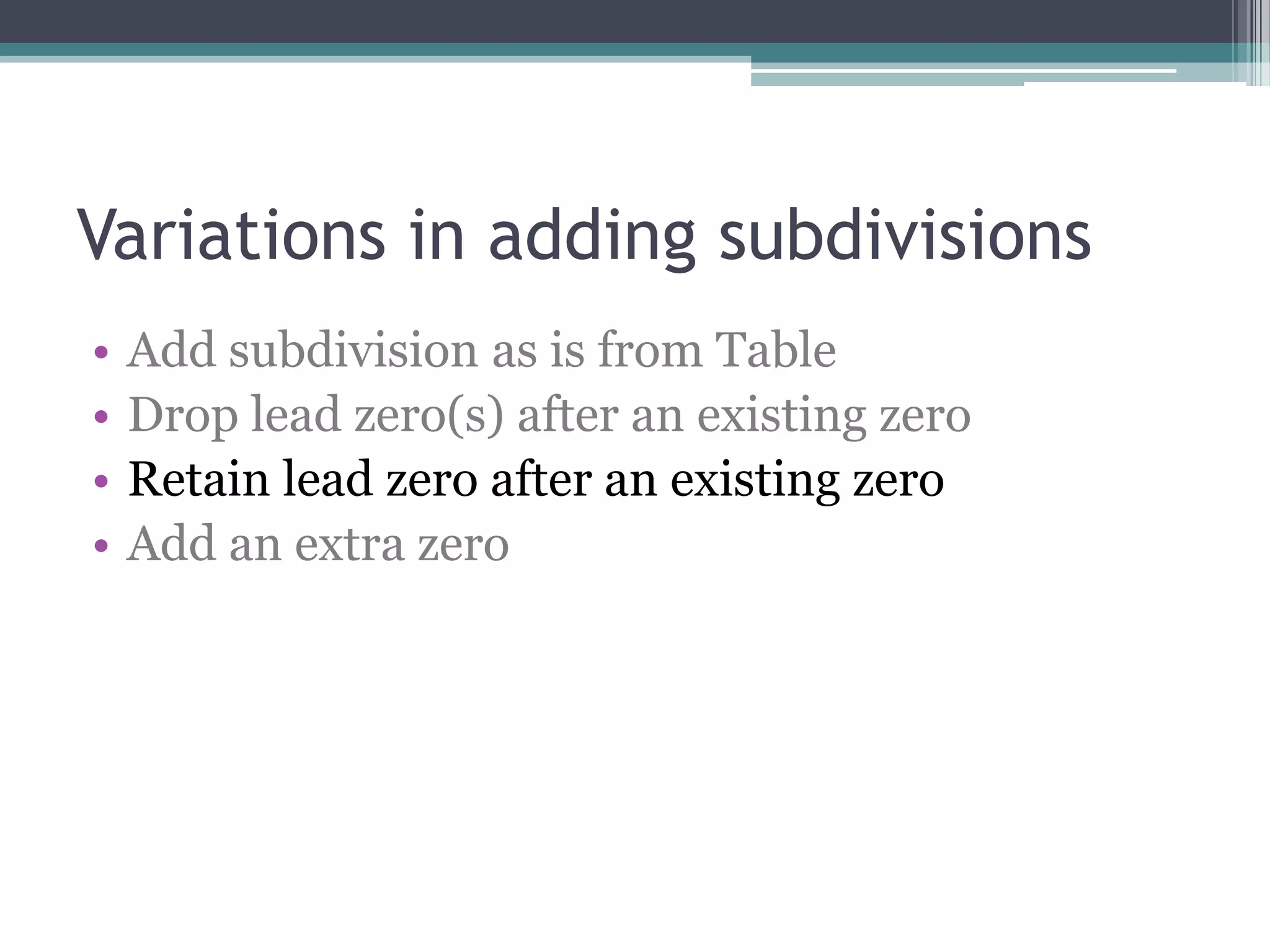
Variations in adding subdivisionsAdd subdivision as is from TableDrop lead zero(s) after an existing zeroRetain lead zero after an existing zeroAdd an extra zero
Classify book…Encyclopedia of FruitExplores many varieties of fruits – their agricultural development and history, where and how they are currently grown
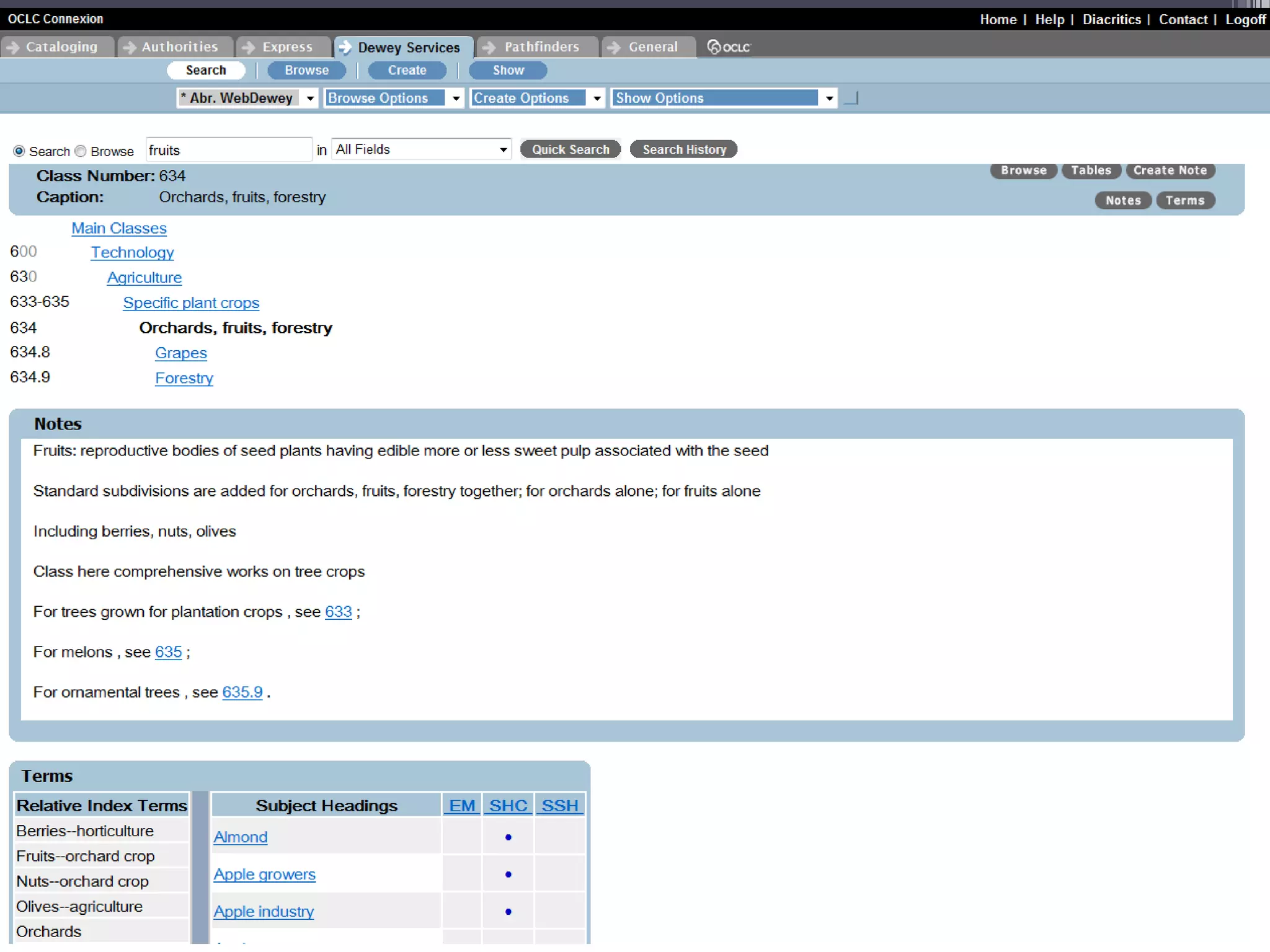
Classify book…Encyclopedia of FruitExplores many varieties of fruits – their agricultural development and history, where and how they are currently grownClassify with orchards, fruit…: 634
Classify book…Encyclopedia of FruitExplores many varieties of fruits – their agricultural development and history, where and how they are currently grownClassify with orchards, fruit…: 634.03
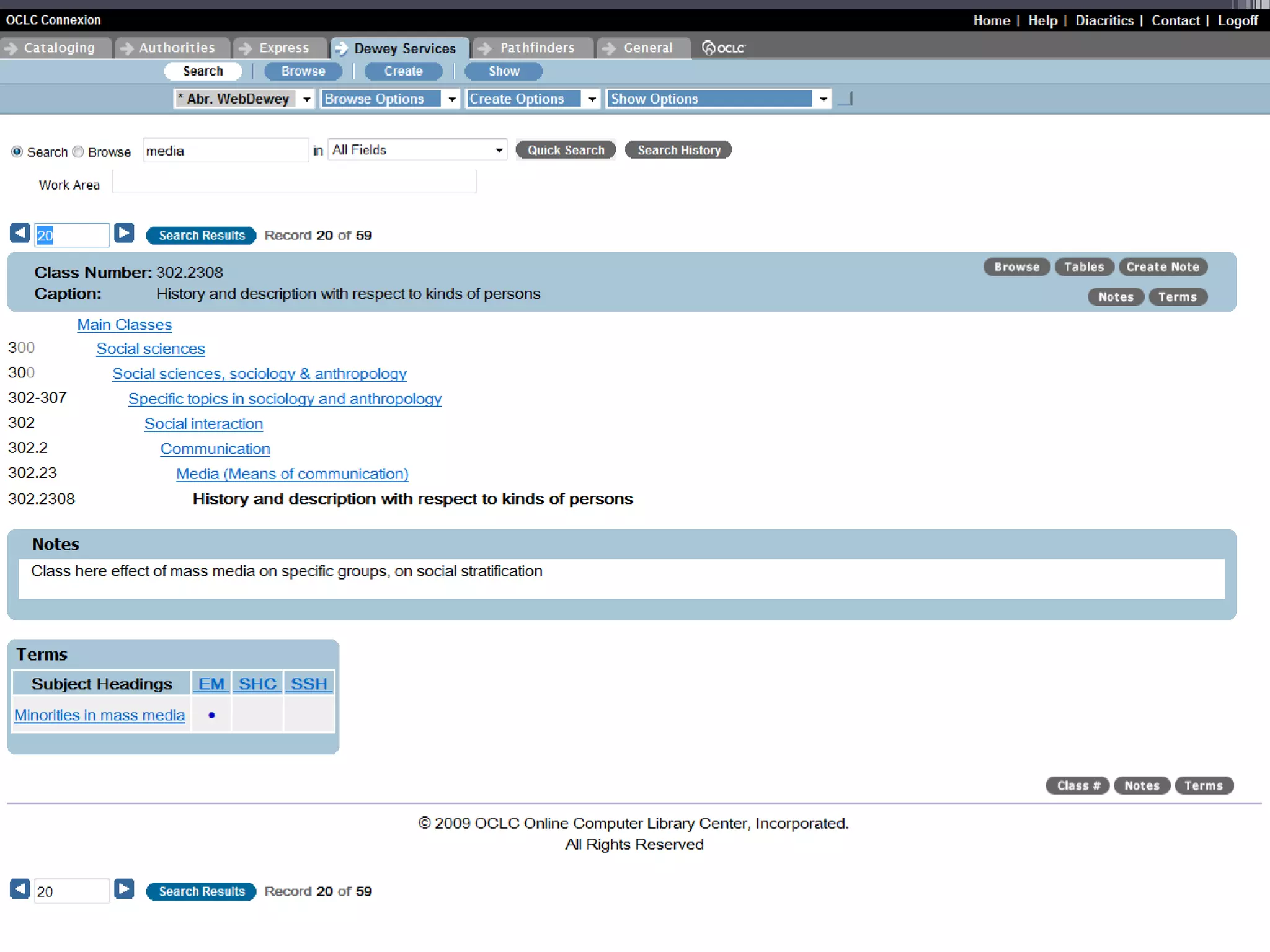
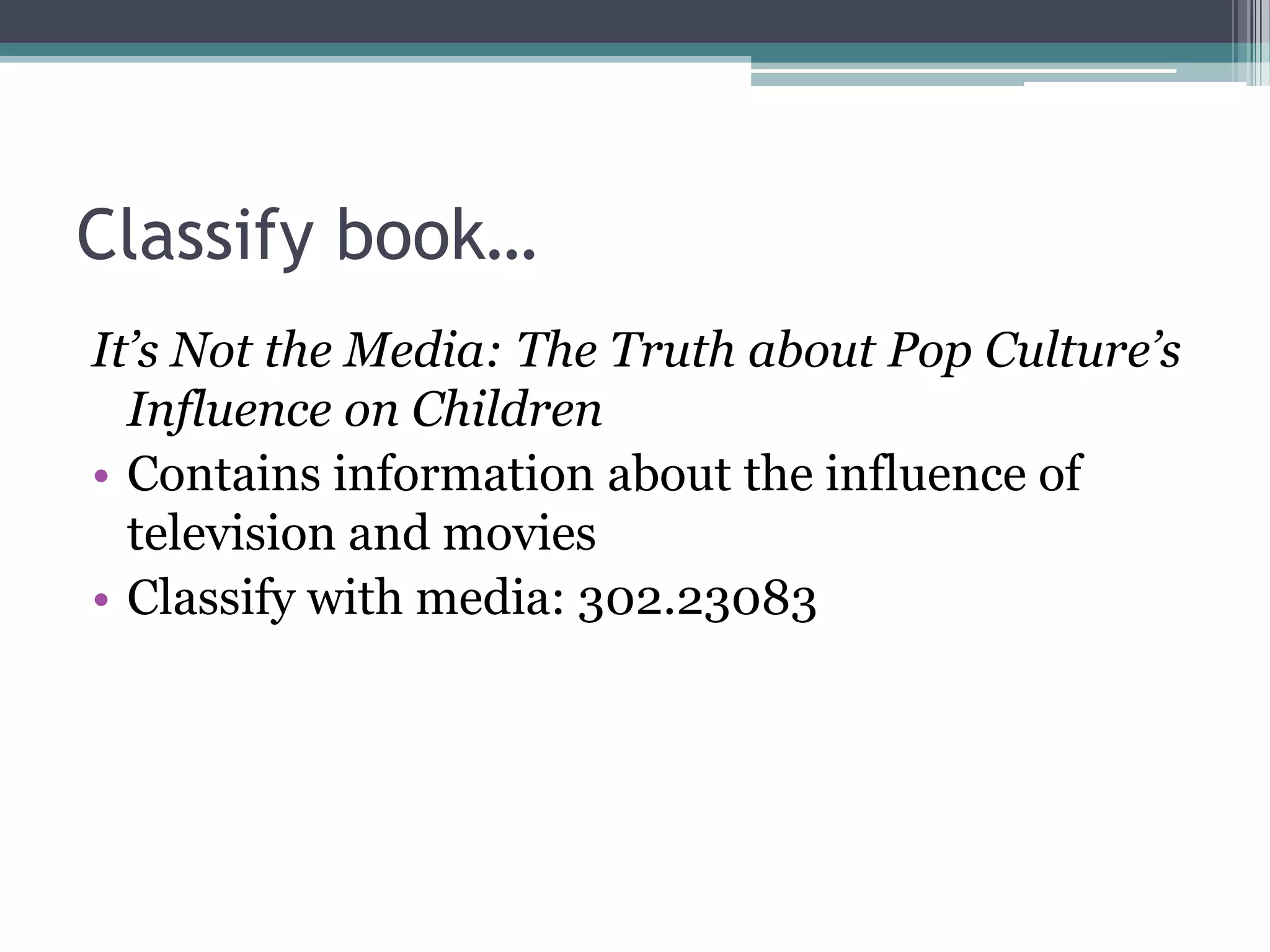
Classify book…It’s Not the Media: The Truth about Pop Culture’s Influence on ChildrenContains information about the influence of television and moviesClassify with media: 302.23 (+)
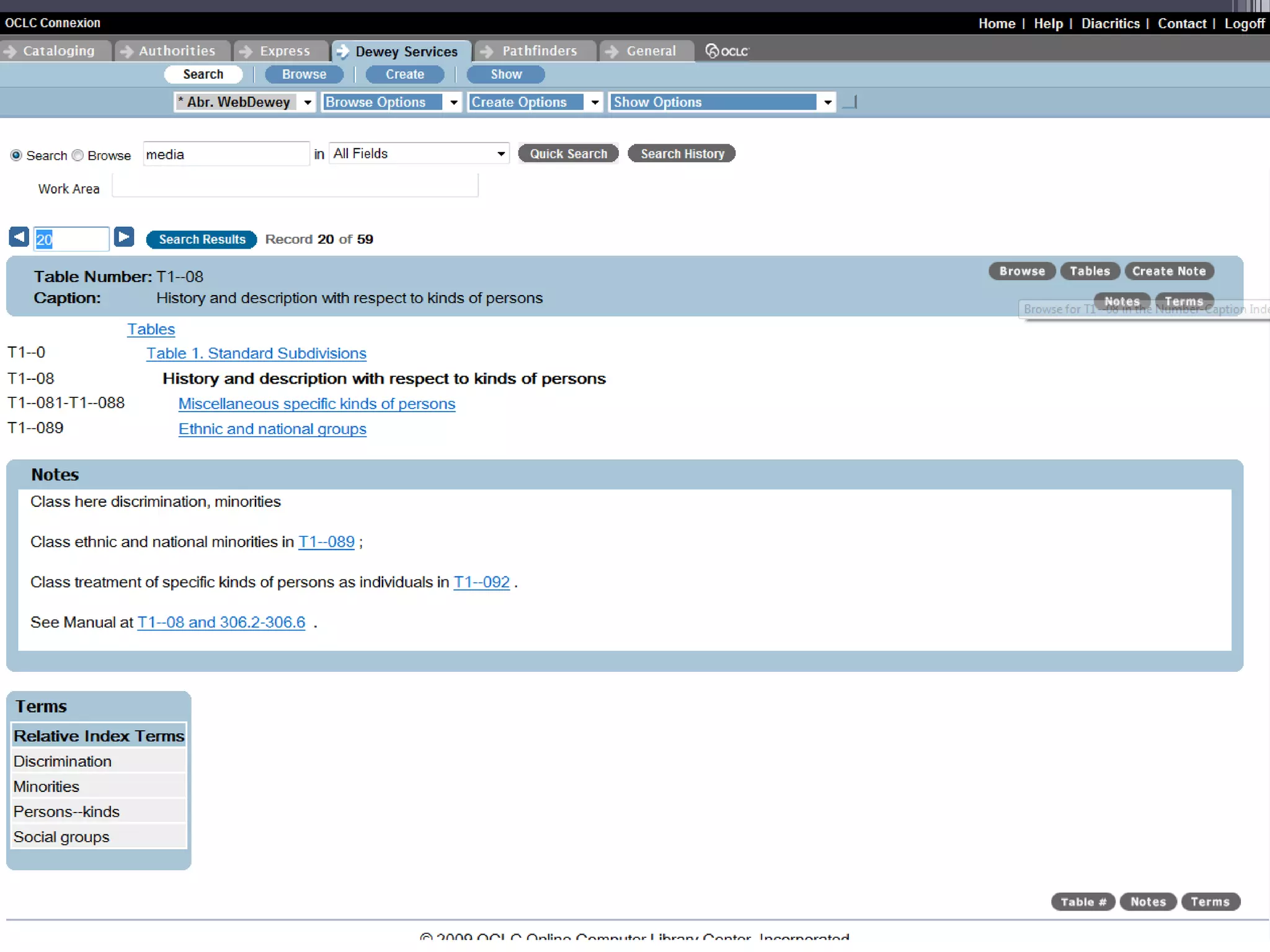
Classify book…It’s Not the Media: The Truth about Pop Culture’s Influence on ChildrenContains information about the influence of television and moviesClassify with media: 302.23083
Variations in adding subdivisionsAdd subdivision as is from TableDrop lead zero(s) after an existing zeroRetain lead zero after an existing zeroAdd an extra zero
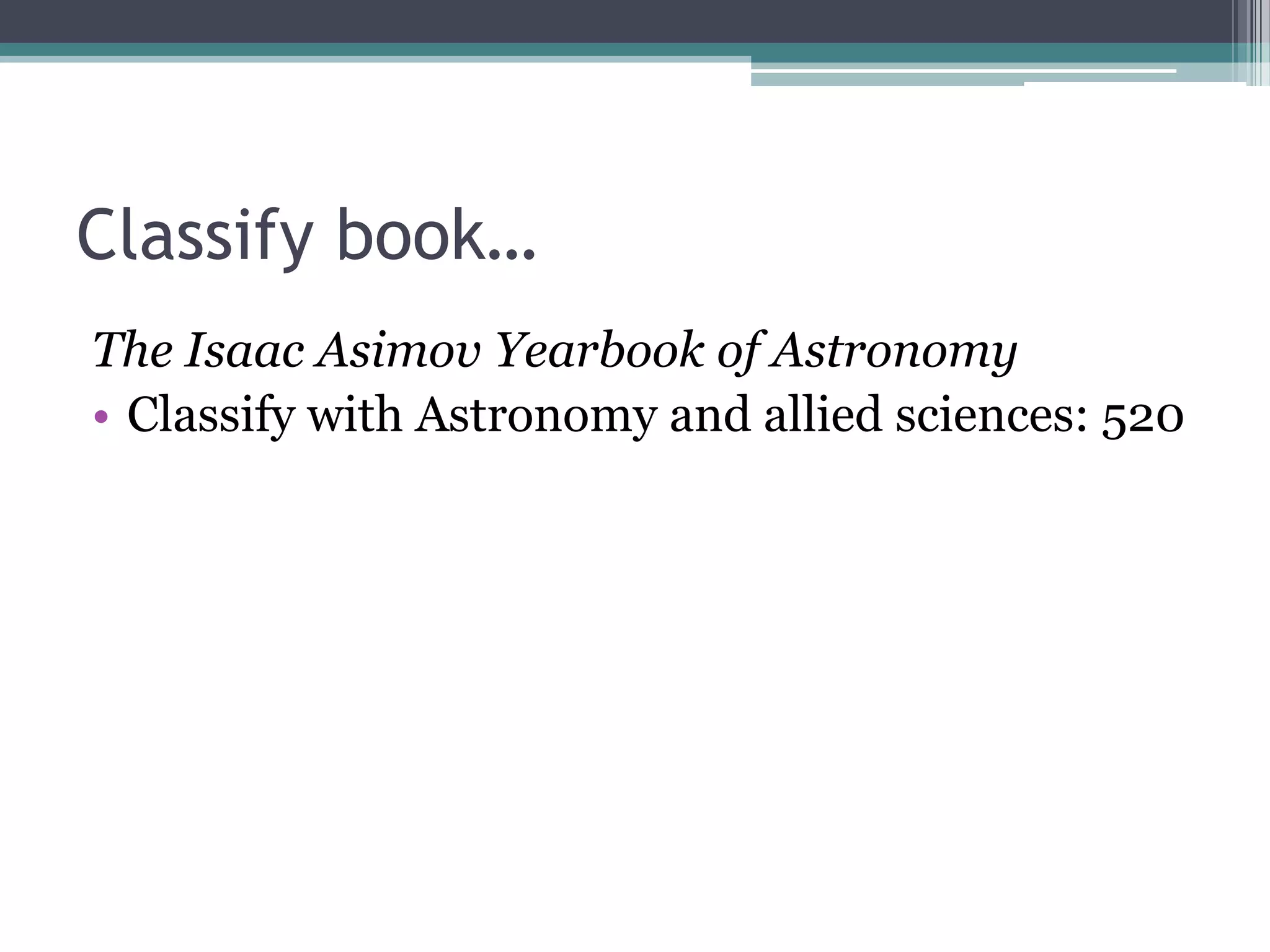
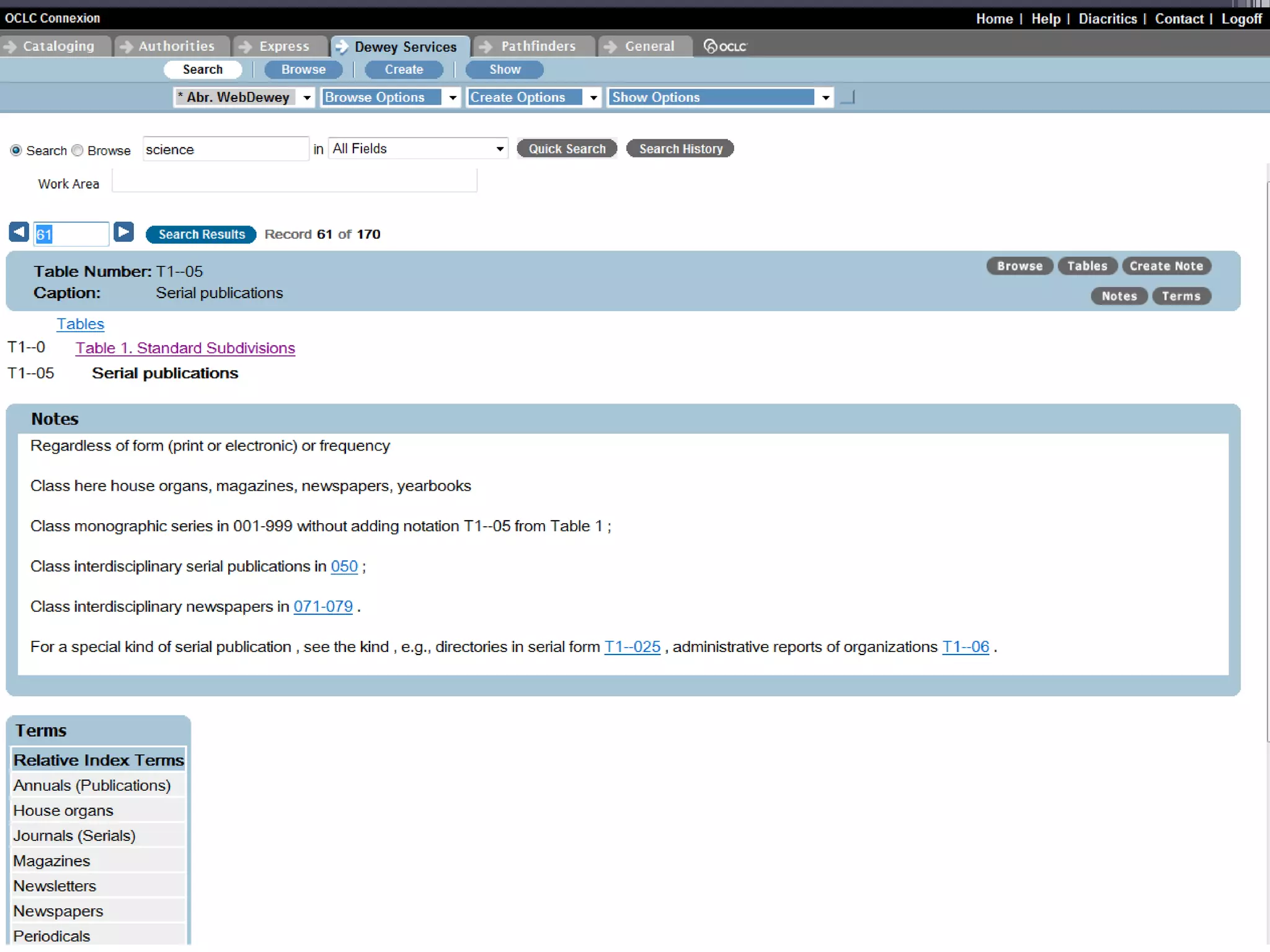
Classify book…The Isaac Asimov Yearbook of Astronomy
Classify book…The Isaac Asimov Yearbook of AstronomyClassify with Astronomy and allied sciences: 520
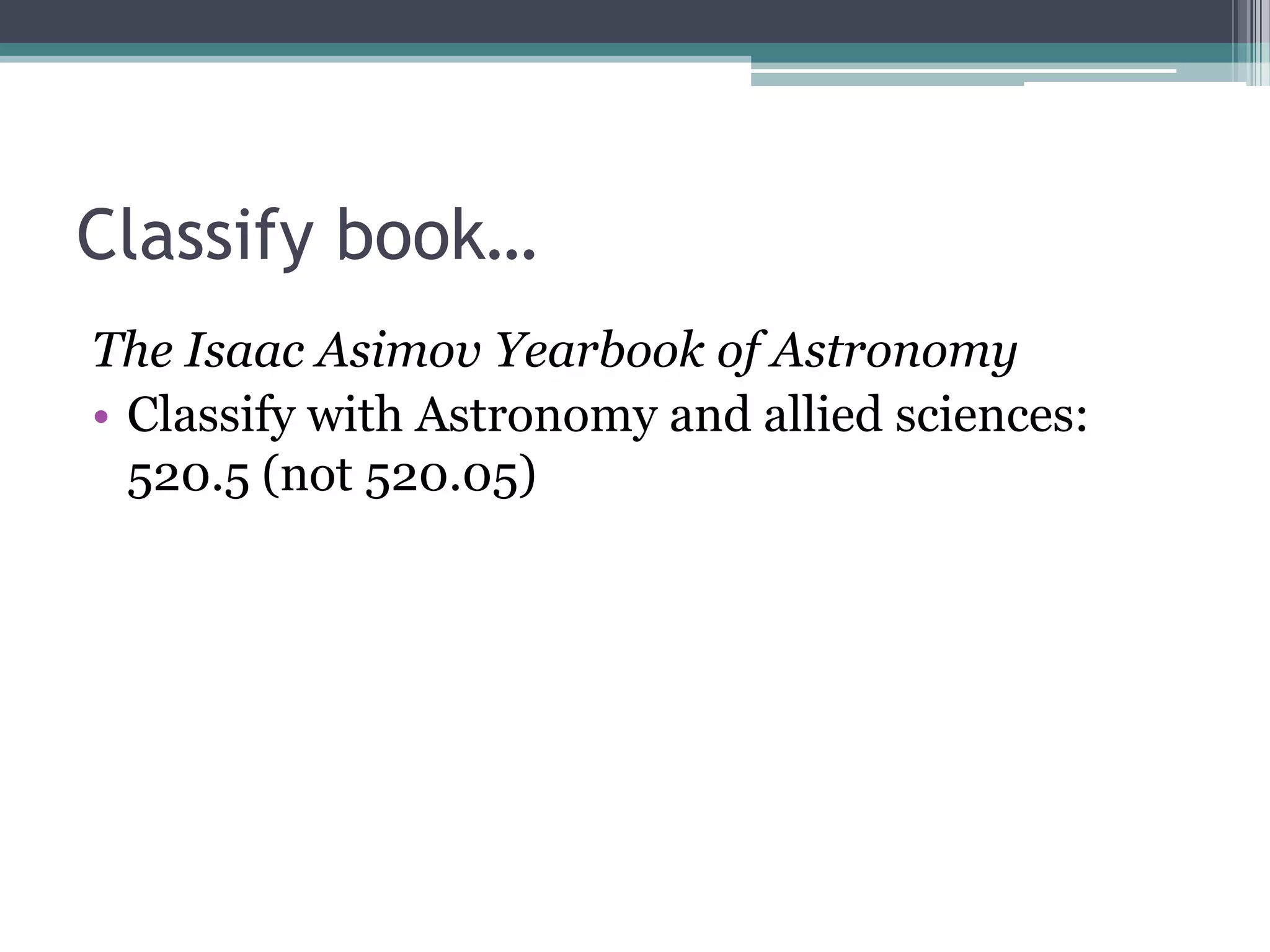
Classify book…The Isaac Asimov Yearbook of AstronomyClassify with Astronomy and allied sciences: 520.5 (not 520.05)
Variations in adding subdivisionsAdd subdivision as is from TableDrop lead zero(s) after an existing zeroRetain lead zero after an existing zeroAdd an extra zero
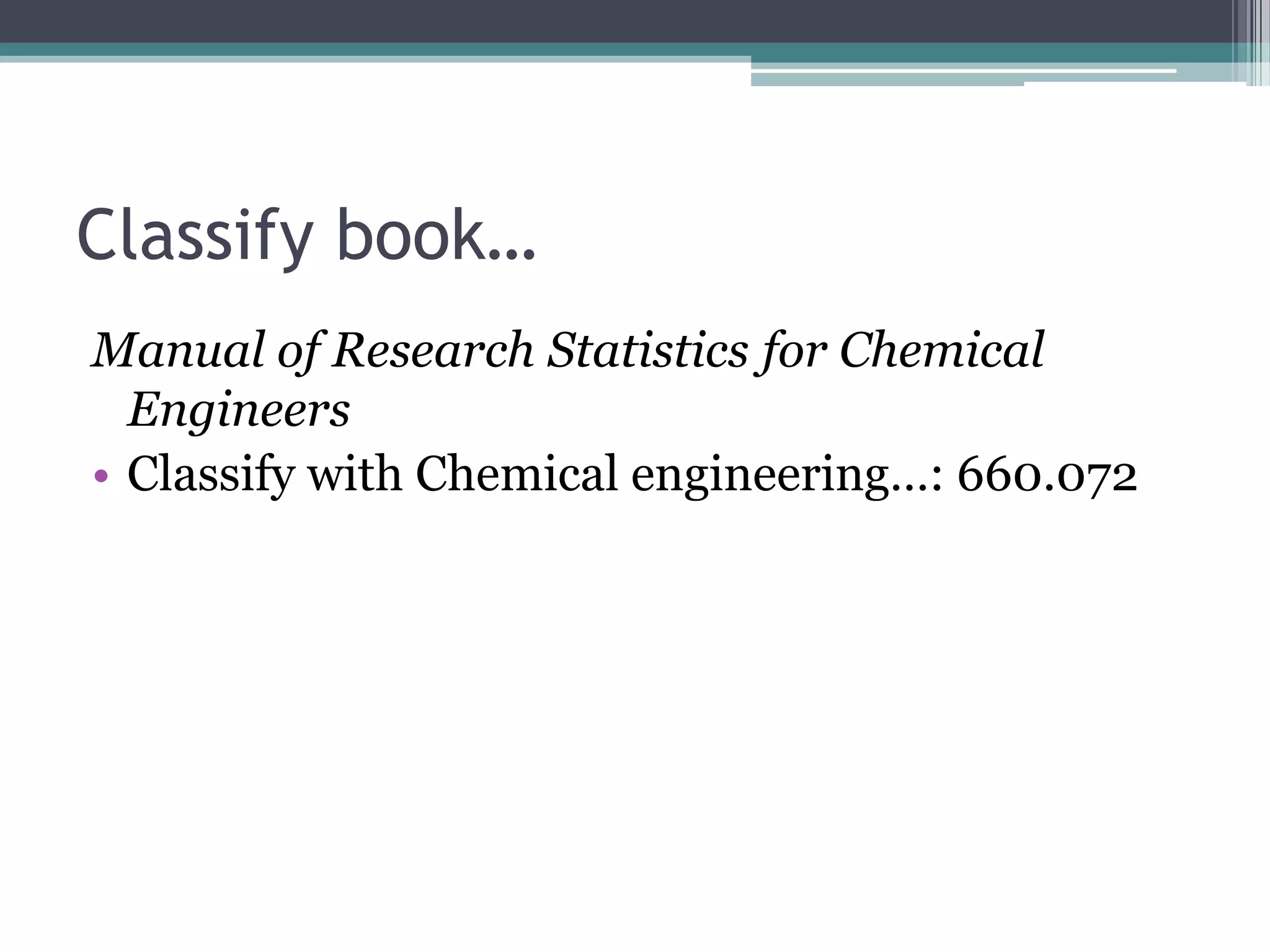
Classify book…Manual of Research Statistics for Chemical Engineers
Classify book…Manual of Research Statistics for Chemical EngineersClassify with Chemical engineering…: 660.0
Classify book…Manual of Research Statistics for Chemical EngineersClassify with Chemical engineering…: 660.072
Variations in adding subdivisionsAdd subdivision as is from TableDrop lead zero(s) after an existing zeroRetain lead zero after an existing zeroAdd an extra zero
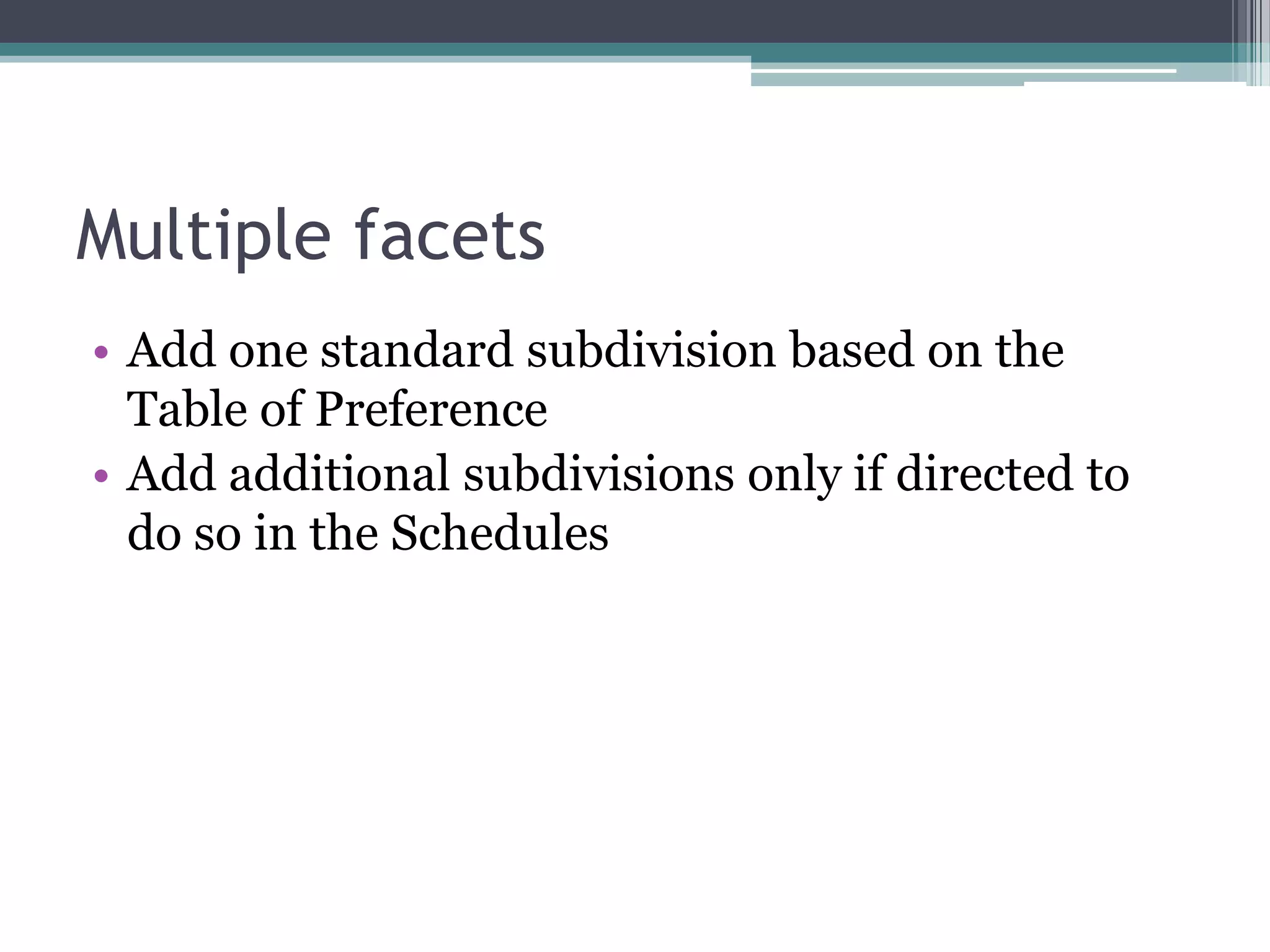
Multiple facetsAdd one standard subdivision based on the Table of PreferenceAdd additional subdivisions only if directed to do so in the Schedules
Assignmenthttp://www.nlc.state.ne.us/netserv/training/onlinesessions/DDCsummer2010/dewey.htmlDue by 8 AM, Tuesday, June 22, 2010
Next sessionJune 22Handouts available on the web prior to classTopics:Number building with Tables 1 (-09), 2, 3, and 4

Dewey Decimal Classification Session 2 - June 2010

  • 1.
    Dewey Decimal ClassificationSession2June 15, 2010Emily Dust NimsakontPowerPoint by Devra Dragos; Revised by Emily Dust Nimsakont
  • 2.
    TopicsSession 1Dewey DecimalClassificationNotesSubjects/DisciplinesManual entriesWebDeweySession 2Subjects/DisciplinesNumber building: Table 1Session 3Number building: Tables 1, 2, 3, &4
  • 3.
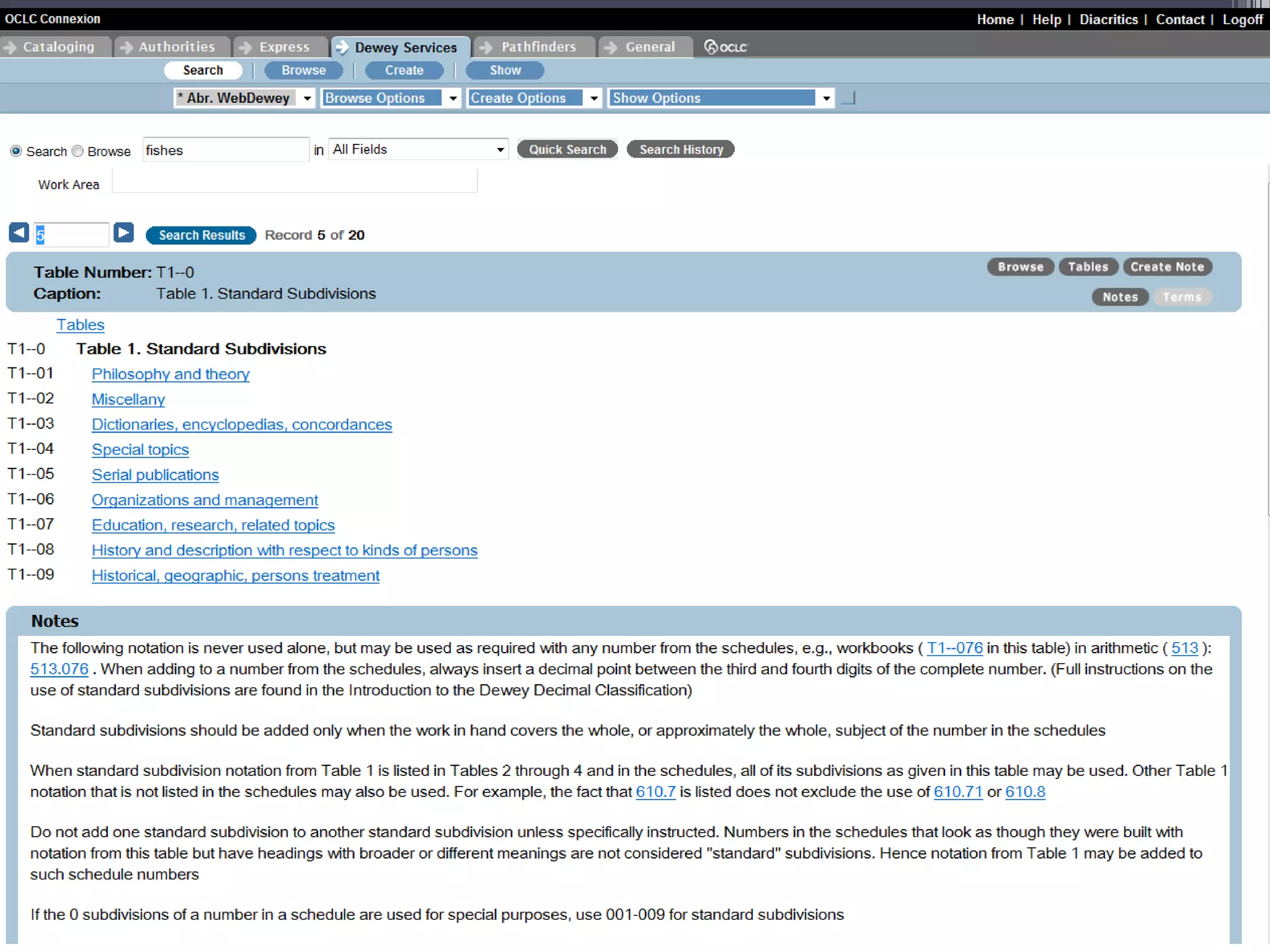
    “Classifying with theDDC”Section 5 of the IntroductionDetermining the Subject of a workDetermining the Discipline of a workMore than one Subject in the same DisciplineOne or more Subjects in more than one DisciplineTable of last resort
  • 4.
    One or moreSubjects in more than one DisciplineInterdisciplinary numbersDiscipline given fullest treatmentMain class: 000 Computers, Information & General WorksFall back to instructions for more than one Subject in the same Discipline
  • 5.
    Interdisciplinary numbersProvided inthe Relative Index and/or SchedulesDO NOT use if work does not contain significant material within the discipline of the interdisciplinary number
  • 6.
    Classify book…Raising theBar: Improving Competition Success for Professional Weight Lifters through Weight Training for FitnessIncludes material on competitions as well as becoming fit for competitions
  • 7.
    Interdisciplinary numbers inthe Relative IndexSee Introduction entries 11.8-11.9Interdisciplinary number is given with the unindented headings in the print versions (when there are multiple indented headings)Weight lifting 613.7physical fitness 613.7sports 796.41
  • 12.
    Classify book…Raising theBar: Improving Competition Success for Professional Weight Lifters through Weight Training for FitnessIncludes material on competitions as well as becoming fit for competitionsClassify with physical fitness: 613.7
  • 13.
    Interdisciplinary numbers inthe Relative IndexSometimes, no interdisciplinary number is given with the unindented headings in the print versionsPromotionarmed forces 355.1personal success 650.14personnel management 658.3Promotion (Students) 371.2
  • 15.
    Interdisciplinary numbers inthe SchedulesClass here interdisciplinary works on …Including … interdisciplinary works on …Class interdisciplinary works on … in …
  • 16.
    Classify book…Striking Style:Costume Jewelry in the Last Century – Make Your Own!Material discusses mass production of costume jewelry in the 20th century and show how to handcraft jewelry in the same style
  • 22.
    Classify book…Striking Style:Costume Jewelry in the Last Century – Make Your Own!Material discusses mass production of costume jewelry in the 20th century and show how to handcraft jewelry in the same styleClassify with: 688
  • 23.
    Interdisciplinary numbersProvided inthe Relative Index and/or SchedulesDO NOT use if work does not contain significant material within the discipline of the interdisciplinary number
  • 24.
    One or moreSubjects in more than one DisciplineInterdisciplinary numbersDiscipline given fullest treatmentMain class: 000 Computers, Information & General WorksFall back to instructions for more than one Subject in the same Discipline
  • 25.
    Discipline given thefullest treatmentSometimes, no interdisciplinary number exists in Relative Index or Schedules
  • 26.
    Classify book…Fighting forHome BirthDiscusses Nebraska legal stance in regard to midwifery (20 pages), the custom of child birth at home (25 pages), and describes the practice of midwifery (45 pages).
  • 30.
    Classify book…Fighting forHome BirthDiscusses Nebraska legal stance in regard to midwifery (20 pages), the custom of child birth at home (25 pages), and describes the practice of midwifery (45 pages).Classify with obstetrics: 618.2
  • 31.
    One or moreSubjects in more than one DisciplineInterdisciplinary numbersDiscipline given fullest treatmentMain class: 000 Computers, Information & General WorksFall back to instructions for more than one Subject in the same Discipline
  • 32.
    Main Class: 000Computers, information & general worksPossibilities in divisions such as:060 General organizations and museology080 Collections
  • 36.
    Fall back toinstructions for more than one Subject in the same DisciplineFuller treatmentFirst-of-two ruleRule of threeRule of zeroRule of application
  • 37.
    “Classifying with theDDC”Section 5 of the IntroductionDetermining the Subject of a workDetermining the Discipline of a workMore than one Subject in the same DisciplineOne or more Subjects in more than one DisciplineTable of last resort
  • 38.
    Table of lastresortUsed when more than one number seems to be applicableUse with caution – consider intent of authorKinds of thingsParts of thingsMaterials from which things, kinds, or parts are madeProperties of things, kinds, parts, or materialsProcesses within things, kinds, parts, or materialsOperations upon things, kinds, parts, or materialsInstrumentalities for performing such operations
  • 40.
    “Classifying with theDDC”Section 5 of the IntroductionDetermining the Subject of a workDetermining the Discipline of a workMore than one Subject in the same DisciplineOne or more Subjects in more than one DisciplineTable of last resort
  • 41.
    Number Building/SubdivisionsUsed tofurther group like with likeHelp organize large number of items within a topicDefine more facets of an item
  • 42.
    Number Building/SubdivisionsAs instructed,may sometimes add numbers from another class or division before adding subdivision
  • 43.
  • 46.
    Classify book…Handbook forCasting SteelClassify with Iron, steel…: 672
  • 50.
    Classify book…Handbook forCasting SteelClassify with Iron, steel…: 672.2
  • 56.
    Add to basenumber 597.1 the numbers following 591 in 591.3-591.7Add to base number 591.7 the numbers following 577 in 577.2-577.7597.176 Freshwater fish597.1 cold-blooded vertebrates 7 specific environments 6 freshwater ecology
  • 57.
    Standard SubdivisionsOptionalRecommended fora large number of items within a specific topic
  • 58.
    Facets defined bySubdivisions listed in TablesFormat (e.g. dictionary, serial, catalog)Approach/Viewpoint of author (e.g. history, philosophy, criticism of a work)People (e.g. women, gifted persons)Location (e.g. torrid zone, Greater London)Literary form (e.g. poetry, drama)Use of language (e.g. grammar, etymology)
  • 59.
    Source of Subdivisions/Instructionsfor adding SubdivisionsTablesIn Abridged DDC, four tables are used (as opposed to six tables in the full DDC)SchedulesIntroduction 8.1-8.18Manual
  • 62.
    Table 1. StandardSubdivisions:FacetsFormat (e.g. dictionary, serial, catalog)Approach/Viewpoint of author (e.g. history, philosophy, criticism of a work)People (e.g. women, gifted persons)Location (e.g. torrid zone, Greater London) in conjunction with Table 2
  • 68.
    Table 1 UsageStandardsubdivisions may be added directly from Table 1 at any time unless:the Schedules explicitly forbid itthe topic of the item is only part of the number or is given “standing room” only (Listed as “including”)there are certain restrictions specified in the Schedulesit would be redundant
  • 74.
    Variations in addingsubdivisionsAdd subdivision as is from TableDrop lead zero(s) after an existing zeroRetain lead zero after an existing zeroAdd an extra zero
  • 75.
    Classify book…Encyclopedia ofFruitExplores many varieties of fruits – their agricultural development and history, where and how they are currently grown
  • 77.
    Classify book…Encyclopedia ofFruitExplores many varieties of fruits – their agricultural development and history, where and how they are currently grownClassify with orchards, fruit…: 634
  • 79.
    Classify book…Encyclopedia ofFruitExplores many varieties of fruits – their agricultural development and history, where and how they are currently grownClassify with orchards, fruit…: 634.03
  • 80.
    Classify book…It’s Notthe Media: The Truth about Pop Culture’s Influence on ChildrenContains information about the influence of television and moviesClassify with media: 302.23 (+)
  • 86.
    Classify book…It’s Notthe Media: The Truth about Pop Culture’s Influence on ChildrenContains information about the influence of television and moviesClassify with media: 302.23083
  • 87.
    Variations in addingsubdivisionsAdd subdivision as is from TableDrop lead zero(s) after an existing zeroRetain lead zero after an existing zeroAdd an extra zero
  • 89.
    Classify book…The IsaacAsimov Yearbook of Astronomy
  • 93.
    Classify book…The IsaacAsimov Yearbook of AstronomyClassify with Astronomy and allied sciences: 520
  • 96.
    Classify book…The IsaacAsimov Yearbook of AstronomyClassify with Astronomy and allied sciences: 520.5 (not 520.05)
  • 97.
    Variations in addingsubdivisionsAdd subdivision as is from TableDrop lead zero(s) after an existing zeroRetain lead zero after an existing zeroAdd an extra zero
  • 98.
    Classify book…Manual ofResearch Statistics for Chemical Engineers
  • 100.
    Classify book…Manual ofResearch Statistics for Chemical EngineersClassify with Chemical engineering…: 660.0
  • 104.
    Classify book…Manual ofResearch Statistics for Chemical EngineersClassify with Chemical engineering…: 660.072
  • 105.
    Variations in addingsubdivisionsAdd subdivision as is from TableDrop lead zero(s) after an existing zeroRetain lead zero after an existing zeroAdd an extra zero
  • 107.
    Multiple facetsAdd onestandard subdivision based on the Table of PreferenceAdd additional subdivisions only if directed to do so in the Schedules
  • 110.
  • 111.
    Next sessionJune 22Handoutsavailable on the web prior to classTopics:Number building with Tables 1 (-09), 2, 3, and 4

Editor's Notes

  • #5 Interdisciplinary numbers are assigned to subjects that commonly fall under multiple disciplines.
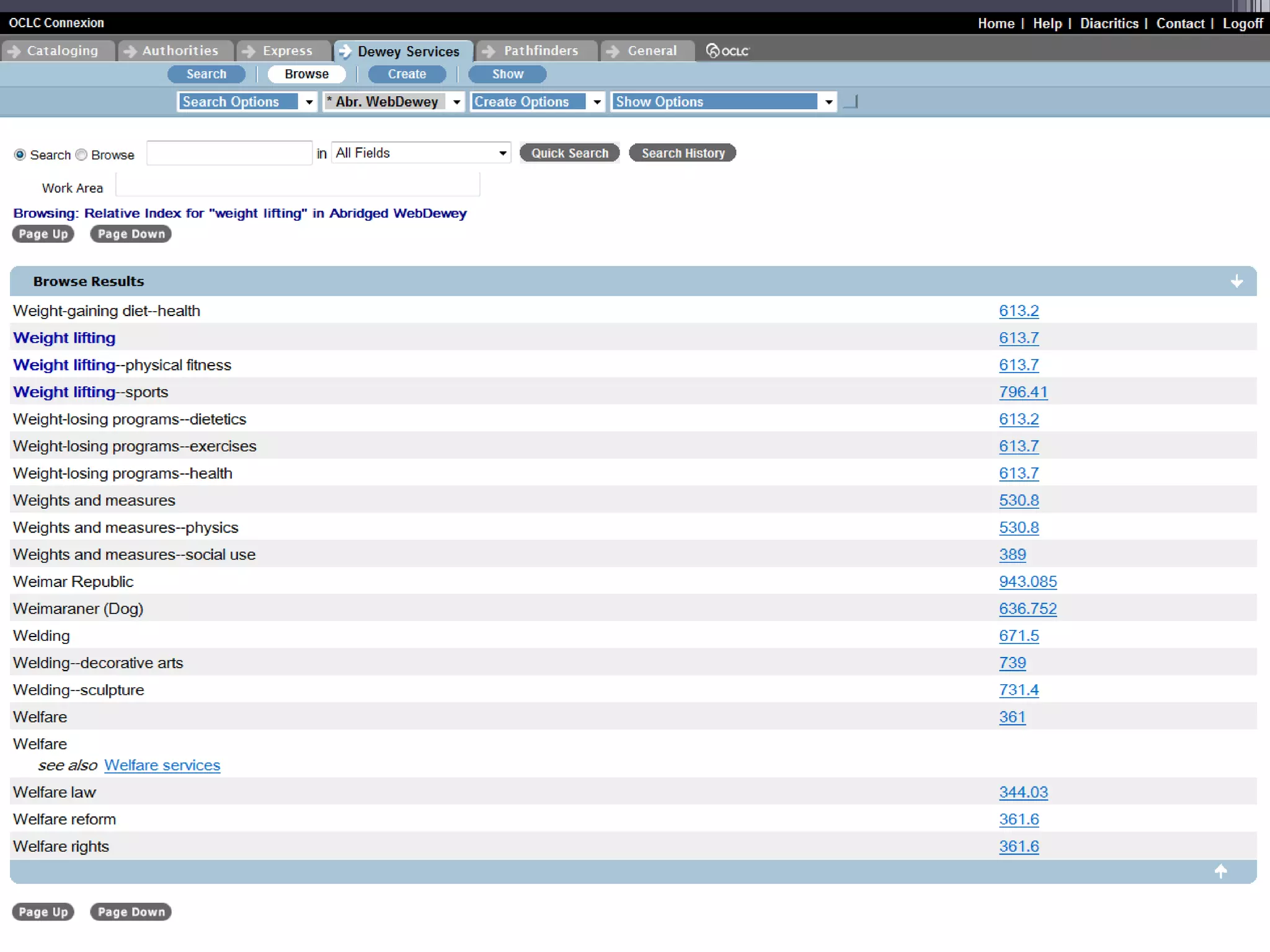
  • #6 Interdisciplinary numbers are numbers where you are told to class interdisciplinary works. Basically, an interdisciplinary number makes the choice for you as to where to put the book. Unfortunately, there is little consistency in whether interdisciplinary numbers are found in the relative index or in the schedules.
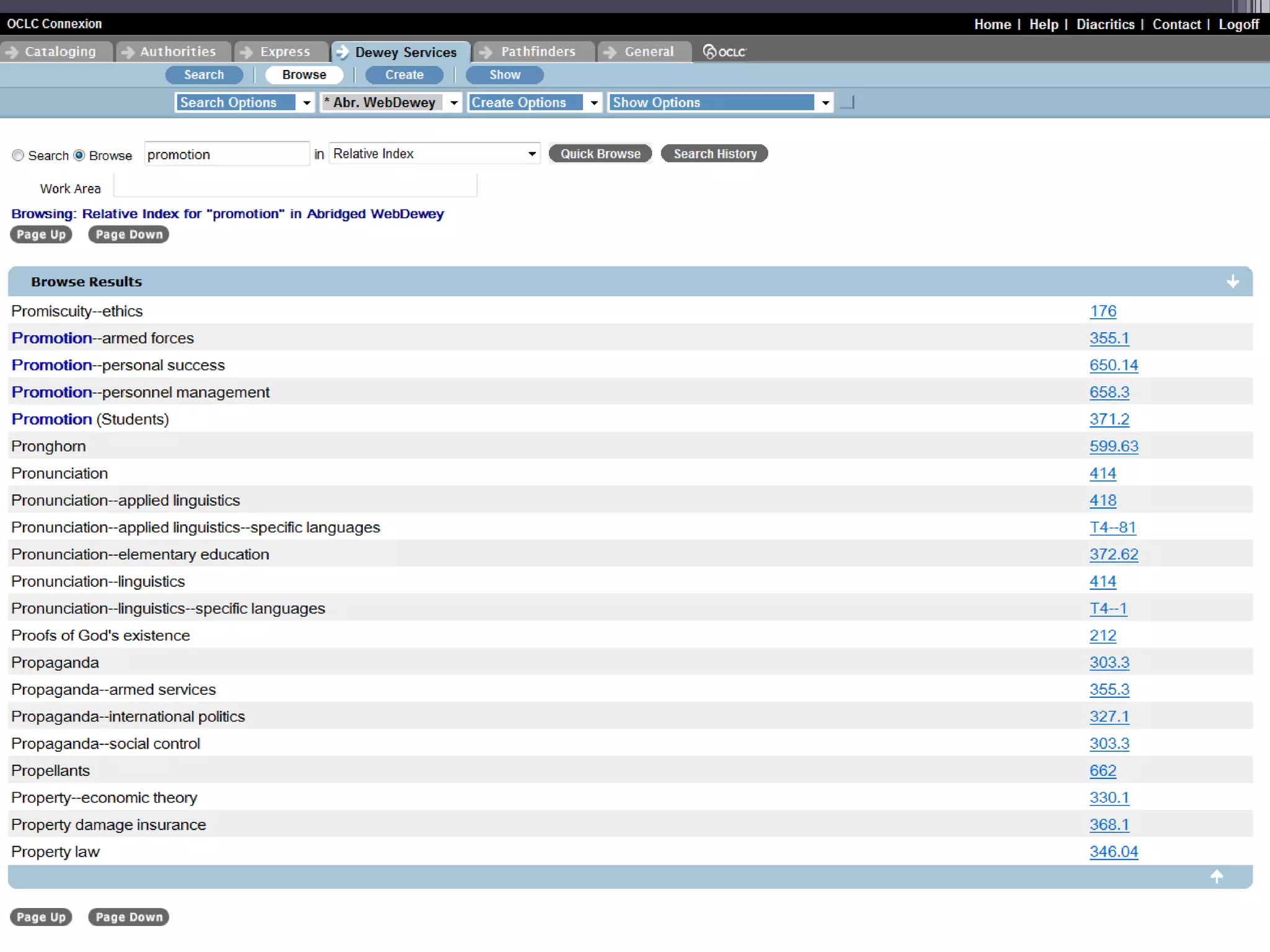
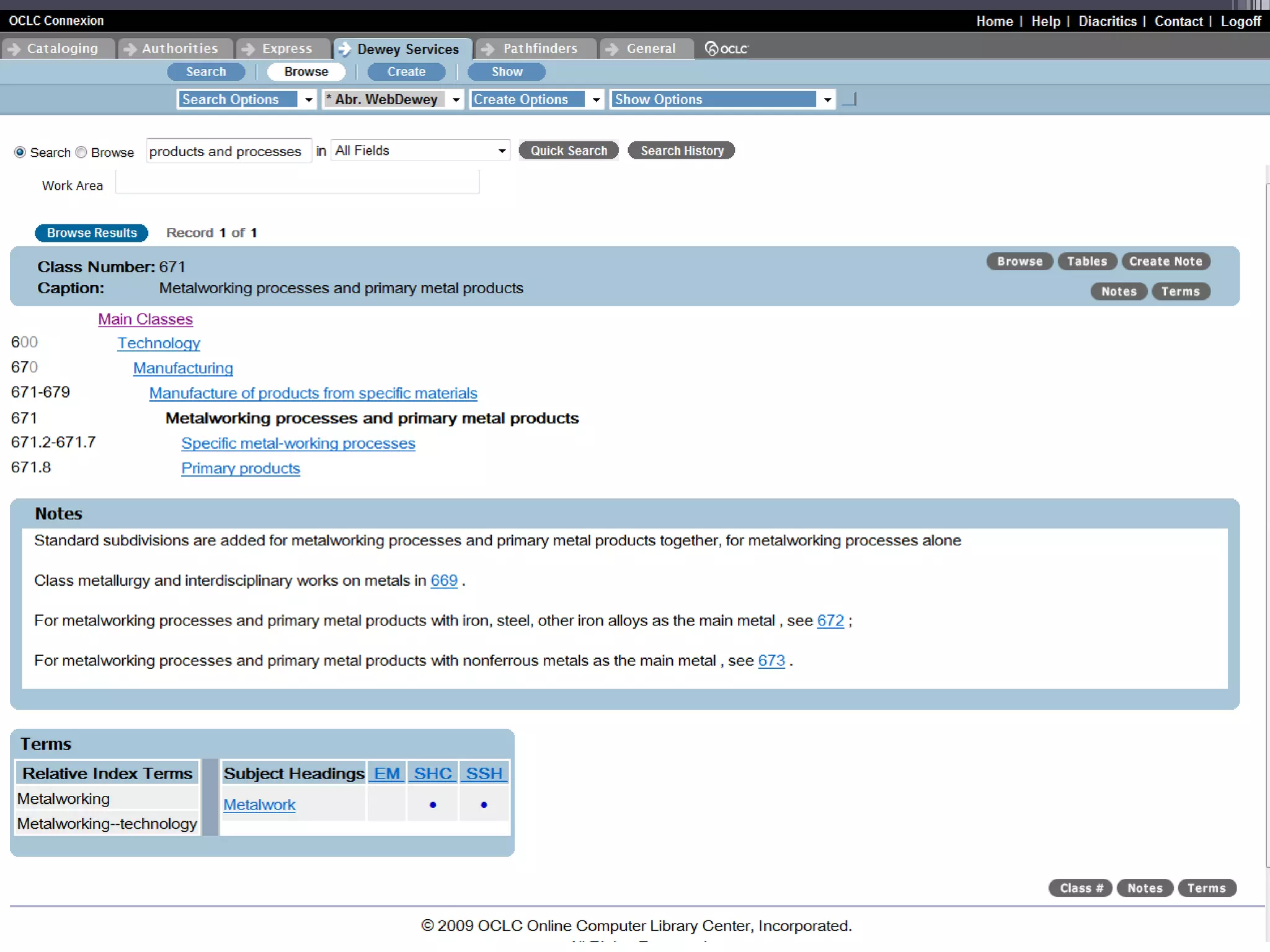
  • #9 In WebDewey, the listing that is a single entry by itself has the interdisciplinary number.
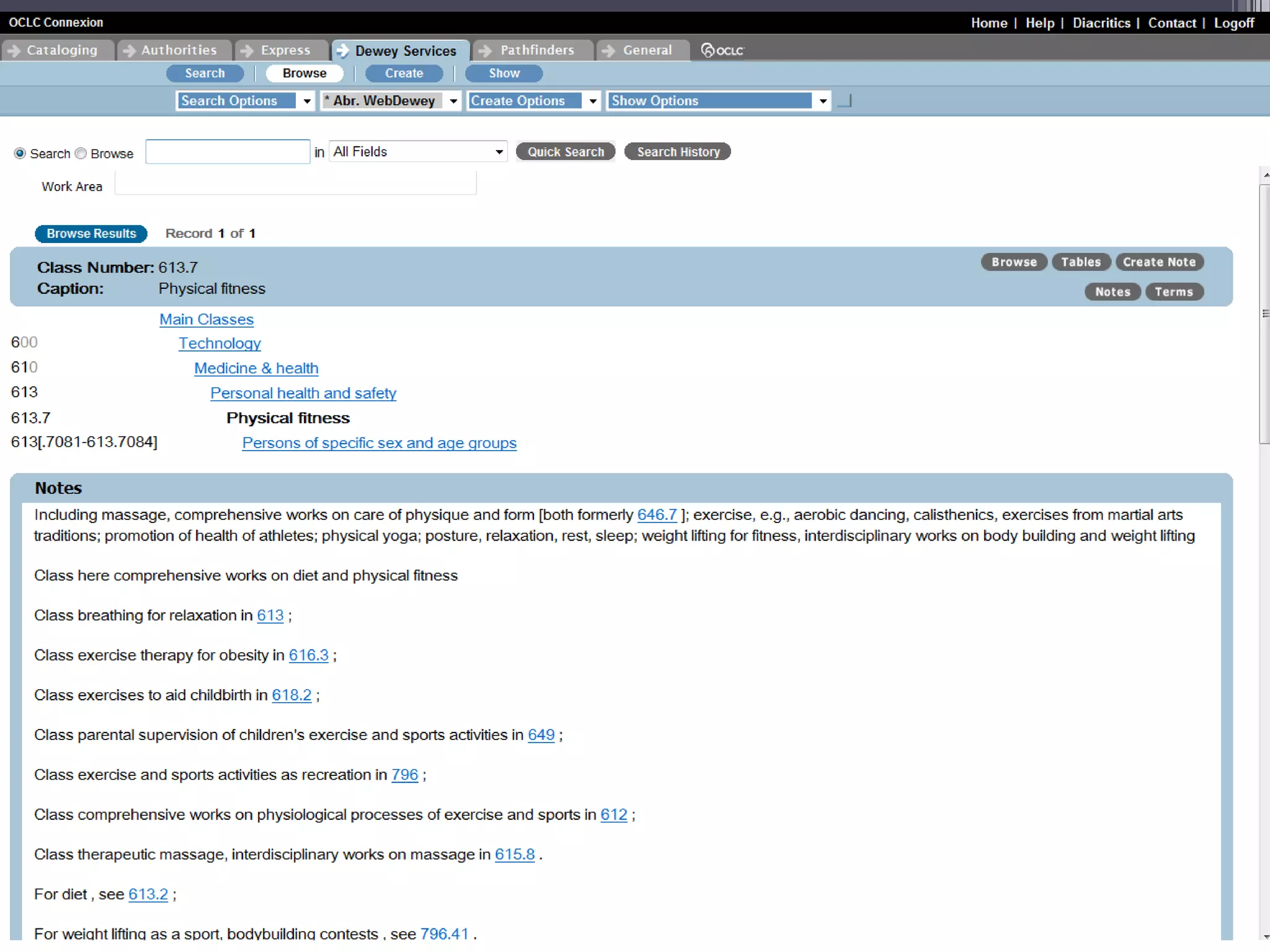
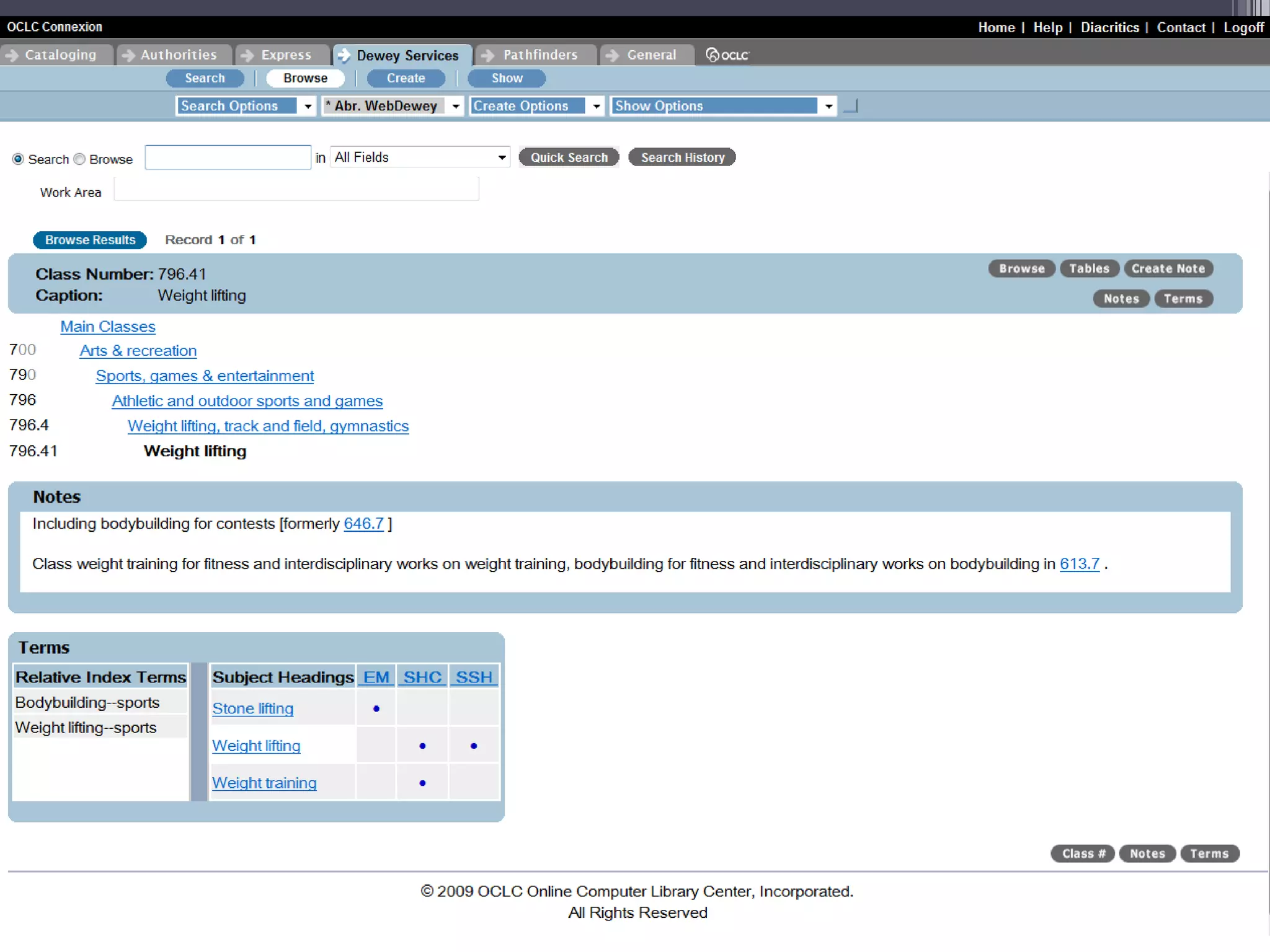
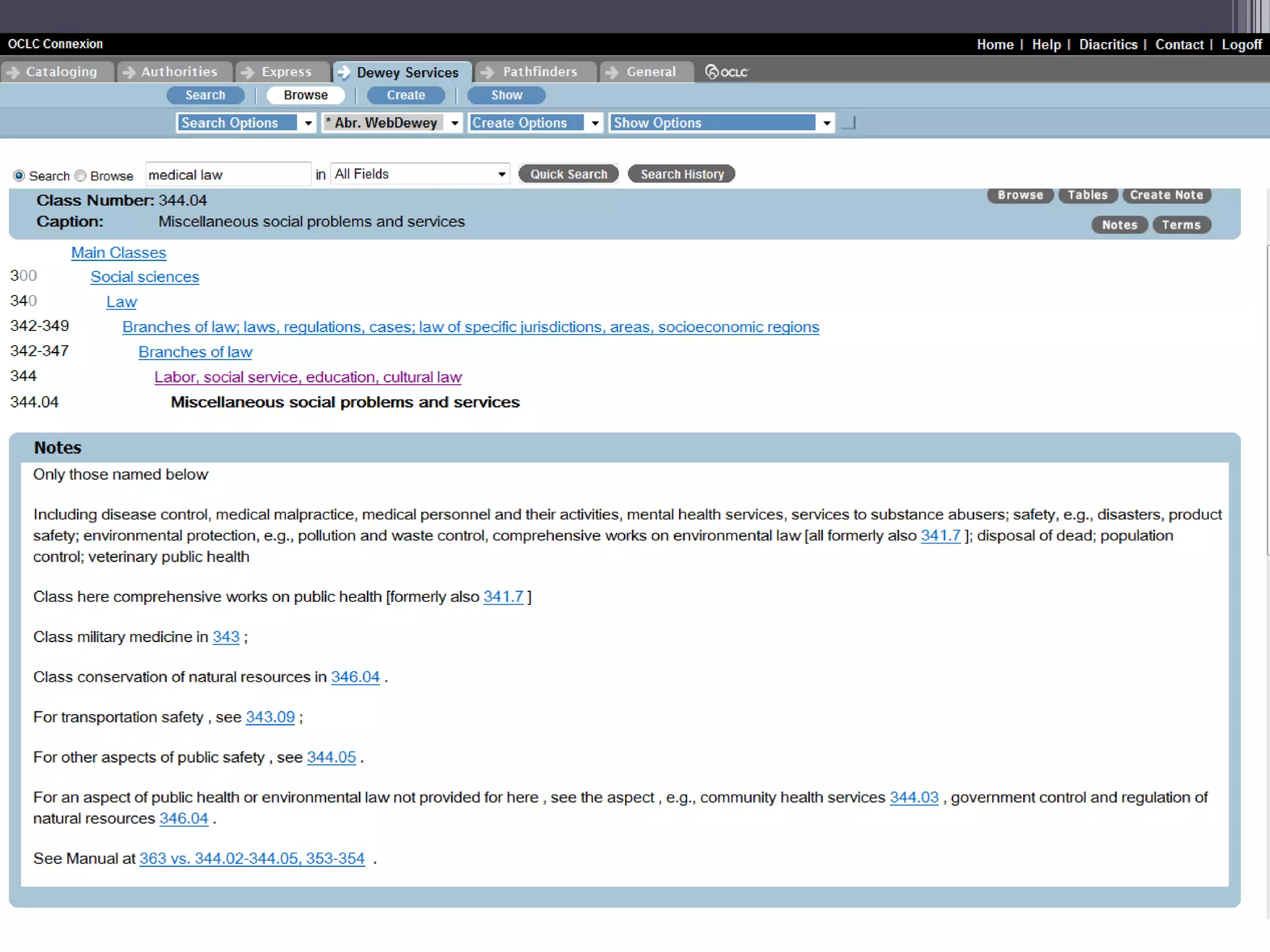
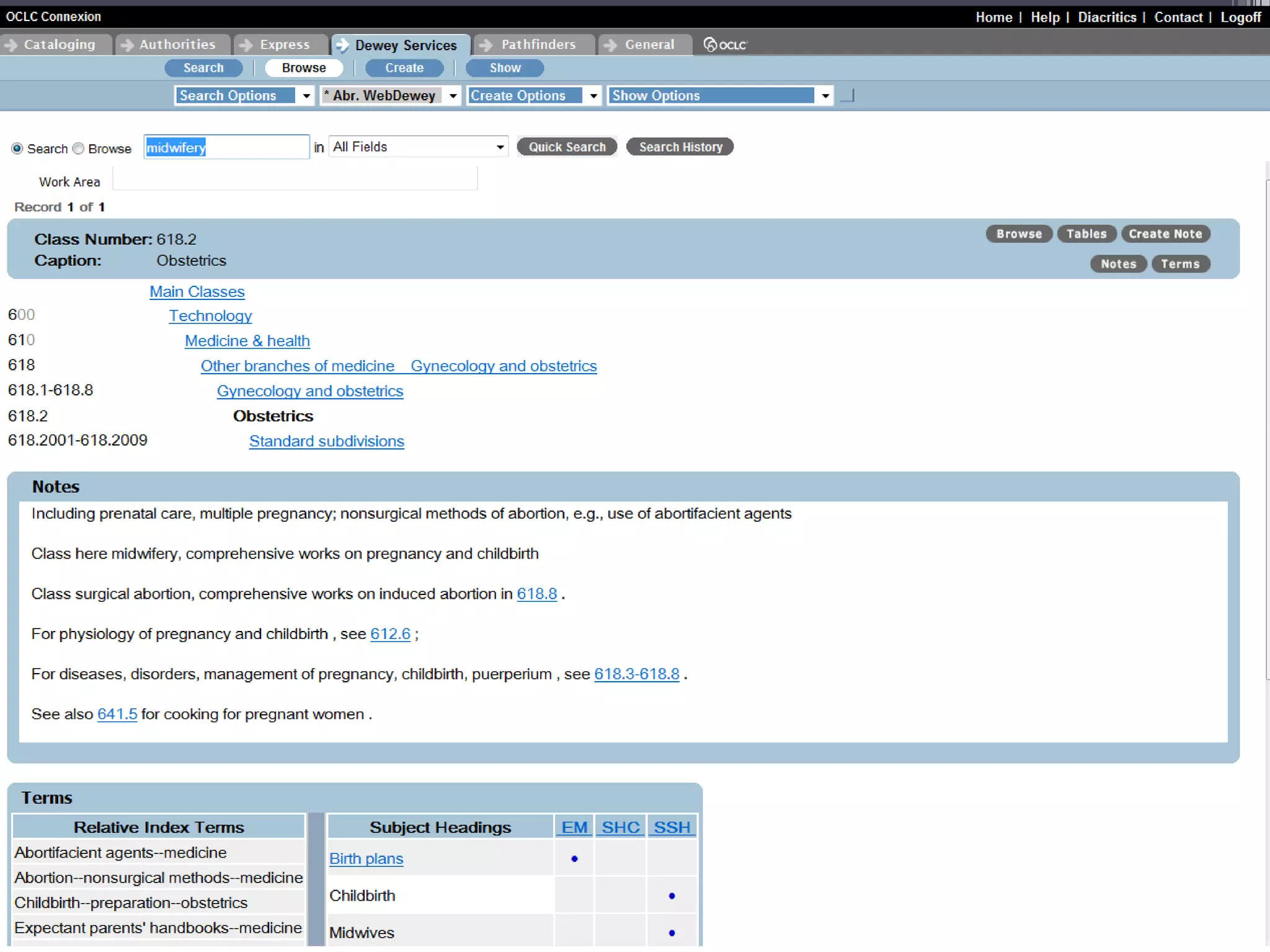
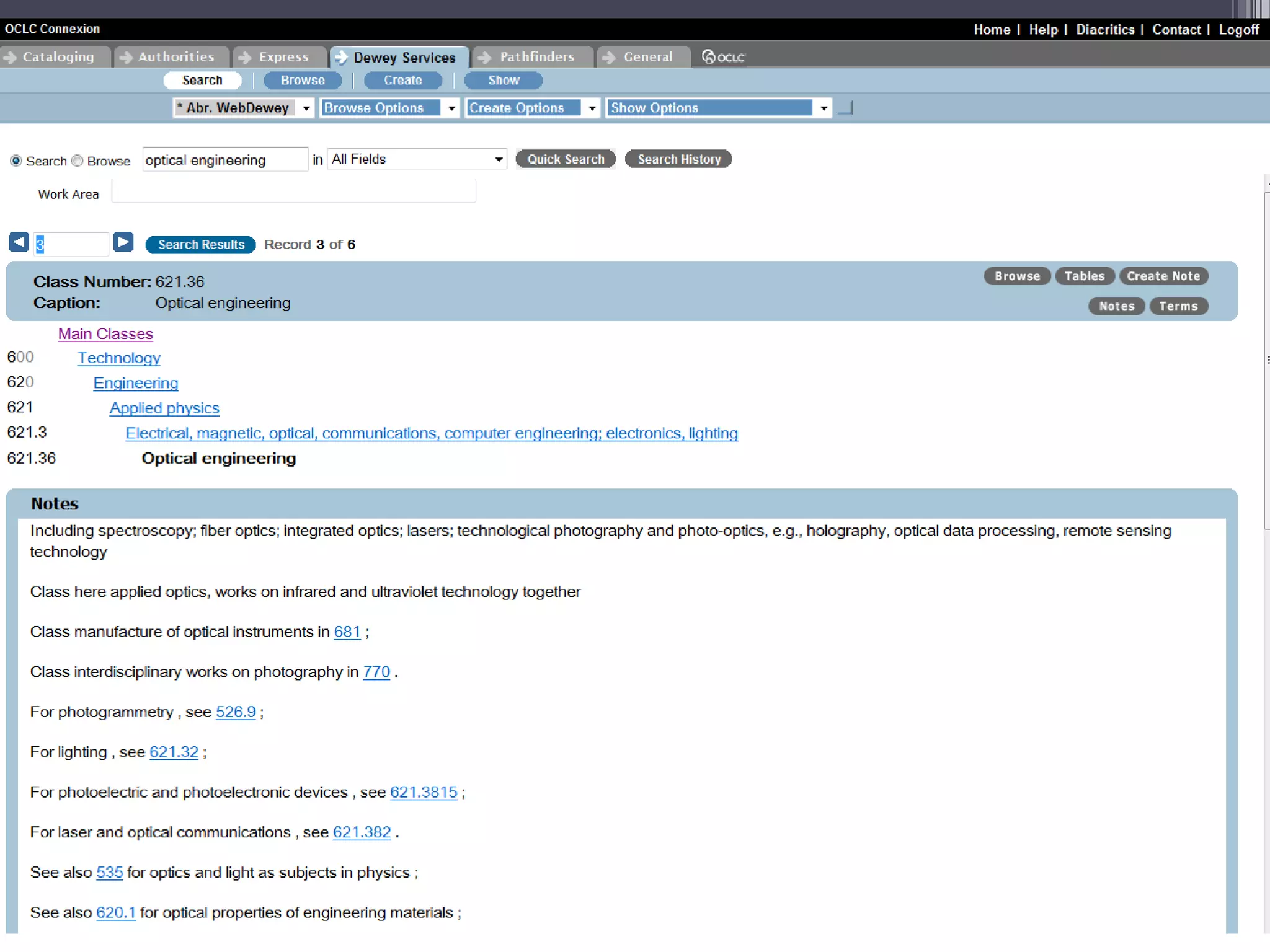
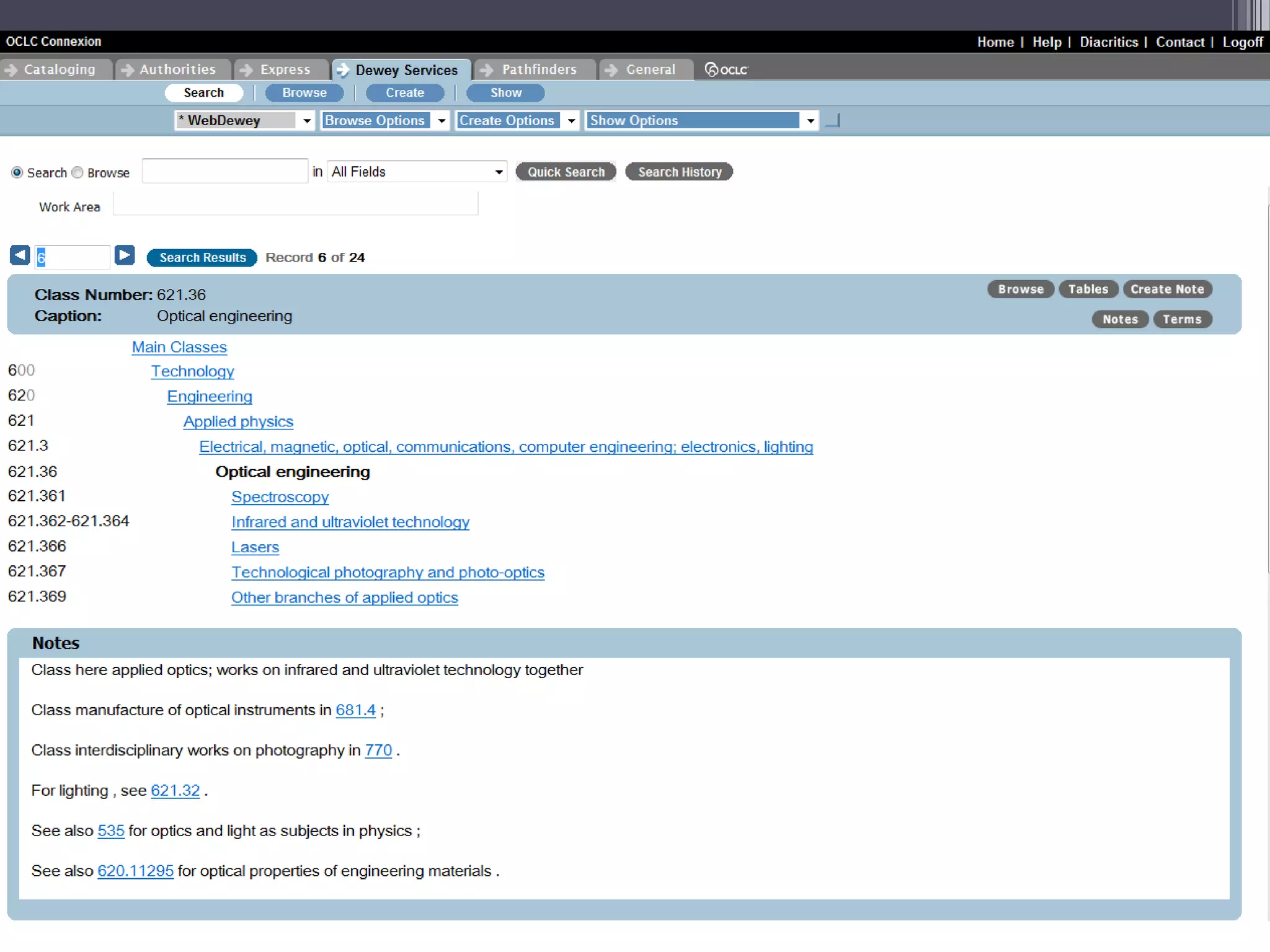
  • #10 The note tells us that interdisciplinary works on body building and weight lifting are classed here.
  • #11 You can see there is a note that directs us to 796.41 for weightlifting competitions.
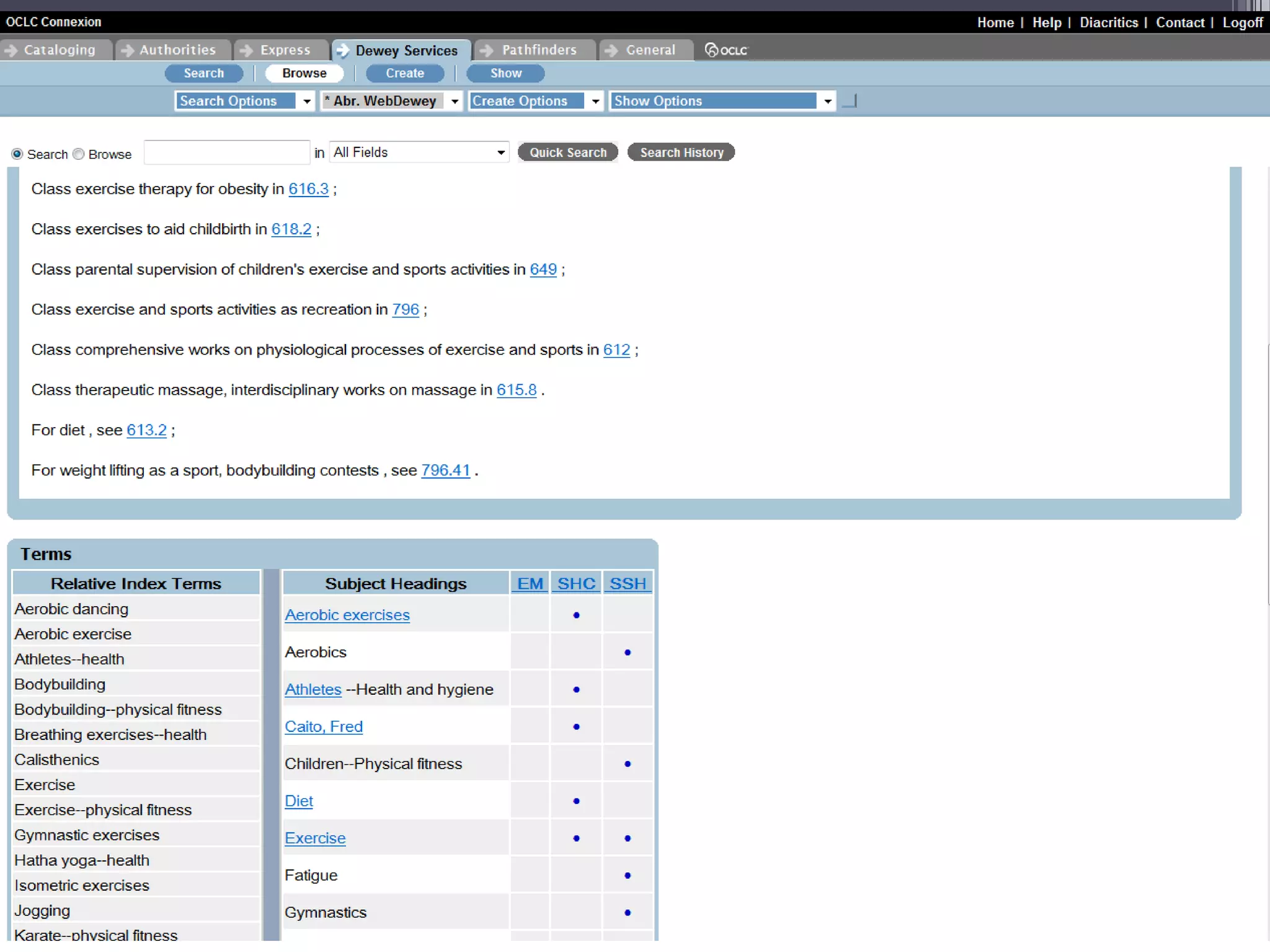
  • #12 There is also a note here that tells us to class interdisciplinary works at 613.7, which is where we were before.
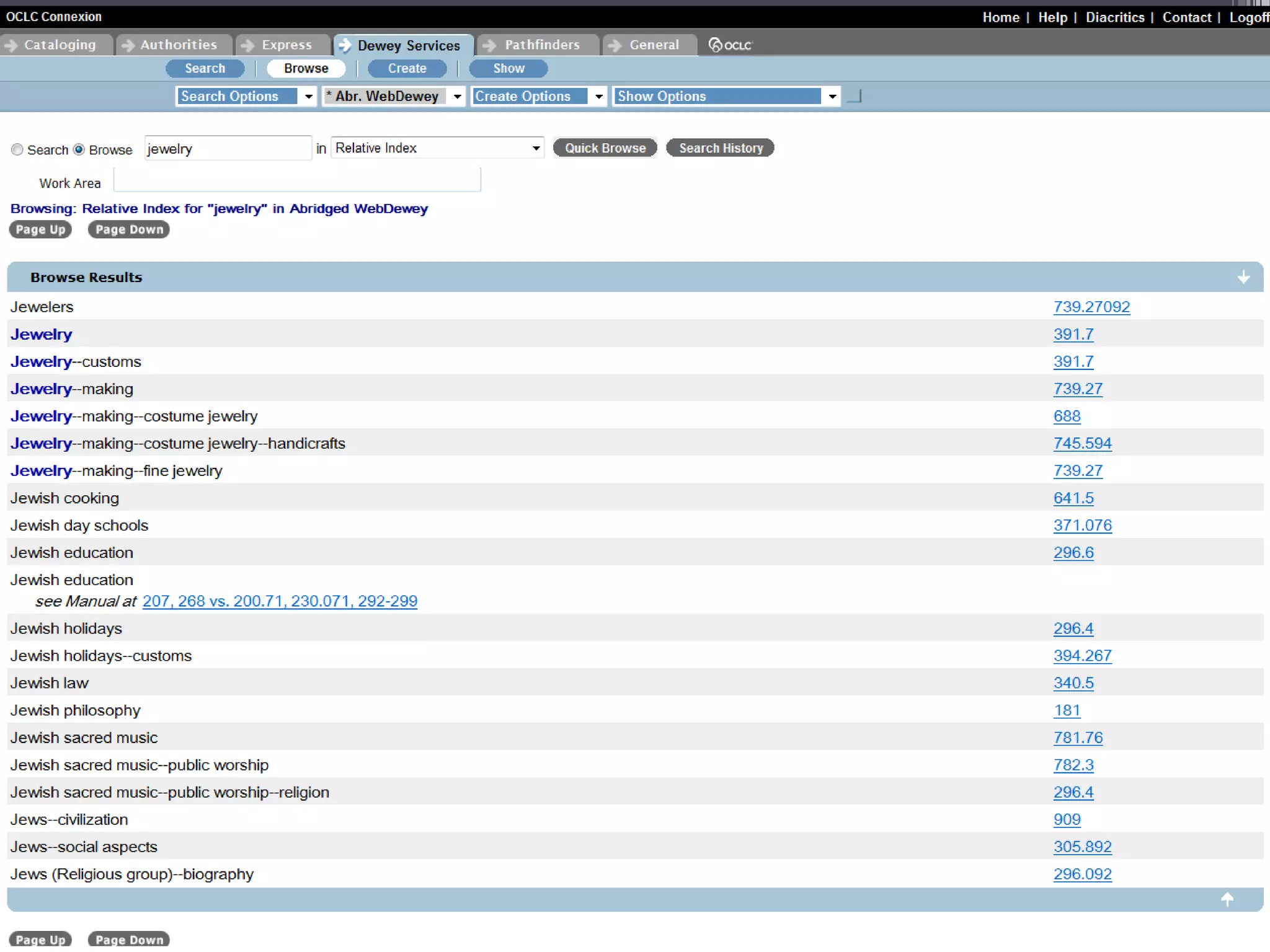
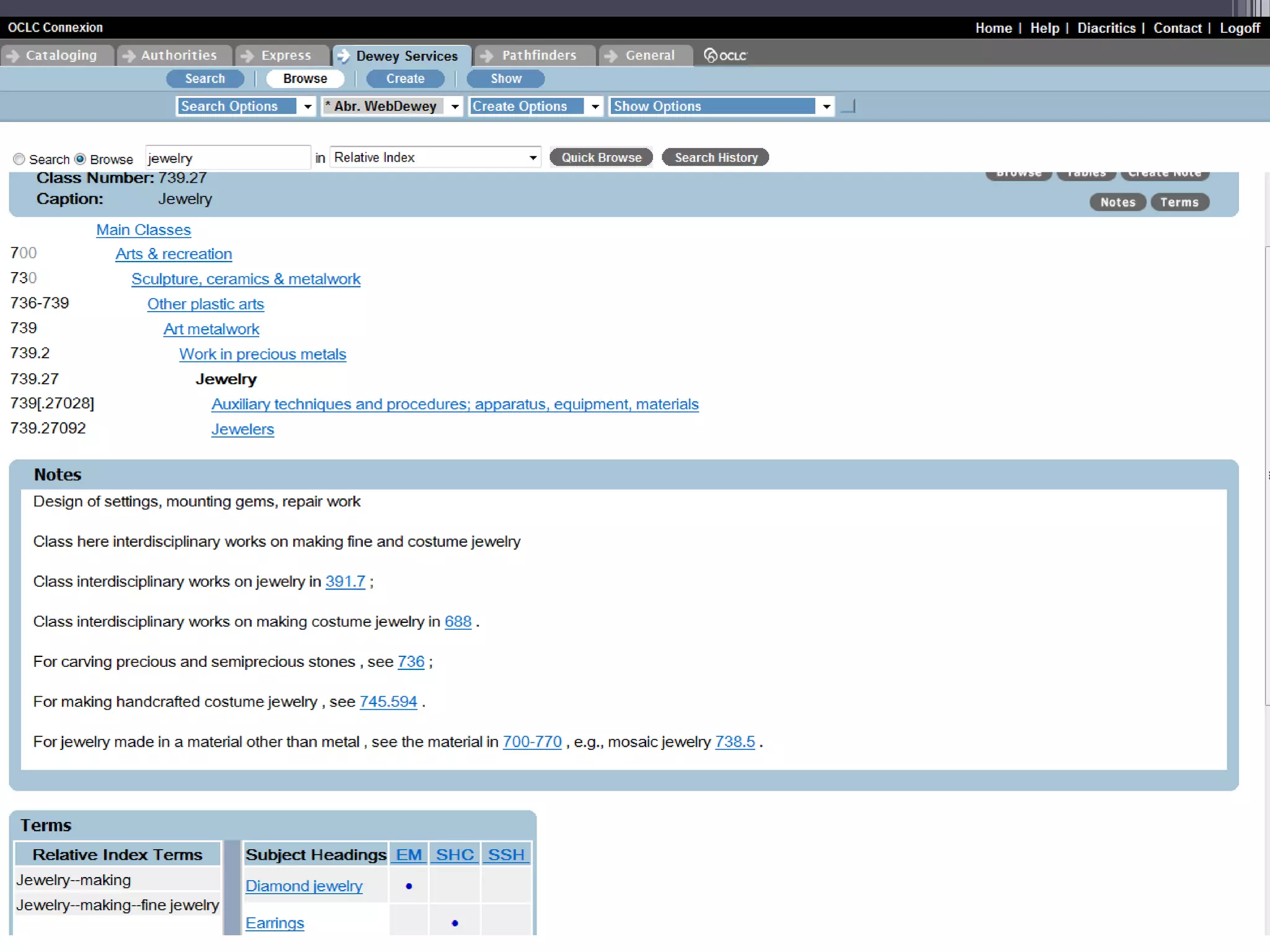
  • #19 The note tells us which number to use for jewelry making.
  • #20 Notice there is a note about where to put interdisciplinary works about making both fine and costume jewelry, and another note about where to put interdisciplinary works about costume jewelry.
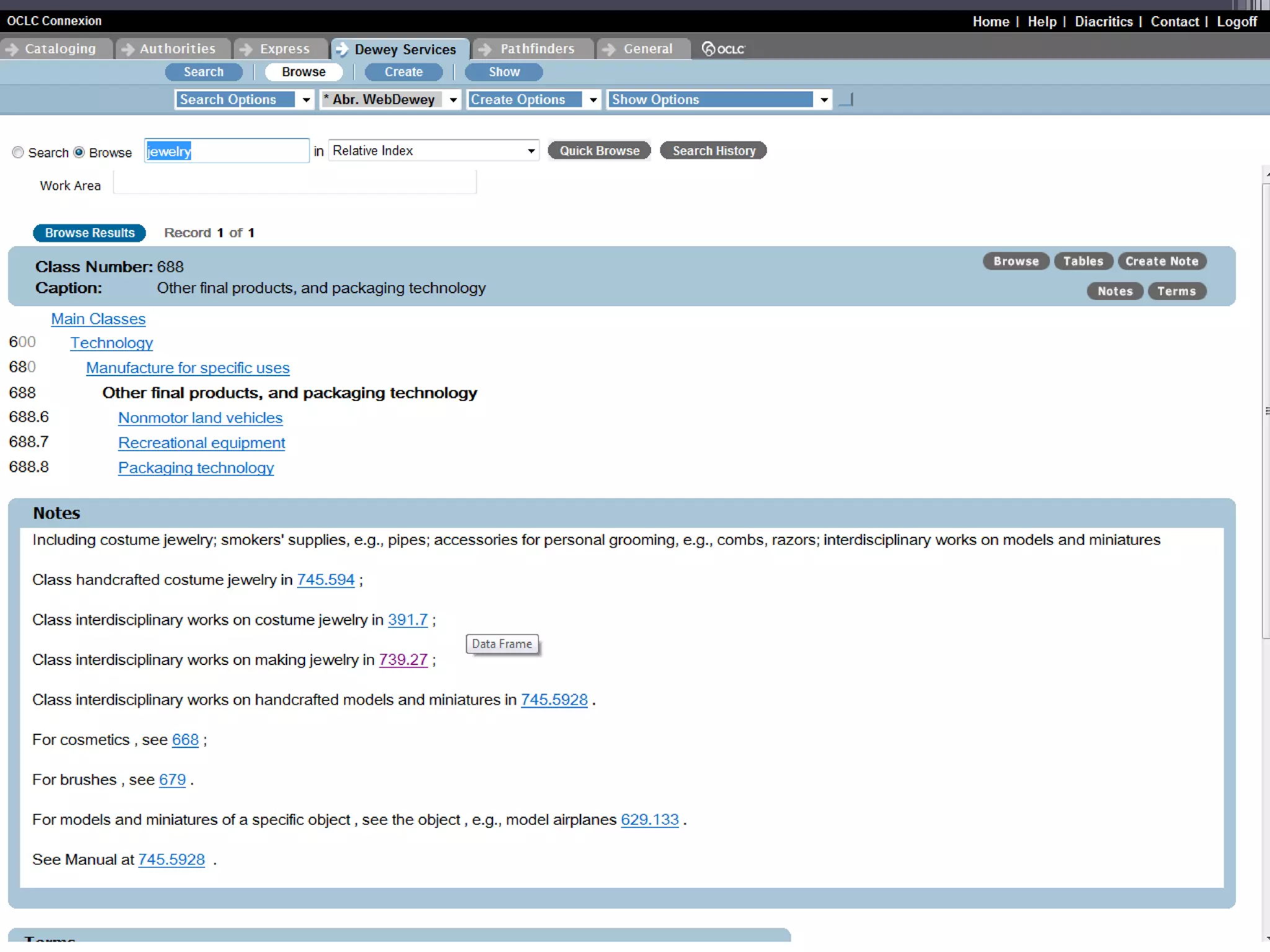
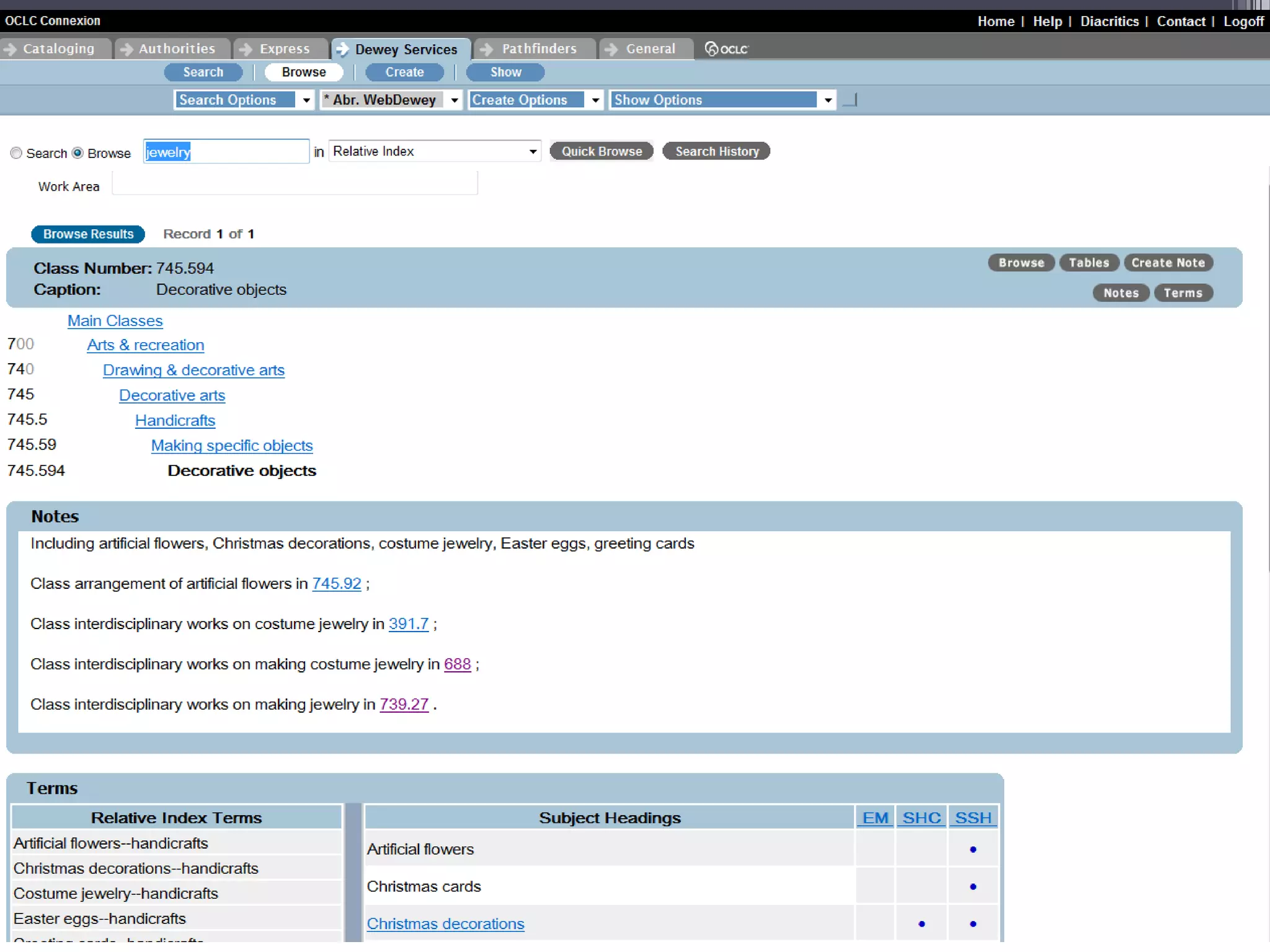
  • #21 Since our book is about making costume jewelry, let’s click on the link for that interdisciplinary number. There is nothing here that re-directs you elsewhere. You can see that this is the number for commercially made, mass produced costume jewelry. Let’s check the number for handmade costume jewelry, in case you came into the schedules that way. You can see here that the number is 745.594.
  • #22 Here we have a note directing us back to the interdisciplinary number we were looking at before, 688.
  • #24 Questions about interdisciplinary numbers?
  • #25 This is basically the same thing as the rule of fuller treatment that we discussed last time.
  • #26 If there aren’t any interdisciplinary numbers in the relative index or the schedules, you class the book under the discipline given the fullest treatment.
  • #34 Notice this number is for organizations whose activity is not limited to a specific field, or for works about organizations in general (not one specific organization – ex: Robert’s Rules of Order, Planning and Marketing Conferences and Workshops.)
  • #36 General collections include things like a collection of essays on different topics. One of the things that Lincoln City Libraries has classed at 081 is collections of stories from the National Story Project.
  • #37 Questions about more than one subject in more than one discipline?
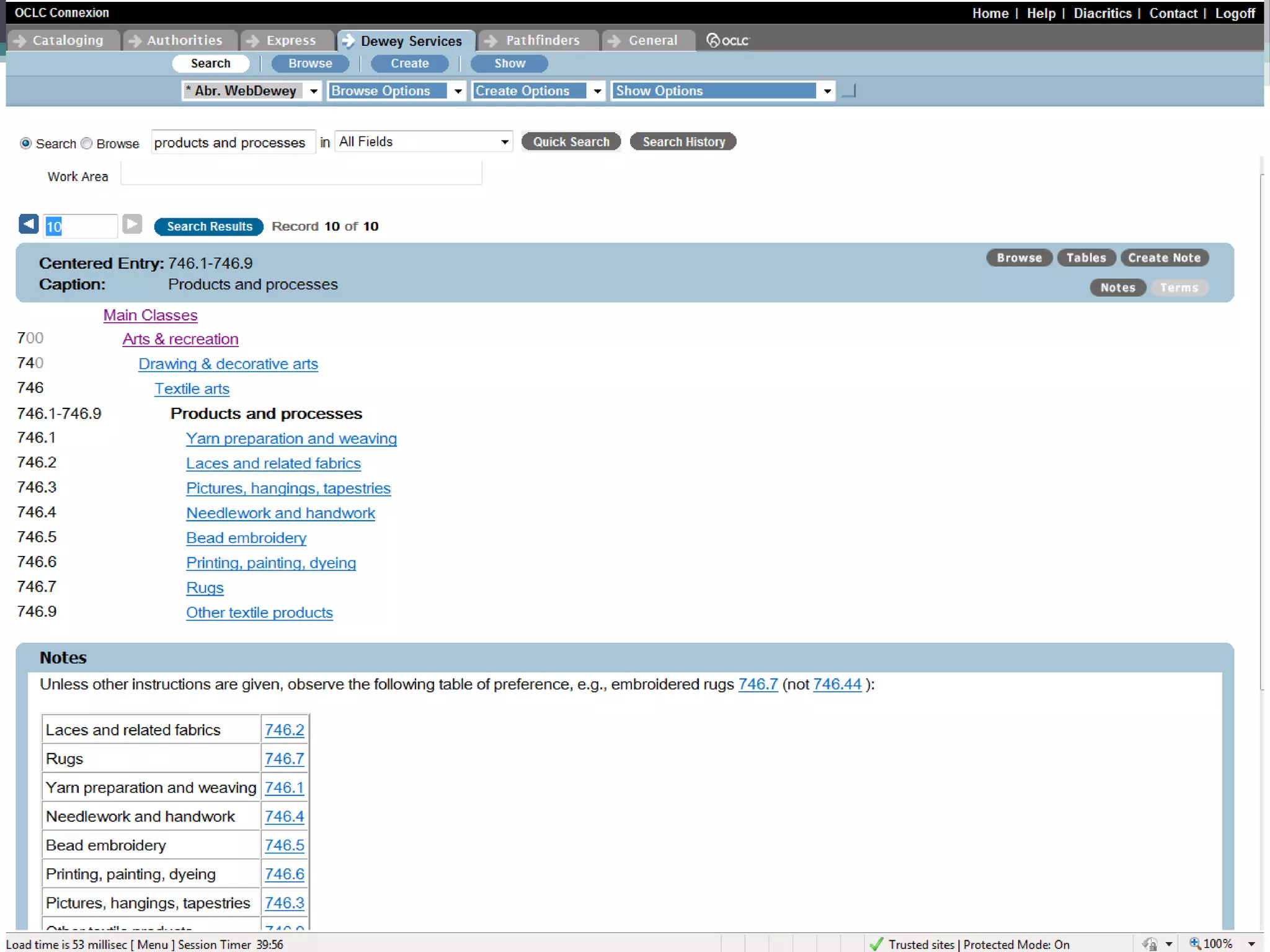
  • #39 Sometimes, when the schedules tell you which number to use, it is based on this table.
  • #40 For example, if you had a book about embroidered rugs, you would class it with the number for rugs, rather than the number for embroidery, because a rug is a kind of thing, and embroidery is a process (which comes later in the table of last resort). You can see that the note tells you to do this.
  • #41 Are there any questions about the table of last resort or the rest of “Classifying with the DDC”?
  • #42 Facets means focuses of an item or subject.
  • #45 Casting steel = metalworking
  • #46 You’ll notice that there are instructions about how to build a number specifically for casting. This may seem like a wild goose chase, but actually it’s a convenient re-use of the pattern under 671.2. If we click on that series of numbers, it will tell us more about how to build this number.
  • #47 But first, take a moment to write down 672, so you know what you are building off of.
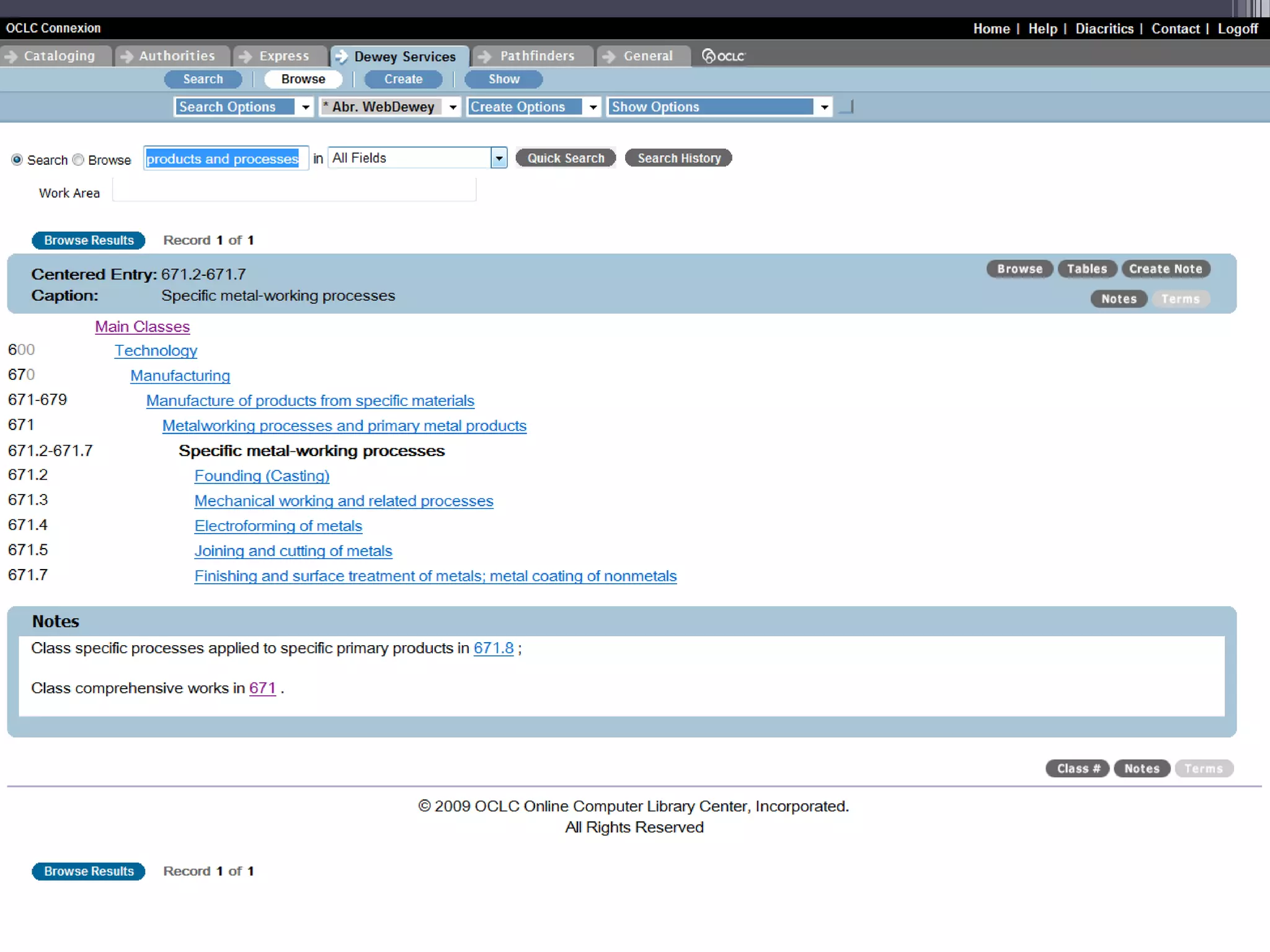
  • #48 We see that the numbers in 671.2-671.7 are for specific metal-working processes.
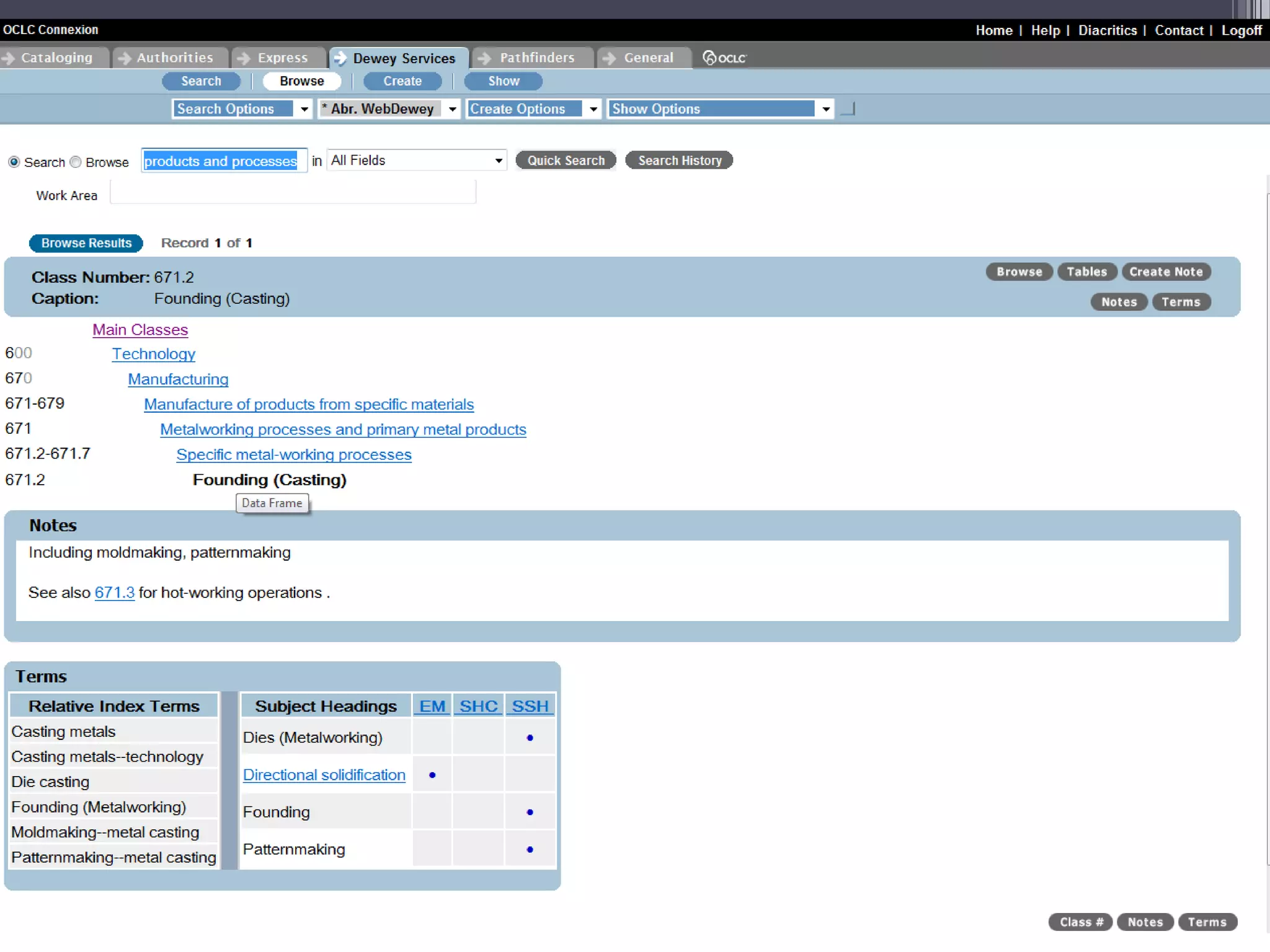
  • #49 We see that 671.2 is the number for founding or casting.
  • #50 There are no further subdivisions, or instructions or restrictions.
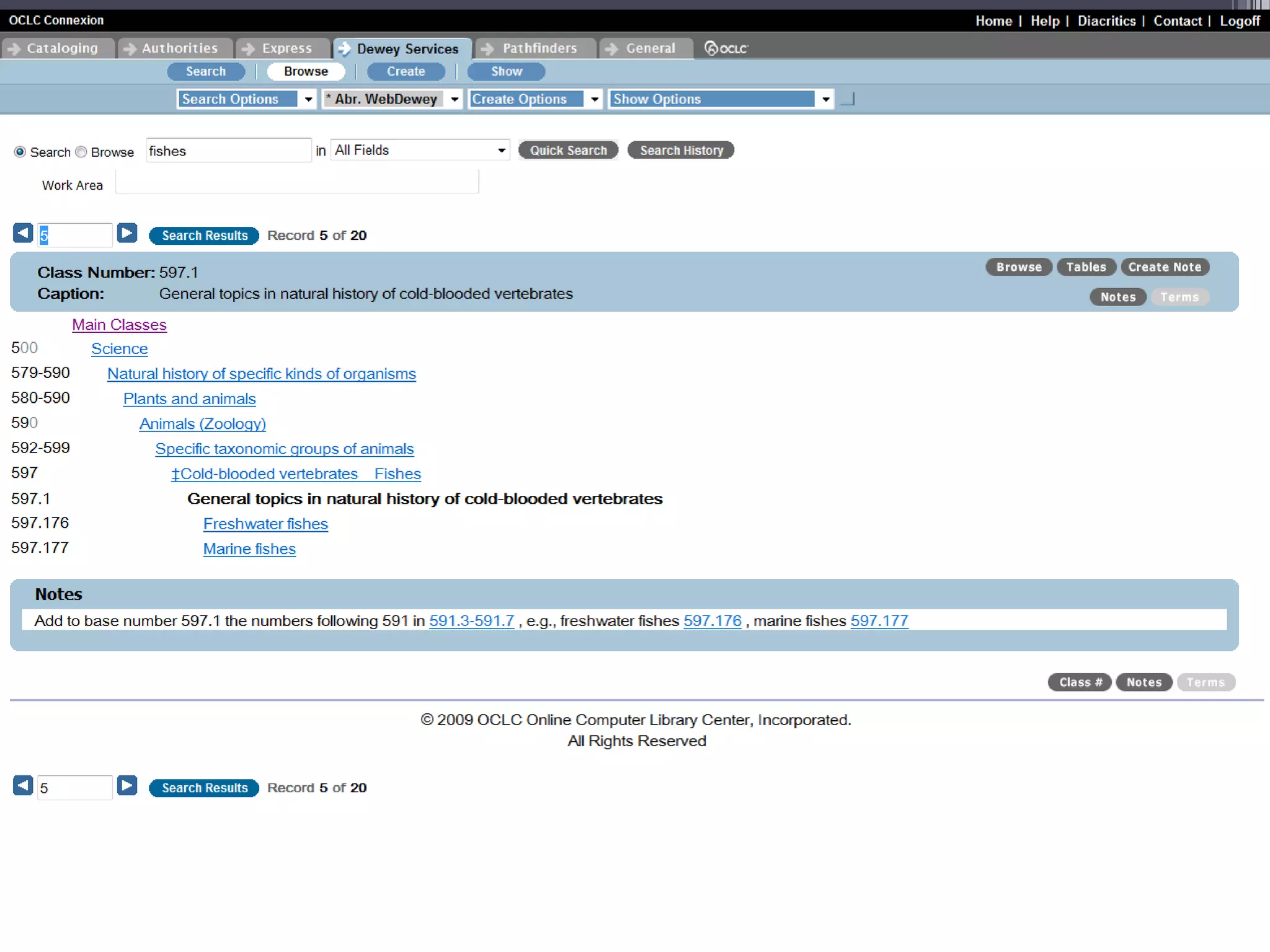
  • #52 Here’s another example of number-building directions in the schedules. If we were looking to classify a book on either freshwater fishes or marine fishes, we would go here. For freshwater fishes and marine fishes, the number building has actually already been done, but the notes tell you how the numbers were created.This one is a little different from the last example because the base number has a number after the decimal point. If you were classifying a book and had gotten to this point, I would recommend writing down the base number 597.1.
  • #53 You can see that 591.7 includes “animals characteristics of specific environments”
  • #54 You can see that there are subdivisions for specific environments.
  • #55 If you click on that, you can see that there are choice for aquatic animals or marine animals. Again, these numbers have been built for us, but there is also a note explaining how they were built.
  • #56 The directions at 577 tell us to add a 6 for freshwater ecology and to add a 7 for marine ecology.
  • #57 Here is a summary of the number building we just did. Are there questions about number-building using the schedules?
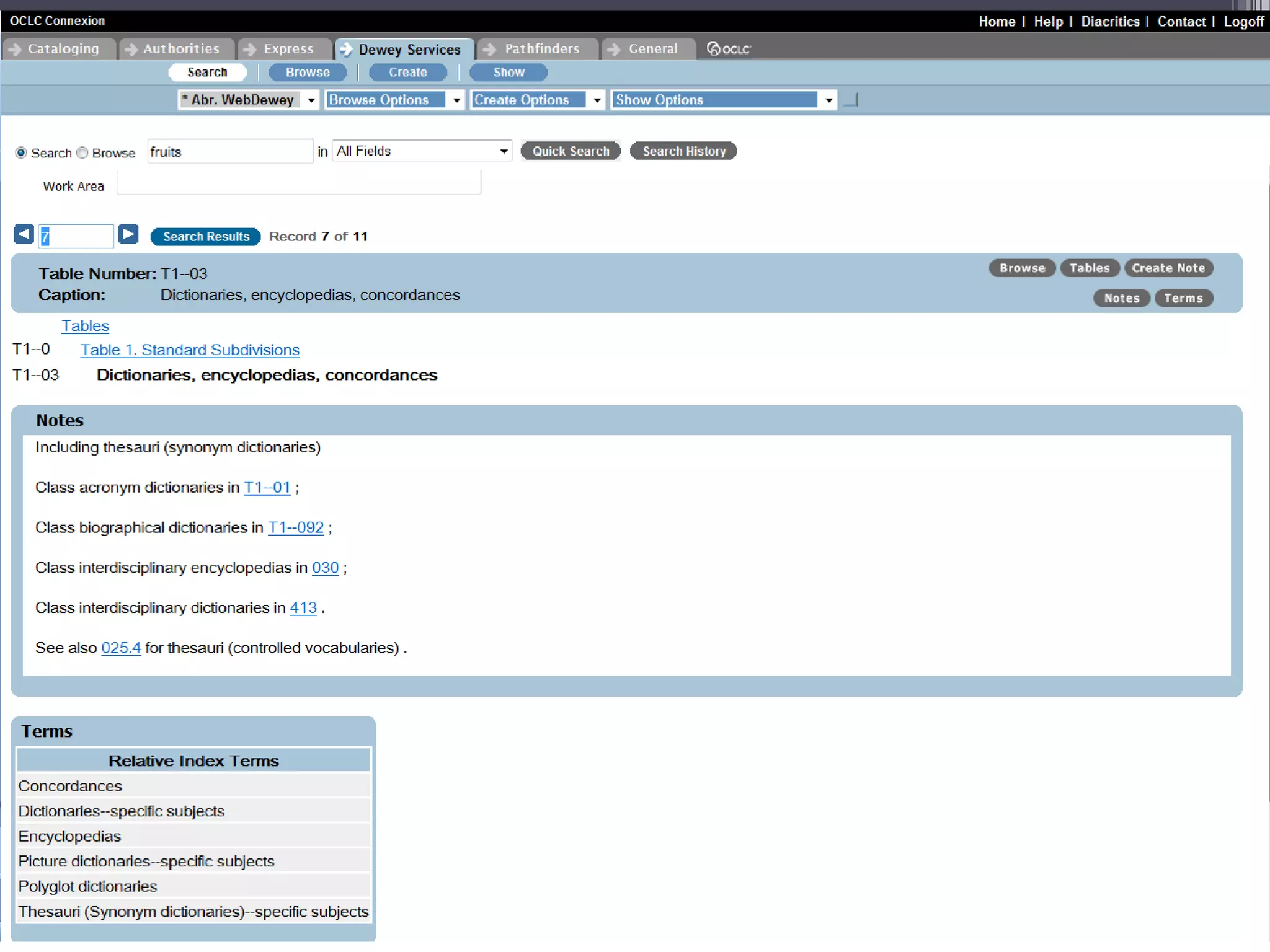
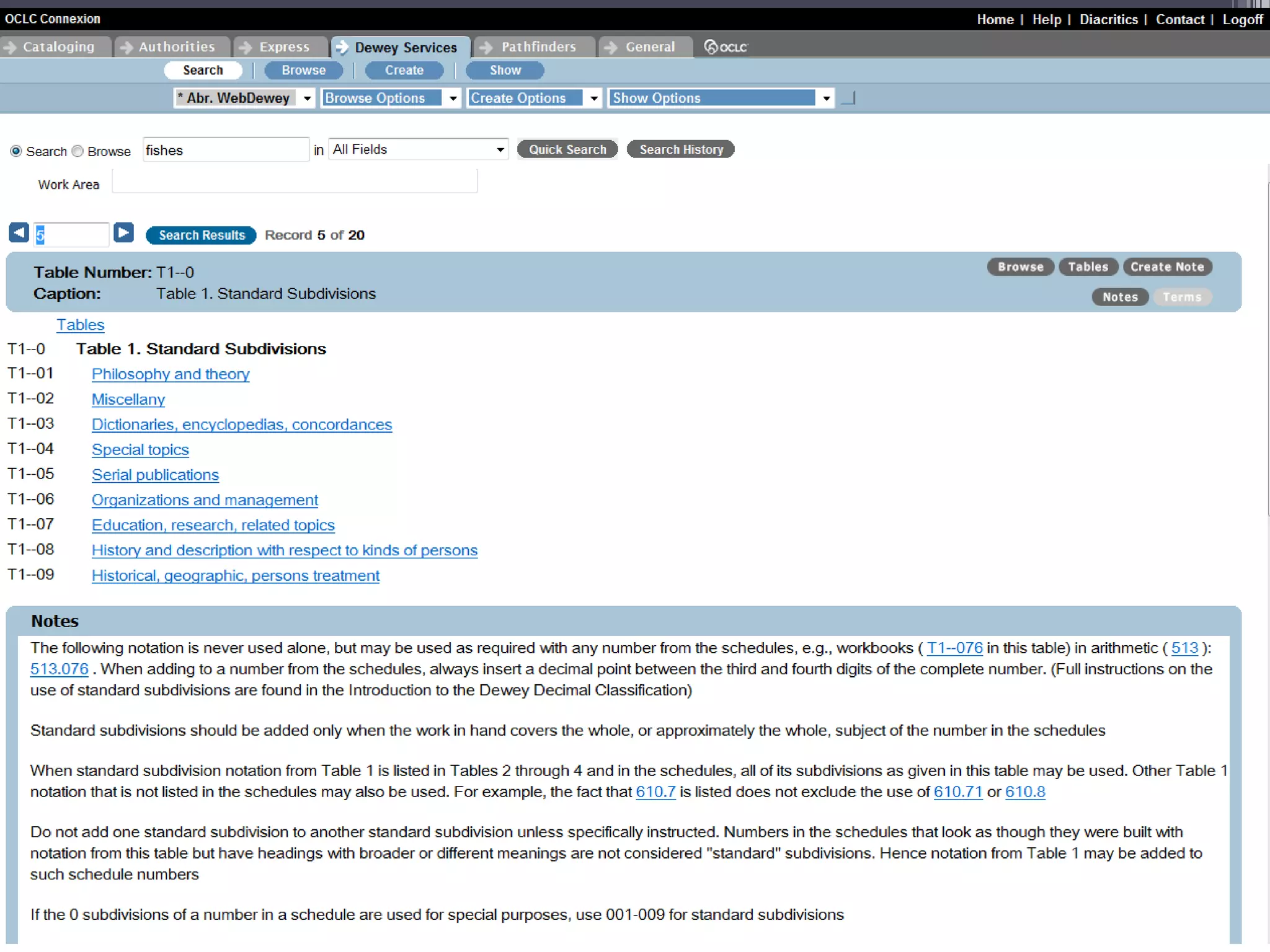
  • #58 The other way to build numbers is to use standard subdivisions, which are found in the Tables. Adding subdivisions helps patrons browse the shelves by keeping like items together. They are more helpful when you have a large number of items on one subject. If you have 10 book on a topic, they can be browsed easily, but with 100, it becomes harder.
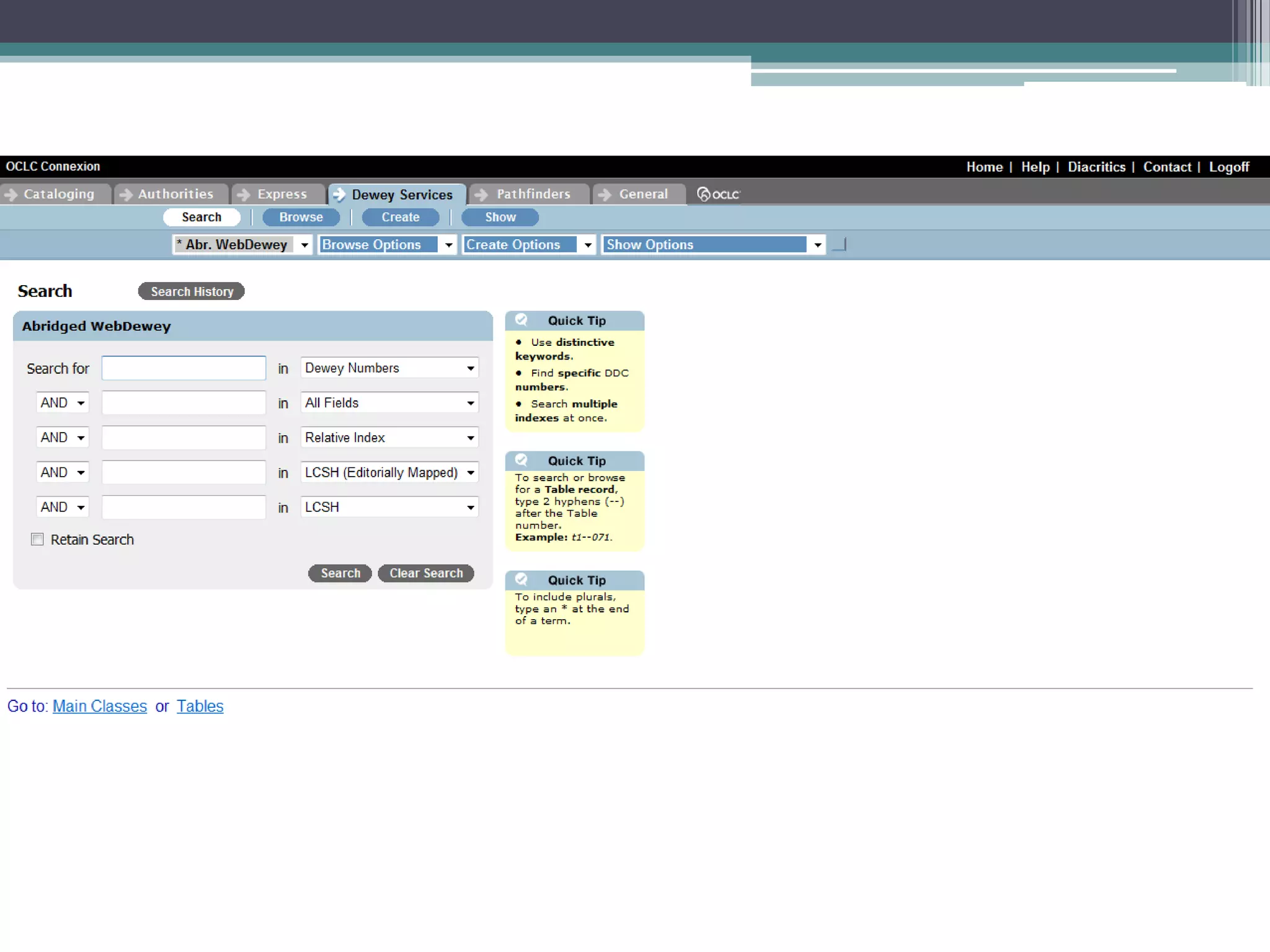
  • #61 To get to the Tables in WebDewey, click on “Tables” at the bottom of the search screen.
  • #62 There are four tables. Table 1 has the standard subdivisions. Table 2 is for geographic areas and persons, and can only be used in conjunction with Table 1. Table 3 is for literature and can only be used with numbers in the 800s. Table 4 is for languages and can only be used with numbers in the 400s.
  • #63 We will talk about most of these today, but we will talk about Location next week.
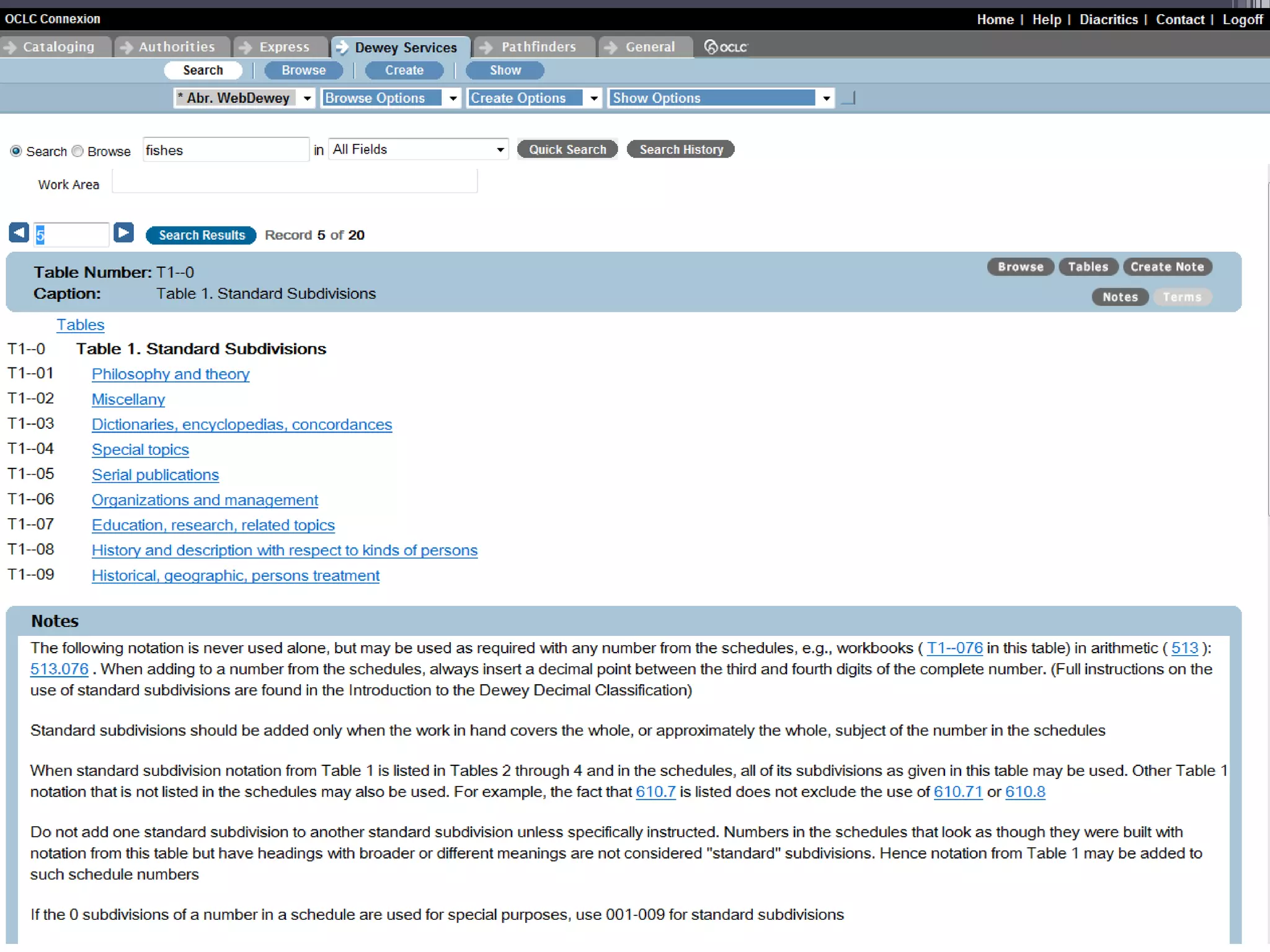
  • #64 All of the standard subdivisions are listed starting with zero in Table 1.
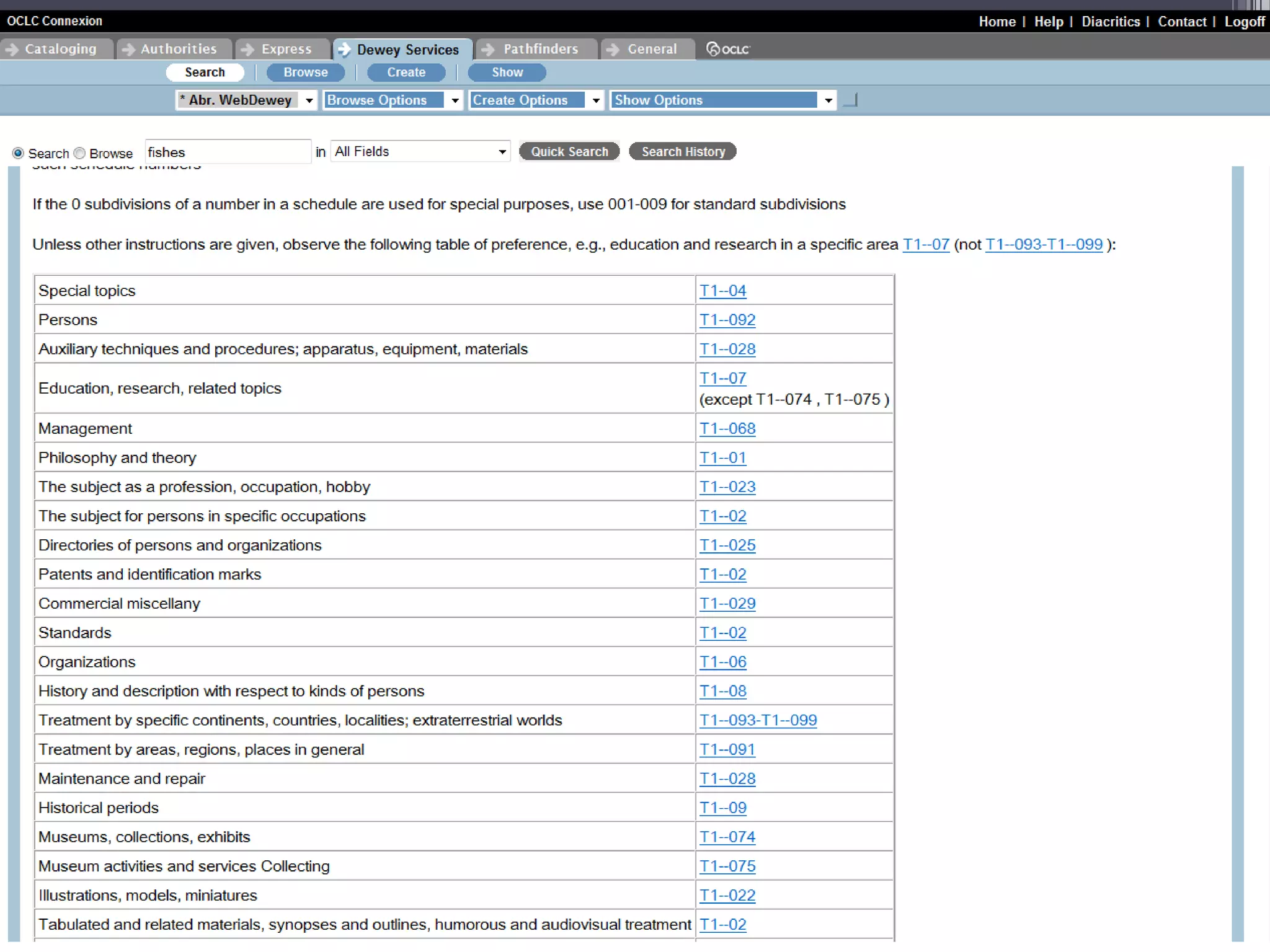
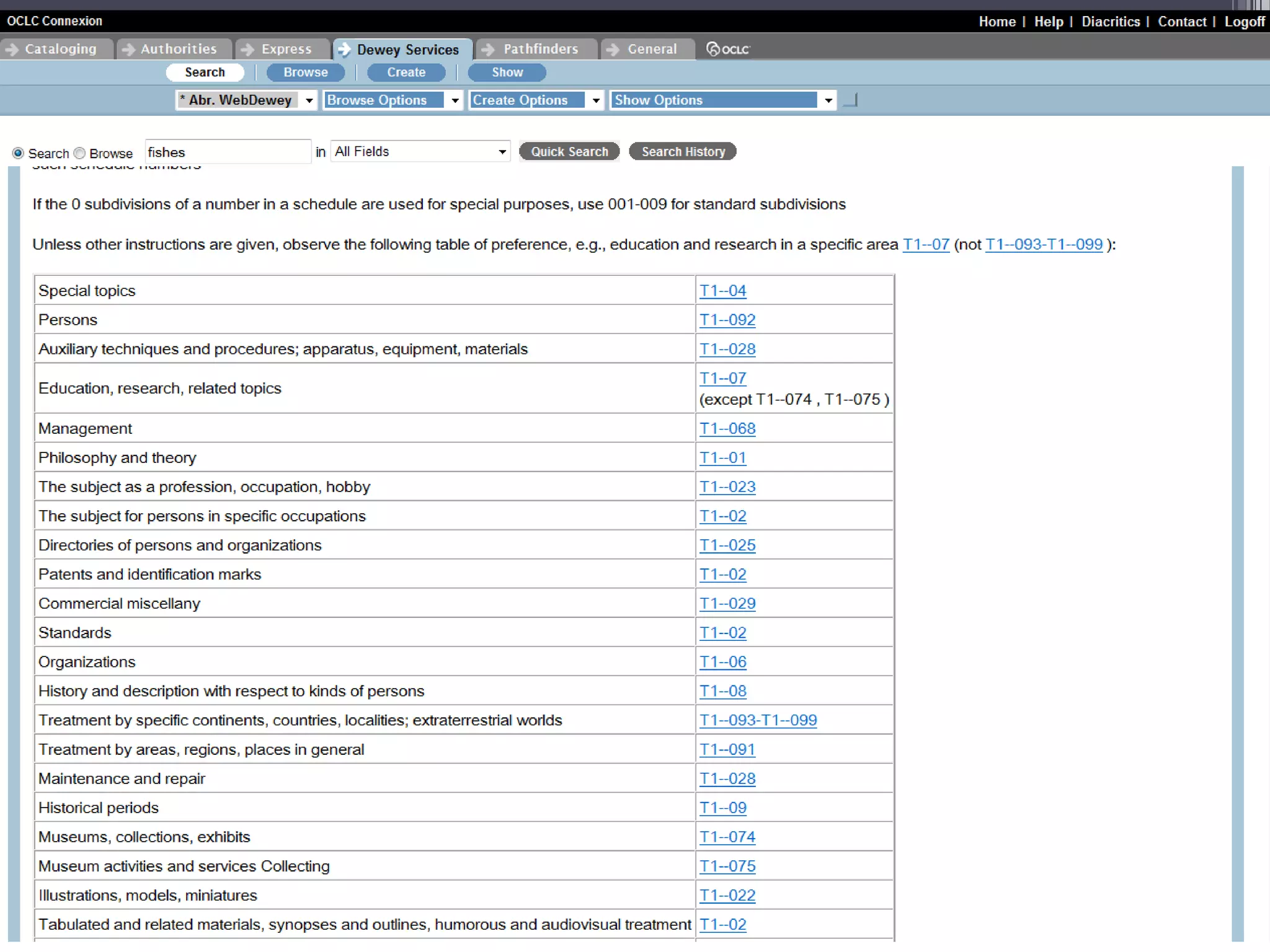
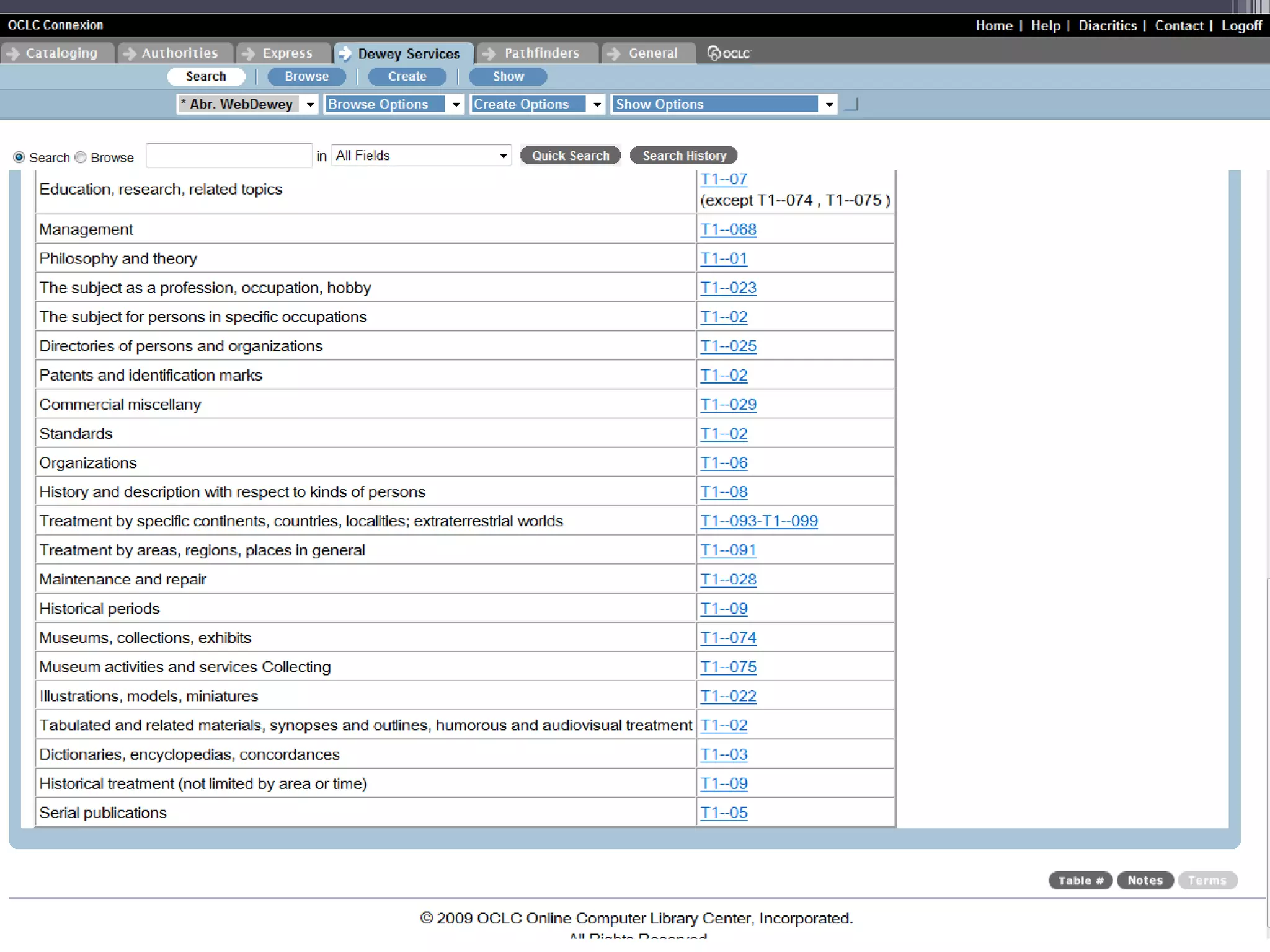
  • #65 There is a table of preference that tells you the order in which you should choose subdivisions if more than one could apply. (You usually only use one subdivision, unless the instructions for a particular number tell you differently.)
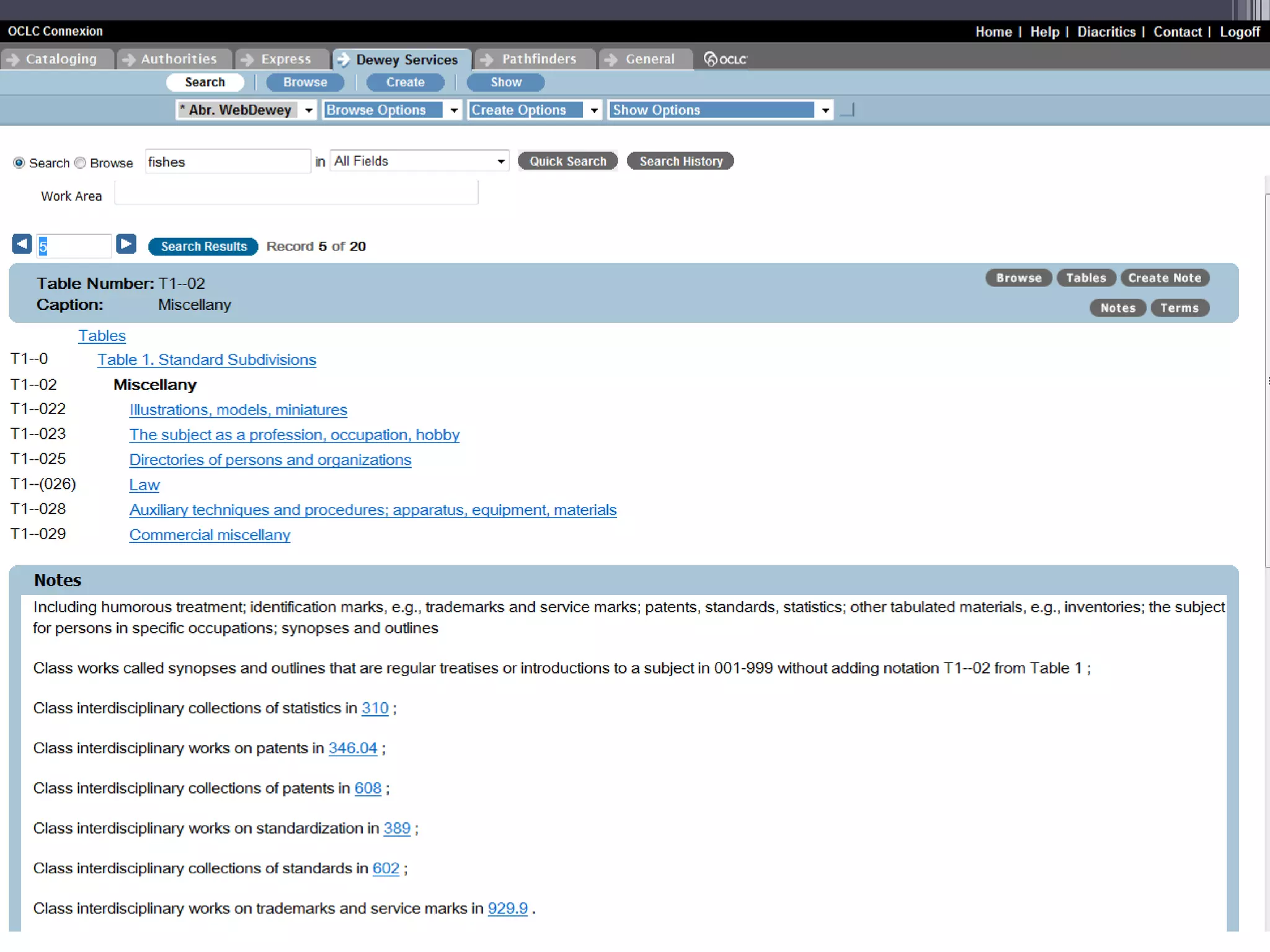
  • #66 From the main Table 1 screen, you can click on any of the subdivisions to see more detail.
  • #67 For example, the 02 subdivision is broken down into subdivisions.
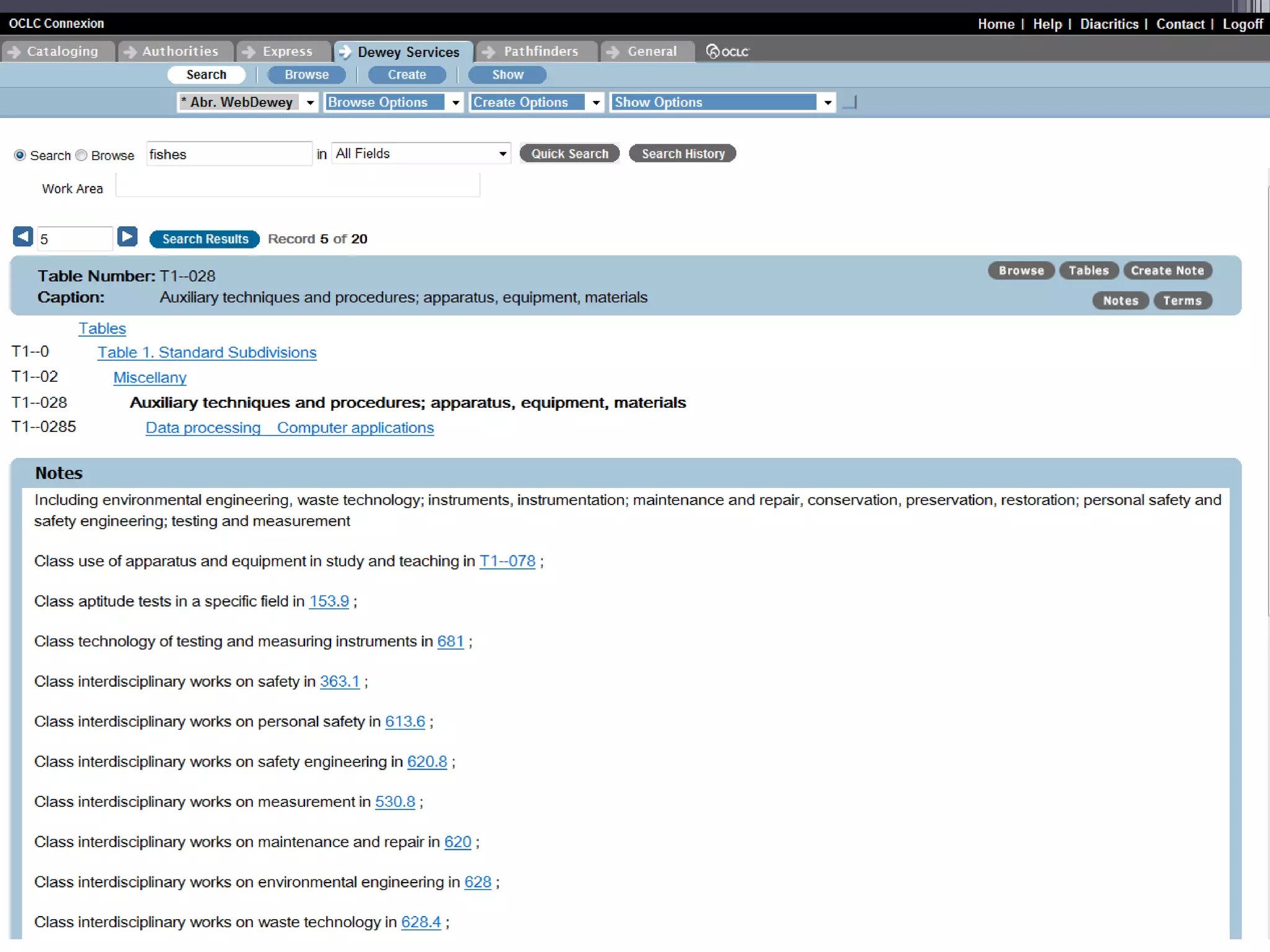
  • #68 And the hierarchy continues further down.
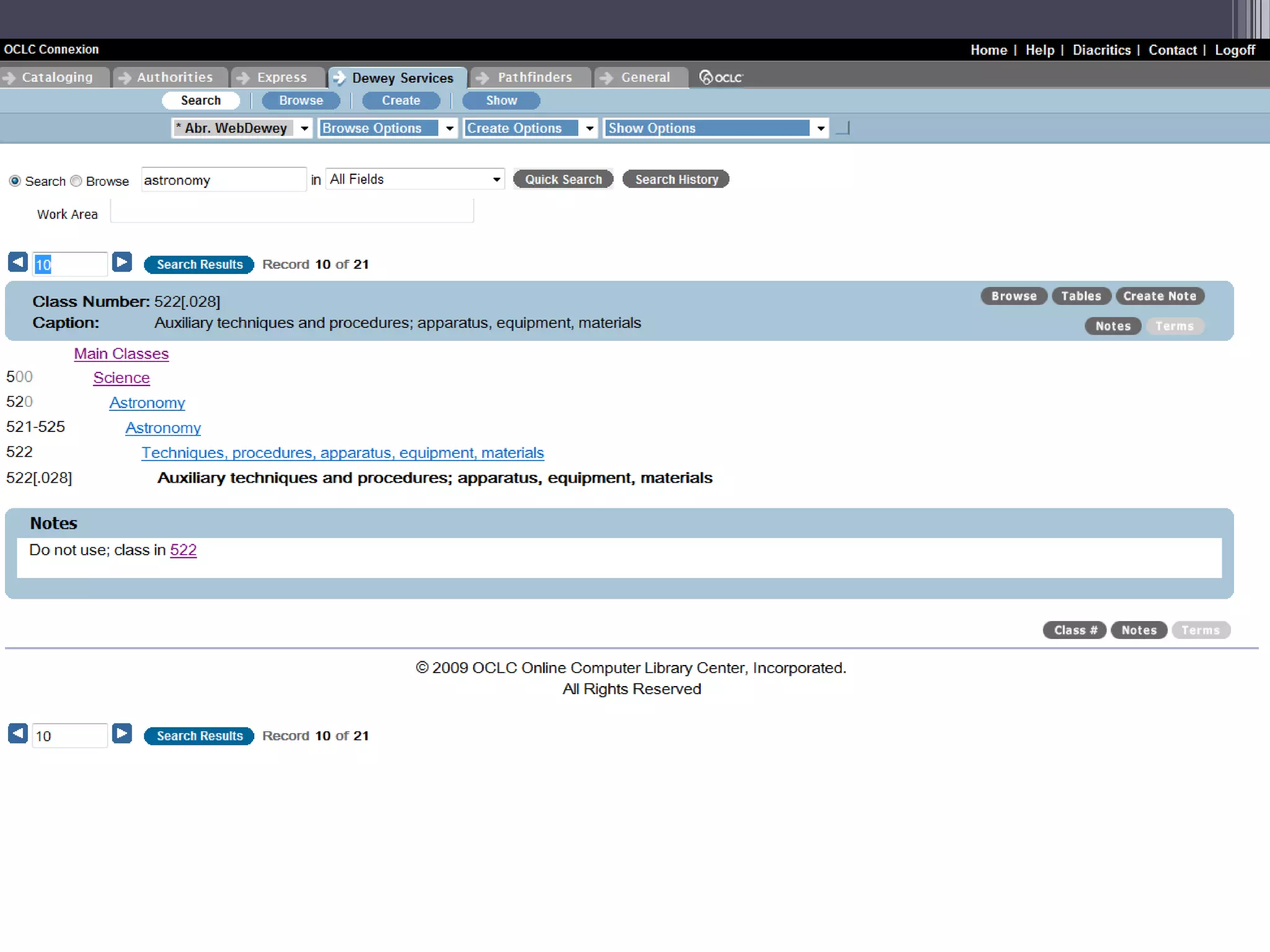
  • #70 For example, in this case, the use of the standard subdivision 028 is forbidden with square brackets and a note because it would be redundant. The 028 subdivision is for Auxiliary techniques and procedures; apparatus, equipment, materials, and that is what 522 is already used for.
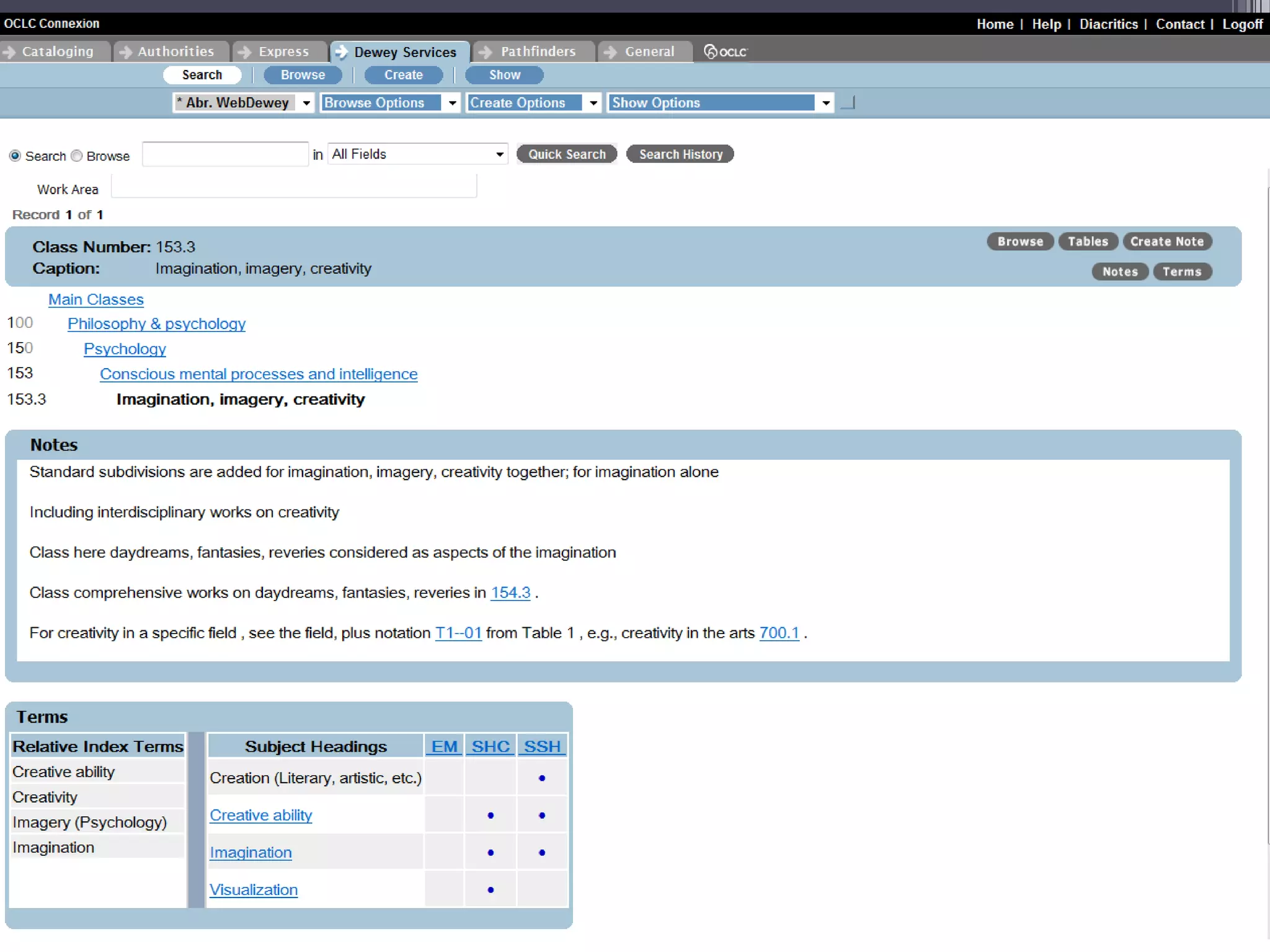
  • #71 Here’s an example of an “Including” note. If you are classifying a book about any of those subjects listed in the note, do not use standard subdivisions.
  • #72 All the included numbers have their own number in the Full DDC, and you can add standard subdivisions to them, but in Abridged Dewey, you can’t.
  • #73 Subdivisions may not be added for items on imagery or creativity if they are the sole topics or the only two topics; imagination must be present.
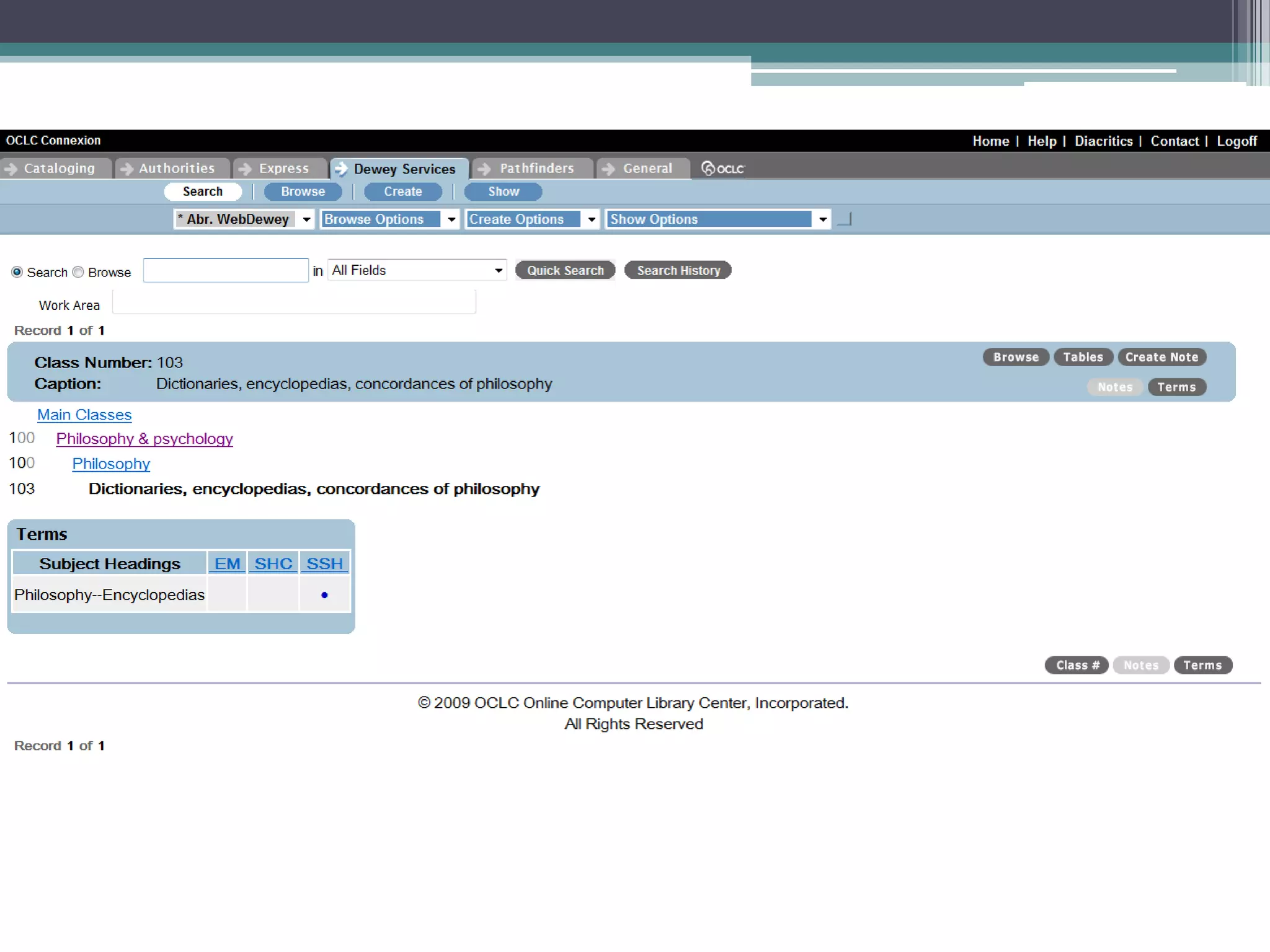
  • #74 Sometimes, instead of using a standard subdivision, the same number is built into the base number. 103 already contains the 3 to indicate that it is a dictionary, so you don’t add the -03 standard subdivision because it would be redundant.
  • #75 If you are not adding the subdivision as is, which of these variations to use depends on the instructions in the schedule.
  • #77 Notice the note that tells us that it is okay to use standard subdivisions.
  • #79 We look up encyclopedias in table 1 and find out that the standard subdivision is -03.
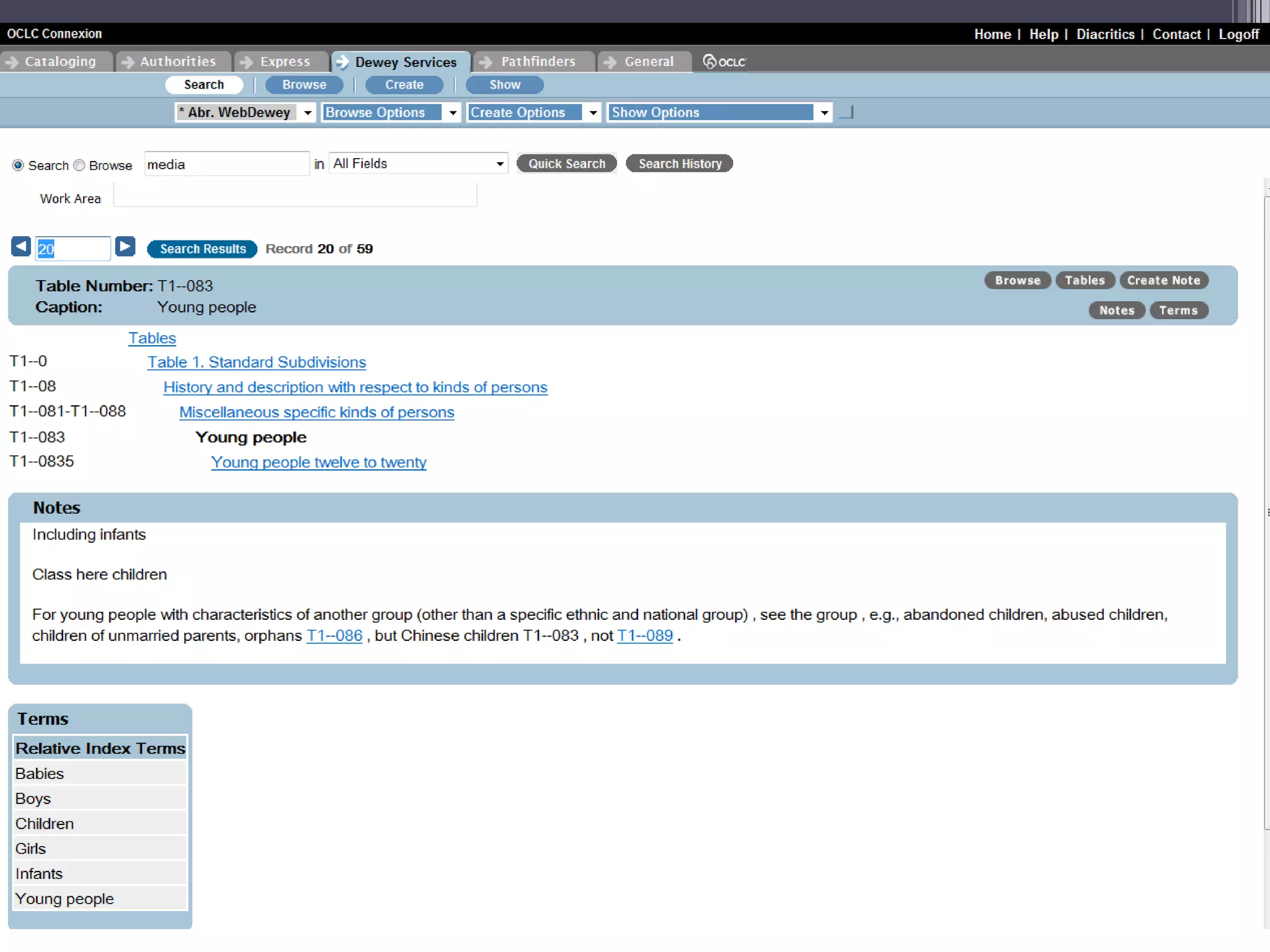
  • #81 We figured out last session that we are supposed to classify this book with the number for media.
  • #82 You can see here that 302.2308 is for history and description of media with respect to kind of persons. This number has already been partially built for us.
  • #83 If you go to table 1, you’ll see that -08 is the same thing, history and description with respect to kinds of persons.
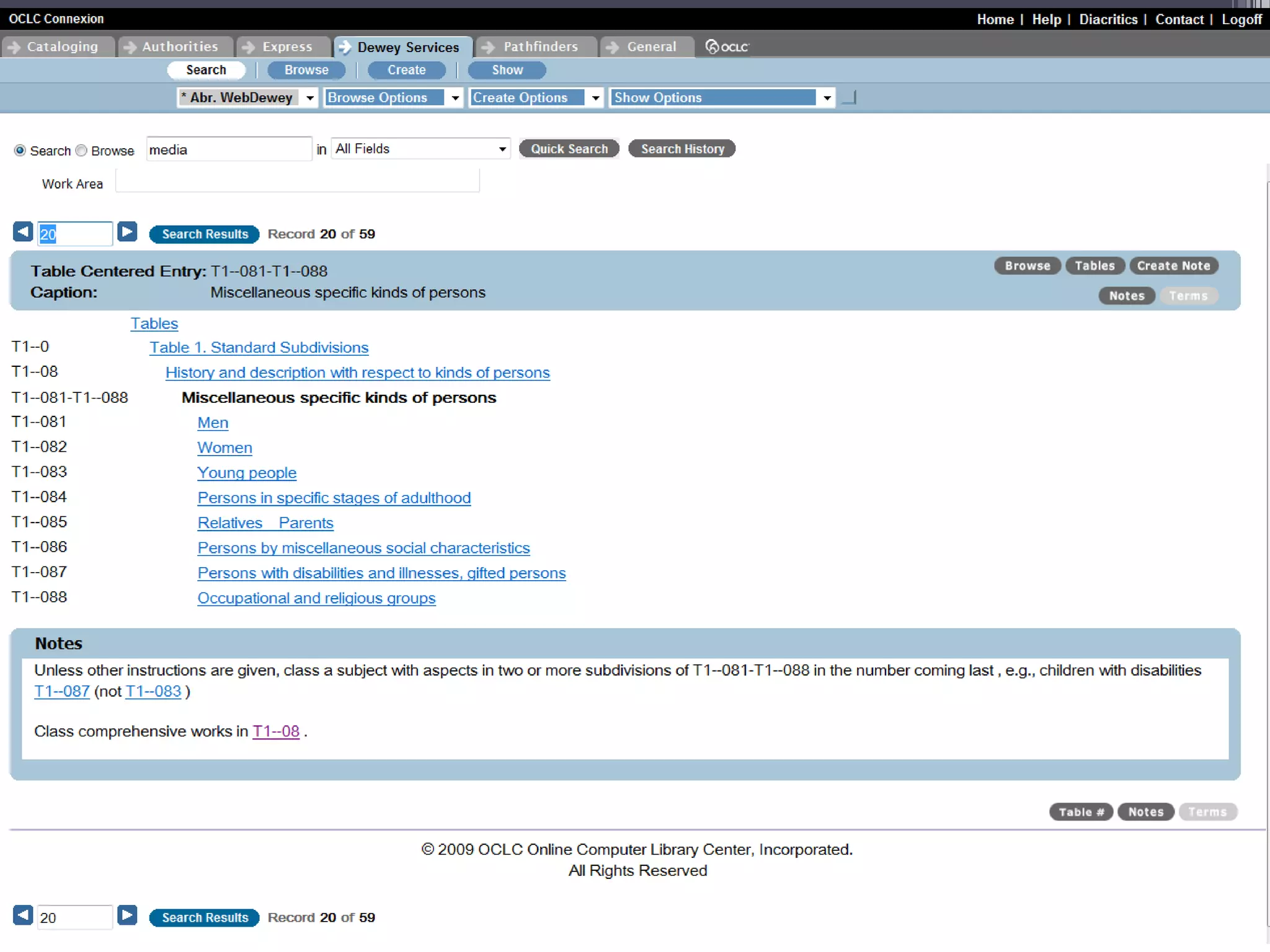
  • #84 There are further subdivisions under -08
  • #85 We find out that -083 is the subdivision for young people.
  • #86 The note says “class here children”.
  • #89 Sometimes variations in standard subdivisions will be built into the number. In this case, the two zeros in 500 are dropped and the 01 is added. This variation often occurs when the base number ends in a 0.
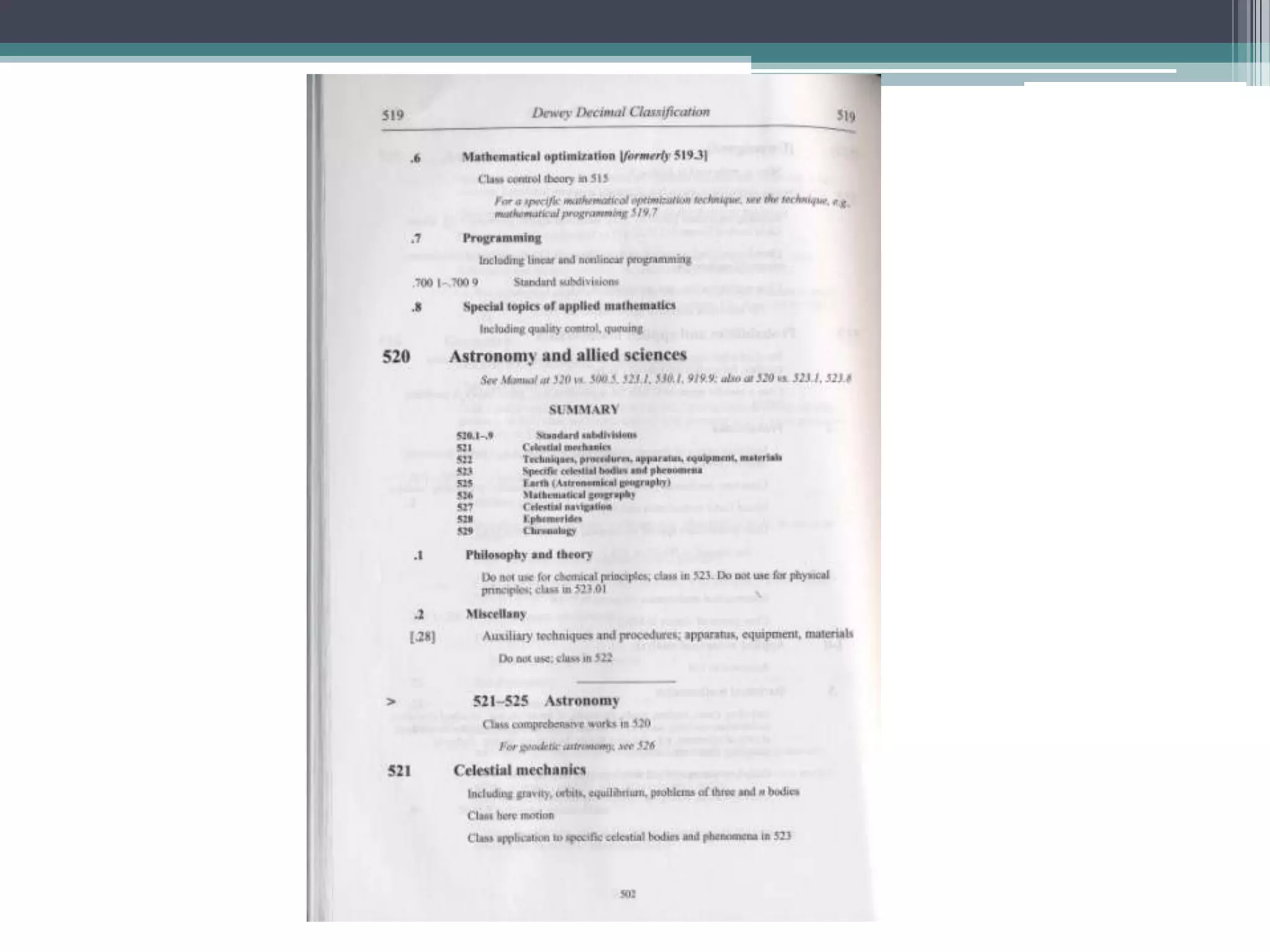
  • #91 Sometimes directions for adding standard subdivisions will be found in the summary in the schedules. Here, standard subdivisions are .1-.9 instead of .01-.09
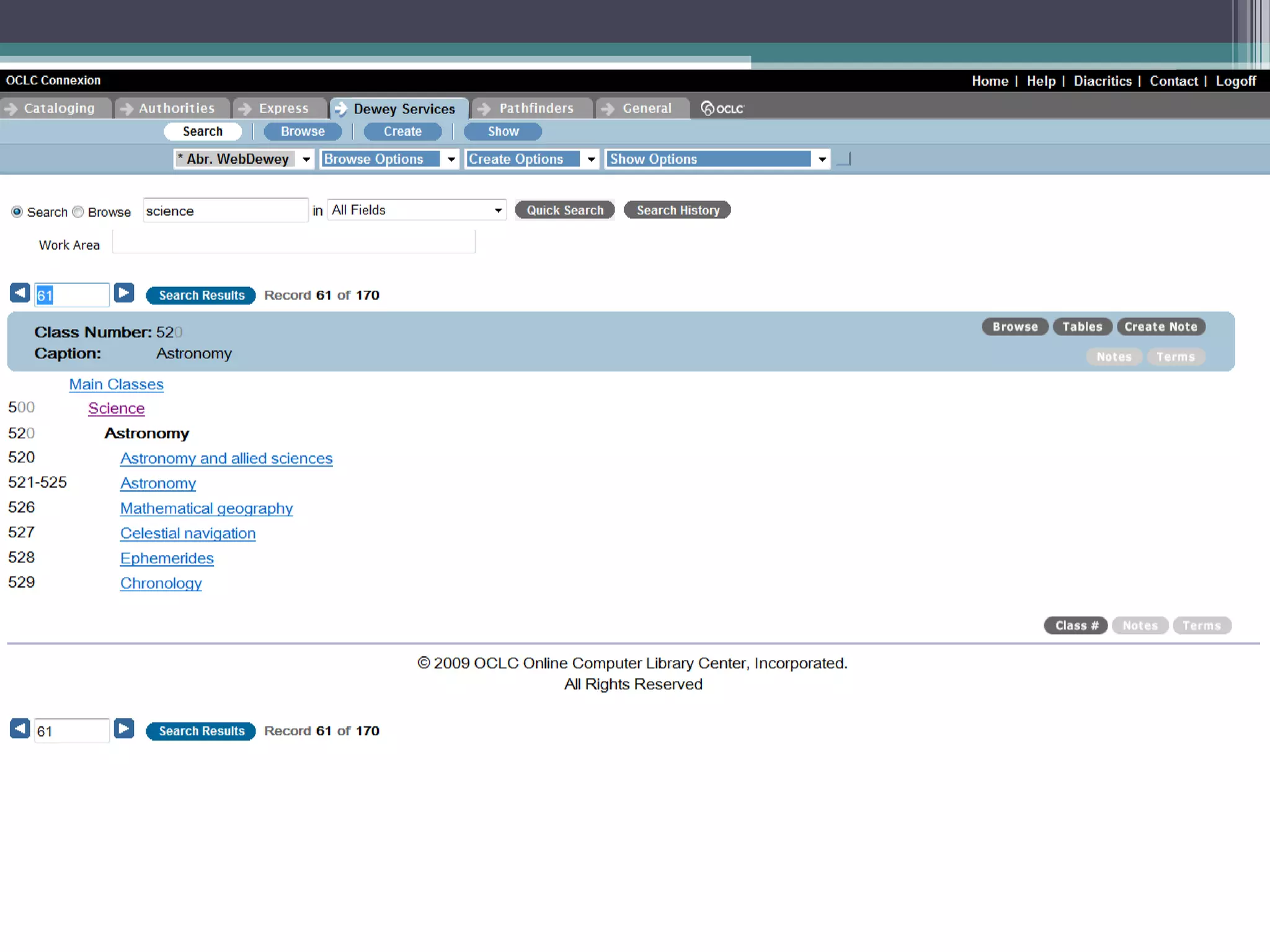
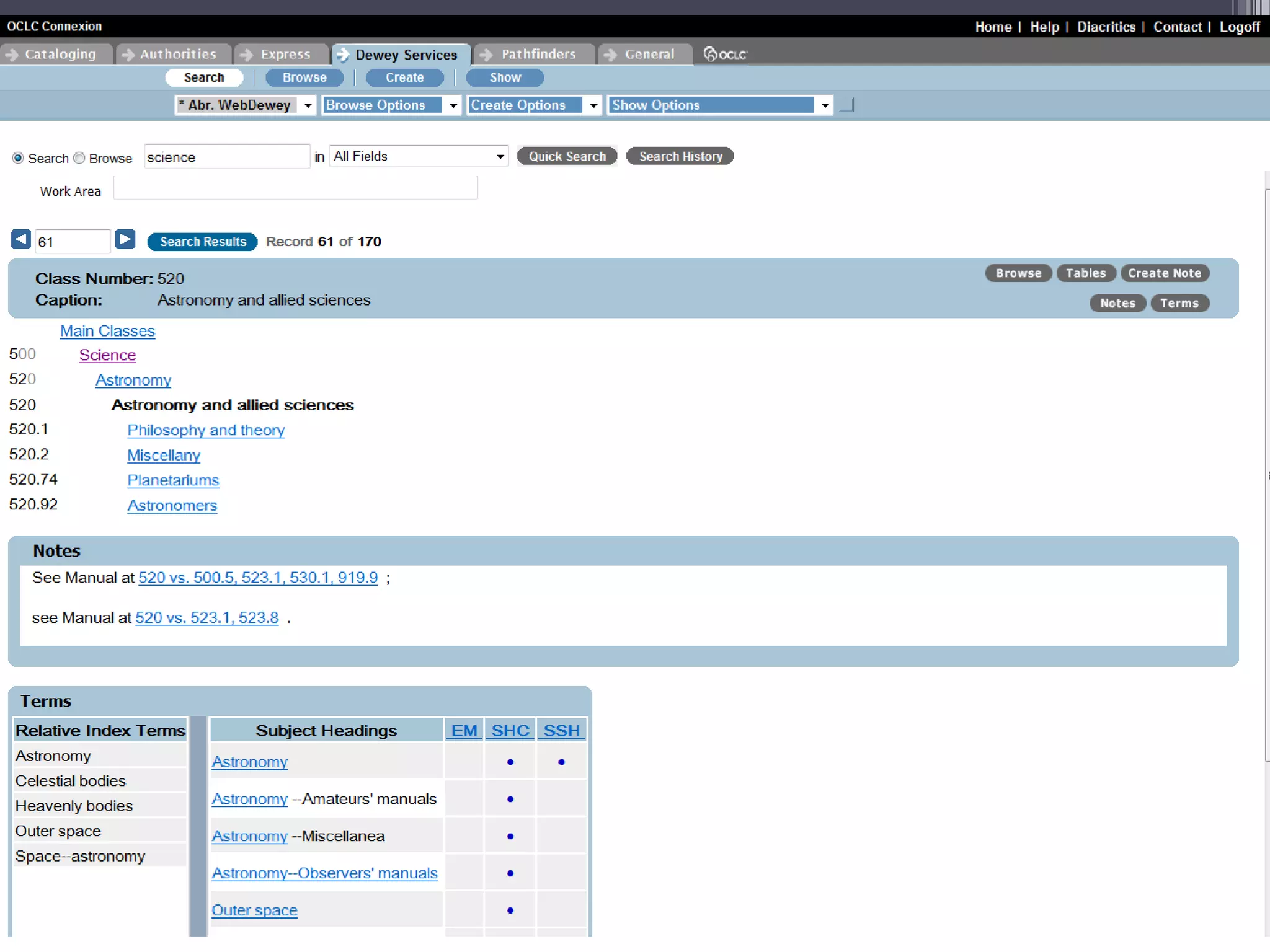
  • #92 This is not quite as clear in WebDewey.
  • #93 It gives you 520.1 and 520.2, but not the rest of the standard subdivisions. You have to know to follow the pattern.
  • #94 Our base number is 520. Yearbook means it is published annually, so it’s a serial publication. We need to add a subdivision for that.
  • #95 Let’s go back to Table 1. Serials are under -05.
  • #96 Notice the note that says this number includes yearbooks.
  • #97 Questions?
  • #98 Numbers with base zeros don’t always have the zero dropped.
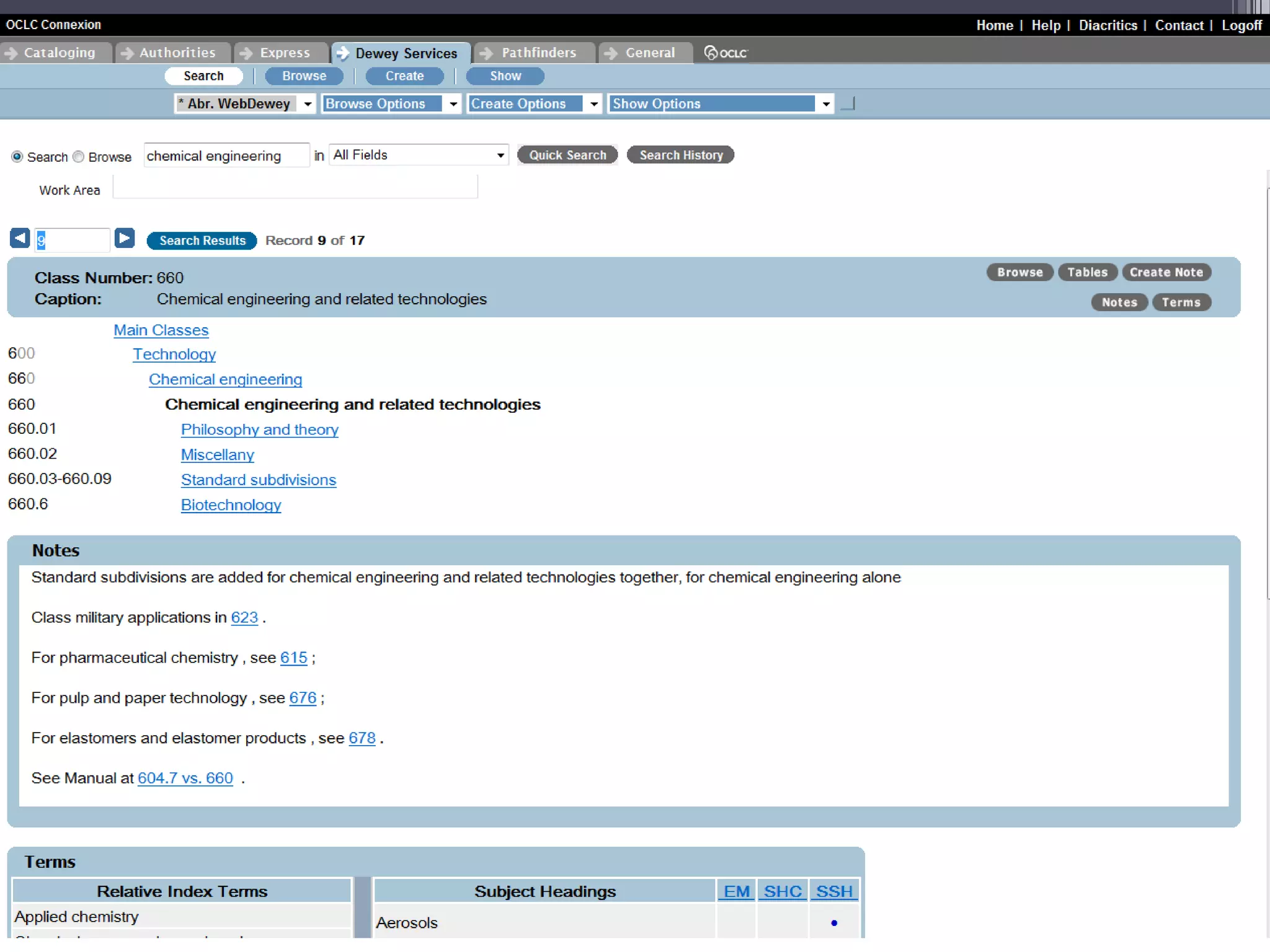
  • #100 If we look up chemical engineering, we see that again, the pattern for standard subdivisions is given for us.
  • #101 So we know that the base number is 660 and that there will be a 0 after that.
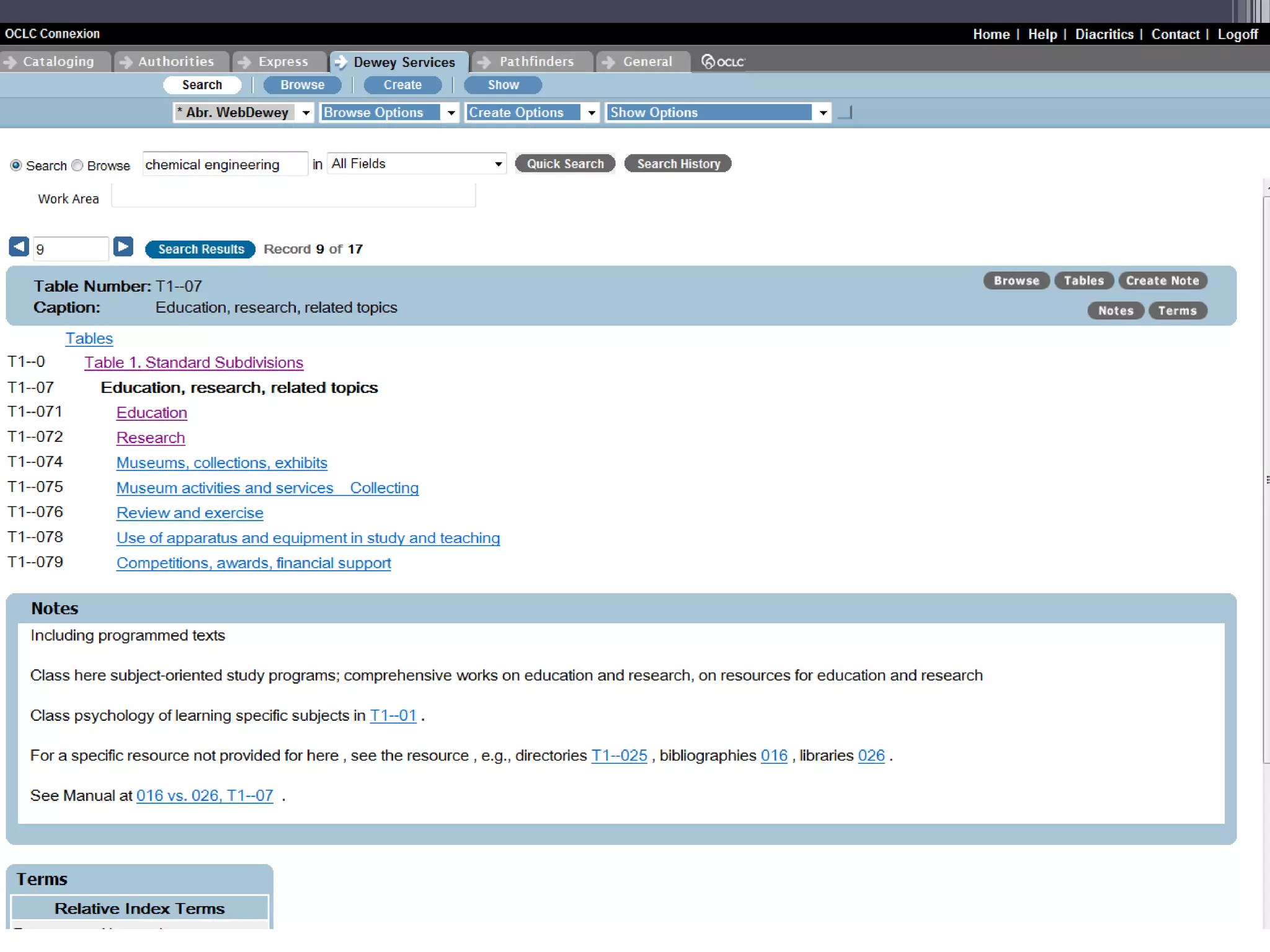
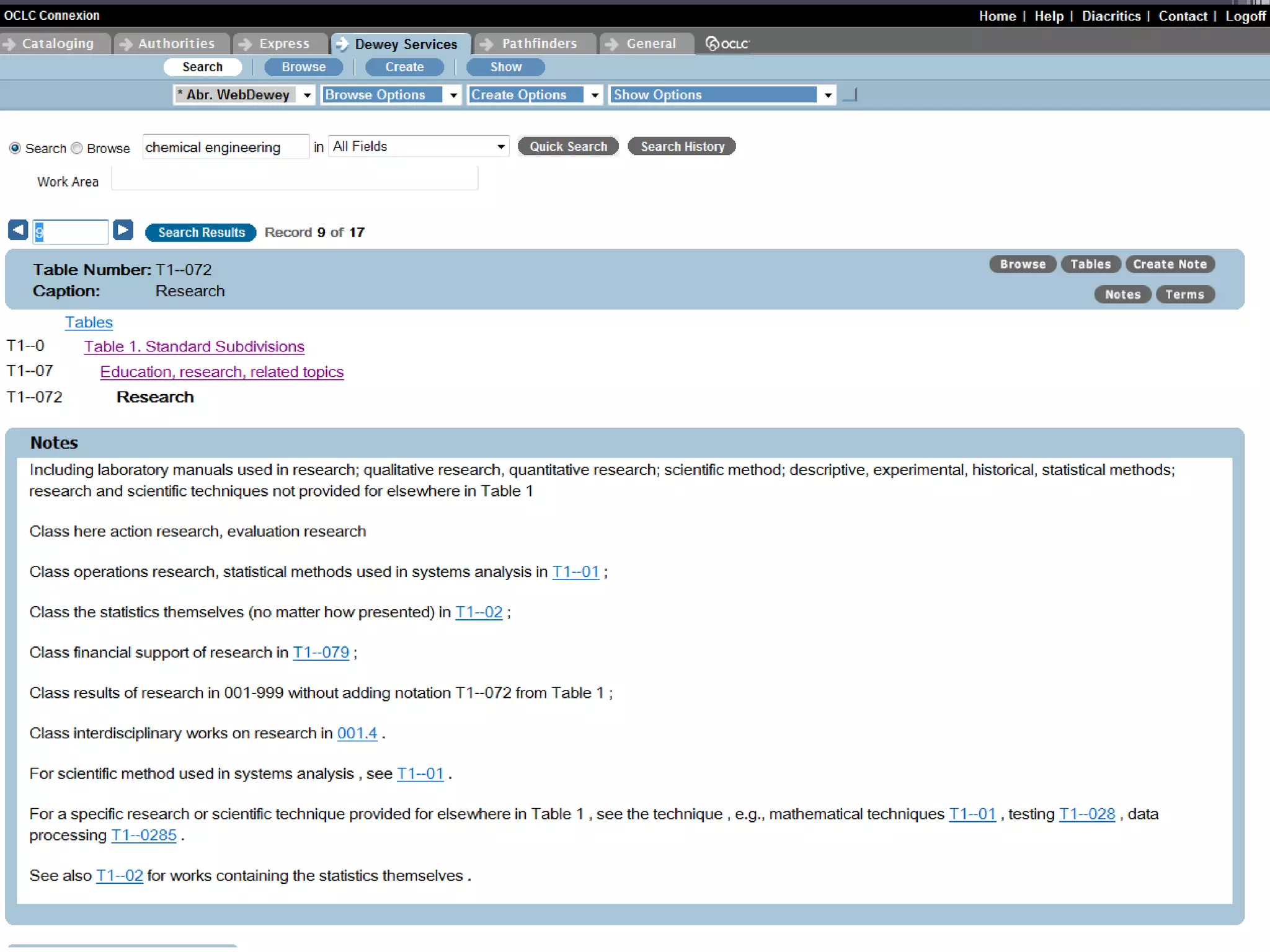
  • #102 We go back to Table 1 and see that research is under 07
  • #103 More specifically, 072
  • #104 There are no further instructions.
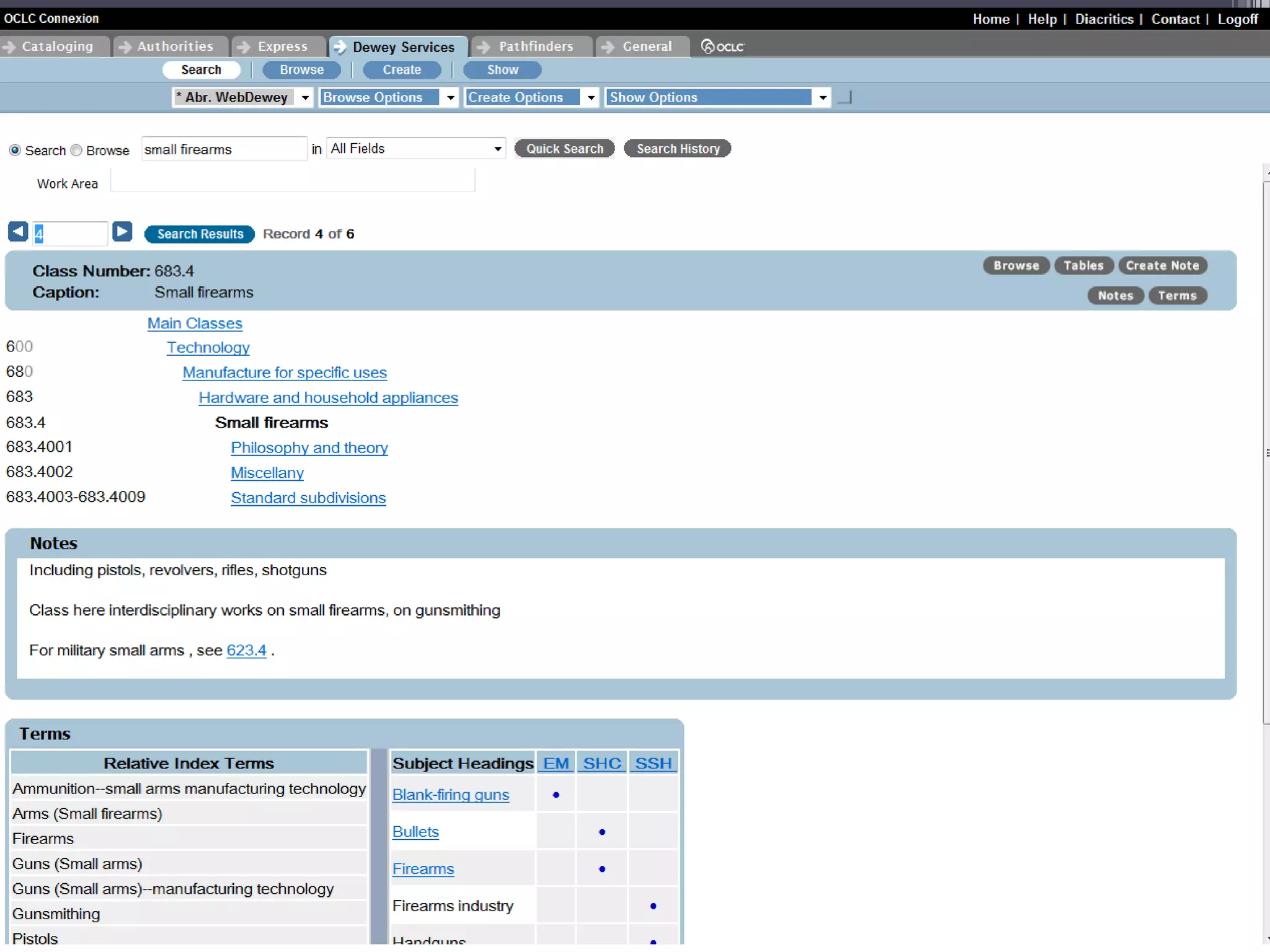
  • #107 Here, the pattern for standard subdivisions is given, and you can see there is an extra zero.
  • #108 You usually only use one standard subdivision, even if multiple ones could apply (periodical that is also an encyclopedia, a historical atlas). Use the table of preference to figure out which one to use.
  • #110 For example, if you did have an encyclopedia that was also a serial publication, you would add the standard subdivision for encyclopedia because that comes earlier in the table of preference.