



LONDON 18-19 OCT
2018
“Get Rid Of These TLS Certs”
PAWEL KRAWCZYK
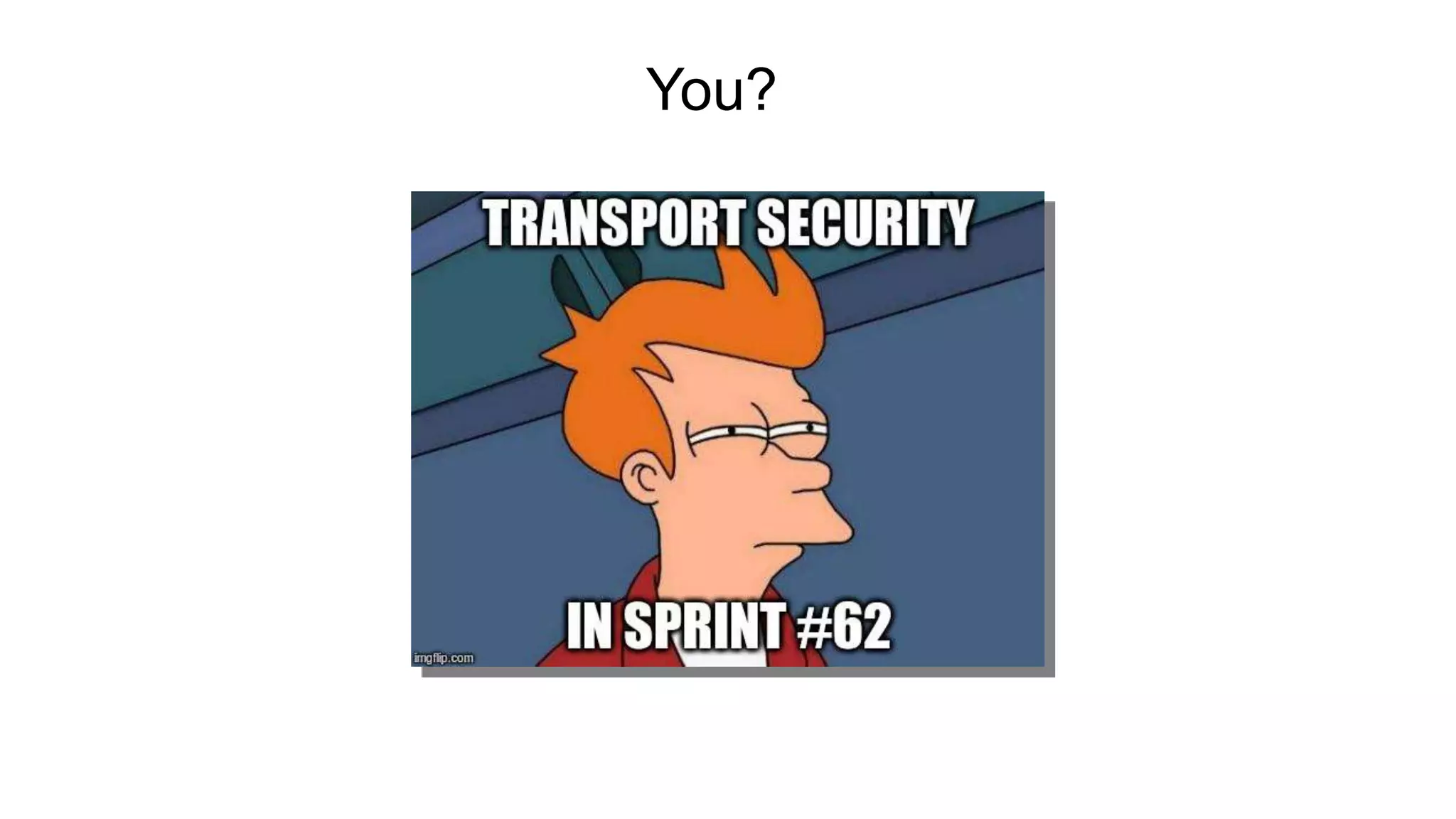
You?
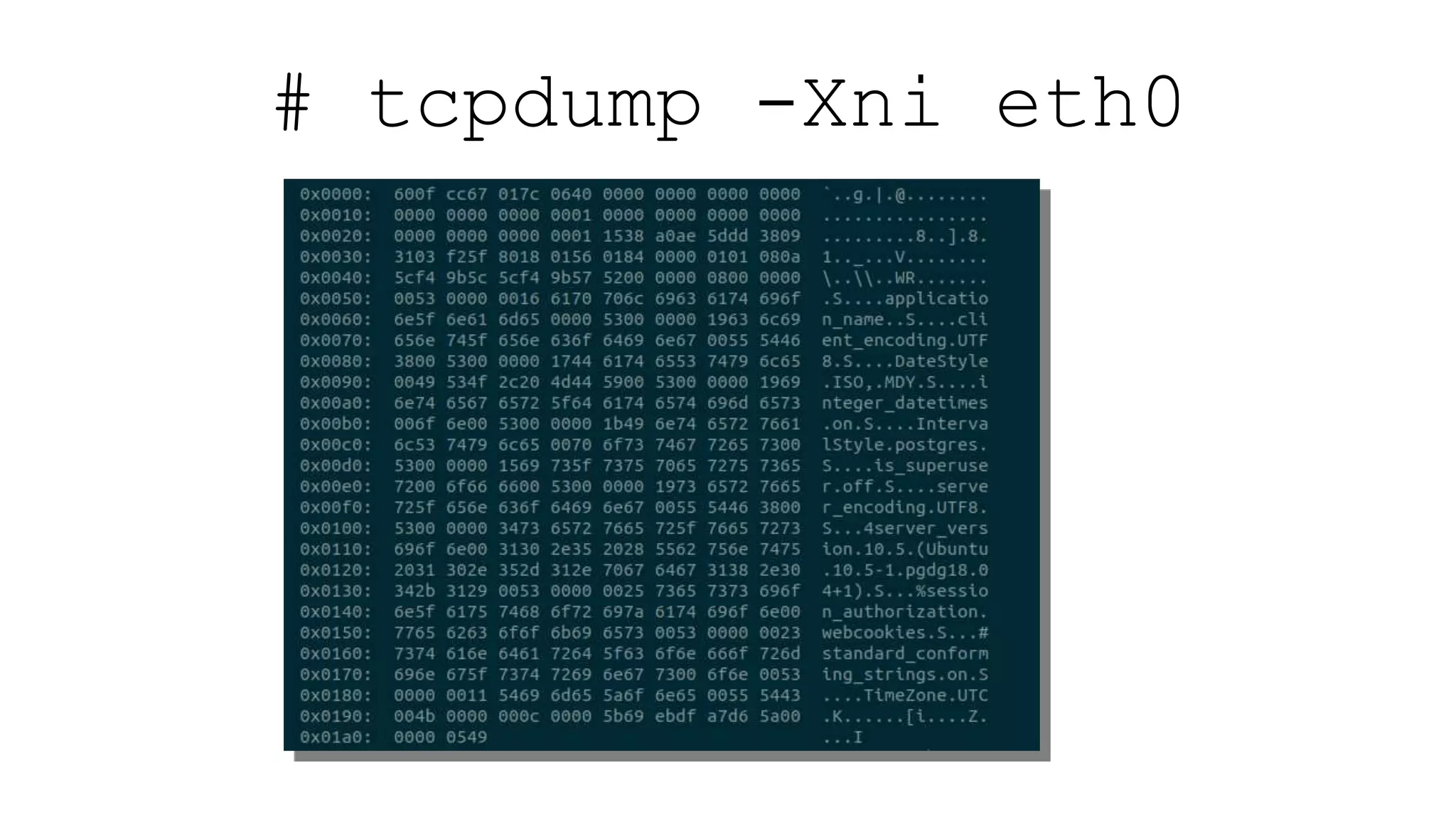
# tcpdump -Xni eth0
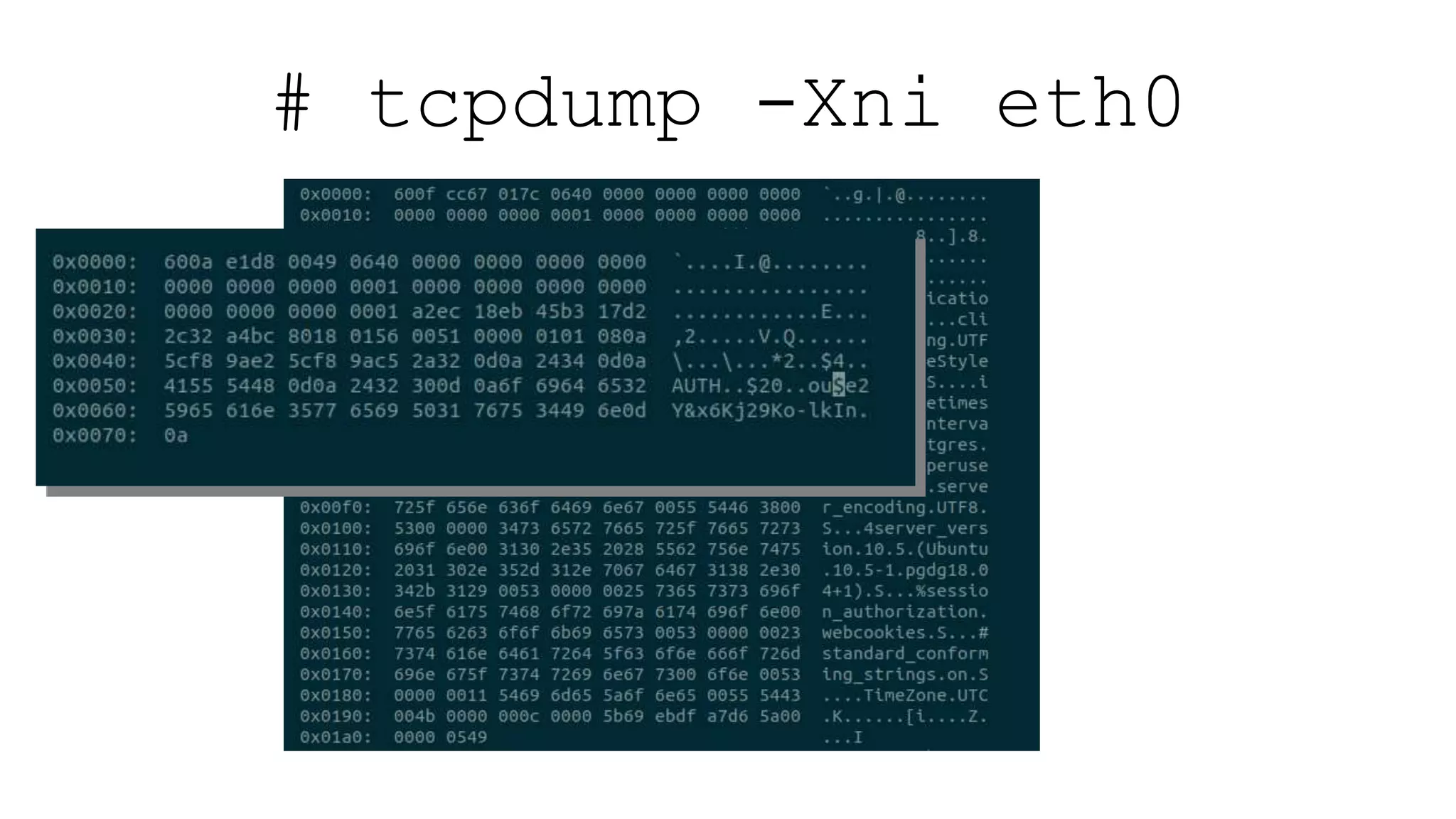
# tcpdump -Xni eth0
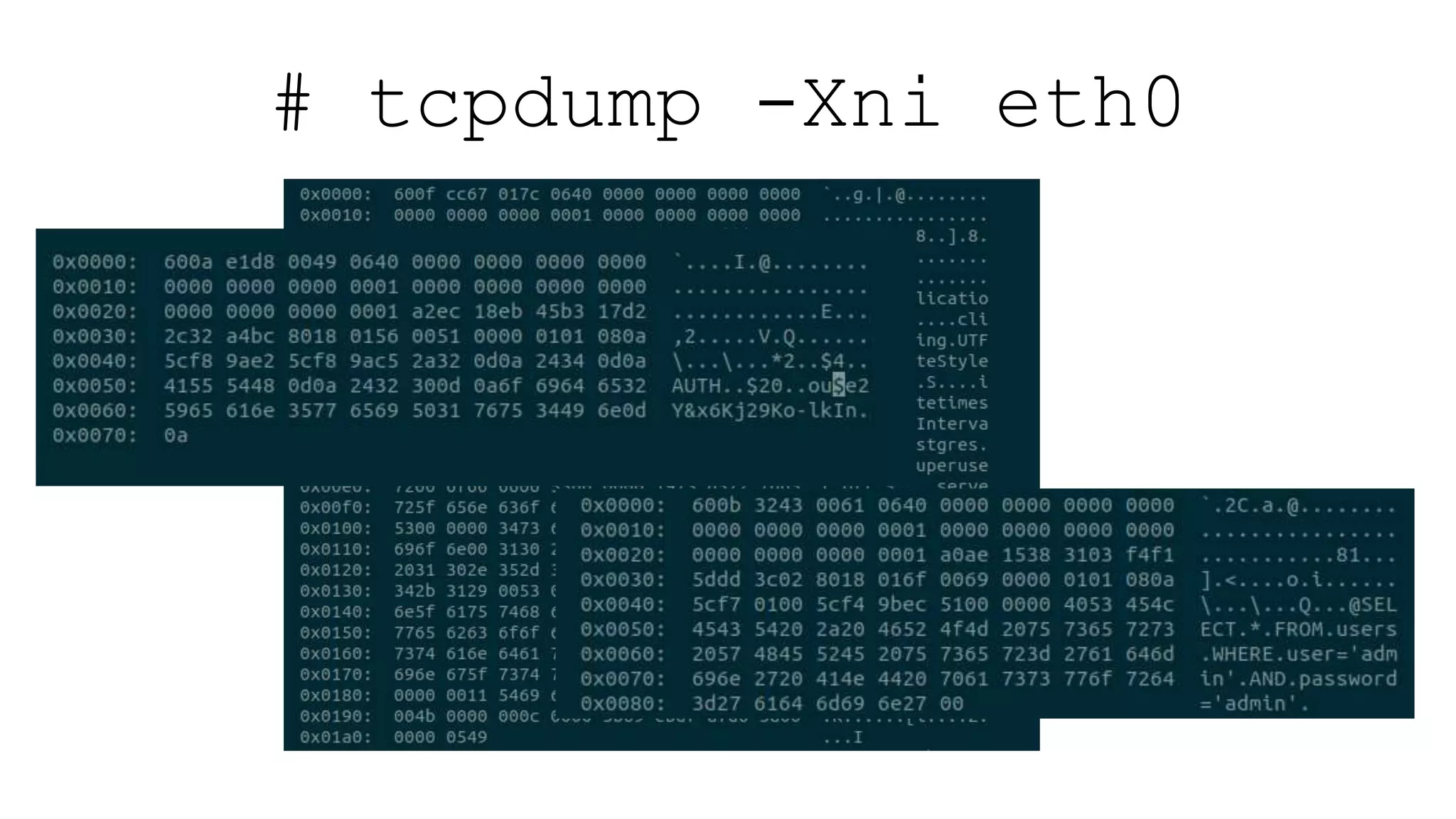
# tcpdump -Xni eth0
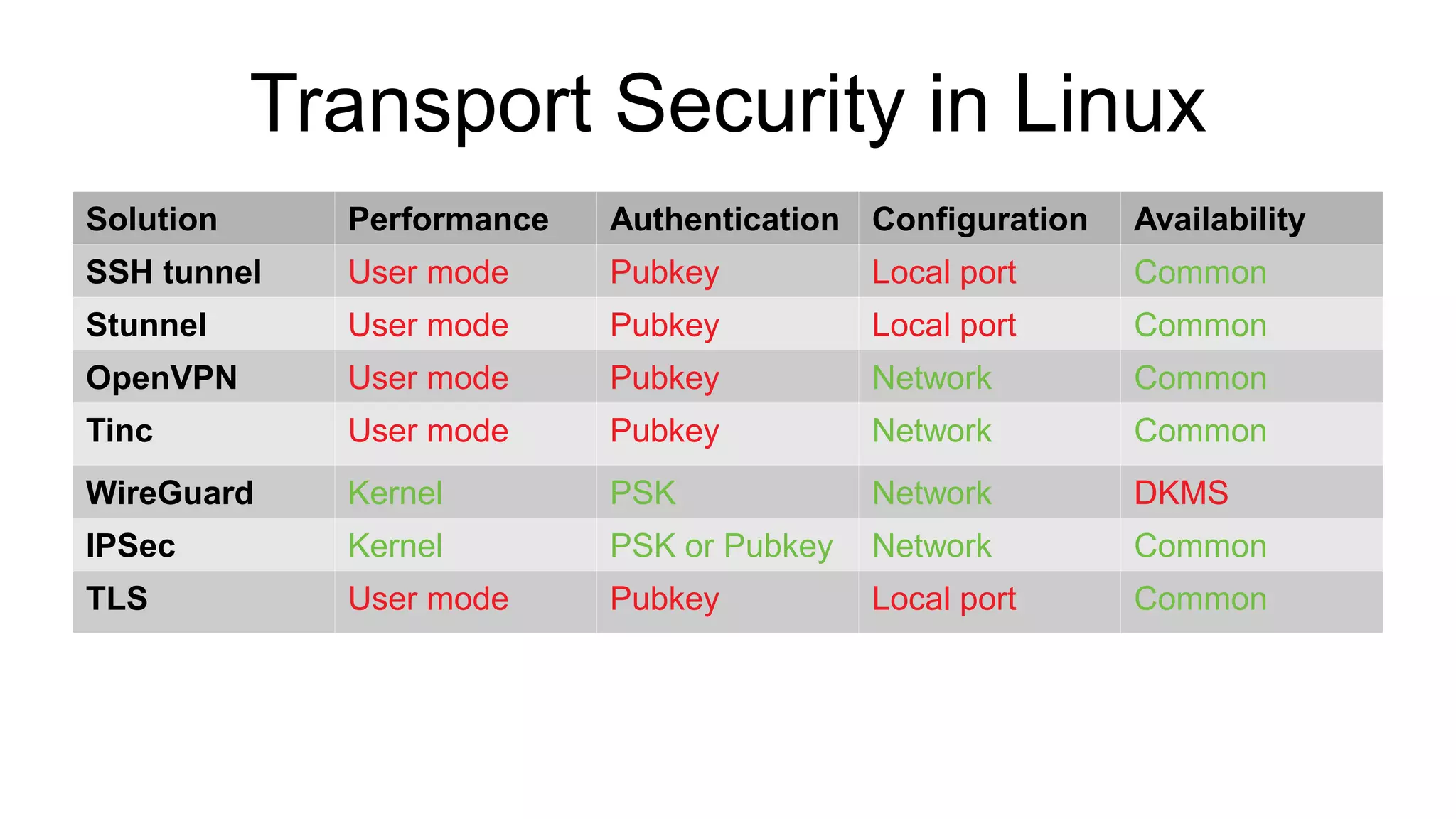
Transport Security in Linux
Solution Performance Authentication Configuration Availability
SSH tunnel User mode Pubkey Local port Common
Stunnel User mode Pubkey Local port Common
OpenVPN User mode Pubkey Network Common
Tinc User mode Pubkey Network Common
WireGuard Kernel PSK Network DKMS
IPSec Kernel PSK or Pubkey Network Common
TLS User mode Pubkey Local port Common
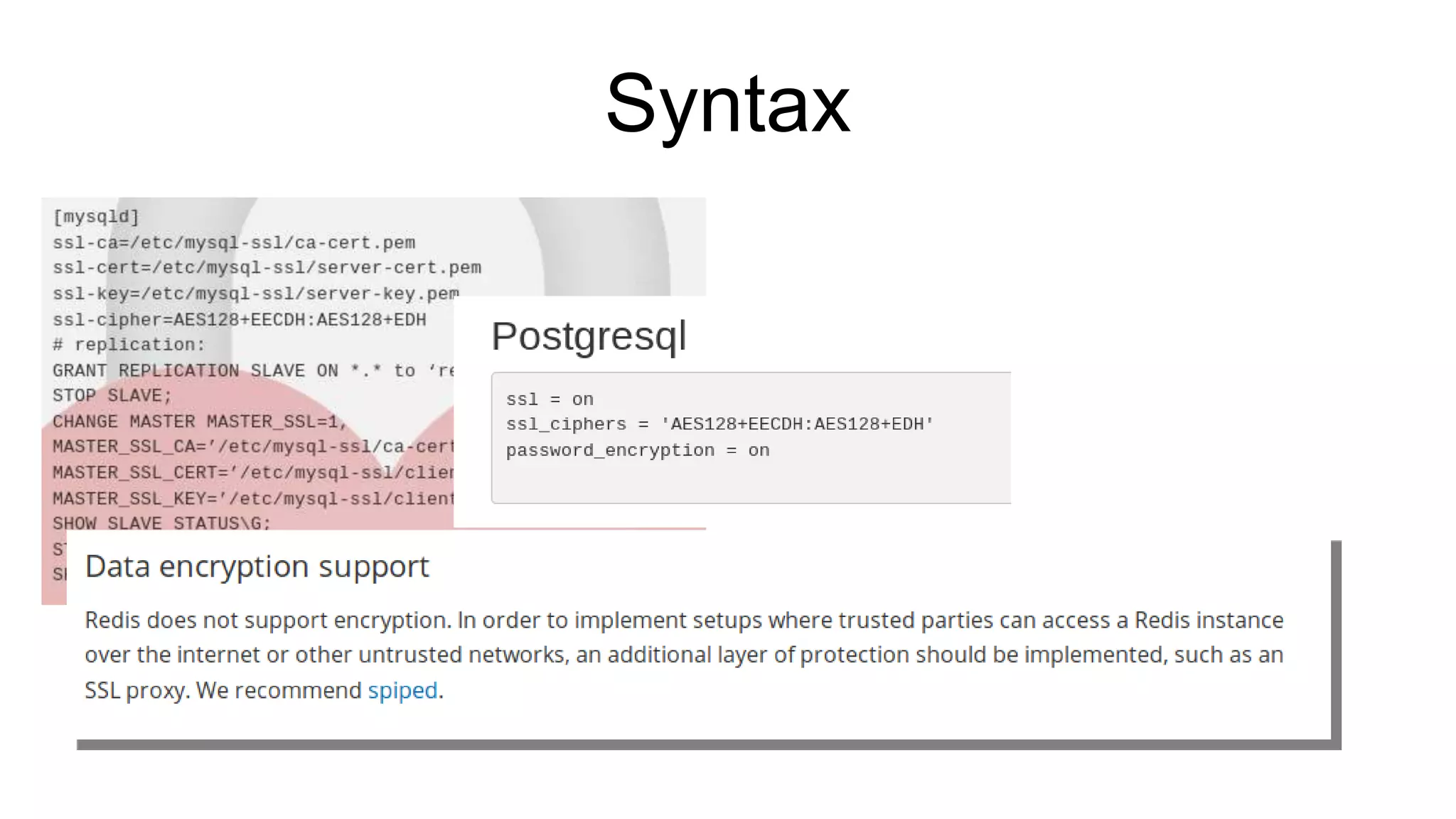
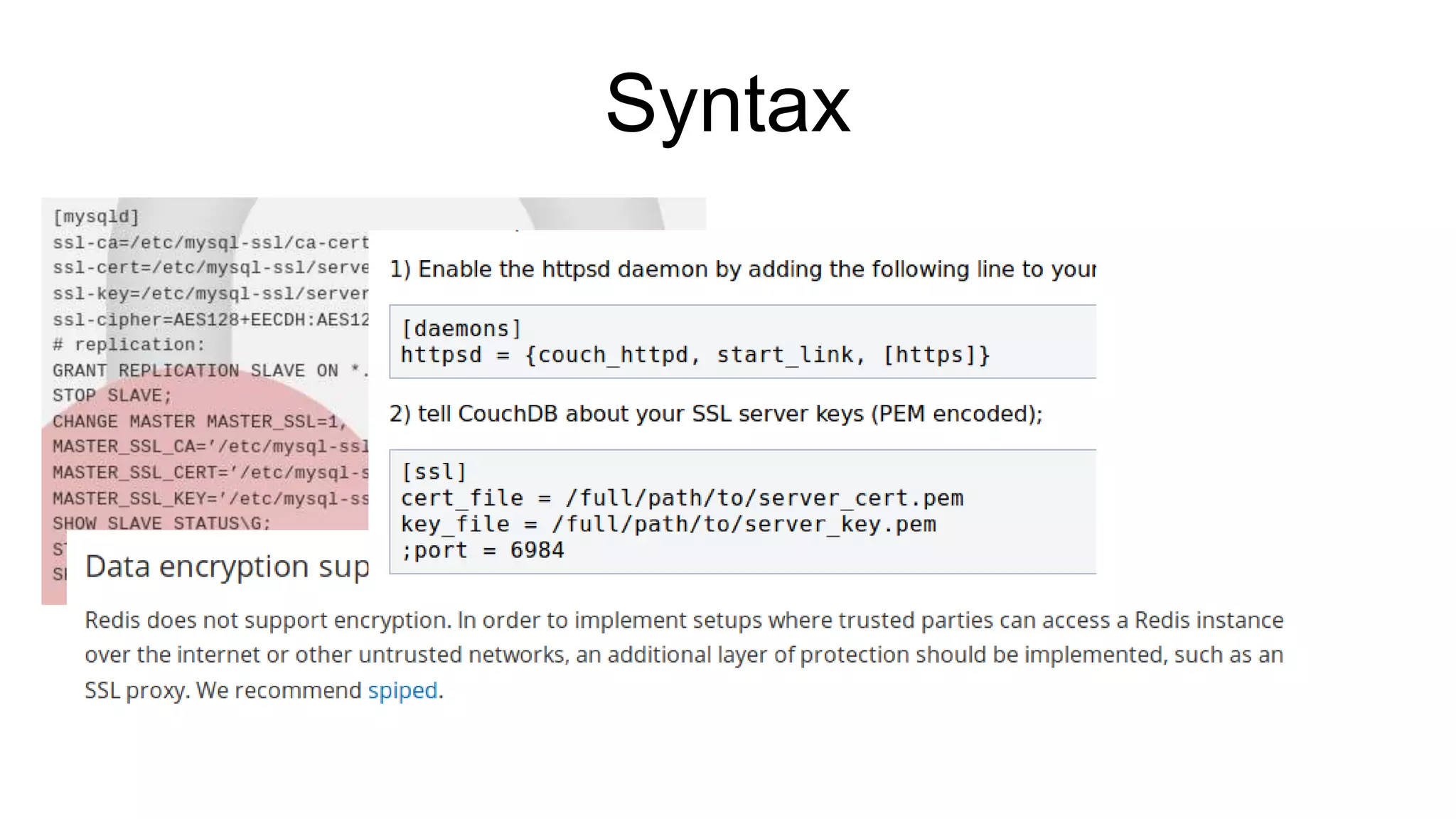
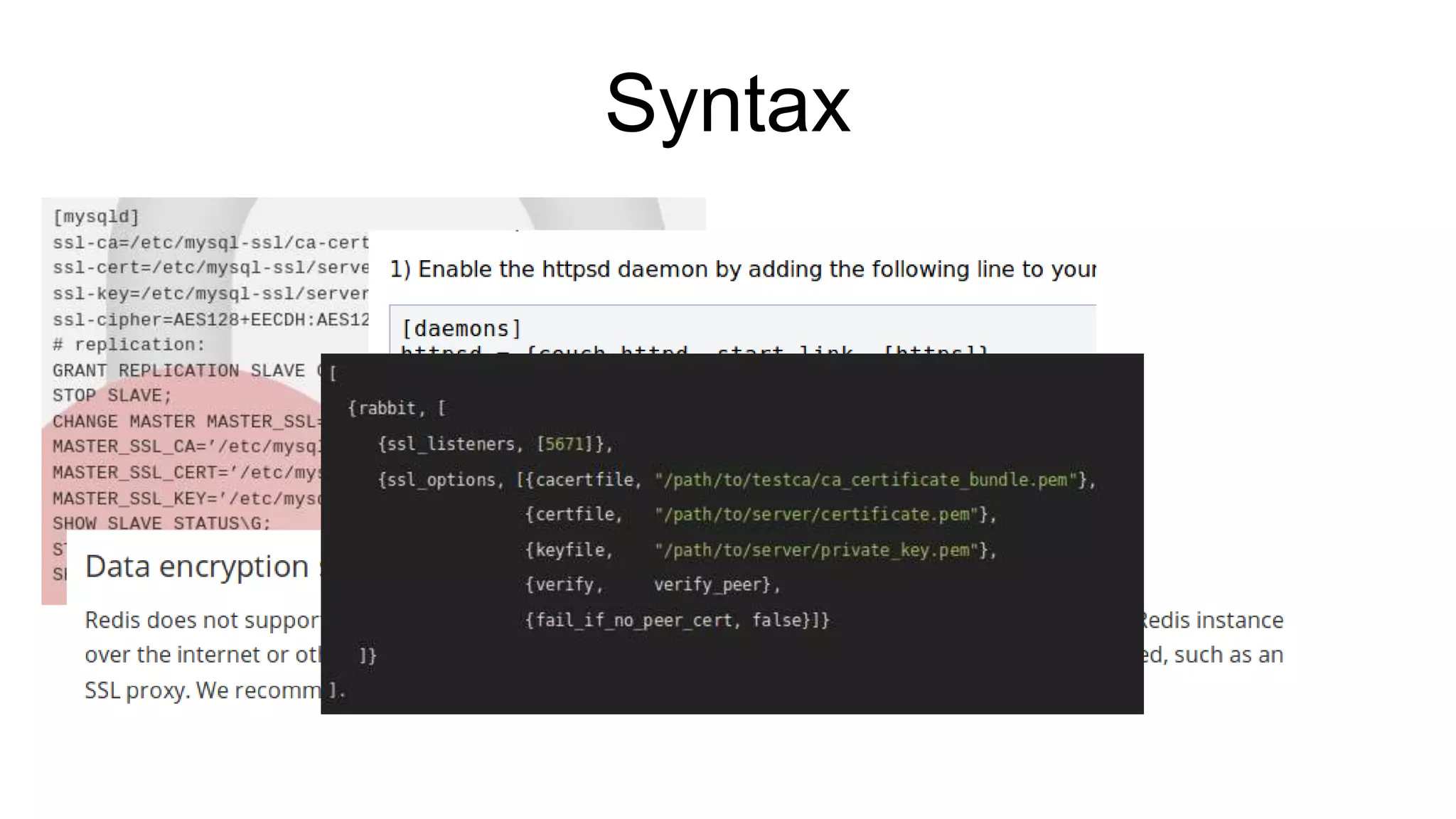
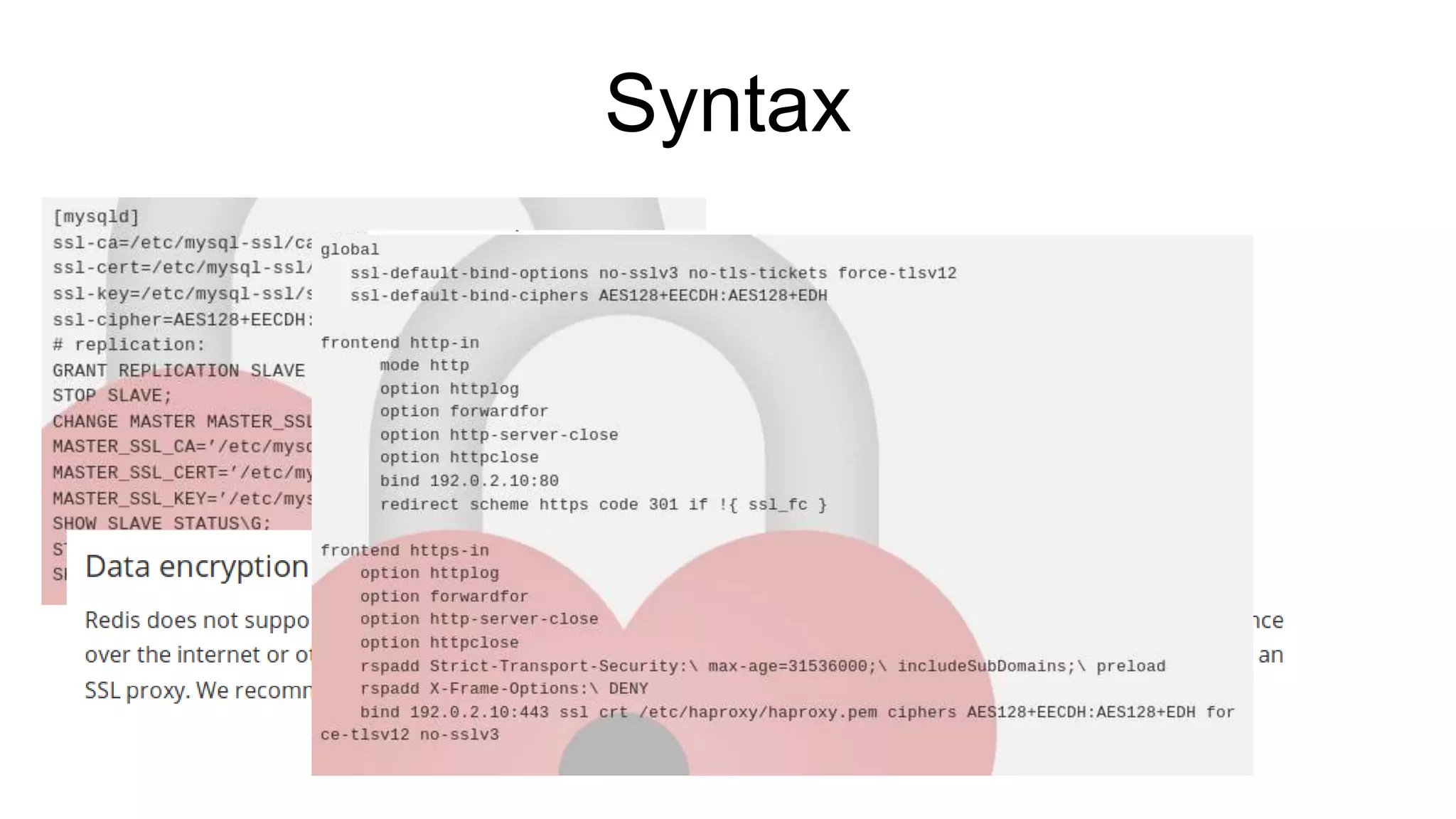
Application-level TLS
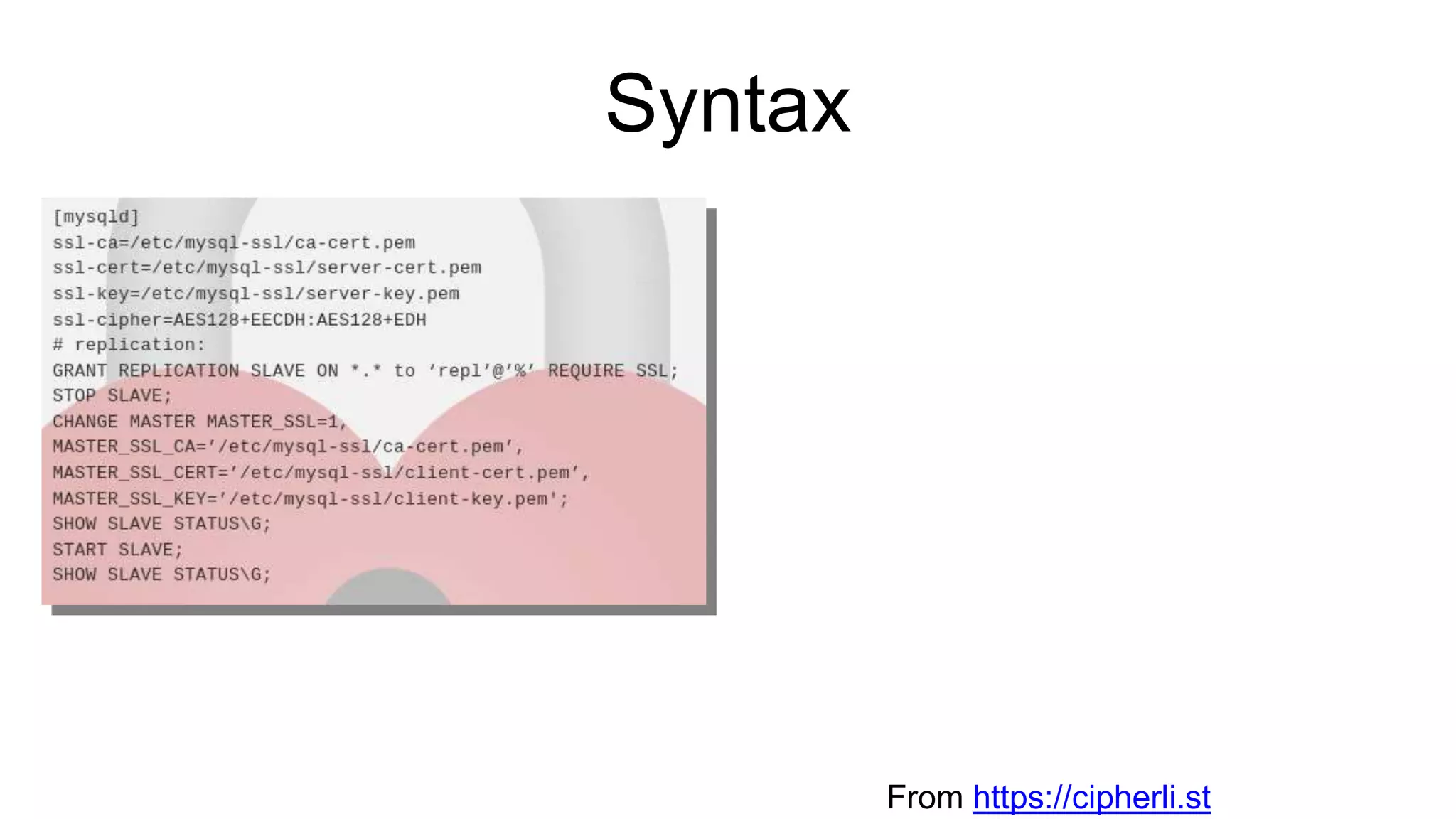
Syntax
From https://cipherli.st
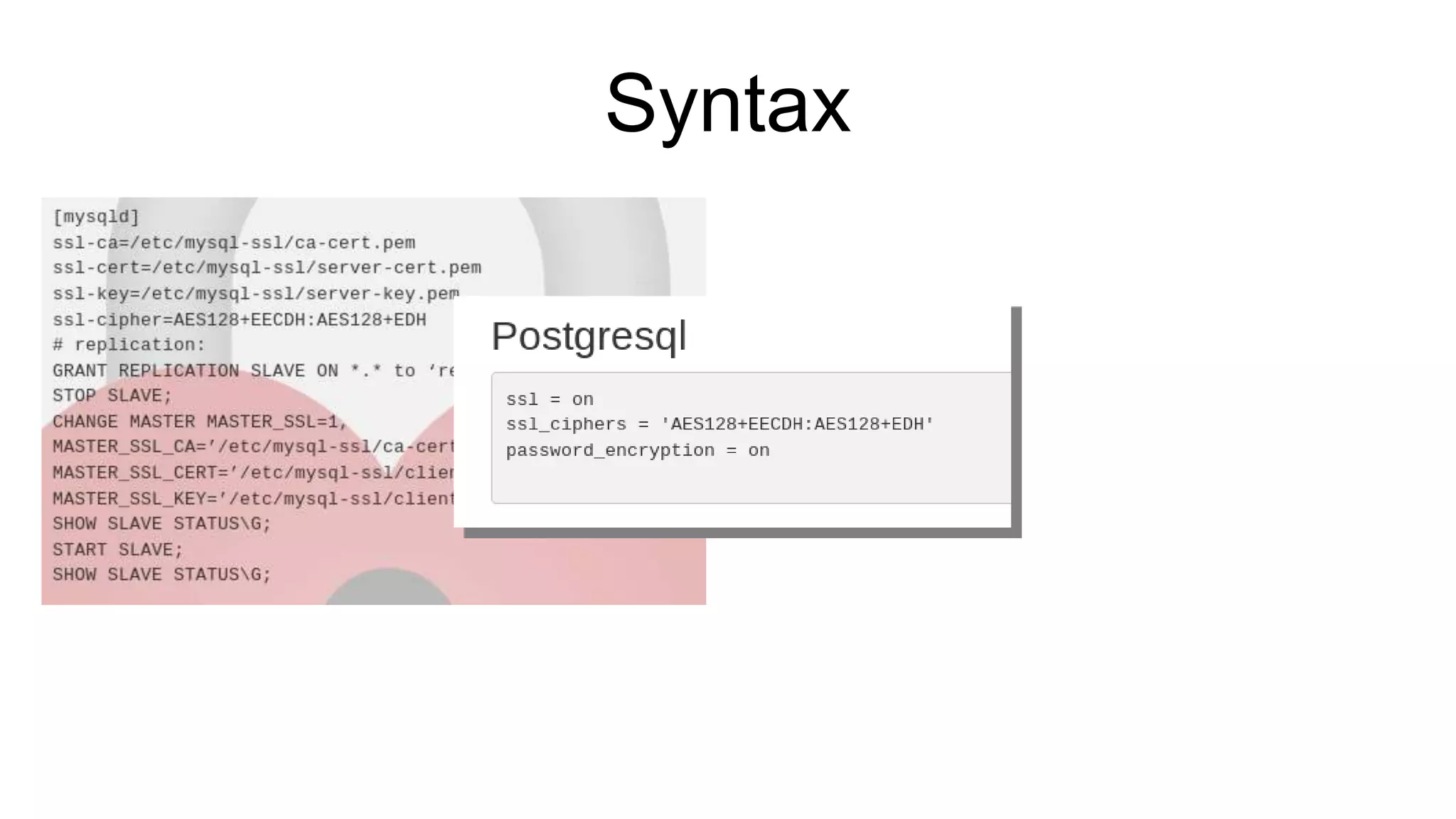
Syntax
Syntax
Syntax
Syntax
Syntax
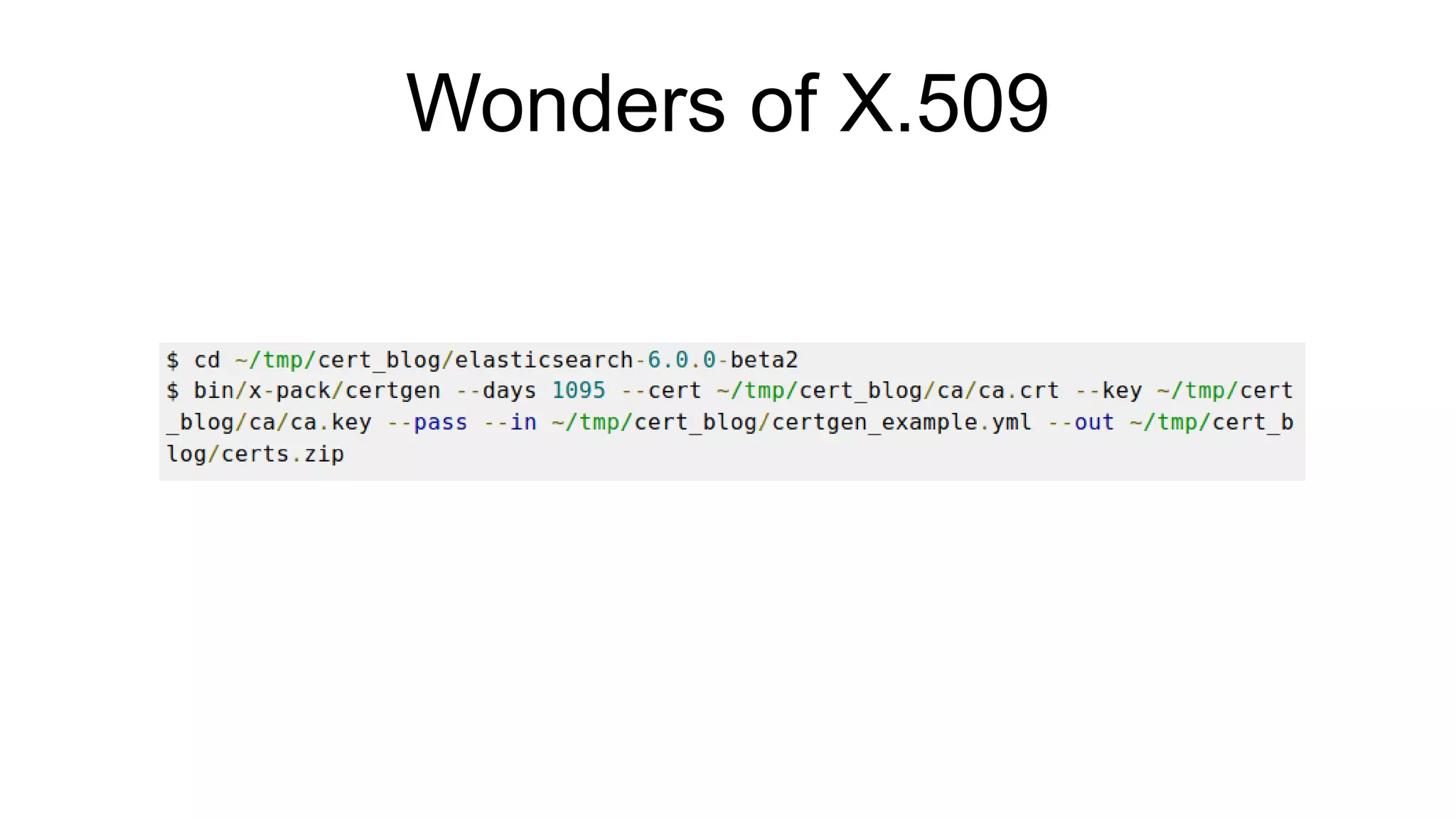
Wonders of X.509
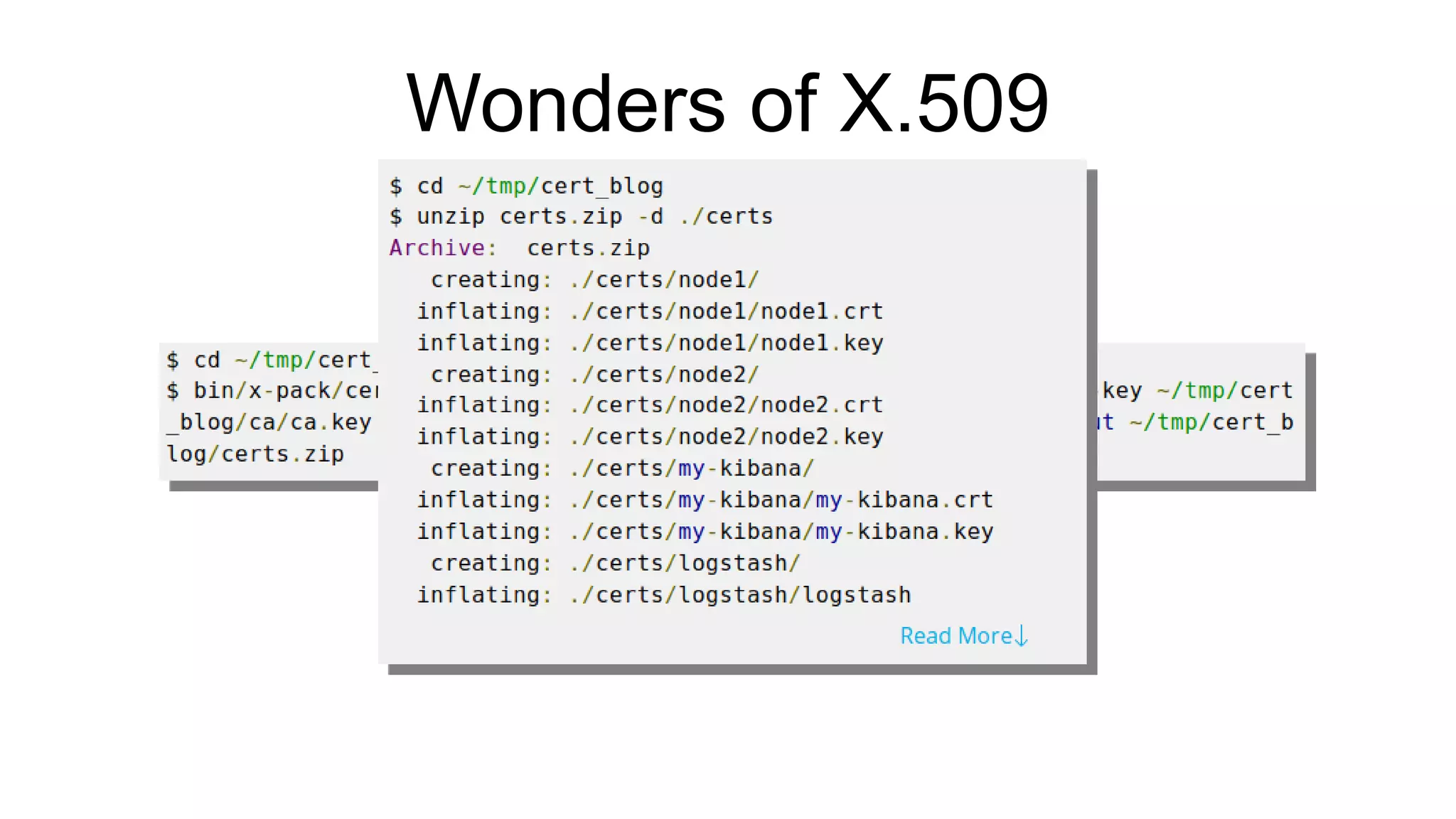
Wonders of X.509
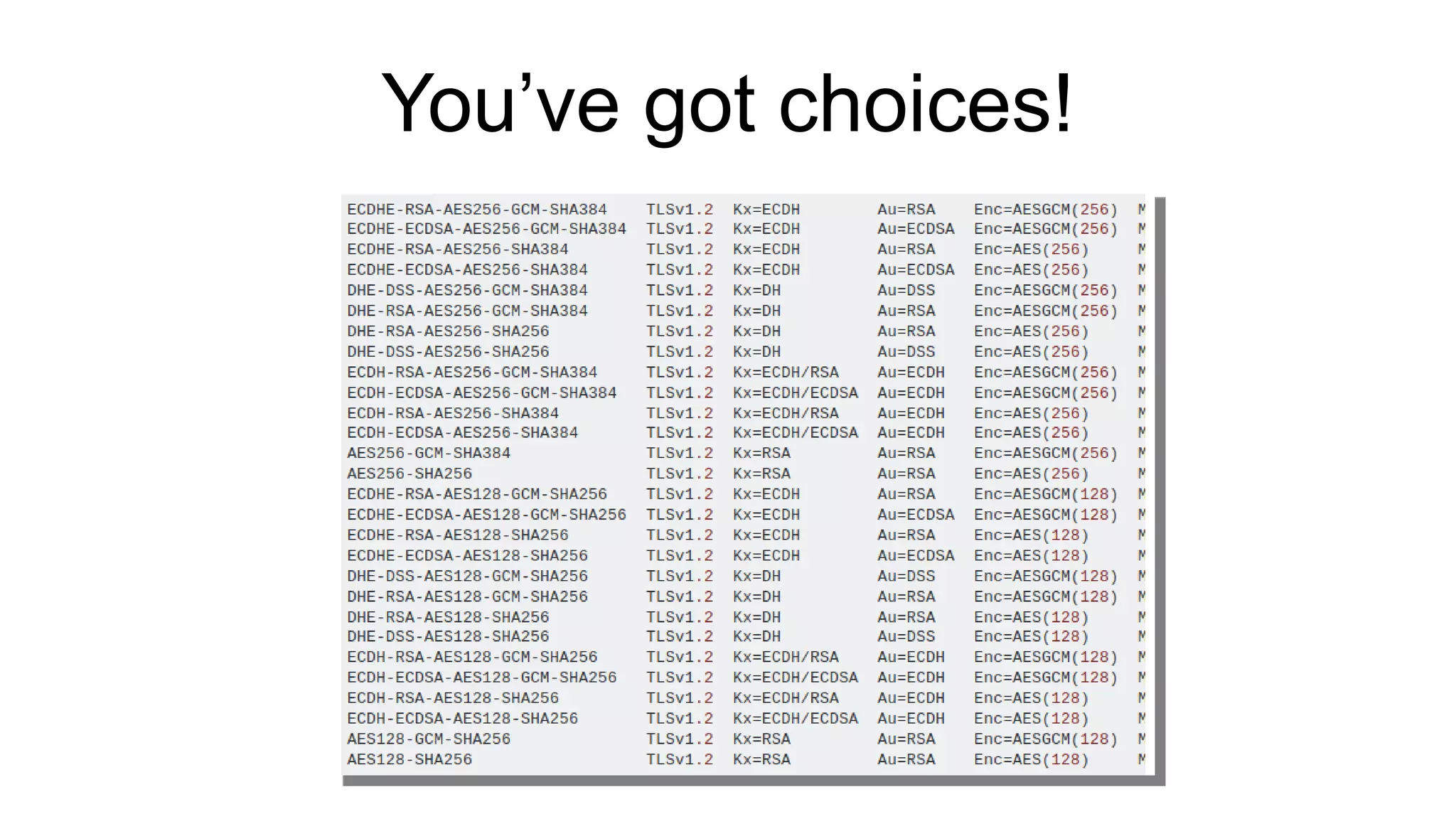
You’ve got choices!
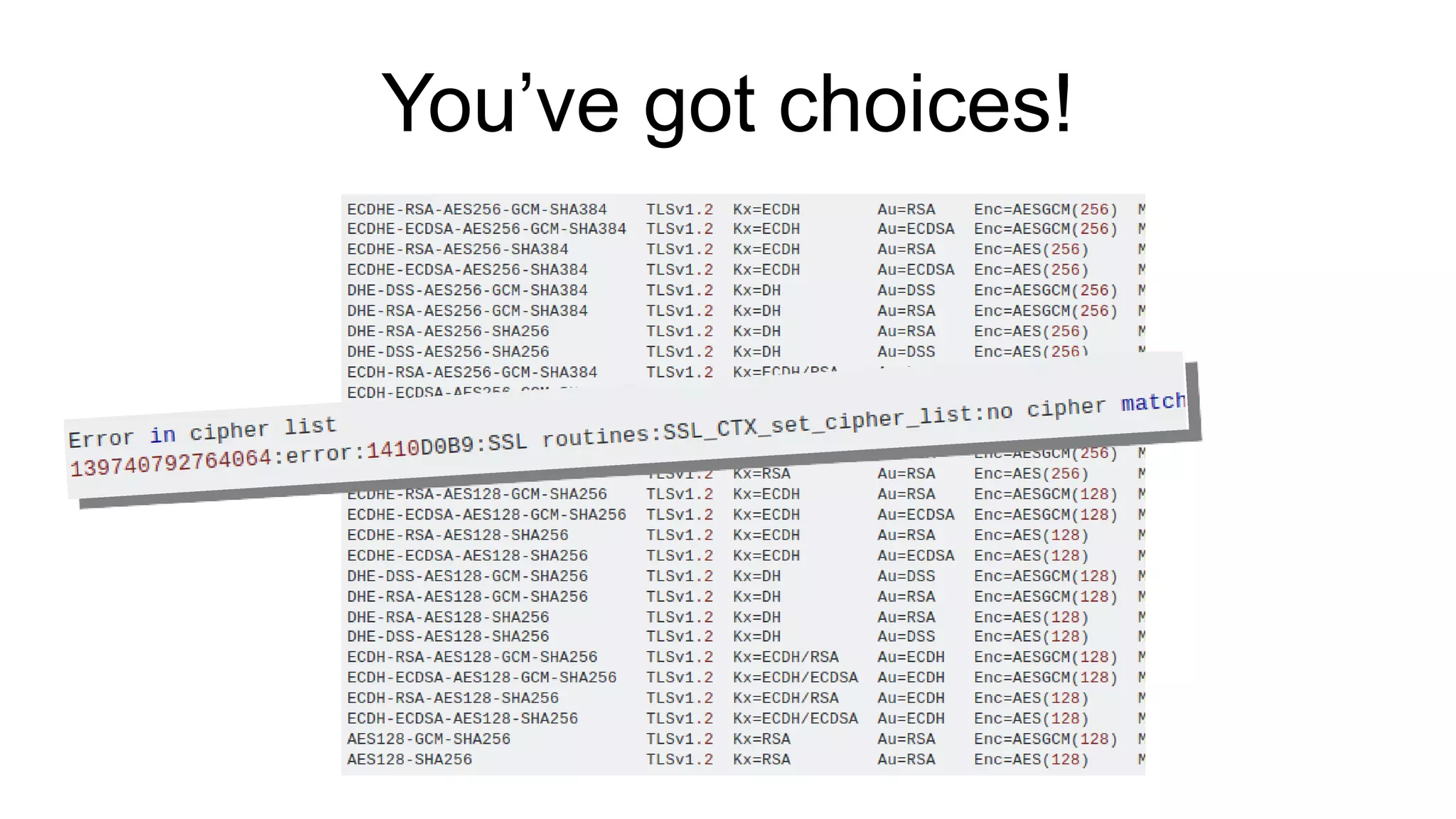
You’ve got choices!
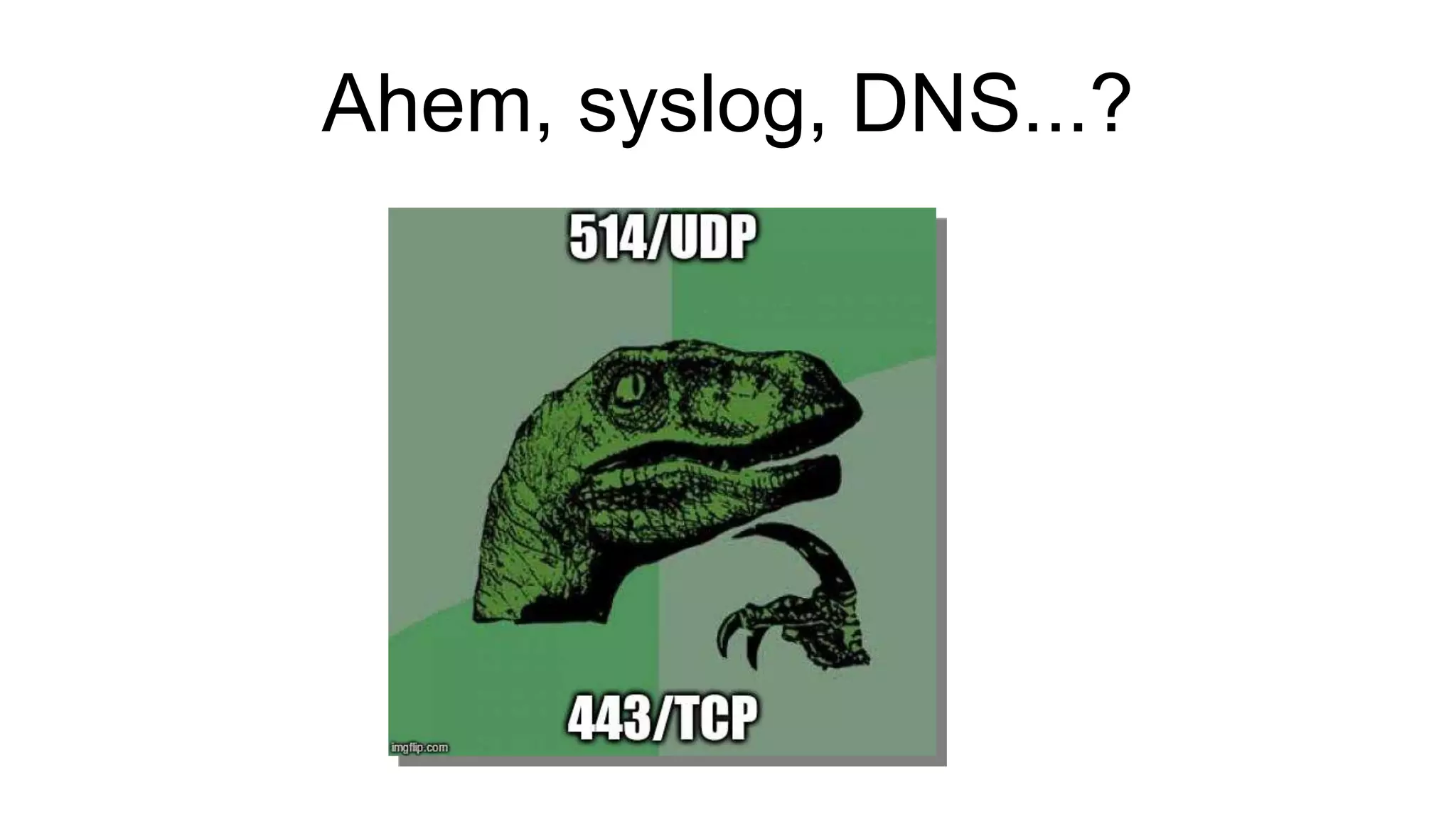
Ahem, syslog, DNS...?
IPSec
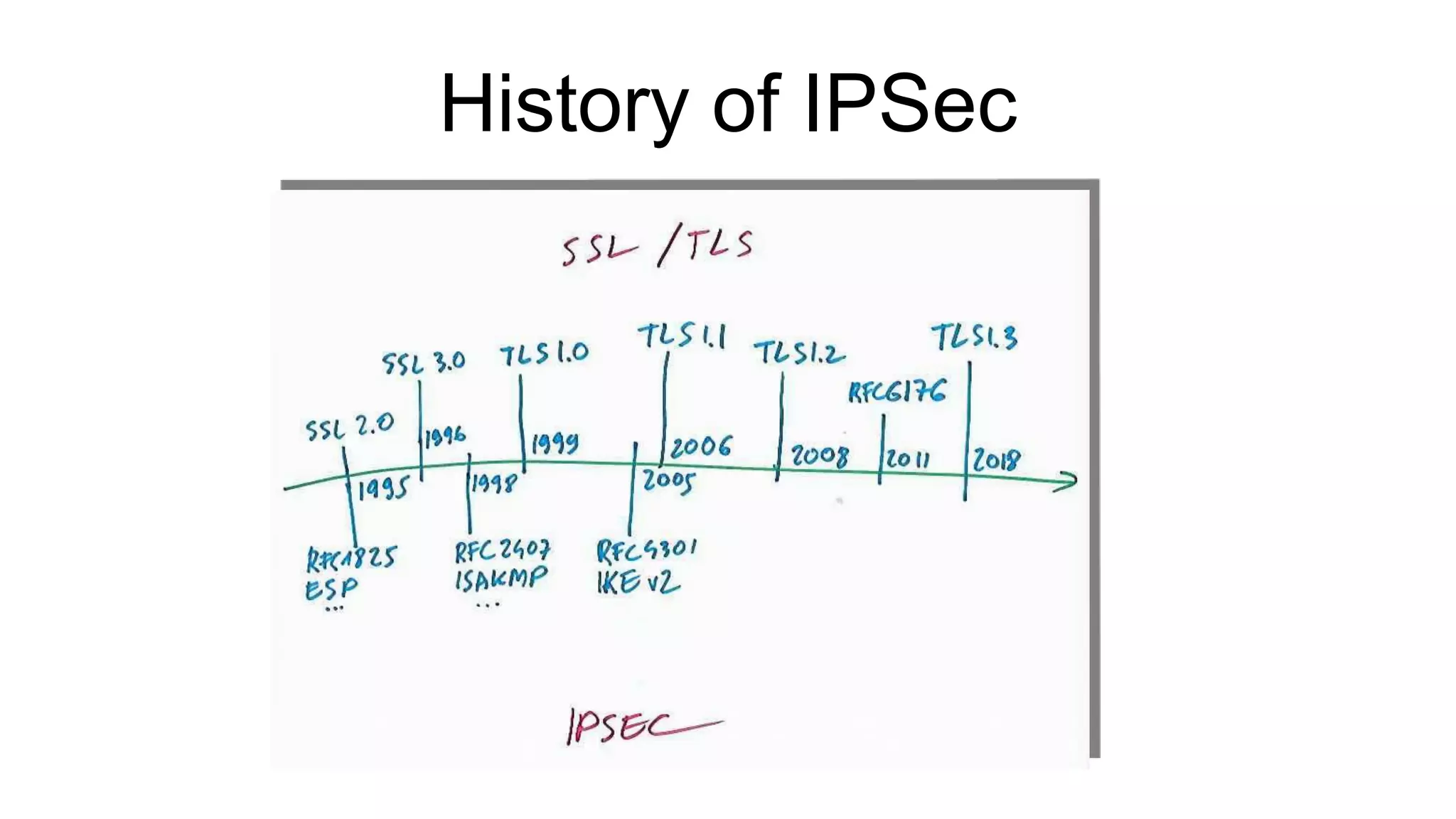
History of IPSec
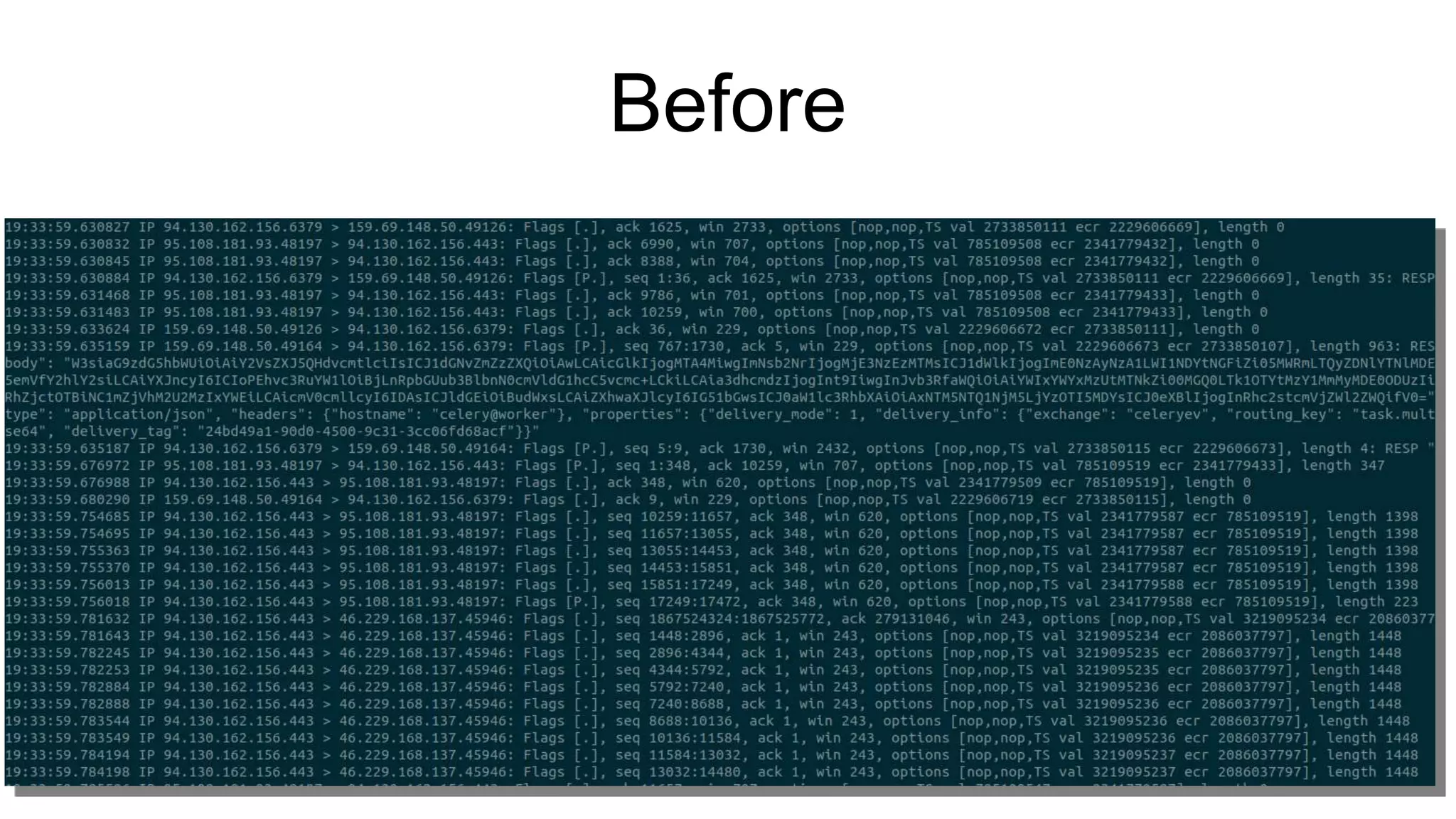
Before
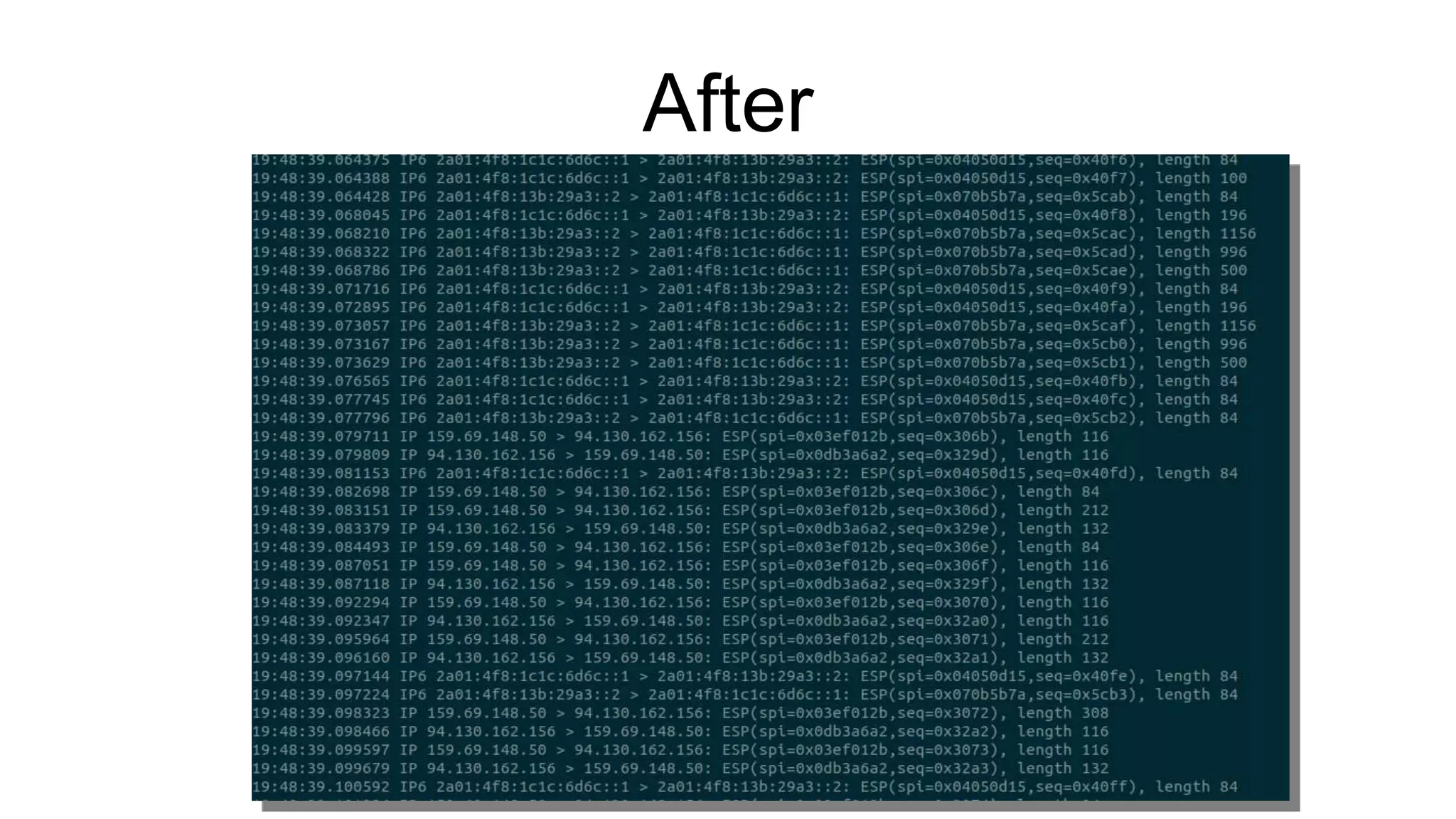
After
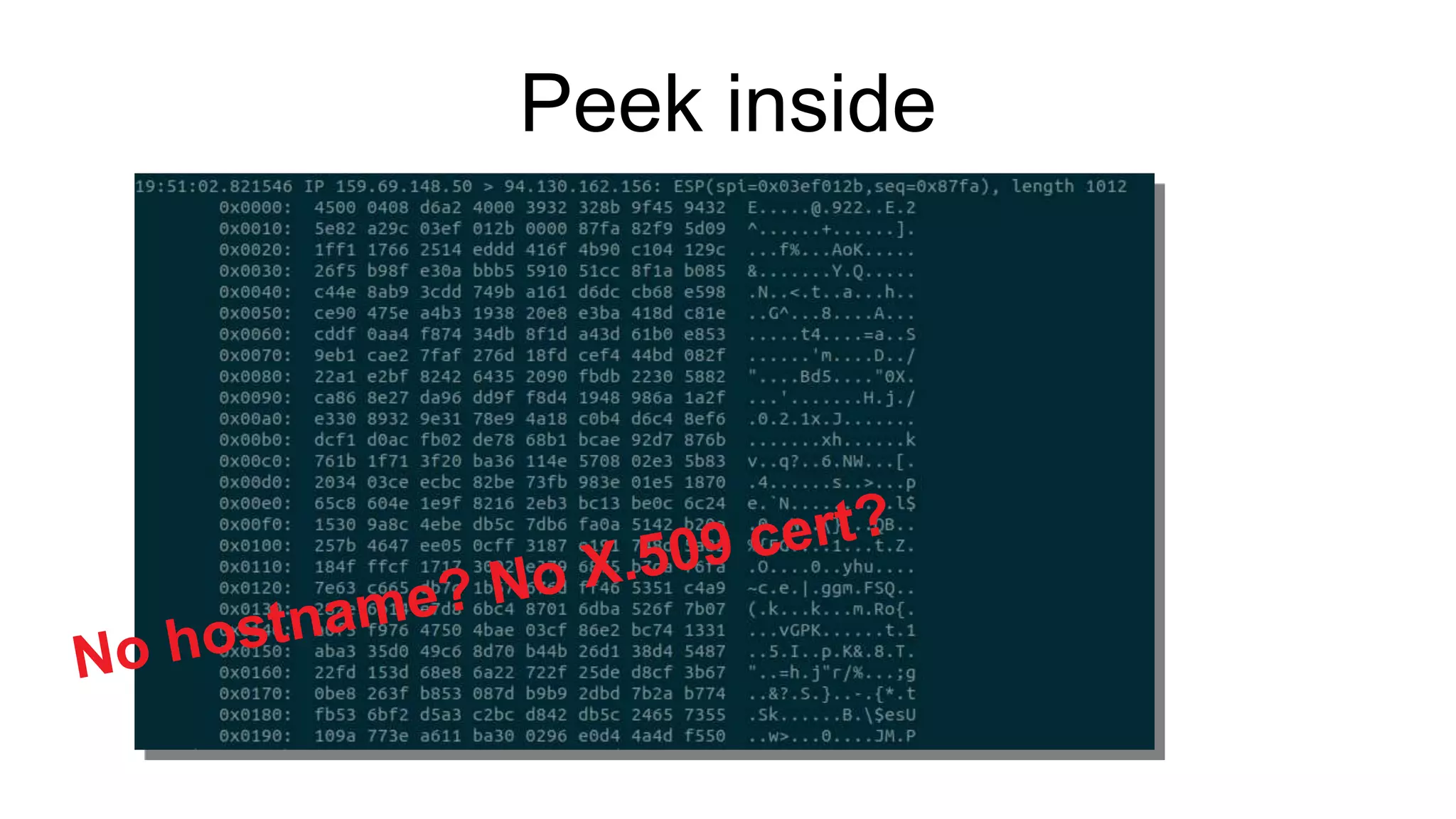
Peek inside
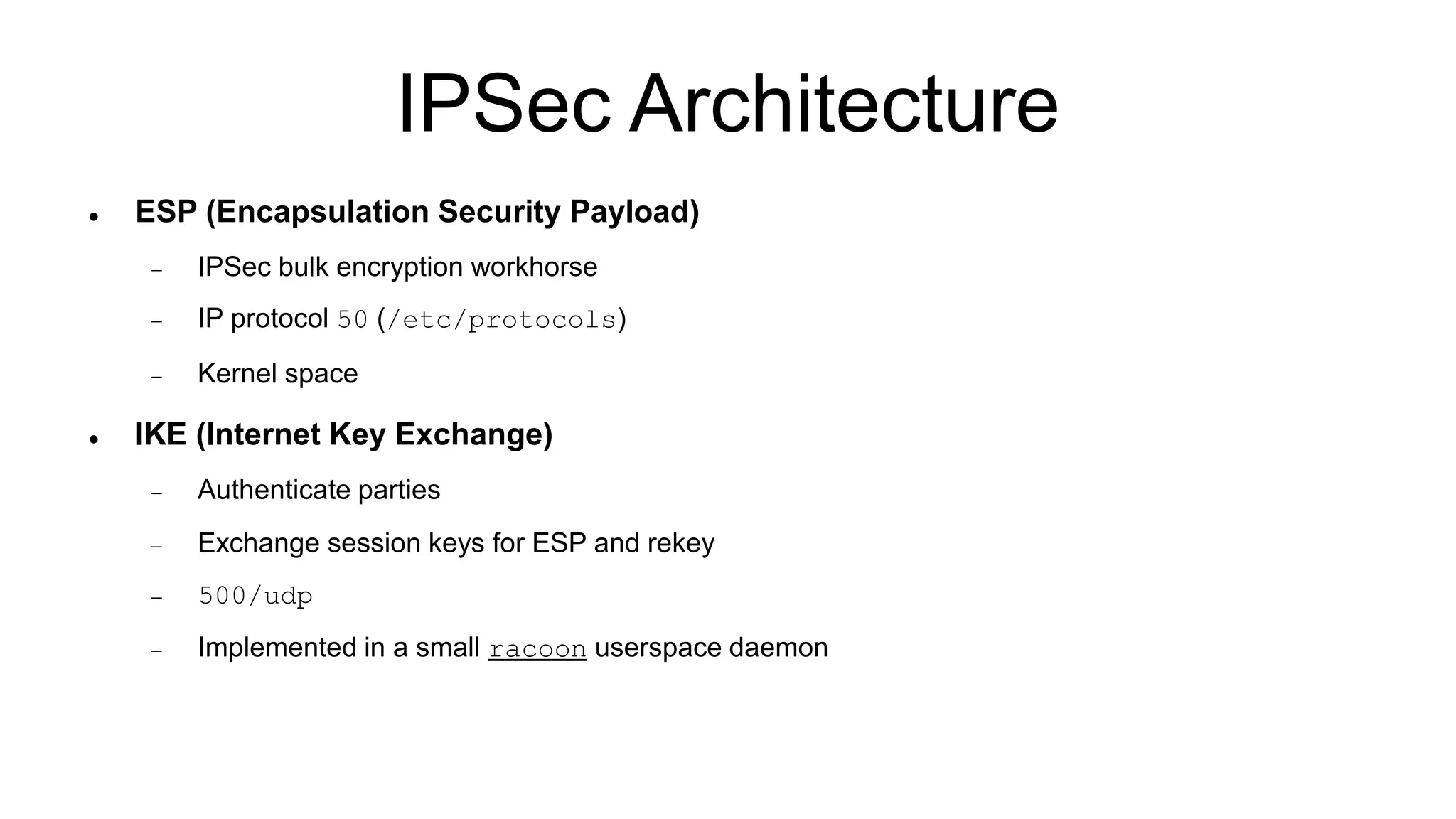
IPSec Architecture
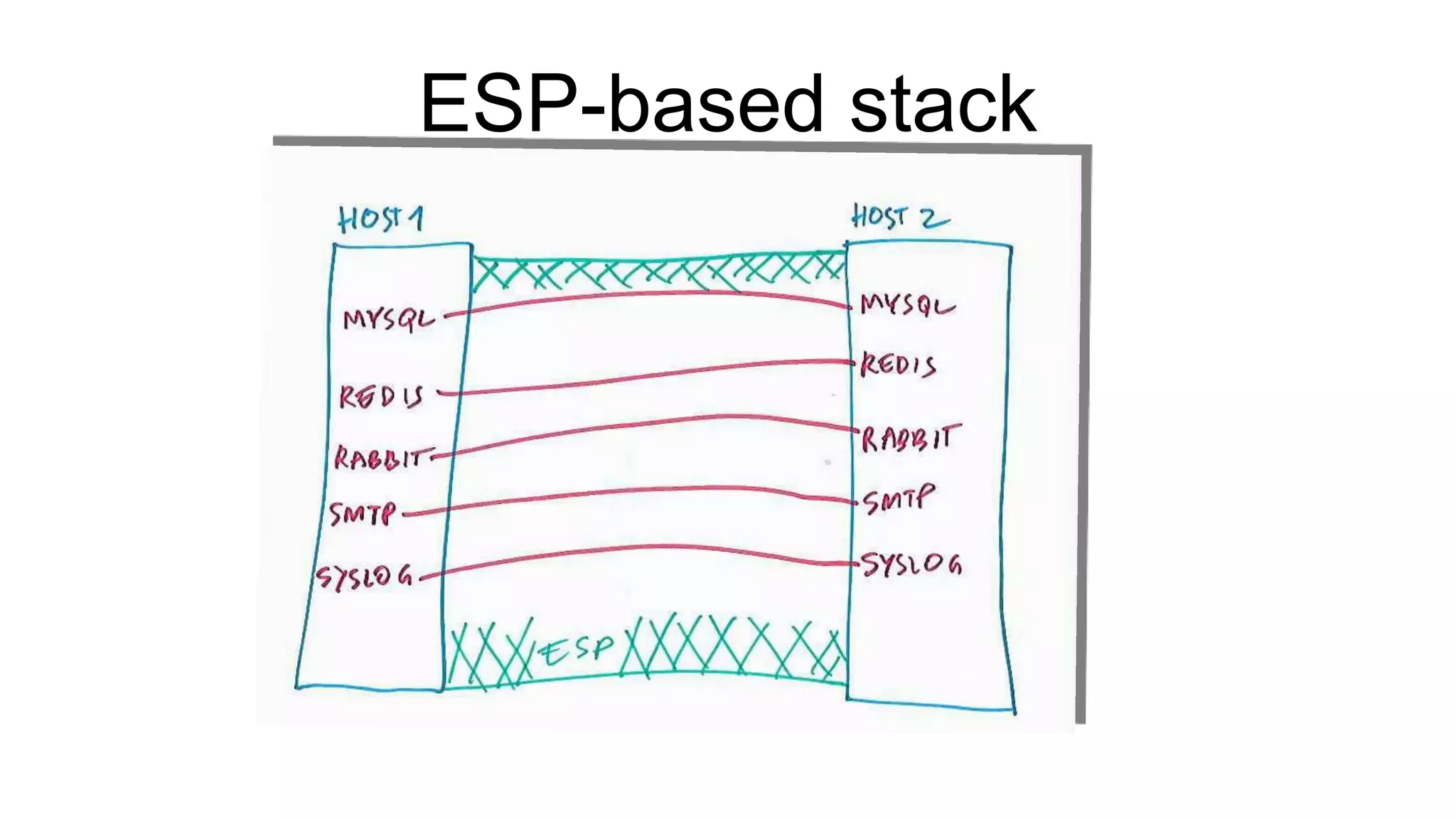
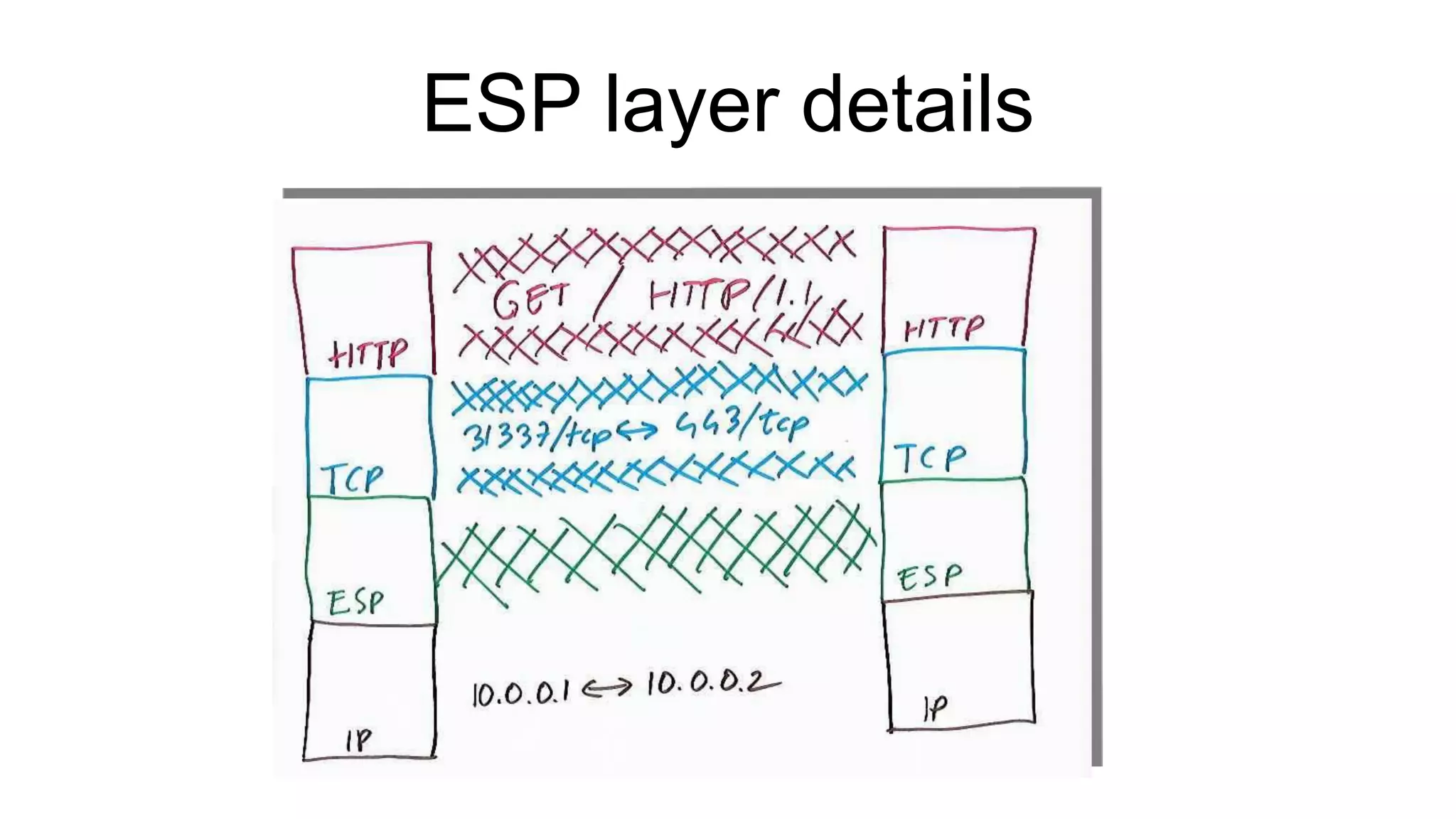
 ESP (Encapsulation Security Payload)
 IPSec bulk encryption workhorse
 IP protocol 50 (/etc/protocols)
 Kernel space
 IKE (Internet Key Exchange)
 Authenticate parties
 Exchange session keys for ESP and rekey
 500/udp
 Implemented in a small racoon userspace daemon
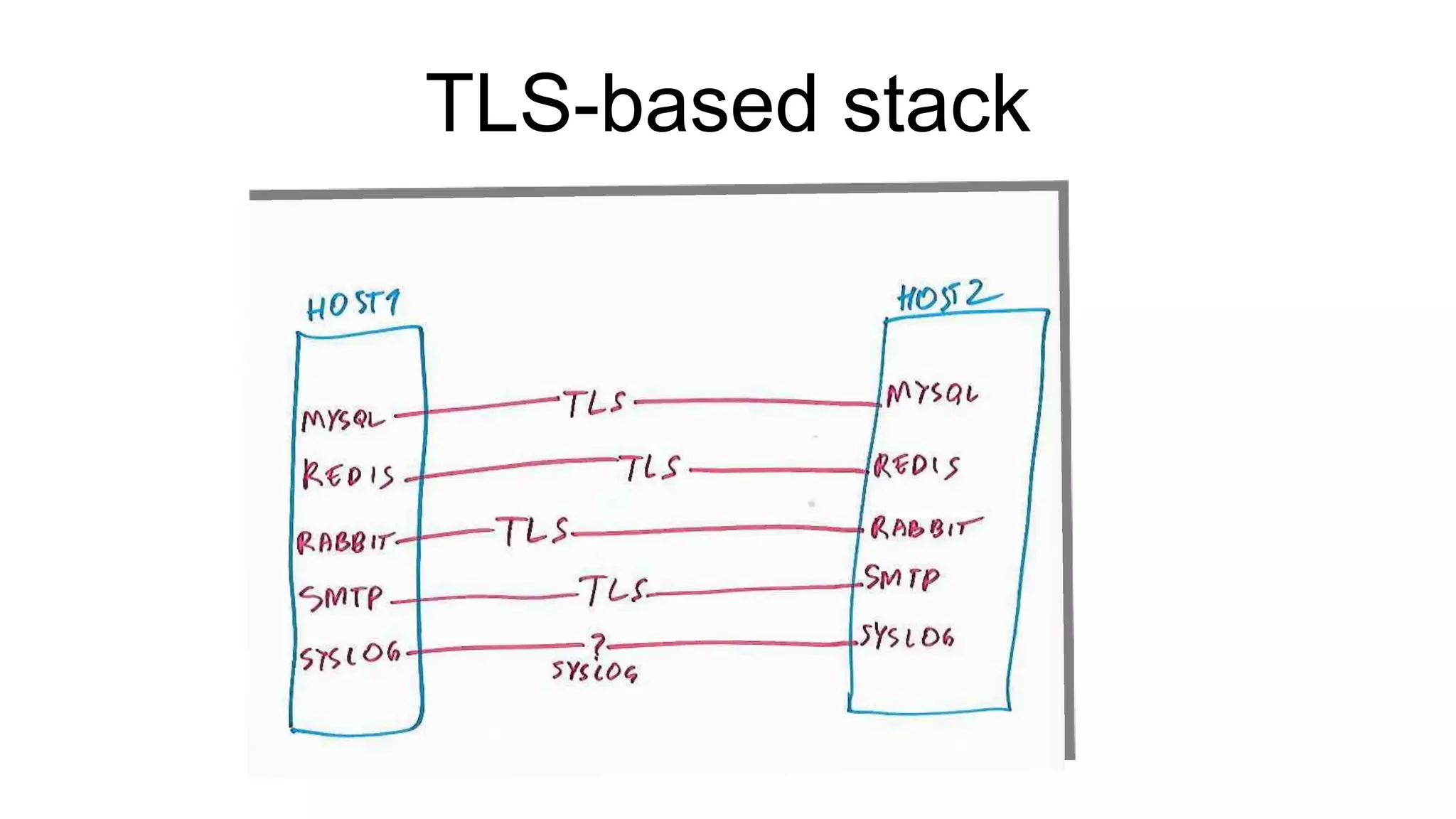
TLS-based stack
ESP-based stack
ESP layer details
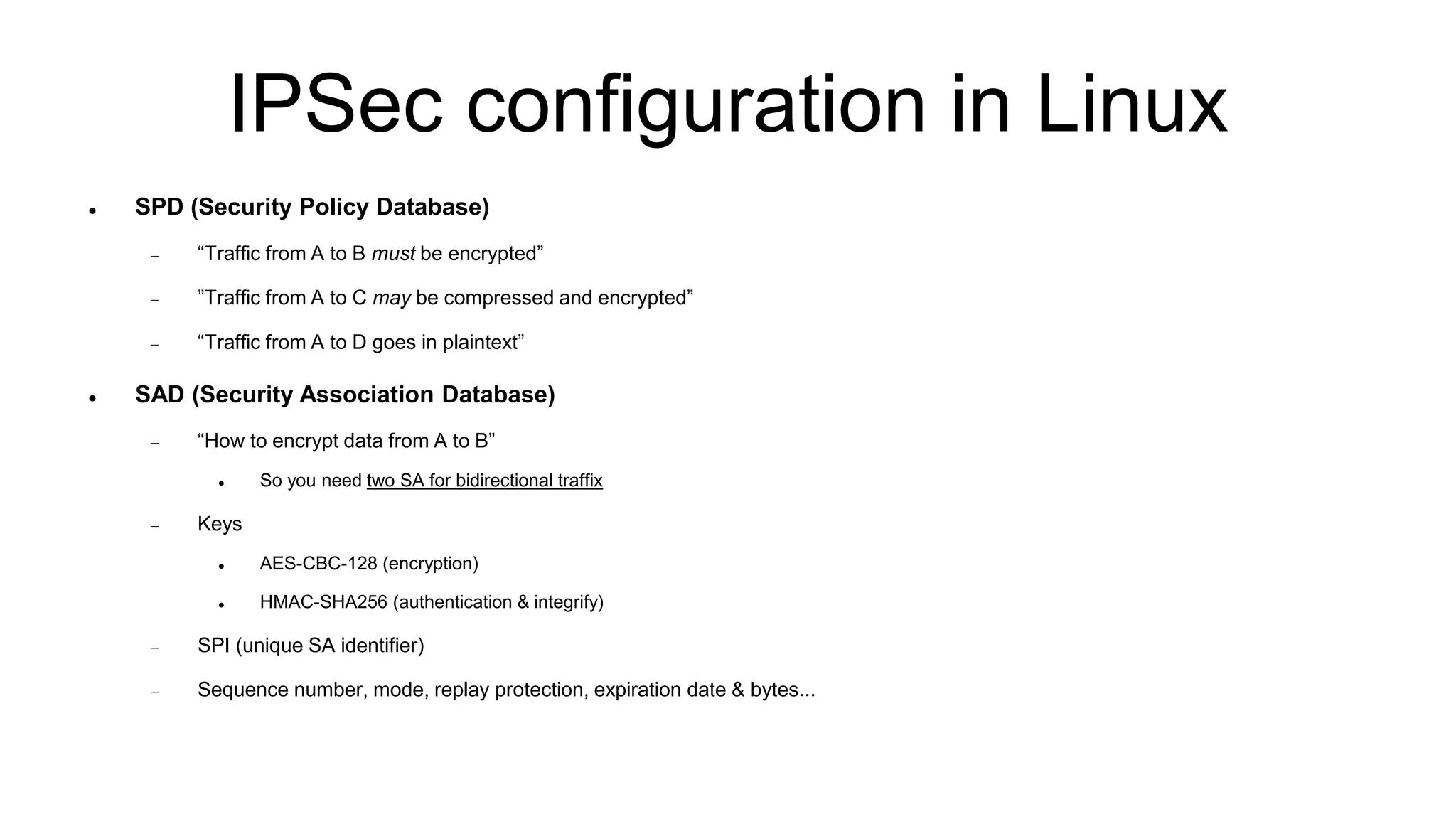
IPSec configuration in Linux
 SPD (Security Policy Database)
 “Traffic from A to B must be encrypted”
 ”Traffic from A to C may be compressed and encrypted”
 “Traffic from A to D goes in plaintext”
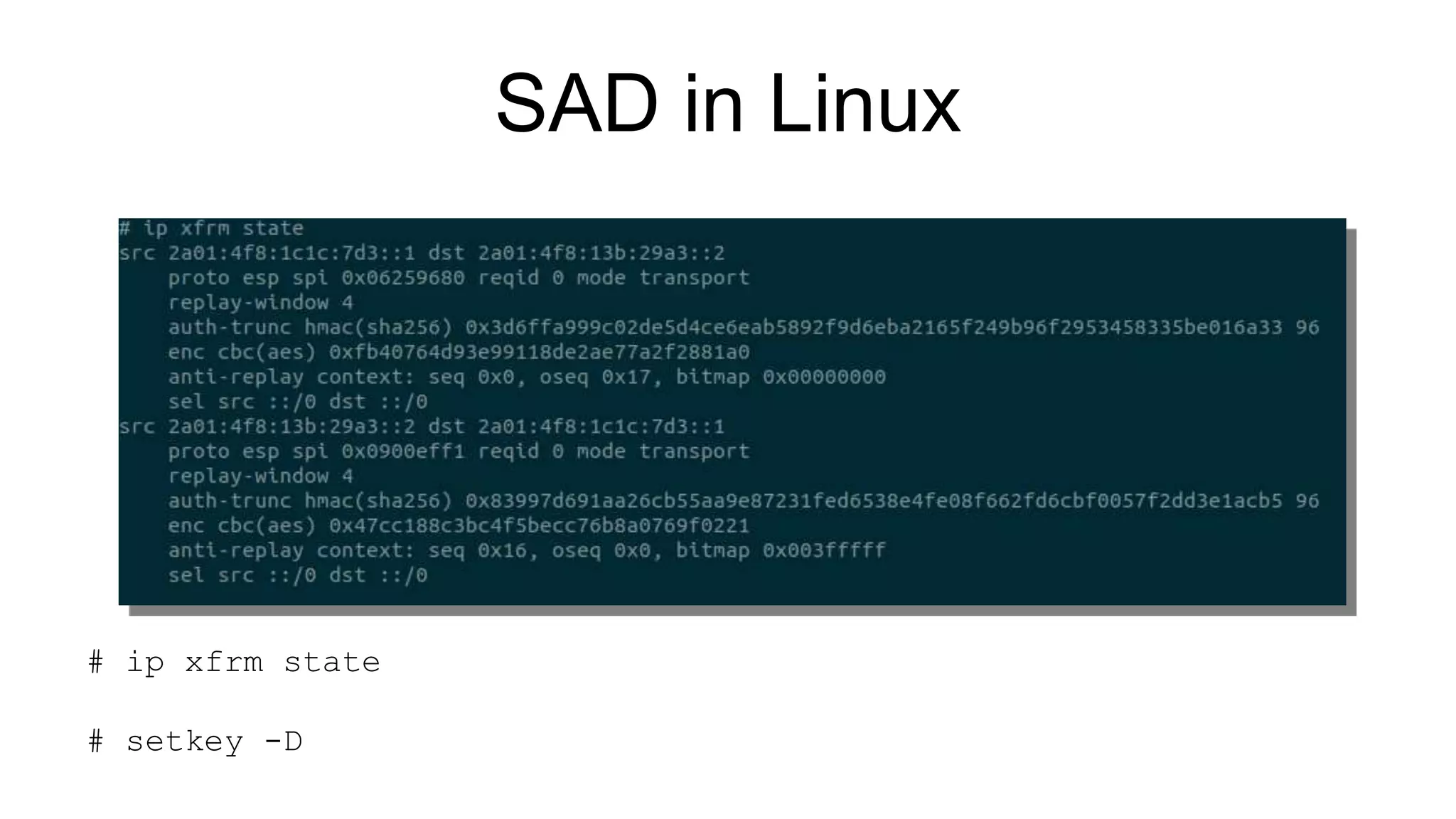
 SAD (Security Association Database)
 “How to encrypt data from A to B”
 So you need two SA for bidirectional traffix
 Keys
 AES-CBC-128 (encryption)
 HMAC-SHA256 (authentication & integrify)
 SPI (unique SA identifier)
 Sequence number, mode, replay protection, expiration date & bytes...
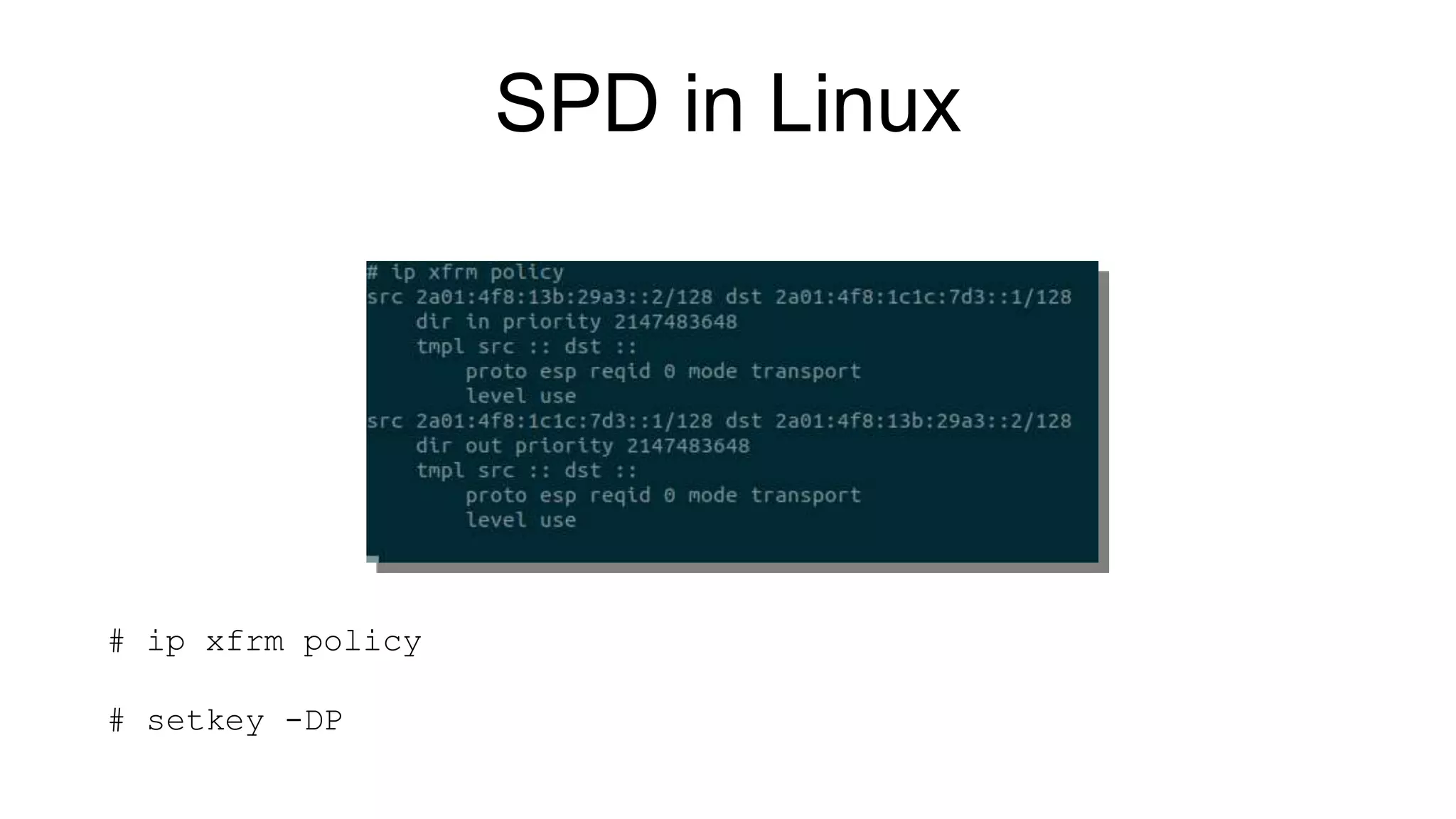
SPD in Linux
# ip xfrm policy
# setkey -DP
SAD in Linux
# ip xfrm state
# setkey -D
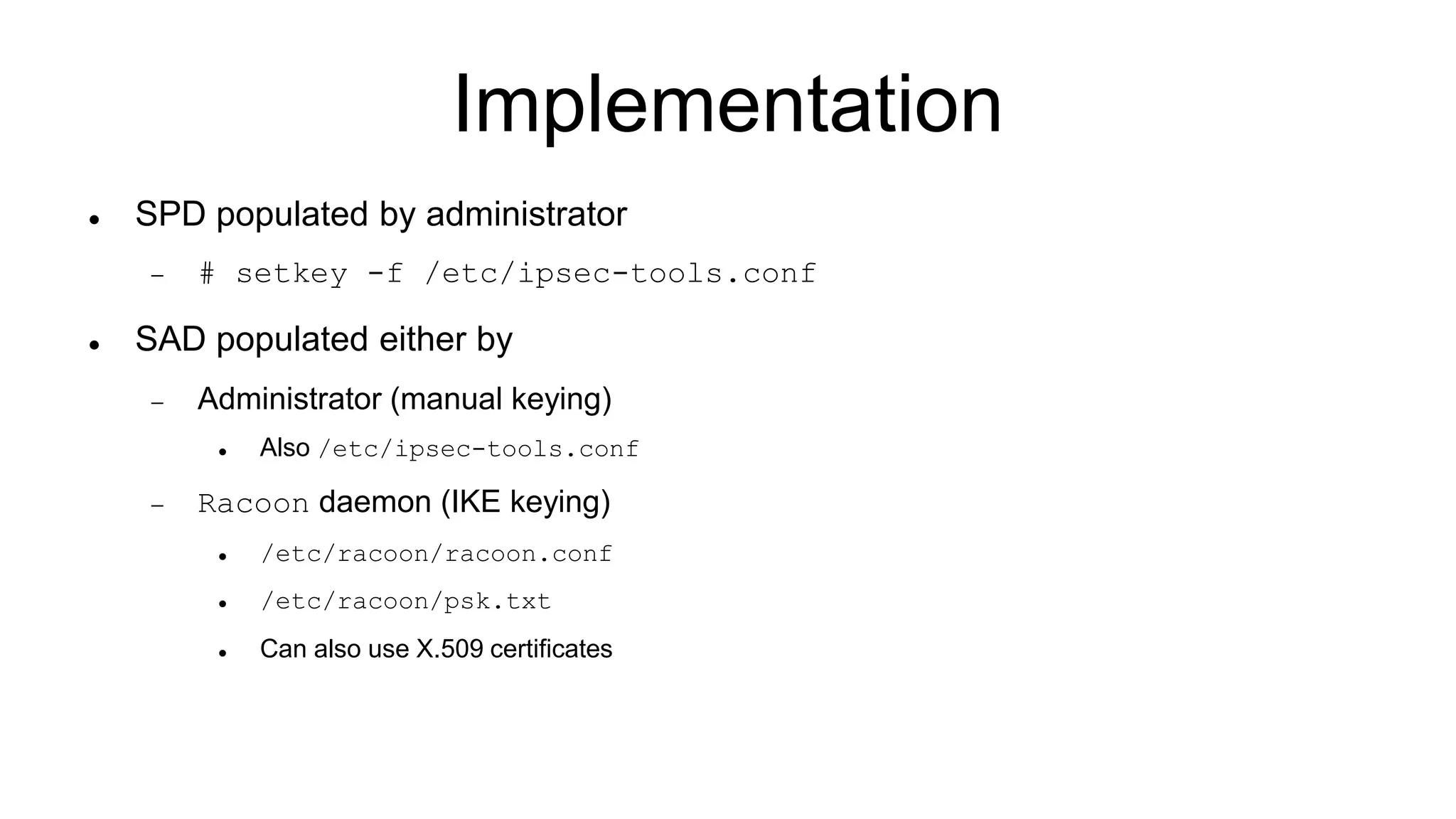
Implementation
 SPD populated by administrator
 # setkey -f /etc/ipsec-tools.conf
 SAD populated either by
 Administrator (manual keying)
 Also /etc/ipsec-tools.conf
 Racoon daemon (IKE keying)
 /etc/racoon/racoon.conf
 /etc/racoon/psk.txt
 Can also use X.509 certificates
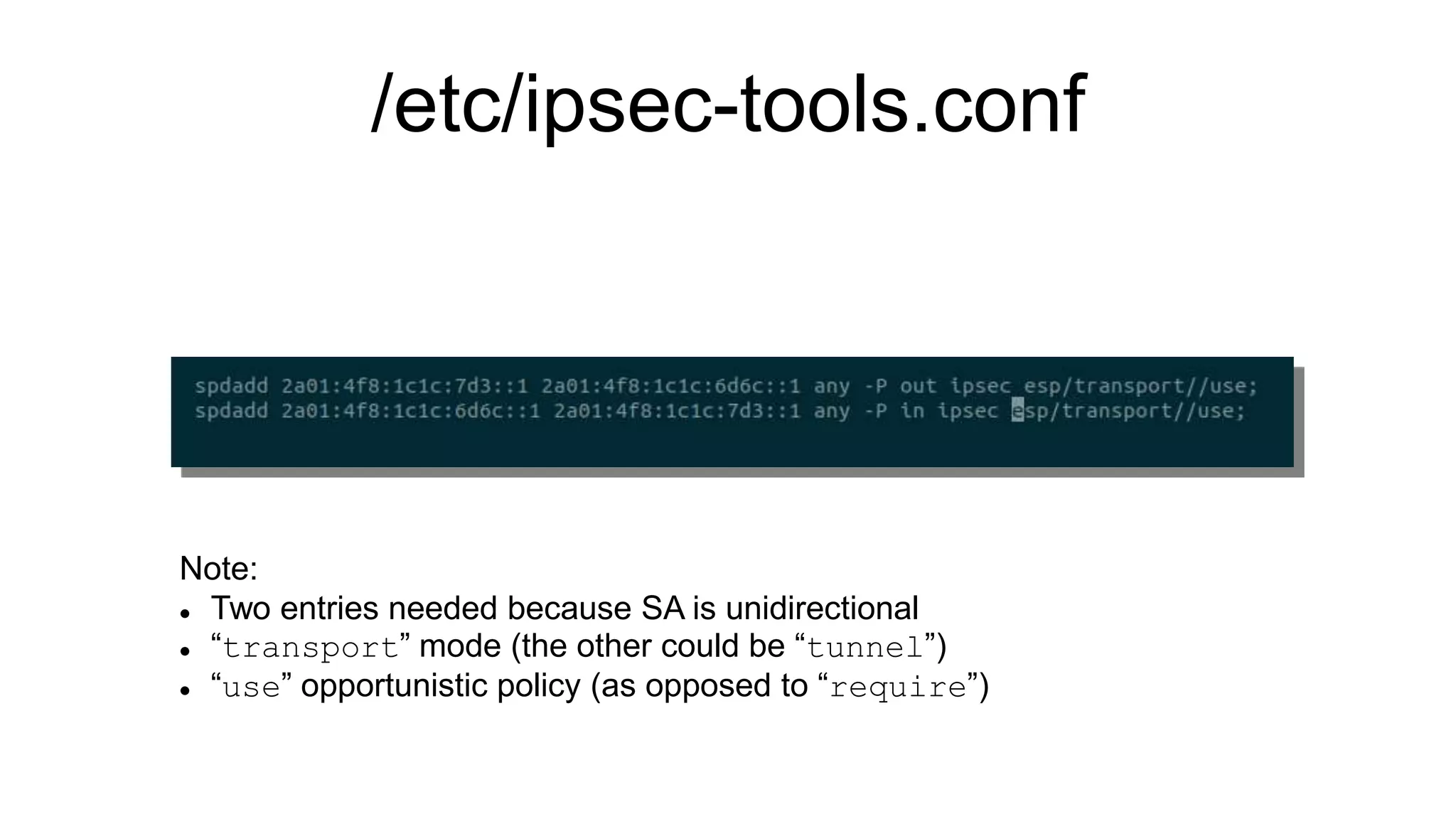
/etc/ipsec-tools.conf
Note:
 Two entries needed because SA is unidirectional
 “transport” mode (the other could be “tunnel”)
 “use” opportunistic policy (as opposed to “require”)
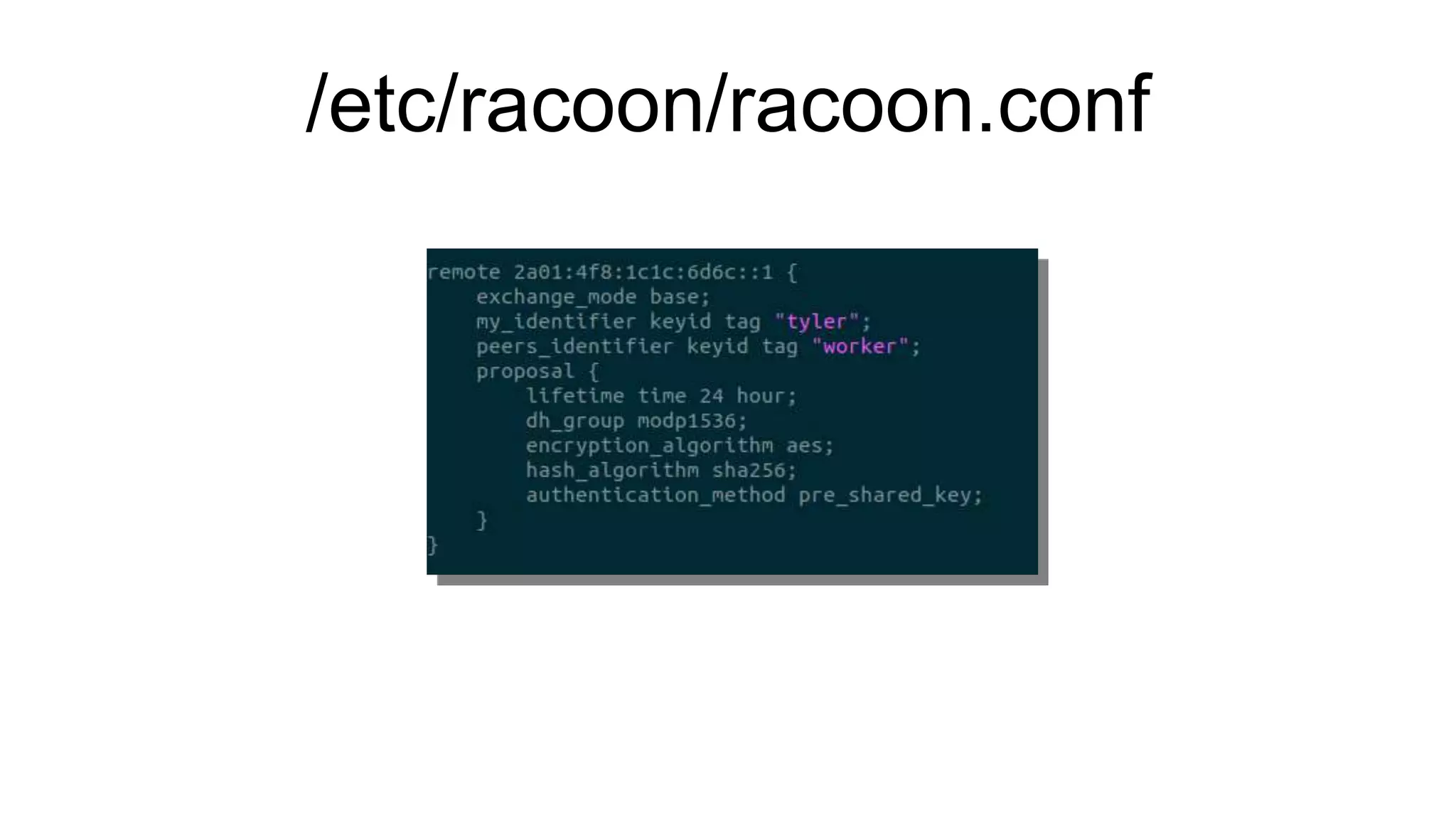
/etc/racoon/racoon.conf
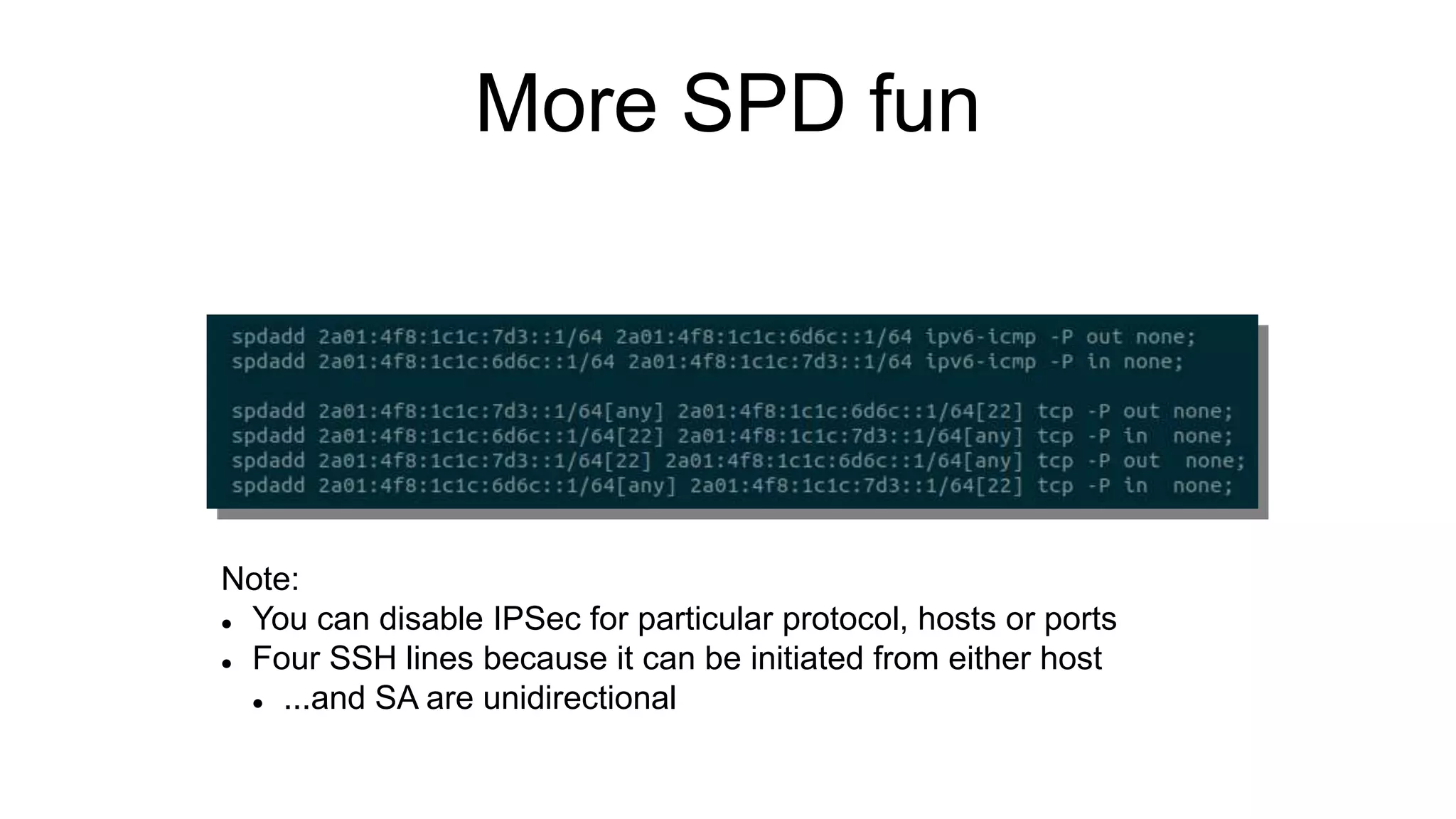
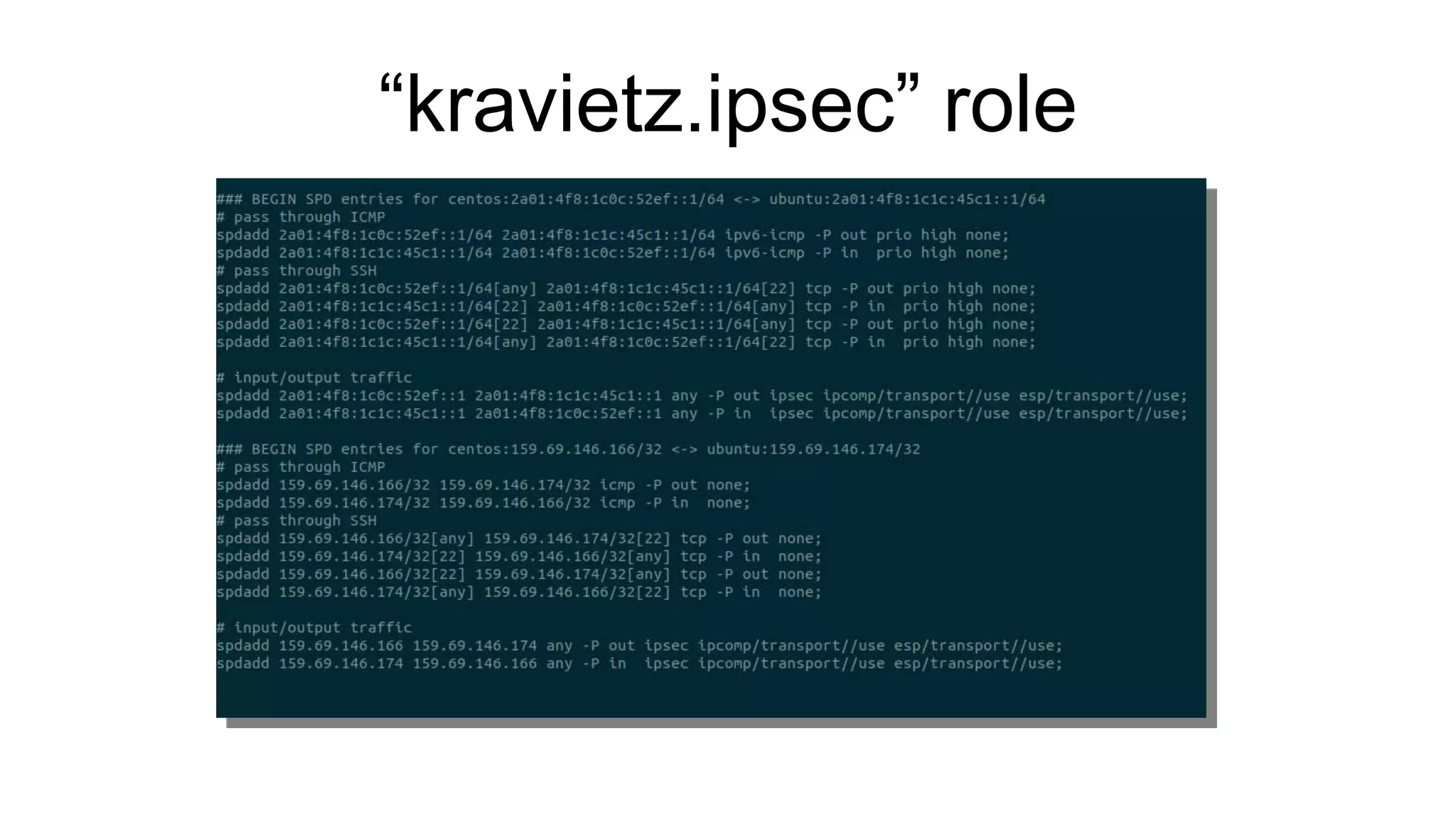
More SPD fun
Note:
 You can disable IPSec for particular protocol, hosts or ports
 Four SSH lines because it can be initiated from either host
 ...and SA are unidirectional
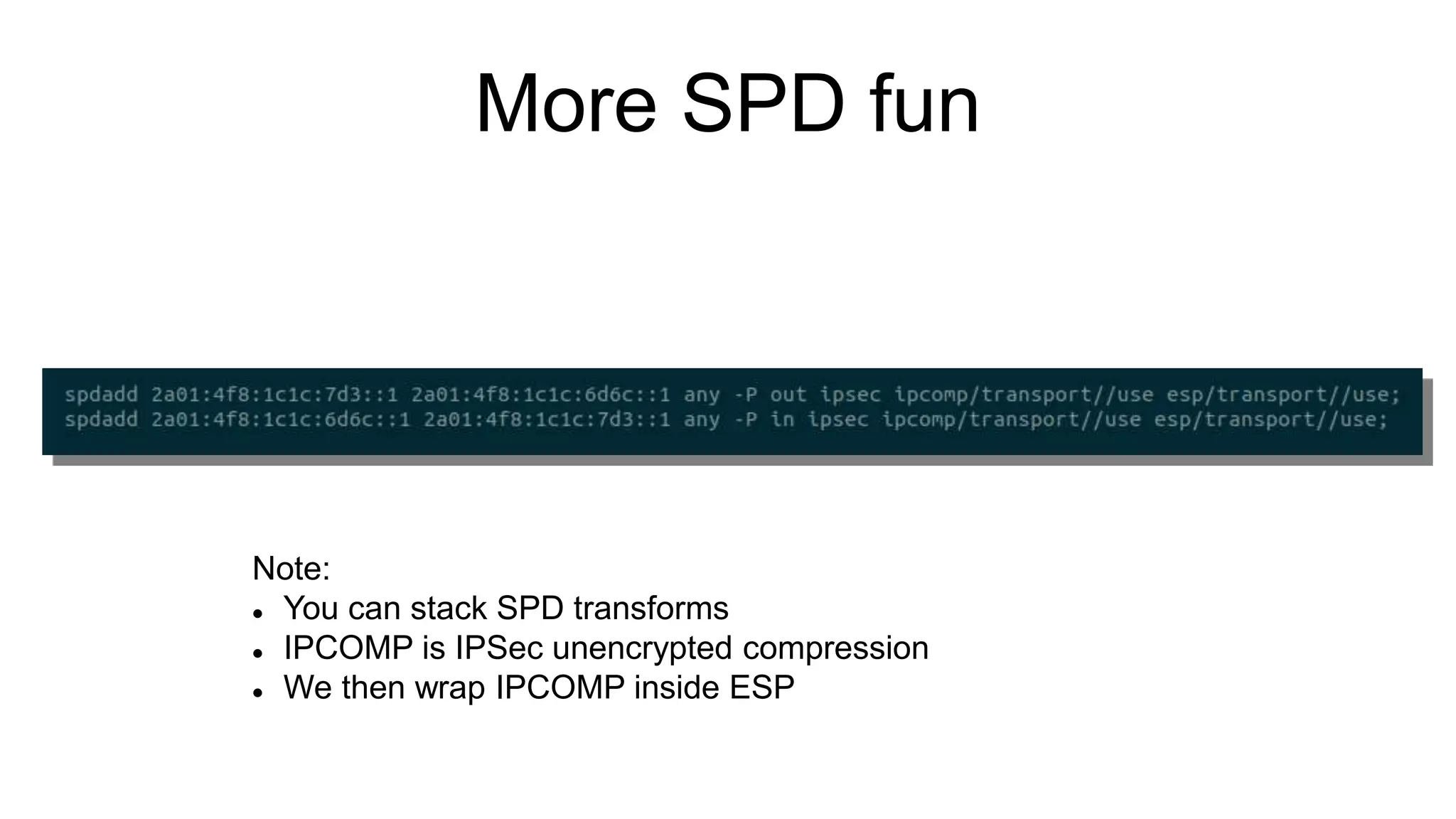
More SPD fun
Note:
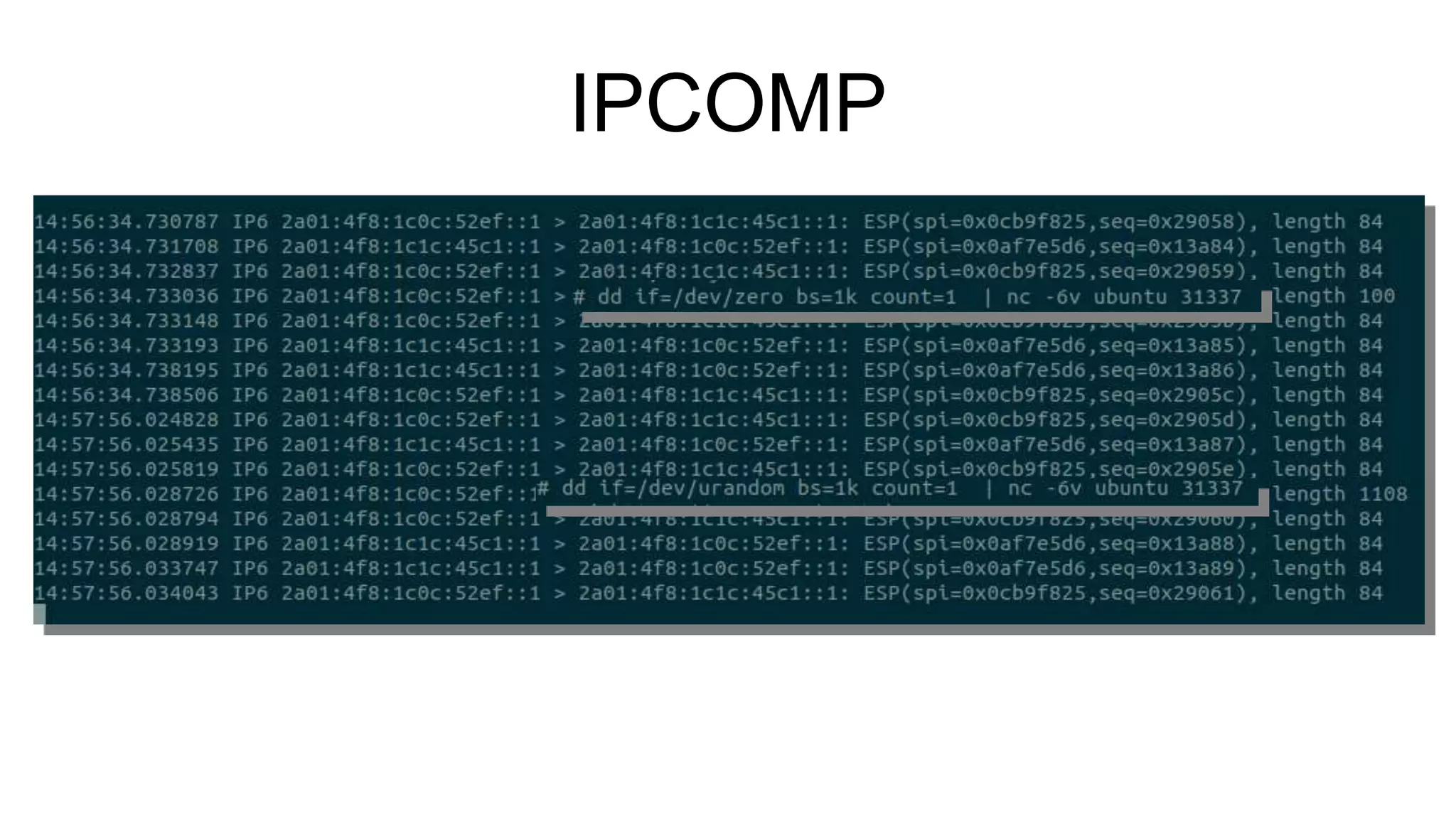
 You can stack SPD transforms
 IPCOMP is IPSec unencrypted compression
 We then wrap IPCOMP inside ESP
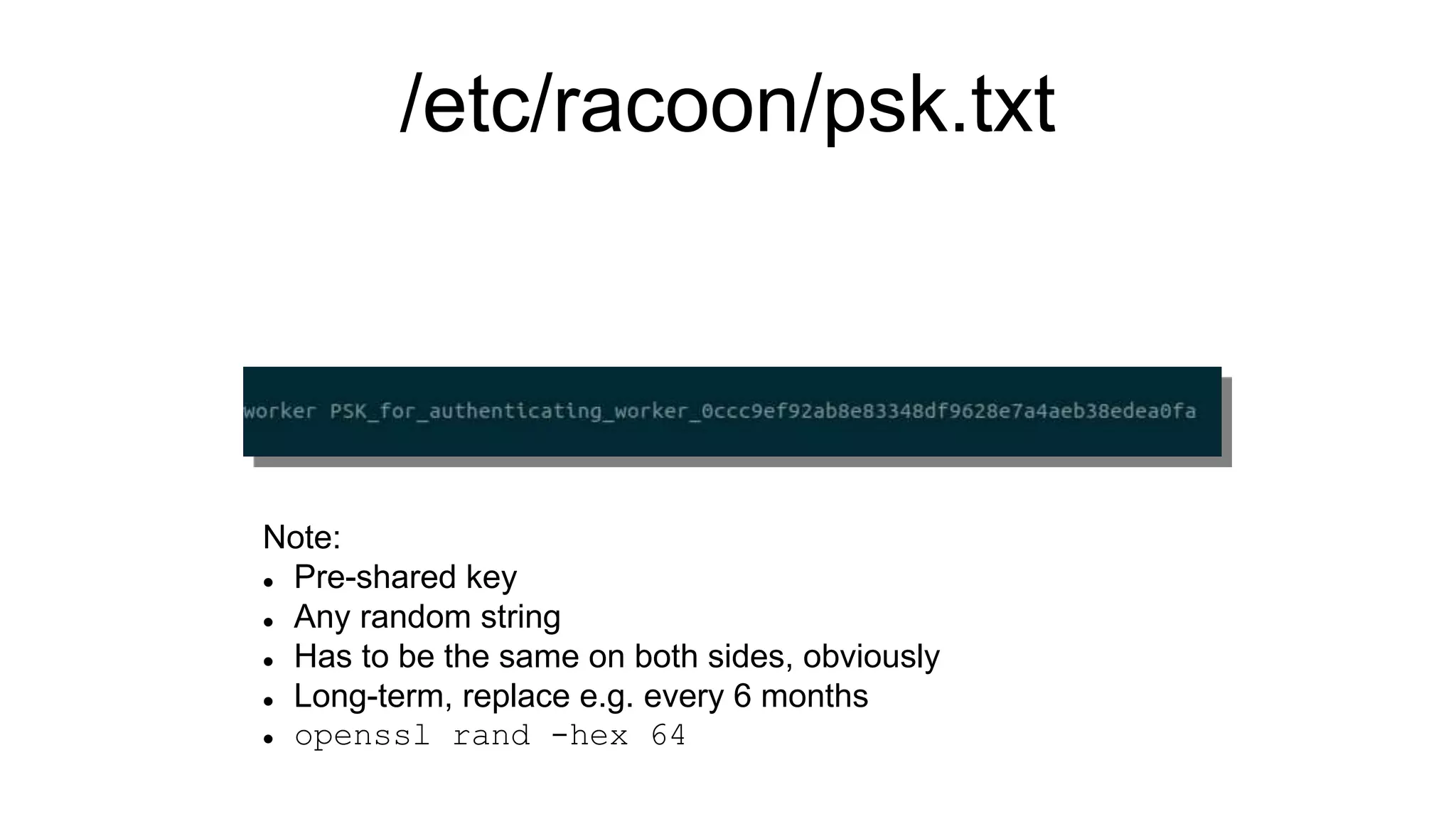
/etc/racoon/psk.txt
Note:
 Pre-shared key
 Any random string
 Has to be the same on both sides, obviously
 Long-term, replace e.g. every 6 months
 openssl rand -hex 64
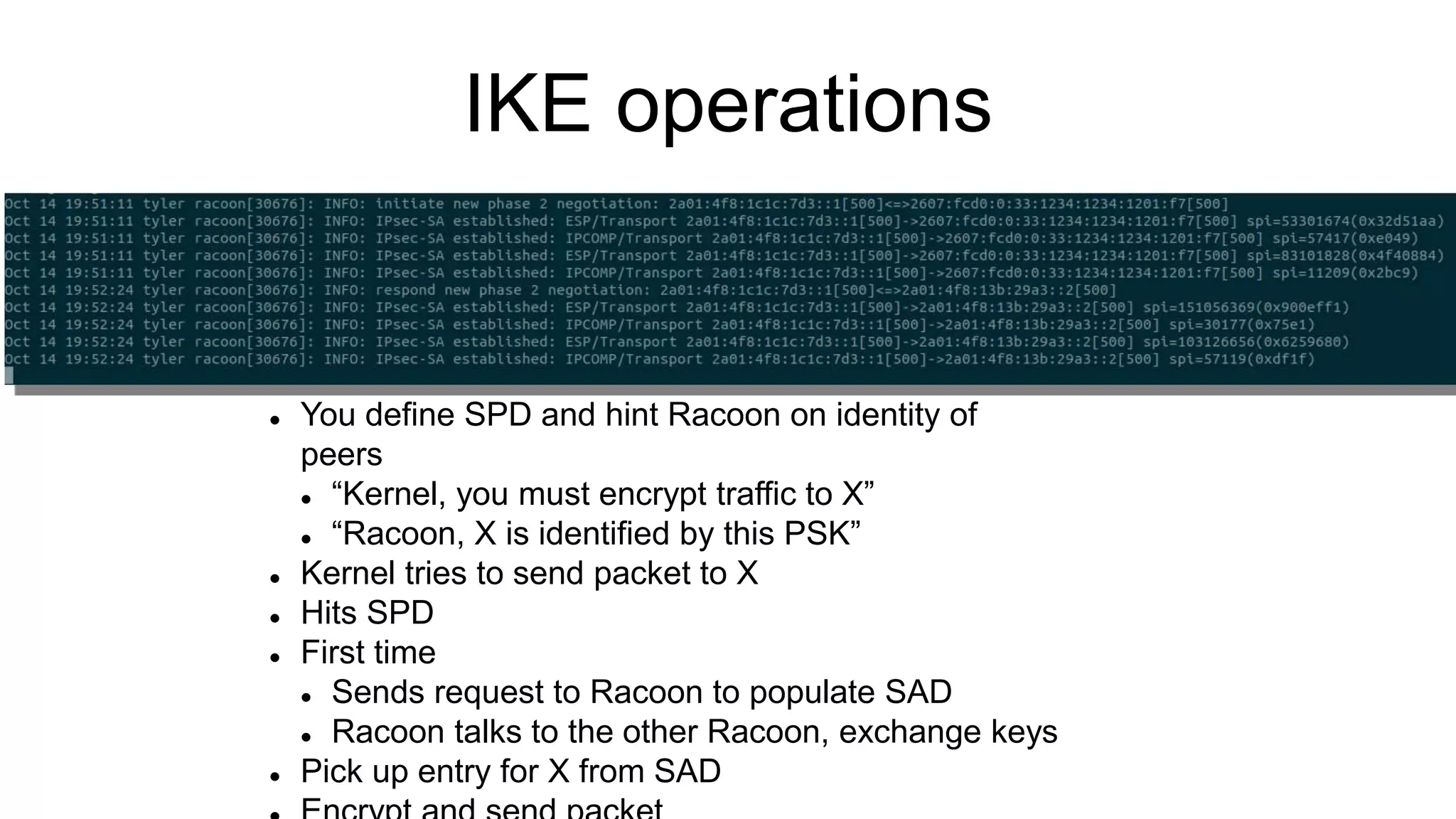
IKE operations
 You define SPD and hint Racoon on identity of
peers
 “Kernel, you must encrypt traffic to X”
 “Racoon, X is identified by this PSK”
 Kernel tries to send packet to X
 Hits SPD
 First time
 Sends request to Racoon to populate SAD
 Racoon talks to the other Racoon, exchange keys
 Pick up entry for X from SAD
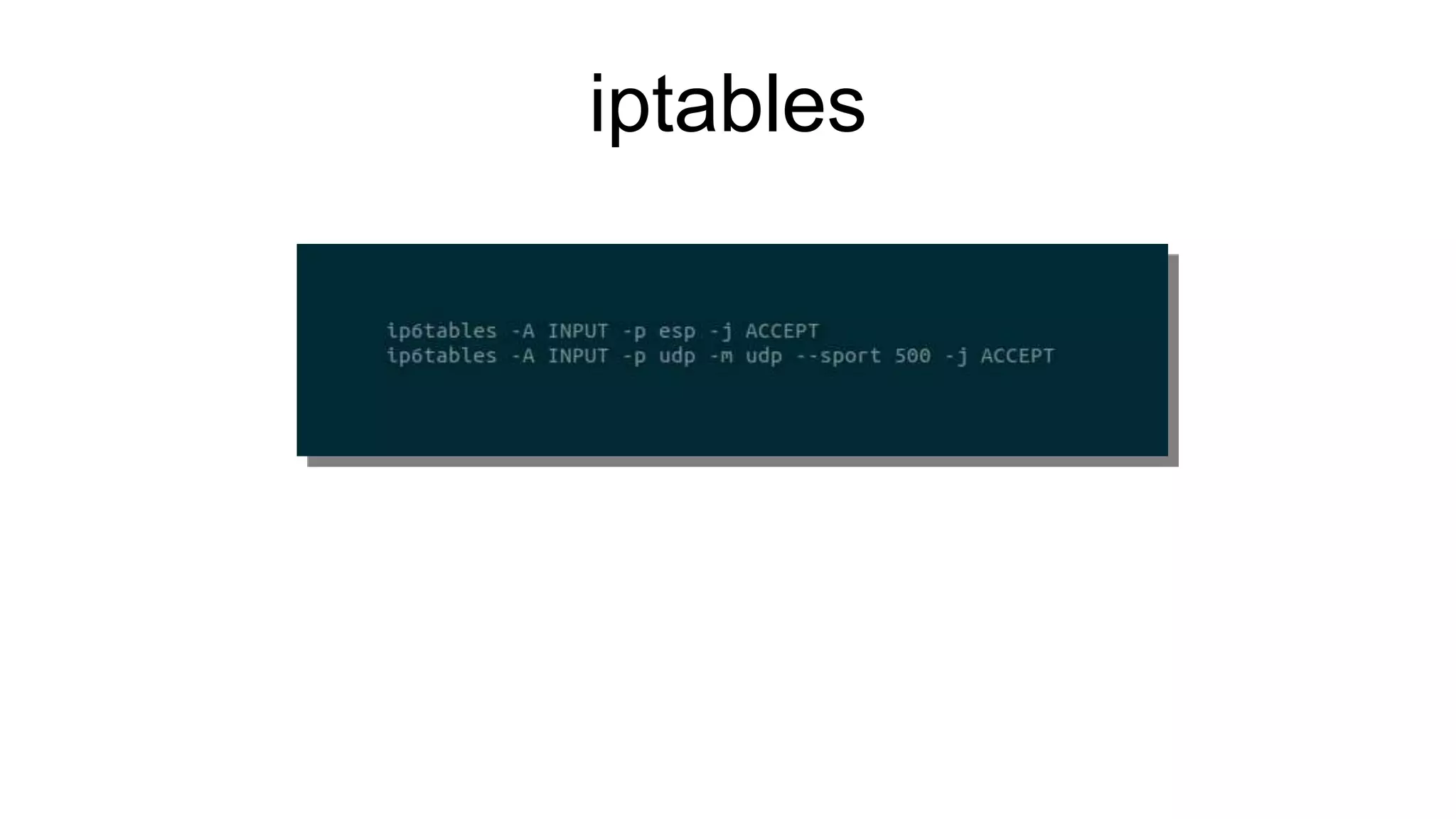
iptables
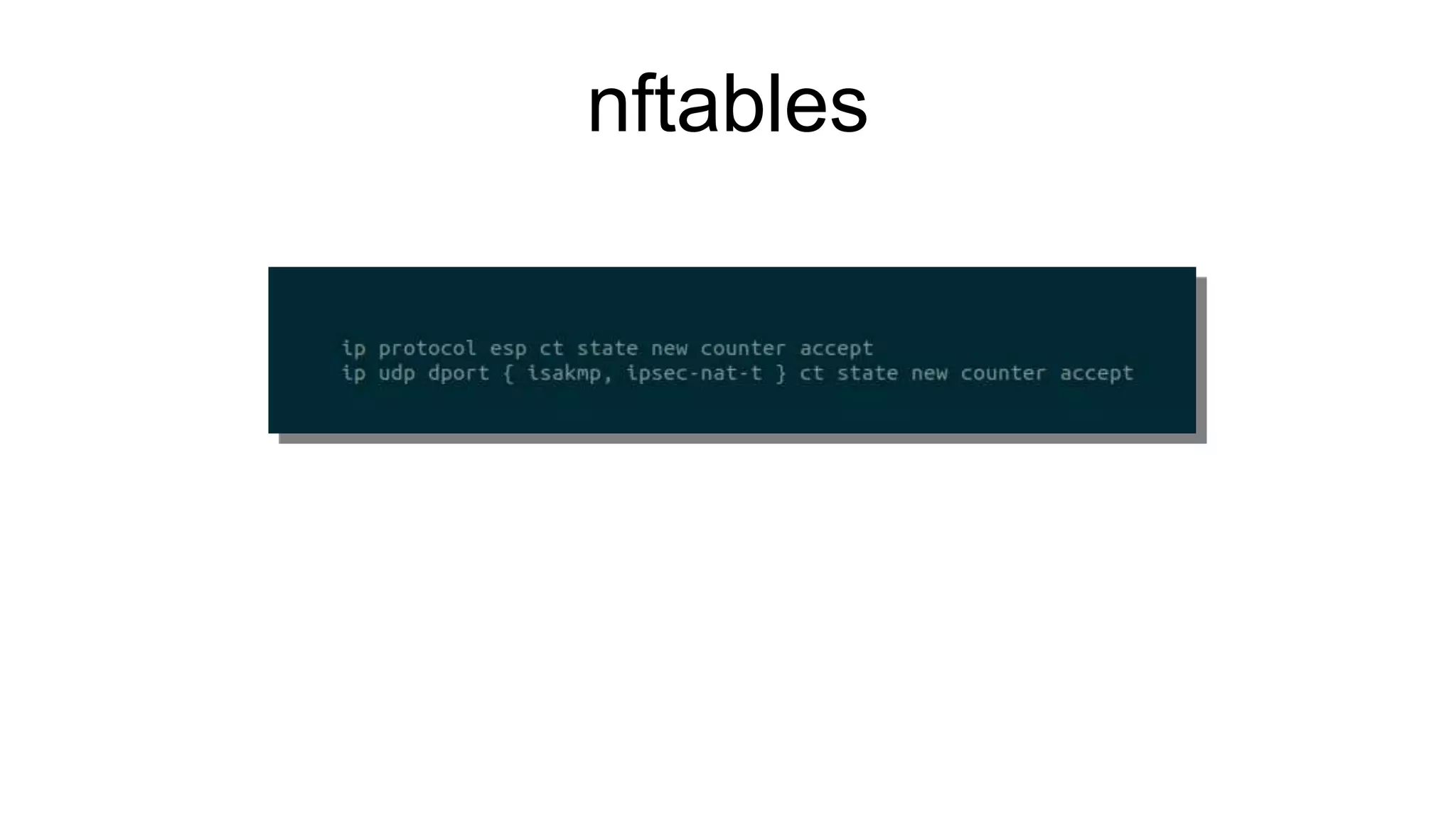
nftables
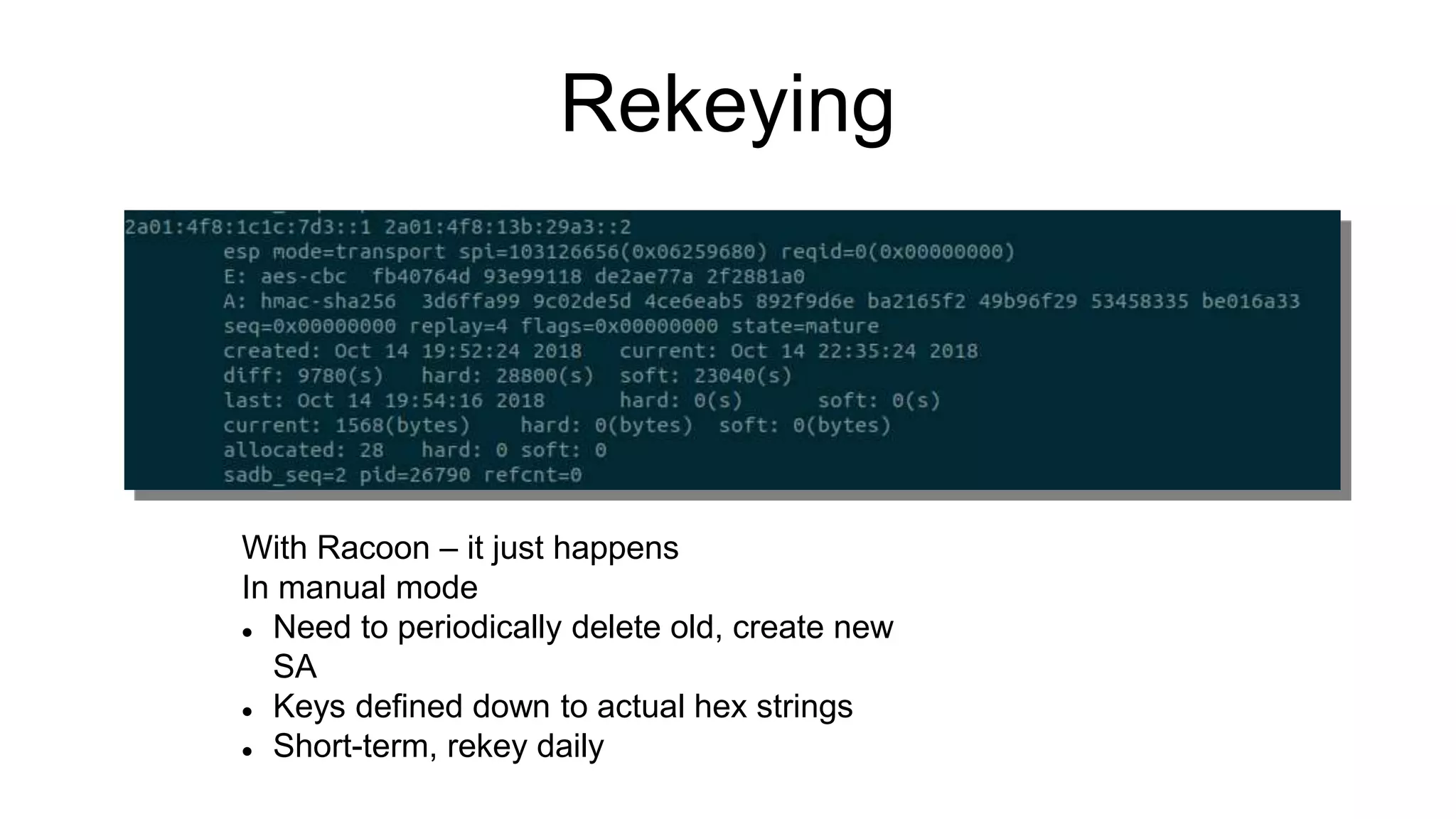
Rekeying
With Racoon – it just happens
In manual mode
 Need to periodically delete old, create new
SA
 Keys defined down to actual hex strings
 Short-term, rekey daily
IPCOMP
Troubleshooting
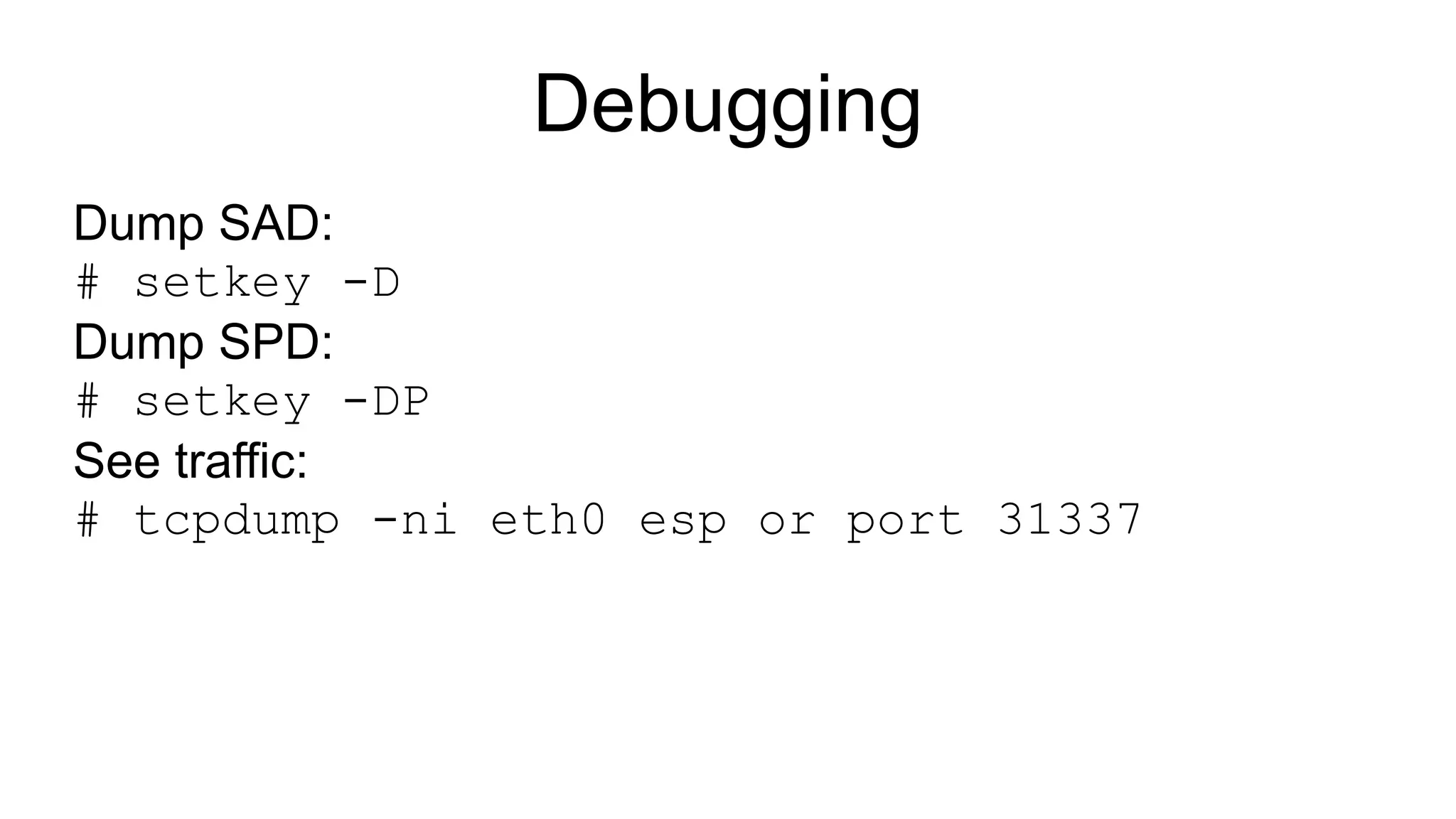
Debugging
Dump SAD:
# setkey -D
Dump SPD:
# setkey -DP
See traffic:
# tcpdump -ni eth0 esp or port 31337
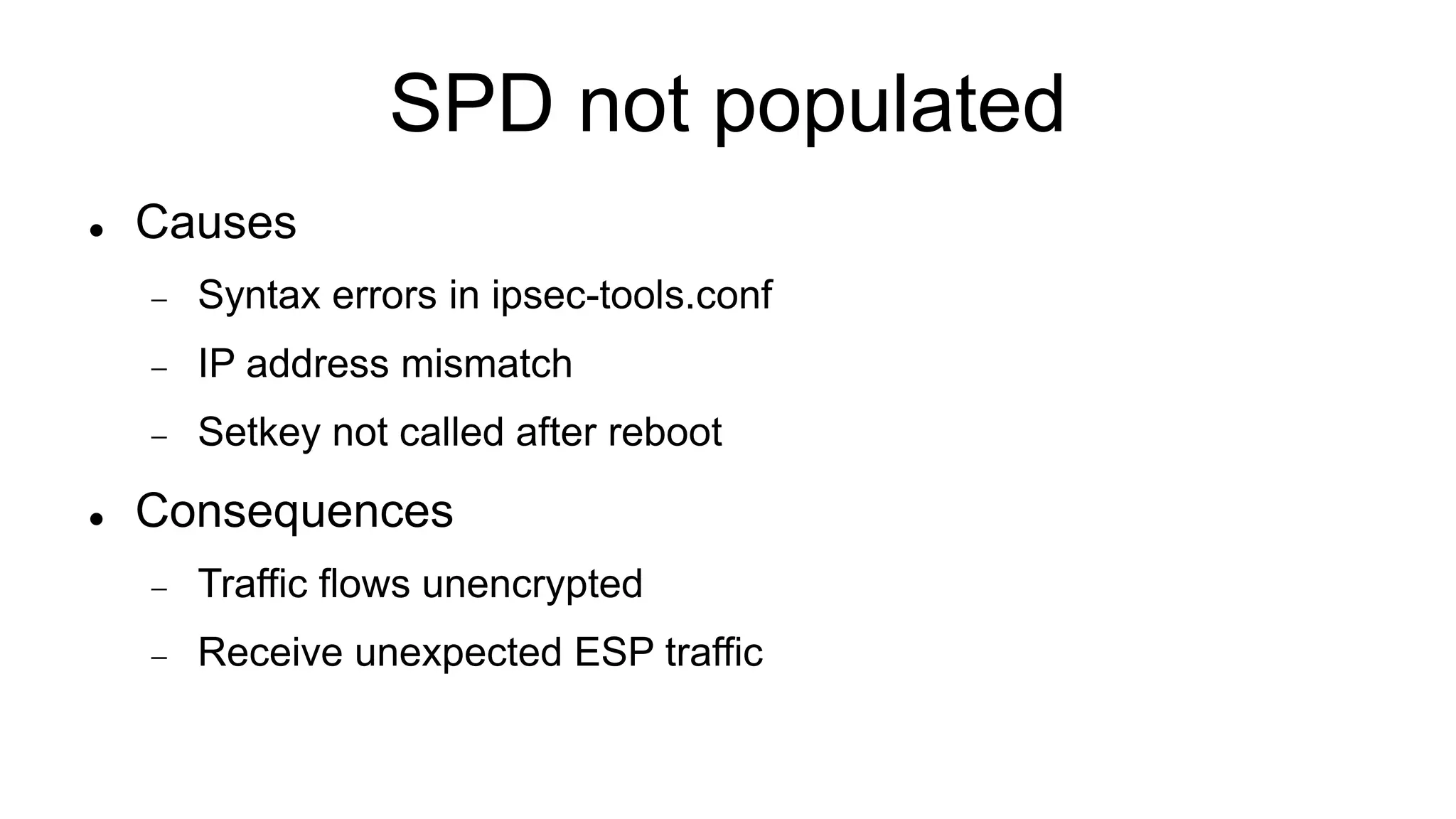
SPD not populated
 Causes
 Syntax errors in ipsec-tools.conf
 IP address mismatch
 Setkey not called after reboot
 Consequences
 Traffic flows unencrypted
 Receive unexpected ESP traffic
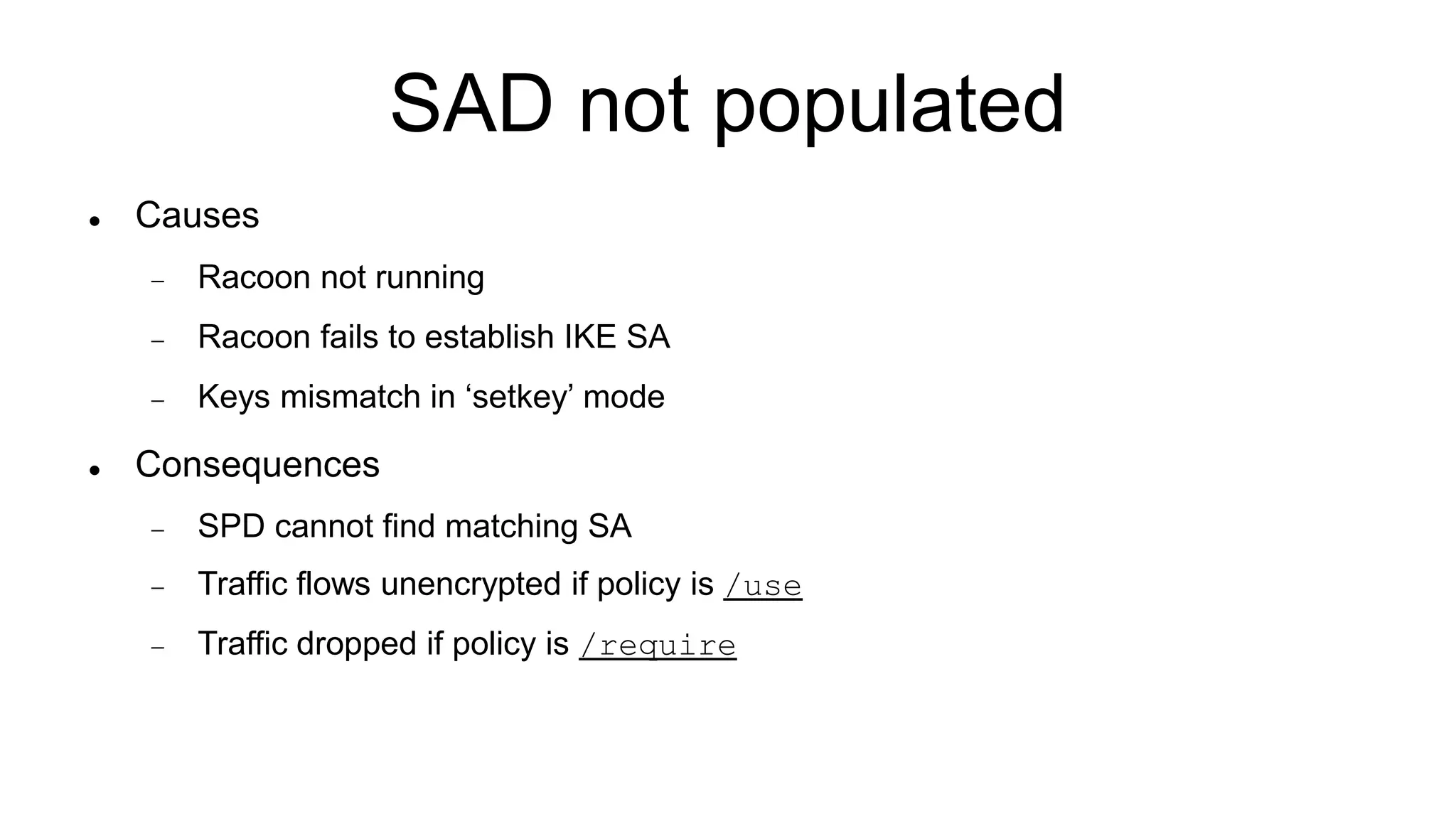
SAD not populated
 Causes
 Racoon not running
 Racoon fails to establish IKE SA
 Keys mismatch in ‘setkey’ mode
 Consequences
 SPD cannot find matching SA
 Traffic flows unencrypted if policy is /use
 Traffic dropped if policy is /require
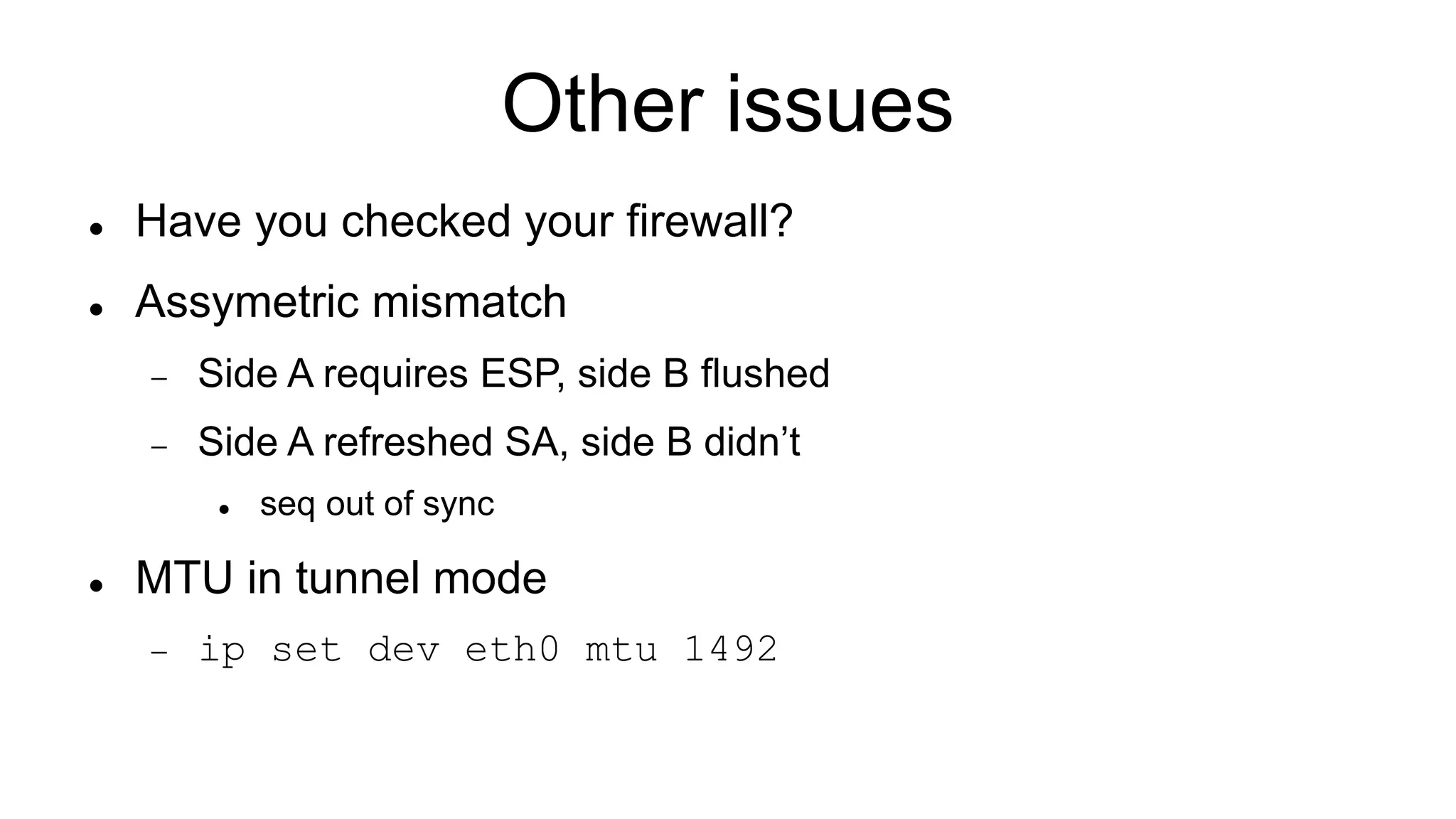
Other issues
 Have you checked your firewall?
 Assymetric mismatch
 Side A requires ESP, side B flushed
 Side A refreshed SA, side B didn’t
 seq out of sync
 MTU in tunnel mode
 ip set dev eth0 mtu 1492
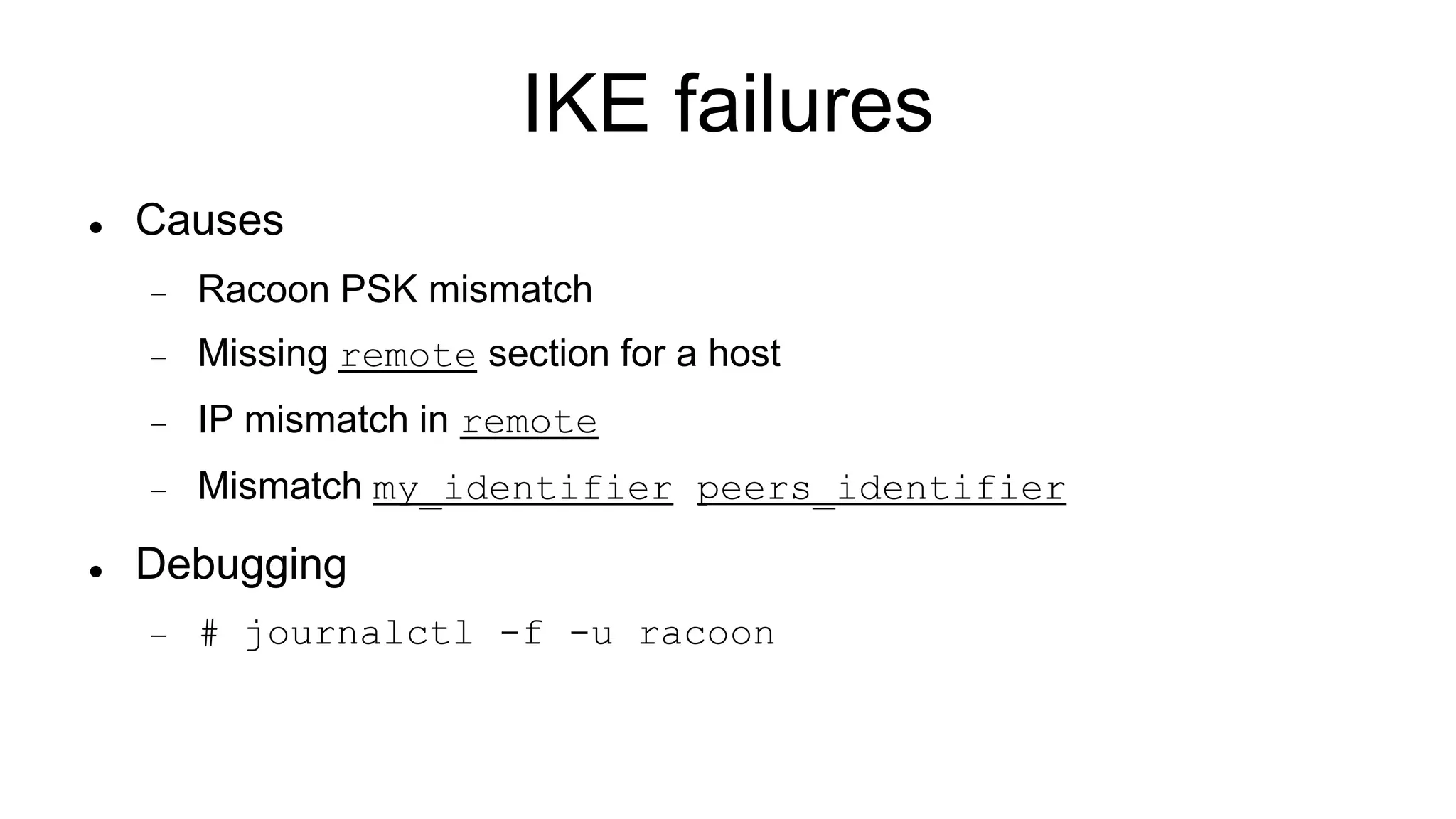
IKE failures
 Causes
 Racoon PSK mismatch
 Missing remote section for a host
 IP mismatch in remote
 Mismatch my_identifier peers_identifier
 Debugging
 # journalctl -f -u racoon
Ansible
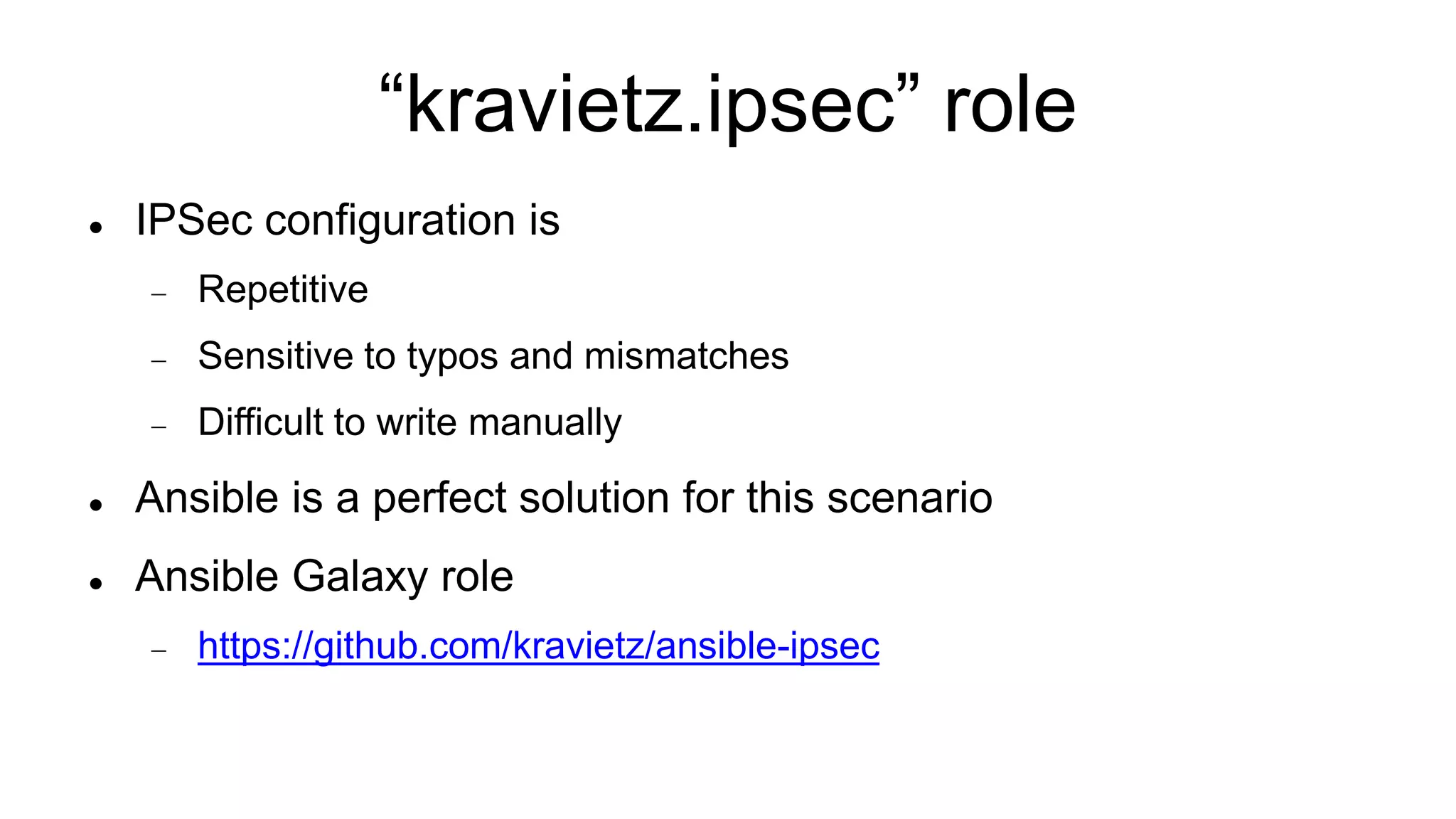
“kravietz.ipsec” role
 IPSec configuration is
 Repetitive
 Sensitive to typos and mismatches
 Difficult to write manually
 Ansible is a perfect solution for this scenario
 Ansible Galaxy role
 https://github.com/kravietz/ansible-ipsec
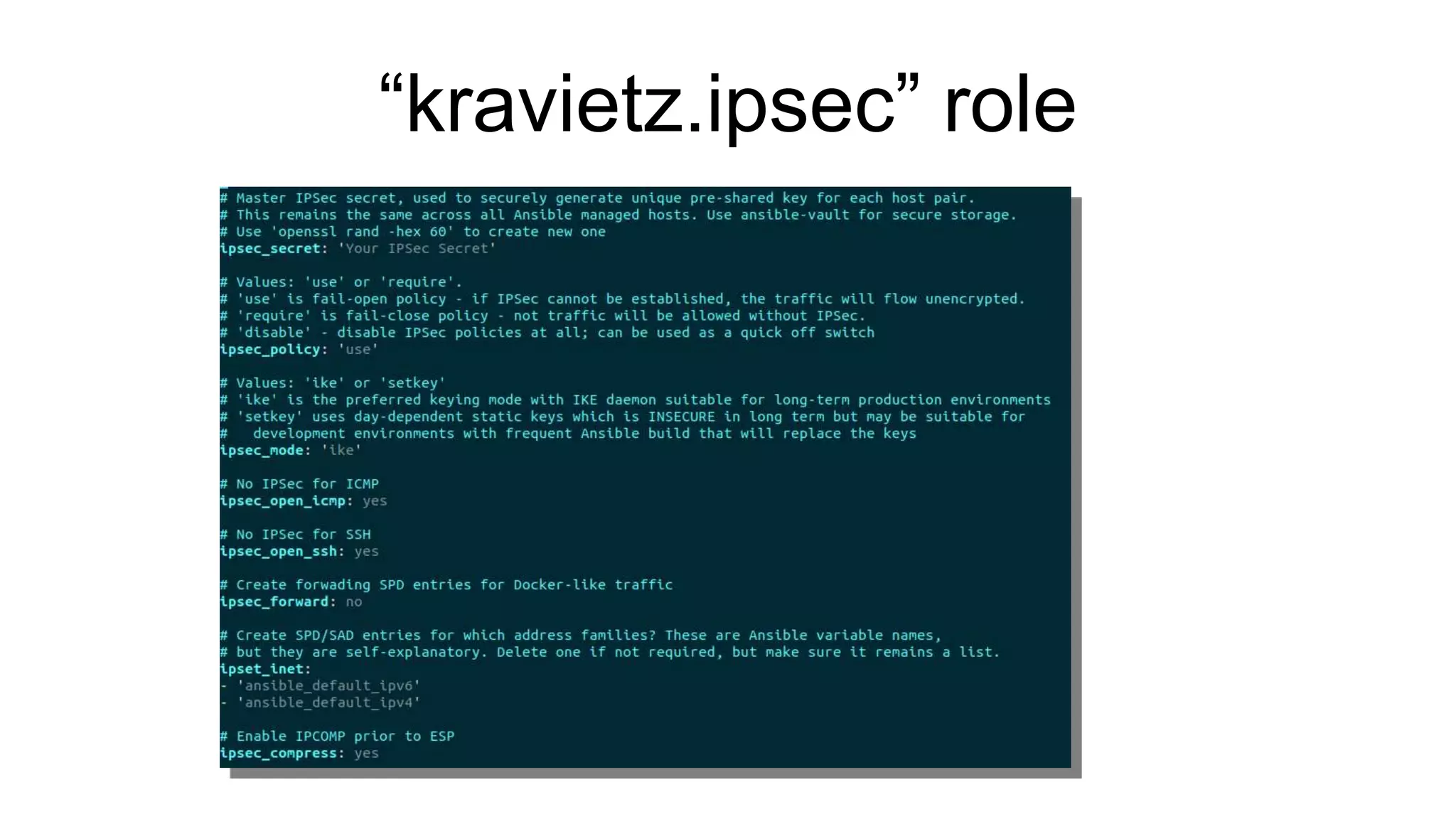
“kravietz.ipsec” role
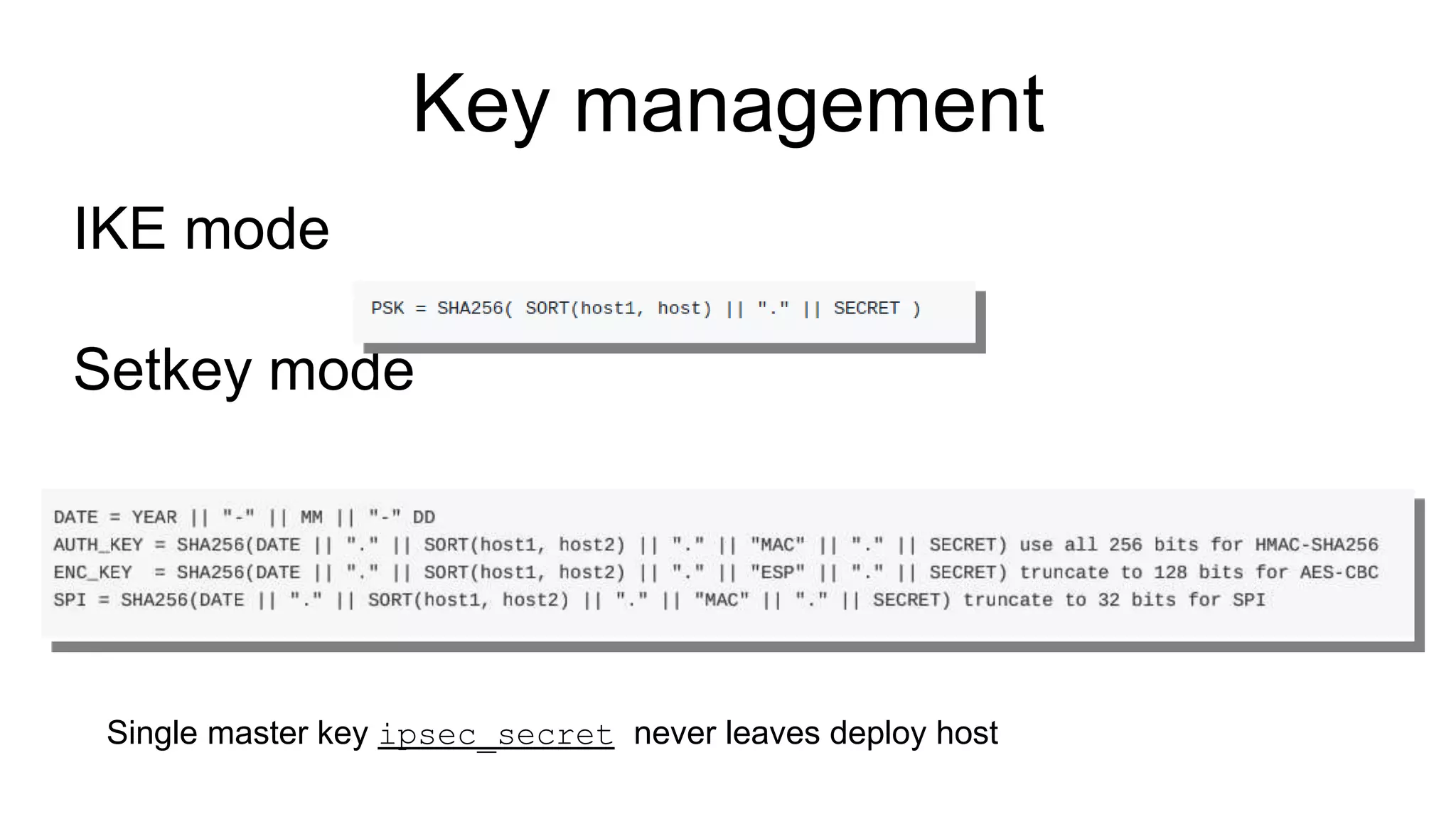
Key management
IKE mode
Setkey mode
Single master key ipsec_secret never leaves deploy host
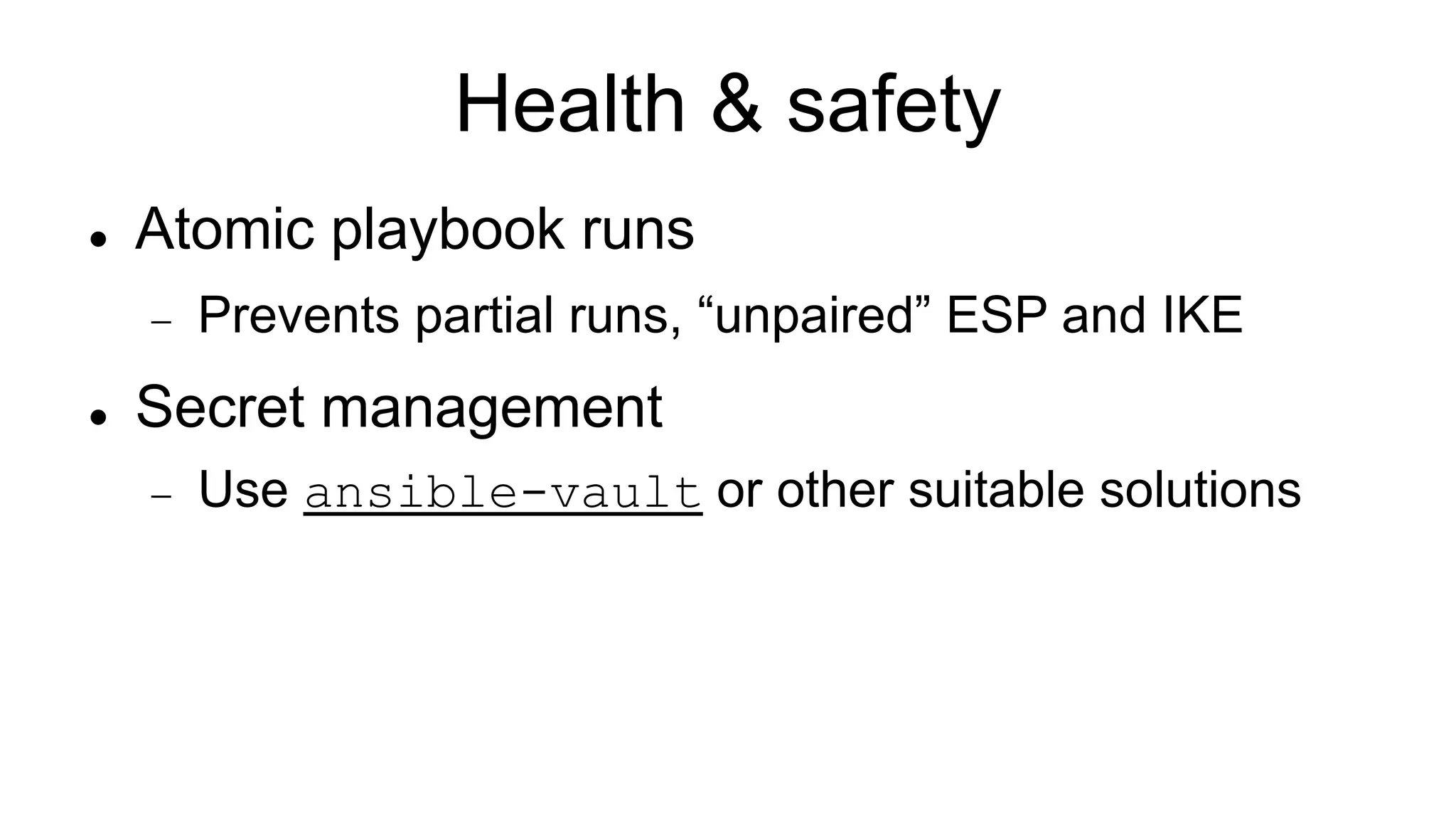
Health & safety
 Atomic playbook runs
 Prevents partial runs, “unpaired” ESP and IKE
 Secret management
 Use ansible-vault or other suitable solutions
Q&A
pawel.krawczyk@hush.com
+44 7879 180015
https://github.com/kravietz/ansible-ipsec

DevSecCon London 2018: Get rid of these TLS certificates