Devolution
A disunited kingdom?
Definition
• It involves the delegation or decentralisation
  of power. It is the term employed to describe
  the transfer of power in the UK downwards
  from central government to Scotland, Wales,
  Northern Ireland and perhaps ultimately the
  English regions. (Coxall:289)
A pressured state
• Pressure from above and below:
  – British sovereignty is threatened by the growth of
    the European superstate
  – Britain could disintegrate into smaller component
    parts.
The Rise of Celtic Nationalisms

• 1960s/1970s: Rise of Scottish nationalism
• 1980s: Thatcher Govt – unintentionally
  spurred Scottish nationalism(Miner’s strike
  and the dismantling of the coal industry)
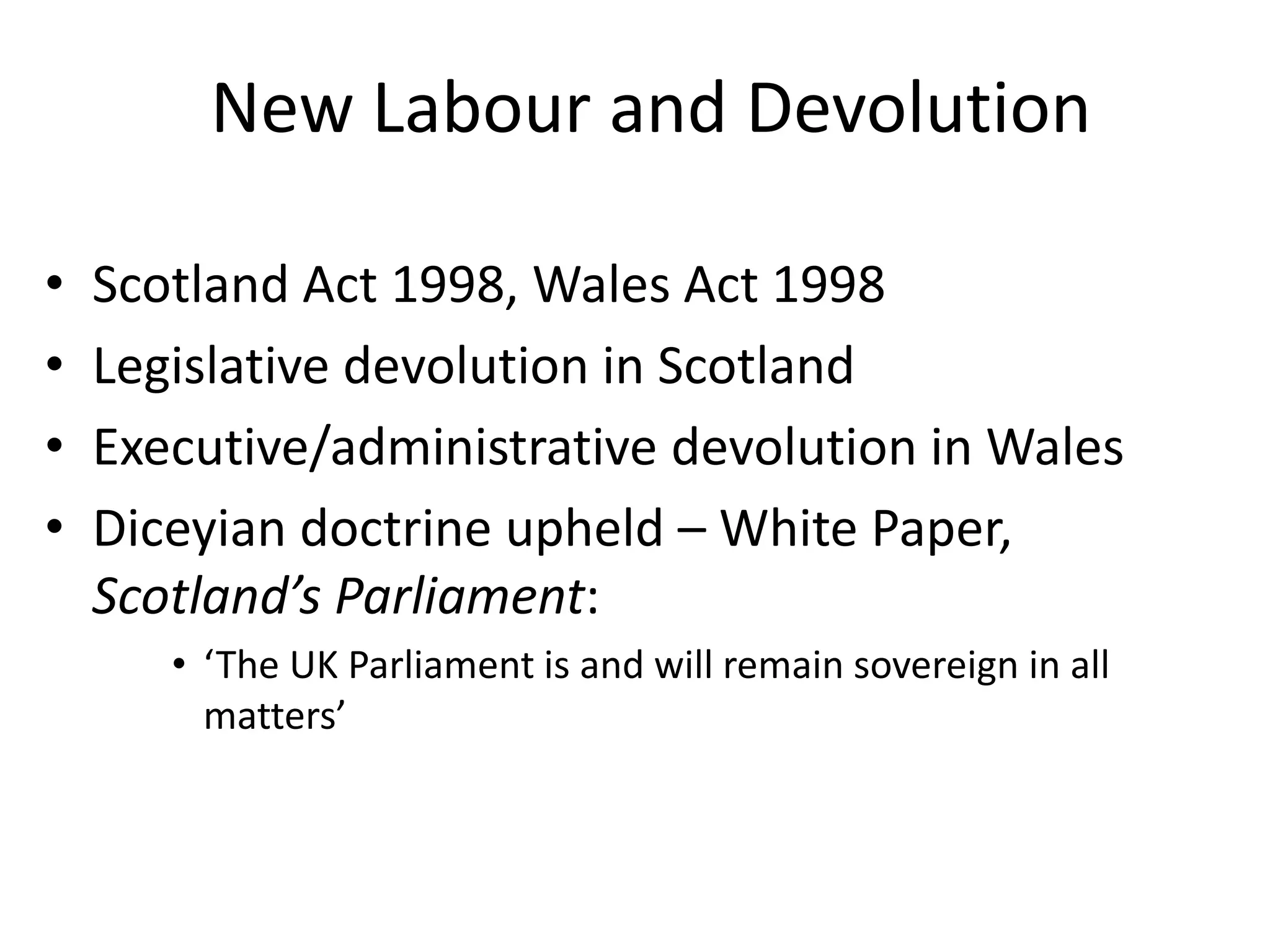
New Labour and Devolution

•   Scotland Act 1998, Wales Act 1998
•   Legislative devolution in Scotland
•   Executive/administrative devolution in Wales
•   Diceyian doctrine upheld – White Paper,
    Scotland’s Parliament:
       • ‘The UK Parliament is and will remain sovereign in all
         matters’
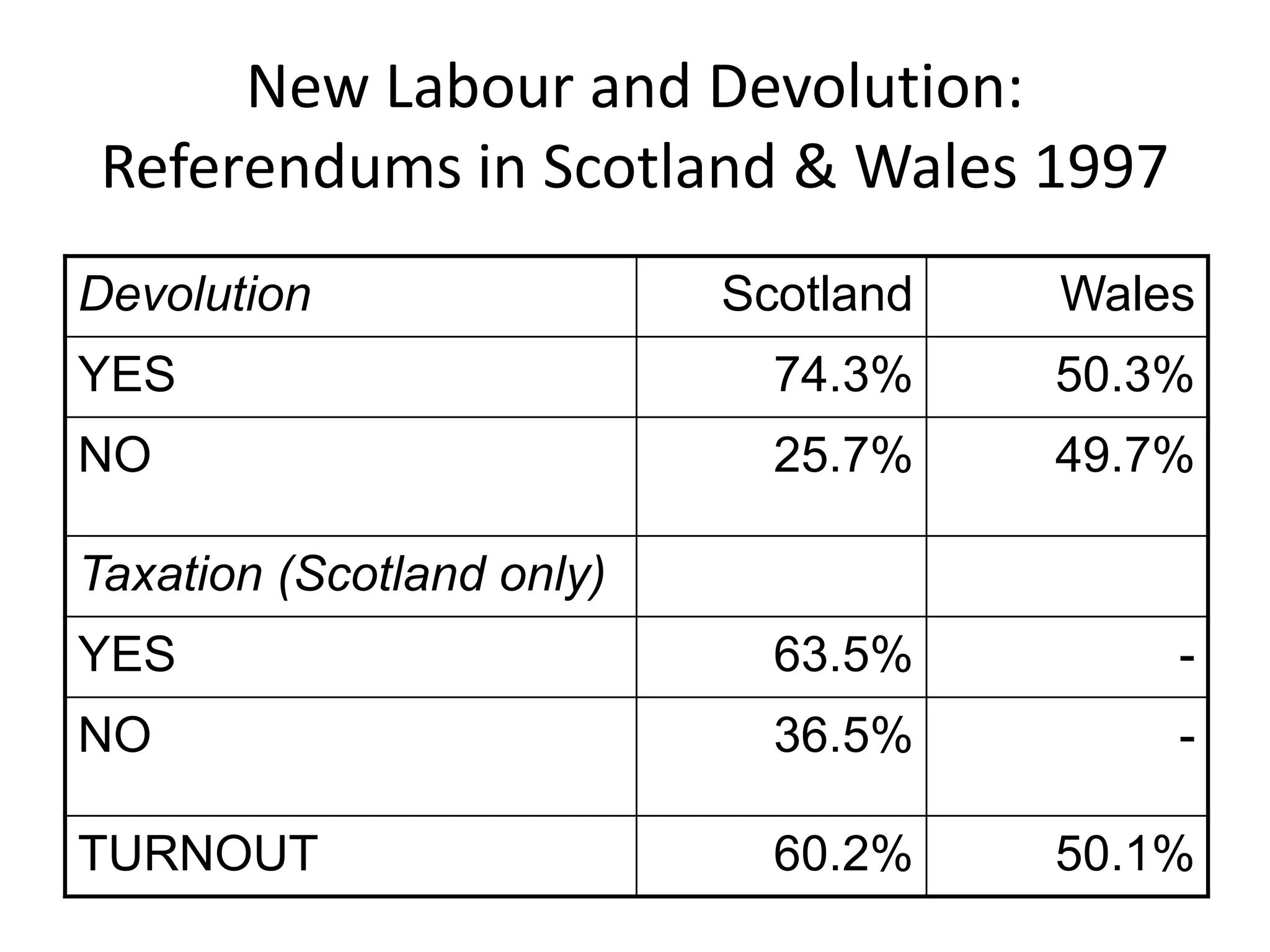
New Labour and Devolution:
 Referendums in Scotland & Wales 1997
Devolution                 Scotland   Wales
YES                          74.3%    50.3%
NO                           25.7%    49.7%

Taxation (Scotland only)
YES                          63.5%        -
NO                           36.5%        -

TURNOUT                      60.2%    50.1%
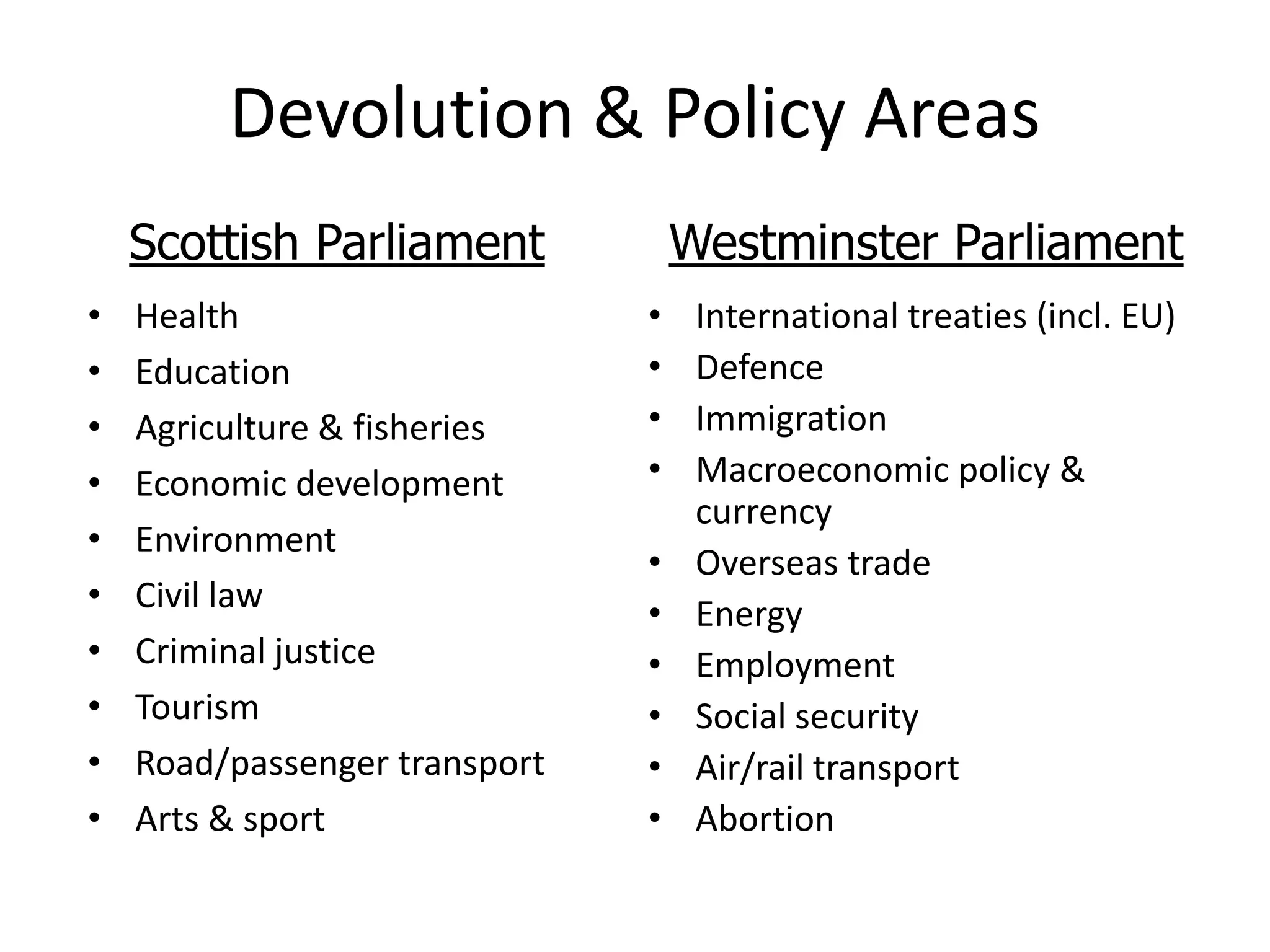
Devolution & Policy Areas
    Scottish Parliament            Westminster Parliament
•   Health                     •    International treaties (incl. EU)
•   Education                  •    Defence
•   Agriculture & fisheries    •    Immigration
•   Economic development       •    Macroeconomic policy &
                                    currency
•   Environment
                               •    Overseas trade
•   Civil law                  •    Energy
•   Criminal justice           •    Employment
•   Tourism                    •    Social security
•   Road/passenger transport   •    Air/rail transport
•   Arts & sport               •    Abortion
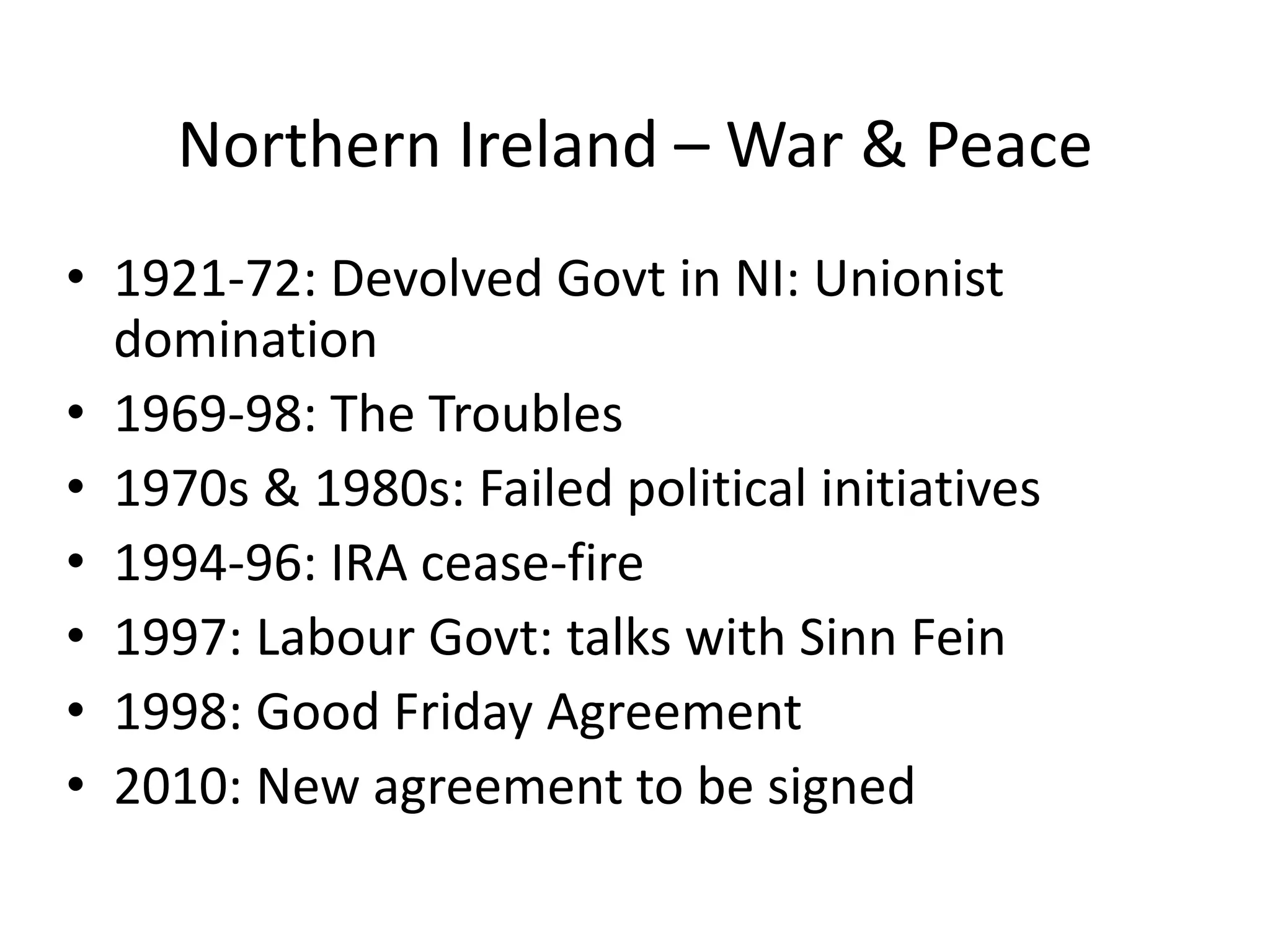
Northern Ireland – War & Peace
• 1921-72: Devolved Govt in NI: Unionist
  domination
• 1969-98: The Troubles
• 1970s & 1980s: Failed political initiatives
• 1994-96: IRA cease-fire
• 1997: Labour Govt: talks with Sinn Fein
• 1998: Good Friday Agreement
• 2010: New agreement to be signed
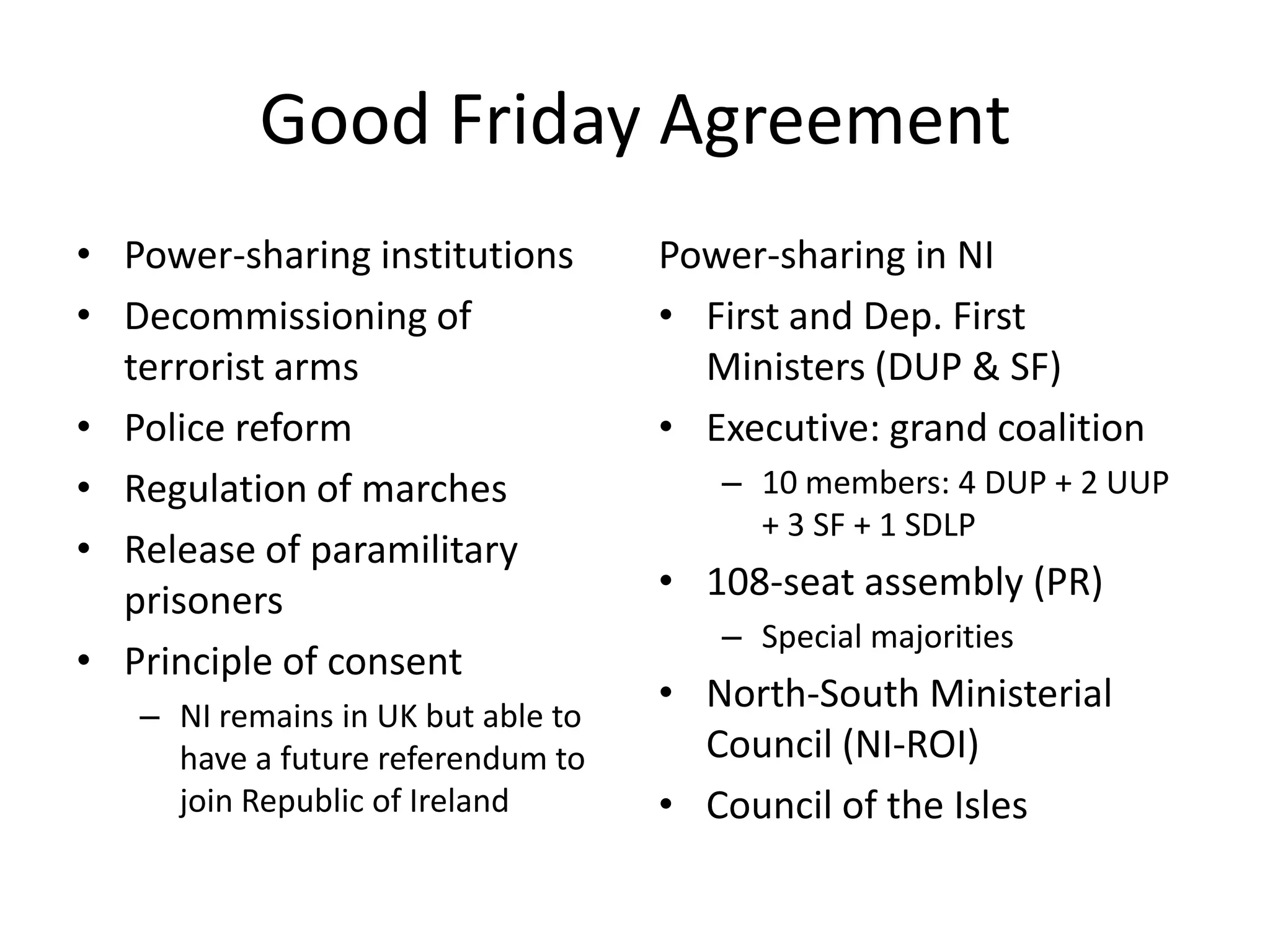
Good Friday Agreement
• Power-sharing institutions        Power-sharing in NI
• Decommissioning of                • First and Dep. First
  terrorist arms                      Ministers (DUP & SF)
• Police reform                     • Executive: grand coalition
• Regulation of marches                – 10 members: 4 DUP + 2 UUP
                                         + 3 SF + 1 SDLP
• Release of paramilitary
  prisoners                         • 108-seat assembly (PR)
                                       – Special majorities
• Principle of consent
   – NI remains in UK but able to
                                    • North-South Ministerial
     have a future referendum to      Council (NI-ROI)
     join Republic of Ireland       • Council of the Isles
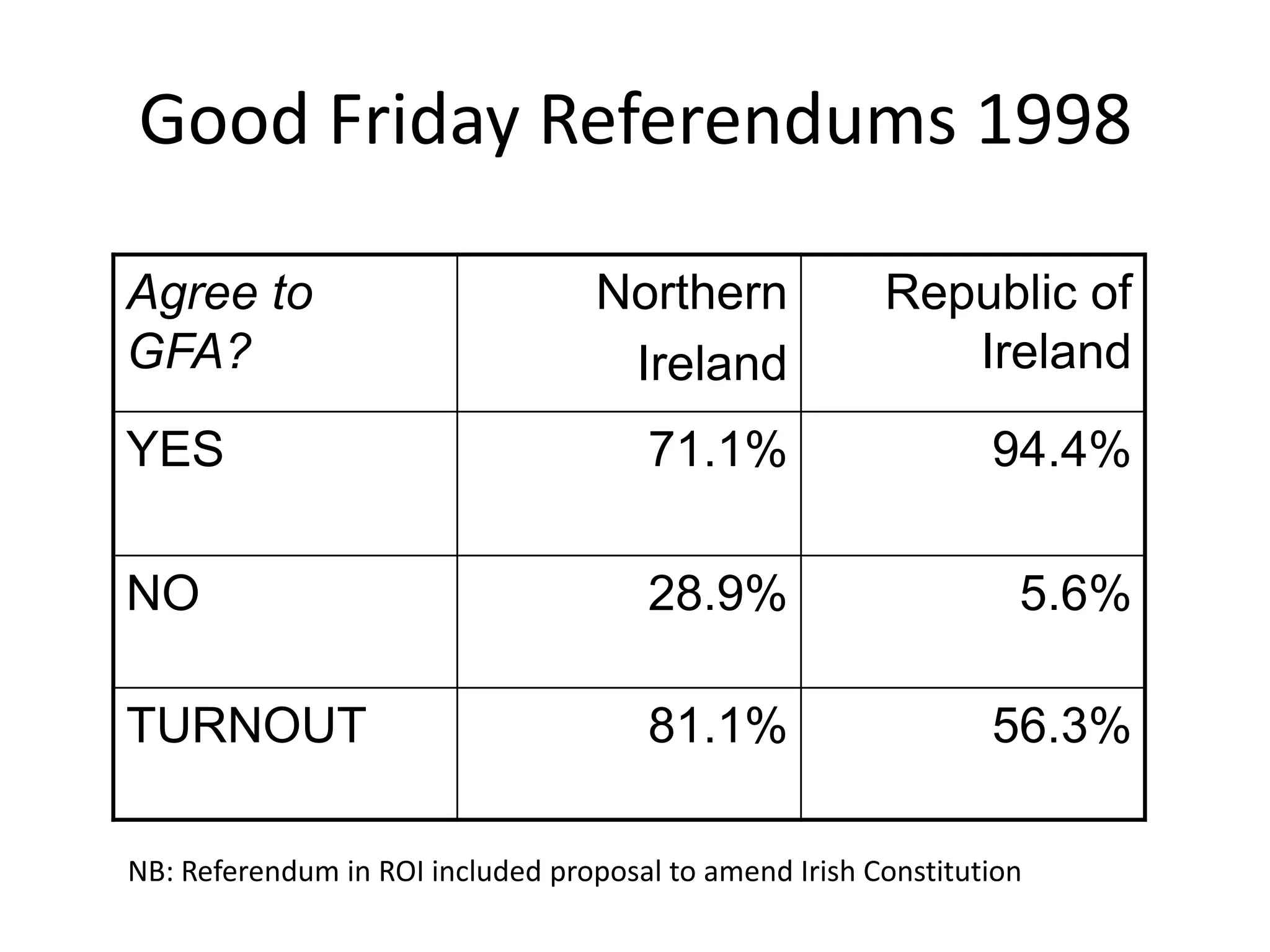
Good Friday Referendums 1998

Agree to                           Northern             Republic of
GFA?                                Ireland                Ireland
YES                                   71.1%                     94.4%

NO                                    28.9%                       5.6%

TURNOUT                               81.1%                     56.3%

NB: Referendum in ROI included proposal to amend Irish Constitution
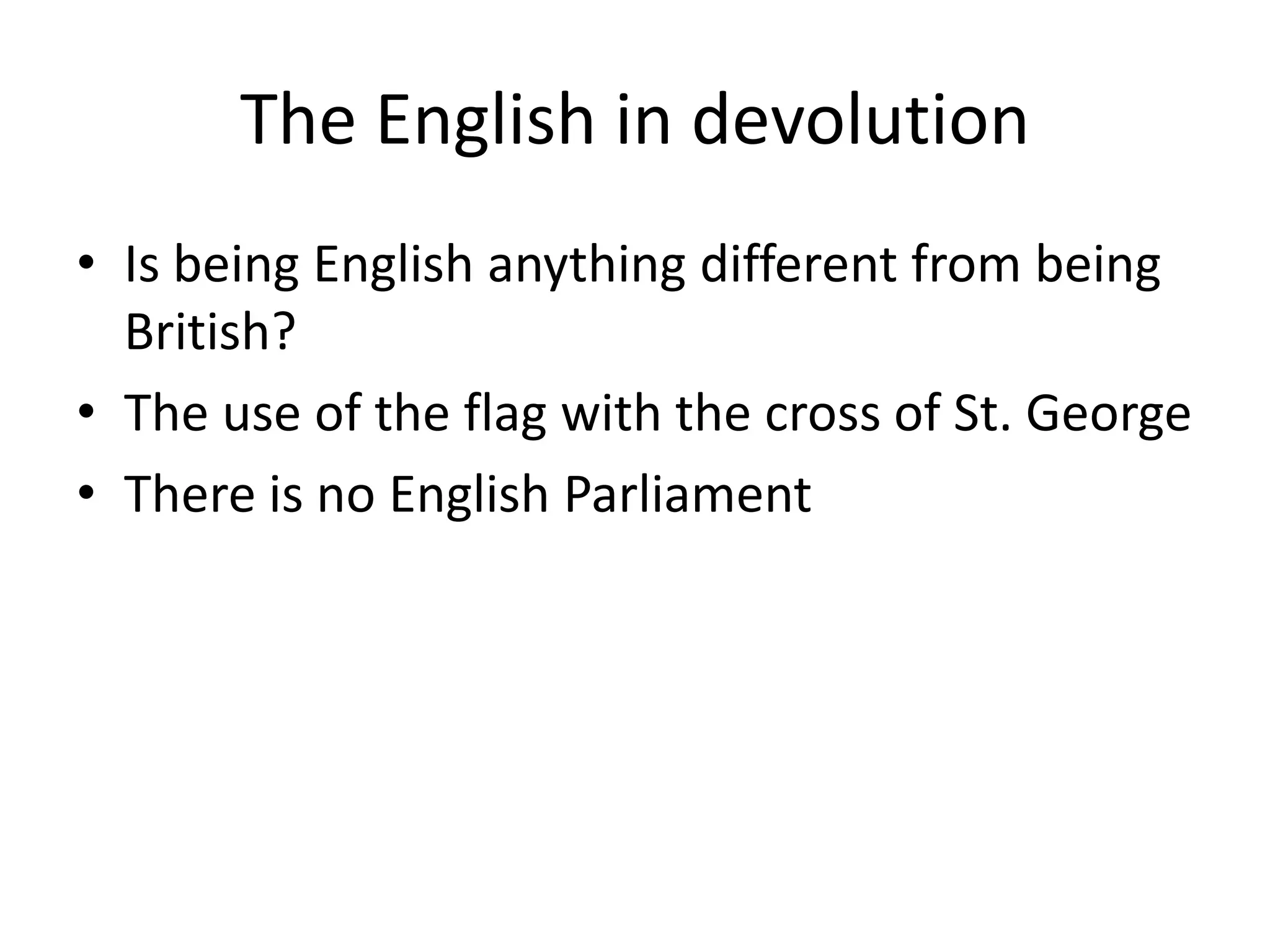
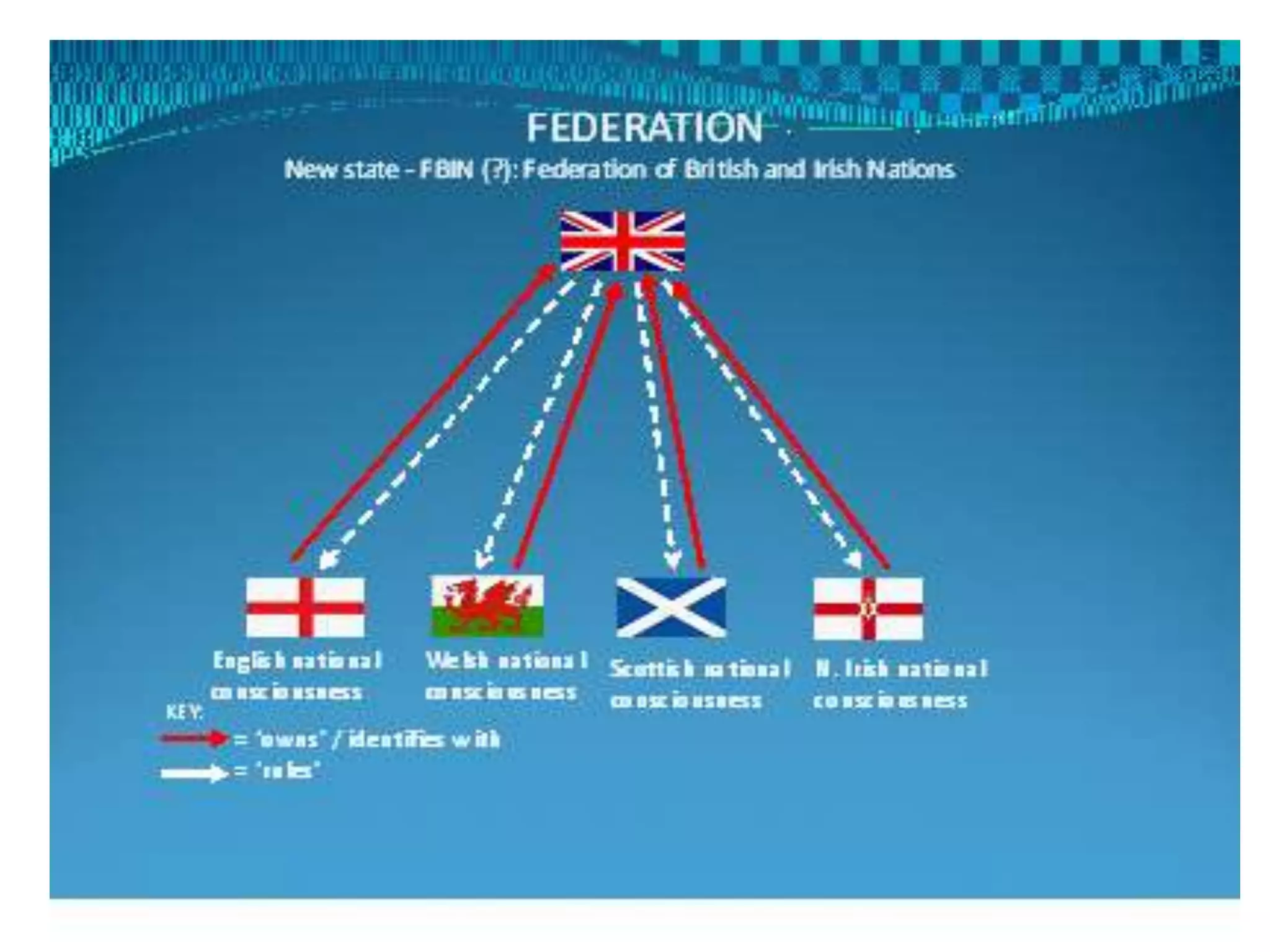
The English in devolution
• Is being English anything different from being
  British?
• The use of the flag with the cross of St. George
• There is no English Parliament
The aftermaths of devolution
• The 2003 election results in Scotland and Wales
  were marked by the sense that devolution in
  practice has so far made little difference.
• Devolution has led to substantial policy
  innovation in Scotland, Wales and Northern
  Ireland and opened up real alternatives to
  policies decided at Westminster
• The government of England and the English
  regions has become more complex since
  devolution to Scotland, Wales and Northern
  Ireland.
• Devolution is the most popular constitutional
  preference in Scotland and Wales, and even in
  Northern Ireland, despite the marked
  polarisation of views around the Unionist-
  Nationalist divide that was confirmed when
  Ian Paisley’s Democratic Unionists and Sinn
  Féin made significant gains in the 2003
  Northern Ireland election.
Sources
• Coxall, Bill: Contemporary British Politics:Great
  Britain 2003
• Dr. Quinn, Tom: lecture 5: University of Essex
  2008
• ESRC: Devolution-What Difference Has it
  Made?: Great Britain2008

Devolution

  • 1.
  • 2.
    Definition • It involvesthe delegation or decentralisation of power. It is the term employed to describe the transfer of power in the UK downwards from central government to Scotland, Wales, Northern Ireland and perhaps ultimately the English regions. (Coxall:289)
  • 3.
    A pressured state •Pressure from above and below: – British sovereignty is threatened by the growth of the European superstate – Britain could disintegrate into smaller component parts.
  • 4.
    The Rise ofCeltic Nationalisms • 1960s/1970s: Rise of Scottish nationalism • 1980s: Thatcher Govt – unintentionally spurred Scottish nationalism(Miner’s strike and the dismantling of the coal industry)
  • 6.
    New Labour andDevolution • Scotland Act 1998, Wales Act 1998 • Legislative devolution in Scotland • Executive/administrative devolution in Wales • Diceyian doctrine upheld – White Paper, Scotland’s Parliament: • ‘The UK Parliament is and will remain sovereign in all matters’
  • 7.
    New Labour andDevolution: Referendums in Scotland & Wales 1997 Devolution Scotland Wales YES 74.3% 50.3% NO 25.7% 49.7% Taxation (Scotland only) YES 63.5% - NO 36.5% - TURNOUT 60.2% 50.1%
  • 8.
    Devolution & PolicyAreas Scottish Parliament Westminster Parliament • Health • International treaties (incl. EU) • Education • Defence • Agriculture & fisheries • Immigration • Economic development • Macroeconomic policy & currency • Environment • Overseas trade • Civil law • Energy • Criminal justice • Employment • Tourism • Social security • Road/passenger transport • Air/rail transport • Arts & sport • Abortion
  • 9.
    Northern Ireland –War & Peace • 1921-72: Devolved Govt in NI: Unionist domination • 1969-98: The Troubles • 1970s & 1980s: Failed political initiatives • 1994-96: IRA cease-fire • 1997: Labour Govt: talks with Sinn Fein • 1998: Good Friday Agreement • 2010: New agreement to be signed
  • 10.
    Good Friday Agreement •Power-sharing institutions Power-sharing in NI • Decommissioning of • First and Dep. First terrorist arms Ministers (DUP & SF) • Police reform • Executive: grand coalition • Regulation of marches – 10 members: 4 DUP + 2 UUP + 3 SF + 1 SDLP • Release of paramilitary prisoners • 108-seat assembly (PR) – Special majorities • Principle of consent – NI remains in UK but able to • North-South Ministerial have a future referendum to Council (NI-ROI) join Republic of Ireland • Council of the Isles
  • 11.
    Good Friday Referendums1998 Agree to Northern Republic of GFA? Ireland Ireland YES 71.1% 94.4% NO 28.9% 5.6% TURNOUT 81.1% 56.3% NB: Referendum in ROI included proposal to amend Irish Constitution
  • 12.
    The English indevolution • Is being English anything different from being British? • The use of the flag with the cross of St. George • There is no English Parliament
  • 14.
    The aftermaths ofdevolution • The 2003 election results in Scotland and Wales were marked by the sense that devolution in practice has so far made little difference. • Devolution has led to substantial policy innovation in Scotland, Wales and Northern Ireland and opened up real alternatives to policies decided at Westminster • The government of England and the English regions has become more complex since devolution to Scotland, Wales and Northern Ireland.
  • 15.
    • Devolution isthe most popular constitutional preference in Scotland and Wales, and even in Northern Ireland, despite the marked polarisation of views around the Unionist- Nationalist divide that was confirmed when Ian Paisley’s Democratic Unionists and Sinn Féin made significant gains in the 2003 Northern Ireland election.
  • 16.
    Sources • Coxall, Bill:Contemporary British Politics:Great Britain 2003 • Dr. Quinn, Tom: lecture 5: University of Essex 2008 • ESRC: Devolution-What Difference Has it Made?: Great Britain2008