Priyabrata Pattnaik, PhD
Director, Head of Biologics Operations – Asia Pacific
Development of
Production and
Purification Platform
for Influenza Vaccine
2
Presentation Outline
Introduction
Upstream and virus production
Residual DNA removal by Benzonase® treatment
Virus inactivation by Formaldehyde treatment
Conclusions
Development of Production and Purification Platform for Influenza Vaccine | Priyabrata Pattnaik | 02 Nov 2016
Annual Vaccine
HA protein (most common)
 Typically 3-4 varieties (valences)
 Dosage info (0.5mL/dose)
− HA: 15μg of each HA protein
− Formaldehyde: ≤ 200ppm
− Endotoxin: < 100 IU/dose
− Other protein: < 6 x HA content (< 300 μg/dose)
− DNA: < 10ng/dose
− Purity: 95% by gel (Coomassie blue)
Background
Influenza
3
80-120 nm enveloped virus
By National Institutes of Health; originally uploaded to en.wikipedia by TimVickers (25 October 2006),
transferred to Commons by Quadell using CommonsHelper. (California Department of Health Services) [Public
domain], via Wikimedia Commons
Development of Production and Purification Platform for Influenza Vaccine | Priyabrata Pattnaik | 02 Nov 2016
Development of Production and Purification Platform for Influenza Vaccine | Priyabrata Pattnaik | 02 Nov 20164
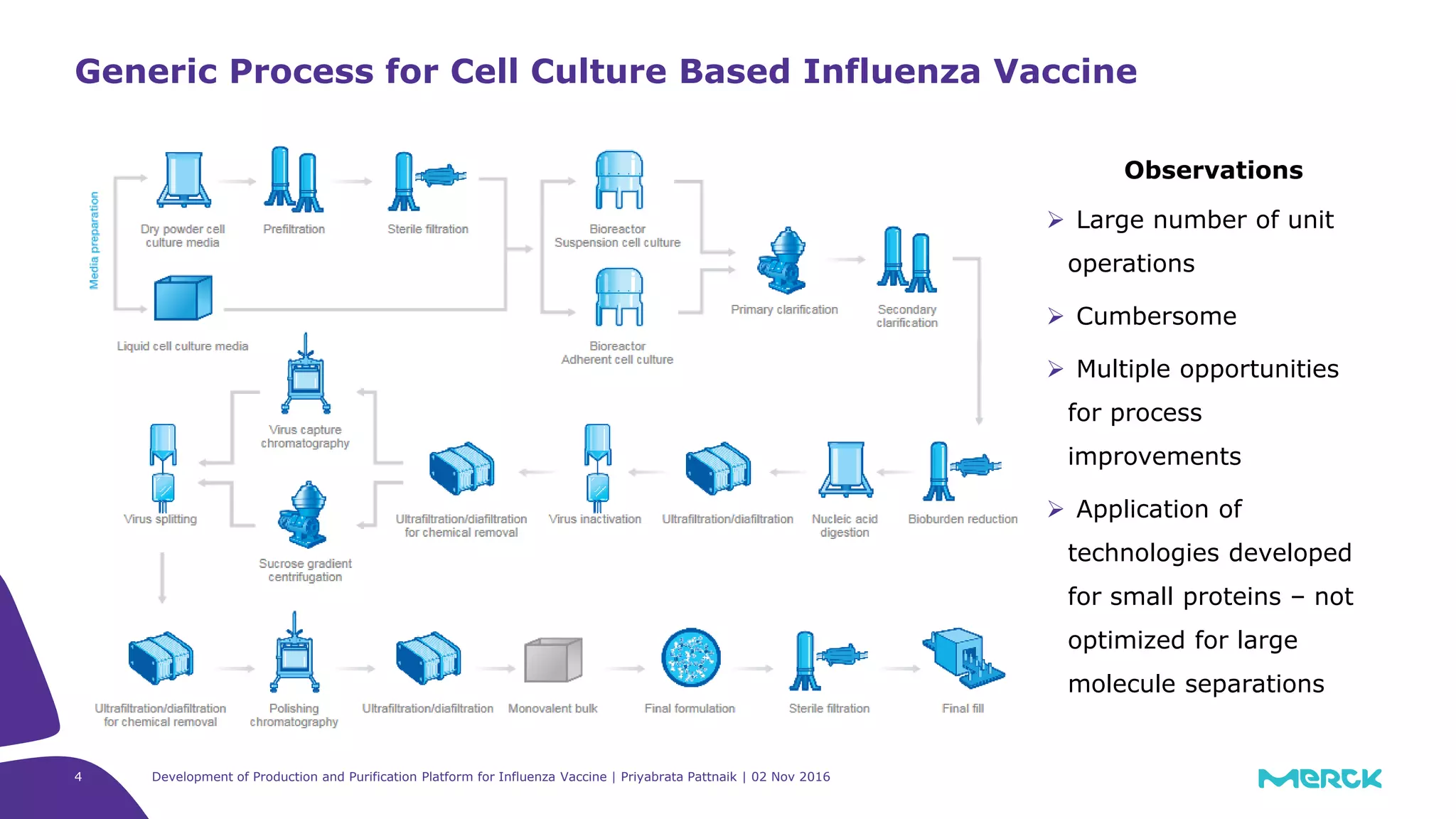
Observations
 Large number of unit
operations
 Cumbersome
 Multiple opportunities
for process
improvements
 Application of
technologies developed
for small proteins – not
optimized for large
molecule separations
Generic Process for Cell Culture Based Influenza Vaccine
Cell culture
and virus
production
Development of Production and Purification Platform for Influenza Vaccine | Priyabrata Pattnaik | 02 Nov 20164
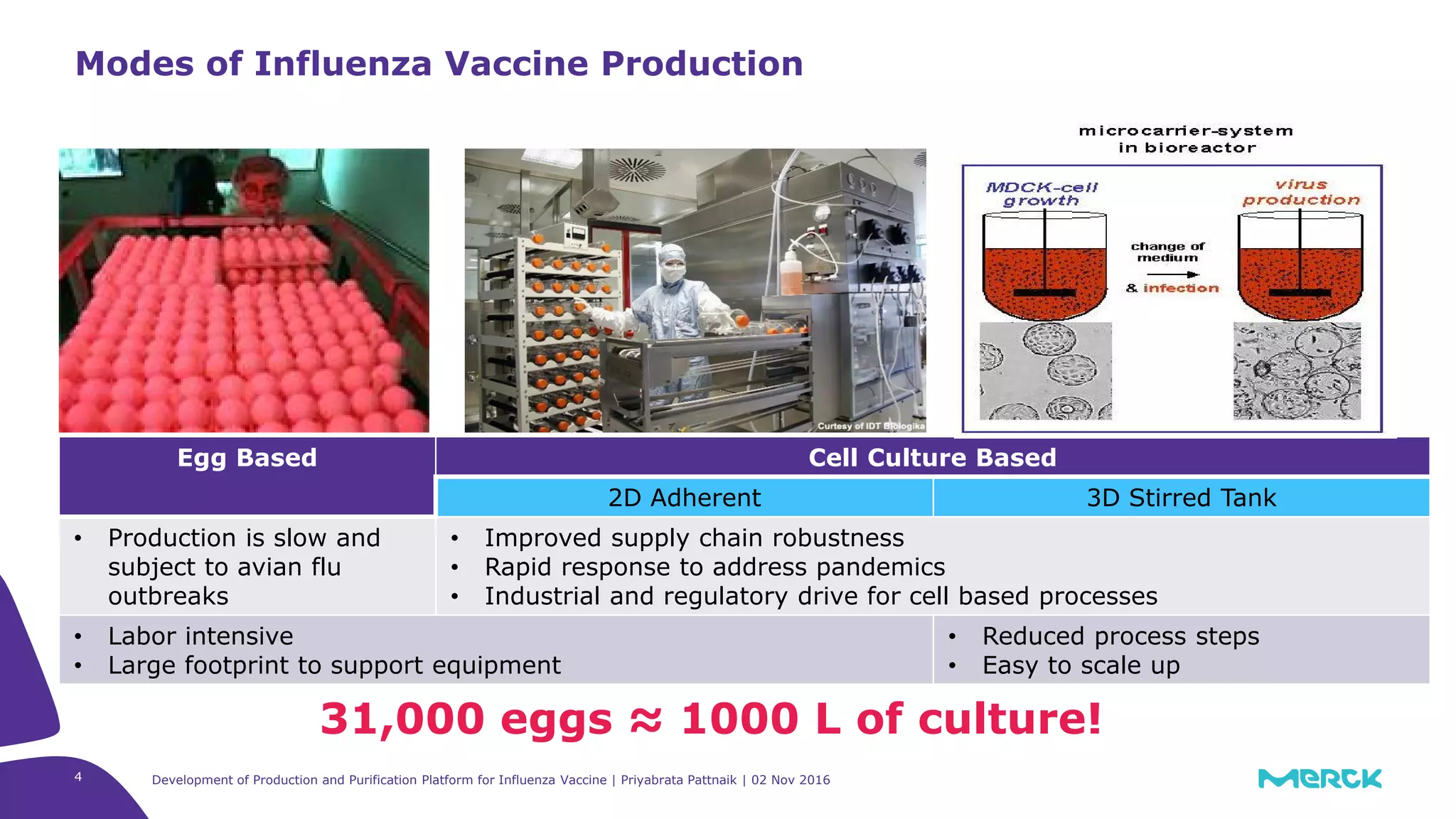
Modes of Influenza Vaccine Production
Egg Based Cell Culture Based
2D Adherent 3D Stirred Tank
• Production is slow and
subject to avian flu
outbreaks
• Improved supply chain robustness
• Rapid response to address pandemics
• Industrial and regulatory drive for cell based processes
• Labor intensive
• Large footprint to support equipment
• Reduced process steps
• Easy to scale up
31,000 eggs ≈ 1000 L of culture!
7
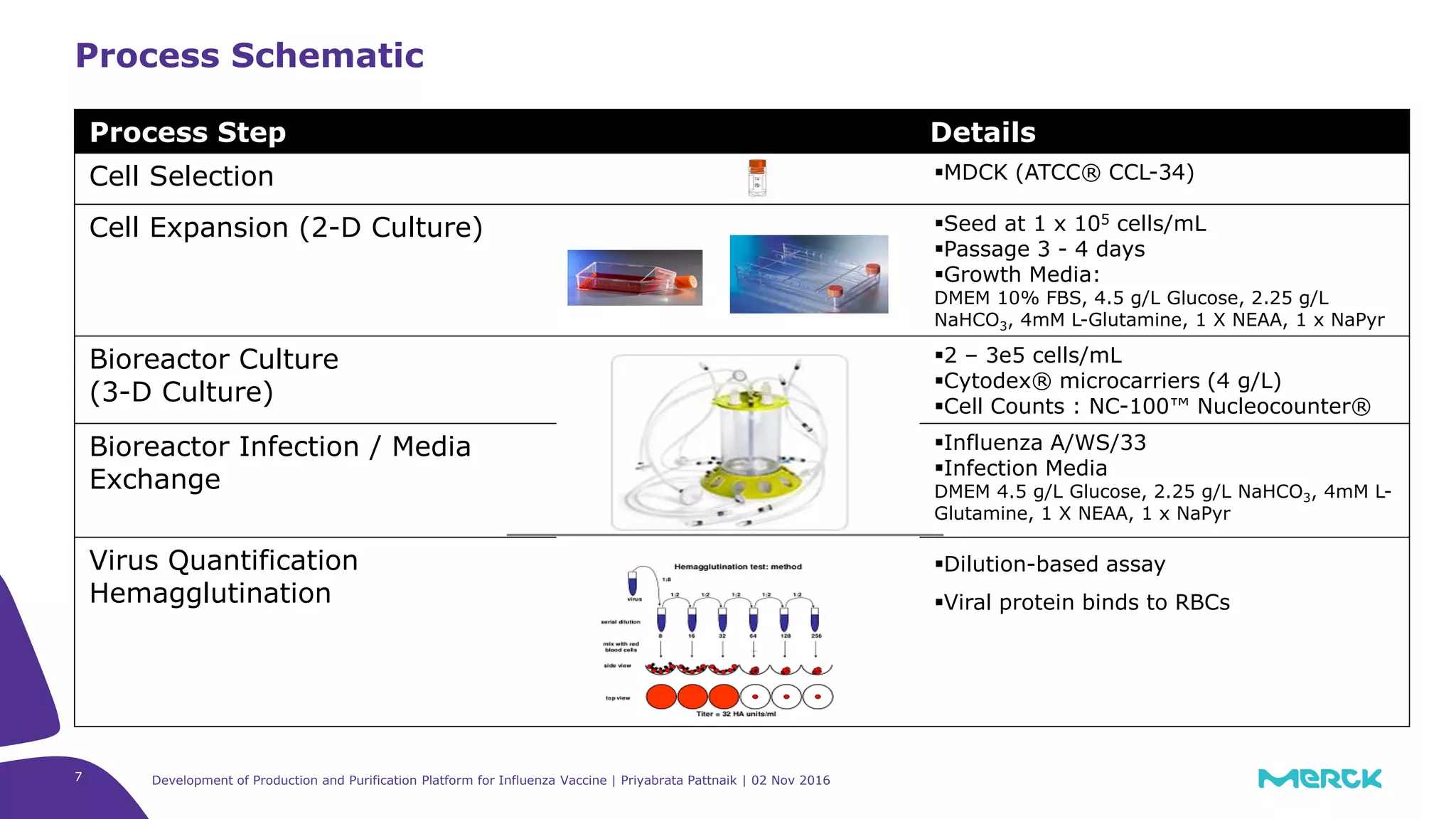
Process Schematic
Process Step Details
Cell Selection MDCK (ATCC® CCL-34)
Cell Expansion (2-D Culture) Seed at 1 x 10⁵ cells/mL
Passage 3 - 4 days
Growth Media:
DMEM 10% FBS, 4.5 g/L Glucose, 2.25 g/L
NaHCO3, 4mM L-Glutamine, 1 X NEAA, 1 x NaPyr
Bioreactor Culture
(3-D Culture)
2 – 3e5 cells/mL
Cytodex® microcarriers (4 g/L)
Cell Counts : NC-100™ Nucleocounter®
Bioreactor Infection / Media
Exchange
Influenza A/WS/33
Infection Media
DMEM 4.5 g/L Glucose, 2.25 g/L NaHCO3, 4mM L-
Glutamine, 1 X NEAA, 1 x NaPyr
Virus Quantification
Hemagglutination
Dilution-based assay
Viral protein binds to RBCs
Development of Production and Purification Platform for Influenza Vaccine | Priyabrata Pattnaik | 02 Nov 2016
8
 Cell attachment
 Initial batch volume
 Agitation speed
 Sparging
 Process Scale-up
Bioreactor Process Development
Development of Production and Purification Platform for Influenza Vaccine | Priyabrata Pattnaik | 02 Nov 2016
9
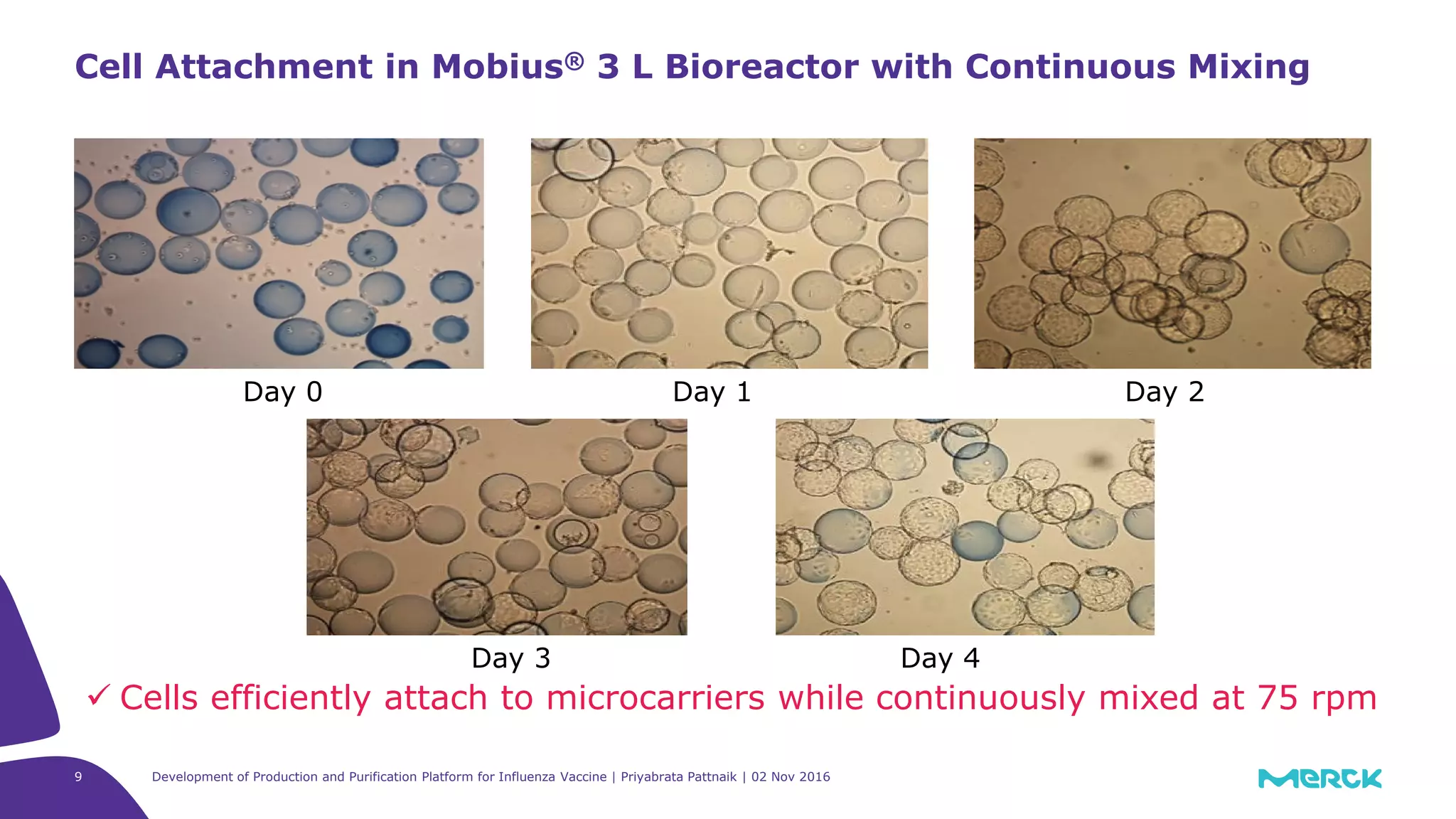
Cell Attachment in Mobius® 3 L Bioreactor with Continuous Mixing
 Cells efficiently attach to microcarriers while continuously mixed at 75 rpm
Day 0 Day 1 Day 2
Day 3 Day 4
Development of Production and Purification Platform for Influenza Vaccine | Priyabrata Pattnaik | 02 Nov 2016
10
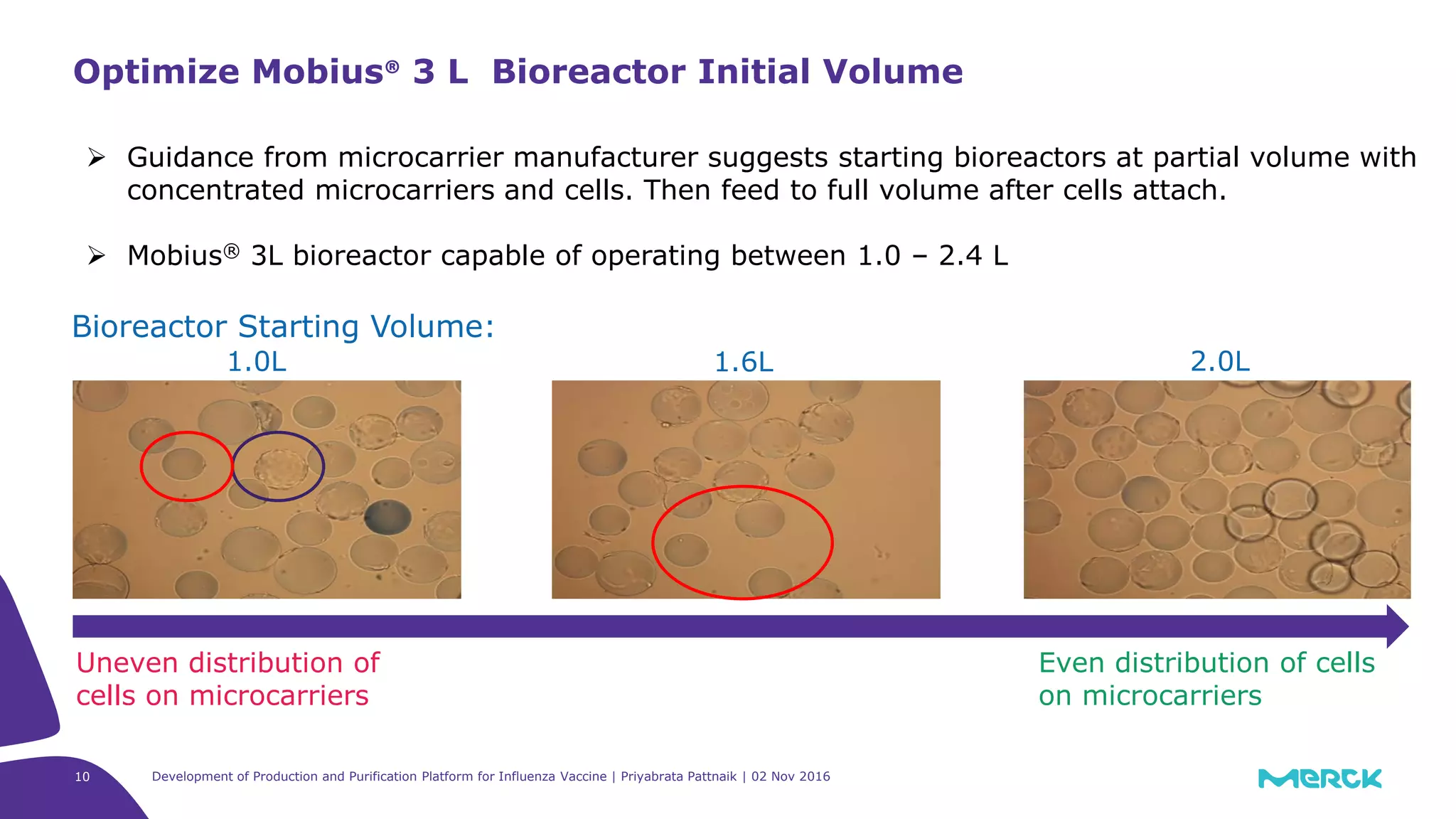
Optimize Mobius® 3 L Bioreactor Initial Volume
Bioreactor Starting Volume:
Uneven distribution of
cells on microcarriers
Even distribution of cells
on microcarriers
1.0L 1.6L 2.0L
Development of Production and Purification Platform for Influenza Vaccine | Priyabrata Pattnaik | 02 Nov 2016
 Guidance from microcarrier manufacturer suggests starting bioreactors at partial volume with
concentrated microcarriers and cells. Then feed to full volume after cells attach.
 Mobius® 3L bioreactor capable of operating between 1.0 – 2.4 L
11
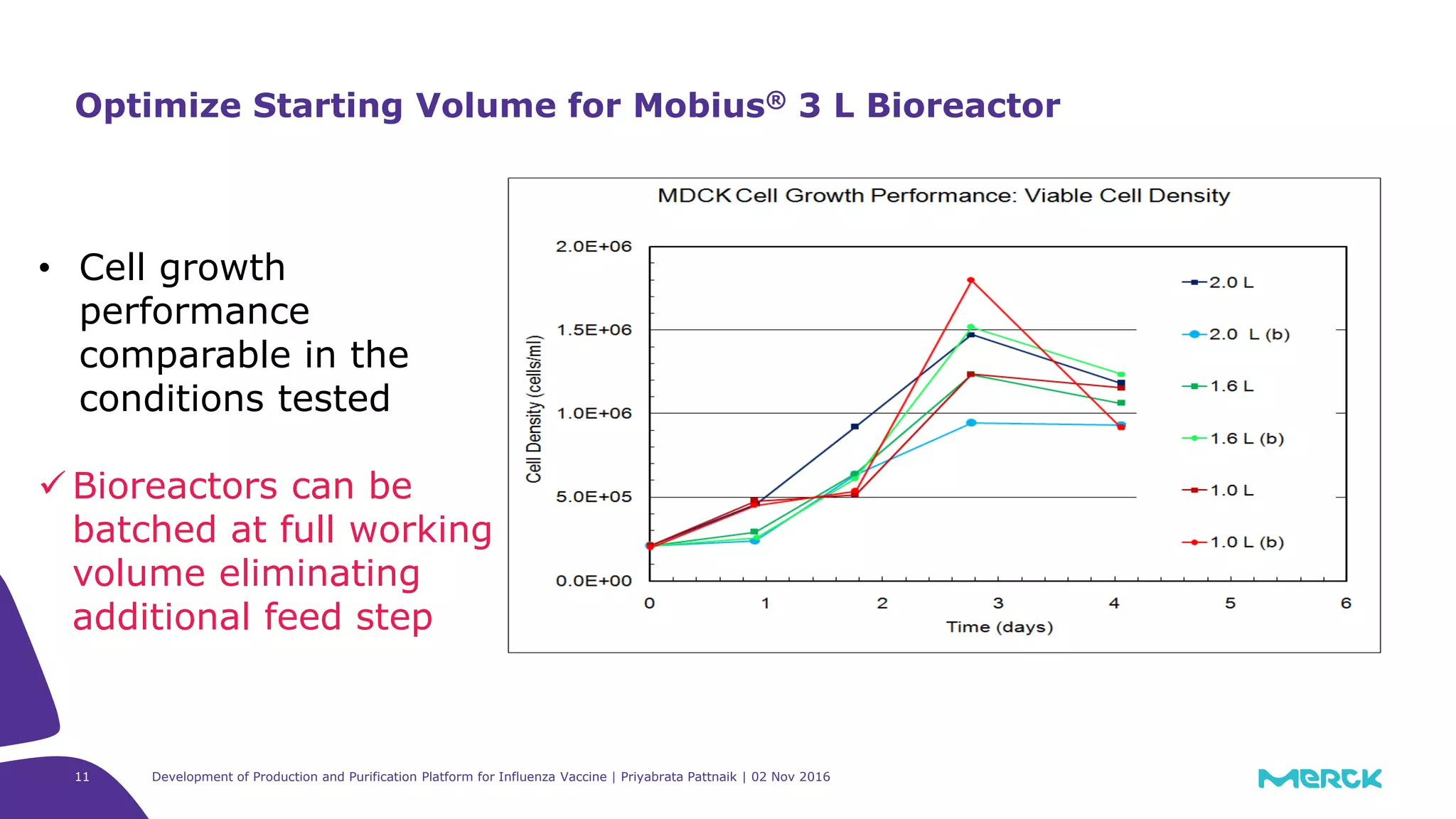
Optimize Starting Volume for Mobius® 3 L Bioreactor
• Cell growth
performance
comparable in the
conditions tested
 Bioreactors can be
batched at full working
volume eliminating
additional feed step
Development of Production and Purification Platform for Influenza Vaccine | Priyabrata Pattnaik | 02 Nov 2016
12
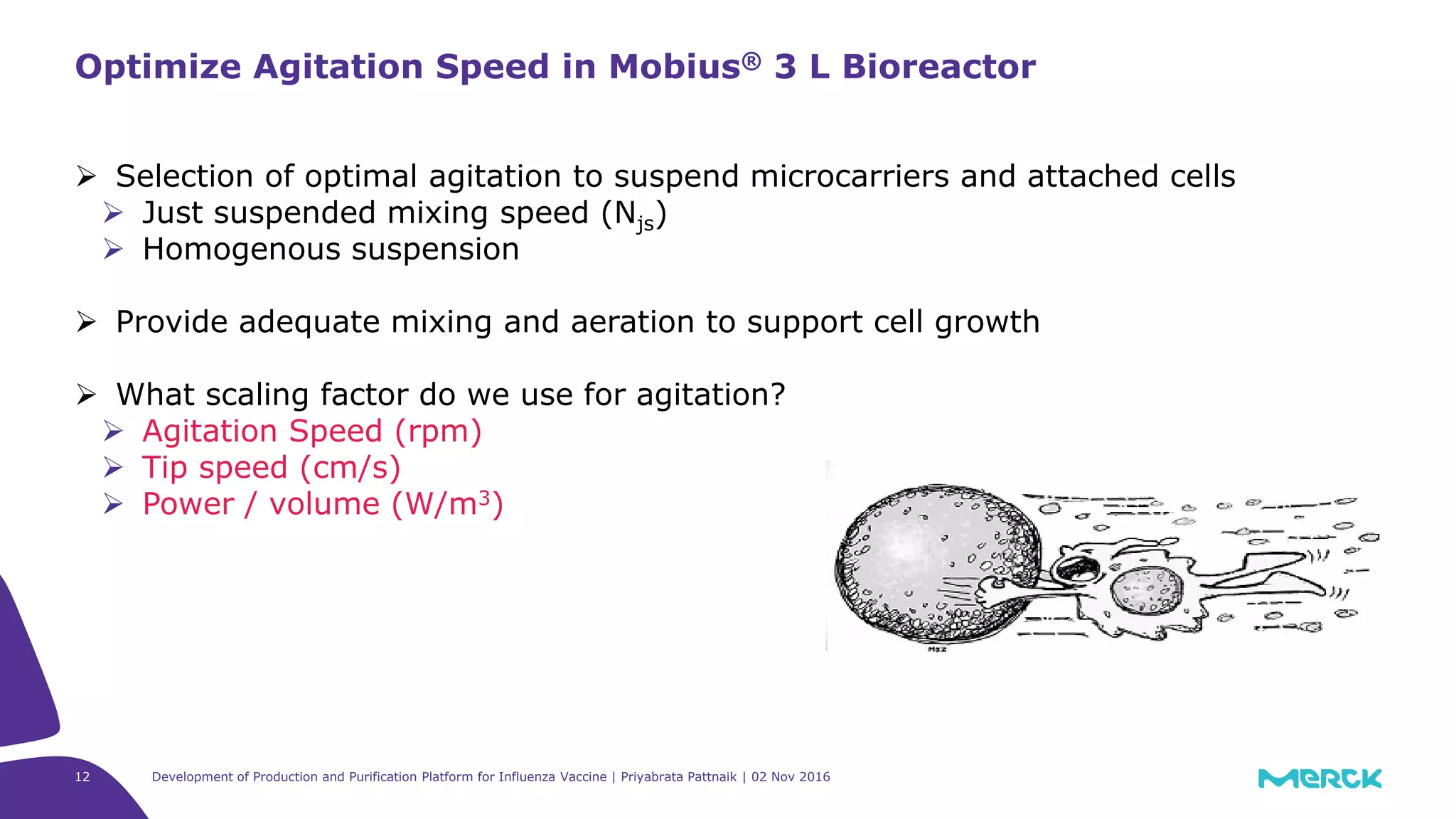
 Selection of optimal agitation to suspend microcarriers and attached cells
 Just suspended mixing speed (Njs)
 Homogenous suspension
 Provide adequate mixing and aeration to support cell growth
 What scaling factor do we use for agitation?
 Agitation Speed (rpm)
 Tip speed (cm/s)
 Power / volume (W/m3)
Optimize Agitation Speed in Mobius® 3 L Bioreactor
Development of Production and Purification Platform for Influenza Vaccine | Priyabrata Pattnaik | 02 Nov 2016
13
Optimize Agitation for Cell Growth in Mobius® 3 L Bioreactor
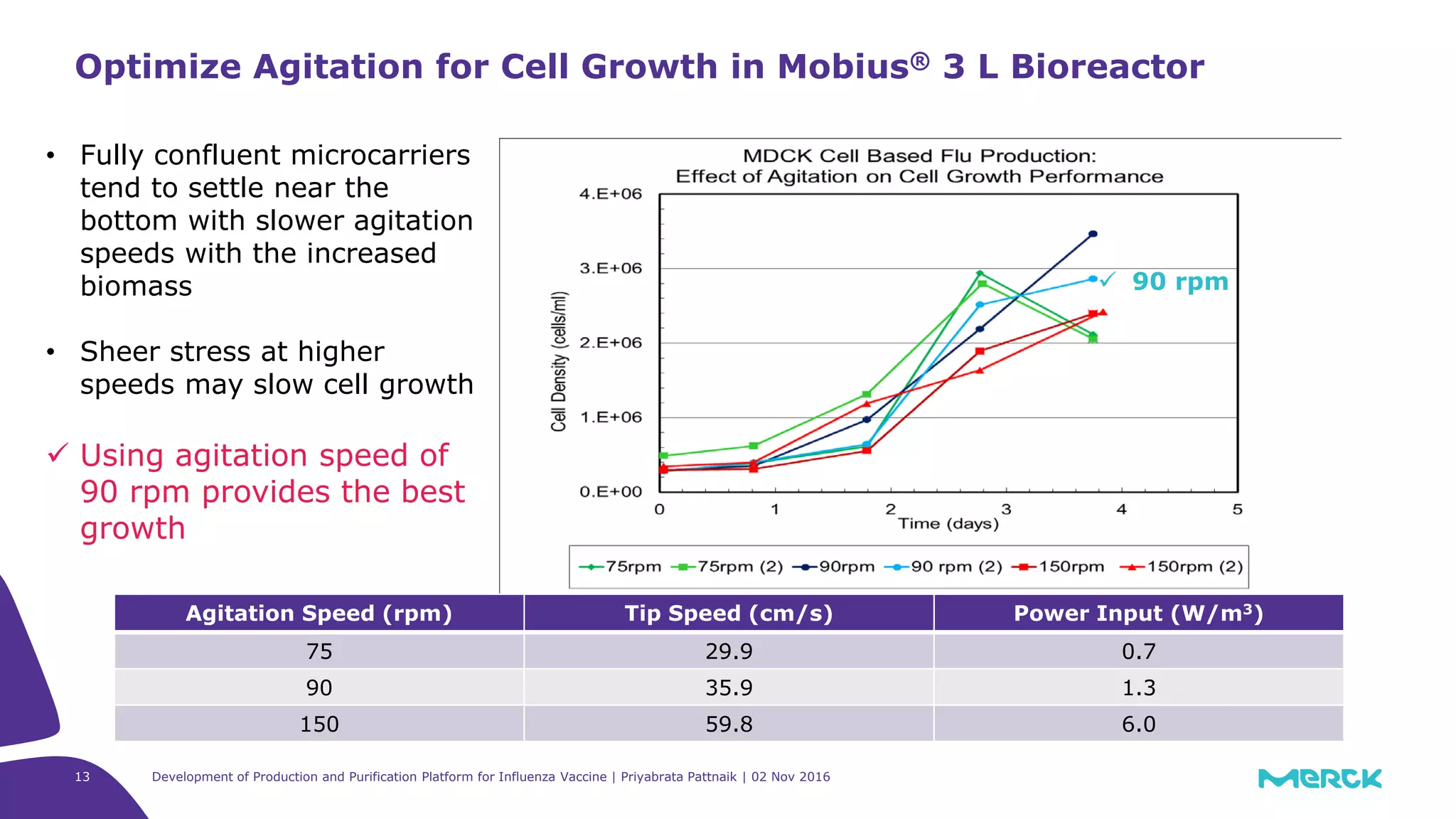
• Fully confluent microcarriers
tend to settle near the
bottom with slower agitation
speeds with the increased
biomass
• Sheer stress at higher
speeds may slow cell growth
 Using agitation speed of
90 rpm provides the best
growth
 90 rpm
Agitation Speed (rpm) Tip Speed (cm/s) Power Input (W/m3)
75 29.9 0.7
90 35.9 1.3
150 59.8 6.0
Development of Production and Purification Platform for Influenza Vaccine | Priyabrata Pattnaik | 02 Nov 2016
14
Sparging considerations
 Growth
 Sparging needs to be able to supply enough oxygen to support viable cell growth
 Excessive sparging will impart shear stress on culture
 Foaming
 Foaming an issue with cultures containing FBS
 Increased foam and shear from bubbles rupture cells at air surface interface
 Cell and microcarriers will tend to get trapped in foam layer
 Microspargers tend to produce more foam than open pipe
Evaluate Oxygen Sparge Strategies to Support Cell Growth and
Minimize Foaming
Development of Production and Purification Platform for Influenza Vaccine | Priyabrata Pattnaik | 02 Nov 2016
15
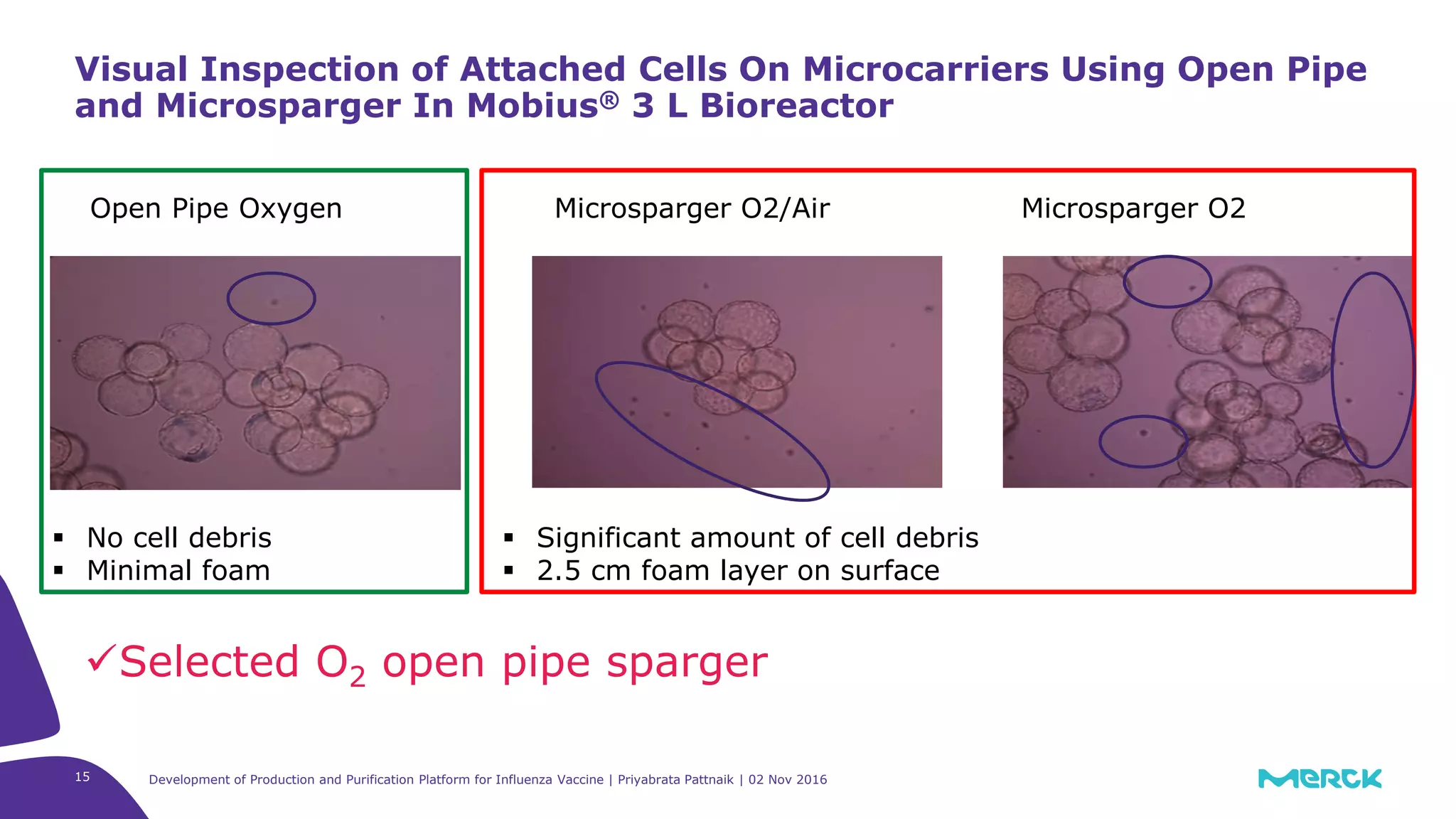
Visual Inspection of Attached Cells On Microcarriers Using Open Pipe
and Microsparger In Mobius® 3 L Bioreactor
 Significant amount of cell debris
 2.5 cm foam layer on surface
Selected O2 open pipe sparger
Open Pipe Oxygen Microsparger O2/Air Microsparger O2
 No cell debris
 Minimal foam
Development of Production and Purification Platform for Influenza Vaccine | Priyabrata Pattnaik | 02 Nov 2016
16
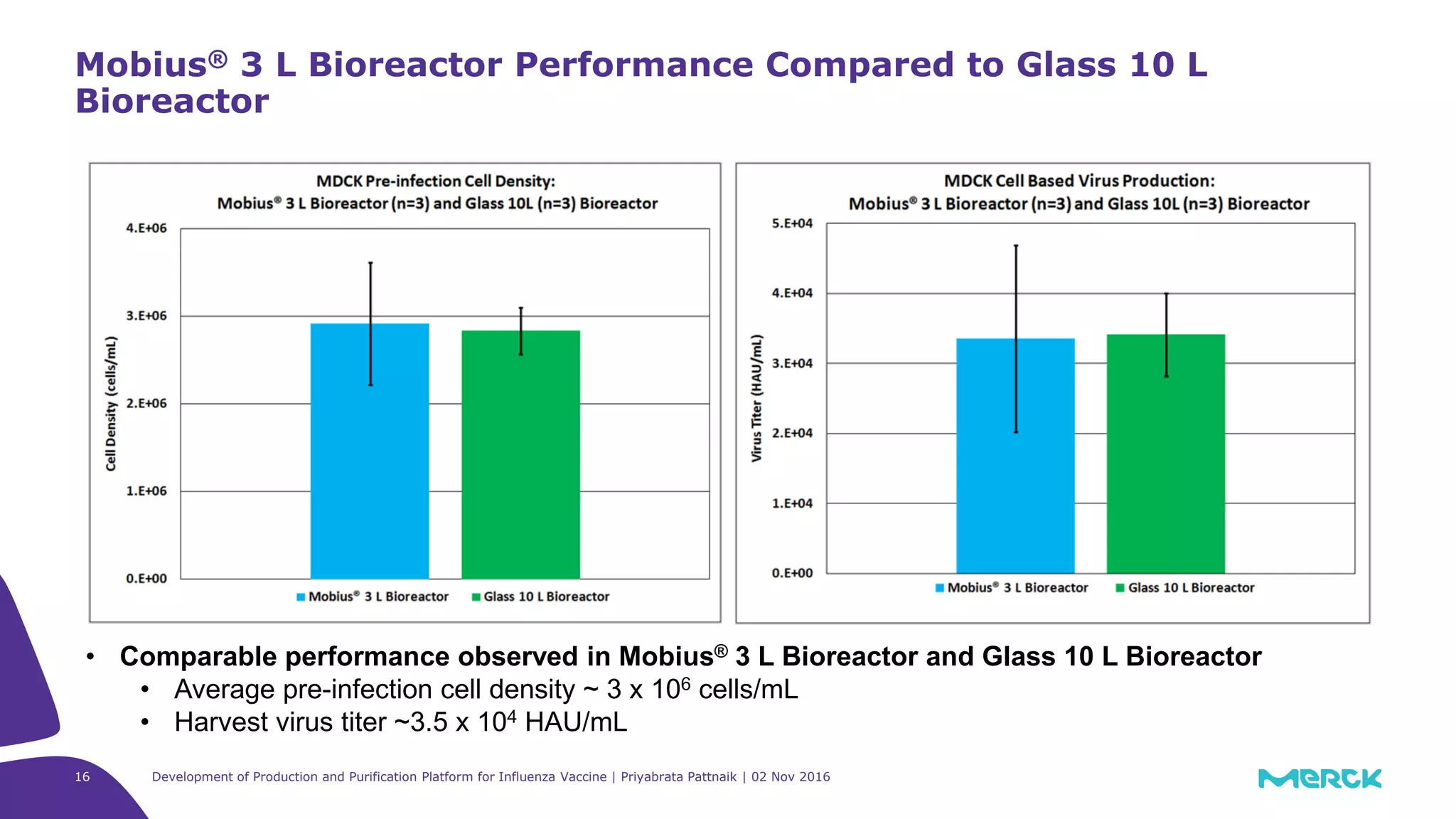
Mobius® 3 L Bioreactor Performance Compared to Glass 10 L
Bioreactor
• Comparable performance observed in Mobius® 3 L Bioreactor and Glass 10 L Bioreactor
• Average pre-infection cell density ~ 3 x 10⁶ cells/mL
• Harvest virus titer ~3.5 x 10⁴ HAU/mL
Development of Production and Purification Platform for Influenza Vaccine | Priyabrata Pattnaik | 02 Nov 2016
17
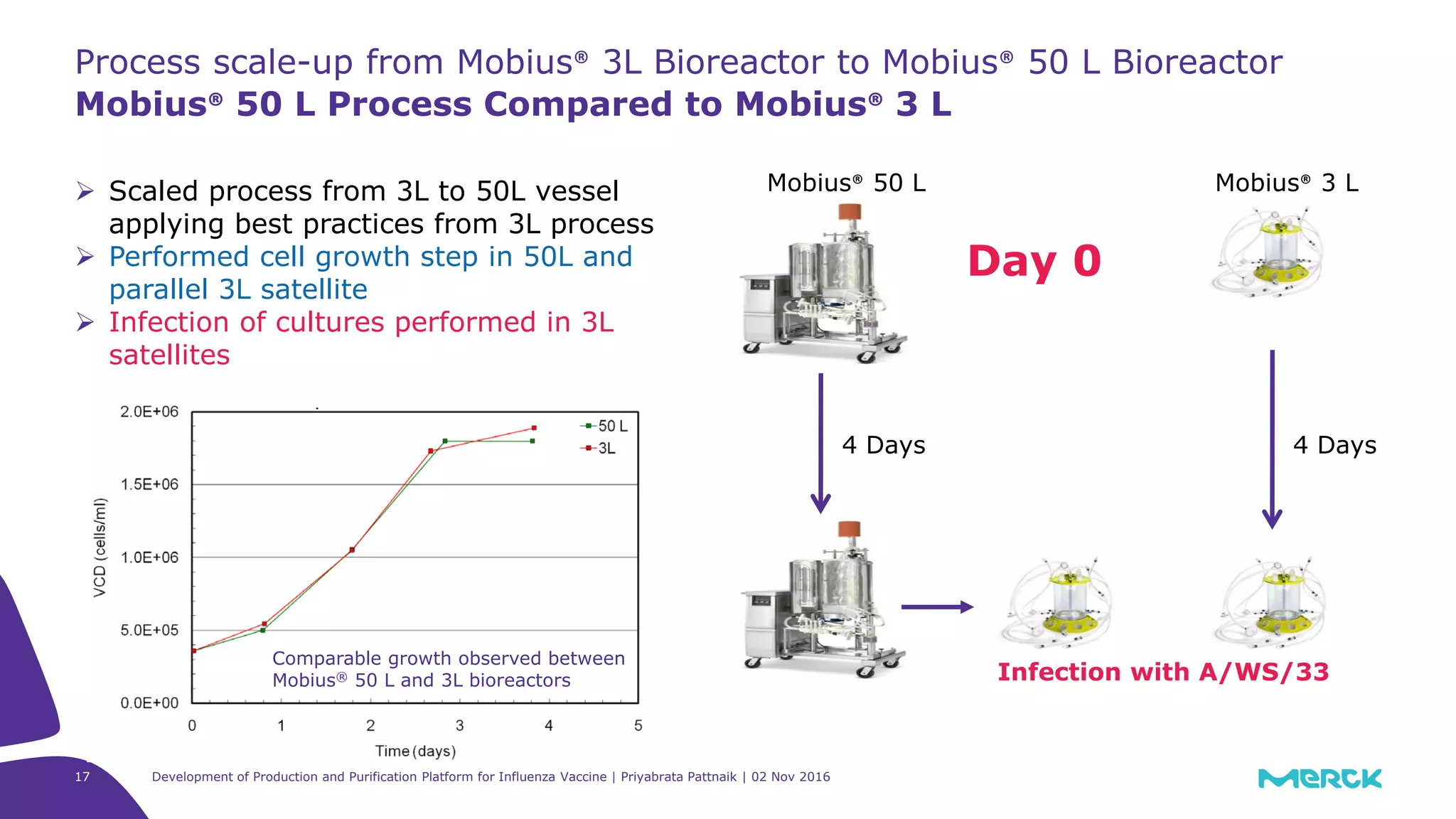
Process scale-up from Mobius® 3L Bioreactor to Mobius® 50 L Bioreactor
Mobius® 50 L Process Compared to Mobius® 3 L
 Scaled process from 3L to 50L vessel
applying best practices from 3L process
 Performed cell growth step in 50L and
parallel 3L satellite
 Infection of cultures performed in 3L
satellites
Mobius® 50 L Mobius® 3 L
4 Days
Day 0
4 Days
Infection with A/WS/33
Development of Production and Purification Platform for Influenza Vaccine | Priyabrata Pattnaik | 02 Nov 2016
Comparable growth observed between
Mobius® 50 L and 3L bioreactors
Residual DNA
Removal by
Benzonase®
Endonuclease
19
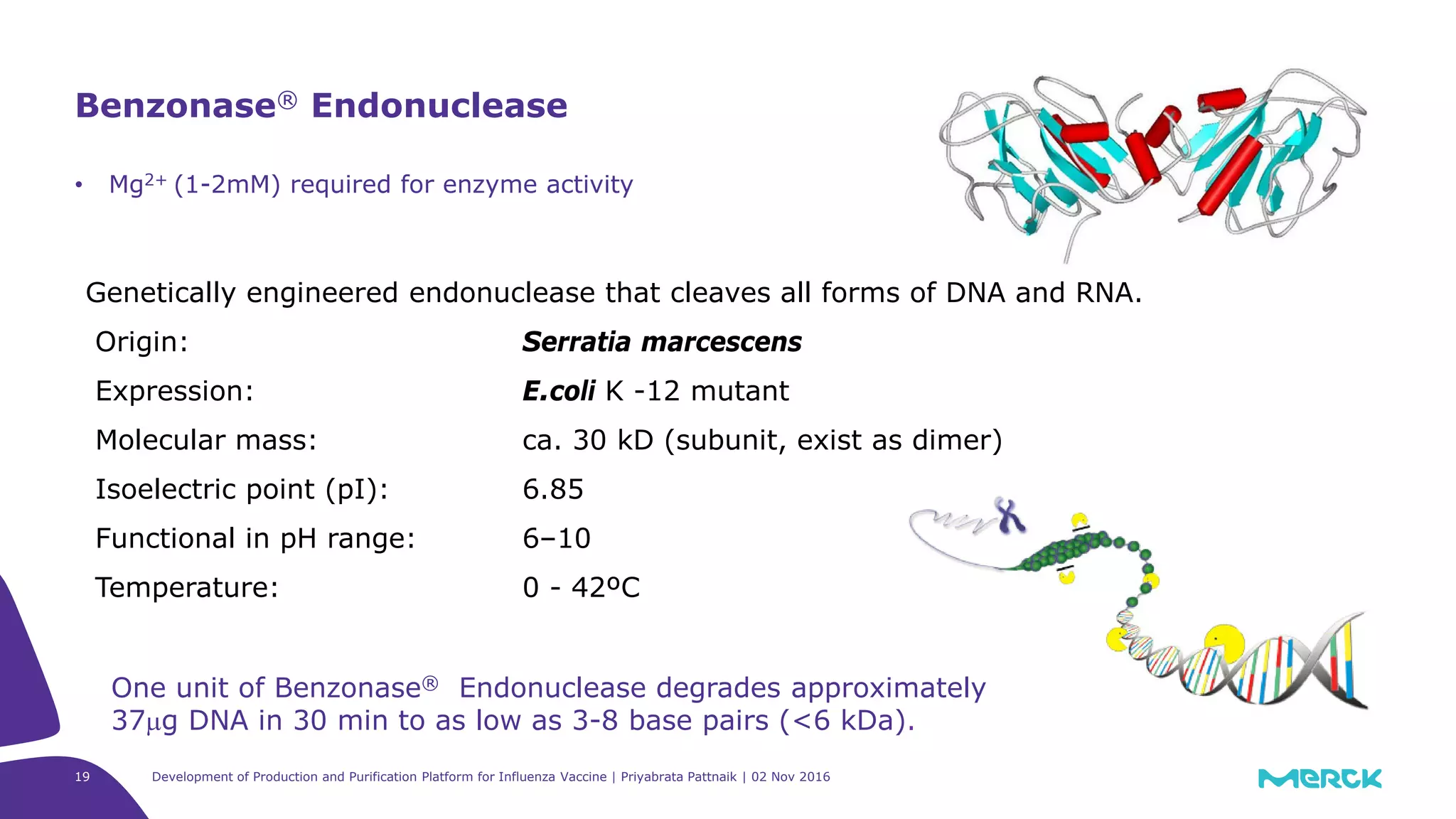
• Mg2+ (1-2mM) required for enzyme activity
Benzonase® Endonuclease
Genetically engineered endonuclease that cleaves all forms of DNA and RNA.
Origin: Serratia marcescens
Expression: E.coli K -12 mutant
Molecular mass: ca. 30 kD (subunit, exist as dimer)
Isoelectric point (pI): 6.85
Functional in pH range: 6–10
Temperature: 0 - 42ºC
One unit of Benzonase® Endonuclease degrades approximately
37µg DNA in 30 min to as low as 3-8 base pairs (<6 kDa).
Development of Production and Purification Platform for Influenza Vaccine | Priyabrata Pattnaik | 02 Nov 2016
20
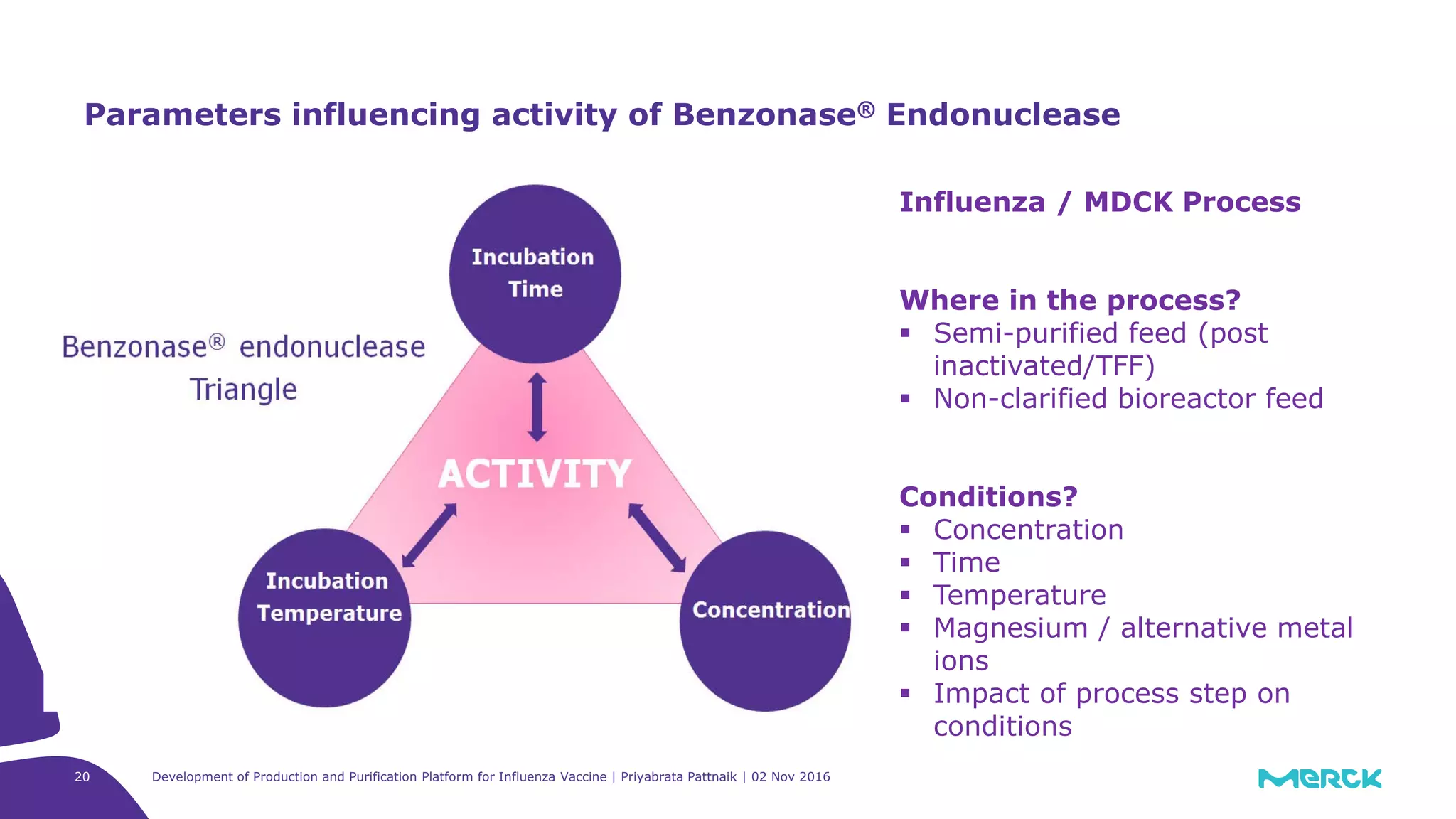
Parameters influencing activity of Benzonase® Endonuclease
Influenza / MDCK Process
Where in the process?
 Semi-purified feed (post
inactivated/TFF)
 Non-clarified bioreactor feed
Conditions?
 Concentration
 Time
 Temperature
 Magnesium / alternative metal
ions
 Impact of process step on
conditions
Development of Production and Purification Platform for Influenza Vaccine | Priyabrata Pattnaik | 02 Nov 2016
21
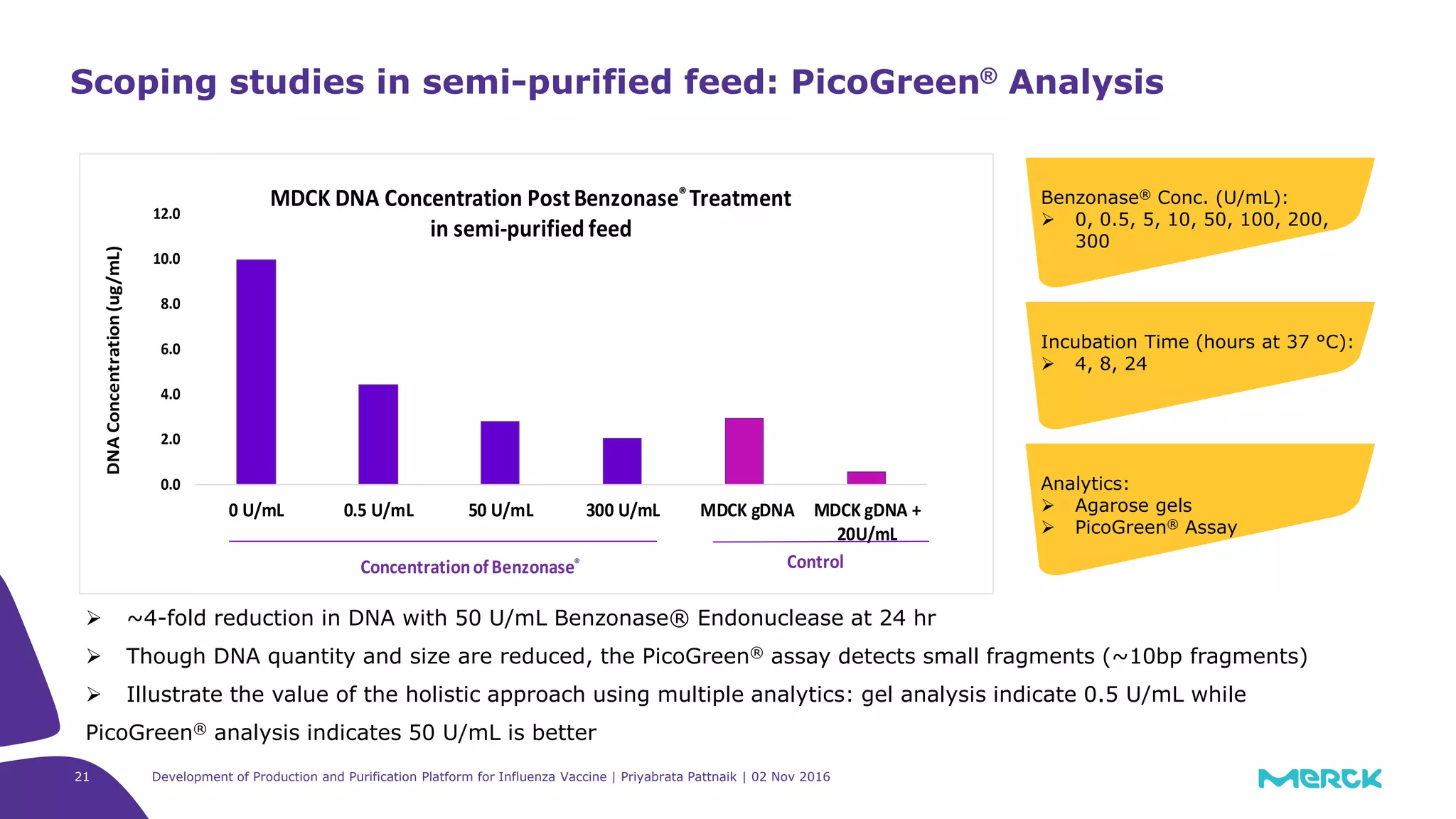
Scoping studies in semi-purified feed: PicoGreen® Analysis
 ~4-fold reduction in DNA with 50 U/mL Benzonase® Endonuclease at 24 hr
 Though DNA quantity and size are reduced, the PicoGreen® assay detects small fragments (~10bp fragments)
 Illustrate the value of the holistic approach using multiple analytics: gel analysis indicate 0.5 U/mL while
PicoGreen® analysis indicates 50 U/mL is better
0.0
2.0
4.0
6.0
8.0
10.0
12.0
0 U/mL 0.5 U/mL 50 U/mL 300 U/mL MDCK gDNA MDCK gDNA +
20U/mL
DNAConcentration(ug/mL)
ConcentrationofBenzonase®
MDCK DNA Concentration PostBenzonase® Treatment
in semi-purified feed
Control
Incubation Time (hours at 37 °C):
 4, 8, 24
Benzonase® Conc. (U/mL):
 0, 0.5, 5, 10, 50, 100, 200,
300
Analytics:
 Agarose gels
 PicoGreen® Assay
Development of Production and Purification Platform for Influenza Vaccine | Priyabrata Pattnaik | 02 Nov 2016
0.0
0.2
0.4
0.6
0.8
1.0
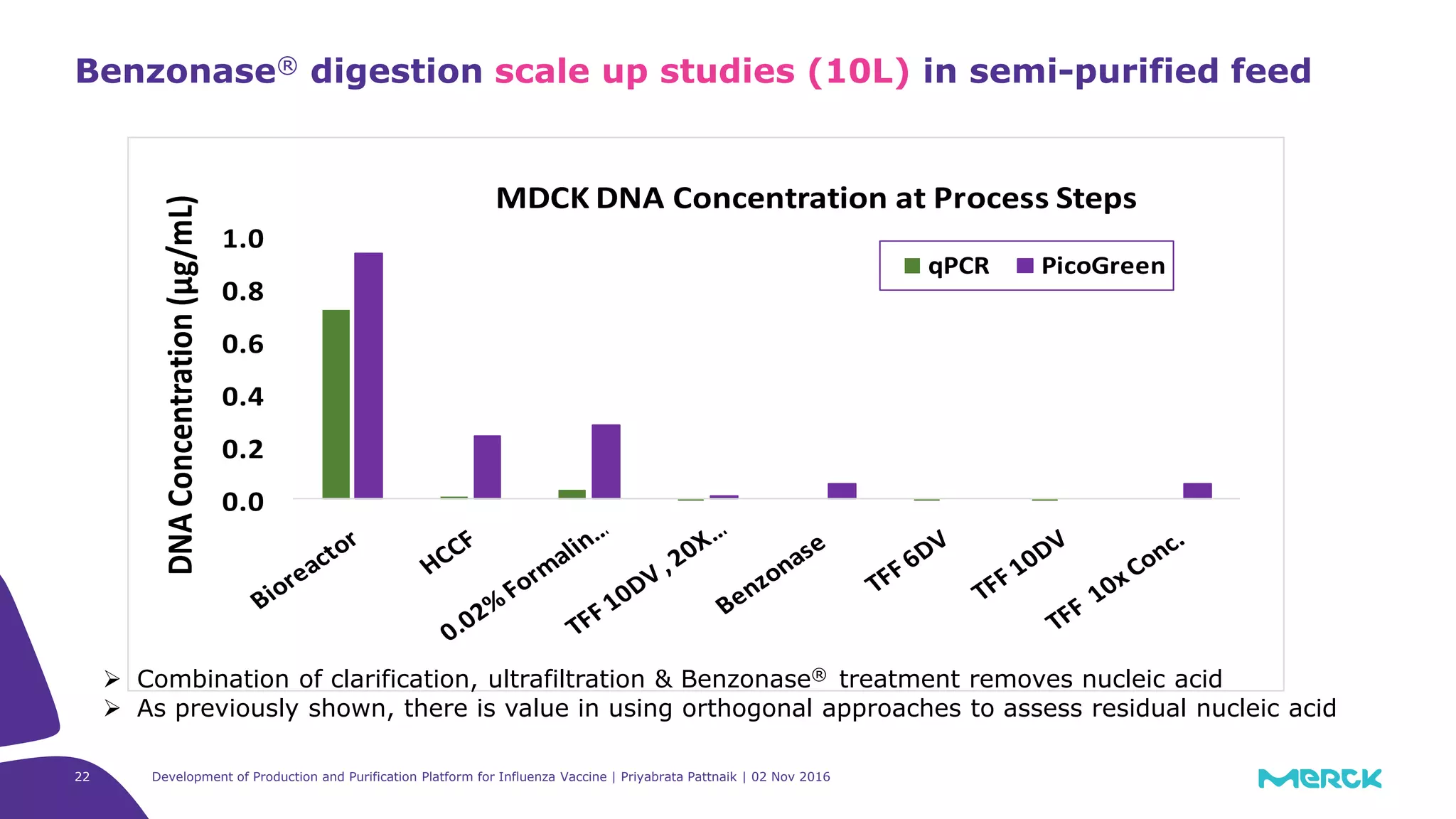
DNAConcentration(µg/mL) MDCK DNA Concentration at Process Steps
qPCR PicoGreen
22
Benzonase® digestion scale up studies (10L) in semi-purified feed
 Combination of clarification, ultrafiltration & Benzonase® treatment removes nucleic acid
 As previously shown, there is value in using orthogonal approaches to assess residual nucleic acid
Development of Production and Purification Platform for Influenza Vaccine | Priyabrata Pattnaik | 02 Nov 2016
23
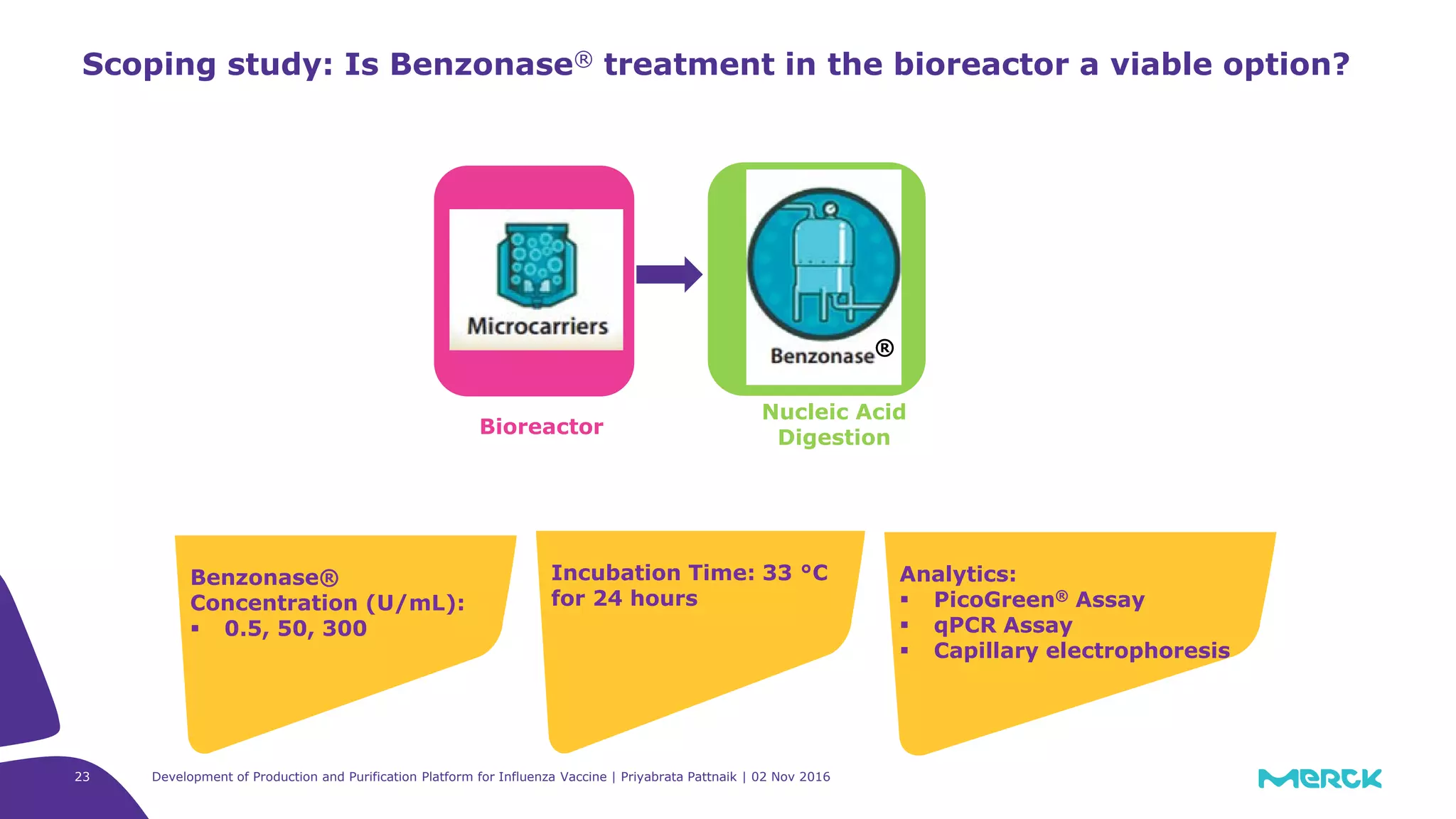
Scoping study: Is Benzonase® treatment in the bioreactor a viable option?
Bioreactor
Nucleic Acid
Digestion
Incubation Time: 33 °C
for 24 hours
Benzonase®
Concentration (U/mL):
 0.5, 50, 300
Analytics:
 PicoGreen® Assay
 qPCR Assay
 Capillary electrophoresis
®
Development of Production and Purification Platform for Influenza Vaccine | Priyabrata Pattnaik | 02 Nov 2016
24
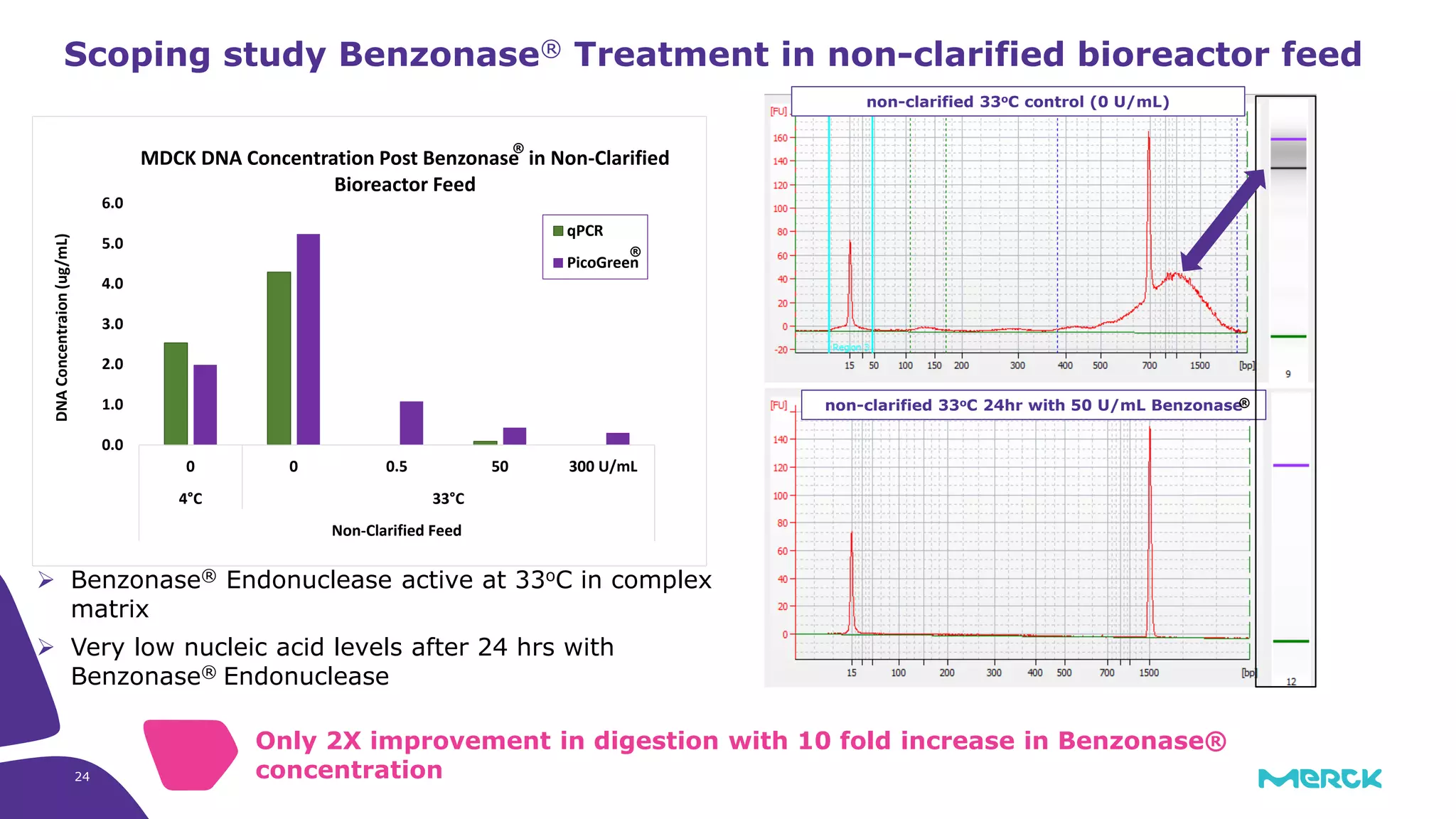
Scoping study Benzonase® Treatment in non-clarified bioreactor feed
 Benzonase® Endonuclease active at 33oC in complex
matrix
 Very low nucleic acid levels after 24 hrs with
Benzonase® Endonuclease
non-clarified 33oC control (0 U/mL)
non-clarified 33oC 24hr with 50 U/mL Benzonase
0.0
1.0
2.0
3.0
4.0
5.0
6.0
0 0 0.5 50 300 U/mL
4°C 33°C
Non-Clarified Feed
DNAConcentraion(ug/mL)
MDCK DNA Concentration Post Benzonase in Non-Clarified
Bioreactor Feed
qPCR
PicoGreen
®
®
®
Only 2X improvement in digestion with 10 fold increase in Benzonase®
concentration
Virus
Inactivation
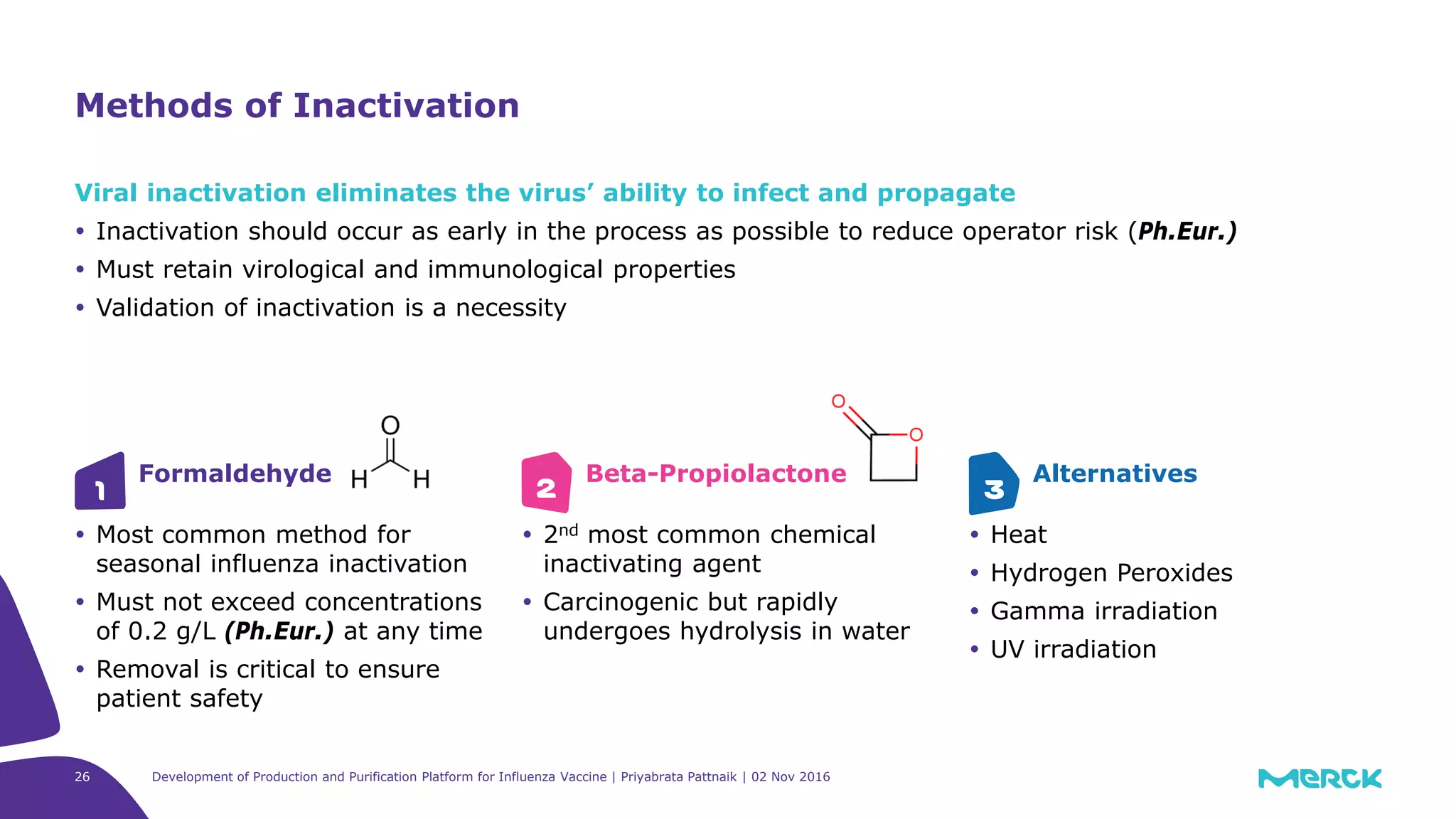
Methods of Inactivation
Viral inactivation eliminates the virus’ ability to infect and propagate
 Inactivation should occur as early in the process as possible to reduce operator risk (Ph.Eur.)
 Must retain virological and immunological properties
 Validation of inactivation is a necessity
Formaldehyde
 Most common method for
seasonal influenza inactivation
 Must not exceed concentrations
of 0.2 g/L (Ph.Eur.) at any time
 Removal is critical to ensure
patient safety
Beta-Propiolactone
 2nd most common chemical
inactivating agent
 Carcinogenic but rapidly
undergoes hydrolysis in water
Alternatives
 Heat
 Hydrogen Peroxides
 Gamma irradiation
 UV irradiation
1 2 3
Development of Production and Purification Platform for Influenza Vaccine | Priyabrata Pattnaik | 02 Nov 201626
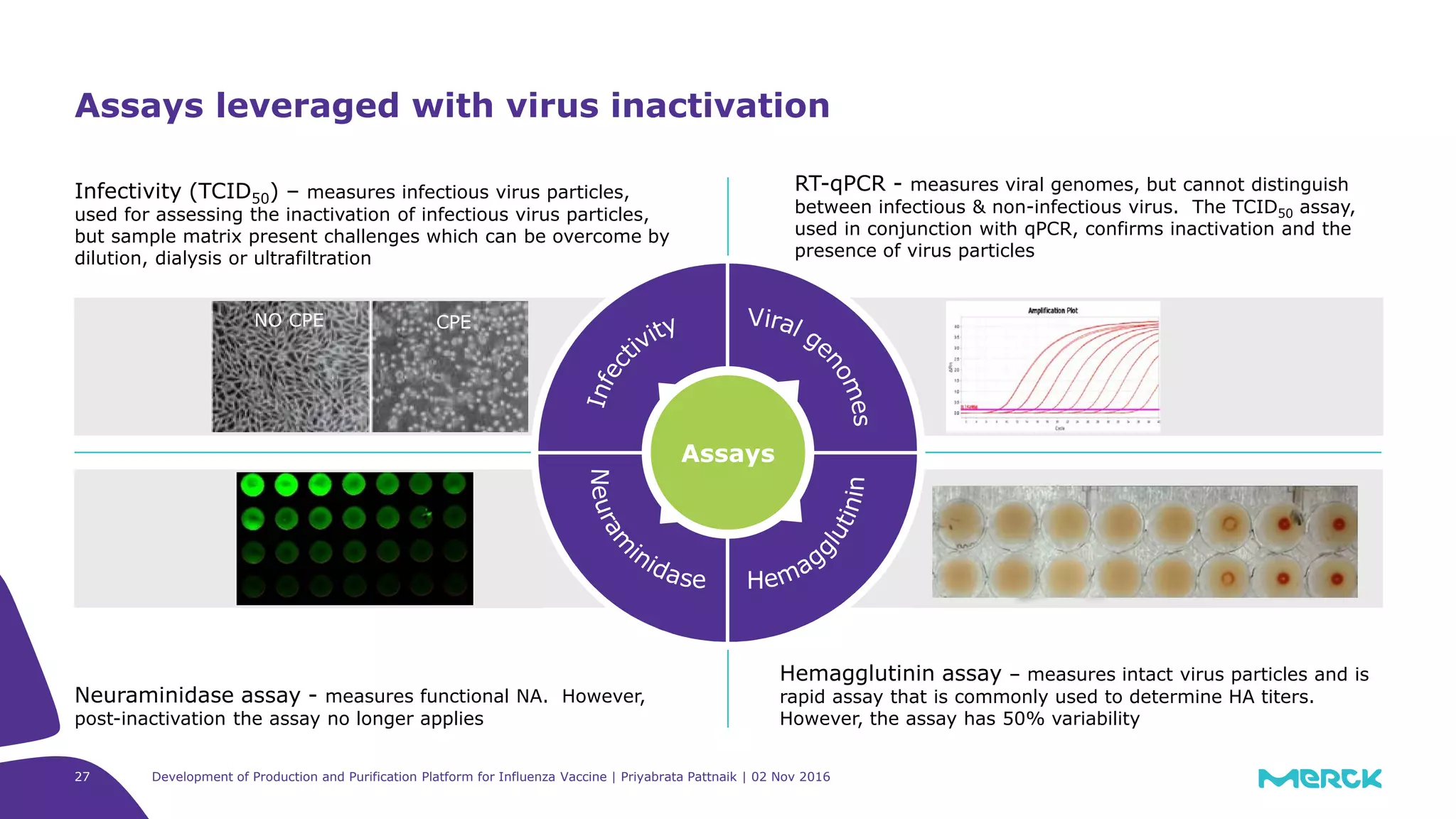
RT-qPCR - measures viral genomes, but cannot distinguish
between infectious & non-infectious virus. The TCID50 assay,
used in conjunction with qPCR, confirms inactivation and the
presence of virus particles
Hemagglutinin assay – measures intact virus particles and is
rapid assay that is commonly used to determine HA titers.
However, the assay has 50% variability
Infectivity (TCID50) – measures infectious virus particles,
used for assessing the inactivation of infectious virus particles,
but sample matrix present challenges which can be overcome by
dilution, dialysis or ultrafiltration
Neuraminidase assay - measures functional NA. However,
post-inactivation the assay no longer applies
Development of Production and Purification Platform for Influenza Vaccine | Priyabrata Pattnaik | 02 Nov 201627
Assays leveraged with virus inactivation
Assays
NO CPE CPE
Full factorial design
 3 factors: [formaldehyde], incubation time and
temperature
 Varying levels of each factor
 5 x 2 x 4 factorial
Experimental setup
 Clarified MDCK-based influenza feedstream
 Shaker flasks with agitation
Responses
 Infectivity assay (TCID50) performed for confirmation
of inactivation of Influenza
 Influenza RT-qPCR analysis conducted for presence of
viral genomic RNA before and after inactivation
 HA assay performed for hemagglutinin titer (Assay
variability of 50%)
Experimental Design and Responses
Development of Production and Purification Platform for Influenza Vaccine | Priyabrata Pattnaik | 02 Nov 201628
RT = 22°C-23°C
Development of Production and Purification Platform for Influenza Vaccine | Priyabrata Pattnaik | 02 Nov 201629
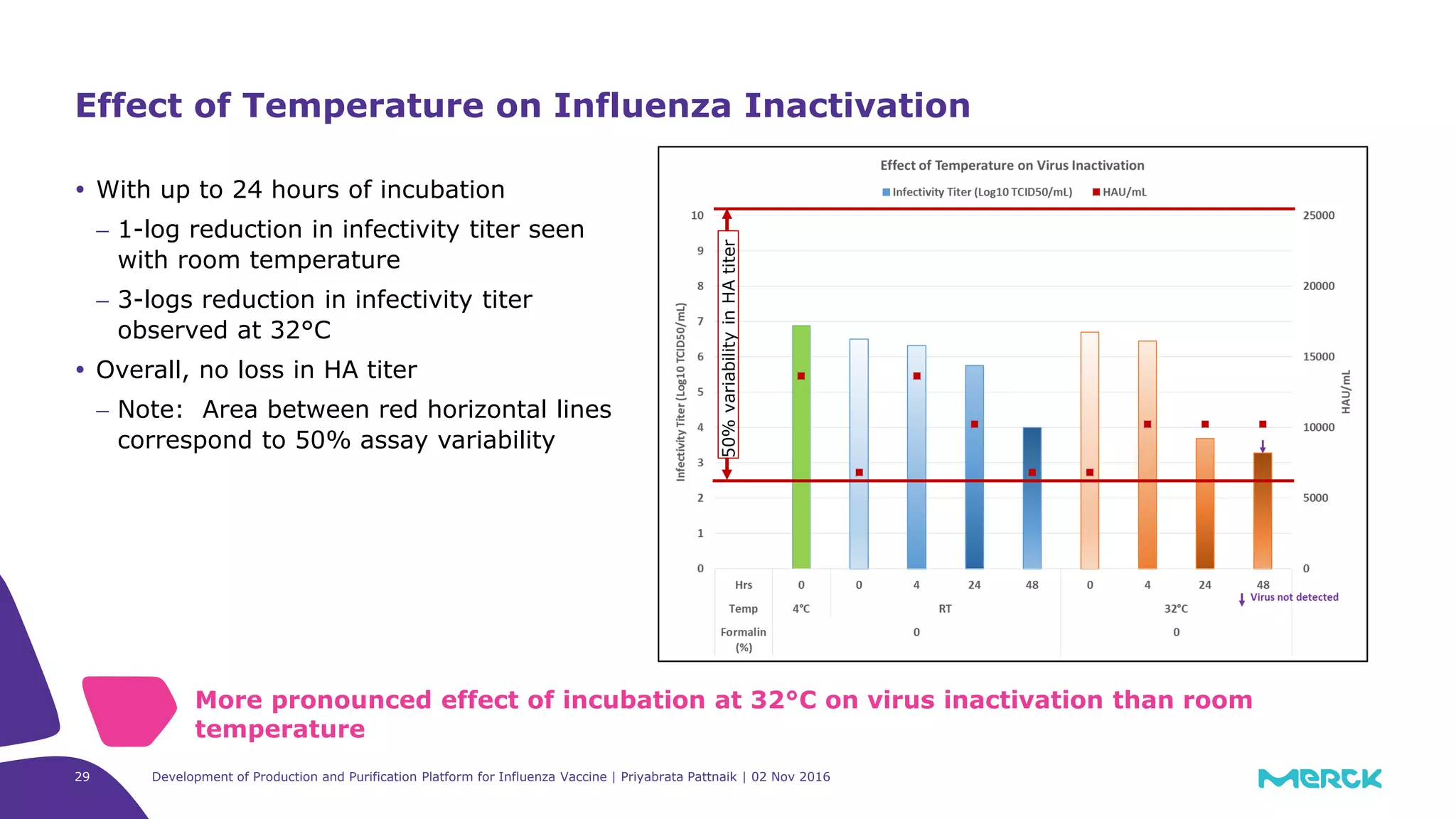
 With up to 24 hours of incubation
− 1-log reduction in infectivity titer seen
with room temperature
− 3-logs reduction in infectivity titer
observed at 32°C
 Overall, no loss in HA titer
− Note: Area between red horizontal lines
correspond to 50% assay variability
Effect of Temperature on Influenza Inactivation
More pronounced effect of incubation at 32°C on virus inactivation than room
temperature 50%variabilityinHAtiter
Development of Production and Purification Platform for Influenza Vaccine | Priyabrata Pattnaik | 02 Nov 201630
 5-logs reduction in infectivity titer with
0.02% formaldehyde and 4 hour incubation
at room temperature
 No loss in HA titer overall
− Even with increasing [formaldehyde] and
extended incubation time
− Note: Area between red horizontal lines
correspond to 50% assay variability
Effect of Room Temperature and Formaldehyde on Influenza
Inactivation
Influenza inactivation achieved with lowest [formaldehyde] and shortest incubation
time
50%variabilityinHAtiter
Development of Production and Purification Platform for Influenza Vaccine | Priyabrata Pattnaik | 02 Nov 201631
 6-logs reduction in infectivity titer with
0.02% formaldehyde and 4 hour incubation
at 32°C
 Detrimental effect on HA titer with highest
[formaldehyde] and prolonged incubation
time
− 0.2% formaldehyde for 24 hours
− 0.2% and 0.1% formaldehyde for 48 hours
− Note: Area between red horizontal lines
correspond to 50% assay variability
Effect of 32°C Temperature and Formaldehyde on Influenza
Inactivation
Influenza inactivation achieved with lowest [formaldehyde] and shortest incubation
time
50%variabilityinHAtiter
Development of Production and Purification Platform for Influenza Vaccine | Priyabrata Pattnaik | 02 Nov 201632
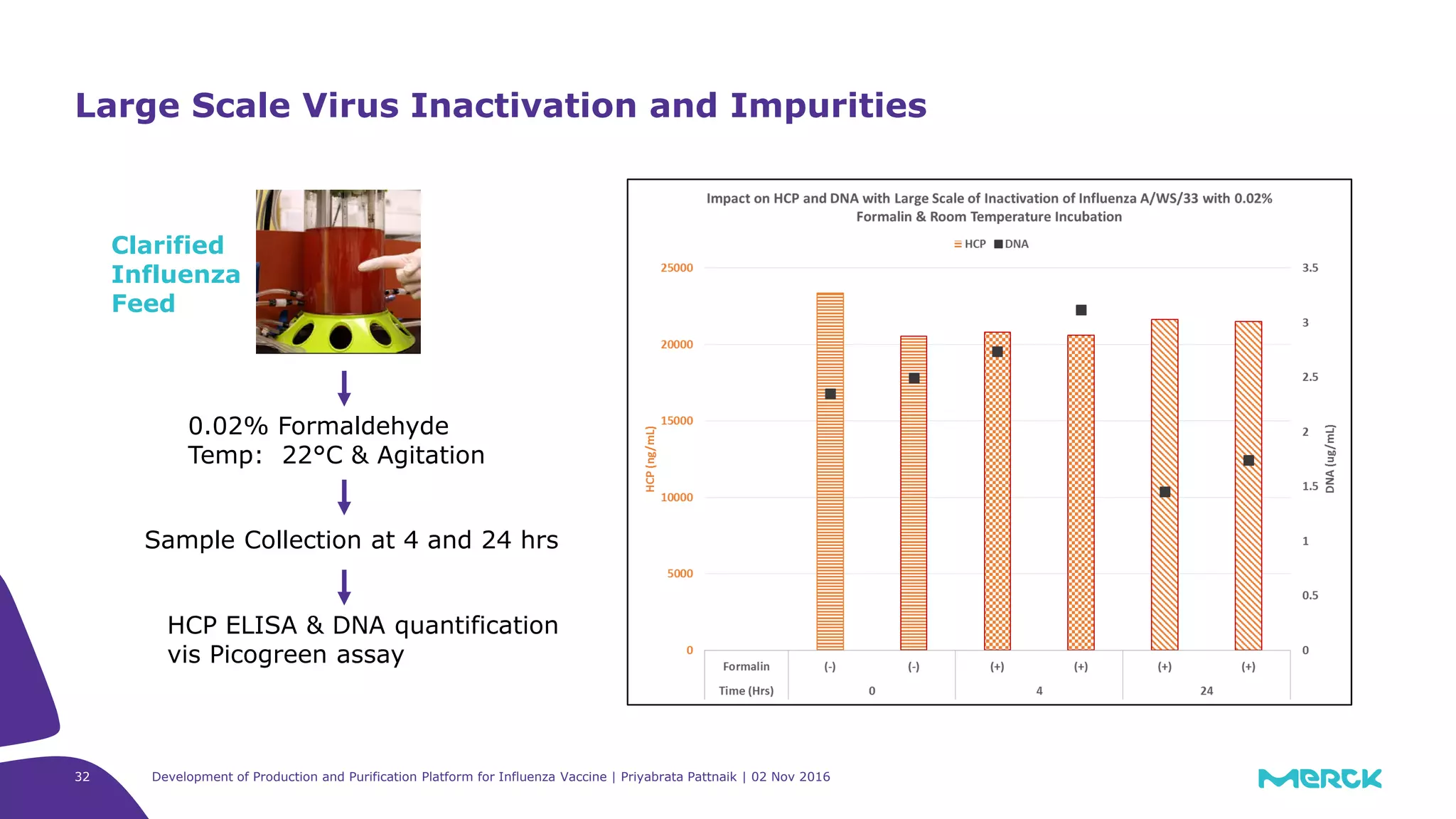
Large Scale Virus Inactivation and Impurities
0.02% Formaldehyde
Temp: 22°C & Agitation
Sample Collection at 4 and 24 hrs
Clarified
Influenza
Feed
HCP ELISA & DNA quantification
vis Picogreen assay
33
Conclusions
3
2
1
Cell Culture and Influenza Virus Production
 Successfully cultured MDCK cells and produced virus in Mobius® 3 L Bioreactor
 Cell attachment under continuous agitation conditions
 Batch inoculation at full working volume to ensure homogenous attachment of cells to
microcarriers
 Agitation at 90 rpm provides adequate mixing for cell attachment and growth
 Use of open pipe sparging to support cell growth and minimize foam accumulation
 Demonstrated comparable process performance in Mobius® 3 L and 50 L Single-use
Bioreactors
Benzonase Treatment Optimization
 Studied impact of Benzonase concentration, time and temperature on DNA digestion
 Studied successful removal of DNA by orthogonal processing methods
 Explored possibility of using Benzonase directly in bioreactor
Inactivation of Influenza virus
 Optimized inactivation using formaldehyde to ensure complete virus inactivation
Limited impact on virus antigenicity and analytical assays.
DOE derived process parameters were successfully verified at larger scale demonstration
of influenza inactivation with no negative impact on HCP and DNA quantification
Development of Production and Purification Platform for Influenza Vaccine | Priyabrata Pattnaik | 02 Nov 2016
34
Acknowledgements
Upstream Process Development
Michael McGlothlen
Paul Hatch
Michael Phillips
Chris Martin
Downstream Process Development
Christopher Gillespie
Sonal Patel
Jeff Caron
Lori Mullin
Krista Cunningham
Michael Bruce
Vaccine Program
Alex Xenopoulos
Vaccine Learning Center
www.merckmillipore.com/vaccines
Thank You
Priyabrata Pattnaik, PhD
priyabrata.pattnaik@merckgroup.com
@pattnaik_p
https://sg.linkedin.com/in/priyabratapattnaik
https://plus.google.com/109816383630328905377

Development of Production and Purification Platformform for Influenza Vaccine

  • 1.
    Priyabrata Pattnaik, PhD Director,Head of Biologics Operations – Asia Pacific Development of Production and Purification Platform for Influenza Vaccine
  • 2.
    2 Presentation Outline Introduction Upstream andvirus production Residual DNA removal by Benzonase® treatment Virus inactivation by Formaldehyde treatment Conclusions Development of Production and Purification Platform for Influenza Vaccine | Priyabrata Pattnaik | 02 Nov 2016
  • 3.
    Annual Vaccine HA protein(most common)  Typically 3-4 varieties (valences)  Dosage info (0.5mL/dose) − HA: 15μg of each HA protein − Formaldehyde: ≤ 200ppm − Endotoxin: < 100 IU/dose − Other protein: < 6 x HA content (< 300 μg/dose) − DNA: < 10ng/dose − Purity: 95% by gel (Coomassie blue) Background Influenza 3 80-120 nm enveloped virus By National Institutes of Health; originally uploaded to en.wikipedia by TimVickers (25 October 2006), transferred to Commons by Quadell using CommonsHelper. (California Department of Health Services) [Public domain], via Wikimedia Commons Development of Production and Purification Platform for Influenza Vaccine | Priyabrata Pattnaik | 02 Nov 2016
  • 4.
    Development of Productionand Purification Platform for Influenza Vaccine | Priyabrata Pattnaik | 02 Nov 20164 Observations  Large number of unit operations  Cumbersome  Multiple opportunities for process improvements  Application of technologies developed for small proteins – not optimized for large molecule separations Generic Process for Cell Culture Based Influenza Vaccine
  • 5.
  • 6.
    Development of Productionand Purification Platform for Influenza Vaccine | Priyabrata Pattnaik | 02 Nov 20164 Modes of Influenza Vaccine Production Egg Based Cell Culture Based 2D Adherent 3D Stirred Tank • Production is slow and subject to avian flu outbreaks • Improved supply chain robustness • Rapid response to address pandemics • Industrial and regulatory drive for cell based processes • Labor intensive • Large footprint to support equipment • Reduced process steps • Easy to scale up 31,000 eggs ≈ 1000 L of culture!
  • 7.
    7 Process Schematic Process StepDetails Cell Selection MDCK (ATCC® CCL-34) Cell Expansion (2-D Culture) Seed at 1 x 10⁵ cells/mL Passage 3 - 4 days Growth Media: DMEM 10% FBS, 4.5 g/L Glucose, 2.25 g/L NaHCO3, 4mM L-Glutamine, 1 X NEAA, 1 x NaPyr Bioreactor Culture (3-D Culture) 2 – 3e5 cells/mL Cytodex® microcarriers (4 g/L) Cell Counts : NC-100™ Nucleocounter® Bioreactor Infection / Media Exchange Influenza A/WS/33 Infection Media DMEM 4.5 g/L Glucose, 2.25 g/L NaHCO3, 4mM L- Glutamine, 1 X NEAA, 1 x NaPyr Virus Quantification Hemagglutination Dilution-based assay Viral protein binds to RBCs Development of Production and Purification Platform for Influenza Vaccine | Priyabrata Pattnaik | 02 Nov 2016
  • 8.
    8  Cell attachment Initial batch volume  Agitation speed  Sparging  Process Scale-up Bioreactor Process Development Development of Production and Purification Platform for Influenza Vaccine | Priyabrata Pattnaik | 02 Nov 2016
  • 9.
    9 Cell Attachment inMobius® 3 L Bioreactor with Continuous Mixing  Cells efficiently attach to microcarriers while continuously mixed at 75 rpm Day 0 Day 1 Day 2 Day 3 Day 4 Development of Production and Purification Platform for Influenza Vaccine | Priyabrata Pattnaik | 02 Nov 2016
  • 10.
    10 Optimize Mobius® 3L Bioreactor Initial Volume Bioreactor Starting Volume: Uneven distribution of cells on microcarriers Even distribution of cells on microcarriers 1.0L 1.6L 2.0L Development of Production and Purification Platform for Influenza Vaccine | Priyabrata Pattnaik | 02 Nov 2016  Guidance from microcarrier manufacturer suggests starting bioreactors at partial volume with concentrated microcarriers and cells. Then feed to full volume after cells attach.  Mobius® 3L bioreactor capable of operating between 1.0 – 2.4 L
  • 11.
    11 Optimize Starting Volumefor Mobius® 3 L Bioreactor • Cell growth performance comparable in the conditions tested  Bioreactors can be batched at full working volume eliminating additional feed step Development of Production and Purification Platform for Influenza Vaccine | Priyabrata Pattnaik | 02 Nov 2016
  • 12.
    12  Selection ofoptimal agitation to suspend microcarriers and attached cells  Just suspended mixing speed (Njs)  Homogenous suspension  Provide adequate mixing and aeration to support cell growth  What scaling factor do we use for agitation?  Agitation Speed (rpm)  Tip speed (cm/s)  Power / volume (W/m3) Optimize Agitation Speed in Mobius® 3 L Bioreactor Development of Production and Purification Platform for Influenza Vaccine | Priyabrata Pattnaik | 02 Nov 2016
  • 13.
    13 Optimize Agitation forCell Growth in Mobius® 3 L Bioreactor • Fully confluent microcarriers tend to settle near the bottom with slower agitation speeds with the increased biomass • Sheer stress at higher speeds may slow cell growth  Using agitation speed of 90 rpm provides the best growth  90 rpm Agitation Speed (rpm) Tip Speed (cm/s) Power Input (W/m3) 75 29.9 0.7 90 35.9 1.3 150 59.8 6.0 Development of Production and Purification Platform for Influenza Vaccine | Priyabrata Pattnaik | 02 Nov 2016
  • 14.
    14 Sparging considerations  Growth Sparging needs to be able to supply enough oxygen to support viable cell growth  Excessive sparging will impart shear stress on culture  Foaming  Foaming an issue with cultures containing FBS  Increased foam and shear from bubbles rupture cells at air surface interface  Cell and microcarriers will tend to get trapped in foam layer  Microspargers tend to produce more foam than open pipe Evaluate Oxygen Sparge Strategies to Support Cell Growth and Minimize Foaming Development of Production and Purification Platform for Influenza Vaccine | Priyabrata Pattnaik | 02 Nov 2016
  • 15.
    15 Visual Inspection ofAttached Cells On Microcarriers Using Open Pipe and Microsparger In Mobius® 3 L Bioreactor  Significant amount of cell debris  2.5 cm foam layer on surface Selected O2 open pipe sparger Open Pipe Oxygen Microsparger O2/Air Microsparger O2  No cell debris  Minimal foam Development of Production and Purification Platform for Influenza Vaccine | Priyabrata Pattnaik | 02 Nov 2016
  • 16.
    16 Mobius® 3 LBioreactor Performance Compared to Glass 10 L Bioreactor • Comparable performance observed in Mobius® 3 L Bioreactor and Glass 10 L Bioreactor • Average pre-infection cell density ~ 3 x 10⁶ cells/mL • Harvest virus titer ~3.5 x 10⁴ HAU/mL Development of Production and Purification Platform for Influenza Vaccine | Priyabrata Pattnaik | 02 Nov 2016
  • 17.
    17 Process scale-up fromMobius® 3L Bioreactor to Mobius® 50 L Bioreactor Mobius® 50 L Process Compared to Mobius® 3 L  Scaled process from 3L to 50L vessel applying best practices from 3L process  Performed cell growth step in 50L and parallel 3L satellite  Infection of cultures performed in 3L satellites Mobius® 50 L Mobius® 3 L 4 Days Day 0 4 Days Infection with A/WS/33 Development of Production and Purification Platform for Influenza Vaccine | Priyabrata Pattnaik | 02 Nov 2016 Comparable growth observed between Mobius® 50 L and 3L bioreactors
  • 18.
  • 19.
    19 • Mg2+ (1-2mM)required for enzyme activity Benzonase® Endonuclease Genetically engineered endonuclease that cleaves all forms of DNA and RNA. Origin: Serratia marcescens Expression: E.coli K -12 mutant Molecular mass: ca. 30 kD (subunit, exist as dimer) Isoelectric point (pI): 6.85 Functional in pH range: 6–10 Temperature: 0 - 42ºC One unit of Benzonase® Endonuclease degrades approximately 37µg DNA in 30 min to as low as 3-8 base pairs (<6 kDa). Development of Production and Purification Platform for Influenza Vaccine | Priyabrata Pattnaik | 02 Nov 2016
  • 20.
    20 Parameters influencing activityof Benzonase® Endonuclease Influenza / MDCK Process Where in the process?  Semi-purified feed (post inactivated/TFF)  Non-clarified bioreactor feed Conditions?  Concentration  Time  Temperature  Magnesium / alternative metal ions  Impact of process step on conditions Development of Production and Purification Platform for Influenza Vaccine | Priyabrata Pattnaik | 02 Nov 2016
  • 21.
    21 Scoping studies insemi-purified feed: PicoGreen® Analysis  ~4-fold reduction in DNA with 50 U/mL Benzonase® Endonuclease at 24 hr  Though DNA quantity and size are reduced, the PicoGreen® assay detects small fragments (~10bp fragments)  Illustrate the value of the holistic approach using multiple analytics: gel analysis indicate 0.5 U/mL while PicoGreen® analysis indicates 50 U/mL is better 0.0 2.0 4.0 6.0 8.0 10.0 12.0 0 U/mL 0.5 U/mL 50 U/mL 300 U/mL MDCK gDNA MDCK gDNA + 20U/mL DNAConcentration(ug/mL) ConcentrationofBenzonase® MDCK DNA Concentration PostBenzonase® Treatment in semi-purified feed Control Incubation Time (hours at 37 °C):  4, 8, 24 Benzonase® Conc. (U/mL):  0, 0.5, 5, 10, 50, 100, 200, 300 Analytics:  Agarose gels  PicoGreen® Assay Development of Production and Purification Platform for Influenza Vaccine | Priyabrata Pattnaik | 02 Nov 2016
  • 22.
    0.0 0.2 0.4 0.6 0.8 1.0 DNAConcentration(µg/mL) MDCK DNAConcentration at Process Steps qPCR PicoGreen 22 Benzonase® digestion scale up studies (10L) in semi-purified feed  Combination of clarification, ultrafiltration & Benzonase® treatment removes nucleic acid  As previously shown, there is value in using orthogonal approaches to assess residual nucleic acid Development of Production and Purification Platform for Influenza Vaccine | Priyabrata Pattnaik | 02 Nov 2016
  • 23.
    23 Scoping study: IsBenzonase® treatment in the bioreactor a viable option? Bioreactor Nucleic Acid Digestion Incubation Time: 33 °C for 24 hours Benzonase® Concentration (U/mL):  0.5, 50, 300 Analytics:  PicoGreen® Assay  qPCR Assay  Capillary electrophoresis ® Development of Production and Purification Platform for Influenza Vaccine | Priyabrata Pattnaik | 02 Nov 2016
  • 24.
    24 Scoping study Benzonase®Treatment in non-clarified bioreactor feed  Benzonase® Endonuclease active at 33oC in complex matrix  Very low nucleic acid levels after 24 hrs with Benzonase® Endonuclease non-clarified 33oC control (0 U/mL) non-clarified 33oC 24hr with 50 U/mL Benzonase 0.0 1.0 2.0 3.0 4.0 5.0 6.0 0 0 0.5 50 300 U/mL 4°C 33°C Non-Clarified Feed DNAConcentraion(ug/mL) MDCK DNA Concentration Post Benzonase in Non-Clarified Bioreactor Feed qPCR PicoGreen ® ® ® Only 2X improvement in digestion with 10 fold increase in Benzonase® concentration
  • 25.
  • 26.
    Methods of Inactivation Viralinactivation eliminates the virus’ ability to infect and propagate  Inactivation should occur as early in the process as possible to reduce operator risk (Ph.Eur.)  Must retain virological and immunological properties  Validation of inactivation is a necessity Formaldehyde  Most common method for seasonal influenza inactivation  Must not exceed concentrations of 0.2 g/L (Ph.Eur.) at any time  Removal is critical to ensure patient safety Beta-Propiolactone  2nd most common chemical inactivating agent  Carcinogenic but rapidly undergoes hydrolysis in water Alternatives  Heat  Hydrogen Peroxides  Gamma irradiation  UV irradiation 1 2 3 Development of Production and Purification Platform for Influenza Vaccine | Priyabrata Pattnaik | 02 Nov 201626
  • 27.
    RT-qPCR - measuresviral genomes, but cannot distinguish between infectious & non-infectious virus. The TCID50 assay, used in conjunction with qPCR, confirms inactivation and the presence of virus particles Hemagglutinin assay – measures intact virus particles and is rapid assay that is commonly used to determine HA titers. However, the assay has 50% variability Infectivity (TCID50) – measures infectious virus particles, used for assessing the inactivation of infectious virus particles, but sample matrix present challenges which can be overcome by dilution, dialysis or ultrafiltration Neuraminidase assay - measures functional NA. However, post-inactivation the assay no longer applies Development of Production and Purification Platform for Influenza Vaccine | Priyabrata Pattnaik | 02 Nov 201627 Assays leveraged with virus inactivation Assays NO CPE CPE
  • 28.
    Full factorial design 3 factors: [formaldehyde], incubation time and temperature  Varying levels of each factor  5 x 2 x 4 factorial Experimental setup  Clarified MDCK-based influenza feedstream  Shaker flasks with agitation Responses  Infectivity assay (TCID50) performed for confirmation of inactivation of Influenza  Influenza RT-qPCR analysis conducted for presence of viral genomic RNA before and after inactivation  HA assay performed for hemagglutinin titer (Assay variability of 50%) Experimental Design and Responses Development of Production and Purification Platform for Influenza Vaccine | Priyabrata Pattnaik | 02 Nov 201628 RT = 22°C-23°C
  • 29.
    Development of Productionand Purification Platform for Influenza Vaccine | Priyabrata Pattnaik | 02 Nov 201629  With up to 24 hours of incubation − 1-log reduction in infectivity titer seen with room temperature − 3-logs reduction in infectivity titer observed at 32°C  Overall, no loss in HA titer − Note: Area between red horizontal lines correspond to 50% assay variability Effect of Temperature on Influenza Inactivation More pronounced effect of incubation at 32°C on virus inactivation than room temperature 50%variabilityinHAtiter
  • 30.
    Development of Productionand Purification Platform for Influenza Vaccine | Priyabrata Pattnaik | 02 Nov 201630  5-logs reduction in infectivity titer with 0.02% formaldehyde and 4 hour incubation at room temperature  No loss in HA titer overall − Even with increasing [formaldehyde] and extended incubation time − Note: Area between red horizontal lines correspond to 50% assay variability Effect of Room Temperature and Formaldehyde on Influenza Inactivation Influenza inactivation achieved with lowest [formaldehyde] and shortest incubation time 50%variabilityinHAtiter
  • 31.
    Development of Productionand Purification Platform for Influenza Vaccine | Priyabrata Pattnaik | 02 Nov 201631  6-logs reduction in infectivity titer with 0.02% formaldehyde and 4 hour incubation at 32°C  Detrimental effect on HA titer with highest [formaldehyde] and prolonged incubation time − 0.2% formaldehyde for 24 hours − 0.2% and 0.1% formaldehyde for 48 hours − Note: Area between red horizontal lines correspond to 50% assay variability Effect of 32°C Temperature and Formaldehyde on Influenza Inactivation Influenza inactivation achieved with lowest [formaldehyde] and shortest incubation time 50%variabilityinHAtiter
  • 32.
    Development of Productionand Purification Platform for Influenza Vaccine | Priyabrata Pattnaik | 02 Nov 201632 Large Scale Virus Inactivation and Impurities 0.02% Formaldehyde Temp: 22°C & Agitation Sample Collection at 4 and 24 hrs Clarified Influenza Feed HCP ELISA & DNA quantification vis Picogreen assay
  • 33.
    33 Conclusions 3 2 1 Cell Culture andInfluenza Virus Production  Successfully cultured MDCK cells and produced virus in Mobius® 3 L Bioreactor  Cell attachment under continuous agitation conditions  Batch inoculation at full working volume to ensure homogenous attachment of cells to microcarriers  Agitation at 90 rpm provides adequate mixing for cell attachment and growth  Use of open pipe sparging to support cell growth and minimize foam accumulation  Demonstrated comparable process performance in Mobius® 3 L and 50 L Single-use Bioreactors Benzonase Treatment Optimization  Studied impact of Benzonase concentration, time and temperature on DNA digestion  Studied successful removal of DNA by orthogonal processing methods  Explored possibility of using Benzonase directly in bioreactor Inactivation of Influenza virus  Optimized inactivation using formaldehyde to ensure complete virus inactivation Limited impact on virus antigenicity and analytical assays. DOE derived process parameters were successfully verified at larger scale demonstration of influenza inactivation with no negative impact on HCP and DNA quantification Development of Production and Purification Platform for Influenza Vaccine | Priyabrata Pattnaik | 02 Nov 2016
  • 34.
    34 Acknowledgements Upstream Process Development MichaelMcGlothlen Paul Hatch Michael Phillips Chris Martin Downstream Process Development Christopher Gillespie Sonal Patel Jeff Caron Lori Mullin Krista Cunningham Michael Bruce Vaccine Program Alex Xenopoulos Vaccine Learning Center www.merckmillipore.com/vaccines
  • 35.
    Thank You Priyabrata Pattnaik,PhD priyabrata.pattnaik@merckgroup.com @pattnaik_p https://sg.linkedin.com/in/priyabratapattnaik https://plus.google.com/109816383630328905377