

WELCOME TO OUR PRESENTATION
OUR TOPICS:
DEVELOPMENT OF CRIMINOLOGY
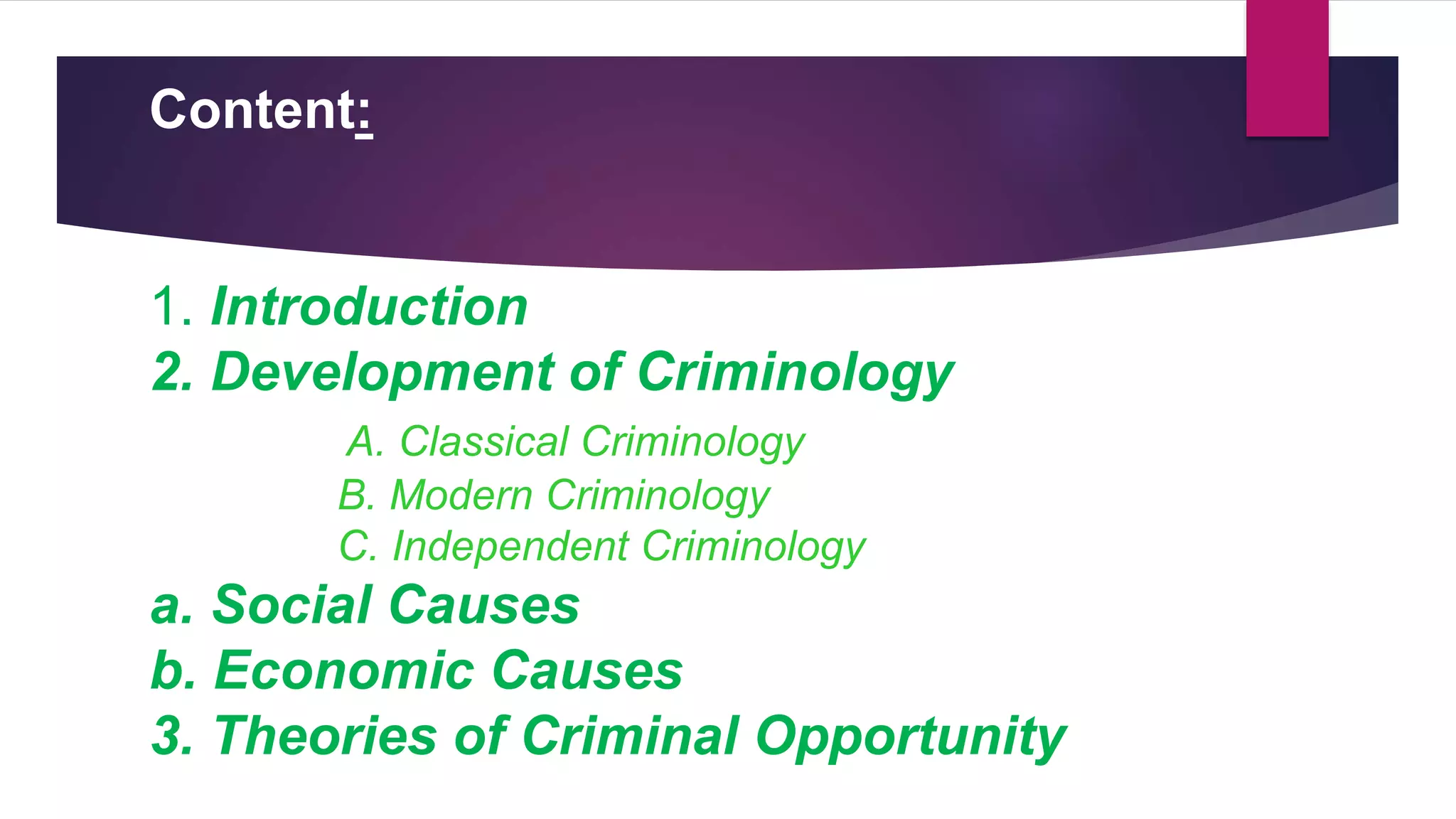
Content:
1. Introduction
2. Development of Criminology
A. Classical Criminology
B. Modern Criminology
C. Independent Criminology
a. Social Causes
b. Economic Causes
3. Theories of Criminal Opportunity
Introduction
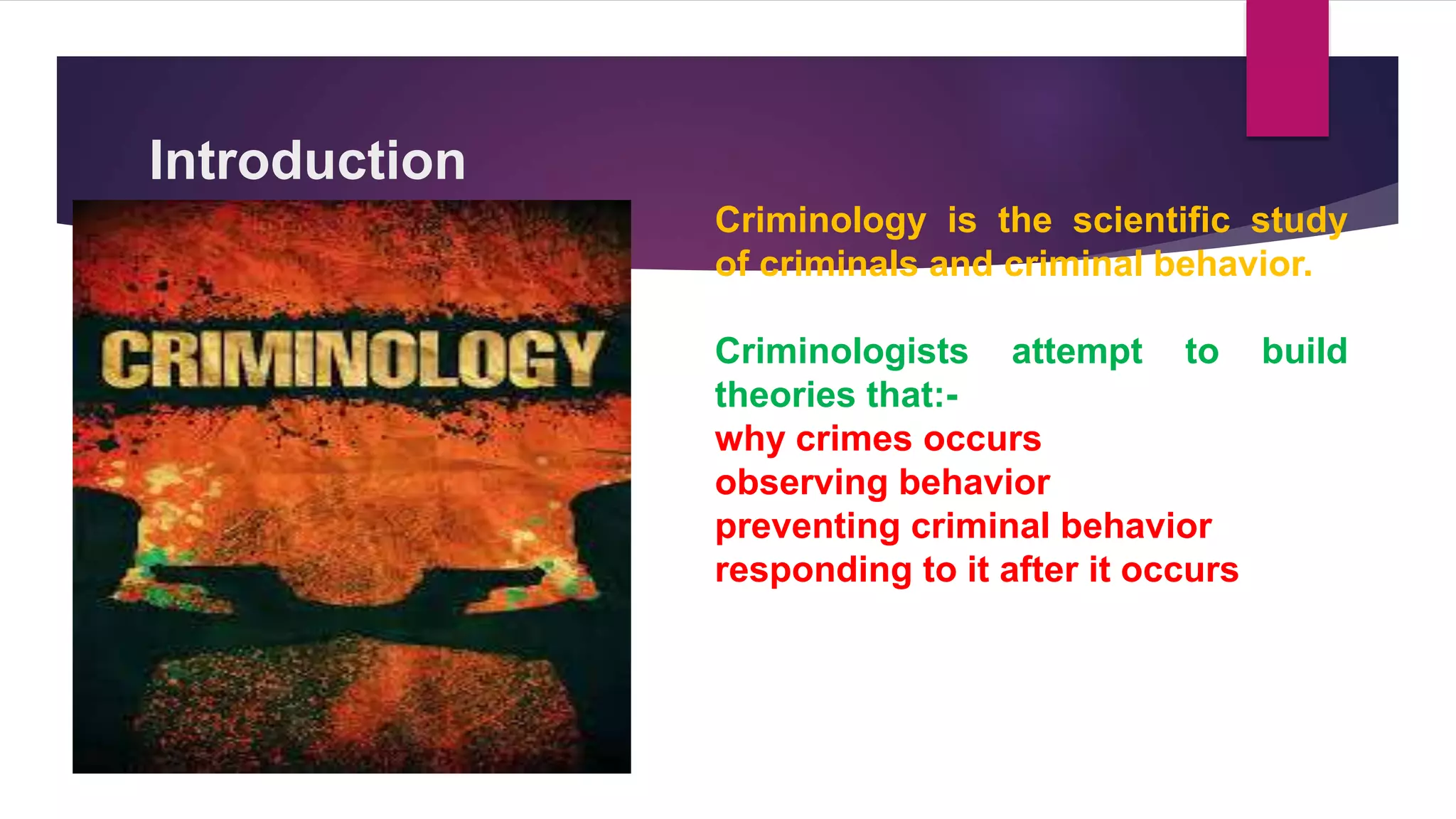
Criminology is the scientific study
of criminals and criminal behavior.
Criminologists attempt to build
theories that:-
why crimes occurs
observing behavior
preventing criminal behavior
responding to it after it occurs
Development of Criminology
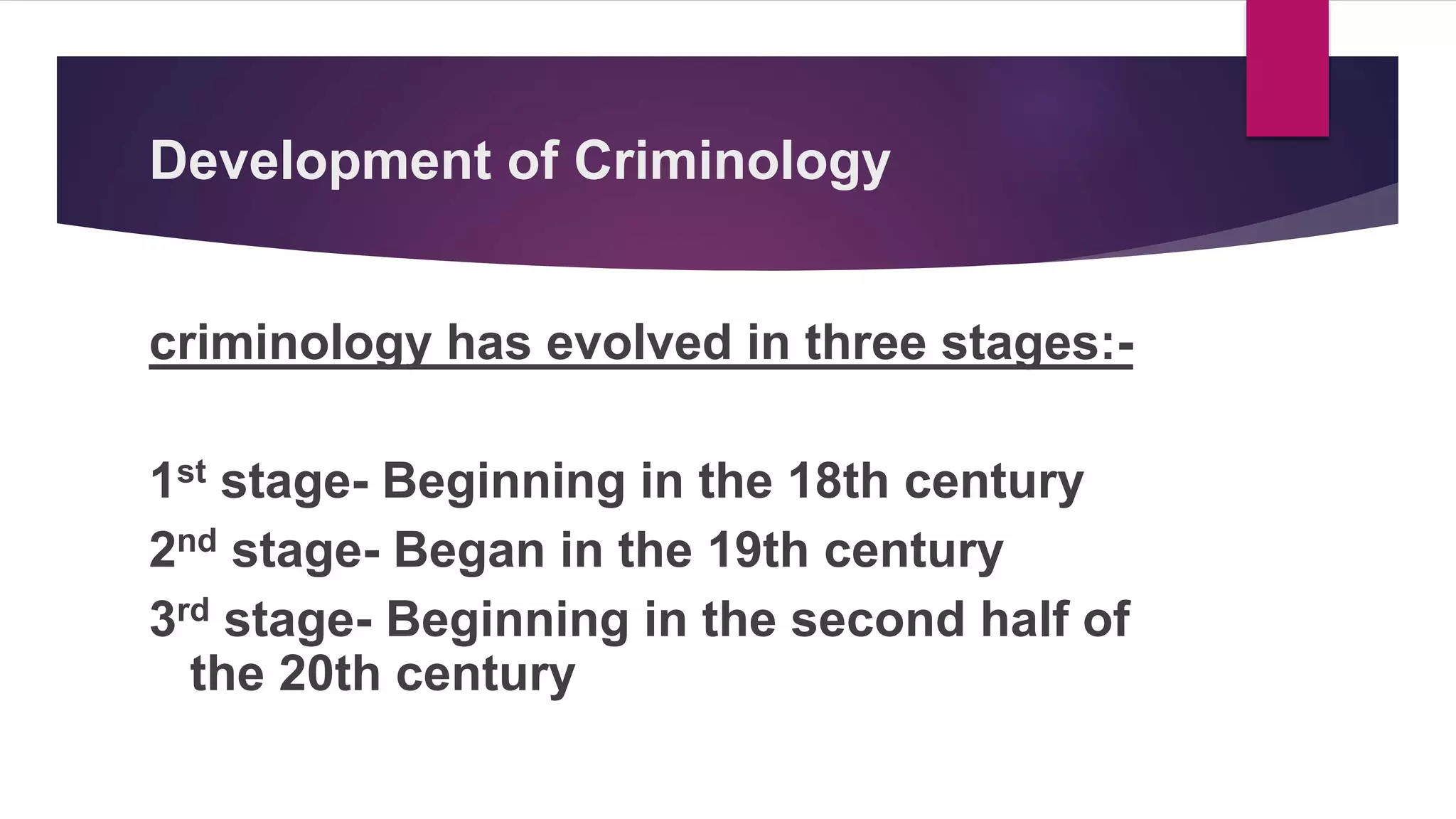
criminology has evolved in three stages:-
1st stage- Beginning in the 18th century
2nd stage- Began in the 19th century
3rd stage- Beginning in the second half of
the 20th century
Development of Criminology
1st stage- Beginning in the 18th century
Systematic study of criminology came at late 1700s.
Most explanations of crime equalized it with sin–the violation of a pure/holy
obligation.
After distinguished crime from sin, scholars made possible explanations of
criminal behavior that were not theological (religious). This allowed the
scientific study of why crime occurs.
The development of this study is now known as the era of classical
criminology.
A. Classical Criminology
The issues of crime and punishment have aroused interest and
discussion since ancient times.
Scriptures dating from the 10th century BC prohibit certain acts and
provide consequences for those who disobey these rules.
In the 5th century BC Greek historian Thucydides wrote about the
usefulness of the death penalty.
B. Modern Criminology
At the beginning of the 19th century, scholars began to apply the
concepts and technologies of the rapidly developing biological and
behavioral sciences to the study of crime. For the first time
criminologists developed typologies of crime and criminals and
attempted to identify patterns between these typologies and various
biological, psychological, and social characteristics of offenders.
C. Independent Criminology
In the late 1960s and early 1970s criminology began to emerge from the
more established social sciences and became a discipline in its own right.
The number of instructional programs in criminology and criminal
justice by themselves increased significantly.
Much of this development was due to the availability of government
funding for criminological research and statistical analysis.
a. Social Causes
One of the first theories describing the influence of social factors on
crime came from French sociologist Gabriel Trade. In the late 1880s
Trade criticized the physical typology theories of Lombroso and his
followers.
Although Trade did not deny the relevance of biological factors in
enhancing criminal tendencies, he asserted that the causes of crime are
chiefly social. His basic theory on the causes of crime was founded on
laws of imitation.
b. Economic Causes
This is very much important part of development of criminology. Economic cause
are main fact for development of crime And specially for our country. Many
crime are related for acquiring money for gating drugs. Specially property crime
are attempted by the criminal for economic factors. Because we are not a
development country. Other studies attempt to relate the corresponding
involvement of poor people in crime to the distribution of power in society.
Mainly problem arise for which are high class people and which are low class.
These same theories have been used to explain why people of lower
socioeconomic status are corresponding represented among known criminals.
This grounds are liable for development of criminology by the Economic cause.
VII. Theories of Criminal Opportunity:
In the mid-1970s American sociologists Marcus Felson, Lawrence Cohen, and
others changed the focus of criminological theory from explaining criminal
motivation to explaining the occurrence of criminal events. They argued that
criminal motivation alone was not sufficient to cause crime. In addition to
motivation, the offender requires the opportunity to pursue his or her
inclinations. According to these opportunity theorists, the physical and social
environment of the offender and the victim (or target) encourage or limit
criminal opportunity. They sought to identify environmental factors that
provided the opportunity to commit crime.
THANK YOU ALL

Development of criminology

  • 1.
    WELCOME TO OURPRESENTATION OUR TOPICS: DEVELOPMENT OF CRIMINOLOGY
  • 2.
    Content: 1. Introduction 2. Developmentof Criminology A. Classical Criminology B. Modern Criminology C. Independent Criminology a. Social Causes b. Economic Causes 3. Theories of Criminal Opportunity
  • 3.
    Introduction Criminology is thescientific study of criminals and criminal behavior. Criminologists attempt to build theories that:- why crimes occurs observing behavior preventing criminal behavior responding to it after it occurs
  • 5.
    Development of Criminology criminologyhas evolved in three stages:- 1st stage- Beginning in the 18th century 2nd stage- Began in the 19th century 3rd stage- Beginning in the second half of the 20th century
  • 6.
    Development of Criminology 1ststage- Beginning in the 18th century Systematic study of criminology came at late 1700s. Most explanations of crime equalized it with sin–the violation of a pure/holy obligation. After distinguished crime from sin, scholars made possible explanations of criminal behavior that were not theological (religious). This allowed the scientific study of why crime occurs. The development of this study is now known as the era of classical criminology.
  • 7.
    A. Classical Criminology Theissues of crime and punishment have aroused interest and discussion since ancient times. Scriptures dating from the 10th century BC prohibit certain acts and provide consequences for those who disobey these rules. In the 5th century BC Greek historian Thucydides wrote about the usefulness of the death penalty.
  • 8.
    B. Modern Criminology Atthe beginning of the 19th century, scholars began to apply the concepts and technologies of the rapidly developing biological and behavioral sciences to the study of crime. For the first time criminologists developed typologies of crime and criminals and attempted to identify patterns between these typologies and various biological, psychological, and social characteristics of offenders.
  • 9.
    C. Independent Criminology Inthe late 1960s and early 1970s criminology began to emerge from the more established social sciences and became a discipline in its own right. The number of instructional programs in criminology and criminal justice by themselves increased significantly. Much of this development was due to the availability of government funding for criminological research and statistical analysis.
  • 10.
    a. Social Causes Oneof the first theories describing the influence of social factors on crime came from French sociologist Gabriel Trade. In the late 1880s Trade criticized the physical typology theories of Lombroso and his followers. Although Trade did not deny the relevance of biological factors in enhancing criminal tendencies, he asserted that the causes of crime are chiefly social. His basic theory on the causes of crime was founded on laws of imitation.
  • 11.
    b. Economic Causes Thisis very much important part of development of criminology. Economic cause are main fact for development of crime And specially for our country. Many crime are related for acquiring money for gating drugs. Specially property crime are attempted by the criminal for economic factors. Because we are not a development country. Other studies attempt to relate the corresponding involvement of poor people in crime to the distribution of power in society. Mainly problem arise for which are high class people and which are low class. These same theories have been used to explain why people of lower socioeconomic status are corresponding represented among known criminals. This grounds are liable for development of criminology by the Economic cause.
  • 12.
    VII. Theories ofCriminal Opportunity: In the mid-1970s American sociologists Marcus Felson, Lawrence Cohen, and others changed the focus of criminological theory from explaining criminal motivation to explaining the occurrence of criminal events. They argued that criminal motivation alone was not sufficient to cause crime. In addition to motivation, the offender requires the opportunity to pursue his or her inclinations. According to these opportunity theorists, the physical and social environment of the offender and the victim (or target) encourage or limit criminal opportunity. They sought to identify environmental factors that provided the opportunity to commit crime.
  • 13.