Developing for Diversity
COMMON ACCESSIBILITY ISSUES

Open Source Developers Conference 2012   Lisa Herrod @InclusiveUX


©Inclusive UX 2012
ACCESSIBILITY
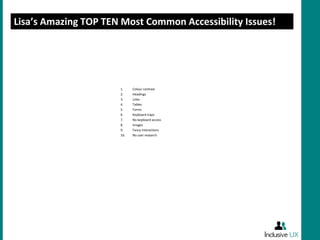
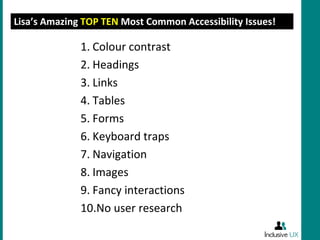
Lisa’s Amazing TOP TEN Most Common Accessibility Issues!


                      1.    Colour contrast
                      2.    Headings
                      3.    Links
                      4.    Tables
                      5.    Forms
                      6.    Keyboard traps
                      7.    No keyboard access
                      8.    Images
                      9.    Fancy interactions
                      10.   No user research
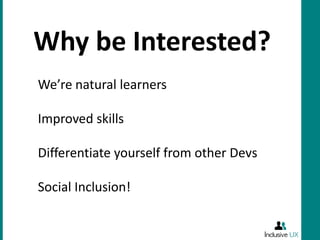
Why be Interested?
We’re natural learners

Improved skills

Differentiate yourself from other Devs

Social Inclusion!
Lisa’s Amazing TOP TEN Most Common Accessibility Issues!

              1. Colour contrast
              2. Headings
              3. Links
              4. Tables
              5. Forms
              6. Keyboard traps
              7. Navigation
              8. Images
              9. Fancy interactions
              10.No user research
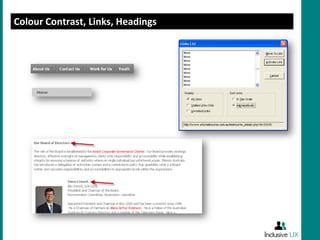
Colour Contrast, Links, Headings
,NAVIGATION
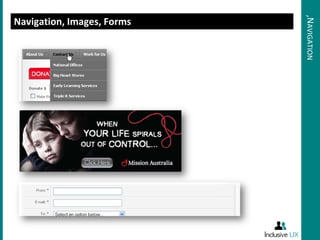
Navigation, Images, Forms
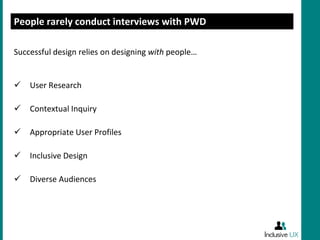
People rarely conduct interviews with PWD

Successful design relies on designing with people…


   User Research

   Contextual Inquiry

   Appropriate User Profiles

   Inclusive Design

   Diverse Audiences
Empathy
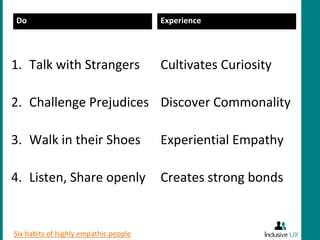
Do                                     Experience


1. Talk with Strangers                 Cultivates Curiosity

2. Challenge Prejudices Discover Commonality

3. Walk in their Shoes                 Experiential Empathy

4. Listen, Share openly                Creates strong bonds


Six habits of highly empathic people
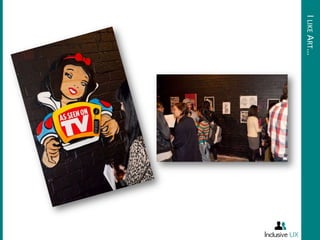
I LIKE ART…
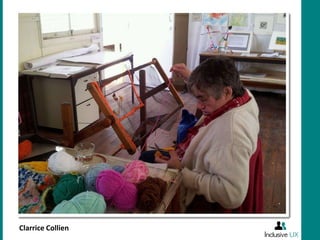
Clarrice Collien
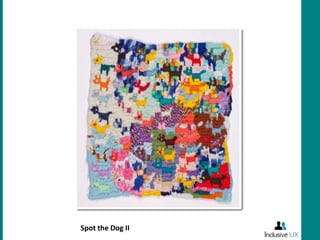
Spot the Dog II
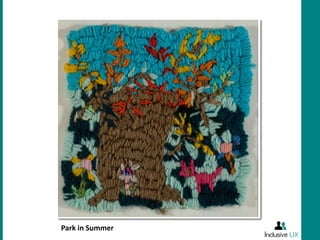
Park in Summer
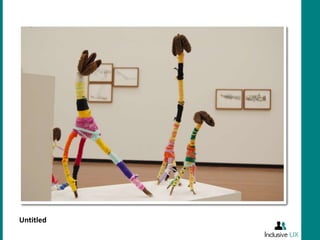
Untitled
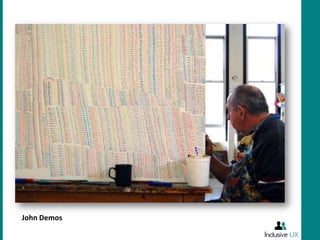
John Demos
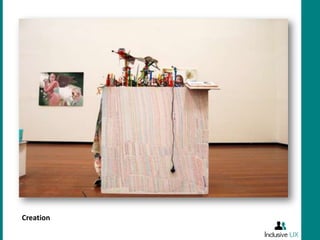
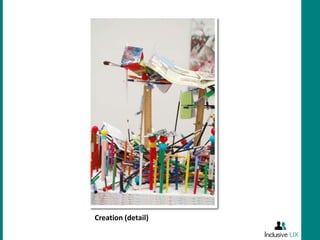
Creation
Creation (detail)
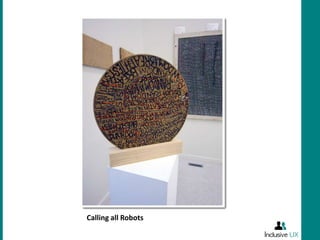
Calling all Robots
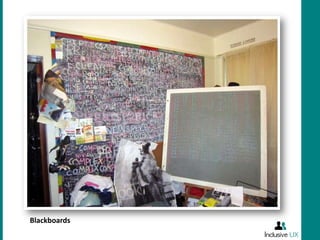
Blackboards
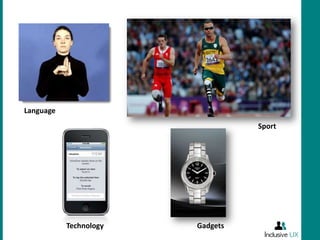
Language
                                  Sport


           Technology   Gadgets
CONCEPT DESIGN
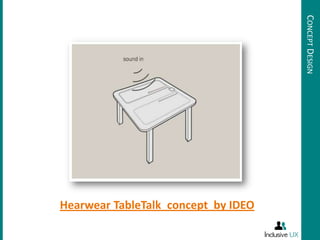
Hearwear TableTalk concept by IDEO
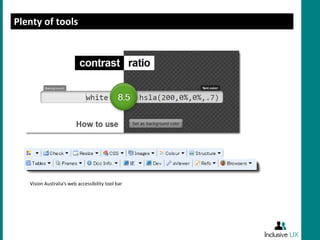
Plenty of tools


   Vision Australia’s web accessibility tool bar
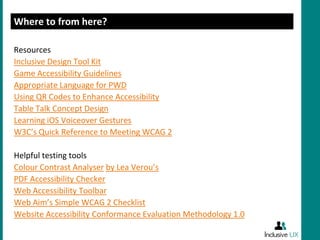
Where to from here?

Resources
Inclusive Design Tool Kit
Game Accessibility Guidelines
Appropriate Language for PWD
Using QR Codes to Enhance Accessibility
Table Talk Concept Design
Learning iOS Voiceover Gestures
W3C’s Quick Reference to Meeting WCAG 2

Helpful testing tools
Colour Contrast Analyser by Lea Verou’s
PDF Accessibility Checker
Web Accessibility Toolbar
Web Aim’s Simple WCAG 2 Checklist
Website Accessibility Conformance Evaluation Methodology 1.0
@InclusiveUX

Developing for Diversity

Editor's Notes

  • #8 WCAG 2 seems huge
  • #9 Who responds well to the Big Stick Approach?
  • #10 Guilt Free PresentationThe goal of this presentation > pique your interest > leave you with something to think about
  • #11 If just 5 of you leave here today thinking you’d like to learn a little more, I’ll be happySnowball effect
  • #12 Ok covered those off.
  • #13 We never know exactly who is going to visit our site and what their access needs are.
  • #14 Most websites have the potential to be visited by users with disabilities or by people whose experience will be greatly enhanced by accessible design. But the interesting thing is that in defining key user groups during the initial design stages, it’s rare that these users are considered. And what I mean by that is that the characteristics and needs of users with disabilities are rarely incorporated into user profiles and personas from an early stage of design research.
  • #15 In more detail
  • #18 Often ForgottenPWD – People with Disabilities
  • #19 If just 5 of you leave here today thinking you’d like to learn a little more, I’ll be happySnowball effect
  • #20 How do we experience Empathy?
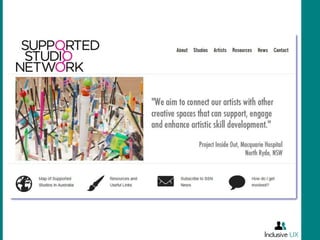
  • #22 We all have personal interests outside of work and some of these have connections to the disability sector.
  • #23 Supported Studio Networkhttp://aarts.net.au/supportedstudios/
  • #24 ‘Window Wire’ tapestry & sculpture
  • #28 John DemosCeramics , print makingInstallation , sculptureMixed Media, text
  • #33 Tissot & Crispin Jones (IDEO)Vision impaired deaf and Discretion Identity can be as important as abilityAn aspirational state between designing for some people with a particular disability and others without in a particular circumstance.
  • #34 RNID and IDEOPullin: Design meets DisabilityUniversal Design challenges the notion that accessibility involves specific design – it should be the default.They actually looked for resonance between deaf HI and hearing to inspire the designSupports conversation for group, not individual.Subverts the notion of universal design because deaf and HI wearers of hearing aids have an immediate advantage ControversyAcknowledge that diversity amongst people who share the same impairment Note the sign on the door is a positive experience