Developing Critical FriendshipDeveloping Critical Friendship
Supporting Study SupportSupporting Study Support
QiSS Critical Friend Network
7th November 2008
Robinson Executive Centre
Wyboston Lakes
Sue Swaffield
University of Cambridge
Overview
• Deepening understanding of critical
friendship through the lens of
leadership for learning principles
• Implications for QiSS Critical Friends
• Role clarity - similarities and
differences with other roles
InternationalInternational
Context sensitiveContext sensitive
Value-basedValue-based
Action learningAction learning
CollaborativeCollaborative
Critical friendshipCritical friendship
Practical theoryPractical theory
CARPE VITAM:CARPE VITAM:
Leadership for LearningLeadership for Learning
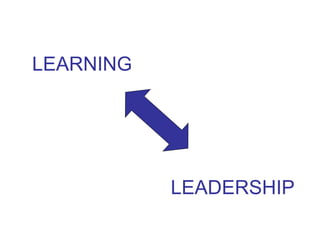
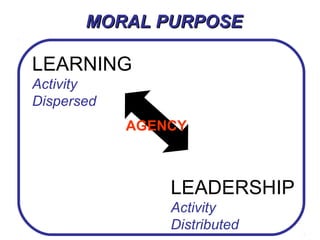
LEARNING
LEADERSHIP
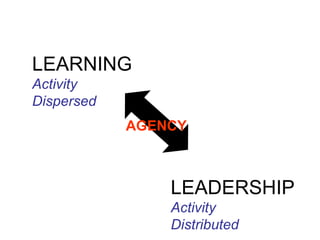
LEARNING
Activity
Dispersed
LEADERSHIP
Activity
Distributed
AGENCY
LEARNING
Activity
Dispersed
LEADERSHIP
Activity
Distributed
AGENCY
MORAL PURPOSEMORAL PURPOSE
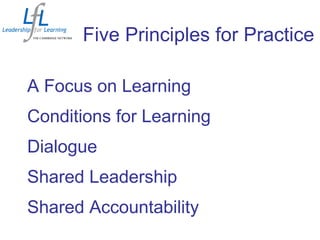
Five Principles for Practice
A Focus on Learning
Conditions for Learning
Dialogue
Shared Leadership
Shared Accountability
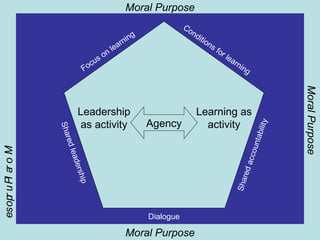
Leadership
as activity
Learning as
activityAgency
Focus on learning
Conditions for learning
Sharedleadership
Dialogue
Sharedaccountability
Moral Purpose
MoralPurpose
MoralPurpose
Moral Purpose
1. Leadership for learning
practice
involves maintaining
a focus on learning
as an activity
A Focus on Learning
• Everyone is a learner
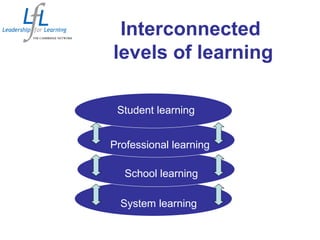
Interconnected
levels of learning
Student learning
Professional learning
School learning
System learning
A Focus on Learning
• Everyone is a learner
• Learning relies on the effective interplay of
social, emotional and cognitive processes
• The efficacy of learning is highly sensitive to
the context and to the differing ways in which
people learn
• The capacity for leadership arises out of
powerful learning experiences
• Opportunities for leadership enhance learning
Focus on learning
and critical friends
• Different conceptions of ‘learning’
• Critical friends’ learning
• Keeping learning as the focus,
amongst the busyness and urgent
pressures
2. Leadership for learning
practice
involves creating
conditions favourable
to learning
as an activity
Conditions for Learning
Environment for learning
Material and physical space
Affective and cognitive skills and
dispositions
Cultural and structural conditions
Conditions for learning
and critical friends
• Trust
Safety to take risks, cope with failure,
respond positively to new challenges
• Shared values
• Common understanding of purpose
• Knowing the context
Being known
3. Leadership for learning
practice
involves creating a
dialogue
about leadership for learning
‘Meaning flowing through’
not
Discussion – tearing to bits
Disciplined dialogue
Dialogue
• Practice made explicit, discussable and
transferable
• Collective enquiry
• Coherence through sharing of values,
understandings and practices
• Factors that inhibit and promote learning
are examined and addressed
• Link between leadership and learning is a
concern for all
• Different perspectives explored through
networking across boundaries
Professionals in dialogue
(Alexander, 2004)
• Listen without interruption?
• Respect other’s viewpoint, or status = wisdom?
• Collective problem solving, or own agendas?
• Stick to topic, or digress?
• Able to speculate without fear of being sidelined?
• Ask probing questions, or merely pass on ideas?
• Prepared to suspend disbelief in relation to the
novel or unfamiliar?
• Take thinking forward, or going around in circles?
Dialogue
and critical friends
• Initiating dialogue - drawing attention to
good practice -> further enhancement
• Tools and routines for stimulating and
enhancing dialogue
• Recognising the stages of developing
dialogue
• Openness and willingness to engage and
reframe
4. Leadership for learning
practice
involves the
sharing of leadership
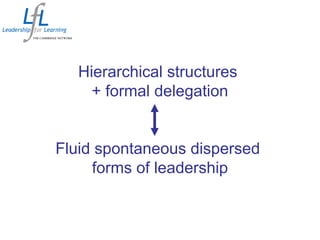
Hierarchical structures
+ formal delegation
Fluid spontaneous dispersed
forms of leadership
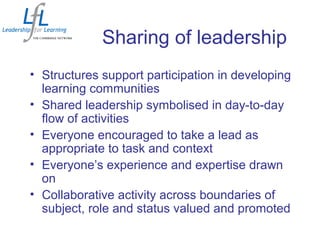
Sharing of leadership
• Structures support participation in developing
learning communities
• Shared leadership symbolised in day-to-day
flow of activities
• Everyone encouraged to take a lead as
appropriate to task and context
• Everyone’s experience and expertise drawn
on
• Collaborative activity across boundaries of
subject, role and status valued and promoted
5. Leadership for learning
practice
involves a shared sense of
accountability
Shared sense of
Accountability
• Systematic approach to self-evaluation embedded
at every level
• Focus on evidence and its congruence with core
values
• Shared approach to internal accountability a
precondition of external accountability
• National policies recast in accordance with values
• Choosing how to tell own story, taking account of
political realities
• Continuing focus on sustainability, success and
leaving a legacy
What insights do the
Leadership for Learning
principles provide
for our work
as critical friends?
How does / can
critical friendship
contribute to
organisational improvement?
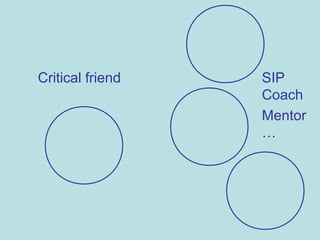
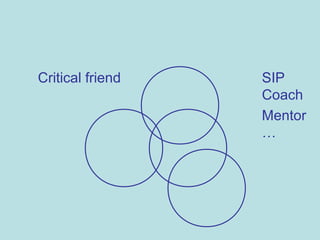
Critical friend SIP
Coach
Mentor
…
Critical friend SIP
Coach
Mentor
…
Critical friend SIP
Coach
Mentor
…
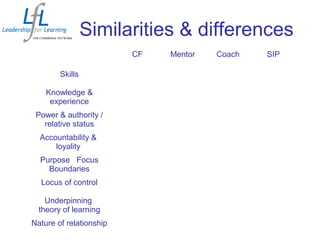
Similarities & differences
CF Mentor Coach SIP
Skills
Knowledge &
experience
Power & authority /
relative status
Accountability &
loyality
Purpose Focus
Boundaries
Locus of control
Underpinning
theory of learning
Nature of relationship
Essential features of
critical friendship
• Trust at the core
• Focuses on a professional endeavour,
going beyond the individual
• Questioning to provoke insight and
reflection is key process
• Provides an alternative perspective
• An element of detachment
Critical friendship:
Some issues
• Selection and choice of critical friend
• Establishing and sustaining the relationship,
especially trust
• Purpose and focus; Boundaries
• Too friendly or too critical?
• Whose friend? Multiple or competing agendas?
• Critical friends’ knowledge, experience and skills
• Training and support
References
Alexander, R. (2004) Towards dialogic teaching: rethinking
classroom talk. Cambridge: Dialogues.
MacBeath, J., Frost, D., Swaffield, S. and Waterhouse, J.
(2006) The story of a seven country odyssey in search of
a practical theory. Cambridge: University of Cambridge
Faculty of Education.
MacBeath, J. and Dempster, N. (eds) (2008) Connecting
Leadership and Learning: Principles for practice. London:
Routledge.
Swaffield, S. (2007) What is distinctive about critical
friendship? Paper presented at the 20th ICSEI, Portoroz.
Swaffield, S. (2008) Critical friendship, dialogue and
learning, in the context of Leadership for Learning. School
Leadership and Management 28 (4) 323-336.
www.leadershipforlearning.org.uk
www.educ.cam.ac.uk/research/projects/lfl/

Developing criticalfriendshipsupportingss

  • 1.
    Developing Critical FriendshipDevelopingCritical Friendship Supporting Study SupportSupporting Study Support QiSS Critical Friend Network 7th November 2008 Robinson Executive Centre Wyboston Lakes Sue Swaffield University of Cambridge
  • 2.
    Overview • Deepening understandingof critical friendship through the lens of leadership for learning principles • Implications for QiSS Critical Friends • Role clarity - similarities and differences with other roles
  • 3.
    InternationalInternational Context sensitiveContext sensitive Value-basedValue-based ActionlearningAction learning CollaborativeCollaborative Critical friendshipCritical friendship Practical theoryPractical theory CARPE VITAM:CARPE VITAM: Leadership for LearningLeadership for Learning
  • 4.
  • 5.
  • 6.
  • 7.
    Five Principles forPractice A Focus on Learning Conditions for Learning Dialogue Shared Leadership Shared Accountability
  • 8.
    Leadership as activity Learning as activityAgency Focuson learning Conditions for learning Sharedleadership Dialogue Sharedaccountability Moral Purpose MoralPurpose MoralPurpose Moral Purpose
  • 9.
    1. Leadership forlearning practice involves maintaining a focus on learning as an activity
  • 10.
    A Focus onLearning • Everyone is a learner
  • 11.
    Interconnected levels of learning Studentlearning Professional learning School learning System learning
  • 12.
    A Focus onLearning • Everyone is a learner • Learning relies on the effective interplay of social, emotional and cognitive processes • The efficacy of learning is highly sensitive to the context and to the differing ways in which people learn • The capacity for leadership arises out of powerful learning experiences • Opportunities for leadership enhance learning
  • 13.
    Focus on learning andcritical friends • Different conceptions of ‘learning’ • Critical friends’ learning • Keeping learning as the focus, amongst the busyness and urgent pressures
  • 14.
    2. Leadership forlearning practice involves creating conditions favourable to learning as an activity
  • 15.
    Conditions for Learning Environmentfor learning Material and physical space Affective and cognitive skills and dispositions Cultural and structural conditions
  • 16.
    Conditions for learning andcritical friends • Trust Safety to take risks, cope with failure, respond positively to new challenges • Shared values • Common understanding of purpose • Knowing the context Being known
  • 17.
    3. Leadership forlearning practice involves creating a dialogue about leadership for learning
  • 18.
    ‘Meaning flowing through’ not Discussion– tearing to bits Disciplined dialogue
  • 19.
    Dialogue • Practice madeexplicit, discussable and transferable • Collective enquiry • Coherence through sharing of values, understandings and practices • Factors that inhibit and promote learning are examined and addressed • Link between leadership and learning is a concern for all • Different perspectives explored through networking across boundaries
  • 20.
    Professionals in dialogue (Alexander,2004) • Listen without interruption? • Respect other’s viewpoint, or status = wisdom? • Collective problem solving, or own agendas? • Stick to topic, or digress? • Able to speculate without fear of being sidelined? • Ask probing questions, or merely pass on ideas? • Prepared to suspend disbelief in relation to the novel or unfamiliar? • Take thinking forward, or going around in circles?
  • 21.
    Dialogue and critical friends •Initiating dialogue - drawing attention to good practice -> further enhancement • Tools and routines for stimulating and enhancing dialogue • Recognising the stages of developing dialogue • Openness and willingness to engage and reframe
  • 22.
    4. Leadership forlearning practice involves the sharing of leadership
  • 23.
    Hierarchical structures + formaldelegation Fluid spontaneous dispersed forms of leadership
  • 24.
    Sharing of leadership •Structures support participation in developing learning communities • Shared leadership symbolised in day-to-day flow of activities • Everyone encouraged to take a lead as appropriate to task and context • Everyone’s experience and expertise drawn on • Collaborative activity across boundaries of subject, role and status valued and promoted
  • 25.
    5. Leadership forlearning practice involves a shared sense of accountability
  • 26.
    Shared sense of Accountability •Systematic approach to self-evaluation embedded at every level • Focus on evidence and its congruence with core values • Shared approach to internal accountability a precondition of external accountability • National policies recast in accordance with values • Choosing how to tell own story, taking account of political realities • Continuing focus on sustainability, success and leaving a legacy
  • 27.
    What insights dothe Leadership for Learning principles provide for our work as critical friends?
  • 28.
    How does /can critical friendship contribute to organisational improvement?
  • 29.
  • 30.
  • 31.
  • 32.
    Similarities & differences CFMentor Coach SIP Skills Knowledge & experience Power & authority / relative status Accountability & loyality Purpose Focus Boundaries Locus of control Underpinning theory of learning Nature of relationship
  • 33.
    Essential features of criticalfriendship • Trust at the core • Focuses on a professional endeavour, going beyond the individual • Questioning to provoke insight and reflection is key process • Provides an alternative perspective • An element of detachment
  • 34.
    Critical friendship: Some issues •Selection and choice of critical friend • Establishing and sustaining the relationship, especially trust • Purpose and focus; Boundaries • Too friendly or too critical? • Whose friend? Multiple or competing agendas? • Critical friends’ knowledge, experience and skills • Training and support
  • 35.
    References Alexander, R. (2004)Towards dialogic teaching: rethinking classroom talk. Cambridge: Dialogues. MacBeath, J., Frost, D., Swaffield, S. and Waterhouse, J. (2006) The story of a seven country odyssey in search of a practical theory. Cambridge: University of Cambridge Faculty of Education. MacBeath, J. and Dempster, N. (eds) (2008) Connecting Leadership and Learning: Principles for practice. London: Routledge. Swaffield, S. (2007) What is distinctive about critical friendship? Paper presented at the 20th ICSEI, Portoroz. Swaffield, S. (2008) Critical friendship, dialogue and learning, in the context of Leadership for Learning. School Leadership and Management 28 (4) 323-336. www.leadershipforlearning.org.uk www.educ.cam.ac.uk/research/projects/lfl/

Editor's Notes

  • #33 Skills - Block 1999 - 3 sets - technical (expertise about the particular issue); consulting (process skills such as negotiating entry, agreeing the scope of the work, eventual disengagement) and interpersonal. Technical and consulting = competences - repertoire of skills that job requires; interpersonal = competencies or quals of individual (MacBeath and Myers, 1999) Competencies of interpersonal and group work: listening, observing, questioning, reflecting back, managing conflict, team building, Qualitites: respect, empathy, genuineness, confidence, optimism, sensitivity, insight, thoughtfulness, commitment
  • #35 Establishing the relationship - who chooses, selects? How matched? Too friendly or too critical? - Multiple or competing agendas? - who is the client? Whose critical friend? How to build and maintain trust? Training and support - for the CF. What skills, knowledge etc needed, what ongoing support? Dual roles and reciprocal relationships - is a relationship - contribution of the befriended to it. If reciprocal, being clear who is the focus of the cfship at any time