Download as PDF, PPTX

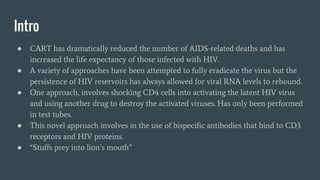
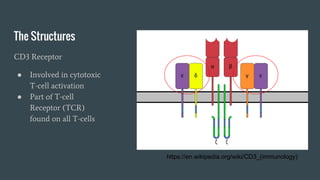
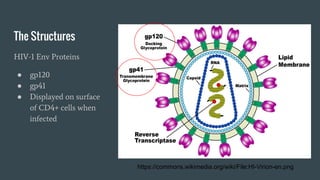
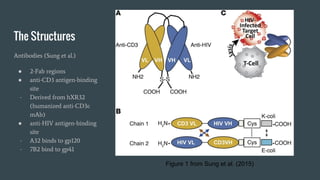
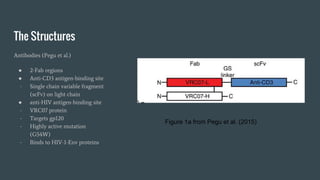
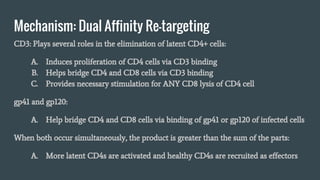
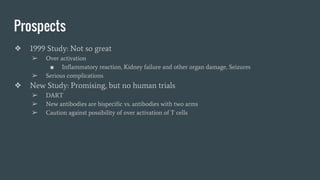
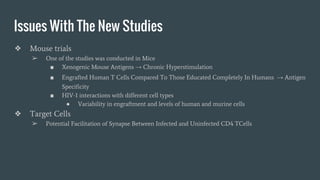




Designer antibodies that bind to both CD3 receptors on T-cells and HIV proteins on infected cells have shown promise in laboratory experiments as a potential approach to eliminating HIV reservoirs and achieving a cure. These bispecific antibodies act to bridge infected cells and T-cells, activating latent virus and marking the infected cells for destruction. While early studies in mice were problematic, more recent studies using improved antibody designs have activated and lysed latent HIV-infected human cells in test tubes without significant safety issues. However, successfully translating this approach to safe and effective human trials faces challenges including fully understanding and targeting all HIV reservoir sites and gaining acceptance within HIV/AIDS communities.


