Design Studio Methodology
    A quick why and how


      @danielnaumann
What?

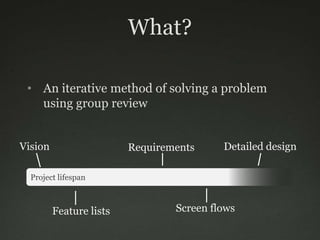
 • An iterative method of solving a problem
   using group review


Vision                   Requirements     Detailed design

  Project lifespan


         Feature lists           Screen flows
Overview


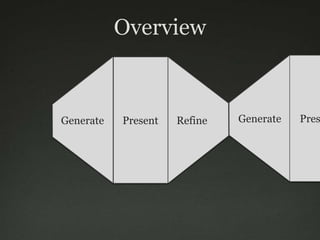
Generate   Present   Refine   Generate   Pres
Why?

• Fast
• Flexible
• Idea cross-pollination without “group think”
• Diverse backgrounds
• Team and client buy-in
First you’ll need…

• Mixture of people (2-6)
• Get everyone on the same page
  •   Present goals, user research, competitor
      reviews, etc.

• Lots of Sharpies and paper templates
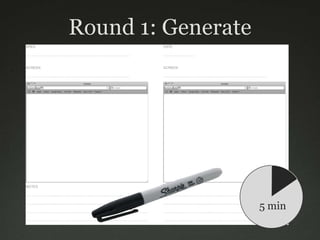
Round 1: Generate


                    5 min
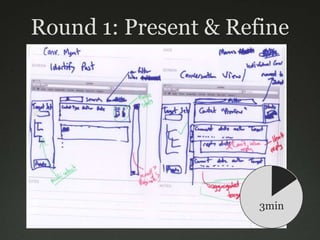
Round 1: Present & Refine


                      3min
Round 2: Repeat


                  5 min
A start, not end

• Now you can
  •   Repeat
  •   Refine
  •   Pull out requirements
  •   Create functional story cards
  •   Prototype
  •   Code
  •   User test
References
• Todd ZakiWarfel
  •   Prototyping : A Practicioner’s Guide
      (Rosenfield Media, 2009)
  •   30min recording -
      http://aarronwalter.com/2012/05/22/todd-
      zaki-warfel-on-design-studio-methodology/
• Will Evans
  •   http://uxmag.com/articles/introduction-to-
      design-studio-methodology
Shameless plug

       Brisbane UXers:
4impact would like to meet you


                http://4impact.com.au/

                dnaumann@4impact.com.au

Design Studio Methodology: A quick why and how

  • 1.
    Design Studio Methodology A quick why and how @danielnaumann
  • 2.
    What? • Aniterative method of solving a problem using group review Vision Requirements Detailed design Project lifespan Feature lists Screen flows
  • 3.
    Overview Generate Present Refine Generate Pres
  • 4.
    Why? • Fast • Flexible •Idea cross-pollination without “group think” • Diverse backgrounds • Team and client buy-in
  • 5.
    First you’ll need… •Mixture of people (2-6) • Get everyone on the same page • Present goals, user research, competitor reviews, etc. • Lots of Sharpies and paper templates
  • 6.
  • 8.
    Round 1: Present& Refine 3min
  • 9.
  • 11.
    A start, notend • Now you can • Repeat • Refine • Pull out requirements • Create functional story cards • Prototype • Code • User test
  • 12.
    References • Todd ZakiWarfel • Prototyping : A Practicioner’s Guide (Rosenfield Media, 2009) • 30min recording - http://aarronwalter.com/2012/05/22/todd- zaki-warfel-on-design-studio-methodology/ • Will Evans • http://uxmag.com/articles/introduction-to- design-studio-methodology
  • 13.
    Shameless plug Brisbane UXers: 4impact would like to meet you http://4impact.com.au/ dnaumann@4impact.com.au

Editor's Notes

  • #3  What Used at ANY stage
  • #4 Generate: Quantity over quality. Present: Share ideas, rationale Refine: Quality. Remove infeasible solutions or featuresREPEAT
  • #5 FAST: Time boxedFLEXIBLE:AGILEPart individual part group
  • #6  MY version! Variety of people: Designers, Devs, Prod owners, Bas, CLIENT, etc.
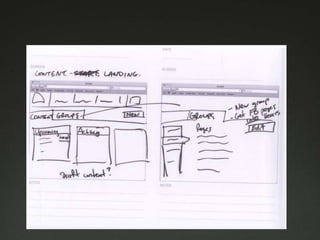
  • #7 Generate: Quantity over quality. Individuals Thick pens, small windows = physical constraint Roughly 5 min
  • #9  Present: Share ideas, rationale, how meet goals/research Refine: Quality. Remove infeasible solutions or featuresMark up sketch
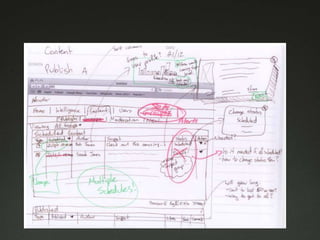
  • #10  Thin pen, larger window = more detail Use ideas from other people, plus new ideas Preset Refine again