Design for
SEO
Group 08
Human
Computer
Interaction
Agenda
 SEO Intruduction
 Why do we need SEO?
 Techniques in SEO
 Design for SEO
 Demo
Content
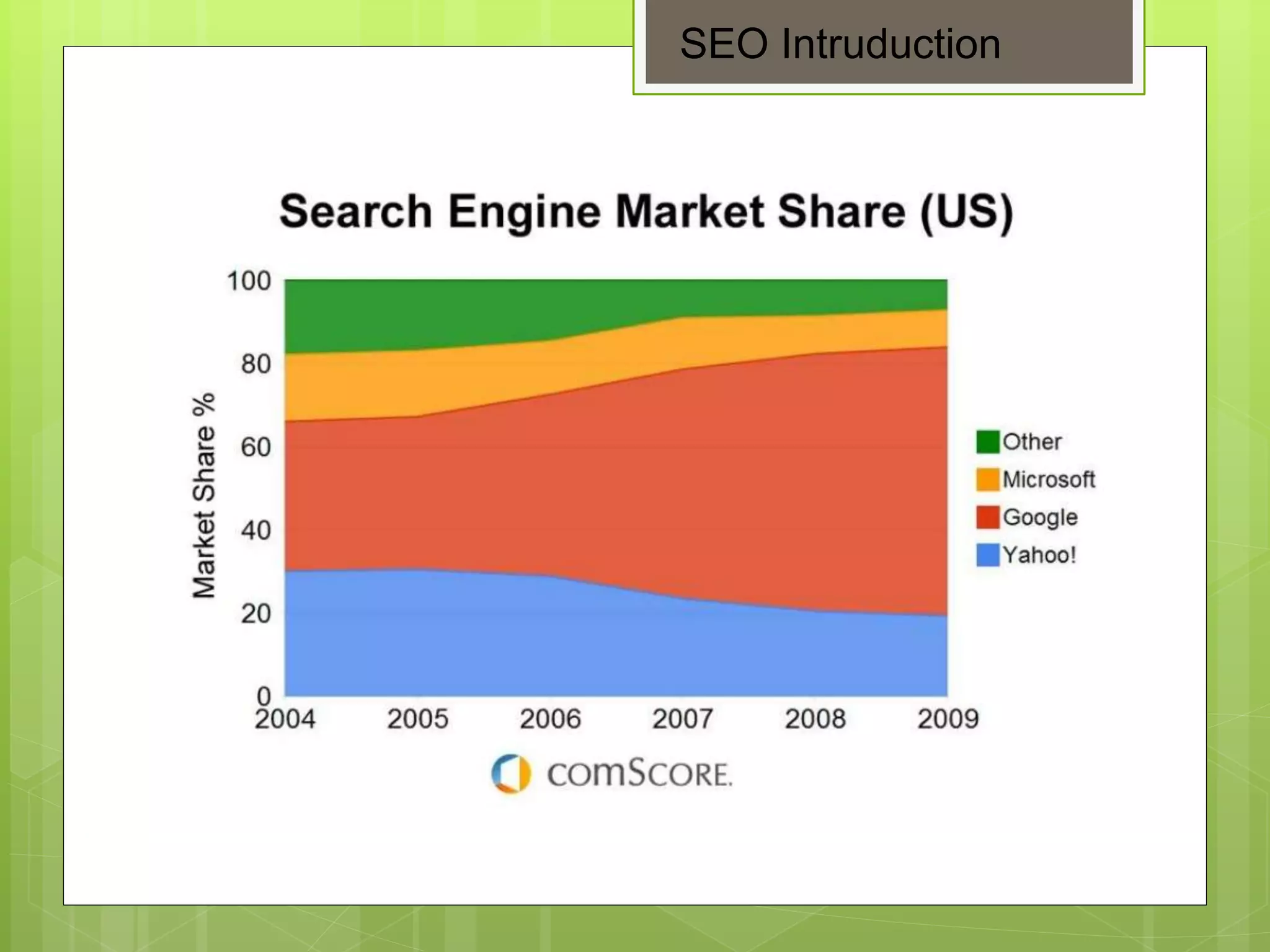
SEO Intruduction
SEO Intruduction
SEO Intruduction
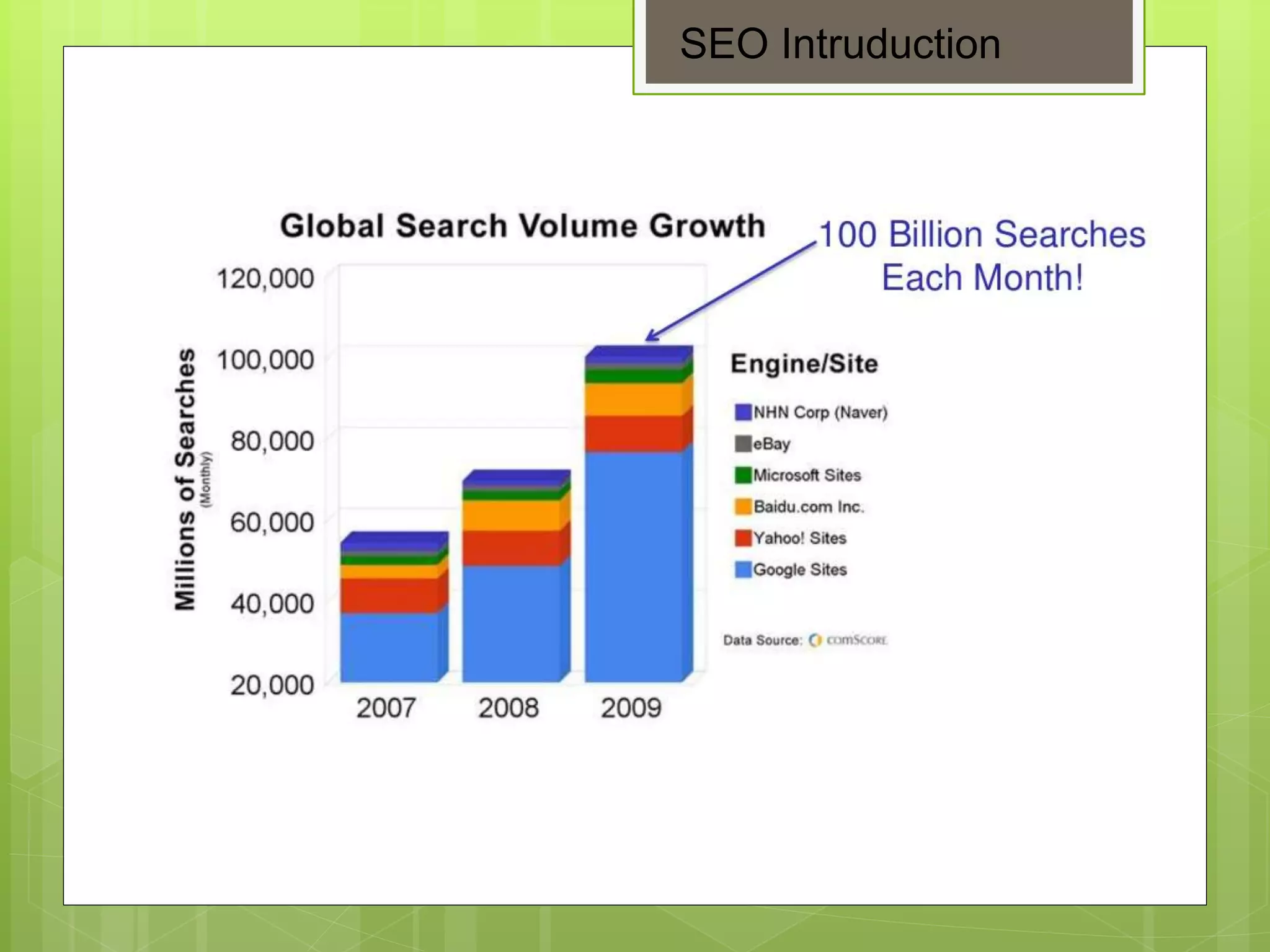
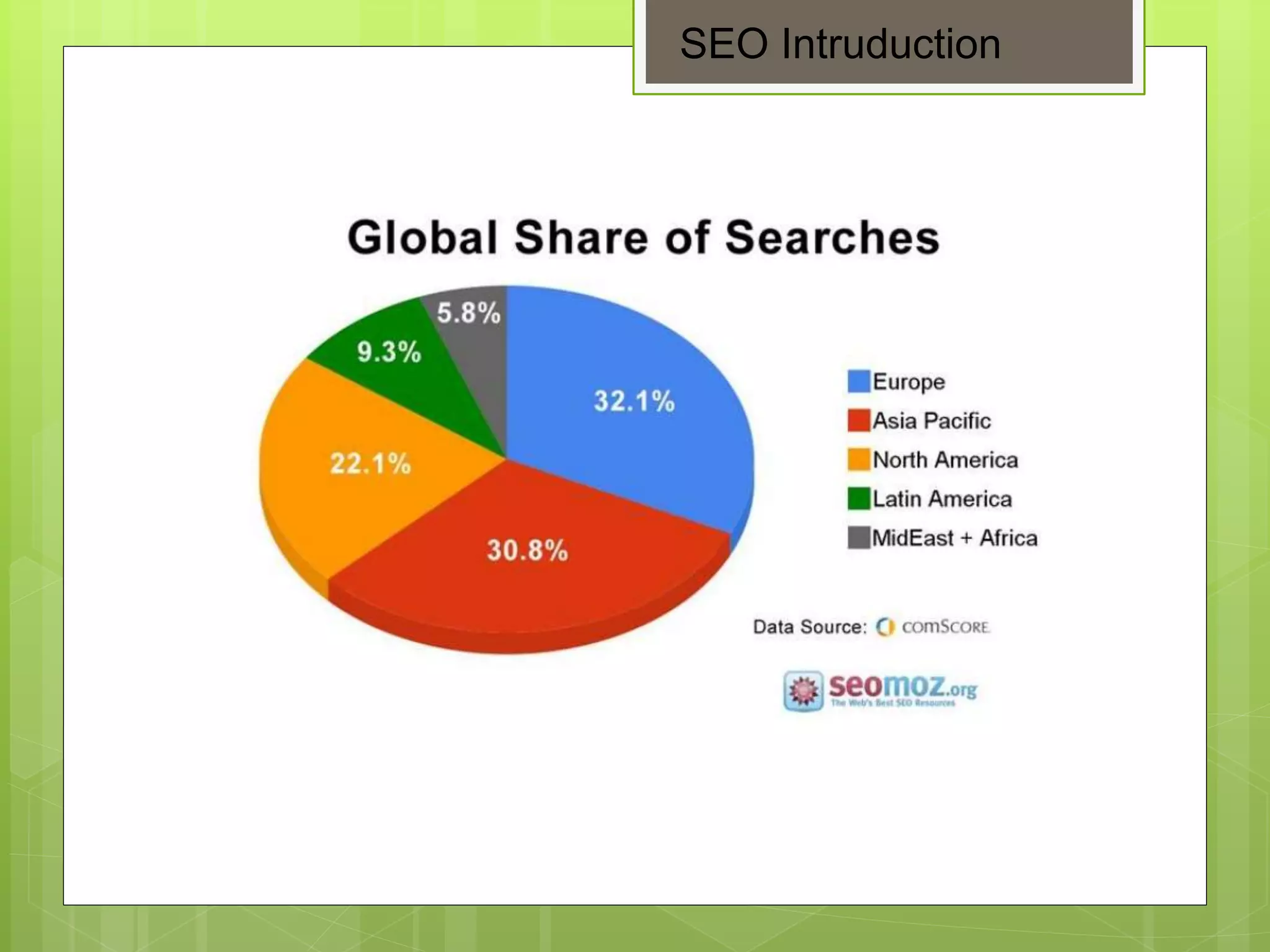
 It describes a series of techniques which
improve the visibility of a website in search
engine result pages. The goal of such
optimization is to rank as highly as possible
for a certain search query.
SEO Intruduction
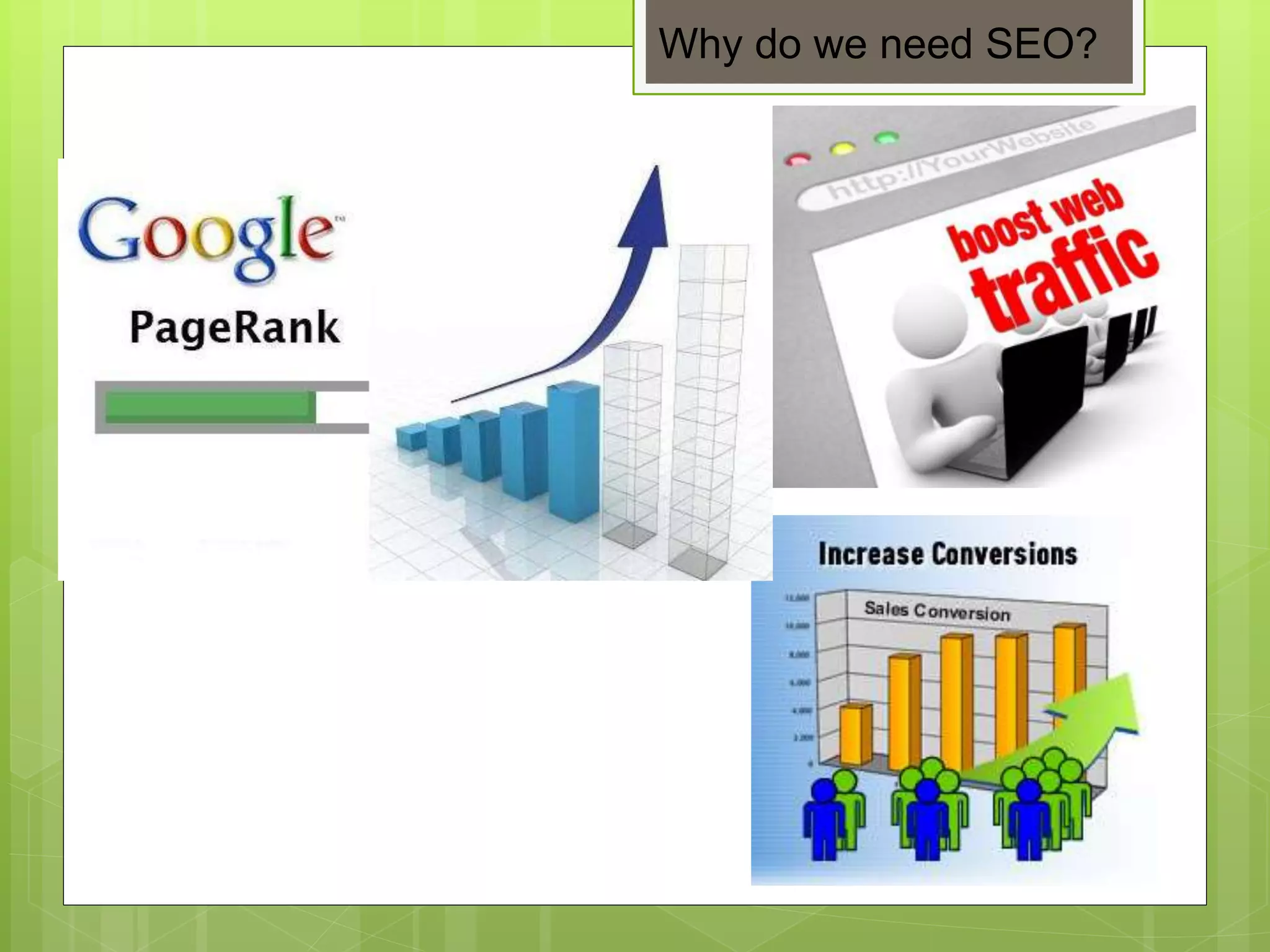
Why do we need SEO?
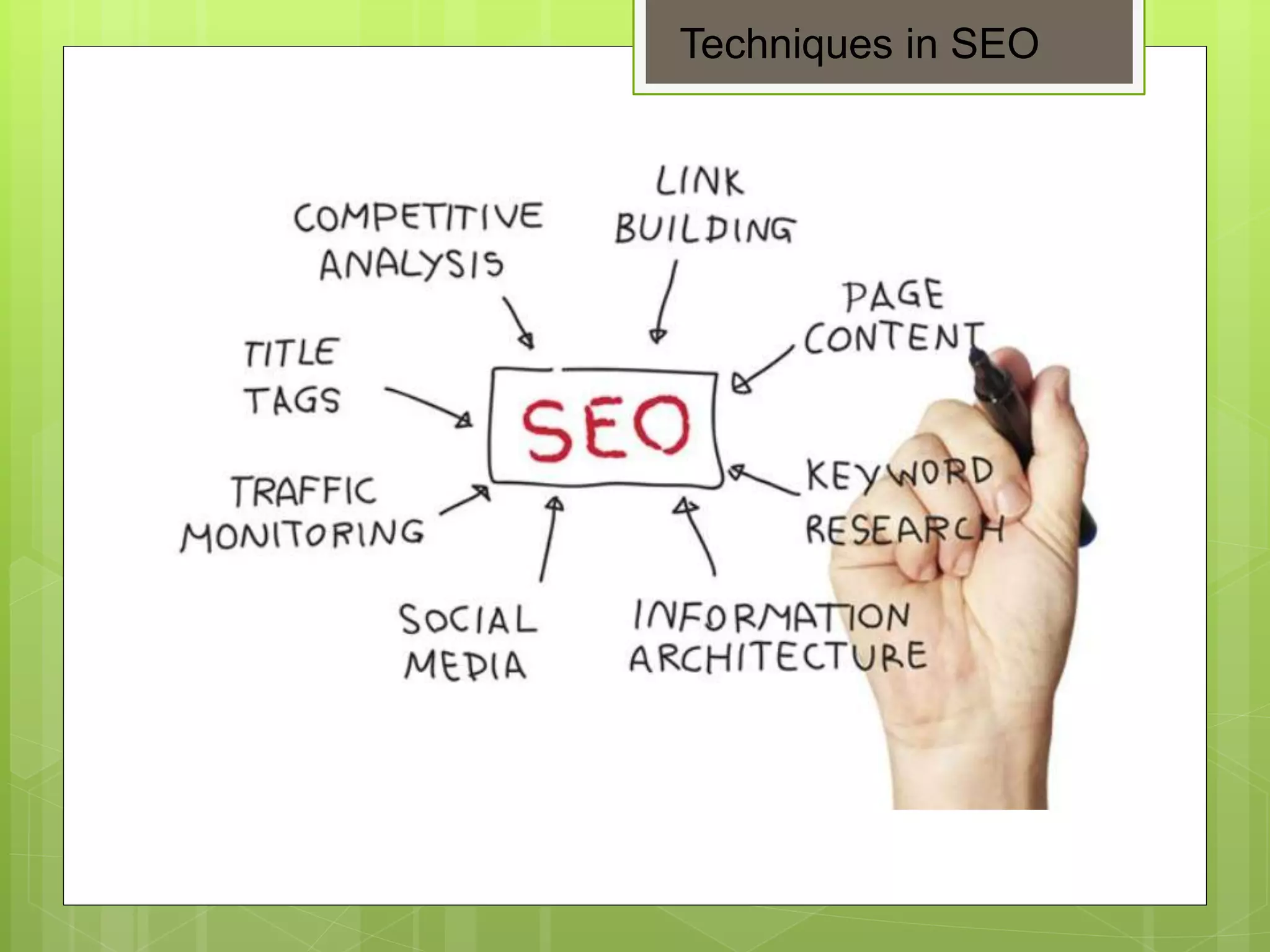
Techniques in SEO
Indexable Content
 Provide alt text for images
 Supplement search boxes with navigation and
crawlable links
 Supplement Flash or Java plug-ins with text
on the page
 Provide a transcript for video and audio
content
Design for SEO
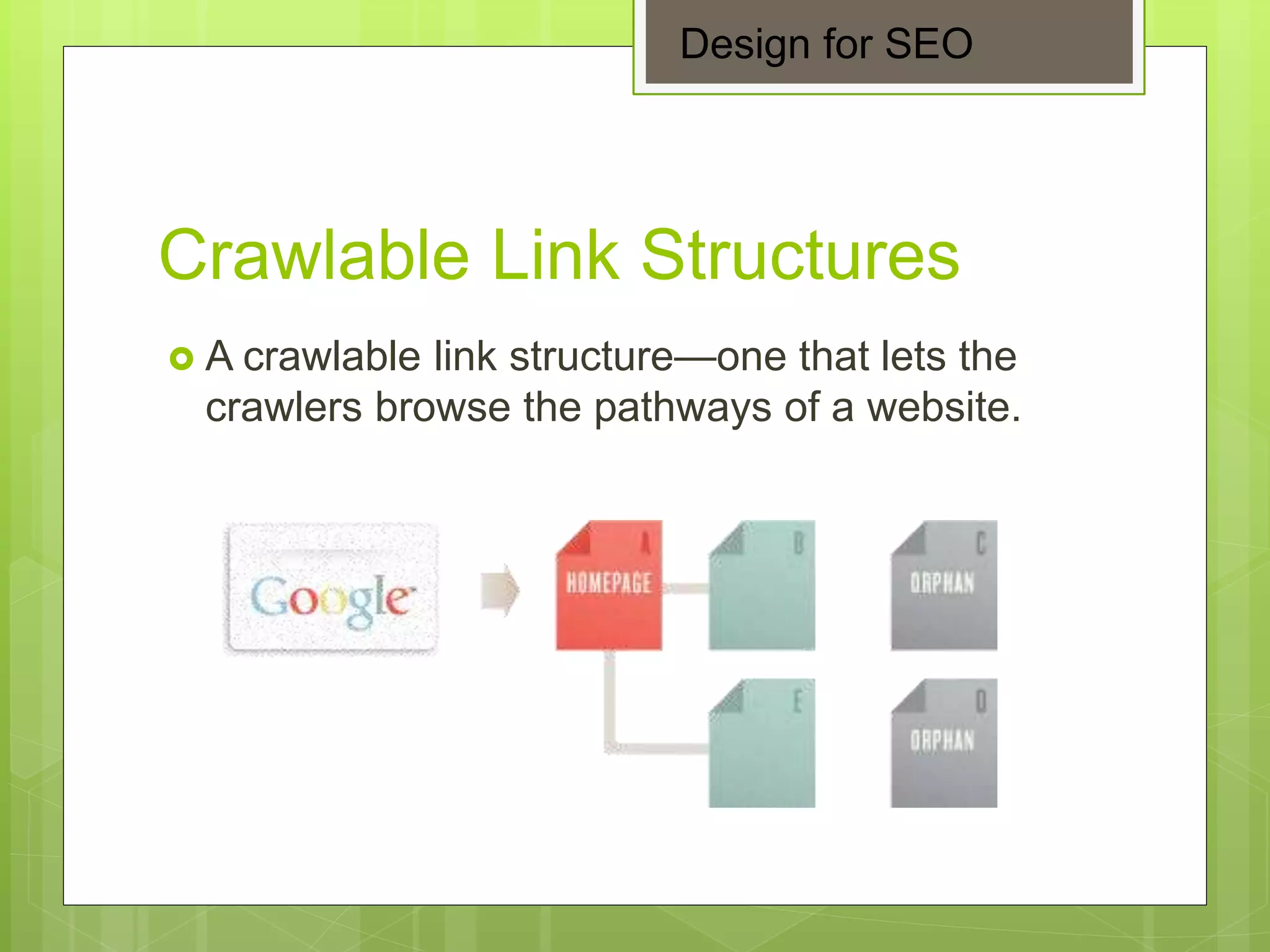
Crawlable Link Structures
 A crawlable link structure—one that lets the
crawlers browse the pathways of a website.
Design for SEO
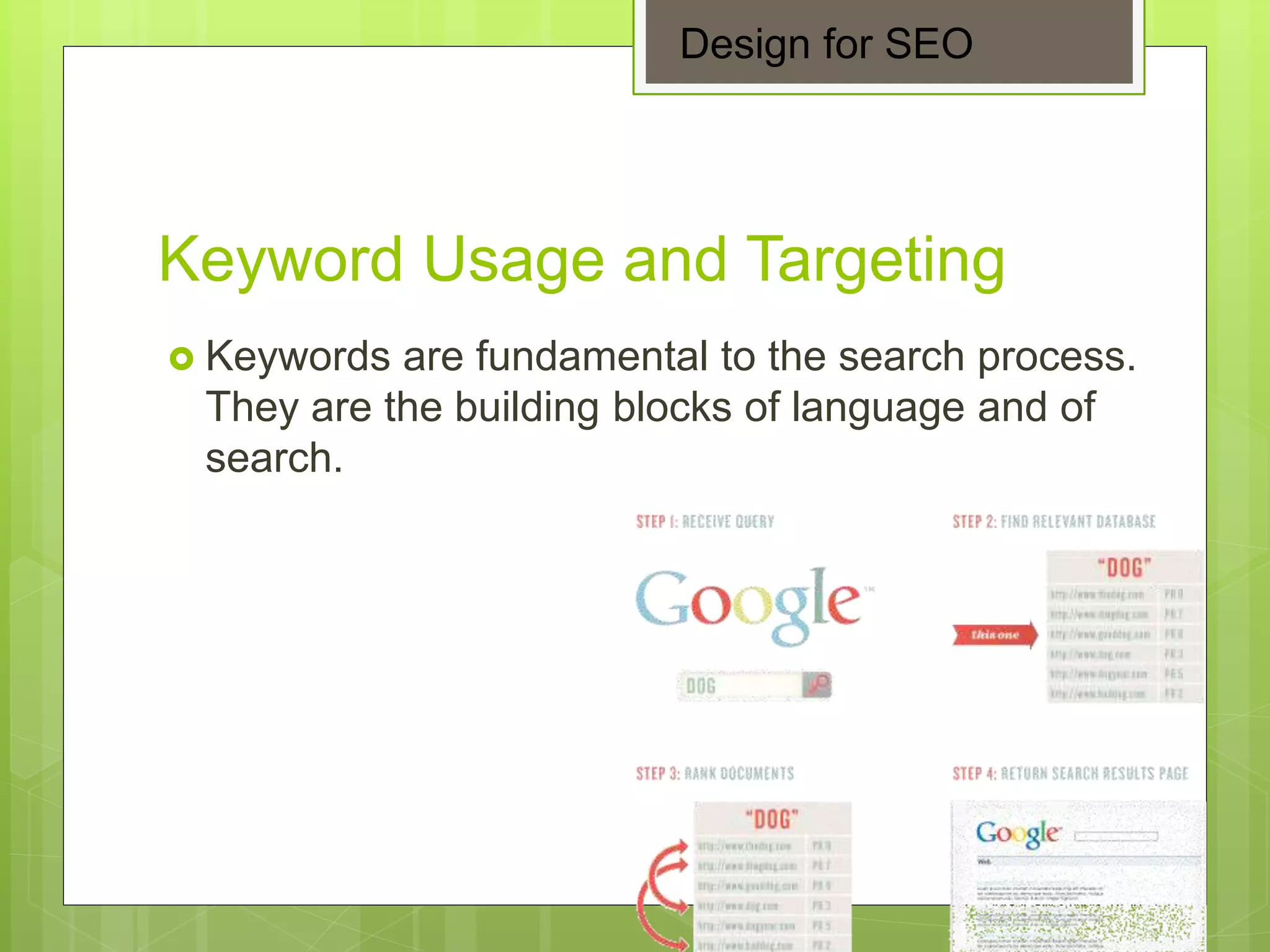
Keyword Usage and Targeting
 Keywords are fundamental to the search process.
They are the building blocks of language and of
search.
Design for SEO
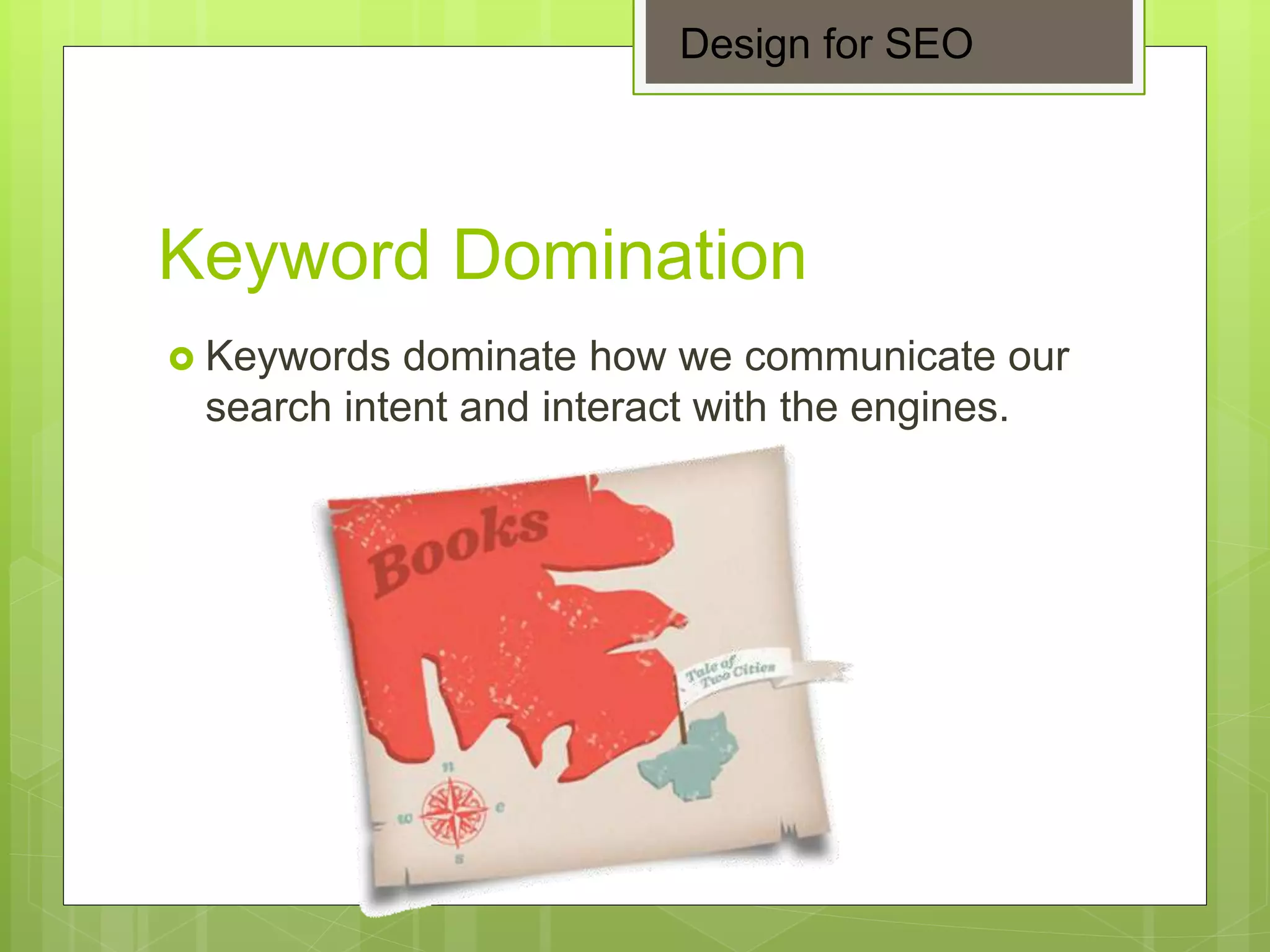
Keyword Domination
 Keywords dominate how we communicate our
search intent and interact with the engines.
Design for SEO
Keyword Abuse
 The point of using keywords is not to rank
highly for all keywords, but to rank highly for
the keywords that people are searching for
when they want what your site provides.
Design for SEO
On-Page Optimization
 Keyword usage and targeting are still a part of
the search engines' ranking algorithms, and
we can apply some effective techniques for
keyword usage to help create pages that are
well-optimized.
Design for SEO
Title Tags
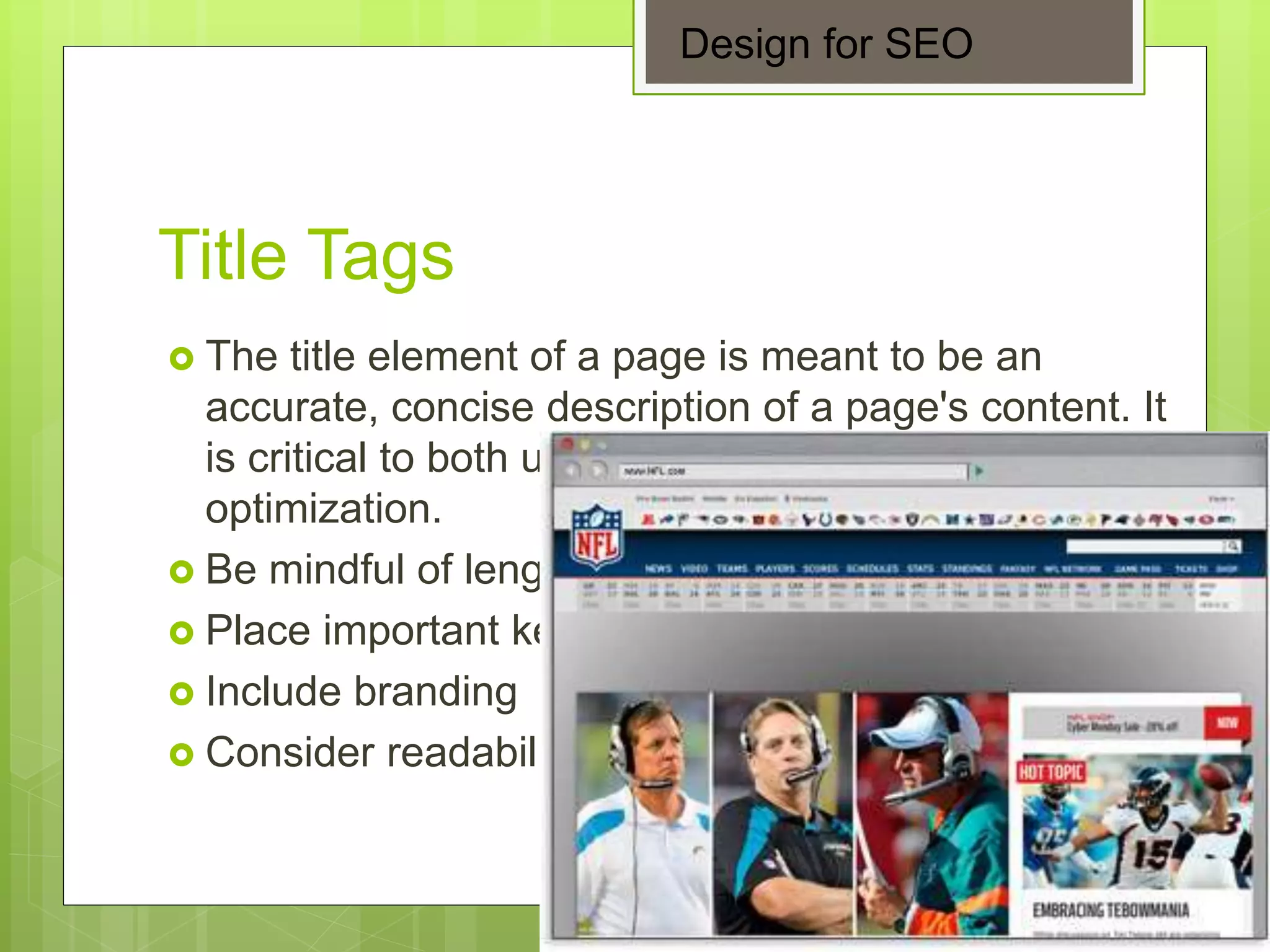
 The title element of a page is meant to be an
accurate, concise description of a page's content. It
is critical to both user experience and search engine
optimization.
 Be mindful of length
 Place important keywords close to the front
 Include branding
 Consider readability and emotional impact
Design for SEO
URL Structures
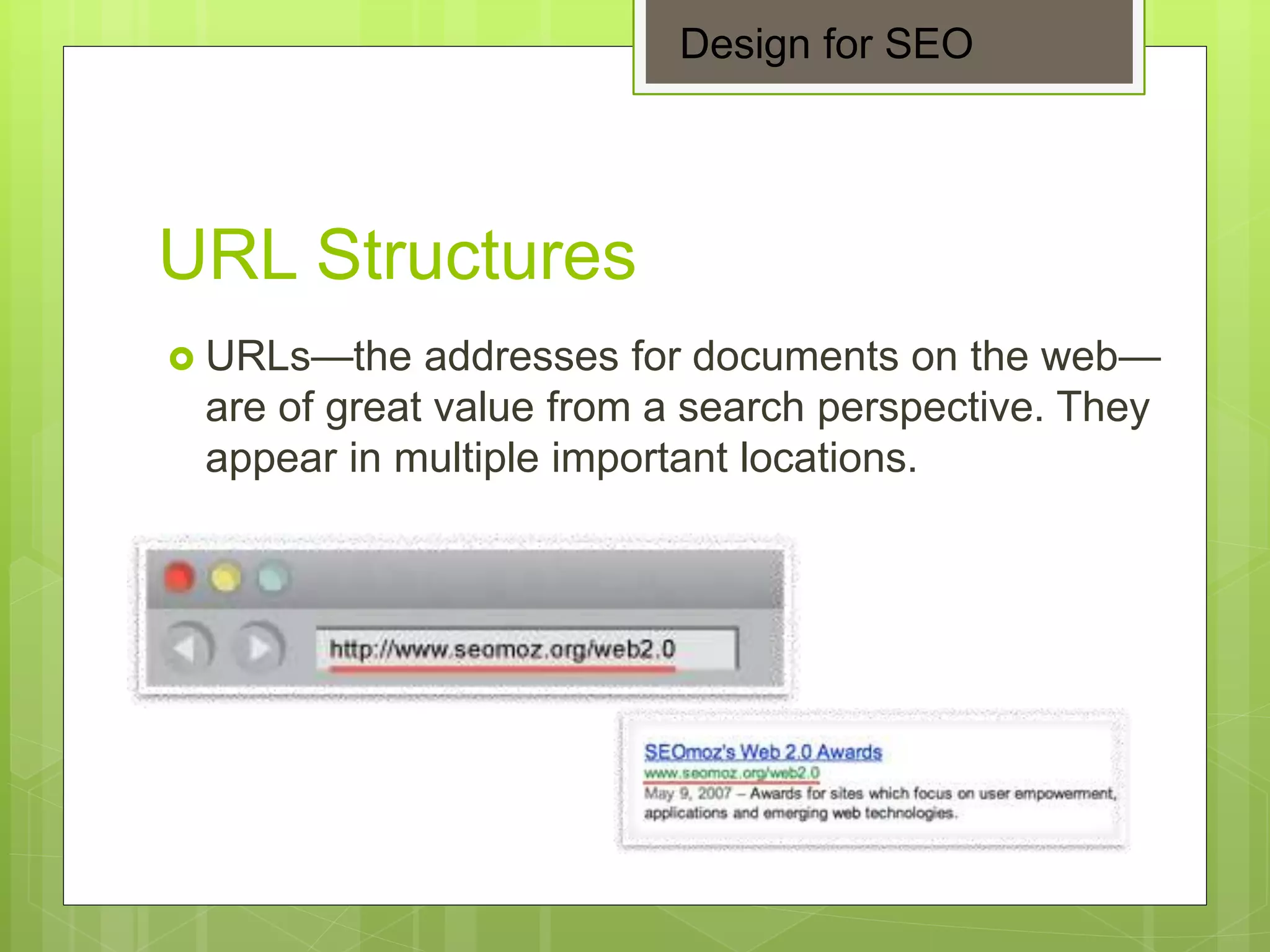
 URLs—the addresses for documents on the web—
are of great value from a search perspective. They
appear in multiple important locations.
Design for SEO
URL Construction Guidelines
 Employ empathy
 Shorter is better
 Keyword use is important (but overuse is
dangerous)
 Go static
 Use hyphens to separate words
Design for SEO
Canonical and Duplicate Versions
of Content
 Duplicate content is one of the most vexing and
troublesome problems any website can face. Over
the past few years, search engines have cracked
down on pages with thin or duplicate content by
assigning them lower rankings.
 Canonicalization happens when two or more
duplicate versions of a webpage appear on different
URLs.
Design for SEO
Rich Snippets
 Rich snippets are a type of structured data that allow
webmasters to mark up content in ways that provide
information to the search engines.
 Structured data means adding markup to your
content so that search engines can easily identify
what type of content it is.
Design for SEO
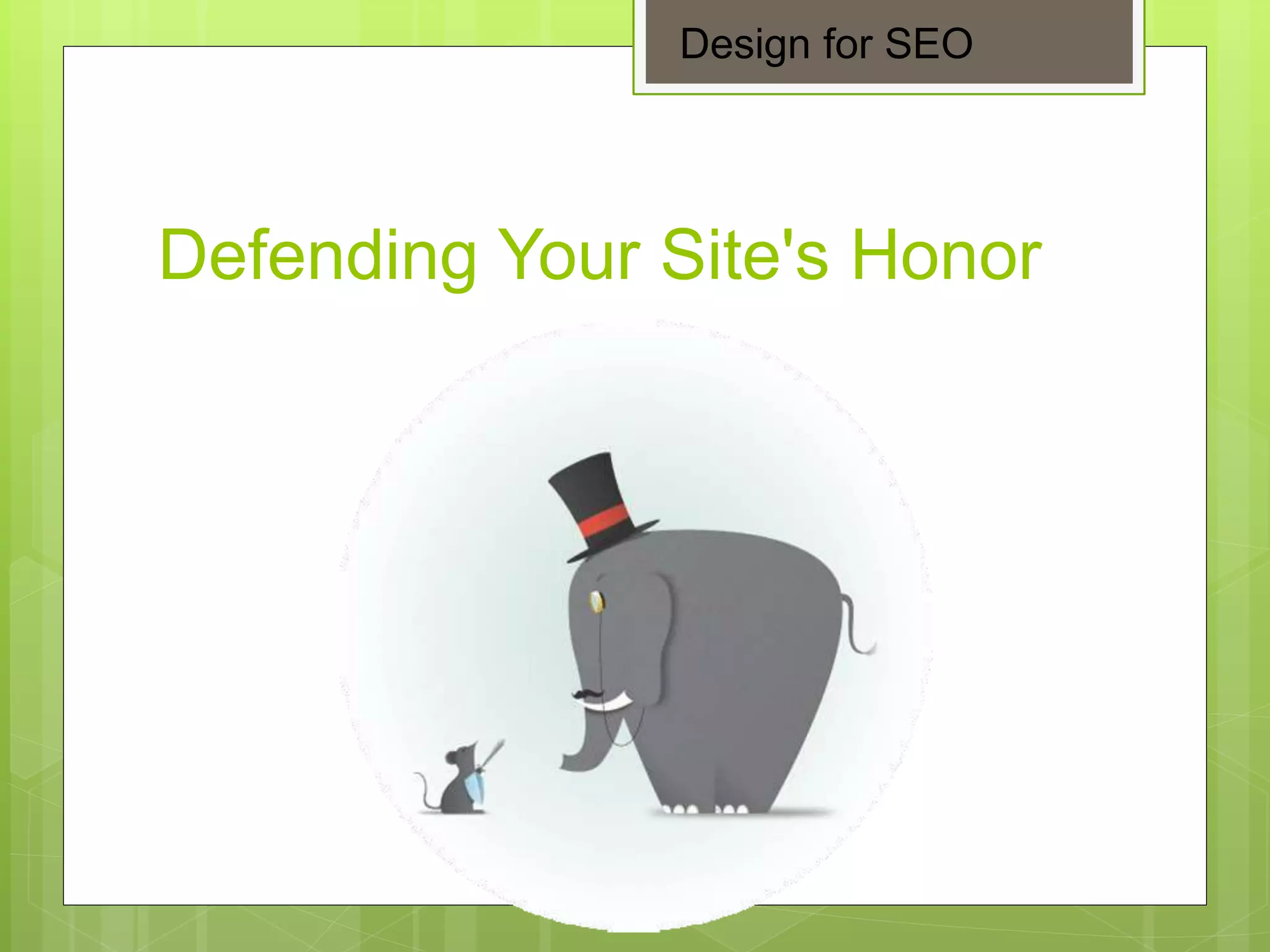
Defending Your Site's Honor
Design for SEO
Demo
Demo

Design for seo

  • 1.
  • 2.
    Agenda  SEO Intruduction Why do we need SEO?  Techniques in SEO  Design for SEO  Demo Content
  • 3.
  • 4.
  • 5.
  • 6.
     It describesa series of techniques which improve the visibility of a website in search engine result pages. The goal of such optimization is to rank as highly as possible for a certain search query. SEO Intruduction
  • 7.
    Why do weneed SEO?
  • 8.
  • 9.
    Indexable Content  Providealt text for images  Supplement search boxes with navigation and crawlable links  Supplement Flash or Java plug-ins with text on the page  Provide a transcript for video and audio content Design for SEO
  • 10.
    Crawlable Link Structures A crawlable link structure—one that lets the crawlers browse the pathways of a website. Design for SEO
  • 11.
    Keyword Usage andTargeting  Keywords are fundamental to the search process. They are the building blocks of language and of search. Design for SEO
  • 12.
    Keyword Domination  Keywordsdominate how we communicate our search intent and interact with the engines. Design for SEO
  • 13.
    Keyword Abuse  Thepoint of using keywords is not to rank highly for all keywords, but to rank highly for the keywords that people are searching for when they want what your site provides. Design for SEO
  • 14.
    On-Page Optimization  Keywordusage and targeting are still a part of the search engines' ranking algorithms, and we can apply some effective techniques for keyword usage to help create pages that are well-optimized. Design for SEO
  • 15.
    Title Tags  Thetitle element of a page is meant to be an accurate, concise description of a page's content. It is critical to both user experience and search engine optimization.  Be mindful of length  Place important keywords close to the front  Include branding  Consider readability and emotional impact Design for SEO
  • 16.
    URL Structures  URLs—theaddresses for documents on the web— are of great value from a search perspective. They appear in multiple important locations. Design for SEO
  • 17.
    URL Construction Guidelines Employ empathy  Shorter is better  Keyword use is important (but overuse is dangerous)  Go static  Use hyphens to separate words Design for SEO
  • 18.
    Canonical and DuplicateVersions of Content  Duplicate content is one of the most vexing and troublesome problems any website can face. Over the past few years, search engines have cracked down on pages with thin or duplicate content by assigning them lower rankings.  Canonicalization happens when two or more duplicate versions of a webpage appear on different URLs. Design for SEO
  • 19.
    Rich Snippets  Richsnippets are a type of structured data that allow webmasters to mark up content in ways that provide information to the search engines.  Structured data means adding markup to your content so that search engines can easily identify what type of content it is. Design for SEO
  • 20.
    Defending Your Site'sHonor Design for SEO
  • 21.