DEFORESTATION
DEFORESTATION defined 
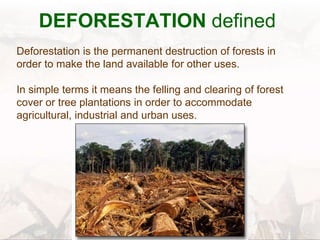
Deforestation is the permanent destruction of forests in 
order to make the land available for other uses. 
In simple terms it means the felling and clearing of forest 
cover or tree plantations in order to accommodate 
agricultural, industrial and urban uses.
STATISTICS 
An estimated 18 million 
acres of forest 
(roughly the size of Panama) 
are lost each year. 
Source: United Nations' Food and Agriculture Organization (FAO).
Global map showing biodiversity hotspots and where 
forest has been cleared 
About half of the world's tropical forests have been cleared (FAO)
Forests currently cover about 30 percent of the world’s land mass 
(National Geographic)
Deforestation occurs 
• around the world, though tropical rainforests are particularly targeted. 
• Countries with significant deforestation include Brazil, Indonesia, Thailand, the 
Democratic Republic of Congo and other parts of Africa, and parts of Eastern 
Europe.
CAUSES OF DEFORESTATION 
1. AGRICULTURAL ACTIVITIES: 
 Due to overgrowing demand for food products, huge 
amount of trees are fell down to grow crops e.g. large scale 
cash crops such as soy and palm oil and for cattle grazing. 
 Agriculture alone accounts for over 70% of all deforestation 
across tropical and sub-tropical countries, all in response to 
unprecedented demands from a growing population on 
forestlands for food, fuel, and fiber.
Logging: wood based industries like paper, match-sticks, 
furniture etc. also need a substantial amount of wood supply as 
a result countless trees are cut each year. 
 Wood is used as fuel e.g. firewood and charcoal and trees 
are chopped for supplies. 
 Some of these industries thrive on illegal wood cutting and 
felling of trees, they build roads to access more remote 
forests—which leads to further deforestation.
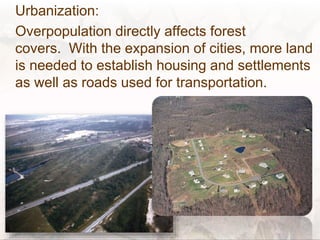
Urbanization: 
Overpopulation directly affects forest 
covers. With the expansion of cities, more land 
is needed to establish housing and settlements 
as well as roads used for transportation.
Desertification of land: occurs due to land abuse e.g. 
forest fires making it unfit for growth of trees. 
 Forest soils are moist, but without protection from sun-blocking 
tree cover they quickly dry out. Without trees to fill these roles, 
many forest lands can quickly become barren deserts. 
 Many industries in 
petrochemicals release 
their waste into rivers which 
results in soil erosion and 
make it unfit to grow plants 
and trees.
• Mining: Oil and coal mining require a considerable 
amount of forest land. Apart from roads and 
highways built to make way for trucks and other 
equipment, the waste that comes out from mining 
pollutes the environment and affects the nearby 
species. 
Mercury has destroyed 32,000 hectares of land in Peru
Fires: 
 Hundreds of trees are lost each year due to forest 
fires in various portions of the world. This happens 
due to extreme warm summers and milder winters. 
 Fires, whether caused by man or nature results in 
huge loss of forest cover.
REFERENCES: 
• http://www.livescience.com/27692- 
deforestation.html 
• http://environment.nationalgeographic.com/enviro 
nment/global-warming/deforestation-overview/ 
• http://www.conserve-energy-future.com/causes-effects- 
solutions-of-deforestation.php 
• http://www.newsustainabilityinc.com/tag/united-nations- 
council-on-sustainable-development/

Deforestation

  • 1.
  • 3.
    DEFORESTATION defined Deforestationis the permanent destruction of forests in order to make the land available for other uses. In simple terms it means the felling and clearing of forest cover or tree plantations in order to accommodate agricultural, industrial and urban uses.
  • 4.
    STATISTICS An estimated18 million acres of forest (roughly the size of Panama) are lost each year. Source: United Nations' Food and Agriculture Organization (FAO).
  • 5.
    Global map showingbiodiversity hotspots and where forest has been cleared About half of the world's tropical forests have been cleared (FAO)
  • 6.
    Forests currently coverabout 30 percent of the world’s land mass (National Geographic)
  • 7.
    Deforestation occurs •around the world, though tropical rainforests are particularly targeted. • Countries with significant deforestation include Brazil, Indonesia, Thailand, the Democratic Republic of Congo and other parts of Africa, and parts of Eastern Europe.
  • 8.
    CAUSES OF DEFORESTATION 1. AGRICULTURAL ACTIVITIES:  Due to overgrowing demand for food products, huge amount of trees are fell down to grow crops e.g. large scale cash crops such as soy and palm oil and for cattle grazing.  Agriculture alone accounts for over 70% of all deforestation across tropical and sub-tropical countries, all in response to unprecedented demands from a growing population on forestlands for food, fuel, and fiber.
  • 9.
    Logging: wood basedindustries like paper, match-sticks, furniture etc. also need a substantial amount of wood supply as a result countless trees are cut each year.  Wood is used as fuel e.g. firewood and charcoal and trees are chopped for supplies.  Some of these industries thrive on illegal wood cutting and felling of trees, they build roads to access more remote forests—which leads to further deforestation.
  • 10.
    Urbanization: Overpopulation directlyaffects forest covers. With the expansion of cities, more land is needed to establish housing and settlements as well as roads used for transportation.
  • 11.
    Desertification of land:occurs due to land abuse e.g. forest fires making it unfit for growth of trees.  Forest soils are moist, but without protection from sun-blocking tree cover they quickly dry out. Without trees to fill these roles, many forest lands can quickly become barren deserts.  Many industries in petrochemicals release their waste into rivers which results in soil erosion and make it unfit to grow plants and trees.
  • 12.
    • Mining: Oiland coal mining require a considerable amount of forest land. Apart from roads and highways built to make way for trucks and other equipment, the waste that comes out from mining pollutes the environment and affects the nearby species. Mercury has destroyed 32,000 hectares of land in Peru
  • 13.
    Fires:  Hundredsof trees are lost each year due to forest fires in various portions of the world. This happens due to extreme warm summers and milder winters.  Fires, whether caused by man or nature results in huge loss of forest cover.
  • 14.
    REFERENCES: • http://www.livescience.com/27692- deforestation.html • http://environment.nationalgeographic.com/enviro nment/global-warming/deforestation-overview/ • http://www.conserve-energy-future.com/causes-effects- solutions-of-deforestation.php • http://www.newsustainabilityinc.com/tag/united-nations- council-on-sustainable-development/