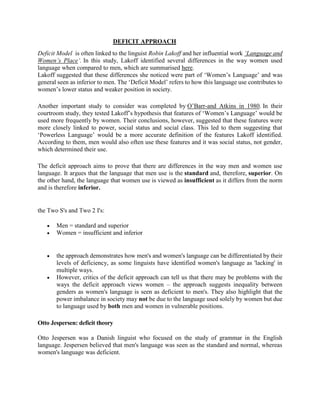
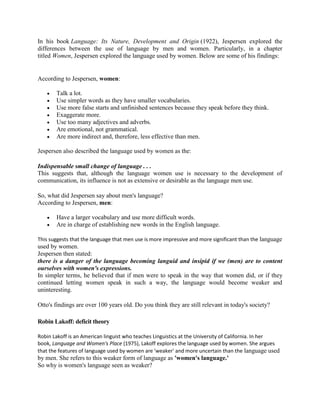
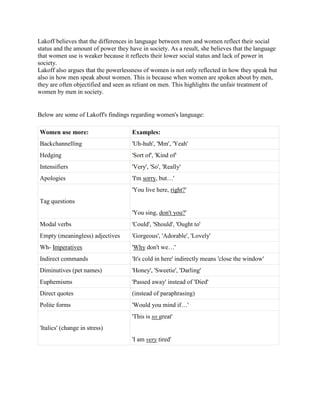
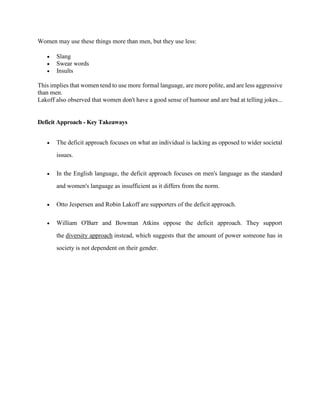
The deficit approach views differences between men's and women's language usage through a framework of deficiency, with men's language seen as the superior standard. Linguists like Robin Lakoff and Otto Jespersen identified features of "women's language" such as hedging, tag questions, and intensifiers that were argued to make it weaker and reflect women's lower social status. However, critics argue that the deficit approach promotes an unequal view of gender and that power dynamics in society influence language usage for both men and women in vulnerable positions.



![He said she_saidwell[1]23](https://cdn.slidesharecdn.com/ss_thumbnails/hesaidshesaidwell123-110514191807-phpapp01-thumbnail.jpg?width=640&height=640&fit=bounds)

![Language & Gender presentation [Shoaib_020].pptx](https://cdn.slidesharecdn.com/ss_thumbnails/languagegendershoaib020-240318170347-13e150a7-thumbnail.jpg?width=640&height=640&fit=bounds)


